Acid Reducer Market Size, Share, Growth and Forecast (2026 - 2036)
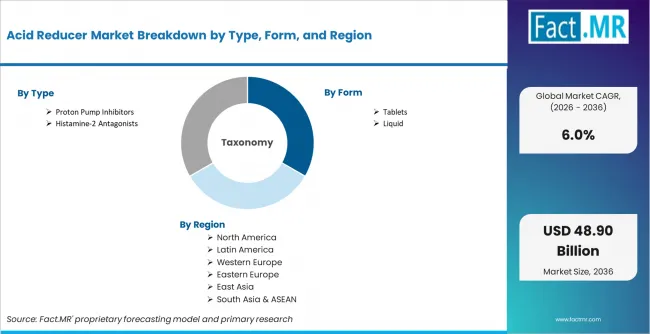
The Acid Reducer Market is segmented by Type (Histamine-2 Antagonists, Proton Pump Inhibitors), by Form (Tablets, Liquid, Powder, Others), by Availability (OTC Drugs, Rx Drugs), by Distribution Channel (Online, Offline), and by Indication (GERD, Heartburn and Acid Indigestion, Peptic Ulcers, Others) and Region. Forecast for 2026 to 2036.
Fact.MR states that acid reducer demand is moving toward easy OTC access and long-lasting symptom relief. Consumers use acid reducers for frequent heartburn and acid indigestion. Physicians use prescription acid reducers for GERD and ulcer care. Pharmacies remain important because patients often need guidance on short-course use and repeat purchases.
Acid Reducer Market Size, Market Forecast and Outlook by Fact.MR
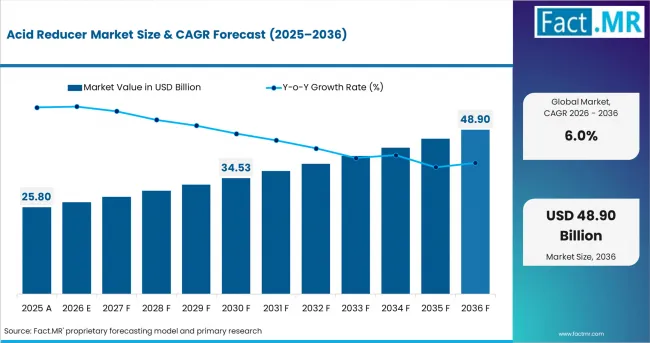
- The acid reducer market was valued at USD 25.8 billion in 2025.
- Demand is estimated to reach USD 27.3 billion in 2026 and is projected to rise to USD 48.9 billion by 2036.
- The market is forecast to record 6.0% CAGR from 2026 to 2036 as OTC access and GERD treatment needs support steady product use.
| Metric | Details |
|---|---|
| Industry Size 2026 | USD 27.3 billion |
| Industry Value 2036 | USD 48.9 billion |
| CAGR 2026 to 2036 | 6.0% |
Summary of Acid Reducer Market
- Demand Drivers in the Market
- OTC Access: Retail pharmacies help adults manage frequent heartburn through labeled short-course products. Wider shelf access and store-brand options support regular purchases for consumers who need quick relief from acidity and indigestion.
- GERD Treatment: Physicians use acid reducers for diagnosed reflux disease and acid-related injury. Prescription use remains important for patients with repeat symptoms or reflux that needs longer treatment.
- Convenience: Tablet formats support clear dosing and repeat use across retail channels. Chewable tablets and capsules make acid reducers easy to use at home and during travel.
- Key Segments Analyzed
- By Type: Proton pump inhibitors are expected to hold 65.0% share in 2026 as patients need longer acid suppression for frequent symptoms.
- By Form: Tablets are likely to account for 50.0% share in 2026 because they are easy to store and dose.
- By Availability: OTC drugs are projected to hold 55.0% share in 2026 since consumers use retail access for heartburn and acid indigestion.
- By Distribution Channel: Offline channels are anticipated to capture 63.0% share in 2026 as retail pharmacies guide acid reducer selection.
- By Indication: GERD is expected to hold 44.0% share in 2026 because recurrent reflux symptoms require structured acid control.
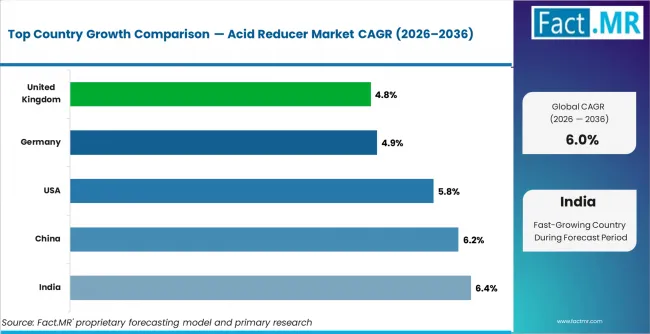
- By Geography: India is likely to post 6.4% CAGR through 2036 since pharmacy access and digestive health awareness improve.
- Analyst Opinion at Fact.MR
- Shambhu Nath Jha, Principal Consultant at Fact.MR, states, “Acid reducer demand depends on easy access and correct use. OTC availability supports repeat purchase, and label directions remains important. Manufacturers with trusted brands and simple dosing formats will be better placed in pharmacy-led markets.”
- Strategic Implications
- Label Clarity: Manufacturers need clear use instructions for OTC heartburn products so consumers understand dose timing and warning signs.
- Pharmacy Access: Retailers should keep pharmacist guidance visible for patients comparing acid reducers on OTC shelves.
- Portfolio Balance: Drug makers need both quick-use OTC formats and prescription products for diagnosed conditions.
Acid reducer demand is shifting from occasional heartburn relief to planned acid control. Patients with frequent symptoms need products that reduce acid for longer periods. OTC products support self-care for adults who follow label directions. Prescription products remain important for diagnosed GERD and serious acid-related conditions.
The United States is projected to record 5.8% CAGR through 2036 as OTC heartburn products remain widely used. India is likely to post 6.4% CAGR since pharmacy access and digestive health awareness improve. China is expected to register 6.2% CAGR due to urban diets and retail pharmacy expansion support demand. Germany is poised to record 4.9% CAGR by 2036 because pharmacy-led acid reducer use stays steady. The United Kingdom is set to grow at 4.8% CAGR as OTC access supports self-care.
Segmental Analysis
Acid Reducer Market Analysis by Type
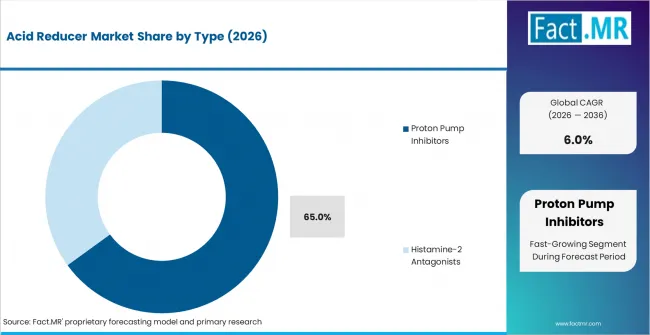
Proton pump inhibitors are expected to hold 65.0% share in 2026 as patients need longer acid control for frequent symptoms. PPIs are widely used for GERD and acid-related esophageal injury. MedlinePlus stated in 2025 that PPIs reduce stomach acid and help relieve acid reflux or GERD symptoms. [1] H2 antagonists remain important for milder heartburn and prevention before trigger foods. Product choice depends on symptom frequency and the need for quick relief or longer acid control.
- PPI Control: Proton pump inhibitors support longer acid reduction for frequent symptoms.
- H2 Use: H2 antagonists support heartburn prevention and shorter symptom control.
- Treatment Fit: Product choice changes with symptom pattern and medical guidance.
Acid Reducer Market Analysis by Form
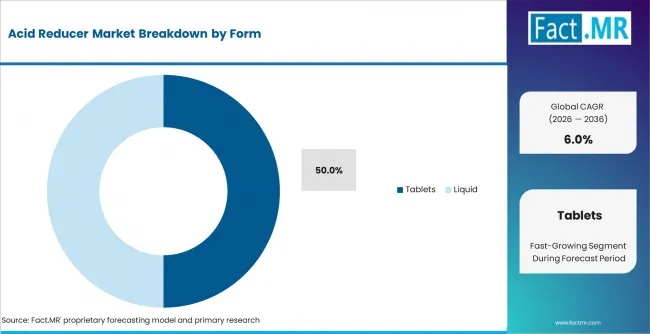
Tablets remain the main form because acid reducer users need simple dosing and easy storage. Liquids serve consumers who prefer easier swallowing. Tablets are likely to account for 50.0% share in 2026 because the format works well for OTC shelves and prescription packs. Powders and other forms serve selected needs. Form choice affects repeat use because difficult formats can reduce treatment adherence.
- Tablet Convenience: Tablets support clear dosing and easy pharmacy stocking.
- Liquid Access: Liquid formats serve users who struggle with solid dosage forms.
- Chewable Options: Chewables support occasional heartburn users seeking simple intake.
Acid Reducer Market Analysis by Availability
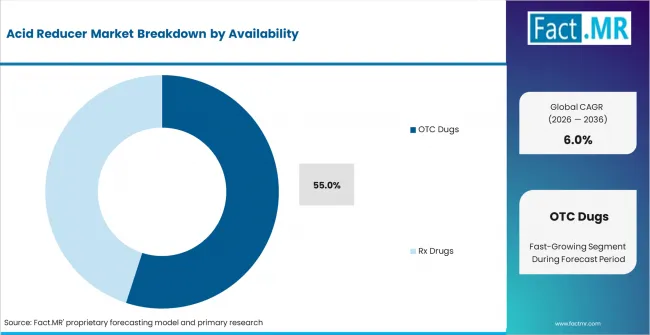
OTC drugs are projected to hold 55.0% share in 2026 as consumers use retail access for heartburn and acid indigestion. OTC availability leads because many adults manage symptoms through pharmacy shelves before seeing a clinician. FDA’s 2025 Zegerid OTC labeling describes the product as an acid reducer for frequent heartburn and a once-daily 14-day OTC treatment course. [2] Prescription acid reducers remain important for diagnosed GERD and more complex acid-related conditions. Availability choice depends on symptom severity and clinical follow-up needs.
- OTC Access: OTC products support self-care for adults with frequent heartburn.
- Rx Use: Prescription products support diagnosed GERD and acid-related disease.
- Use Discipline: Label directions and physician guidance reduce inappropriate long-term use.
Acid Reducer Market Analysis by Distribution Channel
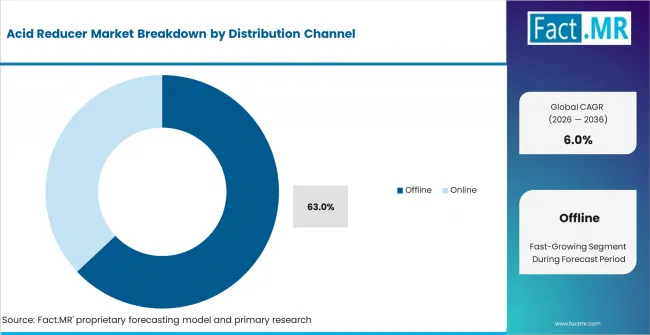
Offline channels are anticipated to capture 63.0% share in 2026 as retail pharmacies guide acid reducer selection. Consumers often compare brands and short-course use directions at the shelf. FDA’s 2025 OTC monograph fee program guidance refers to the Drug Facts label and its directions-for-use section for OTC monograph drugs. [3] Hospital pharmacies support prescription products for diagnosed conditions. Online sales are rising as repeat OTC purchases move to e-commerce and pharmacy websites. Channel strength depends on product visibility and consumer confidence.
- Retail Pharmacy: Pharmacies help consumers compare OTC acid reducer choices.
- Hospital Pharmacy: Hospital channels support prescription products after diagnosis.
- Online Repeat: E-commerce supports repeat purchase after users know the product.
Acid Reducer Market Analysis by Indication
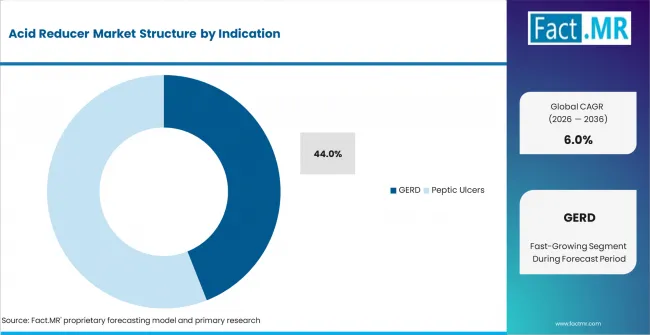
GERD is anticipated to hold 44.0% share in 2026 because recurrent reflux needs planned acid control. Heartburn and acid indigestion supporting OTC product use. Peptic ulcers support prescription demand and physician-guided treatment. The condition being treated often decides whether a person uses OTC tablets or follows a clinician’s care plan.
- GERD Care: GERD cases need stronger acid control and follow-up when symptoms persist.
- Heartburn Relief: Heartburn and acid indigestion support OTC product demand.
- Ulcer Treatment: Peptic ulcer care supports prescription use and medical supervision.
Acid Reducer Market Drivers, Restraints, and Opportunities
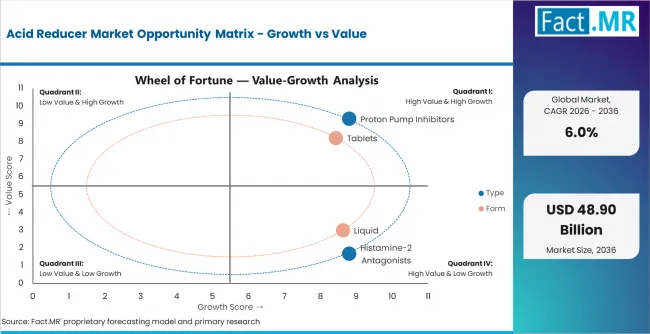
Frequent heartburn and GERD care are the main drivers for acid reducer demand. Many adults use these products to manage repeat symptoms and reduce discomfort after meals. OTC brands benefit from easy access through retail pharmacies. Clear labels and familiar formats help adults choose products for short-term relief.
Safety concerns can limit unsupervised use of acid reducers. People who use these products beyond label directions may need medical review. Long-term or frequent use can hide a more serious digestive issue. Prescription guidance remains important for diagnosed GERD and recurring symptoms.
Opportunities in the Acid Reducer Market
- OTC Course Packs: Manufacturers can expand clearly labeled short-course packs for frequent heartburn.
- H2 Repositioning: Famotidine brands can serve users seeking prevention before trigger meals.
- Pharmacy Guidance: Retailers can improve acid reducer selection through pharmacist-led education.
Regional Analysis
Based on regional analysis, the acid reducer market is segmented into North America, Latin America, Europe, East Asia, South Asia and ASEAN, Oceania, and Middle East and Africa.
.webp)
| Country | CAGR 2026 to 2036 |
|---|---|
| India | 6.4% |
| China | 6.2% |
| United States | 5.8% |
| Germany | 4.9% |
| United Kingdom | 4.8% |
Source: Fact.MR analysis, based on forecast approach and primary research.
South Asia and ASEAN Acid Reducer Market Analysis
South Asia and ASEAN demand is supported by pharmacy access and better digestive symptom awareness. India leads regional demand as urban consumers use OTC and prescription acid reducers through retail pharmacies.
- India: India is likely to post 6.4% CAGR through 2036 as pharmacy access and digestive health awareness improve. Urban consumers often ask pharmacists about heartburn and acid indigestion before visiting a physician. Online pharmacies can expand repeat purchase after product familiarity improves. India’s Ministry of Cooperation stated in 2025 that Jan Aushadhi Kendras provide around 2,047 quality generic medicines, and the product basket covers major therapeutic groups including gastrointestinal medicines. [4] Physicians will continue to use PPIs for diagnosed GERD and ulcer-related care.
East Asia Acid Reducer Market Analysis
East Asia demand comes from urban diets and stronger retail pharmacy networks. China support regional use through OTC and physician-directed acid reducer products.
- China: Urban diet changes and pharmacy access are supporting acid reducer demand in China. The country is expected to register 6.2% CAGR from 2026 to 2036 as consumers seek treatment for reflux symptoms and acid indigestion. Large pharmacy chains can support OTC access in major cities. Hospitals will remain important for diagnosed GERD and ulcer cases. China’s State Council reported in 2026 that the country’s first pharmaceutical retail sector policy allows retail chains to set up pharmacy service platforms for remote prescription reviews and medication counseling. [5] Domestic generic producers can gain through affordable PPI products.
North America Acid Reducer Market Analysis
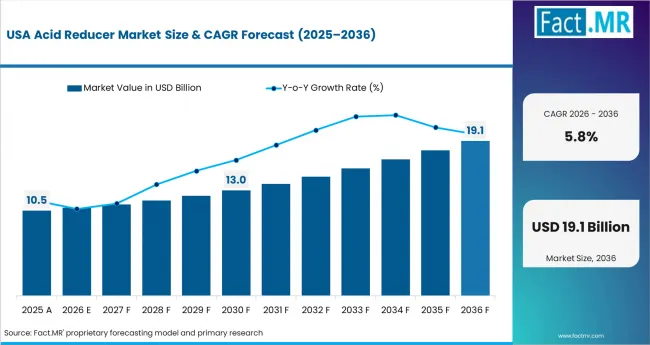
North America demand is led by the United States. OTC access and frequent heartburn treatment support product demand. Pharmacy shelves carry PPIs and antacid products for different symptom needs.
- United States: The United States is projected to record 5.8% CAGR during the forecast period as OTC heartburn products remain widely used. Consumers use retail pharmacies for frequent heartburn products and H2 blocker options. Physician guidance remains important for persistent GERD. Brand trust supports repeat purchase in the OTC aisle. Manufacturers with clear label instructions and broad retail access will be better placed.
Europe Acid Reducer Market Analysis
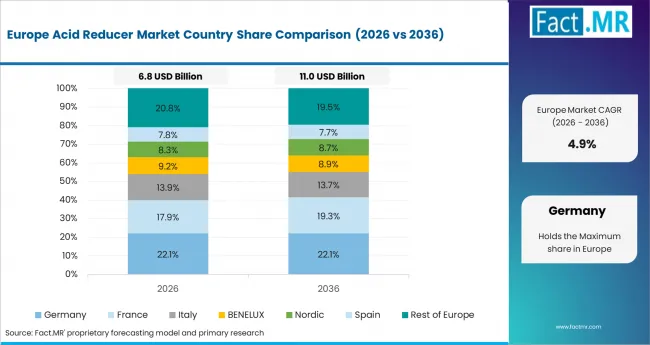
Europe demand is supported by pharmacy access and established GERD care. Germany and the United Kingdom use OTC and prescription products. Pharmacists play and important role in product selection.
- Germany: Germany is anticipated to record 4.9% CAGR by 2036 because pharmacy-led acid reducer use stays steady. Patients with occasional heartburn can access OTC products through pharmacies. Diagnosed GERD and ulcer care support prescription PPI use. Retail pharmacists help people choose between quick relief and longer acid control. Generic products keep access wide. Manufacturers need reliable supply and clear patient information.
- United Kingdom: OTC access supports self-care for heartburn and acid indigestion in the United Kingdom. The market is set to grow at 4.8% CAGR through 2036. Pharmacies help people choose labeled products for short-term relief. Prescription PPIs remain important for persistent reflux and ulcer care. Consumers need clear guidance on safe use and symptoms that need medical review. Retail chains and online pharmacies support repeat sales. Demand will favor easy-to-use tablets and clear pack messaging.
Competitive Aligners for Market Suppliers
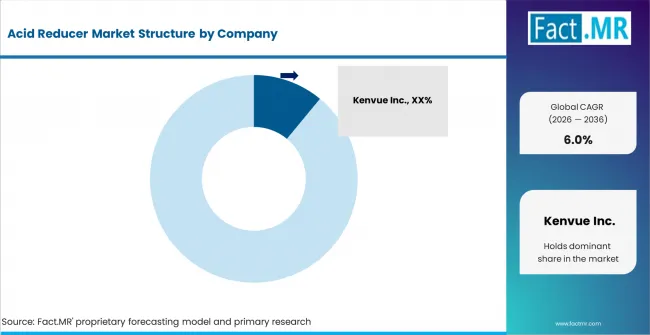
The acid reducer market includes branded OTC companies and generic drug makers. Kenvue Inc. and Haleon plc are linked to major OTC acid reducer brands. Procter & Gamble serves the market through consumer digestive health products. Dr. Reddy’s Laboratories Ltd. and Sandoz Group AG support demand through generic acid reducer products.
Competition depends on active ingredient trust and OTC shelf visibility. Generic affordability shapes pharmacy access. Retail and online availability will matter more by 2036 as repeat users seek easy access and clear label directions. Suppliers with trusted OTC brands and affordable generics will be better placed in estbalished markets.
Key Companies in Acid Reducer Market
- Kenvue Inc.
- Haleon plc
- Procter & Gamble
- Dr. Reddy’s Laboratories Ltd.
- Sandoz Group AG
Bibliography
- [1] MedlinePlus. (2025, April 21). Proton pump inhibitors. U.S. National Library of Medicine.
- [2] U.S. Food and Drug Administration. (2025, November 25). Zegerid OTC: Omeprazole 20 mg and sodium bicarbonate 1100 mg drug facts label.
- [3] U.S. Food and Drug Administration. (2026, March 23). Performance report to Congress: Over-the-Counter Monograph Drug User Fee Program, FY 2025.
- [4] Ministry of Cooperation. (2025, March 19). PACS operating PMBJKS. Press Information Bureau, Government of India.
- [5] The State Council of the People’s Republic of China. (2026, January 22). China unveils first-ever policy to boost high-quality development of pharmaceutical retail sector.
This Report Addresses
- Strategic demand analysis for acid reducer products across GERD, heartburn and acid indigestion, peptic ulcers, and other acid-related indications globally.
- Market forecast from USD 27.3 billion in 2026 to USD 48.9 billion by 2036 at 6.0% CAGR, with segment-level analysis by type, form, availability, distribution channel, and indication.
- Opportunity mapping across India, China, the United States, Germany, the United Kingdom, and Japan based on pharmacy access, OTC use, digestive health awareness, and GERD treatment needs.
- Segment analysis by histamine-2 antagonists, proton pump inhibitors, tablets, liquid formats, OTC drugs, Rx drugs, online channels, offline channels, and major acid-related indications.
- Competitive analysis of Kenvue Inc., Haleon plc, Procter & Gamble, Dr. Reddy’s Laboratories Ltd., and Sandoz Group AG covering OTC brand strength, generic access, product form strategy, and retail pharmacy reach.
- Regulatory and clinical context covering OTC drug labeling, Drug Facts directions, proton pump inhibitor guidance, pharmacy service expansion, and safe short-course use for frequent heartburn.
- Report delivery in PDF, Excel, and presentation formats supported by drug label review, manufacturer portfolio checks, pharmacy channel validation, and gastroenterology product manager interviews.
Acid Reducer Market Definition
The acid reducer market covers medicines that reduce stomach acid production or control acid-related symptoms. The scope includes proton pump inhibitors and histamine-2 antagonists sold through OTC and prescription channels. These products are distinct from simple digestive supplements because they are drug products used for heartburn and ulcer-related care.
Acid Reducer Market Inclusions
The scope includes proton pump inhibitors and H2 antagonists. Tablets and chewable formats are included. OTC and prescription products are covered. Online pharmacies and e-commerce pharmacy sales are included when the product is sold as an acid reducer.
Acid Reducer Market Exclusions
The scope excludes herbal acidity remedies and general digestive supplements without acid-reducing drug action. It excludes antifoaming products used only for gas relief. Probiotic products are outside scope unless marketed with an acid-reducing drug ingredient. Diagnostic tools and endoscopy services are excluded because they do not represent acid reducer product sales.
Acid Reducer Market Research Methodology
- Primary Research
- Primary research includes interviews with pharmacy category managers and gastroenterology product managers. OTC portfolio heads were reviewed separately.
- Desk Research
- Desk research reviews official drug labels and clinical guidance. Company product pages support type and availability validation.
- Market-Sizing and Forecasting
- Forecasting uses type demand and availability trends. Form mix and pharmacy channel use support the forecast approach.
- Data Validation and Update Cycle
- Forecasts are validated through pharmacy channel checks and manufacturer portfolio reviews. Regional assumptions are reviewed against OTC access and GERD treatment practice.
Scope of the Report

| Attribute | Details |
| Quantitative Units | USD 27.3 billion in 2026 to USD 48.9 billion by 2036 at 6.0% CAGR |
| Market Definition | OTC and prescription medicines used to reduce stomach acid or control acid-related symptoms |
| Type | Histamine-2 Antagonists, Proton Pump Inhibitors |
| Form | Tablets, Liquid, Powder, Others |
| Availability | OTC Drugs, Rx Drugs |
| Distribution Channel | Online, Offline |
| Indication | GERD, Heartburn and Acid Indigestion, Peptic Ulcers, Others |
| Regions Covered | North America, Latin America, Europe, East Asia, South Asia and ASEAN, Oceania, Middle East and Africa |
| Countries Covered | India, China, United States, Germany, United Kingdom, Japan |
| Key Companies Profiled | Kenvue Inc., Haleon plc, Procter & Gamble, Dr. Reddy’s Laboratories Ltd., Sandoz Group AG |
| Forecast Period | 2026 to 2036 |
| Approach | Hybrid top-down and bottom-up approach using type demand, form mix, availability, channel use, indication, and regional validation |
Acid Reducer Market Analysis by Segments
-
By Type:
- Histamine-2 Antagonists
- Famotidine
- Cimetidine
- Nizatidine
- Others
- Proton Pump Inhibitors
- Omeprazole
- Lansoprazole
- Dexlansoprazole
- Esomeprazole
- Others
-
By Form:
- Tablets
- Liquid
- Powder
- Others
-
By Availability:
- OTC Drugs
- Rx Drugs
-
By Distribution Channel:
- Online
- Brand Websites
- E-commerce Platforms
- Offline
- Hospital Pharmacies
- Retail Pharmacies
-
By Indication:
- GERD
- Heartburn and Acid Indigestion
- Peptic Ulcers
- Others
-
Region:
- North America
- United States
- Canada
- Europe
- Germany
- United Kingdom
- France
- Nordics
- East Asia
- China
- Japan
- South Korea
- South Asia and ASEAN
- India
- ASEAN
- Oceania
- Australia
- New Zealand
- Latin America
- Brazil
- Mexico
- Middle East and Africa
- Kingdom of Saudi Arabia
- Other GCC Countries
- Turkiye
- South Africa
- Other African Union
- Rest of Middle East & Africa
- North America
- Frequently Asked Questions -
What is the Acid Reducer Market size in 2026?
The acid reducer market is estimated to reach USD 27.3 billion in 2026 as OTC and prescription demand expands.
What will the Acid Reducer Market be worth by 2036?
The acid reducer market is projected to reach USD 48.9 billion by 2036.
What CAGR is projected for the Acid Reducer Market?
The acid reducer market is forecast to record 6.0% CAGR from 2026 to 2036.
Which type leads the Acid Reducer Market?
Proton pump inhibitors lead with 65.0% share in 2026 as patients need longer acid suppression for frequent symptoms.
Which indication leads the Acid Reducer Market?
GERD leads with 44.0% share in 2026 as recurrent reflux symptoms require structured acid control.
Which country expands fastest in the Acid Reducer Market?
India is likely to post 6.4% CAGR through 2036 as pharmacy access and digestive health awareness improve.
How does China perform in the Acid Reducer Market?
China is expected to register 6.2% CAGR from 2026 to 2036 as urban diets and pharmacy access support demand.
How does the United States perform in the Acid Reducer Market?
The United States is projected to record 5.8% CAGR through 2036 as OTC heartburn products remain widely used.
How does Germany perform in the Acid Reducer Market?
Germany is poised to record 4.9% CAGR from 2026 to 2036 as pharmacy-led acid reducer use stays steady.
How does the United Kingdom perform in the Acid Reducer Market?
The United Kingdom is set to grow at 4.8% CAGR through 2036 as OTC access supports self-care.
How does Japan perform in the Acid Reducer Market?
Japan is forecast to advance at 4.6% CAGR through 2036 as aging consumers need digestive symptom support.
What is the main driver in the Acid Reducer Market?
The main driver is frequent heartburn and GERD care as patients seek longer acid control.
What is the main restraint in the Acid Reducer Market?
The main restraint is concern over unsupervised long-term use of acid reducers.
Why are proton pump inhibitors important in this market?
Proton pump inhibitors are important because they reduce stomach acid for longer symptom control.
Why are OTC products important for acid reducer demand?
OTC products are important because many adults first manage heartburn through retail pharmacies.
Why do tablets lead the acid reducer market?
Tablets lead because they are easy to dose and stock across pharmacy channels.
Table of Content
- Executive Summary
- Global Market Outlook
- Demand to side Trends
- Supply to side Trends
- Technology Roadmap Analysis
- Analysis and Recommendations
- Market Overview
- Market Coverage / Taxonomy
- Market Definition / Scope / Limitations
- Research Methodology
- Chapter Orientation
- Analytical Lens and Working Hypotheses
- Market Structure, Signals, and Trend Drivers
- Benchmarking and Cross-market Comparability
- Market Sizing, Forecasting, and Opportunity Mapping
- Research Design and Evidence Framework
- Desk Research Programme (Secondary Evidence)
- Company Annual and Sustainability Reports
- Peer-reviewed Journals and Academic Literature
- Corporate Websites, Product Literature, and Technical Notes
- Earnings Decks and Investor Briefings
- Statutory Filings and Regulatory Disclosures
- Technical White Papers and Standards Notes
- Trade Journals, Industry Magazines, and Analyst Briefs
- Conference Proceedings, Webinars, and Seminar Materials
- Government Statistics Portals and Public Data Releases
- Press Releases and Reputable Media Coverage
- Specialist Newsletters and Curated Briefings
- Sector Databases and Reference Repositories
- Fact.MR Internal Proprietary Databases and Historical Market Datasets
- Subscription Datasets and Paid Sources
- Social Channels, Communities, and Digital Listening Inputs
- Additional Desk Sources
- Expert Input and Fieldwork (Primary Evidence)
- Primary Modes
- Qualitative Interviews and Expert Elicitation
- Quantitative Surveys and Structured Data Capture
- Blended Approach
- Why Primary Evidence is Used
- Field Techniques
- Interviews
- Surveys
- Focus Groups
- Observational and In-context Research
- Social and Community Interactions
- Stakeholder Universe Engaged
- C-suite Leaders
- Board Members
- Presidents and Vice Presidents
- R&D and Innovation Heads
- Technical Specialists
- Domain Subject-matter Experts
- Scientists
- Physicians and Other Healthcare Professionals
- Governance, Ethics, and Data Stewardship
- Research Ethics
- Data Integrity and Handling
- Primary Modes
- Tooling, Models, and Reference Databases
- Desk Research Programme (Secondary Evidence)
- Data Engineering and Model Build
- Data Acquisition and Ingestion
- Cleaning, Normalisation, and Verification
- Synthesis, Triangulation, and Analysis
- Quality Assurance and Audit Trail
- Market Background
- Market Dynamics
- Drivers
- Restraints
- Opportunity
- Trends
- Scenario Forecast
- Demand in Optimistic Scenario
- Demand in Likely Scenario
- Demand in Conservative Scenario
- Opportunity Map Analysis
- Product Life Cycle Analysis
- Supply Chain Analysis
- Investment Feasibility Matrix
- Value Chain Analysis
- PESTLE and Porter’s Analysis
- Regulatory Landscape
- Regional Parent Market Outlook
- Production and Consumption Statistics
- Import and Export Statistics
- Market Dynamics
- Global Market Analysis 2021 to 2025 and Forecast, 2026 to 2036
- Historical Market Size Value (USD Million) Analysis, 2021 to 2025
- Current and Future Market Size Value (USD Million) Projections, 2026 to 2036
- Y to o to Y Growth Trend Analysis
- Absolute $ Opportunity Analysis
- Global Market Pricing Analysis 2021 to 2025 and Forecast 2026 to 2036
- Global Market Analysis 2021 to 2025 and Forecast 2026 to 2036, By Type
- Introduction / Key Findings
- Historical Market Size Value (USD Million) Analysis By Type , 2021 to 2025
- Current and Future Market Size Value (USD Million) Analysis and Forecast By Type , 2026 to 2036
- Proton Pump Inhibitors
- Histamine-2 Antagonists
- Proton Pump Inhibitors
- Y to o to Y Growth Trend Analysis By Type , 2021 to 2025
- Absolute $ Opportunity Analysis By Type , 2026 to 2036
- Global Market Analysis 2021 to 2025 and Forecast 2026 to 2036, By Form
- Introduction / Key Findings
- Historical Market Size Value (USD Million) Analysis By Form, 2021 to 2025
- Current and Future Market Size Value (USD Million) Analysis and Forecast By Form, 2026 to 2036
- Tablets
- Liquid
- Powder
- Tablets
- Y to o to Y Growth Trend Analysis By Form, 2021 to 2025
- Absolute $ Opportunity Analysis By Form, 2026 to 2036
- Global Market Analysis 2021 to 2025 and Forecast 2026 to 2036, By Availability
- Introduction / Key Findings
- Historical Market Size Value (USD Million) Analysis By Availability, 2021 to 2025
- Current and Future Market Size Value (USD Million) Analysis and Forecast By Availability, 2026 to 2036
- OTC Dugs
- Rx Drugs
- OTC Dugs
- Y to o to Y Growth Trend Analysis By Availability, 2021 to 2025
- Absolute $ Opportunity Analysis By Availability, 2026 to 2036
- Global Market Analysis 2021 to 2025 and Forecast 2026 to 2036, By Distribution Channel
- Introduction / Key Findings
- Historical Market Size Value (USD Million) Analysis By Distribution Channel, 2021 to 2025
- Current and Future Market Size Value (USD Million) Analysis and Forecast By Distribution Channel, 2026 to 2036
- Offline
- Online
- Offline
- Y to o to Y Growth Trend Analysis By Distribution Channel, 2021 to 2025
- Absolute $ Opportunity Analysis By Distribution Channel, 2026 to 2036
- Global Market Analysis 2021 to 2025 and Forecast 2026 to 2036, By Indication
- Introduction / Key Findings
- Historical Market Size Value (USD Million) Analysis By Indication, 2021 to 2025
- Current and Future Market Size Value (USD Million) Analysis and Forecast By Indication, 2026 to 2036
- GERD
- Peptic Ulcers
- Heartburn and Acid Indigestion
- GERD
- Y to o to Y Growth Trend Analysis By Indication, 2021 to 2025
- Absolute $ Opportunity Analysis By Indication, 2026 to 2036
- Global Market Analysis 2021 to 2025 and Forecast 2026 to 2036, By Region
- Introduction
- Historical Market Size Value (USD Million) Analysis By Region, 2021 to 2025
- Current Market Size Value (USD Million) Analysis and Forecast By Region, 2026 to 2036
- North America
- Latin America
- Western Europe
- Eastern Europe
- East Asia
- South Asia and Pacific
- Middle East & Africa
- Market Attractiveness Analysis By Region
- North America Market Analysis 2021 to 2025 and Forecast 2026 to 2036, By Country
- Historical Market Size Value (USD Million) Trend Analysis By Market Taxonomy, 2021 to 2025
- Market Size Value (USD Million) Forecast By Market Taxonomy, 2026 to 2036
- By Country
- USA
- Canada
- Mexico
- By Type
- By Form
- By Availability
- By Distribution Channel
- By Indication
- By Country
- Market Attractiveness Analysis
- By Country
- By Type
- By Form
- By Availability
- By Distribution Channel
- By Indication
- Key Takeaways
- Latin America Market Analysis 2021 to 2025 and Forecast 2026 to 2036, By Country
- Historical Market Size Value (USD Million) Trend Analysis By Market Taxonomy, 2021 to 2025
- Market Size Value (USD Million) Forecast By Market Taxonomy, 2026 to 2036
- By Country
- Brazil
- Chile
- Rest of Latin America
- By Type
- By Form
- By Availability
- By Distribution Channel
- By Indication
- By Country
- Market Attractiveness Analysis
- By Country
- By Type
- By Form
- By Availability
- By Distribution Channel
- By Indication
- Key Takeaways
- Western Europe Market Analysis 2021 to 2025 and Forecast 2026 to 2036, By Country
- Historical Market Size Value (USD Million) Trend Analysis By Market Taxonomy, 2021 to 2025
- Market Size Value (USD Million) Forecast By Market Taxonomy, 2026 to 2036
- By Country
- Germany
- UK
- Italy
- Spain
- France
- Nordic
- BENELUX
- Rest of Western Europe
- By Type
- By Form
- By Availability
- By Distribution Channel
- By Indication
- By Country
- Market Attractiveness Analysis
- By Country
- By Type
- By Form
- By Availability
- By Distribution Channel
- By Indication
- Key Takeaways
- Eastern Europe Market Analysis 2021 to 2025 and Forecast 2026 to 2036, By Country
- Historical Market Size Value (USD Million) Trend Analysis By Market Taxonomy, 2021 to 2025
- Market Size Value (USD Million) Forecast By Market Taxonomy, 2026 to 2036
- By Country
- Russia
- Poland
- Hungary
- Balkan & Baltic
- Rest of Eastern Europe
- By Type
- By Form
- By Availability
- By Distribution Channel
- By Indication
- By Country
- Market Attractiveness Analysis
- By Country
- By Type
- By Form
- By Availability
- By Distribution Channel
- By Indication
- Key Takeaways
- East Asia Market Analysis 2021 to 2025 and Forecast 2026 to 2036, By Country
- Historical Market Size Value (USD Million) Trend Analysis By Market Taxonomy, 2021 to 2025
- Market Size Value (USD Million) Forecast By Market Taxonomy, 2026 to 2036
- By Country
- China
- Japan
- South Korea
- By Type
- By Form
- By Availability
- By Distribution Channel
- By Indication
- By Country
- Market Attractiveness Analysis
- By Country
- By Type
- By Form
- By Availability
- By Distribution Channel
- By Indication
- Key Takeaways
- South Asia and Pacific Market Analysis 2021 to 2025 and Forecast 2026 to 2036, By Country
- Historical Market Size Value (USD Million) Trend Analysis By Market Taxonomy, 2021 to 2025
- Market Size Value (USD Million) Forecast By Market Taxonomy, 2026 to 2036
- By Country
- India
- ASEAN
- Australia & New Zealand
- Rest of South Asia and Pacific
- By Type
- By Form
- By Availability
- By Distribution Channel
- By Indication
- By Country
- Market Attractiveness Analysis
- By Country
- By Type
- By Form
- By Availability
- By Distribution Channel
- By Indication
- Key Takeaways
- Middle East & Africa Market Analysis 2021 to 2025 and Forecast 2026 to 2036, By Country
- Historical Market Size Value (USD Million) Trend Analysis By Market Taxonomy, 2021 to 2025
- Market Size Value (USD Million) Forecast By Market Taxonomy, 2026 to 2036
- By Country
- Kingdom of Saudi Arabia
- Other GCC Countries
- Turkiye
- South Africa
- Other African Union
- Rest of Middle East & Africa
- By Type
- By Form
- By Availability
- By Distribution Channel
- By Indication
- By Country
- Market Attractiveness Analysis
- By Country
- By Type
- By Form
- By Availability
- By Distribution Channel
- By Indication
- Key Takeaways
- Key Countries Market Analysis
- USA
- Pricing Analysis
- Market Share Analysis, 2025
- By Type
- By Form
- By Availability
- By Distribution Channel
- By Indication
- Canada
- Pricing Analysis
- Market Share Analysis, 2025
- By Type
- By Form
- By Availability
- By Distribution Channel
- By Indication
- Mexico
- Pricing Analysis
- Market Share Analysis, 2025
- By Type
- By Form
- By Availability
- By Distribution Channel
- By Indication
- Brazil
- Pricing Analysis
- Market Share Analysis, 2025
- By Type
- By Form
- By Availability
- By Distribution Channel
- By Indication
- Chile
- Pricing Analysis
- Market Share Analysis, 2025
- By Type
- By Form
- By Availability
- By Distribution Channel
- By Indication
- Germany
- Pricing Analysis
- Market Share Analysis, 2025
- By Type
- By Form
- By Availability
- By Distribution Channel
- By Indication
- UK
- Pricing Analysis
- Market Share Analysis, 2025
- By Type
- By Form
- By Availability
- By Distribution Channel
- By Indication
- Italy
- Pricing Analysis
- Market Share Analysis, 2025
- By Type
- By Form
- By Availability
- By Distribution Channel
- By Indication
- Spain
- Pricing Analysis
- Market Share Analysis, 2025
- By Type
- By Form
- By Availability
- By Distribution Channel
- By Indication
- France
- Pricing Analysis
- Market Share Analysis, 2025
- By Type
- By Form
- By Availability
- By Distribution Channel
- By Indication
- India
- Pricing Analysis
- Market Share Analysis, 2025
- By Type
- By Form
- By Availability
- By Distribution Channel
- By Indication
- ASEAN
- Pricing Analysis
- Market Share Analysis, 2025
- By Type
- By Form
- By Availability
- By Distribution Channel
- By Indication
- Australia & New Zealand
- Pricing Analysis
- Market Share Analysis, 2025
- By Type
- By Form
- By Availability
- By Distribution Channel
- By Indication
- China
- Pricing Analysis
- Market Share Analysis, 2025
- By Type
- By Form
- By Availability
- By Distribution Channel
- By Indication
- Japan
- Pricing Analysis
- Market Share Analysis, 2025
- By Type
- By Form
- By Availability
- By Distribution Channel
- By Indication
- South Korea
- Pricing Analysis
- Market Share Analysis, 2025
- By Type
- By Form
- By Availability
- By Distribution Channel
- By Indication
- Russia
- Pricing Analysis
- Market Share Analysis, 2025
- By Type
- By Form
- By Availability
- By Distribution Channel
- By Indication
- Poland
- Pricing Analysis
- Market Share Analysis, 2025
- By Type
- By Form
- By Availability
- By Distribution Channel
- By Indication
- Hungary
- Pricing Analysis
- Market Share Analysis, 2025
- By Type
- By Form
- By Availability
- By Distribution Channel
- By Indication
- Kingdom of Saudi Arabia
- Pricing Analysis
- Market Share Analysis, 2025
- By Type
- By Form
- By Availability
- By Distribution Channel
- By Indication
- Turkiye
- Pricing Analysis
- Market Share Analysis, 2025
- By Type
- By Form
- By Availability
- By Distribution Channel
- By Indication
- South Africa
- Pricing Analysis
- Market Share Analysis, 2025
- By Type
- By Form
- By Availability
- By Distribution Channel
- By Indication
- USA
- Market Structure Analysis
- Competition Dashboard
- Competition Benchmarking
- Market Share Analysis of Top Players
- By Regional
- By Type
- By Form
- By Availability
- By Distribution Channel
- By Indication
- Competition Analysis
- Competition Deep Dive
- Kenvue Inc.
- Overview
- Product Portfolio
- Profitability by Market Segments (Product/Age /Sales Channel/Region)
- Sales Footprint
- Strategy Overview
- Marketing Strategy
- Product Strategy
- Channel Strategy
- Haleon plc
- Procter & Gamble
- Dr. Reddy’s Laboratories Ltd.
- Sandoz Group AG
- Kenvue Inc.
- Competition Deep Dive
- Assumptions & Acronyms Used
List Of Table
- Table 1: Global Market Value (USD Million) Forecast by Region, 2021 to 2036
- Table 2: Global Market Value (USD Million) Forecast by Type, 2021 to 2036
- Table 3: Global Market Value (USD Million) Forecast by Form, 2021 to 2036
- Table 4: Global Market Value (USD Million) Forecast by Availability, 2021 to 2036
- Table 5: Global Market Value (USD Million) Forecast by Distribution Channel, 2021 to 2036
- Table 6: Global Market Value (USD Million) Forecast by Indication, 2021 to 2036
- Table 7: North America Market Value (USD Million) Forecast by Country, 2021 to 2036
- Table 8: North America Market Value (USD Million) Forecast by Type, 2021 to 2036
- Table 9: North America Market Value (USD Million) Forecast by Form, 2021 to 2036
- Table 10: North America Market Value (USD Million) Forecast by Availability, 2021 to 2036
- Table 11: North America Market Value (USD Million) Forecast by Distribution Channel, 2021 to 2036
- Table 12: North America Market Value (USD Million) Forecast by Indication, 2021 to 2036
- Table 13: Latin America Market Value (USD Million) Forecast by Country, 2021 to 2036
- Table 14: Latin America Market Value (USD Million) Forecast by Type, 2021 to 2036
- Table 15: Latin America Market Value (USD Million) Forecast by Form, 2021 to 2036
- Table 16: Latin America Market Value (USD Million) Forecast by Availability, 2021 to 2036
- Table 17: Latin America Market Value (USD Million) Forecast by Distribution Channel, 2021 to 2036
- Table 18: Latin America Market Value (USD Million) Forecast by Indication, 2021 to 2036
- Table 19: Western Europe Market Value (USD Million) Forecast by Country, 2021 to 2036
- Table 20: Western Europe Market Value (USD Million) Forecast by Type, 2021 to 2036
- Table 21: Western Europe Market Value (USD Million) Forecast by Form, 2021 to 2036
- Table 22: Western Europe Market Value (USD Million) Forecast by Availability, 2021 to 2036
- Table 23: Western Europe Market Value (USD Million) Forecast by Distribution Channel, 2021 to 2036
- Table 24: Western Europe Market Value (USD Million) Forecast by Indication, 2021 to 2036
- Table 25: Eastern Europe Market Value (USD Million) Forecast by Country, 2021 to 2036
- Table 26: Eastern Europe Market Value (USD Million) Forecast by Type, 2021 to 2036
- Table 27: Eastern Europe Market Value (USD Million) Forecast by Form, 2021 to 2036
- Table 28: Eastern Europe Market Value (USD Million) Forecast by Availability, 2021 to 2036
- Table 29: Eastern Europe Market Value (USD Million) Forecast by Distribution Channel, 2021 to 2036
- Table 30: Eastern Europe Market Value (USD Million) Forecast by Indication, 2021 to 2036
- Table 31: East Asia Market Value (USD Million) Forecast by Country, 2021 to 2036
- Table 32: East Asia Market Value (USD Million) Forecast by Type, 2021 to 2036
- Table 33: East Asia Market Value (USD Million) Forecast by Form, 2021 to 2036
- Table 34: East Asia Market Value (USD Million) Forecast by Availability, 2021 to 2036
- Table 35: East Asia Market Value (USD Million) Forecast by Distribution Channel, 2021 to 2036
- Table 36: East Asia Market Value (USD Million) Forecast by Indication, 2021 to 2036
- Table 37: South Asia and Pacific Market Value (USD Million) Forecast by Country, 2021 to 2036
- Table 38: South Asia and Pacific Market Value (USD Million) Forecast by Type, 2021 to 2036
- Table 39: South Asia and Pacific Market Value (USD Million) Forecast by Form, 2021 to 2036
- Table 40: South Asia and Pacific Market Value (USD Million) Forecast by Availability, 2021 to 2036
- Table 41: South Asia and Pacific Market Value (USD Million) Forecast by Distribution Channel, 2021 to 2036
- Table 42: South Asia and Pacific Market Value (USD Million) Forecast by Indication, 2021 to 2036
- Table 43: Middle East & Africa Market Value (USD Million) Forecast by Country, 2021 to 2036
- Table 44: Middle East & Africa Market Value (USD Million) Forecast by Type, 2021 to 2036
- Table 45: Middle East & Africa Market Value (USD Million) Forecast by Form, 2021 to 2036
- Table 46: Middle East & Africa Market Value (USD Million) Forecast by Availability, 2021 to 2036
- Table 47: Middle East & Africa Market Value (USD Million) Forecast by Distribution Channel, 2021 to 2036
- Table 48: Middle East & Africa Market Value (USD Million) Forecast by Indication, 2021 to 2036
List Of Figures
- Figure 1: Global Market Pricing Analysis
- Figure 2: Global Market Value (USD Million) Forecast 2021-2036
- Figure 3: Global Market Value Share and BPS Analysis by Type, 2026 and 2036
- Figure 4: Global Market Y-o-Y Growth Comparison by Type, 2026 to 2036
- Figure 5: Global Market Attractiveness Analysis by Type
- Figure 6: Global Market Value Share and BPS Analysis by Form, 2026 and 2036
- Figure 7: Global Market Y-o-Y Growth Comparison by Form, 2026 to 2036
- Figure 8: Global Market Attractiveness Analysis by Form
- Figure 9: Global Market Value Share and BPS Analysis by Availability, 2026 and 2036
- Figure 10: Global Market Y-o-Y Growth Comparison by Availability, 2026 to 2036
- Figure 11: Global Market Attractiveness Analysis by Availability
- Figure 12: Global Market Value Share and BPS Analysis by Distribution Channel, 2026 and 2036
- Figure 13: Global Market Y-o-Y Growth Comparison by Distribution Channel, 2026 to 2036
- Figure 14: Global Market Attractiveness Analysis by Distribution Channel
- Figure 15: Global Market Value Share and BPS Analysis by Indication, 2026 and 2036
- Figure 16: Global Market Y-o-Y Growth Comparison by Indication, 2026 to 2036
- Figure 17: Global Market Attractiveness Analysis by Indication
- Figure 18: Global Market Value (USD Million) Share and BPS Analysis by Region, 2026 and 2036
- Figure 19: Global Market Y-o-Y Growth Comparison by Region, 2026 to 2036
- Figure 20: Global Market Attractiveness Analysis by Region
- Figure 21: North America Market Incremental Dollar Opportunity, 2026 to 2036
- Figure 22: Latin America Market Incremental Dollar Opportunity, 2026 to 2036
- Figure 23: Western Europe Market Incremental Dollar Opportunity, 2026 to 2036
- Figure 24: Eastern Europe Market Incremental Dollar Opportunity, 2026 to 2036
- Figure 25: East Asia Market Incremental Dollar Opportunity, 2026 to 2036
- Figure 26: South Asia and Pacific Market Incremental Dollar Opportunity, 2026 to 2036
- Figure 27: Middle East & Africa Market Incremental Dollar Opportunity, 2026 to 2036
- Figure 28: North America Market Value Share and BPS Analysis by Country, 2026 and 2036
- Figure 29: North America Market Value Share and BPS Analysis by Type, 2026 and 2036
- Figure 30: North America Market Y-o-Y Growth Comparison by Type, 2026 to 2036
- Figure 31: North America Market Attractiveness Analysis by Type
- Figure 32: North America Market Value Share and BPS Analysis by Form, 2026 and 2036
- Figure 33: North America Market Y-o-Y Growth Comparison by Form, 2026 to 2036
- Figure 34: North America Market Attractiveness Analysis by Form
- Figure 35: North America Market Value Share and BPS Analysis by Availability, 2026 and 2036
- Figure 36: North America Market Y-o-Y Growth Comparison by Availability, 2026 to 2036
- Figure 37: North America Market Attractiveness Analysis by Availability
- Figure 38: North America Market Value Share and BPS Analysis by Distribution Channel, 2026 and 2036
- Figure 39: North America Market Y-o-Y Growth Comparison by Distribution Channel, 2026 to 2036
- Figure 40: North America Market Attractiveness Analysis by Distribution Channel
- Figure 41: North America Market Value Share and BPS Analysis by Indication, 2026 and 2036
- Figure 42: North America Market Y-o-Y Growth Comparison by Indication, 2026 to 2036
- Figure 43: North America Market Attractiveness Analysis by Indication
- Figure 44: Latin America Market Value Share and BPS Analysis by Country, 2026 and 2036
- Figure 45: Latin America Market Value Share and BPS Analysis by Type, 2026 and 2036
- Figure 46: Latin America Market Y-o-Y Growth Comparison by Type, 2026 to 2036
- Figure 47: Latin America Market Attractiveness Analysis by Type
- Figure 48: Latin America Market Value Share and BPS Analysis by Form, 2026 and 2036
- Figure 49: Latin America Market Y-o-Y Growth Comparison by Form, 2026 to 2036
- Figure 50: Latin America Market Attractiveness Analysis by Form
- Figure 51: Latin America Market Value Share and BPS Analysis by Availability, 2026 and 2036
- Figure 52: Latin America Market Y-o-Y Growth Comparison by Availability, 2026 to 2036
- Figure 53: Latin America Market Attractiveness Analysis by Availability
- Figure 54: Latin America Market Value Share and BPS Analysis by Distribution Channel, 2026 and 2036
- Figure 55: Latin America Market Y-o-Y Growth Comparison by Distribution Channel, 2026 to 2036
- Figure 56: Latin America Market Attractiveness Analysis by Distribution Channel
- Figure 57: Latin America Market Value Share and BPS Analysis by Indication, 2026 and 2036
- Figure 58: Latin America Market Y-o-Y Growth Comparison by Indication, 2026 to 2036
- Figure 59: Latin America Market Attractiveness Analysis by Indication
- Figure 60: Western Europe Market Value Share and BPS Analysis by Country, 2026 and 2036
- Figure 61: Western Europe Market Value Share and BPS Analysis by Type, 2026 and 2036
- Figure 62: Western Europe Market Y-o-Y Growth Comparison by Type, 2026 to 2036
- Figure 63: Western Europe Market Attractiveness Analysis by Type
- Figure 64: Western Europe Market Value Share and BPS Analysis by Form, 2026 and 2036
- Figure 65: Western Europe Market Y-o-Y Growth Comparison by Form, 2026 to 2036
- Figure 66: Western Europe Market Attractiveness Analysis by Form
- Figure 67: Western Europe Market Value Share and BPS Analysis by Availability, 2026 and 2036
- Figure 68: Western Europe Market Y-o-Y Growth Comparison by Availability, 2026 to 2036
- Figure 69: Western Europe Market Attractiveness Analysis by Availability
- Figure 70: Western Europe Market Value Share and BPS Analysis by Distribution Channel, 2026 and 2036
- Figure 71: Western Europe Market Y-o-Y Growth Comparison by Distribution Channel, 2026 to 2036
- Figure 72: Western Europe Market Attractiveness Analysis by Distribution Channel
- Figure 73: Western Europe Market Value Share and BPS Analysis by Indication, 2026 and 2036
- Figure 74: Western Europe Market Y-o-Y Growth Comparison by Indication, 2026 to 2036
- Figure 75: Western Europe Market Attractiveness Analysis by Indication
- Figure 76: Eastern Europe Market Value Share and BPS Analysis by Country, 2026 and 2036
- Figure 77: Eastern Europe Market Value Share and BPS Analysis by Type, 2026 and 2036
- Figure 78: Eastern Europe Market Y-o-Y Growth Comparison by Type, 2026 to 2036
- Figure 79: Eastern Europe Market Attractiveness Analysis by Type
- Figure 80: Eastern Europe Market Value Share and BPS Analysis by Form, 2026 and 2036
- Figure 81: Eastern Europe Market Y-o-Y Growth Comparison by Form, 2026 to 2036
- Figure 82: Eastern Europe Market Attractiveness Analysis by Form
- Figure 83: Eastern Europe Market Value Share and BPS Analysis by Availability, 2026 and 2036
- Figure 84: Eastern Europe Market Y-o-Y Growth Comparison by Availability, 2026 to 2036
- Figure 85: Eastern Europe Market Attractiveness Analysis by Availability
- Figure 86: Eastern Europe Market Value Share and BPS Analysis by Distribution Channel, 2026 and 2036
- Figure 87: Eastern Europe Market Y-o-Y Growth Comparison by Distribution Channel, 2026 to 2036
- Figure 88: Eastern Europe Market Attractiveness Analysis by Distribution Channel
- Figure 89: Eastern Europe Market Value Share and BPS Analysis by Indication, 2026 and 2036
- Figure 90: Eastern Europe Market Y-o-Y Growth Comparison by Indication, 2026 to 2036
- Figure 91: Eastern Europe Market Attractiveness Analysis by Indication
- Figure 92: East Asia Market Value Share and BPS Analysis by Country, 2026 and 2036
- Figure 93: East Asia Market Value Share and BPS Analysis by Type, 2026 and 2036
- Figure 94: East Asia Market Y-o-Y Growth Comparison by Type, 2026 to 2036
- Figure 95: East Asia Market Attractiveness Analysis by Type
- Figure 96: East Asia Market Value Share and BPS Analysis by Form, 2026 and 2036
- Figure 97: East Asia Market Y-o-Y Growth Comparison by Form, 2026 to 2036
- Figure 98: East Asia Market Attractiveness Analysis by Form
- Figure 99: East Asia Market Value Share and BPS Analysis by Availability, 2026 and 2036
- Figure 100: East Asia Market Y-o-Y Growth Comparison by Availability, 2026 to 2036
- Figure 101: East Asia Market Attractiveness Analysis by Availability
- Figure 102: East Asia Market Value Share and BPS Analysis by Distribution Channel, 2026 and 2036
- Figure 103: East Asia Market Y-o-Y Growth Comparison by Distribution Channel, 2026 to 2036
- Figure 104: East Asia Market Attractiveness Analysis by Distribution Channel
- Figure 105: East Asia Market Value Share and BPS Analysis by Indication, 2026 and 2036
- Figure 106: East Asia Market Y-o-Y Growth Comparison by Indication, 2026 to 2036
- Figure 107: East Asia Market Attractiveness Analysis by Indication
- Figure 108: South Asia and Pacific Market Value Share and BPS Analysis by Country, 2026 and 2036
- Figure 109: South Asia and Pacific Market Value Share and BPS Analysis by Type, 2026 and 2036
- Figure 110: South Asia and Pacific Market Y-o-Y Growth Comparison by Type, 2026 to 2036
- Figure 111: South Asia and Pacific Market Attractiveness Analysis by Type
- Figure 112: South Asia and Pacific Market Value Share and BPS Analysis by Form, 2026 and 2036
- Figure 113: South Asia and Pacific Market Y-o-Y Growth Comparison by Form, 2026 to 2036
- Figure 114: South Asia and Pacific Market Attractiveness Analysis by Form
- Figure 115: South Asia and Pacific Market Value Share and BPS Analysis by Availability, 2026 and 2036
- Figure 116: South Asia and Pacific Market Y-o-Y Growth Comparison by Availability, 2026 to 2036
- Figure 117: South Asia and Pacific Market Attractiveness Analysis by Availability
- Figure 118: South Asia and Pacific Market Value Share and BPS Analysis by Distribution Channel, 2026 and 2036
- Figure 119: South Asia and Pacific Market Y-o-Y Growth Comparison by Distribution Channel, 2026 to 2036
- Figure 120: South Asia and Pacific Market Attractiveness Analysis by Distribution Channel
- Figure 121: South Asia and Pacific Market Value Share and BPS Analysis by Indication, 2026 and 2036
- Figure 122: South Asia and Pacific Market Y-o-Y Growth Comparison by Indication, 2026 to 2036
- Figure 123: South Asia and Pacific Market Attractiveness Analysis by Indication
- Figure 124: Middle East & Africa Market Value Share and BPS Analysis by Country, 2026 and 2036
- Figure 125: Middle East & Africa Market Value Share and BPS Analysis by Type, 2026 and 2036
- Figure 126: Middle East & Africa Market Y-o-Y Growth Comparison by Type, 2026 to 2036
- Figure 127: Middle East & Africa Market Attractiveness Analysis by Type
- Figure 128: Middle East & Africa Market Value Share and BPS Analysis by Form, 2026 and 2036
- Figure 129: Middle East & Africa Market Y-o-Y Growth Comparison by Form, 2026 to 2036
- Figure 130: Middle East & Africa Market Attractiveness Analysis by Form
- Figure 131: Middle East & Africa Market Value Share and BPS Analysis by Availability, 2026 and 2036
- Figure 132: Middle East & Africa Market Y-o-Y Growth Comparison by Availability, 2026 to 2036
- Figure 133: Middle East & Africa Market Attractiveness Analysis by Availability
- Figure 134: Middle East & Africa Market Value Share and BPS Analysis by Distribution Channel, 2026 and 2036
- Figure 135: Middle East & Africa Market Y-o-Y Growth Comparison by Distribution Channel, 2026 to 2036
- Figure 136: Middle East & Africa Market Attractiveness Analysis by Distribution Channel
- Figure 137: Middle East & Africa Market Value Share and BPS Analysis by Indication, 2026 and 2036
- Figure 138: Middle East & Africa Market Y-o-Y Growth Comparison by Indication, 2026 to 2036
- Figure 139: Middle East & Africa Market Attractiveness Analysis by Indication
- Figure 140: Global Market - Tier Structure Analysis
- Figure 141: Global Market - Company Share Analysis