Aerospace Composite Materials Using PCR Market

Aerospace Composite Materials Using PCR Market Size and Share Forecast Outlook 2026 to 2036

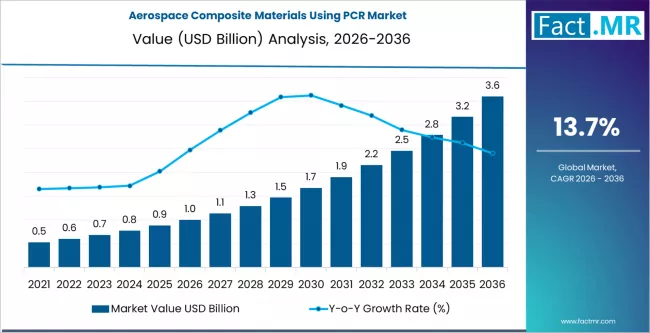
Aerospace composite materials using pcr market is projected to grow from USD 1.0 billion in 2026 to USD 3.6 billion by 2036, at a CAGR of 13.7%. Aircraft interiors and secondary structures will dominate with a 48.0% market share, while thermoplastic composites will lead the composite type segment with a 52.0% share.

Aerospace Composite Materials Using PCR Market Forecast and Outlook 2026 to 2036

The aerospace composite materials using PCR market is likely to be valued at USD 1 billion in 2026 and is forecasted to reach USD 3.6 billion by 2036, growing at a CAGR of 13.7%. Growth quality in this market is influenced by a high degree of application concentration, with key sectors such as aircraft manufacturing and satellite production driving demand.

Key Takeaways from Aerospace Composite Materials Using PCR Market

  • Aerospace Composite Materials Using PCR Market Value (2026): USD 1 billion
  • Aerospace Composite Materials Using PCR Market Forecast Value (2036): USD 3.6 billion
  • Aerospace Composite Materials Using PCR Market Forecast CAGR 2026 to 2036: 13.7%
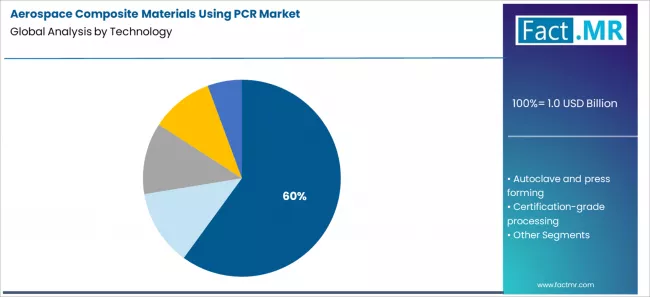
  • Leading Segment in Aerospace Composite Materials Using PCR Market: Advanced compounding and fibre reinforcement (60%)
  • Key Growth Region in Aerospace Composite Materials Using PCR Market: Asia Pacific
  • Key Players in Aerospace Composite Materials Using PCR Market: Solvay, Toray Advanced Composites, SGL Carbon, BASF, Safran, Arkema, Teijin, Mitsubishi Chemical

Aerospace Composite Materials Using Pcr Market Market Value Analysis

The dependency on specific end-uses, particularly in high-performance environments, presents both challenges and opportunities, as material specifications must meet strict safety and durability standards. Volume stability is critical to ensuring consistent supply for large-scale aerospace projects.

Fluctuations in demand can disrupt production cycles, impacting the overall growth trajectory. As the market matures, securing long-term contracts and forging close ties with OEMs (original equipment manufacturers) will become essential for market players. With continued focus on material performance and compliance, companies will need to navigate these dependencies to drive sustained market success.

Aerospace Composite Materials Using PCR Market

Metric Value
Estimated Value in (2026E) USD 1 billion
Forecast Value in (2036F) USD 3.6 billion
Forecast CAGR (2026 to 2036) 13.7%

Category

Category Segments
End-Use Aircraft interiors and secondary structures; Aerospace interiors; OEM aircraft programs; Precision aerospace parts; Domestic aerospace; Defence aerospace
Composite Type Thermoplastic composites; Lightweight panels; Structural composites; High-performance composites; Others
PCR Source PCR-PEEK or PCR-PET; PCR-thermoplastics; PCR-resin systems; PCR-PA or PCR-PEEK; Others
Technology Advanced compounding and fibre reinforcement; Autoclave and press forming; Certification-grade processing; High-spec material qualification; Others
Region North America; Europe; Asia Pacific; Latin America; Middle East & Africa

Segmental Analysis

What Is the Impact of PCR Source on the Aerospace Composite Materials Using Pcr Market?

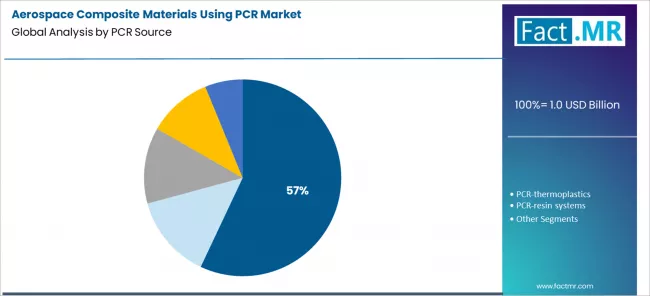
Aerospace Composite Materials Using Pcr Market Analysis By Pcr Source

In the aerospace composite materials using PCR market, PCR source plays a pivotal role in determining the properties and performance of materials. PCR-PEEK or PCR-PET leads the market with a 57% share. These materials are favored for their superior mechanical properties, thermal stability, and durability, making them well-suited for the demanding requirements of the aerospace industry. The use of PCR-based materials ensures that aerospace components meet stringent performance standards while contributing to sustainability. As demand for high-performance, recyclable materials grows, PCR-PEEK and PCR-PET are expected to remain dominant, driving advancements in aerospace composite materials.

How Does Technology Influence the Aerospace Composite Materials Using Pcr Market?

Aerospace Composite Materials Using Pcr Market Analysis By Technology

Technology is a critical factor in shaping the aerospace composite materials using PCR market, with advanced compounding and fibre reinforcement leading the sector at a 60% share. This technology allows for the creation of high-performance composite materials by enhancing the structural properties of PCR-based materials. Advanced compounding techniques improve the material's strength, durability, and resistance to environmental stresses, making them suitable for aerospace applications. As technological innovations continue to evolve, the use of advanced compounding and fibre reinforcement is expected to drive further growth, enabling the production of lightweight and high-performance materials that meet the rigorous standards of the aerospace industry.

What are the Principal Drivers, Constraints, and Evolving Dynamics of the Aerospace Composite Materials Using PCR Market?

Use of post consumer recycled composite materials in aerospace has been influenced by targets to reduce lifecycle environmental impact and by pressure to improve resource efficiency. Aircraft manufacturers and tier 1 suppliers have assessed recycled composites for secondary structures where weight and performance criteria are less stringent. Material qualification frameworks that include recycled feedstocks have supported pilot programs. Demand for lightweight materials that lower fuel burn has also encouraged evaluation of PCR composite formulations.

Limited availability of aerospace grade recycled feedstock restricts scale. Qualification and certification processes for new composite materials remain lengthy and resource intensive. Material heterogeneity in recycled streams complicates performance predictability. Research efforts are focused on improving sorting, reprocessing methods, and property retention. Partnerships between recyclers, resin producers, and aerospace firms aim to establish consistent supply and broaden application areas. Data collection on long term performance under operational loads continues.

Analysis of the Aerospace Composite Materials Using PCR Market by Key Country

Country CAGR (2026-2036)
USA 12.4%
Germany 12%
France 12.6%
Japan 10.4%
China 14.8%
India 15.6%

The report covers an in-depth analysis of 40+ countries; top-performing countries are highlighted below.

What is the Growth Outlook for Aerospace Composite Materials Using PCR in the USA?

The USA’s aerospace composite materials using PCR market is expected to grow at a CAGR of 12.4% from 2026 to 2036. As the aerospace industry continues to prioritize lightweight, durable, and sustainable materials, PCR-based composites are gaining traction. Increased focus on environmental responsibility, combined with the USA’s advanced manufacturing capabilities, is driving the demand for eco-friendly aerospace materials. The market will benefit from continued innovation and regulatory pressure to adopt sustainable practices, supporting the growth of PCR-based aerospace composites in the country.

How is the Aerospace Composite Materials Using PCR Market Performing in Germany?

Germany’s aerospace composite materials using PCR market is projected to grow at a CAGR of 12% from 2026 to 2036. The country’s commitment to innovation and sustainability in the aerospace sector, along with a robust manufacturing infrastructure, supports the increasing adoption of PCR-based composite materials. As German aerospace companies seek to meet stricter environmental regulations and reduce their carbon footprint, the demand for sustainable and high-performance materials like aerospace composites using PCR is expected to rise, contributing to the market’s growth.

What is the Market Outlook for Aerospace Composite Materials Using PCR in France?

France is expected to witness moderate growth in the aerospace composite materials using PCR market, with a CAGR of 12.6% from 2026 to 2036. The French aerospace industry is increasingly focused on developing sustainable solutions to address both environmental and performance requirements. As France places greater emphasis on reducing the aerospace sector’s environmental impact, PCR-based composite materials are seen as a viable alternative for enhancing material efficiency. This shift toward sustainability, along with France's advanced aerospace capabilities, will drive market growth.

What is the Growth Potential for Aerospace Composite Materials Using PCR in Japan?

Japan’s aerospace composite materials using PCR market is projected to grow at a CAGR of 10.4% from 2026 to 2036. Japan’s aerospace sector has long been at the forefront of technological innovation, and with increasing regulatory pressures for sustainability, the demand for PCR-based composites is expected to rise. These materials offer significant advantages in terms of weight reduction and recyclability, aligning with Japan's focus on improving fuel efficiency and lowering carbon emissions. The market will continue to grow as Japan’s aerospace industry increasingly embraces sustainable production methods.

What is the Demand for Aerospace Composite Materials Using PCR in China?

China is expected to experience significant growth in the aerospace composite materials using PCR market, with a CAGR of 14.8% from 2026 to 2036. The rapid expansion of China’s aerospace industry, along with the country’s push towards greener manufacturing practices, is expected to drive demand for PCR-based composite materials. As China focuses on reducing its aerospace sector’s environmental footprint and improving manufacturing efficiency, aerospace composite materials using PCR will play a crucial role in meeting sustainability goals. The market’s growth is fueled by increased domestic production and technological advancements in the sector.

What is the Market Expansion Outlook for Aerospace Composite Materials Using PCR in India?

India’s aerospace composite materials using PCR market is set to grow at a CAGR of 15.6% from 2026 to 2036. The country’s growing aerospace industry, along with increasing efforts to adopt sustainable manufacturing practices, positions it as a key market for PCR-based composites. As India’s aerospace sector focuses on improving performance and reducing environmental impact, the adoption of aerospace composite materials using PCR will rise. The market will benefit from the country’s push for technological advancements, along with increasing demand for eco-friendly and lightweight materials in the aerospace industry.

What is the Competitive Landscape in the Aerospace Composite Materials Using PCR Market?

Competition in the aerospace composite materials market using post consumer recycled (PCR) inputs is defined by material performance, certification readiness, and long term supplier partnerships. Solvay and Toray Advanced Composites compete with broad offerings of high performance fiber and resin systems tailored to structural aerospace requirements. These firms emphasize tested mechanical properties and compliance with airworthiness standards.

SGL Carbon and BASF focus on carbon based composites that balance strength with weight reduction. Safran engages through strategic collaboration, integrating PCR composites into defined aerospace build specifications. Arkema and Teijin highlight thermoplastic and thermoset composite solutions with enhanced durability. Mitsubishi Chemical competes by aligning its polymer science with sustainable manufacturing needs. Differentiation rests on qualification processes, legacy aerospace approvals, and the ability to integrate recycled content without compromising safety.

Key Players of the Aerospace Composite Materials Using PCR Market

  • Solvay
  • Toray Advanced Composites
  • SGL Carbon
  • BASF
  • Safran
  • Arkema
  • Teijin
  • Mitsubishi Chemical

Scope of the Report

Items Values
Quantitative Units (2026) USD Billion
End-use Aircraft interiors and secondary structures, Aerospace interiors, OEM aircraft programs, Precision aerospace parts, Domestic aerospace, Defence aerospace
Composite Type Thermoplastic composites, Lightweight panels, Structural composites, High-performance composites, Others
PCR Source PCR-PEEK or PCR-PET, PCR-thermoplastics, PCR-resin systems, PCR-PA or PCR-PEEK, Others
Technology Advanced compounding and fibre reinforcement, Autoclave and press forming, Certification-grade processing, High-spec material qualification, Others
Regions Covered North America, Europe, Asia Pacific, Latin America, Middle East & Africa
Countries Covered United States, Canada, Mexico, Brazil, Germany, United Kingdom, France, Italy, Spain, China, Japan, South Korea, India, Australia & New Zealand
Key Companies Profiled Solvay, Toray Advanced Composites, SGL Carbon, BASF, Safran, Arkema, Teijin, Mitsubishi Chemical
Additional Attributes Dollar revenue by end-use, composite type, PCR source, and technology; regional demand trends, competitive landscape, technological advancements in aerospace composite materials, and material qualification strategies

Aerospace Composite Materials Using PCR Market Key Segments

  • End-use :

    • Aircraft interiors and secondary structures
    • Aerospace interiors
    • OEM aircraft programs
    • Precision aerospace parts
    • Domestic aerospace
    • Defence aerospace
  • Composite Type :

    • Thermoplastic composites
    • Lightweight panels
    • Structural composites
    • High-performance composites
    • Others
  • PCR Source :

    • PCR-PEEK or PCR-PET
    • PCR-thermoplastics
    • PCR-resin systems
    • PCR-PA or PCR-PEEK
    • Others
  • Technology :

    • Advanced compounding and fibre reinforcement
    • Autoclave and press forming
    • Certification-grade processing
    • High-spec material qualification
    • Others
  • Region :

    • North America
      • USA
      • Canada
      • Mexico
    • Europe
      • Germany
      • UK
      • France
      • Italy
      • Spain
      • Nordic Countries
      • BENELUX
      • Rest of Europe
    • Asia Pacific
      • China
      • Japan
      • South Korea
      • India
      • Australia
      • Rest of Asia Pacific
    • Latin America
      • Brazil
      • Argentina
      • Rest of Latin America
    • Middle East and Africa
      • Kingdom of Saudi Arabia
      • United Arab Emirates
      • South Africa
      • Rest of Middle East and Africa
    • Other Regions
      • Oceania
      • Central Asia
      • Other Markets

Bibliographies

  • International Organization for Standardization. (2023). ISO 14021: Environmental labels and declarations-Self-declared environmental claims (including recycled content). ISO.
  • International Organization for Standardization. (2023). ISO 14067: Greenhouse gases-Carbon footprint of products-Requirements and guidelines for quantification. ISO.
  • European Union Aviation Safety Agency. (2024). Materials qualification, environmental considerations, and sustainability in aircraft certification. EASA.
  • National Aerospace Technology Exploitation Programme. (2024). Sustainable aerospace materials, recycled composites, and circular manufacturing pathways in the UK. UK Government.
  • Organisation for Economic Co-operation and Development. (2023). Advanced materials, carbon fibre recycling, and circularity in high-performance industries. OECD Publishing.

Table of Content

  1. Executive Summary
    • Global Market Outlook
    • Demand to side Trends
    • Supply to side Trends
    • Technology Roadmap Analysis
    • Analysis and Recommendations
  2. Market Overview
    • Market Coverage / Taxonomy
    • Market Definition / Scope / Limitations
  3. Market Background
    • Market Dynamics
      • Drivers
      • Restraints
      • Opportunity
      • Trends
    • Scenario Forecast
      • Demand in Optimistic Scenario
      • Demand in Likely Scenario
      • Demand in Conservative Scenario
    • Opportunity Map Analysis
    • Product Life Cycle Analysis
    • Supply Chain Analysis
    • Investment Feasibility Matrix
    • Value Chain Analysis
    • PESTLE and Porter’s Analysis
    • Regulatory Landscape
    • Regional Parent Market Outlook
    • Production and Consumption Statistics
    • Import and Export Statistics
  4. Global Market Analysis 2021 to 2025 and Forecast, 2026 to 2036
    • Historical Market Size Value (USD Million) Analysis, 2021 to 2025
    • Current and Future Market Size Value (USD Million) Projections, 2026 to 2036
      • Y to o to Y Growth Trend Analysis
      • Absolute $ Opportunity Analysis
  5. Global Market Pricing Analysis 2021 to 2025 and Forecast 2026 to 2036
  6. Global Market Analysis 2021 to 2025 and Forecast 2026 to 2036, By End-use
    • Introduction / Key Findings
    • Historical Market Size Value (USD Million) Analysis By End-use, 2021 to 2025
    • Current and Future Market Size Value (USD Million) Analysis and Forecast By End-use, 2026 to 2036
      • Aircraft interiors and secondary structures
      • Aerospace interiors
      • OEM aircraft programs
      • Precision aerospace parts
      • Domestic aerospace
      • Defence aerospace
    • Y to o to Y Growth Trend Analysis By End-use, 2021 to 2025
    • Absolute $ Opportunity Analysis By End-use, 2026 to 2036
  7. Global Market Analysis 2021 to 2025 and Forecast 2026 to 2036, By Composite Type
    • Introduction / Key Findings
    • Historical Market Size Value (USD Million) Analysis By Composite Type, 2021 to 2025
    • Current and Future Market Size Value (USD Million) Analysis and Forecast By Composite Type, 2026 to 2036
      • Thermoplastic composites
      • Lightweight panels
      • Structural composites
      • High-performance composites
      • Others
    • Y to o to Y Growth Trend Analysis By Composite Type, 2021 to 2025
    • Absolute $ Opportunity Analysis By Composite Type, 2026 to 2036
  8. Global Market Analysis 2021 to 2025 and Forecast 2026 to 2036, By PCR Source
    • Introduction / Key Findings
    • Historical Market Size Value (USD Million) Analysis By PCR Source, 2021 to 2025
    • Current and Future Market Size Value (USD Million) Analysis and Forecast By PCR Source, 2026 to 2036
      • PCR-PEEK or PCR-PET
      • PCR-thermoplastics
      • PCR-resin systems
      • PCR-PA or PCR-PEEK
      • Others
    • Y to o to Y Growth Trend Analysis By PCR Source, 2021 to 2025
    • Absolute $ Opportunity Analysis By PCR Source, 2026 to 2036
  9. Global Market Analysis 2021 to 2025 and Forecast 2026 to 2036, By Technology
    • Introduction / Key Findings
    • Historical Market Size Value (USD Million) Analysis By Technology, 2021 to 2025
    • Current and Future Market Size Value (USD Million) Analysis and Forecast By Technology, 2026 to 2036
      • Advanced compounding and fibre reinforcement
      • Autoclave and press forming
      • Certification-grade processing
      • High-spec material qualification
      • Others
    • Y to o to Y Growth Trend Analysis By Technology, 2021 to 2025
    • Absolute $ Opportunity Analysis By Technology, 2026 to 2036
  10. Global Market Analysis 2021 to 2025 and Forecast 2026 to 2036, By Region
    • Introduction
    • Historical Market Size Value (USD Million) Analysis By Region, 2021 to 2025
    • Current Market Size Value (USD Million) Analysis and Forecast By Region, 2026 to 2036
      • North America
      • Latin America
      • Western Europe
      • Eastern Europe
      • East Asia
      • South Asia and Pacific
      • Middle East & Africa
    • Market Attractiveness Analysis By Region
  11. North America Market Analysis 2021 to 2025 and Forecast 2026 to 2036, By Country
    • Historical Market Size Value (USD Million) Trend Analysis By Market Taxonomy, 2021 to 2025
    • Market Size Value (USD Million) Forecast By Market Taxonomy, 2026 to 2036
      • By Country
        • USA
        • Canada
        • Mexico
      • By End-use
      • By Composite Type
      • By PCR Source
      • By Technology
    • Market Attractiveness Analysis
      • By Country
      • By End-use
      • By Composite Type
      • By PCR Source
      • By Technology
    • Key Takeaways
  12. Latin America Market Analysis 2021 to 2025 and Forecast 2026 to 2036, By Country
    • Historical Market Size Value (USD Million) Trend Analysis By Market Taxonomy, 2021 to 2025
    • Market Size Value (USD Million) Forecast By Market Taxonomy, 2026 to 2036
      • By Country
        • Brazil
        • Chile
        • Rest of Latin America
      • By End-use
      • By Composite Type
      • By PCR Source
      • By Technology
    • Market Attractiveness Analysis
      • By Country
      • By End-use
      • By Composite Type
      • By PCR Source
      • By Technology
    • Key Takeaways
  13. Western Europe Market Analysis 2021 to 2025 and Forecast 2026 to 2036, By Country
    • Historical Market Size Value (USD Million) Trend Analysis By Market Taxonomy, 2021 to 2025
    • Market Size Value (USD Million) Forecast By Market Taxonomy, 2026 to 2036
      • By Country
        • Germany
        • UK
        • Italy
        • Spain
        • France
        • Nordic
        • BENELUX
        • Rest of Western Europe
      • By End-use
      • By Composite Type
      • By PCR Source
      • By Technology
    • Market Attractiveness Analysis
      • By Country
      • By End-use
      • By Composite Type
      • By PCR Source
      • By Technology
    • Key Takeaways
  14. Eastern Europe Market Analysis 2021 to 2025 and Forecast 2026 to 2036, By Country
    • Historical Market Size Value (USD Million) Trend Analysis By Market Taxonomy, 2021 to 2025
    • Market Size Value (USD Million) Forecast By Market Taxonomy, 2026 to 2036
      • By Country
        • Russia
        • Poland
        • Hungary
        • Balkan & Baltic
        • Rest of Eastern Europe
      • By End-use
      • By Composite Type
      • By PCR Source
      • By Technology
    • Market Attractiveness Analysis
      • By Country
      • By End-use
      • By Composite Type
      • By PCR Source
      • By Technology
    • Key Takeaways
  15. East Asia Market Analysis 2021 to 2025 and Forecast 2026 to 2036, By Country
    • Historical Market Size Value (USD Million) Trend Analysis By Market Taxonomy, 2021 to 2025
    • Market Size Value (USD Million) Forecast By Market Taxonomy, 2026 to 2036
      • By Country
        • China
        • Japan
        • South Korea
      • By End-use
      • By Composite Type
      • By PCR Source
      • By Technology
    • Market Attractiveness Analysis
      • By Country
      • By End-use
      • By Composite Type
      • By PCR Source
      • By Technology
    • Key Takeaways
  16. South Asia and Pacific Market Analysis 2021 to 2025 and Forecast 2026 to 2036, By Country
    • Historical Market Size Value (USD Million) Trend Analysis By Market Taxonomy, 2021 to 2025
    • Market Size Value (USD Million) Forecast By Market Taxonomy, 2026 to 2036
      • By Country
        • India
        • ASEAN
        • Australia & New Zealand
        • Rest of South Asia and Pacific
      • By End-use
      • By Composite Type
      • By PCR Source
      • By Technology
    • Market Attractiveness Analysis
      • By Country
      • By End-use
      • By Composite Type
      • By PCR Source
      • By Technology
    • Key Takeaways
  17. Middle East & Africa Market Analysis 2021 to 2025 and Forecast 2026 to 2036, By Country
    • Historical Market Size Value (USD Million) Trend Analysis By Market Taxonomy, 2021 to 2025
    • Market Size Value (USD Million) Forecast By Market Taxonomy, 2026 to 2036
      • By Country
        • Kingdom of Saudi Arabia
        • Other GCC Countries
        • Turkiye
        • South Africa
        • Other African Union
        • Rest of Middle East & Africa
      • By End-use
      • By Composite Type
      • By PCR Source
      • By Technology
    • Market Attractiveness Analysis
      • By Country
      • By End-use
      • By Composite Type
      • By PCR Source
      • By Technology
    • Key Takeaways
  18. Key Countries Market Analysis
    • USA
      • Pricing Analysis
      • Market Share Analysis, 2025
        • By End-use
        • By Composite Type
        • By PCR Source
        • By Technology
    • Canada
      • Pricing Analysis
      • Market Share Analysis, 2025
        • By End-use
        • By Composite Type
        • By PCR Source
        • By Technology
    • Mexico
      • Pricing Analysis
      • Market Share Analysis, 2025
        • By End-use
        • By Composite Type
        • By PCR Source
        • By Technology
    • Brazil
      • Pricing Analysis
      • Market Share Analysis, 2025
        • By End-use
        • By Composite Type
        • By PCR Source
        • By Technology
    • Chile
      • Pricing Analysis
      • Market Share Analysis, 2025
        • By End-use
        • By Composite Type
        • By PCR Source
        • By Technology
    • Germany
      • Pricing Analysis
      • Market Share Analysis, 2025
        • By End-use
        • By Composite Type
        • By PCR Source
        • By Technology
    • UK
      • Pricing Analysis
      • Market Share Analysis, 2025
        • By End-use
        • By Composite Type
        • By PCR Source
        • By Technology
    • Italy
      • Pricing Analysis
      • Market Share Analysis, 2025
        • By End-use
        • By Composite Type
        • By PCR Source
        • By Technology
    • Spain
      • Pricing Analysis
      • Market Share Analysis, 2025
        • By End-use
        • By Composite Type
        • By PCR Source
        • By Technology
    • France
      • Pricing Analysis
      • Market Share Analysis, 2025
        • By End-use
        • By Composite Type
        • By PCR Source
        • By Technology
    • India
      • Pricing Analysis
      • Market Share Analysis, 2025
        • By End-use
        • By Composite Type
        • By PCR Source
        • By Technology
    • ASEAN
      • Pricing Analysis
      • Market Share Analysis, 2025
        • By End-use
        • By Composite Type
        • By PCR Source
        • By Technology
    • Australia & New Zealand
      • Pricing Analysis
      • Market Share Analysis, 2025
        • By End-use
        • By Composite Type
        • By PCR Source
        • By Technology
    • China
      • Pricing Analysis
      • Market Share Analysis, 2025
        • By End-use
        • By Composite Type
        • By PCR Source
        • By Technology
    • Japan
      • Pricing Analysis
      • Market Share Analysis, 2025
        • By End-use
        • By Composite Type
        • By PCR Source
        • By Technology
    • South Korea
      • Pricing Analysis
      • Market Share Analysis, 2025
        • By End-use
        • By Composite Type
        • By PCR Source
        • By Technology
    • Russia
      • Pricing Analysis
      • Market Share Analysis, 2025
        • By End-use
        • By Composite Type
        • By PCR Source
        • By Technology
    • Poland
      • Pricing Analysis
      • Market Share Analysis, 2025
        • By End-use
        • By Composite Type
        • By PCR Source
        • By Technology
    • Hungary
      • Pricing Analysis
      • Market Share Analysis, 2025
        • By End-use
        • By Composite Type
        • By PCR Source
        • By Technology
    • Kingdom of Saudi Arabia
      • Pricing Analysis
      • Market Share Analysis, 2025
        • By End-use
        • By Composite Type
        • By PCR Source
        • By Technology
    • Turkiye
      • Pricing Analysis
      • Market Share Analysis, 2025
        • By End-use
        • By Composite Type
        • By PCR Source
        • By Technology
    • South Africa
      • Pricing Analysis
      • Market Share Analysis, 2025
        • By End-use
        • By Composite Type
        • By PCR Source
        • By Technology
  19. Market Structure Analysis
    • Competition Dashboard
    • Competition Benchmarking
    • Market Share Analysis of Top Players
      • By Regional
      • By End-use
      • By Composite Type
      • By PCR Source
      • By Technology
  20. Competition Analysis
    • Competition Deep Dive
      • Solvay
        • Overview
        • Product Portfolio
        • Profitability by Market Segments (Product/Age /Sales Channel/Region)
        • Sales Footprint
        • Strategy Overview
          • Marketing Strategy
          • Product Strategy
          • Channel Strategy
      • Toray Advanced Composites
      • SGL Carbon
      • BASF
      • Safran
      • Arkema
      • Teijin
      • Mitsubishi Chemical
  21. Assumptions & Acronyms Used
  22. Research Methodology

List Of Table

  • Table 1: Global Market Value (USD Million) Forecast by Region, 2021 to 2036
  • Table 2: Global Market Value (USD Million) Forecast by End-use, 2021 to 2036
  • Table 3: Global Market Value (USD Million) Forecast by Composite Type, 2021 to 2036
  • Table 4: Global Market Value (USD Million) Forecast by PCR Source, 2021 to 2036
  • Table 5: Global Market Value (USD Million) Forecast by Technology, 2021 to 2036
  • Table 6: North America Market Value (USD Million) Forecast by Country, 2021 to 2036
  • Table 7: North America Market Value (USD Million) Forecast by End-use, 2021 to 2036
  • Table 8: North America Market Value (USD Million) Forecast by Composite Type, 2021 to 2036
  • Table 9: North America Market Value (USD Million) Forecast by PCR Source, 2021 to 2036
  • Table 10: North America Market Value (USD Million) Forecast by Technology, 2021 to 2036
  • Table 11: Latin America Market Value (USD Million) Forecast by Country, 2021 to 2036
  • Table 12: Latin America Market Value (USD Million) Forecast by End-use, 2021 to 2036
  • Table 13: Latin America Market Value (USD Million) Forecast by Composite Type, 2021 to 2036
  • Table 14: Latin America Market Value (USD Million) Forecast by PCR Source, 2021 to 2036
  • Table 15: Latin America Market Value (USD Million) Forecast by Technology, 2021 to 2036
  • Table 16: Western Europe Market Value (USD Million) Forecast by Country, 2021 to 2036
  • Table 17: Western Europe Market Value (USD Million) Forecast by End-use, 2021 to 2036
  • Table 18: Western Europe Market Value (USD Million) Forecast by Composite Type, 2021 to 2036
  • Table 19: Western Europe Market Value (USD Million) Forecast by PCR Source, 2021 to 2036
  • Table 20: Western Europe Market Value (USD Million) Forecast by Technology, 2021 to 2036
  • Table 21: Eastern Europe Market Value (USD Million) Forecast by Country, 2021 to 2036
  • Table 22: Eastern Europe Market Value (USD Million) Forecast by End-use, 2021 to 2036
  • Table 23: Eastern Europe Market Value (USD Million) Forecast by Composite Type, 2021 to 2036
  • Table 24: Eastern Europe Market Value (USD Million) Forecast by PCR Source, 2021 to 2036
  • Table 25: Eastern Europe Market Value (USD Million) Forecast by Technology, 2021 to 2036
  • Table 26: East Asia Market Value (USD Million) Forecast by Country, 2021 to 2036
  • Table 27: East Asia Market Value (USD Million) Forecast by End-use, 2021 to 2036
  • Table 28: East Asia Market Value (USD Million) Forecast by Composite Type, 2021 to 2036
  • Table 29: East Asia Market Value (USD Million) Forecast by PCR Source, 2021 to 2036
  • Table 30: East Asia Market Value (USD Million) Forecast by Technology, 2021 to 2036
  • Table 31: South Asia and Pacific Market Value (USD Million) Forecast by Country, 2021 to 2036
  • Table 32: South Asia and Pacific Market Value (USD Million) Forecast by End-use, 2021 to 2036
  • Table 33: South Asia and Pacific Market Value (USD Million) Forecast by Composite Type, 2021 to 2036
  • Table 34: South Asia and Pacific Market Value (USD Million) Forecast by PCR Source, 2021 to 2036
  • Table 35: South Asia and Pacific Market Value (USD Million) Forecast by Technology, 2021 to 2036
  • Table 36: Middle East & Africa Market Value (USD Million) Forecast by Country, 2021 to 2036
  • Table 37: Middle East & Africa Market Value (USD Million) Forecast by End-use, 2021 to 2036
  • Table 38: Middle East & Africa Market Value (USD Million) Forecast by Composite Type, 2021 to 2036
  • Table 39: Middle East & Africa Market Value (USD Million) Forecast by PCR Source, 2021 to 2036
  • Table 40: Middle East & Africa Market Value (USD Million) Forecast by Technology, 2021 to 2036

List Of Figures

  • Figure 1: Global Market Pricing Analysis
  • Figure 2: Global Market Value (USD Million) Forecast 2021 to 2036
  • Figure 3: Global Market Value Share and BPS Analysis by End-use, 2026 and 2036
  • Figure 4: Global Market Y to o to Y Growth Comparison by End-use, 2026 to 2036
  • Figure 5: Global Market Attractiveness Analysis by End-use
  • Figure 6: Global Market Value Share and BPS Analysis by Composite Type, 2026 and 2036
  • Figure 7: Global Market Y to o to Y Growth Comparison by Composite Type, 2026 to 2036
  • Figure 8: Global Market Attractiveness Analysis by Composite Type
  • Figure 9: Global Market Value Share and BPS Analysis by PCR Source, 2026 and 2036
  • Figure 10: Global Market Y to o to Y Growth Comparison by PCR Source, 2026 to 2036
  • Figure 11: Global Market Attractiveness Analysis by PCR Source
  • Figure 12: Global Market Value Share and BPS Analysis by Technology, 2026 and 2036
  • Figure 13: Global Market Y to o to Y Growth Comparison by Technology, 2026 to 2036
  • Figure 14: Global Market Attractiveness Analysis by Technology
  • Figure 15: Global Market Value (USD Million) Share and BPS Analysis by Region, 2026 and 2036
  • Figure 16: Global Market Y to o to Y Growth Comparison by Region, 2026 to 2036
  • Figure 17: Global Market Attractiveness Analysis by Region
  • Figure 18: North America Market Incremental Dollar Opportunity, 2026 to 2036
  • Figure 19: Latin America Market Incremental Dollar Opportunity, 2026 to 2036
  • Figure 20: Western Europe Market Incremental Dollar Opportunity, 2026 to 2036
  • Figure 21: Eastern Europe Market Incremental Dollar Opportunity, 2026 to 2036
  • Figure 22: East Asia Market Incremental Dollar Opportunity, 2026 to 2036
  • Figure 23: South Asia and Pacific Market Incremental Dollar Opportunity, 2026 to 2036
  • Figure 24: Middle East & Africa Market Incremental Dollar Opportunity, 2026 to 2036
  • Figure 25: North America Market Value Share and BPS Analysis by Country, 2026 and 2036
  • Figure 26: North America Market Value Share and BPS Analysis by End-use, 2026 and 2036
  • Figure 27: North America Market Y to o to Y Growth Comparison by End-use, 2026 to 2036
  • Figure 28: North America Market Attractiveness Analysis by End-use
  • Figure 29: North America Market Value Share and BPS Analysis by Composite Type, 2026 and 2036
  • Figure 30: North America Market Y to o to Y Growth Comparison by Composite Type, 2026 to 2036
  • Figure 31: North America Market Attractiveness Analysis by Composite Type
  • Figure 32: North America Market Value Share and BPS Analysis by PCR Source, 2026 and 2036
  • Figure 33: North America Market Y to o to Y Growth Comparison by PCR Source, 2026 to 2036
  • Figure 34: North America Market Attractiveness Analysis by PCR Source
  • Figure 35: North America Market Value Share and BPS Analysis by Technology, 2026 and 2036
  • Figure 36: North America Market Y to o to Y Growth Comparison by Technology, 2026 to 2036
  • Figure 37: North America Market Attractiveness Analysis by Technology
  • Figure 38: Latin America Market Value Share and BPS Analysis by Country, 2026 and 2036
  • Figure 39: Latin America Market Value Share and BPS Analysis by End-use, 2026 and 2036
  • Figure 40: Latin America Market Y to o to Y Growth Comparison by End-use, 2026 to 2036
  • Figure 41: Latin America Market Attractiveness Analysis by End-use
  • Figure 42: Latin America Market Value Share and BPS Analysis by Composite Type, 2026 and 2036
  • Figure 43: Latin America Market Y to o to Y Growth Comparison by Composite Type, 2026 to 2036
  • Figure 44: Latin America Market Attractiveness Analysis by Composite Type
  • Figure 45: Latin America Market Value Share and BPS Analysis by PCR Source, 2026 and 2036
  • Figure 46: Latin America Market Y to o to Y Growth Comparison by PCR Source, 2026 to 2036
  • Figure 47: Latin America Market Attractiveness Analysis by PCR Source
  • Figure 48: Latin America Market Value Share and BPS Analysis by Technology, 2026 and 2036
  • Figure 49: Latin America Market Y to o to Y Growth Comparison by Technology, 2026 to 2036
  • Figure 50: Latin America Market Attractiveness Analysis by Technology
  • Figure 51: Western Europe Market Value Share and BPS Analysis by Country, 2026 and 2036
  • Figure 52: Western Europe Market Value Share and BPS Analysis by End-use, 2026 and 2036
  • Figure 53: Western Europe Market Y to o to Y Growth Comparison by End-use, 2026 to 2036
  • Figure 54: Western Europe Market Attractiveness Analysis by End-use
  • Figure 55: Western Europe Market Value Share and BPS Analysis by Composite Type, 2026 and 2036
  • Figure 56: Western Europe Market Y to o to Y Growth Comparison by Composite Type, 2026 to 2036
  • Figure 57: Western Europe Market Attractiveness Analysis by Composite Type
  • Figure 58: Western Europe Market Value Share and BPS Analysis by PCR Source, 2026 and 2036
  • Figure 59: Western Europe Market Y to o to Y Growth Comparison by PCR Source, 2026 to 2036
  • Figure 60: Western Europe Market Attractiveness Analysis by PCR Source
  • Figure 61: Western Europe Market Value Share and BPS Analysis by Technology, 2026 and 2036
  • Figure 62: Western Europe Market Y to o to Y Growth Comparison by Technology, 2026 to 2036
  • Figure 63: Western Europe Market Attractiveness Analysis by Technology
  • Figure 64: Eastern Europe Market Value Share and BPS Analysis by Country, 2026 and 2036
  • Figure 65: Eastern Europe Market Value Share and BPS Analysis by End-use, 2026 and 2036
  • Figure 66: Eastern Europe Market Y to o to Y Growth Comparison by End-use, 2026 to 2036
  • Figure 67: Eastern Europe Market Attractiveness Analysis by End-use
  • Figure 68: Eastern Europe Market Value Share and BPS Analysis by Composite Type, 2026 and 2036
  • Figure 69: Eastern Europe Market Y to o to Y Growth Comparison by Composite Type, 2026 to 2036
  • Figure 70: Eastern Europe Market Attractiveness Analysis by Composite Type
  • Figure 71: Eastern Europe Market Value Share and BPS Analysis by PCR Source, 2026 and 2036
  • Figure 72: Eastern Europe Market Y to o to Y Growth Comparison by PCR Source, 2026 to 2036
  • Figure 73: Eastern Europe Market Attractiveness Analysis by PCR Source
  • Figure 74: Eastern Europe Market Value Share and BPS Analysis by Technology, 2026 and 2036
  • Figure 75: Eastern Europe Market Y to o to Y Growth Comparison by Technology, 2026 to 2036
  • Figure 76: Eastern Europe Market Attractiveness Analysis by Technology
  • Figure 77: East Asia Market Value Share and BPS Analysis by Country, 2026 and 2036
  • Figure 78: East Asia Market Value Share and BPS Analysis by End-use, 2026 and 2036
  • Figure 79: East Asia Market Y to o to Y Growth Comparison by End-use, 2026 to 2036
  • Figure 80: East Asia Market Attractiveness Analysis by End-use
  • Figure 81: East Asia Market Value Share and BPS Analysis by Composite Type, 2026 and 2036
  • Figure 82: East Asia Market Y to o to Y Growth Comparison by Composite Type, 2026 to 2036
  • Figure 83: East Asia Market Attractiveness Analysis by Composite Type
  • Figure 84: East Asia Market Value Share and BPS Analysis by PCR Source, 2026 and 2036
  • Figure 85: East Asia Market Y to o to Y Growth Comparison by PCR Source, 2026 to 2036
  • Figure 86: East Asia Market Attractiveness Analysis by PCR Source
  • Figure 87: East Asia Market Value Share and BPS Analysis by Technology, 2026 and 2036
  • Figure 88: East Asia Market Y to o to Y Growth Comparison by Technology, 2026 to 2036
  • Figure 89: East Asia Market Attractiveness Analysis by Technology
  • Figure 90: South Asia and Pacific Market Value Share and BPS Analysis by Country, 2026 and 2036
  • Figure 91: South Asia and Pacific Market Value Share and BPS Analysis by End-use, 2026 and 2036
  • Figure 92: South Asia and Pacific Market Y to o to Y Growth Comparison by End-use, 2026 to 2036
  • Figure 93: South Asia and Pacific Market Attractiveness Analysis by End-use
  • Figure 94: South Asia and Pacific Market Value Share and BPS Analysis by Composite Type, 2026 and 2036
  • Figure 95: South Asia and Pacific Market Y to o to Y Growth Comparison by Composite Type, 2026 to 2036
  • Figure 96: South Asia and Pacific Market Attractiveness Analysis by Composite Type
  • Figure 97: South Asia and Pacific Market Value Share and BPS Analysis by PCR Source, 2026 and 2036
  • Figure 98: South Asia and Pacific Market Y to o to Y Growth Comparison by PCR Source, 2026 to 2036
  • Figure 99: South Asia and Pacific Market Attractiveness Analysis by PCR Source
  • Figure 100: South Asia and Pacific Market Value Share and BPS Analysis by Technology, 2026 and 2036
  • Figure 101: South Asia and Pacific Market Y to o to Y Growth Comparison by Technology, 2026 to 2036
  • Figure 102: South Asia and Pacific Market Attractiveness Analysis by Technology
  • Figure 103: Middle East & Africa Market Value Share and BPS Analysis by Country, 2026 and 2036
  • Figure 104: Middle East & Africa Market Value Share and BPS Analysis by End-use, 2026 and 2036
  • Figure 105: Middle East & Africa Market Y to o to Y Growth Comparison by End-use, 2026 to 2036
  • Figure 106: Middle East & Africa Market Attractiveness Analysis by End-use
  • Figure 107: Middle East & Africa Market Value Share and BPS Analysis by Composite Type, 2026 and 2036
  • Figure 108: Middle East & Africa Market Y to o to Y Growth Comparison by Composite Type, 2026 to 2036
  • Figure 109: Middle East & Africa Market Attractiveness Analysis by Composite Type
  • Figure 110: Middle East & Africa Market Value Share and BPS Analysis by PCR Source, 2026 and 2036
  • Figure 111: Middle East & Africa Market Y to o to Y Growth Comparison by PCR Source, 2026 to 2036
  • Figure 112: Middle East & Africa Market Attractiveness Analysis by PCR Source
  • Figure 113: Middle East & Africa Market Value Share and BPS Analysis by Technology, 2026 and 2036
  • Figure 114: Middle East & Africa Market Y to o to Y Growth Comparison by Technology, 2026 to 2036
  • Figure 115: Middle East & Africa Market Attractiveness Analysis by Technology
  • Figure 116: Global Market - Tier Structure Analysis
  • Figure 117: Global Market - Company Share Analysis

- FAQs -

How big is the aerospace composite materials using pcr market in 2026?

The global aerospace composite materials using pcr market is estimated to be valued at USD 1.0 billion in 2026.

What will be the size of aerospace composite materials using pcr market in 2036?

The market size for the aerospace composite materials using pcr market is projected to reach USD 3.6 billion by 2036.

How much will be the aerospace composite materials using pcr market growth between 2026 and 2036?

The aerospace composite materials using pcr market is expected to grow at a 13.7% CAGR between 2026 and 2036.

What are the key product types in the aerospace composite materials using pcr market?

The key product types in aerospace composite materials using pcr market are aircraft interiors and secondary structures, aerospace interiors, oem aircraft programs, precision aerospace parts, domestic aerospace and defence aerospace.

Which composite type segment to contribute significant share in the aerospace composite materials using pcr market in 2026?

In terms of composite type, thermoplastic composites segment to command 52.0% share in the aerospace composite materials using pcr market in 2026.
Aerospace Composite Materials Using PCR Market