AI-enabled Wound Analysis Market (2026 - 2036)

AI-enabled Wound Analysis Market Size and Share Forecast Outlook 2026 to 2036

Core Findings

    AI-enabled Wound Analysis Market Forecast and Outlook 2026 to 2036

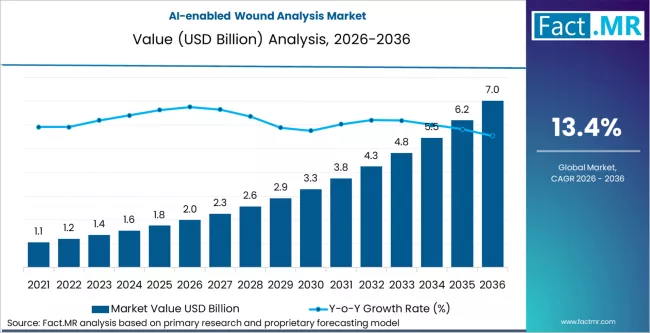
    The AI-enabled wound analysis market records USD 2.0 billion in 2026 and advances to USD 7.0 billion by 2036 at a 13.40% CAGR.

    AI-enabled Wound Analysis Market Key Takeaways

    • AI-enabled Wound Analysis Market Value (2026): USD 2.0 billion
    • AI-enabled Wound Analysis Market Forecast Value (2036): USD 7.0 billion
    • AI-enabled Wound Analysis Market Forecast CAGR 2026 to 2036: 13.4%
    • Leading Platform Type in AI-enabled Wound Analysis Market: Smartphone-based wound imaging apps
    • Leading Application in AI-enabled Wound Analysis Market: Diabetic foot ulcers
    • Leading End User in AI-enabled Wound Analysis Market: Hospitals and integrated delivery networks
    • Key Growth Regions in AI-enabled Wound Analysis Market: Asia Pacific, Europe, North America, Latin America, Middle East & Africa
    • Top Players in AI-enabled Wound Analysis Market: Smith & Nephew, Solventum, Mölnlycke Health Care, Net Health Systems, Swift Medical

    Ai Enabled Wound Analysis Market Market Value Analysis

    The revenue path shows a progressive rise from USD 1.1 billion in 2021 through USD 1.4 billion, USD 1.8 billion, USD 2.3 billion, and USD 2.9 billion before the present base was reached. Adoption reflects institutional demand for standardized measurement, traceable documentation, and repeatable assessment across care settings.

    These systems are introduced to support clinical review, audit preparation, and longitudinal tracking within hospital, clinic, and home care programs. Once a platform is approved, it becomes embedded in routine workflows, as reports, image archives, and billing files rely on consistent output formats. Purchasing decisions emphasize image fidelity, scoring stability, and interoperability with record systems. Growth follows wider deployment across provider networks and incremental expansion of functions within installed software environments rather than rapid platform turnover.

    AI-enabled Wound Analysis Market

    Metric Value
    Market Value (2026) USD 2.0 billion
    Forecast Value (2036) USD 7.0 billion
    Forecast CAGR 2026 to 2036 13.4%

    Category

    Category Segments
    Platform Type Smartphone-based wound imaging apps; Dedicated wound imaging devices (camera/3D); EHR-integrated analytics & decision support; Remote monitoring and care coordination platforms; AI services (triage, auditing, reporting)
    Application Diabetic foot ulcers; Pressure injuries or ulcers; Venous leg ulcers; Post-surgical wound monitoring; Burns and traumatic wounds; Other chronic wounds
    End User or Channel Hospitals and integrated delivery networks; Specialty wound care clinics; Home health and post-acute providers; Long-term care facilities; Telehealth platforms or virtual care; Payers and employer programs
    Region North America; Europe; Asia Pacific; Latin America; Middle East & Africa

    Segmental Analysis

    Why Have Smartphone-Based Applications Become the Primary Entry Point for AI Wound Assessment?

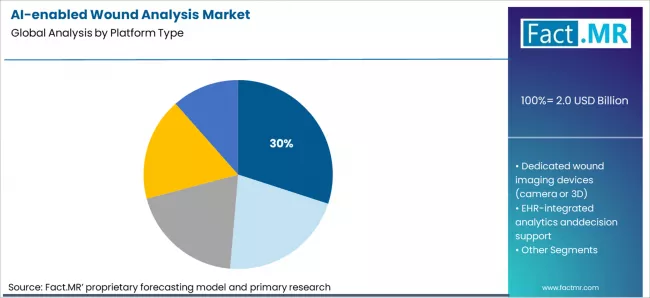
    Ai Enabled Wound Analysis Market Analysis By Platform Type

    Clinical workflows in the AI-enabled wound analysis market increasingly rely on smartphone-based wound imaging apps, which account for 30.0% of platform type usage. This position comes from how care teams capture images at the bedside, in home visits, and in outpatient settings. Smartphones already sit within daily clinical routines, which makes image capture and upload immediate rather than scheduled. Training requirements remain limited since staff already know the hardware interface. IT departments also accept these tools more easily when they do not require new device fleets. Data flows from these apps fit into existing review and documentation steps. Dedicated cameras and integrated systems remain important in selected settings. The broad reach of phones keeps app based platforms at the front of everyday wound documentation activity.

    Why Do Diabetic Foot Ulcers Receive the Greatest Share of Analytical Attention?

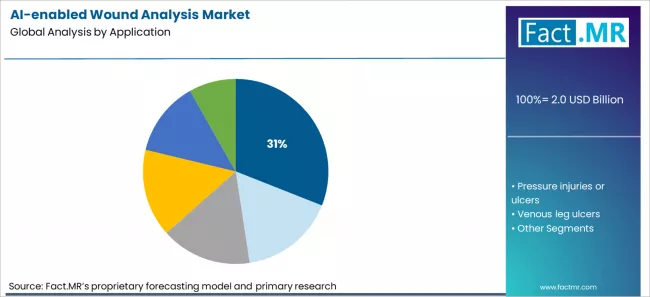
    Ai Enabled Wound Analysis Market Analysis By Application

    Case distribution in the AI-enabled wound analysis market shows diabetic foot ulcers representing 31.0% of application volume. This reflects the frequency, monitoring intensity, and long follow-up cycles attached to these wounds. Care pathways require repeated imaging, size tracking, and tissue change assessment over extended periods. Clinics and home care teams generate large image sets from the same patients across months. Payment and quality programs also place strong emphasis on preventing complications in this group. Review meetings often focus on these cases due to escalation risk and resource use. Pressure injuries, venous ulcers, and surgical wounds remain active categories. The continuous assessment burden linked to diabetic foot care keeps this application area at the center of analytical workload.

    What are the Drivers, Restraints, and Key Trends of the AI-enabled Wound Analysis Market?

    • Drivers: Rising prevalence of chronic wounds and the need for objective, standardized wound assessment are increasing adoption of AI-enabled analysis systems that support consistent measurement, faster documentation, and improved clinical decision support in hospitals and wound care centers.
    • Restraint: High implementation costs, integration challenges with existing clinical systems, and regulatory review requirements limit rapid deployment across smaller healthcare facilities and outpatient settings.
    • Trend 1: Growing use of combined imaging and analytics platforms that automate wound measurement, classification, and healing progress tracking.
    • Trend 2: Expansion of mobile and cloud-based solutions that support remote wound monitoring and follow-up care workflows.

    Country

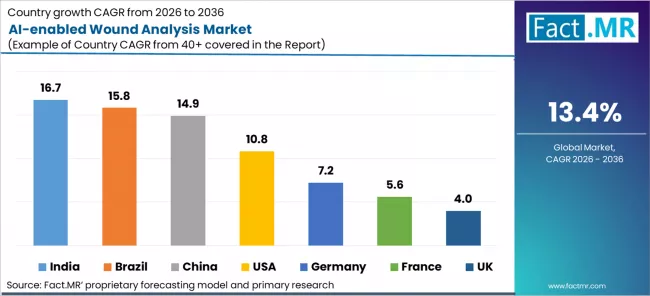
    Ai Enabled Wound Analysis Market Cagr Analysis By Country

    Country CAGR 2026 to 2036
    USA 10.8%
    Brazil 15.8%
    China 14.9%
    India 16.7%
    Germany 7.2%
    France 5.6%
    UK 4.0%

    The report covers an in-depth analysis of 40+ countries; top-performing countries are highlighted below.

    How Are Hospital Digitization Programs in USA Shaping Use of AI-enabled Wound Analysis?

    In USA, this market advances at close to 10.8% per year through 2036. Adoption follows hospital digitization budgets rather than individual department trials. Procurement decisions sit with system level committees focused on documentation quality and integration with existing records platforms. Use cases concentrate on chronic wounds, post-surgical follow up, and discharge monitoring. Deployment often starts inside larger networks before reaching outpatient settings. Vendor selection depends on auditability, data security, and workflow fit. Rollouts follow phased implementation plans. License volumes grow when systems expand across facilities. Renewals depend on clinician usage rates and reporting value. Market development remains tied to health system modernization schedules rather than to short cycle technology upgrades.

    What Is Driving Rapid Expansion of AI-enabled Wound Analysis in Brazil?

    Brazil records growth near 15.8% per year through 2036. Demand rises from private hospital groups seeking standardized wound documentation across multi-site networks. Manual assessment methods still dominate many facilities, which creates room for step change adoption. Implementation usually begins inside high volume wound clinics. Purchasing decisions focus on cost control and training requirements. Integration with existing hospital systems remains selective. Rollout speed depends on budget approval cycles rather than technical readiness. Vendor competition centers on service support and uptime reliability. License growth follows network expansion. Continued usage depends on whether reporting outputs reduce nursing time and improve audit preparation workloads during inspections.

    What Is Supporting Broad Uptake of AI-enabled Wound Analysis in China?

    China shows expansion close to 14.9% per year through 2036. Hospital modernization and central reporting requirements shape most adoption patterns. Deployment concentrates inside large public hospitals and specialist wound centers. Use cases focus on triage support and standardized image documentation. Procurement decisions align with multiyear digital health investment plans. Integration requirements influence vendor shortlists. Rollouts often occur in waves tied to infrastructure upgrades. License volumes increase when additional departments join shared platforms. Local service support plays a strong role in selection. Market growth remains linked to institutional digitization programs rather than to individual clinician driven experimentation.

    How Are Large Hospital Networks in India Changing Use of AI-enabled Wound Analysis?

    In India, this market progresses at roughly 16.7% per year through 2036. Expansion is driven by hospital groups seeking consistent documentation across facilities. High patient volumes and staffing pressure increase interest in automated assessment tools. Deployment often starts inside tertiary care centers before spreading to satellite units. Purchasing decisions weigh cost, training effort, and workflow impact. Integration with hospital information systems influences timelines. Rollouts follow phased site expansion. License growth tracks network scale rather than bed counts alone. Continued use depends on whether systems reduce documentation burden and improve audit readiness during accreditation cycles.

    What Is Defining Adoption of AI-enabled Wound Analysis in Germany?

    Germany shows growth near 7.2% per year through 2036. Adoption follows structured evaluation and pilot phases rather than rapid deployment. Hospitals emphasize validation, data protection, and clinical governance before scaling use. Initial installations concentrate in specialist wound centers. Procurement committees require clear evidence of workflow benefit. Integration with existing clinical systems remains a central requirement. Rollouts proceed cautiously across departments. License volumes rise after multi-site approvals. Vendor selection focuses on reliability and compliance support. Market development stays tied to formal evaluation cycles rather than to budget driven mass rollouts.

    How Are Clinical Documentation Priorities in France Influencing Use of AI-enabled Wound Analysis?

    France records expansion near 5.6% per year through 2036. Adoption centers on improving consistency of wound documentation inside hospital workflows. Use begins in selected departments before broader rollout. Procurement decisions emphasize regulatory alignment and data hosting requirements. Integration with existing hospital systems influences timelines. Budget approvals follow annual planning cycles. License growth remains gradual and tied to department level expansion. Vendor competition focuses on service quality and training support. Continued usage depends on whether systems simplify reporting and audit preparation. Market development remains incremental rather than rapid.

    What Is Shaping Demand for AI-enabled Wound Analysis in UK?

    In UK, growth holds near 4% per year through 2036. Adoption is influenced by funding cycles and centralized evaluation processes. Deployment often begins through pilot programs inside selected trusts. Use cases focus on standardizing assessment and supporting community care pathways. Procurement decisions emphasize cost effectiveness and interoperability. Rollout speed depends on approval pathways rather than technical readiness. License volumes rise slowly as programs extend across sites. Vendor selection favors proven references and support capability. Continued use depends on alignment with care pathway reporting requirements rather than on standalone efficiency gains.

    How Do Clinical Workflow Fit and Data Governance Shape Competition in the AI Enabled Wound Analysis Market?

    Ai Enabled Wound Analysis Market Analysis By Company

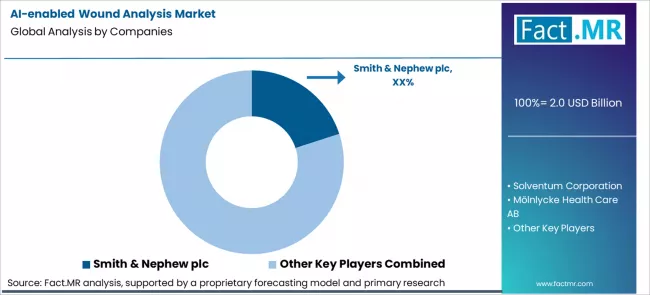
    Adoption decisions in the AI enabled wound analysis market are driven by clinical workflow integration and data governance requirements rather than by feature lists. Hospital groups first define imaging protocols, documentation rules, and escalation pathways before any supplier is evaluated. Smith and Nephew, Solventum, and Mölnlycke usually enter through existing wound care portfolios, which secures access to procurement frameworks and clinical committees.

    Swift Medical and Net Health compete where software deployment speed and analytics integration with records systems are decisive. Buyers compare suppliers using measurement repeatability, audit trail quality, and interoperability with hospital systems. Once a platform is approved, usage expands with network rollouts. Supplier changes tend to follow IT platform renewals or clinical documentation policy revisions.

    Key Players in AI-enabled Wound Analysis Market

    • Smith & Nephew plc
    • Solventum Corporation
    • Mölnlycke Health Care AB
    • Net Health Systems, Inc.
    • Swift Medical Inc.

    Scope of the Report

    Items Values
    Quantitative Units (2026) USD billion
    Platform Type Smartphone-based wound imaging apps, dedicated wound imaging devices (camera/3D), EHR-integrated analytics and decision support, remote monitoring and care coordination platforms, AI services (triage, auditing, reporting)
    Application Diabetic foot ulcers, pressure injuries or ulcers, venous leg ulcers, post-surgical wound monitoring, burns and traumatic wounds, other chronic wounds
    End User or Channel Hospitals and integrated delivery networks, specialty wound care clinics, home health and post-acute providers, long-term care facilities, telehealth platforms or virtual care, payers and employer programs
    Regions Covered Asia Pacific, Europe, North America, Latin America, Middle East & Africa
    Countries Covered United States, Canada, Mexico, Germany, United Kingdom, France, Italy, Spain, Nordics, BENELUX, China, Japan, South Korea, India, Australia & New Zealand, ASEAN, Brazil, Chile, Saudi Arabia, Turkey, South Africa, and other regional markets
    Key Companies Profiled Smith & Nephew, Solventum, Mölnlycke Health Care, Net Health Systems, Swift Medical
    Additional Attributes Dollar sales by platform type, application, and end user; image fidelity, measurement repeatability, audit trail quality, and interoperability; deployment by hospital networks, phased rollouts, and license expansion tied to digitization programs

    AI-enabled Wound Analysis Market Segmentation

    • Platform Type :

      • Smartphone-based wound imaging apps
      • Dedicated wound imaging devices (camera/3D)
      • EHR-integrated analytics & decision support
      • Remote monitoring + care coordination platforms
      • AI services (triage, auditing, reporting)
    • Application :

      • Diabetic foot ulcers
      • Pressure injuries or ulcers
      • Venous leg ulcers
      • Post-surgical wound monitoring
      • Burns & traumatic wounds
      • Other chronic wounds
    • End User or Channel :

      • Hospitals & integrated delivery networks
      • Specialty wound care clinics
      • Home health & post-acute providers
      • Long-term care facilities
      • Telehealth platforms or virtual care
      • Payers & employer programs
    • Region :

      • Asia Pacific
        • China
        • Japan
        • South Korea
        • India
        • Australia & New Zealand
        • ASEAN
        • Rest of Asia Pacific
      • Europe
        • Germany
        • United Kingdom
        • France
        • Italy
        • Spain
        • Nordic
        • BENELUX
        • Rest of Europe
      • North America
        • United States
        • Canada
        • Mexico
      • Latin America
        • Brazil
        • Chile
        • Rest of Latin America
      • Middle East & Africa
        • Kingdom of Saudi Arabia
        • Other GCC Countries
        • Turkey
        • South Africa
        • Other African Union
        • Rest of Middle East & Africa

    References

    • World Health Organization. (2024). Ethics and governance of artificial intelligence for health: Guidance on large multi-modal models. World Health Organization.
    • U.S. Food and Drug Administration. (2024). Artificial intelligence and machine learning in software as a medical device. U.S. Department of Health and Human Services.
    • National Institute for Health and Care Excellence. (2023). Evidence standards framework for digital health technologies including AI-based imaging systems. NICE.
    • National Institute of Standards and Technology. (2024). Artificial Intelligence Risk Management Framework 1.0: Healthcare profile. U.S. Department of Commerce.
    • Medical Device Coordination Group. (2023). Guidance on qualification and classification of software including AI-based medical devices (MDCG 2019-11 rev. 1). European Commission.

    Table of Content

    1. Executive Summary
      • Global Market Outlook
      • Demand to side Trends
      • Supply to side Trends
      • Technology Roadmap Analysis
      • Analysis and Recommendations
    2. Market Overview
      • Market Coverage / Taxonomy
      • Market Definition / Scope / Limitations
    3. Market Background
      • Market Dynamics
        • Drivers
        • Restraints
        • Opportunity
        • Trends
      • Scenario Forecast
        • Demand in Optimistic Scenario
        • Demand in Likely Scenario
        • Demand in Conservative Scenario
      • Opportunity Map Analysis
      • Product Life Cycle Analysis
      • Supply Chain Analysis
      • Investment Feasibility Matrix
      • Value Chain Analysis
      • PESTLE and Porter’s Analysis
      • Regulatory Landscape
      • Regional Parent Market Outlook
      • Production and Consumption Statistics
      • Import and Export Statistics
    4. Global Market Analysis 2021 to 2025 and Forecast, 2026 to 2036
      • Historical Market Size Value (USD Million) Analysis, 2021 to 2025
      • Current and Future Market Size Value (USD Million) Projections, 2026 to 2036
        • Y to o to Y Growth Trend Analysis
        • Absolute $ Opportunity Analysis
    5. Global Market Pricing Analysis 2021 to 2025 and Forecast 2026 to 2036
    6. Global Market Analysis 2021 to 2025 and Forecast 2026 to 2036, By Platform Type
      • Introduction / Key Findings
      • Historical Market Size Value (USD Million) Analysis By Platform Type, 2021 to 2025
      • Current and Future Market Size Value (USD Million) Analysis and Forecast By Platform Type, 2026 to 2036
        • Smartphone-based wound imaging apps
        • Dedicated wound imaging devices (camera or 3D)
        • EHR-integrated analytics anddecision support
        • Remote monitoring + care coordination platforms
        • AI services (triage, auditing, reporting)
      • Y to o to Y Growth Trend Analysis By Platform Type, 2021 to 2025
      • Absolute $ Opportunity Analysis By Platform Type, 2026 to 2036
    7. Global Market Analysis 2021 to 2025 and Forecast 2026 to 2036, By Application
      • Introduction / Key Findings
      • Historical Market Size Value (USD Million) Analysis By Application, 2021 to 2025
      • Current and Future Market Size Value (USD Million) Analysis and Forecast By Application, 2026 to 2036
        • Diabetic foot ulcers
        • Pressure injuries or ulcers
        • Venous leg ulcers
        • Post-surgical wound monitoring
        • Burns and traumatic wounds
        • Other chronic wounds
      • Y to o to Y Growth Trend Analysis By Application, 2021 to 2025
      • Absolute $ Opportunity Analysis By Application, 2026 to 2036
    8. Global Market Analysis 2021 to 2025 and Forecast 2026 to 2036, By End User or Channel
      • Introduction / Key Findings
      • Historical Market Size Value (USD Million) Analysis By End User or Channel, 2021 to 2025
      • Current and Future Market Size Value (USD Million) Analysis and Forecast By End User or Channel, 2026 to 2036
        • Hospitals andintegrated delivery networks
        • Specialty wound care clinics
        • Home health and post-acute providers
        • Long-term care facilities
        • Telehealth platforms or virtual care
        • Payers and employer programs
      • Y to o to Y Growth Trend Analysis By End User or Channel, 2021 to 2025
      • Absolute $ Opportunity Analysis By End User or Channel, 2026 to 2036
    9. Global Market Analysis 2021 to 2025 and Forecast 2026 to 2036, By Region
      • Introduction
      • Historical Market Size Value (USD Million) Analysis By Region, 2021 to 2025
      • Current Market Size Value (USD Million) Analysis and Forecast By Region, 2026 to 2036
        • North America
        • Latin America
        • Western Europe
        • Eastern Europe
        • East Asia
        • South Asia and Pacific
        • Middle East & Africa
      • Market Attractiveness Analysis By Region
    10. North America Market Analysis 2021 to 2025 and Forecast 2026 to 2036, By Country
      • Historical Market Size Value (USD Million) Trend Analysis By Market Taxonomy, 2021 to 2025
      • Market Size Value (USD Million) Forecast By Market Taxonomy, 2026 to 2036
        • By Country
          • USA
          • Canada
          • Mexico
        • By Platform Type
        • By Application
        • By End User or Channel
      • Market Attractiveness Analysis
        • By Country
        • By Platform Type
        • By Application
        • By End User or Channel
      • Key Takeaways
    11. Latin America Market Analysis 2021 to 2025 and Forecast 2026 to 2036, By Country
      • Historical Market Size Value (USD Million) Trend Analysis By Market Taxonomy, 2021 to 2025
      • Market Size Value (USD Million) Forecast By Market Taxonomy, 2026 to 2036
        • By Country
          • Brazil
          • Chile
          • Rest of Latin America
        • By Platform Type
        • By Application
        • By End User or Channel
      • Market Attractiveness Analysis
        • By Country
        • By Platform Type
        • By Application
        • By End User or Channel
      • Key Takeaways
    12. Western Europe Market Analysis 2021 to 2025 and Forecast 2026 to 2036, By Country
      • Historical Market Size Value (USD Million) Trend Analysis By Market Taxonomy, 2021 to 2025
      • Market Size Value (USD Million) Forecast By Market Taxonomy, 2026 to 2036
        • By Country
          • Germany
          • UK
          • Italy
          • Spain
          • France
          • Nordic
          • BENELUX
          • Rest of Western Europe
        • By Platform Type
        • By Application
        • By End User or Channel
      • Market Attractiveness Analysis
        • By Country
        • By Platform Type
        • By Application
        • By End User or Channel
      • Key Takeaways
    13. Eastern Europe Market Analysis 2021 to 2025 and Forecast 2026 to 2036, By Country
      • Historical Market Size Value (USD Million) Trend Analysis By Market Taxonomy, 2021 to 2025
      • Market Size Value (USD Million) Forecast By Market Taxonomy, 2026 to 2036
        • By Country
          • Russia
          • Poland
          • Hungary
          • Balkan & Baltic
          • Rest of Eastern Europe
        • By Platform Type
        • By Application
        • By End User or Channel
      • Market Attractiveness Analysis
        • By Country
        • By Platform Type
        • By Application
        • By End User or Channel
      • Key Takeaways
    14. East Asia Market Analysis 2021 to 2025 and Forecast 2026 to 2036, By Country
      • Historical Market Size Value (USD Million) Trend Analysis By Market Taxonomy, 2021 to 2025
      • Market Size Value (USD Million) Forecast By Market Taxonomy, 2026 to 2036
        • By Country
          • China
          • Japan
          • South Korea
        • By Platform Type
        • By Application
        • By End User or Channel
      • Market Attractiveness Analysis
        • By Country
        • By Platform Type
        • By Application
        • By End User or Channel
      • Key Takeaways
    15. South Asia and Pacific Market Analysis 2021 to 2025 and Forecast 2026 to 2036, By Country
      • Historical Market Size Value (USD Million) Trend Analysis By Market Taxonomy, 2021 to 2025
      • Market Size Value (USD Million) Forecast By Market Taxonomy, 2026 to 2036
        • By Country
          • India
          • ASEAN
          • Australia & New Zealand
          • Rest of South Asia and Pacific
        • By Platform Type
        • By Application
        • By End User or Channel
      • Market Attractiveness Analysis
        • By Country
        • By Platform Type
        • By Application
        • By End User or Channel
      • Key Takeaways
    16. Middle East & Africa Market Analysis 2021 to 2025 and Forecast 2026 to 2036, By Country
      • Historical Market Size Value (USD Million) Trend Analysis By Market Taxonomy, 2021 to 2025
      • Market Size Value (USD Million) Forecast By Market Taxonomy, 2026 to 2036
        • By Country
          • Kingdom of Saudi Arabia
          • Other GCC Countries
          • Turkiye
          • South Africa
          • Other African Union
          • Rest of Middle East & Africa
        • By Platform Type
        • By Application
        • By End User or Channel
      • Market Attractiveness Analysis
        • By Country
        • By Platform Type
        • By Application
        • By End User or Channel
      • Key Takeaways
    17. Key Countries Market Analysis
      • USA
        • Pricing Analysis
        • Market Share Analysis, 2025
          • By Platform Type
          • By Application
          • By End User or Channel
      • Canada
        • Pricing Analysis
        • Market Share Analysis, 2025
          • By Platform Type
          • By Application
          • By End User or Channel
      • Mexico
        • Pricing Analysis
        • Market Share Analysis, 2025
          • By Platform Type
          • By Application
          • By End User or Channel
      • Brazil
        • Pricing Analysis
        • Market Share Analysis, 2025
          • By Platform Type
          • By Application
          • By End User or Channel
      • Chile
        • Pricing Analysis
        • Market Share Analysis, 2025
          • By Platform Type
          • By Application
          • By End User or Channel
      • Germany
        • Pricing Analysis
        • Market Share Analysis, 2025
          • By Platform Type
          • By Application
          • By End User or Channel
      • UK
        • Pricing Analysis
        • Market Share Analysis, 2025
          • By Platform Type
          • By Application
          • By End User or Channel
      • Italy
        • Pricing Analysis
        • Market Share Analysis, 2025
          • By Platform Type
          • By Application
          • By End User or Channel
      • Spain
        • Pricing Analysis
        • Market Share Analysis, 2025
          • By Platform Type
          • By Application
          • By End User or Channel
      • France
        • Pricing Analysis
        • Market Share Analysis, 2025
          • By Platform Type
          • By Application
          • By End User or Channel
      • India
        • Pricing Analysis
        • Market Share Analysis, 2025
          • By Platform Type
          • By Application
          • By End User or Channel
      • ASEAN
        • Pricing Analysis
        • Market Share Analysis, 2025
          • By Platform Type
          • By Application
          • By End User or Channel
      • Australia & New Zealand
        • Pricing Analysis
        • Market Share Analysis, 2025
          • By Platform Type
          • By Application
          • By End User or Channel
      • China
        • Pricing Analysis
        • Market Share Analysis, 2025
          • By Platform Type
          • By Application
          • By End User or Channel
      • Japan
        • Pricing Analysis
        • Market Share Analysis, 2025
          • By Platform Type
          • By Application
          • By End User or Channel
      • South Korea
        • Pricing Analysis
        • Market Share Analysis, 2025
          • By Platform Type
          • By Application
          • By End User or Channel
      • Russia
        • Pricing Analysis
        • Market Share Analysis, 2025
          • By Platform Type
          • By Application
          • By End User or Channel
      • Poland
        • Pricing Analysis
        • Market Share Analysis, 2025
          • By Platform Type
          • By Application
          • By End User or Channel
      • Hungary
        • Pricing Analysis
        • Market Share Analysis, 2025
          • By Platform Type
          • By Application
          • By End User or Channel
      • Kingdom of Saudi Arabia
        • Pricing Analysis
        • Market Share Analysis, 2025
          • By Platform Type
          • By Application
          • By End User or Channel
      • Turkiye
        • Pricing Analysis
        • Market Share Analysis, 2025
          • By Platform Type
          • By Application
          • By End User or Channel
      • South Africa
        • Pricing Analysis
        • Market Share Analysis, 2025
          • By Platform Type
          • By Application
          • By End User or Channel
    18. Market Structure Analysis
      • Competition Dashboard
      • Competition Benchmarking
      • Market Share Analysis of Top Players
        • By Regional
        • By Platform Type
        • By Application
        • By End User or Channel
    19. Competition Analysis
      • Competition Deep Dive
        • Smith & Nephew plc
          • Overview
          • Product Portfolio
          • Profitability by Market Segments (Product/Age /Sales Channel/Region)
          • Sales Footprint
          • Strategy Overview
            • Marketing Strategy
            • Product Strategy
            • Channel Strategy
        • Solventum Corporation
        • Mölnlycke Health Care AB
        • Net Health Systems, Inc.
        • Swift Medical Inc.
    20. Assumptions & Acronyms Used
    21. Research Methodology

    List Of Table

    • Table 1: Global Market Value (USD Million) Forecast by Region, 2021 to 2036
    • Table 2: Global Market Value (USD Million) Forecast by Platform Type, 2021 to 2036
    • Table 3: Global Market Value (USD Million) Forecast by Application, 2021 to 2036
    • Table 4: Global Market Value (USD Million) Forecast by End User or Channel, 2021 to 2036
    • Table 5: North America Market Value (USD Million) Forecast by Country, 2021 to 2036
    • Table 6: North America Market Value (USD Million) Forecast by Platform Type, 2021 to 2036
    • Table 7: North America Market Value (USD Million) Forecast by Application, 2021 to 2036
    • Table 8: North America Market Value (USD Million) Forecast by End User or Channel, 2021 to 2036
    • Table 9: Latin America Market Value (USD Million) Forecast by Country, 2021 to 2036
    • Table 10: Latin America Market Value (USD Million) Forecast by Platform Type, 2021 to 2036
    • Table 11: Latin America Market Value (USD Million) Forecast by Application, 2021 to 2036
    • Table 12: Latin America Market Value (USD Million) Forecast by End User or Channel, 2021 to 2036
    • Table 13: Western Europe Market Value (USD Million) Forecast by Country, 2021 to 2036
    • Table 14: Western Europe Market Value (USD Million) Forecast by Platform Type, 2021 to 2036
    • Table 15: Western Europe Market Value (USD Million) Forecast by Application, 2021 to 2036
    • Table 16: Western Europe Market Value (USD Million) Forecast by End User or Channel, 2021 to 2036
    • Table 17: Eastern Europe Market Value (USD Million) Forecast by Country, 2021 to 2036
    • Table 18: Eastern Europe Market Value (USD Million) Forecast by Platform Type, 2021 to 2036
    • Table 19: Eastern Europe Market Value (USD Million) Forecast by Application, 2021 to 2036
    • Table 20: Eastern Europe Market Value (USD Million) Forecast by End User or Channel, 2021 to 2036
    • Table 21: East Asia Market Value (USD Million) Forecast by Country, 2021 to 2036
    • Table 22: East Asia Market Value (USD Million) Forecast by Platform Type, 2021 to 2036
    • Table 23: East Asia Market Value (USD Million) Forecast by Application, 2021 to 2036
    • Table 24: East Asia Market Value (USD Million) Forecast by End User or Channel, 2021 to 2036
    • Table 25: South Asia and Pacific Market Value (USD Million) Forecast by Country, 2021 to 2036
    • Table 26: South Asia and Pacific Market Value (USD Million) Forecast by Platform Type, 2021 to 2036
    • Table 27: South Asia and Pacific Market Value (USD Million) Forecast by Application, 2021 to 2036
    • Table 28: South Asia and Pacific Market Value (USD Million) Forecast by End User or Channel, 2021 to 2036
    • Table 29: Middle East & Africa Market Value (USD Million) Forecast by Country, 2021 to 2036
    • Table 30: Middle East & Africa Market Value (USD Million) Forecast by Platform Type, 2021 to 2036
    • Table 31: Middle East & Africa Market Value (USD Million) Forecast by Application, 2021 to 2036
    • Table 32: Middle East & Africa Market Value (USD Million) Forecast by End User or Channel, 2021 to 2036

    List Of Figures

    • Figure 1: Global Market Pricing Analysis
    • Figure 2: Global Market Value (USD Million) Forecast 2021 to 2036
    • Figure 3: Global Market Value Share and BPS Analysis by Platform Type, 2026 and 2036
    • Figure 4: Global Market Y to o to Y Growth Comparison by Platform Type, 2026 to 2036
    • Figure 5: Global Market Attractiveness Analysis by Platform Type
    • Figure 6: Global Market Value Share and BPS Analysis by Application, 2026 and 2036
    • Figure 7: Global Market Y to o to Y Growth Comparison by Application, 2026 to 2036
    • Figure 8: Global Market Attractiveness Analysis by Application
    • Figure 9: Global Market Value Share and BPS Analysis by End User or Channel, 2026 and 2036
    • Figure 10: Global Market Y to o to Y Growth Comparison by End User or Channel, 2026 to 2036
    • Figure 11: Global Market Attractiveness Analysis by End User or Channel
    • Figure 12: Global Market Value (USD Million) Share and BPS Analysis by Region, 2026 and 2036
    • Figure 13: Global Market Y to o to Y Growth Comparison by Region, 2026 to 2036
    • Figure 14: Global Market Attractiveness Analysis by Region
    • Figure 15: North America Market Incremental Dollar Opportunity, 2026 to 2036
    • Figure 16: Latin America Market Incremental Dollar Opportunity, 2026 to 2036
    • Figure 17: Western Europe Market Incremental Dollar Opportunity, 2026 to 2036
    • Figure 18: Eastern Europe Market Incremental Dollar Opportunity, 2026 to 2036
    • Figure 19: East Asia Market Incremental Dollar Opportunity, 2026 to 2036
    • Figure 20: South Asia and Pacific Market Incremental Dollar Opportunity, 2026 to 2036
    • Figure 21: Middle East & Africa Market Incremental Dollar Opportunity, 2026 to 2036
    • Figure 22: North America Market Value Share and BPS Analysis by Country, 2026 and 2036
    • Figure 23: North America Market Value Share and BPS Analysis by Platform Type, 2026 and 2036
    • Figure 24: North America Market Y to o to Y Growth Comparison by Platform Type, 2026 to 2036
    • Figure 25: North America Market Attractiveness Analysis by Platform Type
    • Figure 26: North America Market Value Share and BPS Analysis by Application, 2026 and 2036
    • Figure 27: North America Market Y to o to Y Growth Comparison by Application, 2026 to 2036
    • Figure 28: North America Market Attractiveness Analysis by Application
    • Figure 29: North America Market Value Share and BPS Analysis by End User or Channel, 2026 and 2036
    • Figure 30: North America Market Y to o to Y Growth Comparison by End User or Channel, 2026 to 2036
    • Figure 31: North America Market Attractiveness Analysis by End User or Channel
    • Figure 32: Latin America Market Value Share and BPS Analysis by Country, 2026 and 2036
    • Figure 33: Latin America Market Value Share and BPS Analysis by Platform Type, 2026 and 2036
    • Figure 34: Latin America Market Y to o to Y Growth Comparison by Platform Type, 2026 to 2036
    • Figure 35: Latin America Market Attractiveness Analysis by Platform Type
    • Figure 36: Latin America Market Value Share and BPS Analysis by Application, 2026 and 2036
    • Figure 37: Latin America Market Y to o to Y Growth Comparison by Application, 2026 to 2036
    • Figure 38: Latin America Market Attractiveness Analysis by Application
    • Figure 39: Latin America Market Value Share and BPS Analysis by End User or Channel, 2026 and 2036
    • Figure 40: Latin America Market Y to o to Y Growth Comparison by End User or Channel, 2026 to 2036
    • Figure 41: Latin America Market Attractiveness Analysis by End User or Channel
    • Figure 42: Western Europe Market Value Share and BPS Analysis by Country, 2026 and 2036
    • Figure 43: Western Europe Market Value Share and BPS Analysis by Platform Type, 2026 and 2036
    • Figure 44: Western Europe Market Y to o to Y Growth Comparison by Platform Type, 2026 to 2036
    • Figure 45: Western Europe Market Attractiveness Analysis by Platform Type
    • Figure 46: Western Europe Market Value Share and BPS Analysis by Application, 2026 and 2036
    • Figure 47: Western Europe Market Y to o to Y Growth Comparison by Application, 2026 to 2036
    • Figure 48: Western Europe Market Attractiveness Analysis by Application
    • Figure 49: Western Europe Market Value Share and BPS Analysis by End User or Channel, 2026 and 2036
    • Figure 50: Western Europe Market Y to o to Y Growth Comparison by End User or Channel, 2026 to 2036
    • Figure 51: Western Europe Market Attractiveness Analysis by End User or Channel
    • Figure 52: Eastern Europe Market Value Share and BPS Analysis by Country, 2026 and 2036
    • Figure 53: Eastern Europe Market Value Share and BPS Analysis by Platform Type, 2026 and 2036
    • Figure 54: Eastern Europe Market Y to o to Y Growth Comparison by Platform Type, 2026 to 2036
    • Figure 55: Eastern Europe Market Attractiveness Analysis by Platform Type
    • Figure 56: Eastern Europe Market Value Share and BPS Analysis by Application, 2026 and 2036
    • Figure 57: Eastern Europe Market Y to o to Y Growth Comparison by Application, 2026 to 2036
    • Figure 58: Eastern Europe Market Attractiveness Analysis by Application
    • Figure 59: Eastern Europe Market Value Share and BPS Analysis by End User or Channel, 2026 and 2036
    • Figure 60: Eastern Europe Market Y to o to Y Growth Comparison by End User or Channel, 2026 to 2036
    • Figure 61: Eastern Europe Market Attractiveness Analysis by End User or Channel
    • Figure 62: East Asia Market Value Share and BPS Analysis by Country, 2026 and 2036
    • Figure 63: East Asia Market Value Share and BPS Analysis by Platform Type, 2026 and 2036
    • Figure 64: East Asia Market Y to o to Y Growth Comparison by Platform Type, 2026 to 2036
    • Figure 65: East Asia Market Attractiveness Analysis by Platform Type
    • Figure 66: East Asia Market Value Share and BPS Analysis by Application, 2026 and 2036
    • Figure 67: East Asia Market Y to o to Y Growth Comparison by Application, 2026 to 2036
    • Figure 68: East Asia Market Attractiveness Analysis by Application
    • Figure 69: East Asia Market Value Share and BPS Analysis by End User or Channel, 2026 and 2036
    • Figure 70: East Asia Market Y to o to Y Growth Comparison by End User or Channel, 2026 to 2036
    • Figure 71: East Asia Market Attractiveness Analysis by End User or Channel
    • Figure 72: South Asia and Pacific Market Value Share and BPS Analysis by Country, 2026 and 2036
    • Figure 73: South Asia and Pacific Market Value Share and BPS Analysis by Platform Type, 2026 and 2036
    • Figure 74: South Asia and Pacific Market Y to o to Y Growth Comparison by Platform Type, 2026 to 2036
    • Figure 75: South Asia and Pacific Market Attractiveness Analysis by Platform Type
    • Figure 76: South Asia and Pacific Market Value Share and BPS Analysis by Application, 2026 and 2036
    • Figure 77: South Asia and Pacific Market Y to o to Y Growth Comparison by Application, 2026 to 2036
    • Figure 78: South Asia and Pacific Market Attractiveness Analysis by Application
    • Figure 79: South Asia and Pacific Market Value Share and BPS Analysis by End User or Channel, 2026 and 2036
    • Figure 80: South Asia and Pacific Market Y to o to Y Growth Comparison by End User or Channel, 2026 to 2036
    • Figure 81: South Asia and Pacific Market Attractiveness Analysis by End User or Channel
    • Figure 82: Middle East & Africa Market Value Share and BPS Analysis by Country, 2026 and 2036
    • Figure 83: Middle East & Africa Market Value Share and BPS Analysis by Platform Type, 2026 and 2036
    • Figure 84: Middle East & Africa Market Y to o to Y Growth Comparison by Platform Type, 2026 to 2036
    • Figure 85: Middle East & Africa Market Attractiveness Analysis by Platform Type
    • Figure 86: Middle East & Africa Market Value Share and BPS Analysis by Application, 2026 and 2036
    • Figure 87: Middle East & Africa Market Y to o to Y Growth Comparison by Application, 2026 to 2036
    • Figure 88: Middle East & Africa Market Attractiveness Analysis by Application
    • Figure 89: Middle East & Africa Market Value Share and BPS Analysis by End User or Channel, 2026 and 2036
    • Figure 90: Middle East & Africa Market Y to o to Y Growth Comparison by End User or Channel, 2026 to 2036
    • Figure 91: Middle East & Africa Market Attractiveness Analysis by End User or Channel
    • Figure 92: Global Market - Tier Structure Analysis
    • Figure 93: Global Market - Company Share Analysis

    - FAQs -

    How big is the ai-enabled wound analysis market in 2026?

    The global ai-enabled wound analysis market is estimated to be valued at USD 2.0 billion in 2026.

    What will be the size of ai-enabled wound analysis market in 2036?

    The market size for the ai-enabled wound analysis market is projected to reach USD 7.0 billion by 2036.

    How much will be the ai-enabled wound analysis market growth between 2026 and 2036?

    The ai-enabled wound analysis market is expected to grow at a 13.4% CAGR between 2026 and 2036.

    What are the key product types in the ai-enabled wound analysis market?

    The key product types in ai-enabled wound analysis market are smartphone-based wound imaging apps, dedicated wound imaging devices (camera or 3d), ehr-integrated analytics anddecision support, remote monitoring + care coordination platforms and ai services (triage, auditing, reporting).

    Which application segment to contribute significant share in the ai-enabled wound analysis market in 2026?

    In terms of application, diabetic foot ulcers segment to command 31.0% share in the ai-enabled wound analysis market in 2026.
    AI-enabled Wound Analysis Market