Aluminum Crucible Preheater Market (2026 - 2036)
Aluminum Crucible Preheater Market Size and Share Forecast Outlook 2026 to 2036
Core Findings
Aluminum Crucible Preheater Market Forecast Outlook 2026 to 2036
The aluminum crucible preheater market is projected to reach USD 210.7 million in 2026, growing to USD 336.7 million by 2036, with a CAGR of 4.8%.
Key Takeaways from Aluminum Crucible Preheater Market
- Aluminum Crucible Preheater Market Value (2026): USD 210.7 million
- Aluminum Crucible Preheater Market Forecast Value (2036): USD 336.7 million
- Aluminum Crucible Preheater Market Forecast CAGR 2026 to 2036: 4.8%
- Leading Segment in Aluminum Crucible Preheater Market: Gas-fired Heat Source (58%)
- Key Growth Region in Aluminum Crucible Preheater Market: Asia Pacific
- Key Players in Aluminum Crucible Preheater Market: Inductotherm Group, StrikoWestofen GmbH, Nabertherm GmbH, OTTO JUNKER GmbH, Pyrotek, Inc., Rauch GmbH & Co. KG, SECO/WARWICK Corporation, Ipsen International Holding GmbH, Tenova S.p.A., SMS group GmbH
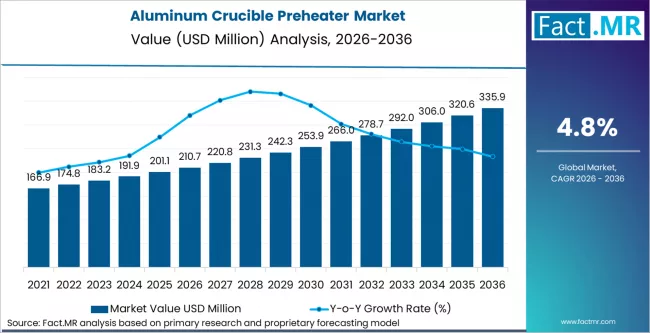
Dominant players in the market maintain pricing power by leveraging economies of scale, advanced technology, and established brand recognition. These factors enable them to offer high-quality, reliable products that command premium prices. Entry barriers remain significant due to the capital-intensive nature of manufacturing and the need for specialized knowledge in heat treatment processes.
As a result, new entrants face challenges in competing with well-established players. While the market remains somewhat fragmented, it is expected to narrow as larger companies consolidate their positions through acquisitions and strategic partnerships. Smaller players may focus on niche segments or regional markets, but the overall trend will be toward a more concentrated market structure, driven by the advantages of scale, reliability, and long-term customer relationships.
Aluminum Crucible Preheater Market
| Metric | Value |
|---|---|
| Estimated Value in (2026E) | USD 210.7 million |
| Forecast Value in (2036F) | USD 336.7 million |
| Forecast CAGR 2026 to 2036 | 4.8% |
Category
| Category | Segments |
|---|---|
| Heat Source | Gas-fired; Electric; Hybrid |
| Capacity | <250 kg; 250-750 kg; >750 kg |
| Automation | Manual or Portable; Stationary Automated |
| End Use | Die Casting; Foundries; Recycling or Secondary Smelting |
| Region | North America; Europe; Asia Pacific; Latin America; Middle East & Africa |
Segmental Analysis
What Is the Impact of Heat Source on the Aluminum Crucible Preheater Market?
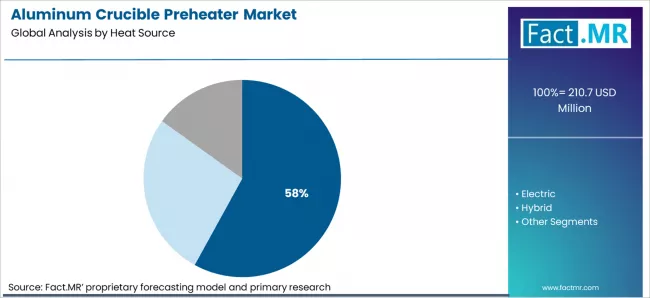
In the aluminum crucible preheater market, the heat source significantly affects the efficiency and cost-effectiveness of the heating process. Gas-fired preheaters lead the market with a 58% share, as they provide a reliable and efficient source of heat for preheating aluminum crucibles. Gas-fired systems are widely preferred in industrial settings due to their cost-effectiveness and ability to provide high temperatures quickly, which is essential for maintaining the crucible's integrity and performance. As industries such as foundries and die casting continue to demand reliable preheating solutions, the gas-fired heat source will remain a key driver in the market's growth.
What Is the Impact of Automation on the Aluminum Crucible Preheater Market?
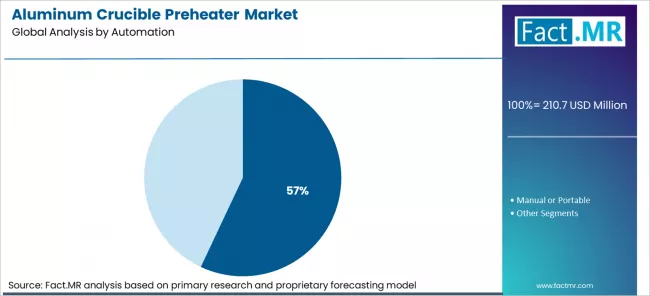
Automation level plays a significant role in determining the efficiency and ease of operation of aluminum crucible preheaters, with stationary automated systems holding a 57% share. Automated preheating systems offer precise control over temperature and timing, ensuring consistent and energy-efficient heating of crucibles, which reduces manual labor and minimizes operational errors. These systems are especially favored in high-volume production environments where consistency and reliability are crucial. As industries continue to focus on automation to improve productivity and reduce human error, the demand for stationary automated aluminum crucible preheaters will continue to drive growth in the market.
What are the Drivers, Restraints, and Key Trends in the Aluminum Crucible Preheater Market?
- Drivers: Demand for aluminum crucible preheaters is shaped by foundries and casting operations that require controlled preheating of crucibles to reduce thermal shock and improve melt consistency. Plant engineers and melt technicians specify preheaters to bring crucibles to target temperatures before charging molten metal, which helps reduce cracking and extend crucible life. Procurement teams prioritize units that deliver uniform heat distribution, reliable temperature control, and integration with existing melt handling workflows. Growth in automotive, aerospace, and industrial casting segments supports steady demand for dedicated preheating equipment.
- Restraints: High capital cost and energy requirements constrain adoption in smaller foundries and low volume shops with limited budgets. Some facilities encounter installation challenges where workspace constraints or existing furnace layouts restrict preheater placement. Variability in crucible sizes and alloy types requires adaptable systems, adding specification complexity.
- Trend 1: Development of preheaters with improved insulation and controls to reduce energy consumption and heat up cycles.
- Trend 2: Expansion of modular, scalable designs that support varied crucible diameters and production scales.
Analysis of the Aluminum Crucible Preheater Market by Key Country
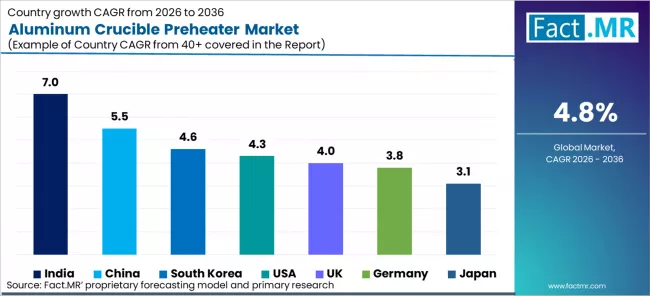
| Country | CAGR (2026-2036) |
|---|---|
| USA | 4.3% |
| China | 5.5% |
| India | 7% |
| Germany | 3.8% |
| Japan | 3.1% |
| South Korea | 4.6% |
| UK | 4% |
The report covers an in-depth analysis of 40+ countries; top-performing countries are highlighted below.
What is the Outlook on the Aluminum Crucible Preheater Market in the USA?
USA market in aluminum crucible preheaters is projected to grow at a CAGR of 4.3% from 2026 to 2036. The demand for aluminum crucible preheaters is driven by industries such as foundries, metal casting, and manufacturing that require efficient heating solutions for aluminum melting processes. These preheaters help optimize energy usage and ensure high-quality aluminum production. While the market in the USA is mature, continued demand for energy-efficient and high-performance equipment will support steady growth in this sector.
What is the Demand for Aluminum Crucible Preheaters in China?
China sales of aluminum crucible preheaters are expected to grow at a CAGR of 5.5% from 2026 to 2036. As China continues to be a leading global manufacturing hub, particularly in industries like metal casting, automotive, and electronics, the demand for aluminum crucible preheaters is increasing. These preheaters are essential for ensuring efficient melting processes and reducing energy consumption. With China’s industrial base expanding and a focus on improving production efficiency, the market for aluminum crucible preheaters is expected to grow steadily.
What is the Sales Outlook on Aluminum Crucible Preheaters in India?
India demand for aluminum crucible preheaters is projected to grow at a CAGR of 7% from 2026 to 2036. The demand for these preheaters in India is driven by the country’s expanding metal casting and manufacturing industries. Aluminum crucible preheaters are essential for improving energy efficiency and ensuring optimal melting conditions in aluminum production. As India continues to strengthen its industrial base and focus on improving manufacturing processes, the market for aluminum crucible preheaters is expected to experience robust growth.
What is the Demand for Aluminum Crucible Preheaters in Germany?
Germany market in aluminum crucible preheaters is forecast to grow at a CAGR of 3.8% from 2026 to 2036. Germany’s advanced manufacturing and metal casting industries, which require precision and energy-efficient heating solutions, are driving the demand for aluminum crucible preheaters. These devices are essential for improving the melting process and ensuring high-quality aluminum production. The market in Germany is expected to grow steadily, supported by increasing investments in industrial optimization and energy efficiency.
What is the Sales Outlook on Aluminum Crucible Preheaters in Japan?
Japan demand for aluminum crucible preheaters is set to grow at a CAGR of 3.1% from 2026 to 2036. Japan’s strong industrial sectors, particularly in automotive and electronics, are increasing the need for efficient heating systems in aluminum production. Aluminum crucible preheaters are crucial for optimizing the energy consumption and ensuring the quality of aluminum casting. While the market in Japan is mature, the ongoing demand for energy-efficient and high-performance equipment will continue to support moderate growth in the market.
What is the Market Expansion Outlook for Aluminum Crucible Preheaters in South Korea?
South Korea demand for aluminum crucible preheaters is projected to grow at a CAGR of 4.6% from 2026 to 2036. South Korea’s advanced metal casting and manufacturing sectors are driving the demand for reliable and energy-efficient aluminum crucible preheaters. These systems are essential for ensuring optimal performance in aluminum melting processes. With South Korea’s continued focus on improving industrial efficiency and product quality, the market for aluminum crucible preheaters is expected to experience steady growth.
What is the Market Expansion Outlook for Aluminum Crucible Preheaters in the UK?
UK sales of aluminum crucible preheaters are expected to grow at a CAGR of 4% from 2026 to 2036. The UK’s demand for aluminum crucible preheaters is increasing as industries such as metal casting, foundries, and manufacturing seek to optimize their energy use and production processes. These preheaters help improve the efficiency of aluminum melting and casting operations. With the ongoing focus on energy efficiency and sustainability, the market for aluminum crucible preheaters in the UK is expected to grow steadily.
How Are Key Players Competing in the Aluminum Crucible Preheater Market?
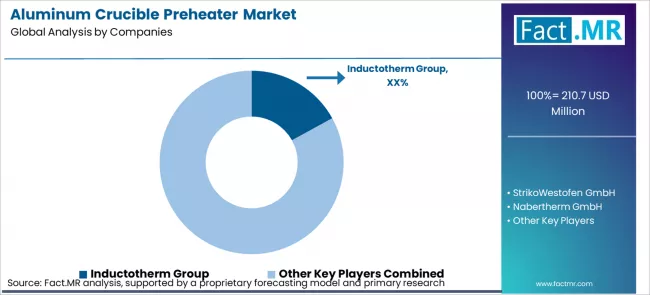
Competition in the aluminum crucible preheater market is driven by thermal efficiency, temperature control precision, and system reliability under continuous operation. Inductotherm Group and StrikoWestofen GmbH supply preheating systems with advanced control units that ensure uniform chamber temperatures and reduced cycle times. Nabertherm GmbH and OTTO JUNKER GmbH focus on energy efficient furnace designs that maintain stable heat distribution across varying load sizes. Pyrotek, Inc. and Rauch GmbH & Co. KG offer solutions that integrate safety features with consistent heating profiles tailored to aluminum melting operations. SECO/WARWICK Corporation and Ipsen International Holding GmbH provide industrial grade systems engineered for high throughput and long service life. Tenova S.p.A. and SMS group GmbH emphasize modular and scalable preheater architectures that support integration with existing melt shop processes. Competitive positioning is defined by temperature accuracy, energy consumption, build quality, and the ability to maintain thermal stability in demanding production environments.
Key Players of the Aluminum Crucible Preheater Market
- Inductotherm Group
- StrikoWestofen GmbH
- Nabertherm GmbH
- OTTO JUNKER GmbH
- Pyrotek, Inc.
- Rauch GmbH & Co. KG
- SECO/WARWICK Corporation
- Ipsen International Holding GmbH
- Tenova S.p.A.
- SMS group GmbH
Scope of the Report
| Items | Values |
|---|---|
| Quantitative Units (2026) | USD Million |
| Heat Source | Gas-fired, Electric, Hybrid |
| Capacity | <250 kg, 250-750 kg, >750 kg |
| Automation | Manual or Portable, Stationary Automated |
| End Use | Die Casting, Foundries, Recycling or Secondary Smelting |
| Regions Covered | North America, Europe, Asia Pacific, Latin America, Middle East & Africa |
| Countries Covered | United States, Canada, Mexico, Germany, United Kingdom, France, Japan, South Korea, China, India, Brazil, and other countries |
| Key Companies Profiled | Inductotherm Group, StrikoWestofen GmbH, Nabertherm GmbH, OTTO JUNKER GmbH, Pyrotek, Inc., Rauch GmbH & Co. KG, SECO/WARWICK Corporation, Ipsen International Holding GmbH, Tenova S.p.A., SMS group GmbH |
| Additional Attributes | Dollar revenue by heat source, capacity, automation, and end use; regional demand trends, competitive landscape, technological advancements in aluminum crucible preheating, operational performance optimization initiatives, and product development strategies |
Aluminum Crucible Preheater Market Key Segments
-
Heat Source :
- Gas-fired
- Electric
- Hybrid
-
Capacity :
- <250 kg
- 250-750 kg
- >750 kg
-
Automation :
- Manual or Portable
- Stationary Automated
-
End Use :
- Die Casting
- Foundries
- Recycling or Secondary Smelting
-
Region :
- North America
- USA
- Canada
- Mexico
- Europe
- Germany
- UK
- France
- Italy
- Spain
- Rest of Europe
- Asia Pacific
- China
- Japan
- South Korea
- India
- Australia
- Rest of Asia Pacific
- Latin America
- Brazil
- Argentina
- Rest of Latin America
- Middle East and Africa
- Kingdom of Saudi Arabia
- United Arab Emirates
- South Africa
- Rest of Middle East and Africa
- Other Regions
- Oceania
- Central Asia
- Other Markets
- North America
Bibliographies
- International Organization for Standardization. (2023). ISO 209-1: Wrought aluminium and aluminium alloys - Chemical composition and form of products.
- ASTM International. (2023). ASTM E34-23: Standard test methods for chemical analysis of aluminum and aluminum alloys.
- European Committee for Standardization. (2023). EN 746-2: Industrial thermoprocessing equipment - Safety requirements for combustion and fuel handling systems.
- The Aluminum Association. (2024). Aluminum casting technology, furnace operation, and crucible handling practices. Aluminum Association Technical Report.
- ASM International. (2023). ASM Handbook, Volume 4A: Furnace systems, refractories, and industrial heating processes.
Table of Content
- Executive Summary
- Global Market Outlook
- Demand to side Trends
- Supply to side Trends
- Technology Roadmap Analysis
- Analysis and Recommendations
- Market Overview
- Market Coverage / Taxonomy
- Market Definition / Scope / Limitations
- Research Methodology
- Chapter Orientation
- Analytical Lens and Working Hypotheses
- Market Structure, Signals, and Trend Drivers
- Benchmarking and Cross-market Comparability
- Market Sizing, Forecasting, and Opportunity Mapping
- Research Design and Evidence Framework
- Desk Research Programme (Secondary Evidence)
- Company Annual and Sustainability Reports
- Peer-reviewed Journals and Academic Literature
- Corporate Websites, Product Literature, and Technical Notes
- Earnings Decks and Investor Briefings
- Statutory Filings and Regulatory Disclosures
- Technical White Papers and Standards Notes
- Trade Journals, Industry Magazines, and Analyst Briefs
- Conference Proceedings, Webinars, and Seminar Materials
- Government Statistics Portals and Public Data Releases
- Press Releases and Reputable Media Coverage
- Specialist Newsletters and Curated Briefings
- Sector Databases and Reference Repositories
- FMR Internal Proprietary Databases and Historical Market Datasets
- Subscription Datasets and Paid Sources
- Social Channels, Communities, and Digital Listening Inputs
- Additional Desk Sources
- Expert Input and Fieldwork (Primary Evidence)
- Primary Modes
- Qualitative Interviews and Expert Elicitation
- Quantitative Surveys and Structured Data Capture
- Blended A9oach
- Why Primary Evidence is Used
- Field Techniques
- Interviews
- Surveys
- Focus Groups
- Observational and In-context Research
- Social and Community Interactions
- Stakeholder Universe Engaged
- C-suite Leaders
- Board Members
- Presidents and Vice Presidents
- R&D and Innovation Heads
- Technical Specialists
- Domain Subject-matter Experts
- Scientists
- Physicians and Other Healthcare Professionals
- Governance, Ethics, and Data Stewardship
- Research Ethics
- Data Integrity and Handling
- Primary Modes
- Tooling, Models, and Reference Databases
- Desk Research Programme (Secondary Evidence)
- Data Engineering and Model Build
- Data Acquisition and Ingestion
- Cleaning, Normalisation, and Verification
- Synthesis, Triangulation, and Analysis
- Quality Assurance and Audit Trail
- Market Background
- Market Dynamics
- Drivers
- Restraints
- Opportunity
- Trends
- Scenario Forecast
- Demand in Optimistic Scenario
- Demand in Likely Scenario
- Demand in Conservative Scenario
- Opportunity Map Analysis
- Product Life Cycle Analysis
- Supply Chain Analysis
- Investment Feasibility Matrix
- Value Chain Analysis
- PESTLE and Porter’s Analysis
- Regulatory Landscape
- Regional Parent Market Outlook
- Production and Consumption Statistics
- Import and Export Statistics
- Market Dynamics
- Global Market Analysis 2021 to 2025 and Forecast, 2026 to 2036
- Historical Market Size Value (USD Million) Analysis, 2021 to 2025
- Current and Future Market Size Value (USD Million) Projections, 2026 to 2036
- Y to o to Y Growth Trend Analysis
- Absolute $ Opportunity Analysis
- Global Market Pricing Analysis 2021 to 2025 and Forecast 2026 to 2036
- Global Market Analysis 2021 to 2025 and Forecast 2026 to 2036, By Heat Source
- Introduction / Key Findings
- Historical Market Size Value (USD Million) Analysis By Heat Source, 2021 to 2025
- Current and Future Market Size Value (USD Million) Analysis and Forecast By Heat Source, 2026 to 2036
- Gas-fired
- Electric
- Hybrid
- Gas-fired
- Y to o to Y Growth Trend Analysis By Heat Source, 2021 to 2025
- Absolute $ Opportunity Analysis By Heat Source, 2026 to 2036
- Global Market Analysis 2021 to 2025 and Forecast 2026 to 2036, By Capacity
- Introduction / Key Findings
- Historical Market Size Value (USD Million) Analysis By Capacity, 2021 to 2025
- Current and Future Market Size Value (USD Million) Analysis and Forecast By Capacity, 2026 to 2036
- 250-750 kg
- <250 kg
- >750 kg
- 250-750 kg
- Y to o to Y Growth Trend Analysis By Capacity, 2021 to 2025
- Absolute $ Opportunity Analysis By Capacity, 2026 to 2036
- Global Market Analysis 2021 to 2025 and Forecast 2026 to 2036, By Automation
- Introduction / Key Findings
- Historical Market Size Value (USD Million) Analysis By Automation, 2021 to 2025
- Current and Future Market Size Value (USD Million) Analysis and Forecast By Automation, 2026 to 2036
- Stationary Automated
- Manual or Portable
- Stationary Automated
- Y to o to Y Growth Trend Analysis By Automation, 2021 to 2025
- Absolute $ Opportunity Analysis By Automation, 2026 to 2036
- Global Market Analysis 2021 to 2025 and Forecast 2026 to 2036, By End Use
- Introduction / Key Findings
- Historical Market Size Value (USD Million) Analysis By End Use, 2021 to 2025
- Current and Future Market Size Value (USD Million) Analysis and Forecast By End Use, 2026 to 2036
- Die Casting
- Foundries
- Recycling or Secondary Smelting
- Die Casting
- Y to o to Y Growth Trend Analysis By End Use, 2021 to 2025
- Absolute $ Opportunity Analysis By End Use, 2026 to 2036
- Global Market Analysis 2021 to 2025 and Forecast 2026 to 2036, By Region
- Introduction
- Historical Market Size Value (USD Million) Analysis By Region, 2021 to 2025
- Current Market Size Value (USD Million) Analysis and Forecast By Region, 2026 to 2036
- North America
- Latin America
- Western Europe
- Eastern Europe
- East Asia
- South Asia and Pacific
- Middle East & Africa
- Market Attractiveness Analysis By Region
- North America Market Analysis 2021 to 2025 and Forecast 2026 to 2036, By Country
- Historical Market Size Value (USD Million) Trend Analysis By Market Taxonomy, 2021 to 2025
- Market Size Value (USD Million) Forecast By Market Taxonomy, 2026 to 2036
- By Country
- USA
- Canada
- Mexico
- By Heat Source
- By Capacity
- By Automation
- By End Use
- By Country
- Market Attractiveness Analysis
- By Country
- By Heat Source
- By Capacity
- By Automation
- By End Use
- Key Takeaways
- Latin America Market Analysis 2021 to 2025 and Forecast 2026 to 2036, By Country
- Historical Market Size Value (USD Million) Trend Analysis By Market Taxonomy, 2021 to 2025
- Market Size Value (USD Million) Forecast By Market Taxonomy, 2026 to 2036
- By Country
- Brazil
- Chile
- Rest of Latin America
- By Heat Source
- By Capacity
- By Automation
- By End Use
- By Country
- Market Attractiveness Analysis
- By Country
- By Heat Source
- By Capacity
- By Automation
- By End Use
- Key Takeaways
- Western Europe Market Analysis 2021 to 2025 and Forecast 2026 to 2036, By Country
- Historical Market Size Value (USD Million) Trend Analysis By Market Taxonomy, 2021 to 2025
- Market Size Value (USD Million) Forecast By Market Taxonomy, 2026 to 2036
- By Country
- Germany
- UK
- Italy
- Spain
- France
- Nordic
- BENELUX
- Rest of Western Europe
- By Heat Source
- By Capacity
- By Automation
- By End Use
- By Country
- Market Attractiveness Analysis
- By Country
- By Heat Source
- By Capacity
- By Automation
- By End Use
- Key Takeaways
- Eastern Europe Market Analysis 2021 to 2025 and Forecast 2026 to 2036, By Country
- Historical Market Size Value (USD Million) Trend Analysis By Market Taxonomy, 2021 to 2025
- Market Size Value (USD Million) Forecast By Market Taxonomy, 2026 to 2036
- By Country
- Russia
- Poland
- Hungary
- Balkan & Baltic
- Rest of Eastern Europe
- By Heat Source
- By Capacity
- By Automation
- By End Use
- By Country
- Market Attractiveness Analysis
- By Country
- By Heat Source
- By Capacity
- By Automation
- By End Use
- Key Takeaways
- East Asia Market Analysis 2021 to 2025 and Forecast 2026 to 2036, By Country
- Historical Market Size Value (USD Million) Trend Analysis By Market Taxonomy, 2021 to 2025
- Market Size Value (USD Million) Forecast By Market Taxonomy, 2026 to 2036
- By Country
- China
- Japan
- South Korea
- By Heat Source
- By Capacity
- By Automation
- By End Use
- By Country
- Market Attractiveness Analysis
- By Country
- By Heat Source
- By Capacity
- By Automation
- By End Use
- Key Takeaways
- South Asia and Pacific Market Analysis 2021 to 2025 and Forecast 2026 to 2036, By Country
- Historical Market Size Value (USD Million) Trend Analysis By Market Taxonomy, 2021 to 2025
- Market Size Value (USD Million) Forecast By Market Taxonomy, 2026 to 2036
- By Country
- India
- ASEAN
- Australia & New Zealand
- Rest of South Asia and Pacific
- By Heat Source
- By Capacity
- By Automation
- By End Use
- By Country
- Market Attractiveness Analysis
- By Country
- By Heat Source
- By Capacity
- By Automation
- By End Use
- Key Takeaways
- Middle East & Africa Market Analysis 2021 to 2025 and Forecast 2026 to 2036, By Country
- Historical Market Size Value (USD Million) Trend Analysis By Market Taxonomy, 2021 to 2025
- Market Size Value (USD Million) Forecast By Market Taxonomy, 2026 to 2036
- By Country
- Kingdom of Saudi Arabia
- Other GCC Countries
- Turkiye
- South Africa
- Other African Union
- Rest of Middle East & Africa
- By Heat Source
- By Capacity
- By Automation
- By End Use
- By Country
- Market Attractiveness Analysis
- By Country
- By Heat Source
- By Capacity
- By Automation
- By End Use
- Key Takeaways
- Key Countries Market Analysis
- USA
- Pricing Analysis
- Market Share Analysis, 2025
- By Heat Source
- By Capacity
- By Automation
- By End Use
- Canada
- Pricing Analysis
- Market Share Analysis, 2025
- By Heat Source
- By Capacity
- By Automation
- By End Use
- Mexico
- Pricing Analysis
- Market Share Analysis, 2025
- By Heat Source
- By Capacity
- By Automation
- By End Use
- Brazil
- Pricing Analysis
- Market Share Analysis, 2025
- By Heat Source
- By Capacity
- By Automation
- By End Use
- Chile
- Pricing Analysis
- Market Share Analysis, 2025
- By Heat Source
- By Capacity
- By Automation
- By End Use
- Germany
- Pricing Analysis
- Market Share Analysis, 2025
- By Heat Source
- By Capacity
- By Automation
- By End Use
- UK
- Pricing Analysis
- Market Share Analysis, 2025
- By Heat Source
- By Capacity
- By Automation
- By End Use
- Italy
- Pricing Analysis
- Market Share Analysis, 2025
- By Heat Source
- By Capacity
- By Automation
- By End Use
- Spain
- Pricing Analysis
- Market Share Analysis, 2025
- By Heat Source
- By Capacity
- By Automation
- By End Use
- France
- Pricing Analysis
- Market Share Analysis, 2025
- By Heat Source
- By Capacity
- By Automation
- By End Use
- India
- Pricing Analysis
- Market Share Analysis, 2025
- By Heat Source
- By Capacity
- By Automation
- By End Use
- ASEAN
- Pricing Analysis
- Market Share Analysis, 2025
- By Heat Source
- By Capacity
- By Automation
- By End Use
- Australia & New Zealand
- Pricing Analysis
- Market Share Analysis, 2025
- By Heat Source
- By Capacity
- By Automation
- By End Use
- China
- Pricing Analysis
- Market Share Analysis, 2025
- By Heat Source
- By Capacity
- By Automation
- By End Use
- Japan
- Pricing Analysis
- Market Share Analysis, 2025
- By Heat Source
- By Capacity
- By Automation
- By End Use
- South Korea
- Pricing Analysis
- Market Share Analysis, 2025
- By Heat Source
- By Capacity
- By Automation
- By End Use
- Russia
- Pricing Analysis
- Market Share Analysis, 2025
- By Heat Source
- By Capacity
- By Automation
- By End Use
- Poland
- Pricing Analysis
- Market Share Analysis, 2025
- By Heat Source
- By Capacity
- By Automation
- By End Use
- Hungary
- Pricing Analysis
- Market Share Analysis, 2025
- By Heat Source
- By Capacity
- By Automation
- By End Use
- Kingdom of Saudi Arabia
- Pricing Analysis
- Market Share Analysis, 2025
- By Heat Source
- By Capacity
- By Automation
- By End Use
- Turkiye
- Pricing Analysis
- Market Share Analysis, 2025
- By Heat Source
- By Capacity
- By Automation
- By End Use
- South Africa
- Pricing Analysis
- Market Share Analysis, 2025
- By Heat Source
- By Capacity
- By Automation
- By End Use
- USA
- Market Structure Analysis
- Competition Dashboard
- Competition Benchmarking
- Market Share Analysis of Top Players
- By Regional
- By Heat Source
- By Capacity
- By Automation
- By End Use
- Competition Analysis
- Competition Deep Dive
- Inductotherm Group
- Overview
- Product Portfolio
- Profitability by Market Segments (Product/Age /Sales Channel/Region)
- Sales Footprint
- Strategy Overview
- Marketing Strategy
- Product Strategy
- Channel Strategy
- StrikoWestofen GmbH
- Nabertherm GmbH
- OTTO JUNKER GmbH
- Pyrotek, Inc.
- Rauch GmbH & Co. KG
- SECO/WARWICK Corporation
- Ipsen International Holding GmbH
- Tenova S.p.A.
- SMS group GmbH
- Inductotherm Group
- Competition Deep Dive
- Assumptions & Acronyms Used
List Of Table
- Table 1: Global Market Value (USD Million) Forecast by Region, 2021 to 2036
- Table 2: Global Market Value (USD Million) Forecast by Heat Source, 2021 to 2036
- Table 3: Global Market Value (USD Million) Forecast by Capacity, 2021 to 2036
- Table 4: Global Market Value (USD Million) Forecast by Automation, 2021 to 2036
- Table 5: Global Market Value (USD Million) Forecast by End Use, 2021 to 2036
- Table 6: North America Market Value (USD Million) Forecast by Country, 2021 to 2036
- Table 7: North America Market Value (USD Million) Forecast by Heat Source, 2021 to 2036
- Table 8: North America Market Value (USD Million) Forecast by Capacity, 2021 to 2036
- Table 9: North America Market Value (USD Million) Forecast by Automation, 2021 to 2036
- Table 10: North America Market Value (USD Million) Forecast by End Use, 2021 to 2036
- Table 11: Latin America Market Value (USD Million) Forecast by Country, 2021 to 2036
- Table 12: Latin America Market Value (USD Million) Forecast by Heat Source, 2021 to 2036
- Table 13: Latin America Market Value (USD Million) Forecast by Capacity, 2021 to 2036
- Table 14: Latin America Market Value (USD Million) Forecast by Automation, 2021 to 2036
- Table 15: Latin America Market Value (USD Million) Forecast by End Use, 2021 to 2036
- Table 16: Western Europe Market Value (USD Million) Forecast by Country, 2021 to 2036
- Table 17: Western Europe Market Value (USD Million) Forecast by Heat Source, 2021 to 2036
- Table 18: Western Europe Market Value (USD Million) Forecast by Capacity, 2021 to 2036
- Table 19: Western Europe Market Value (USD Million) Forecast by Automation, 2021 to 2036
- Table 20: Western Europe Market Value (USD Million) Forecast by End Use, 2021 to 2036
- Table 21: Eastern Europe Market Value (USD Million) Forecast by Country, 2021 to 2036
- Table 22: Eastern Europe Market Value (USD Million) Forecast by Heat Source, 2021 to 2036
- Table 23: Eastern Europe Market Value (USD Million) Forecast by Capacity, 2021 to 2036
- Table 24: Eastern Europe Market Value (USD Million) Forecast by Automation, 2021 to 2036
- Table 25: Eastern Europe Market Value (USD Million) Forecast by End Use, 2021 to 2036
- Table 26: East Asia Market Value (USD Million) Forecast by Country, 2021 to 2036
- Table 27: East Asia Market Value (USD Million) Forecast by Heat Source, 2021 to 2036
- Table 28: East Asia Market Value (USD Million) Forecast by Capacity, 2021 to 2036
- Table 29: East Asia Market Value (USD Million) Forecast by Automation, 2021 to 2036
- Table 30: East Asia Market Value (USD Million) Forecast by End Use, 2021 to 2036
- Table 31: South Asia and Pacific Market Value (USD Million) Forecast by Country, 2021 to 2036
- Table 32: South Asia and Pacific Market Value (USD Million) Forecast by Heat Source, 2021 to 2036
- Table 33: South Asia and Pacific Market Value (USD Million) Forecast by Capacity, 2021 to 2036
- Table 34: South Asia and Pacific Market Value (USD Million) Forecast by Automation, 2021 to 2036
- Table 35: South Asia and Pacific Market Value (USD Million) Forecast by End Use, 2021 to 2036
- Table 36: Middle East & Africa Market Value (USD Million) Forecast by Country, 2021 to 2036
- Table 37: Middle East & Africa Market Value (USD Million) Forecast by Heat Source, 2021 to 2036
- Table 38: Middle East & Africa Market Value (USD Million) Forecast by Capacity, 2021 to 2036
- Table 39: Middle East & Africa Market Value (USD Million) Forecast by Automation, 2021 to 2036
- Table 40: Middle East & Africa Market Value (USD Million) Forecast by End Use, 2021 to 2036
List Of Figures
- Figure 1: Global Market Pricing Analysis
- Figure 2: Global Market Value (USD Million) Forecast 2021 to 2036
- Figure 3: Global Market Value Share and BPS Analysis by Heat Source, 2026 and 2036
- Figure 4: Global Market Y to o to Y Growth Comparison by Heat Source, 2026 to 2036
- Figure 5: Global Market Attractiveness Analysis by Heat Source
- Figure 6: Global Market Value Share and BPS Analysis by Capacity, 2026 and 2036
- Figure 7: Global Market Y to o to Y Growth Comparison by Capacity, 2026 to 2036
- Figure 8: Global Market Attractiveness Analysis by Capacity
- Figure 9: Global Market Value Share and BPS Analysis by Automation, 2026 and 2036
- Figure 10: Global Market Y to o to Y Growth Comparison by Automation, 2026 to 2036
- Figure 11: Global Market Attractiveness Analysis by Automation
- Figure 12: Global Market Value Share and BPS Analysis by End Use, 2026 and 2036
- Figure 13: Global Market Y to o to Y Growth Comparison by End Use, 2026 to 2036
- Figure 14: Global Market Attractiveness Analysis by End Use
- Figure 15: Global Market Value (USD Million) Share and BPS Analysis by Region, 2026 and 2036
- Figure 16: Global Market Y to o to Y Growth Comparison by Region, 2026 to 2036
- Figure 17: Global Market Attractiveness Analysis by Region
- Figure 18: North America Market Incremental Dollar Opportunity, 2026 to 2036
- Figure 19: Latin America Market Incremental Dollar Opportunity, 2026 to 2036
- Figure 20: Western Europe Market Incremental Dollar Opportunity, 2026 to 2036
- Figure 21: Eastern Europe Market Incremental Dollar Opportunity, 2026 to 2036
- Figure 22: East Asia Market Incremental Dollar Opportunity, 2026 to 2036
- Figure 23: South Asia and Pacific Market Incremental Dollar Opportunity, 2026 to 2036
- Figure 24: Middle East & Africa Market Incremental Dollar Opportunity, 2026 to 2036
- Figure 25: North America Market Value Share and BPS Analysis by Country, 2026 and 2036
- Figure 26: North America Market Value Share and BPS Analysis by Heat Source, 2026 and 2036
- Figure 27: North America Market Y to o to Y Growth Comparison by Heat Source, 2026 to 2036
- Figure 28: North America Market Attractiveness Analysis by Heat Source
- Figure 29: North America Market Value Share and BPS Analysis by Capacity, 2026 and 2036
- Figure 30: North America Market Y to o to Y Growth Comparison by Capacity, 2026 to 2036
- Figure 31: North America Market Attractiveness Analysis by Capacity
- Figure 32: North America Market Value Share and BPS Analysis by Automation, 2026 and 2036
- Figure 33: North America Market Y to o to Y Growth Comparison by Automation, 2026 to 2036
- Figure 34: North America Market Attractiveness Analysis by Automation
- Figure 35: North America Market Value Share and BPS Analysis by End Use, 2026 and 2036
- Figure 36: North America Market Y to o to Y Growth Comparison by End Use, 2026 to 2036
- Figure 37: North America Market Attractiveness Analysis by End Use
- Figure 38: Latin America Market Value Share and BPS Analysis by Country, 2026 and 2036
- Figure 39: Latin America Market Value Share and BPS Analysis by Heat Source, 2026 and 2036
- Figure 40: Latin America Market Y to o to Y Growth Comparison by Heat Source, 2026 to 2036
- Figure 41: Latin America Market Attractiveness Analysis by Heat Source
- Figure 42: Latin America Market Value Share and BPS Analysis by Capacity, 2026 and 2036
- Figure 43: Latin America Market Y to o to Y Growth Comparison by Capacity, 2026 to 2036
- Figure 44: Latin America Market Attractiveness Analysis by Capacity
- Figure 45: Latin America Market Value Share and BPS Analysis by Automation, 2026 and 2036
- Figure 46: Latin America Market Y to o to Y Growth Comparison by Automation, 2026 to 2036
- Figure 47: Latin America Market Attractiveness Analysis by Automation
- Figure 48: Latin America Market Value Share and BPS Analysis by End Use, 2026 and 2036
- Figure 49: Latin America Market Y to o to Y Growth Comparison by End Use, 2026 to 2036
- Figure 50: Latin America Market Attractiveness Analysis by End Use
- Figure 51: Western Europe Market Value Share and BPS Analysis by Country, 2026 and 2036
- Figure 52: Western Europe Market Value Share and BPS Analysis by Heat Source, 2026 and 2036
- Figure 53: Western Europe Market Y to o to Y Growth Comparison by Heat Source, 2026 to 2036
- Figure 54: Western Europe Market Attractiveness Analysis by Heat Source
- Figure 55: Western Europe Market Value Share and BPS Analysis by Capacity, 2026 and 2036
- Figure 56: Western Europe Market Y to o to Y Growth Comparison by Capacity, 2026 to 2036
- Figure 57: Western Europe Market Attractiveness Analysis by Capacity
- Figure 58: Western Europe Market Value Share and BPS Analysis by Automation, 2026 and 2036
- Figure 59: Western Europe Market Y to o to Y Growth Comparison by Automation, 2026 to 2036
- Figure 60: Western Europe Market Attractiveness Analysis by Automation
- Figure 61: Western Europe Market Value Share and BPS Analysis by End Use, 2026 and 2036
- Figure 62: Western Europe Market Y to o to Y Growth Comparison by End Use, 2026 to 2036
- Figure 63: Western Europe Market Attractiveness Analysis by End Use
- Figure 64: Eastern Europe Market Value Share and BPS Analysis by Country, 2026 and 2036
- Figure 65: Eastern Europe Market Value Share and BPS Analysis by Heat Source, 2026 and 2036
- Figure 66: Eastern Europe Market Y to o to Y Growth Comparison by Heat Source, 2026 to 2036
- Figure 67: Eastern Europe Market Attractiveness Analysis by Heat Source
- Figure 68: Eastern Europe Market Value Share and BPS Analysis by Capacity, 2026 and 2036
- Figure 69: Eastern Europe Market Y to o to Y Growth Comparison by Capacity, 2026 to 2036
- Figure 70: Eastern Europe Market Attractiveness Analysis by Capacity
- Figure 71: Eastern Europe Market Value Share and BPS Analysis by Automation, 2026 and 2036
- Figure 72: Eastern Europe Market Y to o to Y Growth Comparison by Automation, 2026 to 2036
- Figure 73: Eastern Europe Market Attractiveness Analysis by Automation
- Figure 74: Eastern Europe Market Value Share and BPS Analysis by End Use, 2026 and 2036
- Figure 75: Eastern Europe Market Y to o to Y Growth Comparison by End Use, 2026 to 2036
- Figure 76: Eastern Europe Market Attractiveness Analysis by End Use
- Figure 77: East Asia Market Value Share and BPS Analysis by Country, 2026 and 2036
- Figure 78: East Asia Market Value Share and BPS Analysis by Heat Source, 2026 and 2036
- Figure 79: East Asia Market Y to o to Y Growth Comparison by Heat Source, 2026 to 2036
- Figure 80: East Asia Market Attractiveness Analysis by Heat Source
- Figure 81: East Asia Market Value Share and BPS Analysis by Capacity, 2026 and 2036
- Figure 82: East Asia Market Y to o to Y Growth Comparison by Capacity, 2026 to 2036
- Figure 83: East Asia Market Attractiveness Analysis by Capacity
- Figure 84: East Asia Market Value Share and BPS Analysis by Automation, 2026 and 2036
- Figure 85: East Asia Market Y to o to Y Growth Comparison by Automation, 2026 to 2036
- Figure 86: East Asia Market Attractiveness Analysis by Automation
- Figure 87: East Asia Market Value Share and BPS Analysis by End Use, 2026 and 2036
- Figure 88: East Asia Market Y to o to Y Growth Comparison by End Use, 2026 to 2036
- Figure 89: East Asia Market Attractiveness Analysis by End Use
- Figure 90: South Asia and Pacific Market Value Share and BPS Analysis by Country, 2026 and 2036
- Figure 91: South Asia and Pacific Market Value Share and BPS Analysis by Heat Source, 2026 and 2036
- Figure 92: South Asia and Pacific Market Y to o to Y Growth Comparison by Heat Source, 2026 to 2036
- Figure 93: South Asia and Pacific Market Attractiveness Analysis by Heat Source
- Figure 94: South Asia and Pacific Market Value Share and BPS Analysis by Capacity, 2026 and 2036
- Figure 95: South Asia and Pacific Market Y to o to Y Growth Comparison by Capacity, 2026 to 2036
- Figure 96: South Asia and Pacific Market Attractiveness Analysis by Capacity
- Figure 97: South Asia and Pacific Market Value Share and BPS Analysis by Automation, 2026 and 2036
- Figure 98: South Asia and Pacific Market Y to o to Y Growth Comparison by Automation, 2026 to 2036
- Figure 99: South Asia and Pacific Market Attractiveness Analysis by Automation
- Figure 100: South Asia and Pacific Market Value Share and BPS Analysis by End Use, 2026 and 2036
- Figure 101: South Asia and Pacific Market Y to o to Y Growth Comparison by End Use, 2026 to 2036
- Figure 102: South Asia and Pacific Market Attractiveness Analysis by End Use
- Figure 103: Middle East & Africa Market Value Share and BPS Analysis by Country, 2026 and 2036
- Figure 104: Middle East & Africa Market Value Share and BPS Analysis by Heat Source, 2026 and 2036
- Figure 105: Middle East & Africa Market Y to o to Y Growth Comparison by Heat Source, 2026 to 2036
- Figure 106: Middle East & Africa Market Attractiveness Analysis by Heat Source
- Figure 107: Middle East & Africa Market Value Share and BPS Analysis by Capacity, 2026 and 2036
- Figure 108: Middle East & Africa Market Y to o to Y Growth Comparison by Capacity, 2026 to 2036
- Figure 109: Middle East & Africa Market Attractiveness Analysis by Capacity
- Figure 110: Middle East & Africa Market Value Share and BPS Analysis by Automation, 2026 and 2036
- Figure 111: Middle East & Africa Market Y to o to Y Growth Comparison by Automation, 2026 to 2036
- Figure 112: Middle East & Africa Market Attractiveness Analysis by Automation
- Figure 113: Middle East & Africa Market Value Share and BPS Analysis by End Use, 2026 and 2036
- Figure 114: Middle East & Africa Market Y to o to Y Growth Comparison by End Use, 2026 to 2036
- Figure 115: Middle East & Africa Market Attractiveness Analysis by End Use
- Figure 116: Global Market - Tier Structure Analysis
- Figure 117: Global Market - Company Share Analysis
- FAQs -
How big is the aluminum crucible preheater market in 2026?
The global aluminum crucible preheater market is estimated to be valued at USD 210.7 million in 2026.
What will be the size of aluminum crucible preheater market in 2036?
The market size for the aluminum crucible preheater market is projected to reach USD 335.9 million by 2036.
How much will be the aluminum crucible preheater market growth between 2026 and 2036?
The aluminum crucible preheater market is expected to grow at a 4.8% CAGR between 2026 and 2036.
What are the key product types in the aluminum crucible preheater market?
The key product types in aluminum crucible preheater market are gas-fired, electric and hybrid.
Which capacity segment to contribute significant share in the aluminum crucible preheater market in 2026?
In terms of capacity, 250–750 kg segment to command 46.0% share in the aluminum crucible preheater market in 2026.