- Base Value(2026): 130.1 Mn
- Estimated Value(2026): 130.1 Mn
- Forecast Value (2036): 469.9 Mn
- CAGR (2026 - 2036): 13.7%
Anaerobic-Digester Digestate Upgrading Additive Market Forecast and Outlook 2026 to 2036
The global market for anaerobic-digester digestate upgrading additives is poised for significant transformation, projected to expand from USD 130.13 million in 2026 to USD 469.86 million by 2036, advancing at a 13.7% CAGR. This robust growth trajectory underscores a critical evolution in waste-to-resource management, shifting the focus from mere organic waste processing to actively enhancing the economic and agronomic value of digestate. As circular economy principles become embedded in agricultural and waste management policies, the demand for specialized additives that optimize digestate quality is accelerating. Anerobic Digestor Digestate Upgrading Additive Market Market Value Analysis | Source: Fact.MR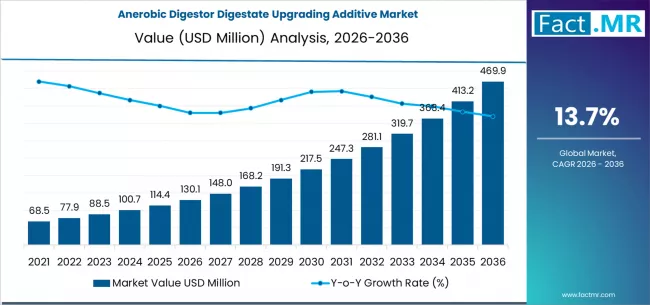
Summary of Anaerobic Digestor Digestate Upgrading Additive Market
- Market Snapshot
- Global anaerobic digestor digestate upgrading additive market revenue stood at USD 130.13 million in 2026 and is forecast to reach USD 469.86 million by 2036.
- At a 13.7% CAGR from 2026 to 2036, this market is set to expand ~3.6x in value, adding USD 339.73 million in absolute opportunity.
- Growth is being driven by the increasing shift toward waste-to-resource and circular economy models, where digestate is upgraded into high-value agricultural inputs.
- These additives are evolving into critical enablers of digestatevalorization, improving nutrient stability, handling properties, and agronomic value in anaerobic digestion systems.
- Demand and Growth Drivers
- Rising regulatory pressure on nutrient runoff (nitrogen and phosphorus) is driving demand for additives that enhance digestate quality and environmental compliance.
- Increasing adoption of anaerobic digestion systems for renewable energy and waste management is expanding the addressable market for digestate upgrading solutions.
- Growing focus on soil health and sustainable agriculture practices is reinforcing the need for stabilized, nutrient-rich digestate products.
- Challenges associated with raw digestate such asodor, pathogen content, and nutrient instability are accelerating the use of upgrading additives.
- Expansion of biogas infrastructure and organic waste processing is further supporting demand for advanced additive solutions.
- Product and Segment View
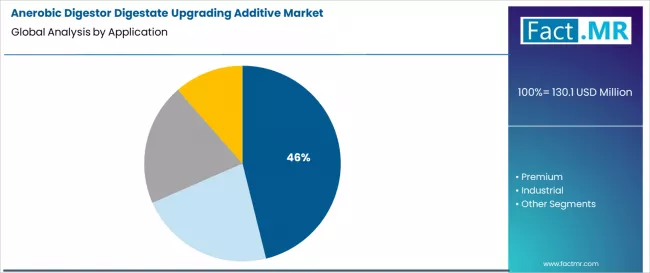
- Standard grade segment holds 46% of application share in 2026,emergingas the leading segment due to its cost-effectiveness and ability to meet baseline regulatory requirements.
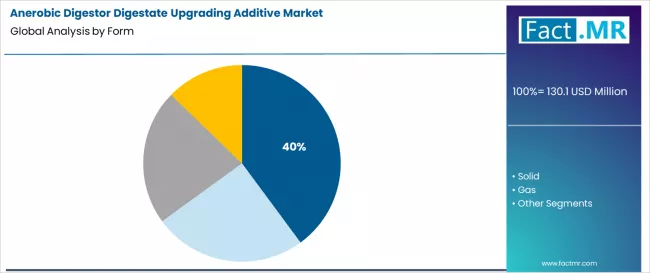
- Liquid form accounts for 40% of segment share in 2026, positioning it as the dominant segment due to ease of integration into existing digestate handling systems.
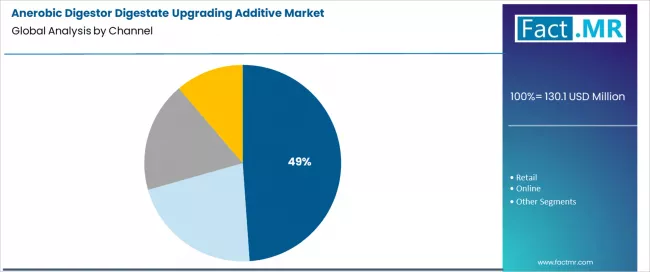
- Direct sales channel holds 49% share in 2026, reflecting the technical nature of the product and the need for supplier–operator collaboration.
- These additives typically focus on stabilization,odorcontrol, nutrient retention, and improved handling characteristics of digestate.
- Geography and Competitive Outlook
- Growth is supported across Europe, North America, and Asia Pacific, driven by strong regulatory frameworks and adoption of renewable waste-to-energy technologies.
- India (14.4% CAGR), Netherlands (13.8%), Germany (13.1%), and United States (12.6%) are key growth markets.
- Market expansion is closely tied to government policies on renewable energy, waste management, and sustainable agriculture.
- The competitive landscape includes companies specializing in agrochemicals, environmental solutions, and nutrient management technologies.
Anaerobic Digestor Digestate Upgrading Additive Market — At a Glance
| Attribute | Details |
|---|---|
| Market Value 2026 | USD 130.13 million |
| Market Value 2036 | USD 469.86 million |
| Absolute Dollar Opportunity 2026–2036 | USD 339.73 million |
| Total Growth 2026–2036 | 261.1% |
| CAGR 2026–2036 | 13.7% |
| Growth Multiple | ~3.6x |
| Key Demand Theme | Increasing adoption of digestate upgrading solutions to enhance nutrient value, regulatory compliance, and sustainability in anaerobic digestion systems |
| Leading Segment by Application (2026) | Standard Grade |
| Application Segment Share (2026) | 46% |
| Leading Segment by Form (2026) | Liquid |
| Form Segment Share (2026) | 40% |
| Leading Segment by Channel (2026) | Direct Sales |
| Channel Share (2026) | 49% |
| Key Growth Regions | Europe, North America, Asia Pacific |
| Country CAGRs | India 14.4%, Netherlands 13.8%, Germany 13.1%, USA 12.6% |
| Segmentation by Application | Standard, Premium, Industrial, Others |
| Segmentation by Form | Liquid, Solid, Gas, Gel |
| Segmentation by Channel | Direct, Retail, Online, Distributor |
| Segmentation by Region | North America, Latin America, Western Europe, Eastern Europe, East Asia, South Asia & Pacific, MEA |
Source: Fact.MR analysis. Updated Apr 1, 2026
This market expansion is driven by stringent environmental regulations governing nutrient runoff, particularly phosphorous and nitrogen, and the pressing need to improve soil health sustainably. Raw digestate from anaerobic digesters, while rich in organic matter, often presents challenges related to nutrient stability, odor, pathogen levels, and handling properties. Upgrading additives address these limitations, transforming digestate into a consistent, high-value organic fertilizer or soil amendment that can compete with traditional synthetic alternatives. The integration of these additives represents a nexus of environmental technology and precision agriculture, aiming to close nutrient loops and reduce dependency on energy-intensive mineral fertilizers. The market's progression is centered on innovations that enhance nutrient bioavailability, reduce greenhouse gas emissions during storage and application, and improve the physical characteristics of digestate for easier logistics. Success depends on developing cost-effective formulations that deliver measurable improvements in crop yield and soil carbon sequestration, thereby justifying the investment for biogas plant operators and farmers alike.
Category
| Category | Segments |
|---|---|
| Application | Standard, Premium, Industrial, Other |
| Form | Liquid, Solid, Gas, Gel |
| Channel | Direct, Retail, Online, Distributor |
| Region | North America, Latin America, Western Europe, Eastern Europe, East Asia, South Asia & Pacific, MEA |
Source: Fact.MR analysis. Updated Apr 1, 2026
Segmental Analysis
By Application, Which Segment Demonstrates the Broadest Adoption?
Anerobic Digestor Digestate Upgrading Additive Market Analysis By Application | Source: Fact.MR
The standard-grade application segment holds a dominant 46% market share. This segment caters to the fundamental need for stabilizing digestate, reducing odors, and retaining nitrogen. Its leadership is rooted in cost-effectiveness and meeting the baseline regulatory requirements for digestate application in agriculture.
For many biogas plant operators, especially those serving cooperative farms, standard-grade additives provide a reliable and economically viable pathway to compliant, marketable digestate without the premium cost of specialized formulations.
By Form, Which Type Offers the Greatest Operational Flexibility?
Anerobic Digestor Digestate Upgrading Additive Market Analysis By Form | Source: Fact.MR
Liquid-form additives lead the market with a 40% share. Their popularity stems from ease of integration into existing digestate handling systems, allowing for precise dosing and homogeneous mixing within storage tanks or during pumping operations.
Liquid additives facilitate automated application and are often developed to address multiple upgrade needs in a single product. This operational efficiency makes them a preferred choice for both large-scale agricultural biogas facilities and municipal waste treatment plants.
By Channel, How are Products Primarily Reaching End-Users?
Anerobic Digestor Digestate Upgrading Additive Market Analysis By Channel | Source: Fact.MR
Direct sales constitute the leading channel, accounting for 49% of the market. This reflects the technical nature of the product and the need for close collaboration between additive suppliers and biogas plant operators.
Suppliers often provide customized formulation advice, on-site trials, and ongoing technical support to optimize additive performance for specific feedstock blends and digestate end-uses. Direct relationships enable suppliers to tailor solutions to the precise regulatory and agronomic requirements of a region or even a single facility.
What are the Drivers, Restraints, and Key Trends of the Digestate Upgrading Additive Market?
The primary market driver is the global tightening of agricultural nutrient management regulations. Policies aimed at mitigating water pollution from excess nitrogen and phosphorus are mandating better treatment of organic fertilizers. The growing economic value of high-quality, predictable organic soil inputs in regenerative farming practices also propels demand. Furthermore, the need to reduce the carbon footprint of fertilizer production positions upgraded digestate as a sustainable alternative.
A significant market restraint is the additional operational cost for biogas plant operators, who must balance the expense of additives against the selling price of the upgraded digestate. The variability in raw digestate composition, influenced by feedstock type, also poses a challenge for additive standardization, sometimes requiring customized solutions. A lack of universal quality standards for treated digestate can hinder market transparency and buyer confidence.
Key trends include the development of precision additive blends tailored to specific crop nutrient requirements or soil deficiencies, moving beyond generic stabilization. The integration of digital monitoring tools for real-time analysis of digestate quality allows for dynamic additive dosing, optimizing both cost and performance. There is also a noticeable trend toward circular feedstock sourcing, where additives themselves are derived from industrial or agricultural by-products, enhancing the overall sustainability profile of the upgrading process.
Analysis of the Digestate Upgrading Additive Market by Key Countries
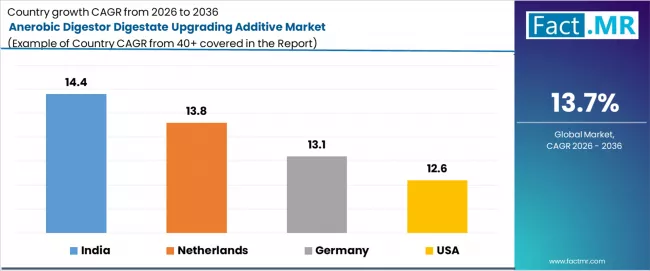
Anerobic Digestor Digestate Upgrading Additive Market Cagr Analysis By Country | Source: Fact.MR
| Country | CAGR (2026-2036) |
|---|---|
| Netherlands | 13.8% |
| India | 14.4% |
| Germany | 13.1% |
| USA | 12.6% |
Source: Fact.MR analysis. Updated Apr 1, 2026
How do the Netherlands' Intensive Agriculture and Regulatory Framework Drive Growth?
The Netherlands' leading CAGR of 13.8% is a direct consequence of its world-leading concentration of intensive livestock and horticulture operating under the EU's strictest nitrogen emission rules.
The Dutch government's policies actively push for near-total recycling of nutrients within the agricultural system. This creates an imperative for biogas operators to use advanced additives to produce a consistent, low-emission digestate that can be precisely applied within tight legal nutrient quotas, fueling rapid market adoption.
What is the Impact of India's Bioenergy Push and Soil Health Mission?
India's high CAGR of 14.4% links directly to its national policy drives. The Sustainable Alternative Towards Affordable Transportation (SATAT) initiative fosters massive growth in compressed biogas plants.
The Soil Health Mission promotes organic fertilizers to counter soil degradation. This dual focus creates a vast new source of digestate and a government-backed demand for high-quality soil amendments. Additives that can efficiently upgrade digestate in India's diverse climatic conditions are seeing surging interest.
Why is Germany a Hub for Technological Innovation in Upgrading?
Germany's 13.1% growth reflects its established leadership in biogas technology and engineering rigor. With over 9,000 biogas plants, the market is mature and now focused on optimizing value.
German operators and additive suppliers invest heavily in R&D to create sophisticated products that not only stabilize nutrients but also enrich digestate with beneficial microbes, trace elements, and humic substances. This focus on creating a premium, performance-enhanced organic fertilizer for Germany's high-productivity farms defines its advanced market segment.
How is the USA's Evolving Regulatory and Farming Landscape Influencing Adoption?
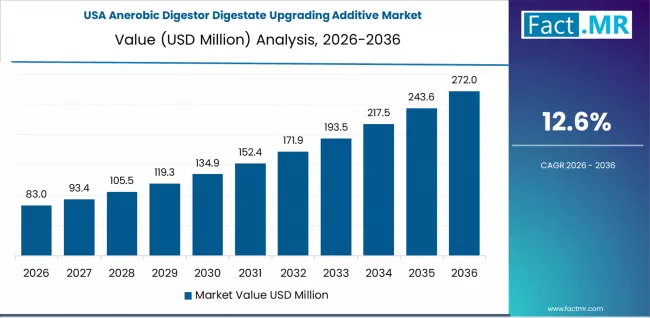
Anerobic Digestor Digestate Upgrading Additive Market Country Value Analysis | Source: Fact.MR
The USA's 12.6% CAGR is fueled by increasing state-level scrutiny of nutrient management, particularly in watersheds like the Chesapeake Bay and the Mississippi Basin. Growing farmer interest in soil health and carbon farming initiatives is building a commercial market for reliable organic amendments.
Additive suppliers are partnering with large dairy and food waste digesters to create branded, upgraded digestate products that meet the specifications of row-crop and specialty crop farmers, bridging waste management and agriculture.
Competitive Landscape of the Anaerobic-Digester Digestate Upgrading Additive Market
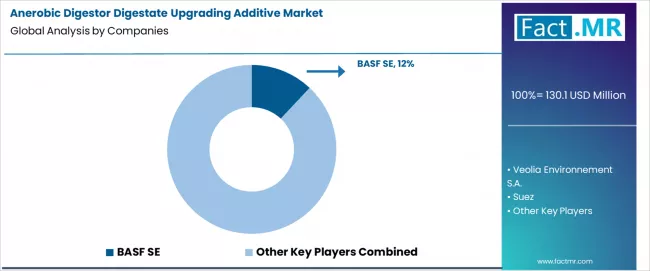
Anerobic Digestor Digestate Upgrading Additive Market Analysis By Company | Source: Fact.MR
A mix of global chemical and nutrient giants, specialized environmental service corporations, and agile technology-focused firms characterizes the competitive landscape. Competition hinges on deep scientific understanding of the biochemical processes in digestate, formulation expertise for different regional and feedstock challenges, and the ability to deliver proven agronomic results through field validation.
Establishing credibility through peer-reviewed research and successful large-scale pilot projects with reputable biogas operators is a critical success factor. Companies are also competing to shape emerging certification standards for upgraded digestate.
Key Players in the Anaerobic-Digester Digestate Upgrading Additive Market
- BASF SE
- Veolia Environnement S.A.
- Suez
- Nutrien
- Yara International ASA
- Kemira Oyj.
Segmentation
Scope of Report
| Items | Values |
|---|---|
| Quantitative Units | USD Million |
| Application | Standard, Premium, Industrial, Other |
| Form | Liquid, Solid, Gas, Gel |
| Channel | Direct, Retail, Online, Distributor |
| Key Countries | Germany, Netherlands, USA, India |
| Key Companies | BASF SE, Veolia Environnement S.A., Suez, Nutrien, Yara International ASA, Kemira Oyj. |
| Additional Analysis | Nutrient retention efficiency analysis; impact on soil microbiome and carbon sequestration; lifecycle assessment of additive production and use; economic model for biogas plant ROI with upgrading; review of global regulatory frameworks for organic fertilizers; technology analysis of solid-liquid separation coupling with additive treatment. |
Source: Fact.MR analysis. Updated Apr 1, 2026
Market by Segments
-
Application :
- Standard
- Premium
- Industrial
- Other
-
Form :
- Liquid
- Solid
- Gas
- Gel
-
Channel :
- Direct
- Retail
- Online
- Distributor
-
Region :
-
North America
- USA
- Canada
-
Latin America
- Brazil
- Mexico
- Argentina
- Rest of Latin America
-
Western Europe
- Germany
- UK
- France
- Spain
- Italy
- Netherlands
- BENELUX
- Rest of Western Europe
-
Eastern Europe
- Russia
- Poland
- Czech Republic
- Rest of Eastern Europe
-
East Asia
- China
- Japan
- South Korea
- Rest of East Asia
-
South Asia & Pacific
- India
- ASEAN
- Australia
- Rest of South Asia & Pacific
-
MEA
- Saudi Arabia
- UAE
- Turkiye
- Rest of MEA
-
Frequently Asked Questions
How big is the anerobic digestor digestate upgrading additive market in 2026?
What will be the size of anerobic digestor digestate upgrading additive market in 2036?
How much will be the anerobic digestor digestate upgrading additive market growth between 2026 and 2036?
What are the key product types in the anerobic digestor digestate upgrading additive market?
Which form segment to contribute significant share in the anerobic digestor digestate upgrading additive market in 2026?
Who worked on this report


Preview the report firsthand - request a free sample
Free SampleGet the brochure for pricing and purchase details
Download PDF