Ascites Fluid Removal Devices Market
Ascites Fluid Removal Devices Market Size and Share Forecast Outlook 2026 to 2036
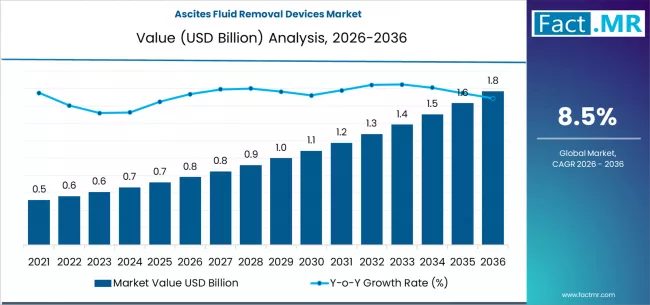
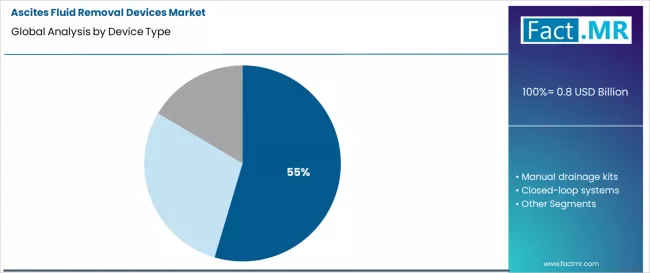
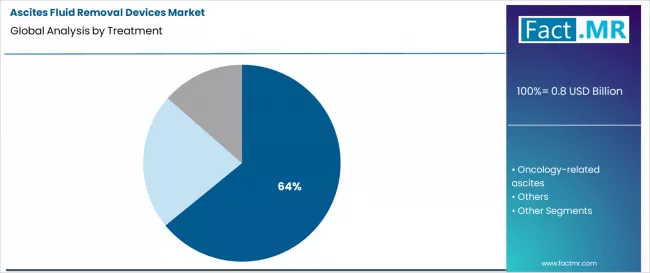
Ascites fluid removal devices market is projected to grow from USD 0.8 billion in 2026 to USD 1.8 billion by 2036, at a CAGR of 8.5%. Automated paracentesis systems will dominate with a 54.6% market share, while liver cirrhosis will lead the treatment segment with a 64.1% share.
Ascites Fluid Removal Devices Market Forecast and Outlook 2026 to 2036
The global ascites fluid removal devices market is projected to total USD 0.78 billion in 2026, advancing to USD 1.77 billion by 2036, achieving a CAGR of 8.5%. This growth is driven by the rising global burden of advanced liver disease and cancers that cause fluid accumulation, coupled with a shift towards more controlled and efficient drainage methods.
Key Takeaways from the Ascites Fluid Removal Devices Market
- Market Value for 2026: USD 0.78 Billion
- Market Value for 2036: USD 1.77 Billion
- Forecast CAGR 2026 to 2036: 8.5%
- Leading Device Type Segment (2026): Automated Paracentesis Systems (54.6%)
- Leading Treatment Segment (2026): Liver Cirrhosis (64.1%)
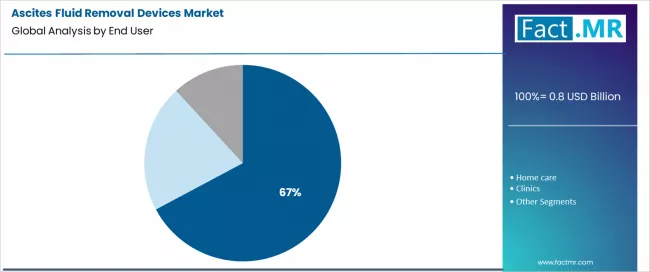
- Leading End User Segment (2026): Hospitals (67.2%)
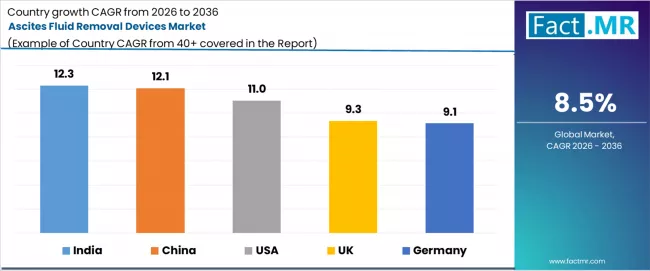
- Key Growth Countries: India (12.3% CAGR), China (12.1% CAGR), USA (11.0% CAGR), UK (9.3% CAGR), Germany (9.1% CAGR)
- Key Players in the Market: Sequana Medical, Becton, Dickinson & Company (BD), Cardinal Health, AngioDynamics, Cook Medical, Others

The market is characterized by the significant adoption of automated paracentesis systems, which hold a 54.6% share, primarily used for treating liver cirrhosis, an application constituting 64.1% of the market. Hospitals are the central end-user, accounting for 67.2% of demand, as they manage the most complex cases.
Geographically, India and China show the highest projected growth with CAGRs of 12.3% and 12.1% respectively, driven by improving diagnostic rates and expanding access to interventional therapies. The USA follows at 11.0%, with the UK and Germany growing at 9.3 and 9.1%.
Demand is fundamentally linked to the growing prevalence of non-alcoholic fatty liver disease, the need to reduce hospital readmissions through effective fluid management, and technological advancements that make procedures safer and suitable for outpatient or home care settings.
Metric
| Metric | Value |
|---|---|
| Market Value (2026) | USD 0.78 Billion |
| Market Forecast Value (2036) | USD 1.77 Billion |
| Forecast CAGR 2026 to 2036 | 8.5% |
Category
| Category | Segments |
|---|---|
| Device Type | Automated Paracentesis Systems, Manual Drainage Kits, Closed-Loop Systems |
| Treatment | Liver Cirrhosis, Oncology-Related Ascites, Others |
| End User | Hospitals, Home Care, Clinics |
| Region | North America, Latin America, Western Europe, Eastern Europe, East Asia, South Asia & Pacific, MEA |
Segmental Analysis
By Device Type, Which Technology is Improving Procedural Safety and Efficiency?

Automated paracentesis systems command a dominant 54.6 % share. This preference is driven by their ability to provide controlled, measured fluid removal with integrated monitoring of vital signs, significantly reducing the risk of complications like hypotension compared to manual techniques.
Their use streamlines workflow in busy hospital units and improves patient comfort, making them the standard of care in advanced healthcare settings for managing recurrent, large-volume ascites.
By Treatment, Which Underlying Condition is the Primary Clinical Driver?

Liver cirrhosis is the leading treatment segment with a 64.1 % share. Ascites is the most common decompensating event in cirrhosis, marking a pivotal point in disease progression. The high prevalence of cirrhosis globally, driven by hepatitis, alcohol-related liver disease, and NAFLD, creates a large and recurring patient population requiring repeated therapeutic paracentesis, establishing it as the core, volume-driven indication for fluid removal devices.
By End User, Where is the Highest Acuity Care Provided?

Hospitals constitute the primary end-user segment at 67.2 %. The management of symptomatic ascites, especially in unstable patients or those with associated complications like infection or kidney dysfunction, requires the multidisciplinary resources and immediate intervention capabilities only available in a hospital setting. This centralizes the procedure and the associated device utilization within acute care facilities.
What are the Principal Drivers, Constraints, and Evolving Dynamics of this Market?
The paramount driver is the escalating global epidemic of metabolic dysfunction-associated steatotic liver disease, which is increasing the incidence of cirrhosis and its complications, including ascites. A significant restraint is the high cost of advanced automated systems and implantable pumps, which limits their adoption in cost-sensitive healthcare systems and lower-resource settings, perpetuating reliance on basic manual kits.
A major opportunity lies in the development of simplified, patient-friendly closed-loop systems designed for safe use in home or ambulatory care settings, which could drastically reduce hospitalizations and improve quality of life. The dominant trend is the integration of telehealth and remote monitoring capabilities into device platforms, allowing clinicians to track patient fluid status and device performance remotely, enabling more proactive and personalized ascites management.
Analysis of the Ascites Fluid Removal Devices Market by Key Countries

| Country | CAGR 2026 to 2036 |
|---|---|
| India | 12.3% |
| China | 12.1% |
| USA | 11.0% |
| UK | 9.3% |
| Germany | 9.1% |
How does the USA's Focus on Reducing Hospital Readmissions Influence the Market?

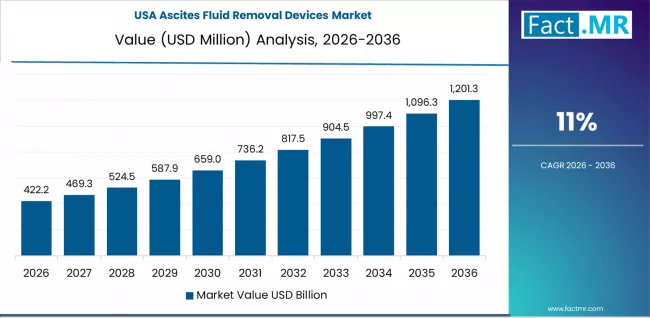
The USA's strong 11.0% CAGR is propelled by healthcare economics that penalize hospitals for preventable readmissions, making efficient outpatient management of chronic conditions like ascites a financial imperative.
This drives adoption of advanced automated systems that enable safe, high-volume paracentesis in specialized clinics or even home settings. Growth is further fueled by a high prevalence of NAFLD-related cirrhosis and robust reimbursement pathways for both the procedure and the newer implantable pump technologies, encouraging technological adoption.
What Strategic Healthcare Priorities Underpin China's High Growth Rate?
China's robust 12.1% CAGR is linked to its national efforts to improve diagnosis and management of chronic liver disease, a major public health burden. Growth is driven by the rapid expansion of hepatology and interventional radiology departments in urban tertiary hospitals, which are adopting standard-of-care technologies.
The domestic medical device industry is actively developing more affordable paracentesis systems, aiming to capture the vast mid-tier hospital market and support the decentralization of care.
How is India's Evolving Healthcare Infrastructure Shaping Adoption Trends?
India's leading 12.3% CAGR is fueled by a dual-track healthcare expansion. In major private hospital chains, there is growing investment in advanced hepatology units equipped with automated paracentesis systems to attract patients.
Increasing awareness and diagnosis of liver disease in the public health system is creating a massive base-level demand for manual and basic automated drainage kits. This bifurcation creates opportunities for a wide range of device sophistication and price points.
What Factors Characterize the UK's Protocol-Driven and Cost-Conscious Market?
The UK's 9.3% growth is defined by the National Health Service's protocol-driven approach and focus on health technology assessment. Adoption of new devices is carefully evaluated for cost-effectiveness within integrated care pathways for liver disease.
Growth is steady, driven by the need to manage a growing cirrhosis population efficiently within budget constraints, favoring technologies that demonstrably reduce total cost of care by preventing complications or enabling community-based management.
How does Germany's Specialist-Driven System Guide Technology Uptake?
Germany's 9.1% CAGR reflects its specialist-centric healthcare model. Adoption is led by university hospitals and specialized gastroenterology/hepatology centers where physicians drive technology choices based on clinical evidence.
The market is characterized by a willingness to invest in high-end, innovative systems like implantable pumps for selected patients, supported by the country's robust reimbursement system for inpatient and outpatient specialist care.
Competitive Landscape of the Ascites Fluid Removal Devices Market

The competitive landscape features a mix of pioneering medical technology firms focused on chronic disease management and large, established medtech corporations with broad vascular access and interventional portfolios.
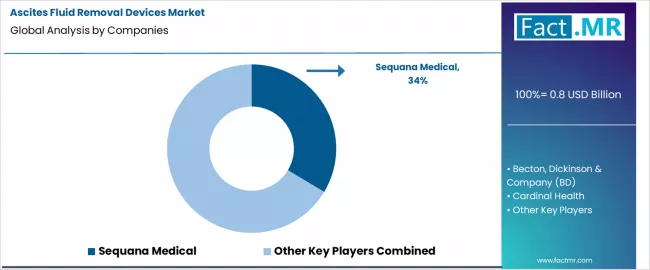
Innovation leaders like Sequana Medical compete by developing and commercializing novel implantable pump systems that represent a paradigm shift from periodic drainage to continuous fluid management.
Larger players such as BD and Cardinal Health leverage their extensive distribution networks and expertise in single-use, sterile procedural kits to dominate the market for manual and automated paracentesis systems used in hospitals.
Success in this market is determined by generating robust clinical data to secure reimbursement, demonstrating clear improvements in patient outcomes and cost-of-care, and building strong advocacy among hepatologists and interventional radiologists who are the key prescribers of these therapies.
Key Players in the Ascites Fluid Removal Devices Market
- Sequana Medical
- Becton, Dickinson & Company (BD)
- Cardinal Health
- AngioDynamics
- Cook Medical
- Others
Scope of Report
| Items | Values |
|---|---|
| Quantitative Units | USD Billion |
| Device Type | Automated Paracentesis Systems, Manual Drainage Kits, Closed-Loop Systems |
| Treatment | Liver Cirrhosis, Oncology-Related Ascites, Others |
| End User | Hospitals, Home Care, Clinics |
| Key Countries | India, China, USA, UK, Germany |
| Key Companies | Sequana Medical, Becton, Dickinson & Company (BD), Cardinal Health, AngioDynamics, Cook Medical, Others |
| Additional Analysis | Comparative analysis of complication rates (e.g., infection, hypotension) across device types; health-economic study of automated systems versus repeated manual paracentesis; impact of albumin utilization guidelines on procedural protocol and cost; analysis of patient quality of life outcomes with different management strategies; assessment of training requirements for home-based ascites care. |
Market by Segments
-
Device Type :
- Automated Paracentesis Systems
- Manual Drainage Kits
- Closed-Loop Systems
-
Treatment :
- Liver Cirrhosis
- Oncology-Related Ascites
- Others
-
End User :
- Hospitals
- Home Care
- Clinics
-
Region :
-
North America
- USA
- Canada
-
Latin America
- Brazil
- Mexico
- Argentina
- Rest of Latin America
-
Western Europe
- Germany
- France
- Italy
- Spain
- UK
- BENELUX
- Rest of Western Europe
-
Eastern Europe
- Russia
- Poland
- Czech Republic
- Rest of Eastern Europe
-
East Asia
- China
- Japan
- South Korea
- Rest of East Asia
-
South Asia & Pacific
- India
- ASEAN
- Australia
- Rest of South Asia & Pacific
-
MEA
- GCC Countries
- South Africa
- Turkiye
- Rest of MEA
-
References
- American Association for the Study of Liver Diseases. (2025). Practice Guidance on the Management of Ascites Due to Cirrhosis. Hepatology.
- European Association for the Study of the Liver. (2024). EASL Clinical Practice Guidelines on the management of ascites, spontaneous bacterial peritonitis, and hepatorenal syndrome in cirrhosis. Journal of Hepatology.
- Ginès, P., & Solà, E. (2024). Current and future therapies for ascites in cirrhosis. Nature Reviews Gastroenterology & Hepatology, 21(4), 235-250.
- National Institute for Health and Care Excellence. (2025). Technology Appraisal Guidance: Automated low-flow ascites pumps. NICE.
- Runyon, B. A. (2024). Management of Adult Patients with Ascites Due to Cirrhosis: Update 2024. AASLD.
Table of Content
- Executive Summary
- Global Market Outlook
- Demand to side Trends
- Supply to side Trends
- Technology Roadmap Analysis
- Analysis and Recommendations
- Market Overview
- Market Coverage / Taxonomy
- Market Definition / Scope / Limitations
- Market Background
- Market Dynamics
- Drivers
- Restraints
- Opportunity
- Trends
- Scenario Forecast
- Demand in Optimistic Scenario
- Demand in Likely Scenario
- Demand in Conservative Scenario
- Opportunity Map Analysis
- Product Life Cycle Analysis
- Supply Chain Analysis
- Investment Feasibility Matrix
- Value Chain Analysis
- PESTLE and Porter’s Analysis
- Regulatory Landscape
- Regional Parent Market Outlook
- Production and Consumption Statistics
- Import and Export Statistics
- Market Dynamics
- Global Market Analysis 2021 to 2025 and Forecast, 2026 to 2036
- Historical Market Size Value (USD Million) Analysis, 2021 to 2025
- Current and Future Market Size Value (USD Million) Projections, 2026 to 2036
- Y to o to Y Growth Trend Analysis
- Absolute $ Opportunity Analysis
- Global Market Pricing Analysis 2021 to 2025 and Forecast 2026 to 2036
- Global Market Analysis 2021 to 2025 and Forecast 2026 to 2036, By Device Type
- Introduction / Key Findings
- Historical Market Size Value (USD Million) Analysis By Device Type, 2021 to 2025
- Current and Future Market Size Value (USD Million) Analysis and Forecast By Device Type, 2026 to 2036
- Automated paracentesis systems
- Manual drainage kits
- Closed-loop systems
- Automated paracentesis systems
- Y to o to Y Growth Trend Analysis By Device Type, 2021 to 2025
- Absolute $ Opportunity Analysis By Device Type, 2026 to 2036
- Global Market Analysis 2021 to 2025 and Forecast 2026 to 2036, By Treatment
- Introduction / Key Findings
- Historical Market Size Value (USD Million) Analysis By Treatment, 2021 to 2025
- Current and Future Market Size Value (USD Million) Analysis and Forecast By Treatment, 2026 to 2036
- Liver cirrhosis
- Oncology-related ascites
- Others
- Liver cirrhosis
- Y to o to Y Growth Trend Analysis By Treatment, 2021 to 2025
- Absolute $ Opportunity Analysis By Treatment, 2026 to 2036
- Global Market Analysis 2021 to 2025 and Forecast 2026 to 2036, By End User
- Introduction / Key Findings
- Historical Market Size Value (USD Million) Analysis By End User, 2021 to 2025
- Current and Future Market Size Value (USD Million) Analysis and Forecast By End User, 2026 to 2036
- Hospitals
- Home care
- Clinics
- Hospitals
- Y to o to Y Growth Trend Analysis By End User, 2021 to 2025
- Absolute $ Opportunity Analysis By End User, 2026 to 2036
- Global Market Analysis 2021 to 2025 and Forecast 2026 to 2036, By Region
- Introduction
- Historical Market Size Value (USD Million) Analysis By Region, 2021 to 2025
- Current Market Size Value (USD Million) Analysis and Forecast By Region, 2026 to 2036
- North America
- Latin America
- Western Europe
- Eastern Europe
- East Asia
- South Asia and Pacific
- Middle East & Africa
- Market Attractiveness Analysis By Region
- North America Market Analysis 2021 to 2025 and Forecast 2026 to 2036, By Country
- Historical Market Size Value (USD Million) Trend Analysis By Market Taxonomy, 2021 to 2025
- Market Size Value (USD Million) Forecast By Market Taxonomy, 2026 to 2036
- By Country
- USA
- Canada
- Mexico
- By Device Type
- By Treatment
- By End User
- By Country
- Market Attractiveness Analysis
- By Country
- By Device Type
- By Treatment
- By End User
- Key Takeaways
- Latin America Market Analysis 2021 to 2025 and Forecast 2026 to 2036, By Country
- Historical Market Size Value (USD Million) Trend Analysis By Market Taxonomy, 2021 to 2025
- Market Size Value (USD Million) Forecast By Market Taxonomy, 2026 to 2036
- By Country
- Brazil
- Chile
- Rest of Latin America
- By Device Type
- By Treatment
- By End User
- By Country
- Market Attractiveness Analysis
- By Country
- By Device Type
- By Treatment
- By End User
- Key Takeaways
- Western Europe Market Analysis 2021 to 2025 and Forecast 2026 to 2036, By Country
- Historical Market Size Value (USD Million) Trend Analysis By Market Taxonomy, 2021 to 2025
- Market Size Value (USD Million) Forecast By Market Taxonomy, 2026 to 2036
- By Country
- Germany
- UK
- Italy
- Spain
- France
- Nordic
- BENELUX
- Rest of Western Europe
- By Device Type
- By Treatment
- By End User
- By Country
- Market Attractiveness Analysis
- By Country
- By Device Type
- By Treatment
- By End User
- Key Takeaways
- Eastern Europe Market Analysis 2021 to 2025 and Forecast 2026 to 2036, By Country
- Historical Market Size Value (USD Million) Trend Analysis By Market Taxonomy, 2021 to 2025
- Market Size Value (USD Million) Forecast By Market Taxonomy, 2026 to 2036
- By Country
- Russia
- Poland
- Hungary
- Balkan & Baltic
- Rest of Eastern Europe
- By Device Type
- By Treatment
- By End User
- By Country
- Market Attractiveness Analysis
- By Country
- By Device Type
- By Treatment
- By End User
- Key Takeaways
- East Asia Market Analysis 2021 to 2025 and Forecast 2026 to 2036, By Country
- Historical Market Size Value (USD Million) Trend Analysis By Market Taxonomy, 2021 to 2025
- Market Size Value (USD Million) Forecast By Market Taxonomy, 2026 to 2036
- By Country
- China
- Japan
- South Korea
- By Device Type
- By Treatment
- By End User
- By Country
- Market Attractiveness Analysis
- By Country
- By Device Type
- By Treatment
- By End User
- Key Takeaways
- South Asia and Pacific Market Analysis 2021 to 2025 and Forecast 2026 to 2036, By Country
- Historical Market Size Value (USD Million) Trend Analysis By Market Taxonomy, 2021 to 2025
- Market Size Value (USD Million) Forecast By Market Taxonomy, 2026 to 2036
- By Country
- India
- ASEAN
- Australia & New Zealand
- Rest of South Asia and Pacific
- By Device Type
- By Treatment
- By End User
- By Country
- Market Attractiveness Analysis
- By Country
- By Device Type
- By Treatment
- By End User
- Key Takeaways
- Middle East & Africa Market Analysis 2021 to 2025 and Forecast 2026 to 2036, By Country
- Historical Market Size Value (USD Million) Trend Analysis By Market Taxonomy, 2021 to 2025
- Market Size Value (USD Million) Forecast By Market Taxonomy, 2026 to 2036
- By Country
- Kingdom of Saudi Arabia
- Other GCC Countries
- Turkiye
- South Africa
- Other African Union
- Rest of Middle East & Africa
- By Device Type
- By Treatment
- By End User
- By Country
- Market Attractiveness Analysis
- By Country
- By Device Type
- By Treatment
- By End User
- Key Takeaways
- Key Countries Market Analysis
- USA
- Pricing Analysis
- Market Share Analysis, 2025
- By Device Type
- By Treatment
- By End User
- Canada
- Pricing Analysis
- Market Share Analysis, 2025
- By Device Type
- By Treatment
- By End User
- Mexico
- Pricing Analysis
- Market Share Analysis, 2025
- By Device Type
- By Treatment
- By End User
- Brazil
- Pricing Analysis
- Market Share Analysis, 2025
- By Device Type
- By Treatment
- By End User
- Chile
- Pricing Analysis
- Market Share Analysis, 2025
- By Device Type
- By Treatment
- By End User
- Germany
- Pricing Analysis
- Market Share Analysis, 2025
- By Device Type
- By Treatment
- By End User
- UK
- Pricing Analysis
- Market Share Analysis, 2025
- By Device Type
- By Treatment
- By End User
- Italy
- Pricing Analysis
- Market Share Analysis, 2025
- By Device Type
- By Treatment
- By End User
- Spain
- Pricing Analysis
- Market Share Analysis, 2025
- By Device Type
- By Treatment
- By End User
- France
- Pricing Analysis
- Market Share Analysis, 2025
- By Device Type
- By Treatment
- By End User
- India
- Pricing Analysis
- Market Share Analysis, 2025
- By Device Type
- By Treatment
- By End User
- ASEAN
- Pricing Analysis
- Market Share Analysis, 2025
- By Device Type
- By Treatment
- By End User
- Australia & New Zealand
- Pricing Analysis
- Market Share Analysis, 2025
- By Device Type
- By Treatment
- By End User
- China
- Pricing Analysis
- Market Share Analysis, 2025
- By Device Type
- By Treatment
- By End User
- Japan
- Pricing Analysis
- Market Share Analysis, 2025
- By Device Type
- By Treatment
- By End User
- South Korea
- Pricing Analysis
- Market Share Analysis, 2025
- By Device Type
- By Treatment
- By End User
- Russia
- Pricing Analysis
- Market Share Analysis, 2025
- By Device Type
- By Treatment
- By End User
- Poland
- Pricing Analysis
- Market Share Analysis, 2025
- By Device Type
- By Treatment
- By End User
- Hungary
- Pricing Analysis
- Market Share Analysis, 2025
- By Device Type
- By Treatment
- By End User
- Kingdom of Saudi Arabia
- Pricing Analysis
- Market Share Analysis, 2025
- By Device Type
- By Treatment
- By End User
- Turkiye
- Pricing Analysis
- Market Share Analysis, 2025
- By Device Type
- By Treatment
- By End User
- South Africa
- Pricing Analysis
- Market Share Analysis, 2025
- By Device Type
- By Treatment
- By End User
- USA
- Market Structure Analysis
- Competition Dashboard
- Competition Benchmarking
- Market Share Analysis of Top Players
- By Regional
- By Device Type
- By Treatment
- By End User
- Competition Analysis
- Competition Deep Dive
- Sequana Medical
- Overview
- Product Portfolio
- Profitability by Market Segments (Product/Age /Sales Channel/Region)
- Sales Footprint
- Strategy Overview
- Marketing Strategy
- Product Strategy
- Channel Strategy
- Becton, Dickinson & Company (BD)
- Cardinal Health
- AngioDynamics
- Cook Medical
- Others
- Sequana Medical
- Competition Deep Dive
- Assumptions & Acronyms Used
- Research Methodology
List Of Table
- Table 1: Global Market Value (USD Million) Forecast by Region, 2021 to 2036
- Table 2: Global Market Value (USD Million) Forecast by Device Type, 2021 to 2036
- Table 3: Global Market Value (USD Million) Forecast by Treatment, 2021 to 2036
- Table 4: Global Market Value (USD Million) Forecast by End User, 2021 to 2036
- Table 5: North America Market Value (USD Million) Forecast by Country, 2021 to 2036
- Table 6: North America Market Value (USD Million) Forecast by Device Type, 2021 to 2036
- Table 7: North America Market Value (USD Million) Forecast by Treatment, 2021 to 2036
- Table 8: North America Market Value (USD Million) Forecast by End User, 2021 to 2036
- Table 9: Latin America Market Value (USD Million) Forecast by Country, 2021 to 2036
- Table 10: Latin America Market Value (USD Million) Forecast by Device Type, 2021 to 2036
- Table 11: Latin America Market Value (USD Million) Forecast by Treatment, 2021 to 2036
- Table 12: Latin America Market Value (USD Million) Forecast by End User, 2021 to 2036
- Table 13: Western Europe Market Value (USD Million) Forecast by Country, 2021 to 2036
- Table 14: Western Europe Market Value (USD Million) Forecast by Device Type, 2021 to 2036
- Table 15: Western Europe Market Value (USD Million) Forecast by Treatment, 2021 to 2036
- Table 16: Western Europe Market Value (USD Million) Forecast by End User, 2021 to 2036
- Table 17: Eastern Europe Market Value (USD Million) Forecast by Country, 2021 to 2036
- Table 18: Eastern Europe Market Value (USD Million) Forecast by Device Type, 2021 to 2036
- Table 19: Eastern Europe Market Value (USD Million) Forecast by Treatment, 2021 to 2036
- Table 20: Eastern Europe Market Value (USD Million) Forecast by End User, 2021 to 2036
- Table 21: East Asia Market Value (USD Million) Forecast by Country, 2021 to 2036
- Table 22: East Asia Market Value (USD Million) Forecast by Device Type, 2021 to 2036
- Table 23: East Asia Market Value (USD Million) Forecast by Treatment, 2021 to 2036
- Table 24: East Asia Market Value (USD Million) Forecast by End User, 2021 to 2036
- Table 25: South Asia and Pacific Market Value (USD Million) Forecast by Country, 2021 to 2036
- Table 26: South Asia and Pacific Market Value (USD Million) Forecast by Device Type, 2021 to 2036
- Table 27: South Asia and Pacific Market Value (USD Million) Forecast by Treatment, 2021 to 2036
- Table 28: South Asia and Pacific Market Value (USD Million) Forecast by End User, 2021 to 2036
- Table 29: Middle East & Africa Market Value (USD Million) Forecast by Country, 2021 to 2036
- Table 30: Middle East & Africa Market Value (USD Million) Forecast by Device Type, 2021 to 2036
- Table 31: Middle East & Africa Market Value (USD Million) Forecast by Treatment, 2021 to 2036
- Table 32: Middle East & Africa Market Value (USD Million) Forecast by End User, 2021 to 2036
List Of Figures
- Figure 1: Global Market Pricing Analysis
- Figure 2: Global Market Value (USD Million) Forecast 2021 to 2036
- Figure 3: Global Market Value Share and BPS Analysis by Device Type, 2026 and 2036
- Figure 4: Global Market Y to o to Y Growth Comparison by Device Type, 2026 to 2036
- Figure 5: Global Market Attractiveness Analysis by Device Type
- Figure 6: Global Market Value Share and BPS Analysis by Treatment, 2026 and 2036
- Figure 7: Global Market Y to o to Y Growth Comparison by Treatment, 2026 to 2036
- Figure 8: Global Market Attractiveness Analysis by Treatment
- Figure 9: Global Market Value Share and BPS Analysis by End User, 2026 and 2036
- Figure 10: Global Market Y to o to Y Growth Comparison by End User, 2026 to 2036
- Figure 11: Global Market Attractiveness Analysis by End User
- Figure 12: Global Market Value (USD Million) Share and BPS Analysis by Region, 2026 and 2036
- Figure 13: Global Market Y to o to Y Growth Comparison by Region, 2026 to 2036
- Figure 14: Global Market Attractiveness Analysis by Region
- Figure 15: North America Market Incremental Dollar Opportunity, 2026 to 2036
- Figure 16: Latin America Market Incremental Dollar Opportunity, 2026 to 2036
- Figure 17: Western Europe Market Incremental Dollar Opportunity, 2026 to 2036
- Figure 18: Eastern Europe Market Incremental Dollar Opportunity, 2026 to 2036
- Figure 19: East Asia Market Incremental Dollar Opportunity, 2026 to 2036
- Figure 20: South Asia and Pacific Market Incremental Dollar Opportunity, 2026 to 2036
- Figure 21: Middle East & Africa Market Incremental Dollar Opportunity, 2026 to 2036
- Figure 22: North America Market Value Share and BPS Analysis by Country, 2026 and 2036
- Figure 23: North America Market Value Share and BPS Analysis by Device Type, 2026 and 2036
- Figure 24: North America Market Y to o to Y Growth Comparison by Device Type, 2026 to 2036
- Figure 25: North America Market Attractiveness Analysis by Device Type
- Figure 26: North America Market Value Share and BPS Analysis by Treatment, 2026 and 2036
- Figure 27: North America Market Y to o to Y Growth Comparison by Treatment, 2026 to 2036
- Figure 28: North America Market Attractiveness Analysis by Treatment
- Figure 29: North America Market Value Share and BPS Analysis by End User, 2026 and 2036
- Figure 30: North America Market Y to o to Y Growth Comparison by End User, 2026 to 2036
- Figure 31: North America Market Attractiveness Analysis by End User
- Figure 32: Latin America Market Value Share and BPS Analysis by Country, 2026 and 2036
- Figure 33: Latin America Market Value Share and BPS Analysis by Device Type, 2026 and 2036
- Figure 34: Latin America Market Y to o to Y Growth Comparison by Device Type, 2026 to 2036
- Figure 35: Latin America Market Attractiveness Analysis by Device Type
- Figure 36: Latin America Market Value Share and BPS Analysis by Treatment, 2026 and 2036
- Figure 37: Latin America Market Y to o to Y Growth Comparison by Treatment, 2026 to 2036
- Figure 38: Latin America Market Attractiveness Analysis by Treatment
- Figure 39: Latin America Market Value Share and BPS Analysis by End User, 2026 and 2036
- Figure 40: Latin America Market Y to o to Y Growth Comparison by End User, 2026 to 2036
- Figure 41: Latin America Market Attractiveness Analysis by End User
- Figure 42: Western Europe Market Value Share and BPS Analysis by Country, 2026 and 2036
- Figure 43: Western Europe Market Value Share and BPS Analysis by Device Type, 2026 and 2036
- Figure 44: Western Europe Market Y to o to Y Growth Comparison by Device Type, 2026 to 2036
- Figure 45: Western Europe Market Attractiveness Analysis by Device Type
- Figure 46: Western Europe Market Value Share and BPS Analysis by Treatment, 2026 and 2036
- Figure 47: Western Europe Market Y to o to Y Growth Comparison by Treatment, 2026 to 2036
- Figure 48: Western Europe Market Attractiveness Analysis by Treatment
- Figure 49: Western Europe Market Value Share and BPS Analysis by End User, 2026 and 2036
- Figure 50: Western Europe Market Y to o to Y Growth Comparison by End User, 2026 to 2036
- Figure 51: Western Europe Market Attractiveness Analysis by End User
- Figure 52: Eastern Europe Market Value Share and BPS Analysis by Country, 2026 and 2036
- Figure 53: Eastern Europe Market Value Share and BPS Analysis by Device Type, 2026 and 2036
- Figure 54: Eastern Europe Market Y to o to Y Growth Comparison by Device Type, 2026 to 2036
- Figure 55: Eastern Europe Market Attractiveness Analysis by Device Type
- Figure 56: Eastern Europe Market Value Share and BPS Analysis by Treatment, 2026 and 2036
- Figure 57: Eastern Europe Market Y to o to Y Growth Comparison by Treatment, 2026 to 2036
- Figure 58: Eastern Europe Market Attractiveness Analysis by Treatment
- Figure 59: Eastern Europe Market Value Share and BPS Analysis by End User, 2026 and 2036
- Figure 60: Eastern Europe Market Y to o to Y Growth Comparison by End User, 2026 to 2036
- Figure 61: Eastern Europe Market Attractiveness Analysis by End User
- Figure 62: East Asia Market Value Share and BPS Analysis by Country, 2026 and 2036
- Figure 63: East Asia Market Value Share and BPS Analysis by Device Type, 2026 and 2036
- Figure 64: East Asia Market Y to o to Y Growth Comparison by Device Type, 2026 to 2036
- Figure 65: East Asia Market Attractiveness Analysis by Device Type
- Figure 66: East Asia Market Value Share and BPS Analysis by Treatment, 2026 and 2036
- Figure 67: East Asia Market Y to o to Y Growth Comparison by Treatment, 2026 to 2036
- Figure 68: East Asia Market Attractiveness Analysis by Treatment
- Figure 69: East Asia Market Value Share and BPS Analysis by End User, 2026 and 2036
- Figure 70: East Asia Market Y to o to Y Growth Comparison by End User, 2026 to 2036
- Figure 71: East Asia Market Attractiveness Analysis by End User
- Figure 72: South Asia and Pacific Market Value Share and BPS Analysis by Country, 2026 and 2036
- Figure 73: South Asia and Pacific Market Value Share and BPS Analysis by Device Type, 2026 and 2036
- Figure 74: South Asia and Pacific Market Y to o to Y Growth Comparison by Device Type, 2026 to 2036
- Figure 75: South Asia and Pacific Market Attractiveness Analysis by Device Type
- Figure 76: South Asia and Pacific Market Value Share and BPS Analysis by Treatment, 2026 and 2036
- Figure 77: South Asia and Pacific Market Y to o to Y Growth Comparison by Treatment, 2026 to 2036
- Figure 78: South Asia and Pacific Market Attractiveness Analysis by Treatment
- Figure 79: South Asia and Pacific Market Value Share and BPS Analysis by End User, 2026 and 2036
- Figure 80: South Asia and Pacific Market Y to o to Y Growth Comparison by End User, 2026 to 2036
- Figure 81: South Asia and Pacific Market Attractiveness Analysis by End User
- Figure 82: Middle East & Africa Market Value Share and BPS Analysis by Country, 2026 and 2036
- Figure 83: Middle East & Africa Market Value Share and BPS Analysis by Device Type, 2026 and 2036
- Figure 84: Middle East & Africa Market Y to o to Y Growth Comparison by Device Type, 2026 to 2036
- Figure 85: Middle East & Africa Market Attractiveness Analysis by Device Type
- Figure 86: Middle East & Africa Market Value Share and BPS Analysis by Treatment, 2026 and 2036
- Figure 87: Middle East & Africa Market Y to o to Y Growth Comparison by Treatment, 2026 to 2036
- Figure 88: Middle East & Africa Market Attractiveness Analysis by Treatment
- Figure 89: Middle East & Africa Market Value Share and BPS Analysis by End User, 2026 and 2036
- Figure 90: Middle East & Africa Market Y to o to Y Growth Comparison by End User, 2026 to 2036
- Figure 91: Middle East & Africa Market Attractiveness Analysis by End User
- Figure 92: Global Market - Tier Structure Analysis
- Figure 93: Global Market - Company Share Analysis
- FAQs -
How big is the ascites fluid removal devices market in 2026?
The global ascites fluid removal devices market is estimated to be valued at USD 0.8 billion in 2026.
What will be the size of ascites fluid removal devices market in 2036?
The market size for the ascites fluid removal devices market is projected to reach USD 1.8 billion by 2036.
How much will be the ascites fluid removal devices market growth between 2026 and 2036?
The ascites fluid removal devices market is expected to grow at a 8.5% CAGR between 2026 and 2036.
What are the key product types in the ascites fluid removal devices market?
The key product types in ascites fluid removal devices market are automated paracentesis systems, manual drainage kits and closed-loop systems.
Which treatment segment to contribute significant share in the ascites fluid removal devices market in 2026?
In terms of treatment, liver cirrhosis segment to command 64.1% share in the ascites fluid removal devices market in 2026.