Augmented Glenoid Systems Market
Augmented Glenoid Systems Market Size and Share Forecast Outlook 2026 to 2036
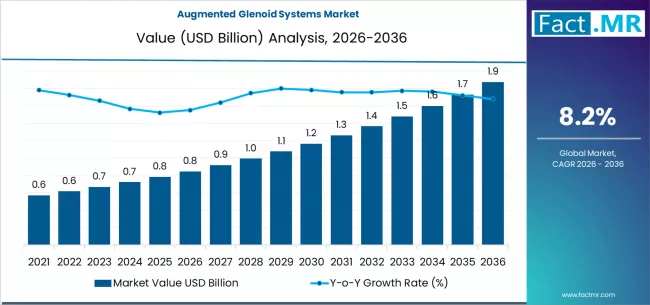
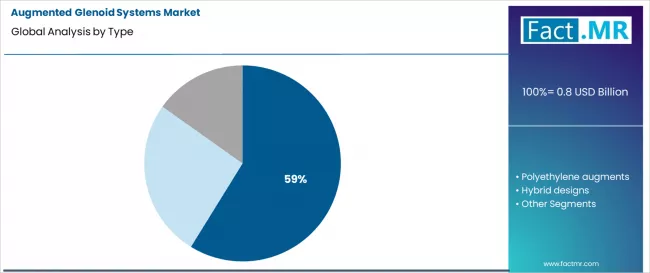
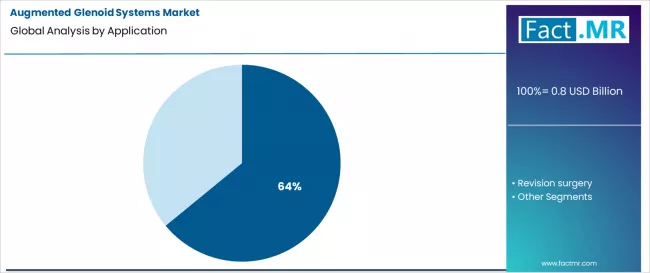
Augmented glenoid systems market is projected to grow from USD 0.8 billion in 2026 to USD 1.9 billion by 2036, at a CAGR of 8.2%. Metal augmented glenoids will dominate with a 58.8% market share, while primary shoulder arthroplasty will lead the application segment with a 64.1% share.
Augmented Glenoid Systems Market Forecast and Outlook 2026 to 2036
The global augmented glenoid systems market is projected to total USD 0.85 billion in 2026, advancing to USD 1.87 billion by 2036, achieving a compound annual growth rate of 8.2 %. This growth is driven by the evolution of shoulder arthroplasty from a procedure for simple arthritis to a sophisticated solution for complex bone loss, enabling surgeons to restore biomechanics in anatomically challenging cases.
Key Takeaways from the Augmented Glenoid Systems Market
- Market Value for 2026: USD 0.85 Billion
- Market Value for 2036: USD 1.87 Billion
- Forecast CAGR 2026 to 2036: 8.2%
- Leading Type Segment (2026): Metal Augmented Glenoids (58.8%)
- Leading Application Segment (2026): Primary Shoulder Arthroplasty (64.1%)
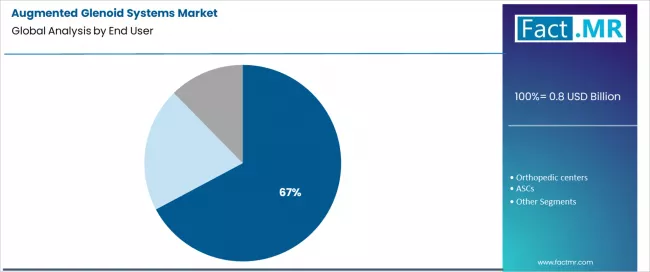
- Leading End User Segment (2026): Hospitals (67.2%)
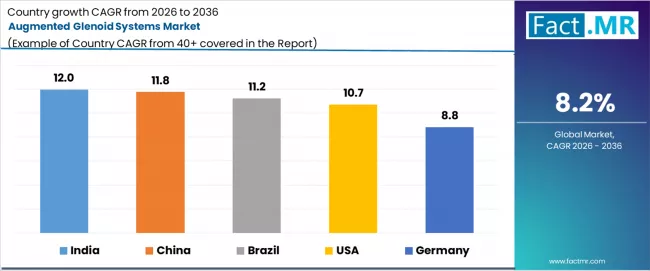
- Key Growth Countries: India (12.0% CAGR), China (11.8% CAGR), Brazil (11.2% CAGR), USA (10.7% CAGR), Germany (8.8% CAGR)
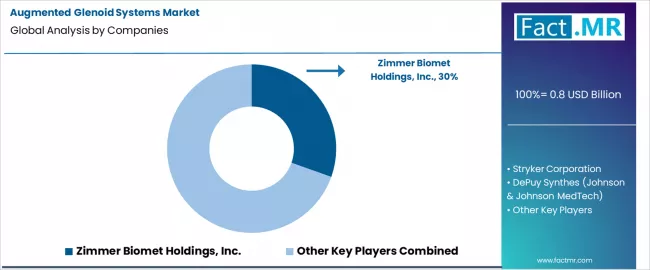
- Key Players in the Market: Zimmer Biomet Holdings, Inc., Stryker Corporation, DePuy Synthes (Johnson & Johnson MedTech), Exactech, Inc., Arthrex, Inc., Others

Augmented glenoid components are critical for addressing the significant challenge of glenoid wear and deformity, which is a primary cause of instability and early failure in both primary and revision shoulder replacements. Their adoption represents a shift towards more personalized, patient-specific implant solutions that aim to improve longevity and functional outcomes.
The increasing prevalence of shoulder pathologies in an aging, active population, coupled with advancements in three-dimensional preoperative planning and a growing understanding of shoulder biomechanics, is cementing the role of these specialized implants as a standard of care for achieving durable reconstruction and expanding the indications for successful total shoulder arthroplasty.
Metric
| Metric | Value |
|---|---|
| Market Value (2026) | USD 0.85 Billion |
| Market Forecast Value (2036) | USD 1.87 Billion |
| Forecast CAGR 2026 to 2036 | 8.2% |
Category
| Category | Segments |
|---|---|
| Type | Metal Augmented Glenoids, Polyethylene Augments, Hybrid Designs |
| Application | Primary Shoulder Arthroplasty, Revision Surgery |
| End User | Hospitals, Orthopedic Centers, ASCs |
| Region | North America, Latin America, Western Europe, Eastern Europe, East Asia, South Asia & Pacific, MEA |
Segmental Analysis
By Type, Which Material is Preferred for Addressing Severe Bone Loss?

Metal augmented glenoids command a dominant 58.8% share. This preference is due to the superior structural support and bone-ingrowth potential offered by porous metal designs, which are essential for managing significant posterior or superior glenoid wear commonly seen in advanced osteoarthritis.
Metal augments provide a stable base for fixation and allow for correction of version and inclination, making them the implant of choice for the most challenging primary cases with substantial bony deformity.
By Application, Where is the Technology Having the Most Impact on Surgical Planning?

Primary shoulder arthroplasty is the leading application with a 64.1% share. The use of augmented systems in primary surgery reflects a proactive approach to managing glenoid pathology, avoiding the need for less predictable bone grafting and potentially reducing the long-term risk of loosening and revision.
Their integration into primary procedures is driven by improved imaging and planning software that allows surgeons to preemptively address wear patterns, expanding the population of patients eligible for anatomic total shoulder replacement.
Which End User is the Dominant Utilizer of Augmented Glenoid Systems?

Hospitals constitute the primary end-user segment at 67.2%. Complex shoulder reconstructions using augmented glenoids require specialized surgical expertise, advanced imaging, and often longer operative times, resources that are most concentrated within tertiary care hospitals and academic medical centers. These institutions drive adoption through their volume of complex cases and their role in training surgeons on these advanced techniques.
What are the Drivers, Restraints, Opportunities, and Trends in the Augmented Glenoid Systems Market?
The principal driver for the augmented glenoid systems market is the rising demand for durable solutions in shoulder arthroplasty, specifically to combat the high failure rates associated with standard components in shoulders with significant glenoid bone loss.
As the procedure volume grows, particularly among younger, more active patients, the need for implants that can restore native anatomy and provide long-term stability becomes paramount. A major restraint is the significant cost premium of augmented components compared to standard glenoids, coupled with a steep surgical learning curve that can limit adoption among community-based surgeons.
This economic and technical barrier is particularly felt in cost-sensitive healthcare systems. A key market opportunity lies in the convergence of augmented implant design with patient-specific instrumentation and advanced 3D planning software.
This integration allows for truly customized solutions, improving surgical accuracy and outcomes, and represents a high-value growth segment. The dominant trend is the rapid evolution of implant designs toward more anatomic, multiplanar augments that can address complex, combined patterns of bone loss, moving beyond simple wedge designs to offer surgeons a more versatile toolbox for reconstruction.
Analysis of the Augmented Glenoid Systems Market by Key Countries

| Country | CAGR 2026 to 2036 |
|---|---|
| India | 12.0% |
| China | 11.8% |
| Brazil | 11.2% |
| USA | 10.7% |
| Germany | 8.8% |
What Drives the USA's Advanced Surgical Adoption and Surgeon Training?

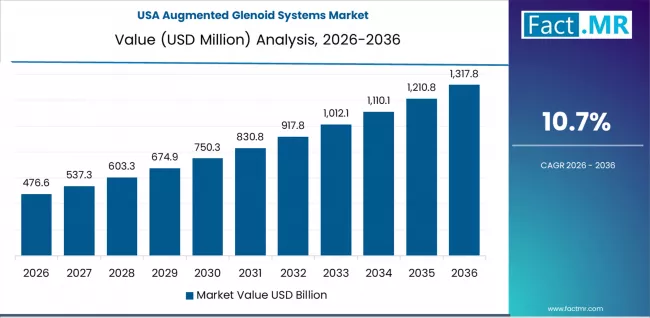
The USA's 10.7% CAGR is fueled by its position as a center for orthopedic innovation and surgeon education. High procedure volumes, strong reimbursement for advanced implant technologies, and a culture of adopting evidence-based techniques drive growth.
The market is characterized by early adoption of new augmented designs, supported by industry-sponsored training labs and cadaveric courses that accelerate surgeon proficiency. The presence of leading implant designers and a large patient population seeking high-function outcomes further sustains this advanced segment.
How is Brazil's Expanding Access to Specialized Orthopedics Influencing Growth?
Brazil's 11.2% CAGR is linked to the growth of its private healthcare sector and increasing investments in specialized orthopedic centers. As the population ages and expectations for mobility rise, demand for advanced joint reconstruction grows.
Market expansion is driven by trained surgeons in urban centers adopting modern techniques for complex shoulder arthritis, with growth concentrated in private hospitals that cater to patients seeking the latest implant technology for improved longevity and function.
What Strategic Factors Underpin China's Rapid Market Development?
China's 11.8% CAGR is propelled by the rapid expansion of its domestic joint replacement market and a strategic focus on high-end medical device innovation. Growth is driven by an increasing number of surgeons trained in advanced shoulder arthroplasty techniques and the growing middle-class demand for quality surgical care.
Domestic companies are also actively developing augmented glenoid products, aiming to capture market share and reduce reliance on imported implants, fostering a competitive and fast-evolving local landscape.
How does India's Growth in Orthopedic Specialization Drive Market Expansion?
India's leading 12.0% CAGR is driven by a surge in specialized orthopedic care, a growing cadre of surgeons fellowship-trained abroad, and increasing health awareness. The market growth is bifurcated. One is that high-end private hospitals in metropolitan areas are early adopters of the latest augmented systems for complex cases.
Secondly, the rising incidence of shoulder arthritis and the establishment of more centers capable of performing advanced joint replacement, creating a rapidly scaling demand base fuels the broader market expansion.
What Characterizes Germany's Mature and Quality-Focused Orthopedic Market?
Germany's 8.8% growth reflects a mature, quality-oriented market where adoption is guided by rigorous clinical evidence and long-term outcome data. The well-established system of orthopedic excellence supports steady growth, driven by the replacement of older implant designs and the integration of augmented systems into standardized treatment algorithms for glenoid deficiency.
Procurement decisions are heavily influenced by peer-reviewed studies and health technology assessments, favoring implants with demonstrated superiority in restoring function and reducing revision rates.
Competitive Landscape

The major global orthopedic giants who view shoulder arthroplasty as a critical growth platform dominate the competitive landscape of the augmented glenoid systems market. Competition is intense and revolves around technological innovation in implant design, the strength of clinical data supporting new products, and the depth of educational support provided to surgeons.
Success is determined by a company's ability to offer a comprehensive ecosystem that includes not just the implant, but also compatible instrumentation, sophisticated 3D preoperative planning software, and patient-specific guides. This integrated approach reduces surgical complexity and improves reproducibility, making a platform more attractive to surgeons.
While large players compete on full-system solutions and extensive surgeon training programs, smaller, focused companies may compete by introducing novel biomaterials or unique augmentation designs for specific niche defects. The market remains dynamic as clinical understanding of optimal glenoid reconstruction evolves, requiring continuous R&D investment from all participants.
Key Players in the Augmented Glenoid Systems Market
- Zimmer Biomet Holdings, Inc.
- Stryker Corporation
- DePuy Synthes (Johnson & Johnson MedTech)
- Exactech, Inc.
- Arthrex, Inc.
- Others
Scope of Report
| Items | Values |
|---|---|
| Quantitative Units | USD Billion |
| Type | Metal Augmented Glenoids, Polyethylene Augments, Hybrid Designs |
| Application | Primary Shoulder Arthroplasty, Revision Surgery |
| End User | Hospitals, Orthopedic Centers, ASCs |
| Key Countries | India, China, Brazil, USA, Germany |
| Key Companies | Zimmer Biomet Holdings, Inc., Stryker Corporation, DePuy Synthes (Johnson & Johnson MedTech), Exactech, Inc., Arthrex, Inc., Others |
| Additional Analysis | Biomechanical comparison of different augment designs on bone strain and implant stability; long-term clinical outcome studies comparing augmented versus standard glenoids in primary surgery; cost-effectiveness analysis of augmented systems in reducing revision burden; impact of 3D planning and patient-specific instrumentation on surgical accuracy and OR time; assessment of the learning curve and training requirements for adopting augmented glenoid techniques. |
Market by Segments
-
Type :
- Metal Augmented Glenoids
- Polyethylene Augments
- Hybrid Designs
-
Application :
- Primary Shoulder Arthroplasty
- Revision Surgery
-
End User :
- Hospitals
- Orthopedic Centers
- ASCs
-
Region :
-
North America
- USA
- Canada
-
Latin America
- Brazil
- Mexico
- Argentina
- Rest of Latin America
-
Western Europe
- Germany
- France
- Italy
- Spain
- UK
- BENELUX
- Rest of Western Europe
-
Eastern Europe
- Russia
- Poland
- Czech Republic
- Rest of Eastern Europe
-
East Asia
- China
- Japan
- South Korea
- Rest of East Asia
-
South Asia & Pacific
- India
- ASEAN
- Australia
- Rest of South Asia & Pacific
-
MEA
- GCC Countries
- South Africa
- Turkiye
- Rest of MEA
-
References
- American Academy of Orthopaedic Surgeons. (2025). Clinical Practice Guideline on the Treatment of Glenohumeral Joint Osteoarthritis. AAOS.
- International Congress on Shoulder and Elbow Surgery. (2024). Consensus Statement on the Use of Augmented Glenoid Components in Shoulder Arthroplasty. JSES International.
- Kwon, Y. W., & Petersen, S. A. (2024). Glenoid Bone Loss in Shoulder Arthritis: Evaluation and Management. Journal of the American Academy of Orthopaedic Surgeons, 32(5), 213-225.
- Walch, G., & Boileau, P. (2024). The future of shoulder arthroplasty: addressing the glenoid. The Bone & Joint Journal, 106-B(6), 571-578.
- Wright, T. W., & Flurin, P. H. (2025). Mid-term Outcomes of Augmented versus Standard Glenoid Components in Total Shoulder Arthroplasty. Journal of Shoulder and Elbow Surgery.
Table of Content
- Executive Summary
- Global Market Outlook
- Demand to side Trends
- Supply to side Trends
- Technology Roadmap Analysis
- Analysis and Recommendations
- Market Overview
- Market Coverage / Taxonomy
- Market Definition / Scope / Limitations
- Market Background
- Market Dynamics
- Drivers
- Restraints
- Opportunity
- Trends
- Scenario Forecast
- Demand in Optimistic Scenario
- Demand in Likely Scenario
- Demand in Conservative Scenario
- Opportunity Map Analysis
- Product Life Cycle Analysis
- Supply Chain Analysis
- Investment Feasibility Matrix
- Value Chain Analysis
- PESTLE and Porter’s Analysis
- Regulatory Landscape
- Regional Parent Market Outlook
- Production and Consumption Statistics
- Import and Export Statistics
- Market Dynamics
- Global Market Analysis 2021 to 2025 and Forecast, 2026 to 2036
- Historical Market Size Value (USD Million) Analysis, 2021 to 2025
- Current and Future Market Size Value (USD Million) Projections, 2026 to 2036
- Y to o to Y Growth Trend Analysis
- Absolute $ Opportunity Analysis
- Global Market Pricing Analysis 2021 to 2025 and Forecast 2026 to 2036
- Global Market Analysis 2021 to 2025 and Forecast 2026 to 2036, By Type
- Introduction / Key Findings
- Historical Market Size Value (USD Million) Analysis By Type, 2021 to 2025
- Current and Future Market Size Value (USD Million) Analysis and Forecast By Type, 2026 to 2036
- Metal augmented glenoids
- Polyethylene augments
- Hybrid designs
- Metal augmented glenoids
- Y to o to Y Growth Trend Analysis By Type, 2021 to 2025
- Absolute $ Opportunity Analysis By Type, 2026 to 2036
- Global Market Analysis 2021 to 2025 and Forecast 2026 to 2036, By Application
- Introduction / Key Findings
- Historical Market Size Value (USD Million) Analysis By Application, 2021 to 2025
- Current and Future Market Size Value (USD Million) Analysis and Forecast By Application, 2026 to 2036
- Primary shoulder arthroplasty
- Revision surgery
- Primary shoulder arthroplasty
- Y to o to Y Growth Trend Analysis By Application, 2021 to 2025
- Absolute $ Opportunity Analysis By Application, 2026 to 2036
- Global Market Analysis 2021 to 2025 and Forecast 2026 to 2036, By End User
- Introduction / Key Findings
- Historical Market Size Value (USD Million) Analysis By End User, 2021 to 2025
- Current and Future Market Size Value (USD Million) Analysis and Forecast By End User, 2026 to 2036
- Hospitals
- Orthopedic centers
- ASCs
- Hospitals
- Y to o to Y Growth Trend Analysis By End User, 2021 to 2025
- Absolute $ Opportunity Analysis By End User, 2026 to 2036
- Global Market Analysis 2021 to 2025 and Forecast 2026 to 2036, By Region
- Introduction
- Historical Market Size Value (USD Million) Analysis By Region, 2021 to 2025
- Current Market Size Value (USD Million) Analysis and Forecast By Region, 2026 to 2036
- North America
- Latin America
- Western Europe
- Eastern Europe
- East Asia
- South Asia and Pacific
- Middle East & Africa
- Market Attractiveness Analysis By Region
- North America Market Analysis 2021 to 2025 and Forecast 2026 to 2036, By Country
- Historical Market Size Value (USD Million) Trend Analysis By Market Taxonomy, 2021 to 2025
- Market Size Value (USD Million) Forecast By Market Taxonomy, 2026 to 2036
- By Country
- USA
- Canada
- Mexico
- By Type
- By Application
- By End User
- By Country
- Market Attractiveness Analysis
- By Country
- By Type
- By Application
- By End User
- Key Takeaways
- Latin America Market Analysis 2021 to 2025 and Forecast 2026 to 2036, By Country
- Historical Market Size Value (USD Million) Trend Analysis By Market Taxonomy, 2021 to 2025
- Market Size Value (USD Million) Forecast By Market Taxonomy, 2026 to 2036
- By Country
- Brazil
- Chile
- Rest of Latin America
- By Type
- By Application
- By End User
- By Country
- Market Attractiveness Analysis
- By Country
- By Type
- By Application
- By End User
- Key Takeaways
- Western Europe Market Analysis 2021 to 2025 and Forecast 2026 to 2036, By Country
- Historical Market Size Value (USD Million) Trend Analysis By Market Taxonomy, 2021 to 2025
- Market Size Value (USD Million) Forecast By Market Taxonomy, 2026 to 2036
- By Country
- Germany
- UK
- Italy
- Spain
- France
- Nordic
- BENELUX
- Rest of Western Europe
- By Type
- By Application
- By End User
- By Country
- Market Attractiveness Analysis
- By Country
- By Type
- By Application
- By End User
- Key Takeaways
- Eastern Europe Market Analysis 2021 to 2025 and Forecast 2026 to 2036, By Country
- Historical Market Size Value (USD Million) Trend Analysis By Market Taxonomy, 2021 to 2025
- Market Size Value (USD Million) Forecast By Market Taxonomy, 2026 to 2036
- By Country
- Russia
- Poland
- Hungary
- Balkan & Baltic
- Rest of Eastern Europe
- By Type
- By Application
- By End User
- By Country
- Market Attractiveness Analysis
- By Country
- By Type
- By Application
- By End User
- Key Takeaways
- East Asia Market Analysis 2021 to 2025 and Forecast 2026 to 2036, By Country
- Historical Market Size Value (USD Million) Trend Analysis By Market Taxonomy, 2021 to 2025
- Market Size Value (USD Million) Forecast By Market Taxonomy, 2026 to 2036
- By Country
- China
- Japan
- South Korea
- By Type
- By Application
- By End User
- By Country
- Market Attractiveness Analysis
- By Country
- By Type
- By Application
- By End User
- Key Takeaways
- South Asia and Pacific Market Analysis 2021 to 2025 and Forecast 2026 to 2036, By Country
- Historical Market Size Value (USD Million) Trend Analysis By Market Taxonomy, 2021 to 2025
- Market Size Value (USD Million) Forecast By Market Taxonomy, 2026 to 2036
- By Country
- India
- ASEAN
- Australia & New Zealand
- Rest of South Asia and Pacific
- By Type
- By Application
- By End User
- By Country
- Market Attractiveness Analysis
- By Country
- By Type
- By Application
- By End User
- Key Takeaways
- Middle East & Africa Market Analysis 2021 to 2025 and Forecast 2026 to 2036, By Country
- Historical Market Size Value (USD Million) Trend Analysis By Market Taxonomy, 2021 to 2025
- Market Size Value (USD Million) Forecast By Market Taxonomy, 2026 to 2036
- By Country
- Kingdom of Saudi Arabia
- Other GCC Countries
- Turkiye
- South Africa
- Other African Union
- Rest of Middle East & Africa
- By Type
- By Application
- By End User
- By Country
- Market Attractiveness Analysis
- By Country
- By Type
- By Application
- By End User
- Key Takeaways
- Key Countries Market Analysis
- USA
- Pricing Analysis
- Market Share Analysis, 2025
- By Type
- By Application
- By End User
- Canada
- Pricing Analysis
- Market Share Analysis, 2025
- By Type
- By Application
- By End User
- Mexico
- Pricing Analysis
- Market Share Analysis, 2025
- By Type
- By Application
- By End User
- Brazil
- Pricing Analysis
- Market Share Analysis, 2025
- By Type
- By Application
- By End User
- Chile
- Pricing Analysis
- Market Share Analysis, 2025
- By Type
- By Application
- By End User
- Germany
- Pricing Analysis
- Market Share Analysis, 2025
- By Type
- By Application
- By End User
- UK
- Pricing Analysis
- Market Share Analysis, 2025
- By Type
- By Application
- By End User
- Italy
- Pricing Analysis
- Market Share Analysis, 2025
- By Type
- By Application
- By End User
- Spain
- Pricing Analysis
- Market Share Analysis, 2025
- By Type
- By Application
- By End User
- France
- Pricing Analysis
- Market Share Analysis, 2025
- By Type
- By Application
- By End User
- India
- Pricing Analysis
- Market Share Analysis, 2025
- By Type
- By Application
- By End User
- ASEAN
- Pricing Analysis
- Market Share Analysis, 2025
- By Type
- By Application
- By End User
- Australia & New Zealand
- Pricing Analysis
- Market Share Analysis, 2025
- By Type
- By Application
- By End User
- China
- Pricing Analysis
- Market Share Analysis, 2025
- By Type
- By Application
- By End User
- Japan
- Pricing Analysis
- Market Share Analysis, 2025
- By Type
- By Application
- By End User
- South Korea
- Pricing Analysis
- Market Share Analysis, 2025
- By Type
- By Application
- By End User
- Russia
- Pricing Analysis
- Market Share Analysis, 2025
- By Type
- By Application
- By End User
- Poland
- Pricing Analysis
- Market Share Analysis, 2025
- By Type
- By Application
- By End User
- Hungary
- Pricing Analysis
- Market Share Analysis, 2025
- By Type
- By Application
- By End User
- Kingdom of Saudi Arabia
- Pricing Analysis
- Market Share Analysis, 2025
- By Type
- By Application
- By End User
- Turkiye
- Pricing Analysis
- Market Share Analysis, 2025
- By Type
- By Application
- By End User
- South Africa
- Pricing Analysis
- Market Share Analysis, 2025
- By Type
- By Application
- By End User
- USA
- Market Structure Analysis
- Competition Dashboard
- Competition Benchmarking
- Market Share Analysis of Top Players
- By Regional
- By Type
- By Application
- By End User
- Competition Analysis
- Competition Deep Dive
- Zimmer Biomet Holdings, Inc.
- Overview
- Product Portfolio
- Profitability by Market Segments (Product/Age /Sales Channel/Region)
- Sales Footprint
- Strategy Overview
- Marketing Strategy
- Product Strategy
- Channel Strategy
- Stryker Corporation
- DePuy Synthes (Johnson & Johnson MedTech)
- Exactech, Inc.
- Arthrex, Inc.
- Others
- Zimmer Biomet Holdings, Inc.
- Competition Deep Dive
- Assumptions & Acronyms Used
- Research Methodology
List Of Table
- Table 1: Global Market Value (USD Million) Forecast by Region, 2021 to 2036
- Table 2: Global Market Value (USD Million) Forecast by Type, 2021 to 2036
- Table 3: Global Market Value (USD Million) Forecast by Application, 2021 to 2036
- Table 4: Global Market Value (USD Million) Forecast by End User, 2021 to 2036
- Table 5: North America Market Value (USD Million) Forecast by Country, 2021 to 2036
- Table 6: North America Market Value (USD Million) Forecast by Type, 2021 to 2036
- Table 7: North America Market Value (USD Million) Forecast by Application, 2021 to 2036
- Table 8: North America Market Value (USD Million) Forecast by End User, 2021 to 2036
- Table 9: Latin America Market Value (USD Million) Forecast by Country, 2021 to 2036
- Table 10: Latin America Market Value (USD Million) Forecast by Type, 2021 to 2036
- Table 11: Latin America Market Value (USD Million) Forecast by Application, 2021 to 2036
- Table 12: Latin America Market Value (USD Million) Forecast by End User, 2021 to 2036
- Table 13: Western Europe Market Value (USD Million) Forecast by Country, 2021 to 2036
- Table 14: Western Europe Market Value (USD Million) Forecast by Type, 2021 to 2036
- Table 15: Western Europe Market Value (USD Million) Forecast by Application, 2021 to 2036
- Table 16: Western Europe Market Value (USD Million) Forecast by End User, 2021 to 2036
- Table 17: Eastern Europe Market Value (USD Million) Forecast by Country, 2021 to 2036
- Table 18: Eastern Europe Market Value (USD Million) Forecast by Type, 2021 to 2036
- Table 19: Eastern Europe Market Value (USD Million) Forecast by Application, 2021 to 2036
- Table 20: Eastern Europe Market Value (USD Million) Forecast by End User, 2021 to 2036
- Table 21: East Asia Market Value (USD Million) Forecast by Country, 2021 to 2036
- Table 22: East Asia Market Value (USD Million) Forecast by Type, 2021 to 2036
- Table 23: East Asia Market Value (USD Million) Forecast by Application, 2021 to 2036
- Table 24: East Asia Market Value (USD Million) Forecast by End User, 2021 to 2036
- Table 25: South Asia and Pacific Market Value (USD Million) Forecast by Country, 2021 to 2036
- Table 26: South Asia and Pacific Market Value (USD Million) Forecast by Type, 2021 to 2036
- Table 27: South Asia and Pacific Market Value (USD Million) Forecast by Application, 2021 to 2036
- Table 28: South Asia and Pacific Market Value (USD Million) Forecast by End User, 2021 to 2036
- Table 29: Middle East & Africa Market Value (USD Million) Forecast by Country, 2021 to 2036
- Table 30: Middle East & Africa Market Value (USD Million) Forecast by Type, 2021 to 2036
- Table 31: Middle East & Africa Market Value (USD Million) Forecast by Application, 2021 to 2036
- Table 32: Middle East & Africa Market Value (USD Million) Forecast by End User, 2021 to 2036
List Of Figures
- Figure 1: Global Market Pricing Analysis
- Figure 2: Global Market Value (USD Million) Forecast 2021 to 2036
- Figure 3: Global Market Value Share and BPS Analysis by Type, 2026 and 2036
- Figure 4: Global Market Y to o to Y Growth Comparison by Type, 2026 to 2036
- Figure 5: Global Market Attractiveness Analysis by Type
- Figure 6: Global Market Value Share and BPS Analysis by Application, 2026 and 2036
- Figure 7: Global Market Y to o to Y Growth Comparison by Application, 2026 to 2036
- Figure 8: Global Market Attractiveness Analysis by Application
- Figure 9: Global Market Value Share and BPS Analysis by End User, 2026 and 2036
- Figure 10: Global Market Y to o to Y Growth Comparison by End User, 2026 to 2036
- Figure 11: Global Market Attractiveness Analysis by End User
- Figure 12: Global Market Value (USD Million) Share and BPS Analysis by Region, 2026 and 2036
- Figure 13: Global Market Y to o to Y Growth Comparison by Region, 2026 to 2036
- Figure 14: Global Market Attractiveness Analysis by Region
- Figure 15: North America Market Incremental Dollar Opportunity, 2026 to 2036
- Figure 16: Latin America Market Incremental Dollar Opportunity, 2026 to 2036
- Figure 17: Western Europe Market Incremental Dollar Opportunity, 2026 to 2036
- Figure 18: Eastern Europe Market Incremental Dollar Opportunity, 2026 to 2036
- Figure 19: East Asia Market Incremental Dollar Opportunity, 2026 to 2036
- Figure 20: South Asia and Pacific Market Incremental Dollar Opportunity, 2026 to 2036
- Figure 21: Middle East & Africa Market Incremental Dollar Opportunity, 2026 to 2036
- Figure 22: North America Market Value Share and BPS Analysis by Country, 2026 and 2036
- Figure 23: North America Market Value Share and BPS Analysis by Type, 2026 and 2036
- Figure 24: North America Market Y to o to Y Growth Comparison by Type, 2026 to 2036
- Figure 25: North America Market Attractiveness Analysis by Type
- Figure 26: North America Market Value Share and BPS Analysis by Application, 2026 and 2036
- Figure 27: North America Market Y to o to Y Growth Comparison by Application, 2026 to 2036
- Figure 28: North America Market Attractiveness Analysis by Application
- Figure 29: North America Market Value Share and BPS Analysis by End User, 2026 and 2036
- Figure 30: North America Market Y to o to Y Growth Comparison by End User, 2026 to 2036
- Figure 31: North America Market Attractiveness Analysis by End User
- Figure 32: Latin America Market Value Share and BPS Analysis by Country, 2026 and 2036
- Figure 33: Latin America Market Value Share and BPS Analysis by Type, 2026 and 2036
- Figure 34: Latin America Market Y to o to Y Growth Comparison by Type, 2026 to 2036
- Figure 35: Latin America Market Attractiveness Analysis by Type
- Figure 36: Latin America Market Value Share and BPS Analysis by Application, 2026 and 2036
- Figure 37: Latin America Market Y to o to Y Growth Comparison by Application, 2026 to 2036
- Figure 38: Latin America Market Attractiveness Analysis by Application
- Figure 39: Latin America Market Value Share and BPS Analysis by End User, 2026 and 2036
- Figure 40: Latin America Market Y to o to Y Growth Comparison by End User, 2026 to 2036
- Figure 41: Latin America Market Attractiveness Analysis by End User
- Figure 42: Western Europe Market Value Share and BPS Analysis by Country, 2026 and 2036
- Figure 43: Western Europe Market Value Share and BPS Analysis by Type, 2026 and 2036
- Figure 44: Western Europe Market Y to o to Y Growth Comparison by Type, 2026 to 2036
- Figure 45: Western Europe Market Attractiveness Analysis by Type
- Figure 46: Western Europe Market Value Share and BPS Analysis by Application, 2026 and 2036
- Figure 47: Western Europe Market Y to o to Y Growth Comparison by Application, 2026 to 2036
- Figure 48: Western Europe Market Attractiveness Analysis by Application
- Figure 49: Western Europe Market Value Share and BPS Analysis by End User, 2026 and 2036
- Figure 50: Western Europe Market Y to o to Y Growth Comparison by End User, 2026 to 2036
- Figure 51: Western Europe Market Attractiveness Analysis by End User
- Figure 52: Eastern Europe Market Value Share and BPS Analysis by Country, 2026 and 2036
- Figure 53: Eastern Europe Market Value Share and BPS Analysis by Type, 2026 and 2036
- Figure 54: Eastern Europe Market Y to o to Y Growth Comparison by Type, 2026 to 2036
- Figure 55: Eastern Europe Market Attractiveness Analysis by Type
- Figure 56: Eastern Europe Market Value Share and BPS Analysis by Application, 2026 and 2036
- Figure 57: Eastern Europe Market Y to o to Y Growth Comparison by Application, 2026 to 2036
- Figure 58: Eastern Europe Market Attractiveness Analysis by Application
- Figure 59: Eastern Europe Market Value Share and BPS Analysis by End User, 2026 and 2036
- Figure 60: Eastern Europe Market Y to o to Y Growth Comparison by End User, 2026 to 2036
- Figure 61: Eastern Europe Market Attractiveness Analysis by End User
- Figure 62: East Asia Market Value Share and BPS Analysis by Country, 2026 and 2036
- Figure 63: East Asia Market Value Share and BPS Analysis by Type, 2026 and 2036
- Figure 64: East Asia Market Y to o to Y Growth Comparison by Type, 2026 to 2036
- Figure 65: East Asia Market Attractiveness Analysis by Type
- Figure 66: East Asia Market Value Share and BPS Analysis by Application, 2026 and 2036
- Figure 67: East Asia Market Y to o to Y Growth Comparison by Application, 2026 to 2036
- Figure 68: East Asia Market Attractiveness Analysis by Application
- Figure 69: East Asia Market Value Share and BPS Analysis by End User, 2026 and 2036
- Figure 70: East Asia Market Y to o to Y Growth Comparison by End User, 2026 to 2036
- Figure 71: East Asia Market Attractiveness Analysis by End User
- Figure 72: South Asia and Pacific Market Value Share and BPS Analysis by Country, 2026 and 2036
- Figure 73: South Asia and Pacific Market Value Share and BPS Analysis by Type, 2026 and 2036
- Figure 74: South Asia and Pacific Market Y to o to Y Growth Comparison by Type, 2026 to 2036
- Figure 75: South Asia and Pacific Market Attractiveness Analysis by Type
- Figure 76: South Asia and Pacific Market Value Share and BPS Analysis by Application, 2026 and 2036
- Figure 77: South Asia and Pacific Market Y to o to Y Growth Comparison by Application, 2026 to 2036
- Figure 78: South Asia and Pacific Market Attractiveness Analysis by Application
- Figure 79: South Asia and Pacific Market Value Share and BPS Analysis by End User, 2026 and 2036
- Figure 80: South Asia and Pacific Market Y to o to Y Growth Comparison by End User, 2026 to 2036
- Figure 81: South Asia and Pacific Market Attractiveness Analysis by End User
- Figure 82: Middle East & Africa Market Value Share and BPS Analysis by Country, 2026 and 2036
- Figure 83: Middle East & Africa Market Value Share and BPS Analysis by Type, 2026 and 2036
- Figure 84: Middle East & Africa Market Y to o to Y Growth Comparison by Type, 2026 to 2036
- Figure 85: Middle East & Africa Market Attractiveness Analysis by Type
- Figure 86: Middle East & Africa Market Value Share and BPS Analysis by Application, 2026 and 2036
- Figure 87: Middle East & Africa Market Y to o to Y Growth Comparison by Application, 2026 to 2036
- Figure 88: Middle East & Africa Market Attractiveness Analysis by Application
- Figure 89: Middle East & Africa Market Value Share and BPS Analysis by End User, 2026 and 2036
- Figure 90: Middle East & Africa Market Y to o to Y Growth Comparison by End User, 2026 to 2036
- Figure 91: Middle East & Africa Market Attractiveness Analysis by End User
- Figure 92: Global Market - Tier Structure Analysis
- Figure 93: Global Market - Company Share Analysis
- FAQs -
How big is the augmented glenoid systems market in 2026?
The global augmented glenoid systems market is estimated to be valued at USD 0.8 billion in 2026.
What will be the size of augmented glenoid systems market in 2036?
The market size for the augmented glenoid systems market is projected to reach USD 1.9 billion by 2036.
How much will be the augmented glenoid systems market growth between 2026 and 2036?
The augmented glenoid systems market is expected to grow at a 8.2% CAGR between 2026 and 2036.
What are the key product types in the augmented glenoid systems market?
The key product types in augmented glenoid systems market are metal augmented glenoids, polyethylene augments and hybrid designs.
Which application segment to contribute significant share in the augmented glenoid systems market in 2026?
In terms of application, primary shoulder arthroplasty segment to command 64.1% share in the augmented glenoid systems market in 2026.