- Base Value(2025): 1.8 Bn
- Estimated Value(2026): 2.0 Bn
- Forecast Value (2036): 6.0 Bn
- CAGR (2026 - 2036): 11.7%
CBD-Infused Skincare Market Forecast 2026 to 2036
In 2025, the CBD-infused skincare market was valued at USD 1.8 billion. Based on Fact MR's analysis, demand for CBD-infused skincare is estimated to grow to USD 2.0 billion in 2026 and USD 6.0 billion by 2036. FMR projects a CAGR of 11.7% during the forecast period.
The absolute dollar growth from 2026 to 2036 is USD 4 billion. This growth is driven by increasing consumer interest in natural and plant-based skincare products, particularly those that offer benefits like anti-inflammatory and anti-aging properties. The rising popularity of CBD in wellness products, coupled with growing awareness of its therapeutic potential, is supporting market expansion. However, challenges such as regulatory uncertainties and market fragmentation may impact growth in certain regions.
As Brad Rogers, Chief Executive Officer of Red White & Bloom Brands, noted regarding the launch of clinically tested CBD skincare and its market potential, ‘We are excited to launch the Pura brand in the US. As the first clinically tested line in CBD cosmetics, the reaction from our stores and retail partners has been exciting and this is strategically aligned with our goal to be the most recognized and responsible multi state operator in the market.’
India leads with a CAGR of 22.0%, driven by increasing interest in natural wellness products and the growing beauty and personal care market. China follows with a 20.5% CAGR, supported by the rapid adoption of CBD-based skincare products in its expanding beauty sector. Japan shows growth at 17.2%, benefiting from the rising demand for premium skincare solutions and natural ingredients. The UK grows at 14.0%, reflecting consumer interest in wellness and plant-based skincare. Germany grows at 10.2%, driven by steady demand for natural skincare in Europe. The USA shows growth at 9.2%, reflecting strong demand but facing regulatory challenges. Brazil grows at 8.5%, benefiting from the increasing focus on natural skincare in the Latin American market.
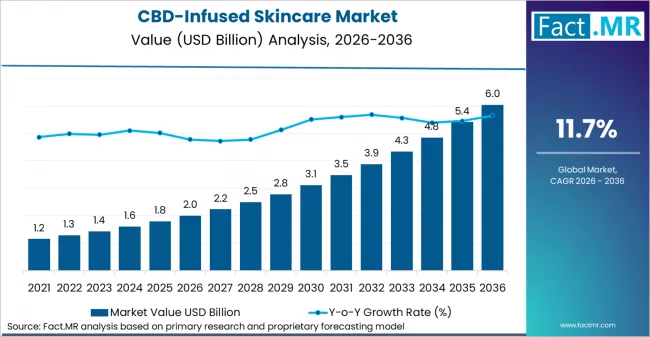
Cbd Infused Skincare Market Market Value Analysis | Source: Fact.MR
CBD-Infused Skincare Market
| Metric | Value |
|---|---|
| Estimated Value in (2026E) | USD 2 billion |
| Forecast Value in (2036F) | USD 6 billion |
| Forecast CAGR (2026 to 2036) | 11.7% |
Source: Fact.MR analysis. Updated Mar 5, 2026
CBD‑Infused Skincare Market Definition
The CBD‑Infused Skincare Market involves the development, manufacture, and sale of skincare products formulated with cannabidiol (CBD) extract to address skin concerns such as inflammation, dryness, irritation, and aging.
Market Inclusions
This report covers global and regional market sizes for CBD‑infused skincare over a defined forecast period, including product formats (creams, serums, masks), application areas (face, body), distribution channels (retail, e‑commerce, salons/spas), and consumer segments.
Market Exclusions
The scope excludes products without measurable CBD content and general cosmetic products not marketed with CBD‑specific benefits. It also omits ingestible CBD products, medical therapies, and non‑skincare cannabidiol applications.
Research Methodology
- Primary Research: Interviews were conducted with formulators, dermatologists, and retail buyers.
- Desk Research: Data was sourced from industry reports, regulatory filings, and trade association statistics.
- Market‑Sizing and Forecasting: A hybrid model combining top‑down beauty care forecasts with bottom‑up product sales and shipment data was used.
- Data Validation and Update Cycle: Findings were validated through expert review and aligned with recent production, trade, and sales figures.
Summary of the CBD-Infused Skincare Market
- Market Definition
- The CBD-Infused Skincare Market involves skincare products formulated with cannabidiol (CBD) extract to address skin concerns such as inflammation, dryness, irritation, and aging. These products are gaining popularity due to their natural ingredients, therapeutic potential, and effectiveness in improving skin health.
- Demand Drivers
- Consumer Interest in Natural Skincare: Growing consumer demand for plant-based and natural skincare solutions is a key driver of the CBD-infused skincare market. CBD is favored for its anti-inflammatory and anti-aging properties, making it popular among consumers seeking gentle yet effective skincare solutions.
- Awareness of CBD’s Therapeutic Benefits: Increasing awareness of CBD’s therapeutic potential in treating skin conditions such as acne, eczema, and psoriasis is driving its adoption in skincare products.
- Wellness and Self-Care Trends: The rising interest in wellness and self-care, particularly in plant-based and holistic beauty products, is supporting the growth of CBD-infused skincare, as more consumers look for products that offer soothing, rejuvenating, and restorative benefits.
- Key Segments Analyzed
- Function: Anti-inflammatory products are expected to account for 58.5% of the market by 2026. CBD’s ability to reduce skin irritation and inflammation is highly sought after in the skincare market.
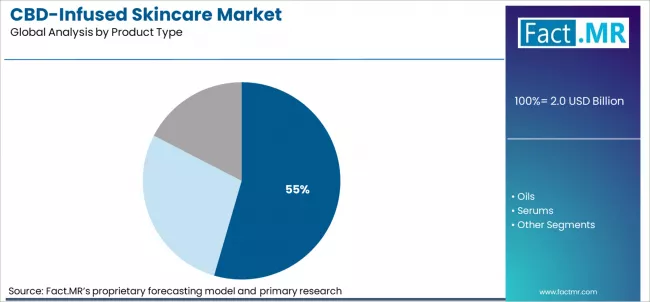
- Product Type: Creams and lotions are projected to dominate the market, capturing 54.5% of the market share by 2026, due to their ease of use and moisturizing benefits.
- Geography: India, China, and Japan are expected to lead the market, with India showing the highest growth at a 22.0% CAGR.
- Analyst Opinion at Fact MR
- Shambhu Nath Jha, Principal Consultant at Fact MR, highlighted the rapid growth of CBD-infused skincare, stating, "As consumer demand for wellness and plant-based solutions rises, CBD’s popularity in skincare products will continue to expand, particularly with its proven anti-inflammatory and soothing properties."
- Strategic Implications/Executive Takeaways
- Focus on Wellness: Brands should focus on the wellness aspect of CBD-infused skincare products to align with rising consumer interest in natural and holistic beauty solutions.
- Investment in Research and Innovation: Investment in clinical testing and product innovation, particularly to validate the therapeutic benefits of CBD, will be crucial for staying competitive in the growing market.
- Regional Focus: Expansion in high-growth regions like India and China offers significant opportunities due to the increasing consumer interest in natural skincare products.
- Methodology
- Primary research conducted with formulators, dermatologists, and retail buyers.
- Desk research from industry reports, regulatory filings, and trade association data.
- Market sizing and forecasting used top-down beauty care forecasts with bottom-up product sales and shipment data.
Segmental Analysis
CBD-Infused Skincare Market Analysis by Function
- Market Overview: Anti-inflammatory is expected to capture 58.5% of the CBD-infused skincare market by 2026. CBD’s known anti-inflammatory properties make it highly effective for treating various skin conditions, including redness, irritation, and conditions like eczema or psoriasis, which drives its demand in the skincare market.
- Demand Drivers:
- Increasing Demand for Natural Skincare Solutions: As consumers increasingly seek natural and plant-based ingredients, CBD’s anti-inflammatory properties make it a popular choice in skincare products. These products are effective in calming irritated skin and reducing redness without harsh chemicals.
- Rising Skin Sensitivity Awareness: The growing awareness of sensitive skin conditions and the need for gentle treatments is driving demand for anti-inflammatory skincare products. CBD-infused formulations help reduce inflammation and soothe skin, making them highly desirable in the market.
- Clinical Evidence Supporting Effectiveness: Scientific studies highlighting the effectiveness of CBD in reducing inflammation and promoting skin health are boosting consumer confidence in its use, further driving its growth in the anti-inflammatory segment.
CBD-Infused Skincare Market Analysis by Product Type
Cbd Infused Skincare Market Analysis By Product Type | Source: Fact.MR
- Market Overview: Creams and lotions are projected to capture 54.5% of the market share by 2026. CBD-infused creams and lotions are widely used for their ease of application and moisturizing benefits. These products are suitable for everyday use and are commonly found in the skincare routines of individuals seeking hydration and relief from various skin conditions.
- Demand Drivers:
- Ease of Use and Versatility: Creams and lotions are simple to apply and widely accepted by consumers, making them a popular choice for CBD-infused skincare products. They are suitable for daily use and can be incorporated into regular skincare routines, which boosts their adoption.
- Moisturizing and Therapeutic Benefits: CBD-infused creams and lotions not only offer anti-inflammatory and soothing benefits but also provide essential hydration. This dual functionality makes them highly appealing to consumers seeking a holistic approach to skincare.
- Growing Popularity in the Wellness Industry: As consumers increasingly turn to CBD products for wellness and skincare benefits, CBD-infused creams and lotions are benefiting from the larger trend of using CBD for therapeutic purposes, driving their continued growth in the market.
CBD Infused Skincare Market Drivers, Restraints, and Opportunities
FMR analysts observe that the CBD‑infused skincare market is a growth‑aligned, wellness‑influenced segment, rooted in rising consumer interest in multifunctional, plant‑derived ingredients and holistic skincare benefits. Historically, conventional botanical extracts dominated topical wellness products; as perceptions of CBD’s soothing, anti‑inflammatory, and antioxidant properties gained traction in beauty and personal care, structural demand emerged for CBD‑infused serums, creams, masks, and body products that claim enhanced skin comfort. The 2026 valuation reflects this shift, with adoption tied to mainstream retail availability, digital marketing influence, and evolving attitudes toward hemp‑derived ingredients.
While basic botanical and synthetic moisturizing products still command large volume share, premium CBD formulations with clinically backed actives are gaining share. These advanced products generally carry higher average selling prices, contributing to net market value growth even though unit volumes grow moderately with consumer education and regulation. The market exists at its current size because many skincare users seek differentiated performance alongside wellness positioning, and regulatory frameworks increasingly shape how CBD can be marketed and labeled in personal care.
- Wellness & Performance Demand: Consumers are adopting CBD‑infused formulations to address irritation, redness, and sensitive skin, replacing basic moisturizers where additional calming claims are sought.
- Regulatory & Compliance Pressure: Regulations around THC limits and cosmetic safety in markets such as the United States and Europe push brands toward certified, compliant CBD ingredients, influencing product formulation and positioning.
- Regional Adoption Dynamics: In North America and Europe, strong consumer awareness and retail access accelerate uptake of CBD skincare, while in some Asia‑Pacific markets regulatory clarity and education are still evolving.
Regional Analysis
The market analysis covers key global regions, including South Asia, East Asia, Western Europe, North America, and Latin America. It is segmented geographically, with specific market dynamics for each region. The full report provides a detailed market attractiveness analysis.
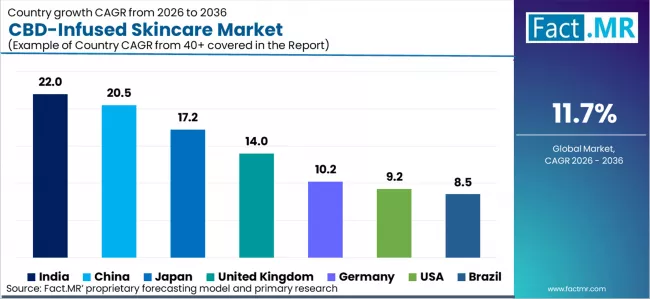
Cbd Infused Skincare Market Cagr Analysis By Country | Source: Fact.MR
| Country | CAGR (2026-2036) |
|---|---|
| India | 22.0% |
| China | 20.5% |
| Japan | 17.2% |
| United Kingdom | 14.0% |
| Germany | 10.2% |
| USA | 9.2% |
| Brazil | 8.5% |
Source: Fact.MR analysis. Updated Mar 5, 2026
Source: Fact MR (FMR) analysis, based on proprietary forecasting model and primary research.
South Asia:
In South Asia, India leads the demand for CBD-infused skincare, driven by growing awareness of wellness products, increasing disposable income, and rising interest in natural and organic skincare solutions.
- India: Demand for CBD-infused skincare in India is projected to rise at 22.0% CAGR through 2036. India’s growing awareness of skincare products, rising demand for natural ingredients, and expanding wellness market continue to fuel the market’s growth.
East Asia:
In East Asia, China and Japan are key markets for CBD-infused skincare, supported by increasing consumer interest in natural skincare products, growing disposable incomes, and the rise in wellness trends.
- China: Demand for CBD-infused skincare in China is projected to rise at 20.5% CAGR through 2036. China’s increasing demand for natural skincare products and growing middle-class population continue to contribute to strong market growth.
- Japan: Demand for CBD-infused skincare in Japan is projected to rise at 17.2% CAGR through 2036. Japan’s focus on beauty and wellness and growing interest in plant-based ingredients continue to support the adoption of CBD-infused skincare solutions.
Western Europe:
In Western Europe, the United Kingdom and Germany are key markets for CBD-infused skincare, driven by high consumer demand for natural and organic beauty products and increasing interest in wellness and self-care.
- United Kingdom: Demand for CBD-infused skincare in the UK is projected to rise at 14.0% CAGR through 2036. The UK’s growing focus on wellness and self-care and rising consumer interest in CBD-based skincare products continue to drive market growth.
- Germany: Demand for CBD-infused skincare in Germany is projected to rise at 10.2% CAGR through 2036. Germany’s expanding interest in natural beauty products and increasing acceptance of CBD-infused products contribute to steady growth in the market.
North America:
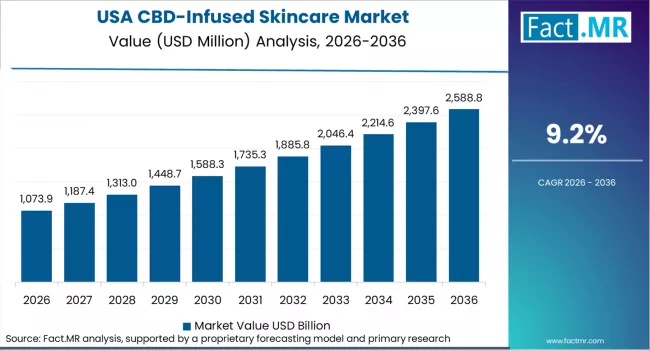
Cbd Infused Skincare Market Country Value Analysis | Source: Fact.MR
In North America, the USA remains a significant market for CBD-infused skincare, driven by the rising popularity of wellness trends, increased consumer interest in natural ingredients, and the growing acceptance of CBD-based beauty products.
- USA: Demand for CBD-infused skincare in the U.S. is projected to rise at 9.2% CAGR through 2036. The USA’s increasing focus on natural skincare products and rising consumer demand for CBD-infused beauty solutions continue to support steady market growth.
Latin America:
In Latin America, Brazil is the leading market for CBD-infused skincare, supported by the increasing demand for natural beauty products, growing awareness of the benefits of CBD, and the rising popularity of wellness and organic skincare.
- Brazil: Demand for CBD-infused skincare in Brazil is projected to rise at 8.5% CAGR through 2036. Brazil’s growing demand for natural and organic beauty products and increased awareness of CBD’s benefits continue to drive market expansion.
Fact MR's analysis of the CBD-Infused Skincare Market in South Asia, East Asia, Western Europe, North America, and Latin America consists of country-wise assessments that include India, China, Japan, the United Kingdom, Germany, the USA, and Brazil. Readers can find detailed trends, regulatory updates, and company-specific investments shaping the market’s growth in these countries.
How Are Key Players Competing in the CBD-Infused Skincare Market?
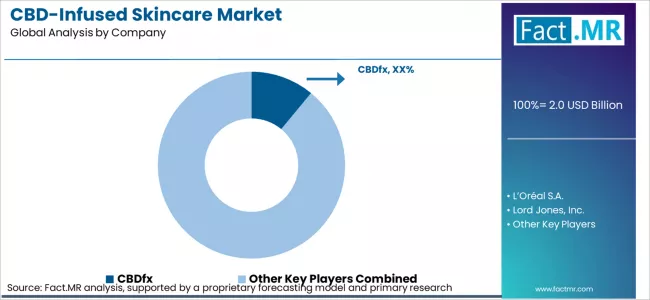
Cbd Infused Skincare Market Analysis By Company | Source: Fact.MR
The CBD-Infused Skincare Market is growing rapidly, with key players such as CBDfx, L'Oréal, and Lord Jones leading the charge. Companies like Charlotte’s Web, Medterra, and Endoca focus on offering high-quality CBD products, often sourced from organic hemp, to ensure purity and effectiveness. Brands like The Body Shop and Kiehl’s integrate CBD into their skincare lines, catering to customers looking for soothing and rejuvenating products. Elixinol and Cannuka emphasize natural ingredients, enhancing their appeal in the wellness and holistic beauty spaces. PureKana and CBDistillery focus on affordability and potency, expanding their market share by offering a wide range of CBD-infused skincare solutions. As consumer demand for natural, sustainable, and effective skincare rises, these companies are differentiating themselves through product quality, transparency in sourcing, and strategic marketing targeting both wellness and beauty-conscious consumers.
Recent Industry Developments
- European Regulatory "Safety Limit" Breakthrough: In early 2026, the EU’s Scientific Committee on Consumer Safety (SCCS) provided long-awaited clarity on CBD concentrations. Following the preliminary opinion issued in late 2025, the 2026 framework considers CBD safe for use in dermal products at concentrations up to 0.19%, with strict limits on THC impurities (maximum 0.00025%).
- Nano-Emulsification and Bioavailability Standards: As of February 2026, the industry has standardized nano-emulsification technology to overcome CBD's natural lipophilic (oil-loving) barriers. By reducing cannabinoid particles to below 100 nanometers, brands are now achieving up to 40% higher transdermal absorption compared to traditional oil-based formulas.
- The "Psychodermatology" Movement: A major 2026 trend is the rise of Psychodermatology, which links skin health to mental well-being. CBD is being marketed as the "bridge" ingredient in this category, featured in "Midnight" or "Overnight" masks designed to lower skin cortisol levels and reduce inflammation caused by stress.
Key Players of the CBD-Infused Skincare Market
- CBDfx
- L’Oréal S.A.
- Lord Jones, Inc.
- Cannuka, Inc.
- Elixinol Global Ltd.
- Endoca B.V.
- Charlotte’s Web, Inc.
- Medterra CBD
- Vertly LLC
- The Body Shop International Limited
- Kiehl’s Since 1851
- Josie Maran Cosmetics
- Saint Jane Beauty
- Prima
- Sagely Naturals LLC
- CBD For Life
- Leef Organics, LLC
- Myaderm, Inc.
- PureKana LLC
- CBDistillery
Report Scope
| Metric | Value |
|---|---|
| Quantitative Units | USD 2.0 billion (2026) to USD 6.0 billion (2036), at a CAGR of 11.7% |
| Market Definition | The CBD-infused skincare market includes skincare products infused with cannabidiol (CBD) aimed at various skin concerns like anti-inflammatory, acne, anti-aging, and soothing. |
| By Function | Anti-inflammatory, Acne/Blemish Care, Anti-aging, Soothing |
| By Product Type | Creams and Lotions, Oils, Serums, Balms |
| By Channel | E-commerce, Pharmacies, Mass Retail, Specialty Beauty Stores |
| By Claim | Natural/Organic, Vegan, Clean label, Dermatologist-tested |
| Regions Covered | North America, Latin America, Europe, East Asia, South Asia, Oceania, Middle East and Africa |
| Countries Covered | United States, Canada, Mexico, Brazil, Argentina, Germany, France, United Kingdom, Italy, Spain, China, India, Japan, South Korea, Indonesia, Australia, and 40+ countries |
| Key Companies Profiled | CBDfx, L’Oréal S.A., Lord Jones, Inc., Cannuka, Inc., Elixinol Global Ltd., Endoca B.V., Charlotte’s Web, Inc., Medterra CBD, Vertly LLC, The Body Shop International Limited, Kiehl’s Since 1851, Josie Maran Cosmetics, Saint Jane Beauty, Prima, Sagely Naturals LLC, CBD For Life, Leef Organics, LLC, Myaderm, Inc., PureKana LLC, CBDistillery |
| Forecast Period | 2026 to 2036 |
| Approach | Hybrid top-down and bottom-up market modeling validated through primary interviews with manufacturers and supported by trade data benchmarking and market research. |
Source: Fact.MR analysis. Updated Mar 5, 2026
Bibliographies
- CBDfx. (2023). CBD-infused skincare product portfolio. CBDfx.
- Charlotte’s Web, Inc. (2023). CBD-infused skincare formulations for topical wellness applications. Charlotte’s Web, Inc.
- L’Oréal S.A. (2023). CBD-related research and skincare innovation initiatives. L’Oréal S.A.
- Lord Jones, Inc. (2023). Topical CBD skincare products and wellness formulations. Lord Jones, Inc.
- The Body Shop International Limited. (2023). Hemp- and CBD-based skincare product lines. The Body Shop International Limited.
- CIRS Group. (2026, January). SCCS preliminary opinion on cannabidiol (CBD) used in cosmetic products [Regulatory analysis]. CIRS Group.
- MDPI Pharmaceuticals. (2026, February). Discovering the potential of cannabidiol for cosmeceutical development [Peer-reviewed article]. MDPI Pharmaceuticals.
- CBGärdN. (2026, January). Top skincare trends of 2026: Clean beauty, psychodermatology, and CBD formulations [Industry analysis]. CBGärdN.
This report provides:
- Market Insights on CBD-infused skincare products addressing skin concerns like inflammation, acne, aging, and soothing, across multiple formats such as creams, oils, and serums.
- Revenue Forecast and 10-year projections from 2026 to 2036 based on primary data from leading companies and market segments.
- Growth Mapping detailing regional dynamics, key drivers, and challenges, along with consumer preferences shaping the adoption of CBD in skincare solutions.
- Segmental Forecasts covering product types (creams, oils, serums), claims (natural/organic, vegan), and application channels (e-commerce, retail, pharmacies).
- Competitive Analysis of key market players such as CBDfx, L'Oréal, and Lord Jones, with detailed strategies for market positioning, brand-building, and retail expansion.
- Regulatory Landscape impacting the CBD skincare market, with special focus on regional regulations regarding THC content and consumer safety.
- Product Innovation trends in CBD skincare, including clinical testing, plant-based formulations, and advanced delivery methods like nanoencapsulation.
- Consumer Trends emphasizing the growing demand for natural, vegan, and clean-label skincare products.
Segmentation
CBD-Infused Skincare Market Analysis by Segments
-
Function :
- Anti-inflammatory
- Redness Reduction
- Irritation Soothing
- Skin Calming
- Acne/Blemish Care
- Spot Treatment
- Oil Control
- Pore Clarifying
- Anti-aging
- Wrinkle Reduction
- Firming
- Hydration
- Soothing
- Sensitivity Relief
- Post-Treatment Care
- Anti-inflammatory
-
Product Type :
- Creams and Lotions
- Daily Moisturizers
- Night Creams
- Body Lotions
- Oils
- Face Oils
- Body Oils
- Serums
- Concentrated Treatments
- Spot Serums
- Balms
- Lip Balms
- Body Balms
- Targeted Treatments
- Creams and Lotions
-
Channel :
- E-commerce
- Direct-to-Consumer
- Online Marketplaces
- Pharmacies
- Chain Pharmacies
- Independent Pharmacies
- Mass Retail
- Supermarkets
- Big Box Retailers
- Specialty Beauty Stores
- Sephora/Ulta
- Beauty Boutiques
- E-commerce
-
Claim :
- Natural/Organic
- Vegan
- Clean-label
- Dermatologist-tested
-
Region :
- North America
- United States
- Canada
- Mexico
- Latin America
- Brazil
- Argentina
- Chile
- Colombia
- Rest of Latin America
- Europe
- Germany
- United Kingdom
- France
- Italy
- Spain
- Russia
- Nordic
- Benelux
- Rest of Europe
- East Asia
- China
- Japan
- South Korea
- South Asia & Pacific
- India
- Thailand
- Singapore
- Malaysia
- Australia
- New Zealand
- Rest of South Asia & Pacific
- Middle East & Africa
- Saudi Arabia
- UAE
- South Africa
- Rest of Middle East & Africa
- North America
Frequently Asked Questions
How large is the demand for CBD-Infused Skincare in the global market in 2026?
What will be the market size of CBD-Infused Skincare in the global market by 2036?
What is the expected demand growth for CBD-Infused Skincare in the global market between 2026 and 2036?
Which function is expected to dominate the market?
Which region is expected to show the highest growth rate for CBD-Infused Skincare?
How significant is the growth outlook for China in this market?
What is the growth outlook for Japan in the CBD-Infused Skincare market?
What is the growth forecast for the United Kingdom in the CBD-Infused Skincare market?
What is the growth forecast for Germany in the CBD-Infused Skincare market?
What is the growth forecast for the United States in the CBD-Infused Skincare market?
What is the growth forecast for Brazil in the CBD-Infused Skincare market?
Which company is identified as a leading player in the CBD-Infused Skincare market?
What are CBD-Infused Skincare products used for?
What does the CBD-Infused Skincare market include in this report?
How is the market forecast developed in this report?
What is meant by the CBD-Infused Skincare market in this report?
Who worked on this report


Preview the report firsthand - request a free sample
Free SampleGet the brochure for pricing and purchase details
Download PDF