The Centesis Catheters Market is analyzed across its key product, application and end-use segments, with the study covering market dynamics, regional trends and demand outlook, forecast 2026 to 2036.
By Fact.MR Healthcare DeskLead analyst:
S.N. JhaPublished :
Updated :
11 min read
Fact-checked under the Fact.MR editorial process
Centesis Catheters Market Forecast and Outlook By Fact.MR
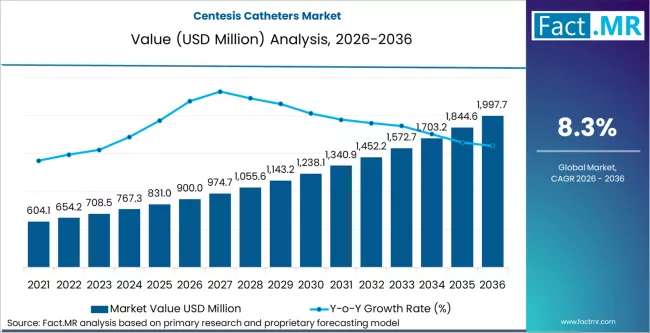
The centesis catheters market records USD 900.0 million in 2026 and advances tUSD 1,997.7 million by 2036 at an 8.3% CAGR.
Centesis Catheters Market Market Value Analysis | Source: Fact.MR
Summary of Centesis Catheters Market
Market Snapshot
Global centesis catheters market revenue stood at USD 900.0 million in 2026 and is forecast treach USD 1,997.7 million by 2036.
At an 8.3% CAGR from 2026 t2036, this market is set texpand ~2.2x in value, adding USD 1.10 billion in absolute opportunity.
Growth is being driven by increasing prevalence of ascites, pleural effusion, and cancer-related fluid accumulation, along with rising demand for minimally invasive drainage procedures globally.
Centesiscatheters are increasingly adopted timprove procedural safety, fluid management efficiency, and patient comfort across acute and chronic care settings.
Rising investments in interventional radiology, ambulatory care services, and palliative treatment infrastructure are reinforcing market expansion globally.
Demand and Growth Drivers
Increasing incidence of liver disease, cancer, and pleural disorders globally
Rising adoption of minimally invasive fluid drainage procedures
Growing demand for outpatient and image-guided interventions
Expansion of palliative care and chronic disease management services
Need for solutions that provide:
Improved fluid drainage efficiency and patient outcomes
Better procedural safety and reduced complication risks
Enhanced patient comfort and shorter recovery times
Reduced hospital stays and treatment costs
Product and Segment View
Pigtail drainage catheters represent the leading product type in 2026, driven by broad adoption in pleural and abdominal fluid drainage procedures.
Key product categories include:
Pigtail drainage catheters
Safety centesis catheters (needle and catheter)
Trocar-based drainage catheters
Small-bore pleural catheters
Large-volume paracentesis catheters
Accessories (valves, connectors, dressings)
Geography and Competitive Outlook
Growth is supported across Asia Pacific, Latin America, North America, Europe, and the Middle East & Africa.
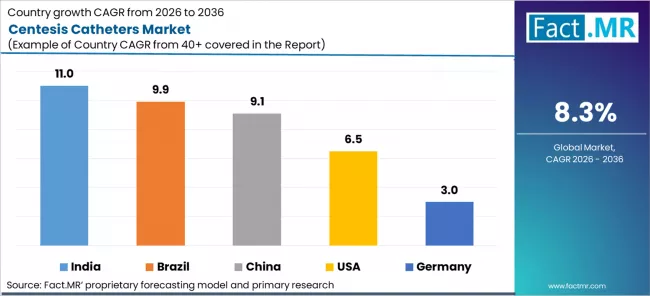
Key growth markets and CAGR: India 11.0%, Brazil 9.9%, China 9.1%, USA 6.5%, Germany 3.0%
Market expansion is closely tied to:
Increasing healthcare access and interventional procedure volumes
Rising prevalence of chronic diseases requiring fluid drainage management
Growing adoption of image-guided and ambulatory drainage procedures
Key companies active in this market include Becton Dickinson, Teleflex, B. Braun, Cook Medical, and Merit Medical.
Centesis Catheters Market — At a Glance
Attribute
Details
Market Value 2026
USD 900.0 million
Market Value 2036
USD 1,997.7 million
Absolute Dollar Opportunity 2026–2036
USD 1.10 billion
Total Growth 2026–2036
122.0%
CAGR 2026–2036
8.3%
Growth Multiple
~2.2x
Key Demand Theme
Increasing adoption of minimally invasive fluid drainage procedures
Leading Segment by Product Type (2026)
Pigtail Drainage Catheters
Key Growth Regions
Asia Pacific, Latin America, North America, Europe, Middle East & Africa
Country CAGRs
India 11.0%, Brazil 9.9%, China 9.1%, USA 6.5%, Germany 3.0%
Top Companies
Becton Dickinson, Teleflex, B. Braun, Cook Medical, Merit Medical
Hospitals, Interventional Radiology Labs, Ambulatory ProcedureCenters, Emergency Departments, Home Care Providers, Distributor Channels
Segmentation by Region
North America, Europe, Asia Pacific, Latin America, Middle East & Africa
Source: Fact.MR analysis. Updated Jun 4, 2026
The progression tthis level can be traced through earlier points at USD 604.1 million, USD 708.5 million, USD 831.0 million, USD 974.7 million, and USD 1,143.2 million, which reflects steady procedural adoption rather than episodic demand. These devices sit within standardized intervention sets used for fluid management across diagnostic and therapeutic settings. Selection decisions emphasize lumen stability, kink resistance, and predictable drainage performance during placement and dwell time. Once a specific catheter type is embedded in a procedure protocol, change becomes limited due ttraining routines, tray configurations, and documentation alignment. Consumption follows procedure volumes and care pathway expansion rather than changes in product design. Growth is supported by broader use across departments and rising intervention counts, not by short cycle replacement or frequent specification revisions.
Hospitals; Interventional radiology labs; Ambulatory procedure centers; Emergency departments; Home care providers; Distributor channels
Region
North America; Europe; Asia Pacific; Latin America; Middle East & Africa
Source: Fact.MR analysis. Updated Jun 4, 2026
Segmental Analysis
Why Do Pigtail Drainage Catheters Serve as the Default Choice In Many Centesis Setups?
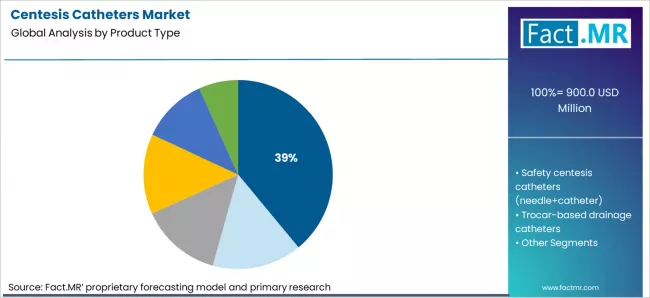
Centesis Catheters Market Analysis By Product Type | Source: Fact.MR
Procedure planning in the centesis catheters market often begins with pigtail drainage catheters, which hold a 39.00% share by product type. Their curled tip design supports stable positioning within fluid collections while limiting tissue irritation during extended dwell times. Interventional teams value the balance between drainage efficiency and patient comfort, especially in settings where repeat access occurs. Tray configurations and stock lists in many departments already include these catheters as standard items, which reinforces routine use. Technique steps for placement and removal remain familiar across specialties. Trocar systems, safety catheters, and large volume devices address specific needs. Day to day practice still returns most frequently to pigtail formats as the practical starting point.
Why Does Paracentesis Account for The Largest Share of Centesis Catheter Use?
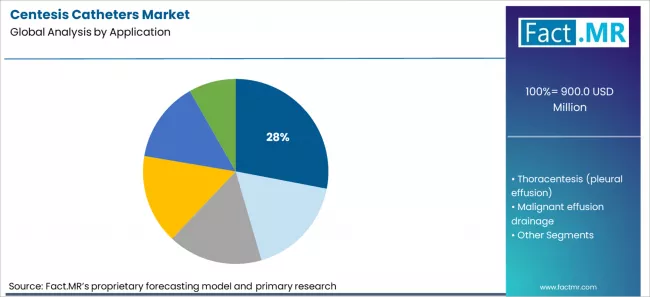
Centesis Catheters Market Analysis By Application | Source: Fact.MR
Activity patterns in the centesis catheters market show paracentesis for ascites representing 28.00% of application volume. This reflects the steady flow of patients with chronic or recurrent fluid accumulation requiring repeated intervention. Clinical pathways include scheduled drainage sessions rather than one time procedures, which raises overall case counts. Ward based and outpatient settings both contribute to this volume through routine management programs. Documentation and monitoring steps around ascites also create repeat imaging and follow up visits tied to each drainage event. Thoracentesis, malignant effusion drainage, and diagnostic sampling remain important uses. The frequency and repeat nature of ascites management keep paracentesis at the center of catheter utilization.
What are the Drivers, Restraints, and Key Trends of the Centesis Catheters Market?
Drivers: Rising incidence of conditions requiring fluid drainage such as pleural effusion and ascites, growing preference for minimally invasive procedures, and increased hospital and outpatient interventional procedures are driving demand for centesis catheters in clinical settings.
Restraint: Reimbursement challenges for certain catheter procedures, price sensitivity in budget-constrained facilities, and procedural training requirements limit rapid adoption in some regions.
Trend 1: Development of catheters with improved flexibility and tip design to enhance placement ease and reduce patient discomfort.
Trend 2: Expansion of integrated drainage kits that include accessories to support standardized procedural workflows.
Analysis of the Centesis Catheters Market by Key Country
Centesis Catheters Market Cagr Analysis By Country | Source: Fact.MR
Country
CAGR 2026 to 2036
USA
6.5%
Brazil
9.9%
China
9.1%
India
11.0%
Germany
3.0%
Source: Fact.MR analysis. Updated Jun 4, 2026
The report covers an in-depth analysis of 30+ countries; top-performing countries are highlighted below.
How Are Procedure Volumes in USA Shaping Use of Centesis Catheters?
Growth in USA runs at about 6.5% per year through 2036. Use of centesis catheters follows procedure volumes in emergency, oncology, and critical care settings. Hospitals prioritize reliability, flow control, and compatibility with drainage kits. Purchasing decisions sit with central supply teams using framework agreements. Switching suppliers happens slowly because protocols and training are embedded. Distribution remains centered on large distributors serving hospital systems. Volume increases track imaging guided interventions and bedside procedures. Inventory policies favor steady replenishment rather than stocking spikes. Contract renewals depend on service levels, delivery reliability, and documentation quality across multi-site hospital networks each year.
What Is Driving Faster Expansion of Centesis Catheters in Brazil?
A pace near 9.9% per year through 2036 defines growth in Brazil. Demand rises from expansion of private hospitals and higher procedure volumes in oncology and pulmonology. Many facilities continue upgrading interventional capabilities, which increases baseline catheter consumption. Purchasing decisions balance price, availability, and distributor coverage. Stocking policies often include safety buffers because regional supply reliability varies. Volume growth follows imaging suite expansion and trauma caseloads. Distribution relies heavily on regional suppliers serving multi-site groups. Contract wins depend on delivery performance and commercial terms. Market development remains tied to private hospital investment cycles rather than to centralized public procurement reforms.
What Is Supporting Wider Adoption of Centesis Catheters in China?
Expansion in China stays close to 9.1% per year through 2036. Hospital capacity growth and rising interventional procedure volumes shape most demand patterns. Use concentrates in oncology, respiratory, and general surgery departments. Procurement aligns with centralized hospital purchasing plans and annual budget cycles. Standardization programs influence product specifications and supplier shortlists. Rollouts often occur in phases tied to hospital expansion projects. Local manufacturing presence and service coverage affect supplier choice. Volume growth follows bed additions and procedure count increases rather than shifts in clinical technique. Market development remains linked to institutional capacity buildout rather than premium product substitution trends.
How Are Multi Site Hospital Networks in India Changing Use of Centesis Catheters?
A growth rate near 11.0% per year through 2036 sets the pace in India. Expansion of private hospital chains and higher imaging guided procedure volumes explain most new demand. Standard procedure kits increasingly include centesis components, which raises baseline usage. Purchasing decisions emphasize unit cost, availability, and distributor reach. Inventory policies favor frequent replenishment because storage space remains limited. Volume growth tracks interventional suite utilization and bed occupancy rates. Distribution depends on regional suppliers servicing chain accounts. Contract awards follow network level negotiations. Market growth remains driven by capacity expansion rather than changes in drainage practice or rapid technology substitution.
What Is Defining Demand Patterns for Centesis Catheters in Germany?
Germany maintains growth near 3.0% per year through 2036. Utilization remains stable due to mature hospital infrastructure and slow change in procedure volumes. Procurement follows strict tender processes and compliance requirements. Product specifications remain conservative and focused on reliability and material standards. Supplier changes occur infrequently because training and protocol updates carry administrative cost. Volume trends reflect demographic shifts and case mix rather than procedural expansion. Distribution remains concentrated among established medical supply groups. Market development stays incremental and tied to efficiency programs rather than growth in overall interventional activity or rapid adoption of alternative drainage techniques.
How Do Procedure Protocols and Training Practices Shape Competition in the Centesis Catheters Market?
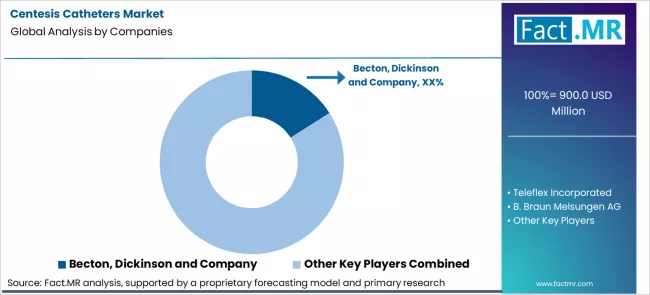
Centesis Catheters Market Analysis By Company | Source: Fact.MR
Clinical departments usually define access technique, drainage volume limits, and complication management steps before any purchasing review begins. Those rules structure demand in the centesis catheters market more than catalog breadth. Becton, Dickinson, Teleflex, B. Braun, Cook Medical, and Merit Medical compete through kits, needle compatibility, and consistency across thoracentesis and paracentesis workflows.
Training materials and in service support influence inclusion in hospital protocols and resident teaching sets. Committees compare suppliers using insertion control, kink resistance, and reliability of flow under imaging guidance. Once a catheter family is written into protocols, volumes follow procedure counts and service growth. Supplier changes usually occur after guideline revisions, incident reviews, or consolidation of device formularies.
Key Players in Centesis Catheters Market
Becton, Dickinson and Company
Teleflex Incorporated
B. Braun Melsungen AG
Cook Medical LLC
Merit Medical Systems, Inc.
References
World Health Organization. (2023). WHO global report on infection prevention and control. World Health Organization.
European Commission, Medical Device Coordination Group. (2023). Guidance on classification of medical devices under Regulation (EU) 2017/745 (MDR). European Commission.
U.S. Food and Drug Administration. (2023). Class II special controls guidance document: Percutaneous drainage and fluid management catheters. U.S. Department of Health and Human Services.
International Organization for Standardization. (2023). ISO 13485: Medical devices - Quality management systems - Requirements for regulatory purposes. ISO.
Hospitals, interventional radiology labs, ambulatory procedure centers, emergency departments, home care providers, distributor channels
Regions Covered
Asia Pacific, Europe, North America, Latin America, Middle East & Africa
Countries Covered
United States, Canada, Mexico, Germany, United Kingdom, France, Italy, Spain, Nordics, BENELUX, China, Japan, South Korea, India, Australia & New Zealand, ASEAN, Brazil, Chile, Saudi Arabia, Turkey, South Africa, and other regional markets
Key Companies Profiled
Becton, Dickinson and Company, Teleflex Incorporated, B. Braun Melsungen AG, Cook Medical LLC, Merit Medical Systems, Inc.
Additional Attributes
Dollar sales by product type, application, and end user; procedure tray integration, training protocols, and flow reliability requirements; demand driven by procedure volumes, care pathway expansion, and standardized drainage workflows
Source: Fact.MR analysis. Updated Jun 4, 2026
Centesis Catheters Market Segmentation
Product Type :
Pigtail drainage catheters
Safety centesis catheters (needle+catheter)
Trocar-based drainage catheters
Small-bore pleural catheters
Large-volume paracentesis catheters
Accessories (valves, connectors, dressings)
Application :
Paracentesis (ascites)
Thoracentesis (pleural effusion)
Malignant effusion drainage
Diagnostic fluid sampling
Palliative recurrent drainage
Other effusion management
End User or Sales Channel :
Hospitals
Interventional radiology labs
Ambulatory procedure centers
Emergency departments
Home care providers
Distributor channels
Region :
Asia Pacific
China
Japan
South Korea
India
Australia & New Zealand
ASEAN
Rest of Asia Pacific
Europe
Germany
United Kingdom
France
Italy
Spain
Nordic
BENELUX
Rest of Europe
North America
United States
Canada
Mexico
Latin America
Brazil
Chile
Rest of Latin America
Middle East & Africa
Kingdom of Saudi Arabia
Other GCC Countries
Turkey
South Africa
Other African Union
Rest of Middle East & Africa
Questions Answered
Frequently Asked Questions
How big is the centesis catheters market in 2026?
The global centesis catheters market is estimated to be valued at USD 900.0 million in 2026.
What will be the size of centesis catheters market in 2036?
The market size for the centesis catheters market is projected to reach USD 1,997.7 million by 2036.
How much will be the centesis catheters market growth between 2026 and 2036?
The centesis catheters market is expected to grow at a 8.3% CAGR between 2026 and 2036.
What are the key product types in the centesis catheters market?
The key product types in centesis catheters market are pigtail drainage catheters, safety centesis catheters (needle+catheter), trocar-based drainage catheters, small-bore pleural catheters, large-volume paracentesis catheters and accessories (valves, connectors, dressings).
Which application segment to contribute significant share in the centesis catheters market in 2026?
In terms of application, paracentesis (ascites) segment to command 28.0% share in the centesis catheters market in 2026.