Chef Apparel Market (2026 - 2036)
Chef Apparel Market is segmented by Product (Chef Coats, Chef Pants, Aprons, Headwear, and Others), End User (Hotels & Restaurants, Catering, Institutional Kitchens, and Others), Distribution Channel (B2B Uniform Suppliers, Online Retail, and Others), and Region. Forecast for 2026 to 2036.
Core Findings
Chef Apparel Market Forecast 2026 to 2036
In 2025, the chef apparel market was valued at USD 814 million. Based on FMR analysis, demand for chef apparel is estimated to grow to USD 858 million in 2026 and USD 1,587 million by 2036. Fact MR projects a CAGR of 5.3% during the forecast period.
The absolute dollar growth from 2026 to 2036 is USD 729 million. This growth is driven by the increasing number of restaurants, hotels, and foodservice establishments globally, all requiring high-quality, functional, and professional chef apparel. The growing trend of culinary tourism, along with the rising awareness of hygiene and safety standards in food preparation, is further contributing to market expansion. However, challenges such as fluctuating raw material costs and the rise of alternative and sustainable apparel options may influence growth in some regions.
India leads with a CAGR of 6.9%, driven by rapid growth in the foodservice and hospitality sectors. China follows with 6.7%, supported by the increasing number of restaurants and food-related businesses in the country. Germany grows at 5.1%, benefiting from strong demand in its well-established culinary industry. The United Kingdom shows growth at 5.0%, reflecting steady demand for chef apparel in the foodservice and hospitality sectors. France grows at 5.0%, supported by its rich culinary heritage and expanding restaurant market.
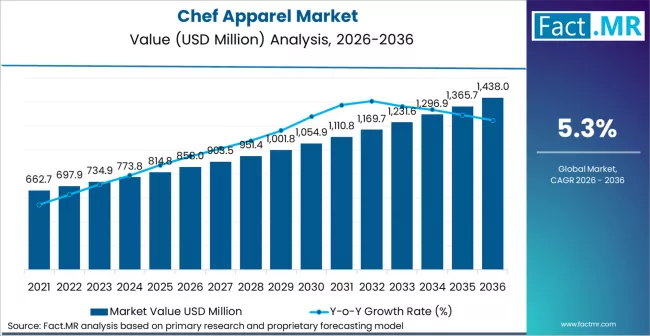
Chef Apparel Market
| Metric | Value |
|---|---|
| Estimated Value in (2026E) | USD 858 million |
| Forecast Value in (2036F) | USD 1,587 million |
| Forecast CAGR (2026 to 2036) | 5.3% |
Chef Apparel Market Definition
The Chef Apparel Market involves the manufacture and sale of professional clothing designed for chefs and kitchen staff, including jackets, pants, aprons, hats, and protective garments used in commercial kitchens and food service environments.
Market Inclusions
This report covers global and regional market sizes for chef apparel over a defined forecast period, including product types (jackets, pants, aprons, headwear), material segments, end‑use settings (restaurants, hotels, catering, institutional kitchens), and distribution channels (direct, retail, e‑commerce).
Market Exclusions
The scope excludes general workwear outside kitchen environments, casual apparel not tailored to chef or culinary use, and unrelated protective clothing outside the food service sector.
Research Methodology
- Primary Research: Interviews were conducted with apparel manufacturers, hospitality procurement specialists, and kitchen managers.
- Desk Research: Data was sourced from industry reports, textile publications, and trade association statistics.
- Market‑Sizing and Forecasting: A hybrid model combining top‑down apparel demand forecasts with bottom‑up shipment and revenue data was used.
- Data Validation and Update Cycle: Findings were validated through expert review and aligned with recent production, adoption, and trade figures.
Summary of the Chef Apparel Market
- Market Definition
- The Chef Apparel Market involves the production and sale of professional clothing designed for chefs and kitchen staff, including jackets, pants, aprons, headwear, and other protective garments used in commercial kitchens and food service environments.
- Demand Drivers
- Hygiene and Safety Standards: Stringent food safety regulations mandate the use of durable and easy-to-clean chef apparel, driving demand in foodservice settings.
- Professional Appearance: High-quality chef uniforms enhance brand image and contribute to the professional presentation of foodservice employees, especially in hotels and restaurants.
- Hospitality Industry Growth: The expansion of global foodservice establishments, including new hotels and restaurants, especially in emerging markets, continues to drive demand for chef apparel.
- Key Segments Analyzed
- End-User Sector: Hotels and restaurants are projected to capture 67% of the market share by 2026, reflecting the growing need for professional, high-quality uniforms in commercial kitchens.
- Distribution Channel: B2B uniform suppliers are expected to hold 60% of the market share by 2026, providing bulk orders and customized uniforms for businesses in the foodservice industry.
- Geography: India is expected to lead with a CAGR of 6.9%, driven by rapid growth in the hospitality sector.
- Analyst Opinion at Fact MR
- Shambhu Nath Jha, Principal Consultant at Fact MR, noted, “The global foodservice industry's expansion and the increasing focus on hygiene standards will significantly drive the demand for high-quality chef apparel, especially in emerging markets like India and China.”
- Strategic Implications/Executive Takeaways
- Focus on Quality and Functionality: Manufacturers should emphasize durable, breathable, and easy-to-maintain fabrics to meet the evolving needs of the foodservice industry.
- Expand in Emerging Markets: The growing hospitality and foodservice sectors in regions like India and China present significant opportunities for market growth.
- Leverage Customization: Offering personalized uniforms with logos and branding can strengthen customer relationships and support business differentiation in the competitive hospitality sector.
- Methodology
- Primary Research: Interviews with apparel manufacturers, hospitality procurement specialists, and kitchen managers.
- Desk Research: Data sourced from industry reports, textile publications, and trade association statistics.
- Market Sizing & Forecasting: A hybrid model combining top-down forecasts with bottom-up shipment and revenue data.
Segmental Analysis
Chef Apparel Market Analysis by End User
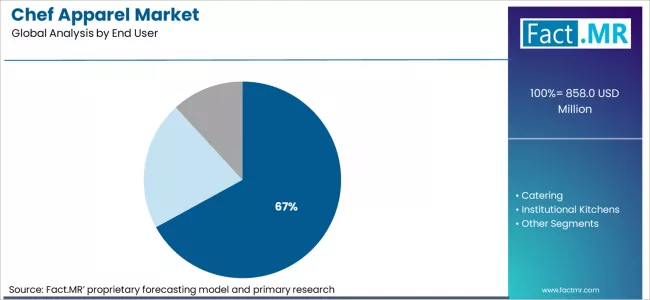
- Market Overview: Hotels & Restaurants are expected to capture 67% of the market share by 2026. Chef apparel is essential in hotels and restaurants for maintaining hygiene, safety, and a professional appearance. These establishments often require high-quality uniforms to meet industry standards and create a consistent brand image for both staff and customer interactions.
- Demand Drivers:
- Hygiene and Safety Standards: The demand for chef apparel in hotels and restaurants is driven by stringent hygiene and safety regulations, which require chefs to wear protective, durable, and easy-to-clean clothing.
- Professional Appearance: As these establishments focus on presenting a professional image, the need for stylish, branded chef apparel that reflects the quality of the business is contributing to the growth in demand.
- Growth in the Hospitality Industry: The expansion of the global hospitality sector, with more hotels and restaurants opening, particularly in emerging markets, is driving the demand for chef apparel.
Chef Apparel Market Analysis by Distribution Channel
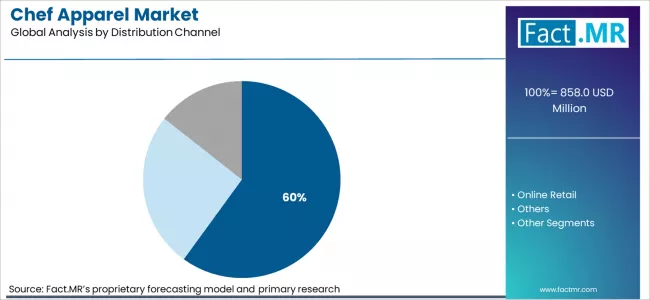
- Market Overview: B2B uniform suppliers are projected to hold 60% of the market share by 2026. These suppliers are the primary distributors of chef apparel, providing bulk orders for hotels, restaurants, catering services, and institutional kitchens.
- Demand Drivers:
- Large-Scale Orders for Businesses: B2B uniform suppliers are ideal for bulk orders, which are commonly required by hotels, restaurants, and catering companies that need consistent, high-quality uniforms for multiple employees.
- Customization and Branding: B2B suppliers offer customized chef apparel, allowing businesses to incorporate their logos, colors, and branding into uniforms, which is especially popular in the hospitality industry.
- Reliability and Convenience: B2B suppliers provide convenience, ensuring that businesses have a steady supply of uniformed apparel, minimizing downtime or lack of stock, which drives their adoption in the market.
Chef Apparel Market Drivers, Restraints, and Opportunities
FMR analysts observe that the chef apparel market is a growth‑aligned, performance‑and‑safety segment anchored in foodservice, hospitality, and institutional kitchens where uniformity, hygiene, and protection are essential. Historically, basic chef coats and pants met simple functional needs; as food safety standards tightened and professional kitchens expanded, structural demand emerged for specialized apparel that offers heat resistance, moisture management, and ergonomic comfort. The 2026 valuation reflects this steady demand tied to global growth in restaurants, catering, and culinary training programs.
While basic cotton uniforms remain common in cost‑sensitive settings, advanced fabrics with stain resistance, antimicrobial treatment, and breathable designs are gaining share. These higher‑value products often command premium pricing, contributing to net market value growth even as unit volumes grow moderately with foodservice expansion. The market exists because professional kitchens require certified and durable apparel that supports hygiene standards and long service life.
- Food Safety & Hygiene Demand: Operators adopt chef apparel that meets sanitation and contamination control expectations over generic workwear.
- Performance & Comfort Trends: Breathable, stain‑resistant, and antimicrobial fabrics gain share over basic cotton for improved comfort and durability.
- Regional Hospitality Growth: In North America and Europe, mature foodservice markets drive advanced apparel uptake, while Asia‑Pacific shows rapid growth with expanding restaurant and hospitality sectors.
Regional Analysis
The market analysis covers key global regions, including South Asia, East Asia, Western Europe, and North America. It is segmented geographically, with specific market dynamics for each region. The full report provides a detailed market attractiveness analysis.
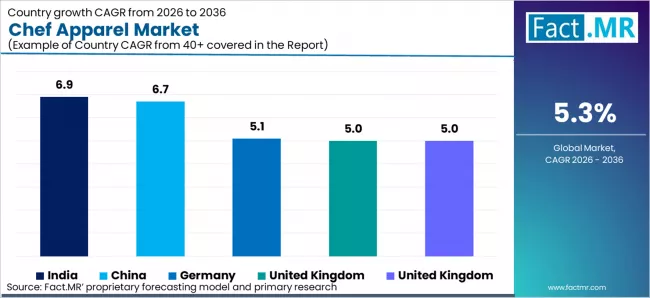
| Country | CAGR (2026-2036) |
|---|---|
| India | 6.9% |
| China | 6.7% |
| Germany | 5.1% |
| United Kingdom | 5.0% |
| France | 5.0% |
Source: Fact MR (FMR) analysis, based on proprietary forecasting model and primary research.
South Asia:
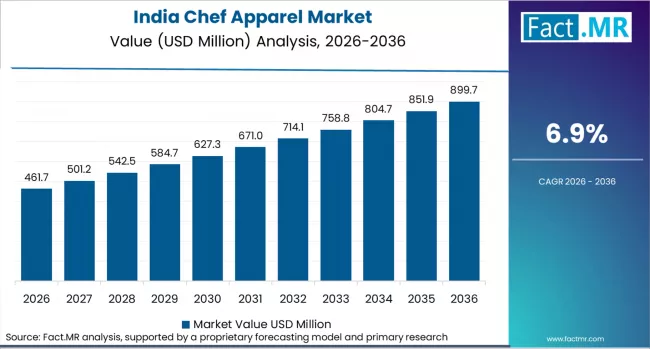
In South Asia, India is a leading market for chef apparel, driven by the growth in the hospitality and foodservice industries, increasing demand for uniform standards, and the rising number of culinary schools and professional chefs.
- India: Demand for chef apparel in India is projected to rise at 6.9% CAGR through 2036. India’s expanding hospitality sector, growing number of professional chefs, and rising demand for chef uniforms in foodservice establishments continue to drive market growth.
East Asia:
In East Asia, China is a significant market for chef apparel, supported by the country’s large foodservice and hospitality industries, growing demand for professional kitchen uniforms, and increasing focus on hygiene and safety in the culinary profession.
- China: Demand for chef apparel in China is projected to rise at 6.7% CAGR through 2036. China’s rapidly growing foodservice industry, increasing adoption of professional chef uniforms, and rising awareness of hygiene and safety in kitchens contribute to steady market growth.
Western Europe:
In Western Europe, Germany, France, and the United Kingdom are key markets for chef apparel, driven by the well-established hospitality industries, growing demand for high-quality chef uniforms, and rising standards in the culinary profession.
- Germany: Demand for chef apparel in Germany is projected to rise at 5.1% CAGR through 2036. Germany’s strong hospitality sector, demand for high-quality kitchen uniforms, and increasing adoption of uniforms in restaurants and hotels continue to fuel market growth.
- United Kingdom: Demand for chef apparel in the UK is projected to rise at 5.0% CAGR through 2036. The UK’s well-established foodservice industry, growing number of professional chefs, and increasing focus on maintaining hygiene in kitchens contribute to market demand.
- France: Demand for chef apparel in France is projected to rise at 5.0% CAGR through 2036. France’s rich culinary heritage, demand for professional chef uniforms, and growing hospitality industry continue to support market growth.
Fact MR's analysis of the Chef Apparel Market in South Asia, East Asia, Western Europe consists of country-wise assessments that include India, China, Germany, France, and the United Kingdom. Readers can find detailed trends, regulatory updates, and company-specific investments shaping the market’s growth in these countries.
What is the Competitive Structure and Buyer Behavior in the Chef Apparel Market?
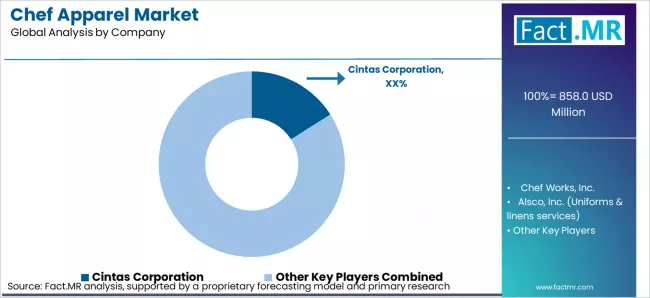
The chef apparel market is moderately fragmented, with several established uniform and workwear suppliers such as Cintas Corporation, Chef Works, Inc., Alsco, Inc., VF Corporation (Dickies brand), Superior Uniform Group, Inc., and UniFirst Corporation holding significant market share alongside branded and specialty providers like Bragard, Aramark Uniform Services, Mercer Culinary, and Happy Chef. The primary competitive variables are product quality, fabric performance (comfort, stain resistance, durability), brand reputation, and breadth of style and size assortments that meet professional kitchen standards. Firms with extensive distribution networks, broad product portfolios, and strong service capabilities have structural advantages, as they can supply complete chef apparel programs, support bulk orders, and offer repeat delivery and customization. Large hospitality groups, restaurant chains, and institutional buyers exert notable leverage by qualifying multiple suppliers, negotiating pricing and contract terms, and often requiring uniform programs that standardize specifications across locations. To manage supplier dependency, these buyers diversify vendor lists and emphasize consistent quality and reliable delivery schedules, which limits individual suppliers’ pricing power. As a result, competition centers on value delivered through quality, service reliability, and program flexibility rather than on price alone.
Recent Industry Developments
- Undercover x Dickies Avant-Garde Launch: In March 2026, Dickies expanded its footprint in the premium culinary and lifestyle space through a Spring/Summer 2026 collaboration with UNDERCOVER. The collection reinterprets traditional utilitarian silhouettes (like the Eisenhower jacket and work pants) using signature "TC twill" with distorted, modern paneling to serve open-kitchen environments where chef aesthetics are increasingly linked to brand identity.
- Sustainable Fabric Mandates: As 2026 approaches, market leaders like Chef Works and Bragard have pivoted toward "Circular Fashion" in response to new 2027 EU Digital Product Passport (DPP) requirements. Manufacturers are now prioritizing high-performance fabrics made from recycled polyesters and organic cotton that feature permanent moisture-wicking and stain-release finishes without the use of regulated "forever chemicals" (PFAS).
Key Players of the Chef Apparel Market
- Cintas Corporation
- Chef Works, Inc.
- Alsco, Inc. (Uniforms & linens services)
- VF Corporation (Dickies brand)
- Superior Uniform Group, Inc.
- Bragard
- Aramark Uniform Services
- Mercer Culinary
- Happy Chef
- UniFirst Corporation
Report Scope
| Metric | Value |
|---|---|
| Quantitative Units | USD 858 million (2026) to USD 1,587 million (2036), at a CAGR of 5.3% |
| Market Definition | The Chef Apparel Market includes products designed for chefs, such as coats, pants, aprons, and headwear, utilized by hotels, restaurants, catering services, and institutional kitchens. |
| By Product | Chef Coats, Chef Pants, Aprons, Headwear, Others |
| By End User | Hotels & Restaurants, Catering, Institutional Kitchens, Others |
| By Distribution Channel | B2B Uniform Suppliers, Online Retail, Others |
| Regions Covered | North America, Latin America, Europe, East Asia, South Asia, Oceania, Middle East and Africa |
| Countries Covered | United States, Canada, Mexico, Brazil, Argentina, Germany, France, United Kingdom, Italy, Spain, China, India, Japan, South Korea, Indonesia, Australia, and 40+ countries |
| Key Companies Profiled | Cintas Corporation, Chef Works, Inc., Alsco, Inc. (Uniforms & linens services), VF Corporation (Dickies brand), Superior Uniform Group, Inc., Bragard (official brand name; legal entity varies by region), Aramark Uniform Services (a division of Aramark), Mercer Culinary (a brand of World Kitchen LLC / Newell Brands), Happy Chef (brand; legal entity varies), UniFirst Corporation |
| Forecast Period | 2026 to 2036 |
| Approach | Hybrid top-down and bottom-up market modeling validated through primary interviews with manufacturers and supported by trade data benchmarking and market research. |
Chef Apparel Market Key Segments
-
Product :
- Chef Coats
- Chef Pants
- Aprons
- Headwear
- Others
-
End-Use Industry :
- Hotels & Restaurants
- Catering
- Institutional Kitchens
- Others
-
Distribution Channel :
- B2B Uniform Suppliers
- Online Retail
- Others
-
Region :
- North America
- USA
- Canada
- Mexico
- Europe
- Germany
- UK
- France
- Italy
- Spain
- Nordic Countries
- BENELUX
- Rest of Europe
- Asia Pacific
- China
- Japan
- South Korea
- India
- Australia
- Rest of Asia Pacific
- Latin America
- Brazil
- Argentina
- Rest of Latin America
- Middle East and Africa
- Kingdom of Saudi Arabia
- United Arab Emirates
- South Africa
- Rest of Middle East and Africa
- Other Regions
- Oceania
- Central Asia
- Other Markets
- North America
Bibliographies
- Kim, H. J., & Lee, Y. S. (2023). Textile performance requirements for professional workwear in hospitality environments: Comfort, hygiene, and safety considerations. International Journal of Clothing Science and Technology.
- Smith, J. M., & Patel, R. (2024). Sustainable fabrics and functional design in culinary uniforms: Toward ergonomic chef apparel. Journal of Textile and Apparel, Technology and Management.
- European Agency for Safety and Health at Work. (2023). Occupational protective clothing standards in the hospitality and foodservice sectors: A review of requirements and best practices.
- United States Department of Agriculture, Food Safety and Inspection Service. (2023). Workplace hygiene and uniform guidelines for foodservice personnel.
This report addresses:
- Market intelligence enabling comprehensive assessment of leading countries and product segments across the Chef Apparel Market globally.
- Market volume (sales units) estimates and 10-year revenue forecasts from 2026 to 2036, validated through manufacturer shipment data, channel partner surveys, and country-level demand modeling.
- Growth opportunity mapping across product types (Chef Coats, Chef Pants, Aprons, Headwear, Others), end-user sectors (Hotels & Restaurants, Catering, Institutional Kitchens, Others), distribution channels (B2B Uniform Suppliers, Online Retail, Others).
- Segment and regional revenue forecasts by product type, end-user sector, distribution channel, and geography across 40+ countries.
- Competition strategy analysis covering dealer network structure, recent developments, product portfolio, USPs, and market share analysis.
- Product and regulatory compliance tracking aligned with food safety and hygiene standards, worker protection regulations, and industry certification requirements.
- Regulatory impact analysis addressing health and safety standards, foodservice uniform guidelines, and sustainability mandates across key markets.
- Report delivery in PDF, Excel, PowerPoint, and interactive dashboard formats for executive, procurement, and operational planning use.
Table of Content
- Executive Summary
- Global Market Outlook
- Demand to side Trends
- Supply to side Trends
- Technology Roadmap Analysis
- Analysis and Recommendations
- Market Overview
- Market Coverage / Taxonomy
- Market Definition / Scope / Limitations
- Research Methodology
- Chapter Orientation
- Analytical Lens and Working Hypotheses
- Market Structure, Signals, and Trend Drivers
- Benchmarking and Cross-market Comparability
- Market Sizing, Forecasting, and Opportunity Mapping
- Research Design and Evidence Framework
- Desk Research Programme (Secondary Evidence)
- Company Annual and Sustainability Reports
- Peer-reviewed Journals and Academic Literature
- Corporate Websites, Product Literature, and Technical Notes
- Earnings Decks and Investor Briefings
- Statutory Filings and Regulatory Disclosures
- Technical White Papers and Standards Notes
- Trade Journals, Industry Magazines, and Analyst Briefs
- Conference Proceedings, Webinars, and Seminar Materials
- Government Statistics Portals and Public Data Releases
- Press Releases and Reputable Media Coverage
- Specialist Newsletters and Curated Briefings
- Sector Databases and Reference Repositories
- FMR Internal Proprietary Databases and Historical Market Datasets
- Subscription Datasets and Paid Sources
- Social Channels, Communities, and Digital Listening Inputs
- Additional Desk Sources
- Expert Input and Fieldwork (Primary Evidence)
- Primary Modes
- Qualitative Interviews and Expert Elicitation
- Quantitative Surveys and Structured Data Capture
- Blended Approach
- Why Primary Evidence is Used
- Field Techniques
- Interviews
- Surveys
- Focus Groups
- Observational and In-context Research
- Social and Community Interactions
- Stakeholder Universe Engaged
- C-suite Leaders
- Board Members
- Presidents and Vice Presidents
- R&D and Innovation Heads
- Technical Specialists
- Domain Subject-matter Experts
- Scientists
- Physicians and Other Healthcare Professionals
- Governance, Ethics, and Data Stewardship
- Research Ethics
- Data Integrity and Handling
- Primary Modes
- Tooling, Models, and Reference Databases
- Desk Research Programme (Secondary Evidence)
- Data Engineering and Model Build
- Data Acquisition and Ingestion
- Cleaning, Normalisation, and Verification
- Synthesis, Triangulation, and Analysis
- Quality Assurance and Audit Trail
- Market Background
- Market Dynamics
- Drivers
- Restraints
- Opportunity
- Trends
- Scenario Forecast
- Demand in Optimistic Scenario
- Demand in Likely Scenario
- Demand in Conservative Scenario
- Opportunity Map Analysis
- Product Life Cycle Analysis
- Supply Chain Analysis
- Investment Feasibility Matrix
- Value Chain Analysis
- PESTLE and Porter’s Analysis
- Regulatory Landscape
- Regional Parent Market Outlook
- Production and Consumption Statistics
- Import and Export Statistics
- Market Dynamics
- Global Market Analysis 2021 to 2025 and Forecast, 2026 to 2036
- Historical Market Size Value (USD Million) Analysis, 2021 to 2025
- Current and Future Market Size Value (USD Million) Projections, 2026 to 2036
- Y to o to Y Growth Trend Analysis
- Absolute $ Opportunity Analysis
- Global Market Pricing Analysis 2021 to 2025 and Forecast 2026 to 2036
- Global Market Analysis 2021 to 2025 and Forecast 2026 to 2036, By End User
- Introduction / Key Findings
- Historical Market Size Value (USD Million) Analysis By End User , 2021 to 2025
- Current and Future Market Size Value (USD Million) Analysis and Forecast By End User , 2026 to 2036
- Hotels & Restaurants
- Catering
- Institutional Kitchens
- Hotels & Restaurants
- Y to o to Y Growth Trend Analysis By End User , 2021 to 2025
- Absolute $ Opportunity Analysis By End User , 2026 to 2036
- Global Market Analysis 2021 to 2025 and Forecast 2026 to 2036, By Distribution Channel
- Introduction / Key Findings
- Historical Market Size Value (USD Million) Analysis By Distribution Channel, 2021 to 2025
- Current and Future Market Size Value (USD Million) Analysis and Forecast By Distribution Channel, 2026 to 2036
- B2B Uniform Suppliers
- Online Retail
- Others
- B2B Uniform Suppliers
- Y to o to Y Growth Trend Analysis By Distribution Channel, 2021 to 2025
- Absolute $ Opportunity Analysis By Distribution Channel, 2026 to 2036
- Global Market Analysis 2021 to 2025 and Forecast 2026 to 2036, By Region
- Introduction
- Historical Market Size Value (USD Million) Analysis By Region, 2021 to 2025
- Current Market Size Value (USD Million) Analysis and Forecast By Region, 2026 to 2036
- North America
- Latin America
- Western Europe
- Eastern Europe
- East Asia
- South Asia and Pacific
- Middle East & Africa
- Market Attractiveness Analysis By Region
- North America Market Analysis 2021 to 2025 and Forecast 2026 to 2036, By Country
- Historical Market Size Value (USD Million) Trend Analysis By Market Taxonomy, 2021 to 2025
- Market Size Value (USD Million) Forecast By Market Taxonomy, 2026 to 2036
- By Country
- USA
- Canada
- Mexico
- By End User
- By Distribution Channel
- By Country
- Market Attractiveness Analysis
- By Country
- By End User
- By Distribution Channel
- Key Takeaways
- Latin America Market Analysis 2021 to 2025 and Forecast 2026 to 2036, By Country
- Historical Market Size Value (USD Million) Trend Analysis By Market Taxonomy, 2021 to 2025
- Market Size Value (USD Million) Forecast By Market Taxonomy, 2026 to 2036
- By Country
- Brazil
- Chile
- Rest of Latin America
- By End User
- By Distribution Channel
- By Country
- Market Attractiveness Analysis
- By Country
- By End User
- By Distribution Channel
- Key Takeaways
- Western Europe Market Analysis 2021 to 2025 and Forecast 2026 to 2036, By Country
- Historical Market Size Value (USD Million) Trend Analysis By Market Taxonomy, 2021 to 2025
- Market Size Value (USD Million) Forecast By Market Taxonomy, 2026 to 2036
- By Country
- Germany
- UK
- Italy
- Spain
- France
- Nordic
- BENELUX
- Rest of Western Europe
- By End User
- By Distribution Channel
- By Country
- Market Attractiveness Analysis
- By Country
- By End User
- By Distribution Channel
- Key Takeaways
- Eastern Europe Market Analysis 2021 to 2025 and Forecast 2026 to 2036, By Country
- Historical Market Size Value (USD Million) Trend Analysis By Market Taxonomy, 2021 to 2025
- Market Size Value (USD Million) Forecast By Market Taxonomy, 2026 to 2036
- By Country
- Russia
- Poland
- Hungary
- Balkan & Baltic
- Rest of Eastern Europe
- By End User
- By Distribution Channel
- By Country
- Market Attractiveness Analysis
- By Country
- By End User
- By Distribution Channel
- Key Takeaways
- East Asia Market Analysis 2021 to 2025 and Forecast 2026 to 2036, By Country
- Historical Market Size Value (USD Million) Trend Analysis By Market Taxonomy, 2021 to 2025
- Market Size Value (USD Million) Forecast By Market Taxonomy, 2026 to 2036
- By Country
- China
- Japan
- South Korea
- By End User
- By Distribution Channel
- By Country
- Market Attractiveness Analysis
- By Country
- By End User
- By Distribution Channel
- Key Takeaways
- South Asia and Pacific Market Analysis 2021 to 2025 and Forecast 2026 to 2036, By Country
- Historical Market Size Value (USD Million) Trend Analysis By Market Taxonomy, 2021 to 2025
- Market Size Value (USD Million) Forecast By Market Taxonomy, 2026 to 2036
- By Country
- India
- ASEAN
- Australia & New Zealand
- Rest of South Asia and Pacific
- By End User
- By Distribution Channel
- By Country
- Market Attractiveness Analysis
- By Country
- By End User
- By Distribution Channel
- Key Takeaways
- Middle East & Africa Market Analysis 2021 to 2025 and Forecast 2026 to 2036, By Country
- Historical Market Size Value (USD Million) Trend Analysis By Market Taxonomy, 2021 to 2025
- Market Size Value (USD Million) Forecast By Market Taxonomy, 2026 to 2036
- By Country
- Kingdom of Saudi Arabia
- Other GCC Countries
- Turkiye
- South Africa
- Other African Union
- Rest of Middle East & Africa
- By End User
- By Distribution Channel
- By Country
- Market Attractiveness Analysis
- By Country
- By End User
- By Distribution Channel
- Key Takeaways
- Key Countries Market Analysis
- USA
- Pricing Analysis
- Market Share Analysis, 2025
- By End User
- By Distribution Channel
- Canada
- Pricing Analysis
- Market Share Analysis, 2025
- By End User
- By Distribution Channel
- Mexico
- Pricing Analysis
- Market Share Analysis, 2025
- By End User
- By Distribution Channel
- Brazil
- Pricing Analysis
- Market Share Analysis, 2025
- By End User
- By Distribution Channel
- Chile
- Pricing Analysis
- Market Share Analysis, 2025
- By End User
- By Distribution Channel
- Germany
- Pricing Analysis
- Market Share Analysis, 2025
- By End User
- By Distribution Channel
- UK
- Pricing Analysis
- Market Share Analysis, 2025
- By End User
- By Distribution Channel
- Italy
- Pricing Analysis
- Market Share Analysis, 2025
- By End User
- By Distribution Channel
- Spain
- Pricing Analysis
- Market Share Analysis, 2025
- By End User
- By Distribution Channel
- France
- Pricing Analysis
- Market Share Analysis, 2025
- By End User
- By Distribution Channel
- India
- Pricing Analysis
- Market Share Analysis, 2025
- By End User
- By Distribution Channel
- ASEAN
- Pricing Analysis
- Market Share Analysis, 2025
- By End User
- By Distribution Channel
- Australia & New Zealand
- Pricing Analysis
- Market Share Analysis, 2025
- By End User
- By Distribution Channel
- China
- Pricing Analysis
- Market Share Analysis, 2025
- By End User
- By Distribution Channel
- Japan
- Pricing Analysis
- Market Share Analysis, 2025
- By End User
- By Distribution Channel
- South Korea
- Pricing Analysis
- Market Share Analysis, 2025
- By End User
- By Distribution Channel
- Russia
- Pricing Analysis
- Market Share Analysis, 2025
- By End User
- By Distribution Channel
- Poland
- Pricing Analysis
- Market Share Analysis, 2025
- By End User
- By Distribution Channel
- Hungary
- Pricing Analysis
- Market Share Analysis, 2025
- By End User
- By Distribution Channel
- Kingdom of Saudi Arabia
- Pricing Analysis
- Market Share Analysis, 2025
- By End User
- By Distribution Channel
- Turkiye
- Pricing Analysis
- Market Share Analysis, 2025
- By End User
- By Distribution Channel
- South Africa
- Pricing Analysis
- Market Share Analysis, 2025
- By End User
- By Distribution Channel
- USA
- Market Structure Analysis
- Competition Dashboard
- Competition Benchmarking
- Market Share Analysis of Top Players
- By Regional
- By End User
- By Distribution Channel
- Competition Analysis
- Competition Deep Dive
- Cintas Corporation
- Overview
- Product Portfolio
- Profitability by Market Segments (Product/Age /Sales Channel/Region)
- Sales Footprint
- Strategy Overview
- Marketing Strategy
- Product Strategy
- Channel Strategy
- Chef Works, Inc.
- Alsco, Inc. (Uniforms & linens services)
- VF Corporation (Dickies brand)
- Superior Uniform Group, Inc.
- Bragard
- Aramark Uniform Services
- Cintas Corporation
- Competition Deep Dive
- Assumptions & Acronyms Used
List Of Table
- Table 1: Global Market Value (USD Million) Forecast by Region, 2021 to 2036
- Table 2: Global Market Value (USD Million) Forecast by End User, 2021 to 2036
- Table 3: Global Market Value (USD Million) Forecast by Distribution Channel, 2021 to 2036
- Table 4: North America Market Value (USD Million) Forecast by Country, 2021 to 2036
- Table 5: North America Market Value (USD Million) Forecast by End User, 2021 to 2036
- Table 6: North America Market Value (USD Million) Forecast by Distribution Channel, 2021 to 2036
- Table 7: Latin America Market Value (USD Million) Forecast by Country, 2021 to 2036
- Table 8: Latin America Market Value (USD Million) Forecast by End User, 2021 to 2036
- Table 9: Latin America Market Value (USD Million) Forecast by Distribution Channel, 2021 to 2036
- Table 10: Western Europe Market Value (USD Million) Forecast by Country, 2021 to 2036
- Table 11: Western Europe Market Value (USD Million) Forecast by End User, 2021 to 2036
- Table 12: Western Europe Market Value (USD Million) Forecast by Distribution Channel, 2021 to 2036
- Table 13: Eastern Europe Market Value (USD Million) Forecast by Country, 2021 to 2036
- Table 14: Eastern Europe Market Value (USD Million) Forecast by End User, 2021 to 2036
- Table 15: Eastern Europe Market Value (USD Million) Forecast by Distribution Channel, 2021 to 2036
- Table 16: East Asia Market Value (USD Million) Forecast by Country, 2021 to 2036
- Table 17: East Asia Market Value (USD Million) Forecast by End User, 2021 to 2036
- Table 18: East Asia Market Value (USD Million) Forecast by Distribution Channel, 2021 to 2036
- Table 19: South Asia and Pacific Market Value (USD Million) Forecast by Country, 2021 to 2036
- Table 20: South Asia and Pacific Market Value (USD Million) Forecast by End User, 2021 to 2036
- Table 21: South Asia and Pacific Market Value (USD Million) Forecast by Distribution Channel, 2021 to 2036
- Table 22: Middle East & Africa Market Value (USD Million) Forecast by Country, 2021 to 2036
- Table 23: Middle East & Africa Market Value (USD Million) Forecast by End User, 2021 to 2036
- Table 24: Middle East & Africa Market Value (USD Million) Forecast by Distribution Channel, 2021 to 2036
List Of Figures
- Figure 1: Global Market Pricing Analysis
- Figure 2: Global Market Value (USD Million) Forecast 2021 to 2036
- Figure 3: Global Market Value Share and BPS Analysis by End User, 2026 and 2036
- Figure 4: Global Market Y to o to Y Growth Comparison by End User, 2026 to 2036
- Figure 5: Global Market Attractiveness Analysis by End User
- Figure 6: Global Market Value Share and BPS Analysis by Distribution Channel, 2026 and 2036
- Figure 7: Global Market Y to o to Y Growth Comparison by Distribution Channel, 2026 to 2036
- Figure 8: Global Market Attractiveness Analysis by Distribution Channel
- Figure 9: Global Market Value (USD Million) Share and BPS Analysis by Region, 2026 and 2036
- Figure 10: Global Market Y to o to Y Growth Comparison by Region, 2026 to 2036
- Figure 11: Global Market Attractiveness Analysis by Region
- Figure 12: North America Market Incremental Dollar Opportunity, 2026 to 2036
- Figure 13: Latin America Market Incremental Dollar Opportunity, 2026 to 2036
- Figure 14: Western Europe Market Incremental Dollar Opportunity, 2026 to 2036
- Figure 15: Eastern Europe Market Incremental Dollar Opportunity, 2026 to 2036
- Figure 16: East Asia Market Incremental Dollar Opportunity, 2026 to 2036
- Figure 17: South Asia and Pacific Market Incremental Dollar Opportunity, 2026 to 2036
- Figure 18: Middle East & Africa Market Incremental Dollar Opportunity, 2026 to 2036
- Figure 19: North America Market Value Share and BPS Analysis by Country, 2026 and 2036
- Figure 20: North America Market Value Share and BPS Analysis by End User, 2026 and 2036
- Figure 21: North America Market Y to o to Y Growth Comparison by End User, 2026 to 2036
- Figure 22: North America Market Attractiveness Analysis by End User
- Figure 23: North America Market Value Share and BPS Analysis by Distribution Channel, 2026 and 2036
- Figure 24: North America Market Y to o to Y Growth Comparison by Distribution Channel, 2026 to 2036
- Figure 25: North America Market Attractiveness Analysis by Distribution Channel
- Figure 26: Latin America Market Value Share and BPS Analysis by Country, 2026 and 2036
- Figure 27: Latin America Market Value Share and BPS Analysis by End User, 2026 and 2036
- Figure 28: Latin America Market Y to o to Y Growth Comparison by End User, 2026 to 2036
- Figure 29: Latin America Market Attractiveness Analysis by End User
- Figure 30: Latin America Market Value Share and BPS Analysis by Distribution Channel, 2026 and 2036
- Figure 31: Latin America Market Y to o to Y Growth Comparison by Distribution Channel, 2026 to 2036
- Figure 32: Latin America Market Attractiveness Analysis by Distribution Channel
- Figure 33: Western Europe Market Value Share and BPS Analysis by Country, 2026 and 2036
- Figure 34: Western Europe Market Value Share and BPS Analysis by End User, 2026 and 2036
- Figure 35: Western Europe Market Y to o to Y Growth Comparison by End User, 2026 to 2036
- Figure 36: Western Europe Market Attractiveness Analysis by End User
- Figure 37: Western Europe Market Value Share and BPS Analysis by Distribution Channel, 2026 and 2036
- Figure 38: Western Europe Market Y to o to Y Growth Comparison by Distribution Channel, 2026 to 2036
- Figure 39: Western Europe Market Attractiveness Analysis by Distribution Channel
- Figure 40: Eastern Europe Market Value Share and BPS Analysis by Country, 2026 and 2036
- Figure 41: Eastern Europe Market Value Share and BPS Analysis by End User, 2026 and 2036
- Figure 42: Eastern Europe Market Y to o to Y Growth Comparison by End User, 2026 to 2036
- Figure 43: Eastern Europe Market Attractiveness Analysis by End User
- Figure 44: Eastern Europe Market Value Share and BPS Analysis by Distribution Channel, 2026 and 2036
- Figure 45: Eastern Europe Market Y to o to Y Growth Comparison by Distribution Channel, 2026 to 2036
- Figure 46: Eastern Europe Market Attractiveness Analysis by Distribution Channel
- Figure 47: East Asia Market Value Share and BPS Analysis by Country, 2026 and 2036
- Figure 48: East Asia Market Value Share and BPS Analysis by End User, 2026 and 2036
- Figure 49: East Asia Market Y to o to Y Growth Comparison by End User, 2026 to 2036
- Figure 50: East Asia Market Attractiveness Analysis by End User
- Figure 51: East Asia Market Value Share and BPS Analysis by Distribution Channel, 2026 and 2036
- Figure 52: East Asia Market Y to o to Y Growth Comparison by Distribution Channel, 2026 to 2036
- Figure 53: East Asia Market Attractiveness Analysis by Distribution Channel
- Figure 54: South Asia and Pacific Market Value Share and BPS Analysis by Country, 2026 and 2036
- Figure 55: South Asia and Pacific Market Value Share and BPS Analysis by End User, 2026 and 2036
- Figure 56: South Asia and Pacific Market Y to o to Y Growth Comparison by End User, 2026 to 2036
- Figure 57: South Asia and Pacific Market Attractiveness Analysis by End User
- Figure 58: South Asia and Pacific Market Value Share and BPS Analysis by Distribution Channel, 2026 and 2036
- Figure 59: South Asia and Pacific Market Y to o to Y Growth Comparison by Distribution Channel, 2026 to 2036
- Figure 60: South Asia and Pacific Market Attractiveness Analysis by Distribution Channel
- Figure 61: Middle East & Africa Market Value Share and BPS Analysis by Country, 2026 and 2036
- Figure 62: Middle East & Africa Market Value Share and BPS Analysis by End User, 2026 and 2036
- Figure 63: Middle East & Africa Market Y to o to Y Growth Comparison by End User, 2026 to 2036
- Figure 64: Middle East & Africa Market Attractiveness Analysis by End User
- Figure 65: Middle East & Africa Market Value Share and BPS Analysis by Distribution Channel, 2026 and 2036
- Figure 66: Middle East & Africa Market Y to o to Y Growth Comparison by Distribution Channel, 2026 to 2036
- Figure 67: Middle East & Africa Market Attractiveness Analysis by Distribution Channel
- Figure 68: Global Market - Tier Structure Analysis
- Figure 69: Global Market - Company Share Analysis
- FAQs -
How large is the demand for Chef Apparel in the global market in 2026?
Demand for Chef Apparel in the global market is estimated to be valued at USD 858 million in 2026.
What will be the market size of Chef Apparel in the global market by 2036?
The market size for Chef Apparel is projected to reach USD 1,587 million by 2036.
What is the expected demand growth for Chef Apparel in the global market between 2026 and 2036?
Demand for Chef Apparel in the global market is expected to grow at a CAGR of 5.3% between 2026 and 2036.
Which end-user sector is expected to dominate the market?
Hotels & Restaurants are expected to dominate the market, accounting for 67% of the market share in 2026, driven by the growing demand for professional and functional chef uniforms in commercial kitchens, restaurants, and hotels.
Which region is expected to show the highest growth rate for Chef Apparel?
India is projected to show the highest regional CAGR at 6.9% during the forecast period, supported by the expansion of the hospitality sector, increasing demand for professional chef apparel in hotels and restaurants, and growing consumer preference for branded workwear.
How significant is the growth outlook for China in this market?
China is expected to grow at a CAGR of 6.7%, driven by the expanding hotel and restaurant industry, rising disposable incomes, and the increasing demand for professional uniforms and chef apparel in the country's rapidly growing food service sector.
What is the growth outlook for Germany in the Chef Apparel market?
Germany is expected to grow at a CAGR of 5.1%, supported by the country's robust hospitality industry, demand for high-quality uniforms, and the rising trend of premium chef apparel in hotels and fine-dining restaurants.
What is the growth forecast for the United Kingdom in the Chef Apparel market?
The United Kingdom is expected to grow at a CAGR of 5.0%, driven by the increasing number of hotels, restaurants, and foodservice providers, and the growing need for professional, functional, and stylish chef uniforms in the culinary industry.
What is the growth forecast for France in the Chef Apparel market?
France is expected to grow at a CAGR of 5.0%, supported by the strong presence of culinary arts in the country, expanding hotel and restaurant industry, and the increasing demand for branded chef apparel in the hospitality sector.
Which company is identified as a leading player in the Chef Apparel market?
Cintas Corporation is recognized as a leading player in this market, providing a wide range of high-quality chef apparel designed for the hospitality industry, focusing on functionality, comfort, and style.
What is Chef Apparel used for?
Chef Apparel includes uniforms, jackets, pants, aprons, and hats worn by culinary professionals, ensuring comfort, protection, and a professional appearance in kitchens and foodservice environments. These garments are designed to meet the specific demands of the foodservice industry, with features like durability, breathability, and easy maintenance.
What does the Chef Apparel market include in this report?
The market scope includes various types of chef apparel, with a primary focus on hotels and restaurants as the dominant end-use sector, reflecting the growing demand for professional uniforms and workwear in the foodservice industry.
How is the market forecast developed in this report?
The forecast is developed using historical data on the growth of the hospitality and foodservice sectors, trends in professional workwear, and insights from key industry players in the chef apparel production and supply chain.
What is meant by the Chef Apparel market in this report?
The market refers to the global production, trade, and consumption of chef apparel, with a primary focus on the hotel and restaurant industry, highlighting the need for functional, professional, and durable uniforms in kitchens and foodservice environments.