Circular Plastic Packaging Ecosystem Market (2026 - 2036)
Circular Plastic Packaging Ecosystem Market Size and Share Forecast Outlook 2026 to 2036
Core Findings
Circular Plastic Packaging Ecosystem Market Forecast and Outlook 2026 to 2036
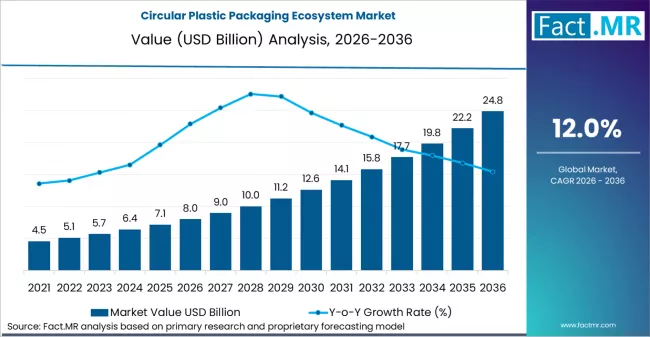
The circular plastic packaging ecosystem market starts 2026 at USD 8.0 billion and reaches USD 24.8 billion by 2036 at a 12.00% CAGR.
Circular Plastic Packaging Ecosystem Market Key Takeaways
- Circular Plastic Packaging Ecosystem Market Value (2026): USD 8.0 billion
- Circular Plastic Packaging Ecosystem Market Forecast Value (2036): USD 24.8 billion
- Circular Plastic Packaging Ecosystem Market Forecast CAGR 2026 to 2036: 12.0%
- Leading Ecosystem Model in Circular Plastic Packaging Ecosystem Market: Closed-loop brand converter recycler networks
- Top Players in Circular Plastic Packaging Ecosystem Market: Amcor plc, Veolia Environnement S.A., Dow Inc., WM (Waste Management, Inc.), Kingfa Science & Technology Co., Ltd., Toyo Seikan Group Holdings, Ltd., JEPLAN, Inc.
This field operates as a coordinated system rather than a single product category, linking material supply, design rules, collection, sorting, and reprocessing into one operating loop. Brand owners and converters work within shared specifications that define resin choices, color limits, label behavior, and compatibility with recovery streams.
Once a packaging format is aligned to these rules, it becomes part of a long running portfolio because changing it affects approvals, tooling, and downstream handling. Commercial success depends on whether packs move smoothly through existing recovery infrastructure and return as usable feedstock. Planning focuses on scale, consistency, and repeat cycles. Growth follows wider adoption of closed loop programs across retail and consumer goods portfolios rather than frequent changes in individual pack designs.
Circular Plastic Packaging Ecosystem Market
| Metric | Value |
|---|---|
| Market Value (2026) | USD 8.0 billion |
| Forecast Value (2036) | USD 24.8 billion |
| Forecast CAGR 2026 to 2036 | 12.0% |
Category
| Category | Segments |
|---|---|
| End-use | FMCG, food and beverage; Retail and e-commerce; Mass FMCG packaging; Premium packaging; Emerging circular packaging; Others |
| Ecosystem Model | Closed-loop brand converter recycler networks; Brand-led circular programs; Industrial circular parks; Corporate closed loops; Others |
| Material Scope | PET, PE, PP; PCR plastics; Mixed plastics; PET and engineering plastics; Others |
| Integration Technology | Digital product passports and traceability; OEM recycler data integration; High-scale recycling platforms; High-purity recovery systems; Others |
| Region | North America; Europe; Asia Pacific; Latin America; Middle East & Africa |
Segmental Analysis
Why Do FMCG, Food and Beverage Operations Sit at The Center of Circular Plastic Packaging Activity?
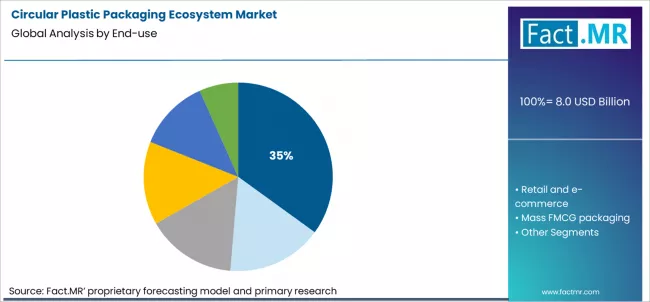
FMCG, food and beverage account for 35% of end-use participation in the circular plastic packaging ecosystem market. This segment moves the highest number of units across short product cycles and wide distribution networks. Packaging decisions in this area affect sourcing, collection, and reprocessing at scale rather than at project level. Brand portfolios contain many stock keeping units that share similar pack formats, which supports standardization of circular workflows. Retail turnover creates continuous streams of post-consumer material that can be captured and sorted. Contract packers and brand owners also coordinate specification control across regions. Premium and emerging segments add visible pilots. The daily volume of packaged goods keeps this end-use group as the main operational anchor for circular systems.
What Ecosystem Model Is Used Most Often to Run Circular Plastic Programs at Scale?
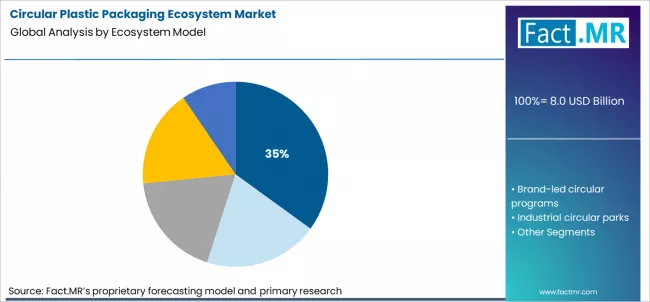
Closed-loop brand converter recycler networks represent 35% of ecosystem model adoption in this market. This structure links material specification, package design, collection, and reprocessing within a defined partner group. Decision rights and quality targets stay aligned across each step of the loop, which supports predictable material flow. Data sharing and audit routines remain simpler inside a fixed network. Investment planning also becomes easier when volumes and formats remain stable across cycles. Industrial parks and corporate loops appear in specific contexts, and brand-led programs serve focused portfolios. Most large scale programs still rely on closed-loop networks that connect brands, converters, and recyclers into a single operating chain.
What are the Drivers, Restraints, and Key Trends of the Circular Plastic Packaging Ecosystem Market?
- Drivers: Mandates and extended producer responsibility frameworks that require recovery and reuse of plastic packaging, corporate packaging commitments tied to closed-loop goals, and procurement policies that prioritize recyclable and reusable packaging systems are shaping demand for circular plastic packaging solutions.
- Restraint: Gaps in infrastructure for collection, sorting, and reprocessing of post-consumer plastics, along with cost differentials versus linear, virgin polymer systems, limit ecosystem development and commercial scaling.
- Trend 1: Expansion of material streams and design protocols that improve recyclability and enable cleaner separation of polymer types.
- Trend 2: Growth of partnerships between brands, converters, and waste handlers to pilot reuse and refill models within defined product categories.
Country
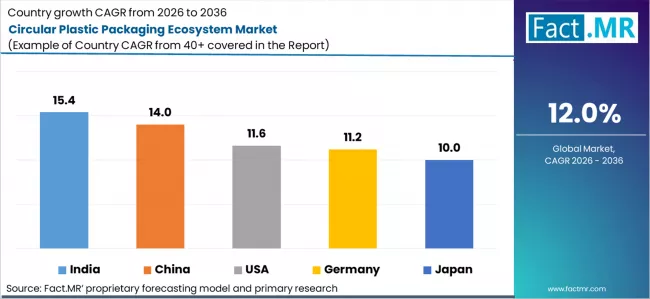
| Country | CAGR 2026 to 2036 |
|---|---|
| Germany | 11.2% |
| USA | 11.6% |
| China | 14.0% |
| Japan | 10.0% |
| India | 15.4% |
The report covers an in-depth analysis of 40+ countries; top-performing countries are highlighted below.
How Are Regulatory and Retail Frameworks in Germany Shaping the Circular Plastic Packaging Ecosystem?
Growth in Germany runs at about 11.2% per year through 2036. Demand is driven by extended producer responsibility rules, retailer take back schemes, and strict material traceability requirements. Brand owners focus on recyclability scores, material labeling, and compatibility with existing collection systems. Packaging design decisions emphasize mono material structures and standardized formats. Purchasing discussions involve packaging, compliance, and operations teams together. Conversions proceed in stages because tooling changes and qualification tests take time. Distribution relies on a small group of polymer suppliers and converters with closed loop capabilities. Volume growth tracks portfolio wide redesign programs rather than isolated product changes.
How Are Corporate Commitments and Retail Pressure in USA Shaping This Ecosystem?
Growth in USA runs at about 11.6% per year through 2036. Demand follows corporate circularity targets, retailer scorecards, and public commitments on recycled content. Product teams evaluate material availability, performance consistency, and cost volatility. Packaging decisions balance sustainability targets with logistics efficiency and shelf performance. Conversions usually start with high volume product lines before expanding across portfolios. Distribution relies on resin suppliers, compounders, and large converters building recovery partnerships. Volume growth tracks companywide packaging roadmaps rather than individual brand experiments. Market development remains tied to corporate governance and retailer requirements rather than consumer driven sorting behavior alone.
What Is Driving Faster Expansion of the Circular Plastic Packaging Ecosystem in China?
Growth in China runs at about 14.0% per year through 2036. Demand rises from policy support for recycling infrastructure, urban waste management upgrades, and large scale packaging consumption. Operators prioritize scale, supply security, and integration with collection and reprocessing systems. Packaging formats favor structures that fit existing sorting and recycling lines. Purchasing aligns with multi-year material transition plans. Local reprocessing capacity influences supplier selection. Volume increases follow adoption by major food delivery, beverage, and consumer goods platforms. Market development remains tied to industrial scale system building rather than niche brand positioning or voluntary initiatives.
How Are Standardization and Process Discipline in Japan Shaping the Circular Plastic Packaging Ecosystem?
Growth in Japan runs at about 10.0% per year through 2036. Demand follows structured recycling systems, corporate packaging standards, and retailer guidelines. Product teams focus on material simplification, clean separation, and consistent labeling. Packaging changes proceed carefully because line stability and defect rates receive close attention. Purchasing decisions emphasize reliability and long term supplier relationships. Distribution remains concentrated among approved material and recycling partners. Volume growth tracks scheduled portfolio updates and compliance programs. Market development stays tied to disciplined system improvement rather than rapid experimentation or frequent material switching across consumer goods categories.
What Is Accelerating Development of the Circular Plastic Packaging Ecosystem in India?
Growth in India runs at about 15.4% per year through 2036. Demand rises from formalization of waste collection, brand compliance programs, and expansion of packaged goods consumption. Companies focus on basic recyclability, availability of recycled material, and cost balance. Purchasing decisions emphasize supply continuity and regional processing capacity. Conversions often begin with larger brands and high volume categories. Distribution relies on a mix of local recyclers, converters, and polymer suppliers. Volume growth follows expansion of organized retail and packaged food markets. Market development remains tied to system building and regulation enforcement rather than voluntary brand initiatives alone.
How Do Material Loops and Contract Structures Shape Competition in the Circular Plastic Packaging Ecosystem Market?
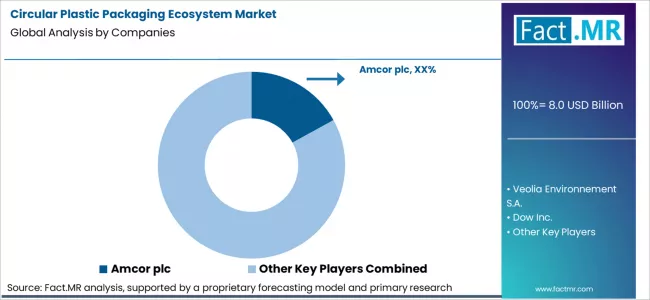
Participation in circular programs is determined by control of collection, reprocessing, and certified feedstock flows rather than by packaging price alone. Brand owners first set recycled content targets, traceability rules, and mass balance methods, then align partners to each step. Amcor and Toyo Seikan anchor packaging conversion where guaranteed resin supply is secured. Dow and Kingfa influence material choice through polymer and compound availability. Veolia, WM, and JEPLAN shape access to post consumer streams and recycling capacity.
Buyers compare ecosystems using yield loss, audit readiness, and continuity of certified volumes across regions. Once a closed or semi closed loop is contracted, volumes follow brand commitments and regulatory milestones. Competitive positions shift mainly after policy changes, capacity expansions, or renegotiation of long term recovery agreements.
Key Players in Circular Plastic Packaging Ecosystem Market
- Amcor plc
- Veolia Environnement S.A.
- Dow Inc.
- WM (Waste Management, Inc.)
- Kingfa Science & Technology Co., Ltd.
- Toyo Seikan Group Holdings, Ltd.
- JEPLAN, Inc.
Scope of the Report
| Items | Values |
|---|---|
| Quantitative Units (2026) | USD billion |
| End-use | FMCG food and beverage, retail and e-commerce, mass FMCG packaging, premium packaging, emerging circular packaging, others |
| Ecosystem Model | Closed-loop brand converter recycler networks, brand-led circular programs, industrial circular parks, corporate closed loops, others |
| Material Scope | PET, PE, PP, PCR plastics, mixed plastics, PET and engineering plastics |
| Integration Technology | Digital product passports and traceability, OEM recycler data integration, high-scale recycling platforms, high-purity recovery systems |
| Regions Covered | Asia Pacific, Europe, North America, Latin America, Middle East & Africa |
| Countries Covered | United States, Canada, Mexico, Germany, United Kingdom, France, Italy, Spain, Nordics, BENELUX, China, Japan, South Korea, India, Australia & New Zealand, ASEAN, Brazil, Chile, Saudi Arabia, Turkey, South Africa, and other regional markets |
| Key Companies Profiled | Amcor plc, Veolia Environnement S.A., Dow Inc., WM (Waste Management, Inc.), Kingfa Science & Technology Co., Ltd., Toyo Seikan Group Holdings, Ltd., JEPLAN, Inc. |
| Additional Attributes | Dollar value by ecosystem model and material scope; focus on recyclability, traceability, and certified recycled content flows; demand driven by EPR rules, brand commitments, and closed-loop infrastructure buildout |
Circular Plastic Packaging Ecosystem Market Segmentation
-
End-use :
- FMCG, food & beverage
- Retail & e-commerce
- Mass FMCG packaging
- Premium packaging
- Emerging circular packaging
- Others
-
Ecosystem Model :
- Closed-loop brand converter recycler networks
- Brand-led circular programs
- Industrial circular parks
- Corporate closed loops
- Others
-
Material Scope :
- PET, PE, or PP
- PCR plastics
- Mixed plastics
- PET or engineering plastics
- Others
-
Integration Technology :
- Digital product passports & traceability
- OEM recycler data integration
- High-scale recycling platforms
- High-purity recovery systems
- Others
-
Region :
- Asia Pacific
- China
- Japan
- South Korea
- India
- Australia & New Zealand
- ASEAN
- Rest of Asia Pacific
- Europe
- Germany
- United Kingdom
- France
- Italy
- Spain
- Nordic
- BENELUX
- Rest of Europe
- North America
- United States
- Canada
- Mexico
- Latin America
- Brazil
- Chile
- Rest of Latin America
- Middle East & Africa
- Kingdom of Saudi Arabia
- Other GCC Countries
- Turkey
- South Africa
- Other African Union
- Rest of Middle East & Africa
- Asia Pacific
References
- European Commission. (2024). Proposal for a regulation of the European Parliament and of the Council on packaging and packaging waste and repealing Directive 94/62/EC. European Commission.
- European Commission, Joint Research Centre. (2023). The future of packaging in a circular economy: Material use, reuse systems and waste prevention. Publications Office of the European Union.
- Organisation for Economic Co-operation and Development. (2023). Global plastics outlook: Policy scenarios to 2060. OECD Publishing.
- United Nations Environment Programme. (2023). Turning off the tap: How the world can end plastic pollution and create a circular economy. UNEP.
- International Organization for Standardization. (2023). ISO 59004: Circular economy - Vocabulary, principles and guidance for implementation. ISO.
Table of Content
- Executive Summary
- Global Market Outlook
- Demand to side Trends
- Supply to side Trends
- Technology Roadmap Analysis
- Analysis and Recommendations
- Market Overview
- Market Coverage / Taxonomy
- Market Definition / Scope / Limitations
- Market Background
- Market Dynamics
- Drivers
- Restraints
- Opportunity
- Trends
- Scenario Forecast
- Demand in Optimistic Scenario
- Demand in Likely Scenario
- Demand in Conservative Scenario
- Opportunity Map Analysis
- Product Life Cycle Analysis
- Supply Chain Analysis
- Investment Feasibility Matrix
- Value Chain Analysis
- PESTLE and Porter’s Analysis
- Regulatory Landscape
- Regional Parent Market Outlook
- Production and Consumption Statistics
- Import and Export Statistics
- Market Dynamics
- Global Market Analysis 2021 to 2025 and Forecast, 2026 to 2036
- Historical Market Size Value (USD Million) Analysis, 2021 to 2025
- Current and Future Market Size Value (USD Million) Projections, 2026 to 2036
- Y to o to Y Growth Trend Analysis
- Absolute $ Opportunity Analysis
- Global Market Pricing Analysis 2021 to 2025 and Forecast 2026 to 2036
- Global Market Analysis 2021 to 2025 and Forecast 2026 to 2036, By End-use
- Introduction / Key Findings
- Historical Market Size Value (USD Million) Analysis By End-use, 2021 to 2025
- Current and Future Market Size Value (USD Million) Analysis and Forecast By End-use, 2026 to 2036
- FMCG, food and beverage
- Retail and e-commerce
- Mass FMCG packaging
- Premium packaging
- Emerging circular packaging
- Others
- FMCG, food and beverage
- Y to o to Y Growth Trend Analysis By End-use, 2021 to 2025
- Absolute $ Opportunity Analysis By End-use, 2026 to 2036
- Global Market Analysis 2021 to 2025 and Forecast 2026 to 2036, By Ecosystem Model
- Introduction / Key Findings
- Historical Market Size Value (USD Million) Analysis By Ecosystem Model, 2021 to 2025
- Current and Future Market Size Value (USD Million) Analysis and Forecast By Ecosystem Model, 2026 to 2036
- Closed-loop brandconverterrecycler networks
- Brand-led circular programs
- Industrial circular parks
- Corporate closed loops
- Others
- Closed-loop brandconverterrecycler networks
- Y to o to Y Growth Trend Analysis By Ecosystem Model, 2021 to 2025
- Absolute $ Opportunity Analysis By Ecosystem Model, 2026 to 2036
- Global Market Analysis 2021 to 2025 and Forecast 2026 to 2036, By Material Scope
- Introduction / Key Findings
- Historical Market Size Value (USD Million) Analysis By Material Scope, 2021 to 2025
- Current and Future Market Size Value (USD Million) Analysis and Forecast By Material Scope, 2026 to 2036
- PET, PE, PP
- PCR plastics
- Mixed plastics
- PET and engineering plastics
- Others
- PET, PE, PP
- Y to o to Y Growth Trend Analysis By Material Scope, 2021 to 2025
- Absolute $ Opportunity Analysis By Material Scope, 2026 to 2036
- Global Market Analysis 2021 to 2025 and Forecast 2026 to 2036, By Integration Technology
- Introduction / Key Findings
- Historical Market Size Value (USD Million) Analysis By Integration Technology, 2021 to 2025
- Current and Future Market Size Value (USD Million) Analysis and Forecast By Integration Technology, 2026 to 2036
- Digital product passports and traceability
- OEMrecycler data integration
- High-scale recycling platforms
- High-purity recovery systems
- Others
- Digital product passports and traceability
- Y to o to Y Growth Trend Analysis By Integration Technology, 2021 to 2025
- Absolute $ Opportunity Analysis By Integration Technology, 2026 to 2036
- Global Market Analysis 2021 to 2025 and Forecast 2026 to 2036, By Region
- Introduction
- Historical Market Size Value (USD Million) Analysis By Region, 2021 to 2025
- Current Market Size Value (USD Million) Analysis and Forecast By Region, 2026 to 2036
- North America
- Latin America
- Western Europe
- Eastern Europe
- East Asia
- South Asia and Pacific
- Middle East & Africa
- Market Attractiveness Analysis By Region
- North America Market Analysis 2021 to 2025 and Forecast 2026 to 2036, By Country
- Historical Market Size Value (USD Million) Trend Analysis By Market Taxonomy, 2021 to 2025
- Market Size Value (USD Million) Forecast By Market Taxonomy, 2026 to 2036
- By Country
- USA
- Canada
- Mexico
- By End-use
- By Ecosystem Model
- By Material Scope
- By Integration Technology
- By Country
- Market Attractiveness Analysis
- By Country
- By End-use
- By Ecosystem Model
- By Material Scope
- By Integration Technology
- Key Takeaways
- Latin America Market Analysis 2021 to 2025 and Forecast 2026 to 2036, By Country
- Historical Market Size Value (USD Million) Trend Analysis By Market Taxonomy, 2021 to 2025
- Market Size Value (USD Million) Forecast By Market Taxonomy, 2026 to 2036
- By Country
- Brazil
- Chile
- Rest of Latin America
- By End-use
- By Ecosystem Model
- By Material Scope
- By Integration Technology
- By Country
- Market Attractiveness Analysis
- By Country
- By End-use
- By Ecosystem Model
- By Material Scope
- By Integration Technology
- Key Takeaways
- Western Europe Market Analysis 2021 to 2025 and Forecast 2026 to 2036, By Country
- Historical Market Size Value (USD Million) Trend Analysis By Market Taxonomy, 2021 to 2025
- Market Size Value (USD Million) Forecast By Market Taxonomy, 2026 to 2036
- By Country
- Germany
- UK
- Italy
- Spain
- France
- Nordic
- BENELUX
- Rest of Western Europe
- By End-use
- By Ecosystem Model
- By Material Scope
- By Integration Technology
- By Country
- Market Attractiveness Analysis
- By Country
- By End-use
- By Ecosystem Model
- By Material Scope
- By Integration Technology
- Key Takeaways
- Eastern Europe Market Analysis 2021 to 2025 and Forecast 2026 to 2036, By Country
- Historical Market Size Value (USD Million) Trend Analysis By Market Taxonomy, 2021 to 2025
- Market Size Value (USD Million) Forecast By Market Taxonomy, 2026 to 2036
- By Country
- Russia
- Poland
- Hungary
- Balkan & Baltic
- Rest of Eastern Europe
- By End-use
- By Ecosystem Model
- By Material Scope
- By Integration Technology
- By Country
- Market Attractiveness Analysis
- By Country
- By End-use
- By Ecosystem Model
- By Material Scope
- By Integration Technology
- Key Takeaways
- East Asia Market Analysis 2021 to 2025 and Forecast 2026 to 2036, By Country
- Historical Market Size Value (USD Million) Trend Analysis By Market Taxonomy, 2021 to 2025
- Market Size Value (USD Million) Forecast By Market Taxonomy, 2026 to 2036
- By Country
- China
- Japan
- South Korea
- By End-use
- By Ecosystem Model
- By Material Scope
- By Integration Technology
- By Country
- Market Attractiveness Analysis
- By Country
- By End-use
- By Ecosystem Model
- By Material Scope
- By Integration Technology
- Key Takeaways
- South Asia and Pacific Market Analysis 2021 to 2025 and Forecast 2026 to 2036, By Country
- Historical Market Size Value (USD Million) Trend Analysis By Market Taxonomy, 2021 to 2025
- Market Size Value (USD Million) Forecast By Market Taxonomy, 2026 to 2036
- By Country
- India
- ASEAN
- Australia & New Zealand
- Rest of South Asia and Pacific
- By End-use
- By Ecosystem Model
- By Material Scope
- By Integration Technology
- By Country
- Market Attractiveness Analysis
- By Country
- By End-use
- By Ecosystem Model
- By Material Scope
- By Integration Technology
- Key Takeaways
- Middle East & Africa Market Analysis 2021 to 2025 and Forecast 2026 to 2036, By Country
- Historical Market Size Value (USD Million) Trend Analysis By Market Taxonomy, 2021 to 2025
- Market Size Value (USD Million) Forecast By Market Taxonomy, 2026 to 2036
- By Country
- Kingdom of Saudi Arabia
- Other GCC Countries
- Turkiye
- South Africa
- Other African Union
- Rest of Middle East & Africa
- By End-use
- By Ecosystem Model
- By Material Scope
- By Integration Technology
- By Country
- Market Attractiveness Analysis
- By Country
- By End-use
- By Ecosystem Model
- By Material Scope
- By Integration Technology
- Key Takeaways
- Key Countries Market Analysis
- USA
- Pricing Analysis
- Market Share Analysis, 2025
- By End-use
- By Ecosystem Model
- By Material Scope
- By Integration Technology
- Canada
- Pricing Analysis
- Market Share Analysis, 2025
- By End-use
- By Ecosystem Model
- By Material Scope
- By Integration Technology
- Mexico
- Pricing Analysis
- Market Share Analysis, 2025
- By End-use
- By Ecosystem Model
- By Material Scope
- By Integration Technology
- Brazil
- Pricing Analysis
- Market Share Analysis, 2025
- By End-use
- By Ecosystem Model
- By Material Scope
- By Integration Technology
- Chile
- Pricing Analysis
- Market Share Analysis, 2025
- By End-use
- By Ecosystem Model
- By Material Scope
- By Integration Technology
- Germany
- Pricing Analysis
- Market Share Analysis, 2025
- By End-use
- By Ecosystem Model
- By Material Scope
- By Integration Technology
- UK
- Pricing Analysis
- Market Share Analysis, 2025
- By End-use
- By Ecosystem Model
- By Material Scope
- By Integration Technology
- Italy
- Pricing Analysis
- Market Share Analysis, 2025
- By End-use
- By Ecosystem Model
- By Material Scope
- By Integration Technology
- Spain
- Pricing Analysis
- Market Share Analysis, 2025
- By End-use
- By Ecosystem Model
- By Material Scope
- By Integration Technology
- France
- Pricing Analysis
- Market Share Analysis, 2025
- By End-use
- By Ecosystem Model
- By Material Scope
- By Integration Technology
- India
- Pricing Analysis
- Market Share Analysis, 2025
- By End-use
- By Ecosystem Model
- By Material Scope
- By Integration Technology
- ASEAN
- Pricing Analysis
- Market Share Analysis, 2025
- By End-use
- By Ecosystem Model
- By Material Scope
- By Integration Technology
- Australia & New Zealand
- Pricing Analysis
- Market Share Analysis, 2025
- By End-use
- By Ecosystem Model
- By Material Scope
- By Integration Technology
- China
- Pricing Analysis
- Market Share Analysis, 2025
- By End-use
- By Ecosystem Model
- By Material Scope
- By Integration Technology
- Japan
- Pricing Analysis
- Market Share Analysis, 2025
- By End-use
- By Ecosystem Model
- By Material Scope
- By Integration Technology
- South Korea
- Pricing Analysis
- Market Share Analysis, 2025
- By End-use
- By Ecosystem Model
- By Material Scope
- By Integration Technology
- Russia
- Pricing Analysis
- Market Share Analysis, 2025
- By End-use
- By Ecosystem Model
- By Material Scope
- By Integration Technology
- Poland
- Pricing Analysis
- Market Share Analysis, 2025
- By End-use
- By Ecosystem Model
- By Material Scope
- By Integration Technology
- Hungary
- Pricing Analysis
- Market Share Analysis, 2025
- By End-use
- By Ecosystem Model
- By Material Scope
- By Integration Technology
- Kingdom of Saudi Arabia
- Pricing Analysis
- Market Share Analysis, 2025
- By End-use
- By Ecosystem Model
- By Material Scope
- By Integration Technology
- Turkiye
- Pricing Analysis
- Market Share Analysis, 2025
- By End-use
- By Ecosystem Model
- By Material Scope
- By Integration Technology
- South Africa
- Pricing Analysis
- Market Share Analysis, 2025
- By End-use
- By Ecosystem Model
- By Material Scope
- By Integration Technology
- USA
- Market Structure Analysis
- Competition Dashboard
- Competition Benchmarking
- Market Share Analysis of Top Players
- By Regional
- By End-use
- By Ecosystem Model
- By Material Scope
- By Integration Technology
- Competition Analysis
- Competition Deep Dive
- Amcor plc
- Overview
- Product Portfolio
- Profitability by Market Segments (Product/Age /Sales Channel/Region)
- Sales Footprint
- Strategy Overview
- Marketing Strategy
- Product Strategy
- Channel Strategy
- Veolia Environnement S.A.
- Dow Inc.
- WM (Waste Management, Inc.)
- Kingfa Science and Technology Co., Ltd.
- Toyo Seikan Group Holdings, Ltd.
- JEPLAN, Inc.
- Amcor plc
- Competition Deep Dive
- Assumptions & Acronyms Used
- Research Methodology
List Of Table
- Table 1: Global Market Value (USD Million) Forecast by Region, 2021 to 2036
- Table 2: Global Market Value (USD Million) Forecast by End-use, 2021 to 2036
- Table 3: Global Market Value (USD Million) Forecast by Ecosystem Model, 2021 to 2036
- Table 4: Global Market Value (USD Million) Forecast by Material Scope, 2021 to 2036
- Table 5: Global Market Value (USD Million) Forecast by Integration Technology, 2021 to 2036
- Table 6: North America Market Value (USD Million) Forecast by Country, 2021 to 2036
- Table 7: North America Market Value (USD Million) Forecast by End-use, 2021 to 2036
- Table 8: North America Market Value (USD Million) Forecast by Ecosystem Model, 2021 to 2036
- Table 9: North America Market Value (USD Million) Forecast by Material Scope, 2021 to 2036
- Table 10: North America Market Value (USD Million) Forecast by Integration Technology, 2021 to 2036
- Table 11: Latin America Market Value (USD Million) Forecast by Country, 2021 to 2036
- Table 12: Latin America Market Value (USD Million) Forecast by End-use, 2021 to 2036
- Table 13: Latin America Market Value (USD Million) Forecast by Ecosystem Model, 2021 to 2036
- Table 14: Latin America Market Value (USD Million) Forecast by Material Scope, 2021 to 2036
- Table 15: Latin America Market Value (USD Million) Forecast by Integration Technology, 2021 to 2036
- Table 16: Western Europe Market Value (USD Million) Forecast by Country, 2021 to 2036
- Table 17: Western Europe Market Value (USD Million) Forecast by End-use, 2021 to 2036
- Table 18: Western Europe Market Value (USD Million) Forecast by Ecosystem Model, 2021 to 2036
- Table 19: Western Europe Market Value (USD Million) Forecast by Material Scope, 2021 to 2036
- Table 20: Western Europe Market Value (USD Million) Forecast by Integration Technology, 2021 to 2036
- Table 21: Eastern Europe Market Value (USD Million) Forecast by Country, 2021 to 2036
- Table 22: Eastern Europe Market Value (USD Million) Forecast by End-use, 2021 to 2036
- Table 23: Eastern Europe Market Value (USD Million) Forecast by Ecosystem Model, 2021 to 2036
- Table 24: Eastern Europe Market Value (USD Million) Forecast by Material Scope, 2021 to 2036
- Table 25: Eastern Europe Market Value (USD Million) Forecast by Integration Technology, 2021 to 2036
- Table 26: East Asia Market Value (USD Million) Forecast by Country, 2021 to 2036
- Table 27: East Asia Market Value (USD Million) Forecast by End-use, 2021 to 2036
- Table 28: East Asia Market Value (USD Million) Forecast by Ecosystem Model, 2021 to 2036
- Table 29: East Asia Market Value (USD Million) Forecast by Material Scope, 2021 to 2036
- Table 30: East Asia Market Value (USD Million) Forecast by Integration Technology, 2021 to 2036
- Table 31: South Asia and Pacific Market Value (USD Million) Forecast by Country, 2021 to 2036
- Table 32: South Asia and Pacific Market Value (USD Million) Forecast by End-use, 2021 to 2036
- Table 33: South Asia and Pacific Market Value (USD Million) Forecast by Ecosystem Model, 2021 to 2036
- Table 34: South Asia and Pacific Market Value (USD Million) Forecast by Material Scope, 2021 to 2036
- Table 35: South Asia and Pacific Market Value (USD Million) Forecast by Integration Technology, 2021 to 2036
- Table 36: Middle East & Africa Market Value (USD Million) Forecast by Country, 2021 to 2036
- Table 37: Middle East & Africa Market Value (USD Million) Forecast by End-use, 2021 to 2036
- Table 38: Middle East & Africa Market Value (USD Million) Forecast by Ecosystem Model, 2021 to 2036
- Table 39: Middle East & Africa Market Value (USD Million) Forecast by Material Scope, 2021 to 2036
- Table 40: Middle East & Africa Market Value (USD Million) Forecast by Integration Technology, 2021 to 2036
List Of Figures
- Figure 1: Global Market Pricing Analysis
- Figure 2: Global Market Value (USD Million) Forecast 2021 to 2036
- Figure 3: Global Market Value Share and BPS Analysis by End-use, 2026 and 2036
- Figure 4: Global Market Y to o to Y Growth Comparison by End-use, 2026 to 2036
- Figure 5: Global Market Attractiveness Analysis by End-use
- Figure 6: Global Market Value Share and BPS Analysis by Ecosystem Model, 2026 and 2036
- Figure 7: Global Market Y to o to Y Growth Comparison by Ecosystem Model, 2026 to 2036
- Figure 8: Global Market Attractiveness Analysis by Ecosystem Model
- Figure 9: Global Market Value Share and BPS Analysis by Material Scope, 2026 and 2036
- Figure 10: Global Market Y to o to Y Growth Comparison by Material Scope, 2026 to 2036
- Figure 11: Global Market Attractiveness Analysis by Material Scope
- Figure 12: Global Market Value Share and BPS Analysis by Integration Technology, 2026 and 2036
- Figure 13: Global Market Y to o to Y Growth Comparison by Integration Technology, 2026 to 2036
- Figure 14: Global Market Attractiveness Analysis by Integration Technology
- Figure 15: Global Market Value (USD Million) Share and BPS Analysis by Region, 2026 and 2036
- Figure 16: Global Market Y to o to Y Growth Comparison by Region, 2026 to 2036
- Figure 17: Global Market Attractiveness Analysis by Region
- Figure 18: North America Market Incremental Dollar Opportunity, 2026 to 2036
- Figure 19: Latin America Market Incremental Dollar Opportunity, 2026 to 2036
- Figure 20: Western Europe Market Incremental Dollar Opportunity, 2026 to 2036
- Figure 21: Eastern Europe Market Incremental Dollar Opportunity, 2026 to 2036
- Figure 22: East Asia Market Incremental Dollar Opportunity, 2026 to 2036
- Figure 23: South Asia and Pacific Market Incremental Dollar Opportunity, 2026 to 2036
- Figure 24: Middle East & Africa Market Incremental Dollar Opportunity, 2026 to 2036
- Figure 25: North America Market Value Share and BPS Analysis by Country, 2026 and 2036
- Figure 26: North America Market Value Share and BPS Analysis by End-use, 2026 and 2036
- Figure 27: North America Market Y to o to Y Growth Comparison by End-use, 2026 to 2036
- Figure 28: North America Market Attractiveness Analysis by End-use
- Figure 29: North America Market Value Share and BPS Analysis by Ecosystem Model, 2026 and 2036
- Figure 30: North America Market Y to o to Y Growth Comparison by Ecosystem Model, 2026 to 2036
- Figure 31: North America Market Attractiveness Analysis by Ecosystem Model
- Figure 32: North America Market Value Share and BPS Analysis by Material Scope, 2026 and 2036
- Figure 33: North America Market Y to o to Y Growth Comparison by Material Scope, 2026 to 2036
- Figure 34: North America Market Attractiveness Analysis by Material Scope
- Figure 35: North America Market Value Share and BPS Analysis by Integration Technology, 2026 and 2036
- Figure 36: North America Market Y to o to Y Growth Comparison by Integration Technology, 2026 to 2036
- Figure 37: North America Market Attractiveness Analysis by Integration Technology
- Figure 38: Latin America Market Value Share and BPS Analysis by Country, 2026 and 2036
- Figure 39: Latin America Market Value Share and BPS Analysis by End-use, 2026 and 2036
- Figure 40: Latin America Market Y to o to Y Growth Comparison by End-use, 2026 to 2036
- Figure 41: Latin America Market Attractiveness Analysis by End-use
- Figure 42: Latin America Market Value Share and BPS Analysis by Ecosystem Model, 2026 and 2036
- Figure 43: Latin America Market Y to o to Y Growth Comparison by Ecosystem Model, 2026 to 2036
- Figure 44: Latin America Market Attractiveness Analysis by Ecosystem Model
- Figure 45: Latin America Market Value Share and BPS Analysis by Material Scope, 2026 and 2036
- Figure 46: Latin America Market Y to o to Y Growth Comparison by Material Scope, 2026 to 2036
- Figure 47: Latin America Market Attractiveness Analysis by Material Scope
- Figure 48: Latin America Market Value Share and BPS Analysis by Integration Technology, 2026 and 2036
- Figure 49: Latin America Market Y to o to Y Growth Comparison by Integration Technology, 2026 to 2036
- Figure 50: Latin America Market Attractiveness Analysis by Integration Technology
- Figure 51: Western Europe Market Value Share and BPS Analysis by Country, 2026 and 2036
- Figure 52: Western Europe Market Value Share and BPS Analysis by End-use, 2026 and 2036
- Figure 53: Western Europe Market Y to o to Y Growth Comparison by End-use, 2026 to 2036
- Figure 54: Western Europe Market Attractiveness Analysis by End-use
- Figure 55: Western Europe Market Value Share and BPS Analysis by Ecosystem Model, 2026 and 2036
- Figure 56: Western Europe Market Y to o to Y Growth Comparison by Ecosystem Model, 2026 to 2036
- Figure 57: Western Europe Market Attractiveness Analysis by Ecosystem Model
- Figure 58: Western Europe Market Value Share and BPS Analysis by Material Scope, 2026 and 2036
- Figure 59: Western Europe Market Y to o to Y Growth Comparison by Material Scope, 2026 to 2036
- Figure 60: Western Europe Market Attractiveness Analysis by Material Scope
- Figure 61: Western Europe Market Value Share and BPS Analysis by Integration Technology, 2026 and 2036
- Figure 62: Western Europe Market Y to o to Y Growth Comparison by Integration Technology, 2026 to 2036
- Figure 63: Western Europe Market Attractiveness Analysis by Integration Technology
- Figure 64: Eastern Europe Market Value Share and BPS Analysis by Country, 2026 and 2036
- Figure 65: Eastern Europe Market Value Share and BPS Analysis by End-use, 2026 and 2036
- Figure 66: Eastern Europe Market Y to o to Y Growth Comparison by End-use, 2026 to 2036
- Figure 67: Eastern Europe Market Attractiveness Analysis by End-use
- Figure 68: Eastern Europe Market Value Share and BPS Analysis by Ecosystem Model, 2026 and 2036
- Figure 69: Eastern Europe Market Y to o to Y Growth Comparison by Ecosystem Model, 2026 to 2036
- Figure 70: Eastern Europe Market Attractiveness Analysis by Ecosystem Model
- Figure 71: Eastern Europe Market Value Share and BPS Analysis by Material Scope, 2026 and 2036
- Figure 72: Eastern Europe Market Y to o to Y Growth Comparison by Material Scope, 2026 to 2036
- Figure 73: Eastern Europe Market Attractiveness Analysis by Material Scope
- Figure 74: Eastern Europe Market Value Share and BPS Analysis by Integration Technology, 2026 and 2036
- Figure 75: Eastern Europe Market Y to o to Y Growth Comparison by Integration Technology, 2026 to 2036
- Figure 76: Eastern Europe Market Attractiveness Analysis by Integration Technology
- Figure 77: East Asia Market Value Share and BPS Analysis by Country, 2026 and 2036
- Figure 78: East Asia Market Value Share and BPS Analysis by End-use, 2026 and 2036
- Figure 79: East Asia Market Y to o to Y Growth Comparison by End-use, 2026 to 2036
- Figure 80: East Asia Market Attractiveness Analysis by End-use
- Figure 81: East Asia Market Value Share and BPS Analysis by Ecosystem Model, 2026 and 2036
- Figure 82: East Asia Market Y to o to Y Growth Comparison by Ecosystem Model, 2026 to 2036
- Figure 83: East Asia Market Attractiveness Analysis by Ecosystem Model
- Figure 84: East Asia Market Value Share and BPS Analysis by Material Scope, 2026 and 2036
- Figure 85: East Asia Market Y to o to Y Growth Comparison by Material Scope, 2026 to 2036
- Figure 86: East Asia Market Attractiveness Analysis by Material Scope
- Figure 87: East Asia Market Value Share and BPS Analysis by Integration Technology, 2026 and 2036
- Figure 88: East Asia Market Y to o to Y Growth Comparison by Integration Technology, 2026 to 2036
- Figure 89: East Asia Market Attractiveness Analysis by Integration Technology
- Figure 90: South Asia and Pacific Market Value Share and BPS Analysis by Country, 2026 and 2036
- Figure 91: South Asia and Pacific Market Value Share and BPS Analysis by End-use, 2026 and 2036
- Figure 92: South Asia and Pacific Market Y to o to Y Growth Comparison by End-use, 2026 to 2036
- Figure 93: South Asia and Pacific Market Attractiveness Analysis by End-use
- Figure 94: South Asia and Pacific Market Value Share and BPS Analysis by Ecosystem Model, 2026 and 2036
- Figure 95: South Asia and Pacific Market Y to o to Y Growth Comparison by Ecosystem Model, 2026 to 2036
- Figure 96: South Asia and Pacific Market Attractiveness Analysis by Ecosystem Model
- Figure 97: South Asia and Pacific Market Value Share and BPS Analysis by Material Scope, 2026 and 2036
- Figure 98: South Asia and Pacific Market Y to o to Y Growth Comparison by Material Scope, 2026 to 2036
- Figure 99: South Asia and Pacific Market Attractiveness Analysis by Material Scope
- Figure 100: South Asia and Pacific Market Value Share and BPS Analysis by Integration Technology, 2026 and 2036
- Figure 101: South Asia and Pacific Market Y to o to Y Growth Comparison by Integration Technology, 2026 to 2036
- Figure 102: South Asia and Pacific Market Attractiveness Analysis by Integration Technology
- Figure 103: Middle East & Africa Market Value Share and BPS Analysis by Country, 2026 and 2036
- Figure 104: Middle East & Africa Market Value Share and BPS Analysis by End-use, 2026 and 2036
- Figure 105: Middle East & Africa Market Y to o to Y Growth Comparison by End-use, 2026 to 2036
- Figure 106: Middle East & Africa Market Attractiveness Analysis by End-use
- Figure 107: Middle East & Africa Market Value Share and BPS Analysis by Ecosystem Model, 2026 and 2036
- Figure 108: Middle East & Africa Market Y to o to Y Growth Comparison by Ecosystem Model, 2026 to 2036
- Figure 109: Middle East & Africa Market Attractiveness Analysis by Ecosystem Model
- Figure 110: Middle East & Africa Market Value Share and BPS Analysis by Material Scope, 2026 and 2036
- Figure 111: Middle East & Africa Market Y to o to Y Growth Comparison by Material Scope, 2026 to 2036
- Figure 112: Middle East & Africa Market Attractiveness Analysis by Material Scope
- Figure 113: Middle East & Africa Market Value Share and BPS Analysis by Integration Technology, 2026 and 2036
- Figure 114: Middle East & Africa Market Y to o to Y Growth Comparison by Integration Technology, 2026 to 2036
- Figure 115: Middle East & Africa Market Attractiveness Analysis by Integration Technology
- Figure 116: Global Market - Tier Structure Analysis
- Figure 117: Global Market - Company Share Analysis
- FAQs -
How big is the circular plastic packaging ecosystem market in 2026?
The global circular plastic packaging ecosystem market is estimated to be valued at USD 8.0 billion in 2026.
What will be the size of circular plastic packaging ecosystem market in 2036?
The market size for the circular plastic packaging ecosystem market is projected to reach USD 24.8 billion by 2036.
How much will be the circular plastic packaging ecosystem market growth between 2026 and 2036?
The circular plastic packaging ecosystem market is expected to grow at a 12.0% CAGR between 2026 and 2036.
What are the key product types in the circular plastic packaging ecosystem market?
The key product types in circular plastic packaging ecosystem market are fmcg, food and beverage, retail and e-commerce, mass fmcg packaging, premium packaging, emerging circular packaging and others.
Which ecosystem model segment to contribute significant share in the circular plastic packaging ecosystem market in 2026?
In terms of ecosystem model, closed-loop brandconverterrecycler networks segment to command 35.0% share in the circular plastic packaging ecosystem market in 2026.