Cocoa Beans Market
Cocoa Beans Market Size and Share Forecast Outlook 2025 to 2035
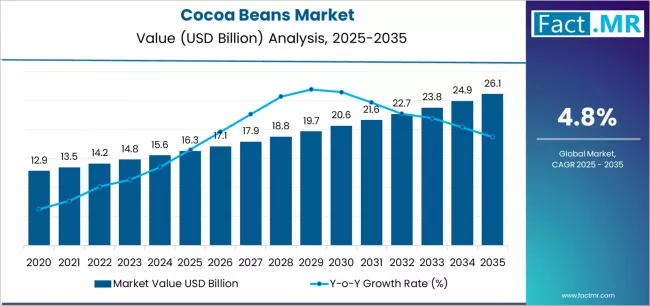
Cocoa beans market is projected to grow from USD 16.3 billion in 2025 to USD 26.1 billion by 2035, at a CAGR of 4.8%. Cocoa Butter will dominate with a 55.5% market share, while confectionery will lead the application segment with a 36.8% share.
Cocoa Beans Market Forecast and Outlook 2025 to 2035
The global cocoa beans market is projected to reach USD 26.1 billion by 2035, recording an absolute increase of USD 9.8 billion over the forecast period. The market is valued at USD 16.3 billion in 2025 and is set to rise at a CAGR of 4.8% during the assessment period.
Quick Stats for Cocoa Beans Market
- Cocoa Beans Market Value (2025): USD 16.3 billion
- Cocoa Beans Market Forecast Value (2035): USD 26.1 billion
- Cocoa Beans Market Forecast CAGR: 4.8%
- Leading Product Type in Cocoa Beans Market: Cocoa Butter (55.5%)
- Key Growth Regions in Cocoa Beans Market: Asia Pacific, Europe, and North America
- Top Players in Cocoa Beans Market: Cemoi Chocolatier, República del Cacao, Nestlé S.A., Mars, Incorporated, THE HERSHEY COMPANY, Cargill, Incorporated, Barry Callebaut, FUJI OIL CO., LTD., Ghirardelli Chocolate Company, Valrhona

The market is expected to grow by approximately 1.6 times during the same period, supported by increasing consumer demand for premium chocolate products and artisanal confectionery worldwide, driving demand for high-quality cocoa derivatives and increasing investments in sustainable sourcing practices with traceable supply chain systems across chocolate manufacturing and specialty food applications globally.
Food manufacturers and confectionery companies face mounting pressure to ensure ethical sourcing and quality consistency while addressing sustainability concerns and flavor profile requirements, with modern cocoa processing technologies providing documented quality benefits including enhanced flavor development, improved functional properties, and certified origin authentication compared to conventional commodity cocoa procurement alone.
Rising consumer awareness about ethical chocolate consumption and expanding premium confectionery segments enabling differentiated product positioning create substantial opportunities for manufacturers and cocoa processors. However, climate change impacts on cocoa cultivation and supply chain complexity may pose obstacles to stable raw material availability across chocolate-dependent markets.
The cocoa butter segment dominates market activity, driven by extensive application versatility supporting premium chocolate formulations and cosmetic ingredient requirements across diverse end-use industries worldwide. Food manufacturers increasingly recognize the essential functionality of cocoa butter, with typical product offerings providing superior mouthfeel characteristics and natural emollient properties at premium price points through established ingredient supply networks.
Cocoa powder demonstrates robust growth potential, supported by rising health-conscious consumption patterns and evidence-based applications integrating natural cocoa flavoring in modern functional food approaches. Confectionery emerges as the dominant application segment, reflecting sustained global chocolate consumption and premium product innovation in consumer markets. Offline distribution channels represent the leading sales avenue, driven by traditional retail dominance and consumer preference for in-store chocolate purchasing experiences enabling sensory evaluation.
Regional dynamics show Europe maintaining market leadership, supported by high per capita chocolate consumption rates and established cocoa processing capabilities across premium confectionery categories. Asia Pacific demonstrates the fastest growth trajectory driven by expanding middle-class populations and increasing chocolate consumption adopting Western dietary preferences, while North America emphasizes craft chocolate movements and sustainable sourcing standards for specialty cocoa products.
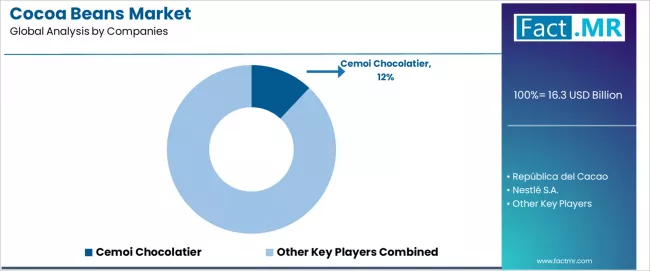
China leads country-level growth through rising chocolate consumption and disposable income expansion, followed by India supported by growing premium chocolate market and urbanization trends. The competitive landscape features moderate concentration with Cemoi Chocolatier maintaining market leadership position at a 12.0% share, while specialized players including Barry Callebaut, Cargill, Nestlé, and Mars compete through integrated supply chain capabilities and comprehensive sustainability certification programs across diverse cocoa applications.
Cocoa Beans Market Year-over-Year Forecast 2025 to 2035
Between 2025 and 2029, the cocoa beans market is projected to expand from USD 16.3 billion to USD 19.8 billion, resulting in a value increase of USD 3.5 billion, which represents 35.7% of the total forecast growth for the period. This phase of development will be shaped by rising demand for premium chocolate products and ethical sourcing certifications, product innovation in single-origin cocoa varieties with enhanced flavor profiles and traceable provenance, as well as expanding integration with sustainable agriculture programs and farmer cooperative partnerships. Companies are establishing competitive positions through investment in direct trade relationships, bean-to-bar processing capabilities, and strategic market expansion across specialty retail channels, premium confectionery brands, and functional ingredient applications.
From 2029 to 2035, the market is forecast to grow from USD 19.8 billion to USD 26.1 billion, adding another USD 6.3 billion, which constitutes 64.3% of the overall expansion. This period is expected to be characterized by the expansion of specialized product applications, including high-polyphenol cocoa ingredients for nutraceutical formulations and ceremonial-grade cocoa products tailored for specific wellness markets, strategic collaborations between cocoa processors and chocolate manufacturers, and an enhanced focus on climate-resilient cocoa cultivation and regenerative agriculture initiatives. The growing emphasis on flavor diversity protocols and rising consumer preference for transparent supply chains addressing social responsibility, environmental stewardship, and fair farmer compensation will drive demand for comprehensive cocoa sourcing solutions across diverse chocolate and food ingredient markets.
Cocoa Beans Market Key Takeaways
| Metric | Value |
|---|---|
| Market Value (2025) | USD 16.3 billion |
| Market Forecast Value (2035) | USD 26.1 billion |
| Forecast CAGR (2025-2035) | 4.8% |
Why is the Cocoa Beans Market Growing?
The cocoa beans market grows by enabling chocolate manufacturers and food processors to meet consumer demand for high-quality chocolate experiences and functional cocoa ingredients while addressing sustainability expectations and flavor authenticity requirements without exclusive reliance on commodity-grade cocoa sourcing.
Food manufacturers strive to ensure ethical supply chains and premium product quality while managing price volatility, climate change impacts, and traceability demands, with modern cocoa procurement strategies typically providing certified sustainable sourcing including Rainforest Alliance, Fair Trade, and UTZ certifications, enhanced flavor complexity through terroir-specific bean varieties, and comprehensive farmer support programs compared to conventional commodity cocoa trading alone, making specialty cocoa beans essential for premium product positioning.
The confectionery industry's need for differentiated ingredients supporting artisanal chocolate production and conscious consumption trends creates demand for specialty cocoa solutions that can provide authentic flavor profiles, enhance brand storytelling, and support environmental sustainability without compromising sensory quality or manufacturing efficiency.
Industry endorsements and consumer preferences supporting premium chocolate benefits drive adoption in craft chocolate manufacturing, specialty confectionery production, and functional food development, where ingredient quality has direct impact on product differentiation and brand premium positioning. The expanding global chocolate market, valued at over USD 130 billion annually with specialty and premium segments growing faster than mass-market categories, creates substantial opportunities for high-quality cocoa sourcing.
Rising consumer awareness about cocoa farmer livelihoods and environmental sustainability enables informed purchasing decisions and adherence to certified ethical sourcing protocols. However, climate vulnerability in major cocoa-producing regions and complex multi-tier supply chains may limit supply stability and optimal traceability across diverse chocolate applications serving different market segments with varying sustainability requirements.
Segmental Analysis
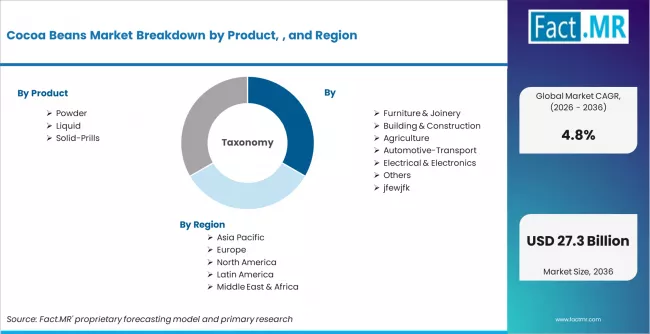
The market is segmented by product, application, distribution channel, and region. By product, the market is divided into cocoa butter, cocoa powder, and cocoa liquor. Based on application, the market is categorized into confectionery, functional foods & beverages, pharmaceuticals, and cosmetics.
By distribution channel, the market includes online and offline channels, with offline further segmented into hypermarkets & supermarkets, convenience stores, specialty stores, and others. Regionally, the market is divided into Asia Pacific, Europe, North America, Latin America, and Middle East & Africa.
By Product, Which Segment Accounts for the Dominant Market Share?

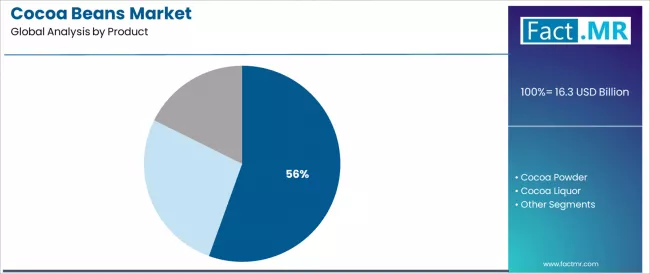
The cocoa butter segment represents the dominant force in the cocoa beans market, capturing 55.5% of the total market share in 2025. This established product category encompasses solutions featuring superior functional properties and premium positioning characteristics, including refined cocoa butter for chocolate manufacturing and deodorized cocoa butter for cosmetic applications that enable optimal texture development and natural emollient benefits across confectionery formulations and personal care products worldwide.
The segment's market leadership stems from its irreplaceable functionality in chocolate production, with solutions capable of delivering the characteristic snap, gloss, and mouthfeel properties essential for premium chocolate experiences while providing natural moisturizing capabilities in cosmetic formulations across diverse temperature conditions and processing requirements.
The segment maintains a substantial market share in the 29-31% range, serving health-conscious consumers and beverage manufacturers that require natural chocolate flavoring and functional ingredients addressing antioxidant content and reduced-fat formulation including hot chocolate mixes, baking applications, and functional food fortification.
These solutions offer versatile ingredient functionality for food manufacturers enabling chocolate flavor delivery while providing sufficient polyphenol content to support health positioning claims. The cocoa powder segment demonstrates strong growth potential at 5.6% CAGR, driven by expanding functional beverage applications and increasing consumer preference for natural flavoring ingredients.
Within the product category, cocoa liquor represents a specialized processing intermediate at 14.5% share, driven by chocolate manufacturing requirements and compound coating applications where unsweetened chocolate base provides fundamental cocoa flavor and fat structure.
Key functional advantages driving the cocoa butter segment include:
- Advanced crystallization properties with demonstrated polymorphic behavior enabling optimal chocolate tempering and texture development across premium confectionery manufacturing
- Established melting characteristics allowing precise mouthfeel experience and thermal stability without extensive formulation complexity for chocolate applications
- Enhanced emollient functionality features enabling natural skin moisturization and cosmetic ingredient versatility while maintaining product stability and sensory consistency
- Superior natural composition profile providing optimal fatty acid balance including stearic, palmitic, and oleic acids across various food and cosmetic applications
By Application, Which Segment Accounts for the Largest Market Share?

Confectionery dominates the cocoa beans application landscape with a 36.8% market share in 2025, reflecting the fundamental role of chocolate products in supporting global snacking habits, gifting traditions, and indulgent consumption occasions across consumer markets worldwide.
The confectionery segment's market leadership is reinforced by sustained chocolate consumption patterns averaging 1-2 kilograms per capita annually in developed markets, continuous product innovation in premium and artisanal chocolate categories, and cultural significance that characterizes chocolate's universal appeal and emotional connection with consumers.
Within this segment, dark chocolate represents a rapidly growing application area, driven by health-conscious consumer preferences and premium positioning emphasizing high cocoa content formulations. This sub-segment benefits from established associations between cocoa polyphenols and cardiovascular health benefits.
The functional foods & beverages segment represents an important growth category at 28.0% share, demonstrating strong expansion at 5.2% CAGR through specialized requirements for cocoa-based nutritional products, protein powders, energy bars, and functional beverage formulations leveraging cocoa's natural theobromine and antioxidant properties. This segment benefits from health and wellness trends driving functional ingredient adoption.
The pharmaceuticals segment maintains strategic presence at 20.0% share with strong growth at 5.5% CAGR through specialized applications including cocoa butter as pharmaceutical excipient for suppositories and controlled-release formulations, while cosmetics applications at 15.2% serve natural ingredient demands for skincare products and luxury beauty formulations.
Key market dynamics supporting application growth include:
- Confectionery innovation expansion driven by premiumization trends and artisanal chocolate movements, requiring single-origin cocoa and distinctive flavor profiles
- Functional food modernization trends require high-polyphenol cocoa ingredients and minimally processed cocoa powders for health benefit positioning
- Integration of pharmaceutical applications enabling specialized drug delivery systems and topical formulation requirements
- Growing emphasis on cosmetic applications supporting natural beauty trends and sustainable ingredient sourcing
By Distribution Channel, which Segment Accounts for the Dominant Market Share?

Offline channels dominate the cocoa beans distribution landscape with a 79.5% market share in 2025, reflecting the critical role of traditional retail environments in supporting chocolate purchasing behavior, sensory evaluation opportunities, and impulse purchase dynamics across consumer shopping occasions worldwide. The offline segment's market leadership is reinforced by consumer preferences for in-store chocolate selection enabling visual inspection, seasonal display merchandising, and established retail relationships that characterize mainstream confectionery distribution.
Within this segment, hypermarkets & supermarkets represent the primary distribution format, driven by comprehensive product assortments, promotional pricing strategies, and convenient one-stop shopping experiences. This sub-segment benefits from high retail traffic and established chocolate category management practices.
The online segment represents a rapidly growing distribution category at 20.5% share with fastest projected growth at 5.7% CAGR, demonstrating strong expansion through specialized requirements for direct-to-consumer artisanal chocolate brands, subscription box services, and convenient home delivery enabling access to specialty cocoa products beyond local retail availability. This segment benefits from e-commerce penetration trends and digital marketing capabilities supporting niche chocolate brand discovery.
The specialty stores sub-segment within offline distribution maintains important presence through curated chocolate selections, expert recommendations, and premium brand positioning, while convenience stores serve immediate consumption occasions and impulse purchasing behavior.
Key market dynamics supporting distribution channel growth include:
- Offline retail dominance driven by sensory shopping experience and established consumer purchasing habits, requiring strategic shelf placement and promotional activities
- Online channel acceleration trends require direct-to-consumer brand strategies and digital marketing capabilities optimization
- Integration of omnichannel approaches enabling click-and-collect services and seamless shopping experiences across physical and digital touchpoints
- Growing emphasis on specialty retail supporting premium chocolate positioning and brand storytelling capabilities
What are the Drivers, Restraints, and Key Trends of the Cocoa Beans Market?
The market is driven by three concrete demand factors tied to chocolate consumption patterns. First, expanding premium chocolate consumption creates increasing requirements for high-quality cocoa beans with distinctive flavor profiles, with specialty cocoa representing essential differentiation factors for craft chocolate manufacturers in comprehensive brand positioning strategies, requiring origin-specific sourcing. Second, growing health consciousness and functional food trends drive cocoa ingredient innovation and natural product preferences, with minimally processed cocoa powders and high-flavanol cocoa extracts demonstrating substantial consumer appeal for antioxidant benefits and natural energy enhancement by 2030. Third, increasing sustainability awareness and ethical consumption values enable certified cocoa adoption that improves supply chain transparency while meeting consumer expectations for responsible sourcing and farmer welfare support.
Market restraints include climate change vulnerability and cocoa disease pressures that can challenge production stability and long-term supply security across major cocoa-growing regions including West Africa, Latin America, and Southeast Asia, particularly when extreme weather events and pest infestations threaten crop yields and quality consistency. Cocoa price volatility and speculative commodity trading pose another significant obstacle, as cocoa bean prices fluctuate based on global supply-demand dynamics, currency exchange rates, and financial market speculation, potentially affecting chocolate manufacturer margins and procurement planning. Aging farmer populations and low cocoa farming profitability create additional supply chain pressures, demanding comprehensive farmer support programs and income improvement initiatives.
Key trends indicate accelerated direct trade and bean-to-bar movements in developed markets, particularly North America and Europe, where chocolate makers demonstrate commitment to transparent sourcing relationships enabling farmer partnerships and flavor innovation. Fine flavor cocoa emphasis trends toward rare genetic varieties and terroir-specific beans with distinctive sensory profiles combine agricultural biodiversity preservation with premium product positioning that optimizes chocolate differentiation and consumer willingness to pay premium prices. However, the market thesis could face disruption if significant cocoa substitutes or chocolate alternatives gain mainstream acceptance reducing dependence on traditional cocoa-based chocolate formulations.
Analysis of the Cocoa Beans Market by Key Countries

| Country | CAGR (2025-2035) |
|---|---|
| China | 5.8% |
| India | 5.5% |
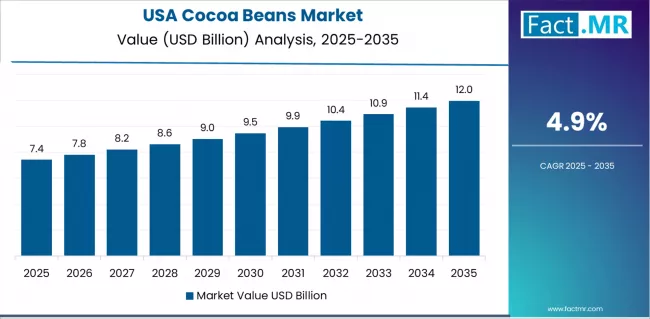
| USA | 4.9% |
| UK | 4.7% |
| Germany | 4.6% |
| Brazil | 4.4% |
| UAE | 4.2% |
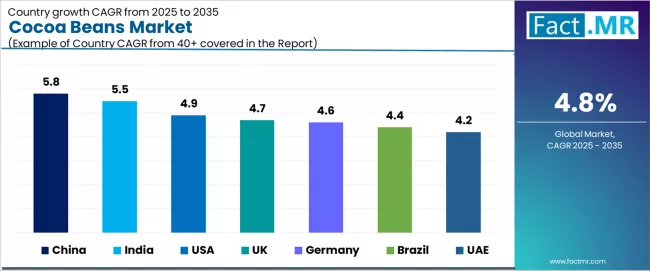
The global cocoa beans market is expanding steadily, with China leading at a 5.8% CAGR through 2035, driven by rising chocolate consumption patterns, increasing disposable income levels, and Western dietary influence adoption. India follows at 5.5%, supported by growing premium chocolate market, expanding organized retail penetration, and youth demographic consumption trends.
USA records 4.9%, reflecting high demand for gourmet cocoa products, craft chocolate movement expansion, and specialty ingredient applications. Germany advances at 4.6%, leveraging innovative chocolate products, premiumization strategies, and established confectionery manufacturing excellence. UK posts 4.7%, focusing on high per capita chocolate consumption, premium brand presence, and ethical sourcing emphasis, while
Brazil grows steadily at 4.4%, emphasizing major cocoa producer status, growing local consumption, and origin chocolate development. UAE demonstrates 4.2% growth, anchored by luxury confectionery demand, premium chocolate imports, and high-income consumer segments.
How is China Leading Global Market Expansion?
China demonstrates the strongest growth potential in the cocoa beans market with a CAGR of 5.8% through 2035. The country's leadership position stems from rapidly rising chocolate consumption among younger urban populations, increasing disposable incomes enabling premium product purchases, and growing Western food culture adoption transforming traditional snacking preferences.
Growth is concentrated in major metropolitan areas and tier-one cities, including Shanghai, Beijing, Guangzhou, and Shenzhen, where consumers are increasingly purchasing imported chocolate brands and domestic premium chocolate products for personal consumption and gifting occasions.
Distribution channels through modern retail formats, e-commerce platforms, and specialty confectionery stores expand product accessibility across urban populations and affluent consumer segments. The country's growing middle class with estimated 400 million consumers provides strong momentum for chocolate market development, including comprehensive adoption across age segments from millennials seeking indulgent treats to parents purchasing chocolate products for children.
Key market factors:
- Urban consumer expansion concentrated in coastal cities and provincial capitals with rising purchasing power and Western lifestyle adoption
- E-commerce penetration through platforms including Tmall, JD.com, and specialized food marketplaces enabling imported chocolate access
- Comprehensive gifting culture integration ecosystem, including chocolate positioning as premium gift option for holidays and celebrations
- Local chocolate manufacturing development featuring international brands establishing production facilities and domestic companies entering premium segments
Why is India Emerging as a High-Growth Market?
In major metropolitan centers including Mumbai, Delhi, Bangalore, and Hyderabad, the adoption of premium chocolate products is accelerating across urban middle-class populations, driven by increasing disposable incomes and growing preference for international confectionery brands. The market demonstrates strong growth momentum with a CAGR of 5.5% through 2035, linked to comprehensive retail modernization trends and increasing focus on indulgent snacking and gifting occasions.
Indian consumers are implementing Western consumption patterns and purchasing premium chocolate products to celebrate special occasions while meeting growing expectations for quality confectionery experiences. The country's expanding organized retail sector creates ongoing demand for branded chocolate products, while increasing awareness of dark chocolate health benefits drives adoption of high-cocoa content formulations.
Key development areas:
- Urban middle-class expansion leading chocolate adoption with emphasis on premium imported brands and domestic quality products
- Organized retail growth through modern trade formats and shopping mall proliferation providing chocolate category expansion
- Gifting occasion significance enabling chocolate positioning as premium gift option for festivals and celebrations
- Growing awareness of health benefits alongside indulgence positioning supporting dark chocolate segment development
What drives USA’s Market Resilience?

USA’s market expansion is driven by diverse consumption preferences, including craft chocolate appreciation in urban markets and gourmet cocoa ingredient adoption across specialty food applications. The country demonstrates steady growth potential with a CAGR of 4.9% through 2035, supported by continuous innovation from artisanal chocolate makers and established confectionery brands emphasizing origin stories and sustainability credentials.
American consumers face complex choices related to chocolate options ranging from mass-market products to ultra-premium bean-to-bar offerings, requiring clear value propositions and authentic brand narratives. However, established chocolate consumption habits averaging 5 kilograms per capita annually and high willingness to pay for specialty products create stable baseline demand for quality cocoa beans, particularly among craft chocolate manufacturers and specialty confectionery brands where ingredient transparency drives primary purchasing decisions.
Market characteristics:
- Craft chocolate movement and specialty confectionery showing robust demand with substantial premiumization across product categories
- Regional preferences varying between single-origin chocolate emphasis in urban centers and conventional chocolate products in mainstream markets
- Future projections indicate continued growth with emphasis on direct trade sourcing and flavor diversity exploration
- Growing emphasis on sustainable sourcing certifications and transparent supply chain communications supporting ethical consumption trends
How does UK Demonstrate Chocolate Heritage Leadership?
The UK market leads in per capita chocolate consumption based on established confectionery traditions and comprehensive retail penetration for enhanced market accessibility. The country shows strong potential with a CAGR of 4.7% through 2035, driven by high consumption rates averaging 8 kilograms per capita annually and consumer preferences for premium chocolate brands in major markets, including London, Manchester, Birmingham, and Edinburgh.
The consumers are adopting ethical chocolate products through retailer own-brand sustainability commitments and increasing awareness of cocoa supply chain issues for comprehensive responsible consumption, particularly in quality-conscious populations and brand-loyal consumer segments demanding proven ethical credentials. Distribution channels through major supermarket chains and specialty chocolate retailers expand coverage across urban centers and suburban markets.
Leading market segments:
- Premium chocolate adoption in major retail chains implementing comprehensive ethical sourcing standards
- Chocolate gifting traditions with seasonal consumption peaks during Christmas, Easter, and Valentine's Day
- Strategic partnerships between retailers and chocolate manufacturers expanding private label premium offerings
- Focus on Fair Trade and Rainforest Alliance certifications addressing consumer ethical expectations
What positions Germany for Innovation Leadership?
In major cities including Munich, Hamburg, Berlin, and Frankfurt, consumers are implementing premium chocolate consumption through comprehensive retail offerings and specialty confectionery stores, with documented purchasing patterns showing substantial preference for high-quality chocolate products through quality-focused consumer behavior. The market shows steady growth potential with a CAGR of 4.6% through 2035, linked to ongoing product innovation, established confectionery manufacturing excellence, and premiumization trends in major regions.
Consumers are adopting innovative chocolate formats with manufacturer emphasis to enhance sensory experiences while maintaining standards demanded by quality-conscious purchasing pathways. The country's established chocolate manufacturing infrastructure creates ongoing opportunities for specialty cocoa applications that differentiate through superior ingredient quality and comprehensive flavor development.
Market development factors:
- Quality-conscious consumers leading adoption of premium chocolate products across Germany
- Manufacturing excellence enabling innovative product development and flavor combination experimentation
- Strategic emphasis on sustainable cocoa sourcing and supply chain transparency
- Established chocolate consumption culture supporting regular purchase patterns and brand loyalty
How does Brazil show Production-Consumption Integration?
Brazil's cocoa beans market demonstrates unique characteristics combining major production capabilities with growing domestic consumption, with documented cultivation of premium cocoa varieties achieving substantial quality recognition through specialty cocoa development across traditional growing regions.
The country maintains steady growth momentum with a CAGR of 4.4% through 2035, driven by origin chocolate movement and comprehensive local chocolate industry development emphasizing Brazilian cocoa identity and artisanal manufacturing that align with national pride in agricultural heritage. Major cocoa-producing regions, including Bahia, Pará, and Espírito Santo, showcase opportunities for farm-to-bar chocolate development where local cocoa integrates seamlessly with domestic chocolate manufacturing and specialty product positioning.
Key market characteristics:
- Origin chocolate development driving demand for locally-sourced cocoa with emphasis on Brazilian flavor profiles and terroir expression
- Production expertise enabling quality improvement initiatives and specialty cocoa cultivation expansion
- Domestic chocolate industry growth pioneering bean-to-bar manufacturing and craft chocolate entrepreneurship
- Emphasis on sustainable cultivation practices and rainforest-friendly cocoa production addressing environmental conservation
What Characterizes UAE's Luxury Market Development?
In major metropolitan centers including Dubai, Abu Dhabi, and Sharjah, the adoption of luxury chocolate products is expanding across affluent consumer populations, driven by high disposable incomes and strong demand for premium imported confectionery brands. The market demonstrates moderate growth potential with a CAGR of 4.2% through 2035, linked to comprehensive luxury retail infrastructure and increasing focus on premium gifting and indulgent consumption in major urban regions.
Consumers are implementing international chocolate brand preferences and purchasing ultra-premium chocolate products for personal consumption and corporate gifting while meeting growing expectations for luxury confectionery experiences. The country's position as regional luxury retail hub creates ongoing demand for premium chocolate imports, while increasing tourism flows drive chocolate purchasing for gifts and souvenirs.
Key development areas:
- Luxury retail concentration leading premium chocolate sales with emphasis on imported European brands and artisanal products
- Corporate gifting demand through business protocol requirements and premium chocolate positioning as sophisticated gift option
- Tourism influence supporting chocolate retail through airport duty-free channels and luxury hotel amenities
- Premium positioning emphasis alongside ultra-high-net-worth consumer segments demanding exclusive chocolate experiences
Europe Market Split by Country

The cocoa beans market in Europe is projected to grow from USD 6.8 billion in 2025 to USD 10.9 billion by 2035, registering a CAGR of 4.9% over the forecast period. Germany is expected to maintain its leadership position with a 28.0% market share in 2025, adjusting to 27.5% by 2035, supported by its dominant chocolate manufacturing industry, comprehensive confectionery expertise, and established cocoa processing infrastructure serving major European markets.
UK follows with a 22.0% share in 2025, projected to reach 22.5% by 2035, driven by high per capita consumption patterns and premium chocolate market development in major retail markets implementing ethical sourcing commitments. France holds a 18.5% share in 2025, expected to maintain 19.0% by 2035 through ongoing artisanal chocolate tradition and luxury confectionery positioning. Italy commands a 14.8% share, while Spain accounts for 11.5% in 2025.
The rest of Europe region is anticipated to gain momentum, expanding its collective share from 4.8% to 5.5% by 2035, attributed to increasing specialty chocolate adoption in Nordic countries and emerging Eastern European markets implementing premium confectionery consumption patterns.
Competitive Landscape of the Cocoa Beans Market

The cocoa beans market features approximately 15-25 meaningful players with moderate concentration, where the top three companies control roughly 25-35% of global market share through established supply chain integration, comprehensive processing capabilities, and multi-region sourcing networks. Competition centers on sustainability credentials, flavor profile development, and direct sourcing relationships rather than price competition alone.
Market leaders include Cemoi Chocolatier with a 12.0% market share, along with Barry Callebaut and Cargill, which maintain competitive advantages through vertically integrated supply chains spanning cocoa farming support through chocolate ingredient production, comprehensive sustainability certification programs, and deep relationships with major chocolate manufacturers, creating high credibility among food companies seeking reliable cocoa sourcing.
These companies leverage extensive cocoa processing expertise and substantial farmer support investments to defend market positions while expanding into adjacent categories including cocoa-based ingredients for functional foods and specialty chocolate applications.
Challengers encompass established chocolate manufacturers including Nestlé S.A., Mars Inc., and The Hershey Company, which compete through substantial cocoa procurement volumes and integrated manufacturing operations enabling direct bean sourcing and proprietary processing technologies. Specialty cocoa processors, including Valrhona, Ghirardelli, and República del Cacao, focus on premium segments and origin-specific cocoa, offering differentiated capabilities in single-estate sourcing, flavor development, and artisanal processing methods.
Emerging direct trade chocolate makers and origin-focused cocoa suppliers create competitive pressure through transparent sourcing models and distinctive flavor profiles, particularly in high-growth craft chocolate segments including North America and Europe, where direct farmer relationships provide advantages in quality control and brand storytelling capabilities.
Market dynamics favor companies that combine agricultural expertise with processing excellence addressing complete value chains from sustainable farming support through finished ingredient delivery and technical application support. Strategic emphasis on climate resilience programs, farmer income improvement, and flavor diversity preservation enables differentiation in increasingly competitive sustainable cocoa segments across developed and emerging markets.
Global Cocoa Beans Market — Stakeholder Contribution Framework
Cocoa beans represent a critical agricultural commodity that enables chocolate manufacturers and food processors to deliver premium confectionery experiences and functional cocoa ingredients while addressing sustainability expectations and flavor authenticity requirements without exclusive commodity-grade sourcing dependency, typically providing certified sustainable sourcing including ethical certifications, enhanced flavor complexity through terroir-specific varieties, and comprehensive farmer support programs compared to conventional commodity cocoa trading alone while ensuring improved supply chain transparency and comprehensive quality outcomes.
With the market projected to grow from USD 16.3 billion in 2025 to USD 26.1 billion by 2035 at a 4.8% CAGR, these solutions offer compelling advantages for premium chocolate applications, functional ingredient formulations, and diverse food manufacturing segments seeking authentic cocoa sourcing. Scaling market adoption and sustainable production requires coordinated action across agricultural policy, farmer support programs, cocoa processors, chocolate manufacturers, and sustainability certification bodies.
How Could Governments Spur Local Development and Adoption?
- Cocoa Farming Support Programs: Include cocoa agriculture in rural development initiatives, providing targeted support for farmer cooperative development and supporting research institutions through agricultural extension services and climate adaptation funding.
- Trade Policy & Investment Support: Implement favorable export policies for cocoa-producing countries, provide agricultural financing programs for cocoa farm rehabilitation and replanting, and establish value-added processing incentives that encourage domestic cocoa processing over raw bean exports.
- Sustainability Framework Development: Create national cocoa sustainability standards aligned with international certifications, establish clear traceability requirements and supply chain transparency protocols, and develop deforestation-free cocoa production guidelines that facilitate environmental conservation.
- Farmer Income Support: Fund minimum price guarantee programs protecting farmers from extreme price volatility, invest in productivity improvement initiatives including training and input access, and explore cooperative strengthening models for enhanced farmer bargaining power.
- Research & Innovation Support: Establish public research programs for disease-resistant cocoa varieties, support agricultural-industry collaborations investigating climate-resilient cultivation practices, and create demonstration farms validating sustainable intensification approaches.
How Could Industry Bodies Support Market Development?
- Quality Standards & Certification: Define standardized quality assessment protocols for cocoa beans across flavor, fermentation, and moisture parameters, establish universal sustainability certification requirements and audit methodologies, and create flavor profile databases that chocolate manufacturers can rely on for sourcing decisions.
- Market Education & Best Practices: Lead messaging that demonstrates sustainable cocoa benefits, emphasizing farmer welfare improvements, environmental conservation outcomes, and authentic flavor development compared to commodity-only approaches.
- Supply Chain Transparency: Develop traceability guidelines enabling farm-level origin verification, bean quality documentation, and certification authenticity, ensuring consumer confidence across sourcing claims and marketing communications.
- Professional Development: Run certification programs for cocoa buyers, quality assessors, and fermentation specialists on optimizing cocoa post-harvest handling, quality evaluation techniques, and sustainability verification in diverse production environments.
How Could Processors and Manufacturers Strengthen the Ecosystem?
- Direct Trade Development: Develop long-term direct sourcing relationships with farmer cooperatives, premium payment models, and technical support programs that enhance cocoa quality while improving farmer livelihoods.
- Quality Enhancement Programs: Provide comprehensive post-harvest training, fermentation optimization support, and drying infrastructure investments that support farmer quality improvement and informed bean processing aligned with flavor development requirements.
- Sustainability Integration: Offer extensive certification support programs including audit preparation assistance, sustainable practice implementation guidance, and environmental monitoring capabilities that help farmers achieve recognized sustainability standards.
- Innovation Networks: Build comprehensive flavor research capabilities, fermentation experimentation programs, and sensory evaluation systems that ensure cocoa products maintain competitive quality standards and distinctive flavor profiles across diverse origins.
How Could Chocolate Manufacturers and Food Companies Navigate the Market?
- Strategic Sourcing Excellence: Develop comprehensive cocoa procurement strategies with origin diversity, quality specifications, and sustainability commitments for successful supply chain resilience and brand differentiation.
- Supplier Partnership Models: Establish long-term relationships with cocoa processors and farmer cooperatives, implementing collaborative quality improvement agreements and capacity planning frameworks through optimized sourcing practices.
- Flavor Development Systems: Develop comprehensive sensory evaluation protocols, bean origin experimentation, and chocolate formulation optimization that enable continuous product innovation and quality leadership.
- Sustainability Communication: Integrate transparent supply chain storytelling with brand marketing, ensuring sustainability credentials align with consumer expectations and regulatory disclosure requirements.
How Could Investors and Financial Enablers Unlock Value?
- Processing Capacity Financing: Provide growth capital for established companies like Barry Callebaut and Cargill to fund origin-country processing facility expansions and sustainable sourcing program investments supporting increasing chocolate demand.
- Innovation Investment: Back startups developing precision fermentation cocoa alternatives, flavor enhancement technologies, and specialty processing methods that enhance market competitiveness and sustainability performance.
- Supply Chain Infrastructure: Finance farmer cooperative development, fermentation center construction, and traceability system deployment supporting sustainable cocoa production at scale.
- Sustainable Agriculture Funding: Support regenerative cocoa farming programs, agroforestry implementation, and climate adaptation initiatives that enhance long-term cocoa supply security through environmental stewardship.
Key Players in the Cocoa Beans Market
- Cemoi Chocolatier
- República del Cacao
- Nestlé S.A.
- Mars, Incorporated
- THE HERSHEY COMPANY
- Cargill, Incorporated
- Barry Callebaut
- FUJI OIL CO., LTD.
- Ghirardelli Chocolate Company
- Valrhona
Scope of the Report
| Items | Values |
|---|---|
| Quantitative Units | USD 16.3 Billion |
| Product | Cocoa Butter, Cocoa Powder, Cocoa Liquor |
| Application | Confectionery, Functional Foods & Beverages, Pharmaceuticals, Cosmetics |
| Distribution Channel | Online, Offline (Hypermarkets & Supermarkets, Convenience Stores, Specialty Stores, Others) |
| Regions Covered | Asia Pacific, Europe, North America, Latin America, Middle East & Africa |
| Country Covered | China, India, USA, UK, Germany, Brazil, UAE, and 40+ countries |
| Key Companies Profiled | Cemoi Chocolatier, República del Cacao, Nestlé S.A., Mars, Incorporated, THE HERSHEY COMPANY, Cargill, Incorporated, Barry Callebaut, FUJI OIL CO., LTD., Ghirardelli Chocolate Company, Valrhona |
| Additional Attributes | Dollar sales by product and application categories, regional adoption trends across Asia Pacific, Europe, and North America, competitive landscape with cocoa processors and chocolate manufacturers, product specifications and quality requirements, integration with sustainable sourcing programs and farmer support initiatives, innovations in fermentation techniques and flavor development processes, and development of specialized applications with traceability systems and certification standards. |
Cocoa Beans Market by Segments
-
Product :
- Cocoa Butter
- Cocoa Powder
- Cocoa Liquor
-
Application :
- Confectionery
- Functional Foods & Beverages
- Pharmaceuticals
- Cosmetics
-
Distribution Channel :
- Online
- Offline
- Hypermarkets & Supermarkets
- Convenience Stores
- Specialty Stores
- Others
-
Region :
- Asia Pacific
- China
- Japan
- South Korea
- India
- Australia
- Thailand
- Rest of Asia Pacific
- Europe
- Germany
- UK
- France
- Italy
- Spain
- Denmark
- Sweden
- Norway
- Rest of Europe
- North America
- USA
- Canada
- Mexico
- Latin America
- Brazil
- Argentina
- Rest of Latin America
- Middle East & Africa
- South Africa
- Saudi Arabia
- UAE
- Kuwait
- Rest of Middle East & Africa
- Asia Pacific
Table of Content
- Executive Summary
- Global Market Outlook
- Demand to side Trends
- Supply to side Trends
- Technology Roadmap Analysis
- Analysis and Recommendations
- Market Overview
- Market Coverage / Taxonomy
- Market Definition / Scope / Limitations
- Market Background
- Market Dynamics
- Drivers
- Restraints
- Opportunity
- Trends
- Scenario Forecast
- Demand in Optimistic Scenario
- Demand in Likely Scenario
- Demand in Conservative Scenario
- Opportunity Map Analysis
- Product Life Cycle Analysis
- Supply Chain Analysis
- Investment Feasibility Matrix
- Value Chain Analysis
- PESTLE and Porter’s Analysis
- Regulatory Landscape
- Regional Parent Market Outlook
- Production and Consumption Statistics
- Import and Export Statistics
- Market Dynamics
- Global Market Analysis 2020 to 2024 and Forecast, 2025 to 2035
- Historical Market Size Value (USD Million) Analysis, 2020 to 2024
- Current and Future Market Size Value (USD Million) Projections, 2025 to 2035
- Y to o to Y Growth Trend Analysis
- Absolute $ Opportunity Analysis
- Global Market Pricing Analysis 2020 to 2024 and Forecast 2025 to 2035
- Global Market Analysis 2020 to 2024 and Forecast 2025 to 2035, By Product
- Introduction / Key Findings
- Historical Market Size Value (USD Million) Analysis By Product, 2020 to 2024
- Current and Future Market Size Value (USD Million) Analysis and Forecast By Product, 2025 to 2035
- Cocoa Butter
- Cocoa Powder
- Cocoa Liquor
- Y to o to Y Growth Trend Analysis By Product, 2020 to 2024
- Absolute $ Opportunity Analysis By Product, 2025 to 2035
- Global Market Analysis 2020 to 2024 and Forecast 2025 to 2035, By Application
- Introduction / Key Findings
- Historical Market Size Value (USD Million) Analysis By Application, 2020 to 2024
- Current and Future Market Size Value (USD Million) Analysis and Forecast By Application, 2025 to 2035
- Confectionery
- Functional Foods & Beverages
- Pharmaceuticals
- Cosmetics
- Y to o to Y Growth Trend Analysis By Application, 2020 to 2024
- Absolute $ Opportunity Analysis By Application, 2025 to 2035
- Global Market Analysis 2020 to 2024 and Forecast 2025 to 2035, By Distribution Channel
- Introduction / Key Findings
- Historical Market Size Value (USD Million) Analysis By Distribution Channel, 2020 to 2024
- Current and Future Market Size Value (USD Million) Analysis and Forecast By Distribution Channel, 2025 to 2035
- Offline
- Online
- Y to o to Y Growth Trend Analysis By Distribution Channel, 2020 to 2024
- Absolute $ Opportunity Analysis By Distribution Channel, 2025 to 2035
- Global Market Analysis 2020 to 2024 and Forecast 2025 to 2035, By Region
- Introduction
- Historical Market Size Value (USD Million) Analysis By Region, 2020 to 2024
- Current Market Size Value (USD Million) Analysis and Forecast By Region, 2025 to 2035
- North America
- Latin America
- Western Europe
- Eastern Europe
- East Asia
- South Asia and Pacific
- Middle East & Africa
- Market Attractiveness Analysis By Region
- North America Market Analysis 2020 to 2024 and Forecast 2025 to 2035, By Country
- Historical Market Size Value (USD Million) Trend Analysis By Market Taxonomy, 2020 to 2024
- Market Size Value (USD Million) Forecast By Market Taxonomy, 2025 to 2035
- By Country
- USA
- Canada
- Mexico
- By Product
- By Application
- By Distribution Channel
- By Country
- Market Attractiveness Analysis
- By Country
- By Product
- By Application
- By Distribution Channel
- Key Takeaways
- Latin America Market Analysis 2020 to 2024 and Forecast 2025 to 2035, By Country
- Historical Market Size Value (USD Million) Trend Analysis By Market Taxonomy, 2020 to 2024
- Market Size Value (USD Million) Forecast By Market Taxonomy, 2025 to 2035
- By Country
- Brazil
- Chile
- Rest of Latin America
- By Product
- By Application
- By Distribution Channel
- By Country
- Market Attractiveness Analysis
- By Country
- By Product
- By Application
- By Distribution Channel
- Key Takeaways
- Western Europe Market Analysis 2020 to 2024 and Forecast 2025 to 2035, By Country
- Historical Market Size Value (USD Million) Trend Analysis By Market Taxonomy, 2020 to 2024
- Market Size Value (USD Million) Forecast By Market Taxonomy, 2025 to 2035
- By Country
- Germany
- UK
- Italy
- Spain
- France
- Nordic
- BENELUX
- Rest of Western Europe
- By Product
- By Application
- By Distribution Channel
- By Country
- Market Attractiveness Analysis
- By Country
- By Product
- By Application
- By Distribution Channel
- Key Takeaways
- Eastern Europe Market Analysis 2020 to 2024 and Forecast 2025 to 2035, By Country
- Historical Market Size Value (USD Million) Trend Analysis By Market Taxonomy, 2020 to 2024
- Market Size Value (USD Million) Forecast By Market Taxonomy, 2025 to 2035
- By Country
- Russia
- Poland
- Hungary
- Balkan & Baltic
- Rest of Eastern Europe
- By Product
- By Application
- By Distribution Channel
- By Country
- Market Attractiveness Analysis
- By Country
- By Product
- By Application
- By Distribution Channel
- Key Takeaways
- East Asia Market Analysis 2020 to 2024 and Forecast 2025 to 2035, By Country
- Historical Market Size Value (USD Million) Trend Analysis By Market Taxonomy, 2020 to 2024
- Market Size Value (USD Million) Forecast By Market Taxonomy, 2025 to 2035
- By Country
- China
- Japan
- South Korea
- By Product
- By Application
- By Distribution Channel
- By Country
- Market Attractiveness Analysis
- By Country
- By Product
- By Application
- By Distribution Channel
- Key Takeaways
- South Asia and Pacific Market Analysis 2020 to 2024 and Forecast 2025 to 2035, By Country
- Historical Market Size Value (USD Million) Trend Analysis By Market Taxonomy, 2020 to 2024
- Market Size Value (USD Million) Forecast By Market Taxonomy, 2025 to 2035
- By Country
- India
- ASEAN
- Australia & New Zealand
- Rest of South Asia and Pacific
- By Product
- By Application
- By Distribution Channel
- By Country
- Market Attractiveness Analysis
- By Country
- By Product
- By Application
- By Distribution Channel
- Key Takeaways
- Middle East & Africa Market Analysis 2020 to 2024 and Forecast 2025 to 2035, By Country
- Historical Market Size Value (USD Million) Trend Analysis By Market Taxonomy, 2020 to 2024
- Market Size Value (USD Million) Forecast By Market Taxonomy, 2025 to 2035
- By Country
- Kingdom of Saudi Arabia
- Other GCC Countries
- Turkiye
- South Africa
- Other African Union
- Rest of Middle East & Africa
- By Product
- By Application
- By Distribution Channel
- By Country
- Market Attractiveness Analysis
- By Country
- By Product
- By Application
- By Distribution Channel
- Key Takeaways
- Key Countries Market Analysis
- USA
- Pricing Analysis
- Market Share Analysis, 2024
- By Product
- By Application
- By Distribution Channel
- Canada
- Pricing Analysis
- Market Share Analysis, 2024
- By Product
- By Application
- By Distribution Channel
- Mexico
- Pricing Analysis
- Market Share Analysis, 2024
- By Product
- By Application
- By Distribution Channel
- Brazil
- Pricing Analysis
- Market Share Analysis, 2024
- By Product
- By Application
- By Distribution Channel
- Chile
- Pricing Analysis
- Market Share Analysis, 2024
- By Product
- By Application
- By Distribution Channel
- Germany
- Pricing Analysis
- Market Share Analysis, 2024
- By Product
- By Application
- By Distribution Channel
- UK
- Pricing Analysis
- Market Share Analysis, 2024
- By Product
- By Application
- By Distribution Channel
- Italy
- Pricing Analysis
- Market Share Analysis, 2024
- By Product
- By Application
- By Distribution Channel
- Spain
- Pricing Analysis
- Market Share Analysis, 2024
- By Product
- By Application
- By Distribution Channel
- France
- Pricing Analysis
- Market Share Analysis, 2024
- By Product
- By Application
- By Distribution Channel
- India
- Pricing Analysis
- Market Share Analysis, 2024
- By Product
- By Application
- By Distribution Channel
- ASEAN
- Pricing Analysis
- Market Share Analysis, 2024
- By Product
- By Application
- By Distribution Channel
- Australia & New Zealand
- Pricing Analysis
- Market Share Analysis, 2024
- By Product
- By Application
- By Distribution Channel
- China
- Pricing Analysis
- Market Share Analysis, 2024
- By Product
- By Application
- By Distribution Channel
- Japan
- Pricing Analysis
- Market Share Analysis, 2024
- By Product
- By Application
- By Distribution Channel
- South Korea
- Pricing Analysis
- Market Share Analysis, 2024
- By Product
- By Application
- By Distribution Channel
- Russia
- Pricing Analysis
- Market Share Analysis, 2024
- By Product
- By Application
- By Distribution Channel
- Poland
- Pricing Analysis
- Market Share Analysis, 2024
- By Product
- By Application
- By Distribution Channel
- Hungary
- Pricing Analysis
- Market Share Analysis, 2024
- By Product
- By Application
- By Distribution Channel
- Kingdom of Saudi Arabia
- Pricing Analysis
- Market Share Analysis, 2024
- By Product
- By Application
- By Distribution Channel
- Turkiye
- Pricing Analysis
- Market Share Analysis, 2024
- By Product
- By Application
- By Distribution Channel
- South Africa
- Pricing Analysis
- Market Share Analysis, 2024
- By Product
- By Application
- By Distribution Channel
- USA
- Market Structure Analysis
- Competition Dashboard
- Competition Benchmarking
- Market Share Analysis of Top Players
- By Regional
- By Product
- By Application
- By Distribution Channel
- Competition Analysis
- Competition Deep Dive
- Cemoi Chocolatier
- Overview
- Product Portfolio
- Profitability by Market Segments (Product/Age /Sales Channel/Region)
- Sales Footprint
- Strategy Overview
- Marketing Strategy
- Product Strategy
- Channel Strategy
- República del Cacao
- Nestlé S.A.
- Mars, Incorporated
- THE HERSHEY COMPANY
- Cargill, Incorporated
- Barry Callebaut
- FUJI OIL CO., LTD.
- Ghirardelli Chocolate Company
- Valrhona
- Cemoi Chocolatier
- Competition Deep Dive
- Assumptions & Acronyms Used
- Research Methodology
List Of Table
- Table 1: Global Market Value (USD Million) Forecast by Region, 2020 to 2035
- Table 2: Global Market Value (USD Million) Forecast by Product, 2020 to 2035
- Table 3: Global Market Value (USD Million) Forecast by Application, 2020 to 2035
- Table 4: Global Market Value (USD Million) Forecast by Distribution Channel, 2020 to 2035
- Table 5: North America Market Value (USD Million) Forecast by Country, 2020 to 2035
- Table 6: North America Market Value (USD Million) Forecast by Product, 2020 to 2035
- Table 7: North America Market Value (USD Million) Forecast by Application, 2020 to 2035
- Table 8: North America Market Value (USD Million) Forecast by Distribution Channel, 2020 to 2035
- Table 9: Latin America Market Value (USD Million) Forecast by Country, 2020 to 2035
- Table 10: Latin America Market Value (USD Million) Forecast by Product, 2020 to 2035
- Table 11: Latin America Market Value (USD Million) Forecast by Application, 2020 to 2035
- Table 12: Latin America Market Value (USD Million) Forecast by Distribution Channel, 2020 to 2035
- Table 13: Western Europe Market Value (USD Million) Forecast by Country, 2020 to 2035
- Table 14: Western Europe Market Value (USD Million) Forecast by Product, 2020 to 2035
- Table 15: Western Europe Market Value (USD Million) Forecast by Application, 2020 to 2035
- Table 16: Western Europe Market Value (USD Million) Forecast by Distribution Channel, 2020 to 2035
- Table 17: Eastern Europe Market Value (USD Million) Forecast by Country, 2020 to 2035
- Table 18: Eastern Europe Market Value (USD Million) Forecast by Product, 2020 to 2035
- Table 19: Eastern Europe Market Value (USD Million) Forecast by Application, 2020 to 2035
- Table 20: Eastern Europe Market Value (USD Million) Forecast by Distribution Channel, 2020 to 2035
- Table 21: East Asia Market Value (USD Million) Forecast by Country, 2020 to 2035
- Table 22: East Asia Market Value (USD Million) Forecast by Product, 2020 to 2035
- Table 23: East Asia Market Value (USD Million) Forecast by Application, 2020 to 2035
- Table 24: East Asia Market Value (USD Million) Forecast by Distribution Channel, 2020 to 2035
- Table 25: South Asia and Pacific Market Value (USD Million) Forecast by Country, 2020 to 2035
- Table 26: South Asia and Pacific Market Value (USD Million) Forecast by Product, 2020 to 2035
- Table 27: South Asia and Pacific Market Value (USD Million) Forecast by Application, 2020 to 2035
- Table 28: South Asia and Pacific Market Value (USD Million) Forecast by Distribution Channel, 2020 to 2035
- Table 29: Middle East & Africa Market Value (USD Million) Forecast by Country, 2020 to 2035
- Table 30: Middle East & Africa Market Value (USD Million) Forecast by Product, 2020 to 2035
- Table 31: Middle East & Africa Market Value (USD Million) Forecast by Application, 2020 to 2035
- Table 32: Middle East & Africa Market Value (USD Million) Forecast by Distribution Channel, 2020 to 2035
List Of Figures
- Figure 1: Global Market Pricing Analysis
- Figure 2: Global Market Value (USD Million) Forecast 2020 to 2035
- Figure 3: Global Market Value Share and BPS Analysis by Product, 2025 and 2035
- Figure 4: Global Market Y to o to Y Growth Comparison by Product, 2025 to 2035
- Figure 5: Global Market Attractiveness Analysis by Product
- Figure 6: Global Market Value Share and BPS Analysis by Application, 2025 and 2035
- Figure 7: Global Market Y to o to Y Growth Comparison by Application, 2025 to 2035
- Figure 8: Global Market Attractiveness Analysis by Application
- Figure 9: Global Market Value Share and BPS Analysis by Distribution Channel, 2025 and 2035
- Figure 10: Global Market Y to o to Y Growth Comparison by Distribution Channel, 2025 to 2035
- Figure 11: Global Market Attractiveness Analysis by Distribution Channel
- Figure 12: Global Market Value (USD Million) Share and BPS Analysis by Region, 2025 and 2035
- Figure 13: Global Market Y to o to Y Growth Comparison by Region, 2025 to 2035
- Figure 14: Global Market Attractiveness Analysis by Region
- Figure 15: North America Market Incremental Dollar Opportunity, 2025 to 2035
- Figure 16: Latin America Market Incremental Dollar Opportunity, 2025 to 2035
- Figure 17: Western Europe Market Incremental Dollar Opportunity, 2025 to 2035
- Figure 18: Eastern Europe Market Incremental Dollar Opportunity, 2025 to 2035
- Figure 19: East Asia Market Incremental Dollar Opportunity, 2025 to 2035
- Figure 20: South Asia and Pacific Market Incremental Dollar Opportunity, 2025 to 2035
- Figure 21: Middle East & Africa Market Incremental Dollar Opportunity, 2025 to 2035
- Figure 22: North America Market Value Share and BPS Analysis by Country, 2025 and 2035
- Figure 23: North America Market Value Share and BPS Analysis by Product, 2025 and 2035
- Figure 24: North America Market Y to o to Y Growth Comparison by Product, 2025 to 2035
- Figure 25: North America Market Attractiveness Analysis by Product
- Figure 26: North America Market Value Share and BPS Analysis by Application, 2025 and 2035
- Figure 27: North America Market Y to o to Y Growth Comparison by Application, 2025 to 2035
- Figure 28: North America Market Attractiveness Analysis by Application
- Figure 29: North America Market Value Share and BPS Analysis by Distribution Channel, 2025 and 2035
- Figure 30: North America Market Y to o to Y Growth Comparison by Distribution Channel, 2025 to 2035
- Figure 31: North America Market Attractiveness Analysis by Distribution Channel
- Figure 32: Latin America Market Value Share and BPS Analysis by Country, 2025 and 2035
- Figure 33: Latin America Market Value Share and BPS Analysis by Product, 2025 and 2035
- Figure 34: Latin America Market Y to o to Y Growth Comparison by Product, 2025 to 2035
- Figure 35: Latin America Market Attractiveness Analysis by Product
- Figure 36: Latin America Market Value Share and BPS Analysis by Application, 2025 and 2035
- Figure 37: Latin America Market Y to o to Y Growth Comparison by Application, 2025 to 2035
- Figure 38: Latin America Market Attractiveness Analysis by Application
- Figure 39: Latin America Market Value Share and BPS Analysis by Distribution Channel, 2025 and 2035
- Figure 40: Latin America Market Y to o to Y Growth Comparison by Distribution Channel, 2025 to 2035
- Figure 41: Latin America Market Attractiveness Analysis by Distribution Channel
- Figure 42: Western Europe Market Value Share and BPS Analysis by Country, 2025 and 2035
- Figure 43: Western Europe Market Value Share and BPS Analysis by Product, 2025 and 2035
- Figure 44: Western Europe Market Y to o to Y Growth Comparison by Product, 2025 to 2035
- Figure 45: Western Europe Market Attractiveness Analysis by Product
- Figure 46: Western Europe Market Value Share and BPS Analysis by Application, 2025 and 2035
- Figure 47: Western Europe Market Y to o to Y Growth Comparison by Application, 2025 to 2035
- Figure 48: Western Europe Market Attractiveness Analysis by Application
- Figure 49: Western Europe Market Value Share and BPS Analysis by Distribution Channel, 2025 and 2035
- Figure 50: Western Europe Market Y to o to Y Growth Comparison by Distribution Channel, 2025 to 2035
- Figure 51: Western Europe Market Attractiveness Analysis by Distribution Channel
- Figure 52: Eastern Europe Market Value Share and BPS Analysis by Country, 2025 and 2035
- Figure 53: Eastern Europe Market Value Share and BPS Analysis by Product, 2025 and 2035
- Figure 54: Eastern Europe Market Y to o to Y Growth Comparison by Product, 2025 to 2035
- Figure 55: Eastern Europe Market Attractiveness Analysis by Product
- Figure 56: Eastern Europe Market Value Share and BPS Analysis by Application, 2025 and 2035
- Figure 57: Eastern Europe Market Y to o to Y Growth Comparison by Application, 2025 to 2035
- Figure 58: Eastern Europe Market Attractiveness Analysis by Application
- Figure 59: Eastern Europe Market Value Share and BPS Analysis by Distribution Channel, 2025 and 2035
- Figure 60: Eastern Europe Market Y to o to Y Growth Comparison by Distribution Channel, 2025 to 2035
- Figure 61: Eastern Europe Market Attractiveness Analysis by Distribution Channel
- Figure 62: East Asia Market Value Share and BPS Analysis by Country, 2025 and 2035
- Figure 63: East Asia Market Value Share and BPS Analysis by Product, 2025 and 2035
- Figure 64: East Asia Market Y to o to Y Growth Comparison by Product, 2025 to 2035
- Figure 65: East Asia Market Attractiveness Analysis by Product
- Figure 66: East Asia Market Value Share and BPS Analysis by Application, 2025 and 2035
- Figure 67: East Asia Market Y to o to Y Growth Comparison by Application, 2025 to 2035
- Figure 68: East Asia Market Attractiveness Analysis by Application
- Figure 69: East Asia Market Value Share and BPS Analysis by Distribution Channel, 2025 and 2035
- Figure 70: East Asia Market Y to o to Y Growth Comparison by Distribution Channel, 2025 to 2035
- Figure 71: East Asia Market Attractiveness Analysis by Distribution Channel
- Figure 72: South Asia and Pacific Market Value Share and BPS Analysis by Country, 2025 and 2035
- Figure 73: South Asia and Pacific Market Value Share and BPS Analysis by Product, 2025 and 2035
- Figure 74: South Asia and Pacific Market Y to o to Y Growth Comparison by Product, 2025 to 2035
- Figure 75: South Asia and Pacific Market Attractiveness Analysis by Product
- Figure 76: South Asia and Pacific Market Value Share and BPS Analysis by Application, 2025 and 2035
- Figure 77: South Asia and Pacific Market Y to o to Y Growth Comparison by Application, 2025 to 2035
- Figure 78: South Asia and Pacific Market Attractiveness Analysis by Application
- Figure 79: South Asia and Pacific Market Value Share and BPS Analysis by Distribution Channel, 2025 and 2035
- Figure 80: South Asia and Pacific Market Y to o to Y Growth Comparison by Distribution Channel, 2025 to 2035
- Figure 81: South Asia and Pacific Market Attractiveness Analysis by Distribution Channel
- Figure 82: Middle East & Africa Market Value Share and BPS Analysis by Country, 2025 and 2035
- Figure 83: Middle East & Africa Market Value Share and BPS Analysis by Product, 2025 and 2035
- Figure 84: Middle East & Africa Market Y to o to Y Growth Comparison by Product, 2025 to 2035
- Figure 85: Middle East & Africa Market Attractiveness Analysis by Product
- Figure 86: Middle East & Africa Market Value Share and BPS Analysis by Application, 2025 and 2035
- Figure 87: Middle East & Africa Market Y to o to Y Growth Comparison by Application, 2025 to 2035
- Figure 88: Middle East & Africa Market Attractiveness Analysis by Application
- Figure 89: Middle East & Africa Market Value Share and BPS Analysis by Distribution Channel, 2025 and 2035
- Figure 90: Middle East & Africa Market Y to o to Y Growth Comparison by Distribution Channel, 2025 to 2035
- Figure 91: Middle East & Africa Market Attractiveness Analysis by Distribution Channel
- Figure 92: Global Market - Tier Structure Analysis
- Figure 93: Global Market - Company Share Analysis
- FAQs -
How big is the cocoa beans market in 2025?
The global cocoa beans market is estimated to be valued at USD 16.3 billion in 2025.
What will be the size of cocoa beans market in 2035?
The market size for the cocoa beans market is projected to reach USD 26.1 billion by 2035.
How much will be the cocoa beans market growth between 2025 and 2035?
The cocoa beans market is expected to grow at a 4.8% CAGR between 2025 and 2035.
What are the key product types in the cocoa beans market?
The key product types in cocoa beans market are cocoa butter, cocoa powder and cocoa liquor.
Which application segment to contribute significant share in the cocoa beans market in 2025?
In terms of application, confectionery segment to command 36.8% share in the cocoa beans market in 2025.