PFAS-Free Easy-Open Can Coatings Market

PFAS-Free Easy-Open Can Coatings Market Size and Share Forecast Outlook 2026 to 2036

Pfas-free easy-open can coatings market is projected to grow from USD 154.6 million in 2026 to USD 338.6 million by 2036, at a CAGR of 8.2%. Carbonated Soft Drinks (CSD) will dominate with a 35.0% market share, while aluminum beverage can ends will lead the substrate type segment with a 70.0% share.

PFAS-Free Easy-Open Can Coatings Market Forecast and Outlook 2026 to 2036

The global PFAS-free easy-open can coatings market is projected to reach USD 338.62 million by 2036. The market is valued at USD 154.64 million in 2026 and is set to rise at a CAGR of 8.2% during the assessment period.

By end use, carbonated soft drinks hold a leading 35% share, while aluminum beverage can ends dominate the substrate type at 70%. Among coating chemistries, Acrylic-based PFAS-free systems lead with a 35.0% market share.

Key Takeaways from the PFAS-Free Easy-Open Can Coatings Market

  • Market Value for 2026: USD 154.64 Million
  • Market Value for 2036: USD 338.62 Million
  • Forecast CAGR (2026-2036): 8.2%
  • Leading End-Use Segment Share (2026): Carbonated Soft Drinks (35%)
  • Leading Substrate Type Share (2026): Aluminum Beverage Can Ends (70%)
  • Leading Coating Chemistry Share (2026): Acrylic-Based PFAS-Free Systems (35.0%)
  • Key Players in the Market: PPG Industries Inc., Akzo Nobel N.V., Evonik Industries AG, Sherwin-Williams, ACTEGA, Toyochem
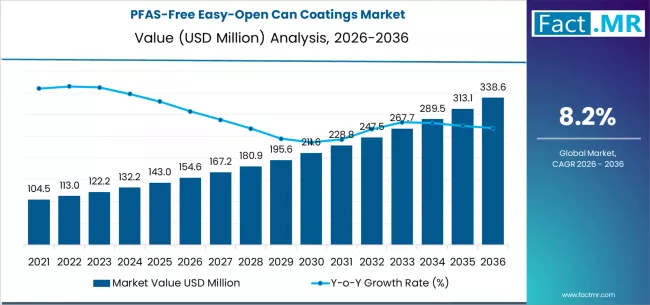
Pfas Free Easy Open Can Coatings Market Market Value Analysis

This projected growth is fundamentally driven by an unprecedented wave of regulatory action targeting per- and polyfluoroalkyl substances (PFAS) in packaging. With the European Union's Packaging and Packaging Waste Regulation (PPWR) effectively banning PFAS in packaging, and similar regulatory pressures building in North America and Asia, the canning industry is undergoing a mandatory and rapid transition.

This pivot away from legacy fluorinated chemistries, which were valued for their excellent release properties, represents not just a compliance challenge but a significant market opportunity for innovative coating formulators.

PFAS-Free Easy-Open Can Coatings Market

Metric Value
Market Value (2026) USD 154.64 Million
Market Forecast Value (2036) USD 338.62 Million
Forecast CAGR (2026-2036) 8.2%

Category

Category Segments
End Use Carbonated Soft Drinks (CSD), Beer & Other Alcoholic Beverages, Energy & Functional Drinks, Juices, RTD Tea & Coffee, Other Canned Foods & Specialty Beverages
Substrate Type Aluminum Beverage Can Ends, Steel Can Ends (Food & Mixed Use), Composite or Specialty Can Ends, Others (Crowns, Closures, Niche)
Coating Chemistry Acrylic-Based PFAS-Free Systems, Polyester-Based Systems, Epoxy & Epoxy-Hybrid Systems, Bio-Based & Oleoresin Systems, Others (Hybrid, Experimental)
Region North America, Latin America, Western Europe, Eastern Europe, East Asia, South Asia & Pacific, MEA

Segmental Analysis

By End Use, Which Beverage Category Exerts the Highest Demand for Reliable Performance?
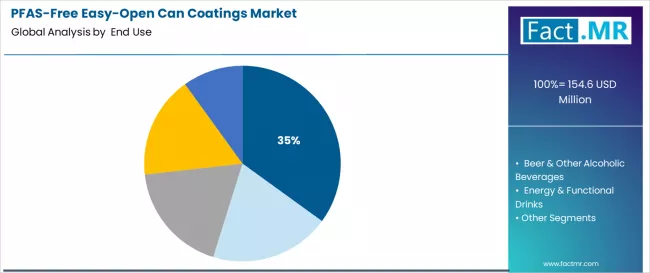
Pfas Free Easy Open Can Coatings Market Analysis By End Use

Carbonated soft drinks (CSD) lead the segment with a 35% share. This dominance is attributed to the massive global volume of CSD cans produced and the specific technical challenge of maintaining a perfect seal under internal pressure while ensuring a smooth, easy-open experience. The coating on the can end must prevent corrosion from the acidic beverage and reliably separate during opening without leaving residue or failing. This critical performance requirement in a high-volume market makes CSD the primary driver for advanced, PFAS-free coating development and adoption.

By Substrate Type, Which Material is Synonymous with Modern Beverage Packaging?
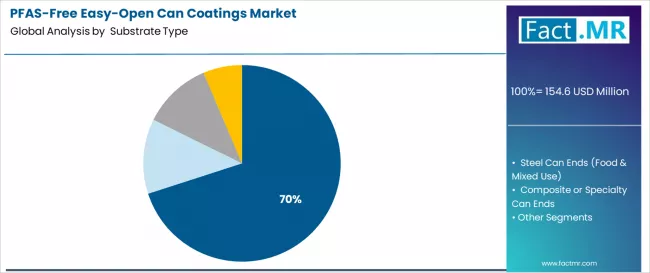
Pfas Free Easy Open Can Coatings Market Analysis By Substrate Type

Aluminum beverage can ends command the overwhelming majority of the substrate segment at 70%. Aluminum is the material of choice for modern two-piece beverage cans due to its lightweight nature, excellent formability, and superior recyclability. The easy-open end is a precision component where coating performance is non-negotiable. The dominance of aluminum reflects the global beverage industry's standard packaging format, concentrating demand and innovation on coatings specifically engineered for this substrate.

By Coating Chemistry, Which PFAS-Free Platform is Leading the Formulation Shift?
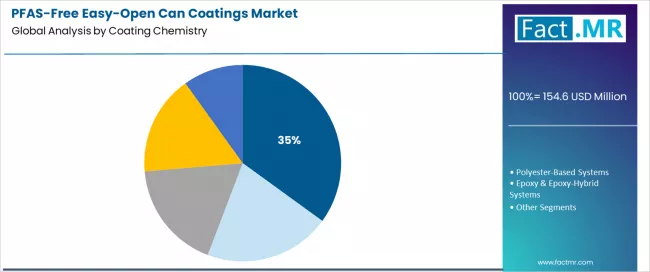
Pfas Free Easy Open Can Coatings Market Analysis By Coating Chemistry

Acrylic-Based PFAS-Free Systems represent the leading chemistry at 35.0%. Acrylic polymers are emerging as a frontrunner in the search for compliant alternatives because they can be formulated to offer a strong balance of flexibility, adhesion, and chemical resistance necessary for easy-open ends. Their adaptability allows formulators to tailor properties to meet the aggressive demands of various beverage types, from acidic soft drinks to alcoholic beverages, making them a versatile and widely adopted foundation for next-generation coatings.

What are the Drivers, Restraints, and Key Trends of the PFAS-Free Easy-Open Can Coatings Market?

The primary and most powerful driver is global regulatory enforcement. The EU's PPWR, which sets such low limits for PFAS as to constitute a ban, is a landmark directive forcing immediate industry-wide change. This is compounded by similar legislative actions in USA states and growing scrutiny in Asia. Simultaneously, the parallel and equally stringent phase-out of Bisphenol A (BPA) in food-contact coatings is creating a dual regulatory imperative for can makers to adopt next-generation, "clean" coating systems.

A significant restraint is the technical and logistical complexity of reformulation. Replacing established PFAS-based coatings, which offered unparalleled slip and release properties, is not a simple "drop-in" swap. New chemistries must undergo extensive, multi-year testing by brands and can makers to validate performance, including shelf-life stability, flavor preservation, and corrosion resistance, across thousands of product types. This lengthy and costly qualification process can slow the pace of full-scale adoption across all beverage segments.

Key trends include the development of multi-compliant coating platforms that are not only PFAS-free but also free from other substances of concern like BPA and styrene, future-proofing products against upcoming regulations. There is also a strong focus on enhancing sustainability beyond chemistry, with efforts to reduce the carbon footprint of coating production and application. The industry embraces collaborative innovation models, where coating suppliers, can makers, and brand owners work closely to co-develop and qualify solutions, accelerating the transition timeline.

Analysis of the PFAS-Free Easy-Open Can Coatings Market by Key Countries
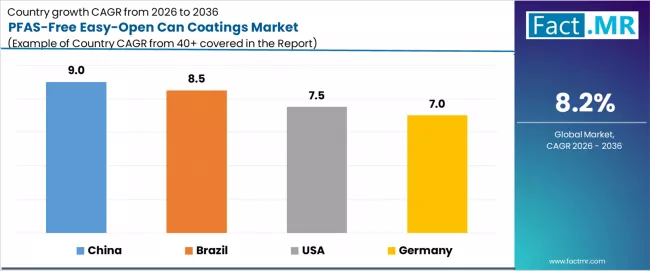
Pfas Free Easy Open Can Coatings Market Cagr Analysis By Country

Country CAGR (2026-2036)
China 9.00%
Brazil 8.50%
USA 7.50%
Germany 7.00%

How does China's Massive Beverage Production and Regulatory Evolution Drive Growth?

China's projected 9.00% CAGR is driven by its status as the world's largest beverage market and a major global can producer. While regional PFAS regulations are still evolving, the domestic industry is proactively responding to global trends and export market requirements. Leading coatings suppliers are investing in local production of next-generation materials to serve this vast market. The combination of sheer scale and forward-looking preparation positions China for significant growth as its regulatory landscape matures.

Why is Brazil's Expanding Beverage Can Market a Key Regional Driver?

Brazil's 8.50% growth is fueled by a large and growing domestic market for canned beverages, particularly beer and CSDs. As a major aluminum producer, Brazil has a strong integrated supply chain for can manufacturing. The growth is less about immediate regulatory pressure and more about capturing volume growth in a booming market with modern, sustainable packaging, creating ripe conditions for adopting new coating technologies as they become commercially established.

What Role does the USA's Regulatory Patchwork and Innovation Focus Play?
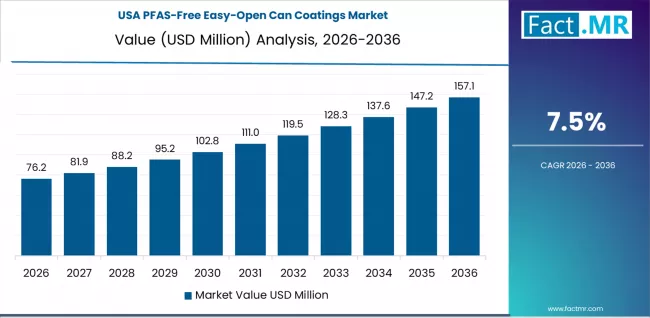
Pfas Free Easy Open Can Coatings Market Country Value Analysis

A complex but influential regulatory environment at the state level and significant market pull from sustainability-conscious brands and consumers underpins USA’s 7.50% growth. The presence of major coating innovators and can manufacturers fosters a competitive environment for developing and launching PFAS-free solutions. Demand is driven by both compliance needs and a desire to lead in sustainable packaging, pushing the market forward despite the absence of a single federal PFAS ban for packaging.

How does Germany's Role as an EU Regulatory Epicenter Influence the Market?

Germany's 7.00% growth is a direct reflection of the stringent EU regulations coming into force. As a leading industrial economy within the EU, German can makers and brand owners are at the forefront of the mandatory transition. The market demands high-performance, fully compliant coatings that meet the most rigorous standards, driving innovation and adoption. Germany serves as a critical testing ground and early-adoption market for new PFAS-free coating technologies destined for the broader European region.

Competitive Landscape of the PFAS-Free Easy-Open Can Coatings Market
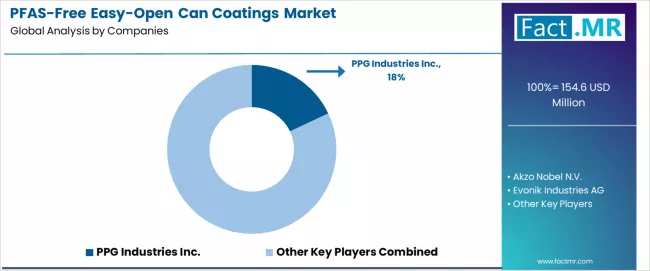
Pfas Free Easy Open Can Coatings Market Analysis By Company

The competitive landscape is characterized by intense R&D activity and strategic collaboration across the value chain. Established global coatings giants like PPG Industries, Akzo Nobel, and Sherwin-Williams compete on the strength of their extensive R&D resources, global supply chains, and deep, long-standing relationships with multinational can makers and beverage brands. These companies are investing heavily in new production facilities dedicated to compliant coatings and launching comprehensive platforms like AkzoNobel's Accelshield™ or Sherwin-Williams' valPure® series.

Specialty chemical companies like Evonik Industries and ACTEGA compete by providing advanced functional additives, resins, and specialized coating solutions that enable performance parity with legacy PFAS systems. The transition has also spurred collaboration, as coating suppliers work directly with can makers to test and qualify new products, ensuring they work seamlessly in high-speed manufacturing environments with minimal disruption. Competition revolves around technological leadership, proven performance data, supply chain reliability, and the ability to provide holistic technical support during the customer's transition.

Key Players in the PFAS-Free Easy-Open Can Coatings Market

  • PPG Industries Inc.
  • Akzo Nobel N.V.
  • Evonik Industries AG
  • Sherwin-Williams
  • ACTEGA
  • Toyochem

Scope of Report

Items Values
Quantitative Units USD Million
End Use Carbonated Soft Drinks (CSD), Beer & Other Alcoholic Beverages, Energy & Functional Drinks, Juices, RTD Tea & Coffee, Other Canned Foods & Specialty Beverages
Substrate Type Aluminum Beverage Can Ends, Steel Can Ends (Food & Mixed Use), Composite or Specialty Can Ends, Others (Crowns, Closures, Niche)
Coating Chemistry Acrylic-Based PFAS-Free Systems, Polyester-Based Systems, Epoxy & Epoxy-Hybrid Systems, Bio-Based & Oleoresin Systems, Others (Hybrid, Experimental)
Key Countries China, Brazil, USA, Germany
Key Companies PPG Industries Inc., Akzo Nobel N.V., Evonik Industries AG, Sherwin-Williams, ACTEGA, Toyochem
Additional Analysis In-depth analysis of regulatory timelines and impact across key regions (EU, North America, Asia); performance benchmarking of PFAS-free chemistries vs. traditional systems; total cost of ownership models including reformulation and qualification costs; supply chain resilience and raw material sourcing for new chemistries; and adoption rates by beverage segment and can maker size.

PFAS-Free Easy-Open Can Coatings Market by Segments

End Use :

  • Carbonated Soft Drinks (CSD)
  • Beer & Other Alcoholic Beverages
  • Energy & Functional Drinks
  • Juices, RTD Tea & Coffee
  • Other Canned Foods & Specialty Beverages

Substrate Type :

  • Aluminum Beverage Can Ends
  • Steel Can Ends (Food & Mixed Use)
  • Composite or Specialty Can Ends
  • Others (Crowns, Closures, Niche)

Coating Chemistry :

  • Acrylic-Based PFAS-Free Systems
  • Polyester-Based Systems
  • Epoxy & Epoxy-Hybrid Systems
  • Bio-Based & Oleoresin Systems
  • Others (Hybrid, Experimental)

Region :

  • North America
    • USA
    • Canada
  • Latin America
    • Brazil
    • Mexico
    • Argentina
    • Rest of Latin America
  • Western Europe
    • Germany
    • UK
    • France
    • Spain
    • Italy
    • BENELUX
    • Rest of Western Europe
  • Eastern Europe
    • Russia
    • Poland
    • Czech Republic
    • Rest of Eastern Europe
  • East Asia
    • China
    • Japan
    • South Korea
    • Rest of East Asia
  • South Asia & Pacific
    • India
    • ASEAN
    • Australia
    • Rest of South Asia & Pacific
  • MEA
    • Saudi Arabia
    • UAE
    • Turkiye
    • Rest of MEA

Table of Content

  1. Executive Summary
    • Global Market Outlook
    • Demand to side Trends
    • Supply to side Trends
    • Technology Roadmap Analysis
    • Analysis and Recommendations
  2. Market Overview
    • Market Coverage / Taxonomy
    • Market Definition / Scope / Limitations
  3. Market Background
    • Market Dynamics
      • Drivers
      • Restraints
      • Opportunity
      • Trends
    • Scenario Forecast
      • Demand in Optimistic Scenario
      • Demand in Likely Scenario
      • Demand in Conservative Scenario
    • Opportunity Map Analysis
    • Product Life Cycle Analysis
    • Supply Chain Analysis
    • Investment Feasibility Matrix
    • Value Chain Analysis
    • PESTLE and Porter’s Analysis
    • Regulatory Landscape
    • Regional Parent Market Outlook
    • Production and Consumption Statistics
    • Import and Export Statistics
  4. Global Market Analysis 2021 to 2025 and Forecast, 2026 to 2036
    • Historical Market Size Value (USD Million) Analysis, 2021 to 2025
    • Current and Future Market Size Value (USD Million) Projections, 2026 to 2036
      • Y to o to Y Growth Trend Analysis
      • Absolute $ Opportunity Analysis
  5. Global Market Pricing Analysis 2021 to 2025 and Forecast 2026 to 2036
  6. Global Market Analysis 2021 to 2025 and Forecast 2026 to 2036, By End Use
    • Introduction / Key Findings
    • Historical Market Size Value (USD Million) Analysis By End Use, 2021 to 2025
    • Current and Future Market Size Value (USD Million) Analysis and Forecast By End Use, 2026 to 2036
      • Carbonated Soft Drinks (CSD)
      • Beer & Other Alcoholic Beverages
      • Energy & Functional Drinks
      • Juices, RTD Tea & Coffee
      • Other Canned Foods & Specialty Beverages
    • Y to o to Y Growth Trend Analysis By End Use, 2021 to 2025
    • Absolute $ Opportunity Analysis By End Use, 2026 to 2036
  7. Global Market Analysis 2021 to 2025 and Forecast 2026 to 2036, By Substrate Type
    • Introduction / Key Findings
    • Historical Market Size Value (USD Million) Analysis By Substrate Type, 2021 to 2025
    • Current and Future Market Size Value (USD Million) Analysis and Forecast By Substrate Type, 2026 to 2036
      • Aluminum Beverage Can Ends
      • Steel Can Ends (Food & Mixed Use)
      • Composite or Specialty Can Ends
      • Others (Crowns, Closures, Niche)
    • Y to o to Y Growth Trend Analysis By Substrate Type, 2021 to 2025
    • Absolute $ Opportunity Analysis By Substrate Type, 2026 to 2036
  8. Global Market Analysis 2021 to 2025 and Forecast 2026 to 2036, By Coating Chemistry
    • Introduction / Key Findings
    • Historical Market Size Value (USD Million) Analysis By Coating Chemistry, 2021 to 2025
    • Current and Future Market Size Value (USD Million) Analysis and Forecast By Coating Chemistry, 2026 to 2036
      • Acrylic-Based PFAS-Free Systems
      • Polyester-Based Systems
      • Epoxy & Epoxy-Hybrid Systems
      • Bio-Based & Oleoresin Systems
      • Others (Hybrid, Experimental)
    • Y to o to Y Growth Trend Analysis By Coating Chemistry, 2021 to 2025
    • Absolute $ Opportunity Analysis By Coating Chemistry, 2026 to 2036
  9. Global Market Analysis 2021 to 2025 and Forecast 2026 to 2036, By Region
    • Introduction
    • Historical Market Size Value (USD Million) Analysis By Region, 2021 to 2025
    • Current Market Size Value (USD Million) Analysis and Forecast By Region, 2026 to 2036
      • North America
      • Latin America
      • Western Europe
      • Eastern Europe
      • East Asia
      • South Asia and Pacific
      • Middle East & Africa
    • Market Attractiveness Analysis By Region
  10. North America Market Analysis 2021 to 2025 and Forecast 2026 to 2036, By Country
    • Historical Market Size Value (USD Million) Trend Analysis By Market Taxonomy, 2021 to 2025
    • Market Size Value (USD Million) Forecast By Market Taxonomy, 2026 to 2036
      • By Country
        • USA
        • Canada
        • Mexico
      • By End Use
      • By Substrate Type
      • By Coating Chemistry
    • Market Attractiveness Analysis
      • By Country
      • By End Use
      • By Substrate Type
      • By Coating Chemistry
    • Key Takeaways
  11. Latin America Market Analysis 2021 to 2025 and Forecast 2026 to 2036, By Country
    • Historical Market Size Value (USD Million) Trend Analysis By Market Taxonomy, 2021 to 2025
    • Market Size Value (USD Million) Forecast By Market Taxonomy, 2026 to 2036
      • By Country
        • Brazil
        • Chile
        • Rest of Latin America
      • By End Use
      • By Substrate Type
      • By Coating Chemistry
    • Market Attractiveness Analysis
      • By Country
      • By End Use
      • By Substrate Type
      • By Coating Chemistry
    • Key Takeaways
  12. Western Europe Market Analysis 2021 to 2025 and Forecast 2026 to 2036, By Country
    • Historical Market Size Value (USD Million) Trend Analysis By Market Taxonomy, 2021 to 2025
    • Market Size Value (USD Million) Forecast By Market Taxonomy, 2026 to 2036
      • By Country
        • Germany
        • UK
        • Italy
        • Spain
        • France
        • Nordic
        • BENELUX
        • Rest of Western Europe
      • By End Use
      • By Substrate Type
      • By Coating Chemistry
    • Market Attractiveness Analysis
      • By Country
      • By End Use
      • By Substrate Type
      • By Coating Chemistry
    • Key Takeaways
  13. Eastern Europe Market Analysis 2021 to 2025 and Forecast 2026 to 2036, By Country
    • Historical Market Size Value (USD Million) Trend Analysis By Market Taxonomy, 2021 to 2025
    • Market Size Value (USD Million) Forecast By Market Taxonomy, 2026 to 2036
      • By Country
        • Russia
        • Poland
        • Hungary
        • Balkan & Baltic
        • Rest of Eastern Europe
      • By End Use
      • By Substrate Type
      • By Coating Chemistry
    • Market Attractiveness Analysis
      • By Country
      • By End Use
      • By Substrate Type
      • By Coating Chemistry
    • Key Takeaways
  14. East Asia Market Analysis 2021 to 2025 and Forecast 2026 to 2036, By Country
    • Historical Market Size Value (USD Million) Trend Analysis By Market Taxonomy, 2021 to 2025
    • Market Size Value (USD Million) Forecast By Market Taxonomy, 2026 to 2036
      • By Country
        • China
        • Japan
        • South Korea
      • By End Use
      • By Substrate Type
      • By Coating Chemistry
    • Market Attractiveness Analysis
      • By Country
      • By End Use
      • By Substrate Type
      • By Coating Chemistry
    • Key Takeaways
  15. South Asia and Pacific Market Analysis 2021 to 2025 and Forecast 2026 to 2036, By Country
    • Historical Market Size Value (USD Million) Trend Analysis By Market Taxonomy, 2021 to 2025
    • Market Size Value (USD Million) Forecast By Market Taxonomy, 2026 to 2036
      • By Country
        • India
        • ASEAN
        • Australia & New Zealand
        • Rest of South Asia and Pacific
      • By End Use
      • By Substrate Type
      • By Coating Chemistry
    • Market Attractiveness Analysis
      • By Country
      • By End Use
      • By Substrate Type
      • By Coating Chemistry
    • Key Takeaways
  16. Middle East & Africa Market Analysis 2021 to 2025 and Forecast 2026 to 2036, By Country
    • Historical Market Size Value (USD Million) Trend Analysis By Market Taxonomy, 2021 to 2025
    • Market Size Value (USD Million) Forecast By Market Taxonomy, 2026 to 2036
      • By Country
        • Kingdom of Saudi Arabia
        • Other GCC Countries
        • Turkiye
        • South Africa
        • Other African Union
        • Rest of Middle East & Africa
      • By End Use
      • By Substrate Type
      • By Coating Chemistry
    • Market Attractiveness Analysis
      • By Country
      • By End Use
      • By Substrate Type
      • By Coating Chemistry
    • Key Takeaways
  17. Key Countries Market Analysis
    • USA
      • Pricing Analysis
      • Market Share Analysis, 2025
        • By End Use
        • By Substrate Type
        • By Coating Chemistry
    • Canada
      • Pricing Analysis
      • Market Share Analysis, 2025
        • By End Use
        • By Substrate Type
        • By Coating Chemistry
    • Mexico
      • Pricing Analysis
      • Market Share Analysis, 2025
        • By End Use
        • By Substrate Type
        • By Coating Chemistry
    • Brazil
      • Pricing Analysis
      • Market Share Analysis, 2025
        • By End Use
        • By Substrate Type
        • By Coating Chemistry
    • Chile
      • Pricing Analysis
      • Market Share Analysis, 2025
        • By End Use
        • By Substrate Type
        • By Coating Chemistry
    • Germany
      • Pricing Analysis
      • Market Share Analysis, 2025
        • By End Use
        • By Substrate Type
        • By Coating Chemistry
    • UK
      • Pricing Analysis
      • Market Share Analysis, 2025
        • By End Use
        • By Substrate Type
        • By Coating Chemistry
    • Italy
      • Pricing Analysis
      • Market Share Analysis, 2025
        • By End Use
        • By Substrate Type
        • By Coating Chemistry
    • Spain
      • Pricing Analysis
      • Market Share Analysis, 2025
        • By End Use
        • By Substrate Type
        • By Coating Chemistry
    • France
      • Pricing Analysis
      • Market Share Analysis, 2025
        • By End Use
        • By Substrate Type
        • By Coating Chemistry
    • India
      • Pricing Analysis
      • Market Share Analysis, 2025
        • By End Use
        • By Substrate Type
        • By Coating Chemistry
    • ASEAN
      • Pricing Analysis
      • Market Share Analysis, 2025
        • By End Use
        • By Substrate Type
        • By Coating Chemistry
    • Australia & New Zealand
      • Pricing Analysis
      • Market Share Analysis, 2025
        • By End Use
        • By Substrate Type
        • By Coating Chemistry
    • China
      • Pricing Analysis
      • Market Share Analysis, 2025
        • By End Use
        • By Substrate Type
        • By Coating Chemistry
    • Japan
      • Pricing Analysis
      • Market Share Analysis, 2025
        • By End Use
        • By Substrate Type
        • By Coating Chemistry
    • South Korea
      • Pricing Analysis
      • Market Share Analysis, 2025
        • By End Use
        • By Substrate Type
        • By Coating Chemistry
    • Russia
      • Pricing Analysis
      • Market Share Analysis, 2025
        • By End Use
        • By Substrate Type
        • By Coating Chemistry
    • Poland
      • Pricing Analysis
      • Market Share Analysis, 2025
        • By End Use
        • By Substrate Type
        • By Coating Chemistry
    • Hungary
      • Pricing Analysis
      • Market Share Analysis, 2025
        • By End Use
        • By Substrate Type
        • By Coating Chemistry
    • Kingdom of Saudi Arabia
      • Pricing Analysis
      • Market Share Analysis, 2025
        • By End Use
        • By Substrate Type
        • By Coating Chemistry
    • Turkiye
      • Pricing Analysis
      • Market Share Analysis, 2025
        • By End Use
        • By Substrate Type
        • By Coating Chemistry
    • South Africa
      • Pricing Analysis
      • Market Share Analysis, 2025
        • By End Use
        • By Substrate Type
        • By Coating Chemistry
  18. Market Structure Analysis
    • Competition Dashboard
    • Competition Benchmarking
    • Market Share Analysis of Top Players
      • By Regional
      • By End Use
      • By Substrate Type
      • By Coating Chemistry
  19. Competition Analysis
    • Competition Deep Dive
      • PPG Industries Inc.
        • Overview
        • Product Portfolio
        • Profitability by Market Segments (Product/Age /Sales Channel/Region)
        • Sales Footprint
        • Strategy Overview
          • Marketing Strategy
          • Product Strategy
          • Channel Strategy
      • Akzo Nobel N.V.
      • Evonik Industries AG
      • Sherwin-Williams
      • ACTEGA
      • Toyochem
  20. Assumptions & Acronyms Used
  21. Research Methodology

List Of Table

  • Table 1: Global Market Value (USD Million) Forecast by Region, 2021 to 2036
  • Table 2: Global Market Value (USD Million) Forecast by End Use, 2021 to 2036
  • Table 3: Global Market Value (USD Million) Forecast by Substrate Type, 2021 to 2036
  • Table 4: Global Market Value (USD Million) Forecast by Coating Chemistry, 2021 to 2036
  • Table 5: North America Market Value (USD Million) Forecast by Country, 2021 to 2036
  • Table 6: North America Market Value (USD Million) Forecast by End Use, 2021 to 2036
  • Table 7: North America Market Value (USD Million) Forecast by Substrate Type, 2021 to 2036
  • Table 8: North America Market Value (USD Million) Forecast by Coating Chemistry, 2021 to 2036
  • Table 9: Latin America Market Value (USD Million) Forecast by Country, 2021 to 2036
  • Table 10: Latin America Market Value (USD Million) Forecast by End Use, 2021 to 2036
  • Table 11: Latin America Market Value (USD Million) Forecast by Substrate Type, 2021 to 2036
  • Table 12: Latin America Market Value (USD Million) Forecast by Coating Chemistry, 2021 to 2036
  • Table 13: Western Europe Market Value (USD Million) Forecast by Country, 2021 to 2036
  • Table 14: Western Europe Market Value (USD Million) Forecast by End Use, 2021 to 2036
  • Table 15: Western Europe Market Value (USD Million) Forecast by Substrate Type, 2021 to 2036
  • Table 16: Western Europe Market Value (USD Million) Forecast by Coating Chemistry, 2021 to 2036
  • Table 17: Eastern Europe Market Value (USD Million) Forecast by Country, 2021 to 2036
  • Table 18: Eastern Europe Market Value (USD Million) Forecast by End Use, 2021 to 2036
  • Table 19: Eastern Europe Market Value (USD Million) Forecast by Substrate Type, 2021 to 2036
  • Table 20: Eastern Europe Market Value (USD Million) Forecast by Coating Chemistry, 2021 to 2036
  • Table 21: East Asia Market Value (USD Million) Forecast by Country, 2021 to 2036
  • Table 22: East Asia Market Value (USD Million) Forecast by End Use, 2021 to 2036
  • Table 23: East Asia Market Value (USD Million) Forecast by Substrate Type, 2021 to 2036
  • Table 24: East Asia Market Value (USD Million) Forecast by Coating Chemistry, 2021 to 2036
  • Table 25: South Asia and Pacific Market Value (USD Million) Forecast by Country, 2021 to 2036
  • Table 26: South Asia and Pacific Market Value (USD Million) Forecast by End Use, 2021 to 2036
  • Table 27: South Asia and Pacific Market Value (USD Million) Forecast by Substrate Type, 2021 to 2036
  • Table 28: South Asia and Pacific Market Value (USD Million) Forecast by Coating Chemistry, 2021 to 2036
  • Table 29: Middle East & Africa Market Value (USD Million) Forecast by Country, 2021 to 2036
  • Table 30: Middle East & Africa Market Value (USD Million) Forecast by End Use, 2021 to 2036
  • Table 31: Middle East & Africa Market Value (USD Million) Forecast by Substrate Type, 2021 to 2036
  • Table 32: Middle East & Africa Market Value (USD Million) Forecast by Coating Chemistry, 2021 to 2036

List Of Figures

  • Figure 1: Global Market Pricing Analysis
  • Figure 2: Global Market Value (USD Million) Forecast 2021 to 2036
  • Figure 3: Global Market Value Share and BPS Analysis by End Use, 2026 and 2036
  • Figure 4: Global Market Y to o to Y Growth Comparison by End Use, 2026 to 2036
  • Figure 5: Global Market Attractiveness Analysis by End Use
  • Figure 6: Global Market Value Share and BPS Analysis by Substrate Type, 2026 and 2036
  • Figure 7: Global Market Y to o to Y Growth Comparison by Substrate Type, 2026 to 2036
  • Figure 8: Global Market Attractiveness Analysis by Substrate Type
  • Figure 9: Global Market Value Share and BPS Analysis by Coating Chemistry, 2026 and 2036
  • Figure 10: Global Market Y to o to Y Growth Comparison by Coating Chemistry, 2026 to 2036
  • Figure 11: Global Market Attractiveness Analysis by Coating Chemistry
  • Figure 12: Global Market Value (USD Million) Share and BPS Analysis by Region, 2026 and 2036
  • Figure 13: Global Market Y to o to Y Growth Comparison by Region, 2026 to 2036
  • Figure 14: Global Market Attractiveness Analysis by Region
  • Figure 15: North America Market Incremental Dollar Opportunity, 2026 to 2036
  • Figure 16: Latin America Market Incremental Dollar Opportunity, 2026 to 2036
  • Figure 17: Western Europe Market Incremental Dollar Opportunity, 2026 to 2036
  • Figure 18: Eastern Europe Market Incremental Dollar Opportunity, 2026 to 2036
  • Figure 19: East Asia Market Incremental Dollar Opportunity, 2026 to 2036
  • Figure 20: South Asia and Pacific Market Incremental Dollar Opportunity, 2026 to 2036
  • Figure 21: Middle East & Africa Market Incremental Dollar Opportunity, 2026 to 2036
  • Figure 22: North America Market Value Share and BPS Analysis by Country, 2026 and 2036
  • Figure 23: North America Market Value Share and BPS Analysis by End Use, 2026 and 2036
  • Figure 24: North America Market Y to o to Y Growth Comparison by End Use, 2026 to 2036
  • Figure 25: North America Market Attractiveness Analysis by End Use
  • Figure 26: North America Market Value Share and BPS Analysis by Substrate Type, 2026 and 2036
  • Figure 27: North America Market Y to o to Y Growth Comparison by Substrate Type, 2026 to 2036
  • Figure 28: North America Market Attractiveness Analysis by Substrate Type
  • Figure 29: North America Market Value Share and BPS Analysis by Coating Chemistry, 2026 and 2036
  • Figure 30: North America Market Y to o to Y Growth Comparison by Coating Chemistry, 2026 to 2036
  • Figure 31: North America Market Attractiveness Analysis by Coating Chemistry
  • Figure 32: Latin America Market Value Share and BPS Analysis by Country, 2026 and 2036
  • Figure 33: Latin America Market Value Share and BPS Analysis by End Use, 2026 and 2036
  • Figure 34: Latin America Market Y to o to Y Growth Comparison by End Use, 2026 to 2036
  • Figure 35: Latin America Market Attractiveness Analysis by End Use
  • Figure 36: Latin America Market Value Share and BPS Analysis by Substrate Type, 2026 and 2036
  • Figure 37: Latin America Market Y to o to Y Growth Comparison by Substrate Type, 2026 to 2036
  • Figure 38: Latin America Market Attractiveness Analysis by Substrate Type
  • Figure 39: Latin America Market Value Share and BPS Analysis by Coating Chemistry, 2026 and 2036
  • Figure 40: Latin America Market Y to o to Y Growth Comparison by Coating Chemistry, 2026 to 2036
  • Figure 41: Latin America Market Attractiveness Analysis by Coating Chemistry
  • Figure 42: Western Europe Market Value Share and BPS Analysis by Country, 2026 and 2036
  • Figure 43: Western Europe Market Value Share and BPS Analysis by End Use, 2026 and 2036
  • Figure 44: Western Europe Market Y to o to Y Growth Comparison by End Use, 2026 to 2036
  • Figure 45: Western Europe Market Attractiveness Analysis by End Use
  • Figure 46: Western Europe Market Value Share and BPS Analysis by Substrate Type, 2026 and 2036
  • Figure 47: Western Europe Market Y to o to Y Growth Comparison by Substrate Type, 2026 to 2036
  • Figure 48: Western Europe Market Attractiveness Analysis by Substrate Type
  • Figure 49: Western Europe Market Value Share and BPS Analysis by Coating Chemistry, 2026 and 2036
  • Figure 50: Western Europe Market Y to o to Y Growth Comparison by Coating Chemistry, 2026 to 2036
  • Figure 51: Western Europe Market Attractiveness Analysis by Coating Chemistry
  • Figure 52: Eastern Europe Market Value Share and BPS Analysis by Country, 2026 and 2036
  • Figure 53: Eastern Europe Market Value Share and BPS Analysis by End Use, 2026 and 2036
  • Figure 54: Eastern Europe Market Y to o to Y Growth Comparison by End Use, 2026 to 2036
  • Figure 55: Eastern Europe Market Attractiveness Analysis by End Use
  • Figure 56: Eastern Europe Market Value Share and BPS Analysis by Substrate Type, 2026 and 2036
  • Figure 57: Eastern Europe Market Y to o to Y Growth Comparison by Substrate Type, 2026 to 2036
  • Figure 58: Eastern Europe Market Attractiveness Analysis by Substrate Type
  • Figure 59: Eastern Europe Market Value Share and BPS Analysis by Coating Chemistry, 2026 and 2036
  • Figure 60: Eastern Europe Market Y to o to Y Growth Comparison by Coating Chemistry, 2026 to 2036
  • Figure 61: Eastern Europe Market Attractiveness Analysis by Coating Chemistry
  • Figure 62: East Asia Market Value Share and BPS Analysis by Country, 2026 and 2036
  • Figure 63: East Asia Market Value Share and BPS Analysis by End Use, 2026 and 2036
  • Figure 64: East Asia Market Y to o to Y Growth Comparison by End Use, 2026 to 2036
  • Figure 65: East Asia Market Attractiveness Analysis by End Use
  • Figure 66: East Asia Market Value Share and BPS Analysis by Substrate Type, 2026 and 2036
  • Figure 67: East Asia Market Y to o to Y Growth Comparison by Substrate Type, 2026 to 2036
  • Figure 68: East Asia Market Attractiveness Analysis by Substrate Type
  • Figure 69: East Asia Market Value Share and BPS Analysis by Coating Chemistry, 2026 and 2036
  • Figure 70: East Asia Market Y to o to Y Growth Comparison by Coating Chemistry, 2026 to 2036
  • Figure 71: East Asia Market Attractiveness Analysis by Coating Chemistry
  • Figure 72: South Asia and Pacific Market Value Share and BPS Analysis by Country, 2026 and 2036
  • Figure 73: South Asia and Pacific Market Value Share and BPS Analysis by End Use, 2026 and 2036
  • Figure 74: South Asia and Pacific Market Y to o to Y Growth Comparison by End Use, 2026 to 2036
  • Figure 75: South Asia and Pacific Market Attractiveness Analysis by End Use
  • Figure 76: South Asia and Pacific Market Value Share and BPS Analysis by Substrate Type, 2026 and 2036
  • Figure 77: South Asia and Pacific Market Y to o to Y Growth Comparison by Substrate Type, 2026 to 2036
  • Figure 78: South Asia and Pacific Market Attractiveness Analysis by Substrate Type
  • Figure 79: South Asia and Pacific Market Value Share and BPS Analysis by Coating Chemistry, 2026 and 2036
  • Figure 80: South Asia and Pacific Market Y to o to Y Growth Comparison by Coating Chemistry, 2026 to 2036
  • Figure 81: South Asia and Pacific Market Attractiveness Analysis by Coating Chemistry
  • Figure 82: Middle East & Africa Market Value Share and BPS Analysis by Country, 2026 and 2036
  • Figure 83: Middle East & Africa Market Value Share and BPS Analysis by End Use, 2026 and 2036
  • Figure 84: Middle East & Africa Market Y to o to Y Growth Comparison by End Use, 2026 to 2036
  • Figure 85: Middle East & Africa Market Attractiveness Analysis by End Use
  • Figure 86: Middle East & Africa Market Value Share and BPS Analysis by Substrate Type, 2026 and 2036
  • Figure 87: Middle East & Africa Market Y to o to Y Growth Comparison by Substrate Type, 2026 to 2036
  • Figure 88: Middle East & Africa Market Attractiveness Analysis by Substrate Type
  • Figure 89: Middle East & Africa Market Value Share and BPS Analysis by Coating Chemistry, 2026 and 2036
  • Figure 90: Middle East & Africa Market Y to o to Y Growth Comparison by Coating Chemistry, 2026 to 2036
  • Figure 91: Middle East & Africa Market Attractiveness Analysis by Coating Chemistry
  • Figure 92: Global Market - Tier Structure Analysis
  • Figure 93: Global Market - Company Share Analysis

- FAQs -

How big is the pfas-free easy-open can coatings market in 2026?

The global rain-erosion resistant offshore blade edge coatings market is estimated to be valued at USD 177.2 million in 2026.

What will be the size of pfas-free easy-open can coatings market in 2036?

The market size for the rain-erosion resistant offshore blade edge coatings market is projected to reach USD 475.8 million by 2036.

How much will be the pfas-free easy-open can coatings market growth between 2026 and 2036?

The rain-erosion resistant offshore blade edge coatings market is expected to grow at a 10.4% CAGR between 2026 and 2036.

What are the key product types in the pfas-free easy-open can coatings market?

The key product types in rain-erosion resistant offshore blade edge coatings market are up to 6 mw , 6–9.9 mw , 10–14.9 mw and 15 mw & above .

Which substrate type segment to contribute significant share in the pfas-free easy-open can coatings market in 2026?

In terms of coating or protection type , polyurethane leading-edge coatings segment to command 45.0% share in the rain-erosion resistant offshore blade edge coatings market in 2026.

PFAS-Free Easy-Open Can Coatings Market