Compostable PHA Film Packaging Materials Market (2026 - 2036)
Compostable PHA Film Packaging Materials Market Size and Share Forecast Outlook 2026 to 2036
Core Findings
Compostable PHA Film Packaging Materials Market Forecast and Outlook 2026 to 2036
The compostable PHA film packaging materials market records USD 945.0 million in 2026 and advances to USD 3,503.3 million by 2036 at a 14.00% CAGR.
Compostable PHA Film Packaging Materials Market Key Takeaways
- Compostable PHA Film Packaging Materials Market Value (2026): USD 945.0 million
- Compostable PHA Film Packaging Materials Market Forecast Value (2036): USD 3,503.3 million
- Compostable PHA Film Packaging Materials Market Forecast CAGR 2026 to 2036: 14.0%
- Leading Film Format: Flexible films and wraps
- Key Growth Regions: Asia Pacific, North America, Europe, Latin America, Middle East & Africa
- Top Players: Danimer Scientific, CJ Biomaterials, TIPA, Bluepha, Kingfa, Kaneka
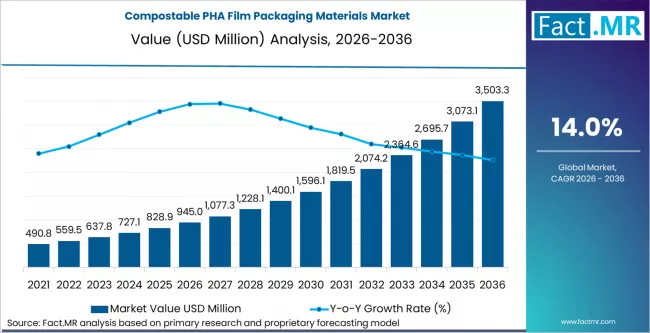
Adoption follows qualification cycles within packaging operations rather than short trial programs. Brand owners and converters assess these films on sealing behavior, stiffness control, and barrier performance across storage and transport conditions. Line managers place weight on whether existing equipment can process the material without changes to tooling or cycle time.
Once a PHA film grade is approved, it becomes embedded in material specifications, artwork files, and supplier schedules. Substitution remains limited due to the cost and time required for revalidation across multiple SKUs. Demand grows as entire product families are converted to the same film structure and as distribution networks extend coverage. Volume expansion reflects planned portfolio transitions and broader acceptance in food, personal care, and household packaging rather than frequent changes in film architecture.
Compostable PHA Film Packaging Materials Market
| Metric | Value |
|---|---|
| Market Value (2026) | USD 945 million |
| Forecast Value (2036) | USD 3,503.3 million |
| Forecast CAGR 2026 to 2036 | 14.0% |
Category
| Category | Segments |
|---|---|
| End-use | Fresh food and produce; FMCG and compostable packs; Mass compostable films; Premium bio-films; Organic food packaging; Others |
| Film Format | Flexible films and wraps; Stand-up pouches; Rollstock films; Thin compostable films; Others |
| Polymer | PHA or PHBV; PHA blends; PHA; Others |
| Film Technology | Blown film extrusion and bio-coating; Sealability optimisation; High-output extrusion; Precision film control; Others |
| Region | North America; Europe; Asia Pacific; Latin America; Middle East & Africa |
Segmental Analysis
Why Has Fresh Food and Produce Packaging Become the Primary Outlet for PHA Films?
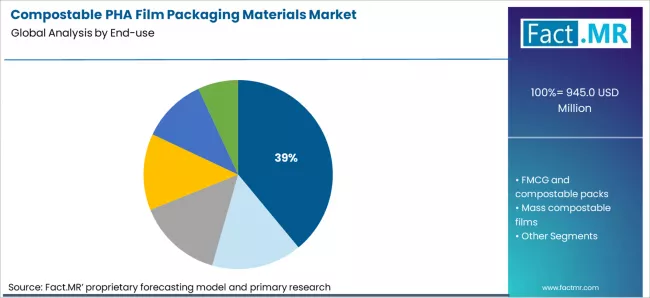
Use patterns in the compostable PHA film packaging materials market place fresh food and produce at 39% of total end-use demand. This segment handles items with short shelf windows, frequent replenishment, and visible quality inspection at retail. Packaging teams focus on breathability, moisture balance, and surface protection during transport and display. PHA films fit into these workflows without changing pack geometry or handling routines. Sorting and disposal practices in this category also favor materials that align with compostable waste streams used by retailers and distribution centers. Volume planning follows daily inbound and outbound movement rather than seasonal campaigns. FMCG packs, premium bio-films, and organic ranges contribute additional demand. The steady turnover of produce keeps this segment as the largest volume anchor.
Why Do Flexible Films and Wraps Define the Standard Format for PHA Packaging Programs?
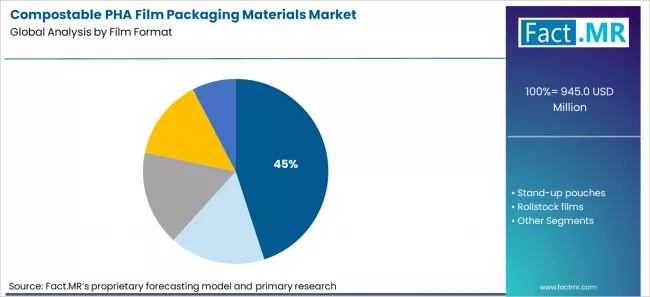
Film format mix in this market shows flexible films and wraps accounting for 45% of total usage. This structure supports a wide range of pack sizes, sealing methods, and filling speeds without specialized tooling. Converters and packers use these films to cover trays, wrap loose items, and form simple pouches from the same base material. Storage and handling remain straightforward, with rolls feeding directly into existing lines. Material utilization stays efficient, which matters in cost and waste control. Stand-up pouches, rollstock, and thin films serve specific programs. Most packaging operations still begin format selection with flexible wraps as the default option for PHA based materials.
What are the Drivers, Restraints, and Key Trends of the Compostable PHA Film Packaging Materials Market?
- Drivers: Regulatory shifts toward reduced reliance on conventional polymers, corporate commitments to alternative end-of-life packaging, and procurement requirements from large retailers are supporting use of PHA-based compostable films for flexible packaging across food, personal care, and consumer goods.
- Restraint: Higher production costs relative to traditional films, inconsistent composting infrastructure, and performance gaps in barrier and mechanical properties limit uptake in high-performance applications.
- Trend 1: Formulation efforts are focused on improving moisture and oxygen barrier capabilities to meet broader packaging requirements.
- Trend 2: Expanded availability of film gauges and roll sizes designed for compatibility with existing converting and filling lines is easing transition for converters and brand owners.
Analysis of the Compostable PHA Film Packaging Materials Market by Key Country
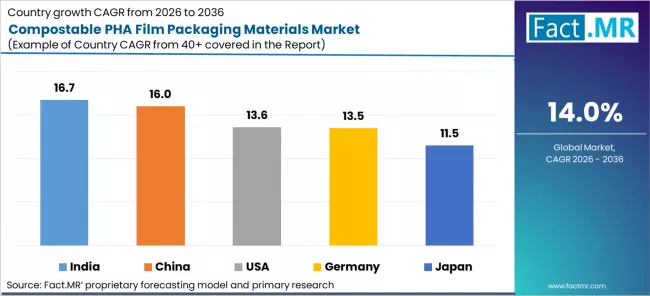
| Country | CAGR 2026 to 2036 |
|---|---|
| Germany | 13.5% |
| USA | 13.6% |
| China | 16.0% |
| Japan | 11.5% |
| India | 16.7% |
The report covers an in-depth analysis of 40+ countries; top-performing countries are highlighted below.
How Are Regulatory Packaging Shifts in Germany Shaping Use of Compostable PHA Films?
Growth in Germany runs at about 13.5% per year through 2036. Demand follows food, personal care, and household packaging conversion programs. Brand owners evaluate barrier performance, seal strength, and compostability certification. Purchasing decisions sit with central packaging teams. Line trials proceed slowly because shelf life validation takes time. Distribution remains concentrated among a few polymer producers and converters. Volume increases track SKU conversions rather than new product launches. Inventory policies stay cautious due to resin cost volatility. Market development remains tied to regulatory milestones and retailer acceptance rather than marketing driven redesign cycles today in primary consumer goods categories markets.
What Is Driving Faster Adoption of Compostable PHA Films in USA?
Growth in USA runs at about 13.6% per year through 2036. Demand is shaped by brand packaging targets and retailer compliance requirements. Product teams test seal integrity, print quality, and machine speed impact. Purchasing balances cost, supply continuity, and certification coverage. Conversions usually begin with premium or limited ranges before wider rollout. Distribution relies on direct relationships with polymer suppliers and converters. Volume growth follows portfolio redesign schedules rather than single product launches. Inventory planning remains cautious because resin pricing fluctuates. Market development stays tied to corporate roadmaps rather than consumer activism or short term campaigns across packaged goods portfolios.
What Is Supporting Rapid Expansion of Compostable PHA Films in China?
Growth in China runs at about 16.0% per year through 2036. Demand rises from food delivery, ready meals, and consumer goods packaging shifts. Operators prioritize scale, availability, and compliance alignment. Product formats favor pouches and flow wraps suited to high throughput lines. Purchasing aligns with multi-year conversion plans. Local production capacity influences supplier choice. Volume increases follow contract wins with large brand groups. Inventory builds occur around conversion waves. Market development remains tied to industrial packaging transitions rather than niche positioning or premium branding strategies across mass categories today and consumer goods distribution systems nationwide over coming years’ cycles.
How Are Corporate Packaging Standards in Japan Changing Use of Compostable PHA Films?
Growth in Japan runs at about 11.5% per year through 2036. Demand follows corporate packaging standards and retailer compliance frameworks. Product teams focus on appearance, stiffness, and consistent sealing behavior. Purchasing emphasizes reliability and supplier track record. Conversions proceed cautiously because line stability and defect rates receive attention. Distribution remains concentrated among approved material suppliers. Volume increases track scheduled portfolio updates. Inventory management stays conservative due to space limits and cost control. Market development remains tied to structured upgrade cycles rather than rapid experimentation or short term packaging trends across consumer categories today and mainstream retail distribution systems nationwide channels.
What Is Accelerating Adoption of Compostable PHA Films in India?
Growth in India runs at about 16.7% per year through 2036. Demand rises from packaged food, personal care, and household goods expansion. Brand owners focus on cost balance, basic barrier performance, and regulatory alignment. Purchasing emphasizes availability and converter support. Conversions often begin with export oriented or premium lines before mass ranges. Distribution relies on local producers and importers. Volume growth follows portfolio expansion. Inventory planning remains flexible due to price sensitivity. Market development stays tied to category growth and formalization of packaging standards rather than activism or retailer mandates today across broader consumer goods supply chains nationwide over time.
How Do Resin Allocation and Converting Constraints Shape Competition in the Compostable PHA Film Packaging Materials Market?
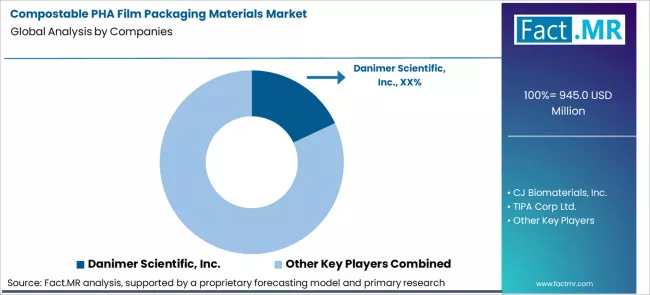
Capacity access and film performance limits set the competitive field in the compostable PHA film packaging materials market more than marketing claims. Brand owners and converters first fix thickness windows, sealing ranges, and line speeds before supplier trials begin. Danimer Scientific, CJ Biomaterials, Kaneka, Bluepha, Kingfa, and TIPA compete through control of PHA resin supply and their ability to deliver consistent film grades.
Technical teams compare options using melt stability, tear behavior, and run waste on existing equipment. Procurement also weighs contract security and volume commitments because capacity remains constrained. Once a film grade is approved, volumes follow program launches and line utilization. Supplier changes usually occur after capacity expansions, formulation revisions, or shifts in resin sourcing strategies.
Key Players in Compostable PHA Film Packaging Materials Market
- Danimer Scientific, Inc.
- CJ Biomaterials, Inc.
- TIPA Corp Ltd.
- Bluepha Co., Ltd.
- Kingfa Sci. & Tech. Co., Ltd.
- Kaneka Corporation
Scope of the Report
| Items | Values |
|---|---|
| Quantitative Units (2026) | USD million |
| End-use | Fresh food and produce, FMCG and compostable packs, mass compostable films, premium bio-films, organic food packaging, others |
| Film Format | Flexible films and wraps, stand-up pouches, rollstock films, thin compostable films, others |
| Polymer | PHA or PHBV, PHA blends, PHA, others |
| Film Technology | Blown film extrusion and bio-coating, sealability optimisation, high-output extrusion, precision film control, others |
| Regions Covered | Asia Pacific, Europe, North America, Latin America, Middle East & Africa |
| Countries Covered | United States, Canada, Mexico, Germany, United Kingdom, France, Italy, Spain, Nordics, BENELUX, China, Japan, South Korea, India, Australia & New Zealand, ASEAN, Brazil, Chile, Saudi Arabia, Turkey, South Africa, and other regional markets |
| Key Companies Profiled | Danimer Scientific, CJ Biomaterials, TIPA, Bluepha, Kingfa Sci. & Tech., Kaneka Corporation |
| Additional Attributes | Dollar sales by end-use, format, polymer, and technology; sealing behavior, stiffness control, barrier performance, and line runnability; adoption driven by portfolio conversions in food, personal care, and household packaging |
Compostable PHA Film Packaging Materials Market Segmentation
-
End-use :
- Fresh food & produce
- FMCG & compostable packs
- Mass compostable films
- Premium bio-films
- Organic food packaging
-
Film Format :
- Flexible films & wraps
- Stand-up pouches
- Rollstock films
- Thin compostable films
- Others
-
Polymer :
- PHA or PHBV
- PHA blends
- PHA
- Others
-
Film Technology :
- Blown film extrusion & bio-coating
- Sealability optimisation
- High-output extrusion
- Precision film control
- Others
-
Region :
- Asia Pacific
- China
- Japan
- South Korea
- India
- Australia & New Zealand
- ASEAN
- Rest of Asia Pacific
- Europe
- Germany
- United Kingdom
- France
- Italy
- Spain
- Nordic
- BENELUX
- Rest of Europe
- North America
- United States
- Canada
- Mexico
- Latin America
- Brazil
- Chile
- Rest of Latin America
- Middle East & Africa
- Kingdom of Saudi Arabia
- Other GCC Countries
- Turkey
- South Africa
- Other African Union
- Rest of Middle East & Africa
- Asia Pacific
References
- International Organization for Standardization. (2023). ISO 17088: Specifications for compostable plastics. ISO.
- European Commission, Joint Research Centre. (2023). Biodegradable and compostable plastics in the circular economy. Publications Office of the European Union.
- European Commission. (2023). A policy framework for bio-based, biodegradable and compostable plastics in the EU. European Commission.
- European Commission. (2024). Proposal for a regulation of the European Parliament and of the Council on packaging and packaging waste and repealing Directive 94/62/EC. European Commission.
- European Commission. (2023). Proposal for a directive of the European Parliament and of the Council on substantiation and communication of explicit environmental claims (Green Claims Directive). European Commission.
Table of Content
- Executive Summary
- Global Market Outlook
- Demand to side Trends
- Supply to side Trends
- Technology Roadmap Analysis
- Analysis and Recommendations
- Market Overview
- Market Coverage / Taxonomy
- Market Definition / Scope / Limitations
- Market Background
- Market Dynamics
- Drivers
- Restraints
- Opportunity
- Trends
- Scenario Forecast
- Demand in Optimistic Scenario
- Demand in Likely Scenario
- Demand in Conservative Scenario
- Opportunity Map Analysis
- Product Life Cycle Analysis
- Supply Chain Analysis
- Investment Feasibility Matrix
- Value Chain Analysis
- PESTLE and Porter’s Analysis
- Regulatory Landscape
- Regional Parent Market Outlook
- Production and Consumption Statistics
- Import and Export Statistics
- Market Dynamics
- Global Market Analysis 2021 to 2025 and Forecast, 2026 to 2036
- Historical Market Size Value (USD Million) Analysis, 2021 to 2025
- Current and Future Market Size Value (USD Million) Projections, 2026 to 2036
- Y to o to Y Growth Trend Analysis
- Absolute $ Opportunity Analysis
- Global Market Pricing Analysis 2021 to 2025 and Forecast 2026 to 2036
- Global Market Analysis 2021 to 2025 and Forecast 2026 to 2036, By End-use
- Introduction / Key Findings
- Historical Market Size Value (USD Million) Analysis By End-use, 2021 to 2025
- Current and Future Market Size Value (USD Million) Analysis and Forecast By End-use, 2026 to 2036
- Fresh food and produce
- FMCG and compostable packs
- Mass compostable films
- Premium bio-films
- Organic food packaging
- Others
- Fresh food and produce
- Y to o to Y Growth Trend Analysis By End-use, 2021 to 2025
- Absolute $ Opportunity Analysis By End-use, 2026 to 2036
- Global Market Analysis 2021 to 2025 and Forecast 2026 to 2036, By Film Format
- Introduction / Key Findings
- Historical Market Size Value (USD Million) Analysis By Film Format, 2021 to 2025
- Current and Future Market Size Value (USD Million) Analysis and Forecast By Film Format, 2026 to 2036
- Flexible films and wraps
- Stand-up pouches
- Rollstock films
- Thin compostable films
- Others
- Flexible films and wraps
- Y to o to Y Growth Trend Analysis By Film Format, 2021 to 2025
- Absolute $ Opportunity Analysis By Film Format, 2026 to 2036
- Global Market Analysis 2021 to 2025 and Forecast 2026 to 2036, By Polymer
- Introduction / Key Findings
- Historical Market Size Value (USD Million) Analysis By Polymer, 2021 to 2025
- Current and Future Market Size Value (USD Million) Analysis and Forecast By Polymer, 2026 to 2036
- PHA or PHBV
- PHA blends
- PHA
- PHA
- Others
- PHA or PHBV
- Y to o to Y Growth Trend Analysis By Polymer, 2021 to 2025
- Absolute $ Opportunity Analysis By Polymer, 2026 to 2036
- Global Market Analysis 2021 to 2025 and Forecast 2026 to 2036, By Film Technology
- Introduction / Key Findings
- Historical Market Size Value (USD Million) Analysis By Film Technology, 2021 to 2025
- Current and Future Market Size Value (USD Million) Analysis and Forecast By Film Technology, 2026 to 2036
- Blown film extrusion and bio-coating
- Sealability optimisation
- High-output extrusion
- Precision film control
- Others
- Blown film extrusion and bio-coating
- Y to o to Y Growth Trend Analysis By Film Technology, 2021 to 2025
- Absolute $ Opportunity Analysis By Film Technology, 2026 to 2036
- Global Market Analysis 2021 to 2025 and Forecast 2026 to 2036, By Region
- Introduction
- Historical Market Size Value (USD Million) Analysis By Region, 2021 to 2025
- Current Market Size Value (USD Million) Analysis and Forecast By Region, 2026 to 2036
- North America
- Latin America
- Western Europe
- Eastern Europe
- East Asia
- South Asia and Pacific
- Middle East & Africa
- Market Attractiveness Analysis By Region
- North America Market Analysis 2021 to 2025 and Forecast 2026 to 2036, By Country
- Historical Market Size Value (USD Million) Trend Analysis By Market Taxonomy, 2021 to 2025
- Market Size Value (USD Million) Forecast By Market Taxonomy, 2026 to 2036
- By Country
- USA
- Canada
- Mexico
- By End-use
- By Film Format
- By Polymer
- By Film Technology
- By Country
- Market Attractiveness Analysis
- By Country
- By End-use
- By Film Format
- By Polymer
- By Film Technology
- Key Takeaways
- Latin America Market Analysis 2021 to 2025 and Forecast 2026 to 2036, By Country
- Historical Market Size Value (USD Million) Trend Analysis By Market Taxonomy, 2021 to 2025
- Market Size Value (USD Million) Forecast By Market Taxonomy, 2026 to 2036
- By Country
- Brazil
- Chile
- Rest of Latin America
- By End-use
- By Film Format
- By Polymer
- By Film Technology
- By Country
- Market Attractiveness Analysis
- By Country
- By End-use
- By Film Format
- By Polymer
- By Film Technology
- Key Takeaways
- Western Europe Market Analysis 2021 to 2025 and Forecast 2026 to 2036, By Country
- Historical Market Size Value (USD Million) Trend Analysis By Market Taxonomy, 2021 to 2025
- Market Size Value (USD Million) Forecast By Market Taxonomy, 2026 to 2036
- By Country
- Germany
- UK
- Italy
- Spain
- France
- Nordic
- BENELUX
- Rest of Western Europe
- By End-use
- By Film Format
- By Polymer
- By Film Technology
- By Country
- Market Attractiveness Analysis
- By Country
- By End-use
- By Film Format
- By Polymer
- By Film Technology
- Key Takeaways
- Eastern Europe Market Analysis 2021 to 2025 and Forecast 2026 to 2036, By Country
- Historical Market Size Value (USD Million) Trend Analysis By Market Taxonomy, 2021 to 2025
- Market Size Value (USD Million) Forecast By Market Taxonomy, 2026 to 2036
- By Country
- Russia
- Poland
- Hungary
- Balkan & Baltic
- Rest of Eastern Europe
- By End-use
- By Film Format
- By Polymer
- By Film Technology
- By Country
- Market Attractiveness Analysis
- By Country
- By End-use
- By Film Format
- By Polymer
- By Film Technology
- Key Takeaways
- East Asia Market Analysis 2021 to 2025 and Forecast 2026 to 2036, By Country
- Historical Market Size Value (USD Million) Trend Analysis By Market Taxonomy, 2021 to 2025
- Market Size Value (USD Million) Forecast By Market Taxonomy, 2026 to 2036
- By Country
- China
- Japan
- South Korea
- By End-use
- By Film Format
- By Polymer
- By Film Technology
- By Country
- Market Attractiveness Analysis
- By Country
- By End-use
- By Film Format
- By Polymer
- By Film Technology
- Key Takeaways
- South Asia and Pacific Market Analysis 2021 to 2025 and Forecast 2026 to 2036, By Country
- Historical Market Size Value (USD Million) Trend Analysis By Market Taxonomy, 2021 to 2025
- Market Size Value (USD Million) Forecast By Market Taxonomy, 2026 to 2036
- By Country
- India
- ASEAN
- Australia & New Zealand
- Rest of South Asia and Pacific
- By End-use
- By Film Format
- By Polymer
- By Film Technology
- By Country
- Market Attractiveness Analysis
- By Country
- By End-use
- By Film Format
- By Polymer
- By Film Technology
- Key Takeaways
- Middle East & Africa Market Analysis 2021 to 2025 and Forecast 2026 to 2036, By Country
- Historical Market Size Value (USD Million) Trend Analysis By Market Taxonomy, 2021 to 2025
- Market Size Value (USD Million) Forecast By Market Taxonomy, 2026 to 2036
- By Country
- Kingdom of Saudi Arabia
- Other GCC Countries
- Turkiye
- South Africa
- Other African Union
- Rest of Middle East & Africa
- By End-use
- By Film Format
- By Polymer
- By Film Technology
- By Country
- Market Attractiveness Analysis
- By Country
- By End-use
- By Film Format
- By Polymer
- By Film Technology
- Key Takeaways
- Key Countries Market Analysis
- USA
- Pricing Analysis
- Market Share Analysis, 2025
- By End-use
- By Film Format
- By Polymer
- By Film Technology
- Canada
- Pricing Analysis
- Market Share Analysis, 2025
- By End-use
- By Film Format
- By Polymer
- By Film Technology
- Mexico
- Pricing Analysis
- Market Share Analysis, 2025
- By End-use
- By Film Format
- By Polymer
- By Film Technology
- Brazil
- Pricing Analysis
- Market Share Analysis, 2025
- By End-use
- By Film Format
- By Polymer
- By Film Technology
- Chile
- Pricing Analysis
- Market Share Analysis, 2025
- By End-use
- By Film Format
- By Polymer
- By Film Technology
- Germany
- Pricing Analysis
- Market Share Analysis, 2025
- By End-use
- By Film Format
- By Polymer
- By Film Technology
- UK
- Pricing Analysis
- Market Share Analysis, 2025
- By End-use
- By Film Format
- By Polymer
- By Film Technology
- Italy
- Pricing Analysis
- Market Share Analysis, 2025
- By End-use
- By Film Format
- By Polymer
- By Film Technology
- Spain
- Pricing Analysis
- Market Share Analysis, 2025
- By End-use
- By Film Format
- By Polymer
- By Film Technology
- France
- Pricing Analysis
- Market Share Analysis, 2025
- By End-use
- By Film Format
- By Polymer
- By Film Technology
- India
- Pricing Analysis
- Market Share Analysis, 2025
- By End-use
- By Film Format
- By Polymer
- By Film Technology
- ASEAN
- Pricing Analysis
- Market Share Analysis, 2025
- By End-use
- By Film Format
- By Polymer
- By Film Technology
- Australia & New Zealand
- Pricing Analysis
- Market Share Analysis, 2025
- By End-use
- By Film Format
- By Polymer
- By Film Technology
- China
- Pricing Analysis
- Market Share Analysis, 2025
- By End-use
- By Film Format
- By Polymer
- By Film Technology
- Japan
- Pricing Analysis
- Market Share Analysis, 2025
- By End-use
- By Film Format
- By Polymer
- By Film Technology
- South Korea
- Pricing Analysis
- Market Share Analysis, 2025
- By End-use
- By Film Format
- By Polymer
- By Film Technology
- Russia
- Pricing Analysis
- Market Share Analysis, 2025
- By End-use
- By Film Format
- By Polymer
- By Film Technology
- Poland
- Pricing Analysis
- Market Share Analysis, 2025
- By End-use
- By Film Format
- By Polymer
- By Film Technology
- Hungary
- Pricing Analysis
- Market Share Analysis, 2025
- By End-use
- By Film Format
- By Polymer
- By Film Technology
- Kingdom of Saudi Arabia
- Pricing Analysis
- Market Share Analysis, 2025
- By End-use
- By Film Format
- By Polymer
- By Film Technology
- Turkiye
- Pricing Analysis
- Market Share Analysis, 2025
- By End-use
- By Film Format
- By Polymer
- By Film Technology
- South Africa
- Pricing Analysis
- Market Share Analysis, 2025
- By End-use
- By Film Format
- By Polymer
- By Film Technology
- USA
- Market Structure Analysis
- Competition Dashboard
- Competition Benchmarking
- Market Share Analysis of Top Players
- By Regional
- By End-use
- By Film Format
- By Polymer
- By Film Technology
- Competition Analysis
- Competition Deep Dive
- Danimer Scientific, Inc.
- Overview
- Product Portfolio
- Profitability by Market Segments (Product/Age /Sales Channel/Region)
- Sales Footprint
- Strategy Overview
- Marketing Strategy
- Product Strategy
- Channel Strategy
- CJ Biomaterials, Inc.
- TIPA Corp Ltd.
- Bluepha Co., Ltd.
- Kingfa Sci. and Tech. Co., Ltd.
- Kaneka Corporation
- Danimer Scientific, Inc.
- Competition Deep Dive
- Assumptions & Acronyms Used
- Research Methodology
List Of Table
- Table 1: Global Market Value (USD Million) Forecast by Region, 2021 to 2036
- Table 2: Global Market Value (USD Million) Forecast by End-use, 2021 to 2036
- Table 3: Global Market Value (USD Million) Forecast by Film Format, 2021 to 2036
- Table 4: Global Market Value (USD Million) Forecast by Polymer, 2021 to 2036
- Table 5: Global Market Value (USD Million) Forecast by Film Technology, 2021 to 2036
- Table 6: North America Market Value (USD Million) Forecast by Country, 2021 to 2036
- Table 7: North America Market Value (USD Million) Forecast by End-use, 2021 to 2036
- Table 8: North America Market Value (USD Million) Forecast by Film Format, 2021 to 2036
- Table 9: North America Market Value (USD Million) Forecast by Polymer, 2021 to 2036
- Table 10: North America Market Value (USD Million) Forecast by Film Technology, 2021 to 2036
- Table 11: Latin America Market Value (USD Million) Forecast by Country, 2021 to 2036
- Table 12: Latin America Market Value (USD Million) Forecast by End-use, 2021 to 2036
- Table 13: Latin America Market Value (USD Million) Forecast by Film Format, 2021 to 2036
- Table 14: Latin America Market Value (USD Million) Forecast by Polymer, 2021 to 2036
- Table 15: Latin America Market Value (USD Million) Forecast by Film Technology, 2021 to 2036
- Table 16: Western Europe Market Value (USD Million) Forecast by Country, 2021 to 2036
- Table 17: Western Europe Market Value (USD Million) Forecast by End-use, 2021 to 2036
- Table 18: Western Europe Market Value (USD Million) Forecast by Film Format, 2021 to 2036
- Table 19: Western Europe Market Value (USD Million) Forecast by Polymer, 2021 to 2036
- Table 20: Western Europe Market Value (USD Million) Forecast by Film Technology, 2021 to 2036
- Table 21: Eastern Europe Market Value (USD Million) Forecast by Country, 2021 to 2036
- Table 22: Eastern Europe Market Value (USD Million) Forecast by End-use, 2021 to 2036
- Table 23: Eastern Europe Market Value (USD Million) Forecast by Film Format, 2021 to 2036
- Table 24: Eastern Europe Market Value (USD Million) Forecast by Polymer, 2021 to 2036
- Table 25: Eastern Europe Market Value (USD Million) Forecast by Film Technology, 2021 to 2036
- Table 26: East Asia Market Value (USD Million) Forecast by Country, 2021 to 2036
- Table 27: East Asia Market Value (USD Million) Forecast by End-use, 2021 to 2036
- Table 28: East Asia Market Value (USD Million) Forecast by Film Format, 2021 to 2036
- Table 29: East Asia Market Value (USD Million) Forecast by Polymer, 2021 to 2036
- Table 30: East Asia Market Value (USD Million) Forecast by Film Technology, 2021 to 2036
- Table 31: South Asia and Pacific Market Value (USD Million) Forecast by Country, 2021 to 2036
- Table 32: South Asia and Pacific Market Value (USD Million) Forecast by End-use, 2021 to 2036
- Table 33: South Asia and Pacific Market Value (USD Million) Forecast by Film Format, 2021 to 2036
- Table 34: South Asia and Pacific Market Value (USD Million) Forecast by Polymer, 2021 to 2036
- Table 35: South Asia and Pacific Market Value (USD Million) Forecast by Film Technology, 2021 to 2036
- Table 36: Middle East & Africa Market Value (USD Million) Forecast by Country, 2021 to 2036
- Table 37: Middle East & Africa Market Value (USD Million) Forecast by End-use, 2021 to 2036
- Table 38: Middle East & Africa Market Value (USD Million) Forecast by Film Format, 2021 to 2036
- Table 39: Middle East & Africa Market Value (USD Million) Forecast by Polymer, 2021 to 2036
- Table 40: Middle East & Africa Market Value (USD Million) Forecast by Film Technology, 2021 to 2036
List Of Figures
- Figure 1: Global Market Pricing Analysis
- Figure 2: Global Market Value (USD Million) Forecast 2021 to 2036
- Figure 3: Global Market Value Share and BPS Analysis by End-use, 2026 and 2036
- Figure 4: Global Market Y to o to Y Growth Comparison by End-use, 2026 to 2036
- Figure 5: Global Market Attractiveness Analysis by End-use
- Figure 6: Global Market Value Share and BPS Analysis by Film Format, 2026 and 2036
- Figure 7: Global Market Y to o to Y Growth Comparison by Film Format, 2026 to 2036
- Figure 8: Global Market Attractiveness Analysis by Film Format
- Figure 9: Global Market Value Share and BPS Analysis by Polymer, 2026 and 2036
- Figure 10: Global Market Y to o to Y Growth Comparison by Polymer, 2026 to 2036
- Figure 11: Global Market Attractiveness Analysis by Polymer
- Figure 12: Global Market Value Share and BPS Analysis by Film Technology, 2026 and 2036
- Figure 13: Global Market Y to o to Y Growth Comparison by Film Technology, 2026 to 2036
- Figure 14: Global Market Attractiveness Analysis by Film Technology
- Figure 15: Global Market Value (USD Million) Share and BPS Analysis by Region, 2026 and 2036
- Figure 16: Global Market Y to o to Y Growth Comparison by Region, 2026 to 2036
- Figure 17: Global Market Attractiveness Analysis by Region
- Figure 18: North America Market Incremental Dollar Opportunity, 2026 to 2036
- Figure 19: Latin America Market Incremental Dollar Opportunity, 2026 to 2036
- Figure 20: Western Europe Market Incremental Dollar Opportunity, 2026 to 2036
- Figure 21: Eastern Europe Market Incremental Dollar Opportunity, 2026 to 2036
- Figure 22: East Asia Market Incremental Dollar Opportunity, 2026 to 2036
- Figure 23: South Asia and Pacific Market Incremental Dollar Opportunity, 2026 to 2036
- Figure 24: Middle East & Africa Market Incremental Dollar Opportunity, 2026 to 2036
- Figure 25: North America Market Value Share and BPS Analysis by Country, 2026 and 2036
- Figure 26: North America Market Value Share and BPS Analysis by End-use, 2026 and 2036
- Figure 27: North America Market Y to o to Y Growth Comparison by End-use, 2026 to 2036
- Figure 28: North America Market Attractiveness Analysis by End-use
- Figure 29: North America Market Value Share and BPS Analysis by Film Format, 2026 and 2036
- Figure 30: North America Market Y to o to Y Growth Comparison by Film Format, 2026 to 2036
- Figure 31: North America Market Attractiveness Analysis by Film Format
- Figure 32: North America Market Value Share and BPS Analysis by Polymer, 2026 and 2036
- Figure 33: North America Market Y to o to Y Growth Comparison by Polymer, 2026 to 2036
- Figure 34: North America Market Attractiveness Analysis by Polymer
- Figure 35: North America Market Value Share and BPS Analysis by Film Technology, 2026 and 2036
- Figure 36: North America Market Y to o to Y Growth Comparison by Film Technology, 2026 to 2036
- Figure 37: North America Market Attractiveness Analysis by Film Technology
- Figure 38: Latin America Market Value Share and BPS Analysis by Country, 2026 and 2036
- Figure 39: Latin America Market Value Share and BPS Analysis by End-use, 2026 and 2036
- Figure 40: Latin America Market Y to o to Y Growth Comparison by End-use, 2026 to 2036
- Figure 41: Latin America Market Attractiveness Analysis by End-use
- Figure 42: Latin America Market Value Share and BPS Analysis by Film Format, 2026 and 2036
- Figure 43: Latin America Market Y to o to Y Growth Comparison by Film Format, 2026 to 2036
- Figure 44: Latin America Market Attractiveness Analysis by Film Format
- Figure 45: Latin America Market Value Share and BPS Analysis by Polymer, 2026 and 2036
- Figure 46: Latin America Market Y to o to Y Growth Comparison by Polymer, 2026 to 2036
- Figure 47: Latin America Market Attractiveness Analysis by Polymer
- Figure 48: Latin America Market Value Share and BPS Analysis by Film Technology, 2026 and 2036
- Figure 49: Latin America Market Y to o to Y Growth Comparison by Film Technology, 2026 to 2036
- Figure 50: Latin America Market Attractiveness Analysis by Film Technology
- Figure 51: Western Europe Market Value Share and BPS Analysis by Country, 2026 and 2036
- Figure 52: Western Europe Market Value Share and BPS Analysis by End-use, 2026 and 2036
- Figure 53: Western Europe Market Y to o to Y Growth Comparison by End-use, 2026 to 2036
- Figure 54: Western Europe Market Attractiveness Analysis by End-use
- Figure 55: Western Europe Market Value Share and BPS Analysis by Film Format, 2026 and 2036
- Figure 56: Western Europe Market Y to o to Y Growth Comparison by Film Format, 2026 to 2036
- Figure 57: Western Europe Market Attractiveness Analysis by Film Format
- Figure 58: Western Europe Market Value Share and BPS Analysis by Polymer, 2026 and 2036
- Figure 59: Western Europe Market Y to o to Y Growth Comparison by Polymer, 2026 to 2036
- Figure 60: Western Europe Market Attractiveness Analysis by Polymer
- Figure 61: Western Europe Market Value Share and BPS Analysis by Film Technology, 2026 and 2036
- Figure 62: Western Europe Market Y to o to Y Growth Comparison by Film Technology, 2026 to 2036
- Figure 63: Western Europe Market Attractiveness Analysis by Film Technology
- Figure 64: Eastern Europe Market Value Share and BPS Analysis by Country, 2026 and 2036
- Figure 65: Eastern Europe Market Value Share and BPS Analysis by End-use, 2026 and 2036
- Figure 66: Eastern Europe Market Y to o to Y Growth Comparison by End-use, 2026 to 2036
- Figure 67: Eastern Europe Market Attractiveness Analysis by End-use
- Figure 68: Eastern Europe Market Value Share and BPS Analysis by Film Format, 2026 and 2036
- Figure 69: Eastern Europe Market Y to o to Y Growth Comparison by Film Format, 2026 to 2036
- Figure 70: Eastern Europe Market Attractiveness Analysis by Film Format
- Figure 71: Eastern Europe Market Value Share and BPS Analysis by Polymer, 2026 and 2036
- Figure 72: Eastern Europe Market Y to o to Y Growth Comparison by Polymer, 2026 to 2036
- Figure 73: Eastern Europe Market Attractiveness Analysis by Polymer
- Figure 74: Eastern Europe Market Value Share and BPS Analysis by Film Technology, 2026 and 2036
- Figure 75: Eastern Europe Market Y to o to Y Growth Comparison by Film Technology, 2026 to 2036
- Figure 76: Eastern Europe Market Attractiveness Analysis by Film Technology
- Figure 77: East Asia Market Value Share and BPS Analysis by Country, 2026 and 2036
- Figure 78: East Asia Market Value Share and BPS Analysis by End-use, 2026 and 2036
- Figure 79: East Asia Market Y to o to Y Growth Comparison by End-use, 2026 to 2036
- Figure 80: East Asia Market Attractiveness Analysis by End-use
- Figure 81: East Asia Market Value Share and BPS Analysis by Film Format, 2026 and 2036
- Figure 82: East Asia Market Y to o to Y Growth Comparison by Film Format, 2026 to 2036
- Figure 83: East Asia Market Attractiveness Analysis by Film Format
- Figure 84: East Asia Market Value Share and BPS Analysis by Polymer, 2026 and 2036
- Figure 85: East Asia Market Y to o to Y Growth Comparison by Polymer, 2026 to 2036
- Figure 86: East Asia Market Attractiveness Analysis by Polymer
- Figure 87: East Asia Market Value Share and BPS Analysis by Film Technology, 2026 and 2036
- Figure 88: East Asia Market Y to o to Y Growth Comparison by Film Technology, 2026 to 2036
- Figure 89: East Asia Market Attractiveness Analysis by Film Technology
- Figure 90: South Asia and Pacific Market Value Share and BPS Analysis by Country, 2026 and 2036
- Figure 91: South Asia and Pacific Market Value Share and BPS Analysis by End-use, 2026 and 2036
- Figure 92: South Asia and Pacific Market Y to o to Y Growth Comparison by End-use, 2026 to 2036
- Figure 93: South Asia and Pacific Market Attractiveness Analysis by End-use
- Figure 94: South Asia and Pacific Market Value Share and BPS Analysis by Film Format, 2026 and 2036
- Figure 95: South Asia and Pacific Market Y to o to Y Growth Comparison by Film Format, 2026 to 2036
- Figure 96: South Asia and Pacific Market Attractiveness Analysis by Film Format
- Figure 97: South Asia and Pacific Market Value Share and BPS Analysis by Polymer, 2026 and 2036
- Figure 98: South Asia and Pacific Market Y to o to Y Growth Comparison by Polymer, 2026 to 2036
- Figure 99: South Asia and Pacific Market Attractiveness Analysis by Polymer
- Figure 100: South Asia and Pacific Market Value Share and BPS Analysis by Film Technology, 2026 and 2036
- Figure 101: South Asia and Pacific Market Y to o to Y Growth Comparison by Film Technology, 2026 to 2036
- Figure 102: South Asia and Pacific Market Attractiveness Analysis by Film Technology
- Figure 103: Middle East & Africa Market Value Share and BPS Analysis by Country, 2026 and 2036
- Figure 104: Middle East & Africa Market Value Share and BPS Analysis by End-use, 2026 and 2036
- Figure 105: Middle East & Africa Market Y to o to Y Growth Comparison by End-use, 2026 to 2036
- Figure 106: Middle East & Africa Market Attractiveness Analysis by End-use
- Figure 107: Middle East & Africa Market Value Share and BPS Analysis by Film Format, 2026 and 2036
- Figure 108: Middle East & Africa Market Y to o to Y Growth Comparison by Film Format, 2026 to 2036
- Figure 109: Middle East & Africa Market Attractiveness Analysis by Film Format
- Figure 110: Middle East & Africa Market Value Share and BPS Analysis by Polymer, 2026 and 2036
- Figure 111: Middle East & Africa Market Y to o to Y Growth Comparison by Polymer, 2026 to 2036
- Figure 112: Middle East & Africa Market Attractiveness Analysis by Polymer
- Figure 113: Middle East & Africa Market Value Share and BPS Analysis by Film Technology, 2026 and 2036
- Figure 114: Middle East & Africa Market Y to o to Y Growth Comparison by Film Technology, 2026 to 2036
- Figure 115: Middle East & Africa Market Attractiveness Analysis by Film Technology
- Figure 116: Global Market - Tier Structure Analysis
- Figure 117: Global Market - Company Share Analysis
- FAQs -
How big is the compostable pha film packaging materials market in 2026?
The global compostable pha film packaging materials market is estimated to be valued at USD 945.0 million in 2026.
What will be the size of compostable pha film packaging materials market in 2036?
The market size for the compostable pha film packaging materials market is projected to reach USD 3,503.3 million by 2036.
How much will be the compostable pha film packaging materials market growth between 2026 and 2036?
The compostable pha film packaging materials market is expected to grow at a 14.0% CAGR between 2026 and 2036.
What are the key product types in the compostable pha film packaging materials market?
The key product types in compostable pha film packaging materials market are fresh food and produce, fmcg and compostable packs, mass compostable films, premium bio-films, organic food packaging and others.
Which film format segment to contribute significant share in the compostable pha film packaging materials market in 2026?
In terms of film format, flexible films and wraps segment to command 45.0% share in the compostable pha film packaging materials market in 2026.