Debt Collection Services Market Size, Share, Growth and Forecast (2026 - 2036)
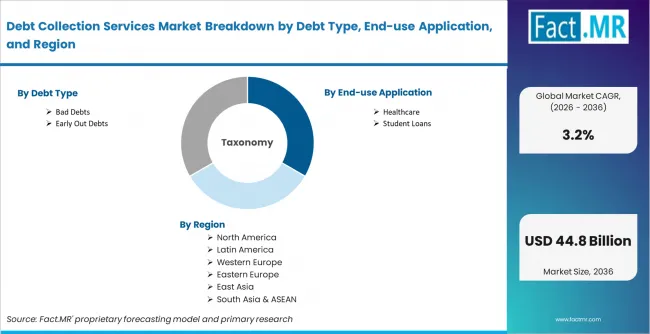
The Debt Collection Services Market is segmented by Debt Type (Bad Debts, Early Out Debts), by End-use Application (Healthcare, Student Loans, Government Debts, Others), by Service Model (First-party Collections, Third-party Collections, Debt Purchase Services), by Collection Channel (Voice Calling, Digital Outreach, Legal Collections, Field Collections), and by Creditor Type (Banks and Credit Unions, Healthcare Providers, Government Agencies, Utilities and Telecom Firms), and Region. Forecast for 2026 to 2036.
Debt Collection Services Market Size, Market Forecast and Outlook by Fact.MR
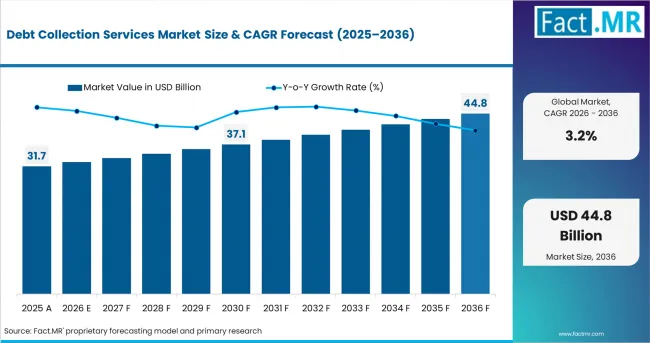
- The debt collection services market was valued at USD 31.7 billion in 2025. Demand is estimated to reach USD 32.7 billion in 2026 and is projected to rise to USD 44.8 billion by 2036.
- The market is forecast to record 3.2% CAGR from 2026 to 2036 as credit use and overdue account volumes support steady outsourcing.
- Debt collection service demand is rising as lenders need better control over recovery costs and borrower communication. The Federal Reserve Board reported in May 2026 that consumer credit increased at a 3.2% seasonally adjusted annual rate during the first quarter of 2026.
- Credit expansion keeps loan servicing and recovery work active for banks and finance companies.
Summary of Debt Collection Services Market
- Demand Drivers in the Market
- Credit Expansion: Lenders need structured recovery programs as consumer credit volumes keep account servicing active.
- Compliance Pressure: Collection agencies need better call records and borrower communication controls as regulators tighten supervision.
- Healthcare Receivables: Healthcare providers use specialist recovery partners as patient balances need careful handling.
- Key Segments Analyzed
- By Debt Type: Bad debts are expected to hold 64.0% share in 2026 because lenders often transfer difficult overdue accounts once internal recovery is exhausted.
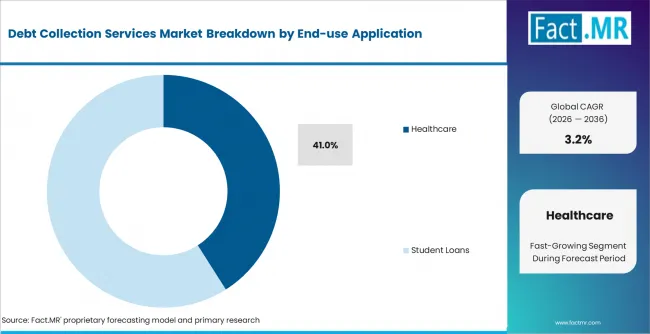
- By End-use Application: Healthcare is likely to account for 41.0% share in 2026, with hospitals and clinics need patient balance recovery support.
- By Service Model: Third-party collections are projected to hold 52.0% share in 2026 since lenders use outsourced recovery for late-stage accounts.
- By Collection Channel: Digital outreach is expected to capture 37.0% share in 2026 because payment links and documented reminders make borrower contact easier to track.
- By Creditor Type: Banks and credit unions are anticipated to hold 45.0% share in 2026, reflecting steady overdue flows from card balance and personal loan account bases.
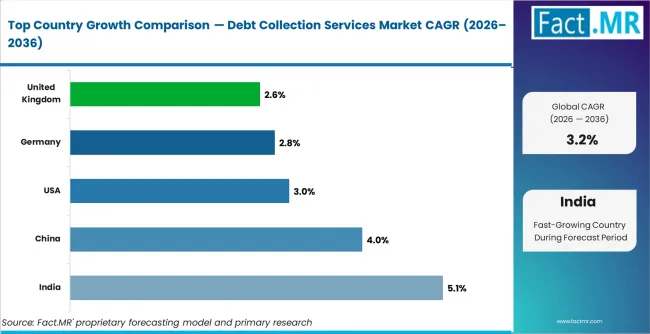
- By Geography: India is likely to record 5.1% CAGR through 2036 as digital credit channels expand lender recovery needs.
- Analyst Opinion at Fact.MR
- Shambhu Nath Jha, Senior Analyst at Fact.MR, states, “Debt collection services demand is moving toward follows compliance rules and protects borrower communication. Lenders no longer judge agencies only by recovery rate. They need payment resolution and documented outreach in the same service relationship.”
- Strategic Implications
- Compliance Controls: Recovery agencies need disciplined calls and borrower notices that protect lender reputation during overdue account handling.
- Digital Payment Access: Credit issuers should use with partners that provide secure payment links and clear account updates.
- Healthcare Recovery: Hospitals need patient balance recovery partners that collect unpaid bills without weakening patient trust.
| Metric | Details |
|---|---|
| Industry Size 2026 | USD 32.7 billion |
| Industry Value 2036 | USD 44.8 billion |
| CAGR 2026 to 2036 | 3.2% |
India is likely to post 5.1% CAGR through 2036 as digital lending and NBFC credit activity raise the need for disciplined recovery. China is projected to expand at 4.0% CAGR as formal credit channels expand. The United States is expected to register 3.0% CAGR as household debt servicing remains a large workflow. Germany is poised to record 2.8% CAGR due to bank credit quality checks. The United Kingdom is set to grow at 2.6% CAGR by 2036 as consumer credit reporting becomes more structured.
Segmental Analysis
Debt Collection Services Market Analysis by Debt Type
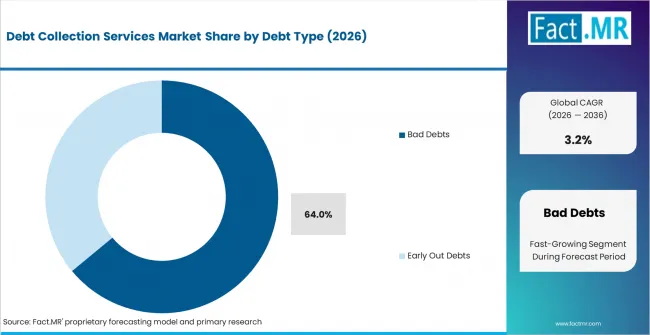
Bad debts are expected to hold 64.0% share in 2026 as lenders usually move these accounts to agencies after internal contact fails. Aging accounts need trained outreach and clear repayment plans. Recovery agencies handle these accounts through trained collectors and account scoring tools. The CFPB’s 2025 FDCPA report covered debt collection activity and enforcement attention, which supports the need for controlled recovery practices. [2] Early out debts remain useful for lenders that want faster follow-up before accounts deteriorate. Debt type selection affects staffing and escalation rules because late-stage accounts need deeper verification before contact.
- Bad Debt Recovery: Bad debt services support lenders after accounts pass internal resolution limits.
- Early Contact: Early out services help creditors address missed payments before account value falls.
- Account Sorting: Debt type segmentation helps agencies match outreach intensity with repayment probability.
Debt Collection Services Market Analysis by End-use Application
Healthcare leads because patient balances need careful recovery and clear communication. The segment is likely to account for 41.0% share in 2026 as hospitals and physician groups use recovery partners for unpaid bills. Medical debt needs careful handling because billing questions and affordability issues can delay payment. Recovery agencies need trained staff and clear escalation rules. Good service helps protect patient trust after discharge. Healthcare providers may prefer agencies that can explain balances in simple terms and support payment plans.
- Patient Balances: Healthcare recovery depends on respectful contact and clear billing records.
- Account Review: Medical debt recovery needs verification before patient outreach begins.
- Payment Plans: Hospitals use recovery partners to arrange manageable repayment programs.
Debt Collection Services Market Analysis by Service Model
Lenders prefer outsourced recovery after internal staff complete early contact. Third-party collections are projected to hold 52.0% share in 2026 as agencies manage larger overdue account pools with lower fixed staff costs. Debt purchase services help lenders move aged accounts out of internal recovery work. First-party collections support early reminders and customer retention. Service model choice affects creditor control, so outsourced recovery needs clear placement rules and audit-ready records.
- Third-party Scale: Outsourced agencies help creditors manage account volumes without building large internal departments.
- Debt Purchase: Debt purchasers support lenders that want to remove aged accounts from balance sheet focus.
- First-party Support: Early contact programs protect lender relationships before accounts move to external recovery.
Debt Collection Services Market Analysis by Collection Channel
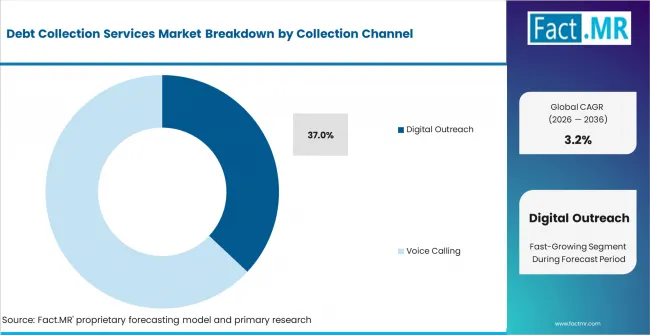
Digital outreach is gaining importance as borrowers respond to clear payment links and account status messages. The channel is expected to capture 37.0% share in 2026 as agencies combine reminders with payment portals. Voice calling still matters for disputes and repayment discussions. Legal collections support accounts that need formal action. Field collections stay limited because remote contact is more practical and easier to review. Lenders now want proof that every contact was clear and compliant.
- Digital Contact: Payment links help borrowers act without long call handling.
- Voice Resolution: Calls remain useful for complex disputes and hardship plans.
- Legal Escalation: Legal collection supports accounts that cannot move through standard outreach.
Debt Collection Services Market Analysis by Creditor Type
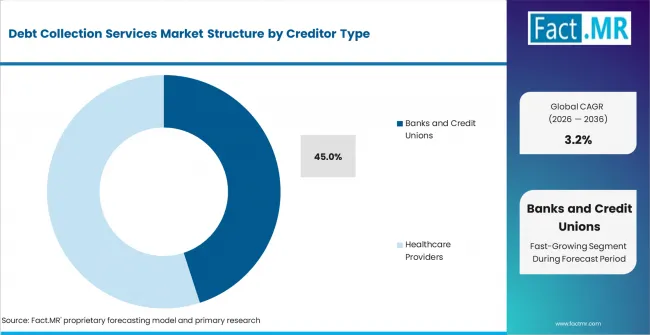
Banks and credit unions are anticipated to hold 45.0% share in 2026 as card loans and personal credit create steady overdue account flows. The New York Fed reported total household debt at USD 18.8 trillion in Q1 2026. [3] This creates a large base behind account recovery. Healthcare providers need careful follow-up for patient payments. Government agencies use collection partners for fines and public receivables. Each creditor type needs different records and complaint controls.
- Bank Accounts: Banks need recovery partners for credit cards and unsecured loans.
- Healthcare Providers: Medical providers need patient-friendly recovery programs.
- Public Receivables: Government agencies require documented outreach and payment tracking.
Debt Collection Services Market Drivers, Restraints, and Opportunities

Credit expansion is the main driver for debt collection services demand. Lenders need outside recovery support as credit card and personal loan accounts create more overdue balances. Banks and finance companies use collection agencies to control costs and manage larger account volumes. Digital payment tools help agencies settle accounts faster and improve borrower communication.
Regulatory pressure can limit aggressive collection practices. Lenders expect clear conduct records and better borrower communication controls. Agencies with weak records may face slower approval from lenders. Compliance costs can rise as firms invest in call monitoring, staff training and audit-ready records.
Opportunities in the Debt Collection Services Market
- Digital Payment Recovery: Agencies can use secure payment links and self-service plans for card accounts.
- Healthcare Account Support: Patient balance recovery can grow as providers need careful follow-up after billing cycles.
- Compliance-led Outsourcing: Lenders can shift more accounts to agencies that clear call records and borrower notice controls.
Regional Analysis
Based on regional analysis, the debt collection services market is segmented into North America, Western Europe, East Asia, South Asia and Pacific, Latin America, Eastern Europe, and Middle East and Africa.
.webp)
| Country | CAGR 2026 to 2036 |
|---|---|
| India | 5.1% |
| China | 4.0% |
| United States | 3.0% |
| Germany | 2.8% |
| United Kingdom | 2.6% |
Source: Fact.MR analysis, based on forecast approach and primary research.
South Asia and Pacific Debt Collection Services Market Analysis
South Asia and Pacific demand is linked to digital lending and lender supervision. India leads the region because regulated lenders need better control over third-party recovery work. Recovery agencies must keep borrower communication clear and record payments properly.
- India: Digital lenders and NBFC-backed credit programs create faster account movement in India. India is likely to post 5.1% CAGR through 2036 as digital lending and NBFC account flows require faster overdue account routing. RBI’s 2025 digital lending directions give regulated entities tighter responsibility for loan servicing and recovery handling. [4] Recovery agencies need local language contact and clear payment records. Lenders will prefer partners that can show clean borrower communication and same-day payment recording.
East Asia Debt Collection Services Market Analysis
East Asia demand is linked to consumer finance and formal credit management. China supports regional demand as lenders need organized recovery for retail accounts. Recovery agencies need stronger borrower data controls and disciplined account handling.
- China: China recovery services demand is tied to consumer finance and bank account clean-up. Credit issuers need partners that can manage overdue retail accounts with lower complaint risk. Debt collection services in China are projected to expand at 4.0% CAGR from 2026 to 2036 as formal credit channels need scalable follow-up. Agencies with account checks and payment tracking systems can serve lenders better. China will favor recovery models that protect borrower data and support orderly contact. Poor contact discipline can limit access to regulated creditor portfolios.
North America Debt Collection Services Market Analysis
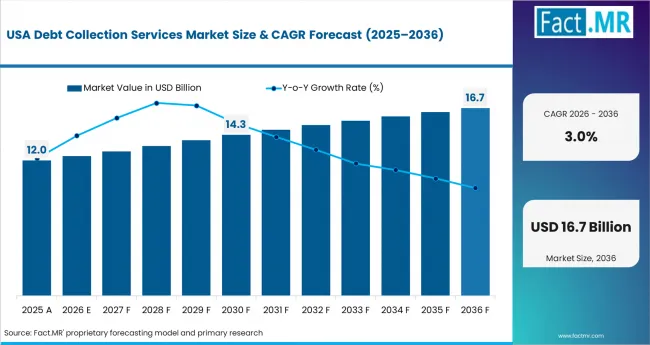
North America demand is led by the United States. Lenders need recovery partners that can manage large credit portfolios with clear compliance records. Digital outreach and structured repayment support are becoming central to agency selection.
- United States: The United States has a large household credit base that keeps recovery work active. Lenders need agencies that can separate early reminders from late-stage recovery. The country is expected to register 3.0% CAGR through 2036 as card balances and personal loan accounts create steady collection assignments. Digital payment options can improve recovery with less call pressure. Compliance depth will guide agency access to national creditors.
Western Europe Debt Collection Services Market Analysis

Western Europe demand is driven by credit quality checks and clear reporting. Germany and the United Kingdom need collection agencies with strong documentation. Recovery partners that support lender audits will gain better account placements.
- Germany: Germany has a bank-led recovery market with high documentation needs. Debt collection services in Germany are poised to record 2.8% CAGR through 2036 as lenders track household loan quality and overdue retail credit. German creditors need agencies that maintain clear case records and legal process control. Agencies that support bank compliance teams will gain better repeat placements. Documentation quality will shape creditor trust.
- United Kingdom: The United Kingdom has a reporting-led recovery market as consumer credit firms face clearer data submission rules. Debt collection services in the United Kingdom are set to grow at 2.6% CAGR through 2036 as credit brokers and debt advisers face tighter information submission under FCA rules. Lenders and collection agencies need clean data trails for account status and borrower contact. Healthcare and utility receivables can support agency demand.
Competitive Aligners for Market Suppliers
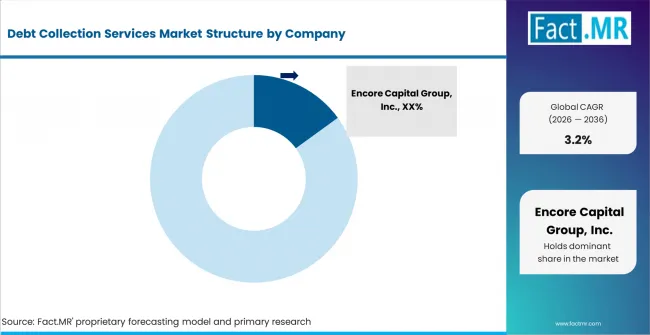
The debt collection services market includes debt purchasers and third-party collection agencies. It includes B2B receivables firms and healthcare revenue cycle specialists. Encore Capital Group, Inc. and PRA Group, Inc. are directly tied to defaulted receivables and nonperforming loan recovery. Atradius Collections and Cedar Financial support commercial debt recovery. TrueAccord bring digital and outsourced collection models into creditor recovery programs.
Supplier position depends on creditor access and compliance depth. Lenders need recovery partners with clean account handling and complaint control. Healthcare providers need agencies that can recover patient balances without harming patient relations. Commercial creditors need B2B collection specialists with clear follow-up records and cross-border recovery capability.
By 2036, service providers with verified recovery workflows and better borrower communication controls will be better placed. Debt purchasers must price portfolios carefully as account quality changes. Collection agencies that depend only on call volume will face pressure from digital-first recovery platforms and stricter creditor audits.
Key Companies in Debt Collection Services Market
- Encore Capital Group, Inc.
- PRA Group, Inc.
- Atradius Collections
- TrueAccord
- IC System, Inc.
- Cedar Financial
Bibliography
- [1] Board of Governors of the Federal Reserve System. (2026, May 7). Consumer Credit - G.19. Federal Reserve Board.
- [2] Consumer Financial Protection Bureau. (2025, November 21). Fair Debt Collection Practices Act CFPB Annual Report 2025. Consumer Financial Protection Bureau.
- [3] Federal Reserve Bank of New York. (2026, May 12). Household Debt Balances Rise Slightly as Delinquency Rates Remain Stable.
- [4] Reserve Bank of India. (2025, May 8). Reserve Bank of India (Digital Lending) Directions, 2025.
- [5] Financial Conduct Authority. (2025, May 7). PS25/3: Consumer credit regulatory returns: credit broking, debt adjusting, debt counselling and providing credit information services. Financial Conduct Authority.
This Report Addresses
- Explains how large the debt collection services market will be in 2026.
- The report shows the 2036 value outlook and the expected CAGR.
- Identifies the leading debt type and explains why bad debts lead.
- Explains why healthcare remains the leading end-use application.
- Reviews the role of third-party collection agencies in late-stage recovery.
- Compares country-level outlook across India, China, the United States, Germany and the United Kingdom.
- Explains how digital outreach is changing account recovery.
- The report assesses competition among debt purchasers and recovery agencies.
Debt Collection Services Market Definition
The debt collection services market covers outsourced and specialist recovery services used by creditors to collect overdue consumer and commercial accounts. The scope includes pre-charge-off follow-up and post-default recovery work. It covers third-party agencies and debt purchasers that manage accounts under compliance rules.
Debt Collection Services Market Inclusions
The scope includes bad debt recovery and early out debt services. It includes healthcare receivables and card-linked accounts. Digital reminders and payment portal support are included if offered as part of debt collection services.
Debt Collection Services Market Exclusions
The scope excludes loan origination and credit scoring services. It excludes internal billing departments that do not offer recovery as a service. Legal advisory work is excluded unless tied to collection execution. General customer service platforms are outside scope unless they support overdue account resolution.
Debt Collection Services Market Research Methodology
- Primary Research
- Primary research includes interviews with recovery agency heads and credit risk managers. Healthcare revenue cycle leaders were reviewed separately.
- Desk Research
- Desk research reviews lending regulations and official debt collection guidance. Public filings from listed recovery firms support competitive validation.
- Market-Sizing and Forecasting
- Forecasting uses debt type demand and creditor outsourcing use. End-use application and channel adoption support the forecast approach.
- Data Validation and Update Cycle
- Forecasts are validated through lender interviews and agency checks. Regional assumptions are reviewed against consumer credit data and regulatory reporting changes.
Scope of the Report

| Attribute | Details |
|---|---|
| Quantitative Units | USD 32.7 billion in 2026 to USD 44.8 billion by 2036 at 3.2% CAGR |
| Market Definition | Outsourced and specialist recovery services used to collect overdue accounts for creditors |
| Debt Type | Bad Debts, Early Out Debts |
| End-use Application | Healthcare, Student Loans, Government Debts, Others |
| Service Model | First-party Collections, Third-party Collections, Debt Purchase Services |
| Collection Channel | Voice Calling, Digital Outreach, Legal Collections, Field Collections |
| Creditor Type | Banks and Credit Unions, Healthcare Providers, Government Agencies, Utilities and Telecom Firms |
| Regions Covered | North America, Latin America, Western Europe, Eastern Europe, East Asia, South Asia and Pacific, Middle East and Africa |
| Countries Covered | India, China, United States, Germany, United Kingdom |
| Key Companies Profiled | Encore Capital Group, Inc., PRA Group, Inc., Atradius Collections, TrueAccord, IC System, Inc., Cedar Financial |
| Forecast Period | 2026 to 2036 |
| Approach | Hybrid top-down and bottom-up approach using debt type demand, end-use application, service model, channel use and creditor validation |
Debt Collection Services Market Analysis by Segments
-
By Debt Type:
- Bad Debts
- Early Out Debts
-
By End-use Application:
- Healthcare
- Student Loans
- Government Debts
- Others
-
By Service Model:
- First-party Collections
- Third-party Collections
- Debt Purchase Services
-
By Collection Channel:
- Voice Calling
- Digital Outreach
- Legal Collections
- Field Collections
-
By Creditor Type:
- Banks and Credit Unions
- Healthcare Providers
- Government Agencies
- Utilities and Telecom Firms
-
Region:
- North America
- United States
- Canada
- Europe
- Germany
- United Kingdom
- France
- Italy
- Spain
- Asia Pacific
- China
- Japan
- South Korea
- Taiwan
- Singapore
- Latin America
- Brazil
- Mexico
- Argentina
- Middle East & Africa
- GCC Countries
- South Africa
- Israel
- North America
- Frequently Asked Questions -
How did the debt collection service market perform during the historical period?
During 2018 to 2022, revenue of debt collection service providers increased at a CAGR of 2.1%.
What is the future outlook for the debt collection services market?
The global debt collection services market is expected to reach a valuation of US$ 34.9 billion by 2033.
Which region holds the largest share of the global market?
North America holds 42% share of the global market for debt collection services.
Which country will witness the highest growth rate during the forecast period?
India’s debt collection market is predicted to witness the fastest growth at 4.5% CAGR during the forecast period.
Table of Content
- Executive Summary
- Global Market Outlook
- Demand to side Trends
- Supply to side Trends
- Technology Roadmap Analysis
- Analysis and Recommendations
- Market Overview
- Market Coverage / Taxonomy
- Market Definition / Scope / Limitations
- Research Methodology
- Chapter Orientation
- Analytical Lens and Working Hypotheses
- Market Structure, Signals, and Trend Drivers
- Benchmarking and Cross-market Comparability
- Market Sizing, Forecasting, and Opportunity Mapping
- Research Design and Evidence Framework
- Desk Research Programme (Secondary Evidence)
- Company Annual and Sustainability Reports
- Peer-reviewed Journals and Academic Literature
- Corporate Websites, Product Literature, and Technical Notes
- Earnings Decks and Investor Briefings
- Statutory Filings and Regulatory Disclosures
- Technical White Papers and Standards Notes
- Trade Journals, Industry Magazines, and Analyst Briefs
- Conference Proceedings, Webinars, and Seminar Materials
- Government Statistics Portals and Public Data Releases
- Press Releases and Reputable Media Coverage
- Specialist Newsletters and Curated Briefings
- Sector Databases and Reference Repositories
- Fact.MR Internal Proprietary Databases and Historical Market Datasets
- Subscription Datasets and Paid Sources
- Social Channels, Communities, and Digital Listening Inputs
- Additional Desk Sources
- Expert Input and Fieldwork (Primary Evidence)
- Primary Modes
- Qualitative Interviews and Expert Elicitation
- Quantitative Surveys and Structured Data Capture
- Blended Approach
- Why Primary Evidence is Used
- Field Techniques
- Interviews
- Surveys
- Focus Groups
- Observational and In-context Research
- Social and Community Interactions
- Stakeholder Universe Engaged
- C-suite Leaders
- Board Members
- Presidents and Vice Presidents
- R&D and Innovation Heads
- Technical Specialists
- Domain Subject-matter Experts
- Scientists
- Physicians and Other Healthcare Professionals
- Governance, Ethics, and Data Stewardship
- Research Ethics
- Data Integrity and Handling
- Primary Modes
- Tooling, Models, and Reference Databases
- Desk Research Programme (Secondary Evidence)
- Data Engineering and Model Build
- Data Acquisition and Ingestion
- Cleaning, Normalisation, and Verification
- Synthesis, Triangulation, and Analysis
- Quality Assurance and Audit Trail
- Market Background
- Market Dynamics
- Drivers
- Restraints
- Opportunity
- Trends
- Scenario Forecast
- Demand in Optimistic Scenario
- Demand in Likely Scenario
- Demand in Conservative Scenario
- Opportunity Map Analysis
- Product Life Cycle Analysis
- Supply Chain Analysis
- Investment Feasibility Matrix
- Value Chain Analysis
- PESTLE and Porter’s Analysis
- Regulatory Landscape
- Regional Parent Market Outlook
- Production and Consumption Statistics
- Import and Export Statistics
- Market Dynamics
- Global Market Analysis 2021 to 2025 and Forecast, 2026 to 2036
- Historical Market Size Value (USD Million) Analysis, 2021 to 2025
- Current and Future Market Size Value (USD Million) Projections, 2026 to 2036
- Y to o to Y Growth Trend Analysis
- Absolute $ Opportunity Analysis
- Global Market Pricing Analysis 2021 to 2025 and Forecast 2026 to 2036
- Global Market Analysis 2021 to 2025 and Forecast 2026 to 2036, By Debt Type
- Introduction / Key Findings
- Historical Market Size Value (USD Million) Analysis By Debt Type , 2021 to 2025
- Current and Future Market Size Value (USD Million) Analysis and Forecast By Debt Type , 2026 to 2036
- Bad Debts
- Early Out Debts
- Bad Debts
- Y to o to Y Growth Trend Analysis By Debt Type , 2021 to 2025
- Absolute $ Opportunity Analysis By Debt Type , 2026 to 2036
- Global Market Analysis 2021 to 2025 and Forecast 2026 to 2036, By End-use Application
- Introduction / Key Findings
- Historical Market Size Value (USD Million) Analysis By End-use Application, 2021 to 2025
- Current and Future Market Size Value (USD Million) Analysis and Forecast By End-use Application, 2026 to 2036
- Healthcare
- Student Loans
- Healthcare
- Y to o to Y Growth Trend Analysis By End-use Application, 2021 to 2025
- Absolute $ Opportunity Analysis By End-use Application, 2026 to 2036
- Global Market Analysis 2021 to 2025 and Forecast 2026 to 2036, By Service Model
- Introduction / Key Findings
- Historical Market Size Value (USD Million) Analysis By Service Model, 2021 to 2025
- Current and Future Market Size Value (USD Million) Analysis and Forecast By Service Model, 2026 to 2036
- Third-party Collections
- First-party Collections
- Debt Purchase Services
- Third-party Collections
- Y to o to Y Growth Trend Analysis By Service Model, 2021 to 2025
- Absolute $ Opportunity Analysis By Service Model, 2026 to 2036
- Global Market Analysis 2021 to 2025 and Forecast 2026 to 2036, By Collection Channel
- Introduction / Key Findings
- Historical Market Size Value (USD Million) Analysis By Collection Channel, 2021 to 2025
- Current and Future Market Size Value (USD Million) Analysis and Forecast By Collection Channel, 2026 to 2036
- Digital Outreach
- Voice Calling
- Field Collections
- Digital Outreach
- Y to o to Y Growth Trend Analysis By Collection Channel, 2021 to 2025
- Absolute $ Opportunity Analysis By Collection Channel, 2026 to 2036
- Global Market Analysis 2021 to 2025 and Forecast 2026 to 2036, By Creditor Type
- Introduction / Key Findings
- Historical Market Size Value (USD Million) Analysis By Creditor Type, 2021 to 2025
- Current and Future Market Size Value (USD Million) Analysis and Forecast By Creditor Type, 2026 to 2036
- Banks and Credit Unions
- Healthcare Providers
- Government Agencies
- Banks and Credit Unions
- Y to o to Y Growth Trend Analysis By Creditor Type, 2021 to 2025
- Absolute $ Opportunity Analysis By Creditor Type, 2026 to 2036
- Global Market Analysis 2021 to 2025 and Forecast 2026 to 2036, By Region
- Introduction
- Historical Market Size Value (USD Million) Analysis By Region, 2021 to 2025
- Current Market Size Value (USD Million) Analysis and Forecast By Region, 2026 to 2036
- North America
- Latin America
- Western Europe
- Eastern Europe
- East Asia
- South Asia and Pacific
- Middle East & Africa
- Market Attractiveness Analysis By Region
- North America Market Analysis 2021 to 2025 and Forecast 2026 to 2036, By Country
- Historical Market Size Value (USD Million) Trend Analysis By Market Taxonomy, 2021 to 2025
- Market Size Value (USD Million) Forecast By Market Taxonomy, 2026 to 2036
- By Country
- USA
- Canada
- Mexico
- By Debt Type
- By End-use Application
- By Service Model
- By Collection Channel
- By Creditor Type
- By Country
- Market Attractiveness Analysis
- By Country
- By Debt Type
- By End-use Application
- By Service Model
- By Collection Channel
- By Creditor Type
- Key Takeaways
- Latin America Market Analysis 2021 to 2025 and Forecast 2026 to 2036, By Country
- Historical Market Size Value (USD Million) Trend Analysis By Market Taxonomy, 2021 to 2025
- Market Size Value (USD Million) Forecast By Market Taxonomy, 2026 to 2036
- By Country
- Brazil
- Chile
- Rest of Latin America
- By Debt Type
- By End-use Application
- By Service Model
- By Collection Channel
- By Creditor Type
- By Country
- Market Attractiveness Analysis
- By Country
- By Debt Type
- By End-use Application
- By Service Model
- By Collection Channel
- By Creditor Type
- Key Takeaways
- Western Europe Market Analysis 2021 to 2025 and Forecast 2026 to 2036, By Country
- Historical Market Size Value (USD Million) Trend Analysis By Market Taxonomy, 2021 to 2025
- Market Size Value (USD Million) Forecast By Market Taxonomy, 2026 to 2036
- By Country
- Germany
- UK
- Italy
- Spain
- France
- Nordic
- BENELUX
- Rest of Western Europe
- By Debt Type
- By End-use Application
- By Service Model
- By Collection Channel
- By Creditor Type
- By Country
- Market Attractiveness Analysis
- By Country
- By Debt Type
- By End-use Application
- By Service Model
- By Collection Channel
- By Creditor Type
- Key Takeaways
- Eastern Europe Market Analysis 2021 to 2025 and Forecast 2026 to 2036, By Country
- Historical Market Size Value (USD Million) Trend Analysis By Market Taxonomy, 2021 to 2025
- Market Size Value (USD Million) Forecast By Market Taxonomy, 2026 to 2036
- By Country
- Russia
- Poland
- Hungary
- Balkan & Baltic
- Rest of Eastern Europe
- By Debt Type
- By End-use Application
- By Service Model
- By Collection Channel
- By Creditor Type
- By Country
- Market Attractiveness Analysis
- By Country
- By Debt Type
- By End-use Application
- By Service Model
- By Collection Channel
- By Creditor Type
- Key Takeaways
- East Asia Market Analysis 2021 to 2025 and Forecast 2026 to 2036, By Country
- Historical Market Size Value (USD Million) Trend Analysis By Market Taxonomy, 2021 to 2025
- Market Size Value (USD Million) Forecast By Market Taxonomy, 2026 to 2036
- By Country
- China
- Japan
- South Korea
- By Debt Type
- By End-use Application
- By Service Model
- By Collection Channel
- By Creditor Type
- By Country
- Market Attractiveness Analysis
- By Country
- By Debt Type
- By End-use Application
- By Service Model
- By Collection Channel
- By Creditor Type
- Key Takeaways
- South Asia and Pacific Market Analysis 2021 to 2025 and Forecast 2026 to 2036, By Country
- Historical Market Size Value (USD Million) Trend Analysis By Market Taxonomy, 2021 to 2025
- Market Size Value (USD Million) Forecast By Market Taxonomy, 2026 to 2036
- By Country
- India
- ASEAN
- Australia & New Zealand
- Rest of South Asia and Pacific
- By Debt Type
- By End-use Application
- By Service Model
- By Collection Channel
- By Creditor Type
- By Country
- Market Attractiveness Analysis
- By Country
- By Debt Type
- By End-use Application
- By Service Model
- By Collection Channel
- By Creditor Type
- Key Takeaways
- Middle East & Africa Market Analysis 2021 to 2025 and Forecast 2026 to 2036, By Country
- Historical Market Size Value (USD Million) Trend Analysis By Market Taxonomy, 2021 to 2025
- Market Size Value (USD Million) Forecast By Market Taxonomy, 2026 to 2036
- By Country
- Kingdom of Saudi Arabia
- Other GCC Countries
- Turkiye
- South Africa
- Other African Union
- Rest of Middle East & Africa
- By Debt Type
- By End-use Application
- By Service Model
- By Collection Channel
- By Creditor Type
- By Country
- Market Attractiveness Analysis
- By Country
- By Debt Type
- By End-use Application
- By Service Model
- By Collection Channel
- By Creditor Type
- Key Takeaways
- Key Countries Market Analysis
- USA
- Pricing Analysis
- Market Share Analysis, 2025
- By Debt Type
- By End-use Application
- By Service Model
- By Collection Channel
- By Creditor Type
- Canada
- Pricing Analysis
- Market Share Analysis, 2025
- By Debt Type
- By End-use Application
- By Service Model
- By Collection Channel
- By Creditor Type
- Mexico
- Pricing Analysis
- Market Share Analysis, 2025
- By Debt Type
- By End-use Application
- By Service Model
- By Collection Channel
- By Creditor Type
- Brazil
- Pricing Analysis
- Market Share Analysis, 2025
- By Debt Type
- By End-use Application
- By Service Model
- By Collection Channel
- By Creditor Type
- Chile
- Pricing Analysis
- Market Share Analysis, 2025
- By Debt Type
- By End-use Application
- By Service Model
- By Collection Channel
- By Creditor Type
- Germany
- Pricing Analysis
- Market Share Analysis, 2025
- By Debt Type
- By End-use Application
- By Service Model
- By Collection Channel
- By Creditor Type
- UK
- Pricing Analysis
- Market Share Analysis, 2025
- By Debt Type
- By End-use Application
- By Service Model
- By Collection Channel
- By Creditor Type
- Italy
- Pricing Analysis
- Market Share Analysis, 2025
- By Debt Type
- By End-use Application
- By Service Model
- By Collection Channel
- By Creditor Type
- Spain
- Pricing Analysis
- Market Share Analysis, 2025
- By Debt Type
- By End-use Application
- By Service Model
- By Collection Channel
- By Creditor Type
- France
- Pricing Analysis
- Market Share Analysis, 2025
- By Debt Type
- By End-use Application
- By Service Model
- By Collection Channel
- By Creditor Type
- India
- Pricing Analysis
- Market Share Analysis, 2025
- By Debt Type
- By End-use Application
- By Service Model
- By Collection Channel
- By Creditor Type
- ASEAN
- Pricing Analysis
- Market Share Analysis, 2025
- By Debt Type
- By End-use Application
- By Service Model
- By Collection Channel
- By Creditor Type
- Australia & New Zealand
- Pricing Analysis
- Market Share Analysis, 2025
- By Debt Type
- By End-use Application
- By Service Model
- By Collection Channel
- By Creditor Type
- China
- Pricing Analysis
- Market Share Analysis, 2025
- By Debt Type
- By End-use Application
- By Service Model
- By Collection Channel
- By Creditor Type
- Japan
- Pricing Analysis
- Market Share Analysis, 2025
- By Debt Type
- By End-use Application
- By Service Model
- By Collection Channel
- By Creditor Type
- South Korea
- Pricing Analysis
- Market Share Analysis, 2025
- By Debt Type
- By End-use Application
- By Service Model
- By Collection Channel
- By Creditor Type
- Russia
- Pricing Analysis
- Market Share Analysis, 2025
- By Debt Type
- By End-use Application
- By Service Model
- By Collection Channel
- By Creditor Type
- Poland
- Pricing Analysis
- Market Share Analysis, 2025
- By Debt Type
- By End-use Application
- By Service Model
- By Collection Channel
- By Creditor Type
- Hungary
- Pricing Analysis
- Market Share Analysis, 2025
- By Debt Type
- By End-use Application
- By Service Model
- By Collection Channel
- By Creditor Type
- Kingdom of Saudi Arabia
- Pricing Analysis
- Market Share Analysis, 2025
- By Debt Type
- By End-use Application
- By Service Model
- By Collection Channel
- By Creditor Type
- Turkiye
- Pricing Analysis
- Market Share Analysis, 2025
- By Debt Type
- By End-use Application
- By Service Model
- By Collection Channel
- By Creditor Type
- South Africa
- Pricing Analysis
- Market Share Analysis, 2025
- By Debt Type
- By End-use Application
- By Service Model
- By Collection Channel
- By Creditor Type
- USA
- Market Structure Analysis
- Competition Dashboard
- Competition Benchmarking
- Market Share Analysis of Top Players
- By Regional
- By Debt Type
- By End-use Application
- By Service Model
- By Collection Channel
- By Creditor Type
- Competition Analysis
- Competition Deep Dive
- Encore Capital Group, Inc.
- Overview
- Product Portfolio
- Profitability by Market Segments (Product/Age /Sales Channel/Region)
- Sales Footprint
- Strategy Overview
- Marketing Strategy
- Product Strategy
- Channel Strategy
- PRA Group, Inc.
- Atradius Collections
- TrueAccord
- IC System, Inc.
- Cedar Financial
- Encore Capital Group, Inc.
- Competition Deep Dive
- Assumptions & Acronyms Used
List Of Table
- Table 1: Global Market Value (USD Million) Forecast by Region, 2021 to 2036
- Table 2: Global Market Value (USD Million) Forecast by Debt Type , 2021 to 2036
- Table 3: Global Market Value (USD Million) Forecast by End-use Application, 2021 to 2036
- Table 4: Global Market Value (USD Million) Forecast by Service Model, 2021 to 2036
- Table 5: Global Market Value (USD Million) Forecast by Collection Channel, 2021 to 2036
- Table 6: Global Market Value (USD Million) Forecast by Creditor Type, 2021 to 2036
- Table 7: North America Market Value (USD Million) Forecast by Country, 2021 to 2036
- Table 8: North America Market Value (USD Million) Forecast by Debt Type , 2021 to 2036
- Table 9: North America Market Value (USD Million) Forecast by End-use Application, 2021 to 2036
- Table 10: North America Market Value (USD Million) Forecast by Service Model, 2021 to 2036
- Table 11: North America Market Value (USD Million) Forecast by Collection Channel, 2021 to 2036
- Table 12: North America Market Value (USD Million) Forecast by Creditor Type, 2021 to 2036
- Table 13: Latin America Market Value (USD Million) Forecast by Country, 2021 to 2036
- Table 14: Latin America Market Value (USD Million) Forecast by Debt Type , 2021 to 2036
- Table 15: Latin America Market Value (USD Million) Forecast by End-use Application, 2021 to 2036
- Table 16: Latin America Market Value (USD Million) Forecast by Service Model, 2021 to 2036
- Table 17: Latin America Market Value (USD Million) Forecast by Collection Channel, 2021 to 2036
- Table 18: Latin America Market Value (USD Million) Forecast by Creditor Type, 2021 to 2036
- Table 19: Western Europe Market Value (USD Million) Forecast by Country, 2021 to 2036
- Table 20: Western Europe Market Value (USD Million) Forecast by Debt Type , 2021 to 2036
- Table 21: Western Europe Market Value (USD Million) Forecast by End-use Application, 2021 to 2036
- Table 22: Western Europe Market Value (USD Million) Forecast by Service Model, 2021 to 2036
- Table 23: Western Europe Market Value (USD Million) Forecast by Collection Channel, 2021 to 2036
- Table 24: Western Europe Market Value (USD Million) Forecast by Creditor Type, 2021 to 2036
- Table 25: Eastern Europe Market Value (USD Million) Forecast by Country, 2021 to 2036
- Table 26: Eastern Europe Market Value (USD Million) Forecast by Debt Type , 2021 to 2036
- Table 27: Eastern Europe Market Value (USD Million) Forecast by End-use Application, 2021 to 2036
- Table 28: Eastern Europe Market Value (USD Million) Forecast by Service Model, 2021 to 2036
- Table 29: Eastern Europe Market Value (USD Million) Forecast by Collection Channel, 2021 to 2036
- Table 30: Eastern Europe Market Value (USD Million) Forecast by Creditor Type, 2021 to 2036
- Table 31: East Asia Market Value (USD Million) Forecast by Country, 2021 to 2036
- Table 32: East Asia Market Value (USD Million) Forecast by Debt Type , 2021 to 2036
- Table 33: East Asia Market Value (USD Million) Forecast by End-use Application, 2021 to 2036
- Table 34: East Asia Market Value (USD Million) Forecast by Service Model, 2021 to 2036
- Table 35: East Asia Market Value (USD Million) Forecast by Collection Channel, 2021 to 2036
- Table 36: East Asia Market Value (USD Million) Forecast by Creditor Type, 2021 to 2036
- Table 37: South Asia and Pacific Market Value (USD Million) Forecast by Country, 2021 to 2036
- Table 38: South Asia and Pacific Market Value (USD Million) Forecast by Debt Type , 2021 to 2036
- Table 39: South Asia and Pacific Market Value (USD Million) Forecast by End-use Application, 2021 to 2036
- Table 40: South Asia and Pacific Market Value (USD Million) Forecast by Service Model, 2021 to 2036
- Table 41: South Asia and Pacific Market Value (USD Million) Forecast by Collection Channel, 2021 to 2036
- Table 42: South Asia and Pacific Market Value (USD Million) Forecast by Creditor Type, 2021 to 2036
- Table 43: Middle East & Africa Market Value (USD Million) Forecast by Country, 2021 to 2036
- Table 44: Middle East & Africa Market Value (USD Million) Forecast by Debt Type , 2021 to 2036
- Table 45: Middle East & Africa Market Value (USD Million) Forecast by End-use Application, 2021 to 2036
- Table 46: Middle East & Africa Market Value (USD Million) Forecast by Service Model, 2021 to 2036
- Table 47: Middle East & Africa Market Value (USD Million) Forecast by Collection Channel, 2021 to 2036
- Table 48: Middle East & Africa Market Value (USD Million) Forecast by Creditor Type, 2021 to 2036
List Of Figures
- Figure 1: Global Market Pricing Analysis
- Figure 2: Global Market Value (USD Million) Forecast 2021-2036
- Figure 3: Global Market Value Share and BPS Analysis by Debt Type , 2026 and 2036
- Figure 4: Global Market Y-o-Y Growth Comparison by Debt Type ,2026 to 2036
- Figure 5: Global Market Attractiveness Analysis by Debt Type
- Figure 6: Global Market Value Share and BPS Analysis by End-use Application, 2026 and 2036
- Figure 7: Global Market Y-o-Y Growth Comparison by End-use Application,2026 to 2036
- Figure 8: Global Market Attractiveness Analysis by End-use Application
- Figure 9: Global Market Value Share and BPS Analysis by Service Model, 2026 and 2036
- Figure 10: Global Market Y-o-Y Growth Comparison by Service Model,2026 to 2036
- Figure 11: Global Market Attractiveness Analysis by Service Model
- Figure 12: Global Market Value Share and BPS Analysis by Collection Channel, 2026 and 2036
- Figure 13: Global Market Y-o-Y Growth Comparison by Collection Channel,2026 to 2036
- Figure 14: Global Market Attractiveness Analysis by Collection Channel
- Figure 15: Global Market Value Share and BPS Analysis by Creditor Type, 2026 and 2036
- Figure 16: Global Market Y-o-Y Growth Comparison by Creditor Type,2026 to 2036
- Figure 17: Global Market Attractiveness Analysis by Creditor Type
- Figure 18: Global Market Value (USD Million) Share and BPS Analysis by Region, 2026 and 2036
- Figure 19: Global Market Y-o-Y Growth Comparison by Region,2026 to 2036
- Figure 20: Global Market Attractiveness Analysis by Region
- Figure 21: North America Market Incremental Dollar Opportunity,2026 to 2036
- Figure 22: Latin America Market Incremental Dollar Opportunity,2026 to 2036
- Figure 23: Western Europe Market Incremental Dollar Opportunity,2026 to 2036
- Figure 24: Eastern Europe Market Incremental Dollar Opportunity,2026 to 2036
- Figure 25: East Asia Market Incremental Dollar Opportunity,2026 to 2036
- Figure 26: South Asia and Pacific Market Incremental Dollar Opportunity,2026 to 2036
- Figure 27: Middle East & Africa Market Incremental Dollar Opportunity,2026 to 2036
- Figure 28: North America Market Value Share and BPS Analysis by Country, 2026 and 2036
- Figure 29: North America Market Value Share and BPS Analysis by Debt Type , 2026 and 2036
- Figure 30: North America Market Y-o-Y Growth Comparison by Debt Type ,2026 to 2036
- Figure 31: North America Market Attractiveness Analysis by Debt Type
- Figure 32: North America Market Value Share and BPS Analysis by End-use Application, 2026 and 2036
- Figure 33: North America Market Y-o-Y Growth Comparison by End-use Application,2026 to 2036
- Figure 34: North America Market Attractiveness Analysis by End-use Application
- Figure 35: North America Market Value Share and BPS Analysis by Service Model, 2026 and 2036
- Figure 36: North America Market Y-o-Y Growth Comparison by Service Model,2026 to 2036
- Figure 37: North America Market Attractiveness Analysis by Service Model
- Figure 38: North America Market Value Share and BPS Analysis by Collection Channel, 2026 and 2036
- Figure 39: North America Market Y-o-Y Growth Comparison by Collection Channel,2026 to 2036
- Figure 40: North America Market Attractiveness Analysis by Collection Channel
- Figure 41: North America Market Value Share and BPS Analysis by Creditor Type, 2026 and 2036
- Figure 42: North America Market Y-o-Y Growth Comparison by Creditor Type,2026 to 2036
- Figure 43: North America Market Attractiveness Analysis by Creditor Type
- Figure 44: Latin America Market Value Share and BPS Analysis by Country, 2026 and 2036
- Figure 45: Latin America Market Value Share and BPS Analysis by Debt Type , 2026 and 2036
- Figure 46: Latin America Market Y-o-Y Growth Comparison by Debt Type ,2026 to 2036
- Figure 47: Latin America Market Attractiveness Analysis by Debt Type
- Figure 48: Latin America Market Value Share and BPS Analysis by End-use Application, 2026 and 2036
- Figure 49: Latin America Market Y-o-Y Growth Comparison by End-use Application,2026 to 2036
- Figure 50: Latin America Market Attractiveness Analysis by End-use Application
- Figure 51: Latin America Market Value Share and BPS Analysis by Service Model, 2026 and 2036
- Figure 52: Latin America Market Y-o-Y Growth Comparison by Service Model,2026 to 2036
- Figure 53: Latin America Market Attractiveness Analysis by Service Model
- Figure 54: Latin America Market Value Share and BPS Analysis by Collection Channel, 2026 and 2036
- Figure 55: Latin America Market Y-o-Y Growth Comparison by Collection Channel,2026 to 2036
- Figure 56: Latin America Market Attractiveness Analysis by Collection Channel
- Figure 57: Latin America Market Value Share and BPS Analysis by Creditor Type, 2026 and 2036
- Figure 58: Latin America Market Y-o-Y Growth Comparison by Creditor Type,2026 to 2036
- Figure 59: Latin America Market Attractiveness Analysis by Creditor Type
- Figure 60: Western Europe Market Value Share and BPS Analysis by Country, 2026 and 2036
- Figure 61: Western Europe Market Value Share and BPS Analysis by Debt Type , 2026 and 2036
- Figure 62: Western Europe Market Y-o-Y Growth Comparison by Debt Type ,2026 to 2036
- Figure 63: Western Europe Market Attractiveness Analysis by Debt Type
- Figure 64: Western Europe Market Value Share and BPS Analysis by End-use Application, 2026 and 2036
- Figure 65: Western Europe Market Y-o-Y Growth Comparison by End-use Application,2026 to 2036
- Figure 66: Western Europe Market Attractiveness Analysis by End-use Application
- Figure 67: Western Europe Market Value Share and BPS Analysis by Service Model, 2026 and 2036
- Figure 68: Western Europe Market Y-o-Y Growth Comparison by Service Model,2026 to 2036
- Figure 69: Western Europe Market Attractiveness Analysis by Service Model
- Figure 70: Western Europe Market Value Share and BPS Analysis by Collection Channel, 2026 and 2036
- Figure 71: Western Europe Market Y-o-Y Growth Comparison by Collection Channel,2026 to 2036
- Figure 72: Western Europe Market Attractiveness Analysis by Collection Channel
- Figure 73: Western Europe Market Value Share and BPS Analysis by Creditor Type, 2026 and 2036
- Figure 74: Western Europe Market Y-o-Y Growth Comparison by Creditor Type,2026 to 2036
- Figure 75: Western Europe Market Attractiveness Analysis by Creditor Type
- Figure 76: Eastern Europe Market Value Share and BPS Analysis by Country, 2026 and 2036
- Figure 77: Eastern Europe Market Value Share and BPS Analysis by Debt Type , 2026 and 2036
- Figure 78: Eastern Europe Market Y-o-Y Growth Comparison by Debt Type ,2026 to 2036
- Figure 79: Eastern Europe Market Attractiveness Analysis by Debt Type
- Figure 80: Eastern Europe Market Value Share and BPS Analysis by End-use Application, 2026 and 2036
- Figure 81: Eastern Europe Market Y-o-Y Growth Comparison by End-use Application,2026 to 2036
- Figure 82: Eastern Europe Market Attractiveness Analysis by End-use Application
- Figure 83: Eastern Europe Market Value Share and BPS Analysis by Service Model, 2026 and 2036
- Figure 84: Eastern Europe Market Y-o-Y Growth Comparison by Service Model,2026 to 2036
- Figure 85: Eastern Europe Market Attractiveness Analysis by Service Model
- Figure 86: Eastern Europe Market Value Share and BPS Analysis by Collection Channel, 2026 and 2036
- Figure 87: Eastern Europe Market Y-o-Y Growth Comparison by Collection Channel,2026 to 2036
- Figure 88: Eastern Europe Market Attractiveness Analysis by Collection Channel
- Figure 89: Eastern Europe Market Value Share and BPS Analysis by Creditor Type, 2026 and 2036
- Figure 90: Eastern Europe Market Y-o-Y Growth Comparison by Creditor Type,2026 to 2036
- Figure 91: Eastern Europe Market Attractiveness Analysis by Creditor Type
- Figure 92: East Asia Market Value Share and BPS Analysis by Country, 2026 and 2036
- Figure 93: East Asia Market Value Share and BPS Analysis by Debt Type , 2026 and 2036
- Figure 94: East Asia Market Y-o-Y Growth Comparison by Debt Type ,2026 to 2036
- Figure 95: East Asia Market Attractiveness Analysis by Debt Type
- Figure 96: East Asia Market Value Share and BPS Analysis by End-use Application, 2026 and 2036
- Figure 97: East Asia Market Y-o-Y Growth Comparison by End-use Application,2026 to 2036
- Figure 98: East Asia Market Attractiveness Analysis by End-use Application
- Figure 99: East Asia Market Value Share and BPS Analysis by Service Model, 2026 and 2036
- Figure 100: East Asia Market Y-o-Y Growth Comparison by Service Model,2026 to 2036
- Figure 101: East Asia Market Attractiveness Analysis by Service Model
- Figure 102: East Asia Market Value Share and BPS Analysis by Collection Channel, 2026 and 2036
- Figure 103: East Asia Market Y-o-Y Growth Comparison by Collection Channel,2026 to 2036
- Figure 104: East Asia Market Attractiveness Analysis by Collection Channel
- Figure 105: East Asia Market Value Share and BPS Analysis by Creditor Type, 2026 and 2036
- Figure 106: East Asia Market Y-o-Y Growth Comparison by Creditor Type,2026 to 2036
- Figure 107: East Asia Market Attractiveness Analysis by Creditor Type
- Figure 108: South Asia and Pacific Market Value Share and BPS Analysis by Country, 2026 and 2036
- Figure 109: South Asia and Pacific Market Value Share and BPS Analysis by Debt Type , 2026 and 2036
- Figure 110: South Asia and Pacific Market Y-o-Y Growth Comparison by Debt Type ,2026 to 2036
- Figure 111: South Asia and Pacific Market Attractiveness Analysis by Debt Type
- Figure 112: South Asia and Pacific Market Value Share and BPS Analysis by End-use Application, 2026 and 2036
- Figure 113: South Asia and Pacific Market Y-o-Y Growth Comparison by End-use Application,2026 to 2036
- Figure 114: South Asia and Pacific Market Attractiveness Analysis by End-use Application
- Figure 115: South Asia and Pacific Market Value Share and BPS Analysis by Service Model, 2026 and 2036
- Figure 116: South Asia and Pacific Market Y-o-Y Growth Comparison by Service Model,2026 to 2036
- Figure 117: South Asia and Pacific Market Attractiveness Analysis by Service Model
- Figure 118: South Asia and Pacific Market Value Share and BPS Analysis by Collection Channel, 2026 and 2036
- Figure 119: South Asia and Pacific Market Y-o-Y Growth Comparison by Collection Channel,2026 to 2036
- Figure 120: South Asia and Pacific Market Attractiveness Analysis by Collection Channel
- Figure 121: South Asia and Pacific Market Value Share and BPS Analysis by Creditor Type, 2026 and 2036
- Figure 122: South Asia and Pacific Market Y-o-Y Growth Comparison by Creditor Type,2026 to 2036
- Figure 123: South Asia and Pacific Market Attractiveness Analysis by Creditor Type
- Figure 124: Middle East & Africa Market Value Share and BPS Analysis by Country, 2026 and 2036
- Figure 125: Middle East & Africa Market Value Share and BPS Analysis by Debt Type , 2026 and 2036
- Figure 126: Middle East & Africa Market Y-o-Y Growth Comparison by Debt Type ,2026 to 2036
- Figure 127: Middle East & Africa Market Attractiveness Analysis by Debt Type
- Figure 128: Middle East & Africa Market Value Share and BPS Analysis by End-use Application, 2026 and 2036
- Figure 129: Middle East & Africa Market Y-o-Y Growth Comparison by End-use Application,2026 to 2036
- Figure 130: Middle East & Africa Market Attractiveness Analysis by End-use Application
- Figure 131: Middle East & Africa Market Value Share and BPS Analysis by Service Model, 2026 and 2036
- Figure 132: Middle East & Africa Market Y-o-Y Growth Comparison by Service Model,2026 to 2036
- Figure 133: Middle East & Africa Market Attractiveness Analysis by Service Model
- Figure 134: Middle East & Africa Market Value Share and BPS Analysis by Collection Channel, 2026 and 2036
- Figure 135: Middle East & Africa Market Y-o-Y Growth Comparison by Collection Channel,2026 to 2036
- Figure 136: Middle East & Africa Market Attractiveness Analysis by Collection Channel
- Figure 137: Middle East & Africa Market Value Share and BPS Analysis by Creditor Type, 2026 and 2036
- Figure 138: Middle East & Africa Market Y-o-Y Growth Comparison by Creditor Type,2026 to 2036
- Figure 139: Middle East & Africa Market Attractiveness Analysis by Creditor Type
- Figure 140: Global Market - Tier Structure Analysis
- Figure 141: Global Market - Company Share Analysis