Edge AI High-Bandwidth Memory Chips Market

Edge AI High-Bandwidth Memory Chips Market Size and Share Forecast Outlook 2026 to 2036

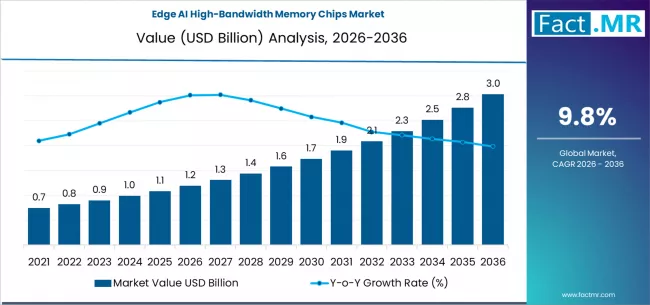
Edge ai high-bandwidth memory chips market is projected to grow from USD 1.2 billion in 2026 to USD 3.0 billion by 2036, at a CAGR of 9.8%. HBM3/HBM3E will dominate with a 48.5% market share, while ai inference will lead the application segment with a 41.0% share.

Edge AI High-Bandwidth Memory Chips Market Forecast and Outlook 2026 to 2036

The global edge AI high-bandwidth memory chips market is likely to total USD 1.19 billion in 2026, advancing to USD 3.04 billion by 2036. A CAGR of 9.8% is predicted for the period from 2026 to 2036.

Key Takeaways from the Edge AI High-Bandwidth Memory Chips Market

  • Market Value for 2026: USD 1.19 Billion
  • Market Value for 2036: USD 3.04 Billion
  • Forecast CAGR 2026 to 2036: 9.8%
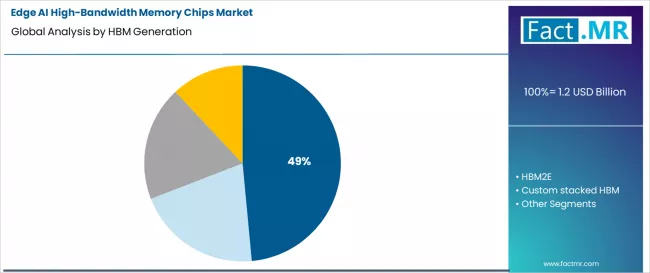
  • Leading HBM Generation Segment (2026): HBM3/HBM3E (49%)
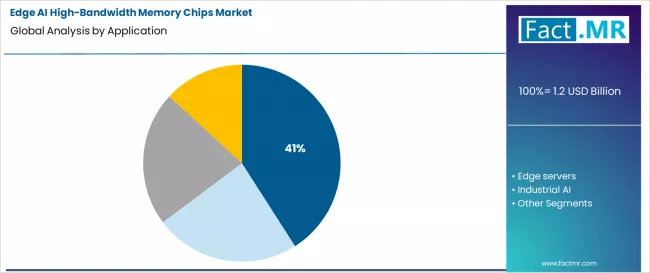
  • Leading Application Segment (2026): AI Inference (41%)
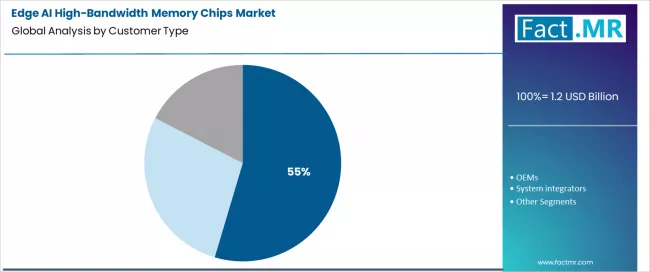
  • Leading Customer Type Segment (2026): Hyperscalers (55%)
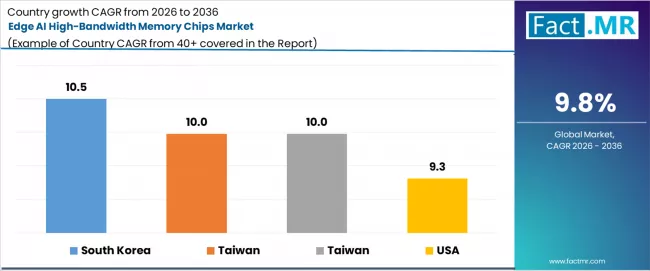
  • Key Growth Countries: South Korea (10.5% CAGR), China (10.0% CAGR), Taiwan (10.0% CAGR), USA (9.3% CAGR)
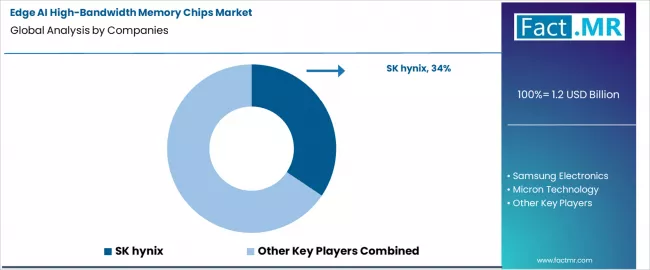
  • Key Players in the Market: SK hynix, Samsung Electronics, Micron Technology, Kioxia, Winbond, Nanya

Edge Ai High Bandwidth Memory Chips Market Market Value Analysis

This expansion is driven by the proliferation of artificial intelligence processing outside centralized data centers, creating intense demand for memory solutions that deliver extreme bandwidth within stringent power and space constraints.

Deploying AI at the edge requires immediate access to vast datasets for real-time inference. Traditional memory architectures cannot meet the simultaneous needs for high throughput, low latency, and energy efficiency.

High-bandwidth memory has become indispensable, offering a vertically stacked design that provides the massive data transfer rates necessary to prevent AI accelerators from sitting idle, thereby unlocking the full potential of edge intelligence.

The market's growth is a direct product of the exponential increase in AI-enabled endpoints and the strategic push by technology firms to decentralize computing. This landscape, encompassing everything from smart factories to autonomous systems, makes advanced HBM a critical enabler of the next generation of responsive and private AI applications.

Metric

Metric Value
Market Value (2026) USD 1.19 Billion
Market Forecast Value (2036) USD 3.04 Billion
Forecast CAGR 2026 to 2036 9.8%

Category

Category Segments
HBM Generation HBM3/HBM3E, HBM2E, Custom Stacked HBM, Low-power HBM Variants
Application AI Inference, Edge Servers, Industrial AI, Aerospace & Defense
Customer Type Hyperscalers, OEMs, System Integrators
Region North America, Latin America, Western Europe, Eastern Europe, East Asia, South Asia & Pacific, MEA

Segmental Analysis

By HBM Generation, Which Standard Meets the Demands of Cutting-Edge AI?

Edge Ai High Bandwidth Memory Chips Market Analysis By Hbm Generation

The HBM3 and HBM3E generation commands a leading 49% share. This segment's dominance is tied directly to its unparalleled data transfer speeds and improved energy efficiency per bit, which are critical for the latest AI accelerator chips deployed at the edge.

HBM3's higher bandwidth directly translates to faster model inference times and the ability to support complex neural networks in real-time applications, making it the preferred choice for new high-performance edge AI system designs.

By Application, Where is the Immediate Need for Real-Time Processing Most Acute?

Edge Ai High Bandwidth Memory Chips Market Analysis By Application

AI inference leads the application segment with a 41% share. This reflects the primary use case for edge AI, which is processing pre-trained models on live data streams without cloud dependency. Applications range from natural language processing in devices to real-time video analytics and predictive maintenance in factories.

The low-latency requirement of inference tasks makes the high bandwidth of HBM chips essential to keep AI processors fed with data, preventing bottlenecks that degrade performance and responsiveness.

By Customer Type, Who is Driving Volume and Specification Demands?

Edge Ai High Bandwidth Memory Chips Market Analysis By Customer Type

Hyperscalers constitute the dominant customer segment, holding 55% of the market. These technology giants are designing and deploying their own custom AI accelerator chips for both data center and edge applications. They drive volume demand and set aggressive technical specifications for performance, power, and form factor.

Their direct partnerships with memory manufacturers are crucial for co-developing and qualifying new HBM solutions tailored to their specific AI silicon architectures and deployment scales.

What are the Principal Drivers, Constraints, and Evolving Dynamics of this Market?

The critical bandwidth demand of edge AI accelerators is an important market driver. HBM's stacked architecture uniquely delivers necessary terabytes-per-second speed within strict power and thermal limits, overcoming the memory bottleneck for real-time performance.

A major restraint is the high cost and complex manufacturing involving through-silicon vias and precise stacking, which results in lower yields and elevated prices, hindering adoption in cost-sensitive edge applications.

A key opportunity exists in developing specialized HBM variants, like ultra-low-power or ruggedized stacks, tailored for specific edge environments such as mobile devices or industrial systems, opening high-margin niche markets.

The defining trend is the deep co-design partnership between HBM suppliers, AI chip designers, and packaging foundries. This collaboration is shifting from standard products to creating custom-stacked memory solutions optimized for specific processor architectures, making HBM a bespoke, system-critical component.

Analysis of the Edge AI High-Bandwidth Memory Chips Market by Key Countries

Edge Ai High Bandwidth Memory Chips Market Cagr Analysis By Country

Country CAGR 2026 to 2036
South Korea 10.5%
China 10.0%
Taiwan 10.0%
USA 9.3%

How does South Korea's Memory Manufacturing Dominance Translate to HBM Leadership?

South Korea's leading growth rate of 10.5% CAGR is anchored in the technological and manufacturing supremacy of its memory giants, SK hynix and Samsung Electronics. These companies are at the forefront of HBM3/E mass production and are driving the roadmap for future generations.

The country's growth is characterized by massive capital expenditure dedicated to HBM production lines and deep, exclusive partnerships with leading-edge AI chip developers like NVIDIA. South Korea's ecosystem provides the vertical integration and advanced packaging capabilities necessary to maintain its lead in producing the most sophisticated and in-demand HBM products for global edge AI markets.

What is China's Strategic Posture in Developing a Domestic HBM Supply Chain?

China's growth at 10.0% CAGR is propelled by a national strategic imperative to achieve self-sufficiency in advanced memory technologies amidst ongoing trade restrictions. While domestic chip designers and system integrators currently rely on international HBM, there is significant state-led investment and R&D focused on developing indigenous HBM manufacturing capabilities.

The market is shaped by efforts to clone and innovate beyond existing HBM standards, with companies like CXMT and YMTC racing to qualify homegrown solutions. This creates a parallel track of intense development alongside continued, though constrained, procurement of foreign memory for critical AI infrastructure projects.

What is Taiwan's Pivotal Role in the Advanced Packaging and Integration Ecosystem?

Taiwan's matching growth rate of 10.0% CAGR is driven by its position as the global leader in semiconductor foundry and advanced packaging services, primarily through TSMC. While not a major HBM fabricator, Taiwan is the critical hub where AI processor chiplets and HBM stacks are integrated into advanced packages like CoWoS.

This makes Taiwan's OSAT industry indispensable for the final assembly of the most complex 2.5D and 3D systems-in-package that define high-performance edge AI. Taiwan's growth is fueled by investments in expanding this packaging capacity to meet the exploding demand for heterogeneously integrated AI modules.

How does the USA's Ecosystem of AI Innovation Drive Specialized HBM Demand?

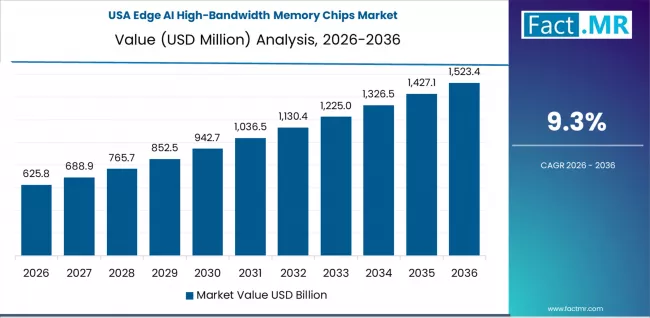
Edge Ai High Bandwidth Memory Chips Market Country Value Analysis

USA's growth, forecasted at 9.3% CAGR, is driven by its dense ecosystem of pioneering AI hardware startups, established hyperscalers designing custom silicon, and demanding aerospace & defense contractors. The demand is for both cutting-edge standard HBM and highly customized, secure memory stacks for specialized applications.

US-based companies like AMD, Intel, and numerous AI accelerator startups work closely with memory suppliers to define the specifications for next-generation products. The market is characterized by a focus on performance, security, and co-design, fostering innovation in interface protocols and system-level optimization for edge deployments.

Competitive Landscape of the Edge AI High-Bandwidth Memory Chips Market

Edge Ai High Bandwidth Memory Chips Market Analysis By Company

The competitive landscape is a tight oligopoly dominated by South Korea's SK hynix and Samsung, with US-based Micron forming a strong third player. Competition is intense and revolves around technological leadership in next-generation HBM, production yield and scale, and the depth of partnerships with key AI chip designers.

Success is determined by the ability to consistently deliver higher bandwidth, better power efficiency, and reliable supply in high volumes. The extreme capital and R&D barriers to entry, including mastery of TSV and advanced packaging technologies, solidify the positions of the incumbents. Secondary players like Kioxia, Winbond, and Nanya are pursuing niches in lower-power or specialized variants.

Key Players in the Edge AI High-Bandwidth Memory Chips Market

  • SK hynix
  • Samsung Electronics
  • Micron Technology
  • Kioxia
  • Winbond
  • Nanya

Scope of Report

Items Values
Quantitative Units USD Billion
HBM Generation HBM3/HBM3E, HBM2E, Custom Stacked HBM, Low-power HBM Variants
Application AI Inference, Edge Servers, Industrial AI, Aerospace & Defense
Customer Type Hyperscalers, OEMs, System Integrators
Key Countries South Korea, China, Taiwan, USA
Key Companies SK hynix, Samsung Electronics, Micron Technology, Kioxia, Winbond, Nanya
Additional Analysis Comparative analysis of bandwidth versus power consumption across HBM generations; study of thermal management challenges in dense edge device form factors; supply chain risk assessment for advanced packaging materials; impact of emerging chiplet architectures on HBM interface standards; total cost of ownership analysis for HBM-based edge AI systems versus alternative memory architectures.

Market by Segments

  • HBM Generation :

    • HBM3/HBM3E
    • HBM2E
    • Custom Stacked HBM
    • Low-power HBM Variants
  • Application :

    • AI Inference
    • Edge Servers
    • Industrial AI
    • Aerospace & Defense
  • Customer Type :

    • Hyperscalers
    • OEMs
    • System Integrators
  • Region :

    • North America

      • USA
      • Canada
    • Latin America

      • Brazil
      • Mexico
      • Argentina
      • Rest of Latin America
    • Western Europe

      • Germany
      • France
      • Italy
      • Spain
      • UK
      • BENELUX
      • Rest of Western Europe
    • Eastern Europe

      • Russia
      • Poland
      • Czech Republic
      • Rest of Eastern Europe
    • East Asia

      • China
      • Japan
      • South Korea
      • Taiwan
      • Rest of East Asia
    • South Asia & Pacific

      • India
      • ASEAN
      • Australia
      • Rest of South Asia & Pacific
    • MEA

      • GCC Countries
      • South Africa
      • Turkiye
      • Rest of MEA

References

  • IEEE. (2025). International Roadmap for Devices and Systems (IRDS): More Than Moore chapter. IEEE.
  • Kim, J., & Lee, K. (2024). Advanced memory systems for artificial intelligence. Springer Nature.
  • Patterson, D. A., & Hennessy, J. L. (2025). Computer architecture: A quantitative approach (7th ed.). Morgan Kaufmann.
  • Semiconductor Industry Association. (2025). Global memory market and technology strategic report. SIA.
  • Wong, S., & El-Gamal, A. (2024). Heterogeneous integration and advanced packaging for AI systems. Journal of Microelectronics, 55(2), 89-104.

Table of Content

  1. Executive Summary
    • Global Market Outlook
    • Demand to side Trends
    • Supply to side Trends
    • Technology Roadmap Analysis
    • Analysis and Recommendations
  2. Market Overview
    • Market Coverage / Taxonomy
    • Market Definition / Scope / Limitations
  3. Market Background
    • Market Dynamics
      • Drivers
      • Restraints
      • Opportunity
      • Trends
    • Scenario Forecast
      • Demand in Optimistic Scenario
      • Demand in Likely Scenario
      • Demand in Conservative Scenario
    • Opportunity Map Analysis
    • Product Life Cycle Analysis
    • Supply Chain Analysis
    • Investment Feasibility Matrix
    • Value Chain Analysis
    • PESTLE and Porter’s Analysis
    • Regulatory Landscape
    • Regional Parent Market Outlook
    • Production and Consumption Statistics
    • Import and Export Statistics
  4. Global Market Analysis 2021 to 2025 and Forecast, 2026 to 2036
    • Historical Market Size Value (USD Million) Analysis, 2021 to 2025
    • Current and Future Market Size Value (USD Million) Projections, 2026 to 2036
      • Y to o to Y Growth Trend Analysis
      • Absolute $ Opportunity Analysis
  5. Global Market Pricing Analysis 2021 to 2025 and Forecast 2026 to 2036
  6. Global Market Analysis 2021 to 2025 and Forecast 2026 to 2036, By HBM Generation
    • Introduction / Key Findings
    • Historical Market Size Value (USD Million) Analysis By HBM Generation, 2021 to 2025
    • Current and Future Market Size Value (USD Million) Analysis and Forecast By HBM Generation, 2026 to 2036
      • HBM3/HBM3E
      • HBM2E
      • Custom stacked HBM
      • Low-power HBM variants
    • Y to o to Y Growth Trend Analysis By HBM Generation, 2021 to 2025
    • Absolute $ Opportunity Analysis By HBM Generation, 2026 to 2036
  7. Global Market Analysis 2021 to 2025 and Forecast 2026 to 2036, By Application
    • Introduction / Key Findings
    • Historical Market Size Value (USD Million) Analysis By Application, 2021 to 2025
    • Current and Future Market Size Value (USD Million) Analysis and Forecast By Application, 2026 to 2036
      • AI inference
      • Edge servers
      • Industrial AI
      • Aerospace & Defense
    • Y to o to Y Growth Trend Analysis By Application, 2021 to 2025
    • Absolute $ Opportunity Analysis By Application, 2026 to 2036
  8. Global Market Analysis 2021 to 2025 and Forecast 2026 to 2036, By Customer Type
    • Introduction / Key Findings
    • Historical Market Size Value (USD Million) Analysis By Customer Type, 2021 to 2025
    • Current and Future Market Size Value (USD Million) Analysis and Forecast By Customer Type, 2026 to 2036
      • Hyperscalers
      • OEMs
      • System integrators
    • Y to o to Y Growth Trend Analysis By Customer Type, 2021 to 2025
    • Absolute $ Opportunity Analysis By Customer Type, 2026 to 2036
  9. Global Market Analysis 2021 to 2025 and Forecast 2026 to 2036, By Region
    • Introduction
    • Historical Market Size Value (USD Million) Analysis By Region, 2021 to 2025
    • Current Market Size Value (USD Million) Analysis and Forecast By Region, 2026 to 2036
      • North America
      • Latin America
      • Western Europe
      • Eastern Europe
      • East Asia
      • South Asia and Pacific
      • Middle East & Africa
    • Market Attractiveness Analysis By Region
  10. North America Market Analysis 2021 to 2025 and Forecast 2026 to 2036, By Country
    • Historical Market Size Value (USD Million) Trend Analysis By Market Taxonomy, 2021 to 2025
    • Market Size Value (USD Million) Forecast By Market Taxonomy, 2026 to 2036
      • By Country
        • USA
        • Canada
        • Mexico
      • By HBM Generation
      • By Application
      • By Customer Type
    • Market Attractiveness Analysis
      • By Country
      • By HBM Generation
      • By Application
      • By Customer Type
    • Key Takeaways
  11. Latin America Market Analysis 2021 to 2025 and Forecast 2026 to 2036, By Country
    • Historical Market Size Value (USD Million) Trend Analysis By Market Taxonomy, 2021 to 2025
    • Market Size Value (USD Million) Forecast By Market Taxonomy, 2026 to 2036
      • By Country
        • Brazil
        • Chile
        • Rest of Latin America
      • By HBM Generation
      • By Application
      • By Customer Type
    • Market Attractiveness Analysis
      • By Country
      • By HBM Generation
      • By Application
      • By Customer Type
    • Key Takeaways
  12. Western Europe Market Analysis 2021 to 2025 and Forecast 2026 to 2036, By Country
    • Historical Market Size Value (USD Million) Trend Analysis By Market Taxonomy, 2021 to 2025
    • Market Size Value (USD Million) Forecast By Market Taxonomy, 2026 to 2036
      • By Country
        • Germany
        • UK
        • Italy
        • Spain
        • France
        • Nordic
        • BENELUX
        • Rest of Western Europe
      • By HBM Generation
      • By Application
      • By Customer Type
    • Market Attractiveness Analysis
      • By Country
      • By HBM Generation
      • By Application
      • By Customer Type
    • Key Takeaways
  13. Eastern Europe Market Analysis 2021 to 2025 and Forecast 2026 to 2036, By Country
    • Historical Market Size Value (USD Million) Trend Analysis By Market Taxonomy, 2021 to 2025
    • Market Size Value (USD Million) Forecast By Market Taxonomy, 2026 to 2036
      • By Country
        • Russia
        • Poland
        • Hungary
        • Balkan & Baltic
        • Rest of Eastern Europe
      • By HBM Generation
      • By Application
      • By Customer Type
    • Market Attractiveness Analysis
      • By Country
      • By HBM Generation
      • By Application
      • By Customer Type
    • Key Takeaways
  14. East Asia Market Analysis 2021 to 2025 and Forecast 2026 to 2036, By Country
    • Historical Market Size Value (USD Million) Trend Analysis By Market Taxonomy, 2021 to 2025
    • Market Size Value (USD Million) Forecast By Market Taxonomy, 2026 to 2036
      • By Country
        • China
        • Japan
        • South Korea
      • By HBM Generation
      • By Application
      • By Customer Type
    • Market Attractiveness Analysis
      • By Country
      • By HBM Generation
      • By Application
      • By Customer Type
    • Key Takeaways
  15. South Asia and Pacific Market Analysis 2021 to 2025 and Forecast 2026 to 2036, By Country
    • Historical Market Size Value (USD Million) Trend Analysis By Market Taxonomy, 2021 to 2025
    • Market Size Value (USD Million) Forecast By Market Taxonomy, 2026 to 2036
      • By Country
        • India
        • ASEAN
        • Australia & New Zealand
        • Rest of South Asia and Pacific
      • By HBM Generation
      • By Application
      • By Customer Type
    • Market Attractiveness Analysis
      • By Country
      • By HBM Generation
      • By Application
      • By Customer Type
    • Key Takeaways
  16. Middle East & Africa Market Analysis 2021 to 2025 and Forecast 2026 to 2036, By Country
    • Historical Market Size Value (USD Million) Trend Analysis By Market Taxonomy, 2021 to 2025
    • Market Size Value (USD Million) Forecast By Market Taxonomy, 2026 to 2036
      • By Country
        • Kingdom of Saudi Arabia
        • Other GCC Countries
        • Turkiye
        • South Africa
        • Other African Union
        • Rest of Middle East & Africa
      • By HBM Generation
      • By Application
      • By Customer Type
    • Market Attractiveness Analysis
      • By Country
      • By HBM Generation
      • By Application
      • By Customer Type
    • Key Takeaways
  17. Key Countries Market Analysis
    • USA
      • Pricing Analysis
      • Market Share Analysis, 2025
        • By HBM Generation
        • By Application
        • By Customer Type
    • Canada
      • Pricing Analysis
      • Market Share Analysis, 2025
        • By HBM Generation
        • By Application
        • By Customer Type
    • Mexico
      • Pricing Analysis
      • Market Share Analysis, 2025
        • By HBM Generation
        • By Application
        • By Customer Type
    • Brazil
      • Pricing Analysis
      • Market Share Analysis, 2025
        • By HBM Generation
        • By Application
        • By Customer Type
    • Chile
      • Pricing Analysis
      • Market Share Analysis, 2025
        • By HBM Generation
        • By Application
        • By Customer Type
    • Germany
      • Pricing Analysis
      • Market Share Analysis, 2025
        • By HBM Generation
        • By Application
        • By Customer Type
    • UK
      • Pricing Analysis
      • Market Share Analysis, 2025
        • By HBM Generation
        • By Application
        • By Customer Type
    • Italy
      • Pricing Analysis
      • Market Share Analysis, 2025
        • By HBM Generation
        • By Application
        • By Customer Type
    • Spain
      • Pricing Analysis
      • Market Share Analysis, 2025
        • By HBM Generation
        • By Application
        • By Customer Type
    • France
      • Pricing Analysis
      • Market Share Analysis, 2025
        • By HBM Generation
        • By Application
        • By Customer Type
    • India
      • Pricing Analysis
      • Market Share Analysis, 2025
        • By HBM Generation
        • By Application
        • By Customer Type
    • ASEAN
      • Pricing Analysis
      • Market Share Analysis, 2025
        • By HBM Generation
        • By Application
        • By Customer Type
    • Australia & New Zealand
      • Pricing Analysis
      • Market Share Analysis, 2025
        • By HBM Generation
        • By Application
        • By Customer Type
    • China
      • Pricing Analysis
      • Market Share Analysis, 2025
        • By HBM Generation
        • By Application
        • By Customer Type
    • Japan
      • Pricing Analysis
      • Market Share Analysis, 2025
        • By HBM Generation
        • By Application
        • By Customer Type
    • South Korea
      • Pricing Analysis
      • Market Share Analysis, 2025
        • By HBM Generation
        • By Application
        • By Customer Type
    • Russia
      • Pricing Analysis
      • Market Share Analysis, 2025
        • By HBM Generation
        • By Application
        • By Customer Type
    • Poland
      • Pricing Analysis
      • Market Share Analysis, 2025
        • By HBM Generation
        • By Application
        • By Customer Type
    • Hungary
      • Pricing Analysis
      • Market Share Analysis, 2025
        • By HBM Generation
        • By Application
        • By Customer Type
    • Kingdom of Saudi Arabia
      • Pricing Analysis
      • Market Share Analysis, 2025
        • By HBM Generation
        • By Application
        • By Customer Type
    • Turkiye
      • Pricing Analysis
      • Market Share Analysis, 2025
        • By HBM Generation
        • By Application
        • By Customer Type
    • South Africa
      • Pricing Analysis
      • Market Share Analysis, 2025
        • By HBM Generation
        • By Application
        • By Customer Type
  18. Market Structure Analysis
    • Competition Dashboard
    • Competition Benchmarking
    • Market Share Analysis of Top Players
      • By Regional
      • By HBM Generation
      • By Application
      • By Customer Type
  19. Competition Analysis
    • Competition Deep Dive
      • SK hynix
        • Overview
        • Product Portfolio
        • Profitability by Market Segments (Product/Age /Sales Channel/Region)
        • Sales Footprint
        • Strategy Overview
          • Marketing Strategy
          • Product Strategy
          • Channel Strategy
      • Samsung Electronics
      • Micron Technology
      • Kioxia
      • Winbond
      • Nanya
  20. Assumptions & Acronyms Used
  21. Research Methodology

List Of Table

  • Table 1: Global Market Value (USD Million) Forecast by Region, 2021 to 2036
  • Table 2: Global Market Value (USD Million) Forecast by HBM Generation, 2021 to 2036
  • Table 3: Global Market Value (USD Million) Forecast by Application, 2021 to 2036
  • Table 4: Global Market Value (USD Million) Forecast by Customer Type, 2021 to 2036
  • Table 5: North America Market Value (USD Million) Forecast by Country, 2021 to 2036
  • Table 6: North America Market Value (USD Million) Forecast by HBM Generation, 2021 to 2036
  • Table 7: North America Market Value (USD Million) Forecast by Application, 2021 to 2036
  • Table 8: North America Market Value (USD Million) Forecast by Customer Type, 2021 to 2036
  • Table 9: Latin America Market Value (USD Million) Forecast by Country, 2021 to 2036
  • Table 10: Latin America Market Value (USD Million) Forecast by HBM Generation, 2021 to 2036
  • Table 11: Latin America Market Value (USD Million) Forecast by Application, 2021 to 2036
  • Table 12: Latin America Market Value (USD Million) Forecast by Customer Type, 2021 to 2036
  • Table 13: Western Europe Market Value (USD Million) Forecast by Country, 2021 to 2036
  • Table 14: Western Europe Market Value (USD Million) Forecast by HBM Generation, 2021 to 2036
  • Table 15: Western Europe Market Value (USD Million) Forecast by Application, 2021 to 2036
  • Table 16: Western Europe Market Value (USD Million) Forecast by Customer Type, 2021 to 2036
  • Table 17: Eastern Europe Market Value (USD Million) Forecast by Country, 2021 to 2036
  • Table 18: Eastern Europe Market Value (USD Million) Forecast by HBM Generation, 2021 to 2036
  • Table 19: Eastern Europe Market Value (USD Million) Forecast by Application, 2021 to 2036
  • Table 20: Eastern Europe Market Value (USD Million) Forecast by Customer Type, 2021 to 2036
  • Table 21: East Asia Market Value (USD Million) Forecast by Country, 2021 to 2036
  • Table 22: East Asia Market Value (USD Million) Forecast by HBM Generation, 2021 to 2036
  • Table 23: East Asia Market Value (USD Million) Forecast by Application, 2021 to 2036
  • Table 24: East Asia Market Value (USD Million) Forecast by Customer Type, 2021 to 2036
  • Table 25: South Asia and Pacific Market Value (USD Million) Forecast by Country, 2021 to 2036
  • Table 26: South Asia and Pacific Market Value (USD Million) Forecast by HBM Generation, 2021 to 2036
  • Table 27: South Asia and Pacific Market Value (USD Million) Forecast by Application, 2021 to 2036
  • Table 28: South Asia and Pacific Market Value (USD Million) Forecast by Customer Type, 2021 to 2036
  • Table 29: Middle East & Africa Market Value (USD Million) Forecast by Country, 2021 to 2036
  • Table 30: Middle East & Africa Market Value (USD Million) Forecast by HBM Generation, 2021 to 2036
  • Table 31: Middle East & Africa Market Value (USD Million) Forecast by Application, 2021 to 2036
  • Table 32: Middle East & Africa Market Value (USD Million) Forecast by Customer Type, 2021 to 2036

List Of Figures

  • Figure 1: Global Market Pricing Analysis
  • Figure 2: Global Market Value (USD Million) Forecast 2021 to 2036
  • Figure 3: Global Market Value Share and BPS Analysis by HBM Generation, 2026 and 2036
  • Figure 4: Global Market Y to o to Y Growth Comparison by HBM Generation, 2026 to 2036
  • Figure 5: Global Market Attractiveness Analysis by HBM Generation
  • Figure 6: Global Market Value Share and BPS Analysis by Application, 2026 and 2036
  • Figure 7: Global Market Y to o to Y Growth Comparison by Application, 2026 to 2036
  • Figure 8: Global Market Attractiveness Analysis by Application
  • Figure 9: Global Market Value Share and BPS Analysis by Customer Type, 2026 and 2036
  • Figure 10: Global Market Y to o to Y Growth Comparison by Customer Type, 2026 to 2036
  • Figure 11: Global Market Attractiveness Analysis by Customer Type
  • Figure 12: Global Market Value (USD Million) Share and BPS Analysis by Region, 2026 and 2036
  • Figure 13: Global Market Y to o to Y Growth Comparison by Region, 2026 to 2036
  • Figure 14: Global Market Attractiveness Analysis by Region
  • Figure 15: North America Market Incremental Dollar Opportunity, 2026 to 2036
  • Figure 16: Latin America Market Incremental Dollar Opportunity, 2026 to 2036
  • Figure 17: Western Europe Market Incremental Dollar Opportunity, 2026 to 2036
  • Figure 18: Eastern Europe Market Incremental Dollar Opportunity, 2026 to 2036
  • Figure 19: East Asia Market Incremental Dollar Opportunity, 2026 to 2036
  • Figure 20: South Asia and Pacific Market Incremental Dollar Opportunity, 2026 to 2036
  • Figure 21: Middle East & Africa Market Incremental Dollar Opportunity, 2026 to 2036
  • Figure 22: North America Market Value Share and BPS Analysis by Country, 2026 and 2036
  • Figure 23: North America Market Value Share and BPS Analysis by HBM Generation, 2026 and 2036
  • Figure 24: North America Market Y to o to Y Growth Comparison by HBM Generation, 2026 to 2036
  • Figure 25: North America Market Attractiveness Analysis by HBM Generation
  • Figure 26: North America Market Value Share and BPS Analysis by Application, 2026 and 2036
  • Figure 27: North America Market Y to o to Y Growth Comparison by Application, 2026 to 2036
  • Figure 28: North America Market Attractiveness Analysis by Application
  • Figure 29: North America Market Value Share and BPS Analysis by Customer Type, 2026 and 2036
  • Figure 30: North America Market Y to o to Y Growth Comparison by Customer Type, 2026 to 2036
  • Figure 31: North America Market Attractiveness Analysis by Customer Type
  • Figure 32: Latin America Market Value Share and BPS Analysis by Country, 2026 and 2036
  • Figure 33: Latin America Market Value Share and BPS Analysis by HBM Generation, 2026 and 2036
  • Figure 34: Latin America Market Y to o to Y Growth Comparison by HBM Generation, 2026 to 2036
  • Figure 35: Latin America Market Attractiveness Analysis by HBM Generation
  • Figure 36: Latin America Market Value Share and BPS Analysis by Application, 2026 and 2036
  • Figure 37: Latin America Market Y to o to Y Growth Comparison by Application, 2026 to 2036
  • Figure 38: Latin America Market Attractiveness Analysis by Application
  • Figure 39: Latin America Market Value Share and BPS Analysis by Customer Type, 2026 and 2036
  • Figure 40: Latin America Market Y to o to Y Growth Comparison by Customer Type, 2026 to 2036
  • Figure 41: Latin America Market Attractiveness Analysis by Customer Type
  • Figure 42: Western Europe Market Value Share and BPS Analysis by Country, 2026 and 2036
  • Figure 43: Western Europe Market Value Share and BPS Analysis by HBM Generation, 2026 and 2036
  • Figure 44: Western Europe Market Y to o to Y Growth Comparison by HBM Generation, 2026 to 2036
  • Figure 45: Western Europe Market Attractiveness Analysis by HBM Generation
  • Figure 46: Western Europe Market Value Share and BPS Analysis by Application, 2026 and 2036
  • Figure 47: Western Europe Market Y to o to Y Growth Comparison by Application, 2026 to 2036
  • Figure 48: Western Europe Market Attractiveness Analysis by Application
  • Figure 49: Western Europe Market Value Share and BPS Analysis by Customer Type, 2026 and 2036
  • Figure 50: Western Europe Market Y to o to Y Growth Comparison by Customer Type, 2026 to 2036
  • Figure 51: Western Europe Market Attractiveness Analysis by Customer Type
  • Figure 52: Eastern Europe Market Value Share and BPS Analysis by Country, 2026 and 2036
  • Figure 53: Eastern Europe Market Value Share and BPS Analysis by HBM Generation, 2026 and 2036
  • Figure 54: Eastern Europe Market Y to o to Y Growth Comparison by HBM Generation, 2026 to 2036
  • Figure 55: Eastern Europe Market Attractiveness Analysis by HBM Generation
  • Figure 56: Eastern Europe Market Value Share and BPS Analysis by Application, 2026 and 2036
  • Figure 57: Eastern Europe Market Y to o to Y Growth Comparison by Application, 2026 to 2036
  • Figure 58: Eastern Europe Market Attractiveness Analysis by Application
  • Figure 59: Eastern Europe Market Value Share and BPS Analysis by Customer Type, 2026 and 2036
  • Figure 60: Eastern Europe Market Y to o to Y Growth Comparison by Customer Type, 2026 to 2036
  • Figure 61: Eastern Europe Market Attractiveness Analysis by Customer Type
  • Figure 62: East Asia Market Value Share and BPS Analysis by Country, 2026 and 2036
  • Figure 63: East Asia Market Value Share and BPS Analysis by HBM Generation, 2026 and 2036
  • Figure 64: East Asia Market Y to o to Y Growth Comparison by HBM Generation, 2026 to 2036
  • Figure 65: East Asia Market Attractiveness Analysis by HBM Generation
  • Figure 66: East Asia Market Value Share and BPS Analysis by Application, 2026 and 2036
  • Figure 67: East Asia Market Y to o to Y Growth Comparison by Application, 2026 to 2036
  • Figure 68: East Asia Market Attractiveness Analysis by Application
  • Figure 69: East Asia Market Value Share and BPS Analysis by Customer Type, 2026 and 2036
  • Figure 70: East Asia Market Y to o to Y Growth Comparison by Customer Type, 2026 to 2036
  • Figure 71: East Asia Market Attractiveness Analysis by Customer Type
  • Figure 72: South Asia and Pacific Market Value Share and BPS Analysis by Country, 2026 and 2036
  • Figure 73: South Asia and Pacific Market Value Share and BPS Analysis by HBM Generation, 2026 and 2036
  • Figure 74: South Asia and Pacific Market Y to o to Y Growth Comparison by HBM Generation, 2026 to 2036
  • Figure 75: South Asia and Pacific Market Attractiveness Analysis by HBM Generation
  • Figure 76: South Asia and Pacific Market Value Share and BPS Analysis by Application, 2026 and 2036
  • Figure 77: South Asia and Pacific Market Y to o to Y Growth Comparison by Application, 2026 to 2036
  • Figure 78: South Asia and Pacific Market Attractiveness Analysis by Application
  • Figure 79: South Asia and Pacific Market Value Share and BPS Analysis by Customer Type, 2026 and 2036
  • Figure 80: South Asia and Pacific Market Y to o to Y Growth Comparison by Customer Type, 2026 to 2036
  • Figure 81: South Asia and Pacific Market Attractiveness Analysis by Customer Type
  • Figure 82: Middle East & Africa Market Value Share and BPS Analysis by Country, 2026 and 2036
  • Figure 83: Middle East & Africa Market Value Share and BPS Analysis by HBM Generation, 2026 and 2036
  • Figure 84: Middle East & Africa Market Y to o to Y Growth Comparison by HBM Generation, 2026 to 2036
  • Figure 85: Middle East & Africa Market Attractiveness Analysis by HBM Generation
  • Figure 86: Middle East & Africa Market Value Share and BPS Analysis by Application, 2026 and 2036
  • Figure 87: Middle East & Africa Market Y to o to Y Growth Comparison by Application, 2026 to 2036
  • Figure 88: Middle East & Africa Market Attractiveness Analysis by Application
  • Figure 89: Middle East & Africa Market Value Share and BPS Analysis by Customer Type, 2026 and 2036
  • Figure 90: Middle East & Africa Market Y to o to Y Growth Comparison by Customer Type, 2026 to 2036
  • Figure 91: Middle East & Africa Market Attractiveness Analysis by Customer Type
  • Figure 92: Global Market - Tier Structure Analysis
  • Figure 93: Global Market - Company Share Analysis

- FAQs -

How big is the edge ai high-bandwidth memory chips market in 2026?

The global edge ai high-bandwidth memory chips market is estimated to be valued at USD 1.2 billion in 2026.

What will be the size of edge ai high-bandwidth memory chips market in 2036?

The market size for the edge ai high-bandwidth memory chips market is projected to reach USD 3.0 billion by 2036.

How much will be the edge ai high-bandwidth memory chips market growth between 2026 and 2036?

The edge ai high-bandwidth memory chips market is expected to grow at a 9.8% CAGR between 2026 and 2036.

What are the key product types in the edge ai high-bandwidth memory chips market?

The key product types in edge ai high-bandwidth memory chips market are hbm3/hbm3e, hbm2e, custom stacked hbm and low-power hbm variants.

Which application segment to contribute significant share in the edge ai high-bandwidth memory chips market in 2026?

In terms of application, ai inference segment to command 41.0% share in the edge ai high-bandwidth memory chips market in 2026.
Edge AI High-Bandwidth Memory Chips Market