Electrolyte Powders Market Size, Share, Growth and Forecast (2026 - 2036)
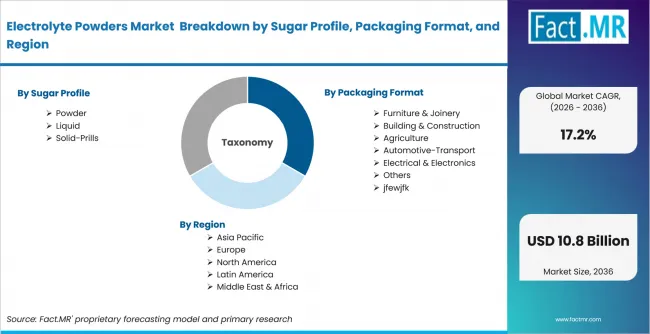
The Electrolyte Powders Market is segmented by Form, by Electrolyte System, by Sugar Profile, by Packaging Format, by Sales Channel, by Use Case, by Buyer Type, and Region. Forecast for 2026 to 2036.
What is the electrolyte powders market forecast to be worth by 2036?
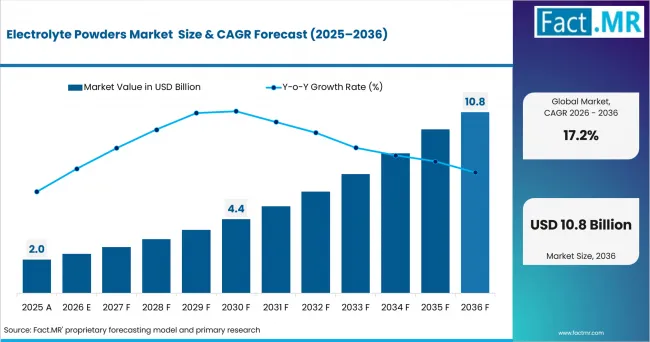
USD 2.2 billion in 2026 to USD 10.8 billion by 2036, at 17.2% CAGR.
- The electrolyte powders market crossed a valuation of USD 2.0 billion in 2025.
- Demand is expected to increase from USD 2.2 billion in 2026 to USD 10.8 billion by 2036.
- The market is forecast to record 17.2% CAGR from 2026 to 2036 as daily hydration, sugar-free formulas and single-serve stick packs expand repeat use beyond sports occasions.
What are the defining numbers behind electrolyte powders growth?
USD 8.6 billion absolute opportunity by 2036. India, China and the United States lead the country view.
- Demand Drivers in the Market
- Daily hydration habits support repeat purchasing because users now mix powders during work, travel and exercise rather than only during endurance events.
- Sugar-free formulas account for a larger shelf role because buyers compare added sugar and sodium on the same label.
- Direct-to-consumer bundles support trial because variety packs lower the risk of buying a full tub in one flavor.
- Heat exposure and outdoor activity widen the use case because hydration is now planned before activity rather than only after heavy sweating.
- Key Segments Analyzed
- By Sugar Profile: Sugar-Free is expected to account for 57.0% of the market share in 2026, since low-carb and low-added-sugar buyers prefer mineral replacement without conventional sports drink sugar loads.
- By Packaging Format: Stick Packs are projected to capture 49.0% of the market in 2026. Travel use, gym bags and single-serving trial packs support this share.
- By Electrolyte System: Multi-Electrolyte blends are estimated to hold 46.0% share in 2026, attributable to formulas that combine sodium with potassium and magnesium.
- By Sales Channel: Online Direct-to-Consumer is likely to represent 38.0% of the market in 2026. Subscriptions, sampler bundles and creator-led discovery support the channel.
- By Use Case: Daily Hydration is forecast to secure 36.0% share in 2026. Powders are moving beyond race-day use into commuting and heat exposure. Workday routines add another daily occasion.
- By Buyer Type: Active Consumers are anticipated to contribute 35.0% of revenue in 2026, reflecting regular exercise participation and growing interest in measured mineral intake.
- By Form: Powder Sachets are expected to account for 34.0% share in 2026, since they reduce mess and portioning errors for first-time buyers.
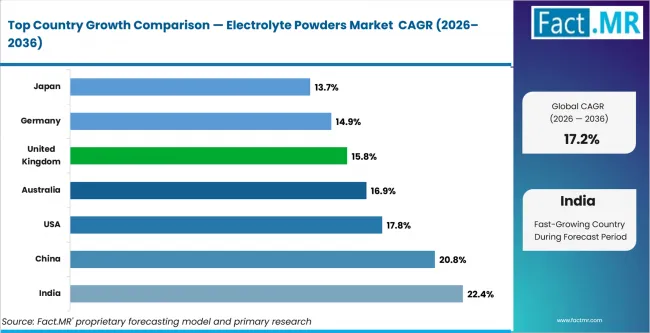
- By Geography: India is expected to register a CAGR of 22.4% through 2036. Fitness-center expansion and summer heat exposure support the country outlook. Online supplement access adds a faster route to trial.
- Analyst Opinion
- Shambhu Nath Jha, Principal Analyst at Fact.MR states, "Hydration powders have become a habit product. I see buyers asking whether the sodium dose is clear, whether the taste works every day and whether the pack fits a bag or office drawer."
- Strategic Implications
- Electrolyte powder brands should make mineral dose and sugar position visible on the front of pack.
- Retailers need sampler boxes because flavor fatigue can block repeat purchase after the first month.
- Contract manufacturers should build small-batch flavor capability because creator-led brands refresh assortments quickly.
- Ingredient suppliers can win by proving clean taste in high-sodium systems without raising sweetness too far.
Powdered drink mixes for hydration and training form the core of this market. The Sports & Fitness Industry Association reported 247.1 million active Americans in 2024. This supports demand for portable electrolyte powders used before workouts, during travel and across heat-exposure routines.
India is projected to record 22.4% CAGR through 2036 as online supplement access and sports infrastructure funding support wider trial. China is expected to expand at 20.8% CAGR because sports participation and local fitness retail scale support powdered hydration demand. The United States is forecast to grow at 17.8% CAGR as active-consumer scale and brand-led subscription models support repeat purchase. Australia is expected to advance at 16.9% CAGR as high activity participation and heat exposure support sachet use. The United Kingdom is projected to rise at 15.8% CAGR as active adults and pharmacy retail access support low-sugar mineral packets. Germany is forecast to expand at 14.9% CAGR as club sport density and label scrutiny support simple mineral formulas. Japan is expected to record 13.7% CAGR as routine sport participation and compact retail formats support sachet trials.
How does the electrolyte powders market break down by segment?
Sugar-Free leads at 57.0%. Stick Packs follow with 49.0% share in 2026.
Which sugar profile dominates?
Sugar-Free holds 57.0% share in 2026.
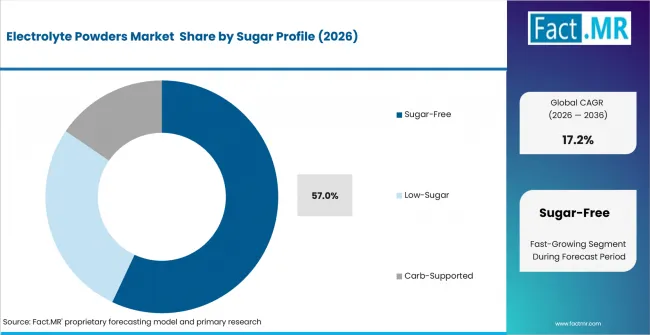
Sugar-Free is expected to hold 57.0% share in 2026 because buyers want hydration without added sugar during workdays and low-carb routines. This position separates powders from many legacy sports drinks. The same buyer often compares electrolyte powders with ready-to-drink hydration products when choosing between daily use and workout-only consumption.
Which packaging format dominates?
Stick Packs hold 49.0% share in 2026.
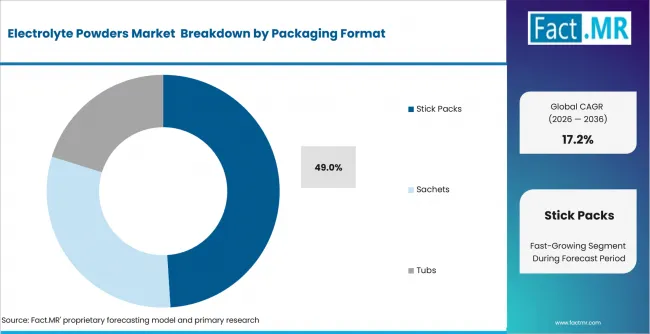
Stick Packs are projected to account for 49.0% share in 2026 because the format solves portioning and travel use at the same time. A sachet fits gym bags and office drawers. This format also lets brands sell variety packs that compete with sports drinks without the shipping weight of bottles.
Which electrolyte system dominates?
Multi-Electrolyte blends hold 46.0% share in 2026.
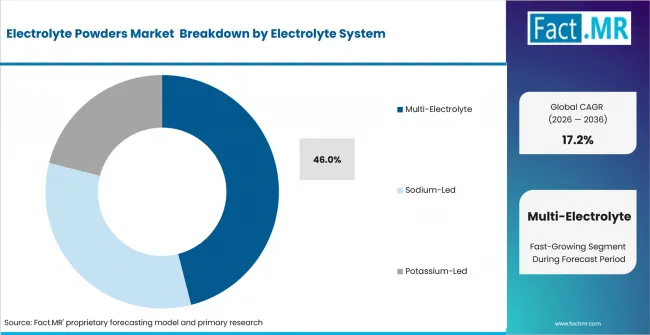
Multi-Electrolyte blends are forecast to account for 46.0% share in 2026 because shoppers now expect sodium to be balanced with potassium and magnesium. Athletes still buy high-sodium formulas for sweat loss. Everyday users prefer a broader mineral mix that fits daily hydration and active-lifestyle routines.
Which sales channel dominates?
Online Direct-to-Consumer holds 38.0% share in 2026.
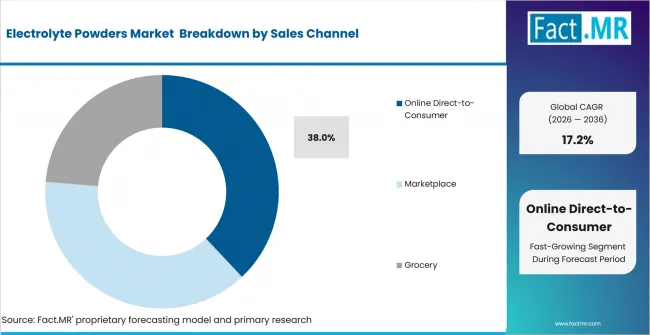
Online Direct-to-Consumer is estimated to hold 38.0% share in 2026 because powders are light to ship and easy to sell through subscription boxes. U.S. Census Bureau data show e-commerce accounted for 16.8% of total U.S. retail sales in the first quarter of 2026. Powder brands also use sampling funnels because trial packs help convert first-time buyers into repeat users.
Which use case dominates?
Daily Hydration holds 36.0% share in 2026.
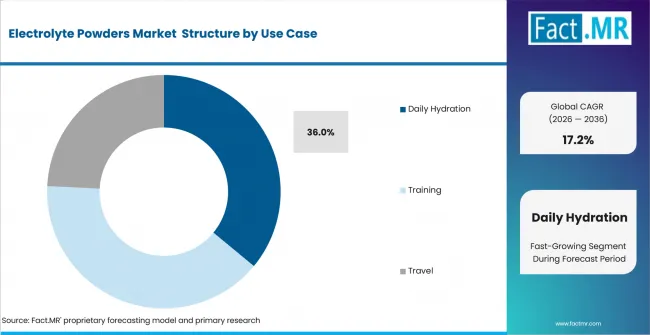
Daily Hydration is anticipated to capture 36.0% share in 2026 because consumers use packets before commuting, after flights and during summer workdays. This is a larger routine than race-day drinking. Brands that pair electrolytes with light flavor and low sugar can reach users who consume hydration products throughout the day.
Which buyer type dominates?
Active Consumers hold 35.0% share in 2026.
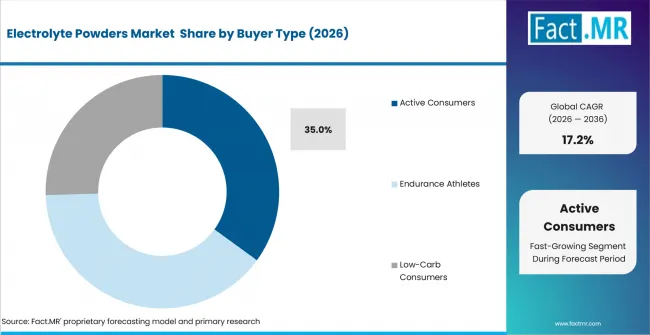
Active Consumers are projected to hold 35.0% share in 2026 because regular exercise creates repeat occasions and clearer taste preferences. The group includes gym users and runners. Hikers and low-carb consumers add repeat use occasions. Dietary supplements buyers are also relevant because many powders are sold with Supplement Facts labels rather than only beverage labels.
Which form dominates?
Powder Sachets hold 34.0% share in 2026.
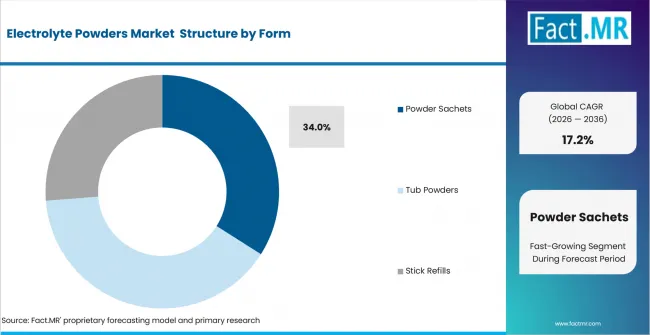
Powder Sachets are likely to hold 34.0% share in 2026 because first-time users want a measured serving before committing to tubs. Sachets also reduce clumping and keep flavors separate. The format works because it changes plain water without requiring a chilled beverage case.
What is accelerating electrolyte powders demand, and what is holding it back?
Daily hydration routines and sugar-free positioning support demand. Sodium scrutiny and flavor fatigue restrain wider use.
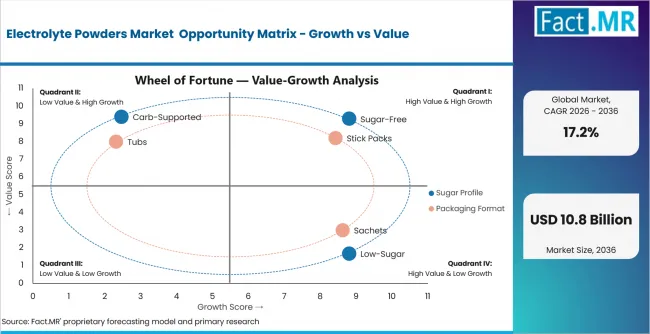
Electrolyte powders are gaining shelf space because the use case has widened from sport recovery to daily hydration planning. Active consumers use packets before workouts and during travel. Low-carb buyers use them when plain water feels insufficient. Heat exposure adds another occasion because Copernicus reported 2024 as the warmest year in records back to 1850. This makes hydration planning more visible in summer retail and workplace wellness programs.
Expansion is constrained by sodium perception and taste. High-sodium powders serve heavy sweaters but can concern buyers who read Nutrition Facts labels. Sweetener aftertaste can also limit repeat purchase when brands remove sugar. Product education must explain serving context plainly. The U.S. Food and Drug Administration label rules make added sugars and sodium visible, so weak formulas have fewer places to hide.
Where do the biggest electrolyte powders opportunities sit?
Sugar-free daily hydration, heat-exposure packs and pharmacy wellness bundles.
- Sugar-Free Daily Hydration: Brands can sell subscriptions around office, travel and gym routines. These buyers compare powders with ready-to-drink options when they want minerals without carrying bottles.
- Heat-Exposure Packs: Employers and outdoor workers can use small sachet boxes where summer work creates fluid-loss risk. This channel favors clear sodium labeling and bulk pricing.
- Pharmacy Wellness Bundles: Pharmacies can place electrolyte powders near vitamins and digestive products. The cross-shelf logic works when shoppers want a simple hydration add-on near vitamins and digestive products.
Which countries are scaling electrolyte powders fastest?
India 22.4% CAGR, China 20.8% CAGR, United States 17.8% CAGR, Australia 16.9% CAGR, United Kingdom 15.8% CAGR, Germany 14.9% CAGR, Japan 13.7% CAGR.
Based on regional analysis, the electrolyte powders market is segmented into North America and Western Europe. East Asia and South Asia and Pacific are also covered. Latin America and Middle East and Africa complete the regional scope.
.webp)
| Country | CAGR |
|---|---|
| India | 22.4% |
| China | 20.8% |
| United States | 17.8% |
| Australia | 16.9% |
| United Kingdom | 15.8% |
| Germany | 14.9% |
| Japan | 13.7% |

What powers India's lead?
22.4% CAGR, supported by online supplement access and sports infrastructure funding.
India has a young buyer base and a fast-expanding sports policy base. The Press Information Bureau reported 1,041 Khelo India Centres and 323 approved infrastructure projects in February 2025. Electrolyte powder brands benefit when sports stores, gyms and e-commerce platforms reach smaller cities. Local pricing remains important because sachet affordability decides repeat use beyond metro buyers.
How is China scaling electrolyte powders demand?
20.8% CAGR, driven by sports participation and local fitness retail scale.
China's hydration powder path starts with mass fitness activity and online wellness retail. The State Council Information Office reported that 37.2% of Chinese people regularly engaged in physical exercise in September 2024. Local brands can move quickly through livestream commerce and sports clubs. Import brands need localized taste profiles because sweetness, sodium and flavor expectations differ from U.S. formulas.
What supports the United States outlook?
17.8% CAGR, attributable to active-consumer scale and brand-led subscription models.
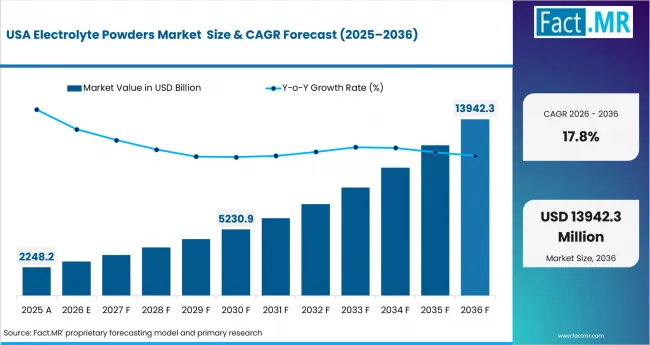
The United States has the deepest visible base of active consumers and direct-to-consumer electrolyte brands. The Sports and Fitness Industry Association reported 247.1 million active Americans in 2024. This scale supports sampler boxes, subscriptions and creator-led product discovery. Growth is above the global average because established brands can convert sports nutrition users into daily hydration subscribers.
Why does Australia matter?
16.9% CAGR, supported by high activity participation and heat exposure.
Australia is a practical test market for hydration products because sport, outdoor work and summer heat sit close together. The Australian Institute of Health and Welfare cited AusPlay data showing nearly 85.0% of Australians aged 15 and over participated in sport or physical activity during 2023 to 2024. Suppliers should prioritize sachets and pharmacy channels because convenience matters during travel, sport and outdoor routines.
What makes the United Kingdom important?
15.8% CAGR, driven by record adult activity levels and pharmacy retail access.
The United Kingdom has a clear daily-hydration route through gyms, pharmacies and online wellness retailers. Sport England reported that 63.7% of adults in England met activity guidelines between November 2023 and November 2024. Low-sugar mineral packets can sit near vitamins and travel health products when brands keep serving claims simple. Faster growth depends on taste and price because consumers can switch easily between sachet brands.
How does Germany fit the market?
14.9% CAGR, led by club sport density and cautious ingredient screening.
Germany offers a broad base of organized sport but buyers apply stricter label scrutiny than in many high-growth markets. The German Olympic Sports Confederation reported 29.3 million memberships across organized sport as of January 2025. This creates a sizable base for electrolyte powders sold through sport shops and pharmacies. Suppliers should keep formulas simple because German consumers often compare mineral dose, sweetener type and nutrition panel clarity.
Why is Japan a relevant commercial market?
13.7% CAGR, backed by routine sport participation and compact retail formats.
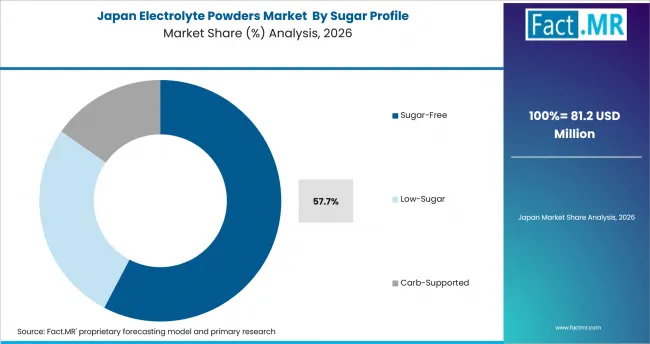
Japan's opportunity is smaller but commercially disciplined. The Sasakawa Sports Foundation reported that 69.8% of people participated in sports and physical activity at least once in 2024. Convenience stores and drugstores can support sachet trials when packs are compact and taste is mild. Growth is lower than India and China because population ageing and cautious supplement switching limit rapid volume expansion.
Who leads the electrolyte powders landscape?
Liquid I.V. and LMNT lead through brand recall. DripDrop adds medical-hydration credibility, while Gatorade brings sports visibility and retail access.
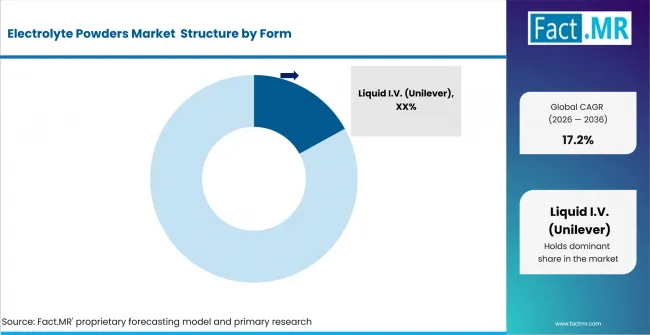
Buyers compare sodium dose and sugar profile first. Taste and proof of use then decide repeat purchase.
Liquid I.V. has the clearest global scaling signal after Unilever reported seven new market entries during 2024 and nearly 30.0% of brand sales from the sugar-free range in 2025. LMNT competes through a zero-sugar and high-sodium position that fits low-carb users. DripDrop keeps a medical-origin hydration story while expanding zero-sugar variants. These moves place electrolyte powders inside the wider non-alcoholic beverage shift toward functional routines.
Gatorade entered single-serve hydration powders in September 2024 with Hydration Booster and a six-packet box. Humantra has built a daily-hydration proposition across the United Kingdom and the Gulf. Skratch Labs serves endurance buyers with unsweetened and sport-specific mixes. Competitive position through 2036 should depend on repeat taste acceptance, label clarity and the ability to refresh flavors without confusing the core mineral promise.
Which companies are the key players?
Liquid I.V., LMNT and DripDrop are key players. Gatorade, Humantra, Skratch Labs and Tailwind Nutrition are also profiled.
- Liquid I.V. (Unilever)
- LMNT
- DripDrop
- Gatorade (PepsiCo)
- Humantra
- Skratch Labs
- Tailwind Nutrition
Bibliography
- [1] Sports & Fitness Industry Association. (2025, February 27). SFIA’s Topline Participation Report shows 247.1 million Americans were active in 2024. Sports & Fitness Industry Association.
- [2] Sport England. (2025, April 24). Record numbers playing sport and taking part in physical activity. Sport England.
- [3] State Council Information Office of the People’s Republic of China. (2024, September 18). General Administration of Sport of China. State Council Information Office of the People’s Republic of China.
- [4] Press Information Bureau of India. (2025, February 1). India’s growing focus on youth and sports. Government of India.
- [5] Australian Institute of Health and Welfare. (2025, July 30). Sports injury in Australia. Australian Institute of Health and Welfare.
- [6] German Olympic Sports Confederation. (2025, January 1). Inventory survey. German Olympic Sports Confederation.
- [7] Sasakawa Sports Foundation. (2024, December 31). The 2024 SSF National Sports-Life Survey. Sasakawa Sports Foundation.
- [8] U.S. Census Bureau. (2026, May 18). Quarterly retail e-commerce sales report. U.S. Census Bureau.
- [9] U.S. Food and Drug Administration. (2024, March 5). Daily Value on the Nutrition and Supplement Facts labels. U.S. Food and Drug Administration.
- [10] Copernicus Climate Change Service. (2025, January 10). Global climate highlights 2024. Copernicus Climate Change Service.
- [11] Unilever. (2024, May 23). Liquid I.V. powers growth with partnerships, innovation and global expansion. Unilever.
- [12] Unilever. (2025, October 23). Broad-based growth, on track for full year outlook. Unilever.
- [13] PepsiCo. (2024, September 17). New Gatorade Hydration Booster electrolyte powder puts your water to work. PepsiCo.
This Report Addresses
- Strategic intelligence on electrolyte powders across Form and Electrolyte System. Sugar Profile and Packaging Format complete the product view.
- Segment analysis covering Sugar-Free and Stick Packs. Multi-Electrolyte, Online Direct-to-Consumer and Daily Hydration complete the commercial view.
- Regional outlook covering India and China. United States, Australia and United Kingdom are included with Germany and Japan.
- Competitive analysis of Liquid I.V., LMNT and DripDrop as key players. Gatorade, Humantra and Skratch Labs are also profiled. Tailwind Nutrition completes the company set.
- Product assessment covering Powder Sachets and Tub Powders. Bulk Pouches, Stick Refills and Trial Packs complete the format view.
- Regulatory assessment covering U.S. Food and Drug Administration label rules and current good manufacturing practice requirements.
- Source-led market sizing uses active-consumer counts and serving assumptions. Powder price checks, company validation and channel evidence were also applied.
What does the electrolyte powders market cover?
Powdered drink mixes add electrolytes to water for hydration and training. Travel and low-carb daily use are included.
The electrolyte powders market covers dry drink mixes sold in stick packs and sachets. Tubs and pouches cover multi-serve formats. Products normally include sodium, potassium and magnesium. Calcium and chloride may be added. Zinc, vitamin C or B vitamins can support active-lifestyle positioning. The market includes sugar-free and low-sugar formulas sold through retail and online stores. Gyms and pharmacy channels are also covered.
What is included in the scope?
Sugar-free and low-sugar electrolyte powders. Daily hydration, sport hydration and travel hydration are included.
The scope includes single-serve powders and multi-serve tubs. Sachet refill packs are also included. It includes electrolyte-only products and blends that add vitamins or simple carbohydrates. Consumer use cases include training sessions and outdoor work. Heat exposure, fasting and low-carb eating also support general daily hydration. Retail and direct-to-consumer sales are included when the product is sold as a powder.
What is excluded from the scope?
Ready-to-drink sports beverages, medical oral rehydration salts and energy drinks without powder delivery.
The scope excludes bottled sports drinks, canned functional beverages and electrolyte tablets when sold as tablets rather than powders. Prescription rehydration products are excluded. Hospital oral rehydration therapy is also excluded when it is supplied under clinical protocols. Bulk mineral salts are excluded unless formulated and packaged as a finished consumer hydration powder.
How was the analysis built?
110+ sources and 55+ company or regulator pages. 30+ countries were checked with 25+ interviews.
- Primary Research: Interviews covered electrolyte powder brands and sports nutrition retailers. Supplement contract manufacturers and online category managers were also included.
- Desk Research: Desk research reviewed sports participation data, dietary supplement rules and public health pages. Company newsrooms, annual reports and product pages were checked for active launches.
- Market-Sizing and Forecasting: Forecasting used active-consumer counts, powder serving assumptions and channel price checks. Category revenue was reconciled against sports nutrition and powdered hydration evidence.
- Data Validation and Update Cycle: Estimates were checked against Liquid I.V. sales signals, Gatorade product entry and direct-to-consumer pricing. Retail assortment scans and distributor interviews were used to test pack-size assumptions.
What is the report's scope and coverage?
| Attribute | Details |
|---|---|
| Quantitative Units | USD Billion in 2026 to USD Billion by 2036 at CAGR |
| Market Definition | Powdered drink mixes for hydration and training, travel hydration and low-carb daily use |
| Form | Powder Sachets, Tub Powders, Bulk Pouches, Stick Refills, Trial Packs |
| Electrolyte System | Multi-Electrolyte, Sodium-Led, Potassium-Led, Magnesium-Led, Vitamin-Added |
| Sugar Profile | Sugar-Free, Low-Sugar, Carb-Supported, Stevia-Sweetened, Unsweetened |
| Packaging Format | Stick Packs, Sachets, Tubs, Pouches, Club Packs |
| Sales Channel | Online Direct-to-Consumer, Marketplace, Grocery, Pharmacy, Fitness Retail |
| Use Case | Daily Hydration, Training, Travel, Heat Exposure, Fasting |
| Buyer Type | Active Consumers, Endurance Athletes, Low-Carb Consumers, Outdoor Workers, Wellness Buyers |
| Regions Covered | North America, Western Europe, East Asia, South Asia and Pacific, Latin America, Middle East and Africa |
| Countries Covered | India, China, United States, Australia, United Kingdom, Germany and Japan |
| Key Companies Profiled | Liquid I.V., LMNT, DripDrop, Gatorade, Humantra, Skratch Labs and Tailwind Nutrition |
| Forecast Period | 2026 to 2036 |
| Approach | Hybrid top-down and bottom-up approach using active-consumer counts, serving assumptions, powder price checks, company validation and channel evidence |
How is the electrolyte powders market segmented?
-
By Form:
- Powder Sachets
- Tub Powders
- Bulk Pouches
- Stick Refills
- Trial Packs
-
By Electrolyte System:
- Multi-Electrolyte
- Sodium-Led
- Potassium-Led
- Magnesium-Led
- Vitamin-Added
-
By Sugar Profile:
- Sugar-Free
- Low-Sugar
- Carb-Supported
- Stevia-Sweetened
- Unsweetened
-
By Packaging Format:
- Stick Packs
- Sachets
- Tubs
- Pouches
- Club Packs
-
By Sales Channel:
- Online Direct-to-Consumer
- Marketplace
- Grocery
- Pharmacy
- Fitness Retail
-
By Use Case:
- Daily Hydration
- Training
- Travel
- Heat Exposure
- Fasting
-
By Buyer Type:
- Active Consumers
- Endurance Athletes
- Low-Carb Consumers
- Outdoor Workers
- Wellness Buyers
-
By Region:
- North America
- United States
- Canada
- Mexico
- Latin America
- Brazil
- Argentina
- Rest of Latin America
- Germany
- United Kingdom
- France
- Italy
- Spain
- Rest of Europe
- Asia Pacific
- China
- India
- Japan
- South Korea
- ASEAN
- Australia
- Middle East & Africa
- GCC Countries
- South Africa
- UAE
- Rest of Middle East & Africa
- North America
- Frequently Asked Questions -
How large is the Electrolyte Powders Market expected to be in the near term?
The market is expanding as electrolyte powders move from sports only use into everyday hydration routines.
What is the long term outlook for the Electrolyte Powders Market?
The outlook remains strong as daily hydration, travel use, and low sugar lifestyles normalize repeat consumption.
How fast is the Electrolyte Powders Market expected to grow?
Growth is driven by habit based hydration, single serve formats, and wider acceptance beyond endurance sports.
What is the main driver of electrolyte powder demand?
Demand is driven by consumers seeking convenient mineral replacement without relying on sugary sports drinks.
Which electrolyte system is most commonly used?
Multi electrolyte blends are preferred because consumers expect sodium to be balanced with potassium and magnesium.
Which sales channel is most important for electrolyte powders?
Online direct to consumer channels lead as subscriptions, sampler packs, and creator discovery drive trial and repeat use.
Which use case shapes most demand?
Daily hydration shapes demand as powders are used during workdays, travel, heat exposure, and light activity.
Which countries are key markets for electrolyte powders?
India, China, the United States, Australia, the United Kingdom, Germany, and Japan are key markets.
What supports India’s strong growth momentum?
Online supplement access, sports infrastructure expansion, and hot climate hydration needs support rapid adoption.
Why is China an important market?
High physical activity participation and fast moving online wellness retail support powder based hydration demand.
What supports the United States market position?
A large active consumer base and strong subscription led brands support repeat purchasing.
What restrains wider adoption of electrolyte powders?
Concerns around sodium intake, taste fatigue, and label scrutiny restrain broader use.
Who are the leading companies in the Electrolyte Powders Market?
Leading companies include Liquid I.V., LMNT, DripDrop, Gatorade, Humantra, Skratch Labs, and Tailwind Nutrition.
How do brands differentiate electrolyte powders?
Brands differentiate through mineral dose clarity, sugar positioning, flavor quality, and convenient packaging.
Where do future opportunities in this market lie?
Opportunities lie in sugar free daily hydration, heat exposure use cases, and pharmacy led wellness bundles.
Table of Content
- Key Takeaways
- Market Size and CAGR
- Top Growth Driver
- Fastest Growing Segment
- Leading Region
- Key Companies
- Emerging Opportunities
- Executive Summary
- Global Market Outlook
- Demand-side Trends
- Supply-side Trends
- Technology Roadmap Analysis
- Analysis and Recommendations
- Analyst Perspective (What is happening? Why now? What should investors know?)
- Key Questions Answered
- How large is the market?
- What is the CAGR?
- What are key trends?
- Which region dominates?
- Who are the leaders?
- Market Overview
- Market Coverage / Taxonomy
- Market Definition / Scope / Limitations
- Research Methodology
- Chapter Orientation
- Analytical Lens and Working Hypotheses
- Market Structure, Signals, and Trend Drivers
- Benchmarking and Cross-market Comparability
- Market Sizing, Forecasting, and Opportunity Mapping
- Research Design and Evidence Framework
- Desk Research Programme (Secondary Evidence)
- Expert Input and Fieldwork (Primary Evidence)
- Tooling, Models, and Reference Databases
- Data Engineering and Model Build
- Quality Assurance and Audit Trail
- Market Background
- Market Dynamics (Drivers, Restraints, Opportunity, Trends)
- Scenario Forecast (Optimistic, Likely, Conservative)
- Impact Analysis
- AI Impact
- Sustainability Impact
- Regulatory Impact
- Technology Impact
- Consumer / Buyer Analysis
- Purchase Drivers
- Adoption Barriers
- Buyer Journey
- Opportunity Map Analysis
- Product Life Cycle Analysis
- Supply Chain Analysis
- Investment Feasibility Matrix
- Value Chain Analysis
- PESTLE and Porter's Analysis
- Regulatory Landscape
- Regional Parent Market Outlook
- Production and Consumption Statistics
- Import and Export Statistics
- Global Market Analysis and Forecast, 2021 to 2036
- Historical Market Size Value (USD Million) Analysis, 2021 to 2025
- Current and Future Market Size Value (USD Million) Projections, 2026 to 2036
- Y-o-Y Growth Trend Analysis
- Absolute $ Opportunity Analysis
- Global Market Pricing Analysis, 2021 to 2036
- Global Market Analysis and Forecast, By Sugar Profile, 2021 to 2036
- Introduction / Key Findings
- Historical Market Size Value (USD Million) Analysis By Sugar Profile, 2021 to 2025
- Current and Future Market Size Value (USD Million) Analysis and Forecast By Sugar Profile, 2026 to 2036
- Sugar-Free
- Low-Sugar
- Carb-Supported
- Sugar-Free
- Y-o-Y Growth Trend Analysis By Sugar Profile, 2021 to 2025
- Absolute $ Opportunity Analysis By Sugar Profile, 2026 to 2036
- Global Market Analysis and Forecast, By Packaging Format, 2021 to 2036
- Introduction / Key Findings
- Historical Market Size Value (USD Million) Analysis By Packaging Format, 2021 to 2025
- Current and Future Market Size Value (USD Million) Analysis and Forecast By Packaging Format, 2026 to 2036
- Stick Packs
- Sachets
- Tubs
- Stick Packs
- Y-o-Y Growth Trend Analysis By Packaging Format, 2021 to 2025
- Absolute $ Opportunity Analysis By Packaging Format, 2026 to 2036
- Global Market Analysis and Forecast, By Electrolyte System, 2021 to 2036
- Introduction / Key Findings
- Historical Market Size Value (USD Million) Analysis By Electrolyte System, 2021 to 2025
- Current and Future Market Size Value (USD Million) Analysis and Forecast By Electrolyte System, 2026 to 2036
- Multi-Electrolyte
- Sodium-Led
- Potassium-Led
- Multi-Electrolyte
- Y-o-Y Growth Trend Analysis By Electrolyte System, 2021 to 2025
- Absolute $ Opportunity Analysis By Electrolyte System, 2026 to 2036
- Global Market Analysis and Forecast, By Sales Channel, 2021 to 2036
- Introduction / Key Findings
- Historical Market Size Value (USD Million) Analysis By Sales Channel, 2021 to 2025
- Current and Future Market Size Value (USD Million) Analysis and Forecast By Sales Channel, 2026 to 2036
- Online Direct-to-Consumer
- Marketplace
- Grocery
- Online Direct-to-Consumer
- Y-o-Y Growth Trend Analysis By Sales Channel, 2021 to 2025
- Absolute $ Opportunity Analysis By Sales Channel, 2026 to 2036
- Global Market Analysis and Forecast, By Use Case, 2021 to 2036
- Introduction / Key Findings
- Historical Market Size Value (USD Million) Analysis By Use Case, 2021 to 2025
- Current and Future Market Size Value (USD Million) Analysis and Forecast By Use Case, 2026 to 2036
- Daily Hydration
- Training
- Travel
- Daily Hydration
- Y-o-Y Growth Trend Analysis By Use Case, 2021 to 2025
- Absolute $ Opportunity Analysis By Use Case, 2026 to 2036
- Global Market Analysis and Forecast, By Buyer Type
- Introduction / Key Findings
- Historical Market Size Value (USD Million) Analysis By Buyer Type, 2021 to 2025
- Current and Future Market Size Value (USD Million) Analysis and Forecast By Buyer Type, 2026 to 2036
- Active Consumers
- Endurance Athletes
- Low-Carb Consumers
- Active Consumers
- Y-o-Y Growth Trend Analysis By Buyer Type, 2021 to 2025
- Absolute $ Opportunity Analysis By Buyer Type, 2026 to 2036
- Global Market Analysis and Forecast, By Form
- Introduction / Key Findings
- Historical Market Size Value (USD Million) Analysis By Form, 2021 to 2025
- Current and Future Market Size Value (USD Million) Analysis and Forecast By Form, 2026 to 2036
- Powder Sachets
- Tub Powders
- Stick Refills
- Powder Sachets
- Y-o-Y Growth Trend Analysis By Form, 2021 to 2025
- Absolute $ Opportunity Analysis By Form, 2026 to 2036
- Global Market Analysis and Forecast, By Region, 2021 to 2036
- Introduction
- Historical Market Size Value (USD Million) Analysis By Region, 2021 to 2025
- Current Market Size Value (USD Million) Analysis and Forecast By Region, 2026 to 2036
- North America
- Latin America
- Western Europe
- Eastern Europe
- East Asia
- South Asia and Pacific
- Middle East & Africa
- Market Attractiveness Analysis By Region
- North America Market Analysis and Forecast, By Country, 2021 to 2036
- Historical Market Size Value (USD Million) Trend Analysis By Market Taxonomy, 2021 to 2025
- Market Size Value (USD Million) Forecast By Market Taxonomy, 2026 to 2036
- By Country
- United States
- Canada
- Mexico
- By Sugar Profile
- By Packaging Format
- By Electrolyte System
- By Sales Channel
- By Use Case
- By Buyer Type
- By Form
- By Country
- Market Attractiveness Analysis
- By Country
- By Sugar Profile
- By Packaging Format
- By Electrolyte System
- By Sales Channel
- By Use Case
- By Buyer Type
- By Form
- Key Takeaways
- Latin America Market Analysis and Forecast, By Country
- Historical Market Size Value (USD Million) Trend Analysis By Market Taxonomy, 2021 to 2025
- Market Size Value (USD Million) Forecast By Market Taxonomy, 2026 to 2036
- By Country
- Brazil
- Chile
- Rest of Latin America
- By Sugar Profile
- By Packaging Format
- By Electrolyte System
- By Sales Channel
- By Use Case
- By Buyer Type
- By Form
- By Country
- Market Attractiveness Analysis
- By Country
- By Sugar Profile
- By Packaging Format
- By Electrolyte System
- By Sales Channel
- By Use Case
- By Buyer Type
- By Form
- Key Takeaways
- Western Europe Market Analysis and Forecast, By Country
- Historical Market Size Value (USD Million) Trend Analysis By Market Taxonomy, 2021 to 2025
- Market Size Value (USD Million) Forecast By Market Taxonomy, 2026 to 2036
- By Country
- Germany
- United Kingdom
- Italy
- Spain
- France
- Nordic
- BENELUX
- Rest of Western Europe
- By Sugar Profile
- By Packaging Format
- By Electrolyte System
- By Sales Channel
- By Use Case
- By Buyer Type
- By Form
- By Country
- Market Attractiveness Analysis
- By Country
- By Sugar Profile
- By Packaging Format
- By Electrolyte System
- By Sales Channel
- By Use Case
- By Buyer Type
- By Form
- Key Takeaways
- Eastern Europe Market Analysis and Forecast, By Country
- Historical Market Size Value (USD Million) Trend Analysis By Market Taxonomy, 2021 to 2025
- Market Size Value (USD Million) Forecast By Market Taxonomy, 2026 to 2036
- By Country
- Russia
- Poland
- Hungary
- Balkan & Baltic
- Rest of Eastern Europe
- By Sugar Profile
- By Packaging Format
- By Electrolyte System
- By Sales Channel
- By Use Case
- By Buyer Type
- By Form
- By Country
- Market Attractiveness Analysis
- By Country
- By Sugar Profile
- By Packaging Format
- By Electrolyte System
- By Sales Channel
- By Use Case
- By Buyer Type
- By Form
- Key Takeaways
- East Asia Market Analysis and Forecast, By Country
- Historical Market Size Value (USD Million) Trend Analysis By Market Taxonomy, 2021 to 2025
- Market Size Value (USD Million) Forecast By Market Taxonomy, 2026 to 2036
- By Country
- China
- Japan
- South Korea
- By Sugar Profile
- By Packaging Format
- By Electrolyte System
- By Sales Channel
- By Use Case
- By Buyer Type
- By Form
- By Country
- Market Attractiveness Analysis
- By Country
- By Sugar Profile
- By Packaging Format
- By Electrolyte System
- By Sales Channel
- By Use Case
- By Buyer Type
- By Form
- Key Takeaways
- South Asia and Pacific Market Analysis and Forecast, By Country
- Historical Market Size Value (USD Million) Trend Analysis By Market Taxonomy, 2021 to 2025
- Market Size Value (USD Million) Forecast By Market Taxonomy, 2026 to 2036
- By Country
- India
- ASEAN
- Australia & New Zealand
- Rest of South Asia and Pacific
- By Sugar Profile
- By Packaging Format
- By Electrolyte System
- By Sales Channel
- By Use Case
- By Buyer Type
- By Form
- By Country
- Market Attractiveness Analysis
- By Country
- By Sugar Profile
- By Packaging Format
- By Electrolyte System
- By Sales Channel
- By Use Case
- By Buyer Type
- By Form
- Key Takeaways
- Middle East & Africa Market Analysis and Forecast, By Country
- Historical Market Size Value (USD Million) Trend Analysis By Market Taxonomy, 2021 to 2025
- Market Size Value (USD Million) Forecast By Market Taxonomy, 2026 to 2036
- By Country
- Kingdom of Saudi Arabia
- Other GCC Countries
- Turkiye
- South Africa
- Other African Union
- Rest of Middle East & Africa
- By Sugar Profile
- By Packaging Format
- By Electrolyte System
- By Sales Channel
- By Use Case
- By Buyer Type
- By Form
- By Country
- Market Attractiveness Analysis
- By Country
- By Sugar Profile
- By Packaging Format
- By Electrolyte System
- By Sales Channel
- By Use Case
- By Buyer Type
- By Form
- Key Takeaways
- Key Countries Market Analysis
- United States
- Pricing Analysis
- Market Share Analysis, 2025
- By Sugar Profile
- By Packaging Format
- By Electrolyte System
- By Sales Channel
- By Use Case
- By Buyer Type
- By Form
- Canada
- Pricing Analysis
- Market Share Analysis, 2025
- By Sugar Profile
- By Packaging Format
- By Electrolyte System
- By Sales Channel
- By Use Case
- By Buyer Type
- By Form
- Mexico
- Pricing Analysis
- Market Share Analysis, 2025
- By Sugar Profile
- By Packaging Format
- By Electrolyte System
- By Sales Channel
- By Use Case
- By Buyer Type
- By Form
- Brazil
- Pricing Analysis
- Market Share Analysis, 2025
- By Sugar Profile
- By Packaging Format
- By Electrolyte System
- By Sales Channel
- By Use Case
- By Buyer Type
- By Form
- Chile
- Pricing Analysis
- Market Share Analysis, 2025
- By Sugar Profile
- By Packaging Format
- By Electrolyte System
- By Sales Channel
- By Use Case
- By Buyer Type
- By Form
- Germany
- Pricing Analysis
- Market Share Analysis, 2025
- By Sugar Profile
- By Packaging Format
- By Electrolyte System
- By Sales Channel
- By Use Case
- By Buyer Type
- By Form
- United Kingdom
- Pricing Analysis
- Market Share Analysis, 2025
- By Sugar Profile
- By Packaging Format
- By Electrolyte System
- By Sales Channel
- By Use Case
- By Buyer Type
- By Form
- Italy
- Pricing Analysis
- Market Share Analysis, 2025
- By Sugar Profile
- By Packaging Format
- By Electrolyte System
- By Sales Channel
- By Use Case
- By Buyer Type
- By Form
- Spain
- Pricing Analysis
- Market Share Analysis, 2025
- By Sugar Profile
- By Packaging Format
- By Electrolyte System
- By Sales Channel
- By Use Case
- By Buyer Type
- By Form
- France
- Pricing Analysis
- Market Share Analysis, 2025
- By Sugar Profile
- By Packaging Format
- By Electrolyte System
- By Sales Channel
- By Use Case
- By Buyer Type
- By Form
- India
- Pricing Analysis
- Market Share Analysis, 2025
- By Sugar Profile
- By Packaging Format
- By Electrolyte System
- By Sales Channel
- By Use Case
- By Buyer Type
- By Form
- ASEAN
- Pricing Analysis
- Market Share Analysis, 2025
- By Sugar Profile
- By Packaging Format
- By Electrolyte System
- By Sales Channel
- By Use Case
- By Buyer Type
- By Form
- Australia & New Zealand
- Pricing Analysis
- Market Share Analysis, 2025
- By Sugar Profile
- By Packaging Format
- By Electrolyte System
- By Sales Channel
- By Use Case
- By Buyer Type
- By Form
- China
- Pricing Analysis
- Market Share Analysis, 2025
- By Sugar Profile
- By Packaging Format
- By Electrolyte System
- By Sales Channel
- By Use Case
- By Buyer Type
- By Form
- Japan
- Pricing Analysis
- Market Share Analysis, 2025
- By Sugar Profile
- By Packaging Format
- By Electrolyte System
- By Sales Channel
- By Use Case
- By Buyer Type
- By Form
- South Korea
- Pricing Analysis
- Market Share Analysis, 2025
- By Sugar Profile
- By Packaging Format
- By Electrolyte System
- By Sales Channel
- By Use Case
- By Buyer Type
- By Form
- Russia
- Pricing Analysis
- Market Share Analysis, 2025
- By Sugar Profile
- By Packaging Format
- By Electrolyte System
- By Sales Channel
- By Use Case
- By Buyer Type
- By Form
- Poland
- Pricing Analysis
- Market Share Analysis, 2025
- By Sugar Profile
- By Packaging Format
- By Electrolyte System
- By Sales Channel
- By Use Case
- By Buyer Type
- By Form
- Hungary
- Pricing Analysis
- Market Share Analysis, 2025
- By Sugar Profile
- By Packaging Format
- By Electrolyte System
- By Sales Channel
- By Use Case
- By Buyer Type
- By Form
- Kingdom of Saudi Arabia
- Pricing Analysis
- Market Share Analysis, 2025
- By Sugar Profile
- By Packaging Format
- By Electrolyte System
- By Sales Channel
- By Use Case
- By Buyer Type
- By Form
- Turkiye
- Pricing Analysis
- Market Share Analysis, 2025
- By Sugar Profile
- By Packaging Format
- By Electrolyte System
- By Sales Channel
- By Use Case
- By Buyer Type
- By Form
- South Africa
- Pricing Analysis
- Market Share Analysis, 2025
- By Sugar Profile
- By Packaging Format
- By Electrolyte System
- By Sales Channel
- By Use Case
- By Buyer Type
- By Form
- United States
- Market Structure Analysis
- Competition Dashboard
- Competition Benchmarking
- Market Share Analysis of Top Players
- By Regional
- By Sugar Profile
- By Packaging Format
- By Electrolyte System
- By Sales Channel
- By Use Case
- By Buyer Type
- By Form
- Emerging Startups
- Innovation Benchmarking
- Competition Analysis
- Competition Deep Dive
- Liquid I.V. (Unilever)
- Overview
- Product Portfolio
- Profitability by Market Segments (Product/Age /Sales Channel/Region)
- Sales Footprint
- Strategy Overview
- Marketing Strategy
- Product Strategy
- Channel Strategy
- LMNT
- DripDrop
- Gatorade (PepsiCo)
- Humantra
- Skratch Labs
- Tailwind Nutrition
- Liquid I.V. (Unilever)
- Competition Deep Dive
- Case Studies
- Success Stories
- Recent Developments
- Assumptions & Acronyms Used
List Of Table
- Table 1: Global Market Value (USD Million) Forecast by Region, 2021 - 2036
- Table 2: Global Market Value (USD Million) Forecast by Sugar Profile, 2021 - 2036
- Table 3: Global Market Value (USD Million) Forecast by Packaging Format, 2021 - 2036
- Table 4: Global Market Value (USD Million) Forecast by Electrolyte System, 2021 - 2036
- Table 5: Global Market Value (USD Million) Forecast by Sales Channel, 2021 - 2036
- Table 6: Global Market Value (USD Million) Forecast by Use Case, 2021 - 2036
- Table 7: Global Market Value (USD Million) Forecast by Buyer Type, 2021 - 2036
- Table 8: Global Market Value (USD Million) Forecast by Form, 2021 - 2036
- Table 9: Global Market Value (USD Million) Forecast by Form, 2021 - 2036
- Table 10: North America Market Value (USD Million) Forecast by Country, 2021 - 2036
- Table 11: North America Market Value (USD Million) Forecast by Sugar Profile, 2021 - 2036
- Table 12: North America Market Value (USD Million) Forecast by Packaging Format, 2021 - 2036
- Table 13: North America Market Value (USD Million) Forecast by Electrolyte System, 2021 - 2036
- Table 14: North America Market Value (USD Million) Forecast by Sales Channel, 2021 - 2036
- Table 15: North America Market Value (USD Million) Forecast by Use Case, 2021 - 2036
- Table 16: North America Market Value (USD Million) Forecast by Buyer Type, 2021 - 2036
- Table 17: North America Market Value (USD Million) Forecast by Form, 2021 - 2036
- Table 18: Latin America Market Value (USD Million) Forecast by Country, 2021 - 2036
- Table 19: Latin America Market Value (USD Million) Forecast by Sugar Profile, 2021 - 2036
- Table 20: Latin America Market Value (USD Million) Forecast by Packaging Format, 2021 - 2036
- Table 21: Latin America Market Value (USD Million) Forecast by Electrolyte System, 2021 - 2036
- Table 22: Latin America Market Value (USD Million) Forecast by Sales Channel, 2021 - 2036
- Table 23: Latin America Market Value (USD Million) Forecast by Use Case, 2021 - 2036
- Table 24: Latin America Market Value (USD Million) Forecast by Buyer Type, 2021 - 2036
- Table 25: Latin America Market Value (USD Million) Forecast by Form, 2021 - 2036
- Table 26: Western Europe Market Value (USD Million) Forecast by Country, 2021 - 2036
- Table 27: Western Europe Market Value (USD Million) Forecast by Sugar Profile, 2021 - 2036
- Table 28: Western Europe Market Value (USD Million) Forecast by Packaging Format, 2021 - 2036
- Table 29: Western Europe Market Value (USD Million) Forecast by Electrolyte System, 2021 - 2036
- Table 30: Western Europe Market Value (USD Million) Forecast by Sales Channel, 2021 - 2036
- Table 31: Western Europe Market Value (USD Million) Forecast by Use Case, 2021 - 2036
- Table 32: Western Europe Market Value (USD Million) Forecast by Buyer Type, 2021 - 2036
- Table 33: Western Europe Market Value (USD Million) Forecast by Form, 2021 - 2036
- Table 34: Eastern Europe Market Value (USD Million) Forecast by Country, 2021 - 2036
- Table 35: Eastern Europe Market Value (USD Million) Forecast by Sugar Profile, 2021 - 2036
- Table 36: Eastern Europe Market Value (USD Million) Forecast by Packaging Format, 2021 - 2036
- Table 37: Eastern Europe Market Value (USD Million) Forecast by Electrolyte System, 2021 - 2036
- Table 38: Eastern Europe Market Value (USD Million) Forecast by Sales Channel, 2021 - 2036
- Table 39: Eastern Europe Market Value (USD Million) Forecast by Use Case, 2021 - 2036
- Table 40: Eastern Europe Market Value (USD Million) Forecast by Buyer Type, 2021 - 2036
- Table 41: Eastern Europe Market Value (USD Million) Forecast by Form, 2021 - 2036
- Table 42: East Asia Market Value (USD Million) Forecast by Country, 2021 - 2036
- Table 43: East Asia Market Value (USD Million) Forecast by Sugar Profile, 2021 - 2036
- Table 44: East Asia Market Value (USD Million) Forecast by Packaging Format, 2021 - 2036
- Table 45: East Asia Market Value (USD Million) Forecast by Electrolyte System, 2021 - 2036
- Table 46: East Asia Market Value (USD Million) Forecast by Sales Channel, 2021 - 2036
- Table 47: East Asia Market Value (USD Million) Forecast by Use Case, 2021 - 2036
- Table 48: East Asia Market Value (USD Million) Forecast by Buyer Type, 2021 - 2036
- Table 49: East Asia Market Value (USD Million) Forecast by Form, 2021 - 2036
- Table 50: South Asia and Pacific Market Value (USD Million) Forecast by Country, 2021 - 2036
- Table 51: South Asia and Pacific Market Value (USD Million) Forecast by Sugar Profile, 2021 - 2036
- Table 52: South Asia and Pacific Market Value (USD Million) Forecast by Packaging Format, 2021 - 2036
- Table 53: South Asia and Pacific Market Value (USD Million) Forecast by Electrolyte System, 2021 - 2036
- Table 54: South Asia and Pacific Market Value (USD Million) Forecast by Sales Channel, 2021 - 2036
- Table 55: South Asia and Pacific Market Value (USD Million) Forecast by Use Case, 2021 - 2036
- Table 56: South Asia and Pacific Market Value (USD Million) Forecast by Buyer Type, 2021 - 2036
- Table 57: South Asia and Pacific Market Value (USD Million) Forecast by Form, 2021 - 2036
- Table 58: Middle East & Africa Market Value (USD Million) Forecast by Country, 2021 - 2036
- Table 59: Middle East & Africa Market Value (USD Million) Forecast by Sugar Profile, 2021 - 2036
- Table 60: Middle East & Africa Market Value (USD Million) Forecast by Packaging Format, 2021 - 2036
- Table 61: Middle East & Africa Market Value (USD Million) Forecast by Electrolyte System, 2021 - 2036
- Table 62: Middle East & Africa Market Value (USD Million) Forecast by Sales Channel, 2021 - 2036
- Table 63: Middle East & Africa Market Value (USD Million) Forecast by Use Case, 2021 - 2036
- Table 64: Middle East & Africa Market Value (USD Million) Forecast by Buyer Type, 2021 - 2036
- Table 65: Middle East & Africa Market Value (USD Million) Forecast by Form, 2021 - 2036
List Of Figures
- Figure 1: Global Market Pricing Analysis
- Figure 2: Global Market Value (USD Million) Forecast 2021-2036
- Figure 3: Global Market Value Share and BPS Analysis by Sugar Profile, 2026 and 2036
- Figure 4: Global Market Y-o-Y Growth Comparison by Sugar Profile, 2026 to 2036
- Figure 5: Global Market Attractiveness Analysis by Sugar Profile
- Figure 6: Global Market Value Share and BPS Analysis by Packaging Format, 2026 and 2036
- Figure 7: Global Market Y-o-Y Growth Comparison by Packaging Format, 2026 to 2036
- Figure 8: Global Market Attractiveness Analysis by Packaging Format
- Figure 9: Global Market Value Share and BPS Analysis by Electrolyte System, 2026 and 2036
- Figure 10: Global Market Y-o-Y Growth Comparison by Electrolyte System, 2026 to 2036
- Figure 11: Global Market Attractiveness Analysis by Electrolyte System
- Figure 12: Global Market Value Share and BPS Analysis by Sales Channel, 2026 and 2036
- Figure 13: Global Market Y-o-Y Growth Comparison by Sales Channel, 2026 to 2036
- Figure 14: Global Market Attractiveness Analysis by Sales Channel
- Figure 15: Global Market Value Share and BPS Analysis by Use Case, 2026 and 2036
- Figure 16: Global Market Y-o-Y Growth Comparison by Use Case, 2026 to 2036
- Figure 17: Global Market Attractiveness Analysis by Use Case
- Figure 18: Global Market Value Share and BPS Analysis by Buyer Type, 2026 and 2036
- Figure 19: Global Market Y-o-Y Growth Comparison by Buyer Type, 2026 to 2036
- Figure 20: Global Market Attractiveness Analysis by Buyer Type
- Figure 21: Global Market Value Share and BPS Analysis by Form, 2026 and 2036
- Figure 22: Global Market Y-o-Y Growth Comparison by Form, 2026 to 2036
- Figure 23: Global Market Attractiveness Analysis by Form
- Figure 24: Global Market Value (USD Million) Share and BPS Analysis by Region, 2026 and 2036
- Figure 25: Global Market Y-o-Y Growth Comparison by Region, 2026 to 2036
- Figure 26: Global Market Attractiveness Analysis by Region
- Figure 27: North America Market Incremental Dollar Opportunity, 2026 to 2036
- Figure 28: Latin America Market Incremental Dollar Opportunity, 2026 to 2036
- Figure 29: Western Europe Market Incremental Dollar Opportunity, 2026 to 2036
- Figure 30: Eastern Europe Market Incremental Dollar Opportunity, 2026 to 2036
- Figure 31: East Asia Market Incremental Dollar Opportunity, 2026 to 2036
- Figure 32: South Asia and Pacific Market Incremental Dollar Opportunity, 2026 to 2036
- Figure 33: Middle East & Africa Market Incremental Dollar Opportunity, 2026 to 2036
- Figure 34: North America Market Value Share and BPS Analysis by Country, 2026 and 2036
- Figure 35: North America Market Value Share and BPS Analysis by Sugar Profile, 2026 and 2036
- Figure 36: North America Market Y-o-Y Growth Comparison by Sugar Profile, 2026 to 2036
- Figure 37: North America Market Attractiveness Analysis by Sugar Profile
- Figure 38: North America Market Value Share and BPS Analysis by Packaging Format, 2026 and 2036
- Figure 39: North America Market Y-o-Y Growth Comparison by Packaging Format, 2026 to 2036
- Figure 40: North America Market Attractiveness Analysis by Packaging Format
- Figure 41: North America Market Value Share and BPS Analysis by Electrolyte System, 2026 and 2036
- Figure 42: North America Market Y-o-Y Growth Comparison by Electrolyte System, 2026 to 2036
- Figure 43: North America Market Attractiveness Analysis by Electrolyte System
- Figure 44: North America Market Value Share and BPS Analysis by Sales Channel, 2026 and 2036
- Figure 45: North America Market Y-o-Y Growth Comparison by Sales Channel, 2026 to 2036
- Figure 46: North America Market Attractiveness Analysis by Sales Channel
- Figure 47: North America Market Value Share and BPS Analysis by Use Case, 2026 and 2036
- Figure 48: North America Market Y-o-Y Growth Comparison by Use Case, 2026 to 2036
- Figure 49: North America Market Attractiveness Analysis by Use Case
- Figure 50: North America Market Value Share and BPS Analysis by Buyer Type, 2026 and 2036
- Figure 51: North America Market Y-o-Y Growth Comparison by Buyer Type, 2026 to 2036
- Figure 52: North America Market Attractiveness Analysis by Buyer Type
- Figure 53: North America Market Value Share and BPS Analysis by Form, 2026 and 2036
- Figure 54: North America Market Y-o-Y Growth Comparison by Form, 2026 to 2036
- Figure 55: North America Market Attractiveness Analysis by Form
- Figure 56: Latin America Market Value Share and BPS Analysis by Country, 2026 and 2036
- Figure 57: Latin America Market Value Share and BPS Analysis by Sugar Profile, 2026 and 2036
- Figure 58: Latin America Market Y-o-Y Growth Comparison by Sugar Profile, 2026 to 2036
- Figure 59: Latin America Market Attractiveness Analysis by Sugar Profile
- Figure 60: Latin America Market Value Share and BPS Analysis by Packaging Format, 2026 and 2036
- Figure 61: Latin America Market Y-o-Y Growth Comparison by Packaging Format, 2026 to 2036
- Figure 62: Latin America Market Attractiveness Analysis by Packaging Format
- Figure 63: Latin America Market Value Share and BPS Analysis by Electrolyte System, 2026 and 2036
- Figure 64: Latin America Market Y-o-Y Growth Comparison by Electrolyte System, 2026 to 2036
- Figure 65: Latin America Market Attractiveness Analysis by Electrolyte System
- Figure 66: Latin America Market Value Share and BPS Analysis by Sales Channel, 2026 and 2036
- Figure 67: Latin America Market Y-o-Y Growth Comparison by Sales Channel, 2026 to 2036
- Figure 68: Latin America Market Attractiveness Analysis by Sales Channel
- Figure 69: Latin America Market Value Share and BPS Analysis by Use Case, 2026 and 2036
- Figure 70: Latin America Market Y-o-Y Growth Comparison by Use Case, 2026 to 2036
- Figure 71: Latin America Market Attractiveness Analysis by Use Case
- Figure 72: Latin America Market Value Share and BPS Analysis by Buyer Type, 2026 and 2036
- Figure 73: Latin America Market Y-o-Y Growth Comparison by Buyer Type, 2026 to 2036
- Figure 74: Latin America Market Attractiveness Analysis by Buyer Type
- Figure 75: Latin America Market Value Share and BPS Analysis by Form, 2026 and 2036
- Figure 76: Latin America Market Y-o-Y Growth Comparison by Form, 2026 to 2036
- Figure 77: Latin America Market Attractiveness Analysis by Form
- Figure 78: Western Europe Market Value Share and BPS Analysis by Country, 2026 and 2036
- Figure 79: Western Europe Market Value Share and BPS Analysis by Sugar Profile, 2026 and 2036
- Figure 80: Western Europe Market Y-o-Y Growth Comparison by Sugar Profile, 2026 to 2036
- Figure 81: Western Europe Market Attractiveness Analysis by Sugar Profile
- Figure 82: Western Europe Market Value Share and BPS Analysis by Packaging Format, 2026 and 2036
- Figure 83: Western Europe Market Y-o-Y Growth Comparison by Packaging Format, 2026 to 2036
- Figure 84: Western Europe Market Attractiveness Analysis by Packaging Format
- Figure 85: Western Europe Market Value Share and BPS Analysis by Electrolyte System, 2026 and 2036
- Figure 86: Western Europe Market Y-o-Y Growth Comparison by Electrolyte System, 2026 to 2036
- Figure 87: Western Europe Market Attractiveness Analysis by Electrolyte System
- Figure 88: Western Europe Market Value Share and BPS Analysis by Sales Channel, 2026 and 2036
- Figure 89: Western Europe Market Y-o-Y Growth Comparison by Sales Channel, 2026 to 2036
- Figure 90: Western Europe Market Attractiveness Analysis by Sales Channel
- Figure 91: Western Europe Market Value Share and BPS Analysis by Use Case, 2026 and 2036
- Figure 92: Western Europe Market Y-o-Y Growth Comparison by Use Case, 2026 to 2036
- Figure 93: Western Europe Market Attractiveness Analysis by Use Case
- Figure 94: Western Europe Market Value Share and BPS Analysis by Buyer Type, 2026 and 2036
- Figure 95: Western Europe Market Y-o-Y Growth Comparison by Buyer Type, 2026 to 2036
- Figure 96: Western Europe Market Attractiveness Analysis by Buyer Type
- Figure 97: Western Europe Market Value Share and BPS Analysis by Form, 2026 and 2036
- Figure 98: Western Europe Market Y-o-Y Growth Comparison by Form, 2026 to 2036
- Figure 99: Western Europe Market Attractiveness Analysis by Form
- Figure 100: Eastern Europe Market Value Share and BPS Analysis by Country, 2026 and 2036
- Figure 101: Eastern Europe Market Value Share and BPS Analysis by Sugar Profile, 2026 and 2036
- Figure 102: Eastern Europe Market Y-o-Y Growth Comparison by Sugar Profile, 2026 to 2036
- Figure 103: Eastern Europe Market Attractiveness Analysis by Sugar Profile
- Figure 104: Eastern Europe Market Value Share and BPS Analysis by Packaging Format, 2026 and 2036
- Figure 105: Eastern Europe Market Y-o-Y Growth Comparison by Packaging Format, 2026 to 2036
- Figure 106: Eastern Europe Market Attractiveness Analysis by Packaging Format
- Figure 107: Eastern Europe Market Value Share and BPS Analysis by Electrolyte System, 2026 and 2036
- Figure 108: Eastern Europe Market Y-o-Y Growth Comparison by Electrolyte System, 2026 to 2036
- Figure 109: Eastern Europe Market Attractiveness Analysis by Electrolyte System
- Figure 110: Eastern Europe Market Value Share and BPS Analysis by Sales Channel, 2026 and 2036
- Figure 111: Eastern Europe Market Y-o-Y Growth Comparison by Sales Channel, 2026 to 2036
- Figure 112: Eastern Europe Market Attractiveness Analysis by Sales Channel
- Figure 113: Eastern Europe Market Value Share and BPS Analysis by Use Case, 2026 and 2036
- Figure 114: Eastern Europe Market Y-o-Y Growth Comparison by Use Case, 2026 to 2036
- Figure 115: Eastern Europe Market Attractiveness Analysis by Use Case
- Figure 116: Eastern Europe Market Value Share and BPS Analysis by Buyer Type, 2026 and 2036
- Figure 117: Eastern Europe Market Y-o-Y Growth Comparison by Buyer Type, 2026 to 2036
- Figure 118: Eastern Europe Market Attractiveness Analysis by Buyer Type
- Figure 119: Eastern Europe Market Value Share and BPS Analysis by Form, 2026 and 2036
- Figure 120: Eastern Europe Market Y-o-Y Growth Comparison by Form, 2026 to 2036
- Figure 121: Eastern Europe Market Attractiveness Analysis by Form
- Figure 122: East Asia Market Value Share and BPS Analysis by Country, 2026 and 2036
- Figure 123: East Asia Market Value Share and BPS Analysis by Sugar Profile, 2026 and 2036
- Figure 124: East Asia Market Y-o-Y Growth Comparison by Sugar Profile, 2026 to 2036
- Figure 125: East Asia Market Attractiveness Analysis by Sugar Profile
- Figure 126: East Asia Market Value Share and BPS Analysis by Packaging Format, 2026 and 2036
- Figure 127: East Asia Market Y-o-Y Growth Comparison by Packaging Format, 2026 to 2036
- Figure 128: East Asia Market Attractiveness Analysis by Packaging Format
- Figure 129: East Asia Market Value Share and BPS Analysis by Electrolyte System, 2026 and 2036
- Figure 130: East Asia Market Y-o-Y Growth Comparison by Electrolyte System, 2026 to 2036
- Figure 131: East Asia Market Attractiveness Analysis by Electrolyte System
- Figure 132: East Asia Market Value Share and BPS Analysis by Sales Channel, 2026 and 2036
- Figure 133: East Asia Market Y-o-Y Growth Comparison by Sales Channel, 2026 to 2036
- Figure 134: East Asia Market Attractiveness Analysis by Sales Channel
- Figure 135: East Asia Market Value Share and BPS Analysis by Use Case, 2026 and 2036
- Figure 136: East Asia Market Y-o-Y Growth Comparison by Use Case, 2026 to 2036
- Figure 137: East Asia Market Attractiveness Analysis by Use Case
- Figure 138: East Asia Market Value Share and BPS Analysis by Buyer Type, 2026 and 2036
- Figure 139: East Asia Market Y-o-Y Growth Comparison by Buyer Type, 2026 to 2036
- Figure 140: East Asia Market Attractiveness Analysis by Buyer Type
- Figure 141: East Asia Market Value Share and BPS Analysis by Form, 2026 and 2036
- Figure 142: East Asia Market Y-o-Y Growth Comparison by Form, 2026 to 2036
- Figure 143: East Asia Market Attractiveness Analysis by Form
- Figure 144: South Asia and Pacific Market Value Share and BPS Analysis by Country, 2026 and 2036
- Figure 145: South Asia and Pacific Market Value Share and BPS Analysis by Sugar Profile, 2026 and 2036
- Figure 146: South Asia and Pacific Market Y-o-Y Growth Comparison by Sugar Profile, 2026 to 2036
- Figure 147: South Asia and Pacific Market Attractiveness Analysis by Sugar Profile
- Figure 148: South Asia and Pacific Market Value Share and BPS Analysis by Packaging Format, 2026 and 2036
- Figure 149: South Asia and Pacific Market Y-o-Y Growth Comparison by Packaging Format, 2026 to 2036
- Figure 150: South Asia and Pacific Market Attractiveness Analysis by Packaging Format
- Figure 151: South Asia and Pacific Market Value Share and BPS Analysis by Electrolyte System, 2026 and 2036
- Figure 152: South Asia and Pacific Market Y-o-Y Growth Comparison by Electrolyte System, 2026 to 2036
- Figure 153: South Asia and Pacific Market Attractiveness Analysis by Electrolyte System
- Figure 154: South Asia and Pacific Market Value Share and BPS Analysis by Sales Channel, 2026 and 2036
- Figure 155: South Asia and Pacific Market Y-o-Y Growth Comparison by Sales Channel, 2026 to 2036
- Figure 156: South Asia and Pacific Market Attractiveness Analysis by Sales Channel
- Figure 157: South Asia and Pacific Market Value Share and BPS Analysis by Use Case, 2026 and 2036
- Figure 158: South Asia and Pacific Market Y-o-Y Growth Comparison by Use Case, 2026 to 2036
- Figure 159: South Asia and Pacific Market Attractiveness Analysis by Use Case
- Figure 160: South Asia and Pacific Market Value Share and BPS Analysis by Buyer Type, 2026 and 2036
- Figure 161: South Asia and Pacific Market Y-o-Y Growth Comparison by Buyer Type, 2026 to 2036
- Figure 162: South Asia and Pacific Market Attractiveness Analysis by Buyer Type
- Figure 163: South Asia and Pacific Market Value Share and BPS Analysis by Form, 2026 and 2036
- Figure 164: South Asia and Pacific Market Y-o-Y Growth Comparison by Form, 2026 to 2036
- Figure 165: South Asia and Pacific Market Attractiveness Analysis by Form
- Figure 166: Middle East & Africa Market Value Share and BPS Analysis by Country, 2026 and 2036
- Figure 167: Middle East & Africa Market Value Share and BPS Analysis by Sugar Profile, 2026 and 2036
- Figure 168: Middle East & Africa Market Y-o-Y Growth Comparison by Sugar Profile, 2026 to 2036
- Figure 169: Middle East & Africa Market Attractiveness Analysis by Sugar Profile
- Figure 170: Middle East & Africa Market Value Share and BPS Analysis by Packaging Format, 2026 and 2036
- Figure 171: Middle East & Africa Market Y-o-Y Growth Comparison by Packaging Format, 2026 to 2036
- Figure 172: Middle East & Africa Market Attractiveness Analysis by Packaging Format
- Figure 173: Middle East & Africa Market Value Share and BPS Analysis by Electrolyte System, 2026 and 2036
- Figure 174: Middle East & Africa Market Y-o-Y Growth Comparison by Electrolyte System, 2026 to 2036
- Figure 175: Middle East & Africa Market Attractiveness Analysis by Electrolyte System
- Figure 176: Middle East & Africa Market Value Share and BPS Analysis by Sales Channel, 2026 and 2036
- Figure 177: Middle East & Africa Market Y-o-Y Growth Comparison by Sales Channel, 2026 to 2036
- Figure 178: Middle East & Africa Market Attractiveness Analysis by Sales Channel
- Figure 179: Middle East & Africa Market Value Share and BPS Analysis by Use Case, 2026 and 2036
- Figure 180: Middle East & Africa Market Y-o-Y Growth Comparison by Use Case, 2026 to 2036
- Figure 181: Middle East & Africa Market Attractiveness Analysis by Use Case
- Figure 182: Middle East & Africa Market Value Share and BPS Analysis by Buyer Type, 2026 and 2036
- Figure 183: Middle East & Africa Market Y-o-Y Growth Comparison by Buyer Type, 2026 to 2036
- Figure 184: Middle East & Africa Market Attractiveness Analysis by Buyer Type
- Figure 185: Middle East & Africa Market Value Share and BPS Analysis by Form, 2026 and 2036
- Figure 186: Middle East & Africa Market Y-o-Y Growth Comparison by Form, 2026 to 2036
- Figure 187: Middle East & Africa Market Attractiveness Analysis by Form
- Figure 188: Global Market - Tier Structure Analysis
- Figure 189: Global Market - Company Share Analysis