Environmentally Benign Biocides for Industrial Water Market

Environmentally Benign Biocides for Industrial Water Market Size and Share Forecast Outlook 2026 to 2036

Environmentally benign biocides for industrial water market is projected to grow from USD 0.5 billion in 2026 to USD 1.1 billion by 2036, at a CAGR of 9.3%. Enzymatic & Bio-Based Biocides will dominate with a 30.0% market share, while cooling towers & industrial water systems will lead the application area segment with a 36.0% share.

Environmentally Benign Biocides for Industrial Water Market Forecast and Outlook 2026 to 2036

The global market for environmentally benign biocides in industrial water treatment is entering a significant growth phase, driven by the critical need to balance effective microbial control with stringent ecological and safety standards. Projected to expand from USD 0.46 billion in 2026 to USD 1.12 billion by 2036, this market is set to rise at a 9.3% CAGR.

Key Takeaways from the Environmentally Benign Biocides for Industrial Water Market

  • Market Value for 2026: USD 0.46 Billion
  • Market Value for 2036: USD 1.12 Billion
  • Forecast CAGR (2026-2036): 9.3%
  • Leading Biocide Type Share (2026): Enzymatic & Bio-Based Biocides (30%)
  • Leading Application Area Share (2026): Cooling Towers & Industrial Water Systems (36%)
  • Leading Delivery Method Share (2026): Liquid Dosing Systems (38%)
  • Key Players in the Market: Ecolab, Solenis, Kemira, Veolia Water Technologies, Kurita Water Industries
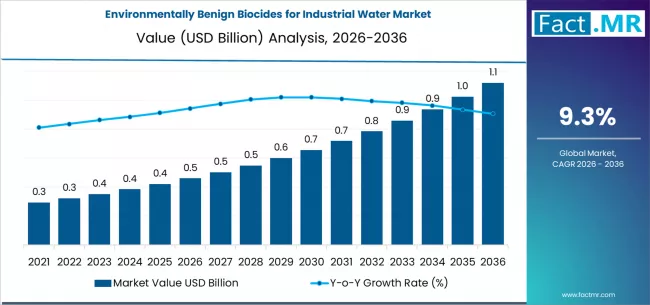
Environmentally Benign Biocides For Industrial Water Market Market Value Analysis

Enzymatic and bio-based biocides represent the most rapidly advancing product category, securing a 30% market share. Cooling towers and industrial water systems constitute the primary application area, accounting for 36% of demand. Liquid dosing systems remain the dominant delivery method, with a 38% share, due to their precision and ease of integration into automated treatment programs.

Growth is anchored in a global regulatory shift away from traditional, persistent biocides and a parallel corporate drive toward sustainable water stewardship. Environmentally benign biocides offer effective control of bacteria, algae, and fungi through mechanisms that minimize toxicity, reduce bioaccumulation potential, and degrade into harmless byproducts. Their adoption is essential for industries to ensure system reliability and prevent biofouling and corrosion while meeting increasingly strict discharge permits and corporate ESG targets.

Innovation is focused on enhancing the efficacy, spectrum of activity, and cost-competitiveness of green biocidal chemistries. The advancement of these solutions is pivotal for the water-intensive industrial sector to achieve operational excellence without compromising its environmental responsibilities.

Metric

Metric Value
Market Value (2026) USD 0.46 Billion
Market Forecast Value (2036) USD 1.12 Billion
Forecast CAGR (2026-2036) 9.3%

Category

Category Segments
Biocide Type Enzymatic & Bio-Based Biocides, Oxidizing Green Biocides, Non-Oxidizing Eco-Friendly Biocides, Plant-Derived Natural Biocides, Other Environmentally Benign Biocides
Application Area Cooling Towers & Industrial Water Systems, Wastewater Treatment, Oil & Gas Water Injection Systems, Pulp, Paper & Food Processing, Other Process Water Applications
Delivery Method Liquid Dosing Systems, Solid Tablet/Powder Formulations, Encapsulated/Time-Release Systems, Bio-Augmentation & Microbial Control, Other Delivery Formats
Region North America, Latin America, Western Europe, Eastern Europe, East Asia, South Asia & Pacific, MEA

Segmental Analysis

By Biocide Type, Which Segment Embodies the Sustainability Trend Most Directly?
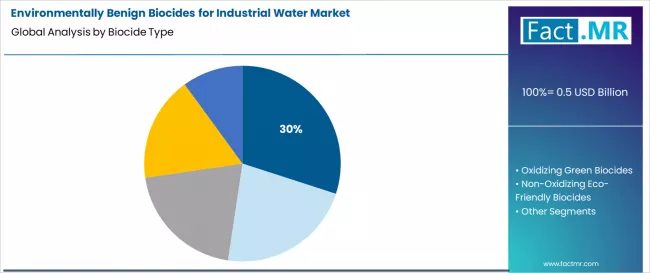
Environmentally Benign Biocides For Industrial Water Market Analysis By Biocide Type

Enzymatic and bio-based biocides lead the market with a 30% share. This dominance reflects the industry's pursuit of high-specificity, biodegradable solutions. These agents work by targeting essential biological structures or processes in microbes, such as cell walls or quorum-sensing pathways, leading to effective control with a favorable environmental profile. Their ability to degrade naturally and often work in synergy with other treatment chemicals positions them as the archetype of next-generation, sustainable microbial management.

By Application Area, Where is the Regulatory and Operational Pressure Greatest?
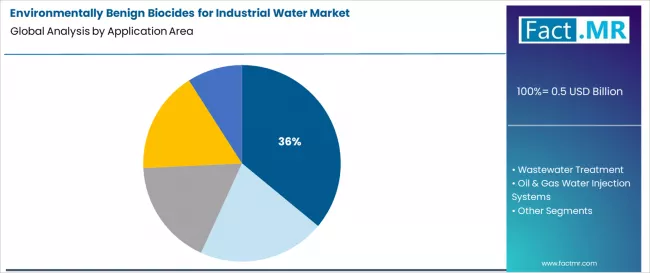
Environmentally Benign Biocides For Industrial Water Market Analysis By Application Area

Cooling towers and industrial water systems represent the largest application area, holding a 36% share. These systems are hotspots for microbial growth, posing risks of biofouling, corrosion, and pathogen proliferation like Legionella.

They are also significant points of chemical discharge, making them prime targets for environmental regulation. The convergence of operational necessity for control and stringent limits on effluent toxicity creates a powerful, dual driver for adopting greener biocidal alternatives in this sector.

By Delivery Method, Which System Aligns with Precise, Automated Water Management?
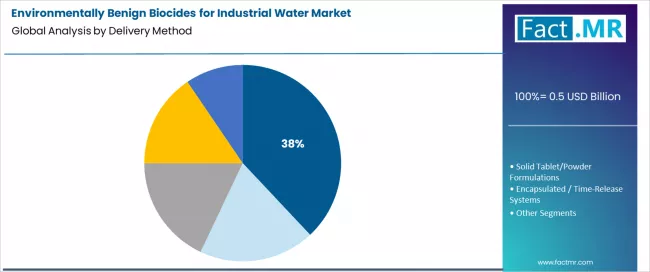
Environmentally Benign Biocides For Industrial Water Market Analysis By Delivery Method

Liquid dosing systems are the leading delivery method, commanding a 38% share. The effective application of green biocides often requires precise control over dosage and timing to maintain efficacy while minimizing use.

Automated liquid dosing systems integrate seamlessly with modern water treatment platforms, allowing for feed-forward or feed-backward control based on system parameters. This precision is crucial for optimizing the performance and cost-effectiveness of often higher-value benign biocides.

What are the Drivers, Restraints, and Key Trends of the Environmentally Benign Biocides Market?

The principal market driver is the tightening global regulatory landscape restricting the use of conventional biocides like isothiazolinones, glutaraldehyde, and certain oxidizing agents due to their toxicity, persistence, or byproduct formation.

Corporate sustainability initiatives and water stewardship certifications further mandate the shift. The need to control problematic microbes in water reuse and zero-liquid discharge systems, where concentrate toxicity is a major concern, is accelerating the adoption of greener alternatives.

A significant market restraint is the higher unit cost and sometimes perceived lower immediate efficacy of some environmentally benign biocides compared to traditional, potent chemistries. Their performance can be more sensitive to water chemistry, organic load, and pH, requiring more sophisticated program management.

There is also a need for greater education and proven long-term case studies to build confidence among plant operators accustomed to the predictable, broad-spectrum punch of traditional biocides.

Key trends include the development of synergistic combination products that pair enzymes with low doses of green oxidizing agents such as hydrogen peroxide for enhanced efficacy. There is growing innovation in quorum sensing inhibitors and biofilm dispersants that prevent microbial communities from forming protective structures.

The market is also moving toward digitally managed treatment programs, where sensor data on microbial activity such as ATP monitoring triggers the targeted dosing of benign biocides, moving from scheduled treatment to condition-based optimization.

Analysis of the Environmentally Benign Biocides Market by Key Countries
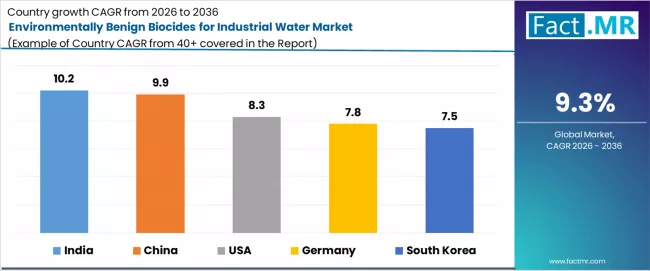
Environmentally Benign Biocides For Industrial Water Market Cagr Analysis By Country

Country CAGR (2026-2036)
India 10.20%
China 9.90%
USA 8.30%
Germany 7.80%
South Korea 7.50%

How do India’s Evolving Environmental Regulations and Industrial Growth Interact?

India’s leading CAGR of 10.20% is driven by the rapid expansion of its industrial base alongside the strengthening and enforcement of water pollution control norms. Regulations are increasingly scrutinizing the environmental impact of industrial discharges, including residual biocides.

This dual dynamic of new facility development and retrofit of existing plants to meet greener standards creates a substantial market for advanced, compliant biocidal technologies that support sustainable industrial growth.

What is the Impact of China’s Ecological Civilization Agenda on Industrial Chemicals?

China’s 9.90% growth is intrinsically linked to its Ecological Civilization framework and chemical registration laws that prioritize safer alternatives. The government's push to upgrade industrial parks and enforce stricter discharge limits is compelling a broad shift in water treatment chemistries.

The sheer scale of Chinese industry and its centralized policy direction provide a powerful catalyst for the widespread adoption of approved, environmentally benign biocides across manufacturing sectors.

How does Regulatory Leadership and Corporate Sustainability in the USA Shape the Market?
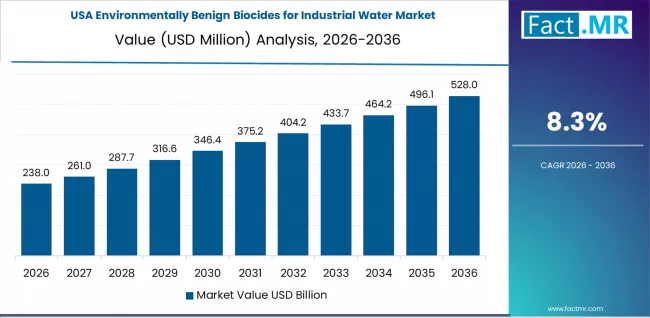
Environmentally Benign Biocides For Industrial Water Market Country Value Analysis

Robust regulatory frameworks such as EPA guidelines and the Clean Water Act underpin the USA’s 8.30% CAGR and strong market pull from corporate sustainability pledges. Major end-users in power, oil & gas, and manufacturing are actively seeking to green their supply chains, including water treatment programs. This environment favors suppliers who can provide proven, high-performance benign biocides backed by comprehensive environmental fate and toxicity data.

Why is Germany a Hub for High-Standard, Innovative Green Chemistry?

Germany’s 7.80% growth reflects its strict implementation of EU chemical regulations such as REACH, and the Biocidal Products Regulation, and its leadership in green chemistry. German industries and water treatment formulators operate under a precautionary principle, driving demand for biocides with excellent ecological profiles. The market is characterized by innovation in advanced, non-toxic modes of action and a preference for solutions that are effective at very low concentrations.

What Role does South Korea’s Green Growth Strategy and Tech Industries Play?

South Korea’s 7.50% growth is anchored in its national green growth strategy and the advanced requirements of its electronics and high-tech manufacturing sectors. These industries require ultrapure water and have zero tolerance for contaminants, including toxic treatment residuals.

This drives demand for highly selective, benign biocides that provide precise microbial control without interfering with sensitive processes or leaving harmful residues in process water or wastewater.

Competitive Landscape of the Environmentally Benign Biocides Market
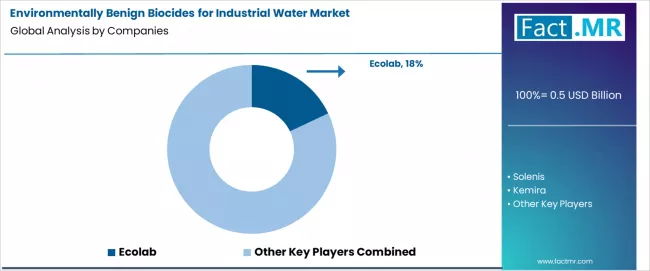
Environmentally Benign Biocides For Industrial Water Market Analysis By Company

The competitive landscape is defined by global water treatment majors investing heavily in green chemistry R&D. Leaders like Ecolab and Solenis compete based on proprietary biocide formulations, extensive environmental and efficacy data packages for regulatory approval, and integrated digital delivery platforms.

Competition centers on providing complete sustainable water treatment programs that bundle benign biocides with monitoring and control services, demonstrating a lower total environmental impact. A key differentiator is the ability to offer technical consulting for regulatory compliance and certification support, helping clients navigate the complex approval landscape for green chemistries.

Key Players in the Environmentally Benign Biocides for Industrial Water Market

  • Ecolab
  • Solenis
  • Kemira Oyj.
  • Veolia Water Technologies
  • Kurita Water Industries

Scope of Report

Items Values
Quantitative Units USD Billion
Biocide Type Enzymatic/Bio-Based, Oxidizing Green, Non-Oxidizing Eco-Friendly, Plant-Derived, Other Benign Biocides
Application Area Cooling Towers, Wastewater Treatment, Oil & Gas Injection, Pulp/Paper/Food Processing, Other Process Water
Delivery Method Liquid Dosing, Solid Formulations, Encapsulated Systems, Bio-Augmentation, Other Formats
Key Countries India, China, USA, Germany, South Korea
Key Companies Ecolab, Solenis, Kemira, Veolia Water Technologies, Kurita Water Industries
Additional Analysis Analysis of modes of action (enzymatic lysis, oxidative stress); environmental fate and degradation pathways; toxicity profiling for aquatic life; compatibility with other water treatment chemicals (corrosion inhibitors, scale control); regulatory approval processes in key regions.

Market by Segments

  • Biocide Type :

    • Enzymatic & Bio-Based Biocides
    • Oxidizing Green Biocides
    • Non-Oxidizing Eco-Friendly Biocides
    • Plant-Derived Natural Biocides
    • Other Environmentally Benign Biocides
  • Application Area :

    • Cooling Towers & Industrial Water Systems
    • Wastewater Treatment
    • Oil & Gas Water Injection Systems
    • Pulp, Paper & Food Processing
    • Other Process Water Applications
  • Delivery Method :

    • Liquid Dosing Systems
    • Solid Tablet/Powder Formulations
    • Encapsulated/Time-Release Systems
    • Bio-Augmentation & Microbial Control
    • Other Delivery Formats
  • Region :

    • North America

      • USA
      • Canada
    • Latin America

      • Brazil
      • Mexico
      • Argentina
      • Rest of Latin America
    • Western Europe

      • Germany
      • UK
      • France
      • Spain
      • Italy
      • BENELUX
      • Rest of Western Europe
    • Eastern Europe

      • Russia
      • Poland
      • Czech Republic
      • Rest of Eastern Europe
    • East Asia

      • China
      • Japan
      • South Korea
      • Rest of East Asia
    • South Asia & Pacific

      • India
      • ASEAN
      • Australia
      • Rest of South Asia & Pacific
    • MEA

      • Saudi Arabia
      • UAE
      • Turkiye
      • Rest of MEA

Table of Content

  1. Executive Summary
    • Global Market Outlook
    • Demand to side Trends
    • Supply to side Trends
    • Technology Roadmap Analysis
    • Analysis and Recommendations
  2. Market Overview
    • Market Coverage / Taxonomy
    • Market Definition / Scope / Limitations
  3. Market Background
    • Market Dynamics
      • Drivers
      • Restraints
      • Opportunity
      • Trends
    • Scenario Forecast
      • Demand in Optimistic Scenario
      • Demand in Likely Scenario
      • Demand in Conservative Scenario
    • Opportunity Map Analysis
    • Product Life Cycle Analysis
    • Supply Chain Analysis
    • Investment Feasibility Matrix
    • Value Chain Analysis
    • PESTLE and Porter’s Analysis
    • Regulatory Landscape
    • Regional Parent Market Outlook
    • Production and Consumption Statistics
    • Import and Export Statistics
  4. Global Market Analysis 2021 to 2025 and Forecast, 2026 to 2036
    • Historical Market Size Value (USD Million) Analysis, 2021 to 2025
    • Current and Future Market Size Value (USD Million) Projections, 2026 to 2036
      • Y to o to Y Growth Trend Analysis
      • Absolute $ Opportunity Analysis
  5. Global Market Pricing Analysis 2021 to 2025 and Forecast 2026 to 2036
  6. Global Market Analysis 2021 to 2025 and Forecast 2026 to 2036, By Biocide Type
    • Introduction / Key Findings
    • Historical Market Size Value (USD Million) Analysis By Biocide Type, 2021 to 2025
    • Current and Future Market Size Value (USD Million) Analysis and Forecast By Biocide Type, 2026 to 2036
      • Enzymatic & Bio-Based Biocides
      • Oxidizing Green Biocides
      • Non-Oxidizing Eco-Friendly Biocides
      • Plant-Derived Natural Biocides
      • Other Environmentally Benign Biocides
    • Y to o to Y Growth Trend Analysis By Biocide Type, 2021 to 2025
    • Absolute $ Opportunity Analysis By Biocide Type, 2026 to 2036
  7. Global Market Analysis 2021 to 2025 and Forecast 2026 to 2036, By Application Area
    • Introduction / Key Findings
    • Historical Market Size Value (USD Million) Analysis By Application Area, 2021 to 2025
    • Current and Future Market Size Value (USD Million) Analysis and Forecast By Application Area, 2026 to 2036
      • Cooling Towers & Industrial Water Systems
      • Wastewater Treatment
      • Oil & Gas Water Injection Systems
      • Pulp, Paper & Food Processing
      • Other Process Water Applications
    • Y to o to Y Growth Trend Analysis By Application Area, 2021 to 2025
    • Absolute $ Opportunity Analysis By Application Area, 2026 to 2036
  8. Global Market Analysis 2021 to 2025 and Forecast 2026 to 2036, By Delivery Method
    • Introduction / Key Findings
    • Historical Market Size Value (USD Million) Analysis By Delivery Method, 2021 to 2025
    • Current and Future Market Size Value (USD Million) Analysis and Forecast By Delivery Method, 2026 to 2036
      • Liquid Dosing Systems
      • Solid Tablet/Powder Formulations
      • Encapsulated / Time-Release Systems
      • Bio-Augmentation & Microbial Control
      • Other Delivery Formats
    • Y to o to Y Growth Trend Analysis By Delivery Method, 2021 to 2025
    • Absolute $ Opportunity Analysis By Delivery Method, 2026 to 2036
  9. Global Market Analysis 2021 to 2025 and Forecast 2026 to 2036, By Region
    • Introduction
    • Historical Market Size Value (USD Million) Analysis By Region, 2021 to 2025
    • Current Market Size Value (USD Million) Analysis and Forecast By Region, 2026 to 2036
      • North America
      • Latin America
      • Western Europe
      • Eastern Europe
      • East Asia
      • South Asia and Pacific
      • Middle East & Africa
    • Market Attractiveness Analysis By Region
  10. North America Market Analysis 2021 to 2025 and Forecast 2026 to 2036, By Country
    • Historical Market Size Value (USD Million) Trend Analysis By Market Taxonomy, 2021 to 2025
    • Market Size Value (USD Million) Forecast By Market Taxonomy, 2026 to 2036
      • By Country
        • USA
        • Canada
        • Mexico
      • By Biocide Type
      • By Application Area
      • By Delivery Method
    • Market Attractiveness Analysis
      • By Country
      • By Biocide Type
      • By Application Area
      • By Delivery Method
    • Key Takeaways
  11. Latin America Market Analysis 2021 to 2025 and Forecast 2026 to 2036, By Country
    • Historical Market Size Value (USD Million) Trend Analysis By Market Taxonomy, 2021 to 2025
    • Market Size Value (USD Million) Forecast By Market Taxonomy, 2026 to 2036
      • By Country
        • Brazil
        • Chile
        • Rest of Latin America
      • By Biocide Type
      • By Application Area
      • By Delivery Method
    • Market Attractiveness Analysis
      • By Country
      • By Biocide Type
      • By Application Area
      • By Delivery Method
    • Key Takeaways
  12. Western Europe Market Analysis 2021 to 2025 and Forecast 2026 to 2036, By Country
    • Historical Market Size Value (USD Million) Trend Analysis By Market Taxonomy, 2021 to 2025
    • Market Size Value (USD Million) Forecast By Market Taxonomy, 2026 to 2036
      • By Country
        • Germany
        • UK
        • Italy
        • Spain
        • France
        • Nordic
        • BENELUX
        • Rest of Western Europe
      • By Biocide Type
      • By Application Area
      • By Delivery Method
    • Market Attractiveness Analysis
      • By Country
      • By Biocide Type
      • By Application Area
      • By Delivery Method
    • Key Takeaways
  13. Eastern Europe Market Analysis 2021 to 2025 and Forecast 2026 to 2036, By Country
    • Historical Market Size Value (USD Million) Trend Analysis By Market Taxonomy, 2021 to 2025
    • Market Size Value (USD Million) Forecast By Market Taxonomy, 2026 to 2036
      • By Country
        • Russia
        • Poland
        • Hungary
        • Balkan & Baltic
        • Rest of Eastern Europe
      • By Biocide Type
      • By Application Area
      • By Delivery Method
    • Market Attractiveness Analysis
      • By Country
      • By Biocide Type
      • By Application Area
      • By Delivery Method
    • Key Takeaways
  14. East Asia Market Analysis 2021 to 2025 and Forecast 2026 to 2036, By Country
    • Historical Market Size Value (USD Million) Trend Analysis By Market Taxonomy, 2021 to 2025
    • Market Size Value (USD Million) Forecast By Market Taxonomy, 2026 to 2036
      • By Country
        • China
        • Japan
        • South Korea
      • By Biocide Type
      • By Application Area
      • By Delivery Method
    • Market Attractiveness Analysis
      • By Country
      • By Biocide Type
      • By Application Area
      • By Delivery Method
    • Key Takeaways
  15. South Asia and Pacific Market Analysis 2021 to 2025 and Forecast 2026 to 2036, By Country
    • Historical Market Size Value (USD Million) Trend Analysis By Market Taxonomy, 2021 to 2025
    • Market Size Value (USD Million) Forecast By Market Taxonomy, 2026 to 2036
      • By Country
        • India
        • ASEAN
        • Australia & New Zealand
        • Rest of South Asia and Pacific
      • By Biocide Type
      • By Application Area
      • By Delivery Method
    • Market Attractiveness Analysis
      • By Country
      • By Biocide Type
      • By Application Area
      • By Delivery Method
    • Key Takeaways
  16. Middle East & Africa Market Analysis 2021 to 2025 and Forecast 2026 to 2036, By Country
    • Historical Market Size Value (USD Million) Trend Analysis By Market Taxonomy, 2021 to 2025
    • Market Size Value (USD Million) Forecast By Market Taxonomy, 2026 to 2036
      • By Country
        • Kingdom of Saudi Arabia
        • Other GCC Countries
        • Turkiye
        • South Africa
        • Other African Union
        • Rest of Middle East & Africa
      • By Biocide Type
      • By Application Area
      • By Delivery Method
    • Market Attractiveness Analysis
      • By Country
      • By Biocide Type
      • By Application Area
      • By Delivery Method
    • Key Takeaways
  17. Key Countries Market Analysis
    • USA
      • Pricing Analysis
      • Market Share Analysis, 2025
        • By Biocide Type
        • By Application Area
        • By Delivery Method
    • Canada
      • Pricing Analysis
      • Market Share Analysis, 2025
        • By Biocide Type
        • By Application Area
        • By Delivery Method
    • Mexico
      • Pricing Analysis
      • Market Share Analysis, 2025
        • By Biocide Type
        • By Application Area
        • By Delivery Method
    • Brazil
      • Pricing Analysis
      • Market Share Analysis, 2025
        • By Biocide Type
        • By Application Area
        • By Delivery Method
    • Chile
      • Pricing Analysis
      • Market Share Analysis, 2025
        • By Biocide Type
        • By Application Area
        • By Delivery Method
    • Germany
      • Pricing Analysis
      • Market Share Analysis, 2025
        • By Biocide Type
        • By Application Area
        • By Delivery Method
    • UK
      • Pricing Analysis
      • Market Share Analysis, 2025
        • By Biocide Type
        • By Application Area
        • By Delivery Method
    • Italy
      • Pricing Analysis
      • Market Share Analysis, 2025
        • By Biocide Type
        • By Application Area
        • By Delivery Method
    • Spain
      • Pricing Analysis
      • Market Share Analysis, 2025
        • By Biocide Type
        • By Application Area
        • By Delivery Method
    • France
      • Pricing Analysis
      • Market Share Analysis, 2025
        • By Biocide Type
        • By Application Area
        • By Delivery Method
    • India
      • Pricing Analysis
      • Market Share Analysis, 2025
        • By Biocide Type
        • By Application Area
        • By Delivery Method
    • ASEAN
      • Pricing Analysis
      • Market Share Analysis, 2025
        • By Biocide Type
        • By Application Area
        • By Delivery Method
    • Australia & New Zealand
      • Pricing Analysis
      • Market Share Analysis, 2025
        • By Biocide Type
        • By Application Area
        • By Delivery Method
    • China
      • Pricing Analysis
      • Market Share Analysis, 2025
        • By Biocide Type
        • By Application Area
        • By Delivery Method
    • Japan
      • Pricing Analysis
      • Market Share Analysis, 2025
        • By Biocide Type
        • By Application Area
        • By Delivery Method
    • South Korea
      • Pricing Analysis
      • Market Share Analysis, 2025
        • By Biocide Type
        • By Application Area
        • By Delivery Method
    • Russia
      • Pricing Analysis
      • Market Share Analysis, 2025
        • By Biocide Type
        • By Application Area
        • By Delivery Method
    • Poland
      • Pricing Analysis
      • Market Share Analysis, 2025
        • By Biocide Type
        • By Application Area
        • By Delivery Method
    • Hungary
      • Pricing Analysis
      • Market Share Analysis, 2025
        • By Biocide Type
        • By Application Area
        • By Delivery Method
    • Kingdom of Saudi Arabia
      • Pricing Analysis
      • Market Share Analysis, 2025
        • By Biocide Type
        • By Application Area
        • By Delivery Method
    • Turkiye
      • Pricing Analysis
      • Market Share Analysis, 2025
        • By Biocide Type
        • By Application Area
        • By Delivery Method
    • South Africa
      • Pricing Analysis
      • Market Share Analysis, 2025
        • By Biocide Type
        • By Application Area
        • By Delivery Method
  18. Market Structure Analysis
    • Competition Dashboard
    • Competition Benchmarking
    • Market Share Analysis of Top Players
      • By Regional
      • By Biocide Type
      • By Application Area
      • By Delivery Method
  19. Competition Analysis
    • Competition Deep Dive
      • Ecolab
        • Overview
        • Product Portfolio
        • Profitability by Market Segments (Product/Age /Sales Channel/Region)
        • Sales Footprint
        • Strategy Overview
          • Marketing Strategy
          • Product Strategy
          • Channel Strategy
      • Solenis
      • Kemira
      • Veolia Water Technologies
      • Kurita Water Industries
  20. Assumptions & Acronyms Used
  21. Research Methodology

List Of Table

  • Table 1: Global Market Value (USD Million) Forecast by Region, 2021 to 2036
  • Table 2: Global Market Value (USD Million) Forecast by Biocide Type, 2021 to 2036
  • Table 3: Global Market Value (USD Million) Forecast by Application Area, 2021 to 2036
  • Table 4: Global Market Value (USD Million) Forecast by Delivery Method, 2021 to 2036
  • Table 5: North America Market Value (USD Million) Forecast by Country, 2021 to 2036
  • Table 6: North America Market Value (USD Million) Forecast by Biocide Type, 2021 to 2036
  • Table 7: North America Market Value (USD Million) Forecast by Application Area, 2021 to 2036
  • Table 8: North America Market Value (USD Million) Forecast by Delivery Method, 2021 to 2036
  • Table 9: Latin America Market Value (USD Million) Forecast by Country, 2021 to 2036
  • Table 10: Latin America Market Value (USD Million) Forecast by Biocide Type, 2021 to 2036
  • Table 11: Latin America Market Value (USD Million) Forecast by Application Area, 2021 to 2036
  • Table 12: Latin America Market Value (USD Million) Forecast by Delivery Method, 2021 to 2036
  • Table 13: Western Europe Market Value (USD Million) Forecast by Country, 2021 to 2036
  • Table 14: Western Europe Market Value (USD Million) Forecast by Biocide Type, 2021 to 2036
  • Table 15: Western Europe Market Value (USD Million) Forecast by Application Area, 2021 to 2036
  • Table 16: Western Europe Market Value (USD Million) Forecast by Delivery Method, 2021 to 2036
  • Table 17: Eastern Europe Market Value (USD Million) Forecast by Country, 2021 to 2036
  • Table 18: Eastern Europe Market Value (USD Million) Forecast by Biocide Type, 2021 to 2036
  • Table 19: Eastern Europe Market Value (USD Million) Forecast by Application Area, 2021 to 2036
  • Table 20: Eastern Europe Market Value (USD Million) Forecast by Delivery Method, 2021 to 2036
  • Table 21: East Asia Market Value (USD Million) Forecast by Country, 2021 to 2036
  • Table 22: East Asia Market Value (USD Million) Forecast by Biocide Type, 2021 to 2036
  • Table 23: East Asia Market Value (USD Million) Forecast by Application Area, 2021 to 2036
  • Table 24: East Asia Market Value (USD Million) Forecast by Delivery Method, 2021 to 2036
  • Table 25: South Asia and Pacific Market Value (USD Million) Forecast by Country, 2021 to 2036
  • Table 26: South Asia and Pacific Market Value (USD Million) Forecast by Biocide Type, 2021 to 2036
  • Table 27: South Asia and Pacific Market Value (USD Million) Forecast by Application Area, 2021 to 2036
  • Table 28: South Asia and Pacific Market Value (USD Million) Forecast by Delivery Method, 2021 to 2036
  • Table 29: Middle East & Africa Market Value (USD Million) Forecast by Country, 2021 to 2036
  • Table 30: Middle East & Africa Market Value (USD Million) Forecast by Biocide Type, 2021 to 2036
  • Table 31: Middle East & Africa Market Value (USD Million) Forecast by Application Area, 2021 to 2036
  • Table 32: Middle East & Africa Market Value (USD Million) Forecast by Delivery Method, 2021 to 2036

List Of Figures

  • Figure 1: Global Market Pricing Analysis
  • Figure 2: Global Market Value (USD Million) Forecast 2021 to 2036
  • Figure 3: Global Market Value Share and BPS Analysis by Biocide Type, 2026 and 2036
  • Figure 4: Global Market Y to o to Y Growth Comparison by Biocide Type, 2026 to 2036
  • Figure 5: Global Market Attractiveness Analysis by Biocide Type
  • Figure 6: Global Market Value Share and BPS Analysis by Application Area, 2026 and 2036
  • Figure 7: Global Market Y to o to Y Growth Comparison by Application Area, 2026 to 2036
  • Figure 8: Global Market Attractiveness Analysis by Application Area
  • Figure 9: Global Market Value Share and BPS Analysis by Delivery Method, 2026 and 2036
  • Figure 10: Global Market Y to o to Y Growth Comparison by Delivery Method, 2026 to 2036
  • Figure 11: Global Market Attractiveness Analysis by Delivery Method
  • Figure 12: Global Market Value (USD Million) Share and BPS Analysis by Region, 2026 and 2036
  • Figure 13: Global Market Y to o to Y Growth Comparison by Region, 2026 to 2036
  • Figure 14: Global Market Attractiveness Analysis by Region
  • Figure 15: North America Market Incremental Dollar Opportunity, 2026 to 2036
  • Figure 16: Latin America Market Incremental Dollar Opportunity, 2026 to 2036
  • Figure 17: Western Europe Market Incremental Dollar Opportunity, 2026 to 2036
  • Figure 18: Eastern Europe Market Incremental Dollar Opportunity, 2026 to 2036
  • Figure 19: East Asia Market Incremental Dollar Opportunity, 2026 to 2036
  • Figure 20: South Asia and Pacific Market Incremental Dollar Opportunity, 2026 to 2036
  • Figure 21: Middle East & Africa Market Incremental Dollar Opportunity, 2026 to 2036
  • Figure 22: North America Market Value Share and BPS Analysis by Country, 2026 and 2036
  • Figure 23: North America Market Value Share and BPS Analysis by Biocide Type, 2026 and 2036
  • Figure 24: North America Market Y to o to Y Growth Comparison by Biocide Type, 2026 to 2036
  • Figure 25: North America Market Attractiveness Analysis by Biocide Type
  • Figure 26: North America Market Value Share and BPS Analysis by Application Area, 2026 and 2036
  • Figure 27: North America Market Y to o to Y Growth Comparison by Application Area, 2026 to 2036
  • Figure 28: North America Market Attractiveness Analysis by Application Area
  • Figure 29: North America Market Value Share and BPS Analysis by Delivery Method, 2026 and 2036
  • Figure 30: North America Market Y to o to Y Growth Comparison by Delivery Method, 2026 to 2036
  • Figure 31: North America Market Attractiveness Analysis by Delivery Method
  • Figure 32: Latin America Market Value Share and BPS Analysis by Country, 2026 and 2036
  • Figure 33: Latin America Market Value Share and BPS Analysis by Biocide Type, 2026 and 2036
  • Figure 34: Latin America Market Y to o to Y Growth Comparison by Biocide Type, 2026 to 2036
  • Figure 35: Latin America Market Attractiveness Analysis by Biocide Type
  • Figure 36: Latin America Market Value Share and BPS Analysis by Application Area, 2026 and 2036
  • Figure 37: Latin America Market Y to o to Y Growth Comparison by Application Area, 2026 to 2036
  • Figure 38: Latin America Market Attractiveness Analysis by Application Area
  • Figure 39: Latin America Market Value Share and BPS Analysis by Delivery Method, 2026 and 2036
  • Figure 40: Latin America Market Y to o to Y Growth Comparison by Delivery Method, 2026 to 2036
  • Figure 41: Latin America Market Attractiveness Analysis by Delivery Method
  • Figure 42: Western Europe Market Value Share and BPS Analysis by Country, 2026 and 2036
  • Figure 43: Western Europe Market Value Share and BPS Analysis by Biocide Type, 2026 and 2036
  • Figure 44: Western Europe Market Y to o to Y Growth Comparison by Biocide Type, 2026 to 2036
  • Figure 45: Western Europe Market Attractiveness Analysis by Biocide Type
  • Figure 46: Western Europe Market Value Share and BPS Analysis by Application Area, 2026 and 2036
  • Figure 47: Western Europe Market Y to o to Y Growth Comparison by Application Area, 2026 to 2036
  • Figure 48: Western Europe Market Attractiveness Analysis by Application Area
  • Figure 49: Western Europe Market Value Share and BPS Analysis by Delivery Method, 2026 and 2036
  • Figure 50: Western Europe Market Y to o to Y Growth Comparison by Delivery Method, 2026 to 2036
  • Figure 51: Western Europe Market Attractiveness Analysis by Delivery Method
  • Figure 52: Eastern Europe Market Value Share and BPS Analysis by Country, 2026 and 2036
  • Figure 53: Eastern Europe Market Value Share and BPS Analysis by Biocide Type, 2026 and 2036
  • Figure 54: Eastern Europe Market Y to o to Y Growth Comparison by Biocide Type, 2026 to 2036
  • Figure 55: Eastern Europe Market Attractiveness Analysis by Biocide Type
  • Figure 56: Eastern Europe Market Value Share and BPS Analysis by Application Area, 2026 and 2036
  • Figure 57: Eastern Europe Market Y to o to Y Growth Comparison by Application Area, 2026 to 2036
  • Figure 58: Eastern Europe Market Attractiveness Analysis by Application Area
  • Figure 59: Eastern Europe Market Value Share and BPS Analysis by Delivery Method, 2026 and 2036
  • Figure 60: Eastern Europe Market Y to o to Y Growth Comparison by Delivery Method, 2026 to 2036
  • Figure 61: Eastern Europe Market Attractiveness Analysis by Delivery Method
  • Figure 62: East Asia Market Value Share and BPS Analysis by Country, 2026 and 2036
  • Figure 63: East Asia Market Value Share and BPS Analysis by Biocide Type, 2026 and 2036
  • Figure 64: East Asia Market Y to o to Y Growth Comparison by Biocide Type, 2026 to 2036
  • Figure 65: East Asia Market Attractiveness Analysis by Biocide Type
  • Figure 66: East Asia Market Value Share and BPS Analysis by Application Area, 2026 and 2036
  • Figure 67: East Asia Market Y to o to Y Growth Comparison by Application Area, 2026 to 2036
  • Figure 68: East Asia Market Attractiveness Analysis by Application Area
  • Figure 69: East Asia Market Value Share and BPS Analysis by Delivery Method, 2026 and 2036
  • Figure 70: East Asia Market Y to o to Y Growth Comparison by Delivery Method, 2026 to 2036
  • Figure 71: East Asia Market Attractiveness Analysis by Delivery Method
  • Figure 72: South Asia and Pacific Market Value Share and BPS Analysis by Country, 2026 and 2036
  • Figure 73: South Asia and Pacific Market Value Share and BPS Analysis by Biocide Type, 2026 and 2036
  • Figure 74: South Asia and Pacific Market Y to o to Y Growth Comparison by Biocide Type, 2026 to 2036
  • Figure 75: South Asia and Pacific Market Attractiveness Analysis by Biocide Type
  • Figure 76: South Asia and Pacific Market Value Share and BPS Analysis by Application Area, 2026 and 2036
  • Figure 77: South Asia and Pacific Market Y to o to Y Growth Comparison by Application Area, 2026 to 2036
  • Figure 78: South Asia and Pacific Market Attractiveness Analysis by Application Area
  • Figure 79: South Asia and Pacific Market Value Share and BPS Analysis by Delivery Method, 2026 and 2036
  • Figure 80: South Asia and Pacific Market Y to o to Y Growth Comparison by Delivery Method, 2026 to 2036
  • Figure 81: South Asia and Pacific Market Attractiveness Analysis by Delivery Method
  • Figure 82: Middle East & Africa Market Value Share and BPS Analysis by Country, 2026 and 2036
  • Figure 83: Middle East & Africa Market Value Share and BPS Analysis by Biocide Type, 2026 and 2036
  • Figure 84: Middle East & Africa Market Y to o to Y Growth Comparison by Biocide Type, 2026 to 2036
  • Figure 85: Middle East & Africa Market Attractiveness Analysis by Biocide Type
  • Figure 86: Middle East & Africa Market Value Share and BPS Analysis by Application Area, 2026 and 2036
  • Figure 87: Middle East & Africa Market Y to o to Y Growth Comparison by Application Area, 2026 to 2036
  • Figure 88: Middle East & Africa Market Attractiveness Analysis by Application Area
  • Figure 89: Middle East & Africa Market Value Share and BPS Analysis by Delivery Method, 2026 and 2036
  • Figure 90: Middle East & Africa Market Y to o to Y Growth Comparison by Delivery Method, 2026 to 2036
  • Figure 91: Middle East & Africa Market Attractiveness Analysis by Delivery Method
  • Figure 92: Global Market - Tier Structure Analysis
  • Figure 93: Global Market - Company Share Analysis

- FAQs -

How big is the environmentally benign biocides for industrial water market in 2026?

The global environmentally benign biocides for industrial water market is estimated to be valued at USD 0.5 billion in 2026.

What will be the size of environmentally benign biocides for industrial water market in 2036?

The market size for the environmentally benign biocides for industrial water market is projected to reach USD 1.1 billion by 2036.

How much will be the environmentally benign biocides for industrial water market growth between 2026 and 2036?

The environmentally benign biocides for industrial water market is expected to grow at a 9.3% CAGR between 2026 and 2036.

What are the key product types in the environmentally benign biocides for industrial water market?

The key product types in environmentally benign biocides for industrial water market are enzymatic & bio-based biocides, oxidizing green biocides, non-oxidizing eco-friendly biocides, plant-derived natural biocides and other environmentally benign biocides.

Which application area segment to contribute significant share in the environmentally benign biocides for industrial water market in 2026?

In terms of application area, cooling towers & industrial water systems segment to command 36.0% share in the environmentally benign biocides for industrial water market in 2026.

Environmentally Benign Biocides for Industrial Water Market