EV PCB Xpedition Scalable Platforms Market
EV PCB Xpedition Scalable Platforms Market Size and Share Forecast Outlook 2026 to 2036
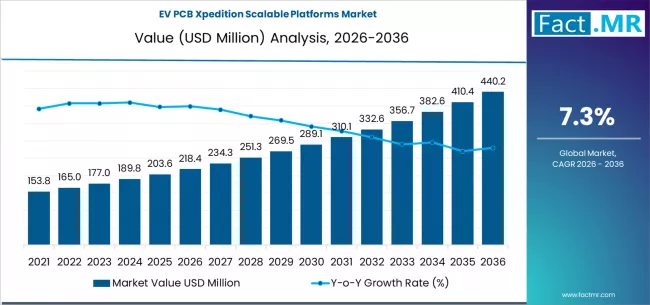
Ev pcb xpedition scalable platforms market is projected to grow from USD 218.4 million in 2026 to USD 440.2 million by 2036, at a CAGR of 7.3%. Passenger EVs will dominate with a 48.0% market share, while high-density (>10 layers) will lead the pcb complexity segment with a 52.0% share.
EV PCB Xpedition Scalable Platforms Market Forecast and Outlook 2026 to 2036
The global EV PCB xpedition scalable platforms market is projected to grow from USD 218.40 million in 2026 to USD 440.20 million by 2036, reflecting a steady CAGR of 7.3%. This growth is fundamentally driven by the automotive industry's rapid electrification, which demands increasingly sophisticated, high-density, and reliable PCBs for power management, battery control, and ADAS.
Key Takeaways from the EV PCB Xpedition Scalable Platforms Market
- Market Value for 2026: USD 218.40 Million
- Market Value for 2036: USD 440.20 Million
- Forecast CAGR (2026-2036): 7.3%
- Leading Vehicle Type Segment (2026): Passenger EVs (48%)
- Leading PCB Complexity Segment (2026): High-density (>10 layers) (52%)
- Leading Buyer Type Segment (2026): OEMs (57%)
- Key Growth Countries: China (7.80% CAGR), USA (7.50% CAGR), Germany (7.00% CAGR), Japan (6.80% CAGR)
- Key Players in the Market: Siemens EDA, Cadence, Zuken, Altium, DownStream Tech, Altair

The market is characterized by the dominance of passenger EVs (48% share) as the primary vehicle segment, high-density PCBs exceeding 10 layers (52% share) due to functional integration, and OEMs (57% share) as the key buyers driving platform standardization. Key growth regions include China (7.80% CAGR), the USA (7.50%), Germany (7.00%), and Japan (6.80%), reflecting global EV production hubs.
The expansion is fueled by the critical need for scalable, collaborative EDA platforms that can manage design complexity, ensure signal and power integrity, and accelerate time-to-market for new EV models, positioning these software solutions as vital tools in the automotive supply chain.
Metric
| Metric | Value |
|---|---|
| Market Value (2026) | USD 218.40 Million |
| Market Forecast Value (2036) | USD 440.20 Million |
| Forecast CAGR (2026-2036) | 7.3% |
Category
| Category | Segments |
|---|---|
| Vehicle Type | Passenger EVs, Commercial EVs, 2W/3W EVs |
| PCB Complexity | High-density (>10 layers), Medium Density, Low Density |
| Buyer Type | OEMs, Tier-1 Suppliers |
| Region | North America, Latin America, Western Europe, Eastern Europe, East Asia, South Asia & Pacific, MEA |
Segmental Analysis
By Vehicle Type, Which Segment Demands the Most Advanced PCB Designs?
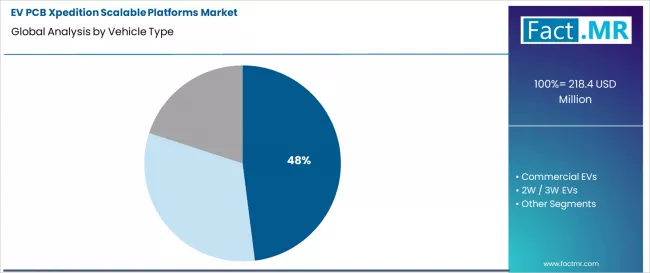
Passenger EVs lead the vehicle type segment with a commanding 48% share. This dominance is not merely a function of high production volume, but a direct consequence of the sector's intense competitive landscape and consumer demand for premium, technology-laden features. Manufacturers are engaged in a continuous race to integrate more sophisticated systems into each new model.
This includes high-resolution, multi-display infotainment hubs, comprehensive ADAS with arrays of cameras, radar, and LiDAR sensors, and increasingly complex BMS that must precisely monitor hundreds of individual cells. Each subsystem translates into specific, demanding PCB requirements: infotainment requires high-speed digital routing for data buses; ADAS sensors necessitate impeccable signal integrity for high-frequency, low-noise analog and RF circuits; and BMS boards must handle high currents with robust thermal management.
By PCB Complexity, Where is the Core Technical Challenge?
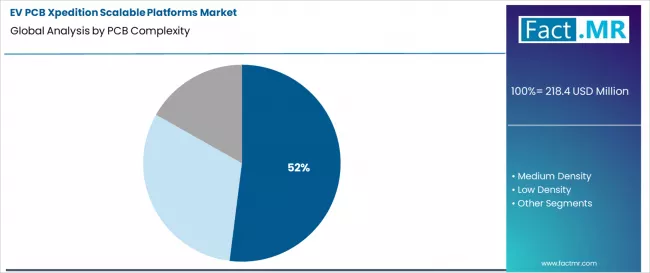
High-density PCBs, defined as those exceeding 10 layers, constitute the dominant complexity segment, holding a 52% market share. This reflects the fundamental electrical and spatial challenges at the heart of EV design. The powertrain alone requires boards that can safely route hundreds of amps, necessitating thick copper layers and careful planning to manage parasitic inductance and heat dissipation.
The vehicle's nervous system demands intricate routing for high-speed differential pairs) with strict impedance control and crosstalk mitigation. Furthermore, with space at a premium, these high-power and high-signal-integrity requirements must be solved within a tightly constrained multilayer stack-up, often incorporating buried and blind vias.
By Buyer Type, Who is Driving Platform Standardization?
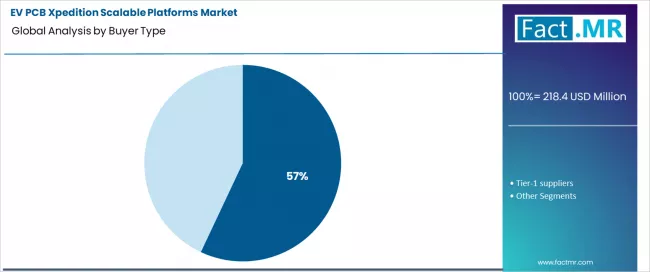
OEMs are the unequivocal leading buyer type, accounting for 57% of the market. This central role stems from their strategic move to control and streamline the increasingly complex electronics supply chain. To manage risk, ensure quality, and accelerate development cycles, OEMs are moving beyond specifying components to mandating the very digital tools used in design.
By standardizing on specific EDA platforms, OEMs achieve several critical objectives, seamless design data compatibility eliminates translation errors; concurrent engineering allows global teams to collaborate on a single digital model in real-time; and unified design rule sets ensure every PCB, regardless of supplier origin, meets the OEM's exacting electrical and manufacturing standards.
What are the Key Drivers, Restraints, Opportunities, and Trends Influencing Growth?
The primary market driver is the exponential increase in electronic content per vehicle, especially in EVs, which multiplies PCB complexity and the need for robust, first-time-right design tools to avoid costly physical prototyping delays.
A significant restraint is the high cost of licensing and implementing enterprise-scale EDA platforms, along with the associated training required for engineering teams, which can be a barrier for smaller Tier-1 suppliers.
A major opportunity lies in the integration of AI/ML within these platforms for predictive layout optimization, automated design rule checking, and thermal simulation, which can drastically reduce manual iteration.
The dominant trend is the shift towards cloud-enabled, collaborative platform environments that allow globally dispersed OEM and supplier engineering teams to work concurrently on the same PCB design data, facilitating faster innovation cycles and improved version control.
Analysis of the EV PCB Xpedition Scalable Platforms Market by Key Countries

| Country | CAGR (2026-2036) |
|---|---|
| China | 7.80% |
| USA | 7.50% |
| Germany | 7.00% |
| Japan | 6.80% |
How does China's EV Production Scale and Speed Drive Demand?
China's leading 7.80% CAGR is propelled by its position as the world's largest EV producer and consumer. The breakneck pace of model development and the dense ecosystem of local OEMs and battery manufacturers create massive demand for efficient PCB design tools.
The market focuses on platforms that enable rapid design iteration, support high-voltage power electronics, and facilitate collaboration across a vast, competitive supplier network to maintain cost and speed advantages.
What drives Demand in the USA's Innovation-Centric EV Sector?
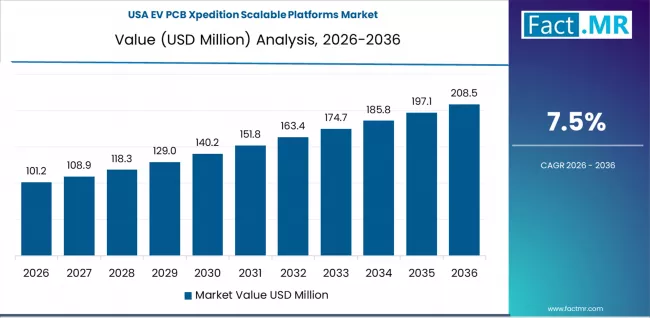
The USA's 7.50% growth is fueled by its focus on innovative, software-defined EV architectures and advanced autonomous driving technology. American OEMs and tech-centric EV startups require EDA platforms that can handle extreme signal integrity challenges, integrate with mechanical CAD for structural electronics, and support the complex PCBs needed for high-performance computing domains within the vehicle, prioritizing tool capability over cost.
Why is Germany a Key Market for High-Engineering-Value Solutions?
Germany's 7.00% CAGR reflects the engineering-driven approach of its premium automotive industry. German OEMs and Tier-1 suppliers demand EDA platforms that offer unparalleled precision, rigorous simulation capabilities for EMI/EMC, thermal, and vibration, and seamless integration with existing automotive PLM and data management systems, ensuring reliability and compliance with stringent quality and safety standards.
How does Japan's Expertise in Miniaturization and Reliability Shape Its Market?
Japan's 6.80% growth is linked to its historical excellence in electronics miniaturization and quality control. Japanese manufacturers, serving both domestic and global EV markets, require EDA tools that excel in designing highly dense, reliable PCBs for compact power modules and sensor fusion units, with a strong emphasis on design-for-manufacturability (DFM) and long-term durability analysis.
Competitive Landscape of the EV PCB Xpedition Scalable Platforms Market

The competitive landscape is dominated by established EDA giants, with Siemens EDA and Cadence holding leading positions, followed by specialists like Zuken. Competition centers on providing comprehensive, automotive-tailored tool flows that cover the entire PCB development process from schematic capture and multi-board system design to simulation, analysis, and manufacturing output.
Success depends on deep partnerships with leading automotive OEMs and Tier-1s, achieving compliance with industry-specific standards (like ISO 26262 for functional safety), and continuously enhancing tools to address emerging challenges in high-power and high-speed design unique to electric vehicles.
Key Players in the EV PCB Xpedition Scalable Platforms Market
- Siemens EDA
- Cadence
- Zuken
- Altium
- DownStream Tech
- Altair
Scope of Report
| Items | Values |
|---|---|
| Quantitative Units | USD Million |
| Vehicle Type | Passenger EVs, Commercial EVs, 2W/3W EVs |
| PCB Complexity | High-density (>10 layers), Medium Density, Low Density |
| Buyer Type | OEMs, Tier-1 Suppliers |
| Key Countries | China, USA, Germany, Japan |
| Key Companies | Siemens EDA, Cadence, Zuken, Altium, DownStream Tech, Altair |
| Additional Analysis | Comparative analysis of platform capabilities for high-current vs. high-speed design; study of integration requirements with MCAD and automotive PLM systems; total cost of ownership analysis for enterprise EDA platforms; impact of design reuse and IP management strategies on development speed; assessment of training and support ecosystems for automotive PCB designers. |
Market by Segments
-
Vehicle Type :
- Passenger EVs
- Commercial EVs
- 2W/3W EVs
-
PCB Complexity :
- High-density (>10 layers)
- Medium Density
- Low Density
-
Buyer Type :
- OEMs
- Tier-1 Suppliers
-
Region :
-
North America
- USA
- Canada
-
Latin America
- Brazil
- Mexico
- Argentina
- Rest of Latin America
-
Western Europe
- Germany
- France
- Italy
- Spain
- UK
- BENELUX
- Rest of Western Europe
-
Eastern Europe
- Russia
- Poland
- Czech Republic
- Rest of Eastern Europe
-
East Asia
- China
- Japan
- South Korea
- Rest of East Asia
-
South Asia & Pacific
- India
- ASEAN
- Australia
- Rest of South Asia & Pacific
-
MEA
- GCC Countries
- South Africa
- Turkiye
- Rest of MEA
-
References
- International Electrotechnical Commission (IEC). (2025). Standards for Printed Boards and Assemblies for Automotive Applications. IEC.
- Mittal, S., & Kumar, A. (2025). Design Challenges for High-Power Electronics in Electric Vehicles. IEEE Transactions on Transportation Electrification.
- Siemens Digital Industries Software. (2025). White Paper: Xpedition for Automotive and Electric Vehicle Design. Siemens AG.
- Society of Automotive Engineers (SAE). (2025). Vehicle Architecture Standards and the Impact on E/E Design. SAE International.
- Zuken. (2025). Case Study: Streamlining ECU Development for Electric Commercial Vehicles. Zuken Ltd.
Table of Content
- Executive Summary
- Global Market Outlook
- Demand to side Trends
- Supply to side Trends
- Technology Roadmap Analysis
- Analysis and Recommendations
- Market Overview
- Market Coverage / Taxonomy
- Market Definition / Scope / Limitations
- Market Background
- Market Dynamics
- Drivers
- Restraints
- Opportunity
- Trends
- Scenario Forecast
- Demand in Optimistic Scenario
- Demand in Likely Scenario
- Demand in Conservative Scenario
- Opportunity Map Analysis
- Product Life Cycle Analysis
- Supply Chain Analysis
- Investment Feasibility Matrix
- Value Chain Analysis
- PESTLE and Porter’s Analysis
- Regulatory Landscape
- Regional Parent Market Outlook
- Production and Consumption Statistics
- Import and Export Statistics
- Market Dynamics
- Global Market Analysis 2021 to 2025 and Forecast, 2026 to 2036
- Historical Market Size Value (USD Million) Analysis, 2021 to 2025
- Current and Future Market Size Value (USD Million) Projections, 2026 to 2036
- Y to o to Y Growth Trend Analysis
- Absolute $ Opportunity Analysis
- Global Market Pricing Analysis 2021 to 2025 and Forecast 2026 to 2036
- Global Market Analysis 2021 to 2025 and Forecast 2026 to 2036, By Vehicle Type
- Introduction / Key Findings
- Historical Market Size Value (USD Million) Analysis By Vehicle Type, 2021 to 2025
- Current and Future Market Size Value (USD Million) Analysis and Forecast By Vehicle Type, 2026 to 2036
- Passenger EVs
- Commercial EVs
- 2W / 3W EVs
- Passenger EVs
- Y to o to Y Growth Trend Analysis By Vehicle Type, 2021 to 2025
- Absolute $ Opportunity Analysis By Vehicle Type, 2026 to 2036
- Global Market Analysis 2021 to 2025 and Forecast 2026 to 2036, By PCB Complexity
- Introduction / Key Findings
- Historical Market Size Value (USD Million) Analysis By PCB Complexity, 2021 to 2025
- Current and Future Market Size Value (USD Million) Analysis and Forecast By PCB Complexity, 2026 to 2036
- High-density (>10 layers)
- Medium Density
- Low Density
- High-density (>10 layers)
- Y to o to Y Growth Trend Analysis By PCB Complexity, 2021 to 2025
- Absolute $ Opportunity Analysis By PCB Complexity, 2026 to 2036
- Global Market Analysis 2021 to 2025 and Forecast 2026 to 2036, By Buyer Type
- Introduction / Key Findings
- Historical Market Size Value (USD Million) Analysis By Buyer Type, 2021 to 2025
- Current and Future Market Size Value (USD Million) Analysis and Forecast By Buyer Type, 2026 to 2036
- OEMs
- Tier-1 suppliers
- OEMs
- Y to o to Y Growth Trend Analysis By Buyer Type, 2021 to 2025
- Absolute $ Opportunity Analysis By Buyer Type, 2026 to 2036
- Global Market Analysis 2021 to 2025 and Forecast 2026 to 2036, By Region
- Introduction
- Historical Market Size Value (USD Million) Analysis By Region, 2021 to 2025
- Current Market Size Value (USD Million) Analysis and Forecast By Region, 2026 to 2036
- North America
- Latin America
- Western Europe
- Eastern Europe
- East Asia
- South Asia and Pacific
- Middle East & Africa
- Market Attractiveness Analysis By Region
- North America Market Analysis 2021 to 2025 and Forecast 2026 to 2036, By Country
- Historical Market Size Value (USD Million) Trend Analysis By Market Taxonomy, 2021 to 2025
- Market Size Value (USD Million) Forecast By Market Taxonomy, 2026 to 2036
- By Country
- USA
- Canada
- Mexico
- By Vehicle Type
- By PCB Complexity
- By Buyer Type
- By Country
- Market Attractiveness Analysis
- By Country
- By Vehicle Type
- By PCB Complexity
- By Buyer Type
- Key Takeaways
- Latin America Market Analysis 2021 to 2025 and Forecast 2026 to 2036, By Country
- Historical Market Size Value (USD Million) Trend Analysis By Market Taxonomy, 2021 to 2025
- Market Size Value (USD Million) Forecast By Market Taxonomy, 2026 to 2036
- By Country
- Brazil
- Chile
- Rest of Latin America
- By Vehicle Type
- By PCB Complexity
- By Buyer Type
- By Country
- Market Attractiveness Analysis
- By Country
- By Vehicle Type
- By PCB Complexity
- By Buyer Type
- Key Takeaways
- Western Europe Market Analysis 2021 to 2025 and Forecast 2026 to 2036, By Country
- Historical Market Size Value (USD Million) Trend Analysis By Market Taxonomy, 2021 to 2025
- Market Size Value (USD Million) Forecast By Market Taxonomy, 2026 to 2036
- By Country
- Germany
- UK
- Italy
- Spain
- France
- Nordic
- BENELUX
- Rest of Western Europe
- By Vehicle Type
- By PCB Complexity
- By Buyer Type
- By Country
- Market Attractiveness Analysis
- By Country
- By Vehicle Type
- By PCB Complexity
- By Buyer Type
- Key Takeaways
- Eastern Europe Market Analysis 2021 to 2025 and Forecast 2026 to 2036, By Country
- Historical Market Size Value (USD Million) Trend Analysis By Market Taxonomy, 2021 to 2025
- Market Size Value (USD Million) Forecast By Market Taxonomy, 2026 to 2036
- By Country
- Russia
- Poland
- Hungary
- Balkan & Baltic
- Rest of Eastern Europe
- By Vehicle Type
- By PCB Complexity
- By Buyer Type
- By Country
- Market Attractiveness Analysis
- By Country
- By Vehicle Type
- By PCB Complexity
- By Buyer Type
- Key Takeaways
- East Asia Market Analysis 2021 to 2025 and Forecast 2026 to 2036, By Country
- Historical Market Size Value (USD Million) Trend Analysis By Market Taxonomy, 2021 to 2025
- Market Size Value (USD Million) Forecast By Market Taxonomy, 2026 to 2036
- By Country
- China
- Japan
- South Korea
- By Vehicle Type
- By PCB Complexity
- By Buyer Type
- By Country
- Market Attractiveness Analysis
- By Country
- By Vehicle Type
- By PCB Complexity
- By Buyer Type
- Key Takeaways
- South Asia and Pacific Market Analysis 2021 to 2025 and Forecast 2026 to 2036, By Country
- Historical Market Size Value (USD Million) Trend Analysis By Market Taxonomy, 2021 to 2025
- Market Size Value (USD Million) Forecast By Market Taxonomy, 2026 to 2036
- By Country
- India
- ASEAN
- Australia & New Zealand
- Rest of South Asia and Pacific
- By Vehicle Type
- By PCB Complexity
- By Buyer Type
- By Country
- Market Attractiveness Analysis
- By Country
- By Vehicle Type
- By PCB Complexity
- By Buyer Type
- Key Takeaways
- Middle East & Africa Market Analysis 2021 to 2025 and Forecast 2026 to 2036, By Country
- Historical Market Size Value (USD Million) Trend Analysis By Market Taxonomy, 2021 to 2025
- Market Size Value (USD Million) Forecast By Market Taxonomy, 2026 to 2036
- By Country
- Kingdom of Saudi Arabia
- Other GCC Countries
- Turkiye
- South Africa
- Other African Union
- Rest of Middle East & Africa
- By Vehicle Type
- By PCB Complexity
- By Buyer Type
- By Country
- Market Attractiveness Analysis
- By Country
- By Vehicle Type
- By PCB Complexity
- By Buyer Type
- Key Takeaways
- Key Countries Market Analysis
- USA
- Pricing Analysis
- Market Share Analysis, 2025
- By Vehicle Type
- By PCB Complexity
- By Buyer Type
- Canada
- Pricing Analysis
- Market Share Analysis, 2025
- By Vehicle Type
- By PCB Complexity
- By Buyer Type
- Mexico
- Pricing Analysis
- Market Share Analysis, 2025
- By Vehicle Type
- By PCB Complexity
- By Buyer Type
- Brazil
- Pricing Analysis
- Market Share Analysis, 2025
- By Vehicle Type
- By PCB Complexity
- By Buyer Type
- Chile
- Pricing Analysis
- Market Share Analysis, 2025
- By Vehicle Type
- By PCB Complexity
- By Buyer Type
- Germany
- Pricing Analysis
- Market Share Analysis, 2025
- By Vehicle Type
- By PCB Complexity
- By Buyer Type
- UK
- Pricing Analysis
- Market Share Analysis, 2025
- By Vehicle Type
- By PCB Complexity
- By Buyer Type
- Italy
- Pricing Analysis
- Market Share Analysis, 2025
- By Vehicle Type
- By PCB Complexity
- By Buyer Type
- Spain
- Pricing Analysis
- Market Share Analysis, 2025
- By Vehicle Type
- By PCB Complexity
- By Buyer Type
- France
- Pricing Analysis
- Market Share Analysis, 2025
- By Vehicle Type
- By PCB Complexity
- By Buyer Type
- India
- Pricing Analysis
- Market Share Analysis, 2025
- By Vehicle Type
- By PCB Complexity
- By Buyer Type
- ASEAN
- Pricing Analysis
- Market Share Analysis, 2025
- By Vehicle Type
- By PCB Complexity
- By Buyer Type
- Australia & New Zealand
- Pricing Analysis
- Market Share Analysis, 2025
- By Vehicle Type
- By PCB Complexity
- By Buyer Type
- China
- Pricing Analysis
- Market Share Analysis, 2025
- By Vehicle Type
- By PCB Complexity
- By Buyer Type
- Japan
- Pricing Analysis
- Market Share Analysis, 2025
- By Vehicle Type
- By PCB Complexity
- By Buyer Type
- South Korea
- Pricing Analysis
- Market Share Analysis, 2025
- By Vehicle Type
- By PCB Complexity
- By Buyer Type
- Russia
- Pricing Analysis
- Market Share Analysis, 2025
- By Vehicle Type
- By PCB Complexity
- By Buyer Type
- Poland
- Pricing Analysis
- Market Share Analysis, 2025
- By Vehicle Type
- By PCB Complexity
- By Buyer Type
- Hungary
- Pricing Analysis
- Market Share Analysis, 2025
- By Vehicle Type
- By PCB Complexity
- By Buyer Type
- Kingdom of Saudi Arabia
- Pricing Analysis
- Market Share Analysis, 2025
- By Vehicle Type
- By PCB Complexity
- By Buyer Type
- Turkiye
- Pricing Analysis
- Market Share Analysis, 2025
- By Vehicle Type
- By PCB Complexity
- By Buyer Type
- South Africa
- Pricing Analysis
- Market Share Analysis, 2025
- By Vehicle Type
- By PCB Complexity
- By Buyer Type
- USA
- Market Structure Analysis
- Competition Dashboard
- Competition Benchmarking
- Market Share Analysis of Top Players
- By Regional
- By Vehicle Type
- By PCB Complexity
- By Buyer Type
- Competition Analysis
- Competition Deep Dive
- Siemens EDA
- Overview
- Product Portfolio
- Profitability by Market Segments (Product/Age /Sales Channel/Region)
- Sales Footprint
- Strategy Overview
- Marketing Strategy
- Product Strategy
- Channel Strategy
- Cadence
- Zuken
- Altium
- DownStream Tech
- Altair
- Siemens EDA
- Competition Deep Dive
- Assumptions & Acronyms Used
- Research Methodology
List Of Table
- Table 1: Global Market Value (USD Million) Forecast by Region, 2021 to 2036
- Table 2: Global Market Value (USD Million) Forecast by Vehicle Type, 2021 to 2036
- Table 3: Global Market Value (USD Million) Forecast by PCB Complexity, 2021 to 2036
- Table 4: Global Market Value (USD Million) Forecast by Buyer Type, 2021 to 2036
- Table 5: North America Market Value (USD Million) Forecast by Country, 2021 to 2036
- Table 6: North America Market Value (USD Million) Forecast by Vehicle Type, 2021 to 2036
- Table 7: North America Market Value (USD Million) Forecast by PCB Complexity, 2021 to 2036
- Table 8: North America Market Value (USD Million) Forecast by Buyer Type, 2021 to 2036
- Table 9: Latin America Market Value (USD Million) Forecast by Country, 2021 to 2036
- Table 10: Latin America Market Value (USD Million) Forecast by Vehicle Type, 2021 to 2036
- Table 11: Latin America Market Value (USD Million) Forecast by PCB Complexity, 2021 to 2036
- Table 12: Latin America Market Value (USD Million) Forecast by Buyer Type, 2021 to 2036
- Table 13: Western Europe Market Value (USD Million) Forecast by Country, 2021 to 2036
- Table 14: Western Europe Market Value (USD Million) Forecast by Vehicle Type, 2021 to 2036
- Table 15: Western Europe Market Value (USD Million) Forecast by PCB Complexity, 2021 to 2036
- Table 16: Western Europe Market Value (USD Million) Forecast by Buyer Type, 2021 to 2036
- Table 17: Eastern Europe Market Value (USD Million) Forecast by Country, 2021 to 2036
- Table 18: Eastern Europe Market Value (USD Million) Forecast by Vehicle Type, 2021 to 2036
- Table 19: Eastern Europe Market Value (USD Million) Forecast by PCB Complexity, 2021 to 2036
- Table 20: Eastern Europe Market Value (USD Million) Forecast by Buyer Type, 2021 to 2036
- Table 21: East Asia Market Value (USD Million) Forecast by Country, 2021 to 2036
- Table 22: East Asia Market Value (USD Million) Forecast by Vehicle Type, 2021 to 2036
- Table 23: East Asia Market Value (USD Million) Forecast by PCB Complexity, 2021 to 2036
- Table 24: East Asia Market Value (USD Million) Forecast by Buyer Type, 2021 to 2036
- Table 25: South Asia and Pacific Market Value (USD Million) Forecast by Country, 2021 to 2036
- Table 26: South Asia and Pacific Market Value (USD Million) Forecast by Vehicle Type, 2021 to 2036
- Table 27: South Asia and Pacific Market Value (USD Million) Forecast by PCB Complexity, 2021 to 2036
- Table 28: South Asia and Pacific Market Value (USD Million) Forecast by Buyer Type, 2021 to 2036
- Table 29: Middle East & Africa Market Value (USD Million) Forecast by Country, 2021 to 2036
- Table 30: Middle East & Africa Market Value (USD Million) Forecast by Vehicle Type, 2021 to 2036
- Table 31: Middle East & Africa Market Value (USD Million) Forecast by PCB Complexity, 2021 to 2036
- Table 32: Middle East & Africa Market Value (USD Million) Forecast by Buyer Type, 2021 to 2036
List Of Figures
- Figure 1: Global Market Pricing Analysis
- Figure 2: Global Market Value (USD Million) Forecast 2021 to 2036
- Figure 3: Global Market Value Share and BPS Analysis by Vehicle Type, 2026 and 2036
- Figure 4: Global Market Y to o to Y Growth Comparison by Vehicle Type, 2026 to 2036
- Figure 5: Global Market Attractiveness Analysis by Vehicle Type
- Figure 6: Global Market Value Share and BPS Analysis by PCB Complexity, 2026 and 2036
- Figure 7: Global Market Y to o to Y Growth Comparison by PCB Complexity, 2026 to 2036
- Figure 8: Global Market Attractiveness Analysis by PCB Complexity
- Figure 9: Global Market Value Share and BPS Analysis by Buyer Type, 2026 and 2036
- Figure 10: Global Market Y to o to Y Growth Comparison by Buyer Type, 2026 to 2036
- Figure 11: Global Market Attractiveness Analysis by Buyer Type
- Figure 12: Global Market Value (USD Million) Share and BPS Analysis by Region, 2026 and 2036
- Figure 13: Global Market Y to o to Y Growth Comparison by Region, 2026 to 2036
- Figure 14: Global Market Attractiveness Analysis by Region
- Figure 15: North America Market Incremental Dollar Opportunity, 2026 to 2036
- Figure 16: Latin America Market Incremental Dollar Opportunity, 2026 to 2036
- Figure 17: Western Europe Market Incremental Dollar Opportunity, 2026 to 2036
- Figure 18: Eastern Europe Market Incremental Dollar Opportunity, 2026 to 2036
- Figure 19: East Asia Market Incremental Dollar Opportunity, 2026 to 2036
- Figure 20: South Asia and Pacific Market Incremental Dollar Opportunity, 2026 to 2036
- Figure 21: Middle East & Africa Market Incremental Dollar Opportunity, 2026 to 2036
- Figure 22: North America Market Value Share and BPS Analysis by Country, 2026 and 2036
- Figure 23: North America Market Value Share and BPS Analysis by Vehicle Type, 2026 and 2036
- Figure 24: North America Market Y to o to Y Growth Comparison by Vehicle Type, 2026 to 2036
- Figure 25: North America Market Attractiveness Analysis by Vehicle Type
- Figure 26: North America Market Value Share and BPS Analysis by PCB Complexity, 2026 and 2036
- Figure 27: North America Market Y to o to Y Growth Comparison by PCB Complexity, 2026 to 2036
- Figure 28: North America Market Attractiveness Analysis by PCB Complexity
- Figure 29: North America Market Value Share and BPS Analysis by Buyer Type, 2026 and 2036
- Figure 30: North America Market Y to o to Y Growth Comparison by Buyer Type, 2026 to 2036
- Figure 31: North America Market Attractiveness Analysis by Buyer Type
- Figure 32: Latin America Market Value Share and BPS Analysis by Country, 2026 and 2036
- Figure 33: Latin America Market Value Share and BPS Analysis by Vehicle Type, 2026 and 2036
- Figure 34: Latin America Market Y to o to Y Growth Comparison by Vehicle Type, 2026 to 2036
- Figure 35: Latin America Market Attractiveness Analysis by Vehicle Type
- Figure 36: Latin America Market Value Share and BPS Analysis by PCB Complexity, 2026 and 2036
- Figure 37: Latin America Market Y to o to Y Growth Comparison by PCB Complexity, 2026 to 2036
- Figure 38: Latin America Market Attractiveness Analysis by PCB Complexity
- Figure 39: Latin America Market Value Share and BPS Analysis by Buyer Type, 2026 and 2036
- Figure 40: Latin America Market Y to o to Y Growth Comparison by Buyer Type, 2026 to 2036
- Figure 41: Latin America Market Attractiveness Analysis by Buyer Type
- Figure 42: Western Europe Market Value Share and BPS Analysis by Country, 2026 and 2036
- Figure 43: Western Europe Market Value Share and BPS Analysis by Vehicle Type, 2026 and 2036
- Figure 44: Western Europe Market Y to o to Y Growth Comparison by Vehicle Type, 2026 to 2036
- Figure 45: Western Europe Market Attractiveness Analysis by Vehicle Type
- Figure 46: Western Europe Market Value Share and BPS Analysis by PCB Complexity, 2026 and 2036
- Figure 47: Western Europe Market Y to o to Y Growth Comparison by PCB Complexity, 2026 to 2036
- Figure 48: Western Europe Market Attractiveness Analysis by PCB Complexity
- Figure 49: Western Europe Market Value Share and BPS Analysis by Buyer Type, 2026 and 2036
- Figure 50: Western Europe Market Y to o to Y Growth Comparison by Buyer Type, 2026 to 2036
- Figure 51: Western Europe Market Attractiveness Analysis by Buyer Type
- Figure 52: Eastern Europe Market Value Share and BPS Analysis by Country, 2026 and 2036
- Figure 53: Eastern Europe Market Value Share and BPS Analysis by Vehicle Type, 2026 and 2036
- Figure 54: Eastern Europe Market Y to o to Y Growth Comparison by Vehicle Type, 2026 to 2036
- Figure 55: Eastern Europe Market Attractiveness Analysis by Vehicle Type
- Figure 56: Eastern Europe Market Value Share and BPS Analysis by PCB Complexity, 2026 and 2036
- Figure 57: Eastern Europe Market Y to o to Y Growth Comparison by PCB Complexity, 2026 to 2036
- Figure 58: Eastern Europe Market Attractiveness Analysis by PCB Complexity
- Figure 59: Eastern Europe Market Value Share and BPS Analysis by Buyer Type, 2026 and 2036
- Figure 60: Eastern Europe Market Y to o to Y Growth Comparison by Buyer Type, 2026 to 2036
- Figure 61: Eastern Europe Market Attractiveness Analysis by Buyer Type
- Figure 62: East Asia Market Value Share and BPS Analysis by Country, 2026 and 2036
- Figure 63: East Asia Market Value Share and BPS Analysis by Vehicle Type, 2026 and 2036
- Figure 64: East Asia Market Y to o to Y Growth Comparison by Vehicle Type, 2026 to 2036
- Figure 65: East Asia Market Attractiveness Analysis by Vehicle Type
- Figure 66: East Asia Market Value Share and BPS Analysis by PCB Complexity, 2026 and 2036
- Figure 67: East Asia Market Y to o to Y Growth Comparison by PCB Complexity, 2026 to 2036
- Figure 68: East Asia Market Attractiveness Analysis by PCB Complexity
- Figure 69: East Asia Market Value Share and BPS Analysis by Buyer Type, 2026 and 2036
- Figure 70: East Asia Market Y to o to Y Growth Comparison by Buyer Type, 2026 to 2036
- Figure 71: East Asia Market Attractiveness Analysis by Buyer Type
- Figure 72: South Asia and Pacific Market Value Share and BPS Analysis by Country, 2026 and 2036
- Figure 73: South Asia and Pacific Market Value Share and BPS Analysis by Vehicle Type, 2026 and 2036
- Figure 74: South Asia and Pacific Market Y to o to Y Growth Comparison by Vehicle Type, 2026 to 2036
- Figure 75: South Asia and Pacific Market Attractiveness Analysis by Vehicle Type
- Figure 76: South Asia and Pacific Market Value Share and BPS Analysis by PCB Complexity, 2026 and 2036
- Figure 77: South Asia and Pacific Market Y to o to Y Growth Comparison by PCB Complexity, 2026 to 2036
- Figure 78: South Asia and Pacific Market Attractiveness Analysis by PCB Complexity
- Figure 79: South Asia and Pacific Market Value Share and BPS Analysis by Buyer Type, 2026 and 2036
- Figure 80: South Asia and Pacific Market Y to o to Y Growth Comparison by Buyer Type, 2026 to 2036
- Figure 81: South Asia and Pacific Market Attractiveness Analysis by Buyer Type
- Figure 82: Middle East & Africa Market Value Share and BPS Analysis by Country, 2026 and 2036
- Figure 83: Middle East & Africa Market Value Share and BPS Analysis by Vehicle Type, 2026 and 2036
- Figure 84: Middle East & Africa Market Y to o to Y Growth Comparison by Vehicle Type, 2026 to 2036
- Figure 85: Middle East & Africa Market Attractiveness Analysis by Vehicle Type
- Figure 86: Middle East & Africa Market Value Share and BPS Analysis by PCB Complexity, 2026 and 2036
- Figure 87: Middle East & Africa Market Y to o to Y Growth Comparison by PCB Complexity, 2026 to 2036
- Figure 88: Middle East & Africa Market Attractiveness Analysis by PCB Complexity
- Figure 89: Middle East & Africa Market Value Share and BPS Analysis by Buyer Type, 2026 and 2036
- Figure 90: Middle East & Africa Market Y to o to Y Growth Comparison by Buyer Type, 2026 to 2036
- Figure 91: Middle East & Africa Market Attractiveness Analysis by Buyer Type
- Figure 92: Global Market - Tier Structure Analysis
- Figure 93: Global Market - Company Share Analysis
- FAQs -
How big is the ev pcb xpedition scalable platforms market in 2026?
The global ev pcb xpedition scalable platforms market is estimated to be valued at USD 218.4 million in 2026.
What will be the size of ev pcb xpedition scalable platforms market in 2036?
The market size for the ev pcb xpedition scalable platforms market is projected to reach USD 440.2 million by 2036.
How much will be the ev pcb xpedition scalable platforms market growth between 2026 and 2036?
The ev pcb xpedition scalable platforms market is expected to grow at a 7.3% CAGR between 2026 and 2036.
What are the key product types in the ev pcb xpedition scalable platforms market?
The key product types in ev pcb xpedition scalable platforms market are passenger evs, commercial evs and 2w / 3w evs.
Which pcb complexity segment to contribute significant share in the ev pcb xpedition scalable platforms market in 2026?
In terms of pcb complexity, high-density (>10 layers) segment to command 52.0% share in the ev pcb xpedition scalable platforms market in 2026.