Exhaust Valve Actuator Market (2026 - 2036)
Exhaust Valve Actuator Market Size and Share Forecast Outlook 2026 to 2036
Core Findings
Exhaust Valve Actuator Market Forecast Outlook 2026 to 2036
The exhaust valve actuator market is expected to reach USD 1.9 billion in 2026, growing to USD 3.2 billion by 2036, with a CAGR of 5.2%.
Key Takeaways from Exhaust Valve Actuator Market
- Exhaust Valve Actuator Market Value (2026): USD 1.9 billion
- Exhaust Valve Actuator Market Forecast Value (2036): USD 3.2 billion
- Exhaust Valve Actuator Market Forecast CAGR (2026 to 2036): 5.2%
- Leading Segment in Exhaust Valve Actuator Market: First Fit (OEM) Sales Channel (82%)
- Key Growth Region in Exhaust Valve Actuator Market: Asia Pacific
- Key Players in Exhaust Valve Actuator Market: BorgWarner Inc., Bosch, Continental AG, Denso Corporation, Hitachi Astemo Ltd., Valeo SA, MAHLE GmbH, Pierburg GmbH, FORVIA S.A., Mando Corporation
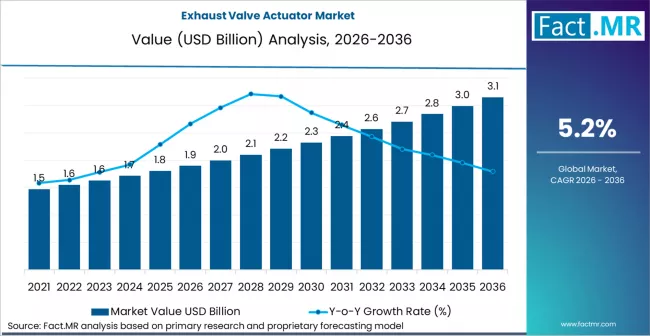
The quality of demand in this market is driven by the critical role exhaust valve actuators play in improving engine efficiency and meeting stringent emission standards. Demand stability will be influenced by the automotive and industrial sectors, where long-term contracts and repeat usage of these components are standard.
Buyers in this market are typically highly committed, often relying on established suppliers who can provide consistent performance and reliability. The purchasing process tends to prioritize durability and regulatory compliance over initial cost, as the cost of failure is high in these applications. As a result, companies that demonstrate strong product quality and offer comprehensive customer support will retain long-term customers. This buyer commitment ensures steady demand and creates opportunities for suppliers to strengthen market positions through trusted relationships.
Exhaust Valve Actuator Market
| Metric | Value |
|---|---|
| Estimated Value in (2026E) | USD 1.9 billion |
| Forecast Value in (2036F) | USD 3.2 billion |
| Forecast CAGR (2026 to 2036) | 5.2% |
Category
| Category | Segments |
|---|---|
| Sales Channel | First Fit (OEM); Aftermarket |
| Actuation Type | Electric; Vacuum or Pneumatic; Other |
| Application | Exhaust Flap or Backpressure; Turbo or Bypass Control |
| Vehicle Segment | Passenger Cars; LCV; HCV |
| Powertrain | ICE; HEV |
| Region | North America; Europe; Asia Pacific; Latin America; Middle East & Africa |
Segmental Analysis: Exhaust Valve Actuator Market
What is the Analysis of the Leading Sales Channel Segment in the Exhaust Valve Actuator Market?
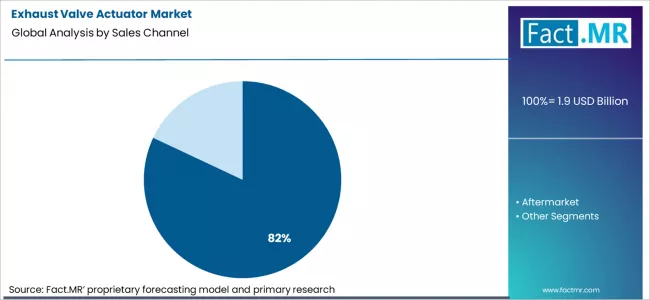
The First Fit (OEM) segment holds a dominant 82% of the market share in 2026. This leadership is sustained by the integration of active exhaust valves into the digital powertrain architecture of modern vehicles, which is necessary to comply with increasingly stringent noise and emission regulations. The shift from vacuum-driven actuators to electric actuators is a key factor driving OEM demand. Electric actuators offer sub-millisecond response times, crucial for real-time engine calibration and fine control over exhaust systems. FORVIA (Faurecia) and Tenneco are the dominant suppliers in this segment, with FORVIA reporting a significant increase in orders for its "Electric Active Valve" (EAV) for luxury SUV platforms in late 2025. These actuators are integral to managing NVH (Noise, Vibration, and Harshness) during cylinder-deactivation modes. Furthermore, around 28% of new OEM product launches in 2026 incorporate smart connectivity, enabling actuators to relay diagnostic data to the On-Board Diagnostic (OBD) system, ensuring compliance with Euro 7 durability mandates.
What is the Analysis of the Leading Powertrain Segment in the Exhaust Valve Actuator Market?
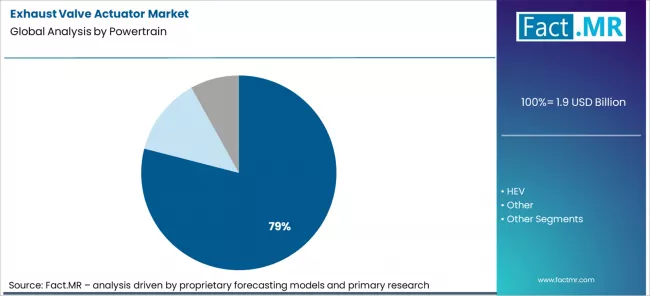
The Internal Combustion Engine (ICE) powertrain segment remains the dominant application for exhaust valve actuators, holding 79% of the market share in 2026. Despite the increasing adoption of electrification, ICE exhaust systems have become more complex, with actuators now playing a crucial role in maintaining backpressure and managing catalyst temperatures in downsized, turbocharged engines. The global production of ICE vehicles continues to drive substantial demand, particularly in commercial vehicles and heavy-duty sectors where transition timelines are longer. Bosch and BorgWarner have introduced new-generation actuators specifically designed to operate in extreme heat environments (up to 1000°C at the manifold) for high-performance ICE applications. These actuators are essential for managing active flaps that bypass mufflers to increase power. Furthermore, the implementation of Euro 7 and US EPA Phase 3 standards in 2026 requires precise control of air-fuel and exhaust flows, pushing the demand for high-resolution actuators capable of surviving the corrosive environment of Exhaust Gas Recirculation (EGR) systems.
Country
| Country | Drivers | Restraints | Trends |
|---|---|---|---|
| USA | Large vehicle production and strict EPA emissions requirements increase demand for actuators that optimize exhaust flow and reduce emissions. | Higher manufacturing and compliance costs can restrain uptake in cost sensitive vehicle segments. | Shift toward integration of smart actuator systems with engine control units for real time emission management. |
| China | Massive automotive output and tightening China 7 emission norms drive broad adoption of advanced exhaust valve actuators in internal combustion vehicles. | Rapid EV adoption may reduce long term demand for ICE centric components. | Localization of actuator production to meet stringent local emission targets. |
| India | Growing vehicle production and implementation of BS VI+ norms boost demand for precision exhaust control systems in commercial and passenger vehicles. | Price sensitivity in mass market vehicles can limit high end actuator penetration. | Increasing retrofit and aftermarket installation of advanced actuators to support emission compliance. |
| Germany | Premium automotive manufacturing and tight Euro 6/VI emissions standards encourage use of high precision valve actuators to optimize exhaust efficiency. | Declining ICE production due to electrification reduces future volume growth. | Use of high performance actuators that integrate with adaptive engine management for emissions and performance balance. |
| Japan | Advanced OEM base with emphasis on fuel economy and emissions supports demand for reliable exhaust valve actuation. | Slow growth in traditional diesel and heavy engine segments limits volume expansion of actuators. | Preference for compact, lightweight actuator designs compatible with hybrid powertrains. |
| South Korea | Strong automotive sector and emission regulations support steady demand for actuators in exhaust systems of passenger and commercial vehicles. | Intense competition from local and international suppliers can pressure pricing. | Increased adoption of electronically controlled actuators with improved precision and durability. |
| Brazil | Expanding auto manufacturing and incrementally tighter emission standards boost demand for exhaust valve actuators in regional vehicles. | Economic variability and cost constraints limit rapid upgrades in exhaust component technology. | Aftermarket growth as fleets adopt actuator upgrades for compliance and performance. |
Analysis of the Exhaust Valve Actuator Market by Key Country
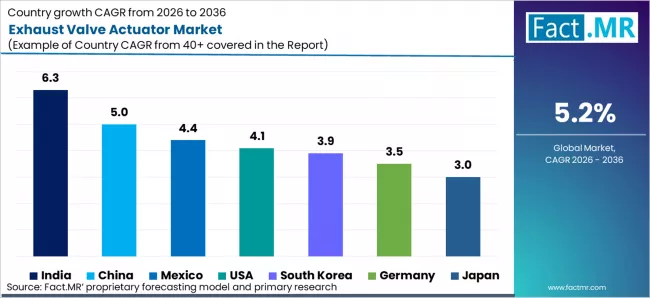
| Country | CAGR (Forecast Period) |
|---|---|
| USA | 4.1% |
| China | 5.0% |
| India | 6.3% |
| Germany | 3.5% |
| Japan | 3.0% |
| South Korea | 3.9% |
| Mexico | 4.4% |
The report covers an in-depth analysis of 40+ countries; top-performing countries are highlighted below.
What Drives Growth in the USA Exhaust Valve Actuator Market?
The 4.1% growth in the USA exhaust valve actuator market is driven by the EPA’s Final Rule on Multi-Pollutant Emissions Standards for 2027 and beyond. This has accelerated the adoption of active valve systems in 2026 vehicle models, which improve engine thermal management and reduce cold-start emissions. Additionally, the U.S. Department of Energy’s "SuperTruck" initiatives support the development of high-efficiency engine components, including durable exhaust valve actuators that can withstand extreme thermal cycles. The rise of performance-oriented SUVs and light trucks also boosts demand for electric exhaust actuators that provide customizable acoustic profiles while meeting noise ordinances.
What Influences Growth in the China Exhaust Valve Actuator Market?
China’s 5.0% expansion in the exhaust valve actuator market is supported by the Ministry of Industry and Information Technology (MIIT) through its Work Plan for Stabilizing Growth in the Steel and Automotive Industries. This plan incentivizes the production of energy-saving vehicles, including high-efficiency hybrids that require precise exhaust valve control. Under the China VI-b standards, compliance with Real Driving Emissions (RDE) testing forces manufacturers to adopt smart electric actuators for better exhaust backpressure control, optimizing turbocharger efficiency and gasoline particulate filters (GPF). Additionally, government support for local R&D in automotive semiconductors ensures a steady supply of high-performance controllers for actuator systems.
How Does India Achieve Growth in the Exhaust Valve Actuator Market?
India’s exhaust valve actuator market is growing at 6.3%, the highest among the countries analyzed, largely due to the BS6 Phase 2 (RDE) norms enforced by the Ministry of Road Transport and Highways (MoRTH). These norms require vehicles to meet emission limits during actual road use, necessitating electric exhaust valve actuators that dynamically adjust to varying engine loads and speeds. The Production Linked Incentive (PLI) Scheme has further boosted the domestic manufacturing of next-generation actuators, with significant investments from companies like Robert Bosch GmbH, enhancing the market's localization and reducing component costs. The growth is also driven by India's rapidly modernizing automotive sector, including both passenger cars and commercial vehicles.
What Drives Growth in the Germany Exhaust Valve Actuator Market?
The 3.5% growth in Germany’s exhaust valve actuator market is driven by the Euro 7 regulations, which will require tighter limits on NOx and particulate matter (PM) starting in 2026/2027. German OEMs are integrating software-defined actuators that allow for over-the-air calibration and diagnostic monitoring, crucial for maintaining the efficiency of advanced after-treatment systems over a vehicle’s 15-year lifespan. Additionally, Plattform Industrie 4.0 encourages manufacturers to adopt compact, high-torque electric actuators, replacing heavier hydraulic systems, in line with Germany’s "Green Transformation" initiatives aimed at reducing emissions in premium automotive engineering.
How Does Japan Achieve Growth in the Exhaust Valve Actuator Market?
Japan’s 3.0% growth rate in the exhaust valve actuator market is shaped by the Ministry of Economy, Trade and Industry (METI) and its Green Transformation (GX) roadmap. Japan’s focus on energy efficiency has led automakers to develop next-generation internal combustion engines compatible with carbon-neutral fuels, which require highly durable exhaust valve actuators. Japanese suppliers are leveraging Model-Based Development (MBD) to optimize actuator performance before physical production, ensuring higher reliability and precision in their systems. As Japan transitions to hydrogen-combustion and carbon-neutral fuels, there is increasing demand for actuators that can handle varied exhaust temperatures and fuel chemistries.
Why Does South Korea Exhibit Growth in the Exhaust Valve Actuator Market?
South Korea’s 3.9% growth in the exhaust valve actuator market is fueled by the government’s record 35.3 trillion won R&D budget for 2026, which supports "Super Innovation" in the automotive sector. This includes AI-enhanced actuators and sensors, which are expected to optimize engine performance and emissions. The Materials, Parts, and Equipment (MPE) industry also benefits from government-backed R&D, reducing reliance on foreign imports for actuator technologies. Additionally, South Korea’s energy grading scheme incentivizes the adoption of electric valve actuators that minimize exhaust backpressure, which in turn improves fuel economy and ensures the long-term competitiveness of the domestic industry in global markets.
What Drives Growth in the Mexico Exhaust Valve Actuator Market?
Mexico’s 4.4% growth rate in the exhaust valve actuator market is largely driven by the USMCA’s Regional Value Content (RVC) requirements, which mandate that 75% of a vehicle’s parts be manufactured within North America for tariff-free trade. This has prompted Tier 1 suppliers to establish actuator production lines in Mexico, particularly in industrial hubs like Querétaro and Monterrey. Furthermore, the implementation of protective tariffs on automotive components from non-trade treaty countries, effective January 2026, further incentivizes local manufacturing. Plan Mexico’s infrastructure projects also enhance the country’s strategic positioning for the efficient transport of exhaust systems across the U.S. border, ensuring that Mexican-made exhaust valve actuators remain integral to the North American automotive supply chain.
How Are Participants Competing in the Exhaust Valve Actuator Market?
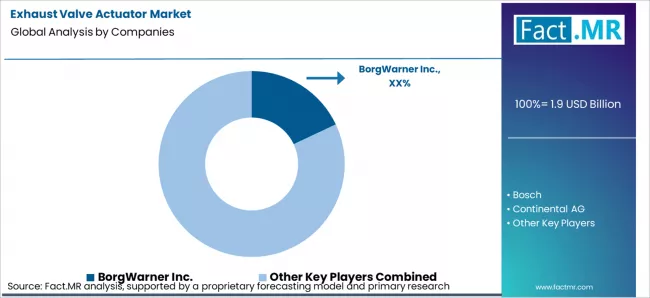
In the exhaust valve actuator market, competition is centered on mechatronic precision and software-defined calibration, with companies like BorgWarner and Bosch prioritizing electric actuators over traditional pneumatic systems to enhance turbocharger and acoustic valve responsiveness. On the other hand, Pierburg and MAHLE focus on high-temperature durability for hybrid powertrains that endure frequent thermal cycling. As regional expansion progresses, Pierburg secured a significant €10 million order in China for shut-off valves and low-pressure EGR valves, marking localized production efforts set for 2026. Post-2026, the market will shift to software-defined systems, where actuators will become integrated nodes within a zonal architecture. The transition to by-wire systems and predictive actuation will make actuators crucial in energy management within the vehicle’s thermal management loop. Companies that fail to evolve into system orchestrators will risk losing Tier-1 status to those controlling software stacks and integrated powertrain efficiency.
Key Players of the Exhaust Valve Actuator Market
- BorgWarner Inc.
- Bosch
- Continental AG
- Denso Corporation
- Hitachi Astemo Ltd.
- Valeo SA
- MAHLE GmbH
- Pierburg GmbH
- FORVIA S.A.
- Mando Corporation
Scope of the Report
| Items | Values |
|---|---|
| Quantitative Units (2026) | USD Billion |
| Sales Channel | First Fit (OEM), Aftermarket |
| Actuation Type | Electric, Vacuum or Pneumatic |
| Application | Exhaust Flap or Backpressure, Turbo or Bypass Control, Other |
| Vehicle Segment | Passenger Cars, LCV, HCV, Other |
| Powertrain | ICE, HEV |
| Regions Covered | North America, Europe, Asia Pacific, Latin America, Middle East & Africa |
| Countries Covered | United States, Canada, Mexico, Germany, United Kingdom, France, Japan, South Korea, China, India, Brazil, and other countries |
| Key Companies Profiled | BorgWarner Inc., Bosch, Continental AG, Denso Corporation, Hitachi Astemo Ltd., Valeo SA, MAHLE GmbH, Pierburg GmbH, FORVIA S.A., Mando Corporation |
| Additional Attributes | Dollar revenue by sales channel, actuation type, application, vehicle segment, powertrain, and region; regional demand trends, competitive landscape, technological advancements in exhaust valve actuators, operational performance optimization initiatives, and product development strategies |
Exhaust Valve Actuator Market Key Segments
-
Sales Channel :
- First Fit (OEM)
- Aftermarket
-
Actuation Type :
- Electric
- Vacuum or Pneumatic
- Other
-
Application :
- Exhaust Flap or Backpressure
- Turbo or Bypass Control
-
Vehicle Segment :
- Passenger Cars
- LCV (Light Commercial Vehicle)
- HCV (Heavy Commercial Vehicle)
-
Powertrain :
- ICE
- HEV
- Other
-
Region :
- North America
- USA
- Canada
- Mexico
- Europe
- Germany
- UK
- France
- Italy
- Spain
- Nordic Countries
- BENELUX
- Rest of Europe
- Asia Pacific
- China
- Japan
- South Korea
- India
- Australia
- Rest of Asia Pacific
- Latin America
- Brazil
- Argentina
- Rest of Latin America
- Middle East and Africa
- Kingdom of Saudi Arabia
- United Arab Emirates
- South Africa
- Rest of Middle East and Africa
- Other Regions
- Oceania
- Central Asia
- Other Markets
- North America
Bibliographies
- European Commission. (2023). Euro 7 emission standards and implications for exhaust valve control and powertrain actuation. European Union.
- International Council on Clean Transportation. (2024). Advanced combustion control strategies and actuator requirements for emissions compliance. ICCT.
- International Organization for Standardization. (2023). Road vehicles-Actuators for engine and exhaust systems: Functional performance, durability, and environmental requirements. ISO.
- Journal of Automobile Engineering. (2024). Integration of electric and electromechanical exhaust valve actuators for emission control in internal combustion engines. Proceedings of the Institution of Mechanical Engineers, Part D, 238(6), 1581-1594.
- Ministry of Land, Infrastructure, Transport and Tourism. (2023). Automotive emission compliance pathways and exhaust control system requirements. Government of Japan.
Table of Content
- Executive Summary
- Global Market Outlook
- Demand to side Trends
- Supply to side Trends
- Technology Roadmap Analysis
- Analysis and Recommendations
- Market Overview
- Market Coverage / Taxonomy
- Market Definition / Scope / Limitations
- Research Methodology
- Chapter Orientation
- Analytical Lens and Working Hypotheses
- Market Structure, Signals, and Trend Drivers
- Benchmarking and Cross-market Comparability
- Market Sizing, Forecasting, and Opportunity Mapping
- Research Design and Evidence Framework
- Desk Research Programme (Secondary Evidence)
- Company Annual and Sustainability Reports
- Peer-reviewed Journals and Academic Literature
- Corporate Websites, Product Literature, and Technical Notes
- Earnings Decks and Investor Briefings
- Statutory Filings and Regulatory Disclosures
- Technical White Papers and Standards Notes
- Trade Journals, Industry Magazines, and Analyst Briefs
- Conference Proceedings, Webinars, and Seminar Materials
- Government Statistics Portals and Public Data Releases
- Press Releases and Reputable Media Coverage
- Specialist Newsletters and Curated Briefings
- Sector Databases and Reference Repositories
- FMR Internal Proprietary Databases and Historical Market Datasets
- Subscription Datasets and Paid Sources
- Social Channels, Communities, and Digital Listening Inputs
- Additional Desk Sources
- Expert Input and Fieldwork (Primary Evidence)
- Primary Modes
- Qualitative Interviews and Expert Elicitation
- Quantitative Surveys and Structured Data Capture
- Blended Approach
- Why Primary Evidence is Used
- Field Techniques
- Interviews
- Surveys
- Focus Groups
- Observational and In-context Research
- Social and Community Interactions
- Stakeholder Universe Engaged
- C-suite Leaders
- Board Members
- Presidents and Vice Presidents
- R&D and Innovation Heads
- Technical Specialists
- Domain Subject-matter Experts
- Scientists
- Physicians and Other Healthcare Professionals
- Governance, Ethics, and Data Stewardship
- Research Ethics
- Data Integrity and Handling
- Primary Modes
- Tooling, Models, and Reference Databases
- Desk Research Programme (Secondary Evidence)
- Data Engineering and Model Build
- Data Acquisition and Ingestion
- Cleaning, Normalisation, and Verification
- Synthesis, Triangulation, and Analysis
- Quality Assurance and Audit Trail
- Market Background
- Market Dynamics
- Drivers
- Restraints
- Opportunity
- Trends
- Scenario Forecast
- Demand in Optimistic Scenario
- Demand in Likely Scenario
- Demand in Conservative Scenario
- Opportunity Map Analysis
- Product Life Cycle Analysis
- Supply Chain Analysis
- Investment Feasibility Matrix
- Value Chain Analysis
- PESTLE and Porter’s Analysis
- Regulatory Landscape
- Regional Parent Market Outlook
- Production and Consumption Statistics
- Import and Export Statistics
- Market Dynamics
- Global Market Analysis 2021 to 2025 and Forecast, 2026 to 2036
- Historical Market Size Value (USD Million) Analysis, 2021 to 2025
- Current and Future Market Size Value (USD Million) Projections, 2026 to 2036
- Y to o to Y Growth Trend Analysis
- Absolute $ Opportunity Analysis
- Global Market Pricing Analysis 2021 to 2025 and Forecast 2026 to 2036
- Global Market Analysis 2021 to 2025 and Forecast 2026 to 2036, By Sales Channel
- Introduction / Key Findings
- Historical Market Size Value (USD Million) Analysis By Sales Channel, 2021 to 2025
- Current and Future Market Size Value (USD Million) Analysis and Forecast By Sales Channel, 2026 to 2036
- First Fit (OEM)
- Aftermarket
- First Fit (OEM)
- Y to o to Y Growth Trend Analysis By Sales Channel, 2021 to 2025
- Absolute $ Opportunity Analysis By Sales Channel, 2026 to 2036
- Global Market Analysis 2021 to 2025 and Forecast 2026 to 2036, By Actuation Type
- Introduction / Key Findings
- Historical Market Size Value (USD Million) Analysis By Actuation Type, 2021 to 2025
- Current and Future Market Size Value (USD Million) Analysis and Forecast By Actuation Type, 2026 to 2036
- Electric
- Vacuum or Pneumatic
- Electric
- Y to o to Y Growth Trend Analysis By Actuation Type, 2021 to 2025
- Absolute $ Opportunity Analysis By Actuation Type, 2026 to 2036
- Global Market Analysis 2021 to 2025 and Forecast 2026 to 2036, By Application
- Introduction / Key Findings
- Historical Market Size Value (USD Million) Analysis By Application, 2021 to 2025
- Current and Future Market Size Value (USD Million) Analysis and Forecast By Application, 2026 to 2036
- Exhaust Flap or Backpressure
- Turbo or Bypass Control
- Other
- Exhaust Flap or Backpressure
- Y to o to Y Growth Trend Analysis By Application, 2021 to 2025
- Absolute $ Opportunity Analysis By Application, 2026 to 2036
- Global Market Analysis 2021 to 2025 and Forecast 2026 to 2036, By Vehicle Segment
- Introduction / Key Findings
- Historical Market Size Value (USD Million) Analysis By Vehicle Segment, 2021 to 2025
- Current and Future Market Size Value (USD Million) Analysis and Forecast By Vehicle Segment, 2026 to 2036
- Passenger Cars
- LCV
- HCV
- Passenger Cars
- Y to o to Y Growth Trend Analysis By Vehicle Segment, 2021 to 2025
- Absolute $ Opportunity Analysis By Vehicle Segment, 2026 to 2036
- Global Market Analysis 2021 to 2025 and Forecast 2026 to 2036, By Powertrain
- Introduction / Key Findings
- Historical Market Size Value (USD Million) Analysis By Powertrain, 2021 to 2025
- Current and Future Market Size Value (USD Million) Analysis and Forecast By Powertrain, 2026 to 2036
- ICE
- HEV
- Other
- ICE
- Y to o to Y Growth Trend Analysis By Powertrain, 2021 to 2025
- Absolute $ Opportunity Analysis By Powertrain, 2026 to 2036
- Global Market Analysis 2021 to 2025 and Forecast 2026 to 2036, By Region
- Introduction
- Historical Market Size Value (USD Million) Analysis By Region, 2021 to 2025
- Current Market Size Value (USD Million) Analysis and Forecast By Region, 2026 to 2036
- North America
- Latin America
- Western Europe
- Eastern Europe
- East Asia
- South Asia and Pacific
- Middle East & Africa
- Market Attractiveness Analysis By Region
- North America Market Analysis 2021 to 2025 and Forecast 2026 to 2036, By Country
- Historical Market Size Value (USD Million) Trend Analysis By Market Taxonomy, 2021 to 2025
- Market Size Value (USD Million) Forecast By Market Taxonomy, 2026 to 2036
- By Country
- USA
- Canada
- Mexico
- By Sales Channel
- By Actuation Type
- By Application
- By Vehicle Segment
- By Powertrain
- By Country
- Market Attractiveness Analysis
- By Country
- By Sales Channel
- By Actuation Type
- By Application
- By Vehicle Segment
- By Powertrain
- Key Takeaways
- Latin America Market Analysis 2021 to 2025 and Forecast 2026 to 2036, By Country
- Historical Market Size Value (USD Million) Trend Analysis By Market Taxonomy, 2021 to 2025
- Market Size Value (USD Million) Forecast By Market Taxonomy, 2026 to 2036
- By Country
- Brazil
- Chile
- Rest of Latin America
- By Sales Channel
- By Actuation Type
- By Application
- By Vehicle Segment
- By Powertrain
- By Country
- Market Attractiveness Analysis
- By Country
- By Sales Channel
- By Actuation Type
- By Application
- By Vehicle Segment
- By Powertrain
- Key Takeaways
- Western Europe Market Analysis 2021 to 2025 and Forecast 2026 to 2036, By Country
- Historical Market Size Value (USD Million) Trend Analysis By Market Taxonomy, 2021 to 2025
- Market Size Value (USD Million) Forecast By Market Taxonomy, 2026 to 2036
- By Country
- Germany
- UK
- Italy
- Spain
- France
- Nordic
- BENELUX
- Rest of Western Europe
- By Sales Channel
- By Actuation Type
- By Application
- By Vehicle Segment
- By Powertrain
- By Country
- Market Attractiveness Analysis
- By Country
- By Sales Channel
- By Actuation Type
- By Application
- By Vehicle Segment
- By Powertrain
- Key Takeaways
- Eastern Europe Market Analysis 2021 to 2025 and Forecast 2026 to 2036, By Country
- Historical Market Size Value (USD Million) Trend Analysis By Market Taxonomy, 2021 to 2025
- Market Size Value (USD Million) Forecast By Market Taxonomy, 2026 to 2036
- By Country
- Russia
- Poland
- Hungary
- Balkan & Baltic
- Rest of Eastern Europe
- By Sales Channel
- By Actuation Type
- By Application
- By Vehicle Segment
- By Powertrain
- By Country
- Market Attractiveness Analysis
- By Country
- By Sales Channel
- By Actuation Type
- By Application
- By Vehicle Segment
- By Powertrain
- Key Takeaways
- East Asia Market Analysis 2021 to 2025 and Forecast 2026 to 2036, By Country
- Historical Market Size Value (USD Million) Trend Analysis By Market Taxonomy, 2021 to 2025
- Market Size Value (USD Million) Forecast By Market Taxonomy, 2026 to 2036
- By Country
- China
- Japan
- South Korea
- By Sales Channel
- By Actuation Type
- By Application
- By Vehicle Segment
- By Powertrain
- By Country
- Market Attractiveness Analysis
- By Country
- By Sales Channel
- By Actuation Type
- By Application
- By Vehicle Segment
- By Powertrain
- Key Takeaways
- South Asia and Pacific Market Analysis 2021 to 2025 and Forecast 2026 to 2036, By Country
- Historical Market Size Value (USD Million) Trend Analysis By Market Taxonomy, 2021 to 2025
- Market Size Value (USD Million) Forecast By Market Taxonomy, 2026 to 2036
- By Country
- India
- ASEAN
- Australia & New Zealand
- Rest of South Asia and Pacific
- By Sales Channel
- By Actuation Type
- By Application
- By Vehicle Segment
- By Powertrain
- By Country
- Market Attractiveness Analysis
- By Country
- By Sales Channel
- By Actuation Type
- By Application
- By Vehicle Segment
- By Powertrain
- Key Takeaways
- Middle East & Africa Market Analysis 2021 to 2025 and Forecast 2026 to 2036, By Country
- Historical Market Size Value (USD Million) Trend Analysis By Market Taxonomy, 2021 to 2025
- Market Size Value (USD Million) Forecast By Market Taxonomy, 2026 to 2036
- By Country
- Kingdom of Saudi Arabia
- Other GCC Countries
- Turkiye
- South Africa
- Other African Union
- Rest of Middle East & Africa
- By Sales Channel
- By Actuation Type
- By Application
- By Vehicle Segment
- By Powertrain
- By Country
- Market Attractiveness Analysis
- By Country
- By Sales Channel
- By Actuation Type
- By Application
- By Vehicle Segment
- By Powertrain
- Key Takeaways
- Key Countries Market Analysis
- USA
- Pricing Analysis
- Market Share Analysis, 2025
- By Sales Channel
- By Actuation Type
- By Application
- By Vehicle Segment
- By Powertrain
- Canada
- Pricing Analysis
- Market Share Analysis, 2025
- By Sales Channel
- By Actuation Type
- By Application
- By Vehicle Segment
- By Powertrain
- Mexico
- Pricing Analysis
- Market Share Analysis, 2025
- By Sales Channel
- By Actuation Type
- By Application
- By Vehicle Segment
- By Powertrain
- Brazil
- Pricing Analysis
- Market Share Analysis, 2025
- By Sales Channel
- By Actuation Type
- By Application
- By Vehicle Segment
- By Powertrain
- Chile
- Pricing Analysis
- Market Share Analysis, 2025
- By Sales Channel
- By Actuation Type
- By Application
- By Vehicle Segment
- By Powertrain
- Germany
- Pricing Analysis
- Market Share Analysis, 2025
- By Sales Channel
- By Actuation Type
- By Application
- By Vehicle Segment
- By Powertrain
- UK
- Pricing Analysis
- Market Share Analysis, 2025
- By Sales Channel
- By Actuation Type
- By Application
- By Vehicle Segment
- By Powertrain
- Italy
- Pricing Analysis
- Market Share Analysis, 2025
- By Sales Channel
- By Actuation Type
- By Application
- By Vehicle Segment
- By Powertrain
- Spain
- Pricing Analysis
- Market Share Analysis, 2025
- By Sales Channel
- By Actuation Type
- By Application
- By Vehicle Segment
- By Powertrain
- France
- Pricing Analysis
- Market Share Analysis, 2025
- By Sales Channel
- By Actuation Type
- By Application
- By Vehicle Segment
- By Powertrain
- India
- Pricing Analysis
- Market Share Analysis, 2025
- By Sales Channel
- By Actuation Type
- By Application
- By Vehicle Segment
- By Powertrain
- ASEAN
- Pricing Analysis
- Market Share Analysis, 2025
- By Sales Channel
- By Actuation Type
- By Application
- By Vehicle Segment
- By Powertrain
- Australia & New Zealand
- Pricing Analysis
- Market Share Analysis, 2025
- By Sales Channel
- By Actuation Type
- By Application
- By Vehicle Segment
- By Powertrain
- China
- Pricing Analysis
- Market Share Analysis, 2025
- By Sales Channel
- By Actuation Type
- By Application
- By Vehicle Segment
- By Powertrain
- Japan
- Pricing Analysis
- Market Share Analysis, 2025
- By Sales Channel
- By Actuation Type
- By Application
- By Vehicle Segment
- By Powertrain
- South Korea
- Pricing Analysis
- Market Share Analysis, 2025
- By Sales Channel
- By Actuation Type
- By Application
- By Vehicle Segment
- By Powertrain
- Russia
- Pricing Analysis
- Market Share Analysis, 2025
- By Sales Channel
- By Actuation Type
- By Application
- By Vehicle Segment
- By Powertrain
- Poland
- Pricing Analysis
- Market Share Analysis, 2025
- By Sales Channel
- By Actuation Type
- By Application
- By Vehicle Segment
- By Powertrain
- Hungary
- Pricing Analysis
- Market Share Analysis, 2025
- By Sales Channel
- By Actuation Type
- By Application
- By Vehicle Segment
- By Powertrain
- Kingdom of Saudi Arabia
- Pricing Analysis
- Market Share Analysis, 2025
- By Sales Channel
- By Actuation Type
- By Application
- By Vehicle Segment
- By Powertrain
- Turkiye
- Pricing Analysis
- Market Share Analysis, 2025
- By Sales Channel
- By Actuation Type
- By Application
- By Vehicle Segment
- By Powertrain
- South Africa
- Pricing Analysis
- Market Share Analysis, 2025
- By Sales Channel
- By Actuation Type
- By Application
- By Vehicle Segment
- By Powertrain
- USA
- Market Structure Analysis
- Competition Dashboard
- Competition Benchmarking
- Market Share Analysis of Top Players
- By Regional
- By Sales Channel
- By Actuation Type
- By Application
- By Vehicle Segment
- By Powertrain
- Competition Analysis
- Competition Deep Dive
- BorgWarner Inc.
- Overview
- Product Portfolio
- Profitability by Market Segments (Product/Age /Sales Channel/Region)
- Sales Footprint
- Strategy Overview
- Marketing Strategy
- Product Strategy
- Channel Strategy
- Bosch
- Continental AG
- Denso Corporation
- Hitachi Astemo Ltd.
- Valeo SA
- MAHLE GmbH
- Pierburg GmbH
- FORVIA S.A.
- Mando Corporation
- BorgWarner Inc.
- Competition Deep Dive
- Assumptions & Acronyms Used
List Of Table
- Table 1: Global Market Value (USD Million) Forecast by Region, 2021 to 2036
- Table 2: Global Market Value (USD Million) Forecast by Sales Channel, 2021 to 2036
- Table 3: Global Market Value (USD Million) Forecast by Actuation Type, 2021 to 2036
- Table 4: Global Market Value (USD Million) Forecast by Application, 2021 to 2036
- Table 5: Global Market Value (USD Million) Forecast by Vehicle Segment, 2021 to 2036
- Table 6: Global Market Value (USD Million) Forecast by Powertrain, 2021 to 2036
- Table 7: North America Market Value (USD Million) Forecast by Country, 2021 to 2036
- Table 8: North America Market Value (USD Million) Forecast by Sales Channel, 2021 to 2036
- Table 9: North America Market Value (USD Million) Forecast by Actuation Type, 2021 to 2036
- Table 10: North America Market Value (USD Million) Forecast by Application, 2021 to 2036
- Table 11: North America Market Value (USD Million) Forecast by Vehicle Segment, 2021 to 2036
- Table 12: North America Market Value (USD Million) Forecast by Powertrain, 2021 to 2036
- Table 13: Latin America Market Value (USD Million) Forecast by Country, 2021 to 2036
- Table 14: Latin America Market Value (USD Million) Forecast by Sales Channel, 2021 to 2036
- Table 15: Latin America Market Value (USD Million) Forecast by Actuation Type, 2021 to 2036
- Table 16: Latin America Market Value (USD Million) Forecast by Application, 2021 to 2036
- Table 17: Latin America Market Value (USD Million) Forecast by Vehicle Segment, 2021 to 2036
- Table 18: Latin America Market Value (USD Million) Forecast by Powertrain, 2021 to 2036
- Table 19: Western Europe Market Value (USD Million) Forecast by Country, 2021 to 2036
- Table 20: Western Europe Market Value (USD Million) Forecast by Sales Channel, 2021 to 2036
- Table 21: Western Europe Market Value (USD Million) Forecast by Actuation Type, 2021 to 2036
- Table 22: Western Europe Market Value (USD Million) Forecast by Application, 2021 to 2036
- Table 23: Western Europe Market Value (USD Million) Forecast by Vehicle Segment, 2021 to 2036
- Table 24: Western Europe Market Value (USD Million) Forecast by Powertrain, 2021 to 2036
- Table 25: Eastern Europe Market Value (USD Million) Forecast by Country, 2021 to 2036
- Table 26: Eastern Europe Market Value (USD Million) Forecast by Sales Channel, 2021 to 2036
- Table 27: Eastern Europe Market Value (USD Million) Forecast by Actuation Type, 2021 to 2036
- Table 28: Eastern Europe Market Value (USD Million) Forecast by Application, 2021 to 2036
- Table 29: Eastern Europe Market Value (USD Million) Forecast by Vehicle Segment, 2021 to 2036
- Table 30: Eastern Europe Market Value (USD Million) Forecast by Powertrain, 2021 to 2036
- Table 31: East Asia Market Value (USD Million) Forecast by Country, 2021 to 2036
- Table 32: East Asia Market Value (USD Million) Forecast by Sales Channel, 2021 to 2036
- Table 33: East Asia Market Value (USD Million) Forecast by Actuation Type, 2021 to 2036
- Table 34: East Asia Market Value (USD Million) Forecast by Application, 2021 to 2036
- Table 35: East Asia Market Value (USD Million) Forecast by Vehicle Segment, 2021 to 2036
- Table 36: East Asia Market Value (USD Million) Forecast by Powertrain, 2021 to 2036
- Table 37: South Asia and Pacific Market Value (USD Million) Forecast by Country, 2021 to 2036
- Table 38: South Asia and Pacific Market Value (USD Million) Forecast by Sales Channel, 2021 to 2036
- Table 39: South Asia and Pacific Market Value (USD Million) Forecast by Actuation Type, 2021 to 2036
- Table 40: South Asia and Pacific Market Value (USD Million) Forecast by Application, 2021 to 2036
- Table 41: South Asia and Pacific Market Value (USD Million) Forecast by Vehicle Segment, 2021 to 2036
- Table 42: South Asia and Pacific Market Value (USD Million) Forecast by Powertrain, 2021 to 2036
- Table 43: Middle East & Africa Market Value (USD Million) Forecast by Country, 2021 to 2036
- Table 44: Middle East & Africa Market Value (USD Million) Forecast by Sales Channel, 2021 to 2036
- Table 45: Middle East & Africa Market Value (USD Million) Forecast by Actuation Type, 2021 to 2036
- Table 46: Middle East & Africa Market Value (USD Million) Forecast by Application, 2021 to 2036
- Table 47: Middle East & Africa Market Value (USD Million) Forecast by Vehicle Segment, 2021 to 2036
- Table 48: Middle East & Africa Market Value (USD Million) Forecast by Powertrain, 2021 to 2036
List Of Figures
- Figure 1: Global Market Pricing Analysis
- Figure 2: Global Market Value (USD Million) Forecast 2021 to 2036
- Figure 3: Global Market Value Share and BPS Analysis by Sales Channel, 2026 and 2036
- Figure 4: Global Market Y to o to Y Growth Comparison by Sales Channel, 2026 to 2036
- Figure 5: Global Market Attractiveness Analysis by Sales Channel
- Figure 6: Global Market Value Share and BPS Analysis by Actuation Type, 2026 and 2036
- Figure 7: Global Market Y to o to Y Growth Comparison by Actuation Type, 2026 to 2036
- Figure 8: Global Market Attractiveness Analysis by Actuation Type
- Figure 9: Global Market Value Share and BPS Analysis by Application, 2026 and 2036
- Figure 10: Global Market Y to o to Y Growth Comparison by Application, 2026 to 2036
- Figure 11: Global Market Attractiveness Analysis by Application
- Figure 12: Global Market Value Share and BPS Analysis by Vehicle Segment, 2026 and 2036
- Figure 13: Global Market Y to o to Y Growth Comparison by Vehicle Segment, 2026 to 2036
- Figure 14: Global Market Attractiveness Analysis by Vehicle Segment
- Figure 15: Global Market Value Share and BPS Analysis by Powertrain, 2026 and 2036
- Figure 16: Global Market Y to o to Y Growth Comparison by Powertrain, 2026 to 2036
- Figure 17: Global Market Attractiveness Analysis by Powertrain
- Figure 18: Global Market Value (USD Million) Share and BPS Analysis by Region, 2026 and 2036
- Figure 19: Global Market Y to o to Y Growth Comparison by Region, 2026 to 2036
- Figure 20: Global Market Attractiveness Analysis by Region
- Figure 21: North America Market Incremental Dollar Opportunity, 2026 to 2036
- Figure 22: Latin America Market Incremental Dollar Opportunity, 2026 to 2036
- Figure 23: Western Europe Market Incremental Dollar Opportunity, 2026 to 2036
- Figure 24: Eastern Europe Market Incremental Dollar Opportunity, 2026 to 2036
- Figure 25: East Asia Market Incremental Dollar Opportunity, 2026 to 2036
- Figure 26: South Asia and Pacific Market Incremental Dollar Opportunity, 2026 to 2036
- Figure 27: Middle East & Africa Market Incremental Dollar Opportunity, 2026 to 2036
- Figure 28: North America Market Value Share and BPS Analysis by Country, 2026 and 2036
- Figure 29: North America Market Value Share and BPS Analysis by Sales Channel, 2026 and 2036
- Figure 30: North America Market Y to o to Y Growth Comparison by Sales Channel, 2026 to 2036
- Figure 31: North America Market Attractiveness Analysis by Sales Channel
- Figure 32: North America Market Value Share and BPS Analysis by Actuation Type, 2026 and 2036
- Figure 33: North America Market Y to o to Y Growth Comparison by Actuation Type, 2026 to 2036
- Figure 34: North America Market Attractiveness Analysis by Actuation Type
- Figure 35: North America Market Value Share and BPS Analysis by Application, 2026 and 2036
- Figure 36: North America Market Y to o to Y Growth Comparison by Application, 2026 to 2036
- Figure 37: North America Market Attractiveness Analysis by Application
- Figure 38: North America Market Value Share and BPS Analysis by Vehicle Segment, 2026 and 2036
- Figure 39: North America Market Y to o to Y Growth Comparison by Vehicle Segment, 2026 to 2036
- Figure 40: North America Market Attractiveness Analysis by Vehicle Segment
- Figure 41: North America Market Value Share and BPS Analysis by Powertrain, 2026 and 2036
- Figure 42: North America Market Y to o to Y Growth Comparison by Powertrain, 2026 to 2036
- Figure 43: North America Market Attractiveness Analysis by Powertrain
- Figure 44: Latin America Market Value Share and BPS Analysis by Country, 2026 and 2036
- Figure 45: Latin America Market Value Share and BPS Analysis by Sales Channel, 2026 and 2036
- Figure 46: Latin America Market Y to o to Y Growth Comparison by Sales Channel, 2026 to 2036
- Figure 47: Latin America Market Attractiveness Analysis by Sales Channel
- Figure 48: Latin America Market Value Share and BPS Analysis by Actuation Type, 2026 and 2036
- Figure 49: Latin America Market Y to o to Y Growth Comparison by Actuation Type, 2026 to 2036
- Figure 50: Latin America Market Attractiveness Analysis by Actuation Type
- Figure 51: Latin America Market Value Share and BPS Analysis by Application, 2026 and 2036
- Figure 52: Latin America Market Y to o to Y Growth Comparison by Application, 2026 to 2036
- Figure 53: Latin America Market Attractiveness Analysis by Application
- Figure 54: Latin America Market Value Share and BPS Analysis by Vehicle Segment, 2026 and 2036
- Figure 55: Latin America Market Y to o to Y Growth Comparison by Vehicle Segment, 2026 to 2036
- Figure 56: Latin America Market Attractiveness Analysis by Vehicle Segment
- Figure 57: Latin America Market Value Share and BPS Analysis by Powertrain, 2026 and 2036
- Figure 58: Latin America Market Y to o to Y Growth Comparison by Powertrain, 2026 to 2036
- Figure 59: Latin America Market Attractiveness Analysis by Powertrain
- Figure 60: Western Europe Market Value Share and BPS Analysis by Country, 2026 and 2036
- Figure 61: Western Europe Market Value Share and BPS Analysis by Sales Channel, 2026 and 2036
- Figure 62: Western Europe Market Y to o to Y Growth Comparison by Sales Channel, 2026 to 2036
- Figure 63: Western Europe Market Attractiveness Analysis by Sales Channel
- Figure 64: Western Europe Market Value Share and BPS Analysis by Actuation Type, 2026 and 2036
- Figure 65: Western Europe Market Y to o to Y Growth Comparison by Actuation Type, 2026 to 2036
- Figure 66: Western Europe Market Attractiveness Analysis by Actuation Type
- Figure 67: Western Europe Market Value Share and BPS Analysis by Application, 2026 and 2036
- Figure 68: Western Europe Market Y to o to Y Growth Comparison by Application, 2026 to 2036
- Figure 69: Western Europe Market Attractiveness Analysis by Application
- Figure 70: Western Europe Market Value Share and BPS Analysis by Vehicle Segment, 2026 and 2036
- Figure 71: Western Europe Market Y to o to Y Growth Comparison by Vehicle Segment, 2026 to 2036
- Figure 72: Western Europe Market Attractiveness Analysis by Vehicle Segment
- Figure 73: Western Europe Market Value Share and BPS Analysis by Powertrain, 2026 and 2036
- Figure 74: Western Europe Market Y to o to Y Growth Comparison by Powertrain, 2026 to 2036
- Figure 75: Western Europe Market Attractiveness Analysis by Powertrain
- Figure 76: Eastern Europe Market Value Share and BPS Analysis by Country, 2026 and 2036
- Figure 77: Eastern Europe Market Value Share and BPS Analysis by Sales Channel, 2026 and 2036
- Figure 78: Eastern Europe Market Y to o to Y Growth Comparison by Sales Channel, 2026 to 2036
- Figure 79: Eastern Europe Market Attractiveness Analysis by Sales Channel
- Figure 80: Eastern Europe Market Value Share and BPS Analysis by Actuation Type, 2026 and 2036
- Figure 81: Eastern Europe Market Y to o to Y Growth Comparison by Actuation Type, 2026 to 2036
- Figure 82: Eastern Europe Market Attractiveness Analysis by Actuation Type
- Figure 83: Eastern Europe Market Value Share and BPS Analysis by Application, 2026 and 2036
- Figure 84: Eastern Europe Market Y to o to Y Growth Comparison by Application, 2026 to 2036
- Figure 85: Eastern Europe Market Attractiveness Analysis by Application
- Figure 86: Eastern Europe Market Value Share and BPS Analysis by Vehicle Segment, 2026 and 2036
- Figure 87: Eastern Europe Market Y to o to Y Growth Comparison by Vehicle Segment, 2026 to 2036
- Figure 88: Eastern Europe Market Attractiveness Analysis by Vehicle Segment
- Figure 89: Eastern Europe Market Value Share and BPS Analysis by Powertrain, 2026 and 2036
- Figure 90: Eastern Europe Market Y to o to Y Growth Comparison by Powertrain, 2026 to 2036
- Figure 91: Eastern Europe Market Attractiveness Analysis by Powertrain
- Figure 92: East Asia Market Value Share and BPS Analysis by Country, 2026 and 2036
- Figure 93: East Asia Market Value Share and BPS Analysis by Sales Channel, 2026 and 2036
- Figure 94: East Asia Market Y to o to Y Growth Comparison by Sales Channel, 2026 to 2036
- Figure 95: East Asia Market Attractiveness Analysis by Sales Channel
- Figure 96: East Asia Market Value Share and BPS Analysis by Actuation Type, 2026 and 2036
- Figure 97: East Asia Market Y to o to Y Growth Comparison by Actuation Type, 2026 to 2036
- Figure 98: East Asia Market Attractiveness Analysis by Actuation Type
- Figure 99: East Asia Market Value Share and BPS Analysis by Application, 2026 and 2036
- Figure 100: East Asia Market Y to o to Y Growth Comparison by Application, 2026 to 2036
- Figure 101: East Asia Market Attractiveness Analysis by Application
- Figure 102: East Asia Market Value Share and BPS Analysis by Vehicle Segment, 2026 and 2036
- Figure 103: East Asia Market Y to o to Y Growth Comparison by Vehicle Segment, 2026 to 2036
- Figure 104: East Asia Market Attractiveness Analysis by Vehicle Segment
- Figure 105: East Asia Market Value Share and BPS Analysis by Powertrain, 2026 and 2036
- Figure 106: East Asia Market Y to o to Y Growth Comparison by Powertrain, 2026 to 2036
- Figure 107: East Asia Market Attractiveness Analysis by Powertrain
- Figure 108: South Asia and Pacific Market Value Share and BPS Analysis by Country, 2026 and 2036
- Figure 109: South Asia and Pacific Market Value Share and BPS Analysis by Sales Channel, 2026 and 2036
- Figure 110: South Asia and Pacific Market Y to o to Y Growth Comparison by Sales Channel, 2026 to 2036
- Figure 111: South Asia and Pacific Market Attractiveness Analysis by Sales Channel
- Figure 112: South Asia and Pacific Market Value Share and BPS Analysis by Actuation Type, 2026 and 2036
- Figure 113: South Asia and Pacific Market Y to o to Y Growth Comparison by Actuation Type, 2026 to 2036
- Figure 114: South Asia and Pacific Market Attractiveness Analysis by Actuation Type
- Figure 115: South Asia and Pacific Market Value Share and BPS Analysis by Application, 2026 and 2036
- Figure 116: South Asia and Pacific Market Y to o to Y Growth Comparison by Application, 2026 to 2036
- Figure 117: South Asia and Pacific Market Attractiveness Analysis by Application
- Figure 118: South Asia and Pacific Market Value Share and BPS Analysis by Vehicle Segment, 2026 and 2036
- Figure 119: South Asia and Pacific Market Y to o to Y Growth Comparison by Vehicle Segment, 2026 to 2036
- Figure 120: South Asia and Pacific Market Attractiveness Analysis by Vehicle Segment
- Figure 121: South Asia and Pacific Market Value Share and BPS Analysis by Powertrain, 2026 and 2036
- Figure 122: South Asia and Pacific Market Y to o to Y Growth Comparison by Powertrain, 2026 to 2036
- Figure 123: South Asia and Pacific Market Attractiveness Analysis by Powertrain
- Figure 124: Middle East & Africa Market Value Share and BPS Analysis by Country, 2026 and 2036
- Figure 125: Middle East & Africa Market Value Share and BPS Analysis by Sales Channel, 2026 and 2036
- Figure 126: Middle East & Africa Market Y to o to Y Growth Comparison by Sales Channel, 2026 to 2036
- Figure 127: Middle East & Africa Market Attractiveness Analysis by Sales Channel
- Figure 128: Middle East & Africa Market Value Share and BPS Analysis by Actuation Type, 2026 and 2036
- Figure 129: Middle East & Africa Market Y to o to Y Growth Comparison by Actuation Type, 2026 to 2036
- Figure 130: Middle East & Africa Market Attractiveness Analysis by Actuation Type
- Figure 131: Middle East & Africa Market Value Share and BPS Analysis by Application, 2026 and 2036
- Figure 132: Middle East & Africa Market Y to o to Y Growth Comparison by Application, 2026 to 2036
- Figure 133: Middle East & Africa Market Attractiveness Analysis by Application
- Figure 134: Middle East & Africa Market Value Share and BPS Analysis by Vehicle Segment, 2026 and 2036
- Figure 135: Middle East & Africa Market Y to o to Y Growth Comparison by Vehicle Segment, 2026 to 2036
- Figure 136: Middle East & Africa Market Attractiveness Analysis by Vehicle Segment
- Figure 137: Middle East & Africa Market Value Share and BPS Analysis by Powertrain, 2026 and 2036
- Figure 138: Middle East & Africa Market Y to o to Y Growth Comparison by Powertrain, 2026 to 2036
- Figure 139: Middle East & Africa Market Attractiveness Analysis by Powertrain
- Figure 140: Global Market - Tier Structure Analysis
- Figure 141: Global Market - Company Share Analysis
- Frequently Asked Questions -
How big is the exhaust valve actuator market in 2026?
The global exhaust valve actuator market is estimated to be valued at USD 1.9 billion in 2026.
What will be the size of exhaust valve actuator market in 2036?
The market size for the exhaust valve actuator market is projected to reach USD 3.1 billion by 2036.
How much will be the exhaust valve actuator market growth between 2026 and 2036?
The exhaust valve actuator market is expected to grow at a 5.2% CAGR between 2026 and 2036.
What are the key product types in the exhaust valve actuator market?
The key product types in exhaust valve actuator market are first fit (oem) and aftermarket.
Which actuation type segment to contribute significant share in the exhaust valve actuator market in 2026?
In terms of actuation type, electric segment to command 71.0% share in the exhaust valve actuator market in 2026.