Foam-Free Snack Inserts Market
Foam-Free Snack Inserts Market Size and Share Forecast Outlook 2026 to 2036
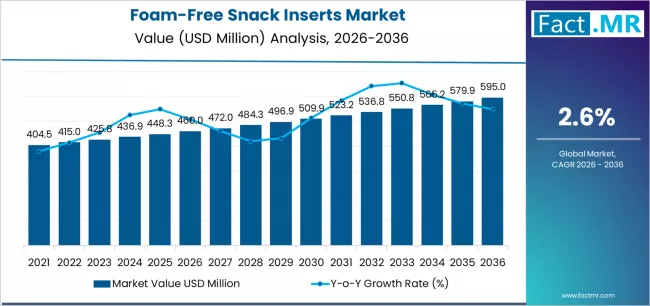
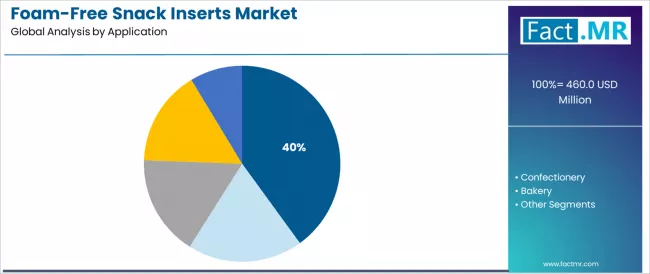
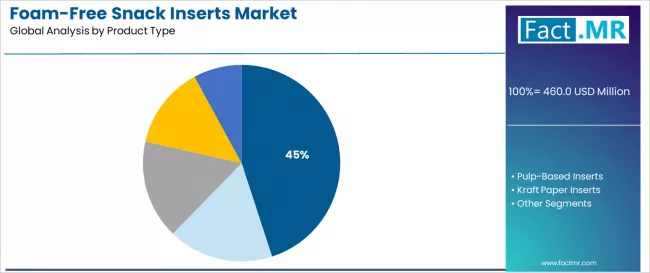
The foam-free snack inserts market is projected to grow from USD 460.0 million in 2026 to USD 595.0 million by 2036, at a CAGR of 2.6%. Snack Trays will dominate with a 40.0% market share, while molded fiber inserts will lead the product type segment with a 45.0% share.
Foam-Free Snack Inserts Market Forecast and Outlook 2026 to 2036
The global foam-free snack inserts market is valued at USD 460.0 million in 2026. The market is forecast to reach USD 595.0 million by 2036, an increase of USD 135.0 million. This represents total growth of 29.3%, expanding at a compound annual growth rate (CAGR) of 2.6% between 2026 and 2036.
Key Takeaways from the Foam-Free Snack Inserts Market Analysis
- Market Value (2026): USD 460.0 million
- Market Forecast Value (2036): USD 595.0 million
- Market Forecast CAGR: 2.6%
- Leading Application: Snack Trays (40.0%)
- Key Growth Regions: Asia Pacific, North America, Europe
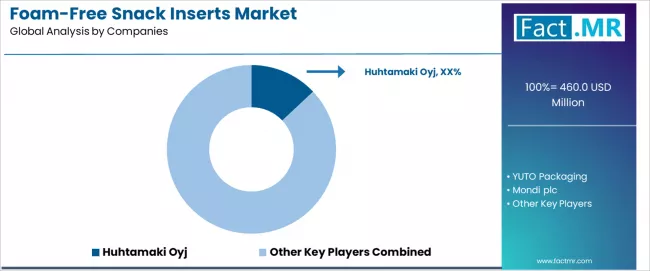
- Key Players: Huhtamaki Oyj, YUTO Packaging, Mondi plc, Uflex Limited, Klabin S.A.

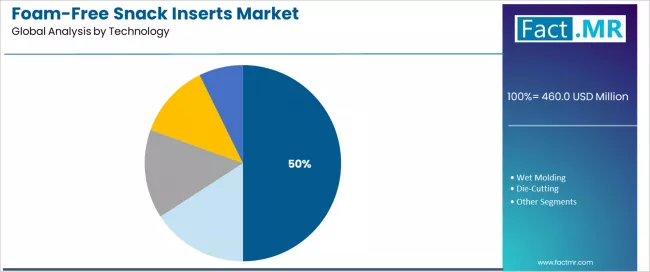
Market segmentation reveals a clear focus on sustainable, high-volume packaging formats. By application, snack trays hold a leading 40.0% share in 2026. Molded fiber inserts dominate the product type segment with a 45.0% share. Thermoforming technology commands a 50.0% share, underlining its role as the primary production method. This data points to a market driven by the rapid replacement of expanded polystyrene (EPS) foam across the food industry.
Demand is primarily driven by stringent global regulations banning single-use plastics and rising consumer preference for environmentally responsible packaging. Brand owners face immediate pressure to reformulate their secondary packaging without compromising protection or adding cost. These inserts must securely cradle products during transit, prevent damage, and align with corporate sustainability pledges.
The market’s progression is tied to advancements in fiber-based material science. Innovation focuses on improving the strength, grease resistance, and moisture barrier of molded pulp and paperboard to meet the practical demands of snack logistics. This shift represents a fundamental reengineering of protective packaging, balancing ecological mandates with the uncompromising need for product integrity in fast-moving consumer goods channels.
Key Takeaways from the Foam-Free Snack Inserts Market
| Metric | Value |
|---|---|
| Estimated Value in (2026E) | USD 460.0 million |
| Forecast Value in (2036F) | USD 595.0 million |
| Forecast CAGR (2026 to 2036) | 2.6% |
Category
| Category | Segment |
|---|---|
| Application | Snack Trays, Confectionery, Bakery, Ready Meals, Others |
| Product Type | Molded Fiber Inserts, Pulp-Based Inserts, Kraft Paper Inserts, Bagasse Inserts, Others |
| Technology | Thermoforming, Wet Molding, Die-Cutting, Press Molding, Others |
| Region | North America, Europe, Asia Pacific, Latin America, MEA |
Segmental Analysis
How is the Dominant Snack Trays Segment Adapting to E-Commerce Logistics?

The snack trays segment holds a 40.0% market share in 2026. Its leadership is reinforced by the specific challenge of protecting individually wrapped, lightweight items within a larger shipping case during e-commerce fulfillment. The shift away from foam necessitates inserts that provide superior compression strength to prevent boxes from crushing in delivery vehicles.
Current development in this segment focuses on designing ribbed and contoured molded fiber trays that lock products in place without additional plastic film. This minimizes movement and damage, directly addressing the higher rate of returns and complaints associated with online snack purchases. The insert itself is becoming a critical component of the direct-to-consumer shipping experience.
Why are Molded Fiber Inserts Winning the Race for Brand Differentiation?

Molded fiber inserts lead the product type segment with a 45.0% share. Their advantage lies beyond sustainability; they offer unparalleled potential for customization and branding. Unlike generic foam blocks, molded fiber can be engineered into precise, logo-embossed shapes that enhance perceived value the moment a case is opened.
Brands use this to communicate quality and environmental commitment directly to retailers and consumers. The material’s natural, textured appearance is increasingly associated with premium goods. This capacity to turn a functional component into a brand touchpoint, while meeting compostability and recycling standards, makes molded fiber the strategic choice for companies phasing out foam.
What Makes Thermoforming the Technology of Choice for Mass Production?

Thermoforming technology accounts for a 50.0% market share. Its dominance is rooted in speed and cost-effectiveness at high volumes, essential for serving the fast-moving snack industry. The process allows for the rapid production of consistent, lightweight inserts from roll stock materials like PLA or recycled PET sheets.
This efficiency enables manufacturers to meet large-scale orders from global snack brands on tight timelines. Thermoforming also supports the integration of different material layers within a single insert, combining cushioning with barrier properties. For an industry transitioning under regulatory deadlines, this technology offers a scalable, reliable pathway to replace millions of foam units without disrupting complex supply chains.
What are the Drivers, Restraints, and Key Trends of the Foam-Free Snack Inserts Market?
Market growth is propelled by legislative bans on polystyrene foam packaging in key regions and strong consumer advocacy for plastic-free solutions. The demand for circular packaging that fits into existing composting or paper recycling streams is a primary driver. Higher per-unit costs compared to traditional foam and performance limitations in extremely humid conditions serve as key restraints.
Supply chain consistency for agricultural residue feedstocks, like bagasse, can also pose challenges. Development is focused on enhancing the moisture and grease resistance of fiber-based inserts to broaden their application. Another focus is on creating modular insert designs that can be adjusted for multiple product shapes, reducing the need for custom tooling and inventory complexity.
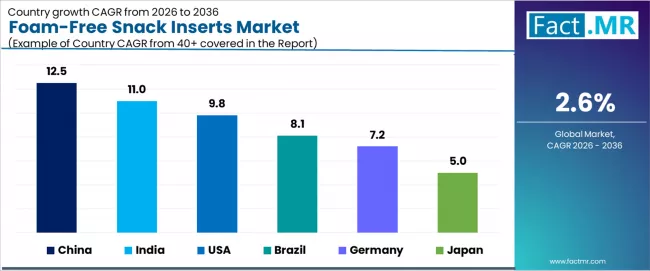
Analysis of the Foam-Free Snack Inserts Market by Key Countries

| Country | CAGR (2026-2036) |
|---|---|
| USA | 9.8% |
| China | 12.5% |
| Germany | 7.2% |
| India | 11.0% |
| Brazil | 8.1% |
| Japan | 5.0% |
How are State-Level Plastic Bans Creating a Patchwork of Demand for Foam-Free Snack Inserts in USA?

The foam-free snack inserts market in USA expands at a 9.8% CAGR, characterized not by a federal mandate but by a growing mosaic of state and municipal bans on foam food packaging. This creates unique demand for foam-free inserts that can be deployed across a national distribution network, requiring suppliers to offer universal solutions.
Growth is concentrated in sectors like frozen snacks and meal kits, where insulation remains a challenge. Innovation here targets dual-function inserts made from recycled paperboard that provide structure and some thermal buffering, helping brands navigate varying regional regulations while maintaining a consistent national package design.
- Large snack conglomerates are driving standardization, seeking a single foam-free insert specification that complies with the strictest state laws for nationwide use.
- Investment is flowing into regional production facilities for molded pulp to reduce logistics costs and emissions associated with transporting bulky, low-weight inserts.
Is China’s Growth Powered by a Top-Down Environmental Policy Push?
China’s market is projected to grow at a 12.5% CAGR, the highest rate globally, directly fueled by ambitious national policies like the Double Carbon goal and explicit restrictions on single-use plastics. The scale of the country’s snack manufacturing output translates this policy into enormous volume demand.
Development focuses on cost-optimized production of bagasse and bamboo fiber inserts, leveraging abundant local agricultural waste. The inserts are designed for the domestic market’s preference for visual packaging appeal and must withstand long, complex logistics chains to reach widespread retail points.
- Government incentives for utilizing industrial agricultural waste are making bagasse-based inserts highly cost-competitive, accelerating the phase-out of foam.
- Manufacturers are prioritizing high-speed production technologies to meet the immense output requirements of China’s snack factories.
How does Germany’s Circular Economy Model Dictate Insert Design?
Germany’s market advances at a 7.2% CAGR, heavily influenced by the Dual System (Grüner Punkt) and a focus on closed-loop recycling. Simply being plastic-free is insufficient; inserts must seamlessly integrate into the country’s efficient paper waste stream. This favors pure, uncoated molded pulp or kraft paper inserts that do not disrupt recycling processes. Growth is driven by premium confectionery and bakery exports, where packaging must reflect German quality and environmental standards. The design ethos prioritizes monomaterial constructions that are both protective and effortlessly recyclable.
- There is a strong preference for inserts made from post-consumer recycled paper content, supporting a truly circular model.
- Collaboration between insert makers and waste management firms is common to certify that new products align with existing municipal collection and processing systems.
Can India’s Market Leapfrog Foam through Affordable Innovation?
India demonstrates strong growth at an 11.0% CAGR, propelled by urbanization, a booming packaged snack market, and increasing regulatory scrutiny of plastic waste. The cost sensitivity of the market drives innovation toward affordable yet effective solutions.
Growth utilizes locally sourced wheat straw pulp and waste paper to create inserts that are price-competitive with foam. The focus is on simple, functional designs for ubiquitous products like biscuits and chips, prioritizing production scalability and raw material availability over high customization.
- Small and medium-sized snack brands are key adopters, creating demand for standardized, off-the-shelf insert solutions rather than custom designs.
- The need for inserts that perform in high-humidity conditions without degrading is a critical R&D focus for material scientists.
How is Brazil Leveraging its Agro-Industry for Feedstock Leadership?
Brazil’s market is set to grow at an 8.1% CAGR, with a distinct advantage in access to raw materials. As a global leader in sugarcane and soy production, it has vast quantities of bagasse and straw available for pulp production.
This positions local manufacturers to produce bio-based inserts at competitive costs. Growth is particularly noted for inserts protecting delicate baked goods and confectionery for both domestic consumption and export. The market favors inserts that highlight their natural, biodegradable origins as a marketing point.
- Integration of insert production with existing sugarcane processing plants is improving efficiency and creating a compelling value proposition.
- Export-oriented food brands are adopting these locally sourced, sustainable inserts to enhance the environmental profile of their products in international markets.
How does Japan’s Precision Packaging Culture Influence Insert Design?

Japan’s market grows at a 5.0% CAGR, where the imperative to eliminate foam meets an unwavering cultural demand for perfection in presentation. Inserts for premium confectionery and gift snacks must provide absolute protection while contributing to an elegant, uncluttered unpacking experience.
This drives demand for inserts with exceptionally smooth finishes, precise tolerances, and neutral colors that do not distract from the primary product. The technology focus is on achieving the structural precision once associated with foam using molded fiber techniques.
- There is high value placed on inserts that can be neatly and completely disassembled by the consumer for flat disposal, aligning with space-conscious waste management.
- Development work concentrates on achieving ultra-thin but strong walls in molded fiber to reduce material use while maintaining flawless product presentation.
Competitive Landscape of the Foam-Free Snack Inserts Market

The competitive landscape features established paper and packaging companies competing with specialized molded fiber producers. Success depends on mastering material recipes for strength and food safety, optimizing production costs, and providing reliable supply at scale. Key players differentiate through proprietary molding technologies that improve cycle times and material efficiency.
Partnerships with snack brand engineers are crucial to co-develop inserts tailored for specific automated filling lines. As regulations tighten, competition is increasingly centered on who can provide a truly circular solution with verified end-of-life pathways, moving beyond the simple claim of being foam-free.
Key Players in the Foam-Free Snack Inserts Market
- Huhtamaki Oyj
- YUTO Eco-Technology Co., Ltd. (YUTO Packaging)
- Mondi plc
- Uflex Limited
- Klabin S.A.
Scope of the Report
| Items | Values |
|---|---|
| Quantitative Units (2026) | USD 460.0 Million |
| Application Type | Snack Trays, Confectionery, Bakery, Ready Meals, Others |
| Product Type | Molded Fiber Inserts, Pulp-Based Inserts, Kraft Paper Inserts, Bagasse Inserts, Others |
| Technology | Thermoforming, Wet Molding, Die-Cutting, Press Molding, Others |
| Regions Covered | North America, Europe, Asia Pacific, Latin America, MEA |
| Key Companies Profiled | Huhtamaki Oyj, YUTO Eco-Technology Co., Ltd., Mondi plc, Uflex Limited, Klabin S.A. |
Foam-Free Snack Inserts Market by Segments
-
Application :
- Snack Trays
- Confectionery
- Bakery
- Ready Meals
- Others
-
Product Type :
- Molded Fiber Inserts
- Pulp-Based Inserts
- Kraft Paper Inserts
- Bagasse Inserts
- Others
-
Technology :
- Thermoforming
- Wet Molding
- Die-Cutting
- Press Molding
- Others
-
Region :
-
North America
- USA
- Canada
- Mexico
-
Europe
- Germany
- UK
- France
- Italy
- Spain
- Rest of Europe
-
Asia Pacific
- China
- India
- Japan
- South Korea
- Australia
- Rest of Asia Pacific
-
Latin America
- Brazil
- Argentina
- Rest of Latin America
-
MEA
- Saudi Arabia
- UAE
- South Africa
- Rest of MEA
-
Table of Content
- Executive Summary
- Global Market Outlook
- Demand to side Trends
- Supply to side Trends
- Technology Roadmap Analysis
- Analysis and Recommendations
- Market Overview
- Market Coverage / Taxonomy
- Market Definition / Scope / Limitations
- Market Background
- Market Dynamics
- Drivers
- Restraints
- Opportunity
- Trends
- Scenario Forecast
- Demand in Optimistic Scenario
- Demand in Likely Scenario
- Demand in Conservative Scenario
- Opportunity Map Analysis
- Product Life Cycle Analysis
- Supply Chain Analysis
- Investment Feasibility Matrix
- Value Chain Analysis
- PESTLE and Porter’s Analysis
- Regulatory Landscape
- Regional Parent Market Outlook
- Production and Consumption Statistics
- Import and Export Statistics
- Market Dynamics
- Global Market Analysis 2021 to 2025 and Forecast, 2026 to 2036
- Historical Market Size Value (USD Million) Analysis, 2021 to 2025
- Current and Future Market Size Value (USD Million) Projections, 2026 to 2036
- Y to o to Y Growth Trend Analysis
- Absolute $ Opportunity Analysis
- Global Market Pricing Analysis 2021 to 2025 and Forecast 2026 to 2036
- Global Market Analysis 2021 to 2025 and Forecast 2026 to 2036, By Application
- Introduction / Key Findings
- Historical Market Size Value (USD Million) Analysis By Application, 2021 to 2025
- Current and Future Market Size Value (USD Million) Analysis and Forecast By Application, 2026 to 2036
- Snack Trays
- Confectionery
- Bakery
- Ready Meals
- Others
- Y to o to Y Growth Trend Analysis By Application, 2021 to 2025
- Absolute $ Opportunity Analysis By Application, 2026 to 2036
- Global Market Analysis 2021 to 2025 and Forecast 2026 to 2036, By Product Type
- Introduction / Key Findings
- Historical Market Size Value (USD Million) Analysis By Product Type, 2021 to 2025
- Current and Future Market Size Value (USD Million) Analysis and Forecast By Product Type, 2026 to 2036
- Molded Fiber Inserts
- Pulp-Based Inserts
- Kraft Paper Inserts
- Bagasse Inserts
- Others
- Y to o to Y Growth Trend Analysis By Product Type, 2021 to 2025
- Absolute $ Opportunity Analysis By Product Type, 2026 to 2036
- Global Market Analysis 2021 to 2025 and Forecast 2026 to 2036, By Technology
- Introduction / Key Findings
- Historical Market Size Value (USD Million) Analysis By Technology, 2021 to 2025
- Current and Future Market Size Value (USD Million) Analysis and Forecast By Technology, 2026 to 2036
- Thermoforming
- Wet Molding
- Die-Cutting
- Press Molding
- Others
- Y to o to Y Growth Trend Analysis By Technology, 2021 to 2025
- Absolute $ Opportunity Analysis By Technology, 2026 to 2036
- Global Market Analysis 2021 to 2025 and Forecast 2026 to 2036, By Region
- Introduction
- Historical Market Size Value (USD Million) Analysis By Region, 2021 to 2025
- Current Market Size Value (USD Million) Analysis and Forecast By Region, 2026 to 2036
- North America
- Latin America
- Western Europe
- Eastern Europe
- East Asia
- South Asia and Pacific
- Middle East & Africa
- Market Attractiveness Analysis By Region
- North America Market Analysis 2021 to 2025 and Forecast 2026 to 2036, By Country
- Historical Market Size Value (USD Million) Trend Analysis By Market Taxonomy, 2021 to 2025
- Market Size Value (USD Million) Forecast By Market Taxonomy, 2026 to 2036
- By Country
- USA
- Canada
- Mexico
- By Application
- By Product Type
- By Technology
- By Country
- Market Attractiveness Analysis
- By Country
- By Application
- By Product Type
- By Technology
- Key Takeaways
- Latin America Market Analysis 2021 to 2025 and Forecast 2026 to 2036, By Country
- Historical Market Size Value (USD Million) Trend Analysis By Market Taxonomy, 2021 to 2025
- Market Size Value (USD Million) Forecast By Market Taxonomy, 2026 to 2036
- By Country
- Brazil
- Chile
- Rest of Latin America
- By Application
- By Product Type
- By Technology
- By Country
- Market Attractiveness Analysis
- By Country
- By Application
- By Product Type
- By Technology
- Key Takeaways
- Western Europe Market Analysis 2021 to 2025 and Forecast 2026 to 2036, By Country
- Historical Market Size Value (USD Million) Trend Analysis By Market Taxonomy, 2021 to 2025
- Market Size Value (USD Million) Forecast By Market Taxonomy, 2026 to 2036
- By Country
- Germany
- UK
- Italy
- Spain
- France
- Nordic
- BENELUX
- Rest of Western Europe
- By Application
- By Product Type
- By Technology
- By Country
- Market Attractiveness Analysis
- By Country
- By Application
- By Product Type
- By Technology
- Key Takeaways
- Eastern Europe Market Analysis 2021 to 2025 and Forecast 2026 to 2036, By Country
- Historical Market Size Value (USD Million) Trend Analysis By Market Taxonomy, 2021 to 2025
- Market Size Value (USD Million) Forecast By Market Taxonomy, 2026 to 2036
- By Country
- Russia
- Poland
- Hungary
- Balkan & Baltic
- Rest of Eastern Europe
- By Application
- By Product Type
- By Technology
- By Country
- Market Attractiveness Analysis
- By Country
- By Application
- By Product Type
- By Technology
- Key Takeaways
- East Asia Market Analysis 2021 to 2025 and Forecast 2026 to 2036, By Country
- Historical Market Size Value (USD Million) Trend Analysis By Market Taxonomy, 2021 to 2025
- Market Size Value (USD Million) Forecast By Market Taxonomy, 2026 to 2036
- By Country
- China
- Japan
- South Korea
- By Application
- By Product Type
- By Technology
- By Country
- Market Attractiveness Analysis
- By Country
- By Application
- By Product Type
- By Technology
- Key Takeaways
- South Asia and Pacific Market Analysis 2021 to 2025 and Forecast 2026 to 2036, By Country
- Historical Market Size Value (USD Million) Trend Analysis By Market Taxonomy, 2021 to 2025
- Market Size Value (USD Million) Forecast By Market Taxonomy, 2026 to 2036
- By Country
- India
- ASEAN
- Australia & New Zealand
- Rest of South Asia and Pacific
- By Application
- By Product Type
- By Technology
- By Country
- Market Attractiveness Analysis
- By Country
- By Application
- By Product Type
- By Technology
- Key Takeaways
- Middle East & Africa Market Analysis 2021 to 2025 and Forecast 2026 to 2036, By Country
- Historical Market Size Value (USD Million) Trend Analysis By Market Taxonomy, 2021 to 2025
- Market Size Value (USD Million) Forecast By Market Taxonomy, 2026 to 2036
- By Country
- Kingdom of Saudi Arabia
- Other GCC Countries
- Turkiye
- South Africa
- Other African Union
- Rest of Middle East & Africa
- By Application
- By Product Type
- By Technology
- By Country
- Market Attractiveness Analysis
- By Country
- By Application
- By Product Type
- By Technology
- Key Takeaways
- Key Countries Market Analysis
- USA
- Pricing Analysis
- Market Share Analysis, 2025
- By Application
- By Product Type
- By Technology
- Canada
- Pricing Analysis
- Market Share Analysis, 2025
- By Application
- By Product Type
- By Technology
- Mexico
- Pricing Analysis
- Market Share Analysis, 2025
- By Application
- By Product Type
- By Technology
- Brazil
- Pricing Analysis
- Market Share Analysis, 2025
- By Application
- By Product Type
- By Technology
- Chile
- Pricing Analysis
- Market Share Analysis, 2025
- By Application
- By Product Type
- By Technology
- Germany
- Pricing Analysis
- Market Share Analysis, 2025
- By Application
- By Product Type
- By Technology
- UK
- Pricing Analysis
- Market Share Analysis, 2025
- By Application
- By Product Type
- By Technology
- Italy
- Pricing Analysis
- Market Share Analysis, 2025
- By Application
- By Product Type
- By Technology
- Spain
- Pricing Analysis
- Market Share Analysis, 2025
- By Application
- By Product Type
- By Technology
- France
- Pricing Analysis
- Market Share Analysis, 2025
- By Application
- By Product Type
- By Technology
- India
- Pricing Analysis
- Market Share Analysis, 2025
- By Application
- By Product Type
- By Technology
- ASEAN
- Pricing Analysis
- Market Share Analysis, 2025
- By Application
- By Product Type
- By Technology
- Australia & New Zealand
- Pricing Analysis
- Market Share Analysis, 2025
- By Application
- By Product Type
- By Technology
- China
- Pricing Analysis
- Market Share Analysis, 2025
- By Application
- By Product Type
- By Technology
- Japan
- Pricing Analysis
- Market Share Analysis, 2025
- By Application
- By Product Type
- By Technology
- South Korea
- Pricing Analysis
- Market Share Analysis, 2025
- By Application
- By Product Type
- By Technology
- Russia
- Pricing Analysis
- Market Share Analysis, 2025
- By Application
- By Product Type
- By Technology
- Poland
- Pricing Analysis
- Market Share Analysis, 2025
- By Application
- By Product Type
- By Technology
- Hungary
- Pricing Analysis
- Market Share Analysis, 2025
- By Application
- By Product Type
- By Technology
- Kingdom of Saudi Arabia
- Pricing Analysis
- Market Share Analysis, 2025
- By Application
- By Product Type
- By Technology
- Turkiye
- Pricing Analysis
- Market Share Analysis, 2025
- By Application
- By Product Type
- By Technology
- South Africa
- Pricing Analysis
- Market Share Analysis, 2025
- By Application
- By Product Type
- By Technology
- USA
- Market Structure Analysis
- Competition Dashboard
- Competition Benchmarking
- Market Share Analysis of Top Players
- By Regional
- By Application
- By Product Type
- By Technology
- Competition Analysis
- Competition Deep Dive
- Huhtamaki Oyj
- Overview
- Product Portfolio
- Profitability by Market Segments (Product/Age /Sales Channel/Region)
- Sales Footprint
- Strategy Overview
- Marketing Strategy
- Product Strategy
- Channel Strategy
- YUTO Packaging
- Mondi plc
- Uflex Limited
- Klabin S.A.
- Huhtamaki Oyj
- Competition Deep Dive
- Assumptions & Acronyms Used
- Research Methodology
List Of Table
- Table 1: Global Market Value (USD Million) Forecast by Region, 2021 to 2036
- Table 2: Global Market Value (USD Million) Forecast by Application, 2021 to 2036
- Table 3: Global Market Value (USD Million) Forecast by Product Type, 2021 to 2036
- Table 4: Global Market Value (USD Million) Forecast by Technology, 2021 to 2036
- Table 5: North America Market Value (USD Million) Forecast by Country, 2021 to 2036
- Table 6: North America Market Value (USD Million) Forecast by Application, 2021 to 2036
- Table 7: North America Market Value (USD Million) Forecast by Product Type, 2021 to 2036
- Table 8: North America Market Value (USD Million) Forecast by Technology, 2021 to 2036
- Table 9: Latin America Market Value (USD Million) Forecast by Country, 2021 to 2036
- Table 10: Latin America Market Value (USD Million) Forecast by Application, 2021 to 2036
- Table 11: Latin America Market Value (USD Million) Forecast by Product Type, 2021 to 2036
- Table 12: Latin America Market Value (USD Million) Forecast by Technology, 2021 to 2036
- Table 13: Western Europe Market Value (USD Million) Forecast by Country, 2021 to 2036
- Table 14: Western Europe Market Value (USD Million) Forecast by Application, 2021 to 2036
- Table 15: Western Europe Market Value (USD Million) Forecast by Product Type, 2021 to 2036
- Table 16: Western Europe Market Value (USD Million) Forecast by Technology, 2021 to 2036
- Table 17: Eastern Europe Market Value (USD Million) Forecast by Country, 2021 to 2036
- Table 18: Eastern Europe Market Value (USD Million) Forecast by Application, 2021 to 2036
- Table 19: Eastern Europe Market Value (USD Million) Forecast by Product Type, 2021 to 2036
- Table 20: Eastern Europe Market Value (USD Million) Forecast by Technology, 2021 to 2036
- Table 21: East Asia Market Value (USD Million) Forecast by Country, 2021 to 2036
- Table 22: East Asia Market Value (USD Million) Forecast by Application, 2021 to 2036
- Table 23: East Asia Market Value (USD Million) Forecast by Product Type, 2021 to 2036
- Table 24: East Asia Market Value (USD Million) Forecast by Technology, 2021 to 2036
- Table 25: South Asia and Pacific Market Value (USD Million) Forecast by Country, 2021 to 2036
- Table 26: South Asia and Pacific Market Value (USD Million) Forecast by Application, 2021 to 2036
- Table 27: South Asia and Pacific Market Value (USD Million) Forecast by Product Type, 2021 to 2036
- Table 28: South Asia and Pacific Market Value (USD Million) Forecast by Technology, 2021 to 2036
- Table 29: Middle East & Africa Market Value (USD Million) Forecast by Country, 2021 to 2036
- Table 30: Middle East & Africa Market Value (USD Million) Forecast by Application, 2021 to 2036
- Table 31: Middle East & Africa Market Value (USD Million) Forecast by Product Type, 2021 to 2036
- Table 32: Middle East & Africa Market Value (USD Million) Forecast by Technology, 2021 to 2036
List Of Figures
- Figure 1: Global Market Pricing Analysis
- Figure 2: Global Market Value (USD Million) Forecast 2021 to 2036
- Figure 3: Global Market Value Share and BPS Analysis by Application, 2026 and 2036
- Figure 4: Global Market Y to o to Y Growth Comparison by Application, 2026 to 2036
- Figure 5: Global Market Attractiveness Analysis by Application
- Figure 6: Global Market Value Share and BPS Analysis by Product Type, 2026 and 2036
- Figure 7: Global Market Y to o to Y Growth Comparison by Product Type, 2026 to 2036
- Figure 8: Global Market Attractiveness Analysis by Product Type
- Figure 9: Global Market Value Share and BPS Analysis by Technology, 2026 and 2036
- Figure 10: Global Market Y to o to Y Growth Comparison by Technology, 2026 to 2036
- Figure 11: Global Market Attractiveness Analysis by Technology
- Figure 12: Global Market Value (USD Million) Share and BPS Analysis by Region, 2026 and 2036
- Figure 13: Global Market Y to o to Y Growth Comparison by Region, 2026 to 2036
- Figure 14: Global Market Attractiveness Analysis by Region
- Figure 15: North America Market Incremental Dollar Opportunity, 2026 to 2036
- Figure 16: Latin America Market Incremental Dollar Opportunity, 2026 to 2036
- Figure 17: Western Europe Market Incremental Dollar Opportunity, 2026 to 2036
- Figure 18: Eastern Europe Market Incremental Dollar Opportunity, 2026 to 2036
- Figure 19: East Asia Market Incremental Dollar Opportunity, 2026 to 2036
- Figure 20: South Asia and Pacific Market Incremental Dollar Opportunity, 2026 to 2036
- Figure 21: Middle East & Africa Market Incremental Dollar Opportunity, 2026 to 2036
- Figure 22: North America Market Value Share and BPS Analysis by Country, 2026 and 2036
- Figure 23: North America Market Value Share and BPS Analysis by Application, 2026 and 2036
- Figure 24: North America Market Y to o to Y Growth Comparison by Application, 2026 to 2036
- Figure 25: North America Market Attractiveness Analysis by Application
- Figure 26: North America Market Value Share and BPS Analysis by Product Type, 2026 and 2036
- Figure 27: North America Market Y to o to Y Growth Comparison by Product Type, 2026 to 2036
- Figure 28: North America Market Attractiveness Analysis by Product Type
- Figure 29: North America Market Value Share and BPS Analysis by Technology, 2026 and 2036
- Figure 30: North America Market Y to o to Y Growth Comparison by Technology, 2026 to 2036
- Figure 31: North America Market Attractiveness Analysis by Technology
- Figure 32: Latin America Market Value Share and BPS Analysis by Country, 2026 and 2036
- Figure 33: Latin America Market Value Share and BPS Analysis by Application, 2026 and 2036
- Figure 34: Latin America Market Y to o to Y Growth Comparison by Application, 2026 to 2036
- Figure 35: Latin America Market Attractiveness Analysis by Application
- Figure 36: Latin America Market Value Share and BPS Analysis by Product Type, 2026 and 2036
- Figure 37: Latin America Market Y to o to Y Growth Comparison by Product Type, 2026 to 2036
- Figure 38: Latin America Market Attractiveness Analysis by Product Type
- Figure 39: Latin America Market Value Share and BPS Analysis by Technology, 2026 and 2036
- Figure 40: Latin America Market Y to o to Y Growth Comparison by Technology, 2026 to 2036
- Figure 41: Latin America Market Attractiveness Analysis by Technology
- Figure 42: Western Europe Market Value Share and BPS Analysis by Country, 2026 and 2036
- Figure 43: Western Europe Market Value Share and BPS Analysis by Application, 2026 and 2036
- Figure 44: Western Europe Market Y to o to Y Growth Comparison by Application, 2026 to 2036
- Figure 45: Western Europe Market Attractiveness Analysis by Application
- Figure 46: Western Europe Market Value Share and BPS Analysis by Product Type, 2026 and 2036
- Figure 47: Western Europe Market Y to o to Y Growth Comparison by Product Type, 2026 to 2036
- Figure 48: Western Europe Market Attractiveness Analysis by Product Type
- Figure 49: Western Europe Market Value Share and BPS Analysis by Technology, 2026 and 2036
- Figure 50: Western Europe Market Y to o to Y Growth Comparison by Technology, 2026 to 2036
- Figure 51: Western Europe Market Attractiveness Analysis by Technology
- Figure 52: Eastern Europe Market Value Share and BPS Analysis by Country, 2026 and 2036
- Figure 53: Eastern Europe Market Value Share and BPS Analysis by Application, 2026 and 2036
- Figure 54: Eastern Europe Market Y to o to Y Growth Comparison by Application, 2026 to 2036
- Figure 55: Eastern Europe Market Attractiveness Analysis by Application
- Figure 56: Eastern Europe Market Value Share and BPS Analysis by Product Type, 2026 and 2036
- Figure 57: Eastern Europe Market Y to o to Y Growth Comparison by Product Type, 2026 to 2036
- Figure 58: Eastern Europe Market Attractiveness Analysis by Product Type
- Figure 59: Eastern Europe Market Value Share and BPS Analysis by Technology, 2026 and 2036
- Figure 60: Eastern Europe Market Y to o to Y Growth Comparison by Technology, 2026 to 2036
- Figure 61: Eastern Europe Market Attractiveness Analysis by Technology
- Figure 62: East Asia Market Value Share and BPS Analysis by Country, 2026 and 2036
- Figure 63: East Asia Market Value Share and BPS Analysis by Application, 2026 and 2036
- Figure 64: East Asia Market Y to o to Y Growth Comparison by Application, 2026 to 2036
- Figure 65: East Asia Market Attractiveness Analysis by Application
- Figure 66: East Asia Market Value Share and BPS Analysis by Product Type, 2026 and 2036
- Figure 67: East Asia Market Y to o to Y Growth Comparison by Product Type, 2026 to 2036
- Figure 68: East Asia Market Attractiveness Analysis by Product Type
- Figure 69: East Asia Market Value Share and BPS Analysis by Technology, 2026 and 2036
- Figure 70: East Asia Market Y to o to Y Growth Comparison by Technology, 2026 to 2036
- Figure 71: East Asia Market Attractiveness Analysis by Technology
- Figure 72: South Asia and Pacific Market Value Share and BPS Analysis by Country, 2026 and 2036
- Figure 73: South Asia and Pacific Market Value Share and BPS Analysis by Application, 2026 and 2036
- Figure 74: South Asia and Pacific Market Y to o to Y Growth Comparison by Application, 2026 to 2036
- Figure 75: South Asia and Pacific Market Attractiveness Analysis by Application
- Figure 76: South Asia and Pacific Market Value Share and BPS Analysis by Product Type, 2026 and 2036
- Figure 77: South Asia and Pacific Market Y to o to Y Growth Comparison by Product Type, 2026 to 2036
- Figure 78: South Asia and Pacific Market Attractiveness Analysis by Product Type
- Figure 79: South Asia and Pacific Market Value Share and BPS Analysis by Technology, 2026 and 2036
- Figure 80: South Asia and Pacific Market Y to o to Y Growth Comparison by Technology, 2026 to 2036
- Figure 81: South Asia and Pacific Market Attractiveness Analysis by Technology
- Figure 82: Middle East & Africa Market Value Share and BPS Analysis by Country, 2026 and 2036
- Figure 83: Middle East & Africa Market Value Share and BPS Analysis by Application, 2026 and 2036
- Figure 84: Middle East & Africa Market Y to o to Y Growth Comparison by Application, 2026 to 2036
- Figure 85: Middle East & Africa Market Attractiveness Analysis by Application
- Figure 86: Middle East & Africa Market Value Share and BPS Analysis by Product Type, 2026 and 2036
- Figure 87: Middle East & Africa Market Y to o to Y Growth Comparison by Product Type, 2026 to 2036
- Figure 88: Middle East & Africa Market Attractiveness Analysis by Product Type
- Figure 89: Middle East & Africa Market Value Share and BPS Analysis by Technology, 2026 and 2036
- Figure 90: Middle East & Africa Market Y to o to Y Growth Comparison by Technology, 2026 to 2036
- Figure 91: Middle East & Africa Market Attractiveness Analysis by Technology
- Figure 92: Global Market - Tier Structure Analysis
- Figure 93: Global Market - Company Share Analysis
- FAQs -
How big is the foam-free snack inserts market in 2026?
The global foam-free snack inserts market is estimated to be valued at USD 460.0 million in 2026.
What will be the size of foam-free snack inserts market in 2036?
The market size for the foam-free snack inserts market is projected to reach USD 595.0 million by 2036.
How much will be the foam-free snack inserts market growth between 2026 and 2036?
The foam-free snack inserts market is expected to grow at a 2.6% CAGR between 2026 and 2036.
What are the key product types in the foam-free snack inserts market?
The key product types in foam-free snack inserts market are snack trays, confectionery, bakery, ready meals and others.
Which product type segment to contribute significant share in the foam-free snack inserts market in 2026?
In terms of product type, molded fiber inserts segment to command 45.0% share in the foam-free snack inserts market in 2026.