High-Durability Washing-Resistant Reusable Packaging Components Market
High-Durability Washing-Resistant Reusable Packaging Components Market Size and Share Forecast Outlook 2026 to 2036
High-durability washing-resistant reusable packaging components market is projected to grow from USD 160.0 million in 2026 to USD 420.0 million by 2036, at a CAGR of 10.1%. Industrial & retail reuse systems will dominate with a 35.0% market share, while reusable lids, seals, valves will lead the component type segment with a 40.0% share.
High-Durability Washing-Resistant Reusable Packaging Components Market Forecast and Outlook 2026 to 2036
The global high-durability washing-resistant reusable packaging components market is valued at USD 160.00 million in 2026 and is projected to reach USD 420.00 million by 2036, expanding at a CAGR of 10.1% over the decade. In 2026, the Industrial & retail reuse systems application segment is estimated to hold a 35% share, while Reusable lids, seals, valves constitute 40% by component type and Engineered PP & silicone leads material adoption with a 45% share.
Key Takeaways from the High-Durability Washing-Resistant Reusable Packaging Components Market Report
- Market Value (2026): USD 160.00 Million
- Market Forecast Value (2036): USD 420.00 Million
- Forecast CAGR (2026-2036): 10.1%
- Leading Application Segment: Industrial & retail reuse systems (35%)
- Leading Component Type: Reusable lids, seals, valves (40%)
- Leading Material: Engineered PP & silicone (45%)
- Leading Technology: High-temp resistant bonding (50%)
- Key Growth Regions: North America, Latin America, Europe, Asia Pacific, MEA
- Key Players: Trelleborg AB, Berry Global Group Inc., YUTO Packaging, UFLEX Limited, Toppan Holdings Inc., AptarGroup Inc., Henkel AG & Co. KGaA, Other local converters
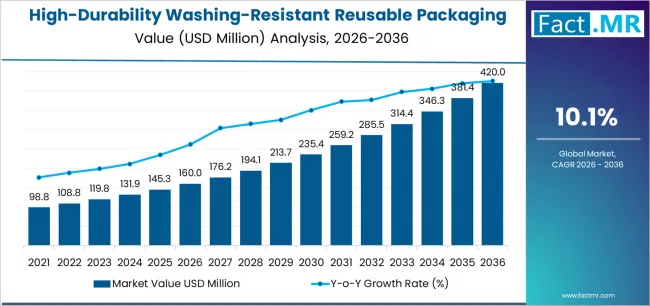
The proliferation of large-scale reusable packaging systems across foodservice, beverage, and retail logistics is the primary driver for this specialized component market. As reusable models scale, the failure of key components like seals, hinges, or closures becomes a critical point of system downtime and cost. This creates a premium demand for components engineered to withstand hundreds of aggressive industrial washing cycles, high temperatures, and mechanical stress without degrading. The market growth is intrinsically linked to the success and expansion of the parent reusable packaging ecosystems, where component durability directly defines system economics and operational reliability.
Advancements in polymer science and bonding technologies are fundamental to market expansion. Innovation focuses on developing materials with enhanced resistance to detergents, heat distortion, and fatigue, alongside joining technologies like high-temperature resistant bonding and ultrasonic welding that create robust, leak-proof assemblies. These technological enhancements enable the transition from single-use to multi-trip packaging by solving the historical weak points that lead to premature failure, ensuring the integrity and hygiene of the reusable unit throughout its extended lifecycle.
High-Durability Washing-Resistant Reusable Packaging Components Market
| Metric | Value |
|---|---|
| Estimated Value in (2026E) | USD 160.00 Million |
| Forecast Value in (2036F) | USD 420.00 Million |
| Forecast CAGR (2026 to 2036) | 10.1% |
Category
| Category | Segments |
|---|---|
| End-use/Application | Industrial & retail reuse systems, Foodservice & beverage systems, Reusable bottle systems, Local reuse ecosystems, Others |
| Component Type | Reusable lids, seals, valves, Reinforced handles, hinges, Valve assemblies, Connectors / closures, Others |
| Material | Engineered PP & silicone, Glass + polymer trims, High-performance plastics, Recycled PP blends, Others |
| Technology | High-temp resistant bonding, Anti-fatigue design, Precision moulding, Ultrasonic welding, Others |
| Region | North America, Europe, Asia Pacific, Latin America, MEA |
Segmental Analysis
Why do Industrial & Retail Reuse Systems drive the leading Application Segment?
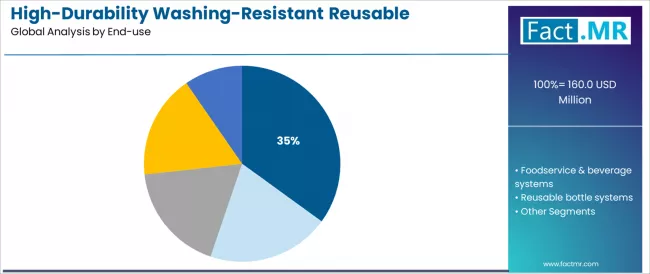
Industrial & retail reuse systems will command a 35% share, as these large-scale, pooled packaging systems such as reusable transit packaging (RTP) for retail supply chains and industrial container pooling, subject components to the most rigorous and frequent washing cycles. The economic model of these systems depends on maximizing trip counts; therefore, investing in ultra-durable components that prevent leakage, breakage, and contamination is a critical operational imperative. The high volume and standardized nature of these systems also allow for component optimization and bulk manufacturing.
- The push for automated handling and washing in logistics centers demands components with precise tolerances and exceptional mechanical strength to withstand robotic systems without failure.
- Components in these systems are increasingly designed with embedded RFID or sensors, requiring durable encapsulation and bonding technologies that survive harsh wash environments.
What establishes Reusable lids, seals, valves as the dominant Component Type?
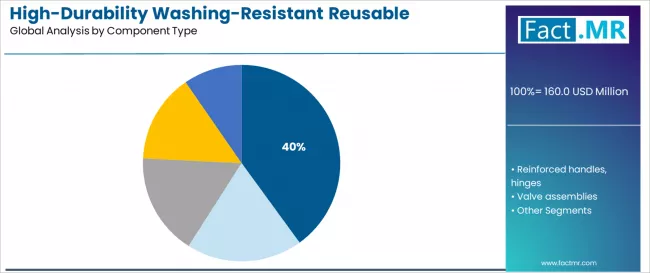
Reusable lids, seals, valves hold a 40% share as they are the critical functional interface for containment, hygiene, and open-close cycling in any reusable container. These components are the most frequent points of failure due to their exposure to stress, temperature fluctuations, and chemical cleaners. A failure in a seal or valve can render an entire bottle, crate, or food container unusable, making their durability paramount to the system's success and cost-effectiveness.
- Innovation is heavily focused on creating robust sealing geometries and material compounds that maintain elasticity and sealing force after hundreds of cycles, preventing leakage in food and beverage applications.
- Integrated valve assemblies for reusable bottles are a key growth area, requiring designs that can be thoroughly cleaned and sanitized internally while maintaining precise flow control over an extended lifespan.
What solidifies Engineered PP & silicone as the preferred Material choice?
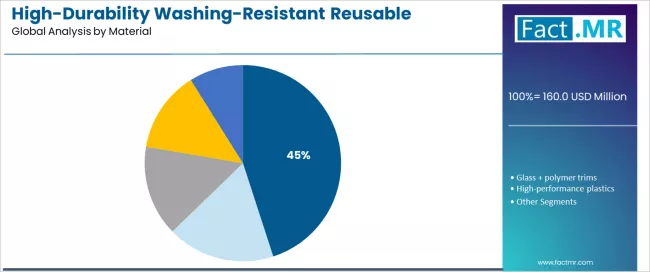
Engineered PP & silicone leads with a 45% share, representing the optimal balance of chemical resistance, flexibility, and cost for high-cycle components. Specially formulated polypropylene (PP) copolymers offer enhanced resistance to heat distortion and caustic washing agents, making them ideal for rigid components like lids and housings. Silicone is unmatched for gaskets, seals, and flexible valves due to its wide temperature tolerance, enduring elasticity, and inert nature, which prevents odor transfer—a critical factor in food-grade reuse.
- Material development focuses on creating proprietary blends that add features like anti-microbial properties, improved abrasion resistance, or compatibility with recycled content without sacrificing performance.
- The combination of rigid engineered PP frames with silicone seals via advanced bonding techniques is becoming a standard for high-performance, leak-proof assemblies.
What are the Drivers, Restraints, and Key Trends in the High-Durability Washing-Resistant Reusable Packaging Components Market?
The scaling of reusable packaging mandates (e.g., PPWR) and the consequent operational need for reliability in multi-trip systems directly drives the market. As the total cost of ownership for reusables comes under scrutiny, component longevity becomes a make-or-break financial variable, pushing brands and system operators to source premium, durable parts.
The trend towards highly engineered material solutions is paramount, with R&D focused on polymers that can withstand aggressive industrial washing without cracking, clouding, or losing mechanical properties. Furthermore, modular and repairable component design is emerging as a key trend, where individual parts like seals or hinges can be replaced in the field, extending the main container's life and reducing waste from discarding the entire unit due to a single point of failure.
A primary restraint is the higher unit cost of these performance-engineered components compared to their single-use or lower-durability counterparts. This requires system operators to have a clear understanding of the lifecycle cost savings achieved through reduced failure rates and downtime. Additionally, the complexity of designing components that meet food contact safety standards across hundreds of washes in different chemical environments poses a significant technical challenge.
Analysis of the Market by Key Countries
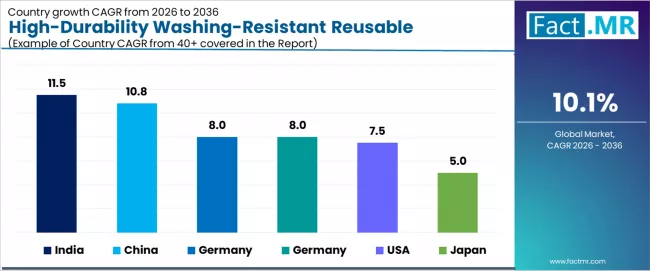
| Country | CAGR (2026-2036) |
|---|---|
| USA | 7.50% |
| Germany | 8.00% |
| China | 10.80% |
| India | 11.50% |
| Brazil | 8.00% |
| Japan | 5.00% |
What underpins the advanced component demand in the USA's market?
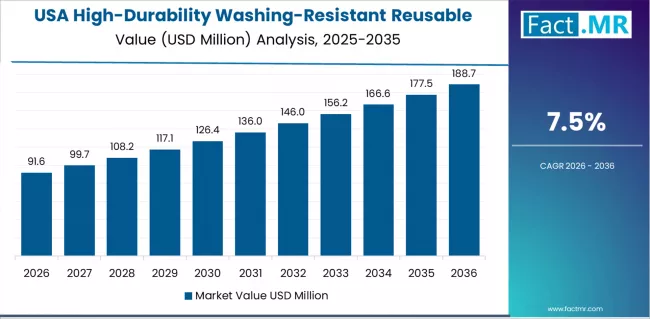
Growth in the USA at a 7.50% CAGR is driven by sophisticated industrial reuse systems in retail logistics and the growth of national reusable cup programs. Demand focuses on components that meet strict FDA standards for repeated food contact and can endure the high-throughput, automated washing systems used by major logistics and foodservice operators. Innovation targets lightweight yet ultra-durable designs.
How does Germany's Engineering Precision shape its Component Market?
Germany's 8.00% CAGR reflects its leadership in high-precision manufacturing for industrial systems. The stringent requirements of the German and EU reuse ecosystem, with its emphasis on hygiene and long lifecycle, drive demand for components with exceptional tolerances, material purity, and verifiable durability data. Collaboration between chemical companies such as Henkel and component molders is intense.
What factors propel China's rapid expansion as a manufacturing hub?
China's 10.80% CAGR is fueled by its dual role as the world's largest manufacturer of reusable packaging and a vast testing ground for new systems like food delivery container pooling. This scale drives massive demand for cost-optimized yet reliable components. Domestic players are investing in precision molding and advanced material compounding to meet the high-volume needs of both local and export markets.
Why does India exhibit the highest growth trajectory?
India leads with an 11.50% CAGR, driven by the explosive adoption of reusable bottle and local food container systems following single-use plastic bans. The market demands components that are extremely cost-effective and durable under sometimes less-controlled washing conditions. Innovation is focused on robust designs using engineering plastics and recycled polymer blends that deliver performance at accessible price points.
How does Brazil's market develop?
Brazil's 8.00% CAGR is supported by its strong agro-industrial sector and growing reusable packaging systems for beverages and food. The market leverages local polymer production to develop components resistant to frequent washing, with growth tied to the expansion of domestic reusable ecosystem players and their export ambitions.
What Characterizes Japan's Niche-oriented Market?
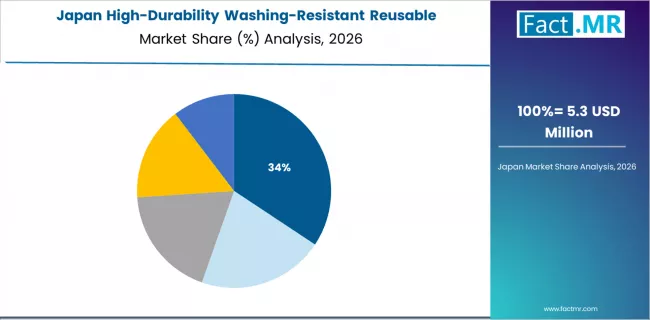
Japan's mature market grows at a measured 5.00% CAGR, prioritizing ultra-high quality, miniaturization, and precision for niche applications in high-end reusable food and beverage packaging. The focus is on components with exquisite finish, silent operation such as hinges, and valves, and materials that guarantee no contamination over countless uses, supported by a strong culture of maintenance and quality.
Competitive Landscape
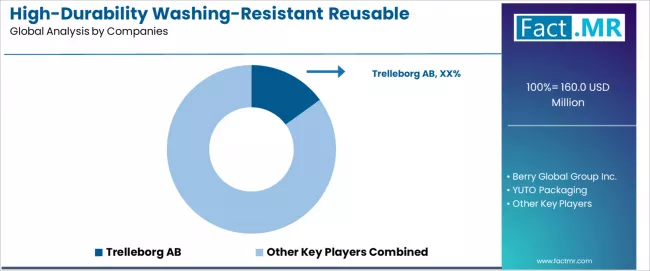
The competitive environment is defined by specialized material science and precision engineering expertise. Global tier-1 suppliers like AptarGroup and Berry Global compete through deep expertise in polymer processing, advanced molding technologies, and direct collaboration with brand owners to design next-generation components.
Specialized sealing and engineering firms like Trelleborg AB dominate in high-performance elastomer components. Competition hinges on the ability to provide certified material data sheets for repeated food contact, achieve extreme consistency in high-volume production to ensure assembly reliability, and co-engineer solutions that solve specific failure points in emerging reuse systems.
Key Players Profiled in the High-Durability Washing-Resistant Reusable Packaging Components Market
- Trelleborg AB
- Berry Global Group Inc.
- YUTO Packaging
- UFLEX Limited
- Toppan Holdings Inc.
- AptarGroup Inc.
- Henkel AG & Co. KGaA
- Other local converters
Scope of the Report
| Items | Values |
|---|---|
| Quantitative Units (2026) | USD 160.00 Million |
| End-use/Application | Industrial & retail reuse systems, Foodservice & beverage systems, Reusable bottle systems, Local reuse ecosystems, Others |
| Component Type | Reusable lids, seals, valves, Reinforced handles, hinges, Valve assemblies, Connectors / closures, Others |
| Material | Engineered PP & silicone, Glass + polymer trims, High-performance plastics, Recycled PP blends, Others |
| Technology | High-temp resistant bonding, Anti-fatigue design, Precision moulding, Ultrasonic welding, Others |
| Regions Covered | North America, Europe, Asia Pacific, Latin America, Middle East & Africa |
| Key Companies Profiled | Trelleborg AB, Berry Global Group Inc., YUTO Packaging, UFLEX Limited, Toppan Holdings Inc., AptarGroup Inc., Henkel AG & Co. KGaA, Other local converters |
| Additional Attributes | Failure mode and effects analysis (FMEA) for components, cost-benefit analysis of premium materials, testing standards for wash-cycle durability, supply chain analysis for performance polymers. |
High-Durability Washing-Resistant Reusable Packaging Components Market by Segments
-
By End-use/Application :
- Industrial & retail reuse systems
- Foodservice & beverage systems
- Reusable bottle systems
- Local reuse ecosystems
- Others
-
By Component Type :
- Reusable lids, seals and valves
- Reinforced handles and hinges
- Valve assemblies
- Connectors/Closures
- Others
-
By Material :
- Engineered PP & silicone
- Glass + polymer trims
- High-performance plastics
- Recycled PP blends
- Others
-
By Technology :
- High-temp resistant bonding
- Anti-fatigue design
- Precision moulding
- Ultrasonic welding
- Others
-
By Region :
-
North America
- USA
- Canada
- Mexico
-
Europe
- Germany
- UK
- France
- Italy
- Spain
- Nordic Countries
- BENELUX
- Rest of Europe
-
Asia Pacific
- China
- India
- Japan
- South Korea
- Australia
- Rest of Asia Pacific
-
Latin America
- Brazil
- Argentina
- Rest of Latin America
-
Middle East & Africa
- Saudi Arabia
- UAE
- South Africa
- Rest of MEA
-
Table of Content
- Executive Summary
- Global Market Outlook
- Demand to side Trends
- Supply to side Trends
- Technology Roadmap Analysis
- Analysis and Recommendations
- Market Overview
- Market Coverage / Taxonomy
- Market Definition / Scope / Limitations
- Market Background
- Market Dynamics
- Drivers
- Restraints
- Opportunity
- Trends
- Scenario Forecast
- Demand in Optimistic Scenario
- Demand in Likely Scenario
- Demand in Conservative Scenario
- Opportunity Map Analysis
- Product Life Cycle Analysis
- Supply Chain Analysis
- Investment Feasibility Matrix
- Value Chain Analysis
- PESTLE and Porter’s Analysis
- Regulatory Landscape
- Regional Parent Market Outlook
- Production and Consumption Statistics
- Import and Export Statistics
- Market Dynamics
- Global Market Analysis 2021 to 2025 and Forecast, 2026 to 2036
- Historical Market Size Value (USD Million) Analysis, 2021 to 2025
- Current and Future Market Size Value (USD Million) Projections, 2026 to 2036
- Y to o to Y Growth Trend Analysis
- Absolute $ Opportunity Analysis
- Global Market Pricing Analysis 2021 to 2025 and Forecast 2026 to 2036
- Global Market Analysis 2021 to 2025 and Forecast 2026 to 2036, By End-use
- Introduction / Key Findings
- Historical Market Size Value (USD Million) Analysis By End-use, 2021 to 2025
- Current and Future Market Size Value (USD Million) Analysis and Forecast By End-use, 2026 to 2036
- Industrial & retail reuse systems
- Foodservice & beverage systems
- Reusable bottle systems
- Local reuse ecosystems
- Others
- Y to o to Y Growth Trend Analysis By End-use, 2021 to 2025
- Absolute $ Opportunity Analysis By End-use, 2026 to 2036
- Global Market Analysis 2021 to 2025 and Forecast 2026 to 2036, By Component Type
- Introduction / Key Findings
- Historical Market Size Value (USD Million) Analysis By Component Type, 2021 to 2025
- Current and Future Market Size Value (USD Million) Analysis and Forecast By Component Type, 2026 to 2036
- Reusable lids, seals, valves
- Reinforced handles, hinges
- Valve assemblies
- Connectors / closures
- Others
- Y to o to Y Growth Trend Analysis By Component Type, 2021 to 2025
- Absolute $ Opportunity Analysis By Component Type, 2026 to 2036
- Global Market Analysis 2021 to 2025 and Forecast 2026 to 2036, By Material
- Introduction / Key Findings
- Historical Market Size Value (USD Million) Analysis By Material, 2021 to 2025
- Current and Future Market Size Value (USD Million) Analysis and Forecast By Material, 2026 to 2036
- Engineered PP & silicone
- Glass + polymer trims
- High-performance plastics
- Recycled PP blends
- Others
- Y to o to Y Growth Trend Analysis By Material, 2021 to 2025
- Absolute $ Opportunity Analysis By Material, 2026 to 2036
- Global Market Analysis 2021 to 2025 and Forecast 2026 to 2036, By Technology
- Introduction / Key Findings
- Historical Market Size Value (USD Million) Analysis By Technology, 2021 to 2025
- Current and Future Market Size Value (USD Million) Analysis and Forecast By Technology, 2026 to 2036
- High-temp resistant bonding
- Anti-fatigue design
- Precision moulding
- Ultrasonic welding
- Others
- Y to o to Y Growth Trend Analysis By Technology, 2021 to 2025
- Absolute $ Opportunity Analysis By Technology, 2026 to 2036
- Global Market Analysis 2021 to 2025 and Forecast 2026 to 2036, By Region
- Introduction
- Historical Market Size Value (USD Million) Analysis By Region, 2021 to 2025
- Current Market Size Value (USD Million) Analysis and Forecast By Region, 2026 to 2036
- North America
- Latin America
- Western Europe
- Eastern Europe
- East Asia
- South Asia and Pacific
- Middle East & Africa
- Market Attractiveness Analysis By Region
- North America Market Analysis 2021 to 2025 and Forecast 2026 to 2036, By Country
- Historical Market Size Value (USD Million) Trend Analysis By Market Taxonomy, 2021 to 2025
- Market Size Value (USD Million) Forecast By Market Taxonomy, 2026 to 2036
- By Country
- USA
- Canada
- Mexico
- By End-use
- By Component Type
- By Material
- By Technology
- By Country
- Market Attractiveness Analysis
- By Country
- By End-use
- By Component Type
- By Material
- By Technology
- Key Takeaways
- Latin America Market Analysis 2021 to 2025 and Forecast 2026 to 2036, By Country
- Historical Market Size Value (USD Million) Trend Analysis By Market Taxonomy, 2021 to 2025
- Market Size Value (USD Million) Forecast By Market Taxonomy, 2026 to 2036
- By Country
- Brazil
- Chile
- Rest of Latin America
- By End-use
- By Component Type
- By Material
- By Technology
- By Country
- Market Attractiveness Analysis
- By Country
- By End-use
- By Component Type
- By Material
- By Technology
- Key Takeaways
- Western Europe Market Analysis 2021 to 2025 and Forecast 2026 to 2036, By Country
- Historical Market Size Value (USD Million) Trend Analysis By Market Taxonomy, 2021 to 2025
- Market Size Value (USD Million) Forecast By Market Taxonomy, 2026 to 2036
- By Country
- Germany
- UK
- Italy
- Spain
- France
- Nordic
- BENELUX
- Rest of Western Europe
- By End-use
- By Component Type
- By Material
- By Technology
- By Country
- Market Attractiveness Analysis
- By Country
- By End-use
- By Component Type
- By Material
- By Technology
- Key Takeaways
- Eastern Europe Market Analysis 2021 to 2025 and Forecast 2026 to 2036, By Country
- Historical Market Size Value (USD Million) Trend Analysis By Market Taxonomy, 2021 to 2025
- Market Size Value (USD Million) Forecast By Market Taxonomy, 2026 to 2036
- By Country
- Russia
- Poland
- Hungary
- Balkan & Baltic
- Rest of Eastern Europe
- By End-use
- By Component Type
- By Material
- By Technology
- By Country
- Market Attractiveness Analysis
- By Country
- By End-use
- By Component Type
- By Material
- By Technology
- Key Takeaways
- East Asia Market Analysis 2021 to 2025 and Forecast 2026 to 2036, By Country
- Historical Market Size Value (USD Million) Trend Analysis By Market Taxonomy, 2021 to 2025
- Market Size Value (USD Million) Forecast By Market Taxonomy, 2026 to 2036
- By Country
- China
- Japan
- South Korea
- By End-use
- By Component Type
- By Material
- By Technology
- By Country
- Market Attractiveness Analysis
- By Country
- By End-use
- By Component Type
- By Material
- By Technology
- Key Takeaways
- South Asia and Pacific Market Analysis 2021 to 2025 and Forecast 2026 to 2036, By Country
- Historical Market Size Value (USD Million) Trend Analysis By Market Taxonomy, 2021 to 2025
- Market Size Value (USD Million) Forecast By Market Taxonomy, 2026 to 2036
- By Country
- India
- ASEAN
- Australia & New Zealand
- Rest of South Asia and Pacific
- By End-use
- By Component Type
- By Material
- By Technology
- By Country
- Market Attractiveness Analysis
- By Country
- By End-use
- By Component Type
- By Material
- By Technology
- Key Takeaways
- Middle East & Africa Market Analysis 2021 to 2025 and Forecast 2026 to 2036, By Country
- Historical Market Size Value (USD Million) Trend Analysis By Market Taxonomy, 2021 to 2025
- Market Size Value (USD Million) Forecast By Market Taxonomy, 2026 to 2036
- By Country
- Kingdom of Saudi Arabia
- Other GCC Countries
- Turkiye
- South Africa
- Other African Union
- Rest of Middle East & Africa
- By End-use
- By Component Type
- By Material
- By Technology
- By Country
- Market Attractiveness Analysis
- By Country
- By End-use
- By Component Type
- By Material
- By Technology
- Key Takeaways
- Key Countries Market Analysis
- USA
- Pricing Analysis
- Market Share Analysis, 2025
- By End-use
- By Component Type
- By Material
- By Technology
- Canada
- Pricing Analysis
- Market Share Analysis, 2025
- By End-use
- By Component Type
- By Material
- By Technology
- Mexico
- Pricing Analysis
- Market Share Analysis, 2025
- By End-use
- By Component Type
- By Material
- By Technology
- Brazil
- Pricing Analysis
- Market Share Analysis, 2025
- By End-use
- By Component Type
- By Material
- By Technology
- Chile
- Pricing Analysis
- Market Share Analysis, 2025
- By End-use
- By Component Type
- By Material
- By Technology
- Germany
- Pricing Analysis
- Market Share Analysis, 2025
- By End-use
- By Component Type
- By Material
- By Technology
- UK
- Pricing Analysis
- Market Share Analysis, 2025
- By End-use
- By Component Type
- By Material
- By Technology
- Italy
- Pricing Analysis
- Market Share Analysis, 2025
- By End-use
- By Component Type
- By Material
- By Technology
- Spain
- Pricing Analysis
- Market Share Analysis, 2025
- By End-use
- By Component Type
- By Material
- By Technology
- France
- Pricing Analysis
- Market Share Analysis, 2025
- By End-use
- By Component Type
- By Material
- By Technology
- India
- Pricing Analysis
- Market Share Analysis, 2025
- By End-use
- By Component Type
- By Material
- By Technology
- ASEAN
- Pricing Analysis
- Market Share Analysis, 2025
- By End-use
- By Component Type
- By Material
- By Technology
- Australia & New Zealand
- Pricing Analysis
- Market Share Analysis, 2025
- By End-use
- By Component Type
- By Material
- By Technology
- China
- Pricing Analysis
- Market Share Analysis, 2025
- By End-use
- By Component Type
- By Material
- By Technology
- Japan
- Pricing Analysis
- Market Share Analysis, 2025
- By End-use
- By Component Type
- By Material
- By Technology
- South Korea
- Pricing Analysis
- Market Share Analysis, 2025
- By End-use
- By Component Type
- By Material
- By Technology
- Russia
- Pricing Analysis
- Market Share Analysis, 2025
- By End-use
- By Component Type
- By Material
- By Technology
- Poland
- Pricing Analysis
- Market Share Analysis, 2025
- By End-use
- By Component Type
- By Material
- By Technology
- Hungary
- Pricing Analysis
- Market Share Analysis, 2025
- By End-use
- By Component Type
- By Material
- By Technology
- Kingdom of Saudi Arabia
- Pricing Analysis
- Market Share Analysis, 2025
- By End-use
- By Component Type
- By Material
- By Technology
- Turkiye
- Pricing Analysis
- Market Share Analysis, 2025
- By End-use
- By Component Type
- By Material
- By Technology
- South Africa
- Pricing Analysis
- Market Share Analysis, 2025
- By End-use
- By Component Type
- By Material
- By Technology
- USA
- Market Structure Analysis
- Competition Dashboard
- Competition Benchmarking
- Market Share Analysis of Top Players
- By Regional
- By End-use
- By Component Type
- By Material
- By Technology
- Competition Analysis
- Competition Deep Dive
- Trelleborg AB
- Overview
- Product Portfolio
- Profitability by Market Segments (Product/Age /Sales Channel/Region)
- Sales Footprint
- Strategy Overview
- Marketing Strategy
- Product Strategy
- Channel Strategy
- Berry Global Group Inc.
- YUTO Packaging
- UFLEX Limited
- Toppan Holdings Inc.
- AptarGroup Inc.
- Henkel AG & Co. KGaA
- Other local converters
- Trelleborg AB
- Competition Deep Dive
- Assumptions & Acronyms Used
- Research Methodology
List Of Table
- Table 1: Global Market Value (USD Million) Forecast by Region, 2021 to 2036
- Table 2: Global Market Value (USD Million) Forecast by End-use, 2021 to 2036
- Table 3: Global Market Value (USD Million) Forecast by Component Type, 2021 to 2036
- Table 4: Global Market Value (USD Million) Forecast by Material, 2021 to 2036
- Table 5: Global Market Value (USD Million) Forecast by Technology, 2021 to 2036
- Table 6: North America Market Value (USD Million) Forecast by Country, 2021 to 2036
- Table 7: North America Market Value (USD Million) Forecast by End-use, 2021 to 2036
- Table 8: North America Market Value (USD Million) Forecast by Component Type, 2021 to 2036
- Table 9: North America Market Value (USD Million) Forecast by Material, 2021 to 2036
- Table 10: North America Market Value (USD Million) Forecast by Technology, 2021 to 2036
- Table 11: Latin America Market Value (USD Million) Forecast by Country, 2021 to 2036
- Table 12: Latin America Market Value (USD Million) Forecast by End-use, 2021 to 2036
- Table 13: Latin America Market Value (USD Million) Forecast by Component Type, 2021 to 2036
- Table 14: Latin America Market Value (USD Million) Forecast by Material, 2021 to 2036
- Table 15: Latin America Market Value (USD Million) Forecast by Technology, 2021 to 2036
- Table 16: Western Europe Market Value (USD Million) Forecast by Country, 2021 to 2036
- Table 17: Western Europe Market Value (USD Million) Forecast by End-use, 2021 to 2036
- Table 18: Western Europe Market Value (USD Million) Forecast by Component Type, 2021 to 2036
- Table 19: Western Europe Market Value (USD Million) Forecast by Material, 2021 to 2036
- Table 20: Western Europe Market Value (USD Million) Forecast by Technology, 2021 to 2036
- Table 21: Eastern Europe Market Value (USD Million) Forecast by Country, 2021 to 2036
- Table 22: Eastern Europe Market Value (USD Million) Forecast by End-use, 2021 to 2036
- Table 23: Eastern Europe Market Value (USD Million) Forecast by Component Type, 2021 to 2036
- Table 24: Eastern Europe Market Value (USD Million) Forecast by Material, 2021 to 2036
- Table 25: Eastern Europe Market Value (USD Million) Forecast by Technology, 2021 to 2036
- Table 26: East Asia Market Value (USD Million) Forecast by Country, 2021 to 2036
- Table 27: East Asia Market Value (USD Million) Forecast by End-use, 2021 to 2036
- Table 28: East Asia Market Value (USD Million) Forecast by Component Type, 2021 to 2036
- Table 29: East Asia Market Value (USD Million) Forecast by Material, 2021 to 2036
- Table 30: East Asia Market Value (USD Million) Forecast by Technology, 2021 to 2036
- Table 31: South Asia and Pacific Market Value (USD Million) Forecast by Country, 2021 to 2036
- Table 32: South Asia and Pacific Market Value (USD Million) Forecast by End-use, 2021 to 2036
- Table 33: South Asia and Pacific Market Value (USD Million) Forecast by Component Type, 2021 to 2036
- Table 34: South Asia and Pacific Market Value (USD Million) Forecast by Material, 2021 to 2036
- Table 35: South Asia and Pacific Market Value (USD Million) Forecast by Technology, 2021 to 2036
- Table 36: Middle East & Africa Market Value (USD Million) Forecast by Country, 2021 to 2036
- Table 37: Middle East & Africa Market Value (USD Million) Forecast by End-use, 2021 to 2036
- Table 38: Middle East & Africa Market Value (USD Million) Forecast by Component Type, 2021 to 2036
- Table 39: Middle East & Africa Market Value (USD Million) Forecast by Material, 2021 to 2036
- Table 40: Middle East & Africa Market Value (USD Million) Forecast by Technology, 2021 to 2036
List Of Figures
- Figure 1: Global Market Pricing Analysis
- Figure 2: Global Market Value (USD Million) Forecast 2021 to 2036
- Figure 3: Global Market Value Share and BPS Analysis by End-use, 2026 and 2036
- Figure 4: Global Market Y to o to Y Growth Comparison by End-use, 2026 to 2036
- Figure 5: Global Market Attractiveness Analysis by End-use
- Figure 6: Global Market Value Share and BPS Analysis by Component Type, 2026 and 2036
- Figure 7: Global Market Y to o to Y Growth Comparison by Component Type, 2026 to 2036
- Figure 8: Global Market Attractiveness Analysis by Component Type
- Figure 9: Global Market Value Share and BPS Analysis by Material, 2026 and 2036
- Figure 10: Global Market Y to o to Y Growth Comparison by Material, 2026 to 2036
- Figure 11: Global Market Attractiveness Analysis by Material
- Figure 12: Global Market Value Share and BPS Analysis by Technology, 2026 and 2036
- Figure 13: Global Market Y to o to Y Growth Comparison by Technology, 2026 to 2036
- Figure 14: Global Market Attractiveness Analysis by Technology
- Figure 15: Global Market Value (USD Million) Share and BPS Analysis by Region, 2026 and 2036
- Figure 16: Global Market Y to o to Y Growth Comparison by Region, 2026 to 2036
- Figure 17: Global Market Attractiveness Analysis by Region
- Figure 18: North America Market Incremental Dollar Opportunity, 2026 to 2036
- Figure 19: Latin America Market Incremental Dollar Opportunity, 2026 to 2036
- Figure 20: Western Europe Market Incremental Dollar Opportunity, 2026 to 2036
- Figure 21: Eastern Europe Market Incremental Dollar Opportunity, 2026 to 2036
- Figure 22: East Asia Market Incremental Dollar Opportunity, 2026 to 2036
- Figure 23: South Asia and Pacific Market Incremental Dollar Opportunity, 2026 to 2036
- Figure 24: Middle East & Africa Market Incremental Dollar Opportunity, 2026 to 2036
- Figure 25: North America Market Value Share and BPS Analysis by Country, 2026 and 2036
- Figure 26: North America Market Value Share and BPS Analysis by End-use, 2026 and 2036
- Figure 27: North America Market Y to o to Y Growth Comparison by End-use, 2026 to 2036
- Figure 28: North America Market Attractiveness Analysis by End-use
- Figure 29: North America Market Value Share and BPS Analysis by Component Type, 2026 and 2036
- Figure 30: North America Market Y to o to Y Growth Comparison by Component Type, 2026 to 2036
- Figure 31: North America Market Attractiveness Analysis by Component Type
- Figure 32: North America Market Value Share and BPS Analysis by Material, 2026 and 2036
- Figure 33: North America Market Y to o to Y Growth Comparison by Material, 2026 to 2036
- Figure 34: North America Market Attractiveness Analysis by Material
- Figure 35: North America Market Value Share and BPS Analysis by Technology, 2026 and 2036
- Figure 36: North America Market Y to o to Y Growth Comparison by Technology, 2026 to 2036
- Figure 37: North America Market Attractiveness Analysis by Technology
- Figure 38: Latin America Market Value Share and BPS Analysis by Country, 2026 and 2036
- Figure 39: Latin America Market Value Share and BPS Analysis by End-use, 2026 and 2036
- Figure 40: Latin America Market Y to o to Y Growth Comparison by End-use, 2026 to 2036
- Figure 41: Latin America Market Attractiveness Analysis by End-use
- Figure 42: Latin America Market Value Share and BPS Analysis by Component Type, 2026 and 2036
- Figure 43: Latin America Market Y to o to Y Growth Comparison by Component Type, 2026 to 2036
- Figure 44: Latin America Market Attractiveness Analysis by Component Type
- Figure 45: Latin America Market Value Share and BPS Analysis by Material, 2026 and 2036
- Figure 46: Latin America Market Y to o to Y Growth Comparison by Material, 2026 to 2036
- Figure 47: Latin America Market Attractiveness Analysis by Material
- Figure 48: Latin America Market Value Share and BPS Analysis by Technology, 2026 and 2036
- Figure 49: Latin America Market Y to o to Y Growth Comparison by Technology, 2026 to 2036
- Figure 50: Latin America Market Attractiveness Analysis by Technology
- Figure 51: Western Europe Market Value Share and BPS Analysis by Country, 2026 and 2036
- Figure 52: Western Europe Market Value Share and BPS Analysis by End-use, 2026 and 2036
- Figure 53: Western Europe Market Y to o to Y Growth Comparison by End-use, 2026 to 2036
- Figure 54: Western Europe Market Attractiveness Analysis by End-use
- Figure 55: Western Europe Market Value Share and BPS Analysis by Component Type, 2026 and 2036
- Figure 56: Western Europe Market Y to o to Y Growth Comparison by Component Type, 2026 to 2036
- Figure 57: Western Europe Market Attractiveness Analysis by Component Type
- Figure 58: Western Europe Market Value Share and BPS Analysis by Material, 2026 and 2036
- Figure 59: Western Europe Market Y to o to Y Growth Comparison by Material, 2026 to 2036
- Figure 60: Western Europe Market Attractiveness Analysis by Material
- Figure 61: Western Europe Market Value Share and BPS Analysis by Technology, 2026 and 2036
- Figure 62: Western Europe Market Y to o to Y Growth Comparison by Technology, 2026 to 2036
- Figure 63: Western Europe Market Attractiveness Analysis by Technology
- Figure 64: Eastern Europe Market Value Share and BPS Analysis by Country, 2026 and 2036
- Figure 65: Eastern Europe Market Value Share and BPS Analysis by End-use, 2026 and 2036
- Figure 66: Eastern Europe Market Y to o to Y Growth Comparison by End-use, 2026 to 2036
- Figure 67: Eastern Europe Market Attractiveness Analysis by End-use
- Figure 68: Eastern Europe Market Value Share and BPS Analysis by Component Type, 2026 and 2036
- Figure 69: Eastern Europe Market Y to o to Y Growth Comparison by Component Type, 2026 to 2036
- Figure 70: Eastern Europe Market Attractiveness Analysis by Component Type
- Figure 71: Eastern Europe Market Value Share and BPS Analysis by Material, 2026 and 2036
- Figure 72: Eastern Europe Market Y to o to Y Growth Comparison by Material, 2026 to 2036
- Figure 73: Eastern Europe Market Attractiveness Analysis by Material
- Figure 74: Eastern Europe Market Value Share and BPS Analysis by Technology, 2026 and 2036
- Figure 75: Eastern Europe Market Y to o to Y Growth Comparison by Technology, 2026 to 2036
- Figure 76: Eastern Europe Market Attractiveness Analysis by Technology
- Figure 77: East Asia Market Value Share and BPS Analysis by Country, 2026 and 2036
- Figure 78: East Asia Market Value Share and BPS Analysis by End-use, 2026 and 2036
- Figure 79: East Asia Market Y to o to Y Growth Comparison by End-use, 2026 to 2036
- Figure 80: East Asia Market Attractiveness Analysis by End-use
- Figure 81: East Asia Market Value Share and BPS Analysis by Component Type, 2026 and 2036
- Figure 82: East Asia Market Y to o to Y Growth Comparison by Component Type, 2026 to 2036
- Figure 83: East Asia Market Attractiveness Analysis by Component Type
- Figure 84: East Asia Market Value Share and BPS Analysis by Material, 2026 and 2036
- Figure 85: East Asia Market Y to o to Y Growth Comparison by Material, 2026 to 2036
- Figure 86: East Asia Market Attractiveness Analysis by Material
- Figure 87: East Asia Market Value Share and BPS Analysis by Technology, 2026 and 2036
- Figure 88: East Asia Market Y to o to Y Growth Comparison by Technology, 2026 to 2036
- Figure 89: East Asia Market Attractiveness Analysis by Technology
- Figure 90: South Asia and Pacific Market Value Share and BPS Analysis by Country, 2026 and 2036
- Figure 91: South Asia and Pacific Market Value Share and BPS Analysis by End-use, 2026 and 2036
- Figure 92: South Asia and Pacific Market Y to o to Y Growth Comparison by End-use, 2026 to 2036
- Figure 93: South Asia and Pacific Market Attractiveness Analysis by End-use
- Figure 94: South Asia and Pacific Market Value Share and BPS Analysis by Component Type, 2026 and 2036
- Figure 95: South Asia and Pacific Market Y to o to Y Growth Comparison by Component Type, 2026 to 2036
- Figure 96: South Asia and Pacific Market Attractiveness Analysis by Component Type
- Figure 97: South Asia and Pacific Market Value Share and BPS Analysis by Material, 2026 and 2036
- Figure 98: South Asia and Pacific Market Y to o to Y Growth Comparison by Material, 2026 to 2036
- Figure 99: South Asia and Pacific Market Attractiveness Analysis by Material
- Figure 100: South Asia and Pacific Market Value Share and BPS Analysis by Technology, 2026 and 2036
- Figure 101: South Asia and Pacific Market Y to o to Y Growth Comparison by Technology, 2026 to 2036
- Figure 102: South Asia and Pacific Market Attractiveness Analysis by Technology
- Figure 103: Middle East & Africa Market Value Share and BPS Analysis by Country, 2026 and 2036
- Figure 104: Middle East & Africa Market Value Share and BPS Analysis by End-use, 2026 and 2036
- Figure 105: Middle East & Africa Market Y to o to Y Growth Comparison by End-use, 2026 to 2036
- Figure 106: Middle East & Africa Market Attractiveness Analysis by End-use
- Figure 107: Middle East & Africa Market Value Share and BPS Analysis by Component Type, 2026 and 2036
- Figure 108: Middle East & Africa Market Y to o to Y Growth Comparison by Component Type, 2026 to 2036
- Figure 109: Middle East & Africa Market Attractiveness Analysis by Component Type
- Figure 110: Middle East & Africa Market Value Share and BPS Analysis by Material, 2026 and 2036
- Figure 111: Middle East & Africa Market Y to o to Y Growth Comparison by Material, 2026 to 2036
- Figure 112: Middle East & Africa Market Attractiveness Analysis by Material
- Figure 113: Middle East & Africa Market Value Share and BPS Analysis by Technology, 2026 and 2036
- Figure 114: Middle East & Africa Market Y to o to Y Growth Comparison by Technology, 2026 to 2036
- Figure 115: Middle East & Africa Market Attractiveness Analysis by Technology
- Figure 116: Global Market - Tier Structure Analysis
- Figure 117: Global Market - Company Share Analysis
- FAQs -
How big is the high-durability washing-resistant reusable packaging components market in 2026?
The global high-durability washing-resistant reusable packaging components market is estimated to be valued at USD 160.0 million in 2026.
What will be the size of high-durability washing-resistant reusable packaging components market in 2036?
The market size for the high-durability washing-resistant reusable packaging components market is projected to reach USD 420.0 million by 2036.
How much will be the high-durability washing-resistant reusable packaging components market growth between 2026 and 2036?
The high-durability washing-resistant reusable packaging components market is expected to grow at a 10.1% CAGR between 2026 and 2036.
What are the key product types in the high-durability washing-resistant reusable packaging components market?
The key product types in high-durability washing-resistant reusable packaging components market are industrial & retail reuse systems, foodservice & beverage systems, reusable bottle systems, local reuse ecosystems and others.
Which component type segment to contribute significant share in the high-durability washing-resistant reusable packaging components market in 2026?
In terms of component type, reusable lids, seals, valves segment to command 40.0% share in the high-durability washing-resistant reusable packaging components market in 2026.