The In-vitro Human Models Market is analyzed across its key product, application and end-use segments, with the study covering market dynamics, regional trends and demand outlook, forecast 2026 to 2036.
By Fact.MR Healthcare DeskLead analyst:
S.N. JhaPublished :
Updated :
10 min read
Fact-checked under the Fact.MR editorial process
In-vitro Human Models Market Forecast and Outlook 2026 to 2036
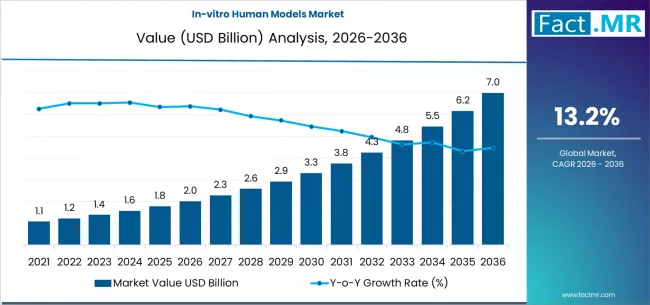
The global in-vitro human models market is projected to total USD 2.02 billion in 2026, advancing to USD 6.99 billion by 2036, achieving a compound annual growth rate of 13.2%. This exceptional growth is driven by the pharmaceutical industry's urgent need to improve drug development efficiency and reduce reliance on imperfect animal models.
In Vitro Human Models Market Market Value Analysis | Source: Fact.MR
Summary of In-vitro Human Models Market
Market Snapshot
Global in-vitro human models market revenue stood at USD 2.02 billion in 2026 and is forecast to reach USD 6.99 billion by 2036.
At a 13.2%CAGRfrom 2026 to 2036, this market is driven by the pharmaceutical industry's urgent need to improve drug development efficiency and reduce reliance on imperfect animal models.
Advanced platforms including organ-on-chip systems and 3D tissue models offer unprecedented physiological relevance for predicting human responses with superior translational accuracy.
The market's trajectory is defined by a shift from basic research tools tovalidated, regulatory-endorsed assets critical for modern therapeutic development and clinical success rate improvement.
Demand and Growth Drivers
Pharmaceutical industry pursuit of more predictive, human-relevant preclinical models to reduce high clinical failure rates and associated drug development costs is the primary market driver.
Supportive regulatory trends from agencies like the FDA actively engaged in defining evaluation criteria for novel methodologies are accelerating pathway to regulatory acceptance.
Rising ethical and scientific scrutiny of animal models and alignment with the 3Rs (Replace, Reduce, Refine) principle is creating institutional and policy pressure to adopt alternative methods.
Development of integrated multi-organ body-on-a-chip systems enabling complex systemic pharmacology and toxicity studiesrepresentsthe next frontier of platform capability and commercial value.
Strategic partnerships between platform developers and large pharmaceutical companies for pipeline validation create compelling case studies and drive the transition from research tool to essential preclinical asset.
Product and Segment View
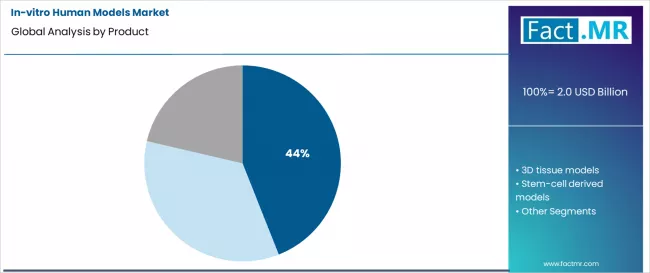
Organ-on-chip Systems leads the Product segment with a 44.0% share in 2026, valued for their unique ability to emulate dynamic mechanical forces, fluid flow, and multi-cellular interactions of human organs.
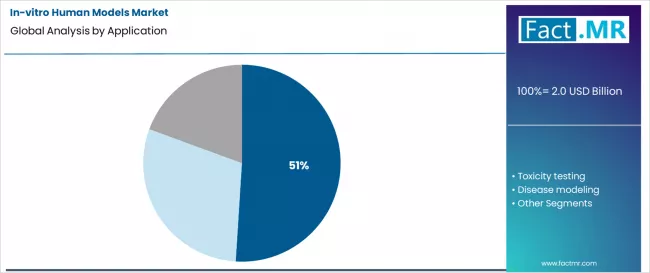
Drug Discovery leads the Application segment with a 51.0% share in 2026, where these models are deployed for target validation, efficacy screening, and mechanistic studies to de-risk pipelines.
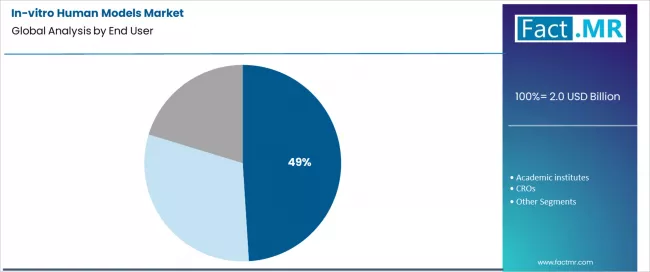
Pharma & Biotech Companies lead the End User segment with a 49.0% share in 2026,possessingthe resources and pressing commercial need to integrate innovative tools that can accelerate development timelines.
Additionalproduct segments include 3D Tissue Models and Stem-cell Derived Models;additionalapplication segments include Toxicity Testing and DiseaseModeling.
Geography and Competitive Outlook
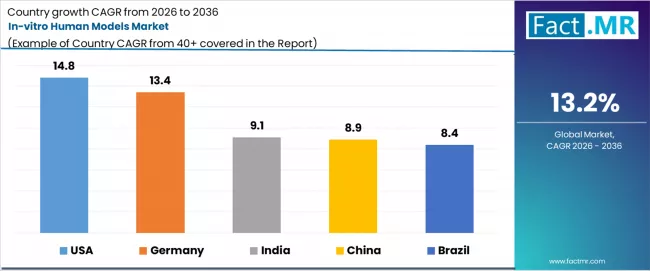
USA (14.8%CAGR), Germany (13.4%), India (9.1%), China (8.9%), and Brazil (8.4%) are the key growth countries highlighted on the webpage.
North America and Western Europe lead in biotech ecosystem density, regulatory engagement, and R&D investment, while Asia Pacific presents a high-growth frontier via increasing research funding andCROadoption.
Market expansion is closely tied to biopharma R&D spending, venture capital funding for life science tools,FDAandEMAregulatory guidance on novel methodologies, andCROservice portfolio expansion.
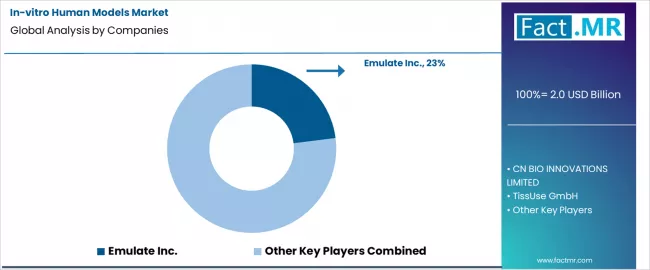
Key companies active in this market include Emulate Inc., CN BIO INNOVATIONS LIMITED,TissUseGmbH,MIMETASB.V., andInSpheroAG.
In-vitro Human Models Market — At a Glance
Attribute
Details
Market Value 2026
USD 2.02 Billion
Market Value 2036
USD 6.99 Billion
Absolute Dollar Opportunity 2026-2036
USD 4.97 Billion
Total Growth % 2026-2036
246.04%
CAGR2026-2036
13.2%
Growth Multiple
3.46x
Key Demand Theme
Organ-on-chip, 3D tissue, and stem-cell derived in-vitro human models enabling human-relevant drug discovery,toxicity testing, and disease modelling to reduce preclinical failure rates
Leading Segment by Product (2026)
Organ-on-chip Systems
Product Segment Share (2026)
44.0%
Leading Segment by Application (2026)
Drug Discovery
Application Segment Share (2026)
51.0%
Leading Segment by End User (2026)
Pharma & Biotech Companies
End User Segment Share (2026)
49.0%
Key Growth Regions
North America, Western Europe, Asia Pacific
CountryCAGRs
USA 14.8%, Germany 13.4%, India 9.1%, China 8.9%, Brazil 8.4%
Top Companies
Emulate Inc., CN BIO INNOVATIONS LIMITED,TissUseGmbH,MIMETASB.V.,InSpheroAG
Segmentation by Product
Organ-on-chip Systems, 3D Tissue Models, Stem-cell Derived Models
Segmentation by Application
Drug Discovery, Toxicity Testing, Disease Modeling
North America, Latin America, Western Europe, Eastern Europe, East Asia, South Asia & Pacific, MEA
Source: Fact.MR analysis. Updated Apr 16, 2026
These advanced platforms, including organ-on-chip systems and 3D tissue models, offer unprecedented physiological relevance for predicting human responses. The market's expansion is concentrated within the drug discovery application, where these models are deployed to enhance lead candidate selection and early safety assessment. Dominance by organ-on-chip systems underscores the trend toward replicating complex organ-level functions and inter-organ interactions in a controlled microenvironment. The primary end-users are pharmaceutical and biotechnology companies, which are integrating these technologies to de-risk pipelines and comply with evolving regulatory expectations for human-relevant data. Growth is led by North America and Europe, fueled by substantial R&D investment and a strong biotechnology sector, while Asia-Pacific presents a high-growth frontier due to increasing research funding and CRO adoption. The market's trajectory is defined by a shift from basic research tools to validated, regulatory-endorsed assets critical for modern therapeutic development.
Category
Category
Segments
Product
Organ-on-chip systems, 3D tissue models, Stem-cell derived models
Application
Drug discovery, Toxicity testing, Disease modeling
North America, Latin America, Western Europe, Eastern Europe, East Asia, South Asia & Pacific, MEA
Source: Fact.MR analysis. Updated Apr 16, 2026
Segmental Analysis
By Product, Which Platform is Pioneering Physiomimetic Complexity?
In Vitro Human Models Market Analysis By Product | Source: Fact.MR
Organ-on-chip systems command a leading 44.0% share. This dominance is attributed to their unique ability to emulate dynamic mechanical forces, fluid flow, and multi-cellular interactions of human organs within micro-engineered devices.
They represent the most advanced in-vitro platform for modeling organ-level physiology and disease, making them indispensable for studying complex pharmacological responses and systemic toxicity in drug development.
By Application, Which Use-Case Delivers the Most Immediate ROI for R&D?
In Vitro Human Models Market Analysis By Application | Source: Fact.MR
Drug discovery constitutes the dominant application with a 51.0% share. The high cost of clinical trial failure creates a powerful incentive for pharmaceutical companies to adopt human-relevant models early in the pipeline.
These models are used for target validation, efficacy screening, and mechanistic studies, aiming to improve the predictivity of preclinical data and increase the likelihood of clinical success.
By End User, Which Sector is the Primary Driver of Commercial Adoption?
In Vitro Human Models Market Analysis By End User | Source: Fact.MR
Pharma and biotech companies are the primary end-user segment, holding a 49.0% share. These organizations possess the resources and the pressing commercial need to integrate innovative tools that can accelerate development timelines and reduce costs. Their direct application of in-vitro human models to core R&D workflows fuels investment in both platform development and service-based model utilization.
What are the Principal Drivers, Constraints, and Evolving Dynamics of this Market?
The market is primarily driven by the pharmaceutical industry's pursuit of more predictive, human-relevant preclinical models to reduce high clinical failure rates and associated costs. Supportive regulatory trends encouraging alternative methods and the rising ethical and scientific scrutiny of animal models further propel adoption.
A key restraint is the high initial cost of acquiring and implementing these sophisticated systems, coupled with the need for specialized technical expertise to operate and interpret results. Standardization and validation across different platforms also remain significant hurdles for widespread regulatory acceptance.
A major opportunity lies in the development of integrated multi-organ body-on-a-chip systems and the creation of validated model systems for specific complex diseases like NASH or neurodegenerative disorders.
The threat landscape includes competition from in-silico (computer modeling) approaches and the slow pace of change within entrenched preclinical research paradigms at large institutions.
Analysis of the In-vitro Human Models Market by Key Countries
In Vitro Human Models Market Cagr Analysis By Country | Source: Fact.MR
Country
CAGR 2026 to 2036
USA
14.8%
Germany
13.4%
India
9.1%
China
8.9%
Brazil
8.4%
Source: Fact.MR analysis. Updated Apr 16, 2026
What makes the USA's Biotech Ecosystem the Global Incubator for Model Validation?
The USA's 14.8% CAGR is propelled by its unparalleled concentration of biopharma R&D centers, venture capital funding for life science tools, and agencies like FDA actively engaged in defining evaluation criteria for novel methodologies.
The market is characterized by early adoption, with companies using these models not just for research but to generate compelling data for regulatory submissions, setting a global benchmark for utility.
How is Germany's Precision Engineering and Public Funding Shaping High-Fidelity Model Development?
Germany's 13.4% CAGR is underpinned by its world-leading expertise in micro-engineering and strong public funding for translational research initiatives. Growth is driven by a focus on developing highly reproducible, industrially scalable organ-on-chip platforms that meet rigorous engineering standards. Public-private partnerships are common, aiming to create standardized models that can be widely adopted across European academia and industry.
Is India's Growth Primarily Fueled by its Strategic Position in the Global CRO Landscape?
India's 9.1% CAGR may be defined by its cost-competitive and skilled CRO sector integrating these models to offer enhanced preclinical services to global pharma. The development likely focuses on adopting and validating established models to improve service offerings in toxicity and efficacy testing, making India a key hub for cost-effective, human-relevant preclinical data generation.
Will China's National Biotech Ambitions Foster a Parallel, Domestically Focused Innovation Pipeline?
China's 8.9% CAGR will be heavily influenced by substantial state investment in biotechnology as a strategic sector. The market may see rapid development of domestic platforms and models tailored to regional genetic profiles and prevalent diseases, creating a strong internal innovation ecosystem that serves both local pharma and attracts global partnership interest.
Can Brazil's Market Emergence be linked to Niche Applications in Tropical Disease and Agri-Chemical Research?
Brazil's 8.4% CAGR could be characterized by applying these advanced models to regionally specific challenges. Growth may focus on developing human tissue models for studying neglected tropical diseases or for the toxicity testing of agrochemicals, leveraging local research strengths to create specialized, globally relevant applications.
Competitive Landscape of the In-vitro Human Models Market
In Vitro Human Models Market Analysis By Company | Source: Fact.MR
Specialized biotechnology firms, each often championing a proprietary platform technology, populate the competitive landscape. Competition is intensely focused on technological innovation, particularly in enhancing the physiological complexity, reproducibility, and scalability of models.
Success hinges on forming strategic partnerships with large pharmaceutical companies, where the models are validated against real-world drug development challenges. These collaborations are critical for refining the technology, generating compelling case studies, and transitioning from a research tool to an essential component of the preclinical workflow. Companies compete by demonstrating superior predictive validity for specific organ toxicities or disease mechanisms.
Beyond pure technology, competition extends to providing comprehensive solutions, including ready-to-use model kits, specialized cell sources, and advanced data analytics services. The ability to offer user-friendly, robust, and well-supported platforms is key to adoption in busy industrial labs.
The landscape also sees competition from academic spin-outs and larger life science tool companies that may acquire promising technologies to build integrated portfolios. Long-term leadership will depend on continuous innovation, the accumulation of robust validation data across diverse applications, and the cultivation of a strong ecosystem of users and partners who advocate for the technology’s adoption in regulatory and industry guidelines.
Key Players in the In-vitro Human Models Market
Emulate Inc.
CN BIO INNOVATIONS LIMITED
TissUse GmbH
MIMETAS B.V.
InSphero AG
Bibliography
Esch, E. W., Bahinski, A., & Huh, D. (2025). Organs-on-chips at the frontiers of drug discovery. Nature Reviews Drug Discovery.
Ingber, D. E. (2024). Human organs-on-chips for disease modelling, drug development and personalized medicine. Nature Reviews Genetics.
Low, L. A., & Tagle, D. A. (2024). Microphysiological systems: Bridging human and animal research. Science Translational Medicine.
Pamies, D., & Hartung, T. (2025). Guidance document on good cell and tissue culture practice for in vitro human models. ALTEX.
van Meer, B. J., & Mummery, C. L. (2024). Stem cell-derived models for toxicology and pharmacology. Annual Review of Pharmacology and Toxicology.
Market Breakdown
Segmentation
Scope of Report
Items
Values
Quantitative Units
USD Billion
Product
Organ-on-chip Systems, 3D Tissue Models, Stem-cell Derived Models
Application
Drug Discovery, Toxicity Testing, Disease Modeling
Emulate Inc., CN BIO INNOVATIONS LIMITED, TissUse GmbH, MIMETAS B.V., InSphero AG
Additional Analysis
Comparative analysis of predictive validity against clinical outcomes for specific organs; assessment of throughput and scalability limitations; study of co-culture and immune system integration techniques; analysis of intellectual property landscapes and licensing strategies; evaluation of business models (instrument sales vs. service-based).
Source: Fact.MR analysis. Updated Apr 16, 2026
Market by Segments
Product :
Organ-on-chip Systems
3D Tissue Models
Stem-cell Derived Models
Application :
Drug Discovery
Toxicity Testing
Disease Modeling
End User :
Pharma & Biotech Companies
Academic Institutes
CROs
Region :
North America
USA
Canada
Latin America
Brazil
Mexico
Argentina
Rest of Latin America
Western Europe
Germany
France
Italy
Spain
UK
BENELUX
Rest of Western Europe
Eastern Europe
Russia
Poland
Czech Republic
Rest of Eastern Europe
East Asia
China
Japan
South Korea
Rest of East Asia
South Asia & Pacific
India
ASEAN
Australia
Rest of South Asia & Pacific
MEA
GCC Countries
South Africa
Turkiye
Rest of MEA
Questions Answered
Frequently Asked Questions
How big is the in-vitro human models market in 2026?
The global in-vitro human models market is estimated to be valued at USD 2.0 billion in 2026.
What will be the size of in-vitro human models market in 2036?
The market size for the in-vitro human models market is projected to reach USD 7.0 billion by 2036.
How much will be the in-vitro human models market growth between 2026 and 2036?
The in-vitro human models market is expected to grow at a 13.2% CAGR between 2026 and 2036.
What are the key product types in the in-vitro human models market?
The key product types in in-vitro human models market are organ-on-chip systems, 3d tissue models and stem-cell derived models.
Which application segment to contribute significant share in the in-vitro human models market in 2026?
In terms of application, drug discovery segment to command 51.0% share in the in-vitro human models market in 2026.