Liquid Nitrogen Biological Containers Market
Liquid Nitrogen Biological Containers Market Size and Share Forecast Outlook 2026 to 2036
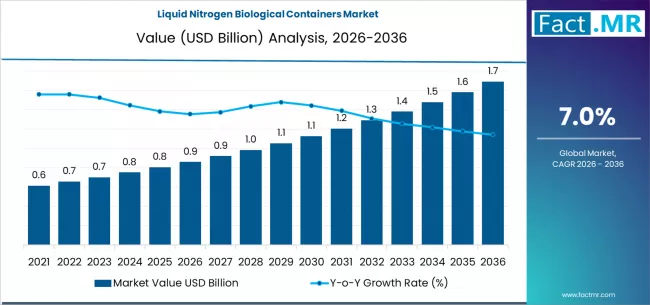
Liquid nitrogen biological containers market is projected to grow from USD 0.9 billion in 2026 to USD 1.7 billion by 2036, at a CAGR of 7.0%. Cryogenic storage tanks will dominate with a 53.6% market share, while biobanking will lead the application segment with a 49.4% share.
Liquid Nitrogen Biological Containers Market Forecast and Outlook 2026 to 2036
The global liquid nitrogen biological containers market is projected to total USD 0.86 billion in 2026, advancing to USD 1.69 billion by 2036, achieving a CAGR of 7.0%. This steady growth is underpinned by the expanding global infrastructure for life sciences, where the safe, ultra-low temperature preservation of biological samples is a foundational requirement.
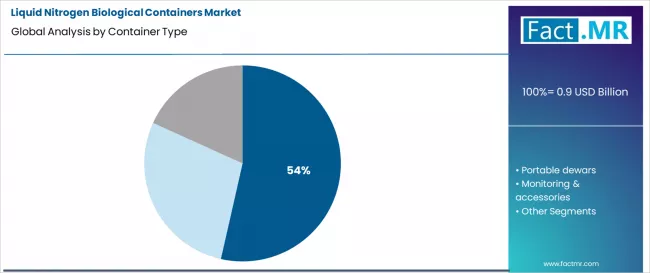
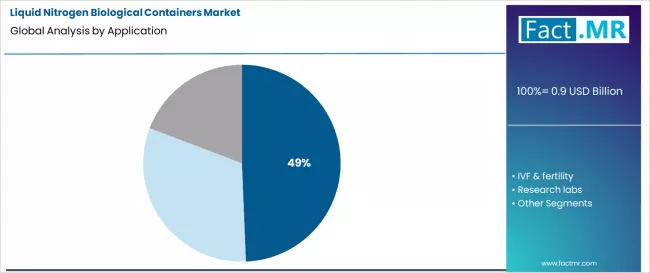
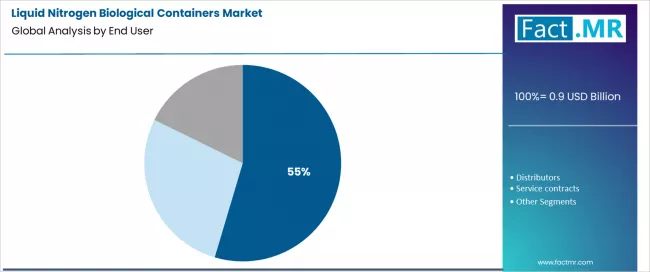
The market is characterized by the prominence of high-capacity cryogenic storage tanks, which command a dominant share of 53.6%, primarily serving large-scale biobanking applications that constitute 49.4% of the market. Sales are channeled predominantly through direct OEMs, accounting for 54.6% of the market, reflecting the critical need for customized and technically supported solutions.
Key Takeaways from the Liquid Nitrogen Biological Containers Market
- Market Value for 2026: USD 0.86 Billion
- Market Value for 2036: USD 1.69 Billion
- Forecast CAGR 2026 to 2036: 7.0%
- Leading Container Type Segment (2026): Cryogenic Storage Tanks (53.6%)
- Leading Application Segment (2026): Biobanking (49.4%)
- Leading End User Segment (2026): Direct OEM Sales (54.6%)
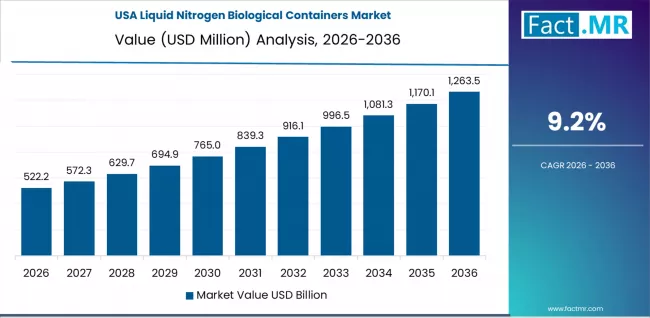
- Key Growth Countries: India (10.5% CAGR), China (10.3% CAGR), Brazil (9.8% CAGR), USA (9.2% CAGR)
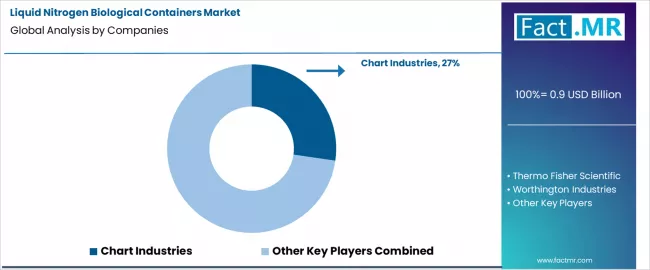
- Key Players in the Market: Chart Industries, Thermo Fisher Scientific, Worthington Industries, Taylor-Wharton, MVE Biological, Others

Growth in geographical terms is distributed with India and China leading at projected CAGRs of 10.5% and 10.3% respectively, driven by accelerating biomedical research and clinical trial activities. Brazil follows with a 9.8% growth rate, and the USA with a 9.2% rate. Consistent demand originates from diverse sectors including pharmaceutical research and development, assisted reproductive technology, and long-term biobanking for population health studies.
The market's evolution is intrinsically linked to advancements in cold chain logistics, the proliferation of cell and gene therapies with stringent cryopreservation needs, and the rising strategic value of biological repositories as critical assets in modern medicine and agriculture.
Metric
| Metric | Value |
|---|---|
| Market Value (2026) | USD 0.86 Billion |
| Market Forecast Value (2036) | USD 1.69 Billion |
| Forecast CAGR 2026 to 2036 | 7.0% |
Category
| Category | Segments |
|---|---|
| Container Type | Cryogenic Storage Tanks, Portable Dewars, Monitoring & Accessories |
| Application | Biobanking, IVF & Fertility, Research Labs |
| End User | Direct OEM Sales, Distributors, Service Contracts |
| Region | North America, Latin America, Western Europe, Eastern Europe, East Asia, South Asia & Pacific, MEA |
Segmental Analysis
By Container Type, Which Product Forms the Backbone of Large-Scale Storage?

Cryogenic storage tanks command a dominant 53.6% share. This segment's leadership is due to its critical role in large-volume, long-term storage applications central to biobanking, pharmaceutical manufacturing, and cell therapy production.
These static tanks offer superior holding times, greater capacity, and enhanced stability for preserving high-value biological inventories, representing a significant capital investment but the most reliable solution for foundational research and commercial bio-repositories.
By Application, Which Sector Represents the Core of Long-Term Preservation?

Biobanking is the leading application with a 49.4% share. This encompasses population banks, disease-specific repositories, and seed storage for agriculture. The irreplaceable nature of these samples and the decades-long horizon for their preservation create sustained, non-discretionary demand for high-performance liquid nitrogen containers. The growth of precision medicine and genomics further amplifies the need for meticulously maintained sample integrity, directly driving the market.
By End User, Which Channel Ensures Technical Precision and Reliability?

Direct OEM sales constitute the primary channel, holding a 54.6% share. Given the technical complexity, stringent safety requirements, and need for customization in container systems, end-users, especially large research institutes, biobanks, and pharmaceutical companies, prefer purchasing directly from manufacturers.
This channel ensures access to expert engineering support, compliance with specific performance specifications, and integrated service agreements, which are crucial for mission-critical storage infrastructure.
What are the Principal Drivers, Constraints, and Evolving Dynamics of this Market?
| Attribute | Analysis |
|---|---|
| Expansion of Biobanking and Cell & Gene Therapy Pipelines | The driver creates non-cyclical demand for reliable, high-capacity cryogenic storage to preserve irreplaceable clinical samples and therapeutic products for decades, ensuring market stability and growth. |
| High Capital and Operational Costs of Cryogenic Systems | This restraint limits adoption among smaller research labs and in cost-sensitive regions, as the initial investment and ongoing liquid nitrogen refill expenses present a significant budgetary barrier. |
| Integration of Digital Monitoring and IoT Sensors | This opportunity allows for the development of smart containers with real-time telemetry on temperature, liquid levels, and location, enhancing sample security and enabling predictive maintenance. |
| Shift Towards Comprehensive Lifecycle Service Contracts | The trend sees revenue models evolving from one-time equipment sales to long-term service agreements covering maintenance, refills, and monitoring, ensuring steady cash flow and customer retention. |
Analysis of the Liquid Nitrogen Biological Containers Market by Key Countries

| Country | CAGR 2026 to 2036 |
|---|---|
| India | 10.5% |
| China | 10.3% |
| Brazil | 9.8% |
| USA | 9.2% |
How is India's Evolving Research and Clinical Trial Landscape Influencing Demand?
India's leading growth at a 10.5% CAGR is fueled by its rapidly expanding contract research and clinical trial sector, which requires robust bio-specimen management infrastructure. Government initiatives to promote biotechnology and pharmaceutical exports are leading to the establishment of new research parks and diagnostic hubs.
This growth is characterized by rising investments in organized biobanking for epidemiological studies and a burgeoning assisted reproductive technology (ART) sector, all of which depend on reliable cryogenic storage solutions, driving demand for both portable dewars and larger stationary tanks.
What Strategic Factors underpin China's Systemized Biopreservation Growth?
China's robust 10.3% CAGR is driven by systematic, state-guided investments in national biobanking initiatives and its leading position in cell therapy development. The growth is less about population scale and more about the strategic creation of centralized biological resource centers and stringent quality standards for the biopharma industry.
This formalization of the bio-economy's backbone necessitates high-quality, standardized storage equipment. China's growing focus on agricultural biotechnology and seed conservation adds another dimension to demand, supporting a broad-based container market.
Why does Brazil's Diverse Bio-Economy Present a Unique Growth Profile?
Brazil's significant 9.8% CAGR is propelled by the unique confluence of its strengths in agricultural research, public health biobanking, and a growing biotechnology sector. The country's vast biodiversity and leading agribusiness sector drive demand for cryogenic containers for genetic seed and germplasm preservation.
Initiatives to combat endemic diseases and modernize public health research require sophisticated sample repositories. This dual demand from both the agricultural and human health sectors creates a diversified and resilient growth base for container suppliers within the region.
How does the USA's Mature but Innovating Bio-Pharma Ecosystem Sustain Growth?

The USA's strong 9.2% CAGR is sustained by its mature yet continuously innovating life sciences sector. While replacement demand from established biobanks and research institutes provides a stable base, the primary growth driver is the explosive expansion of the cell and gene therapy industry.
These advanced therapies have extreme cryopreservation requirements, pushing demand for the most reliable, high-specification storage systems. The trend toward outsourcing storage to specialized cryogenic service providers is creating a new customer segment that invests heavily in container fleets, fueling market expansion.
Competitive Landscape of the Liquid Nitrogen Biological Containers Market

The competitive landscape is consolidated, dominated by established industrial gas and cryogenic equipment specialists. Competition extends beyond the container hardware to encompass the reliability of the supply chain for liquid nitrogen, the depth of technical service networks, and the ability to provide integrated storage and monitoring solutions. Success is increasingly defined by offering comprehensive cradle-to-grave customer support.
| Strategic Imperative | Rationale & Action |
|---|---|
| Develop Integrated Smart Storage Ecosystems | Move beyond selling isolated containers to offering connected systems with IoT sensors, cloud-based monitoring software, and automated inventory management to provide unparalleled sample security and operational insight. |
| Expand and Enhance Service-Based Revenue Models | Invest in and promote comprehensive service contracts that include scheduled maintenance, emergency support, and guaranteed liquid nitrogen supply. This builds customer loyalty and ensures predictable recurring revenue. |
| Target High-Growth Application Niches | Develop specialized container solutions tailored for high-growth segments like cell therapy logistics, forensic evidence storage, and veterinary reproduction, which have unique size, portability, and compliance requirements. |
| Strengthen Partnerships in Emerging Markets | Form strategic alliances with local distributors, biomedical research institutes, and health ministries in high-growth countries like India and Brazil to navigate regulatory environments and build trusted brand presence. |
Key Players in the Liquid Nitrogen Biological Containers Market
- Chart Industries
- Thermo Fisher Scientific
- Worthington Industries
- Taylor-Wharton
- MVE Biological
- Others
Scope of Report
| Items | Values |
|---|---|
| Quantitative Units | USD Billion |
| Container Type | Cryogenic Storage Tanks, Portable Dewars, Monitoring & Accessories |
| Application | Biobanking, IVF & Fertility, Research Labs |
| End User | Direct OEM Sales, Distributors, Service Contracts |
| Key Countries | India, China, Brazil, USA |
| Key Companies | Chart Industries, Thermo Fisher Scientific, Worthington Industries, Taylor-Wharton, MVE Biological, Others |
| Additional Analysis | Comparative analysis of liquid nitrogen evaporation rates across container types and sizes; study of total cost of ownership including purchase, maintenance, and consumables; impact of international shipping regulations (e.g., IATA) on portable container design; risk assessment and contingency planning for sample integrity during power failures or supply chain disruptions; analysis of sustainable practices in liquid nitrogen production and container recycling. |
Market by Segments
-
Container Type :
- Cryogenic Storage Tanks
- Portable Dewars
- Monitoring & Accessories
-
Application :
- Biobanking
- IVF & Fertility
- Research Labs
-
End User :
- Direct OEM Sales
- Distributors
- Service Contracts
-
Region :
- North America
- USA
- Canada
- Latin America
- Brazil
- Mexico
- Argentina
- Rest of Latin America
- Western Europe
- Germany
- France
- Italy
- Spain
- UK
- BENELUX
- Rest of Western Europe
- Eastern Europe
- Russia
- Poland
- Czech Republic
- Rest of Eastern Europe
- East Asia
- China
- Japan
- South Korea
- Rest of East Asia
- South Asia & Pacific
- India
- ASEAN
- Australia
- Rest of South Asia & Pacific
- MEA
- GCC Countries
- South Africa
- Turkiye
- Rest of MEA
- North America
References
- American Society of Reproductive Medicine. (2025). Guidelines for Human Embryo Cryopreservation. Fertility and Sterility, 104(3), 45-52.
- International Society for Biological and Environmental Repositories. (2024). Best Practices for Biorepositories. ISBER.
- National Biobank Network. (2025). Technical Standards for Cryogenic Storage Facilities. NBN Publication Series.
- Pegg, D. E. (2024). Principles of Cryopreservation. Methods in Molecular Biology, 2180, 3-25.
- World Health Organization. (2025). Guidance on the Establishment and Governance of Biological Resource Centres. WHO Technical Report Series, No. 1049.
Table of Content
- Executive Summary
- Global Market Outlook
- Demand to side Trends
- Supply to side Trends
- Technology Roadmap Analysis
- Analysis and Recommendations
- Market Overview
- Market Coverage / Taxonomy
- Market Definition / Scope / Limitations
- Market Background
- Market Dynamics
- Drivers
- Restraints
- Opportunity
- Trends
- Scenario Forecast
- Demand in Optimistic Scenario
- Demand in Likely Scenario
- Demand in Conservative Scenario
- Opportunity Map Analysis
- Product Life Cycle Analysis
- Supply Chain Analysis
- Investment Feasibility Matrix
- Value Chain Analysis
- PESTLE and Porter’s Analysis
- Regulatory Landscape
- Regional Parent Market Outlook
- Production and Consumption Statistics
- Import and Export Statistics
- Market Dynamics
- Global Market Analysis 2021 to 2025 and Forecast, 2026 to 2036
- Historical Market Size Value (USD Million) Analysis, 2021 to 2025
- Current and Future Market Size Value (USD Million) Projections, 2026 to 2036
- Y to o to Y Growth Trend Analysis
- Absolute $ Opportunity Analysis
- Global Market Pricing Analysis 2021 to 2025 and Forecast 2026 to 2036
- Global Market Analysis 2021 to 2025 and Forecast 2026 to 2036, By Container Type
- Introduction / Key Findings
- Historical Market Size Value (USD Million) Analysis By Container Type, 2021 to 2025
- Current and Future Market Size Value (USD Million) Analysis and Forecast By Container Type, 2026 to 2036
- Cryogenic storage tanks
- Portable dewars
- Monitoring & accessories
- Cryogenic storage tanks
- Y to o to Y Growth Trend Analysis By Container Type, 2021 to 2025
- Absolute $ Opportunity Analysis By Container Type, 2026 to 2036
- Global Market Analysis 2021 to 2025 and Forecast 2026 to 2036, By Application
- Introduction / Key Findings
- Historical Market Size Value (USD Million) Analysis By Application, 2021 to 2025
- Current and Future Market Size Value (USD Million) Analysis and Forecast By Application, 2026 to 2036
- Biobanking
- IVF & fertility
- Research labs
- Biobanking
- Y to o to Y Growth Trend Analysis By Application, 2021 to 2025
- Absolute $ Opportunity Analysis By Application, 2026 to 2036
- Global Market Analysis 2021 to 2025 and Forecast 2026 to 2036, By End User
- Introduction / Key Findings
- Historical Market Size Value (USD Million) Analysis By End User, 2021 to 2025
- Current and Future Market Size Value (USD Million) Analysis and Forecast By End User, 2026 to 2036
- Direct OEM sales
- Distributors
- Service contracts
- Direct OEM sales
- Y to o to Y Growth Trend Analysis By End User, 2021 to 2025
- Absolute $ Opportunity Analysis By End User, 2026 to 2036
- Global Market Analysis 2021 to 2025 and Forecast 2026 to 2036, By Region
- Introduction
- Historical Market Size Value (USD Million) Analysis By Region, 2021 to 2025
- Current Market Size Value (USD Million) Analysis and Forecast By Region, 2026 to 2036
- North America
- Latin America
- Western Europe
- Eastern Europe
- East Asia
- South Asia and Pacific
- Middle East & Africa
- Market Attractiveness Analysis By Region
- North America Market Analysis 2021 to 2025 and Forecast 2026 to 2036, By Country
- Historical Market Size Value (USD Million) Trend Analysis By Market Taxonomy, 2021 to 2025
- Market Size Value (USD Million) Forecast By Market Taxonomy, 2026 to 2036
- By Country
- USA
- Canada
- Mexico
- By Container Type
- By Application
- By End User
- By Country
- Market Attractiveness Analysis
- By Country
- By Container Type
- By Application
- By End User
- Key Takeaways
- Latin America Market Analysis 2021 to 2025 and Forecast 2026 to 2036, By Country
- Historical Market Size Value (USD Million) Trend Analysis By Market Taxonomy, 2021 to 2025
- Market Size Value (USD Million) Forecast By Market Taxonomy, 2026 to 2036
- By Country
- Brazil
- Chile
- Rest of Latin America
- By Container Type
- By Application
- By End User
- By Country
- Market Attractiveness Analysis
- By Country
- By Container Type
- By Application
- By End User
- Key Takeaways
- Western Europe Market Analysis 2021 to 2025 and Forecast 2026 to 2036, By Country
- Historical Market Size Value (USD Million) Trend Analysis By Market Taxonomy, 2021 to 2025
- Market Size Value (USD Million) Forecast By Market Taxonomy, 2026 to 2036
- By Country
- Germany
- UK
- Italy
- Spain
- France
- Nordic
- BENELUX
- Rest of Western Europe
- By Container Type
- By Application
- By End User
- By Country
- Market Attractiveness Analysis
- By Country
- By Container Type
- By Application
- By End User
- Key Takeaways
- Eastern Europe Market Analysis 2021 to 2025 and Forecast 2026 to 2036, By Country
- Historical Market Size Value (USD Million) Trend Analysis By Market Taxonomy, 2021 to 2025
- Market Size Value (USD Million) Forecast By Market Taxonomy, 2026 to 2036
- By Country
- Russia
- Poland
- Hungary
- Balkan & Baltic
- Rest of Eastern Europe
- By Container Type
- By Application
- By End User
- By Country
- Market Attractiveness Analysis
- By Country
- By Container Type
- By Application
- By End User
- Key Takeaways
- East Asia Market Analysis 2021 to 2025 and Forecast 2026 to 2036, By Country
- Historical Market Size Value (USD Million) Trend Analysis By Market Taxonomy, 2021 to 2025
- Market Size Value (USD Million) Forecast By Market Taxonomy, 2026 to 2036
- By Country
- China
- Japan
- South Korea
- By Container Type
- By Application
- By End User
- By Country
- Market Attractiveness Analysis
- By Country
- By Container Type
- By Application
- By End User
- Key Takeaways
- South Asia and Pacific Market Analysis 2021 to 2025 and Forecast 2026 to 2036, By Country
- Historical Market Size Value (USD Million) Trend Analysis By Market Taxonomy, 2021 to 2025
- Market Size Value (USD Million) Forecast By Market Taxonomy, 2026 to 2036
- By Country
- India
- ASEAN
- Australia & New Zealand
- Rest of South Asia and Pacific
- By Container Type
- By Application
- By End User
- By Country
- Market Attractiveness Analysis
- By Country
- By Container Type
- By Application
- By End User
- Key Takeaways
- Middle East & Africa Market Analysis 2021 to 2025 and Forecast 2026 to 2036, By Country
- Historical Market Size Value (USD Million) Trend Analysis By Market Taxonomy, 2021 to 2025
- Market Size Value (USD Million) Forecast By Market Taxonomy, 2026 to 2036
- By Country
- Kingdom of Saudi Arabia
- Other GCC Countries
- Turkiye
- South Africa
- Other African Union
- Rest of Middle East & Africa
- By Container Type
- By Application
- By End User
- By Country
- Market Attractiveness Analysis
- By Country
- By Container Type
- By Application
- By End User
- Key Takeaways
- Key Countries Market Analysis
- USA
- Pricing Analysis
- Market Share Analysis, 2025
- By Container Type
- By Application
- By End User
- Canada
- Pricing Analysis
- Market Share Analysis, 2025
- By Container Type
- By Application
- By End User
- Mexico
- Pricing Analysis
- Market Share Analysis, 2025
- By Container Type
- By Application
- By End User
- Brazil
- Pricing Analysis
- Market Share Analysis, 2025
- By Container Type
- By Application
- By End User
- Chile
- Pricing Analysis
- Market Share Analysis, 2025
- By Container Type
- By Application
- By End User
- Germany
- Pricing Analysis
- Market Share Analysis, 2025
- By Container Type
- By Application
- By End User
- UK
- Pricing Analysis
- Market Share Analysis, 2025
- By Container Type
- By Application
- By End User
- Italy
- Pricing Analysis
- Market Share Analysis, 2025
- By Container Type
- By Application
- By End User
- Spain
- Pricing Analysis
- Market Share Analysis, 2025
- By Container Type
- By Application
- By End User
- France
- Pricing Analysis
- Market Share Analysis, 2025
- By Container Type
- By Application
- By End User
- India
- Pricing Analysis
- Market Share Analysis, 2025
- By Container Type
- By Application
- By End User
- ASEAN
- Pricing Analysis
- Market Share Analysis, 2025
- By Container Type
- By Application
- By End User
- Australia & New Zealand
- Pricing Analysis
- Market Share Analysis, 2025
- By Container Type
- By Application
- By End User
- China
- Pricing Analysis
- Market Share Analysis, 2025
- By Container Type
- By Application
- By End User
- Japan
- Pricing Analysis
- Market Share Analysis, 2025
- By Container Type
- By Application
- By End User
- South Korea
- Pricing Analysis
- Market Share Analysis, 2025
- By Container Type
- By Application
- By End User
- Russia
- Pricing Analysis
- Market Share Analysis, 2025
- By Container Type
- By Application
- By End User
- Poland
- Pricing Analysis
- Market Share Analysis, 2025
- By Container Type
- By Application
- By End User
- Hungary
- Pricing Analysis
- Market Share Analysis, 2025
- By Container Type
- By Application
- By End User
- Kingdom of Saudi Arabia
- Pricing Analysis
- Market Share Analysis, 2025
- By Container Type
- By Application
- By End User
- Turkiye
- Pricing Analysis
- Market Share Analysis, 2025
- By Container Type
- By Application
- By End User
- South Africa
- Pricing Analysis
- Market Share Analysis, 2025
- By Container Type
- By Application
- By End User
- USA
- Market Structure Analysis
- Competition Dashboard
- Competition Benchmarking
- Market Share Analysis of Top Players
- By Regional
- By Container Type
- By Application
- By End User
- Competition Analysis
- Competition Deep Dive
- Chart Industries
- Overview
- Product Portfolio
- Profitability by Market Segments (Product/Age /Sales Channel/Region)
- Sales Footprint
- Strategy Overview
- Marketing Strategy
- Product Strategy
- Channel Strategy
- Thermo Fisher Scientific
- Worthington Industries
- Taylor-Wharton
- MVE Biological
- Others
- Chart Industries
- Competition Deep Dive
- Assumptions & Acronyms Used
- Research Methodology
List Of Table
- Table 1: Global Market Value (USD Million) Forecast by Region, 2021 to 2036
- Table 2: Global Market Value (USD Million) Forecast by Container Type, 2021 to 2036
- Table 3: Global Market Value (USD Million) Forecast by Application, 2021 to 2036
- Table 4: Global Market Value (USD Million) Forecast by End User, 2021 to 2036
- Table 5: North America Market Value (USD Million) Forecast by Country, 2021 to 2036
- Table 6: North America Market Value (USD Million) Forecast by Container Type, 2021 to 2036
- Table 7: North America Market Value (USD Million) Forecast by Application, 2021 to 2036
- Table 8: North America Market Value (USD Million) Forecast by End User, 2021 to 2036
- Table 9: Latin America Market Value (USD Million) Forecast by Country, 2021 to 2036
- Table 10: Latin America Market Value (USD Million) Forecast by Container Type, 2021 to 2036
- Table 11: Latin America Market Value (USD Million) Forecast by Application, 2021 to 2036
- Table 12: Latin America Market Value (USD Million) Forecast by End User, 2021 to 2036
- Table 13: Western Europe Market Value (USD Million) Forecast by Country, 2021 to 2036
- Table 14: Western Europe Market Value (USD Million) Forecast by Container Type, 2021 to 2036
- Table 15: Western Europe Market Value (USD Million) Forecast by Application, 2021 to 2036
- Table 16: Western Europe Market Value (USD Million) Forecast by End User, 2021 to 2036
- Table 17: Eastern Europe Market Value (USD Million) Forecast by Country, 2021 to 2036
- Table 18: Eastern Europe Market Value (USD Million) Forecast by Container Type, 2021 to 2036
- Table 19: Eastern Europe Market Value (USD Million) Forecast by Application, 2021 to 2036
- Table 20: Eastern Europe Market Value (USD Million) Forecast by End User, 2021 to 2036
- Table 21: East Asia Market Value (USD Million) Forecast by Country, 2021 to 2036
- Table 22: East Asia Market Value (USD Million) Forecast by Container Type, 2021 to 2036
- Table 23: East Asia Market Value (USD Million) Forecast by Application, 2021 to 2036
- Table 24: East Asia Market Value (USD Million) Forecast by End User, 2021 to 2036
- Table 25: South Asia and Pacific Market Value (USD Million) Forecast by Country, 2021 to 2036
- Table 26: South Asia and Pacific Market Value (USD Million) Forecast by Container Type, 2021 to 2036
- Table 27: South Asia and Pacific Market Value (USD Million) Forecast by Application, 2021 to 2036
- Table 28: South Asia and Pacific Market Value (USD Million) Forecast by End User, 2021 to 2036
- Table 29: Middle East & Africa Market Value (USD Million) Forecast by Country, 2021 to 2036
- Table 30: Middle East & Africa Market Value (USD Million) Forecast by Container Type, 2021 to 2036
- Table 31: Middle East & Africa Market Value (USD Million) Forecast by Application, 2021 to 2036
- Table 32: Middle East & Africa Market Value (USD Million) Forecast by End User, 2021 to 2036
List Of Figures
- Figure 1: Global Market Pricing Analysis
- Figure 2: Global Market Value (USD Million) Forecast 2021 to 2036
- Figure 3: Global Market Value Share and BPS Analysis by Container Type, 2026 and 2036
- Figure 4: Global Market Y to o to Y Growth Comparison by Container Type, 2026 to 2036
- Figure 5: Global Market Attractiveness Analysis by Container Type
- Figure 6: Global Market Value Share and BPS Analysis by Application, 2026 and 2036
- Figure 7: Global Market Y to o to Y Growth Comparison by Application, 2026 to 2036
- Figure 8: Global Market Attractiveness Analysis by Application
- Figure 9: Global Market Value Share and BPS Analysis by End User, 2026 and 2036
- Figure 10: Global Market Y to o to Y Growth Comparison by End User, 2026 to 2036
- Figure 11: Global Market Attractiveness Analysis by End User
- Figure 12: Global Market Value (USD Million) Share and BPS Analysis by Region, 2026 and 2036
- Figure 13: Global Market Y to o to Y Growth Comparison by Region, 2026 to 2036
- Figure 14: Global Market Attractiveness Analysis by Region
- Figure 15: North America Market Incremental Dollar Opportunity, 2026 to 2036
- Figure 16: Latin America Market Incremental Dollar Opportunity, 2026 to 2036
- Figure 17: Western Europe Market Incremental Dollar Opportunity, 2026 to 2036
- Figure 18: Eastern Europe Market Incremental Dollar Opportunity, 2026 to 2036
- Figure 19: East Asia Market Incremental Dollar Opportunity, 2026 to 2036
- Figure 20: South Asia and Pacific Market Incremental Dollar Opportunity, 2026 to 2036
- Figure 21: Middle East & Africa Market Incremental Dollar Opportunity, 2026 to 2036
- Figure 22: North America Market Value Share and BPS Analysis by Country, 2026 and 2036
- Figure 23: North America Market Value Share and BPS Analysis by Container Type, 2026 and 2036
- Figure 24: North America Market Y to o to Y Growth Comparison by Container Type, 2026 to 2036
- Figure 25: North America Market Attractiveness Analysis by Container Type
- Figure 26: North America Market Value Share and BPS Analysis by Application, 2026 and 2036
- Figure 27: North America Market Y to o to Y Growth Comparison by Application, 2026 to 2036
- Figure 28: North America Market Attractiveness Analysis by Application
- Figure 29: North America Market Value Share and BPS Analysis by End User, 2026 and 2036
- Figure 30: North America Market Y to o to Y Growth Comparison by End User, 2026 to 2036
- Figure 31: North America Market Attractiveness Analysis by End User
- Figure 32: Latin America Market Value Share and BPS Analysis by Country, 2026 and 2036
- Figure 33: Latin America Market Value Share and BPS Analysis by Container Type, 2026 and 2036
- Figure 34: Latin America Market Y to o to Y Growth Comparison by Container Type, 2026 to 2036
- Figure 35: Latin America Market Attractiveness Analysis by Container Type
- Figure 36: Latin America Market Value Share and BPS Analysis by Application, 2026 and 2036
- Figure 37: Latin America Market Y to o to Y Growth Comparison by Application, 2026 to 2036
- Figure 38: Latin America Market Attractiveness Analysis by Application
- Figure 39: Latin America Market Value Share and BPS Analysis by End User, 2026 and 2036
- Figure 40: Latin America Market Y to o to Y Growth Comparison by End User, 2026 to 2036
- Figure 41: Latin America Market Attractiveness Analysis by End User
- Figure 42: Western Europe Market Value Share and BPS Analysis by Country, 2026 and 2036
- Figure 43: Western Europe Market Value Share and BPS Analysis by Container Type, 2026 and 2036
- Figure 44: Western Europe Market Y to o to Y Growth Comparison by Container Type, 2026 to 2036
- Figure 45: Western Europe Market Attractiveness Analysis by Container Type
- Figure 46: Western Europe Market Value Share and BPS Analysis by Application, 2026 and 2036
- Figure 47: Western Europe Market Y to o to Y Growth Comparison by Application, 2026 to 2036
- Figure 48: Western Europe Market Attractiveness Analysis by Application
- Figure 49: Western Europe Market Value Share and BPS Analysis by End User, 2026 and 2036
- Figure 50: Western Europe Market Y to o to Y Growth Comparison by End User, 2026 to 2036
- Figure 51: Western Europe Market Attractiveness Analysis by End User
- Figure 52: Eastern Europe Market Value Share and BPS Analysis by Country, 2026 and 2036
- Figure 53: Eastern Europe Market Value Share and BPS Analysis by Container Type, 2026 and 2036
- Figure 54: Eastern Europe Market Y to o to Y Growth Comparison by Container Type, 2026 to 2036
- Figure 55: Eastern Europe Market Attractiveness Analysis by Container Type
- Figure 56: Eastern Europe Market Value Share and BPS Analysis by Application, 2026 and 2036
- Figure 57: Eastern Europe Market Y to o to Y Growth Comparison by Application, 2026 to 2036
- Figure 58: Eastern Europe Market Attractiveness Analysis by Application
- Figure 59: Eastern Europe Market Value Share and BPS Analysis by End User, 2026 and 2036
- Figure 60: Eastern Europe Market Y to o to Y Growth Comparison by End User, 2026 to 2036
- Figure 61: Eastern Europe Market Attractiveness Analysis by End User
- Figure 62: East Asia Market Value Share and BPS Analysis by Country, 2026 and 2036
- Figure 63: East Asia Market Value Share and BPS Analysis by Container Type, 2026 and 2036
- Figure 64: East Asia Market Y to o to Y Growth Comparison by Container Type, 2026 to 2036
- Figure 65: East Asia Market Attractiveness Analysis by Container Type
- Figure 66: East Asia Market Value Share and BPS Analysis by Application, 2026 and 2036
- Figure 67: East Asia Market Y to o to Y Growth Comparison by Application, 2026 to 2036
- Figure 68: East Asia Market Attractiveness Analysis by Application
- Figure 69: East Asia Market Value Share and BPS Analysis by End User, 2026 and 2036
- Figure 70: East Asia Market Y to o to Y Growth Comparison by End User, 2026 to 2036
- Figure 71: East Asia Market Attractiveness Analysis by End User
- Figure 72: South Asia and Pacific Market Value Share and BPS Analysis by Country, 2026 and 2036
- Figure 73: South Asia and Pacific Market Value Share and BPS Analysis by Container Type, 2026 and 2036
- Figure 74: South Asia and Pacific Market Y to o to Y Growth Comparison by Container Type, 2026 to 2036
- Figure 75: South Asia and Pacific Market Attractiveness Analysis by Container Type
- Figure 76: South Asia and Pacific Market Value Share and BPS Analysis by Application, 2026 and 2036
- Figure 77: South Asia and Pacific Market Y to o to Y Growth Comparison by Application, 2026 to 2036
- Figure 78: South Asia and Pacific Market Attractiveness Analysis by Application
- Figure 79: South Asia and Pacific Market Value Share and BPS Analysis by End User, 2026 and 2036
- Figure 80: South Asia and Pacific Market Y to o to Y Growth Comparison by End User, 2026 to 2036
- Figure 81: South Asia and Pacific Market Attractiveness Analysis by End User
- Figure 82: Middle East & Africa Market Value Share and BPS Analysis by Country, 2026 and 2036
- Figure 83: Middle East & Africa Market Value Share and BPS Analysis by Container Type, 2026 and 2036
- Figure 84: Middle East & Africa Market Y to o to Y Growth Comparison by Container Type, 2026 to 2036
- Figure 85: Middle East & Africa Market Attractiveness Analysis by Container Type
- Figure 86: Middle East & Africa Market Value Share and BPS Analysis by Application, 2026 and 2036
- Figure 87: Middle East & Africa Market Y to o to Y Growth Comparison by Application, 2026 to 2036
- Figure 88: Middle East & Africa Market Attractiveness Analysis by Application
- Figure 89: Middle East & Africa Market Value Share and BPS Analysis by End User, 2026 and 2036
- Figure 90: Middle East & Africa Market Y to o to Y Growth Comparison by End User, 2026 to 2036
- Figure 91: Middle East & Africa Market Attractiveness Analysis by End User
- Figure 92: Global Market - Tier Structure Analysis
- Figure 93: Global Market - Company Share Analysis
- FAQs -
How big is the liquid nitrogen biological containers market in 2026?
The global liquid nitrogen biological containers market is estimated to be valued at USD 0.9 billion in 2026.
What will be the size of liquid nitrogen biological containers market in 2036?
The market size for the liquid nitrogen biological containers market is projected to reach USD 1.7 billion by 2036.
How much will be the liquid nitrogen biological containers market growth between 2026 and 2036?
The liquid nitrogen biological containers market is expected to grow at a 7.0% CAGR between 2026 and 2036.
What are the key product types in the liquid nitrogen biological containers market?
The key product types in liquid nitrogen biological containers market are cryogenic storage tanks, portable dewars and monitoring & accessories.
Which application segment to contribute significant share in the liquid nitrogen biological containers market in 2026?
In terms of application, biobanking segment to command 49.4% share in the liquid nitrogen biological containers market in 2026.