Low-Impact Textile Dye Fixing Agents Market

Low-Impact Textile Dye Fixing Agents Market Size and Share Forecast Outlook 2026 to 2036

Low Impact Textile Dye Fixing Agents Market is projected to grow from USD 0.48 Billion in 2026 to USD 1.20 Billion by 2036, expanding at a CAGR of 9.6% during 2026 to 2036, supported by rising adoption of low impact textile processing chemicals and improved dye fixation efficiency.

Low-Impact Textile Dye Fixing Agents Market Forecast and Outlook 2026 to 2036

The global market for low-impact textile dye fixing agents is growing in importance, driven by the textile industry's critical shift toward sustainable and responsible wet processing. Projected to expand from USD 0.48 billion in 2026 to USD 1.20 billion by 2036, the market is set to advance at a CAGR of 9.6% over the forecast period.

Key Takeaways from the Low-Impact Textile Dye Fixing Agents Market

  • Market Value for 2026: USD 0.48 Billion
  • Market Value for 2036: USD 1.20 Billion
  • Forecast CAGR (2026-2036): 9.6%
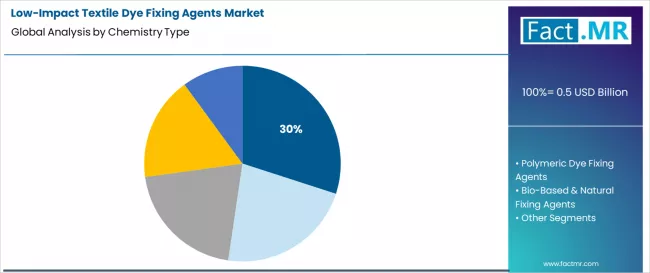
  • Leading Chemistry Type Share (2026): Cationic Dye Fixing Agents (30%)
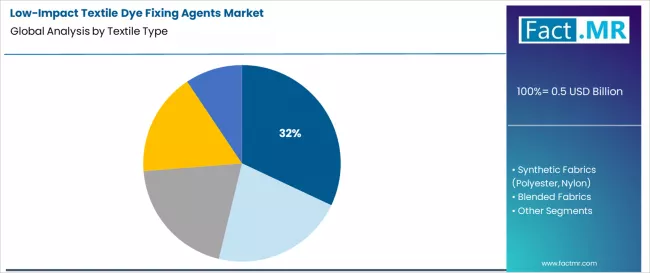
  • Leading Textile Type Share (2026): Cotton & Cellulose-Based Textiles (32%)
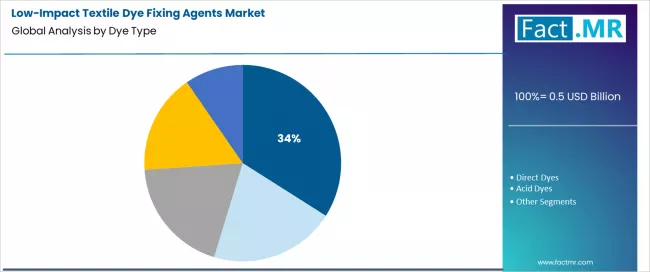
  • Leading Dye Type Share (2026): Reactive Dyes (34%)
  • Key Players in the Market: Huntsman Corporation, Archroma, Rudolf Group, DyStar, Atul Ltd.
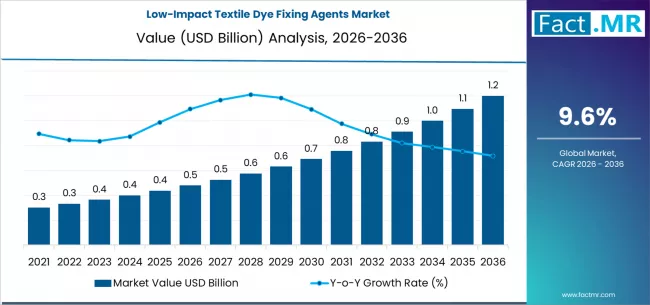
Low Impact Textile Dye Fixing Agents Market Market Value Analysis

Cationic dye fixing agents represent the dominant chemistry, capturing a 30% market share. Cotton and cellulose-based textiles constitute the primary fabric segment, accounting for 32% of demand. The fixation of reactive dyes is the largest application by dye type, with a 34% share, reflecting their widespread use on natural fibers and the challenge of achieving fastness without heavy metal salts.

This growth is propelled by stringent environmental regulations limiting the discharge of toxic chemicals and metals from textile dye houses, alongside powerful brand and consumer demand for garments with a lower ecological footprint. Fixing agents are essential for improving color fastness to washing, rubbing, and light, reducing dye runoff and the need for re-dyeing. Low-impact variants achieve this without relying on formaldehyde, heavy metals, or other persistent pollutants, directly addressing the industry's need to reduce water pollution and improve chemical safety.

Innovation focuses on developing high-efficacy chemistries derived from renewable sources or designed for biodegradability. The advancement of these agents is pivotal for enabling vibrant, durable coloration in textiles while aligning with global sustainability frameworks and circular economy principles, ensuring that aesthetic appeal does not come at an environmental cost.

Metric

Metric Value
Market Value (2026) USD 0.48 Billion
Market Forecast Value (2036) USD 1.20 Billion
Forecast CAGR (2026-2036) 9.6%

Category

Category Segments
Chemistry Type Cationic Dye Fixing Agents, Polymeric Dye Fixing Agents, Bio-Based & Natural Fixing Agents, Silicone-Based Fixing Agents, Other Low-Impact Fixing Agents
Textile Type Cotton & Cellulose-Based Textiles, Synthetic Fabrics (Polyester, Nylon), Blended Fabrics, Wool & Silk, Technical & Functional Textiles
Dye Type Reactive Dyes, Direct Dyes, Acid Dyes, Disperse Dyes, Other Specialty Dyes
Region North America, Latin America, Western Europe, Eastern Europe, East Asia, South Asia & Pacific, MEA

Segmental Analysis

By Chemistry Type, Which Segment is Most Prevalent for Cellulose Fibers?
Low Impact Textile Dye Fixing Agents Market Analysis By Chemistry Type

Cationic dye fixing agents lead the market with a 30% share. Their dominance is due to their fundamental mechanism of action, particularly on cellulose fibers like cotton. These positively charged agents form strong ionic bonds with the negatively charged sites of hydrolyzed reactive dyes that have not covalently bonded to the fabric.

This effectively traps loose dye in the fiber, dramatically improving wet fastness. Their effectiveness and relatively straightforward chemistry make them a cornerstone of post-dyeing treatment for natural fibers.

By Textile Type, Which Fiber Demands the Most Intensive Fixation Process?
Low Impact Textile Dye Fixing Agents Market Analysis By Textile Type

Cotton and cellulose-based textiles represent the largest textile segment, holding a 32% share. Cotton's high absorbency and the chemistry of its most common dyes, reactive and direct dyes, make it particularly prone to dye bleeding and poor wash fastness without a fixing agent.

The global volume of cotton production and its dominance in apparel ensure consistent, high-volume demand for effective, low-impact fixing solutions to maintain color integrity and meet stringent quality standards for fastness.

By Dye Type, Which Dye Class Presents the Greatest Fastness Challenge?
Low Impact Textile Dye Fixing Agents Market Analysis By Dye Type

Reactive dyes constitute the largest dye segment for fixing agents, commanding a 34% share. While reactive dyes form covalent bonds with cellulose for excellent fastness in theory, hydrolysis during dyeing creates a significant amount of unfixed dye that is loosely held.

Removing this hydrolyzed dye through washing is water-intensive, and any residual dye leads to poor fastness. Low-impact fixing agents are therefore critical for ensuring the full performance potential of reactive dyes is realized while minimizing water and chemical use in washing-off.

What are the Drivers, Restraints, and Key Trends of the Low-Impact Dye Fixing Agents Market?

The primary market driver is the enforcement of rigorous environmental regulations, such as Zero Discharge of Hazardous Chemicals (ZDHC) and EU REACH restrictions, which ban or limit formaldehyde-based resins and heavy metals traditionally used in fixing. Brand compliance with standards like bluesign® and Oeko-Tex® Standard 100, driven by consumer demand for safer textiles, further compels the adoption of certified low-impact chemistries. The economic incentive to reduce water and energy consumption in the washing-off process by improving dye fixation efficiency also propels market growth.

A significant market restraint is the performance perception gap; some traditional fixatives, though toxic, are perceived as offering marginally superior fastness, particularly in demanding applications. The higher cost of some advanced bio-based or specialty polymeric agents can be a barrier for price-sensitive manufacturers. Furthermore, the diversity of fiber-dye combinations requires tailored fixing solutions, increasing complexity for chemical suppliers and dyers in selecting and applying the correct product.

Key trends include the rapid development of multi-functional polymeric fixatives that provide fixation, softness, and other benefits in a single bath, reducing processing steps and water use. There is accelerating innovation in bio-based agents derived from chitosan, plant tannins, or other natural polymers that offer effective fixation and biodegradability. The market is also moving toward digital and integrated process control, where fixative dosing is optimized in real-time based on effluent color monitoring, ensuring maximum efficiency and minimal chemical waste.

Analysis of the Low-Impact Dye Fixing Agents Market by Key Countries
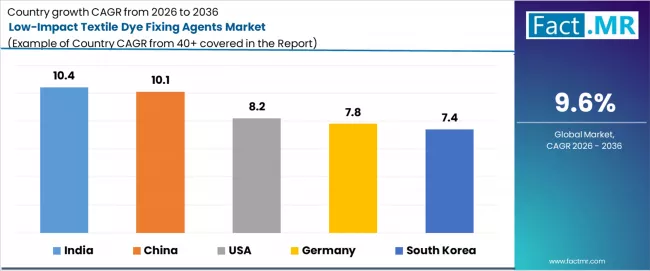
Low Impact Textile Dye Fixing Agents Market Cagr Analysis By Country

Country CAGR (2026-2036)
India 10.40%
China 10.10%
USA 8.20%
Germany 7.80%
South Korea 7.40%

How do India’s Textile Export Imperative and Water Stress Drive Adoption?

India’s leading CAGR of 10.40% is fueled by its position as a major textile exporter, where compliance with international brand and regulatory standards is essential for market access. Severe water stress in key manufacturing regions like Tirupur creates a powerful economic and environmental driver for technologies that reduce water pollution and consumption. The adoption of low-impact fixatives that minimize dye wash-off is a strategic necessity for the industry’s sustainability and competitiveness.

What is the Impact of China’s Environmental Crackdown on Textile Processing?

China’s 10.10% growth is linked to its continued enforcement of strict environmental policies and its push to upgrade its textile manufacturing sector. Regulations targeting chemical oxygen demand and toxic substances in wastewater are forcing dye houses to reformulate.

The scale of China's textile production means that even incremental shifts toward greener chemistries generate massive demand for low-impact alternatives, supported by growing domestic production of specialty chemicals.

How does the USA’s Brand Leadership and Regulatory Environment Influence the Market?
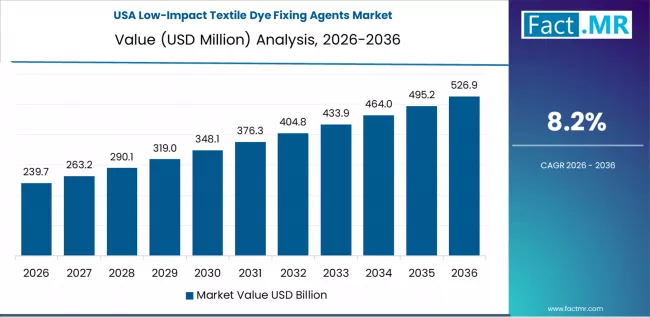
Low Impact Textile Dye Fixing Agents Market Country Value Analysis

The USA’s 8.20% CAGR is underpinned by the influence of its major apparel brands and retailers, whose sustainability mandates directly impact global supply chains. While domestic textile production is smaller, the sourcing power of American brands drives adoption of compliant chemicals worldwide. EPA regulations on effluent and state-level chemical restrictions create a regulatory environment that favors safer alternatives for domestic processors.

Why is Germany a Center for High-Performance, Sustainable Textile Chemistry?

Germany’s 7.80% growth reflects its leadership in textile machinery and high-performance chemical engineering. German chemical companies are pioneers in developing advanced polymeric and bio-based fixing systems that meet the most stringent EU ecological and toxicological standards. The demand is for solutions that deliver exceptional fastness for premium brands while fully aligning with the principles of green chemistry and circularity.

What Role does South Korea’s Technical Textile Innovation Play?

South Korea’s 7.40% growth is anchored in its advanced technical textiles sector, which requires high-performance functional finishes. The fixation of dyes on sophisticated synthetic and blended fabrics for automotive, sportswear, and smart textiles demands specialized, low-impact agents. This focus on high-value, functional applications drives innovation in silicone-based and advanced polymeric fixatives that offer additional benefits like hydrophobicity or softness.

Competitive Landscape of the Low-Impact Dye Fixing Agents Market
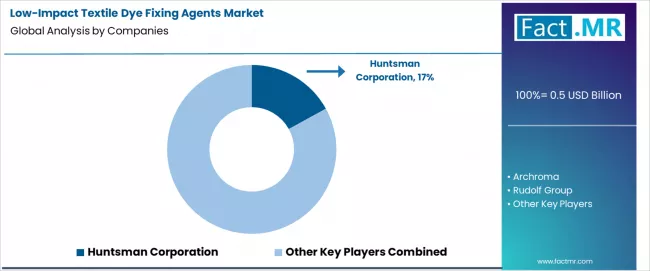
Low Impact Textile Dye Fixing Agents Market Analysis By Company

Global textile specialty chemical companies with deep application expertise and strong R&D capabilities define the competitive landscape. Leaders like Huntsman Corporation and Archroma compete based on comprehensive portfolios that offer low-impact fixatives for every major fiber-dye combination, backed by extensive technical service and sustainability certifications.

Competition centers on demonstrating proven fastness improvements without restricted substances, providing cost-in-use efficiency through multifunctionality, and offering digital tools for process optimization. A key differentiator is the ability to co-develop customized solutions with large brands and mills to meet specific performance and sustainability benchmarks.

Key Players in the Low-Impact Textile Dye Fixing Agents Market

  • Huntsman Corporation
  • Archroma
  • Rudolf Group
  • DyStar
  • Atul Ltd.

Scope of Report

Items Values
Quantitative Units USD Billion
Chemistry Type Cationic Agents, Polymeric Agents, Bio-Based/Natural Agents, Silicone-Based Agents, Other Low-Impact Agents
Textile Type Cotton/Cellulose, Synthetics, Blends, Wool/Silk, Technical Textiles
Dye Type Reactive, Direct, Acid, Disperse, Specialty Dyes
Key Countries India, China, USA, Germany, South Korea
Key Companies Huntsman Corporation, Archroma, Rudolf Group, DyStar, Atul Ltd.
Additional Analysis Analysis of fixation mechanisms (ionic bonding, complexation, film formation); fastness testing methods and standards; impact on fabric hand feel and physical properties; compatibility with other finishing agents; biodegradability and aquatic toxicity profiling of agents.

Market by Segments

  • Chemistry Type :

    • Cationic Dye Fixing Agents
    • Polymeric Dye Fixing Agents
    • Bio-Based & Natural Fixing Agents
    • Silicone-Based Fixing Agents
    • Other Low-Impact Fixing Agents
  • Textile Type :

    • Cotton & Cellulose-Based Textiles
    • Synthetic Fabrics (Polyester, Nylon)
    • Blended Fabrics
    • Wool & Silk
    • Technical & Functional Textiles
  • Dye Type :

    • Reactive Dyes
    • Direct Dyes
    • Acid Dyes
    • Disperse Dyes
    • Other Specialty Dyes
  • Region :

    • North America

      • USA
      • Canada
    • Latin America

      • Brazil
      • Mexico
      • Argentina
      • Rest of Latin America
    • Western Europe

      • Germany
      • UK
      • France
      • Spain
      • Italy
      • BENELUX
      • Rest of Western Europe
    • Eastern Europe

      • Russia
      • Poland
      • Czech Republic
      • Rest of Eastern Europe
    • East Asia

      • China
      • Japan
      • South Korea
      • Rest of East Asia
    • South Asia & Pacific

      • India
      • ASEAN
      • Australia
      • Rest of South Asia & Pacific
    • MEA

      • Saudi Arabia
      • UAE
      • Turkiye
      • Rest of MEA

Table of Content

  1. Executive Summary
    • Global Market Outlook
    • Demand to side Trends
    • Supply to side Trends
    • Technology Roadmap Analysis
    • Analysis and Recommendations
  2. Market Overview
    • Market Coverage / Taxonomy
    • Market Definition / Scope / Limitations
  3. Market Background
    • Market Dynamics
      • Drivers
      • Restraints
      • Opportunity
      • Trends
    • Scenario Forecast
      • Demand in Optimistic Scenario
      • Demand in Likely Scenario
      • Demand in Conservative Scenario
    • Opportunity Map Analysis
    • Product Life Cycle Analysis
    • Supply Chain Analysis
    • Investment Feasibility Matrix
    • Value Chain Analysis
    • PESTLE and Porter’s Analysis
    • Regulatory Landscape
    • Regional Parent Market Outlook
    • Production and Consumption Statistics
    • Import and Export Statistics
  4. Global Market Analysis 2021 to 2025 and Forecast, 2026 to 2036
    • Historical Market Size Value (USD Million) Analysis, 2021 to 2025
    • Current and Future Market Size Value (USD Million) Projections, 2026 to 2036
      • Y to o to Y Growth Trend Analysis
      • Absolute $ Opportunity Analysis
  5. Global Market Pricing Analysis 2021 to 2025 and Forecast 2026 to 2036
  6. Global Market Analysis 2021 to 2025 and Forecast 2026 to 2036, By Chemistry Type
    • Introduction / Key Findings
    • Historical Market Size Value (USD Million) Analysis By Chemistry Type, 2021 to 2025
    • Current and Future Market Size Value (USD Million) Analysis and Forecast By Chemistry Type, 2026 to 2036
      • Cationic Dye Fixing Agents
      • Polymeric Dye Fixing Agents
      • Bio-Based & Natural Fixing Agents
      • Silicone-Based Fixing Agents
      • Other Low-Impact Fixing Agents
    • Y to o to Y Growth Trend Analysis By Chemistry Type, 2021 to 2025
    • Absolute $ Opportunity Analysis By Chemistry Type, 2026 to 2036
  7. Global Market Analysis 2021 to 2025 and Forecast 2026 to 2036, By Textile Type
    • Introduction / Key Findings
    • Historical Market Size Value (USD Million) Analysis By Textile Type, 2021 to 2025
    • Current and Future Market Size Value (USD Million) Analysis and Forecast By Textile Type, 2026 to 2036
      • Cotton & Cellulose-Based Textiles
      • Synthetic Fabrics (Polyester, Nylon)
      • Blended Fabrics
      • Wool & Silk
      • Technical & Functional Textiles
    • Y to o to Y Growth Trend Analysis By Textile Type, 2021 to 2025
    • Absolute $ Opportunity Analysis By Textile Type, 2026 to 2036
  8. Global Market Analysis 2021 to 2025 and Forecast 2026 to 2036, By Dye Type
    • Introduction / Key Findings
    • Historical Market Size Value (USD Million) Analysis By Dye Type, 2021 to 2025
    • Current and Future Market Size Value (USD Million) Analysis and Forecast By Dye Type, 2026 to 2036
      • Reactive Dyes
      • Direct Dyes
      • Acid Dyes
      • Disperse Dyes
      • Other Specialty Dyes
    • Y to o to Y Growth Trend Analysis By Dye Type, 2021 to 2025
    • Absolute $ Opportunity Analysis By Dye Type, 2026 to 2036
  9. Global Market Analysis 2021 to 2025 and Forecast 2026 to 2036, By Region
    • Introduction
    • Historical Market Size Value (USD Million) Analysis By Region, 2021 to 2025
    • Current Market Size Value (USD Million) Analysis and Forecast By Region, 2026 to 2036
      • North America
      • Latin America
      • Western Europe
      • Eastern Europe
      • East Asia
      • South Asia and Pacific
      • Middle East & Africa
    • Market Attractiveness Analysis By Region
  10. North America Market Analysis 2021 to 2025 and Forecast 2026 to 2036, By Country
    • Historical Market Size Value (USD Million) Trend Analysis By Market Taxonomy, 2021 to 2025
    • Market Size Value (USD Million) Forecast By Market Taxonomy, 2026 to 2036
      • By Country
        • USA
        • Canada
        • Mexico
      • By Chemistry Type
      • By Textile Type
      • By Dye Type
    • Market Attractiveness Analysis
      • By Country
      • By Chemistry Type
      • By Textile Type
      • By Dye Type
    • Key Takeaways
  11. Latin America Market Analysis 2021 to 2025 and Forecast 2026 to 2036, By Country
    • Historical Market Size Value (USD Million) Trend Analysis By Market Taxonomy, 2021 to 2025
    • Market Size Value (USD Million) Forecast By Market Taxonomy, 2026 to 2036
      • By Country
        • Brazil
        • Chile
        • Rest of Latin America
      • By Chemistry Type
      • By Textile Type
      • By Dye Type
    • Market Attractiveness Analysis
      • By Country
      • By Chemistry Type
      • By Textile Type
      • By Dye Type
    • Key Takeaways
  12. Western Europe Market Analysis 2021 to 2025 and Forecast 2026 to 2036, By Country
    • Historical Market Size Value (USD Million) Trend Analysis By Market Taxonomy, 2021 to 2025
    • Market Size Value (USD Million) Forecast By Market Taxonomy, 2026 to 2036
      • By Country
        • Germany
        • UK
        • Italy
        • Spain
        • France
        • Nordic
        • BENELUX
        • Rest of Western Europe
      • By Chemistry Type
      • By Textile Type
      • By Dye Type
    • Market Attractiveness Analysis
      • By Country
      • By Chemistry Type
      • By Textile Type
      • By Dye Type
    • Key Takeaways
  13. Eastern Europe Market Analysis 2021 to 2025 and Forecast 2026 to 2036, By Country
    • Historical Market Size Value (USD Million) Trend Analysis By Market Taxonomy, 2021 to 2025
    • Market Size Value (USD Million) Forecast By Market Taxonomy, 2026 to 2036
      • By Country
        • Russia
        • Poland
        • Hungary
        • Balkan & Baltic
        • Rest of Eastern Europe
      • By Chemistry Type
      • By Textile Type
      • By Dye Type
    • Market Attractiveness Analysis
      • By Country
      • By Chemistry Type
      • By Textile Type
      • By Dye Type
    • Key Takeaways
  14. East Asia Market Analysis 2021 to 2025 and Forecast 2026 to 2036, By Country
    • Historical Market Size Value (USD Million) Trend Analysis By Market Taxonomy, 2021 to 2025
    • Market Size Value (USD Million) Forecast By Market Taxonomy, 2026 to 2036
      • By Country
        • China
        • Japan
        • South Korea
      • By Chemistry Type
      • By Textile Type
      • By Dye Type
    • Market Attractiveness Analysis
      • By Country
      • By Chemistry Type
      • By Textile Type
      • By Dye Type
    • Key Takeaways
  15. South Asia and Pacific Market Analysis 2021 to 2025 and Forecast 2026 to 2036, By Country
    • Historical Market Size Value (USD Million) Trend Analysis By Market Taxonomy, 2021 to 2025
    • Market Size Value (USD Million) Forecast By Market Taxonomy, 2026 to 2036
      • By Country
        • India
        • ASEAN
        • Australia & New Zealand
        • Rest of South Asia and Pacific
      • By Chemistry Type
      • By Textile Type
      • By Dye Type
    • Market Attractiveness Analysis
      • By Country
      • By Chemistry Type
      • By Textile Type
      • By Dye Type
    • Key Takeaways
  16. Middle East & Africa Market Analysis 2021 to 2025 and Forecast 2026 to 2036, By Country
    • Historical Market Size Value (USD Million) Trend Analysis By Market Taxonomy, 2021 to 2025
    • Market Size Value (USD Million) Forecast By Market Taxonomy, 2026 to 2036
      • By Country
        • Kingdom of Saudi Arabia
        • Other GCC Countries
        • Turkiye
        • South Africa
        • Other African Union
        • Rest of Middle East & Africa
      • By Chemistry Type
      • By Textile Type
      • By Dye Type
    • Market Attractiveness Analysis
      • By Country
      • By Chemistry Type
      • By Textile Type
      • By Dye Type
    • Key Takeaways
  17. Key Countries Market Analysis
    • USA
      • Pricing Analysis
      • Market Share Analysis, 2025
        • By Chemistry Type
        • By Textile Type
        • By Dye Type
    • Canada
      • Pricing Analysis
      • Market Share Analysis, 2025
        • By Chemistry Type
        • By Textile Type
        • By Dye Type
    • Mexico
      • Pricing Analysis
      • Market Share Analysis, 2025
        • By Chemistry Type
        • By Textile Type
        • By Dye Type
    • Brazil
      • Pricing Analysis
      • Market Share Analysis, 2025
        • By Chemistry Type
        • By Textile Type
        • By Dye Type
    • Chile
      • Pricing Analysis
      • Market Share Analysis, 2025
        • By Chemistry Type
        • By Textile Type
        • By Dye Type
    • Germany
      • Pricing Analysis
      • Market Share Analysis, 2025
        • By Chemistry Type
        • By Textile Type
        • By Dye Type
    • UK
      • Pricing Analysis
      • Market Share Analysis, 2025
        • By Chemistry Type
        • By Textile Type
        • By Dye Type
    • Italy
      • Pricing Analysis
      • Market Share Analysis, 2025
        • By Chemistry Type
        • By Textile Type
        • By Dye Type
    • Spain
      • Pricing Analysis
      • Market Share Analysis, 2025
        • By Chemistry Type
        • By Textile Type
        • By Dye Type
    • France
      • Pricing Analysis
      • Market Share Analysis, 2025
        • By Chemistry Type
        • By Textile Type
        • By Dye Type
    • India
      • Pricing Analysis
      • Market Share Analysis, 2025
        • By Chemistry Type
        • By Textile Type
        • By Dye Type
    • ASEAN
      • Pricing Analysis
      • Market Share Analysis, 2025
        • By Chemistry Type
        • By Textile Type
        • By Dye Type
    • Australia & New Zealand
      • Pricing Analysis
      • Market Share Analysis, 2025
        • By Chemistry Type
        • By Textile Type
        • By Dye Type
    • China
      • Pricing Analysis
      • Market Share Analysis, 2025
        • By Chemistry Type
        • By Textile Type
        • By Dye Type
    • Japan
      • Pricing Analysis
      • Market Share Analysis, 2025
        • By Chemistry Type
        • By Textile Type
        • By Dye Type
    • South Korea
      • Pricing Analysis
      • Market Share Analysis, 2025
        • By Chemistry Type
        • By Textile Type
        • By Dye Type
    • Russia
      • Pricing Analysis
      • Market Share Analysis, 2025
        • By Chemistry Type
        • By Textile Type
        • By Dye Type
    • Poland
      • Pricing Analysis
      • Market Share Analysis, 2025
        • By Chemistry Type
        • By Textile Type
        • By Dye Type
    • Hungary
      • Pricing Analysis
      • Market Share Analysis, 2025
        • By Chemistry Type
        • By Textile Type
        • By Dye Type
    • Kingdom of Saudi Arabia
      • Pricing Analysis
      • Market Share Analysis, 2025
        • By Chemistry Type
        • By Textile Type
        • By Dye Type
    • Turkiye
      • Pricing Analysis
      • Market Share Analysis, 2025
        • By Chemistry Type
        • By Textile Type
        • By Dye Type
    • South Africa
      • Pricing Analysis
      • Market Share Analysis, 2025
        • By Chemistry Type
        • By Textile Type
        • By Dye Type
  18. Market Structure Analysis
    • Competition Dashboard
    • Competition Benchmarking
    • Market Share Analysis of Top Players
      • By Regional
      • By Chemistry Type
      • By Textile Type
      • By Dye Type
  19. Competition Analysis
    • Competition Deep Dive
      • Huntsman Corporation
        • Overview
        • Product Portfolio
        • Profitability by Market Segments (Product/Age /Sales Channel/Region)
        • Sales Footprint
        • Strategy Overview
          • Marketing Strategy
          • Product Strategy
          • Channel Strategy
      • Archroma
      • Rudolf Group
      • DyStar
      • Atul Ltd
  20. Assumptions & Acronyms Used
  21. Research Methodology

List Of Table

  • Table 1: Global Market Value (USD Million) Forecast by Region, 2021 to 2036
  • Table 2: Global Market Value (USD Million) Forecast by Chemistry Type, 2021 to 2036
  • Table 3: Global Market Value (USD Million) Forecast by Textile Type, 2021 to 2036
  • Table 4: Global Market Value (USD Million) Forecast by Dye Type, 2021 to 2036
  • Table 5: North America Market Value (USD Million) Forecast by Country, 2021 to 2036
  • Table 6: North America Market Value (USD Million) Forecast by Chemistry Type, 2021 to 2036
  • Table 7: North America Market Value (USD Million) Forecast by Textile Type, 2021 to 2036
  • Table 8: North America Market Value (USD Million) Forecast by Dye Type, 2021 to 2036
  • Table 9: Latin America Market Value (USD Million) Forecast by Country, 2021 to 2036
  • Table 10: Latin America Market Value (USD Million) Forecast by Chemistry Type, 2021 to 2036
  • Table 11: Latin America Market Value (USD Million) Forecast by Textile Type, 2021 to 2036
  • Table 12: Latin America Market Value (USD Million) Forecast by Dye Type, 2021 to 2036
  • Table 13: Western Europe Market Value (USD Million) Forecast by Country, 2021 to 2036
  • Table 14: Western Europe Market Value (USD Million) Forecast by Chemistry Type, 2021 to 2036
  • Table 15: Western Europe Market Value (USD Million) Forecast by Textile Type, 2021 to 2036
  • Table 16: Western Europe Market Value (USD Million) Forecast by Dye Type, 2021 to 2036
  • Table 17: Eastern Europe Market Value (USD Million) Forecast by Country, 2021 to 2036
  • Table 18: Eastern Europe Market Value (USD Million) Forecast by Chemistry Type, 2021 to 2036
  • Table 19: Eastern Europe Market Value (USD Million) Forecast by Textile Type, 2021 to 2036
  • Table 20: Eastern Europe Market Value (USD Million) Forecast by Dye Type, 2021 to 2036
  • Table 21: East Asia Market Value (USD Million) Forecast by Country, 2021 to 2036
  • Table 22: East Asia Market Value (USD Million) Forecast by Chemistry Type, 2021 to 2036
  • Table 23: East Asia Market Value (USD Million) Forecast by Textile Type, 2021 to 2036
  • Table 24: East Asia Market Value (USD Million) Forecast by Dye Type, 2021 to 2036
  • Table 25: South Asia and Pacific Market Value (USD Million) Forecast by Country, 2021 to 2036
  • Table 26: South Asia and Pacific Market Value (USD Million) Forecast by Chemistry Type, 2021 to 2036
  • Table 27: South Asia and Pacific Market Value (USD Million) Forecast by Textile Type, 2021 to 2036
  • Table 28: South Asia and Pacific Market Value (USD Million) Forecast by Dye Type, 2021 to 2036
  • Table 29: Middle East & Africa Market Value (USD Million) Forecast by Country, 2021 to 2036
  • Table 30: Middle East & Africa Market Value (USD Million) Forecast by Chemistry Type, 2021 to 2036
  • Table 31: Middle East & Africa Market Value (USD Million) Forecast by Textile Type, 2021 to 2036
  • Table 32: Middle East & Africa Market Value (USD Million) Forecast by Dye Type, 2021 to 2036

List Of Figures

  • Figure 1: Global Market Pricing Analysis
  • Figure 2: Global Market Value (USD Million) Forecast 2021 to 2036
  • Figure 3: Global Market Value Share and BPS Analysis by Chemistry Type, 2026 and 2036
  • Figure 4: Global Market Y to o to Y Growth Comparison by Chemistry Type, 2026 to 2036
  • Figure 5: Global Market Attractiveness Analysis by Chemistry Type
  • Figure 6: Global Market Value Share and BPS Analysis by Textile Type, 2026 and 2036
  • Figure 7: Global Market Y to o to Y Growth Comparison by Textile Type, 2026 to 2036
  • Figure 8: Global Market Attractiveness Analysis by Textile Type
  • Figure 9: Global Market Value Share and BPS Analysis by Dye Type, 2026 and 2036
  • Figure 10: Global Market Y to o to Y Growth Comparison by Dye Type, 2026 to 2036
  • Figure 11: Global Market Attractiveness Analysis by Dye Type
  • Figure 12: Global Market Value (USD Million) Share and BPS Analysis by Region, 2026 and 2036
  • Figure 13: Global Market Y to o to Y Growth Comparison by Region, 2026 to 2036
  • Figure 14: Global Market Attractiveness Analysis by Region
  • Figure 15: North America Market Incremental Dollar Opportunity, 2026 to 2036
  • Figure 16: Latin America Market Incremental Dollar Opportunity, 2026 to 2036
  • Figure 17: Western Europe Market Incremental Dollar Opportunity, 2026 to 2036
  • Figure 18: Eastern Europe Market Incremental Dollar Opportunity, 2026 to 2036
  • Figure 19: East Asia Market Incremental Dollar Opportunity, 2026 to 2036
  • Figure 20: South Asia and Pacific Market Incremental Dollar Opportunity, 2026 to 2036
  • Figure 21: Middle East & Africa Market Incremental Dollar Opportunity, 2026 to 2036
  • Figure 22: North America Market Value Share and BPS Analysis by Country, 2026 and 2036
  • Figure 23: North America Market Value Share and BPS Analysis by Chemistry Type, 2026 and 2036
  • Figure 24: North America Market Y to o to Y Growth Comparison by Chemistry Type, 2026 to 2036
  • Figure 25: North America Market Attractiveness Analysis by Chemistry Type
  • Figure 26: North America Market Value Share and BPS Analysis by Textile Type, 2026 and 2036
  • Figure 27: North America Market Y to o to Y Growth Comparison by Textile Type, 2026 to 2036
  • Figure 28: North America Market Attractiveness Analysis by Textile Type
  • Figure 29: North America Market Value Share and BPS Analysis by Dye Type, 2026 and 2036
  • Figure 30: North America Market Y to o to Y Growth Comparison by Dye Type, 2026 to 2036
  • Figure 31: North America Market Attractiveness Analysis by Dye Type
  • Figure 32: Latin America Market Value Share and BPS Analysis by Country, 2026 and 2036
  • Figure 33: Latin America Market Value Share and BPS Analysis by Chemistry Type, 2026 and 2036
  • Figure 34: Latin America Market Y to o to Y Growth Comparison by Chemistry Type, 2026 to 2036
  • Figure 35: Latin America Market Attractiveness Analysis by Chemistry Type
  • Figure 36: Latin America Market Value Share and BPS Analysis by Textile Type, 2026 and 2036
  • Figure 37: Latin America Market Y to o to Y Growth Comparison by Textile Type, 2026 to 2036
  • Figure 38: Latin America Market Attractiveness Analysis by Textile Type
  • Figure 39: Latin America Market Value Share and BPS Analysis by Dye Type, 2026 and 2036
  • Figure 40: Latin America Market Y to o to Y Growth Comparison by Dye Type, 2026 to 2036
  • Figure 41: Latin America Market Attractiveness Analysis by Dye Type
  • Figure 42: Western Europe Market Value Share and BPS Analysis by Country, 2026 and 2036
  • Figure 43: Western Europe Market Value Share and BPS Analysis by Chemistry Type, 2026 and 2036
  • Figure 44: Western Europe Market Y to o to Y Growth Comparison by Chemistry Type, 2026 to 2036
  • Figure 45: Western Europe Market Attractiveness Analysis by Chemistry Type
  • Figure 46: Western Europe Market Value Share and BPS Analysis by Textile Type, 2026 and 2036
  • Figure 47: Western Europe Market Y to o to Y Growth Comparison by Textile Type, 2026 to 2036
  • Figure 48: Western Europe Market Attractiveness Analysis by Textile Type
  • Figure 49: Western Europe Market Value Share and BPS Analysis by Dye Type, 2026 and 2036
  • Figure 50: Western Europe Market Y to o to Y Growth Comparison by Dye Type, 2026 to 2036
  • Figure 51: Western Europe Market Attractiveness Analysis by Dye Type
  • Figure 52: Eastern Europe Market Value Share and BPS Analysis by Country, 2026 and 2036
  • Figure 53: Eastern Europe Market Value Share and BPS Analysis by Chemistry Type, 2026 and 2036
  • Figure 54: Eastern Europe Market Y to o to Y Growth Comparison by Chemistry Type, 2026 to 2036
  • Figure 55: Eastern Europe Market Attractiveness Analysis by Chemistry Type
  • Figure 56: Eastern Europe Market Value Share and BPS Analysis by Textile Type, 2026 and 2036
  • Figure 57: Eastern Europe Market Y to o to Y Growth Comparison by Textile Type, 2026 to 2036
  • Figure 58: Eastern Europe Market Attractiveness Analysis by Textile Type
  • Figure 59: Eastern Europe Market Value Share and BPS Analysis by Dye Type, 2026 and 2036
  • Figure 60: Eastern Europe Market Y to o to Y Growth Comparison by Dye Type, 2026 to 2036
  • Figure 61: Eastern Europe Market Attractiveness Analysis by Dye Type
  • Figure 62: East Asia Market Value Share and BPS Analysis by Country, 2026 and 2036
  • Figure 63: East Asia Market Value Share and BPS Analysis by Chemistry Type, 2026 and 2036
  • Figure 64: East Asia Market Y to o to Y Growth Comparison by Chemistry Type, 2026 to 2036
  • Figure 65: East Asia Market Attractiveness Analysis by Chemistry Type
  • Figure 66: East Asia Market Value Share and BPS Analysis by Textile Type, 2026 and 2036
  • Figure 67: East Asia Market Y to o to Y Growth Comparison by Textile Type, 2026 to 2036
  • Figure 68: East Asia Market Attractiveness Analysis by Textile Type
  • Figure 69: East Asia Market Value Share and BPS Analysis by Dye Type, 2026 and 2036
  • Figure 70: East Asia Market Y to o to Y Growth Comparison by Dye Type, 2026 to 2036
  • Figure 71: East Asia Market Attractiveness Analysis by Dye Type
  • Figure 72: South Asia and Pacific Market Value Share and BPS Analysis by Country, 2026 and 2036
  • Figure 73: South Asia and Pacific Market Value Share and BPS Analysis by Chemistry Type, 2026 and 2036
  • Figure 74: South Asia and Pacific Market Y to o to Y Growth Comparison by Chemistry Type, 2026 to 2036
  • Figure 75: South Asia and Pacific Market Attractiveness Analysis by Chemistry Type
  • Figure 76: South Asia and Pacific Market Value Share and BPS Analysis by Textile Type, 2026 and 2036
  • Figure 77: South Asia and Pacific Market Y to o to Y Growth Comparison by Textile Type, 2026 to 2036
  • Figure 78: South Asia and Pacific Market Attractiveness Analysis by Textile Type
  • Figure 79: South Asia and Pacific Market Value Share and BPS Analysis by Dye Type, 2026 and 2036
  • Figure 80: South Asia and Pacific Market Y to o to Y Growth Comparison by Dye Type, 2026 to 2036
  • Figure 81: South Asia and Pacific Market Attractiveness Analysis by Dye Type
  • Figure 82: Middle East & Africa Market Value Share and BPS Analysis by Country, 2026 and 2036
  • Figure 83: Middle East & Africa Market Value Share and BPS Analysis by Chemistry Type, 2026 and 2036
  • Figure 84: Middle East & Africa Market Y to o to Y Growth Comparison by Chemistry Type, 2026 to 2036
  • Figure 85: Middle East & Africa Market Attractiveness Analysis by Chemistry Type
  • Figure 86: Middle East & Africa Market Value Share and BPS Analysis by Textile Type, 2026 and 2036
  • Figure 87: Middle East & Africa Market Y to o to Y Growth Comparison by Textile Type, 2026 to 2036
  • Figure 88: Middle East & Africa Market Attractiveness Analysis by Textile Type
  • Figure 89: Middle East & Africa Market Value Share and BPS Analysis by Dye Type, 2026 and 2036
  • Figure 90: Middle East & Africa Market Y to o to Y Growth Comparison by Dye Type, 2026 to 2036
  • Figure 91: Middle East & Africa Market Attractiveness Analysis by Dye Type
  • Figure 92: Global Market - Tier Structure Analysis
  • Figure 93: Global Market - Company Share Analysis

- FAQs -

How big is the low-impact textile dye fixing agents market in 2026?

The global low-impact textile dye fixing agents market is estimated to be valued at USD 0.5 billion in 2026.

What will be the size of low-impact textile dye fixing agents market in 2036?

The market size for the low-impact textile dye fixing agents market is projected to reach USD 1.2 billion by 2036.

How much will be the low-impact textile dye fixing agents market growth between 2026 and 2036?

The low-impact textile dye fixing agents market is expected to grow at a 9.6% CAGR between 2026 and 2036.

What are the key product types in the low-impact textile dye fixing agents market?

The key product types in low-impact textile dye fixing agents market are cationic dye fixing agents, polymeric dye fixing agents, bio-based & natural fixing agents, silicone-based fixing agents and other low-impact fixing agents.

Which textile type segment to contribute significant share in the low-impact textile dye fixing agents market in 2026?

In terms of textile type, cotton & cellulose-based textiles segment to command 32.0% share in the low-impact textile dye fixing agents market in 2026.

Low-Impact Textile Dye Fixing Agents Market