Marine Waste-Derived PCR Plastics Market

Marine Waste-Derived PCR Plastics Market Size and Share Forecast Outlook 2026 to 2036

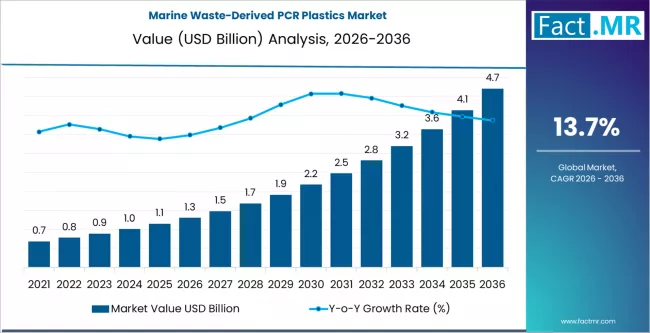
Marine waste-derived pcr plastics market is projected to grow from USD 1.3 billion in 2026 to USD 4.7 billion by 2036, at a CAGR of 13.7%. Packaging and consumer goods will dominate with a 45.0% market share, while rigid and flexible plastics will lead the product type segment with a 48.0% share.

Marine Waste-Derived PCR Plastics Market Forecast and Outlook 2026 to 2036

The marine waste-derived PCR plastics market is projected to reach USD 1.3 billion in 2026 and expand to USD 4.7 billion by 2036, growing at a CAGR of 13.7%. Capital intensity in this market is high, driven by the need for advanced recycling technologies and sustainable production processes.

Key Takeaways from Marine Waste-Derived PCR Plastics Market

  • Marine Waste-Derived PCR Plastics Market Value (2026): USD 1.3 billion
  • Marine Waste-Derived PCR Plastics Market Forecast Value (2036): USD 4.7 billion
  • Marine Waste-Derived PCR Plastics Market Forecast CAGR 2026 to 2036: 13.7%
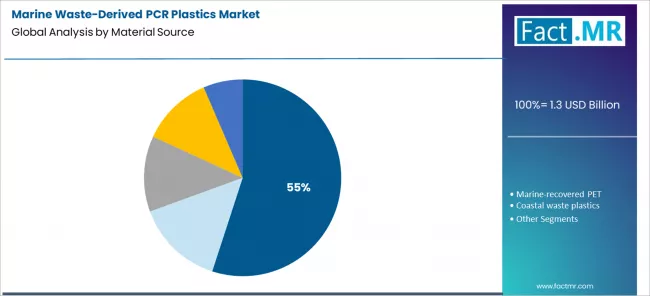
  • Leading Segment in Marine Waste-Derived PCR Plastics Market: Ocean-bound PET and PE (55%)
  • Key Growth Region in Marine Waste-Derived PCR Plastics Market: Asia Pacific
  • Key Players in Marine Waste-Derived PCR Plastics Market: BASF (Loopamid pilots), Covestro, Oceanworks, Envision Plastics, GEM Co., Far Eastern New Century, Toray, JEPLAN

Marine Waste Derived Pcr Plastics Market Market Value Analysis

Investors will be particularly focused on return timelines, as the upfront costs of establishing efficient recycling infrastructure and securing regulatory approvals can impact short-term profitability. As a result, capital allocation will need to be highly selective, prioritizing companies with scalable, cost-efficient solutions that address both environmental concerns and market demand. With an increasing emphasis on sustainability, market expansion will be contingent on balancing long-term investment strategies with the capacity to deliver quick returns. Companies that secure strong funding early will be better positioned to capture value in this rapidly growing market.

Marine Waste-Derived PCR Plastics Market

Metric Value
Estimated Value in (2026E) USD 1.3 billion
Forecast Value in (2036F) USD 4.7 billion
Forecast CAGR (2026 to 2036) 13.7%

Category

Category Segments
End-Use Packaging and consumer goods; Apparel and durable goods; Consumer packaging; Premium consumer products; FMCG and textiles; Regional packaging
Product Type Rigid and flexible plastics; Injection-moulded parts; Bottles and containers; Specialty plastics; Others
Material Source Ocean-bound PET and PE; Marine-recovered PET; Coastal waste plastics; Marine PET; Others
Processing Technology Advanced washing and decontamination; Mechanical recycling with traceability; Large-scale reprocessing; High-purity recycling; Others
Region North America; Europe; Asia Pacific; Latin America; Middle East & Africa

Segmental Analysis

What Is the Impact of Product Type on the Marine Waste-Derived Pcr Plastics Market?

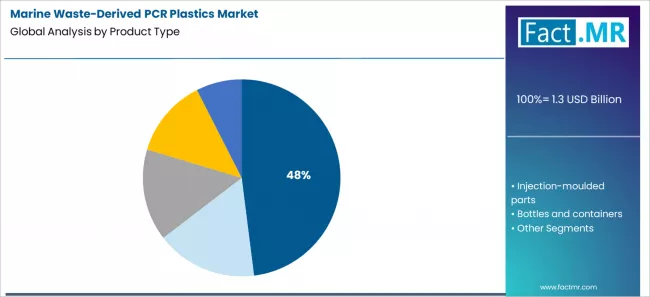
Marine Waste Derived Pcr Plastics Market Analysis By Product Type

In the marine waste-derived PCR plastics market, product type significantly influences market dynamics and material application. Rigid and flexible plastics lead the market with a 48% share, driven by their versatility in various packaging and industrial uses. These plastics offer a range of applications, from containers to components requiring durable, lightweight materials. Their popularity is expected to continue as sustainability becomes a key focus across industries, with marine waste-derived plastics offering a solution to reduce the environmental impact. As demand for eco-friendly packaging and products grows, rigid and flexible plastics will remain central to the market's evolution.

How Does Material Source Influence the Marine Waste-Derived Pcr Plastics Market?

Marine Waste Derived Pcr Plastics Market Analysis By Material Source

Material source plays a crucial role in the marine waste-derived PCR plastics market, particularly as consumers and manufacturers seek sustainable solutions. Ocean-bound PET and PE dominate the material source segment with a 55% share. These materials are sourced from plastics found in ocean-bound areas, offering an opportunity to reduce pollution and repurpose waste into valuable products. The use of ocean-bound PET and PE helps address environmental concerns, promoting a circular economy. As environmental awareness increases, materials derived from ocean-bound waste are expected to play a major role in shaping the future of sustainable plastics.

What are the Principal Drivers, Constraints, and Evolving Dynamics of the Marine WasteDerived PCR Plastics Market?Interest in plastics reclaimed from marine waste has been shaped by requirements to reduce environmental leakage and recover polymer value. Brands and converters have evaluated marine wastederived postconsumer recycled plastics for noncritical applications where traceable material history can be established. Regulatory frameworks that encourage use of recycled content in packaging and industrial goods have supported early adoption.

Availability of consistent feedstock remains limited because collection and sorting of marine debris are resource intensive. Variability in polymer quality from recovered marine plastics has affected processing performance. Technical work is focused on improving cleaning, characterization, and blending methods to achieve stable properties. Collaboration among recovery organizations, recyclers, and compounders is advancing material throughput and broadening potential end uses.

Analysis of the Marine Waste-Derived PCR Plastics Market by Key Country

Country CAGR (2026–2036)
Germany 12.2%
USA 12.8%
China 14.6%
Japan 10.6%
India 15.2%
Brazil 11%

The report covers an in-depth analysis of 40+ countries; top-performing countries are highlighted below.

What is the Growth Outlook for Marine Waste-Derived PCR Plastics in Germany?

Germany’s marine waste-derived PCR plastics market is expected to grow at a CAGR of 12.2% from 2026 to 2036. The country’s commitment to sustainability and waste reduction is a significant driver for the increasing adoption of PCR plastics. As regulations around plastic waste become stricter and consumer demand for environmentally friendly products rises, the use of marine waste-derived PCR plastics is expected to grow. Germany's advanced recycling infrastructure and strong emphasis on circular economy principles make it a key player in this market, fostering continued growth.

How is the Marine Waste-Derived PCR Plastics Market Performing in the USA?

The USA’s marine waste-derived PCR plastics market is projected to grow at a CAGR of 12.8% from 2026 to 2036. Increasing awareness of marine pollution and growing regulatory pressure to adopt sustainable materials are key drivers for market expansion. As the USA seeks solutions to reduce its environmental footprint, marine waste-derived PCR plastics present a viable alternative. With an increasing focus on circular economy initiatives and sustainability, the demand for these plastics in manufacturing and packaging sectors is expected to rise, further fueling market growth.

What is the Market Outlook for Marine Waste-Derived PCR Plastics in China?

China is expected to experience significant growth in the marine waste-derived PCR plastics market, with a projected CAGR of 14.6% from 2026 to 2036. As the world's largest producer and consumer of plastics, China is placing a growing emphasis on reducing plastic waste and promoting sustainable alternatives. The adoption of marine waste-derived PCR plastics aligns with the country's focus on improving environmental sustainability and advancing recycling technologies. With government support and a booming manufacturing sector, China is set to lead the growth in this market.

What is the Growth Potential for Marine Waste-Derived PCR Plastics in Japan?

Japan’s marine waste-derived PCR plastics market is forecast to grow at a CAGR of 10.6% from 2026 to 2036. Japan has long been a leader in waste management and recycling technologies, and as the country faces growing concerns about plastic pollution, the demand for sustainable alternatives such as marine waste-derived PCR plastics is rising. The market will benefit from Japan’s ongoing efforts to strengthen environmental regulations and its commitment to reducing ocean plastic waste. As awareness of environmental issues increases, so will the adoption of these sustainable plastics in various industries.

What is the Demand for Marine Waste-Derived PCR Plastics in India?

India’s marine waste-derived PCR plastics market is set to grow at a robust CAGR of 15.2% from 2026 to 2036. The country is increasingly focusing on sustainable materials as part of its broader environmental initiatives. With a growing population and increasing industrialization, India faces significant challenges regarding plastic waste, and marine waste-derived PCR plastics offer a solution to mitigate this issue. The adoption of these materials is driven by both regulatory pressures and rising consumer demand for eco-friendly products. India’s expanding manufacturing sector will further contribute to the market's growth.

What is the Market Expansion Outlook for Marine Waste-Derived PCR Plastics in Brazil?

Brazil’s marine waste-derived PCR plastics market is projected to grow at a CAGR of 11% from 2026 to 2036. As Brazil continues to develop its recycling infrastructure and addresses plastic waste management issues, the demand for marine waste-derived PCR plastics is expected to rise. The country’s focus on environmental sustainability, along with increasing consumer awareness of ocean pollution, is fueling this demand. Brazil’s market growth will be driven by the increasing need for sustainable alternatives to traditional plastics in packaging and other industrial applications.

How is Competition Structured in the Marine Waste Derived PCR Plastics Market?

Competition in the marine waste derived PCR plastics market is driven by sourcing efficiency, material quality, and processing capability. Oceanworks offers digital traceability and secure sourcing platforms that connect brands with certified recycled ocean and ocean bound plastic feedstocks. BASF, through initiatives like Loopamid pilots, explores circular solutions and recycling pathways that leverage post consumer waste streams for polymer production. Covestro and Envision Plastics compete by securing recycled marine plastics for use in engineered resin blends and structural applications, emphasizing consistent performance.

GEM Co. and Far Eastern New Century focus on regional supply chains and processing technologies that convert marine plastics into usable polymer pellets. Toray leverages its material science expertise to integrate recycled content into high performance plastics. JEPLAN engages in advanced sorting and chemical recycling methods to improve purity and yield of PCR plastics sourced from marine environments. Competitive differentiation is shaped by supply chain transparency, end use suitability, and the ability to meet regulatory standards for recycled content.

Key Players of the Marine Waste-Derived PCR Plastics Market

  • BASF (Loopamid pilots)
  • Covestro
  • Oceanworks
  • Envision Plastics
  • GEM Co.
  • Far Eastern New Century
  • Toray
  • JEPLAN

Scope of the Report

Items Values
Quantitative Units (2026) USD Billion
End-use Packaging and consumer goods, Apparel and durable goods, Consumer packaging, Premium consumer products, FMCG and textiles
Product Type Rigid and flexible plastics, Injection-moulded parts, Bottles and containers, Specialty plastics, Others
Material Source Ocean-bound PET and PE, Marine-recovered PET, Coastal waste plastics, Marine PET, Others
Processing Technology Advanced washing and decontamination, Mechanical recycling with traceability, Large-scale reprocessing, High-purity recycling, Others
Regions Covered North America, Europe, Asia Pacific, Latin America, Middle East & Africa
Countries Covered United States, Canada, Mexico, Brazil, Germany, United Kingdom, France, Italy, Spain, China, Japan, South Korea, India, Australia & New Zealand
Key Companies Profiled BASF (Loopamid pilots), Covestro, Oceanworks, Envision Plastics, GEM Co., Far Eastern New Century, Toray, JEPLAN
Additional Attributes Dollar revenue by end-use, product type, material source, and processing technology; regional demand trends, competitive landscape, technological advancements in marine waste-derived PCR plastics, and large-scale recycling strategies

Marine Waste-Derived PCR Plastics Market Key Segments

  • End-use :

    • Packaging and consumer goods
    • Apparel and durable goods
    • Consumer packaging
    • Premium consumer products
    • FMCG and textiles
  • Product Type :

    • Rigid and flexible plastics
    • Injection-moulded parts
    • Bottles and containers
    • Specialty plastics
    • Others
  • Material Source :

    • Ocean-bound PET and PE
    • Marine-recovered PET
    • Coastal waste plastics
    • Marine PET
    • Others
  • Processing Technology :

    • Advanced washing and decontamination
    • Mechanical recycling with traceability
    • Large-scale reprocessing
    • High-purity recycling
    • Others
  • Region :

    • North America

      • U.S.
      • Canada
      • Mexico
    • Europe

      • Germany
      • UK
      • France
      • Italy
      • Spain
      • Nordic Countries
      • BENELUX
      • Rest of Europe
    • Asia Pacific

      • China
      • Japan
      • South Korea
      • India
      • Australia
      • Rest of Asia Pacific
    • Latin America

      • Brazil
      • Argentina
      • Rest of Latin America
    • Middle East and Africa

      • Kingdom of Saudi Arabia
      • United Arab Emirates
      • South Africa
      • Rest of Middle East and Africa
    • Other Regions

      • Oceania
      • Central Asia
      • Other Markets

Bibliographies

  • International Organization for Standardization. (2023).ISO 14021: Environmental labels and declarations-Self-declared environmental claims (including recycled content). ISO.
  • Organisation for Economic Co-operation and Development. (2023).Global plastics outlook: Policy scenarios to 2060 - Marine leakage and recycled plastics pathways. OECD Publishing.
  • United Nations Environment Programme. (2024).Turning off the tap: How the world can end plastic pollution and create a circular economy. UNEP.
  • European Commission. (2024).Impact assessment on recycled plastic content targets and marine litter reduction measures. European Union Publications.
  • Ellen MacArthur Foundation. (2023).Global commitment progress report: Eliminating plastic waste and scaling recycled content. EMF.

Table of Content

  1. Executive Summary
    • Global Market Outlook
    • Demand to side Trends
    • Supply to side Trends
    • Technology Roadmap Analysis
    • Analysis and Recommendations
  2. Market Overview
    • Market Coverage / Taxonomy
    • Market Definition / Scope / Limitations
  3. Market Background
    • Market Dynamics
      • Drivers
      • Restraints
      • Opportunity
      • Trends
    • Scenario Forecast
      • Demand in Optimistic Scenario
      • Demand in Likely Scenario
      • Demand in Conservative Scenario
    • Opportunity Map Analysis
    • Product Life Cycle Analysis
    • Supply Chain Analysis
    • Investment Feasibility Matrix
    • Value Chain Analysis
    • PESTLE and Porter’s Analysis
    • Regulatory Landscape
    • Regional Parent Market Outlook
    • Production and Consumption Statistics
    • Import and Export Statistics
  4. Global Market Analysis 2021 to 2025 and Forecast, 2026 to 2036
    • Historical Market Size Value (USD Million) Analysis, 2021 to 2025
    • Current and Future Market Size Value (USD Million) Projections, 2026 to 2036
      • Y to o to Y Growth Trend Analysis
      • Absolute $ Opportunity Analysis
  5. Global Market Pricing Analysis 2021 to 2025 and Forecast 2026 to 2036
  6. Global Market Analysis 2021 to 2025 and Forecast 2026 to 2036, By End-use
    • Introduction / Key Findings
    • Historical Market Size Value (USD Million) Analysis By End-use, 2021 to 2025
    • Current and Future Market Size Value (USD Million) Analysis and Forecast By End-use, 2026 to 2036
      • Packaging and consumer goods
      • Apparel and durable goods
      • Consumer packaging
      • Premium consumer products
      • FMCG and textiles
      • Regional packaging
    • Y to o to Y Growth Trend Analysis By End-use, 2021 to 2025
    • Absolute $ Opportunity Analysis By End-use, 2026 to 2036
  7. Global Market Analysis 2021 to 2025 and Forecast 2026 to 2036, By Product Type
    • Introduction / Key Findings
    • Historical Market Size Value (USD Million) Analysis By Product Type, 2021 to 2025
    • Current and Future Market Size Value (USD Million) Analysis and Forecast By Product Type, 2026 to 2036
      • Rigid and flexible plastics
      • Injection-moulded parts
      • Bottles and containers
      • Specialty plastics
      • Others
    • Y to o to Y Growth Trend Analysis By Product Type, 2021 to 2025
    • Absolute $ Opportunity Analysis By Product Type, 2026 to 2036
  8. Global Market Analysis 2021 to 2025 and Forecast 2026 to 2036, By Material Source
    • Introduction / Key Findings
    • Historical Market Size Value (USD Million) Analysis By Material Source, 2021 to 2025
    • Current and Future Market Size Value (USD Million) Analysis and Forecast By Material Source, 2026 to 2036
      • Ocean-bound PET and PE
      • Marine-recovered PET
      • Coastal waste plastics
      • Marine PET
      • Others
    • Y to o to Y Growth Trend Analysis By Material Source, 2021 to 2025
    • Absolute $ Opportunity Analysis By Material Source, 2026 to 2036
  9. Global Market Analysis 2021 to 2025 and Forecast 2026 to 2036, By Processing Technology
    • Introduction / Key Findings
    • Historical Market Size Value (USD Million) Analysis By Processing Technology, 2021 to 2025
    • Current and Future Market Size Value (USD Million) Analysis and Forecast By Processing Technology, 2026 to 2036
      • Advanced washing and decontamination
      • Mechanical recycling with traceability
      • Large-scale reprocessing
      • High-purity recycling
      • Others
    • Y to o to Y Growth Trend Analysis By Processing Technology, 2021 to 2025
    • Absolute $ Opportunity Analysis By Processing Technology, 2026 to 2036
  10. Global Market Analysis 2021 to 2025 and Forecast 2026 to 2036, By Region
    • Introduction
    • Historical Market Size Value (USD Million) Analysis By Region, 2021 to 2025
    • Current Market Size Value (USD Million) Analysis and Forecast By Region, 2026 to 2036
      • North America
      • Latin America
      • Western Europe
      • Eastern Europe
      • East Asia
      • South Asia and Pacific
      • Middle East & Africa
    • Market Attractiveness Analysis By Region
  11. North America Market Analysis 2021 to 2025 and Forecast 2026 to 2036, By Country
    • Historical Market Size Value (USD Million) Trend Analysis By Market Taxonomy, 2021 to 2025
    • Market Size Value (USD Million) Forecast By Market Taxonomy, 2026 to 2036
      • By Country
        • USA
        • Canada
        • Mexico
      • By End-use
      • By Product Type
      • By Material Source
      • By Processing Technology
    • Market Attractiveness Analysis
      • By Country
      • By End-use
      • By Product Type
      • By Material Source
      • By Processing Technology
    • Key Takeaways
  12. Latin America Market Analysis 2021 to 2025 and Forecast 2026 to 2036, By Country
    • Historical Market Size Value (USD Million) Trend Analysis By Market Taxonomy, 2021 to 2025
    • Market Size Value (USD Million) Forecast By Market Taxonomy, 2026 to 2036
      • By Country
        • Brazil
        • Chile
        • Rest of Latin America
      • By End-use
      • By Product Type
      • By Material Source
      • By Processing Technology
    • Market Attractiveness Analysis
      • By Country
      • By End-use
      • By Product Type
      • By Material Source
      • By Processing Technology
    • Key Takeaways
  13. Western Europe Market Analysis 2021 to 2025 and Forecast 2026 to 2036, By Country
    • Historical Market Size Value (USD Million) Trend Analysis By Market Taxonomy, 2021 to 2025
    • Market Size Value (USD Million) Forecast By Market Taxonomy, 2026 to 2036
      • By Country
        • Germany
        • UK
        • Italy
        • Spain
        • France
        • Nordic
        • BENELUX
        • Rest of Western Europe
      • By End-use
      • By Product Type
      • By Material Source
      • By Processing Technology
    • Market Attractiveness Analysis
      • By Country
      • By End-use
      • By Product Type
      • By Material Source
      • By Processing Technology
    • Key Takeaways
  14. Eastern Europe Market Analysis 2021 to 2025 and Forecast 2026 to 2036, By Country
    • Historical Market Size Value (USD Million) Trend Analysis By Market Taxonomy, 2021 to 2025
    • Market Size Value (USD Million) Forecast By Market Taxonomy, 2026 to 2036
      • By Country
        • Russia
        • Poland
        • Hungary
        • Balkan & Baltic
        • Rest of Eastern Europe
      • By End-use
      • By Product Type
      • By Material Source
      • By Processing Technology
    • Market Attractiveness Analysis
      • By Country
      • By End-use
      • By Product Type
      • By Material Source
      • By Processing Technology
    • Key Takeaways
  15. East Asia Market Analysis 2021 to 2025 and Forecast 2026 to 2036, By Country
    • Historical Market Size Value (USD Million) Trend Analysis By Market Taxonomy, 2021 to 2025
    • Market Size Value (USD Million) Forecast By Market Taxonomy, 2026 to 2036
      • By Country
        • China
        • Japan
        • South Korea
      • By End-use
      • By Product Type
      • By Material Source
      • By Processing Technology
    • Market Attractiveness Analysis
      • By Country
      • By End-use
      • By Product Type
      • By Material Source
      • By Processing Technology
    • Key Takeaways
  16. South Asia and Pacific Market Analysis 2021 to 2025 and Forecast 2026 to 2036, By Country
    • Historical Market Size Value (USD Million) Trend Analysis By Market Taxonomy, 2021 to 2025
    • Market Size Value (USD Million) Forecast By Market Taxonomy, 2026 to 2036
      • By Country
        • India
        • ASEAN
        • Australia & New Zealand
        • Rest of South Asia and Pacific
      • By End-use
      • By Product Type
      • By Material Source
      • By Processing Technology
    • Market Attractiveness Analysis
      • By Country
      • By End-use
      • By Product Type
      • By Material Source
      • By Processing Technology
    • Key Takeaways
  17. Middle East & Africa Market Analysis 2021 to 2025 and Forecast 2026 to 2036, By Country
    • Historical Market Size Value (USD Million) Trend Analysis By Market Taxonomy, 2021 to 2025
    • Market Size Value (USD Million) Forecast By Market Taxonomy, 2026 to 2036
      • By Country
        • Kingdom of Saudi Arabia
        • Other GCC Countries
        • Turkiye
        • South Africa
        • Other African Union
        • Rest of Middle East & Africa
      • By End-use
      • By Product Type
      • By Material Source
      • By Processing Technology
    • Market Attractiveness Analysis
      • By Country
      • By End-use
      • By Product Type
      • By Material Source
      • By Processing Technology
    • Key Takeaways
  18. Key Countries Market Analysis
    • USA
      • Pricing Analysis
      • Market Share Analysis, 2025
        • By End-use
        • By Product Type
        • By Material Source
        • By Processing Technology
    • Canada
      • Pricing Analysis
      • Market Share Analysis, 2025
        • By End-use
        • By Product Type
        • By Material Source
        • By Processing Technology
    • Mexico
      • Pricing Analysis
      • Market Share Analysis, 2025
        • By End-use
        • By Product Type
        • By Material Source
        • By Processing Technology
    • Brazil
      • Pricing Analysis
      • Market Share Analysis, 2025
        • By End-use
        • By Product Type
        • By Material Source
        • By Processing Technology
    • Chile
      • Pricing Analysis
      • Market Share Analysis, 2025
        • By End-use
        • By Product Type
        • By Material Source
        • By Processing Technology
    • Germany
      • Pricing Analysis
      • Market Share Analysis, 2025
        • By End-use
        • By Product Type
        • By Material Source
        • By Processing Technology
    • UK
      • Pricing Analysis
      • Market Share Analysis, 2025
        • By End-use
        • By Product Type
        • By Material Source
        • By Processing Technology
    • Italy
      • Pricing Analysis
      • Market Share Analysis, 2025
        • By End-use
        • By Product Type
        • By Material Source
        • By Processing Technology
    • Spain
      • Pricing Analysis
      • Market Share Analysis, 2025
        • By End-use
        • By Product Type
        • By Material Source
        • By Processing Technology
    • France
      • Pricing Analysis
      • Market Share Analysis, 2025
        • By End-use
        • By Product Type
        • By Material Source
        • By Processing Technology
    • India
      • Pricing Analysis
      • Market Share Analysis, 2025
        • By End-use
        • By Product Type
        • By Material Source
        • By Processing Technology
    • ASEAN
      • Pricing Analysis
      • Market Share Analysis, 2025
        • By End-use
        • By Product Type
        • By Material Source
        • By Processing Technology
    • Australia & New Zealand
      • Pricing Analysis
      • Market Share Analysis, 2025
        • By End-use
        • By Product Type
        • By Material Source
        • By Processing Technology
    • China
      • Pricing Analysis
      • Market Share Analysis, 2025
        • By End-use
        • By Product Type
        • By Material Source
        • By Processing Technology
    • Japan
      • Pricing Analysis
      • Market Share Analysis, 2025
        • By End-use
        • By Product Type
        • By Material Source
        • By Processing Technology
    • South Korea
      • Pricing Analysis
      • Market Share Analysis, 2025
        • By End-use
        • By Product Type
        • By Material Source
        • By Processing Technology
    • Russia
      • Pricing Analysis
      • Market Share Analysis, 2025
        • By End-use
        • By Product Type
        • By Material Source
        • By Processing Technology
    • Poland
      • Pricing Analysis
      • Market Share Analysis, 2025
        • By End-use
        • By Product Type
        • By Material Source
        • By Processing Technology
    • Hungary
      • Pricing Analysis
      • Market Share Analysis, 2025
        • By End-use
        • By Product Type
        • By Material Source
        • By Processing Technology
    • Kingdom of Saudi Arabia
      • Pricing Analysis
      • Market Share Analysis, 2025
        • By End-use
        • By Product Type
        • By Material Source
        • By Processing Technology
    • Turkiye
      • Pricing Analysis
      • Market Share Analysis, 2025
        • By End-use
        • By Product Type
        • By Material Source
        • By Processing Technology
    • South Africa
      • Pricing Analysis
      • Market Share Analysis, 2025
        • By End-use
        • By Product Type
        • By Material Source
        • By Processing Technology
  19. Market Structure Analysis
    • Competition Dashboard
    • Competition Benchmarking
    • Market Share Analysis of Top Players
      • By Regional
      • By End-use
      • By Product Type
      • By Material Source
      • By Processing Technology
  20. Competition Analysis
    • Competition Deep Dive
      • BASF (Loopamid pilots)
        • Overview
        • Product Portfolio
        • Profitability by Market Segments (Product/Age /Sales Channel/Region)
        • Sales Footprint
        • Strategy Overview
          • Marketing Strategy
          • Product Strategy
          • Channel Strategy
      • Covestro
      • Oceanworks
      • Envision Plastics
      • GEM Co.
      • Far Eastern New Century
      • Toray
      • JEPLAN
  21. Assumptions & Acronyms Used
  22. Research Methodology

List Of Table

  • Table 1: Global Market Value (USD Million) Forecast by Region, 2021 to 2036
  • Table 2: Global Market Value (USD Million) Forecast by End-use, 2021 to 2036
  • Table 3: Global Market Value (USD Million) Forecast by Product Type, 2021 to 2036
  • Table 4: Global Market Value (USD Million) Forecast by Material Source, 2021 to 2036
  • Table 5: Global Market Value (USD Million) Forecast by Processing Technology, 2021 to 2036
  • Table 6: North America Market Value (USD Million) Forecast by Country, 2021 to 2036
  • Table 7: North America Market Value (USD Million) Forecast by End-use, 2021 to 2036
  • Table 8: North America Market Value (USD Million) Forecast by Product Type, 2021 to 2036
  • Table 9: North America Market Value (USD Million) Forecast by Material Source, 2021 to 2036
  • Table 10: North America Market Value (USD Million) Forecast by Processing Technology, 2021 to 2036
  • Table 11: Latin America Market Value (USD Million) Forecast by Country, 2021 to 2036
  • Table 12: Latin America Market Value (USD Million) Forecast by End-use, 2021 to 2036
  • Table 13: Latin America Market Value (USD Million) Forecast by Product Type, 2021 to 2036
  • Table 14: Latin America Market Value (USD Million) Forecast by Material Source, 2021 to 2036
  • Table 15: Latin America Market Value (USD Million) Forecast by Processing Technology, 2021 to 2036
  • Table 16: Western Europe Market Value (USD Million) Forecast by Country, 2021 to 2036
  • Table 17: Western Europe Market Value (USD Million) Forecast by End-use, 2021 to 2036
  • Table 18: Western Europe Market Value (USD Million) Forecast by Product Type, 2021 to 2036
  • Table 19: Western Europe Market Value (USD Million) Forecast by Material Source, 2021 to 2036
  • Table 20: Western Europe Market Value (USD Million) Forecast by Processing Technology, 2021 to 2036
  • Table 21: Eastern Europe Market Value (USD Million) Forecast by Country, 2021 to 2036
  • Table 22: Eastern Europe Market Value (USD Million) Forecast by End-use, 2021 to 2036
  • Table 23: Eastern Europe Market Value (USD Million) Forecast by Product Type, 2021 to 2036
  • Table 24: Eastern Europe Market Value (USD Million) Forecast by Material Source, 2021 to 2036
  • Table 25: Eastern Europe Market Value (USD Million) Forecast by Processing Technology, 2021 to 2036
  • Table 26: East Asia Market Value (USD Million) Forecast by Country, 2021 to 2036
  • Table 27: East Asia Market Value (USD Million) Forecast by End-use, 2021 to 2036
  • Table 28: East Asia Market Value (USD Million) Forecast by Product Type, 2021 to 2036
  • Table 29: East Asia Market Value (USD Million) Forecast by Material Source, 2021 to 2036
  • Table 30: East Asia Market Value (USD Million) Forecast by Processing Technology, 2021 to 2036
  • Table 31: South Asia and Pacific Market Value (USD Million) Forecast by Country, 2021 to 2036
  • Table 32: South Asia and Pacific Market Value (USD Million) Forecast by End-use, 2021 to 2036
  • Table 33: South Asia and Pacific Market Value (USD Million) Forecast by Product Type, 2021 to 2036
  • Table 34: South Asia and Pacific Market Value (USD Million) Forecast by Material Source, 2021 to 2036
  • Table 35: South Asia and Pacific Market Value (USD Million) Forecast by Processing Technology, 2021 to 2036
  • Table 36: Middle East & Africa Market Value (USD Million) Forecast by Country, 2021 to 2036
  • Table 37: Middle East & Africa Market Value (USD Million) Forecast by End-use, 2021 to 2036
  • Table 38: Middle East & Africa Market Value (USD Million) Forecast by Product Type, 2021 to 2036
  • Table 39: Middle East & Africa Market Value (USD Million) Forecast by Material Source, 2021 to 2036
  • Table 40: Middle East & Africa Market Value (USD Million) Forecast by Processing Technology, 2021 to 2036

List Of Figures

  • Figure 1: Global Market Pricing Analysis
  • Figure 2: Global Market Value (USD Million) Forecast 2021 to 2036
  • Figure 3: Global Market Value Share and BPS Analysis by End-use, 2026 and 2036
  • Figure 4: Global Market Y to o to Y Growth Comparison by End-use, 2026 to 2036
  • Figure 5: Global Market Attractiveness Analysis by End-use
  • Figure 6: Global Market Value Share and BPS Analysis by Product Type, 2026 and 2036
  • Figure 7: Global Market Y to o to Y Growth Comparison by Product Type, 2026 to 2036
  • Figure 8: Global Market Attractiveness Analysis by Product Type
  • Figure 9: Global Market Value Share and BPS Analysis by Material Source, 2026 and 2036
  • Figure 10: Global Market Y to o to Y Growth Comparison by Material Source, 2026 to 2036
  • Figure 11: Global Market Attractiveness Analysis by Material Source
  • Figure 12: Global Market Value Share and BPS Analysis by Processing Technology, 2026 and 2036
  • Figure 13: Global Market Y to o to Y Growth Comparison by Processing Technology, 2026 to 2036
  • Figure 14: Global Market Attractiveness Analysis by Processing Technology
  • Figure 15: Global Market Value (USD Million) Share and BPS Analysis by Region, 2026 and 2036
  • Figure 16: Global Market Y to o to Y Growth Comparison by Region, 2026 to 2036
  • Figure 17: Global Market Attractiveness Analysis by Region
  • Figure 18: North America Market Incremental Dollar Opportunity, 2026 to 2036
  • Figure 19: Latin America Market Incremental Dollar Opportunity, 2026 to 2036
  • Figure 20: Western Europe Market Incremental Dollar Opportunity, 2026 to 2036
  • Figure 21: Eastern Europe Market Incremental Dollar Opportunity, 2026 to 2036
  • Figure 22: East Asia Market Incremental Dollar Opportunity, 2026 to 2036
  • Figure 23: South Asia and Pacific Market Incremental Dollar Opportunity, 2026 to 2036
  • Figure 24: Middle East & Africa Market Incremental Dollar Opportunity, 2026 to 2036
  • Figure 25: North America Market Value Share and BPS Analysis by Country, 2026 and 2036
  • Figure 26: North America Market Value Share and BPS Analysis by End-use, 2026 and 2036
  • Figure 27: North America Market Y to o to Y Growth Comparison by End-use, 2026 to 2036
  • Figure 28: North America Market Attractiveness Analysis by End-use
  • Figure 29: North America Market Value Share and BPS Analysis by Product Type, 2026 and 2036
  • Figure 30: North America Market Y to o to Y Growth Comparison by Product Type, 2026 to 2036
  • Figure 31: North America Market Attractiveness Analysis by Product Type
  • Figure 32: North America Market Value Share and BPS Analysis by Material Source, 2026 and 2036
  • Figure 33: North America Market Y to o to Y Growth Comparison by Material Source, 2026 to 2036
  • Figure 34: North America Market Attractiveness Analysis by Material Source
  • Figure 35: North America Market Value Share and BPS Analysis by Processing Technology, 2026 and 2036
  • Figure 36: North America Market Y to o to Y Growth Comparison by Processing Technology, 2026 to 2036
  • Figure 37: North America Market Attractiveness Analysis by Processing Technology
  • Figure 38: Latin America Market Value Share and BPS Analysis by Country, 2026 and 2036
  • Figure 39: Latin America Market Value Share and BPS Analysis by End-use, 2026 and 2036
  • Figure 40: Latin America Market Y to o to Y Growth Comparison by End-use, 2026 to 2036
  • Figure 41: Latin America Market Attractiveness Analysis by End-use
  • Figure 42: Latin America Market Value Share and BPS Analysis by Product Type, 2026 and 2036
  • Figure 43: Latin America Market Y to o to Y Growth Comparison by Product Type, 2026 to 2036
  • Figure 44: Latin America Market Attractiveness Analysis by Product Type
  • Figure 45: Latin America Market Value Share and BPS Analysis by Material Source, 2026 and 2036
  • Figure 46: Latin America Market Y to o to Y Growth Comparison by Material Source, 2026 to 2036
  • Figure 47: Latin America Market Attractiveness Analysis by Material Source
  • Figure 48: Latin America Market Value Share and BPS Analysis by Processing Technology, 2026 and 2036
  • Figure 49: Latin America Market Y to o to Y Growth Comparison by Processing Technology, 2026 to 2036
  • Figure 50: Latin America Market Attractiveness Analysis by Processing Technology
  • Figure 51: Western Europe Market Value Share and BPS Analysis by Country, 2026 and 2036
  • Figure 52: Western Europe Market Value Share and BPS Analysis by End-use, 2026 and 2036
  • Figure 53: Western Europe Market Y to o to Y Growth Comparison by End-use, 2026 to 2036
  • Figure 54: Western Europe Market Attractiveness Analysis by End-use
  • Figure 55: Western Europe Market Value Share and BPS Analysis by Product Type, 2026 and 2036
  • Figure 56: Western Europe Market Y to o to Y Growth Comparison by Product Type, 2026 to 2036
  • Figure 57: Western Europe Market Attractiveness Analysis by Product Type
  • Figure 58: Western Europe Market Value Share and BPS Analysis by Material Source, 2026 and 2036
  • Figure 59: Western Europe Market Y to o to Y Growth Comparison by Material Source, 2026 to 2036
  • Figure 60: Western Europe Market Attractiveness Analysis by Material Source
  • Figure 61: Western Europe Market Value Share and BPS Analysis by Processing Technology, 2026 and 2036
  • Figure 62: Western Europe Market Y to o to Y Growth Comparison by Processing Technology, 2026 to 2036
  • Figure 63: Western Europe Market Attractiveness Analysis by Processing Technology
  • Figure 64: Eastern Europe Market Value Share and BPS Analysis by Country, 2026 and 2036
  • Figure 65: Eastern Europe Market Value Share and BPS Analysis by End-use, 2026 and 2036
  • Figure 66: Eastern Europe Market Y to o to Y Growth Comparison by End-use, 2026 to 2036
  • Figure 67: Eastern Europe Market Attractiveness Analysis by End-use
  • Figure 68: Eastern Europe Market Value Share and BPS Analysis by Product Type, 2026 and 2036
  • Figure 69: Eastern Europe Market Y to o to Y Growth Comparison by Product Type, 2026 to 2036
  • Figure 70: Eastern Europe Market Attractiveness Analysis by Product Type
  • Figure 71: Eastern Europe Market Value Share and BPS Analysis by Material Source, 2026 and 2036
  • Figure 72: Eastern Europe Market Y to o to Y Growth Comparison by Material Source, 2026 to 2036
  • Figure 73: Eastern Europe Market Attractiveness Analysis by Material Source
  • Figure 74: Eastern Europe Market Value Share and BPS Analysis by Processing Technology, 2026 and 2036
  • Figure 75: Eastern Europe Market Y to o to Y Growth Comparison by Processing Technology, 2026 to 2036
  • Figure 76: Eastern Europe Market Attractiveness Analysis by Processing Technology
  • Figure 77: East Asia Market Value Share and BPS Analysis by Country, 2026 and 2036
  • Figure 78: East Asia Market Value Share and BPS Analysis by End-use, 2026 and 2036
  • Figure 79: East Asia Market Y to o to Y Growth Comparison by End-use, 2026 to 2036
  • Figure 80: East Asia Market Attractiveness Analysis by End-use
  • Figure 81: East Asia Market Value Share and BPS Analysis by Product Type, 2026 and 2036
  • Figure 82: East Asia Market Y to o to Y Growth Comparison by Product Type, 2026 to 2036
  • Figure 83: East Asia Market Attractiveness Analysis by Product Type
  • Figure 84: East Asia Market Value Share and BPS Analysis by Material Source, 2026 and 2036
  • Figure 85: East Asia Market Y to o to Y Growth Comparison by Material Source, 2026 to 2036
  • Figure 86: East Asia Market Attractiveness Analysis by Material Source
  • Figure 87: East Asia Market Value Share and BPS Analysis by Processing Technology, 2026 and 2036
  • Figure 88: East Asia Market Y to o to Y Growth Comparison by Processing Technology, 2026 to 2036
  • Figure 89: East Asia Market Attractiveness Analysis by Processing Technology
  • Figure 90: South Asia and Pacific Market Value Share and BPS Analysis by Country, 2026 and 2036
  • Figure 91: South Asia and Pacific Market Value Share and BPS Analysis by End-use, 2026 and 2036
  • Figure 92: South Asia and Pacific Market Y to o to Y Growth Comparison by End-use, 2026 to 2036
  • Figure 93: South Asia and Pacific Market Attractiveness Analysis by End-use
  • Figure 94: South Asia and Pacific Market Value Share and BPS Analysis by Product Type, 2026 and 2036
  • Figure 95: South Asia and Pacific Market Y to o to Y Growth Comparison by Product Type, 2026 to 2036
  • Figure 96: South Asia and Pacific Market Attractiveness Analysis by Product Type
  • Figure 97: South Asia and Pacific Market Value Share and BPS Analysis by Material Source, 2026 and 2036
  • Figure 98: South Asia and Pacific Market Y to o to Y Growth Comparison by Material Source, 2026 to 2036
  • Figure 99: South Asia and Pacific Market Attractiveness Analysis by Material Source
  • Figure 100: South Asia and Pacific Market Value Share and BPS Analysis by Processing Technology, 2026 and 2036
  • Figure 101: South Asia and Pacific Market Y to o to Y Growth Comparison by Processing Technology, 2026 to 2036
  • Figure 102: South Asia and Pacific Market Attractiveness Analysis by Processing Technology
  • Figure 103: Middle East & Africa Market Value Share and BPS Analysis by Country, 2026 and 2036
  • Figure 104: Middle East & Africa Market Value Share and BPS Analysis by End-use, 2026 and 2036
  • Figure 105: Middle East & Africa Market Y to o to Y Growth Comparison by End-use, 2026 to 2036
  • Figure 106: Middle East & Africa Market Attractiveness Analysis by End-use
  • Figure 107: Middle East & Africa Market Value Share and BPS Analysis by Product Type, 2026 and 2036
  • Figure 108: Middle East & Africa Market Y to o to Y Growth Comparison by Product Type, 2026 to 2036
  • Figure 109: Middle East & Africa Market Attractiveness Analysis by Product Type
  • Figure 110: Middle East & Africa Market Value Share and BPS Analysis by Material Source, 2026 and 2036
  • Figure 111: Middle East & Africa Market Y to o to Y Growth Comparison by Material Source, 2026 to 2036
  • Figure 112: Middle East & Africa Market Attractiveness Analysis by Material Source
  • Figure 113: Middle East & Africa Market Value Share and BPS Analysis by Processing Technology, 2026 and 2036
  • Figure 114: Middle East & Africa Market Y to o to Y Growth Comparison by Processing Technology, 2026 to 2036
  • Figure 115: Middle East & Africa Market Attractiveness Analysis by Processing Technology
  • Figure 116: Global Market - Tier Structure Analysis
  • Figure 117: Global Market - Company Share Analysis

- FAQs -

How big is the marine waste-derived pcr plastics market in 2026?

The global marine waste-derived pcr plastics market is estimated to be valued at USD 1.3 billion in 2026.

What will be the size of marine waste-derived pcr plastics market in 2036?

The market size for the marine waste-derived pcr plastics market is projected to reach USD 4.7 billion by 2036.

How much will be the marine waste-derived pcr plastics market growth between 2026 and 2036?

The marine waste-derived pcr plastics market is expected to grow at a 13.7% CAGR between 2026 and 2036.

What are the key product types in the marine waste-derived pcr plastics market?

The key product types in marine waste-derived pcr plastics market are packaging and consumer goods, apparel and durable goods, consumer packaging, premium consumer products, fmcg and textiles and regional packaging.

Which product type segment to contribute significant share in the marine waste-derived pcr plastics market in 2026?

In terms of product type, rigid and flexible plastics segment to command 48.0% share in the marine waste-derived pcr plastics market in 2026.
Marine Waste-Derived PCR Plastics Market