Microplastic-Free Seed Treatment Polymer Market

Microplastic-Free Seed Treatment Polymer Market Size and Share Forecast Outlook 2026 to 2036

Microplastic-free seed treatment polymer market is projected to grow from USD 0.3 billion in 2026 to USD 1.0 billion by 2036, at a CAGR of 14.1%. Biodegradable Natural Polymers will dominate with a 38.0% market share, while cereals & grains will lead the seed type segment with a 42.0% share.

Microplastic-Free Seed Treatment Polymer Market Forecast and Outlook 2026 to 2036

The global microplastic-free seed treatment polymer market is projected to reach USD 1.03 billion by 2036. The market is valued at USD 0.28 billion in 2026 and is set to rise at a CAGR of 14.1% during the assessment period. By polymer type, biodegradable natural polymers hold a leading 38% share. The cereals & grains seed type segment represents a dominant 42% share, while the functional role of film coating & binding accounts for 46% market share.

Key Takeaways from the Microplastic-Free Seed Treatment Polymer Market

  • Market Value for 2026: USD 0.28 Billion
  • Market Value for 2036: USD 1.03 Billion
  • Forecast CAGR (2026-2036): 14.1%
  • Leading Polymer Type Share (2026): Biodegradable Natural Polymers (38%)
  • Leading Seed Type Share (2026): Cereals & Grains (42%)
  • Leading Functional Role Share (2026): Film Coating & Binding (46%)
  • Key Players in the Market: BASF SE, Bayer CropScience, Clariant AG, Croda International, Solvay SA
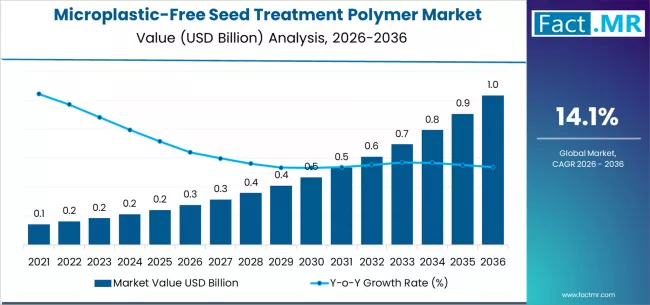
Microplastic Free Seed Treatment Polymer Market Market Value Analysis

A defining trend is the rapid transition from conventional synthetic polymers to fully biodegradable alternatives derived from plant-based and microbial sources. Research is intensifying to improve the performance parity of these materials, focusing on their film-forming durability, adhesion strength, and compatibility with both chemical and biological actives. The integration of these polymers into circular economy models is gaining attention, emphasizing compostable by-products.

Regulatory momentum is a primary catalyst, with legislative proposals in the EU and other regions aiming to ban intentionally added microplastics, including traditional seed coating polymers. This regulatory pressure is compelling seed companies and treatment formulators to proactively reformulate. Supportive policies promoting bio-based economies further incentivize the development and adoption of sustainable polymer alternatives.

Microplastic-Free Seed Treatment Polymer Market

Metric Value
Market Value (2026) USD 0.28 Billion
Market Forecast Value (2036) USD 1.03 Billion
Forecast CAGR (2026-2036) 14.1%

Category

Category Segments
Polymer Type Biodegradable Natural Polymers, Bio-based Synthetic Polymers, Starch & Cellulose Derivatives, Protein-based Polymers, Others
Seed Type Cereals & Grains, Oilseeds & Pulses, Vegetables, Forage & Specialty Seeds, Others
Functional Role Film Coating & Binding, Active Ingredient Delivery, Dust Reduction & Flowability, Moisture Regulation, Others
Region North America, Latin America, Western Europe, Eastern Europe, East Asia, South Asia & Pacific, MEA

Segmental Analysis

By Polymer Type, Which Category Aligns with Regulatory and Sustainability Goals?
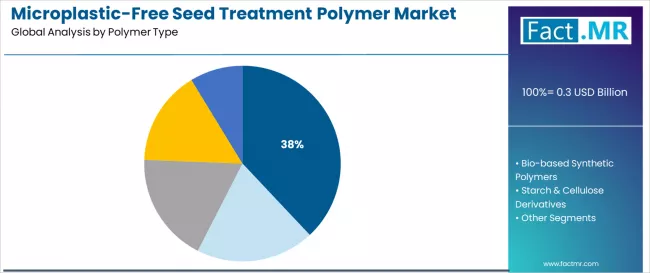
Microplastic Free Seed Treatment Polymer Market Analysis By Polymer Type

Biodegradable natural polymers lead the segment with a 38% share. This dominance is directly tied to regulatory pressures against persistent microplastics and strong market demand for fully biobased solutions. These polymers, derived from sources like chitosan or specific microbial fermentations, offer complete biodegradation in soil without leaving synthetic residues, making them the preferred choice for forward-looking seed companies and sustainability-focused farmers.

By Seed Type, Where is the Scale Driving Early Regulatory Compliance?
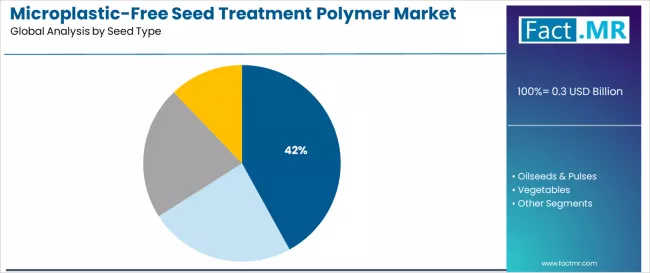
Microplastic Free Seed Treatment Polymer Market Analysis By Seed Type

Cereals and grains command a 42% share. The enormous volume of treated wheat, corn, and soybean seed means this segment is the first target for regulatory compliance regarding microplastics. Large seed corporations servicing this market are investing heavily in reformulating their coating systems to avoid future disruption, creating high-volume demand for compliant polymer solutions that perform at industrial scale.

By Functional Role, What is the Foundational Requirement for Any Polymer?
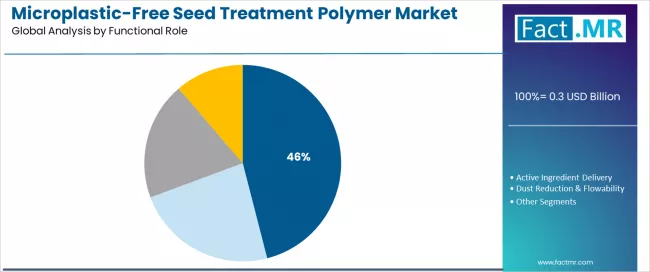
Microplastic Free Seed Treatment Polymer Market Analysis By Functional Role

Film coating and binding is the leading functional role at 46%. This underscores that any microplastic-free alternative must first and foremost excel at forming a uniform, adherent, and durable coating on the seed. This core function is non-negotiable for protecting seed integrity, ensuring accurate dosing of actives, and providing the physical qualities needed for modern planting equipment.

What are the Drivers, Restraints, and Key Trends of the Microplastic-Free Seed Treatment Polymer Market?

The market is overwhelmingly driven by impending regulatory bans on intentionally added microplastics in seed coatings within major agricultural economies. Growing consumer and retailer scrutiny over the environmental footprint of farming inputs pressures the value chain. The strong corporate sustainability commitments of global seed and agrochemical companies accelerate internal R&D and procurement of alternative polymers.

A key restraint is the current performance gap in some functional areas, such as long-term seed storage stability or compatibility with certain chemical regimes, compared to established synthetic polymers. Higher production costs for novel bio-based polymers can limit initial adoption in price-sensitive crop segments. The complexity of validating complete biodegradation timelines across different soil types also presents a scientific and regulatory hurdle.

Significant trends include the development of "second-generation" bio-based synthetic polymers that offer tunable performance. Strategic partnerships between polymer specialists and seed majors are crucial for co-development. There is a rising focus on polymers that not only coat but also enhance seed physiology, acting as biostimulant primers.

Analysis of the Microplastic-Free Seed Treatment Polymer Market by Key Countries
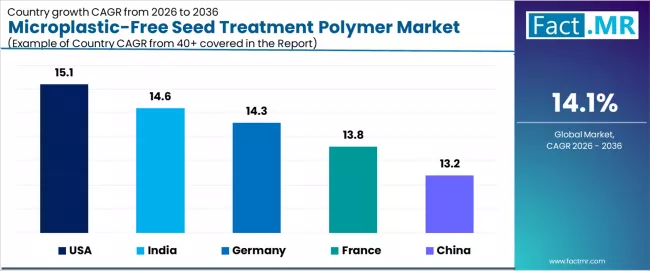
Microplastic Free Seed Treatment Polymer Market Cagr Analysis By Country

Country CAGR (2026-2036)
USA 15.10%
India 14.60%
Germany 14.30%
France 13.80%
China 13.20%

How is the USA's Market Responding to Regulatory Signals and Sustainability Trends?
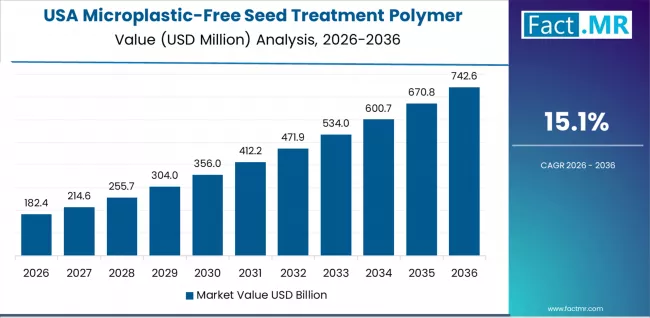
Microplastic Free Seed Treatment Polymer Market Country Value Analysis

The USA leads with a 15.10% CAGR, driven by proactive reformulation by seed treaters anticipating federal or state-level regulations, as well as demands from sustainability-focused food companies and farm groups. The large-scale, commercial seed treatment industry is actively seeking drop-in replacements for conventional polymers to future-proof their operations and maintain market access, particularly for export-oriented crops.

Why is India's Growth Potential Linked to Domestic Innovation and Scale?

India's 14.60% growth is propelled by a combination of a vast domestic seed market and growing expertise in bio-based material science. Local polymer manufacturers are innovating with cost-effective starch and cellulose derivatives suitable for tropical conditions. Government initiatives promoting natural farming and sustainable agriculture create a favorable policy environment for adopting these alternative seed coating materials.

What makes Germany a Leader in High-Performance Bio-Based Polymer Development?

Germany's 14.30% CAGR reflects its strong chemical and seed industry, combined with strict national and EU-level environmental standards. German companies are at the forefront of developing high-performance, bio-based synthetic polymers that meet rigorous technical requirements for precision seed coating. The demand is for solutions that satisfy both the impending EU microplastics restriction and the high-quality expectations of European farmers.

How does France's Agro-ecology Ambition Shape Its Market Adoption?

France's 13.80% growth is closely tied to its national agro-ecology strategy, which explicitly aims to reduce the environmental impact of inputs. French seed cooperatives and major cereal companies are early adopters of microplastic-free coatings as part of their brand differentiation and compliance with domestic environmental charters. This creates a receptive market for innovative polymer solutions aligned with national agricultural policy.

What factors Underpin China's Strategic Investment in this Sector?

China's 13.20% growth is supported by significant state-backed research into bio-based materials and a strategic desire to lead in green agricultural technologies. As China consolidates its domestic seed industry, incorporating sustainable practices and inputs becomes a priority. The large-scale production of seed treatment polymers for its own market also presents an opportunity to establish export-ready, compliant technologies.

Competitive Landscape of the Microplastic-Free Seed Treatment Polymer Market
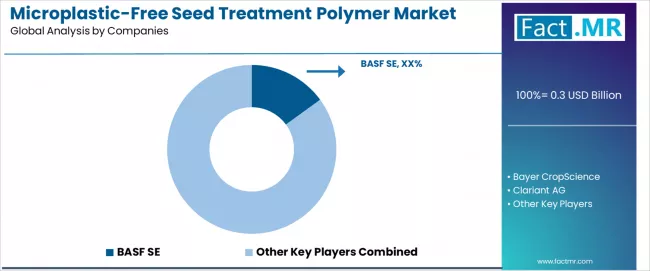
Microplastic Free Seed Treatment Polymer Market Analysis By Company

Global specialty chemical companies with deep expertise in polymer science and major agrochemical firms with integrated seed treatment businesses contest the landscape. Companies like BASF SE, Clariant AG, Croda International, and Solvay SA compete based on their portfolios of certified biodegradable and bio-based polymer chemistries, offering tailored solutions for different seed types and functional needs.

Agrochemical leaders like Bayer CropScience compete from a position of vertical integration, developing proprietary microplastic-free polymer systems optimized for their seed treatment products and application technologies. Competition centers on securing third-party biodegradability certifications, providing robust technical performance data to seed companies, and achieving cost structures that enable broad adoption across high-volume and high-value seed segments.

Key Players in the Microplastic-Free Seed Treatment Polymer Market

  • BASF SE
  • Bayer CropScience
  • Clariant AG
  • Croda International
  • Solvay SA

Scope of Report

Items Values
Quantitative Units USD Billion
Polymer Type Biodegradable Natural Polymers, Bio-based Synthetic Polymers, Starch & Cellulose Derivatives, Protein-based Polymers, Others
Seed Type Cereals & Grains, Oilseeds & Pulses, Vegetables, Forage & Specialty Seeds, Others
Functional Role Film Coating & Binding, Active Ingredient Delivery, Dust Reduction & Flowability, Moisture Regulation, Others
Key Countries USA, India, Germany, France, China
Key Companies BASF SE, Bayer CropScience, Clariant AG, Croda International, Solvay SA
Additional Analysis Analysis of biodegradation certification standards (e.g., OECD, EN), regulatory timeline impact analysis, performance benchmarking against conventional polymers, and life-cycle assessment models.

Microplastic-Free Seed Treatment Polymer Market by Segments

  • Polymer Type :

    • Biodegradable Natural Polymers
    • Bio-based Synthetic Polymers
    • Starch & Cellulose Derivatives
    • Protein-based Polymers
    • Others
  • Seed Type :

    • Cereals & Grains
    • Oilseeds & Pulses
    • Vegetables
    • Forage & Specialty Seeds
    • Others
  • Functional Role :

    • Film Coating & Binding
    • Active Ingredient Delivery
    • Dust Reduction & Flowability
    • Moisture Regulation
    • Others
  • Region :

    • North America

      • USA
      • Canada
    • Latin America

      • Brazil
      • Mexico
      • Argentina
      • Rest of Latin America
    • Western Europe

      • Germany
      • UK
      • France
      • Spain
      • Italy
      • BENELUX
      • Rest of Western Europe
    • Eastern Europe

      • Czech Republic
      • Poland
      • Russia
      • Rest of Eastern Europe
    • East Asia

      • China
      • Japan
      • South Korea
      • Rest of East Asia
    • South Asia & Pacific

      • India
      • Indonesia
      • Australia
      • Rest of South Asia & Pacific
    • MEA

      • GCC Countries
      • Turkiye
      • Saudi Arabia
      • Rest of MEA

Table of Content

  1. Executive Summary
    • Global Market Outlook
    • Demand to side Trends
    • Supply to side Trends
    • Technology Roadmap Analysis
    • Analysis and Recommendations
  2. Market Overview
    • Market Coverage / Taxonomy
    • Market Definition / Scope / Limitations
  3. Market Background
    • Market Dynamics
      • Drivers
      • Restraints
      • Opportunity
      • Trends
    • Scenario Forecast
      • Demand in Optimistic Scenario
      • Demand in Likely Scenario
      • Demand in Conservative Scenario
    • Opportunity Map Analysis
    • Product Life Cycle Analysis
    • Supply Chain Analysis
    • Investment Feasibility Matrix
    • Value Chain Analysis
    • PESTLE and Porter’s Analysis
    • Regulatory Landscape
    • Regional Parent Market Outlook
    • Production and Consumption Statistics
    • Import and Export Statistics
  4. Global Market Analysis 2021 to 2025 and Forecast, 2026 to 2036
    • Historical Market Size Value (USD Million) Analysis, 2021 to 2025
    • Current and Future Market Size Value (USD Million) Projections, 2026 to 2036
      • Y to o to Y Growth Trend Analysis
      • Absolute $ Opportunity Analysis
  5. Global Market Pricing Analysis 2021 to 2025 and Forecast 2026 to 2036
  6. Global Market Analysis 2021 to 2025 and Forecast 2026 to 2036, By Polymer Type
    • Introduction / Key Findings
    • Historical Market Size Value (USD Million) Analysis By Polymer Type, 2021 to 2025
    • Current and Future Market Size Value (USD Million) Analysis and Forecast By Polymer Type, 2026 to 2036
      • Biodegradable Natural Polymers
      • Bio-based Synthetic Polymers
      • Starch & Cellulose Derivatives
      • Protein-based Polymers
      • Others
    • Y to o to Y Growth Trend Analysis By Polymer Type, 2021 to 2025
    • Absolute $ Opportunity Analysis By Polymer Type, 2026 to 2036
  7. Global Market Analysis 2021 to 2025 and Forecast 2026 to 2036, By Seed Type
    • Introduction / Key Findings
    • Historical Market Size Value (USD Million) Analysis By Seed Type, 2021 to 2025
    • Current and Future Market Size Value (USD Million) Analysis and Forecast By Seed Type, 2026 to 2036
      • Cereals & Grains
      • Oilseeds & Pulses
      • Vegetables
      • Forage & Specialty Seeds
    • Y to o to Y Growth Trend Analysis By Seed Type, 2021 to 2025
    • Absolute $ Opportunity Analysis By Seed Type, 2026 to 2036
  8. Global Market Analysis 2021 to 2025 and Forecast 2026 to 2036, By Functional Role
    • Introduction / Key Findings
    • Historical Market Size Value (USD Million) Analysis By Functional Role, 2021 to 2025
    • Current and Future Market Size Value (USD Million) Analysis and Forecast By Functional Role, 2026 to 2036
      • Film Coating & Binding
      • Active Ingredient Delivery
      • Dust Reduction & Flowability
      • Moisture Regulation
    • Y to o to Y Growth Trend Analysis By Functional Role, 2021 to 2025
    • Absolute $ Opportunity Analysis By Functional Role, 2026 to 2036
  9. Global Market Analysis 2021 to 2025 and Forecast 2026 to 2036, By Region
    • Introduction
    • Historical Market Size Value (USD Million) Analysis By Region, 2021 to 2025
    • Current Market Size Value (USD Million) Analysis and Forecast By Region, 2026 to 2036
      • North America
      • Latin America
      • Western Europe
      • Eastern Europe
      • East Asia
      • South Asia and Pacific
      • Middle East & Africa
    • Market Attractiveness Analysis By Region
  10. North America Market Analysis 2021 to 2025 and Forecast 2026 to 2036, By Country
    • Historical Market Size Value (USD Million) Trend Analysis By Market Taxonomy, 2021 to 2025
    • Market Size Value (USD Million) Forecast By Market Taxonomy, 2026 to 2036
      • By Country
        • USA
        • Canada
        • Mexico
      • By Polymer Type
      • By Seed Type
      • By Functional Role
    • Market Attractiveness Analysis
      • By Country
      • By Polymer Type
      • By Seed Type
      • By Functional Role
    • Key Takeaways
  11. Latin America Market Analysis 2021 to 2025 and Forecast 2026 to 2036, By Country
    • Historical Market Size Value (USD Million) Trend Analysis By Market Taxonomy, 2021 to 2025
    • Market Size Value (USD Million) Forecast By Market Taxonomy, 2026 to 2036
      • By Country
        • Brazil
        • Chile
        • Rest of Latin America
      • By Polymer Type
      • By Seed Type
      • By Functional Role
    • Market Attractiveness Analysis
      • By Country
      • By Polymer Type
      • By Seed Type
      • By Functional Role
    • Key Takeaways
  12. Western Europe Market Analysis 2021 to 2025 and Forecast 2026 to 2036, By Country
    • Historical Market Size Value (USD Million) Trend Analysis By Market Taxonomy, 2021 to 2025
    • Market Size Value (USD Million) Forecast By Market Taxonomy, 2026 to 2036
      • By Country
        • Germany
        • UK
        • Italy
        • Spain
        • France
        • Nordic
        • BENELUX
        • Rest of Western Europe
      • By Polymer Type
      • By Seed Type
      • By Functional Role
    • Market Attractiveness Analysis
      • By Country
      • By Polymer Type
      • By Seed Type
      • By Functional Role
    • Key Takeaways
  13. Eastern Europe Market Analysis 2021 to 2025 and Forecast 2026 to 2036, By Country
    • Historical Market Size Value (USD Million) Trend Analysis By Market Taxonomy, 2021 to 2025
    • Market Size Value (USD Million) Forecast By Market Taxonomy, 2026 to 2036
      • By Country
        • Russia
        • Poland
        • Hungary
        • Balkan & Baltic
        • Rest of Eastern Europe
      • By Polymer Type
      • By Seed Type
      • By Functional Role
    • Market Attractiveness Analysis
      • By Country
      • By Polymer Type
      • By Seed Type
      • By Functional Role
    • Key Takeaways
  14. East Asia Market Analysis 2021 to 2025 and Forecast 2026 to 2036, By Country
    • Historical Market Size Value (USD Million) Trend Analysis By Market Taxonomy, 2021 to 2025
    • Market Size Value (USD Million) Forecast By Market Taxonomy, 2026 to 2036
      • By Country
        • China
        • Japan
        • South Korea
      • By Polymer Type
      • By Seed Type
      • By Functional Role
    • Market Attractiveness Analysis
      • By Country
      • By Polymer Type
      • By Seed Type
      • By Functional Role
    • Key Takeaways
  15. South Asia and Pacific Market Analysis 2021 to 2025 and Forecast 2026 to 2036, By Country
    • Historical Market Size Value (USD Million) Trend Analysis By Market Taxonomy, 2021 to 2025
    • Market Size Value (USD Million) Forecast By Market Taxonomy, 2026 to 2036
      • By Country
        • India
        • ASEAN
        • Australia & New Zealand
        • Rest of South Asia and Pacific
      • By Polymer Type
      • By Seed Type
      • By Functional Role
    • Market Attractiveness Analysis
      • By Country
      • By Polymer Type
      • By Seed Type
      • By Functional Role
    • Key Takeaways
  16. Middle East & Africa Market Analysis 2021 to 2025 and Forecast 2026 to 2036, By Country
    • Historical Market Size Value (USD Million) Trend Analysis By Market Taxonomy, 2021 to 2025
    • Market Size Value (USD Million) Forecast By Market Taxonomy, 2026 to 2036
      • By Country
        • Kingdom of Saudi Arabia
        • Other GCC Countries
        • Turkiye
        • South Africa
        • Other African Union
        • Rest of Middle East & Africa
      • By Polymer Type
      • By Seed Type
      • By Functional Role
    • Market Attractiveness Analysis
      • By Country
      • By Polymer Type
      • By Seed Type
      • By Functional Role
    • Key Takeaways
  17. Key Countries Market Analysis
    • USA
      • Pricing Analysis
      • Market Share Analysis, 2025
        • By Polymer Type
        • By Seed Type
        • By Functional Role
    • Canada
      • Pricing Analysis
      • Market Share Analysis, 2025
        • By Polymer Type
        • By Seed Type
        • By Functional Role
    • Mexico
      • Pricing Analysis
      • Market Share Analysis, 2025
        • By Polymer Type
        • By Seed Type
        • By Functional Role
    • Brazil
      • Pricing Analysis
      • Market Share Analysis, 2025
        • By Polymer Type
        • By Seed Type
        • By Functional Role
    • Chile
      • Pricing Analysis
      • Market Share Analysis, 2025
        • By Polymer Type
        • By Seed Type
        • By Functional Role
    • Germany
      • Pricing Analysis
      • Market Share Analysis, 2025
        • By Polymer Type
        • By Seed Type
        • By Functional Role
    • UK
      • Pricing Analysis
      • Market Share Analysis, 2025
        • By Polymer Type
        • By Seed Type
        • By Functional Role
    • Italy
      • Pricing Analysis
      • Market Share Analysis, 2025
        • By Polymer Type
        • By Seed Type
        • By Functional Role
    • Spain
      • Pricing Analysis
      • Market Share Analysis, 2025
        • By Polymer Type
        • By Seed Type
        • By Functional Role
    • France
      • Pricing Analysis
      • Market Share Analysis, 2025
        • By Polymer Type
        • By Seed Type
        • By Functional Role
    • India
      • Pricing Analysis
      • Market Share Analysis, 2025
        • By Polymer Type
        • By Seed Type
        • By Functional Role
    • ASEAN
      • Pricing Analysis
      • Market Share Analysis, 2025
        • By Polymer Type
        • By Seed Type
        • By Functional Role
    • Australia & New Zealand
      • Pricing Analysis
      • Market Share Analysis, 2025
        • By Polymer Type
        • By Seed Type
        • By Functional Role
    • China
      • Pricing Analysis
      • Market Share Analysis, 2025
        • By Polymer Type
        • By Seed Type
        • By Functional Role
    • Japan
      • Pricing Analysis
      • Market Share Analysis, 2025
        • By Polymer Type
        • By Seed Type
        • By Functional Role
    • South Korea
      • Pricing Analysis
      • Market Share Analysis, 2025
        • By Polymer Type
        • By Seed Type
        • By Functional Role
    • Russia
      • Pricing Analysis
      • Market Share Analysis, 2025
        • By Polymer Type
        • By Seed Type
        • By Functional Role
    • Poland
      • Pricing Analysis
      • Market Share Analysis, 2025
        • By Polymer Type
        • By Seed Type
        • By Functional Role
    • Hungary
      • Pricing Analysis
      • Market Share Analysis, 2025
        • By Polymer Type
        • By Seed Type
        • By Functional Role
    • Kingdom of Saudi Arabia
      • Pricing Analysis
      • Market Share Analysis, 2025
        • By Polymer Type
        • By Seed Type
        • By Functional Role
    • Turkiye
      • Pricing Analysis
      • Market Share Analysis, 2025
        • By Polymer Type
        • By Seed Type
        • By Functional Role
    • South Africa
      • Pricing Analysis
      • Market Share Analysis, 2025
        • By Polymer Type
        • By Seed Type
        • By Functional Role
  18. Market Structure Analysis
    • Competition Dashboard
    • Competition Benchmarking
    • Market Share Analysis of Top Players
      • By Regional
      • By Polymer Type
      • By Seed Type
      • By Functional Role
  19. Competition Analysis
    • Competition Deep Dive
      • BASF SE
        • Overview
        • Product Portfolio
        • Profitability by Market Segments (Product/Age /Sales Channel/Region)
        • Sales Footprint
        • Strategy Overview
          • Marketing Strategy
          • Product Strategy
          • Channel Strategy
      • Bayer CropScience
      • Clariant AG
      • Croda International
      • Solvay SA
  20. Assumptions & Acronyms Used
  21. Research Methodology

List Of Table

  • Table 1: Global Market Value (USD Million) Forecast by Region, 2021 to 2036
  • Table 2: Global Market Value (USD Million) Forecast by Polymer Type, 2021 to 2036
  • Table 3: Global Market Value (USD Million) Forecast by Seed Type, 2021 to 2036
  • Table 4: Global Market Value (USD Million) Forecast by Functional Role, 2021 to 2036
  • Table 5: North America Market Value (USD Million) Forecast by Country, 2021 to 2036
  • Table 6: North America Market Value (USD Million) Forecast by Polymer Type, 2021 to 2036
  • Table 7: North America Market Value (USD Million) Forecast by Seed Type, 2021 to 2036
  • Table 8: North America Market Value (USD Million) Forecast by Functional Role, 2021 to 2036
  • Table 9: Latin America Market Value (USD Million) Forecast by Country, 2021 to 2036
  • Table 10: Latin America Market Value (USD Million) Forecast by Polymer Type, 2021 to 2036
  • Table 11: Latin America Market Value (USD Million) Forecast by Seed Type, 2021 to 2036
  • Table 12: Latin America Market Value (USD Million) Forecast by Functional Role, 2021 to 2036
  • Table 13: Western Europe Market Value (USD Million) Forecast by Country, 2021 to 2036
  • Table 14: Western Europe Market Value (USD Million) Forecast by Polymer Type, 2021 to 2036
  • Table 15: Western Europe Market Value (USD Million) Forecast by Seed Type, 2021 to 2036
  • Table 16: Western Europe Market Value (USD Million) Forecast by Functional Role, 2021 to 2036
  • Table 17: Eastern Europe Market Value (USD Million) Forecast by Country, 2021 to 2036
  • Table 18: Eastern Europe Market Value (USD Million) Forecast by Polymer Type, 2021 to 2036
  • Table 19: Eastern Europe Market Value (USD Million) Forecast by Seed Type, 2021 to 2036
  • Table 20: Eastern Europe Market Value (USD Million) Forecast by Functional Role, 2021 to 2036
  • Table 21: East Asia Market Value (USD Million) Forecast by Country, 2021 to 2036
  • Table 22: East Asia Market Value (USD Million) Forecast by Polymer Type, 2021 to 2036
  • Table 23: East Asia Market Value (USD Million) Forecast by Seed Type, 2021 to 2036
  • Table 24: East Asia Market Value (USD Million) Forecast by Functional Role, 2021 to 2036
  • Table 25: South Asia and Pacific Market Value (USD Million) Forecast by Country, 2021 to 2036
  • Table 26: South Asia and Pacific Market Value (USD Million) Forecast by Polymer Type, 2021 to 2036
  • Table 27: South Asia and Pacific Market Value (USD Million) Forecast by Seed Type, 2021 to 2036
  • Table 28: South Asia and Pacific Market Value (USD Million) Forecast by Functional Role, 2021 to 2036
  • Table 29: Middle East & Africa Market Value (USD Million) Forecast by Country, 2021 to 2036
  • Table 30: Middle East & Africa Market Value (USD Million) Forecast by Polymer Type, 2021 to 2036
  • Table 31: Middle East & Africa Market Value (USD Million) Forecast by Seed Type, 2021 to 2036
  • Table 32: Middle East & Africa Market Value (USD Million) Forecast by Functional Role, 2021 to 2036

List Of Figures

  • Figure 1: Global Market Pricing Analysis
  • Figure 2: Global Market Value (USD Million) Forecast 2021 to 2036
  • Figure 3: Global Market Value Share and BPS Analysis by Polymer Type, 2026 and 2036
  • Figure 4: Global Market Y to o to Y Growth Comparison by Polymer Type, 2026 to 2036
  • Figure 5: Global Market Attractiveness Analysis by Polymer Type
  • Figure 6: Global Market Value Share and BPS Analysis by Seed Type, 2026 and 2036
  • Figure 7: Global Market Y to o to Y Growth Comparison by Seed Type, 2026 to 2036
  • Figure 8: Global Market Attractiveness Analysis by Seed Type
  • Figure 9: Global Market Value Share and BPS Analysis by Functional Role, 2026 and 2036
  • Figure 10: Global Market Y to o to Y Growth Comparison by Functional Role, 2026 to 2036
  • Figure 11: Global Market Attractiveness Analysis by Functional Role
  • Figure 12: Global Market Value (USD Million) Share and BPS Analysis by Region, 2026 and 2036
  • Figure 13: Global Market Y to o to Y Growth Comparison by Region, 2026 to 2036
  • Figure 14: Global Market Attractiveness Analysis by Region
  • Figure 15: North America Market Incremental Dollar Opportunity, 2026 to 2036
  • Figure 16: Latin America Market Incremental Dollar Opportunity, 2026 to 2036
  • Figure 17: Western Europe Market Incremental Dollar Opportunity, 2026 to 2036
  • Figure 18: Eastern Europe Market Incremental Dollar Opportunity, 2026 to 2036
  • Figure 19: East Asia Market Incremental Dollar Opportunity, 2026 to 2036
  • Figure 20: South Asia and Pacific Market Incremental Dollar Opportunity, 2026 to 2036
  • Figure 21: Middle East & Africa Market Incremental Dollar Opportunity, 2026 to 2036
  • Figure 22: North America Market Value Share and BPS Analysis by Country, 2026 and 2036
  • Figure 23: North America Market Value Share and BPS Analysis by Polymer Type, 2026 and 2036
  • Figure 24: North America Market Y to o to Y Growth Comparison by Polymer Type, 2026 to 2036
  • Figure 25: North America Market Attractiveness Analysis by Polymer Type
  • Figure 26: North America Market Value Share and BPS Analysis by Seed Type, 2026 and 2036
  • Figure 27: North America Market Y to o to Y Growth Comparison by Seed Type, 2026 to 2036
  • Figure 28: North America Market Attractiveness Analysis by Seed Type
  • Figure 29: North America Market Value Share and BPS Analysis by Functional Role, 2026 and 2036
  • Figure 30: North America Market Y to o to Y Growth Comparison by Functional Role, 2026 to 2036
  • Figure 31: North America Market Attractiveness Analysis by Functional Role
  • Figure 32: Latin America Market Value Share and BPS Analysis by Country, 2026 and 2036
  • Figure 33: Latin America Market Value Share and BPS Analysis by Polymer Type, 2026 and 2036
  • Figure 34: Latin America Market Y to o to Y Growth Comparison by Polymer Type, 2026 to 2036
  • Figure 35: Latin America Market Attractiveness Analysis by Polymer Type
  • Figure 36: Latin America Market Value Share and BPS Analysis by Seed Type, 2026 and 2036
  • Figure 37: Latin America Market Y to o to Y Growth Comparison by Seed Type, 2026 to 2036
  • Figure 38: Latin America Market Attractiveness Analysis by Seed Type
  • Figure 39: Latin America Market Value Share and BPS Analysis by Functional Role, 2026 and 2036
  • Figure 40: Latin America Market Y to o to Y Growth Comparison by Functional Role, 2026 to 2036
  • Figure 41: Latin America Market Attractiveness Analysis by Functional Role
  • Figure 42: Western Europe Market Value Share and BPS Analysis by Country, 2026 and 2036
  • Figure 43: Western Europe Market Value Share and BPS Analysis by Polymer Type, 2026 and 2036
  • Figure 44: Western Europe Market Y to o to Y Growth Comparison by Polymer Type, 2026 to 2036
  • Figure 45: Western Europe Market Attractiveness Analysis by Polymer Type
  • Figure 46: Western Europe Market Value Share and BPS Analysis by Seed Type, 2026 and 2036
  • Figure 47: Western Europe Market Y to o to Y Growth Comparison by Seed Type, 2026 to 2036
  • Figure 48: Western Europe Market Attractiveness Analysis by Seed Type
  • Figure 49: Western Europe Market Value Share and BPS Analysis by Functional Role, 2026 and 2036
  • Figure 50: Western Europe Market Y to o to Y Growth Comparison by Functional Role, 2026 to 2036
  • Figure 51: Western Europe Market Attractiveness Analysis by Functional Role
  • Figure 52: Eastern Europe Market Value Share and BPS Analysis by Country, 2026 and 2036
  • Figure 53: Eastern Europe Market Value Share and BPS Analysis by Polymer Type, 2026 and 2036
  • Figure 54: Eastern Europe Market Y to o to Y Growth Comparison by Polymer Type, 2026 to 2036
  • Figure 55: Eastern Europe Market Attractiveness Analysis by Polymer Type
  • Figure 56: Eastern Europe Market Value Share and BPS Analysis by Seed Type, 2026 and 2036
  • Figure 57: Eastern Europe Market Y to o to Y Growth Comparison by Seed Type, 2026 to 2036
  • Figure 58: Eastern Europe Market Attractiveness Analysis by Seed Type
  • Figure 59: Eastern Europe Market Value Share and BPS Analysis by Functional Role, 2026 and 2036
  • Figure 60: Eastern Europe Market Y to o to Y Growth Comparison by Functional Role, 2026 to 2036
  • Figure 61: Eastern Europe Market Attractiveness Analysis by Functional Role
  • Figure 62: East Asia Market Value Share and BPS Analysis by Country, 2026 and 2036
  • Figure 63: East Asia Market Value Share and BPS Analysis by Polymer Type, 2026 and 2036
  • Figure 64: East Asia Market Y to o to Y Growth Comparison by Polymer Type, 2026 to 2036
  • Figure 65: East Asia Market Attractiveness Analysis by Polymer Type
  • Figure 66: East Asia Market Value Share and BPS Analysis by Seed Type, 2026 and 2036
  • Figure 67: East Asia Market Y to o to Y Growth Comparison by Seed Type, 2026 to 2036
  • Figure 68: East Asia Market Attractiveness Analysis by Seed Type
  • Figure 69: East Asia Market Value Share and BPS Analysis by Functional Role, 2026 and 2036
  • Figure 70: East Asia Market Y to o to Y Growth Comparison by Functional Role, 2026 to 2036
  • Figure 71: East Asia Market Attractiveness Analysis by Functional Role
  • Figure 72: South Asia and Pacific Market Value Share and BPS Analysis by Country, 2026 and 2036
  • Figure 73: South Asia and Pacific Market Value Share and BPS Analysis by Polymer Type, 2026 and 2036
  • Figure 74: South Asia and Pacific Market Y to o to Y Growth Comparison by Polymer Type, 2026 to 2036
  • Figure 75: South Asia and Pacific Market Attractiveness Analysis by Polymer Type
  • Figure 76: South Asia and Pacific Market Value Share and BPS Analysis by Seed Type, 2026 and 2036
  • Figure 77: South Asia and Pacific Market Y to o to Y Growth Comparison by Seed Type, 2026 to 2036
  • Figure 78: South Asia and Pacific Market Attractiveness Analysis by Seed Type
  • Figure 79: South Asia and Pacific Market Value Share and BPS Analysis by Functional Role, 2026 and 2036
  • Figure 80: South Asia and Pacific Market Y to o to Y Growth Comparison by Functional Role, 2026 to 2036
  • Figure 81: South Asia and Pacific Market Attractiveness Analysis by Functional Role
  • Figure 82: Middle East & Africa Market Value Share and BPS Analysis by Country, 2026 and 2036
  • Figure 83: Middle East & Africa Market Value Share and BPS Analysis by Polymer Type, 2026 and 2036
  • Figure 84: Middle East & Africa Market Y to o to Y Growth Comparison by Polymer Type, 2026 to 2036
  • Figure 85: Middle East & Africa Market Attractiveness Analysis by Polymer Type
  • Figure 86: Middle East & Africa Market Value Share and BPS Analysis by Seed Type, 2026 and 2036
  • Figure 87: Middle East & Africa Market Y to o to Y Growth Comparison by Seed Type, 2026 to 2036
  • Figure 88: Middle East & Africa Market Attractiveness Analysis by Seed Type
  • Figure 89: Middle East & Africa Market Value Share and BPS Analysis by Functional Role, 2026 and 2036
  • Figure 90: Middle East & Africa Market Y to o to Y Growth Comparison by Functional Role, 2026 to 2036
  • Figure 91: Middle East & Africa Market Attractiveness Analysis by Functional Role
  • Figure 92: Global Market - Tier Structure Analysis
  • Figure 93: Global Market - Company Share Analysis

- FAQs -

How big is the microplastic-free seed treatment polymer market in 2026?

The global microplastic-free seed treatment polymer market is estimated to be valued at USD 0.3 billion in 2026.

What will be the size of microplastic-free seed treatment polymer market in 2036?

The market size for the microplastic-free seed treatment polymer market is projected to reach USD 1.0 billion by 2036.

How much will be the microplastic-free seed treatment polymer market growth between 2026 and 2036?

The microplastic-free seed treatment polymer market is expected to grow at a 14.1% CAGR between 2026 and 2036.

What are the key product types in the microplastic-free seed treatment polymer market?

The key product types in microplastic-free seed treatment polymer market are biodegradable natural polymers, bio-based synthetic polymers, starch & cellulose derivatives, protein-based polymers and others.

Which seed type segment to contribute significant share in the microplastic-free seed treatment polymer market in 2026?

In terms of seed type, cereals & grains segment to command 42.0% share in the microplastic-free seed treatment polymer market in 2026.

Microplastic-Free Seed Treatment Polymer Market