- Base Value(2025): 17.1 Bn
- Estimated Value(2026): 18.5 Bn
- Forecast Value (2036): 41.5 Bn
- CAGR (2026 - 2036): 8.4%
Molecular Diagnostic Market Forecast 2026 to 2036
In 2025, the molecular diagnostic market was valued at USD 17.1 billion. Fact MR analysis, demand for molecular diagnostics is estimated to grow to USD 18.5 billion in 2026 and USD 41.5 billion by 2036. FMR projects a CAGR of 8.4% during the forecast period.
The absolute dollar growth from 2026 to 2036 is USD 23 billion. This growth is driven by the increasing adoption of molecular diagnostic techniques for the early detection and management of diseases such as cancer, infectious diseases, and genetic disorders. Technological advancements in diagnostic methods, along with the increasing demand for personalized medicine and precision diagnostics, are further supporting market expansion. However, challenges such as high costs, regulatory barriers, and limited access to advanced diagnostic technologies in certain regions could impact growth.
As Brian J. Blaser, President and Chief Executive Officer of QuidelOrtho, noted regarding strategic growth and point‑of‑care molecular testing, ‘Our intended acquisition of LEX Diagnostics will strengthen and accelerate our presence in point‑of‑care molecular diagnostics-one of the largest and fastest‑growing segments in the diagnostics industry.’
India leads with a CAGR of 5.9%, supported by a growing healthcare infrastructure and increased awareness of molecular diagnostics. Thailand follows with 4.7%, driven by improvements in healthcare access and diagnostic capabilities. France shows growth at 4.3%, benefiting from advancements in personalized medicine and healthcare technologies. Malaysia also grows at 4.3%, with increasing adoption of advanced diagnostic tools in healthcare. Indonesia shows growth at 3.9%, reflecting steady improvements in healthcare access and diagnostic infrastructure across the region.
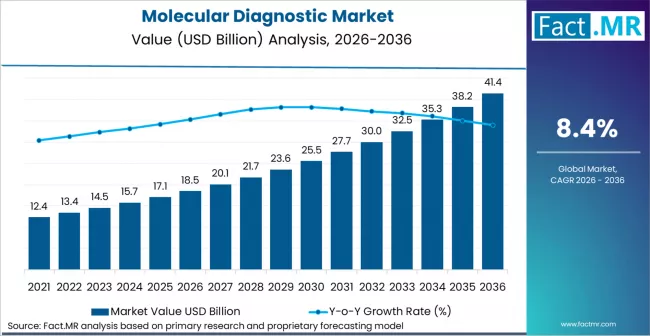
Molecular Diagnostic Market Market Value Analysis | Source: Fact.MR
Molecular Diagnostic Market
| Metric | Value |
|---|---|
| Estimated Value in (2026E) | USD 18.5 billion |
| Forecast Value in (2036F) | USD 41.5 billion |
| Forecast CAGR (2026 to 2036) | 8.4% |
Source: Fact.MR analysis. Updated Mar 6, 2026
Molecular Diagnostic Market Definition
The Molecular Diagnostic Market involves the development, manufacture, and sale of laboratory tests and technologies that detect specific genetic material (DNA, RNA) or biomarkers to diagnose diseases, monitor treatment response, and guide precision medicine decisions.
Market Inclusions
This report covers global and regional market sizes for molecular diagnostics over a defined forecast period, including technology types (PCR, next‑generation sequencing, isothermal amplification), application areas (infectious diseases, oncology, genetic disorders), and end users (hospitals, clinical labs, reference laboratories).
Market Exclusions
The scope excludes imaging diagnostics (MRI, CT, X‑ray), conventional in‑vitro diagnostics not based on molecular techniques, and unrelated point‑of‑care devices without genetic or molecular target analysis.
Research Methodology
- Primary Research: Interviews were conducted with molecular diagnostics developers, clinical laboratorians, and healthcare procurement specialists.
- Desk Research: Data was sourced from clinical publications, regulatory filings, and industry reports.
- Market‑Sizing and Forecasting: A hybrid model combining top‑down healthcare diagnostics demand with bottom‑up test adoption and revenue data was used.
- Data Validation and Update Cycle: Findings were validated through expert review and aligned with recent production, test utilization, and trade figures.
Summary of the Molecular Diagnostic Market
- Market Definition
- The Molecular Diagnostic Market involves the development, manufacture, and sale of laboratory tests and technologies that detect specific genetic material (DNA, RNA) or biomarkers. These tools are used to diagnose diseases, monitor treatment response, and guide precision medicine decisions.
- Demand Drivers
- Increasing Adoption of Precision Medicine: The rise of personalized healthcare, where treatments are tailored to individual genetic profiles, is significantly driving the demand for molecular diagnostics.
- Rising Incidence of Infectious Diseases and Cancer: As the global burden of infectious diseases and cancer continues to grow, there is an increasing need for early detection, monitoring, and management of these conditions through molecular diagnostics.
- Technological Advancements: Innovations in technologies such as PCR and NGS (Next-Generation Sequencing) have made molecular diagnostics more accurate, faster, and accessible, further boosting their demand.
- Key Segments Analyzed
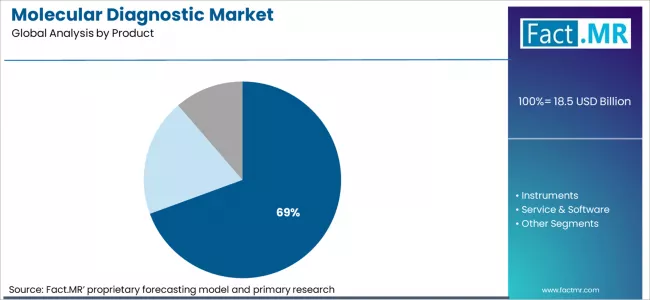
- Product: Reagents & kits dominate, projected to capture 69.4% of the market share by 2026, driving the growth due to their widespread use in diagnostic tests.
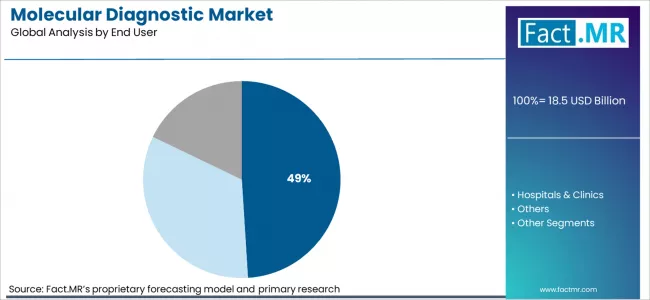
- End-User Sector: Diagnostic laboratories are expected to account for 49% of the market share by 2026, as they are the primary users of molecular diagnostic products for various testing applications.
- Geography: India leads with a CAGR of 5.9%, driven by improvements in healthcare infrastructure and increasing awareness of molecular diagnostics.
- Analyst Opinion at Fact MR
- Shambhu Nath Jha, Principal Consultant at Fact MR, highlighted, "The growing focus on early detection and the shift towards precision medicine globally are accelerating the adoption of molecular diagnostics, particularly in the oncology and infectious disease segments."
- Strategic Implications/Executive Takeaways
- Focus on Technological Integration: Companies should focus on advancing PCR and NGS technologies to stay ahead of the competition, as these technologies are critical for accurate diagnostics and personalized medicine.
- Invest in Emerging Markets: Expanding in regions like India and Southeast Asia, where healthcare infrastructure is rapidly improving, will be vital for capturing market share.
- Collaborate with Healthcare Providers: Strong partnerships with hospitals, diagnostic labs, and healthcare systems will drive market growth and help integrate molecular diagnostic tools into routine clinical practice.
- Methodology
- Primary Research: Interviews with molecular diagnostics developers, healthcare specialists, and procurement professionals.
- Desk Research: Data sourced from clinical publications, regulatory filings, and industry reports.
- Market Sizing & Forecasting: A hybrid approach combining top-down healthcare diagnostics demand with bottom-up test adoption and revenue data.
Segmental Analysis
Molecular Diagnostic Market Analysis by Product
Molecular Diagnostic Market Analysis By Product | Source: Fact.MR
- Market Overview: Reagents & kits are expected to capture 69.4% of the market share by 2026. Reagents and kits are essential components of molecular diagnostic testing, providing the necessary substances and tools for detecting specific genetic, microbial, or other biomarkers in patient samples. These products are widely used in clinical and research laboratories.
- Demand Drivers:
- Increased Demand for Accurate Diagnostics: The growing need for precise and early diagnosis of diseases such as cancer, infectious diseases, and genetic disorders is driving the demand for molecular diagnostic reagents and kits.
- Advancements in Diagnostic Technology: Continuous advancements in molecular biology techniques, such as PCR and NGS, are fueling the demand for high-quality reagents and kits that enable more accurate and rapid test results.
- Widespread Use in Personalized Medicine: The increasing trend toward personalized medicine, which requires specific molecular tests, further contributes to the strong demand for reagents and kits in the market.
Molecular Diagnostic Market Analysis by End User
Molecular Diagnostic Market Analysis By End User | Source: Fact.MR
- Market Overview: Diagnostic laboratories are projected to account for 49% of the market share by 2026. Diagnostic laboratories are the primary end-users of molecular diagnostic products, utilizing these tools for various diagnostic applications, including disease detection, genetic testing, and pathogen identification.
- Demand Drivers:
- Rising Demand for Early Detection of Diseases: The growing emphasis on early detection of diseases such as cancer, infectious diseases, and genetic disorders drives the need for molecular diagnostic tests in laboratories.
- Technological Advancements in Lab Testing: The increasing adoption of advanced diagnostic tools and automation in diagnostic laboratories is boosting the demand for molecular diagnostics.
- Increased Healthcare Expenditure: As healthcare systems globally invest in more advanced diagnostic infrastructure, diagnostic laboratories are seeing a rise in demand for molecular diagnostic tests to improve diagnostic accuracy and patient outcomes.
Molecular Diagnostic Market Drivers, Restraints, and Opportunities
FMR analysts observe that the molecular diagnostic market is a growth‑aligned clinical testing segment driven by rising incidence of infectious and genetic diseases, personalized medicine trends, and growing demand for rapid, accurate diagnostics. Historically, culture and serology were foundational; as PCR, next‑generation sequencing, and point‑of‑care molecular tests matured, structural demand emerged for tools that deliver faster results and higher specificity. The 2026 valuation reflects adoption across hospitals, reference labs, and decentralized care settings where actionable molecular data improves patient management.
While basic immunoassays remain prevalent in cost‑sensitive settings, advanced molecular platforms that detect multiple targets, quantify viral load, or support oncology panels are gaining share. These higher‑value technologies command premium pricing, contributing to net market value growth even as test volumes expand with screening and surveillance programs. The market exists because clinical guidelines increasingly integrate molecular testing for diagnosis, treatment selection, and disease monitoring.
- Clinical Precision Demand: Physicians and labs adopt molecular diagnostics for faster, more accurate detection of pathogens, cancer markers, and genetic variants versus conventional methods.
- Regulatory & Reimbursement Standards: Healthcare policies and guidelines that endorse molecular tests for disease management and payer coverage support broader adoption and premium pricing.
- Regional Healthcare Dynamics: In North America and Europe, advanced infrastructure and reimbursement systems drive higher uptake, while Asia‑Pacific shows rapid growth as access and lab capacity expand.
Regional Analysis
The market analysis covers key global regions, including South Asia, Southeast Asia, Western Europe, and North America. It is segmented geographically, with specific market dynamics for each region. The full report provides a detailed market attractiveness analysis.
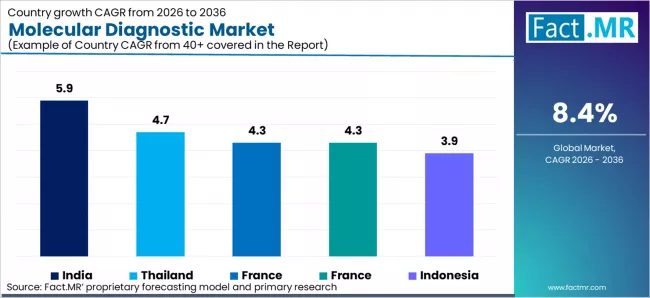
Molecular Diagnostic Market Cagr Analysis By Country | Source: Fact.MR
| Country | CAGR (2026-2036) |
|---|---|
| India | 5.9% |
| Thailand | 4.7% |
| France | 4.3% |
| Malaysia | 4.3% |
| Indonesia | 3.9% |
Source: Fact.MR analysis. Updated Mar 6, 2026
Source: Fact MR (FMR) analysis, based on proprietary forecasting model and primary research.
South Asia:
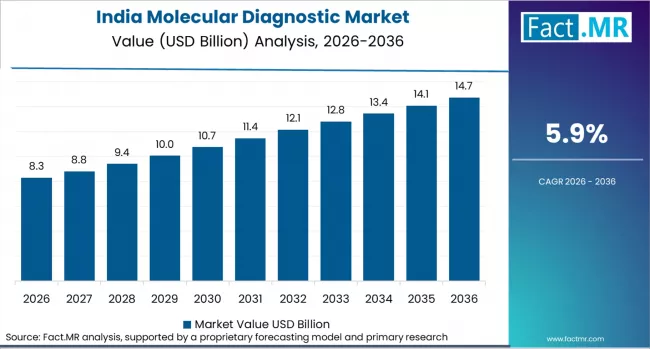
Molecular Diagnostic Market Country Value Analysis | Source: Fact.MR
In South Asia, India is a leading market for molecular diagnostics, supported by the country’s rapidly expanding healthcare infrastructure, increasing adoption of advanced diagnostic technologies, and rising demand for precise, efficient diagnostic solutions.
- India: Demand for molecular diagnostic products in India is projected to rise at 5.9% CAGR through 2036. India’s growing healthcare sector, increasing government healthcare investments, and rising adoption of advanced diagnostic technologies continue to drive market growth.
Southeast Asia:
In Southeast Asia, Thailand, Malaysia, and Indonesia are emerging markets for molecular diagnostics, driven by the increasing adoption of advanced healthcare technologies, rising demand for accurate diagnostics, and expanding healthcare infrastructure.
- Thailand: Demand for molecular diagnostics in Thailand is projected to rise at 4.7% CAGR through 2036. Thailand’s growing healthcare infrastructure, rising demand for advanced diagnostic solutions, and government initiatives to enhance healthcare access contribute to steady market growth.
- Malaysia: Demand for molecular diagnostics in Malaysia is projected to rise at 4.3% CAGR through 2036. Malaysia’s expanding healthcare sector, increased adoption of diagnostic technologies, and growing awareness about early disease detection continue to support market expansion.
- Indonesia: Demand for molecular diagnostics in Indonesia is projected to rise at 3.9% CAGR through 2036. Indonesia’s increasing healthcare investments, growing adoption of modern diagnostic solutions, and rising focus on disease prevention drive steady market growth.
Western Europe:
In Western Europe, France is a key market for molecular diagnostics, supported by its advanced healthcare infrastructure, increasing demand for early disease detection, and rising adoption of cutting-edge diagnostic technologies.
- France: Demand for molecular diagnostics in France is projected to rise at 4.3% CAGR through 2036. France’s established healthcare infrastructure, growing demand for precise diagnostic technologies, and increased government focus on healthcare innovation continue to contribute to market growth.
Fact MR's analysis of the Molecular Diagnostic Market in South Asia, Southeast Asia, Western Europe consists of country-wise assessments that include India, Thailand, France, Malaysia, and Indonesia. Readers can find detailed trends, regulatory updates, and company-specific investments shaping the market’s growth in these countries.
What is the Competitive Structure and Buyer Behavior in the Molecular Diagnostic Market?
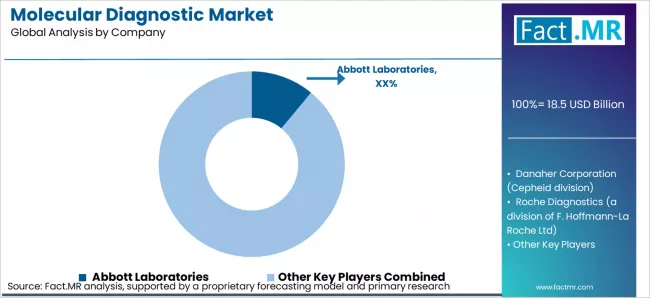
Molecular Diagnostic Market Analysis By Company | Source: Fact.MR
The molecular diagnostic market is moderately concentrated, with leading life sciences and diagnostics firms such as Abbott Laboratories, Danaher Corporation (Cepheid division), Roche Diagnostics, Siemens Healthineers AG, BD (Becton, Dickinson and Company), Agilent Technologies, Inc., and bioMérieux S.A. capturing a substantial share of global revenue. The primary competitive variables are test accuracy, throughput, speed of results, breadth of assay menus, platform interoperability, and regulatory compliance, which influence procurement by clinical laboratories, hospitals, and public health agencies. Companies with extensive R&D capabilities, broad product portfolios, and global regulatory expertise hold structural advantages because they can integrate new assays rapidly, maintain quality standards, and support customers across diverse clinical environments. Large healthcare systems and centralized lab networks exert strong buyer leverage by qualifying multiple platform suppliers, negotiating pricing and service contracts, and standardizing equipment across facilities to streamline workflows. To manage supplier dependency, these buyers diversify approved technologies and emphasize service responsiveness and long‑term maintenance support, which limits individual suppliers’ pricing power. As a result, competition focuses on delivering reliable performance, comprehensive support, and platform flexibility rather than on price alone.
Recent Industry Developments
- Oncology Acquisition & Expansion: In early 2026, Abbott received final regulatory clearance for its multi-billion dollar acquisition of Exact Sciences. This consolidation significantly expands Abbott's portfolio in cancer screening and precision oncology diagnostics, specifically integrating Exact’s market-leading DNA-based stool testing and MRD (Minimal Residual Disease) monitoring technologies.
- Rapid "Syndromic" GI Testing: In January 2026, Cepheid (a Danaher company) received FDA clearance for the Xpert® GI Panel, a rapid molecular test that detects common gastrointestinal pathogens in under an hour. This launch is a core part of Cepheid’s 2026 strategy to move into "higher-plex" markets where focused syndromic panels—rather than large, untargeted "mega-panels"—provide actionable clinical results for infection control.
- Next-Gen Lab Efficiency: Roche officially launched its next-generation cobas 6800/8800 systems 2.0 globally in early 2026. These systems feature updated software and hardware designed to fully automate molecular testing for over 40 different assays, aimed at addressing the 2026 labor shortages in clinical laboratories by reducing manual interaction and increasing hourly throughput.
Key Players of the Molecular Diagnostic Market
- Abbott Laboratories
- Danaher Corporation (Cepheid division)
- Roche Diagnostics (a division of F. Hoffmann‑La Roche Ltd)
- Siemens Healthineers AG
- BD (Becton, Dickinson and Company)
- Agilent Technologies, Inc.
- bioMérieux S.A.
Report Scope
| Metric | Value |
|---|---|
| Quantitative Units | USD 18.5 billion (2026) to USD 41.5 billion (2036), at a CAGR of 8.4% |
| Market Definition | The Molecular Diagnostic Market involves products and services used to detect and monitor diseases through molecular analysis, including reagents, kits, instruments, and related software services. |
| By Product | Reagents & Kits, Instruments, Service & Software |
| By Technology | PCR (Polymerase Chain Reaction), NGS (Next-Generation Sequencing), Others |
| By Application | Infectious Disease, Oncology, Genetic Testing, Others |
| By End User | Diagnostic Laboratories, Hospitals & Clinics, Others |
| Regions Covered | North America, Latin America, Europe, East Asia, South Asia, Oceania, Middle East and Africa |
| Countries Covered | United States, Canada, Mexico, Brazil, Argentina, Germany, France, United Kingdom, Italy, Spain, China, India, Japan, South Korea, Indonesia, Australia, and 40+ countries |
| Key Companies Profiled | Abbott Laboratories, Danaher Corporation (Cepheid division), Roche Diagnostics (a division of F. Hoffmann‑La Roche Ltd), Siemens Healthineers AG, BD (Becton, Dickinson and Company), Agilent Technologies, Inc., bioMérieux S.A. |
| Forecast Period | 2026 to 2036 |
| Approach | Hybrid top-down and bottom-up market modeling validated through primary interviews with manufacturers and supported by trade data benchmarking and market research. |
Source: Fact.MR analysis. Updated Mar 6, 2026
Bibliographies
- Smith, L. A., & Nguyen, T. H. (2023). Advances in molecular diagnostics for infectious disease detection and surveillance. Frontiers in Public Health.
- Patel, R., & Zhao, Y. (2024). Next‑generation sequencing and molecular diagnostic innovation: Impact on precision medicine. Journal of Molecular Diagnostics.
- World Health Organization. (2023). Use of molecular diagnostics in global disease control and public health laboratories: Technical and policy considerations.
- Centers for Disease Control and Prevention. (2023). Guidelines for molecular diagnostic testing of infectious diseases and antimicrobial resistance detection.
This report addresses:
- Market intelligence enabling comprehensive assessment of leading countries and product segments across the Molecular Diagnostic Market globally.
- Market volume (sales units) estimates and 10-year revenue forecasts from 2026 to 2036, validated through manufacturer shipment data, channel partner surveys, and country-level demand modeling.
- Growth opportunity mapping across product types (Reagents & Kits, Instruments, Service & Software), technologies (PCR, NGS, Others), applications (Infectious Disease, Oncology, Genetic Testing, Others), and end users (Diagnostic Laboratories, Hospitals & Clinics, Others).
- Segment and regional revenue forecasts by product type, technology, application, end user, and geography across 40+ countries.
- Competition strategy analysis covering dealer network structure, recent developments, product portfolio, USPs, and market share analysis.
- Product and regulatory compliance tracking aligned with healthcare standards, genetic testing guidelines, and industry certification requirements.
- Regulatory impact analysis addressing molecular diagnostic regulations, healthcare safety standards, and reimbursement policies across key markets.
- Report delivery in PDF, Excel, PowerPoint, and interactive dashboard formats for executive, procurement, and operational planning use.
Segmentation
Molecular Diagnostic Market Key Segments
-
Product
- Reagents & Kits
- Instruments
- Service & Software
-
Technology
- PCR (Polymerase Chain Reaction)
- NGS (Next-Generation Sequencing)
- Others
-
Application
- Infectious Disease
- Oncology
- Genetic Testing
- Others
-
End-Use Industry
- Diagnostic Laboratories
- Hospitals & Clinics
- Others
-
Region
- North America
- USA
- Canada
- Mexico
- Europe
- Germany
- UK
- France
- Italy
- Spain
- Nordic Countries
- BENELUX
- Rest of Europe
- Asia Pacific
- China
- Japan
- South Korea
- India
- Australia
- Rest of Asia Pacific
- Latin America
- Brazil
- Argentina
- Rest of Latin America
- Middle East and Africa
- Kingdom of Saudi Arabia
- United Arab Emirates
- South Africa
- Rest of Middle East and Africa
- Other Regions
- Oceania
- Central Asia
- Other Markets
- North America
Frequently Asked Questions
How large is the demand for Molecular Diagnostics in the global market in 2026?
What will be the market size of Molecular Diagnostics in the global market by 2036?
What is the expected demand growth for Molecular Diagnostics in the global market between 2026 and 2036?
Which product is expected to dominate the market?
Which region is expected to show the highest growth rate for Molecular Diagnostics?
How significant is the growth outlook for Thailand in this market?
What is the growth outlook for France in the Molecular Diagnostics market?
What is the growth forecast for Malaysia in the Molecular Diagnostics market?
What is the growth forecast for Indonesia in the Molecular Diagnostics market?
Which company is identified as a leading player in the Molecular Diagnostics market?
What are Molecular Diagnostics used for?
What does the Molecular Diagnostics market include in this report?
How is the market forecast developed in this report?
What is meant by the Molecular Diagnostics market in this report?
Who worked on this report


Preview the report firsthand - request a free sample
Free SampleGet the brochure for pricing and purchase details
Download PDF