- Base Value(2026): 7.8 Bn
- Estimated Value(2026): 7.8 Bn
- Forecast Value (2036): 15.2 Bn
- CAGR (2026 - 2036): 6.9%
Nasal Drug Delivery Technology System Market Forecast and Outlook 2026 to 2036
The global nasal drug delivery technology system market is valued at USD 7.8 billion in 2026 and is set to reach USD 15.2 billion by 2036, recording a compound annual growth rate (CAGR) of 6.9% between 2026 and 2036. In 2026, the nasal spray technology segment is projected to hold a 38.7% share, while respiratory disease applications account for 42.1% of the total demand.
Key Takeaways for Nasal Drug Delivery Technology System Market
- Nasal Drug Delivery Technology System Market Value (2026): USD 7.8 billion
- Nasal Drug Delivery Technology System Market Forecast Value (2036): USD 15.2 billion
- Nasal Drug Delivery Technology System Market Forecast CAGR: 6.9%
- Leading Technology Type in Nasal Drug Delivery Technology System Market: Nasal Sprays (38.7%)
- Key Growth Regions in Nasal Drug Delivery Technology System Market: North America, Europe, Asia Pacific
- Key Players in Nasal Drug Delivery Technology System Market: Johnson & Johnson, GlaxoSmithKline plc, Novartis AG, AstraZeneca plc, Pfizer Inc.
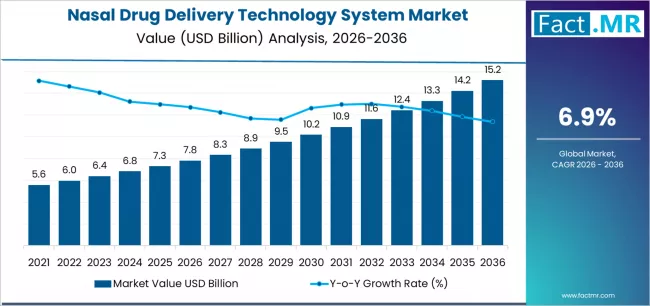
Nasal Drug Delivery Technology System Market Market Value Analysis | Source: Fact.MR
Market expansion is fundamentally driven by the growing preference for non-invasive, patient-friendly drug administration routes that enhance compliance and enable rapid systemic absorption. The nasal mucosa offers a highly vascularized pathway for drugs to bypass first-pass metabolism, making it ideal for systemic delivery of peptides, vaccines, and treatments for central nervous system disorders. This shift is accelerated by the increasing prevalence of chronic respiratory conditions and the successful commercialization of nasal vaccines and migraine therapies.
Technological innovation and formulation science will define growth over the forecast period. Advances in device engineering—such as precision metering, novel actuators, and breath-actuated systems—are improving dose accuracy and patient experience. Concurrently, developments in permeation enhancers, mucoadhesive polymers, and nanoparticle-based formulations are expanding the range of drugs that can be effectively delivered via the nasal route, opening new therapeutic avenues.
Nasal Drug Delivery Technology System Market
| Metric | Value |
|---|---|
| Estimated Value in (2026E) | USD 7.8 billion |
| Forecast Value in (2036F) | USD 15.2 billion |
| Forecast CAGR (2026 to 2036) | 6.9% |
Source: Fact.MR analysis. Updated Dec 18, 2025
Category
| Category | Segments |
|---|---|
| Technology Type | Nasal Sprays, Nasal Drops, Nasal Gels, Powder Formulations, Others |
| Therapeutic Application | Respiratory Diseases, CNS Disorders, Hormonal Treatments, Vaccine Delivery, Others |
| Delivery Mechanism | Pressurized Metered Dose, Pump Spray, Squeeze Bottle, Dry Powder Devices, Others |
| End User | Hospitals, Specialty Clinics, Home Healthcare, Ambulatory Care Centers, Others |
| Region | North America, Europe, Asia Pacific, Latin America, Middle East & Africa |
Source: Fact.MR analysis. Updated Dec 18, 2025
Segmental Analysis
By Technology Type, Which Segment of Nasal Drug Delivery Technology System Commands the Leading Share?
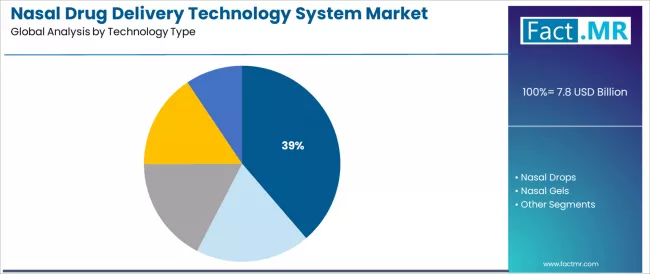
Nasal Drug Delivery Technology System Market Analysis By Technology Type | Source: Fact.MR
The nasal spray segment will command a 38.7% market share in 2026, as it represents the most established, patient-accepted, and versatile delivery format. Sprays offer advantages such as portability, multi-dose capability, and relatively low cost of manufacturing. Their dominance is reinforced by their application across a wide therapeutic spectrum, from allergy and congestion treatments to more complex systemic drugs for migraines (e.g., triptans) and opioid overdose reversal (naloxone). The familiar and easy-to-use nature of sprays drives high patient compliance.
- The ongoing development of biologics and peptide-based drugs, which often require non-parenteral delivery, is creating significant R&D focus on enhancing nasal spray formulations for these sensitive molecules.
- Prescription-to-OTC switches for certain nasal spray medications are expanding their consumer accessibility and market reach.
Which Therapeutic Application Segment Generates Maximum Demand for Nasal Drug Delivery Technology Systems?
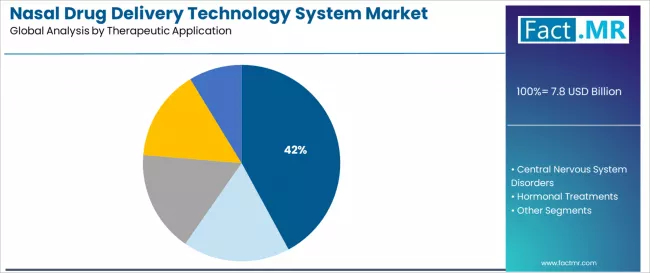
Nasal Drug Delivery Technology System Market Analysis By Therapeutic Application | Source: Fact.MR
Respiratory disease applications are projected to hold a 42.1% share in 2026. The nasal cavity is the direct site of action for many respiratory conditions, making local delivery highly effective for allergies, rhinitis, sinusitis, and congestion. This direct targeting minimizes systemic side effects and provides rapid symptom relief. The high and growing global prevalence of allergic respiratory conditions and chronic sinus issues ensures a sustained, high-volume demand for nasal delivery solutions in this category.
- The rising levels of air pollution and allergens worldwide are contributing to an increased incidence of chronic respiratory conditions, directly propelling the demand for nasal therapeutics.
- Combination therapies delivered via nasal sprays, which treat multiple symptoms (e.g., antihistamine + corticosteroid), are enhancing treatment efficacy and supporting segment growth.
What are the Drivers, Restraints, and Key Trends of the Nasal Drug Delivery Technology System Market?
The market is primarily driven by the superior patient compliance and convenience offered by nasal administration compared to injections or oral routes. Secondary drivers include the growing pipeline of biologic drugs requiring non-invasive delivery and the success of nasal vaccines such as the ones for influenza and COVID-19 validating the platform. Key restraints include formulation challenges for large-molecule drugs, potential nasal irritation, and regulatory hurdles for demonstrating bioequivalence and device performance.
The market is trending towards the development of smart, connected devices that track patient adherence and dosing history. Another key trend is the exploration of nose-to-brain delivery for neurological disorders like Alzheimer's, Parkinson's, and epilepsy, offering a direct pathway to the CNS that bypasses the blood-brain barrier.
Analysis of the Nasal Drug Delivery Technology System Market by Key Countries
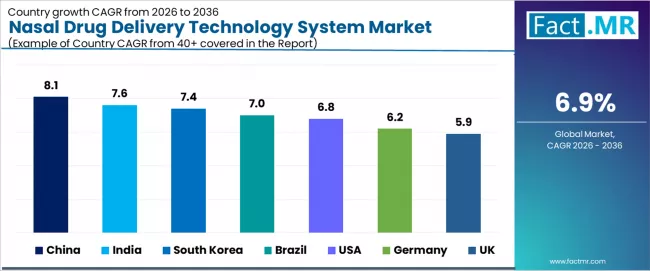
Nasal Drug Delivery Technology System Market Cagr Analysis By Country | Source: Fact.MR
| Country | CAGR (2026-2036) |
|---|---|
| China | 8.1% |
| India | 7.6% |
| Germany | 6.2% |
| Brazil | 7.0% |
| USA | 6.8% |
| UK | 5.9% |
| South Korea | 7.4% |
Source: Fact.MR analysis. Updated Dec 18, 2025
What is Propelling China’s Leadership in Pharmaceutical Innovation?
The market in China is projected to grow at a leading CAGR of 8.1% through 2036. Substantial government and private investment in biopharmaceutical R&D, a strong generics manufacturing base pivoting towards complex drug-device combinations, and a rapidly aging population with growing needs for chronic disease management drive this. China's National Medical Products Administration (NMPA) has also streamlined pathways for innovative drug-device approvals, accelerating market entry for novel nasal delivery systems.
How is India's Pharmaceutical Sector Driving Adoption?
The market in India is forecast to grow at a CAGR of 7.6%. India's position as the "pharmacy of the world" extends to drug delivery systems, with strong capabilities in generic nasal spray manufacturing. Growing domestic healthcare expenditure, increasing diagnosis rates of allergic disorders, and government initiatives to promote medical device manufacturing are key growth drivers. Indian companies are increasingly engaging in partnerships to develop and commercialize novel nasal delivery technologies.
How does South Korea's Advanced Healthcare System Influence the Market?
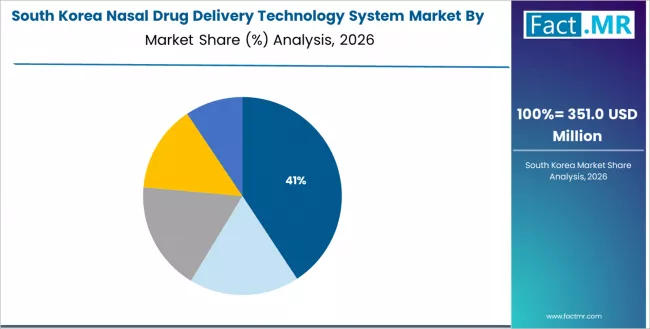
Nasal Drug Delivery Technology System Market South Korea Market Share Analysis By Therapeutic Application | Source: Fact.MR
The market in South Korea is projected to grow at a CAGR of 7.4%. The country's advanced digital healthcare infrastructure, high patient acceptance of innovative therapies, and robust government support for biotech R&D create a fertile environment for advanced nasal delivery systems. South Korean companies are active in developing niche applications, such as nasal formulations for cognitive enhancement and advanced vaccine delivery.
Why is Brazil a Key Growth Market in Latin America?
The market in Brazil is set to grow at a CAGR of 7.0%. Brazil has a large and growing pharmaceutical market with significant local manufacturing. High prevalence of allergic rhinitis and other respiratory conditions in urban populations drives steady demand. The country’s regulatory agency, ANVISA, has been working to harmonize with international standards, facilitating the introduction of new nasal delivery products from global innovators.
What Underpins Innovation in the Mature US Market?
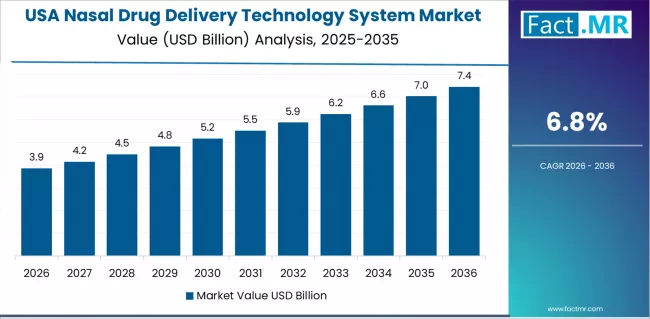
Nasal Drug Delivery Technology System Market Country Value Analysis | Source: Fact.MR
The market in the USA is expected to grow at a CAGR of 6.8%. The US remains the epicenter of pharmaceutical innovation, with a strong pipeline of drugs utilizing nasal delivery, particularly in CNS and migraine therapy. High healthcare spending, favorable reimbursement scenarios for novel delivery devices, and the presence of major global pharmaceutical and device players fuel continuous R&D and premium product launches in this space.
How does Germany's Precision Medicine Focus Shape its Market?
The market in Germany is forecast to grow at a CAGR of 6.2%. Germany’s strong tradition in precision engineering extends to medical devices, making it a hub for high-quality nasal spray actuator and device manufacturing. The country's focus on value-based healthcare and robust clinical evidence supports the adoption of advanced delivery systems that demonstrate clear therapeutic advantages and improved patient outcomes.
What Supports the UK’s Focus on Patient-Centric Healthcare?
The market in the UK is projected to grow at a CAGR of 5.9%. The UK’s National Health Service (NHS) emphasis on patient-centric care and self-administration to reduce hospital visits aligns perfectly with the benefits of nasal delivery. A strong academic research base in formulation science and a thriving biotech sector contribute to innovation, particularly in areas like nasal vaccine delivery and systemic peptide administration.
Competitive Landscape of the Nasal Drug Delivery Technology System Market
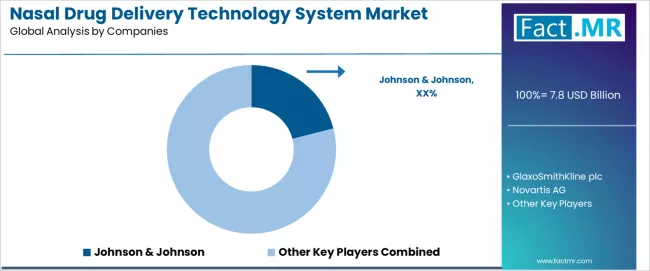
Nasal Drug Delivery Technology System Market Analysis By Company | Source: Fact.MR
Large, diversified pharmaceutical companies with in-house device development capabilities, competing alongside specialized drug delivery technology firms, dominate the competitive landscape. Competition centers on proprietary formulation technologies that enhance drug stability and absorption, advanced device engineering for superior dose accuracy and patient experience, and robust clinical data demonstrating bioavailability and efficacy.
Leading players are actively pursuing partnerships and acquisitions to integrate novel platform technologies, such as nose-to-brain delivery systems and digital adherence monitors. Success increasingly depends on creating integrated solutions that combine a compatible drug formulation with a user-friendly, reliable device, while navigating complex regulatory pathways for combination products. The ability to demonstrate real-world value through improved patient compliance and therapeutic outcomes is a key differentiator.
Key Players in the Nasal Drug Delivery Technology System Market
- Johnson & Johnson
- GlaxoSmithKline plc
- Novartis AG
- AstraZeneca plc
- Pfizer Inc.
- Roche Holding AG
- Merck & Co., Inc.
- Sanofi SA
- Bristol-Myers Squibb Company
- AbbVie Inc.
- Boehringer Ingelheim International GmbH
- Takeda Pharmaceutical Company Limited
- Bayer AG
- Eli Lilly and Company
- Amgen Inc.
Segmentation
Scope of the Report
| Items | Values |
|---|---|
| Quantitative Units (2026) | USD 7.8 Billion |
| Technology Type | Nasal Sprays, Nasal Drops, Nasal Gels, Powder Formulations, Other Technology Configurations |
| Therapeutic Application | Respiratory Diseases, Central Nervous System Disorders, Hormonal Treatments, Vaccine Delivery, Others |
| Delivery Mechanism | Pressurized Metered Dose Systems, Pump Spray Systems, Squeeze Bottle Systems, Dry Powder Devices, Other Mechanism Platforms |
| End User | Hospitals, Specialty Clinics, Home Healthcare, Ambulatory Care Centers, Other User Services |
| Regions Covered | North America, Europe, Asia Pacific, Latin America, MEA, Other Regions |
| Countries Covered | China, India, Germany, Brazil, USA, UK, South Korea, and 40+ countries |
| Key Companies Profiled | Johnson & Johnson, GlaxoSmithKline plc, Novartis AG, AstraZeneca plc, Pfizer Inc., and other leading pharmaceutical companies |
| Additional Attributes | Dollar sales by technology type, therapeutic application, delivery mechanism, end user, and region; regional demand trends, competitive landscape, technological advancements in delivery engineering, therapeutic performance optimization initiatives, patient compliance enhancement programs, and premium product development strategies |
Source: Fact.MR analysis. Updated Dec 18, 2025
Nasal Drug Delivery Technology System Market by Segments
-
Technology Type :
- Nasal Sprays
- Nasal Drops
- Nasal Gels
- Powder Formulations
- Other Technology Configurations
-
Therapeutic Application :
- Respiratory Diseases
- Central Nervous System Disorders
- Hormonal Treatments
- Vaccine Delivery
- Others
-
Delivery Mechanism :
- Pressurized Metered Dose Systems
- Pump Spray Systems
- Squeeze Bottle Systems
- Dry Powder Devices
- Other Mechanism Platforms
-
End User :
- Hospitals
- Specialty Clinics
- Home Healthcare
- Ambulatory Care Centers
- Other User Services
-
Region :
-
North America
- USA
- Canada
- Mexico
-
Europe
- Germany
- UK
- France
- Italy
- Spain
- Nordic Countries
- BENELUX
- Rest of Europe
-
Asia Pacific
- China
- India
- Japan
- South Korea
- Australia
- Rest of Asia Pacific
-
Latin America
- Brazil
- Argentina
- Rest of Latin America
-
MEA
- Saudi Arabia
- UAE
- South Africa
- Rest of MEA
-
Frequently Asked Questions
How big is the nasal drug delivery technology system market in 2026?
What will be the size of nasal drug delivery technology system market in 2036?
How much will be the nasal drug delivery technology system market growth between 2026 and 2036?
What are the key product types in the nasal drug delivery technology system market?
Which therapeutic application segment to contribute significant share in the nasal drug delivery technology system market in 2026?
Who worked on this report


Preview the report firsthand - request a free sample
Free SampleGet the brochure for pricing and purchase details
Download PDF