Non-Toxic Plasticizers for PVC and Elastomers Market

Non-Toxic Plasticizers for PVC and Elastomers Market Size and Share Forecast Outlook 2026 to 2036

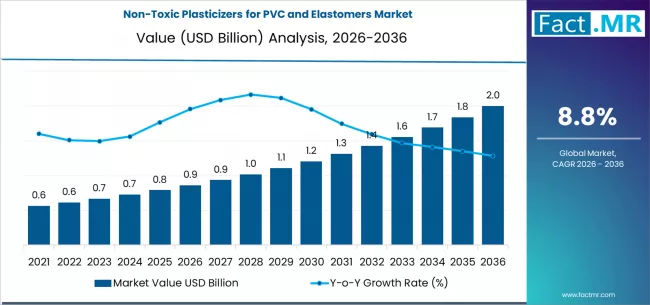
Non-toxic plasticizers for pvc and elastomers market is projected to grow from USD 0.9 billion in 2026 to USD 2.0 billion by 2036, at a CAGR of 8.8%. Bio-Based Plasticizers (Citrate, Epoxidized Oils) will dominate with a 30.0% market share, while pvc will lead the application segment with a 42.0% share.

Non-Toxic Plasticizers for PVC and Elastomers Market Forecast and Outlook 2026 to 2036

The global market for non-toxic plasticizers in PVC and elastomers is projected to reach USD 2.00 billion by 2036. Starting from a value of USD 0.86 billion in 2026, the market is expected to expand at an 8.8% CAGR throughout the forecast period.

Key Takeaways from the Non-Toxic Plasticizers for PVC and Elastomers Market

  • Market Value for 2026: USD 0.86 Billion
  • Market Value for 2036: USD 2.00 Billion
  • Forecast CAGR (2026-2036): 8.8%
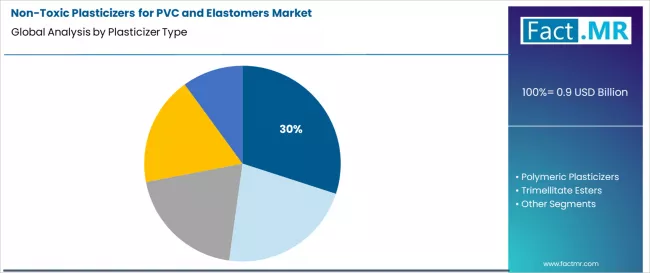
  • Leading Plasticizer Type Share (2026): Bio-Based Plasticizers (Citrate, Epoxidized Oils, etc.) (30%)
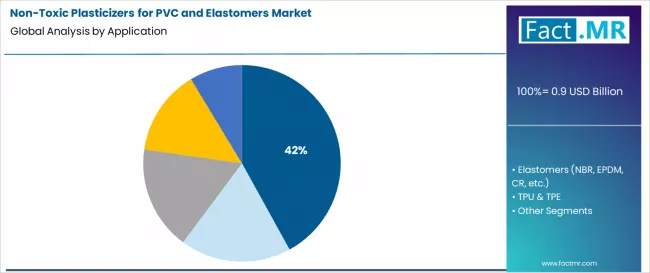
  • Leading Application Share (2026): PVC (Polyvinyl Chloride) (42%)
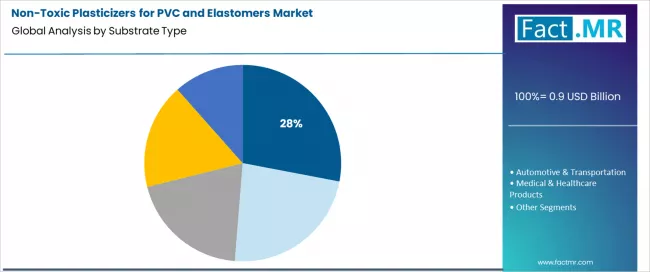
  • Leading End-Use Industry Share (2026): Construction & Building Materials (28%)
  • Key Players in the Market: BASF SE, Dow Inc., Eastman Chemical Company, Evonik Industries, Lanxess AG
Non Toxic Plasticizers For Pvc And Elastomers Market Market Value Analysis

Bio-based plasticizers, including citrate esters and epoxidized oils, currently lead the market by type, holding a 30% share. In terms of application, polyvinyl chloride remains the dominant substrate, accounting for 42% of demand. The construction and building materials industry is the foremost end-use sector, representing a 28% share.

Market expansion is primarily fueled by stringent global regulations phasing out ortho-phthalates and other hazardous substances in consumer products. Increasing consumer awareness and demand for safer, sustainable materials across industries further accelerate adoption. Non-toxic alternatives are critical for manufacturers aiming to comply with evolving safety standards while maintaining the performance and durability of flexible PVC and elastomeric products.

These advanced plasticizers are engineered to provide efficient polymer softening with minimal migration and leaching. Their development focuses on enhancing compatibility, durability, and end-product performance while addressing health and environmental concerns associated with traditional phthalates. This shift is reshaping material formulations in sensitive applications from medical devices to food packaging.

Metric

Metric Value
Market Value (2026) USD 0.86 Billion
Market Forecast Value (2036) USD 2.00 Billion
Forecast CAGR (2026-2036) 8.8%

Category

Category Segments
Plasticizer Type Bio-Based Plasticizers (Citrate, Epoxidized Oils, etc.), Polymeric Plasticizers, Trimellitate Esters, Phthalate-Free Adipates & Sebacates, Other Specialty Non-Toxic Plasticizers
Application PVC (Polyvinyl Chloride), Elastomers (NBR, EPDM, CR, etc.), TPU & TPE, Rubber Compounds, Specialty Polymers & Bioplastics
End-Use Industry Construction & Building Materials, Automotive & Transportation, Medical & Healthcare Products, Consumer Goods & Packaging, Electrical & Industrial Products
Region North America, Latin America, Western Europe, Eastern Europe, East Asia, South Asia & Pacific, MEA

Segmental Analysis

By Plasticizer Type, Which Segment Holds the Largest Market Share?
Non Toxic Plasticizers For Pvc And Elastomers Market Analysis By Plasticizer Type

Bio-based plasticizers command the largest segment share at 30%. This leadership is driven by their renewable origins, biodegradability, and low toxicity profile, aligning perfectly with global sustainability mandates and consumer preferences for green chemistry.

Derived from sources like citric acid and vegetable oils, they offer a viable performance alternative to phthalates in many flexible PVC applications, particularly in sensitive areas such as toys, food contact materials, and medical tubing.

By Application, Which Polymer Consumes the Most Non-Toxic Plasticizers?
Non Toxic Plasticizers For Pvc And Elastomers Market Analysis By Application

Polyvinyl chloride (PVC) is the leading application, consuming 42% of non-toxic plasticizers. PVC's versatility across countless products necessitates vast quantities of plasticizers to achieve desired flexibility.

The regulatory pressure to replace phthalates in this high-volume polymer creates the single largest demand driver for alternative solutions. Performance parity in terms of flexibility, heat stability, and processability remains a key focus for formulators in this segment.

By End-Use Industry, Which Sector is the Foundation of Market Demand?
Non Toxic Plasticizers For Pvc And Elastomers Market Analysis By Substrate Type

The construction and building materials industry generates the most consistent demand, with a 28% share. This sector relies heavily on flexible PVC for products like wire and cable insulation, flooring, roofing membranes, and wall coverings.

The long lifespan of these applications, combined with building safety codes increasingly restricting volatile and hazardous materials, creates a stable, high-volume market for permanent, non-migrating plasticizer solutions.

What are the Drivers, Restraints, and Key Trends of the Non-Toxic Plasticizers Market?

The primary market driver is the accelerating global regulatory phase-out of phthalates and other classified substances of concern. Regions like Europe, North America, and parts of Asia-Pacific have implemented strict limitations, compelling formulators to seek alternatives. Growing end-user awareness and brand commitments to safer, more sustainable products further pull demand from industries like toys, healthcare, and food packaging.

A significant market restraint is the higher cost of many non-toxic alternatives compared to conventional phthalates. Performance gaps in certain demanding applications, such as extreme temperature resistance or very low migration requirements, can also limit adoption. The complexity of reformulating established compounds and ensuring supply chain consistency for newer bio-based raw materials presents additional challenges for manufacturers.

Key trends include intensive research into next-generation bio-based plasticizers with enhanced performance to close the gap with phthalates. There is a growing focus on polymeric plasticizers that offer superior permanence and durability for long-life products like automotive interiors and construction materials. The market is also witnessing the development of multifunctional additives that act as both plasticizers and stabilizers, simplifying formulations. Digital tools for predicting plasticizer compatibility and performance in complex polymer matrices are gaining traction.

Analysis of the Non-Toxic Plasticizers Market by Key Countries
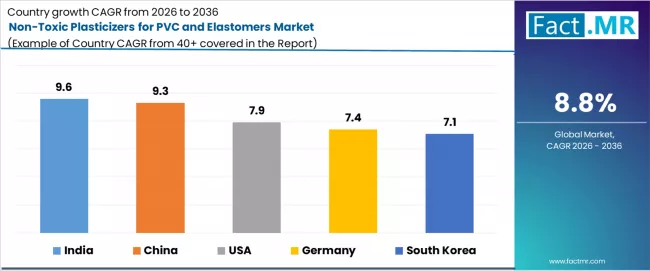
Non Toxic Plasticizers For Pvc And Elastomers Market Cagr Analysis By Country

Country CAGR (2026-2036)
India 9.60%
China 9.30%
USA 7.90%
Germany 7.40%
South Korea 7.10%

How is India's Rapid Industrial Growth and Regulatory Shift Shaping Demand?

A massive and expanding manufacturing base for plastics, automotive components, and consumer goods propels India’s leading CAGR of 9.60%. New national chemical management policies aimed at reducing hazardous substances, alongside rising domestic quality standards, are accelerating the transition from phthalate-based to non-toxic plasticizers, especially in products for export and the growing domestic premium market.

What Role Does China's Push for Green Manufacturing Play?

China's 9.30% growth is anchored in its "Double Carbon" goals and evolving environmental protection laws that target toxic additives. As the world's largest producer and consumer of PVC, the mandated shift within China's own industrial ecosystem creates an enormous, sustained market for alternative plasticizers. Domestic innovation in bio-based and polymeric alternatives is also strengthening supply.

How Does the USA's Regulatory and Consumer Landscape Drive the Market?
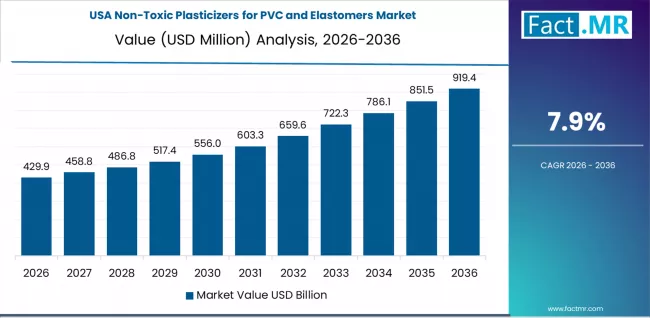
Non Toxic Plasticizers For Pvc And Elastomers Market Country Value Analysis

The USA's 7.90% CAGR is supported by stringent Consumer Product Safety Commission regulations, particularly for children's products and food contact materials. Litigation risks and strong brand commitments to corporate social responsibility further motivate American manufacturers to adopt phthalate-free solutions across automotive, medical, and construction applications.

Why is Germany a Center for High-Performance, Sustainable Plasticizers?

Germany's 7.20% growth reflects its leadership in chemical engineering and strict adherence to EU REACH regulations. German manufacturers, especially in the automotive and precision engineering sectors, demand plasticizers that meet the highest standards of performance, durability, and toxicological safety, fostering a sophisticated market for advanced polymeric and specialty non-toxic variants.

How is South Korea's Advanced Electronics and Automotive Industry Influencing Trends?

South Korea's 7.10% growth is driven by its flagship electronics and automotive industries, which require high-purity, non-migrating plasticizers for sensitive components like wire harnessing, interior trim, and specialty films. The focus on product miniaturization and reliability necessitates plasticizers with exceptional stability and low volatility.

Competitive Landscape of the Non-Toxic Plasticizers Market
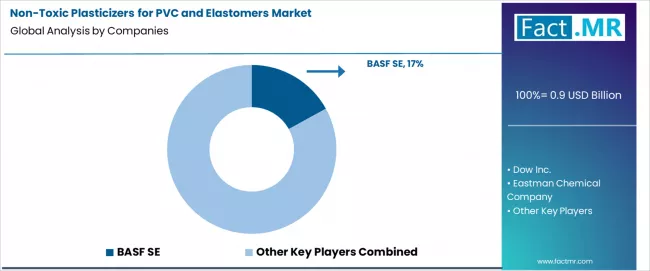
Non Toxic Plasticizers For Pvc And Elastomers Market Analysis By Company

The competitive landscape features global chemical majors and specialized additive companies. Leaders like BASF, Dow, and Eastman compete based on their extensive R&D capabilities, broad portfolios of alternative chemistries, and ability to provide tailored solutions for specific polymer systems and regulatory jurisdictions.

Competition intensifies around demonstrating total cost-in-use benefits, securing reliable feedstock for bio-based options, and providing technical support for customer reformulation challenges. Strategic partnerships with resin producers and end-user brands are common to co-develop certified solutions.

Key Players in the Non-Toxic Plasticizers for PVC and Elastomers Market

  • BASF SE
  • Dow Inc.
  • Eastman Chemical Company
  • Evonik Industries
  • Lanxess AG

Scope of Report

Items Values
Quantitative Units USD Billion
Plasticizer Type Bio-Based, Polymeric, Trimellitate Esters, Phthalate-Free Adipates & Sebacates, Other Specialty
Application PVC, Elastomers, TPU & TPE, Rubber Compounds, Specialty Polymers & Bioplastics
End-Use Industry Construction & Building, Automotive, Medical, Consumer Goods, Electrical
Key Countries India, China, USA, Germany, South Korea
Key Companies BASF SE, Dow Inc., Eastman Chemical Company, Evonik Industries, Lanxess AG
Additional Analysis Migration resistance and extraction testing; performance under thermal/UV stress; regulatory compliance analysis (REACH, CPSC, etc.); lifecycle assessment of bio-based options; supply chain for key bio-feedstocks.

Market by Segments

  • Plasticizer Type :

    • Bio-Based Plasticizers (Citrate, Epoxidized Oils, etc.)
    • Polymeric Plasticizers
    • Trimellitate Esters
    • Phthalate-Free Adipates & Sebacates
    • Other Specialty Non-Toxic Plasticizers
  • Application :

    • PVC
    • Elastomers (NBR, EPDM, CR, etc.)
    • TPU & TPE
    • Rubber Compounds
    • Specialty Polymers & Bioplastics
  • End-Use Industry :

    • Construction & Building Materials
    • Automotive & Transportation
    • Medical & Healthcare Products
    • Consumer Goods & Packaging
    • Electrical & Industrial Products
  • Region :

    • North America

      • USA
      • Canada
    • Latin America

      • Brazil
      • Mexico
      • Argentina
      • Rest of Latin America
    • Western Europe

      • Germany
      • UK
      • France
      • Spain
      • Italy
      • BENELUX
      • Rest of Western Europe
    • Eastern Europe

      • Russia
      • Poland
      • Czech Republic
      • Rest of Eastern Europe
    • East Asia

      • China
      • Japan
      • South Korea
      • Rest of East Asia
    • South Asia & Pacific

      • India
      • ASEAN
      • Australia
      • Rest of South Asia & Pacific
    • MEA

      • Saudi Arabia
      • UAE
      • Turkiye
      • Rest of MEA

Table of Content

  1. Executive Summary
    • Global Market Outlook
    • Demand to side Trends
    • Supply to side Trends
    • Technology Roadmap Analysis
    • Analysis and Recommendations
  2. Market Overview
    • Market Coverage / Taxonomy
    • Market Definition / Scope / Limitations
  3. Market Background
    • Market Dynamics
      • Drivers
      • Restraints
      • Opportunity
      • Trends
    • Scenario Forecast
      • Demand in Optimistic Scenario
      • Demand in Likely Scenario
      • Demand in Conservative Scenario
    • Opportunity Map Analysis
    • Product Life Cycle Analysis
    • Supply Chain Analysis
    • Investment Feasibility Matrix
    • Value Chain Analysis
    • PESTLE and Porter’s Analysis
    • Regulatory Landscape
    • Regional Parent Market Outlook
    • Production and Consumption Statistics
    • Import and Export Statistics
  4. Global Market Analysis 2021 to 2025 and Forecast, 2026 to 2036
    • Historical Market Size Value (USD Million) Analysis, 2021 to 2025
    • Current and Future Market Size Value (USD Million) Projections, 2026 to 2036
      • Y to o to Y Growth Trend Analysis
      • Absolute $ Opportunity Analysis
  5. Global Market Pricing Analysis 2021 to 2025 and Forecast 2026 to 2036
  6. Global Market Analysis 2021 to 2025 and Forecast 2026 to 2036, By Plasticizer Type
    • Introduction / Key Findings
    • Historical Market Size Value (USD Million) Analysis By Plasticizer Type, 2021 to 2025
    • Current and Future Market Size Value (USD Million) Analysis and Forecast By Plasticizer Type, 2026 to 2036
      • Bio-Based Plasticizers (Citrate, Epoxidized Oils)
      • Polymeric Plasticizers
      • Trimellitate Esters
      • Phthalate-Free Adipates & Sebacates
      • Other Specialty Non-Toxic Plasticizers
    • Y to o to Y Growth Trend Analysis By Plasticizer Type, 2021 to 2025
    • Absolute $ Opportunity Analysis By Plasticizer Type, 2026 to 2036
  7. Global Market Analysis 2021 to 2025 and Forecast 2026 to 2036, By Application
    • Introduction / Key Findings
    • Historical Market Size Value (USD Million) Analysis By Application, 2021 to 2025
    • Current and Future Market Size Value (USD Million) Analysis and Forecast By Application, 2026 to 2036
      • PVC
      • Elastomers (NBR, EPDM, CR, etc.)
      • TPU & TPE
      • Rubber Compounds
      • Specialty Polymers & Bioplastics
    • Y to o to Y Growth Trend Analysis By Application, 2021 to 2025
    • Absolute $ Opportunity Analysis By Application, 2026 to 2036
  8. Global Market Analysis 2021 to 2025 and Forecast 2026 to 2036, By Substrate Type
    • Introduction / Key Findings
    • Historical Market Size Value (USD Million) Analysis By Substrate Type, 2021 to 2025
    • Current and Future Market Size Value (USD Million) Analysis and Forecast By Substrate Type, 2026 to 2036
      • Construction & Building Materials
      • Automotive & Transportation
      • Medical & Healthcare Products
      • Consumer Goods & Packaging
      • Electrical & Industrial Products
    • Y to o to Y Growth Trend Analysis By Substrate Type, 2021 to 2025
    • Absolute $ Opportunity Analysis By Substrate Type, 2026 to 2036
  9. Global Market Analysis 2021 to 2025 and Forecast 2026 to 2036, By Region
    • Introduction
    • Historical Market Size Value (USD Million) Analysis By Region, 2021 to 2025
    • Current Market Size Value (USD Million) Analysis and Forecast By Region, 2026 to 2036
      • North America
      • Latin America
      • Western Europe
      • Eastern Europe
      • East Asia
      • South Asia and Pacific
      • Middle East & Africa
    • Market Attractiveness Analysis By Region
  10. North America Market Analysis 2021 to 2025 and Forecast 2026 to 2036, By Country
    • Historical Market Size Value (USD Million) Trend Analysis By Market Taxonomy, 2021 to 2025
    • Market Size Value (USD Million) Forecast By Market Taxonomy, 2026 to 2036
      • By Country
        • USA
        • Canada
        • Mexico
      • By Plasticizer Type
      • By Application
      • By Substrate Type
    • Market Attractiveness Analysis
      • By Country
      • By Plasticizer Type
      • By Application
      • By Substrate Type
    • Key Takeaways
  11. Latin America Market Analysis 2021 to 2025 and Forecast 2026 to 2036, By Country
    • Historical Market Size Value (USD Million) Trend Analysis By Market Taxonomy, 2021 to 2025
    • Market Size Value (USD Million) Forecast By Market Taxonomy, 2026 to 2036
      • By Country
        • Brazil
        • Chile
        • Rest of Latin America
      • By Plasticizer Type
      • By Application
      • By Substrate Type
    • Market Attractiveness Analysis
      • By Country
      • By Plasticizer Type
      • By Application
      • By Substrate Type
    • Key Takeaways
  12. Western Europe Market Analysis 2021 to 2025 and Forecast 2026 to 2036, By Country
    • Historical Market Size Value (USD Million) Trend Analysis By Market Taxonomy, 2021 to 2025
    • Market Size Value (USD Million) Forecast By Market Taxonomy, 2026 to 2036
      • By Country
        • Germany
        • UK
        • Italy
        • Spain
        • France
        • Nordic
        • BENELUX
        • Rest of Western Europe
      • By Plasticizer Type
      • By Application
      • By Substrate Type
    • Market Attractiveness Analysis
      • By Country
      • By Plasticizer Type
      • By Application
      • By Substrate Type
    • Key Takeaways
  13. Eastern Europe Market Analysis 2021 to 2025 and Forecast 2026 to 2036, By Country
    • Historical Market Size Value (USD Million) Trend Analysis By Market Taxonomy, 2021 to 2025
    • Market Size Value (USD Million) Forecast By Market Taxonomy, 2026 to 2036
      • By Country
        • Russia
        • Poland
        • Hungary
        • Balkan & Baltic
        • Rest of Eastern Europe
      • By Plasticizer Type
      • By Application
      • By Substrate Type
    • Market Attractiveness Analysis
      • By Country
      • By Plasticizer Type
      • By Application
      • By Substrate Type
    • Key Takeaways
  14. East Asia Market Analysis 2021 to 2025 and Forecast 2026 to 2036, By Country
    • Historical Market Size Value (USD Million) Trend Analysis By Market Taxonomy, 2021 to 2025
    • Market Size Value (USD Million) Forecast By Market Taxonomy, 2026 to 2036
      • By Country
        • China
        • Japan
        • South Korea
      • By Plasticizer Type
      • By Application
      • By Substrate Type
    • Market Attractiveness Analysis
      • By Country
      • By Plasticizer Type
      • By Application
      • By Substrate Type
    • Key Takeaways
  15. South Asia and Pacific Market Analysis 2021 to 2025 and Forecast 2026 to 2036, By Country
    • Historical Market Size Value (USD Million) Trend Analysis By Market Taxonomy, 2021 to 2025
    • Market Size Value (USD Million) Forecast By Market Taxonomy, 2026 to 2036
      • By Country
        • India
        • ASEAN
        • Australia & New Zealand
        • Rest of South Asia and Pacific
      • By Plasticizer Type
      • By Application
      • By Substrate Type
    • Market Attractiveness Analysis
      • By Country
      • By Plasticizer Type
      • By Application
      • By Substrate Type
    • Key Takeaways
  16. Middle East & Africa Market Analysis 2021 to 2025 and Forecast 2026 to 2036, By Country
    • Historical Market Size Value (USD Million) Trend Analysis By Market Taxonomy, 2021 to 2025
    • Market Size Value (USD Million) Forecast By Market Taxonomy, 2026 to 2036
      • By Country
        • Kingdom of Saudi Arabia
        • Other GCC Countries
        • Turkiye
        • South Africa
        • Other African Union
        • Rest of Middle East & Africa
      • By Plasticizer Type
      • By Application
      • By Substrate Type
    • Market Attractiveness Analysis
      • By Country
      • By Plasticizer Type
      • By Application
      • By Substrate Type
    • Key Takeaways
  17. Key Countries Market Analysis
    • USA
      • Pricing Analysis
      • Market Share Analysis, 2025
        • By Plasticizer Type
        • By Application
        • By Substrate Type
    • Canada
      • Pricing Analysis
      • Market Share Analysis, 2025
        • By Plasticizer Type
        • By Application
        • By Substrate Type
    • Mexico
      • Pricing Analysis
      • Market Share Analysis, 2025
        • By Plasticizer Type
        • By Application
        • By Substrate Type
    • Brazil
      • Pricing Analysis
      • Market Share Analysis, 2025
        • By Plasticizer Type
        • By Application
        • By Substrate Type
    • Chile
      • Pricing Analysis
      • Market Share Analysis, 2025
        • By Plasticizer Type
        • By Application
        • By Substrate Type
    • Germany
      • Pricing Analysis
      • Market Share Analysis, 2025
        • By Plasticizer Type
        • By Application
        • By Substrate Type
    • UK
      • Pricing Analysis
      • Market Share Analysis, 2025
        • By Plasticizer Type
        • By Application
        • By Substrate Type
    • Italy
      • Pricing Analysis
      • Market Share Analysis, 2025
        • By Plasticizer Type
        • By Application
        • By Substrate Type
    • Spain
      • Pricing Analysis
      • Market Share Analysis, 2025
        • By Plasticizer Type
        • By Application
        • By Substrate Type
    • France
      • Pricing Analysis
      • Market Share Analysis, 2025
        • By Plasticizer Type
        • By Application
        • By Substrate Type
    • India
      • Pricing Analysis
      • Market Share Analysis, 2025
        • By Plasticizer Type
        • By Application
        • By Substrate Type
    • ASEAN
      • Pricing Analysis
      • Market Share Analysis, 2025
        • By Plasticizer Type
        • By Application
        • By Substrate Type
    • Australia & New Zealand
      • Pricing Analysis
      • Market Share Analysis, 2025
        • By Plasticizer Type
        • By Application
        • By Substrate Type
    • China
      • Pricing Analysis
      • Market Share Analysis, 2025
        • By Plasticizer Type
        • By Application
        • By Substrate Type
    • Japan
      • Pricing Analysis
      • Market Share Analysis, 2025
        • By Plasticizer Type
        • By Application
        • By Substrate Type
    • South Korea
      • Pricing Analysis
      • Market Share Analysis, 2025
        • By Plasticizer Type
        • By Application
        • By Substrate Type
    • Russia
      • Pricing Analysis
      • Market Share Analysis, 2025
        • By Plasticizer Type
        • By Application
        • By Substrate Type
    • Poland
      • Pricing Analysis
      • Market Share Analysis, 2025
        • By Plasticizer Type
        • By Application
        • By Substrate Type
    • Hungary
      • Pricing Analysis
      • Market Share Analysis, 2025
        • By Plasticizer Type
        • By Application
        • By Substrate Type
    • Kingdom of Saudi Arabia
      • Pricing Analysis
      • Market Share Analysis, 2025
        • By Plasticizer Type
        • By Application
        • By Substrate Type
    • Turkiye
      • Pricing Analysis
      • Market Share Analysis, 2025
        • By Plasticizer Type
        • By Application
        • By Substrate Type
    • South Africa
      • Pricing Analysis
      • Market Share Analysis, 2025
        • By Plasticizer Type
        • By Application
        • By Substrate Type
  18. Market Structure Analysis
    • Competition Dashboard
    • Competition Benchmarking
    • Market Share Analysis of Top Players
      • By Regional
      • By Plasticizer Type
      • By Application
      • By Substrate Type
  19. Competition Analysis
    • Competition Deep Dive
      • BASF SE
        • Overview
        • Product Portfolio
        • Profitability by Market Segments (Product/Age /Sales Channel/Region)
        • Sales Footprint
        • Strategy Overview
          • Marketing Strategy
          • Product Strategy
          • Channel Strategy
      • Dow Inc.
      • Eastman Chemical Company
      • Evonik Industries
      • Lanxess AG
  20. Assumptions & Acronyms Used
  21. Research Methodology

List Of Table

  • Table 1: Global Market Value (USD Million) Forecast by Region, 2021 to 2036
  • Table 2: Global Market Value (USD Million) Forecast by Plasticizer Type, 2021 to 2036
  • Table 3: Global Market Value (USD Million) Forecast by Application, 2021 to 2036
  • Table 4: Global Market Value (USD Million) Forecast by Substrate Type, 2021 to 2036
  • Table 5: North America Market Value (USD Million) Forecast by Country, 2021 to 2036
  • Table 6: North America Market Value (USD Million) Forecast by Plasticizer Type, 2021 to 2036
  • Table 7: North America Market Value (USD Million) Forecast by Application, 2021 to 2036
  • Table 8: North America Market Value (USD Million) Forecast by Substrate Type, 2021 to 2036
  • Table 9: Latin America Market Value (USD Million) Forecast by Country, 2021 to 2036
  • Table 10: Latin America Market Value (USD Million) Forecast by Plasticizer Type, 2021 to 2036
  • Table 11: Latin America Market Value (USD Million) Forecast by Application, 2021 to 2036
  • Table 12: Latin America Market Value (USD Million) Forecast by Substrate Type, 2021 to 2036
  • Table 13: Western Europe Market Value (USD Million) Forecast by Country, 2021 to 2036
  • Table 14: Western Europe Market Value (USD Million) Forecast by Plasticizer Type, 2021 to 2036
  • Table 15: Western Europe Market Value (USD Million) Forecast by Application, 2021 to 2036
  • Table 16: Western Europe Market Value (USD Million) Forecast by Substrate Type, 2021 to 2036
  • Table 17: Eastern Europe Market Value (USD Million) Forecast by Country, 2021 to 2036
  • Table 18: Eastern Europe Market Value (USD Million) Forecast by Plasticizer Type, 2021 to 2036
  • Table 19: Eastern Europe Market Value (USD Million) Forecast by Application, 2021 to 2036
  • Table 20: Eastern Europe Market Value (USD Million) Forecast by Substrate Type, 2021 to 2036
  • Table 21: East Asia Market Value (USD Million) Forecast by Country, 2021 to 2036
  • Table 22: East Asia Market Value (USD Million) Forecast by Plasticizer Type, 2021 to 2036
  • Table 23: East Asia Market Value (USD Million) Forecast by Application, 2021 to 2036
  • Table 24: East Asia Market Value (USD Million) Forecast by Substrate Type, 2021 to 2036
  • Table 25: South Asia and Pacific Market Value (USD Million) Forecast by Country, 2021 to 2036
  • Table 26: South Asia and Pacific Market Value (USD Million) Forecast by Plasticizer Type, 2021 to 2036
  • Table 27: South Asia and Pacific Market Value (USD Million) Forecast by Application, 2021 to 2036
  • Table 28: South Asia and Pacific Market Value (USD Million) Forecast by Substrate Type, 2021 to 2036
  • Table 29: Middle East & Africa Market Value (USD Million) Forecast by Country, 2021 to 2036
  • Table 30: Middle East & Africa Market Value (USD Million) Forecast by Plasticizer Type, 2021 to 2036
  • Table 31: Middle East & Africa Market Value (USD Million) Forecast by Application, 2021 to 2036
  • Table 32: Middle East & Africa Market Value (USD Million) Forecast by Substrate Type, 2021 to 2036

List Of Figures

  • Figure 1: Global Market Pricing Analysis
  • Figure 2: Global Market Value (USD Million) Forecast 2021 to 2036
  • Figure 3: Global Market Value Share and BPS Analysis by Plasticizer Type, 2026 and 2036
  • Figure 4: Global Market Y to o to Y Growth Comparison by Plasticizer Type, 2026 to 2036
  • Figure 5: Global Market Attractiveness Analysis by Plasticizer Type
  • Figure 6: Global Market Value Share and BPS Analysis by Application, 2026 and 2036
  • Figure 7: Global Market Y to o to Y Growth Comparison by Application, 2026 to 2036
  • Figure 8: Global Market Attractiveness Analysis by Application
  • Figure 9: Global Market Value Share and BPS Analysis by Substrate Type, 2026 and 2036
  • Figure 10: Global Market Y to o to Y Growth Comparison by Substrate Type, 2026 to 2036
  • Figure 11: Global Market Attractiveness Analysis by Substrate Type
  • Figure 12: Global Market Value (USD Million) Share and BPS Analysis by Region, 2026 and 2036
  • Figure 13: Global Market Y to o to Y Growth Comparison by Region, 2026 to 2036
  • Figure 14: Global Market Attractiveness Analysis by Region
  • Figure 15: North America Market Incremental Dollar Opportunity, 2026 to 2036
  • Figure 16: Latin America Market Incremental Dollar Opportunity, 2026 to 2036
  • Figure 17: Western Europe Market Incremental Dollar Opportunity, 2026 to 2036
  • Figure 18: Eastern Europe Market Incremental Dollar Opportunity, 2026 to 2036
  • Figure 19: East Asia Market Incremental Dollar Opportunity, 2026 to 2036
  • Figure 20: South Asia and Pacific Market Incremental Dollar Opportunity, 2026 to 2036
  • Figure 21: Middle East & Africa Market Incremental Dollar Opportunity, 2026 to 2036
  • Figure 22: North America Market Value Share and BPS Analysis by Country, 2026 and 2036
  • Figure 23: North America Market Value Share and BPS Analysis by Plasticizer Type, 2026 and 2036
  • Figure 24: North America Market Y to o to Y Growth Comparison by Plasticizer Type, 2026 to 2036
  • Figure 25: North America Market Attractiveness Analysis by Plasticizer Type
  • Figure 26: North America Market Value Share and BPS Analysis by Application, 2026 and 2036
  • Figure 27: North America Market Y to o to Y Growth Comparison by Application, 2026 to 2036
  • Figure 28: North America Market Attractiveness Analysis by Application
  • Figure 29: North America Market Value Share and BPS Analysis by Substrate Type, 2026 and 2036
  • Figure 30: North America Market Y to o to Y Growth Comparison by Substrate Type, 2026 to 2036
  • Figure 31: North America Market Attractiveness Analysis by Substrate Type
  • Figure 32: Latin America Market Value Share and BPS Analysis by Country, 2026 and 2036
  • Figure 33: Latin America Market Value Share and BPS Analysis by Plasticizer Type, 2026 and 2036
  • Figure 34: Latin America Market Y to o to Y Growth Comparison by Plasticizer Type, 2026 to 2036
  • Figure 35: Latin America Market Attractiveness Analysis by Plasticizer Type
  • Figure 36: Latin America Market Value Share and BPS Analysis by Application, 2026 and 2036
  • Figure 37: Latin America Market Y to o to Y Growth Comparison by Application, 2026 to 2036
  • Figure 38: Latin America Market Attractiveness Analysis by Application
  • Figure 39: Latin America Market Value Share and BPS Analysis by Substrate Type, 2026 and 2036
  • Figure 40: Latin America Market Y to o to Y Growth Comparison by Substrate Type, 2026 to 2036
  • Figure 41: Latin America Market Attractiveness Analysis by Substrate Type
  • Figure 42: Western Europe Market Value Share and BPS Analysis by Country, 2026 and 2036
  • Figure 43: Western Europe Market Value Share and BPS Analysis by Plasticizer Type, 2026 and 2036
  • Figure 44: Western Europe Market Y to o to Y Growth Comparison by Plasticizer Type, 2026 to 2036
  • Figure 45: Western Europe Market Attractiveness Analysis by Plasticizer Type
  • Figure 46: Western Europe Market Value Share and BPS Analysis by Application, 2026 and 2036
  • Figure 47: Western Europe Market Y to o to Y Growth Comparison by Application, 2026 to 2036
  • Figure 48: Western Europe Market Attractiveness Analysis by Application
  • Figure 49: Western Europe Market Value Share and BPS Analysis by Substrate Type, 2026 and 2036
  • Figure 50: Western Europe Market Y to o to Y Growth Comparison by Substrate Type, 2026 to 2036
  • Figure 51: Western Europe Market Attractiveness Analysis by Substrate Type
  • Figure 52: Eastern Europe Market Value Share and BPS Analysis by Country, 2026 and 2036
  • Figure 53: Eastern Europe Market Value Share and BPS Analysis by Plasticizer Type, 2026 and 2036
  • Figure 54: Eastern Europe Market Y to o to Y Growth Comparison by Plasticizer Type, 2026 to 2036
  • Figure 55: Eastern Europe Market Attractiveness Analysis by Plasticizer Type
  • Figure 56: Eastern Europe Market Value Share and BPS Analysis by Application, 2026 and 2036
  • Figure 57: Eastern Europe Market Y to o to Y Growth Comparison by Application, 2026 to 2036
  • Figure 58: Eastern Europe Market Attractiveness Analysis by Application
  • Figure 59: Eastern Europe Market Value Share and BPS Analysis by Substrate Type, 2026 and 2036
  • Figure 60: Eastern Europe Market Y to o to Y Growth Comparison by Substrate Type, 2026 to 2036
  • Figure 61: Eastern Europe Market Attractiveness Analysis by Substrate Type
  • Figure 62: East Asia Market Value Share and BPS Analysis by Country, 2026 and 2036
  • Figure 63: East Asia Market Value Share and BPS Analysis by Plasticizer Type, 2026 and 2036
  • Figure 64: East Asia Market Y to o to Y Growth Comparison by Plasticizer Type, 2026 to 2036
  • Figure 65: East Asia Market Attractiveness Analysis by Plasticizer Type
  • Figure 66: East Asia Market Value Share and BPS Analysis by Application, 2026 and 2036
  • Figure 67: East Asia Market Y to o to Y Growth Comparison by Application, 2026 to 2036
  • Figure 68: East Asia Market Attractiveness Analysis by Application
  • Figure 69: East Asia Market Value Share and BPS Analysis by Substrate Type, 2026 and 2036
  • Figure 70: East Asia Market Y to o to Y Growth Comparison by Substrate Type, 2026 to 2036
  • Figure 71: East Asia Market Attractiveness Analysis by Substrate Type
  • Figure 72: South Asia and Pacific Market Value Share and BPS Analysis by Country, 2026 and 2036
  • Figure 73: South Asia and Pacific Market Value Share and BPS Analysis by Plasticizer Type, 2026 and 2036
  • Figure 74: South Asia and Pacific Market Y to o to Y Growth Comparison by Plasticizer Type, 2026 to 2036
  • Figure 75: South Asia and Pacific Market Attractiveness Analysis by Plasticizer Type
  • Figure 76: South Asia and Pacific Market Value Share and BPS Analysis by Application, 2026 and 2036
  • Figure 77: South Asia and Pacific Market Y to o to Y Growth Comparison by Application, 2026 to 2036
  • Figure 78: South Asia and Pacific Market Attractiveness Analysis by Application
  • Figure 79: South Asia and Pacific Market Value Share and BPS Analysis by Substrate Type, 2026 and 2036
  • Figure 80: South Asia and Pacific Market Y to o to Y Growth Comparison by Substrate Type, 2026 to 2036
  • Figure 81: South Asia and Pacific Market Attractiveness Analysis by Substrate Type
  • Figure 82: Middle East & Africa Market Value Share and BPS Analysis by Country, 2026 and 2036
  • Figure 83: Middle East & Africa Market Value Share and BPS Analysis by Plasticizer Type, 2026 and 2036
  • Figure 84: Middle East & Africa Market Y to o to Y Growth Comparison by Plasticizer Type, 2026 to 2036
  • Figure 85: Middle East & Africa Market Attractiveness Analysis by Plasticizer Type
  • Figure 86: Middle East & Africa Market Value Share and BPS Analysis by Application, 2026 and 2036
  • Figure 87: Middle East & Africa Market Y to o to Y Growth Comparison by Application, 2026 to 2036
  • Figure 88: Middle East & Africa Market Attractiveness Analysis by Application
  • Figure 89: Middle East & Africa Market Value Share and BPS Analysis by Substrate Type, 2026 and 2036
  • Figure 90: Middle East & Africa Market Y to o to Y Growth Comparison by Substrate Type, 2026 to 2036
  • Figure 91: Middle East & Africa Market Attractiveness Analysis by Substrate Type
  • Figure 92: Global Market - Tier Structure Analysis
  • Figure 93: Global Market - Company Share Analysis

- FAQs -

How big is the non-toxic plasticizers for pvc and elastomers market in 2026?

The global non-toxic plasticizers for pvc and elastomers market is estimated to be valued at USD 0.9 billion in 2026.

What will be the size of non-toxic plasticizers for pvc and elastomers market in 2036?

The market size for the non-toxic plasticizers for pvc and elastomers market is projected to reach USD 2.0 billion by 2036.

How much will be the non-toxic plasticizers for pvc and elastomers market growth between 2026 and 2036?

The non-toxic plasticizers for pvc and elastomers market is expected to grow at a 8.8% CAGR between 2026 and 2036.

What are the key product types in the non-toxic plasticizers for pvc and elastomers market?

The key product types in non-toxic plasticizers for pvc and elastomers market are bio-based plasticizers (citrate, epoxidized oils), polymeric plasticizers, trimellitate esters, phthalate-free adipates & sebacates and other specialty non-toxic plasticizers.

Which application segment to contribute significant share in the non-toxic plasticizers for pvc and elastomers market in 2026?

In terms of application, pvc segment to command 42.0% share in the non-toxic plasticizers for pvc and elastomers market in 2026.

Non-Toxic Plasticizers for PVC and Elastomers Market