Odor Control Chemicals for Wastewater Plants Market

Odor Control Chemicals for Wastewater Plants Market Size and Share Forecast Outlook 2026 to 2036

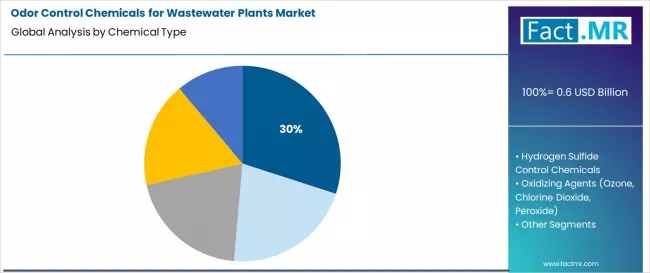
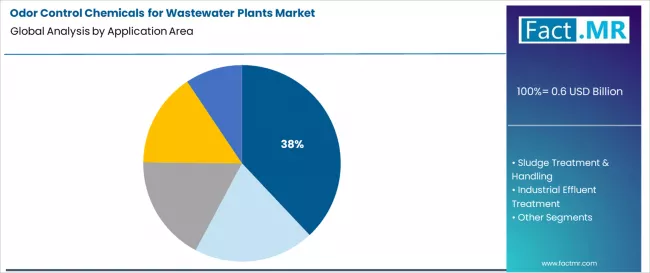
Odor control chemicals for wastewater plants market is projected to grow from USD 0.6 billion in 2026 to USD 1.4 billion by 2036, at a CAGR of 8.3%. Bio-Enzymatic Odor Neutralizers will dominate with a 30.0% market share, while sewage treatment plants will lead the application area segment with a 38.0% share.

Odor Control Chemicals for Wastewater Plants Market Forecast and Outlook 2026 to 2036

The global market for odor control chemicals in wastewater treatment plants is projected to reach USD 1.42 billion by 2036. The market is valued at USD 0.64 billion in 2026 and is set to rise at a CAGR of 8.3% during the assessment period.

Key Takeaways from the Odor Control Chemicals for Wastewater Plants Market

  • Market Value for 2026: USD 0.64 Billion
  • Market Value for 2036: USD 1.42 Billion
  • Forecast CAGR (2026-2036): 8.3%
  • Leading Chemical Type Share (2026): Bio-Enzymatic Odor Neutralizers (30%)
  • Leading Application Area Share (2026): Sewage Treatment Plants (38%)
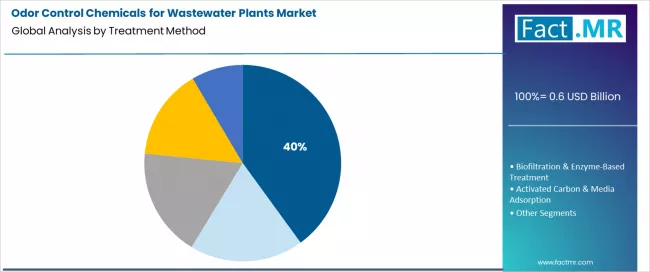
  • Leading Treatment Method Share (2026): Chemical Dosing & Scrubbing (40%)
  • Key Players in the Market: Ecolab Inc., Veolia Environnement S.A., Kemira Oyj., Solenis, Suez Water Technologies
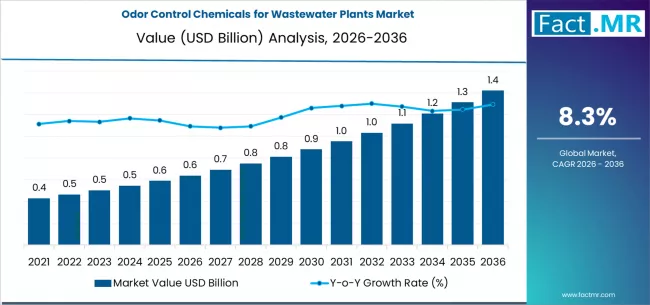
Odor Control Chemicals For Wastewater Plants Market Market Value Analysis

By chemical type, bio-enzymatic odor neutralizers hold a leading 30% share. The application area for sewage treatment plants represents the dominant segment at 38%. Chemical dosing and scrubbing is the foremost treatment method, accounting for a 40% share.

Growth is driven by increasing urbanization, stricter community air quality regulations, and the expansion of wastewater treatment infrastructure closer to residential areas. Effective odor management is no longer just an operational concern but a critical component of community relations and regulatory compliance for utilities and municipalities.

Odor control chemicals are essential for mitigating nuisance odors from compounds like hydrogen sulfide, ammonia, and volatile organic acids. Their application protects worker safety, improves community relations, and allows for the continued operation and expansion of vital wastewater infrastructure in populated regions.

Odor Control Chemicals for Wastewater Plants Market

Metric Value
Market Value (2026) USD 0.64 Billion
Market Forecast Value (2036) USD 1.42 Billion
Forecast CAGR (2026-2036) 8.3%

Category

Category Segments
Chemical Type Bio-Enzymatic Odor Neutralizers, Hydrogen Sulfide (H₂S) Control Chemicals, Oxidizing Agents (Ozone, Chlorine Dioxide, Peroxide), Adsorbents & Activated Media, Other Specialty Odor Control Chemicals
Application Area Sewage Treatment Plants, Sludge Treatment & Handling, Industrial Effluent Treatment, Pump Stations & Collection Systems, Landfills & Waste Transfer Facilities
Treatment Method Chemical Dosing & Scrubbing, Biofiltration & Enzyme-Based Treatment, Activated Carbon & Media Adsorption, Mist / Vapor Phase Treatment Systems, Hybrid & Advanced Odor Control Systems
Region North America, Latin America, Western Europe, Eastern Europe, East Asia, South Asia & Pacific, MEA

Segmental Analysis

Which Chemical Type is Gaining Preference for Sustainable Odor Management?
Odor Control Chemicals For Wastewater Plants Market Analysis By Chemical Type

Bio-enzymatic odor neutralizers lead the segment with a 30% share. Their growing preference is due to their environmentally benign mode of action; they use natural enzymes and microbes to biologically degrade odor-causing compounds rather than masking them.

This approach aligns with sustainability goals, minimizes chemical residuals, and is often perceived more favorably by communities and regulators. Their effectiveness across a range of odors, including organic sulfides and amines, makes them a versatile solution.

Where is Odor Control Most Critical for Public Acceptance of Infrastructure?
Odor Control Chemicals For Wastewater Plants Market Analysis By Application Area

Sewage treatment plants represent the largest application area with a 38% share. These facilities are often located on the periphery of communities that later expand around them. The potential for odor drift affecting residential areas is high, making odor control a primary concern for public relations and regulatory compliance. The scale and continuous operation of these plants generate consistent, high-volume demand for reliable odor control programs.

What is the Most Direct and Controllable Method for Immediate Odor Abatement?
Odor Control Chemicals For Wastewater Plants Market Analysis By Treatment Method

Chemical dosing and scrubbing is the leading treatment method with a 40% share. This method involves directly injecting chemicals like oxidizing agents or neutralizing compounds into the air stream or using them in wet scrubbers.

It offers rapid, predictable results and allows for precise control in response to fluctuating odor levels. Its effectiveness for treating high-concentration point sources, such as sludge processing vents or inlet works, makes it a cornerstone technology in comprehensive odor management plans.

What are the Drivers, Restraints, and Key Trends of the Odor Control Chemicals for Wastewater Plants Market?

The primary market driver is intensifying regulatory pressure and community activism regarding air quality and nuisance odors. Stricter local ordinances and environmental permits now include specific odor concentration limits. Urban encroachment on previously isolated treatment plants further amplifies this driver, as utilities must invest proactively to prevent complaints and potential legal action.

A significant restraint is the variable and complex nature of wastewater odors, which can change with flow, temperature, and processing stages. A single chemical solution is rarely effective for all odorants, often requiring customized, multi-pronged approaches that increase cost and complexity. The operational expense of continuous chemical dosing or media replacement can also be substantial for budget-constrained municipalities.

Key trends include the adoption of smart dosing systems integrated with electronic nose sensors that detect odor spikes and adjust chemical feed in real-time. There is growing use of combined chemical-biological systems where a chemical oxidizer breaks down complex odors into simpler compounds that are then treated in a biofilter. The market is moving toward more sustainable and circular solutions, such as using waste-derived biochar as an adsorbent. Hybrid treatment trains that sequentially use different methods are becoming standard for ensuring robust odor removal.

Analysis of the Odor Control Chemicals for Wastewater Plants Market by Key Countries
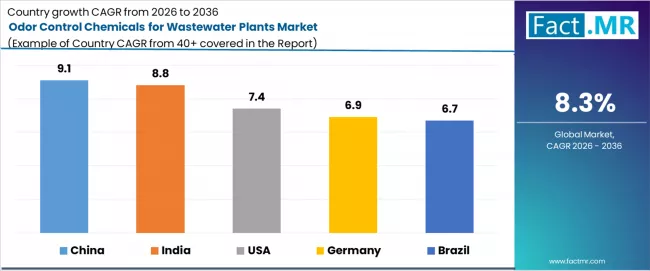
Odor Control Chemicals For Wastewater Plants Market Cagr Analysis By Country

Country CAGR (2026-2036)
China 9.10%
India 8.80%
USA 7.40%
Germany 6.90%
Brazil 6.70%

How does China's Massive Wastewater Infrastructure Expansion Drive Demand?

China's leading CAGR of 9.10% is fueled by its continuous investment in urban wastewater treatment capacity and stricter enforcement of municipal environmental standards, including odor control.

As thousands of treatment plants are built or upgraded, and as urban populations move closer to these facilities, the implementation of chemical and biological odor control systems becomes a standard requirement, creating vast market demand.

What is the Impact of India's Rapid Urbanization and New Treatment Plants?

India's 8.80% growth is underpinned by the rapid construction of new sewage treatment plants under national missions and the upgrading of existing facilities in crowded cities. Community sensitivity to odors is high, and new projects must include odor mitigation from the design phase to gain public acceptance. This proactive approach in a rapidly expanding infrastructure market fuels significant growth for odor control solutions.

How do US Regulations and Community Standards Influence the Market?
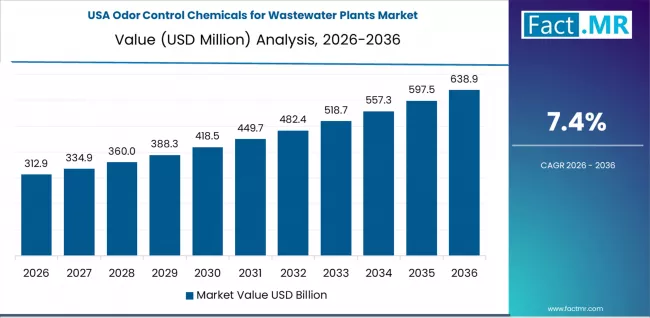
Odor Control Chemicals For Wastewater Plants Market Country Value Analysis

The USA's 7.40% growth is supported by well-established nuisance odor regulations at state and local levels, along with community right-to-know laws. Wastewater utilities face direct financial penalties and reputational damage from odor complaints, driving ongoing investment in both upgrades and optimized chemical programs. The market focuses on reliable, automated solutions that provide verifiable compliance.

Why is Germany a Market for Advanced and Integrated Abatement Technologies?

Germany's 6.90% CAGR reflects its stringent air quality controls and high population density, which leave little tolerance for industrial or municipal odors. German engineering emphasizes efficient, often multi-stage odor control systems that achieve near-total odor removal. This demand for high-performance, integrated solutions sustains a market for advanced oxidizing agents, precision dosing systems, and sophisticated monitoring technologies.

What Role does Brazil's Sanitation Expansion and Environmental Licensing Play?

Brazil's 6.70% growth is anchored in its national sanitation framework and the environmental licensing process for new wastewater facilities. Licenses frequently mandate specific odor control measures to protect surrounding communities. This regulatory driver, combined with industrial wastewater challenges, creates a steady demand for chemical and physical odor control technologies.

Competitive Landscape of the Odor Control Chemicals for Wastewater Plants Market
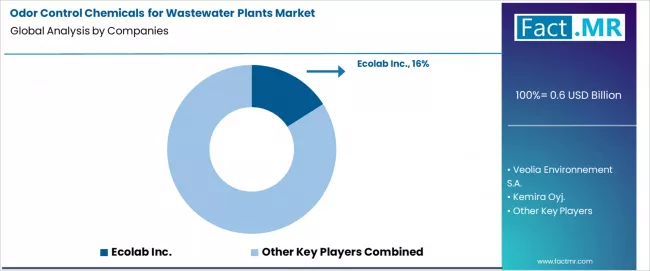
Odor Control Chemicals For Wastewater Plants Market Analysis By Company

The competitive landscape involves global water treatment chemical suppliers and environmental service corporations. Leaders like Ecolab and Veolia offer comprehensive odor control portfolios, from specialty chemicals to full-scope service contracts including system design and operation.

Competition centers on providing effective solutions for complex odor profiles, demonstrating cost-effectiveness through reduced chemical consumption via smart controls, and offering strong field technical support for troubleshooting and optimization.

Key Players in the Odor Control Chemicals for Wastewater Plants Market

  • Ecolab Inc.
  • Veolia Environnement S.A.
  • Kemira Oyj.
  • Solenis
  • Suez Water Technologies

Scope of Report

Items Values
Quantitative Units USD Billion
Chemical Type Bio-Enzymatic, H₂S Control, Oxidizing Agents, Adsorbents, Other
Application Area Sewage Treatment, Sludge Handling, Industrial Effluent, Collection Systems, Landfills
Treatment Method Chemical Dosing/Scrubbing, Biofiltration, Adsorption, Mist Systems, Hybrid
Key Countries China, India, USA, Germany, Brazil
Key Companies Ecolab Inc., Veolia Environnement S.A., Kemira Oyj., Solenis, Suez Water Technologies
Additional Analysis Analysis of key odorants (H₂S, NH₃, VFAs) and their treatability; monitoring techniques (olfactometry, e-noses); chemical consumption models based on flow and load; environmental impact of spent scrubbing liquids and adsorbents; regulatory frameworks for odor emission and monitoring.

Market by Segments

  • Chemical Type :

    • Bio-Enzymatic Odor Neutralizers
    • Hydrogen Sulfide Control Chemicals
    • Oxidizing Agents (Ozone, Chlorine Dioxide, Peroxide)
    • Adsorbents & Activated Media
    • Other Specialty Odor Control Chemicals
  • Application Area :

    • Sewage Treatment Plants
    • Sludge Treatment & Handling
    • Industrial Effluent Treatment
    • Pump Stations & Collection Systems
    • Landfills & Waste Transfer Facilities
  • Treatment Method :

    • Chemical Dosing & Scrubbing
    • Biofiltration & Enzyme-Based Treatment
    • Activated Carbon & Media Adsorption
    • Mist/Vapor Phase Treatment Systems
    • Hybrid & Advanced Odor Control Systems
  • Region :

    • North America
      • USA
      • Canada
    • Latin America
      • Brazil
      • Mexico
      • Argentina
      • Rest of Latin America
    • Western Europe
      • Germany
      • UK
      • France
      • Spain
      • Italy
      • BENELUX
      • Rest of Western Europe
    • Eastern Europe
      • Russia
      • Poland
      • Czech Republic
      • Rest of Eastern Europe
    • East Asia
      • China
      • Japan
      • South Korea
      • Rest of East Asia
    • South Asia & Pacific
      • India
      • ASEAN
      • Australia
      • Rest of South Asia & Pacific
    • MEA
      • Saudi Arabia
      • UAE
      • Turkiye
      • Rest of MEA

Table of Content

  1. Executive Summary
    • Global Market Outlook
    • Demand to side Trends
    • Supply to side Trends
    • Technology Roadmap Analysis
    • Analysis and Recommendations
  2. Market Overview
    • Market Coverage / Taxonomy
    • Market Definition / Scope / Limitations
  3. Market Background
    • Market Dynamics
      • Drivers
      • Restraints
      • Opportunity
      • Trends
    • Scenario Forecast
      • Demand in Optimistic Scenario
      • Demand in Likely Scenario
      • Demand in Conservative Scenario
    • Opportunity Map Analysis
    • Product Life Cycle Analysis
    • Supply Chain Analysis
    • Investment Feasibility Matrix
    • Value Chain Analysis
    • PESTLE and Porter’s Analysis
    • Regulatory Landscape
    • Regional Parent Market Outlook
    • Production and Consumption Statistics
    • Import and Export Statistics
  4. Global Market Analysis 2021 to 2025 and Forecast, 2026 to 2036
    • Historical Market Size Value (USD Million) Analysis, 2021 to 2025
    • Current and Future Market Size Value (USD Million) Projections, 2026 to 2036
      • Y to o to Y Growth Trend Analysis
      • Absolute $ Opportunity Analysis
  5. Global Market Pricing Analysis 2021 to 2025 and Forecast 2026 to 2036
  6. Global Market Analysis 2021 to 2025 and Forecast 2026 to 2036, By Chemical Type
    • Introduction / Key Findings
    • Historical Market Size Value (USD Million) Analysis By Chemical Type, 2021 to 2025
    • Current and Future Market Size Value (USD Million) Analysis and Forecast By Chemical Type, 2026 to 2036
      • Bio-Enzymatic Odor Neutralizers
      • Hydrogen Sulfide Control Chemicals
      • Oxidizing Agents (Ozone, Chlorine Dioxide, Peroxide)
      • Adsorbents & Activated Media
      • Other Specialty Odor Control Chemicals
    • Y to o to Y Growth Trend Analysis By Chemical Type, 2021 to 2025
    • Absolute $ Opportunity Analysis By Chemical Type, 2026 to 2036
  7. Global Market Analysis 2021 to 2025 and Forecast 2026 to 2036, By Application Area
    • Introduction / Key Findings
    • Historical Market Size Value (USD Million) Analysis By Application Area, 2021 to 2025
    • Current and Future Market Size Value (USD Million) Analysis and Forecast By Application Area, 2026 to 2036
      • Sewage Treatment Plants
      • Sludge Treatment & Handling
      • Industrial Effluent Treatment
      • Pump Stations & Collection Systems
      • Landfills & Waste Transfer Facilities
    • Y to o to Y Growth Trend Analysis By Application Area, 2021 to 2025
    • Absolute $ Opportunity Analysis By Application Area, 2026 to 2036
  8. Global Market Analysis 2021 to 2025 and Forecast 2026 to 2036, By Treatment Method
    • Introduction / Key Findings
    • Historical Market Size Value (USD Million) Analysis By Treatment Method, 2021 to 2025
    • Current and Future Market Size Value (USD Million) Analysis and Forecast By Treatment Method, 2026 to 2036
      • Chemical Dosing & Scrubbing
      • Biofiltration & Enzyme-Based Treatment
      • Activated Carbon & Media Adsorption
      • Mist / Vapor Phase Treatment Systems
      • Hybrid & Advanced Odor Control Systems
    • Y to o to Y Growth Trend Analysis By Treatment Method, 2021 to 2025
    • Absolute $ Opportunity Analysis By Treatment Method, 2026 to 2036
  9. Global Market Analysis 2021 to 2025 and Forecast 2026 to 2036, By Region
    • Introduction
    • Historical Market Size Value (USD Million) Analysis By Region, 2021 to 2025
    • Current Market Size Value (USD Million) Analysis and Forecast By Region, 2026 to 2036
      • North America
      • Latin America
      • Western Europe
      • Eastern Europe
      • East Asia
      • South Asia and Pacific
      • Middle East & Africa
    • Market Attractiveness Analysis By Region
  10. North America Market Analysis 2021 to 2025 and Forecast 2026 to 2036, By Country
    • Historical Market Size Value (USD Million) Trend Analysis By Market Taxonomy, 2021 to 2025
    • Market Size Value (USD Million) Forecast By Market Taxonomy, 2026 to 2036
      • By Country
        • USA
        • Canada
        • Mexico
      • By Chemical Type
      • By Application Area
      • By Treatment Method
    • Market Attractiveness Analysis
      • By Country
      • By Chemical Type
      • By Application Area
      • By Treatment Method
    • Key Takeaways
  11. Latin America Market Analysis 2021 to 2025 and Forecast 2026 to 2036, By Country
    • Historical Market Size Value (USD Million) Trend Analysis By Market Taxonomy, 2021 to 2025
    • Market Size Value (USD Million) Forecast By Market Taxonomy, 2026 to 2036
      • By Country
        • Brazil
        • Chile
        • Rest of Latin America
      • By Chemical Type
      • By Application Area
      • By Treatment Method
    • Market Attractiveness Analysis
      • By Country
      • By Chemical Type
      • By Application Area
      • By Treatment Method
    • Key Takeaways
  12. Western Europe Market Analysis 2021 to 2025 and Forecast 2026 to 2036, By Country
    • Historical Market Size Value (USD Million) Trend Analysis By Market Taxonomy, 2021 to 2025
    • Market Size Value (USD Million) Forecast By Market Taxonomy, 2026 to 2036
      • By Country
        • Germany
        • UK
        • Italy
        • Spain
        • France
        • Nordic
        • BENELUX
        • Rest of Western Europe
      • By Chemical Type
      • By Application Area
      • By Treatment Method
    • Market Attractiveness Analysis
      • By Country
      • By Chemical Type
      • By Application Area
      • By Treatment Method
    • Key Takeaways
  13. Eastern Europe Market Analysis 2021 to 2025 and Forecast 2026 to 2036, By Country
    • Historical Market Size Value (USD Million) Trend Analysis By Market Taxonomy, 2021 to 2025
    • Market Size Value (USD Million) Forecast By Market Taxonomy, 2026 to 2036
      • By Country
        • Russia
        • Poland
        • Hungary
        • Balkan & Baltic
        • Rest of Eastern Europe
      • By Chemical Type
      • By Application Area
      • By Treatment Method
    • Market Attractiveness Analysis
      • By Country
      • By Chemical Type
      • By Application Area
      • By Treatment Method
    • Key Takeaways
  14. East Asia Market Analysis 2021 to 2025 and Forecast 2026 to 2036, By Country
    • Historical Market Size Value (USD Million) Trend Analysis By Market Taxonomy, 2021 to 2025
    • Market Size Value (USD Million) Forecast By Market Taxonomy, 2026 to 2036
      • By Country
        • China
        • Japan
        • South Korea
      • By Chemical Type
      • By Application Area
      • By Treatment Method
    • Market Attractiveness Analysis
      • By Country
      • By Chemical Type
      • By Application Area
      • By Treatment Method
    • Key Takeaways
  15. South Asia and Pacific Market Analysis 2021 to 2025 and Forecast 2026 to 2036, By Country
    • Historical Market Size Value (USD Million) Trend Analysis By Market Taxonomy, 2021 to 2025
    • Market Size Value (USD Million) Forecast By Market Taxonomy, 2026 to 2036
      • By Country
        • India
        • ASEAN
        • Australia & New Zealand
        • Rest of South Asia and Pacific
      • By Chemical Type
      • By Application Area
      • By Treatment Method
    • Market Attractiveness Analysis
      • By Country
      • By Chemical Type
      • By Application Area
      • By Treatment Method
    • Key Takeaways
  16. Middle East & Africa Market Analysis 2021 to 2025 and Forecast 2026 to 2036, By Country
    • Historical Market Size Value (USD Million) Trend Analysis By Market Taxonomy, 2021 to 2025
    • Market Size Value (USD Million) Forecast By Market Taxonomy, 2026 to 2036
      • By Country
        • Kingdom of Saudi Arabia
        • Other GCC Countries
        • Turkiye
        • South Africa
        • Other African Union
        • Rest of Middle East & Africa
      • By Chemical Type
      • By Application Area
      • By Treatment Method
    • Market Attractiveness Analysis
      • By Country
      • By Chemical Type
      • By Application Area
      • By Treatment Method
    • Key Takeaways
  17. Key Countries Market Analysis
    • USA
      • Pricing Analysis
      • Market Share Analysis, 2025
        • By Chemical Type
        • By Application Area
        • By Treatment Method
    • Canada
      • Pricing Analysis
      • Market Share Analysis, 2025
        • By Chemical Type
        • By Application Area
        • By Treatment Method
    • Mexico
      • Pricing Analysis
      • Market Share Analysis, 2025
        • By Chemical Type
        • By Application Area
        • By Treatment Method
    • Brazil
      • Pricing Analysis
      • Market Share Analysis, 2025
        • By Chemical Type
        • By Application Area
        • By Treatment Method
    • Chile
      • Pricing Analysis
      • Market Share Analysis, 2025
        • By Chemical Type
        • By Application Area
        • By Treatment Method
    • Germany
      • Pricing Analysis
      • Market Share Analysis, 2025
        • By Chemical Type
        • By Application Area
        • By Treatment Method
    • UK
      • Pricing Analysis
      • Market Share Analysis, 2025
        • By Chemical Type
        • By Application Area
        • By Treatment Method
    • Italy
      • Pricing Analysis
      • Market Share Analysis, 2025
        • By Chemical Type
        • By Application Area
        • By Treatment Method
    • Spain
      • Pricing Analysis
      • Market Share Analysis, 2025
        • By Chemical Type
        • By Application Area
        • By Treatment Method
    • France
      • Pricing Analysis
      • Market Share Analysis, 2025
        • By Chemical Type
        • By Application Area
        • By Treatment Method
    • India
      • Pricing Analysis
      • Market Share Analysis, 2025
        • By Chemical Type
        • By Application Area
        • By Treatment Method
    • ASEAN
      • Pricing Analysis
      • Market Share Analysis, 2025
        • By Chemical Type
        • By Application Area
        • By Treatment Method
    • Australia & New Zealand
      • Pricing Analysis
      • Market Share Analysis, 2025
        • By Chemical Type
        • By Application Area
        • By Treatment Method
    • China
      • Pricing Analysis
      • Market Share Analysis, 2025
        • By Chemical Type
        • By Application Area
        • By Treatment Method
    • Japan
      • Pricing Analysis
      • Market Share Analysis, 2025
        • By Chemical Type
        • By Application Area
        • By Treatment Method
    • South Korea
      • Pricing Analysis
      • Market Share Analysis, 2025
        • By Chemical Type
        • By Application Area
        • By Treatment Method
    • Russia
      • Pricing Analysis
      • Market Share Analysis, 2025
        • By Chemical Type
        • By Application Area
        • By Treatment Method
    • Poland
      • Pricing Analysis
      • Market Share Analysis, 2025
        • By Chemical Type
        • By Application Area
        • By Treatment Method
    • Hungary
      • Pricing Analysis
      • Market Share Analysis, 2025
        • By Chemical Type
        • By Application Area
        • By Treatment Method
    • Kingdom of Saudi Arabia
      • Pricing Analysis
      • Market Share Analysis, 2025
        • By Chemical Type
        • By Application Area
        • By Treatment Method
    • Turkiye
      • Pricing Analysis
      • Market Share Analysis, 2025
        • By Chemical Type
        • By Application Area
        • By Treatment Method
    • South Africa
      • Pricing Analysis
      • Market Share Analysis, 2025
        • By Chemical Type
        • By Application Area
        • By Treatment Method
  18. Market Structure Analysis
    • Competition Dashboard
    • Competition Benchmarking
    • Market Share Analysis of Top Players
      • By Regional
      • By Chemical Type
      • By Application Area
      • By Treatment Method
  19. Competition Analysis
    • Competition Deep Dive
      • Ecolab Inc.
        • Overview
        • Product Portfolio
        • Profitability by Market Segments (Product/Age /Sales Channel/Region)
        • Sales Footprint
        • Strategy Overview
          • Marketing Strategy
          • Product Strategy
          • Channel Strategy
      • Veolia Environnement S.A.
      • Kemira Oyj.
      • Solenis
      • Suez Water Technologies
  20. Assumptions & Acronyms Used
  21. Research Methodology

List Of Table

  • Table 1: Global Market Value (USD Million) Forecast by Region, 2021 to 2036
  • Table 2: Global Market Value (USD Million) Forecast by Chemical Type, 2021 to 2036
  • Table 3: Global Market Value (USD Million) Forecast by Application Area, 2021 to 2036
  • Table 4: Global Market Value (USD Million) Forecast by Treatment Method, 2021 to 2036
  • Table 5: North America Market Value (USD Million) Forecast by Country, 2021 to 2036
  • Table 6: North America Market Value (USD Million) Forecast by Chemical Type, 2021 to 2036
  • Table 7: North America Market Value (USD Million) Forecast by Application Area, 2021 to 2036
  • Table 8: North America Market Value (USD Million) Forecast by Treatment Method, 2021 to 2036
  • Table 9: Latin America Market Value (USD Million) Forecast by Country, 2021 to 2036
  • Table 10: Latin America Market Value (USD Million) Forecast by Chemical Type, 2021 to 2036
  • Table 11: Latin America Market Value (USD Million) Forecast by Application Area, 2021 to 2036
  • Table 12: Latin America Market Value (USD Million) Forecast by Treatment Method, 2021 to 2036
  • Table 13: Western Europe Market Value (USD Million) Forecast by Country, 2021 to 2036
  • Table 14: Western Europe Market Value (USD Million) Forecast by Chemical Type, 2021 to 2036
  • Table 15: Western Europe Market Value (USD Million) Forecast by Application Area, 2021 to 2036
  • Table 16: Western Europe Market Value (USD Million) Forecast by Treatment Method, 2021 to 2036
  • Table 17: Eastern Europe Market Value (USD Million) Forecast by Country, 2021 to 2036
  • Table 18: Eastern Europe Market Value (USD Million) Forecast by Chemical Type, 2021 to 2036
  • Table 19: Eastern Europe Market Value (USD Million) Forecast by Application Area, 2021 to 2036
  • Table 20: Eastern Europe Market Value (USD Million) Forecast by Treatment Method, 2021 to 2036
  • Table 21: East Asia Market Value (USD Million) Forecast by Country, 2021 to 2036
  • Table 22: East Asia Market Value (USD Million) Forecast by Chemical Type, 2021 to 2036
  • Table 23: East Asia Market Value (USD Million) Forecast by Application Area, 2021 to 2036
  • Table 24: East Asia Market Value (USD Million) Forecast by Treatment Method, 2021 to 2036
  • Table 25: South Asia and Pacific Market Value (USD Million) Forecast by Country, 2021 to 2036
  • Table 26: South Asia and Pacific Market Value (USD Million) Forecast by Chemical Type, 2021 to 2036
  • Table 27: South Asia and Pacific Market Value (USD Million) Forecast by Application Area, 2021 to 2036
  • Table 28: South Asia and Pacific Market Value (USD Million) Forecast by Treatment Method, 2021 to 2036
  • Table 29: Middle East & Africa Market Value (USD Million) Forecast by Country, 2021 to 2036
  • Table 30: Middle East & Africa Market Value (USD Million) Forecast by Chemical Type, 2021 to 2036
  • Table 31: Middle East & Africa Market Value (USD Million) Forecast by Application Area, 2021 to 2036
  • Table 32: Middle East & Africa Market Value (USD Million) Forecast by Treatment Method, 2021 to 2036

List Of Figures

  • Figure 1: Global Market Pricing Analysis
  • Figure 2: Global Market Value (USD Million) Forecast 2021 to 2036
  • Figure 3: Global Market Value Share and BPS Analysis by Chemical Type, 2026 and 2036
  • Figure 4: Global Market Y to o to Y Growth Comparison by Chemical Type, 2026 to 2036
  • Figure 5: Global Market Attractiveness Analysis by Chemical Type
  • Figure 6: Global Market Value Share and BPS Analysis by Application Area, 2026 and 2036
  • Figure 7: Global Market Y to o to Y Growth Comparison by Application Area, 2026 to 2036
  • Figure 8: Global Market Attractiveness Analysis by Application Area
  • Figure 9: Global Market Value Share and BPS Analysis by Treatment Method, 2026 and 2036
  • Figure 10: Global Market Y to o to Y Growth Comparison by Treatment Method, 2026 to 2036
  • Figure 11: Global Market Attractiveness Analysis by Treatment Method
  • Figure 12: Global Market Value (USD Million) Share and BPS Analysis by Region, 2026 and 2036
  • Figure 13: Global Market Y to o to Y Growth Comparison by Region, 2026 to 2036
  • Figure 14: Global Market Attractiveness Analysis by Region
  • Figure 15: North America Market Incremental Dollar Opportunity, 2026 to 2036
  • Figure 16: Latin America Market Incremental Dollar Opportunity, 2026 to 2036
  • Figure 17: Western Europe Market Incremental Dollar Opportunity, 2026 to 2036
  • Figure 18: Eastern Europe Market Incremental Dollar Opportunity, 2026 to 2036
  • Figure 19: East Asia Market Incremental Dollar Opportunity, 2026 to 2036
  • Figure 20: South Asia and Pacific Market Incremental Dollar Opportunity, 2026 to 2036
  • Figure 21: Middle East & Africa Market Incremental Dollar Opportunity, 2026 to 2036
  • Figure 22: North America Market Value Share and BPS Analysis by Country, 2026 and 2036
  • Figure 23: North America Market Value Share and BPS Analysis by Chemical Type, 2026 and 2036
  • Figure 24: North America Market Y to o to Y Growth Comparison by Chemical Type, 2026 to 2036
  • Figure 25: North America Market Attractiveness Analysis by Chemical Type
  • Figure 26: North America Market Value Share and BPS Analysis by Application Area, 2026 and 2036
  • Figure 27: North America Market Y to o to Y Growth Comparison by Application Area, 2026 to 2036
  • Figure 28: North America Market Attractiveness Analysis by Application Area
  • Figure 29: North America Market Value Share and BPS Analysis by Treatment Method, 2026 and 2036
  • Figure 30: North America Market Y to o to Y Growth Comparison by Treatment Method, 2026 to 2036
  • Figure 31: North America Market Attractiveness Analysis by Treatment Method
  • Figure 32: Latin America Market Value Share and BPS Analysis by Country, 2026 and 2036
  • Figure 33: Latin America Market Value Share and BPS Analysis by Chemical Type, 2026 and 2036
  • Figure 34: Latin America Market Y to o to Y Growth Comparison by Chemical Type, 2026 to 2036
  • Figure 35: Latin America Market Attractiveness Analysis by Chemical Type
  • Figure 36: Latin America Market Value Share and BPS Analysis by Application Area, 2026 and 2036
  • Figure 37: Latin America Market Y to o to Y Growth Comparison by Application Area, 2026 to 2036
  • Figure 38: Latin America Market Attractiveness Analysis by Application Area
  • Figure 39: Latin America Market Value Share and BPS Analysis by Treatment Method, 2026 and 2036
  • Figure 40: Latin America Market Y to o to Y Growth Comparison by Treatment Method, 2026 to 2036
  • Figure 41: Latin America Market Attractiveness Analysis by Treatment Method
  • Figure 42: Western Europe Market Value Share and BPS Analysis by Country, 2026 and 2036
  • Figure 43: Western Europe Market Value Share and BPS Analysis by Chemical Type, 2026 and 2036
  • Figure 44: Western Europe Market Y to o to Y Growth Comparison by Chemical Type, 2026 to 2036
  • Figure 45: Western Europe Market Attractiveness Analysis by Chemical Type
  • Figure 46: Western Europe Market Value Share and BPS Analysis by Application Area, 2026 and 2036
  • Figure 47: Western Europe Market Y to o to Y Growth Comparison by Application Area, 2026 to 2036
  • Figure 48: Western Europe Market Attractiveness Analysis by Application Area
  • Figure 49: Western Europe Market Value Share and BPS Analysis by Treatment Method, 2026 and 2036
  • Figure 50: Western Europe Market Y to o to Y Growth Comparison by Treatment Method, 2026 to 2036
  • Figure 51: Western Europe Market Attractiveness Analysis by Treatment Method
  • Figure 52: Eastern Europe Market Value Share and BPS Analysis by Country, 2026 and 2036
  • Figure 53: Eastern Europe Market Value Share and BPS Analysis by Chemical Type, 2026 and 2036
  • Figure 54: Eastern Europe Market Y to o to Y Growth Comparison by Chemical Type, 2026 to 2036
  • Figure 55: Eastern Europe Market Attractiveness Analysis by Chemical Type
  • Figure 56: Eastern Europe Market Value Share and BPS Analysis by Application Area, 2026 and 2036
  • Figure 57: Eastern Europe Market Y to o to Y Growth Comparison by Application Area, 2026 to 2036
  • Figure 58: Eastern Europe Market Attractiveness Analysis by Application Area
  • Figure 59: Eastern Europe Market Value Share and BPS Analysis by Treatment Method, 2026 and 2036
  • Figure 60: Eastern Europe Market Y to o to Y Growth Comparison by Treatment Method, 2026 to 2036
  • Figure 61: Eastern Europe Market Attractiveness Analysis by Treatment Method
  • Figure 62: East Asia Market Value Share and BPS Analysis by Country, 2026 and 2036
  • Figure 63: East Asia Market Value Share and BPS Analysis by Chemical Type, 2026 and 2036
  • Figure 64: East Asia Market Y to o to Y Growth Comparison by Chemical Type, 2026 to 2036
  • Figure 65: East Asia Market Attractiveness Analysis by Chemical Type
  • Figure 66: East Asia Market Value Share and BPS Analysis by Application Area, 2026 and 2036
  • Figure 67: East Asia Market Y to o to Y Growth Comparison by Application Area, 2026 to 2036
  • Figure 68: East Asia Market Attractiveness Analysis by Application Area
  • Figure 69: East Asia Market Value Share and BPS Analysis by Treatment Method, 2026 and 2036
  • Figure 70: East Asia Market Y to o to Y Growth Comparison by Treatment Method, 2026 to 2036
  • Figure 71: East Asia Market Attractiveness Analysis by Treatment Method
  • Figure 72: South Asia and Pacific Market Value Share and BPS Analysis by Country, 2026 and 2036
  • Figure 73: South Asia and Pacific Market Value Share and BPS Analysis by Chemical Type, 2026 and 2036
  • Figure 74: South Asia and Pacific Market Y to o to Y Growth Comparison by Chemical Type, 2026 to 2036
  • Figure 75: South Asia and Pacific Market Attractiveness Analysis by Chemical Type
  • Figure 76: South Asia and Pacific Market Value Share and BPS Analysis by Application Area, 2026 and 2036
  • Figure 77: South Asia and Pacific Market Y to o to Y Growth Comparison by Application Area, 2026 to 2036
  • Figure 78: South Asia and Pacific Market Attractiveness Analysis by Application Area
  • Figure 79: South Asia and Pacific Market Value Share and BPS Analysis by Treatment Method, 2026 and 2036
  • Figure 80: South Asia and Pacific Market Y to o to Y Growth Comparison by Treatment Method, 2026 to 2036
  • Figure 81: South Asia and Pacific Market Attractiveness Analysis by Treatment Method
  • Figure 82: Middle East & Africa Market Value Share and BPS Analysis by Country, 2026 and 2036
  • Figure 83: Middle East & Africa Market Value Share and BPS Analysis by Chemical Type, 2026 and 2036
  • Figure 84: Middle East & Africa Market Y to o to Y Growth Comparison by Chemical Type, 2026 to 2036
  • Figure 85: Middle East & Africa Market Attractiveness Analysis by Chemical Type
  • Figure 86: Middle East & Africa Market Value Share and BPS Analysis by Application Area, 2026 and 2036
  • Figure 87: Middle East & Africa Market Y to o to Y Growth Comparison by Application Area, 2026 to 2036
  • Figure 88: Middle East & Africa Market Attractiveness Analysis by Application Area
  • Figure 89: Middle East & Africa Market Value Share and BPS Analysis by Treatment Method, 2026 and 2036
  • Figure 90: Middle East & Africa Market Y to o to Y Growth Comparison by Treatment Method, 2026 to 2036
  • Figure 91: Middle East & Africa Market Attractiveness Analysis by Treatment Method
  • Figure 92: Global Market - Tier Structure Analysis
  • Figure 93: Global Market - Company Share Analysis

- FAQs -

How big is the odor control chemicals for wastewater plants market in 2026?

The global odor control chemicals for wastewater plants market is estimated to be valued at USD 0.6 billion in 2026.

What will be the size of odor control chemicals for wastewater plants market in 2036?

The market size for the odor control chemicals for wastewater plants market is projected to reach USD 1.4 billion by 2036.

How much will be the odor control chemicals for wastewater plants market growth between 2026 and 2036?

The odor control chemicals for wastewater plants market is expected to grow at a 8.3% CAGR between 2026 and 2036.

What are the key product types in the odor control chemicals for wastewater plants market?

The key product types in odor control chemicals for wastewater plants market are bio-enzymatic odor neutralizers, hydrogen sulfide control chemicals, oxidizing agents (ozone, chlorine dioxide, peroxide), adsorbents & activated media and other specialty odor control chemicals.

Which application area segment to contribute significant share in the odor control chemicals for wastewater plants market in 2026?

In terms of application area, sewage treatment plants segment to command 38.0% share in the odor control chemicals for wastewater plants market in 2026.

Odor Control Chemicals for Wastewater Plants Market