Pediatric Allergy Care Market (2026 - 2036)
Pediatric Allergy Care Market Size and Share Forecast Outlook 2026 to 2036
Core Findings
Pediatric Allergy Care Market Forecast and Outlook 2026 to 2036
The pediatric allergy care market begins 2026 at USD 6.7 billion and reaches USD 14.3 billion by 2036, which represents a 7.90% CAGR.
Pediatric Allergy Care Market Key Takeaways
- Pediatric Allergy Care Market Value (2026): USD 6.7 billion
- Pediatric Allergy Care Market Forecast Value (2036): USD 14.3 billion
- Pediatric Allergy Care Market Forecast CAGR: 7.9%
- Leading Type in Pediatric Allergy Care Market: Drug therapy
- Key Growth Regions in Pediatric Allergy Care Market: North America, Europe, Asia Pacific, Latin America, Middle East & Africa
- Top Players in Pediatric Allergy Care Market: ALK-Abelló, Sanofi, Regeneron Pharmaceuticals, Thermo Fisher Scientific, Stallergenes Greer, AstraZeneca
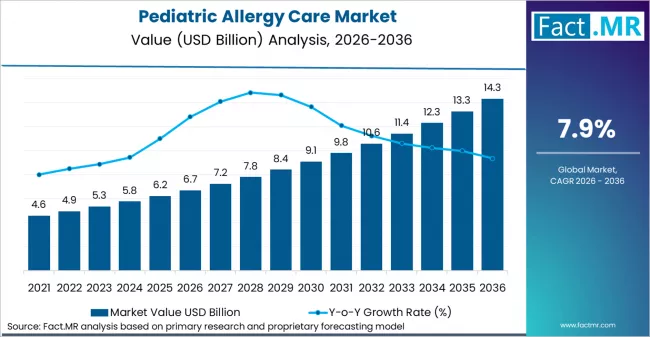
This field covers diagnosis, treatment, and long-term management of allergic conditions in children across clinics, hospitals, and home care settings. Demand is shaped by structured care pathways that include screening, follow-up visits, and ongoing therapy rather than by short treatment cycles.
Healthcare providers and caregivers place emphasis on reliability of diagnosis, safety of treatment options, and ease of long-term use. Once a treatment approach is established for a child, changes tend to be limited since they affect monitoring plans, prescriptions, and family routines. Purchasing and prescribing patterns favor well-established products and services with predictable outcomes. Growth follows broader screening, earlier diagnosis, and wider access to pediatric care services rather than frequent changes in treatment methods or care models.
Pediatric Allergy Care Market
| Metric | Value |
|---|---|
| Market Value (2026) | USD 6.7 billion |
| Forecast Value (2036) | USD 14.3 billion |
| Forecast CAGR 2026 to 2036 | 7.9% |
Category
| Category | Segments |
|---|---|
| Care Modalities | Drug therapy; Allergy testing; Pediatric immunotherapy; Tele-health and support |
| Application | Pediatric asthma care; Food allergy diagnostics; Allergic rhinitis and eczema integrated management; Anaphylaxis prevention; Immunotherapy programs |
| End User or Channel | Specialty allergy clinics; Hospitals; Diagnostic laboratories; Telehealth providers; Others |
| Region | North America; Europe; Asia Pacific; Latin America; Middle East & Africa |
Pediatric Allergy Care Market Segmental Analysis
Why Does Drug Therapy Remain the Central Pillar of Pediatric Allergy Care Delivery?
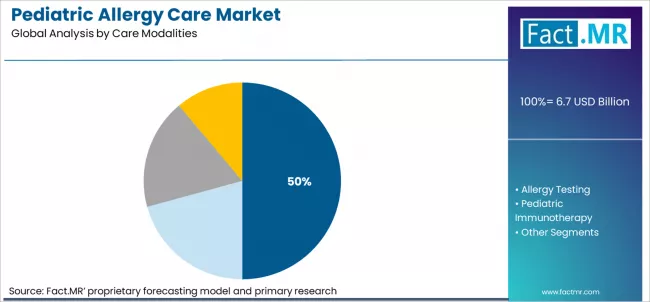
Drug therapy accounts for 50% of care modality usage in the pediatric allergy care market. This position reflects routine management needs across asthma, rhinitis, eczema, and food allergy support. Prescribing patterns cover relievers, controllers, antihistamines, and adjunct treatments that fit daily home use and school schedules. Dosing forms and strengths are already standardized for different age bands, which simplifies dispensing and follow-up. Care plans often combine short courses with maintenance regimens, creating steady refill activity through community pharmacies and hospital clinics. Monitoring focuses on symptom control and adherence rather than on episodic interventions. Testing, immunotherapy, and tele-support add structure around this base. Day-to-day symptom control continues to anchor most treatment plans in pharmacologic management.
Why Does Pediatric Asthma Care Generate the Largest Share of Clinical Demand?
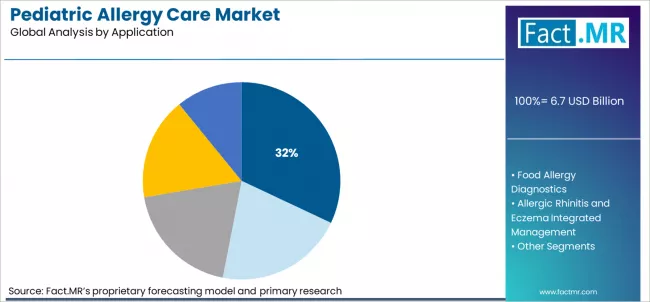
Pediatric asthma care represents 32% of application activity in this market. Clinics see repeated visits for assessment, inhaler technique checks, and step-up or step-down decisions tied to growth and seasonality. Schools and families rely on written action plans that require periodic review and documentation. Emergency departments also contribute follow-up referrals after acute episodes, which increases total encounter volume. Equipment needs such as spacers and peak flow meters add to service touchpoints. Food allergy diagnostics, rhinitis and eczema management, and anaphylaxis prevention remain active areas. The frequency of symptoms and the need for ongoing monitoring keep asthma as the most common reason children enter and remain within allergy care pathways.
What are the Drivers, Restraints, and Key Trends of the Pediatric Allergy Care Market?
- Drivers: Higher diagnosis rates of allergic conditions in children, emphasis on early detection and management by caregivers and pediatric clinicians, and routine use of targeted therapies support demand for pediatric allergy care solutions across clinics and outpatient settings.
- Restraint: Variability in access to specialized care, inconsistent insurance coverage for diagnostic tests and treatment options, and concerns about medication side effects in young patients limit full engagement with recommended care regimens.
- Trend 1: Expansion of age-appropriate testing methods and screening tools designed for comfort and accuracy in pediatric populations.
- Trend 2: Increased availability of tailored treatment options, including child-friendly antihistamines, immunotherapy formats, and caregiver education resources to improve adherence.
Analysis of the Pediatric Allergy Care Market by Key Country
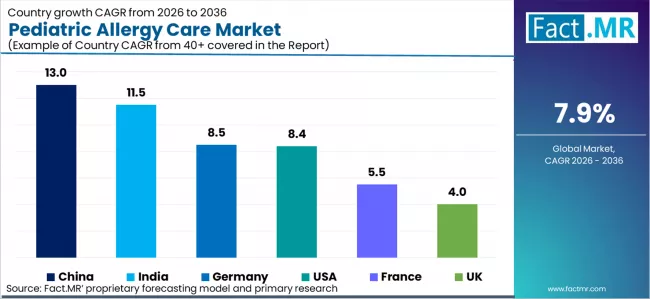
| Country | CAGR 2026 to 2036 |
|---|---|
| USA | 8.4% |
| China | 13.0% |
| India | 11.5% |
| Germany | 8.5% |
| France | 5.5% |
| UK | 4.0% |
The report covers an in-depth analysis of 40+ countries; top-performing countries are highlighted below.
How Are Hospital Protocols and Early Diagnosis Programs Shaping the Pediatric Allergy Care Market in USA?
Pediatric allergy management in USA is guided by clinical guidelines, insurance frameworks, and school health policies. The Pediatric Allergy Care Market in USA expands near 8.4% per year through 2036 as early screening and referral pathways become more structured. Demand centers on diagnostic testing, long term management plans, and preventive counseling. Providers focus on standardized care pathways and documentation. Purchasing decisions by hospitals and clinics balance reimbursement rules and clinical effectiveness. Volume growth follows expansion of pediatric services and rising diagnosis rates. The Pediatric Allergy Care Market in USA remains driven by institutional care models and guideline adoption rather than short term treatment trends.
Why Do Urbanization and Capacity Expansion Matter for the Pediatric Allergy Care Market in China?
Child healthcare development in China increasingly emphasizes structured diagnosis and chronic condition management. The Pediatric Allergy Care Market in China grows near 13.0% per year through 2036 as urban hospitals expand pediatric specialty services. Demand focuses on allergy testing, follow up care, and long term treatment monitoring. Providers prioritize scale, throughput, and standardized protocols. Investment decisions favor large hospital networks and specialty centers. Volume growth follows urban population growth and higher clinical awareness. The Pediatric Allergy Care Market in China develops through healthcare capacity expansion and system building rather than parent driven private care alone.
What Is Driving Formalization of Pediatric Allergy Treatment in the Pediatric Allergy Care Market in India?
Pediatric care systems in India are moving toward more structured management of chronic childhood conditions. The Pediatric Allergy Care Market in India advances near 11.5% per year through 2036 as private hospitals and specialty clinics expand. Demand centers on diagnostic services, medication management, and caregiver education. Providers focus on affordability and access. Purchasing decisions reflect hospital group protocols rather than individual physician preference. Volume growth tracks expansion of private pediatric care networks. The Pediatric Allergy Care Market in India progresses through system formalization and service availability rather than litigation pressure or school driven screening mandates.
How Do Clinical Guidelines and Referral Systems Shape the Pediatric Allergy Care Market in Germany?
Child healthcare in Germany follows strict referral pathways and evidence based treatment standards. The Pediatric Allergy Care Market in Germany grows near 8.5% per year through 2036 as diagnosis rates improve and follow up care becomes more consistent. Demand focuses on specialist consultations, testing, and long term management plans. Providers emphasize documentation and adherence to national guidelines. Funding decisions follow public insurance frameworks. Volume growth tracks gradual expansion of specialist capacity. The Pediatric Allergy Care Market in Germany remains shaped by structured care pathways and institutional planning rather than rapid adoption of new treatment models.
Why Do Public Health Systems Influence the Pediatric Allergy Care Market in France?
Pediatric care delivery in France is closely linked to public healthcare planning and reimbursement rules. The Pediatric Allergy Care Market in France grows near 5.5% per year through 2036 as hospitals and clinics standardize allergy diagnosis and treatment pathways. Demand centers on approved testing protocols, medication management, and follow up care. Providers focus on compliance with national standards. Budget allocation decisions shape service expansion. Volume growth follows slow increases in specialist availability. The Pediatric Allergy Care Market in France develops through public system procedures rather than private sector expansion or rapid growth of specialty clinic chains.
How Are Capacity Limits and Funding Discipline Shaping the Pediatric Allergy Care Market in UK?
Pediatric specialty care in UK operates within public system capacity and budget constraints. The Pediatric Allergy Care Market in UK grows near 4.0% per year through 2036 as referral volumes increase gradually. Demand focuses on essential diagnostics, standardized treatment plans, and long term follow up. Providers emphasize triage and prioritization of complex cases. Funding decisions remain centralized. Volume growth follows incremental increases in clinic capacity. The Pediatric Allergy Care Market in UK remains constrained by staffing and funding pressures rather than rapid expansion of private pediatric specialty services.
How Do Care Pathways and Reimbursement Structures Shape Competition in the Pediatric Allergy Care Market?
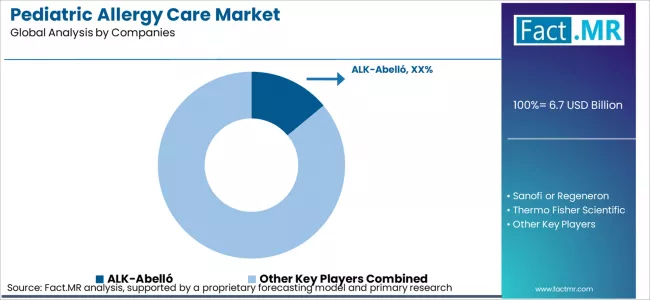
Treatment access in the pediatric allergy care market is defined by guideline pathways, age specific labeling, and reimbursement rules rather than by promotional activity. Pediatric clinics first separate diagnosis, monitoring, and therapy decisions, then align suppliers to each step. ALK Abelló and Stallergenes Greer hold positions through allergen immunotherapy programs that fit long term desensitization protocols. Sanofi, Regeneron, and AstraZeneca compete where biologics are written into severe asthma and atopic disease pathways under specialist supervision. Thermo Fisher supports the diagnostic side through testing systems that guide referral and treatment choice. Payers and hospital committees evaluate options using evidence strength, dosing schedules, and continuity of supply. Switching between therapy platforms is limited by training needs and patient follow up schedules. Once a pathway is established, volumes follow patient cohorts and referral growth rather than short term tender cycles. Competitive change usually appears after guideline updates, new label expansions, or reimbursement rule revisions.
Key Players in Pediatric Allergy Care Market
- ALK-Abelló A/S
- Sanofi
- Regeneron Pharmaceuticals, Inc.
- Thermo Fisher Scientific Inc.
- Stallergenes Greer
- AstraZeneca PLC
Scope of the Report
| Items | Values |
|---|---|
| Quantitative Units (2026) | USD billion |
| Care Modalities | Drug therapy, allergy testing, pediatric immunotherapy, tele-health and support |
| Application | Pediatric asthma care, food allergy diagnostics, allergic rhinitis and eczema integrated management, anaphylaxis prevention, immunotherapy programs |
| End User or Channel | Specialty allergy clinics, hospitals, diagnostic laboratories, telehealth providers, others |
| Regions Covered | Asia Pacific, Europe, North America, Latin America, Middle East & Africa |
| Countries Covered | United States, Canada, Mexico, Germany, United Kingdom, France, Italy, Spain, China, Japan, South Korea, India, Australia & New Zealand, ASEAN, Brazil, Chile, Saudi Arabia, Turkey, South Africa, and other regional markets |
| Key Companies Profiled | ALK-Abelló, Sanofi, Regeneron Pharmaceuticals, Thermo Fisher Scientific, Stallergenes Greer, AstraZeneca |
| Additional Attributes | Dollar by sales by care modality, application, and end user; focus on diagnosis pathways, long-term management, and reimbursement driven treatment selection; demand shaped by early screening, guideline based care, and pediatric service expansion |
Pediatric Allergy Care Market Segmentation
-
Care Modalities :
- Drug Therapy
- Allergy Testing
- Pediatric Immunotherapy
- Tele-health & Support
-
Application :
- Pediatric Asthma Care
- Food Allergy Diagnostics
- Allergic Rhinitis and Eczema Integrated Management
- Anaphylaxis Prevention
- Immunotherapy Programs
-
End User or Channel :
- Specialty Allergy Clinics
- Hospitals
- Diagnostic Laboratories
- Telehealth Providers
- Others
-
Region :
- Asia Pacific
- China
- Japan
- South Korea
- India
- Australia & New Zealand
- ASEAN
- Rest of Asia Pacific
- Europe
- Germany
- United Kingdom
- France
- Italy
- Spain
- Nordic
- BENELUX
- Rest of Europe
- North America
- United States
- Canada
- Mexico
- Latin America
- Brazil
- Chile
- Rest of Latin America
- Middle East & Africa
- Kingdom of Saudi Arabia
- Other GCC Countries
- Turkey
- South Africa
- Other African Union
- Rest of Middle East & Africa
- Asia Pacific
References
- U.S. Centers for Disease Control and Prevention. (2024). National asthma surveillance. Centers for Disease Control and Prevention.
- World Health Organization. (2024). Asthma fact sheet. World Health Organization.
- World Health Organization. (2024). Chronic respiratory diseases programme overview. World Health Organization.
- European Medicines Agency. (2024). Opinion on paediatric investigation plan for asthma medications (EMA/PDCO/13892/2024). European Medicines Agency.
Table of Content
- Executive Summary
- Global Market Outlook
- Demand to side Trends
- Supply to side Trends
- Technology Roadmap Analysis
- Analysis and Recommendations
- Market Overview
- Market Coverage / Taxonomy
- Market Definition / Scope / Limitations
- Research Methodology
- Chapter Orientation
- Analytical Lens and Working Hypotheses
- Market Structure, Signals, and Trend Drivers
- Benchmarking and Cross-market Comparability
- Market Sizing, Forecasting, and Opportunity Mapping
- Research Design and Evidence Framework
- Desk Research Programme (Secondary Evidence)
- Company Annual and Sustainability Reports
- Peer-reviewed Journals and Academic Literature
- Corporate Websites, Product Literature, and Technical Notes
- Earnings Decks and Investor Briefings
- Statutory Filings and Regulatory Disclosures
- Technical White Papers and Standards Notes
- Trade Journals, Industry Magazines, and Analyst Briefs
- Conference Proceedings, Webinars, and Seminar Materials
- Government Statistics Portals and Public Data Releases
- Press Releases and Reputable Media Coverage
- Specialist Newsletters and Curated Briefings
- Sector Databases and Reference Repositories
- FMR Internal Proprietary Databases and Historical Market Datasets
- Subscription Datasets and Paid Sources
- Social Channels, Communities, and Digital Listening Inputs
- Additional Desk Sources
- Expert Input and Fieldwork (Primary Evidence)
- Primary Modes
- Qualitative Interviews and Expert Elicitation
- Quantitative Surveys and Structured Data Capture
- Blended A8oach
- Why Primary Evidence is Used
- Field Techniques
- Interviews
- Surveys
- Focus Groups
- Observational and In-context Research
- Social and Community Interactions
- Stakeholder Universe Engaged
- C-suite Leaders
- Board Members
- Presidents and Vice Presidents
- R&D and Innovation Heads
- Technical Specialists
- Domain Subject-matter Experts
- Scientists
- Physicians and Other Healthcare Professionals
- Governance, Ethics, and Data Stewardship
- Research Ethics
- Data Integrity and Handling
- Primary Modes
- Tooling, Models, and Reference Databases
- Desk Research Programme (Secondary Evidence)
- Data Engineering and Model Build
- Data Acquisition and Ingestion
- Cleaning, Normalisation, and Verification
- Synthesis, Triangulation, and Analysis
- Quality Assurance and Audit Trail
- Market Background
- Market Dynamics
- Drivers
- Restraints
- Opportunity
- Trends
- Scenario Forecast
- Demand in Optimistic Scenario
- Demand in Likely Scenario
- Demand in Conservative Scenario
- Opportunity Map Analysis
- Product Life Cycle Analysis
- Supply Chain Analysis
- Investment Feasibility Matrix
- Value Chain Analysis
- PESTLE and Porter’s Analysis
- Regulatory Landscape
- Regional Parent Market Outlook
- Production and Consumption Statistics
- Import and Export Statistics
- Market Dynamics
- Global Market Analysis 2021 to 2025 and Forecast, 2026 to 2036
- Historical Market Size Value (USD Million) Analysis, 2021 to 2025
- Current and Future Market Size Value (USD Million) Projections, 2026 to 2036
- Y to o to Y Growth Trend Analysis
- Absolute $ Opportunity Analysis
- Global Market Pricing Analysis 2021 to 2025 and Forecast 2026 to 2036
- Global Market Analysis 2021 to 2025 and Forecast 2026 to 2036, By Care Modalities
- Introduction / Key Findings
- Historical Market Size Value (USD Million) Analysis By Care Modalities, 2021 to 2025
- Current and Future Market Size Value (USD Million) Analysis and Forecast By Care Modalities, 2026 to 2036
- Drug Therapy
- Allergy Testing
- Pediatric Immunotherapy
- Tele-health & Support
- Drug Therapy
- Y to o to Y Growth Trend Analysis By Care Modalities, 2021 to 2025
- Absolute $ Opportunity Analysis By Care Modalities, 2026 to 2036
- Global Market Analysis 2021 to 2025 and Forecast 2026 to 2036, By Application
- Introduction / Key Findings
- Historical Market Size Value (USD Million) Analysis By Application, 2021 to 2025
- Current and Future Market Size Value (USD Million) Analysis and Forecast By Application, 2026 to 2036
- Pediatric Asthma Care
- Food Allergy Diagnostics
- Allergic Rhinitis and Eczema Integrated Management
- Anaphylaxis Prevention
- Immunotherapy Programs
- Pediatric Asthma Care
- Y to o to Y Growth Trend Analysis By Application, 2021 to 2025
- Absolute $ Opportunity Analysis By Application, 2026 to 2036
- Global Market Analysis 2021 to 2025 and Forecast 2026 to 2036, By End User or Channel
- Introduction / Key Findings
- Historical Market Size Value (USD Million) Analysis By End User or Channel, 2021 to 2025
- Current and Future Market Size Value (USD Million) Analysis and Forecast By End User or Channel, 2026 to 2036
- Specialty Allergy Clinics
- Hospitals
- Diagnostic Laboratories
- Telehealth Providers
- Others
- Specialty Allergy Clinics
- Y to o to Y Growth Trend Analysis By End User or Channel, 2021 to 2025
- Absolute $ Opportunity Analysis By End User or Channel, 2026 to 2036
- Global Market Analysis 2021 to 2025 and Forecast 2026 to 2036, By Region
- Introduction
- Historical Market Size Value (USD Million) Analysis By Region, 2021 to 2025
- Current Market Size Value (USD Million) Analysis and Forecast By Region, 2026 to 2036
- North America
- Latin America
- Western Europe
- Eastern Europe
- East Asia
- South Asia and Pacific
- Middle East & Africa
- Market Attractiveness Analysis By Region
- North America Market Analysis 2021 to 2025 and Forecast 2026 to 2036, By Country
- Historical Market Size Value (USD Million) Trend Analysis By Market Taxonomy, 2021 to 2025
- Market Size Value (USD Million) Forecast By Market Taxonomy, 2026 to 2036
- By Country
- USA
- Canada
- Mexico
- By Care Modalities
- By Application
- By End User or Channel
- By Country
- Market Attractiveness Analysis
- By Country
- By Care Modalities
- By Application
- By End User or Channel
- Key Takeaways
- Latin America Market Analysis 2021 to 2025 and Forecast 2026 to 2036, By Country
- Historical Market Size Value (USD Million) Trend Analysis By Market Taxonomy, 2021 to 2025
- Market Size Value (USD Million) Forecast By Market Taxonomy, 2026 to 2036
- By Country
- Brazil
- Chile
- Rest of Latin America
- By Care Modalities
- By Application
- By End User or Channel
- By Country
- Market Attractiveness Analysis
- By Country
- By Care Modalities
- By Application
- By End User or Channel
- Key Takeaways
- Western Europe Market Analysis 2021 to 2025 and Forecast 2026 to 2036, By Country
- Historical Market Size Value (USD Million) Trend Analysis By Market Taxonomy, 2021 to 2025
- Market Size Value (USD Million) Forecast By Market Taxonomy, 2026 to 2036
- By Country
- Germany
- UK
- Italy
- Spain
- France
- Nordic
- BENELUX
- Rest of Western Europe
- By Care Modalities
- By Application
- By End User or Channel
- By Country
- Market Attractiveness Analysis
- By Country
- By Care Modalities
- By Application
- By End User or Channel
- Key Takeaways
- Eastern Europe Market Analysis 2021 to 2025 and Forecast 2026 to 2036, By Country
- Historical Market Size Value (USD Million) Trend Analysis By Market Taxonomy, 2021 to 2025
- Market Size Value (USD Million) Forecast By Market Taxonomy, 2026 to 2036
- By Country
- Russia
- Poland
- Hungary
- Balkan & Baltic
- Rest of Eastern Europe
- By Care Modalities
- By Application
- By End User or Channel
- By Country
- Market Attractiveness Analysis
- By Country
- By Care Modalities
- By Application
- By End User or Channel
- Key Takeaways
- East Asia Market Analysis 2021 to 2025 and Forecast 2026 to 2036, By Country
- Historical Market Size Value (USD Million) Trend Analysis By Market Taxonomy, 2021 to 2025
- Market Size Value (USD Million) Forecast By Market Taxonomy, 2026 to 2036
- By Country
- China
- Japan
- South Korea
- By Care Modalities
- By Application
- By End User or Channel
- By Country
- Market Attractiveness Analysis
- By Country
- By Care Modalities
- By Application
- By End User or Channel
- Key Takeaways
- South Asia and Pacific Market Analysis 2021 to 2025 and Forecast 2026 to 2036, By Country
- Historical Market Size Value (USD Million) Trend Analysis By Market Taxonomy, 2021 to 2025
- Market Size Value (USD Million) Forecast By Market Taxonomy, 2026 to 2036
- By Country
- India
- ASEAN
- Australia & New Zealand
- Rest of South Asia and Pacific
- By Care Modalities
- By Application
- By End User or Channel
- By Country
- Market Attractiveness Analysis
- By Country
- By Care Modalities
- By Application
- By End User or Channel
- Key Takeaways
- Middle East & Africa Market Analysis 2021 to 2025 and Forecast 2026 to 2036, By Country
- Historical Market Size Value (USD Million) Trend Analysis By Market Taxonomy, 2021 to 2025
- Market Size Value (USD Million) Forecast By Market Taxonomy, 2026 to 2036
- By Country
- Kingdom of Saudi Arabia
- Other GCC Countries
- Turkiye
- South Africa
- Other African Union
- Rest of Middle East & Africa
- By Care Modalities
- By Application
- By End User or Channel
- By Country
- Market Attractiveness Analysis
- By Country
- By Care Modalities
- By Application
- By End User or Channel
- Key Takeaways
- Key Countries Market Analysis
- USA
- Pricing Analysis
- Market Share Analysis, 2025
- By Care Modalities
- By Application
- By End User or Channel
- Canada
- Pricing Analysis
- Market Share Analysis, 2025
- By Care Modalities
- By Application
- By End User or Channel
- Mexico
- Pricing Analysis
- Market Share Analysis, 2025
- By Care Modalities
- By Application
- By End User or Channel
- Brazil
- Pricing Analysis
- Market Share Analysis, 2025
- By Care Modalities
- By Application
- By End User or Channel
- Chile
- Pricing Analysis
- Market Share Analysis, 2025
- By Care Modalities
- By Application
- By End User or Channel
- Germany
- Pricing Analysis
- Market Share Analysis, 2025
- By Care Modalities
- By Application
- By End User or Channel
- UK
- Pricing Analysis
- Market Share Analysis, 2025
- By Care Modalities
- By Application
- By End User or Channel
- Italy
- Pricing Analysis
- Market Share Analysis, 2025
- By Care Modalities
- By Application
- By End User or Channel
- Spain
- Pricing Analysis
- Market Share Analysis, 2025
- By Care Modalities
- By Application
- By End User or Channel
- France
- Pricing Analysis
- Market Share Analysis, 2025
- By Care Modalities
- By Application
- By End User or Channel
- India
- Pricing Analysis
- Market Share Analysis, 2025
- By Care Modalities
- By Application
- By End User or Channel
- ASEAN
- Pricing Analysis
- Market Share Analysis, 2025
- By Care Modalities
- By Application
- By End User or Channel
- Australia & New Zealand
- Pricing Analysis
- Market Share Analysis, 2025
- By Care Modalities
- By Application
- By End User or Channel
- China
- Pricing Analysis
- Market Share Analysis, 2025
- By Care Modalities
- By Application
- By End User or Channel
- Japan
- Pricing Analysis
- Market Share Analysis, 2025
- By Care Modalities
- By Application
- By End User or Channel
- South Korea
- Pricing Analysis
- Market Share Analysis, 2025
- By Care Modalities
- By Application
- By End User or Channel
- Russia
- Pricing Analysis
- Market Share Analysis, 2025
- By Care Modalities
- By Application
- By End User or Channel
- Poland
- Pricing Analysis
- Market Share Analysis, 2025
- By Care Modalities
- By Application
- By End User or Channel
- Hungary
- Pricing Analysis
- Market Share Analysis, 2025
- By Care Modalities
- By Application
- By End User or Channel
- Kingdom of Saudi Arabia
- Pricing Analysis
- Market Share Analysis, 2025
- By Care Modalities
- By Application
- By End User or Channel
- Turkiye
- Pricing Analysis
- Market Share Analysis, 2025
- By Care Modalities
- By Application
- By End User or Channel
- South Africa
- Pricing Analysis
- Market Share Analysis, 2025
- By Care Modalities
- By Application
- By End User or Channel
- USA
- Market Structure Analysis
- Competition Dashboard
- Competition Benchmarking
- Market Share Analysis of Top Players
- By Regional
- By Care Modalities
- By Application
- By End User or Channel
- Competition Analysis
- Competition Deep Dive
- ALK-Abelló
- Overview
- Product Portfolio
- Profitability by Market Segments (Product/Age /Sales Channel/Region)
- Sales Footprint
- Strategy Overview
- Marketing Strategy
- Product Strategy
- Channel Strategy
- Sanofi or Regeneron
- Thermo Fisher Scientific
- Stallergenes Greer
- AstraZeneca
- Others
- ALK-Abelló
- Competition Deep Dive
- Assumptions & Acronyms Used
List Of Table
- Table 1: Global Market Value (USD Million) Forecast by Region, 2021 to 2036
- Table 2: Global Market Value (USD Million) Forecast by Care Modalities, 2021 to 2036
- Table 3: Global Market Value (USD Million) Forecast by Application, 2021 to 2036
- Table 4: Global Market Value (USD Million) Forecast by End User or Channel, 2021 to 2036
- Table 5: North America Market Value (USD Million) Forecast by Country, 2021 to 2036
- Table 6: North America Market Value (USD Million) Forecast by Care Modalities, 2021 to 2036
- Table 7: North America Market Value (USD Million) Forecast by Application, 2021 to 2036
- Table 8: North America Market Value (USD Million) Forecast by End User or Channel, 2021 to 2036
- Table 9: Latin America Market Value (USD Million) Forecast by Country, 2021 to 2036
- Table 10: Latin America Market Value (USD Million) Forecast by Care Modalities, 2021 to 2036
- Table 11: Latin America Market Value (USD Million) Forecast by Application, 2021 to 2036
- Table 12: Latin America Market Value (USD Million) Forecast by End User or Channel, 2021 to 2036
- Table 13: Western Europe Market Value (USD Million) Forecast by Country, 2021 to 2036
- Table 14: Western Europe Market Value (USD Million) Forecast by Care Modalities, 2021 to 2036
- Table 15: Western Europe Market Value (USD Million) Forecast by Application, 2021 to 2036
- Table 16: Western Europe Market Value (USD Million) Forecast by End User or Channel, 2021 to 2036
- Table 17: Eastern Europe Market Value (USD Million) Forecast by Country, 2021 to 2036
- Table 18: Eastern Europe Market Value (USD Million) Forecast by Care Modalities, 2021 to 2036
- Table 19: Eastern Europe Market Value (USD Million) Forecast by Application, 2021 to 2036
- Table 20: Eastern Europe Market Value (USD Million) Forecast by End User or Channel, 2021 to 2036
- Table 21: East Asia Market Value (USD Million) Forecast by Country, 2021 to 2036
- Table 22: East Asia Market Value (USD Million) Forecast by Care Modalities, 2021 to 2036
- Table 23: East Asia Market Value (USD Million) Forecast by Application, 2021 to 2036
- Table 24: East Asia Market Value (USD Million) Forecast by End User or Channel, 2021 to 2036
- Table 25: South Asia and Pacific Market Value (USD Million) Forecast by Country, 2021 to 2036
- Table 26: South Asia and Pacific Market Value (USD Million) Forecast by Care Modalities, 2021 to 2036
- Table 27: South Asia and Pacific Market Value (USD Million) Forecast by Application, 2021 to 2036
- Table 28: South Asia and Pacific Market Value (USD Million) Forecast by End User or Channel, 2021 to 2036
- Table 29: Middle East & Africa Market Value (USD Million) Forecast by Country, 2021 to 2036
- Table 30: Middle East & Africa Market Value (USD Million) Forecast by Care Modalities, 2021 to 2036
- Table 31: Middle East & Africa Market Value (USD Million) Forecast by Application, 2021 to 2036
- Table 32: Middle East & Africa Market Value (USD Million) Forecast by End User or Channel, 2021 to 2036
List Of Figures
- Figure 1: Global Market Pricing Analysis
- Figure 2: Global Market Value (USD Million) Forecast 2021 to 2036
- Figure 3: Global Market Value Share and BPS Analysis by Care Modalities, 2026 and 2036
- Figure 4: Global Market Y to o to Y Growth Comparison by Care Modalities, 2026 to 2036
- Figure 5: Global Market Attractiveness Analysis by Care Modalities
- Figure 6: Global Market Value Share and BPS Analysis by Application, 2026 and 2036
- Figure 7: Global Market Y to o to Y Growth Comparison by Application, 2026 to 2036
- Figure 8: Global Market Attractiveness Analysis by Application
- Figure 9: Global Market Value Share and BPS Analysis by End User or Channel, 2026 and 2036
- Figure 10: Global Market Y to o to Y Growth Comparison by End User or Channel, 2026 to 2036
- Figure 11: Global Market Attractiveness Analysis by End User or Channel
- Figure 12: Global Market Value (USD Million) Share and BPS Analysis by Region, 2026 and 2036
- Figure 13: Global Market Y to o to Y Growth Comparison by Region, 2026 to 2036
- Figure 14: Global Market Attractiveness Analysis by Region
- Figure 15: North America Market Incremental Dollar Opportunity, 2026 to 2036
- Figure 16: Latin America Market Incremental Dollar Opportunity, 2026 to 2036
- Figure 17: Western Europe Market Incremental Dollar Opportunity, 2026 to 2036
- Figure 18: Eastern Europe Market Incremental Dollar Opportunity, 2026 to 2036
- Figure 19: East Asia Market Incremental Dollar Opportunity, 2026 to 2036
- Figure 20: South Asia and Pacific Market Incremental Dollar Opportunity, 2026 to 2036
- Figure 21: Middle East & Africa Market Incremental Dollar Opportunity, 2026 to 2036
- Figure 22: North America Market Value Share and BPS Analysis by Country, 2026 and 2036
- Figure 23: North America Market Value Share and BPS Analysis by Care Modalities, 2026 and 2036
- Figure 24: North America Market Y to o to Y Growth Comparison by Care Modalities, 2026 to 2036
- Figure 25: North America Market Attractiveness Analysis by Care Modalities
- Figure 26: North America Market Value Share and BPS Analysis by Application, 2026 and 2036
- Figure 27: North America Market Y to o to Y Growth Comparison by Application, 2026 to 2036
- Figure 28: North America Market Attractiveness Analysis by Application
- Figure 29: North America Market Value Share and BPS Analysis by End User or Channel, 2026 and 2036
- Figure 30: North America Market Y to o to Y Growth Comparison by End User or Channel, 2026 to 2036
- Figure 31: North America Market Attractiveness Analysis by End User or Channel
- Figure 32: Latin America Market Value Share and BPS Analysis by Country, 2026 and 2036
- Figure 33: Latin America Market Value Share and BPS Analysis by Care Modalities, 2026 and 2036
- Figure 34: Latin America Market Y to o to Y Growth Comparison by Care Modalities, 2026 to 2036
- Figure 35: Latin America Market Attractiveness Analysis by Care Modalities
- Figure 36: Latin America Market Value Share and BPS Analysis by Application, 2026 and 2036
- Figure 37: Latin America Market Y to o to Y Growth Comparison by Application, 2026 to 2036
- Figure 38: Latin America Market Attractiveness Analysis by Application
- Figure 39: Latin America Market Value Share and BPS Analysis by End User or Channel, 2026 and 2036
- Figure 40: Latin America Market Y to o to Y Growth Comparison by End User or Channel, 2026 to 2036
- Figure 41: Latin America Market Attractiveness Analysis by End User or Channel
- Figure 42: Western Europe Market Value Share and BPS Analysis by Country, 2026 and 2036
- Figure 43: Western Europe Market Value Share and BPS Analysis by Care Modalities, 2026 and 2036
- Figure 44: Western Europe Market Y to o to Y Growth Comparison by Care Modalities, 2026 to 2036
- Figure 45: Western Europe Market Attractiveness Analysis by Care Modalities
- Figure 46: Western Europe Market Value Share and BPS Analysis by Application, 2026 and 2036
- Figure 47: Western Europe Market Y to o to Y Growth Comparison by Application, 2026 to 2036
- Figure 48: Western Europe Market Attractiveness Analysis by Application
- Figure 49: Western Europe Market Value Share and BPS Analysis by End User or Channel, 2026 and 2036
- Figure 50: Western Europe Market Y to o to Y Growth Comparison by End User or Channel, 2026 to 2036
- Figure 51: Western Europe Market Attractiveness Analysis by End User or Channel
- Figure 52: Eastern Europe Market Value Share and BPS Analysis by Country, 2026 and 2036
- Figure 53: Eastern Europe Market Value Share and BPS Analysis by Care Modalities, 2026 and 2036
- Figure 54: Eastern Europe Market Y to o to Y Growth Comparison by Care Modalities, 2026 to 2036
- Figure 55: Eastern Europe Market Attractiveness Analysis by Care Modalities
- Figure 56: Eastern Europe Market Value Share and BPS Analysis by Application, 2026 and 2036
- Figure 57: Eastern Europe Market Y to o to Y Growth Comparison by Application, 2026 to 2036
- Figure 58: Eastern Europe Market Attractiveness Analysis by Application
- Figure 59: Eastern Europe Market Value Share and BPS Analysis by End User or Channel, 2026 and 2036
- Figure 60: Eastern Europe Market Y to o to Y Growth Comparison by End User or Channel, 2026 to 2036
- Figure 61: Eastern Europe Market Attractiveness Analysis by End User or Channel
- Figure 62: East Asia Market Value Share and BPS Analysis by Country, 2026 and 2036
- Figure 63: East Asia Market Value Share and BPS Analysis by Care Modalities, 2026 and 2036
- Figure 64: East Asia Market Y to o to Y Growth Comparison by Care Modalities, 2026 to 2036
- Figure 65: East Asia Market Attractiveness Analysis by Care Modalities
- Figure 66: East Asia Market Value Share and BPS Analysis by Application, 2026 and 2036
- Figure 67: East Asia Market Y to o to Y Growth Comparison by Application, 2026 to 2036
- Figure 68: East Asia Market Attractiveness Analysis by Application
- Figure 69: East Asia Market Value Share and BPS Analysis by End User or Channel, 2026 and 2036
- Figure 70: East Asia Market Y to o to Y Growth Comparison by End User or Channel, 2026 to 2036
- Figure 71: East Asia Market Attractiveness Analysis by End User or Channel
- Figure 72: South Asia and Pacific Market Value Share and BPS Analysis by Country, 2026 and 2036
- Figure 73: South Asia and Pacific Market Value Share and BPS Analysis by Care Modalities, 2026 and 2036
- Figure 74: South Asia and Pacific Market Y to o to Y Growth Comparison by Care Modalities, 2026 to 2036
- Figure 75: South Asia and Pacific Market Attractiveness Analysis by Care Modalities
- Figure 76: South Asia and Pacific Market Value Share and BPS Analysis by Application, 2026 and 2036
- Figure 77: South Asia and Pacific Market Y to o to Y Growth Comparison by Application, 2026 to 2036
- Figure 78: South Asia and Pacific Market Attractiveness Analysis by Application
- Figure 79: South Asia and Pacific Market Value Share and BPS Analysis by End User or Channel, 2026 and 2036
- Figure 80: South Asia and Pacific Market Y to o to Y Growth Comparison by End User or Channel, 2026 to 2036
- Figure 81: South Asia and Pacific Market Attractiveness Analysis by End User or Channel
- Figure 82: Middle East & Africa Market Value Share and BPS Analysis by Country, 2026 and 2036
- Figure 83: Middle East & Africa Market Value Share and BPS Analysis by Care Modalities, 2026 and 2036
- Figure 84: Middle East & Africa Market Y to o to Y Growth Comparison by Care Modalities, 2026 to 2036
- Figure 85: Middle East & Africa Market Attractiveness Analysis by Care Modalities
- Figure 86: Middle East & Africa Market Value Share and BPS Analysis by Application, 2026 and 2036
- Figure 87: Middle East & Africa Market Y to o to Y Growth Comparison by Application, 2026 to 2036
- Figure 88: Middle East & Africa Market Attractiveness Analysis by Application
- Figure 89: Middle East & Africa Market Value Share and BPS Analysis by End User or Channel, 2026 and 2036
- Figure 90: Middle East & Africa Market Y to o to Y Growth Comparison by End User or Channel, 2026 to 2036
- Figure 91: Middle East & Africa Market Attractiveness Analysis by End User or Channel
- Figure 92: Global Market - Tier Structure Analysis
- Figure 93: Global Market - Company Share Analysis
- FAQs -
How big is the pediatric allergy care market in 2026?
The global pediatric allergy care market is estimated to be valued at USD 6.7 billion in 2026.
What will be the size of pediatric allergy care market in 2036?
The market size for the pediatric allergy care market is projected to reach USD 14.3 billion by 2036.
How much will be the pediatric allergy care market growth between 2026 and 2036?
The pediatric allergy care market is expected to grow at a 7.9% CAGR between 2026 and 2036.
What are the key product types in the pediatric allergy care market?
The key product types in pediatric allergy care market are drug therapy, allergy testing, pediatric immunotherapy and tele-health & support.
Which application segment to contribute significant share in the pediatric allergy care market in 2026?
In terms of application, pediatric asthma care segment to command 32.0% share in the pediatric allergy care market in 2026.