Plant-Based Gyro and Kebab Ingredient Systems Market (2026 - 2036)
Plant-Based Gyro and Kebab Ingredient Systems Market Size and Share Forecast Outlook 2026 to 2036
Core Findings
Plant-Based Gyro and Kebab Ingredient Systems Market Forecast and Outlook (2026–2036)
The plant-based gyro and kebab ingredient systems market records USD 12.2 billion in 2026 and reaches USD 63.9 billion by 2036 at an 18.0% CAGR.
Plant-Based Gyro and Kebab Ingredient Systems Market Key Takeaways
- Plant-Based Gyro and Kebab Ingredient Systems Market Value (2026): USD 12.2 billion
- Plant-Based Gyro and Kebab Ingredient Systems Market Forecast Value (2036): USD 63.9 billion
- Plant-Based Gyro and Kebab Ingredient Systems Market Forecast CAGR (2026-2036): 18.0%
- Leading Product Type in Plant-Based Gyro and Kebab Ingredient Systems Market: Plant-based protein blends
- Key Growth Regions in Plant-Based Gyro and Kebab Ingredient Systems Market: Asia Pacific, Europe, North America, Latin America, Middle East & Africa
- Top Players in Plant-Based Gyro and Kebab Ingredient Systems Market: Ingredion, DuPont, Kerry Group, Givaudan, Symrise, Cargill, Roquette, ADM
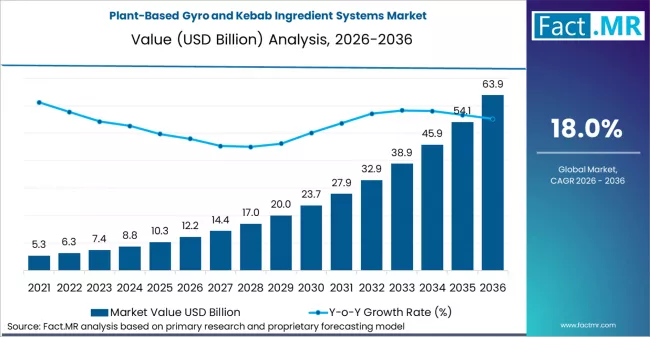
Adoption is led by chain operators and central kitchens that depend on consistent output across large service networks. These systems are chosen for grill response, holding behavior, and portion recovery rather than novelty. Once a specification is approved, it becomes embedded in cooking guides, staff training, and cost models, which makes later replacement disruptive. Buyers focus on slice cohesion, surface browning, and yield after reheating because these factors control waste and service speed.
Volume growth comes from rollout into new outlets and formats using the same base system. From a supplier perspective, one listing often opens access to several related menus. Production planning emphasizes narrow tolerances and repeatable batches to avoid field complaints. Inventory placement near distribution centers reduces service risk. Capacity spending follows contract wins and outlet expansion schedules rather than short term demand spikes.
Plant-Based Gyro and Kebab Ingredient Systems Market
| Metric | Value |
|---|---|
| Market Value (2026) | USD 12.2 billion |
| Forecast Value (2036) | USD 63.9 billion |
| Forecast CAGR (2026-2036) | 18.0% |
Category
| Category | Segments |
|---|---|
| Product Type | Plant-based protein blends; Mediterranean spice and flavor systems; Texturizing and binder ingredient complexes; Fat and oil functional ingredient systems |
| Formulation Type | Frozen plant-based gyro or kebab components; Chilled plant-based gyro or kebab components; Shelf-stable Mediterranean plant-based mixes; Dehydrated gyro or kebab ingredient systems |
| End Use | Retail food products; Foodservice and hospitality; Food manufacturers and co-packers; Direct to consumer meal kits |
| Region | North America; Europe; Asia Pacific; Latin America; Middle East & Africa |
Segmental Analysis
Why Do Protein Blends Form the Core of Most Plant-Based Gyro and Kebab Concepts?
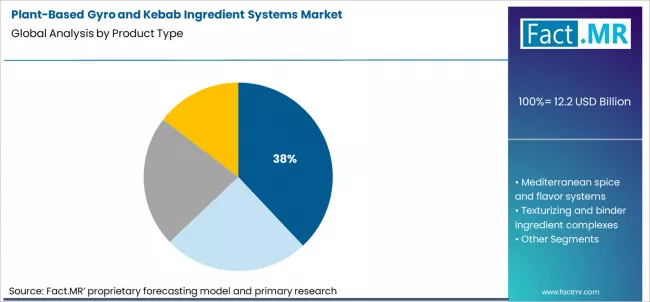
Concept development in the plant-based gyro and kebab ingredient systems market centers on plant-based protein blends, which represent 38.00% of product type usage. These blends define bite, chew, and slice behavior expected from wrapped and plated formats. Culinary teams start from a protein blend framework and tune spice systems, fat content, and binders afterward. Test kitchens evaluate cooking loss, surface browning, and portion stability using this base. Production planning also aligns around blend driven inputs that can be shaped, formed, and cooked through standard equipment. Flavor systems and functional additives remain important contributors. The structural role of protein blends keeps them positioned as the first design decision in most product programs.
Why Have Frozen Components Become the Main Format for Plant-Based Gyro and Kebab Systems?
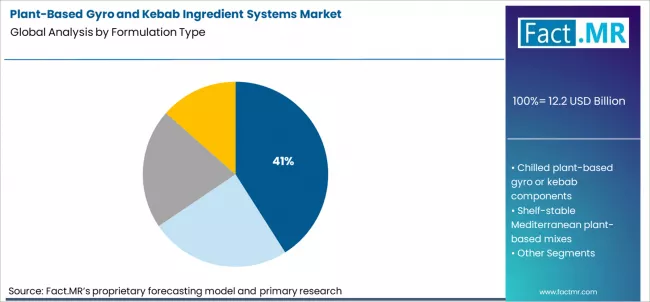
Among formulation types, frozen plant-based gyro or kebab components account for 41.00% of total usage in this market. This format supports portion control, shape retention, and staged cooking across foodservice and retail channels. Manufacturers prepare components in centralized facilities and ship them in ready-to-cook form. Kitchen operations value the predictable handling and storage routines tied to frozen logistics. Menu developers also use frozen components to standardize recipes across multiple locations. Chilled, shelf-stable, and dehydrated systems appear in selected applications. Most volume movement continues to rely on frozen formats that fit existing distribution and preparation workflows.
What are the Drivers, Restraints, and Key Trends of the Plant-Based Gyro and Kebab Ingredient Systems Market?
- Drivers: Rising consumer interest in plant-based meat alternatives that replicate traditional gyro and kebab sensory profiles is increasing demand for specialized ingredient systems in retail, foodservice, and quick-service channels.
- Restraint: Challenges in achieving authentic texture, juiciness, and flavor at scale, combined with limited category familiarity among mainstream consumers, limit broader adoption.
- Trend 1: Greater use of texturized proteins paired with natural binders and Mediterranean spice blends to enhance bite, chew, and flavor depth.
- Trend 2: Growth in ready-to-cook and heat-and-serve formats that support convenience and consistent preparation.
Analysis of the Plant-Based Gyro and Kebab Ingredient Systems Market by Key Country
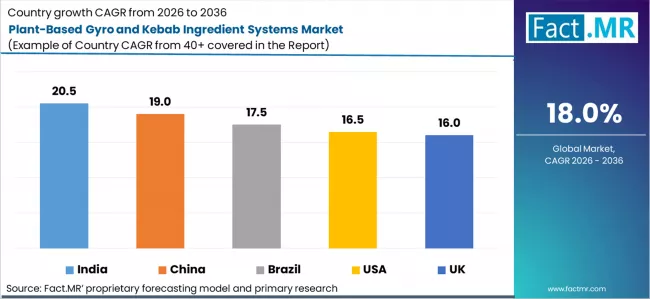
| Country | CAGR (2026-2036) |
|---|---|
| USA | 16.5% |
| UK | 16.0% |
| China | 19.0% |
| India | 20.5% |
| Brazil | 17.5% |
The report covers an in-depth analysis of 30+ countries; top-performing countries are highlighted below.
How Are Quick Service Menu Expansions in USA Shaping Use of Plant-Based Gyro and Kebab Systems?
In USA, this market advances at close to 16.5% per year through 2036. Growth is tied to wider adoption of plant based proteins across fast casual and quick service menus. Product teams focus on slice structure, surface browning, and holding performance on heated lines. These systems enter kitchens through standardized prep workflows rather than custom cooking steps. Distribution remains centered on foodservice suppliers and large chain contracts. Import volumes follow confirmed menu rollouts. Procurement decisions depend on national listing approvals. Trial volumes appear during limited time offer testing. Repeat orders depend on throughput speed and portion cost control. Volume builds through chain expansion rather than through independent restaurant adoption or retail focused merchandising programs.
Why Do Menu Architecture Decisions in UK Influence Use of Plant-Based Gyro and Kebab Systems?
In UK, category growth holds near 16% per year through 2036. Most demand enters through menu redesign programs inside fast casual and takeaway chains. Product developers prioritize texture, chew, and spice carrying capacity. Central kitchen models define adoption speed. Import volumes reflect confirmed supply agreements rather than speculative trials. Supplier discussions center on consistency and yield performance. Inventory movement follows chain level production planning. Volume increases when brands add plant based options across core menus. Demand remains concentrated among a limited number of multi-unit operators. Progress depends more on menu planning cycles than on consumer marketing. Expansion follows chain footprint growth rather than seasonal promotions or short term novelty launches.
What Is Driving Rapid Uptake of Plant-Based Gyro and Kebab Systems in China?
China records growth near 19% per year through 2036. Central kitchen expansion and platform driven foodservice brands shape how these systems are adopted. Product formats favor pre sliced and portioned components designed for assembly line service. Registration timing sets the commercial calendar. Import volumes rise ahead of planned chain rollouts. Supplier choice depends on delivery reliability and documentation readiness. Inventory builds occur in stages aligned with kitchen openings. Operators focus on placement inside modern fast food and bowl concepts. Pricing discussions follow volume commitments. Repeat ordering depends on service speed and waste control. Market development remains tied to organized foodservice growth rather than to retail or home cooking channels.
How Are Organized Foodservice Chains in India Changing Use of Plant-Based Gyro and Kebab Systems?
In India, this market progresses at roughly 20.5% per year through 2036. Expansion of café chains, cloud kitchens, and quick service formats explains most new demand. Product teams concentrate on cost control, spice compatibility, and holding stability. Distribution serves both chain operators and central kitchen suppliers. Import volumes increase when new contracts are secured rather than during routine restocking. Supplier selection favors groups able to support consistent bulk delivery. Pricing sensitivity remains high. Volume planning follows chain rollout schedules. Trial usage appears during menu testing. Repeat demand depends on operational reliability and consumer acceptance. Scale builds through outlet expansion rather than through premium retail positioning or niche health focused restaurant concepts.
What Sets the Commercial Direction for Plant-Based Gyro and Kebab Systems in Brazil?
Brazil shows expansion near 17.5% per year through 2036. Incremental menu additions and chain driven plant based programs define how these systems enter kitchens. Sourcing decisions reflect cost management and cold chain constraints. Import volumes follow approved menu changes. Trial volumes appear during pilot store programs. Repeat orders depend on performance in live service rather than on marketing support. Product teams treat these systems as functional menu components rather than brand centerpieces. Distribution remains concentrated among foodservice distributors and chain accounts. Planning cycles follow chain development schedules and annual menu reviews. Market development remains gradual and tied to organized foodservice growth rather than to retail merchandising or home cooking trends.
How Do Line Performance and Cooking Behavior Shape Supplier Competition in the Plant Based Gyro and Kebab Ingredient Systems Market?
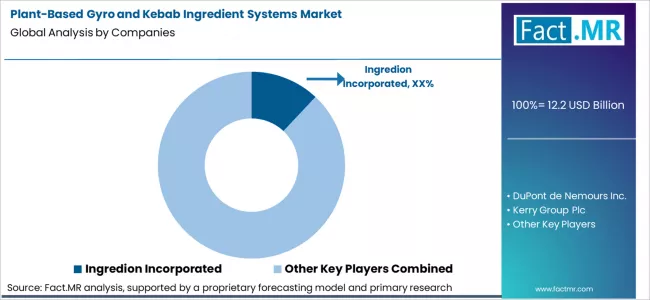
Production teams usually lock grind structure, fat simulation, and browning response before any sourcing discussion begins. Those constraints govern access to the plant based gyro and kebab ingredient systems market. Kerry, Givaudan, and Symrise often enter during pilot work through seasoning and system integration that fixes flavor and aroma across several menu formats.
Ingredion, Cargill, Roquette, DuPont, and ADM compete where proteins, starches, and fibers must meet slice integrity and yield targets. Buyers evaluate suppliers using griddle stability, moisture retention, and batch repeatability under commercial equipment. Once a system is validated, volumes follow outlet rollout plans. Supplier replacement tends to occur during equipment changes or texture standard resets.
Key Players in the Plant-Based Gyro and Kebab Ingredient Systems Market
- Ingredion Incorporated
- DuPont de Nemours Inc.
- Kerry Group Plc
- Givaudan SA
- Symrise AG
- Cargill Incorporated
- Roquette Frères
- Archer-Daniel Midland Company (ADM)
Scope of the Report
| Items | Values |
|---|---|
| Quantitative Units (2026) | USD billion |
| Product Type | Plant-based protein blends, Mediterranean spice and flavor systems, texturizing and binder ingredient complexes, fat and oil functional ingredient systems |
| Formulation Type | Frozen plant-based gyro or kebab components, chilled plant-based gyro or kebab components, shelf-stable Mediterranean plant-based mixes, dehydrated gyro or kebab ingredient systems |
| End Use | Retail food products, foodservice and hospitality, food manufacturers and co-packers, direct to consumer meal kits |
| Regions Covered | Asia Pacific, Europe, North America, Latin America, Middle East & Africa |
| Countries Covered | United States, Canada, Mexico, Germany, United Kingdom, France, Italy, Spain, Nordics, BENELUX, China, Japan, South Korea, India, Australia & New Zealand, ASEAN, Brazil, Chile, Saudi Arabia, Turkey, South Africa, and other regional markets |
| Key Companies Profiled | Ingredion, DuPont, Kerry Group, Givaudan, Symrise, Cargill, Roquette, ADM |
| Additional Attributes | Dollar sales by product type, formulation type, and end use; grill response, surface browning, slice cohesion, and yield after reheating; batch repeatability, cold chain logistics, and capacity linked to chain rollout programs |
Plant-Based Gyro and Kebab Ingredient Systems Market Segmentation
-
Product Type:
- Plant-based protein blends
- Mediterranean spice and flavor systems
- Texturizing and binder ingredient complexes
- Fat and oil functional ingredient systems
-
Formulation Type:
- Frozen plant-based gyro or kebab components
- Chilled plant-based gyro or kebab components
- Shelf-stable Mediterranean plant-based mixes
- Dehydrated gyro or kebab ingredient systems
-
End Use:
- Retail food products
- Foodservice and hospitality
- Food manufacturers and co-packers
- Direct to consumer meal kits
-
Region:
- Asia Pacific
- China
- Japan
- South Korea
- India
- Australia & New Zealand
- ASEAN
- Rest of Asia Pacific
- Europe
- Germany
- United Kingdom
- France
- Italy
- Spain
- Nordic
- BENELUX
- Rest of Europe
- North America
- United States
- Canada
- Mexico
- Latin America
- Brazil
- Chile
- Rest of Latin America
- Middle East & Africa
- Kingdom of Saudi Arabia
- Other GCC Countries
- Turkey
- South Africa
- Other African Union
- Rest of Middle East & Africa
- Asia Pacific
References
- Codex Alimentarius Commission. (2023). General standard for vegetable protein products (CXS 174-1989, latest revision). FAO/WHO Codex Alimentarius.
- Codex Alimentarius Commission. (2023). Code of hygienic practice for low-moisture foods (CXC 75-2015, revised edition). FAO/WHO Codex Alimentarius.
- International Organization for Standardization. (2023). ISO 21527-2:2023-Microbiology of the food chain-Horizontal method for enumeration of yeasts and moulds in foods with water activity less than or equal to 0.95. ISO.
- European Food Safety Authority. (2024). Guidance on the characterization of proteins and protein sources for use in food products. European Food Safety Authority.
Table of Content
- Executive Summary
- Global Market Outlook
- Demand to side Trends
- Supply to side Trends
- Technology Roadmap Analysis
- Analysis and Recommendations
- Market Overview
- Market Coverage / Taxonomy
- Market Definition / Scope / Limitations
- Market Background
- Market Dynamics
- Drivers
- Restraints
- Opportunity
- Trends
- Scenario Forecast
- Demand in Optimistic Scenario
- Demand in Likely Scenario
- Demand in Conservative Scenario
- Opportunity Map Analysis
- Product Life Cycle Analysis
- Supply Chain Analysis
- Investment Feasibility Matrix
- Value Chain Analysis
- PESTLE and Porter’s Analysis
- Regulatory Landscape
- Regional Parent Market Outlook
- Production and Consumption Statistics
- Import and Export Statistics
- Market Dynamics
- Global Market Analysis 2021 to 2025 and Forecast, 2026 to 2036
- Historical Market Size Value (USD Million) Analysis, 2021 to 2025
- Current and Future Market Size Value (USD Million) Projections, 2026 to 2036
- Y to o to Y Growth Trend Analysis
- Absolute $ Opportunity Analysis
- Global Market Pricing Analysis 2021 to 2025 and Forecast 2026 to 2036
- Global Market Analysis 2021 to 2025 and Forecast 2026 to 2036, By Product Type
- Introduction / Key Findings
- Historical Market Size Value (USD Million) Analysis By Product Type, 2021 to 2025
- Current and Future Market Size Value (USD Million) Analysis and Forecast By Product Type, 2026 to 2036
- Plant-based protein blends
- Mediterranean spice and flavor systems
- Texturizing and binder ingredient complexes
- Fat and oil functional ingredient systems
- Plant-based protein blends
- Y to o to Y Growth Trend Analysis By Product Type, 2021 to 2025
- Absolute $ Opportunity Analysis By Product Type, 2026 to 2036
- Global Market Analysis 2021 to 2025 and Forecast 2026 to 2036, By Formulation Type
- Introduction / Key Findings
- Historical Market Size Value (USD Million) Analysis By Formulation Type, 2021 to 2025
- Current and Future Market Size Value (USD Million) Analysis and Forecast By Formulation Type, 2026 to 2036
- Frozen plant-based gyro or kebab components
- Chilled plant-based gyro or kebab components
- Shelf-stable Mediterranean plant-based mixes
- Dehydrated gyro or kebab ingredient systems
- Frozen plant-based gyro or kebab components
- Y to o to Y Growth Trend Analysis By Formulation Type, 2021 to 2025
- Absolute $ Opportunity Analysis By Formulation Type, 2026 to 2036
- Global Market Analysis 2021 to 2025 and Forecast 2026 to 2036, By End Use
- Introduction / Key Findings
- Historical Market Size Value (USD Million) Analysis By End Use, 2021 to 2025
- Current and Future Market Size Value (USD Million) Analysis and Forecast By End Use, 2026 to 2036
- Retail food products
- Foodservice and hospitality
- Food manufacturers and co-packers
- Direct to consumer meal kits
- Retail food products
- Y to o to Y Growth Trend Analysis By End Use, 2021 to 2025
- Absolute $ Opportunity Analysis By End Use, 2026 to 2036
- Global Market Analysis 2021 to 2025 and Forecast 2026 to 2036, By Region
- Introduction
- Historical Market Size Value (USD Million) Analysis By Region, 2021 to 2025
- Current Market Size Value (USD Million) Analysis and Forecast By Region, 2026 to 2036
- North America
- Latin America
- Western Europe
- Eastern Europe
- East Asia
- South Asia and Pacific
- Middle East & Africa
- Market Attractiveness Analysis By Region
- North America Market Analysis 2021 to 2025 and Forecast 2026 to 2036, By Country
- Historical Market Size Value (USD Million) Trend Analysis By Market Taxonomy, 2021 to 2025
- Market Size Value (USD Million) Forecast By Market Taxonomy, 2026 to 2036
- By Country
- USA
- Canada
- Mexico
- By Product Type
- By Formulation Type
- By End Use
- By Country
- Market Attractiveness Analysis
- By Country
- By Product Type
- By Formulation Type
- By End Use
- Key Takeaways
- Latin America Market Analysis 2021 to 2025 and Forecast 2026 to 2036, By Country
- Historical Market Size Value (USD Million) Trend Analysis By Market Taxonomy, 2021 to 2025
- Market Size Value (USD Million) Forecast By Market Taxonomy, 2026 to 2036
- By Country
- Brazil
- Chile
- Rest of Latin America
- By Product Type
- By Formulation Type
- By End Use
- By Country
- Market Attractiveness Analysis
- By Country
- By Product Type
- By Formulation Type
- By End Use
- Key Takeaways
- Western Europe Market Analysis 2021 to 2025 and Forecast 2026 to 2036, By Country
- Historical Market Size Value (USD Million) Trend Analysis By Market Taxonomy, 2021 to 2025
- Market Size Value (USD Million) Forecast By Market Taxonomy, 2026 to 2036
- By Country
- Germany
- UK
- Italy
- Spain
- France
- Nordic
- BENELUX
- Rest of Western Europe
- By Product Type
- By Formulation Type
- By End Use
- By Country
- Market Attractiveness Analysis
- By Country
- By Product Type
- By Formulation Type
- By End Use
- Key Takeaways
- Eastern Europe Market Analysis 2021 to 2025 and Forecast 2026 to 2036, By Country
- Historical Market Size Value (USD Million) Trend Analysis By Market Taxonomy, 2021 to 2025
- Market Size Value (USD Million) Forecast By Market Taxonomy, 2026 to 2036
- By Country
- Russia
- Poland
- Hungary
- Balkan & Baltic
- Rest of Eastern Europe
- By Product Type
- By Formulation Type
- By End Use
- By Country
- Market Attractiveness Analysis
- By Country
- By Product Type
- By Formulation Type
- By End Use
- Key Takeaways
- East Asia Market Analysis 2021 to 2025 and Forecast 2026 to 2036, By Country
- Historical Market Size Value (USD Million) Trend Analysis By Market Taxonomy, 2021 to 2025
- Market Size Value (USD Million) Forecast By Market Taxonomy, 2026 to 2036
- By Country
- China
- Japan
- South Korea
- By Product Type
- By Formulation Type
- By End Use
- By Country
- Market Attractiveness Analysis
- By Country
- By Product Type
- By Formulation Type
- By End Use
- Key Takeaways
- South Asia and Pacific Market Analysis 2021 to 2025 and Forecast 2026 to 2036, By Country
- Historical Market Size Value (USD Million) Trend Analysis By Market Taxonomy, 2021 to 2025
- Market Size Value (USD Million) Forecast By Market Taxonomy, 2026 to 2036
- By Country
- India
- ASEAN
- Australia & New Zealand
- Rest of South Asia and Pacific
- By Product Type
- By Formulation Type
- By End Use
- By Country
- Market Attractiveness Analysis
- By Country
- By Product Type
- By Formulation Type
- By End Use
- Key Takeaways
- Middle East & Africa Market Analysis 2021 to 2025 and Forecast 2026 to 2036, By Country
- Historical Market Size Value (USD Million) Trend Analysis By Market Taxonomy, 2021 to 2025
- Market Size Value (USD Million) Forecast By Market Taxonomy, 2026 to 2036
- By Country
- Kingdom of Saudi Arabia
- Other GCC Countries
- Turkiye
- South Africa
- Other African Union
- Rest of Middle East & Africa
- By Product Type
- By Formulation Type
- By End Use
- By Country
- Market Attractiveness Analysis
- By Country
- By Product Type
- By Formulation Type
- By End Use
- Key Takeaways
- Key Countries Market Analysis
- USA
- Pricing Analysis
- Market Share Analysis, 2025
- By Product Type
- By Formulation Type
- By End Use
- Canada
- Pricing Analysis
- Market Share Analysis, 2025
- By Product Type
- By Formulation Type
- By End Use
- Mexico
- Pricing Analysis
- Market Share Analysis, 2025
- By Product Type
- By Formulation Type
- By End Use
- Brazil
- Pricing Analysis
- Market Share Analysis, 2025
- By Product Type
- By Formulation Type
- By End Use
- Chile
- Pricing Analysis
- Market Share Analysis, 2025
- By Product Type
- By Formulation Type
- By End Use
- Germany
- Pricing Analysis
- Market Share Analysis, 2025
- By Product Type
- By Formulation Type
- By End Use
- UK
- Pricing Analysis
- Market Share Analysis, 2025
- By Product Type
- By Formulation Type
- By End Use
- Italy
- Pricing Analysis
- Market Share Analysis, 2025
- By Product Type
- By Formulation Type
- By End Use
- Spain
- Pricing Analysis
- Market Share Analysis, 2025
- By Product Type
- By Formulation Type
- By End Use
- France
- Pricing Analysis
- Market Share Analysis, 2025
- By Product Type
- By Formulation Type
- By End Use
- India
- Pricing Analysis
- Market Share Analysis, 2025
- By Product Type
- By Formulation Type
- By End Use
- ASEAN
- Pricing Analysis
- Market Share Analysis, 2025
- By Product Type
- By Formulation Type
- By End Use
- Australia & New Zealand
- Pricing Analysis
- Market Share Analysis, 2025
- By Product Type
- By Formulation Type
- By End Use
- China
- Pricing Analysis
- Market Share Analysis, 2025
- By Product Type
- By Formulation Type
- By End Use
- Japan
- Pricing Analysis
- Market Share Analysis, 2025
- By Product Type
- By Formulation Type
- By End Use
- South Korea
- Pricing Analysis
- Market Share Analysis, 2025
- By Product Type
- By Formulation Type
- By End Use
- Russia
- Pricing Analysis
- Market Share Analysis, 2025
- By Product Type
- By Formulation Type
- By End Use
- Poland
- Pricing Analysis
- Market Share Analysis, 2025
- By Product Type
- By Formulation Type
- By End Use
- Hungary
- Pricing Analysis
- Market Share Analysis, 2025
- By Product Type
- By Formulation Type
- By End Use
- Kingdom of Saudi Arabia
- Pricing Analysis
- Market Share Analysis, 2025
- By Product Type
- By Formulation Type
- By End Use
- Turkiye
- Pricing Analysis
- Market Share Analysis, 2025
- By Product Type
- By Formulation Type
- By End Use
- South Africa
- Pricing Analysis
- Market Share Analysis, 2025
- By Product Type
- By Formulation Type
- By End Use
- USA
- Market Structure Analysis
- Competition Dashboard
- Competition Benchmarking
- Market Share Analysis of Top Players
- By Regional
- By Product Type
- By Formulation Type
- By End Use
- Competition Analysis
- Competition Deep Dive
- Ingredion Incorporated
- Overview
- Product Portfolio
- Profitability by Market Segments (Product/Age /Sales Channel/Region)
- Sales Footprint
- Strategy Overview
- Marketing Strategy
- Product Strategy
- Channel Strategy
- DuPont de Nemours Inc.
- Kerry Group Plc
- Givaudan SA
- Symrise AG
- Cargill Incorporated
- Roquette Frères
- Archer-Daniel Midland Company (ADM)
- Fein
- Ingredion Incorporated
- Competition Deep Dive
- Assumptions & Acronyms Used
- Research Methodology
List Of Table
- Table 1: Global Market Value (USD Million) Forecast by Region, 2021 to 2036
- Table 2: Global Market Value (USD Million) Forecast by Product Type, 2021 to 2036
- Table 3: Global Market Value (USD Million) Forecast by Formulation Type, 2021 to 2036
- Table 4: Global Market Value (USD Million) Forecast by End Use, 2021 to 2036
- Table 5: North America Market Value (USD Million) Forecast by Country, 2021 to 2036
- Table 6: North America Market Value (USD Million) Forecast by Product Type, 2021 to 2036
- Table 7: North America Market Value (USD Million) Forecast by Formulation Type, 2021 to 2036
- Table 8: North America Market Value (USD Million) Forecast by End Use, 2021 to 2036
- Table 9: Latin America Market Value (USD Million) Forecast by Country, 2021 to 2036
- Table 10: Latin America Market Value (USD Million) Forecast by Product Type, 2021 to 2036
- Table 11: Latin America Market Value (USD Million) Forecast by Formulation Type, 2021 to 2036
- Table 12: Latin America Market Value (USD Million) Forecast by End Use, 2021 to 2036
- Table 13: Western Europe Market Value (USD Million) Forecast by Country, 2021 to 2036
- Table 14: Western Europe Market Value (USD Million) Forecast by Product Type, 2021 to 2036
- Table 15: Western Europe Market Value (USD Million) Forecast by Formulation Type, 2021 to 2036
- Table 16: Western Europe Market Value (USD Million) Forecast by End Use, 2021 to 2036
- Table 17: Eastern Europe Market Value (USD Million) Forecast by Country, 2021 to 2036
- Table 18: Eastern Europe Market Value (USD Million) Forecast by Product Type, 2021 to 2036
- Table 19: Eastern Europe Market Value (USD Million) Forecast by Formulation Type, 2021 to 2036
- Table 20: Eastern Europe Market Value (USD Million) Forecast by End Use, 2021 to 2036
- Table 21: East Asia Market Value (USD Million) Forecast by Country, 2021 to 2036
- Table 22: East Asia Market Value (USD Million) Forecast by Product Type, 2021 to 2036
- Table 23: East Asia Market Value (USD Million) Forecast by Formulation Type, 2021 to 2036
- Table 24: East Asia Market Value (USD Million) Forecast by End Use, 2021 to 2036
- Table 25: South Asia and Pacific Market Value (USD Million) Forecast by Country, 2021 to 2036
- Table 26: South Asia and Pacific Market Value (USD Million) Forecast by Product Type, 2021 to 2036
- Table 27: South Asia and Pacific Market Value (USD Million) Forecast by Formulation Type, 2021 to 2036
- Table 28: South Asia and Pacific Market Value (USD Million) Forecast by End Use, 2021 to 2036
- Table 29: Middle East & Africa Market Value (USD Million) Forecast by Country, 2021 to 2036
- Table 30: Middle East & Africa Market Value (USD Million) Forecast by Product Type, 2021 to 2036
- Table 31: Middle East & Africa Market Value (USD Million) Forecast by Formulation Type, 2021 to 2036
- Table 32: Middle East & Africa Market Value (USD Million) Forecast by End Use, 2021 to 2036
List Of Figures
- Figure 1: Global Market Pricing Analysis
- Figure 2: Global Market Value (USD Million) Forecast 2021 to 2036
- Figure 3: Global Market Value Share and BPS Analysis by Product Type, 2026 and 2036
- Figure 4: Global Market Y to o to Y Growth Comparison by Product Type, 2026 to 2036
- Figure 5: Global Market Attractiveness Analysis by Product Type
- Figure 6: Global Market Value Share and BPS Analysis by Formulation Type, 2026 and 2036
- Figure 7: Global Market Y to o to Y Growth Comparison by Formulation Type, 2026 to 2036
- Figure 8: Global Market Attractiveness Analysis by Formulation Type
- Figure 9: Global Market Value Share and BPS Analysis by End Use, 2026 and 2036
- Figure 10: Global Market Y to o to Y Growth Comparison by End Use, 2026 to 2036
- Figure 11: Global Market Attractiveness Analysis by End Use
- Figure 12: Global Market Value (USD Million) Share and BPS Analysis by Region, 2026 and 2036
- Figure 13: Global Market Y to o to Y Growth Comparison by Region, 2026 to 2036
- Figure 14: Global Market Attractiveness Analysis by Region
- Figure 15: North America Market Incremental Dollar Opportunity, 2026 to 2036
- Figure 16: Latin America Market Incremental Dollar Opportunity, 2026 to 2036
- Figure 17: Western Europe Market Incremental Dollar Opportunity, 2026 to 2036
- Figure 18: Eastern Europe Market Incremental Dollar Opportunity, 2026 to 2036
- Figure 19: East Asia Market Incremental Dollar Opportunity, 2026 to 2036
- Figure 20: South Asia and Pacific Market Incremental Dollar Opportunity, 2026 to 2036
- Figure 21: Middle East & Africa Market Incremental Dollar Opportunity, 2026 to 2036
- Figure 22: North America Market Value Share and BPS Analysis by Country, 2026 and 2036
- Figure 23: North America Market Value Share and BPS Analysis by Product Type, 2026 and 2036
- Figure 24: North America Market Y to o to Y Growth Comparison by Product Type, 2026 to 2036
- Figure 25: North America Market Attractiveness Analysis by Product Type
- Figure 26: North America Market Value Share and BPS Analysis by Formulation Type, 2026 and 2036
- Figure 27: North America Market Y to o to Y Growth Comparison by Formulation Type, 2026 to 2036
- Figure 28: North America Market Attractiveness Analysis by Formulation Type
- Figure 29: North America Market Value Share and BPS Analysis by End Use, 2026 and 2036
- Figure 30: North America Market Y to o to Y Growth Comparison by End Use, 2026 to 2036
- Figure 31: North America Market Attractiveness Analysis by End Use
- Figure 32: Latin America Market Value Share and BPS Analysis by Country, 2026 and 2036
- Figure 33: Latin America Market Value Share and BPS Analysis by Product Type, 2026 and 2036
- Figure 34: Latin America Market Y to o to Y Growth Comparison by Product Type, 2026 to 2036
- Figure 35: Latin America Market Attractiveness Analysis by Product Type
- Figure 36: Latin America Market Value Share and BPS Analysis by Formulation Type, 2026 and 2036
- Figure 37: Latin America Market Y to o to Y Growth Comparison by Formulation Type, 2026 to 2036
- Figure 38: Latin America Market Attractiveness Analysis by Formulation Type
- Figure 39: Latin America Market Value Share and BPS Analysis by End Use, 2026 and 2036
- Figure 40: Latin America Market Y to o to Y Growth Comparison by End Use, 2026 to 2036
- Figure 41: Latin America Market Attractiveness Analysis by End Use
- Figure 42: Western Europe Market Value Share and BPS Analysis by Country, 2026 and 2036
- Figure 43: Western Europe Market Value Share and BPS Analysis by Product Type, 2026 and 2036
- Figure 44: Western Europe Market Y to o to Y Growth Comparison by Product Type, 2026 to 2036
- Figure 45: Western Europe Market Attractiveness Analysis by Product Type
- Figure 46: Western Europe Market Value Share and BPS Analysis by Formulation Type, 2026 and 2036
- Figure 47: Western Europe Market Y to o to Y Growth Comparison by Formulation Type, 2026 to 2036
- Figure 48: Western Europe Market Attractiveness Analysis by Formulation Type
- Figure 49: Western Europe Market Value Share and BPS Analysis by End Use, 2026 and 2036
- Figure 50: Western Europe Market Y to o to Y Growth Comparison by End Use, 2026 to 2036
- Figure 51: Western Europe Market Attractiveness Analysis by End Use
- Figure 52: Eastern Europe Market Value Share and BPS Analysis by Country, 2026 and 2036
- Figure 53: Eastern Europe Market Value Share and BPS Analysis by Product Type, 2026 and 2036
- Figure 54: Eastern Europe Market Y to o to Y Growth Comparison by Product Type, 2026 to 2036
- Figure 55: Eastern Europe Market Attractiveness Analysis by Product Type
- Figure 56: Eastern Europe Market Value Share and BPS Analysis by Formulation Type, 2026 and 2036
- Figure 57: Eastern Europe Market Y to o to Y Growth Comparison by Formulation Type, 2026 to 2036
- Figure 58: Eastern Europe Market Attractiveness Analysis by Formulation Type
- Figure 59: Eastern Europe Market Value Share and BPS Analysis by End Use, 2026 and 2036
- Figure 60: Eastern Europe Market Y to o to Y Growth Comparison by End Use, 2026 to 2036
- Figure 61: Eastern Europe Market Attractiveness Analysis by End Use
- Figure 62: East Asia Market Value Share and BPS Analysis by Country, 2026 and 2036
- Figure 63: East Asia Market Value Share and BPS Analysis by Product Type, 2026 and 2036
- Figure 64: East Asia Market Y to o to Y Growth Comparison by Product Type, 2026 to 2036
- Figure 65: East Asia Market Attractiveness Analysis by Product Type
- Figure 66: East Asia Market Value Share and BPS Analysis by Formulation Type, 2026 and 2036
- Figure 67: East Asia Market Y to o to Y Growth Comparison by Formulation Type, 2026 to 2036
- Figure 68: East Asia Market Attractiveness Analysis by Formulation Type
- Figure 69: East Asia Market Value Share and BPS Analysis by End Use, 2026 and 2036
- Figure 70: East Asia Market Y to o to Y Growth Comparison by End Use, 2026 to 2036
- Figure 71: East Asia Market Attractiveness Analysis by End Use
- Figure 72: South Asia and Pacific Market Value Share and BPS Analysis by Country, 2026 and 2036
- Figure 73: South Asia and Pacific Market Value Share and BPS Analysis by Product Type, 2026 and 2036
- Figure 74: South Asia and Pacific Market Y to o to Y Growth Comparison by Product Type, 2026 to 2036
- Figure 75: South Asia and Pacific Market Attractiveness Analysis by Product Type
- Figure 76: South Asia and Pacific Market Value Share and BPS Analysis by Formulation Type, 2026 and 2036
- Figure 77: South Asia and Pacific Market Y to o to Y Growth Comparison by Formulation Type, 2026 to 2036
- Figure 78: South Asia and Pacific Market Attractiveness Analysis by Formulation Type
- Figure 79: South Asia and Pacific Market Value Share and BPS Analysis by End Use, 2026 and 2036
- Figure 80: South Asia and Pacific Market Y to o to Y Growth Comparison by End Use, 2026 to 2036
- Figure 81: South Asia and Pacific Market Attractiveness Analysis by End Use
- Figure 82: Middle East & Africa Market Value Share and BPS Analysis by Country, 2026 and 2036
- Figure 83: Middle East & Africa Market Value Share and BPS Analysis by Product Type, 2026 and 2036
- Figure 84: Middle East & Africa Market Y to o to Y Growth Comparison by Product Type, 2026 to 2036
- Figure 85: Middle East & Africa Market Attractiveness Analysis by Product Type
- Figure 86: Middle East & Africa Market Value Share and BPS Analysis by Formulation Type, 2026 and 2036
- Figure 87: Middle East & Africa Market Y to o to Y Growth Comparison by Formulation Type, 2026 to 2036
- Figure 88: Middle East & Africa Market Attractiveness Analysis by Formulation Type
- Figure 89: Middle East & Africa Market Value Share and BPS Analysis by End Use, 2026 and 2036
- Figure 90: Middle East & Africa Market Y to o to Y Growth Comparison by End Use, 2026 to 2036
- Figure 91: Middle East & Africa Market Attractiveness Analysis by End Use
- Figure 92: Global Market - Tier Structure Analysis
- Figure 93: Global Market - Company Share Analysis
- FAQs -
How big is the plant-based gyro and kebab ingredient systems market in 2026?
The global plant-based gyro and kebab ingredient systems market is estimated to be valued at USD 12.2 billion in 2026.
What will be the size of plant-based gyro and kebab ingredient systems market in 2036?
The market size for the plant-based gyro and kebab ingredient systems market is projected to reach USD 63.9 billion by 2036.
How much will be the plant-based gyro and kebab ingredient systems market growth between 2026 and 2036?
The plant-based gyro and kebab ingredient systems market is expected to grow at a 18.0% CAGR between 2026 and 2036.
What are the key product types in the plant-based gyro and kebab ingredient systems market?
The key product types in plant-based gyro and kebab ingredient systems market are plant-based protein blends, mediterranean spice and flavor systems, texturizing and binder ingredient complexes and fat and oil functional ingredient systems.
Which formulation type segment to contribute significant share in the plant-based gyro and kebab ingredient systems market in 2026?
In terms of formulation type, frozen plant-based gyro or kebab components segment to command 41.0% share in the plant-based gyro and kebab ingredient systems market in 2026.