The Pocket Drones Market is analyzed by battery, including removable and built-in battery drones, along with gyro stabilization, type, application, sales channel, and region, forecast 2026 to 2036.
By Fact.MR Automotive DeskLead analyst:
Shubham PatidarPublished :
Updated :
15 min read
Fact-checked under the Fact.MR editorial process
Pocket Drones Market Size, Market Forecast and Outlook by Fact.MR
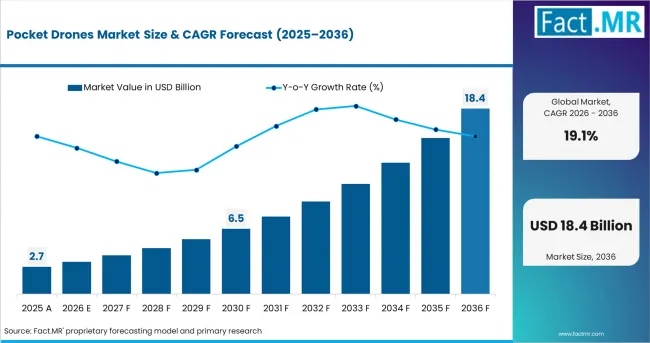
The pocket drones market was valued at USD 2.7 billion in 2025.
Demand is estimated to reach USD 3.2 billion in 2026.
The market is projected to grow at 19.1% CAGR from 2026 to 2036.
Compact imaging demand and light commercial use are forecast to lift the market to USD 18.4 billion by 2036.
Pocket Drones Market Value Analysis | Source: Fact.MR
Metric
Details
Industry Size (2026)
USD 3.2 billion
Industry Value (2036)
USD 18.4 billion
CAGR (2026 to 2036)
19.1%
Source: Fact.MR analysis. Updated May 23, 2026
Summary of the Pocket Drones Market
Market Definition
Pocket drones market refers to compact unmanned aerial systems designed for easy carrying and short-distance flight. It includes foldable and mini drones used for travel videos, selfies and light inspection. Demand comes from users seeking portable aerial imaging, simple controls and stable capture without bulky drone equipment.
Demand Drivers in the Market
Creator Use: Content creators need compact drones for travel videos and social media footage. Pocket drones support quick aerial capture without heavy gear.
Real Estate Visuals: Real estate agents use pocket drones for quick property review and listing visuals. Simple flight control helps capture exterior views and nearby surroundings.
Light Inspection: Light inspection providers need portable drones for fast site checks and simple aerial views. Compact platforms support roof checks, and quick field review.
Key Segments Analyzed
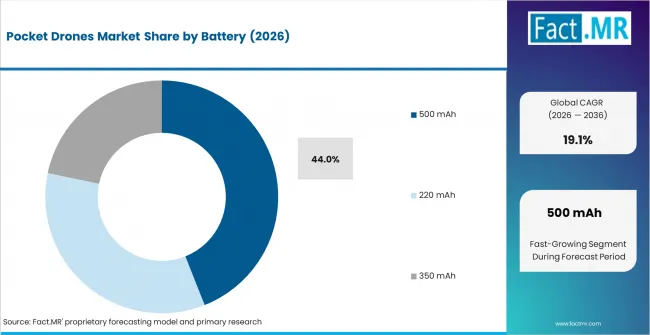
By Battery: 500 mAh battery pocket drones are projected to account for 44.0% share of pocket drone demand by battery in 2026 as users need longer flight time.
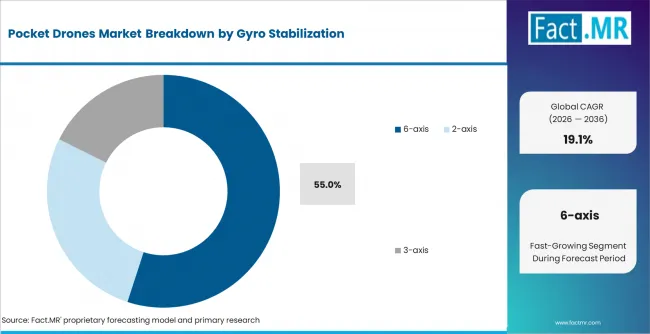
By Gyro Stabilization: 6-axis gyro stabilization is expected to represent 55.0% share of pocket drone demand by gyro stabilization in 2026 as users need smoother flight control.
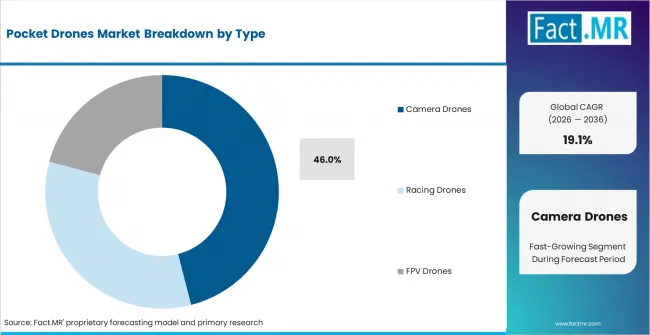
By Type: Camera drones are estimated to capture 46.0% share of pocket drone demand by type in 2026 as users need compact aerial imaging.
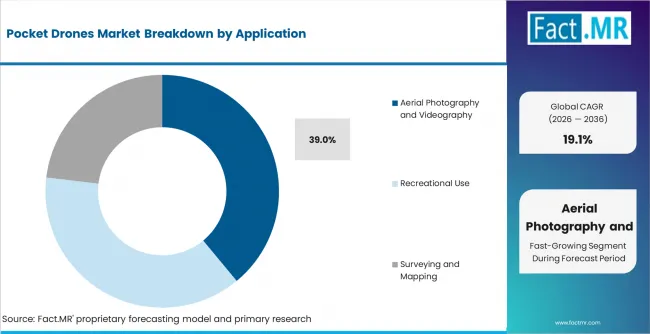
By Application: Aerial photography and videography is projected to account for 39.0% share of pocket drone demand by application in 2026 as creators need portable filming tools.
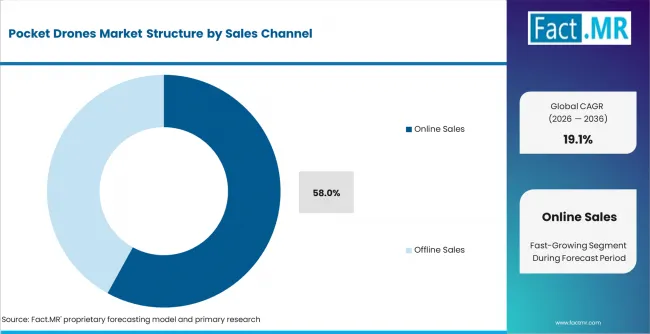
By Sales Channel: Online sales are expected to represent 58.0% share of pocket drone demand by sales channel in 2026 as users compare models, camera specs, and accessories digitally.
By Geography: China pocket drone demand is forecast to grow at 20.1% CAGR from 2026 to 2036 as manufacturing scale and domestic use expand.
Analyst Opinion at Fact.MR
Shambhu Nath Jha, Senior Analyst at Fact.MR, notes, “Pocket drone adoption is shifting from casual flying to compact aerial content and light-duty field work. Users want small drones that can deliver stable video without complex setup. Suppliers will gain if camera quality, flight safety, and battery performance improve together.”
Strategic Implications
Compact Design: Pocket drone makers must align low weight with better camera and flight safety features. Stable design helps creators capture usable footage during travel and outdoor use.
Retail Focus: Electronics retailers should focus on battery life and after-sales support. Clear product guidance helps users compare models before purchase.
Creator Need: Content creators need drones that support stable capture without complex operating steps. Simple controls help improve footage quality during quick filming sessions.
Methodology
Fact.MR interviews compact drone users and electronics retailers for demand validation.
Research incorporates product specifications aviation guidance and supplier portfolio checks for competitive assessment.
Market estimates are developed using type mix battery demand application use and sales channel patterns across major regions.
Forecast assumptions are validated through supplier checks retailer feedback and regional drone regulation review to improve application-level accuracy and commercial demand validation.
Portable drones are moving from hobby devices into everyday content and field review tools. DJI lists the Mini 4 Pro at under 249 g with 4K/60fps HDR video and omnidirectional obstacle sensing. [1] This shows why compact design and better imaging are central to pocket drone adoption.
Pocket drone operators need fast setup and simple control. Vloggers and inspection service providers use small drones because they reduce equipment weight and setup time. The main value comes from capturing stable aerial data with compact professional platforms.
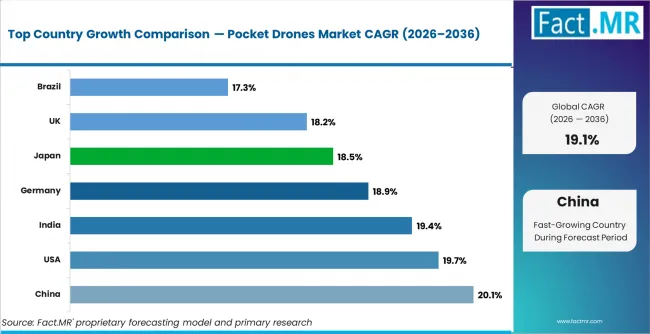
China pocket drone demand is forecast to grow at 20.1% CAGR from 2026 to 2036 as local manufacturing and consumer drone use expand. The United States is projected to rise at 19.7% CAGR through 2036 as creator demand and lighter drone access. India records 19.4% CAGR as drone registration and training capacity improve. Germany is expected to grow at 18.9% CAGR through 2036. Japan may rise at 18.5% CAGR. UK demand is forecast to expand at 18.2% CAGR. Brazil records 17.3% CAGR through 2036 as agriculture and public safety uses increase.
Segmental Analysis
Pocket Drones Market Analysis by Battery
Pocket Drones Market Analysis By Battery | Source: Fact.MR
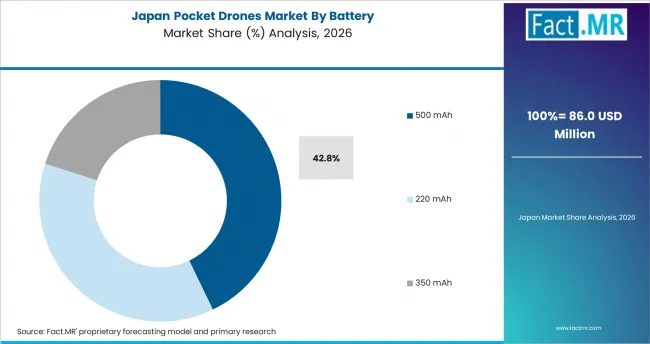
500 mAh battery pocket drones are projected to reach 44.0% share in 2026 as users need longer flight time without moving into larger drone formats. The 350 mAh segment serves entry-level users who need basic flight time. The 220 mAh segment supports low-cost compact drones for short recreational flights. The 500 mAh segment leads because content creators and casual operators need enough power for repeated clips during one outing. Better battery support also improves user confidence during outdoor filming.
500 mAh Lead: 500 mAh packs help pocket drone users complete repeated takeoffs and short video captures before recharge breaks.
350 mAh Use: 350 mAh batteries suit first-time pilots practicing control in parks and small outdoor areas.
220 mAh Role: 220 mAh batteries keep pocket drones light and affordable for quick indoor flights and gift-led purchases.
Pocket Drones Market Analysis by Gyro Stabilization
Pocket Drones Market Analysis By Gyro Stabilization | Source: Fact.MR
Stable flight matters more as pocket drones are used for video and quick field review. Basic 2-axis stabilization serves low-cost drones that need simple balance support. The 6-axis gyro stabilization segment is expected to represent 55.0% share over the assessment period as users need smoother control and better wind response. The 3-axis segment serves mid-range products with moderate stability needs. 6-axis systems lead because filming and selfie use depend on stable hovering, smooth turns, and cleaner footage.
6-axis Control: 6-axis pocket drones help creators keep framing steady during selfie shots and short outdoor video clips.
3-axis Demand: 3-axis systems suit casual pilots who need smoother turning without paying for higher-end stabilization.
2-axis Use: 2-axis stabilization supports entry-level pocket drones used for indoor practice and short gift-led flying sessions.
Pocket Drones Market Analysis by Type
Pocket Drones Market Analysis By Type | Source: Fact.MR
Camera drones are estimated to capture 46.0% share in 2026 because users need compact aerial imaging for travel and property visuals. Selfie drones serve social media users and casual flyers. FPV drones support immersive control and short-distance flying. Racing drones serve selective because speed-focused use needs higher skill and repair tolerance. Camera drones lead because most pocket drone purchases are tied to image capture over flight sport. Better cameras and easier controls keep this segment ahead.
Camera Demand: Camera pocket drones help real estate agents and travel creators record short overhead clips without bulky gear.
Selfie Use: Selfie drones suit solo creators who need quick framing for reels and personal outdoor content.
FPV Role: FPV pocket drones help hobby pilots practice close-range control before moving to larger racing platforms.
Pocket Drones Market Analysis by Application
Pocket Drones Market Analysis By Application | Source: Fact.MR
Aerial photography and videography is the clearest application because pocket drones are carried for spontaneous image capture. Recreational use supports casual flying and gifting demand. Aerial photography and videography is projected to account for 39.0% share of pocket drone demand by application in 2026 as creators need portable filming tools. Skydio positions drone systems for public safety and field review, which shows how small aerial platforms are moving into faster visual assessment work. [2] Inspection and monitoring demand grows as operators need quick visual checks with compact equipment.
Aerial Capture: Travel creators use pocket drones to record quick overhead shots during trips without carrying full-size drone kits.
Recreational Use: Parents and hobby pilots choose pocket drones for gift purchases and short practice flights in open areas.
Inspection Need: Property managers use pocket drones to check roofs and exterior damage before calling larger inspection crews.
Pocket Drones Market Analysis by Sales Channel
Pocket Drones Market Analysis By Sales Channel | Source: Fact.MR
Digital comparison strongly shapes pocket drone purchases because users check camera specs, flight time, and weight before buying. Offline sales support demonstrations and warranty discussions. Online sales are expected to represent 58.0% share in 2026 because users compare models and accessories digitally. Electronics stores serve users who want hands-on product review.
Online Sales: Online marketplaces help pocket drone shoppers check replacement batteries and carrying kits before choosing a model.
Offline Stores: Electronics retailers help parents and hobby pilots test controls before buying gift or starter drones.
Brand Stores: Direct brand pages support safer setup through tutorials, spare-part guidance, and warranty registration.
Pocket Drones Market Drivers, Restraints, and Opportunities
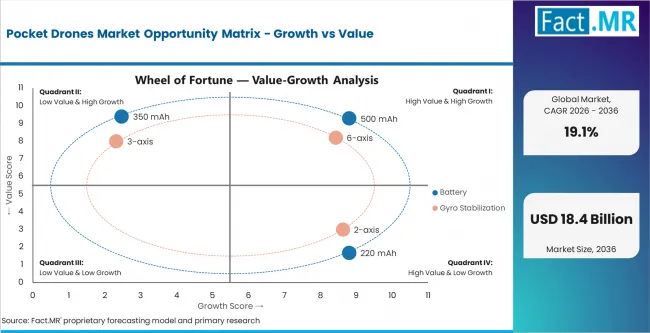
Pocket Drones Market Opportunity Matrix Growth Vs Value | Source: Fact.MR
Portability and camera quality are the main demand drivers for pocket drones. Users want small aircraft that can capture aerial footage during travel and light business tasks. The FAA’s BVLOS proposal shows how commercial drone operations are moving toward clearer operating rules. [3] Better rules support more structured use of compact drones in inspection and response tasks.
The main restraint is battery life and payload limit. Pocket drones are built to stay light, so flight time and wind resistance can be limited. Privacy concerns and local restrictions can slow use in cities. Durability matters because small airframes can be more vulnerable during outdoor flying.
Opportunities in the Pocket Drones Market
Travel Content: Brands can grow through drones built for lightweight creator workflows. Compact models help users capture travel videos and social media footage with simple handling.
Property Imaging: Real estate agents need portable drones for quick listing visuals. Pocket drones support exterior views and surrounding area capture for property marketing.
Light Inspection: Small service providers can use pocket drones for fast site review. Portable platforms help check roofs and field locations with less setup time.
Regional Analysis
Based on regional analysis, the pocket drones market is segmented into North America, Latin America, Western Europe, Eastern Europe, East Asia, South Asia and Pacific, and Middle East and Africa across 30 plus countries.
Top Country Growth Comparison Pocket Drones Market Cagr (2026 2036) | Source: Fact.MR
Country
CAGR (2026 to 2036)
China
20.1%
United States
19.7%
India
19.4%
Germany
18.9%
Japan
18.5%
UK
18.2%
Brazil
17.3%
Source: Fact.MR analysis. Updated May 23, 2026
Source: Fact.MR analysis, based on proprietary forecasting model and primary research.
Pocket Drones Market Cagr Analysis By Country | Source: Fact.MR
East Asia Pocket Drones Market Analysis
Pocket Drones Market Japan Market Share Analysis By Battery | Source: Fact.MR
East Asia demand comes from consumer electronics strength, compact drone manufacturing, and urban content creation. China leads because local brands support wide access and frequent model updates. Japan grows through photography, infrastructure review, and disaster response applications.
China: China is forecast to grow at 20.1% CAGR from 2026 to 2036 as domestic drone manufacturing and compact consumer electronics demand support pocket drone adoption. CAAC reported that registered UAVs exceeded 2 million in 2024 and annual flight hours surpassed 26 million. [4] Local brands help shorten product cycles and lower access barriers. Younger users and content creators support demand for small camera drones. Light inspection and urban monitoring use add demand beyond recreation.
Japan: Japan’s pocket drone demand is supported by compact imaging, inspection, and disaster response use. Operators value small drones because crowded cities and difficult terrain often need lighter aerial tools. The country is expected to grow at 18.5% CAGR by 2036 as infrastructure review and content creation support adoption. MLIT’s white paper notes drone use in infrastructure maintenance and emergency safety assessment. [5] Suppliers with reliable stabilization and local service support can improve repeat demand among Japanese users.
North America Pocket Drones Market Analysis
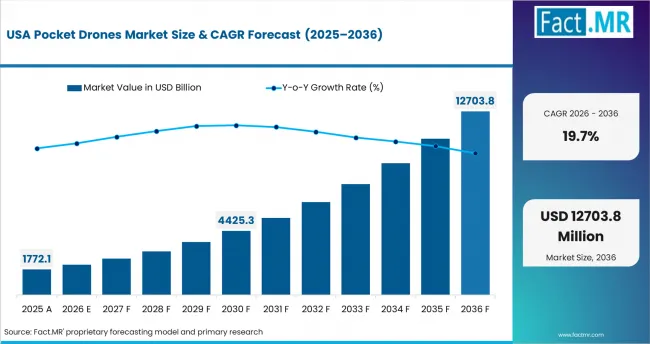
Pocket Drones Market Country Value Analysis | Source: Fact.MR
North America demand comes from creator culture, recreational drone use, and light commercial activity. The United States leads because outdoor filming, property imaging, and public safety evaluation support compact drone demand. Regulatory familiarity helps users understand operating limits.
United States: U.S. pocket drone demand is tied to social media filming, real estate visuals, and quick site review. Recreational users value compact drones that are easy to carry and simple to fly. The market is projected to grow at 19.7% CAGR over the study period as lighter drones support hobby and light commercial use.
South Asia and Pacific Pocket Drones Market Analysis
South Asia and Pacific demand benefits from public-sector drone programs and growing training capacity. India is the main growth country because formal drone registration and pilot training are expanding. Price discipline remains important for entry-level users.
India: India is projected to record 19.4% CAGR from 2026 to 2036 as drone training capacity and regulated activity support compact drone adoption. Content creators and small service providers can use pocket drones for filming, mapping, and quick field review. Local repair access will matter because entry-level users need affordable support. Growth improves as drone awareness spreads beyond large cities.
Western Europe Pocket Drones Market Analysis
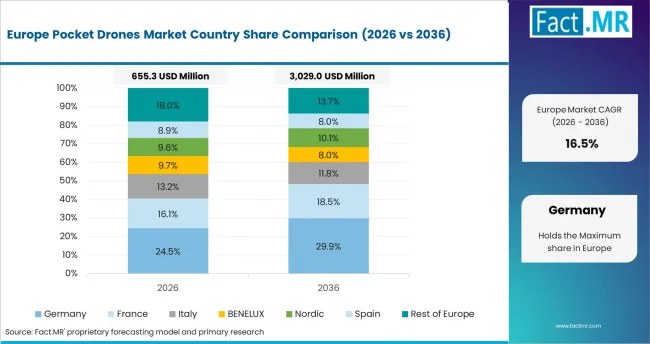
Pocket Drones Market Europe Country Market Share Analysis, 2026 & 2036 | Source: Fact.MR
Western Europe demand is driven by safety rules, urban photography, and inspection needs. Germany and the UK lead through stronger regulation awareness and consumer electronics adoption. Under-250 g designs support easier access across many consumer use cases.
Germany: Germany pocket drone demand is supported by urban photography, environmental monitoring, and light inspection use. The country is expected to grow at 18.9% CAGR by 2036 as compact drones gain use among hobbyists and professional users. This supports pocket drone demand because smaller models can be easier to operate within low-risk rules. Suppliers need clear manuals and privacy guidance.
UK: UK demand is driven by travel filming, creator activity, and public safety interest. Compact drones help users capture aerial visuals without carrying professional equipment. The UK pocket drones market is forecast to expand at 18.2% CAGR from 2026 to 2036 as camera-led mini drones gain retail visibility. Retailers that explain registration and operating limits can improve confidence across entry-level drone users.
Latin America Pocket Drones Market Analysis
Latin America demand depend on tourism content, agriculture scouting, and public safety interest. Brazil leads regional demand because large rural areas and active creator use support compact drone purchases. Service support and price sensitivity influence repeat sales.
Brazil: Brazil pocket drone demand is supported by tourism drone filming, and public safety use. Compact drones help operators capture quick visuals across large properties and outdoor events. The country is expected to grow at 17.3% CAGR from 2026 to 2036 as consumer use and light commercial activity expand.
Competitive Aligners for Market Players
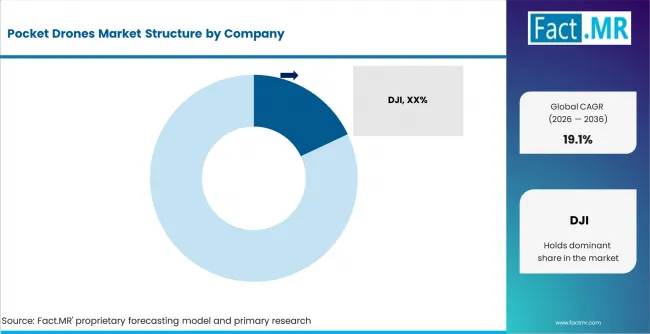
Pocket Drones Market Analysis By Company | Source: Fact.MR
The pocket drones market includes consumer drone brands, electronics retailers, and compact aerial imaging suppliers. DJI, Hubsan, Skydio, Parrot SA, Autel Robotics, Potensic, Holy Stone, Ryze Tech, Snaptain, and Yuneec compete through portability, camera quality, obstacle sensing, battery performance, and retail access.
Competition depends on making compact drones feel simple and safe. Users compare weight, camera output, flight time, stabilization, and spare parts. Premium brands can defend share with better image processing and obstacle sensing. Entry-level brands compete through lower prices and bundled accessories.
Supplier position will rely on after-sales service through 2036. Pocket drones face crashes, battery wear, and controller issues. Brands with easy replacement parts and clear app support can protect repeat purchases.
Key Players in Pocket Drones Market
DJI
Hubsan
Skydio
Parrot SA
Autel Robotics
Potensic
Holy Stone
Ryze Tech
Snaptain
Yuneec
Bibliography
[1]. DJI. (2026). DJI Mini 4 Pro specifications. DJI.
[2]. Skydio. (2026). Drone as First Responder for public safety. Skydio.
[3]. Federal Aviation Administration. (2025, August 6). Beyond Visual Line of Sight (BVLOS). FAA.
[4]. Civil Aviation Administration of China. (2025, December 24). CAAC releases two mandatory national standards for UAV. CAAC.
[5]. Ministry of Land, Infrastructure, Transport and Tourism. (2025). Summary of the White Paper on Land, Infrastructure, Transport and Tourism in Japan, 2025. MLIT.
Pocket Drones Market Definition
The pocket drones market covers compact unmanned aerial vehicles designed for portable use, short-range flight, imaging, recreational activity, and light commercial tasks. The market differs from larger commercial drones because pocket drones prioritize small size, and easy handling for quick deployment.
Pocket Drones Market Inclusions
The scope includes compact camera drones, selfie drones, FPV drones, racing drones, foldable mini drones, and small drones with GPS, or gyro stabilization. Drones used for personal filming, mapping, light inspection, and recreational flying are included.
Pocket Drones Market Exclusions
The scope excludes heavy commercial drones, fixed-wing drones, industrial payload drones, drone services sold without hardware, and drone software sold without a pocket drone platform. Toy drones without meaningful camera or flight-control functionality are outside this scope.
Pocket Drones Market Research Methodology
Primary Research
Primary research includes interviews with drone retailers and compact drone users. Content creators, and electronics channel managers are covered separately. Supplier inputs support battery and feature-level checks.
Desk Research
Desk research reviews drone product specifications and aviation rules. Company product pages and public aviation guidance support category validation. Regional drone policy documents are reviewed for country outlook.
Market-Sizing and Forecasting
Forecasting uses pocket drone demand by battery, and sales channel. Consumer imaging and light commercial adoption are linked to portability and camera quality.
Data Validation and Update Cycle
Forecasts are validated through supplier checks and channel interviews. Regional assumptions are reviewed with drone registration activity and regulation updates.
Market Breakdown
Segmentation
Scope of the Report
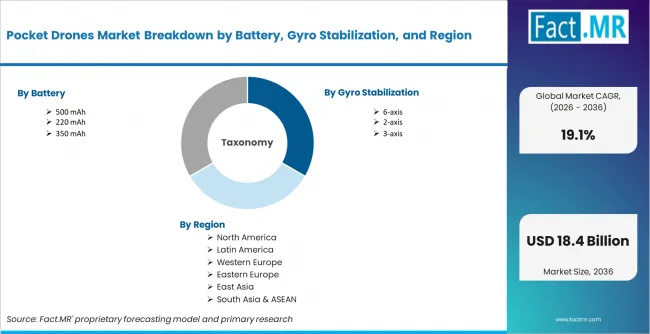
Pocket Drones Market Breakdown By Battery, Gyro Stabilization, And Region | Source: Fact.MR
Attribute
Details
Quantitative Units
USD 3.2 billion in 2026 to USD 18.4 billion by 2036, at 19.1% CAGR
Market Definition
Compact unmanned aerial vehicles used for portable imaging, recreation, mapping, and light inspection.
Battery
220 mAh, 350 mAh, 500 mAh
Gyro Stabilization
2-axis, 3-axis, 6-axis
Type
Camera Drones, Racing Drones, FPV Drones, Selfie Drones
Application
Aerial Photography and Videography, Recreational Use, Surveying and Mapping, Inspection and Monitoring, Delivery Services
Sales Channel
Online Sales, Offline Sales
Regions Covered
North America, Latin America, Western Europe, Eastern Europe, East Asia, South Asia and Pacific, Middle East and Africa
Countries Covered
China, United States, India, Germany, Japan, UK, Brazil, 30 plus countries
.webp "Top Country Growth Comparison Pocket Drones Market Cagr (2026 2036)")