Regenerative Soil 6M Tractor Tillage Market
Regenerative Soil 6M Tractor Tillage Market Size and Share Forecast Outlook 2026 to 2036
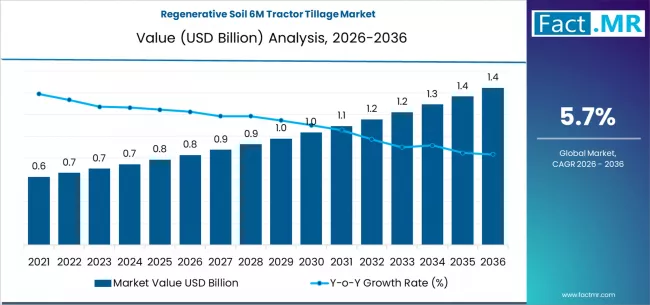
Regenerative soil 6m tractor tillage market is projected to grow from USD 0.8 billion in 2026 to USD 1.4 billion by 2036, at a CAGR of 5.7%. Reduced Tillage will dominate with a 47.0% market share, while cereals will lead the crop type segment with a 49.0% share.
Regenerative Soil 6M Tractor Tillage Market Forecast and Outlook 2026 to 2036
The global regenerative soil 6M tractor tillage market is projected to grow from USD 0.83 billion in 2026 to USD 1.44 billion by 2036, advancing at a compound annual growth rate of 5.7%. This growth reflects a profound shift in agricultural philosophy, where tillage equipment is no longer seen merely as a tool for seedbed preparation but as a strategic instrument for building soil health and farm resilience.
Key Takeaways from the Regenerative Soil 6M Tractor Tillage Market
- Market Value for 2026: USD 0.83 Billion
- Market Value for 2036: USD 1.44 Billion
- Forecast CAGR (2026-2036): 5.7%
- Leading Practice Type Segment (2026): Reduced Tillage (47%)
- Leading Crop Type Segment (2026): Cereals (49%)
- Leading Farm Size Segment (2026): Large Farms (55%)
- Key Growth Countries: USA (6.50% CAGR), Brazil (6.20% CAGR), Australia (6.00% CAGR), India (5.80% CAGR)
- Key Players in the Market: John Deere, CNH Industrial, AGCO, Kubota, Mahindra & Mahindra, Escorts Kubota

The 6M paradigm, encompassing minimum soil disturbance, maintaining soil armor, maximizing biodiversity, managing more precisely, and integrating livestock—is reshaping demand for tractor-implement systems. The market is driven by the need to implement these practices at scale, balancing the agronomic benefits of regenerative agriculture with the economic realities of large-scale production.
A key trend is the dominance of reduced tillage practices, which hold a 47% share as a pragmatic middle ground between conventional and no-till systems. Cereals, as the most widespread crop type, lead with a 49% share, indicating the primary application area for scaling regenerative techniques.
Large farms (55% share) are the early adopters, possessing the capital and management capacity to transition equipment fleets and manage the associated agronomic risks. Geographically, major agricultural producers with significant acreage under commodity crops, including the USA, Brazil, Australia, and India, lead the market.
Metric
| Metric | Value |
|---|---|
| Market Value (2026) | USD 0.83 Billion |
| Market Forecast Value (2036) | USD 1.44 Billion |
| Forecast CAGR (2026-2036) | 5.7% |
Category
| Category | Segments |
|---|---|
| Practice Type | Reduced Tillage, No-till, Cover-crop Integration |
| Crop Type | Cereals, Oilseeds, Pulses |
| Farm Size | Large Farms, Medium Farms |
| Region | North America, Latin America, Western Europe, Eastern Europe, East Asia, South Asia & Pacific, MEA |
Segmental Analysis
By Practice Type, Which Approach Represents the Most Pragmatic Transition Path?
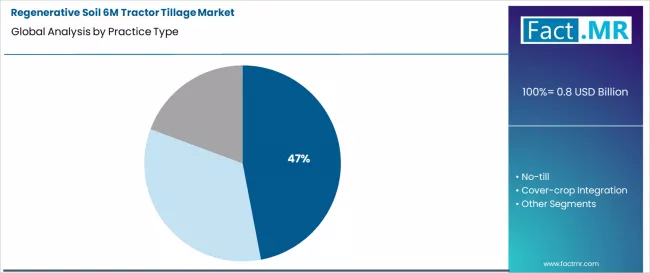
Reduced tillage systems lead the practice segment with a 47% share. This approach minimizes soil disturbance compared to conventional plowing but retains some level of mechanical residue management and seedbed preparation.
It offers farmers a manageable transition into regenerative principles, allowing them to address soil compaction and manage heavy residue while still using familiar tractor and implement technology. This pragmatic balance between soil health goals and operational familiarity makes it the most widely adopted entry point into the 6M framework.
By Crop Type, Where is Regenerative Tillage Being Deployed at the Largest Scale?
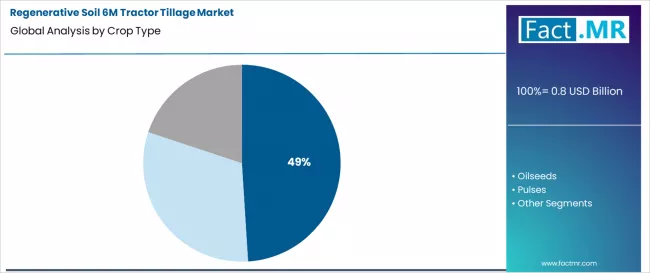
Cereal crops, including corn, wheat, and rice, dominate the crop type segment with a 49% share. The vast global acreage dedicated to cereal production presents the greatest opportunity for impact on soil carbon and erosion.
Implementing reduced or no-till systems in these high-acreage commodity crops is where the scalability of regenerative practices is being proven. Potential input savings drive the economics on fuel and labor, alongside the long-term yield stability and resilience sought by large-scale grain producers.
By Farm Size, Which Operations are leading the Capital-Intensive Transition?
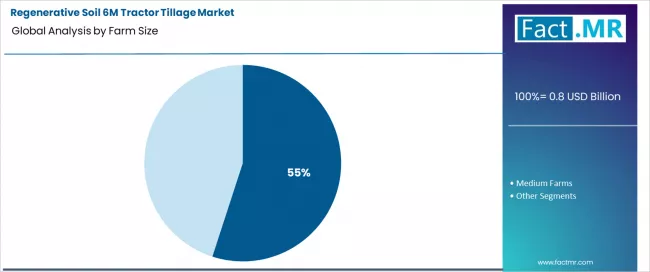
Large-scale farming operations constitute the leading user segment with a 55% share. Transitioning to regenerative tillage practices often requires significant capital investment in new or modified primary tillage implements, seed drills, and planters capable of operating in high-residue conditions.
Large farms have the financial capacity for this investment and the scale over which the long-term benefits to soil health and input cost savings can be effectively monetized and monitored.
What are the Drivers, Restraints, Opportunities, and Trends in the Regenerative Soil 6M Tractor Tillage Market?
Market growth is driven by increasing consumer and corporate demand for sustainably produced commodities, which is translating into financial incentives and premium markets for farmers adopting regenerative practices. Government programs in several countries now subsidize or provide technical assistance for soil health initiatives, directly influencing equipment purchase decisions.
The rising cost of diesel fuel and labor also makes less intensive tillage regimes economically attractive. A significant restraint is the high upfront capital cost of specialized no-till or strip-till planting equipment and the potential for short-term yield drag during the transition period, which deters risk-averse farmers.
Technical challenges in managing pests, weeds, and residue without conventional tillage require new skills and can limit adoption. This creates opportunities for manufacturers to develop versatile, multi-function implements that support a phased transition. There is also a major opportunity in the digital integration of tillage equipment with soil sensors and mapping software to enable truly precision-based disturbance management.
Key trends include the development of "vertical tillage" tools designed to cut residue without inverting soil, the integration of cover crop rollers into tillage systems for termination, and the growing practice of controlled traffic farming to pair regenerative tillage with permanent wheel tracks, further minimizing compaction.
Analysis of the Regenerative Soil 6M Tractor Tillage Market by Key Countries
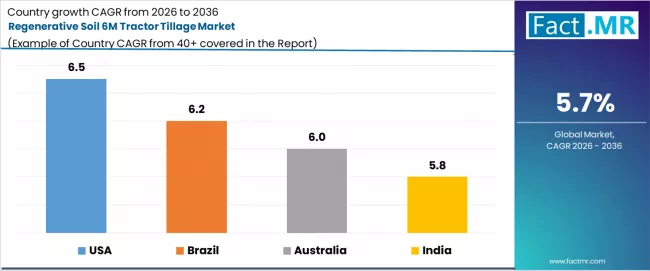
| Country | CAGR (2026-2036) |
|---|---|
| USA | 6.50% |
| Brazil | 6.20% |
| Australia | 6.00% |
| India | 5.80% |
How do US Policy Incentives and Large-Scale Farming Underpin Growth?
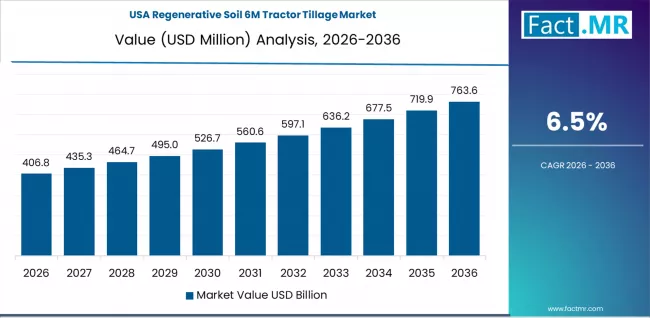
USA, with a 6.50% CAGR, is a primary market due to strong policy frameworks like the USDA's conservation programs that cost-share transition efforts. The prevalence of large-scale corn and soybean production on fragile soils in the Midwest has accelerated the adoption of no-till and strip-till.
American manufacturers are at the forefront of developing high-capacity, precision-guided tillage and planting systems for these conditions. The market is characterized by a focus on technology-driven solutions that integrate auto-steer and section control to implement precise, minimal disturbance practices across thousands of acres.
What is driving Steady Adoption in Brazil's Agricultural Heartlands?
Brazil's 6.20% CAGR is fueled by the critical need to combat soil erosion and degradation in its expansive soybean and maize fields, particularly in the Cerrado region. The adoption of no-till farming has a longer history here, creating a foundation for integrating more advanced 6M principles.
Brazilian farmers are adept at managing tropical soils and heavy residues, driving demand for robust, heavy-duty disc openers and planters capable of seeding directly into previous crop residue. The market growth is closely tied to improving soil organic matter and water infiltration in intensive double-cropping systems.
Why is Australia's Vulnerability to Climate Extremes a Factor in its Expansion?
Australia's 6.00% CAGR is closely linked to its need for agricultural resilience in the face of droughts and variable rainfall. Regenerative tillage practices that preserve soil moisture and build organic carbon are seen as a critical risk management strategy. The broadacre grain systems across the Australian wheat belt are increasingly adopting no-till and controlled traffic farming.
The market emphasizes durability and simplicity in equipment, favoring disc seeders and tine-based systems that can perform reliably in dry, hard soils while maintaining surface cover to reduce evaporation and wind erosion.
How is India's Diverse Agriculture and Soil Health Mission Contributing to its Growth?
India's 5.80% CAGR reflects a growing, though complex, adoption within its diverse cropping systems. Government initiatives like the National Mission for Sustainable Agriculture promote resource conservation technologies, including laser land leveling and happy seeders for rice-wheat systems.
Adoption is most visible among progressive, large farmers in the Indo-Gangetic plains. The market opportunity is segmented, with demand for smaller-scale, affordable zero-till seed drills for smallholders and larger, tractor-mounted systems for bigger operations, focusing on reducing water use and improving soil health in intensive irrigated landscapes.
Competitive Landscape
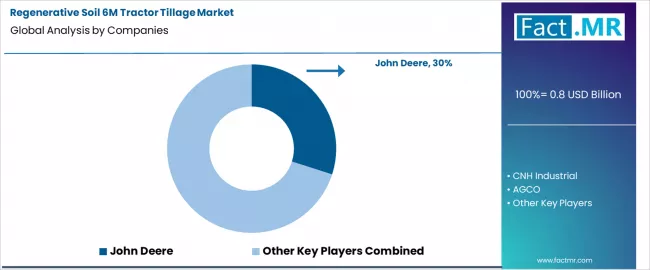
The competitive landscape involves traditional farm machinery OEMs adapting their product lines to serve a new agronomic paradigm. Competition is centered on providing complete system solutions rather than standalone implements. Leading players are developing integrated toolbars that combine residue management, precise tillage, and seeding in a single pass, reducing soil compaction events. Success depends on demonstrating agronomic expertise, as manufacturers must advise farmers on the correct implement settings and practices for their specific soil and crop conditions.
Strategic partnerships with agronomists, conservation groups, and carbon program facilitators are becoming crucial to provide farmers with a holistic support package. The ability to offer flexible financing for this transition-enabling equipment and to provide robust data on the soil health outcomes achieved with their systems will be key differentiators in a market where the value proposition is based on long-term sustainability and resilience.
Key Players in the Regenerative Soil 6M Tractor Tillage Market
- John Deere
- CNH Industrial
- AGCO
- Kubota
- Mahindra & Mahindra
- Escorts Kubota
Scope of Report
| Items | Values |
|---|---|
| Quantitative Units | USD Billion |
| Practice Type | Reduced Tillage, No-till, Cover-crop Integration |
| Crop Type | Cereals, Oilseeds, Pulses |
| Farm Size | Large Farms, Medium Farms |
| Key Countries | USA, Brazil, Australia, India |
| Key Companies | John Deere, CNH Industrial, AGCO, Kubota, Mahindra & Mahindra, Escorts Kubota |
| Additional Analysis | Comparative agronomic and economic analysis of different tillage systems; soil carbon measurement and monitoring technologies; analysis of implement design for optimal residue handling and soil interaction; impact of precision guidance and auto-section control on practice adoption; farmer transition risk and support mechanism analysis; role of carbon markets in financing equipment transition. |
Market by Segments
-
Practice Type :
- Reduced Tillage
- No-till
- Cover-crop Integration
-
Crop Type :
- Cereals
- Oilseeds
- Pulses
-
Farm Size :
- Large Farms
- Medium Farms
-
Region :
- North America
- USA
- Canada
- Latin America
- Brazil
- Mexico
- Argentina
- Rest of Latin America
- Western Europe
- Germany
- UK
- France
- Italy
- BENELUX
- Spain
- Rest of Western Europe
- Eastern Europe
- Poland
- Russia
- Czech Republic
- Rest of Eastern Europe
- East Asia
- China
- Japan
- South Korea
- Rest of East Asia
- South Asia & Pacific
- India
- ASEAN
- Australia
- Rest of South Asia & Pacific
- MEA
- South Africa
- GCC Countries
- Turkiye
- Rest of MEA
- North America
References
- Food and Agriculture Organization of the United Nations (FAO). (2023). Recarbonizing global soils: A technical manual of recommended management practices.
- Lal, R. (2023). Regenerative agriculture for food and climate. Journal of Soil and Water Conservation.
- Project Drawdown. (2023). Reduced Tillage [Solution Summary].
- Six, J., & Paustian, K. (2023). Aggregate-associated soil organic matter as an ecosystem property and a measurement tool. Soil Biology and Biochemistry.
- The Rodale Institute. (2024). Regenerative Organic Agriculture and Climate Change: A Down-to-Earth Solution.
- United Nations Convention to Combat Desertification (UNCCD). (2023). Global Land Outlook: Land Restoration for Recovery and Resilience.
Table of Content
- Executive Summary
- Global Market Outlook
- Demand to side Trends
- Supply to side Trends
- Technology Roadmap Analysis
- Analysis and Recommendations
- Market Overview
- Market Coverage / Taxonomy
- Market Definition / Scope / Limitations
- Market Background
- Market Dynamics
- Drivers
- Restraints
- Opportunity
- Trends
- Scenario Forecast
- Demand in Optimistic Scenario
- Demand in Likely Scenario
- Demand in Conservative Scenario
- Opportunity Map Analysis
- Product Life Cycle Analysis
- Supply Chain Analysis
- Investment Feasibility Matrix
- Value Chain Analysis
- PESTLE and Porter’s Analysis
- Regulatory Landscape
- Regional Parent Market Outlook
- Production and Consumption Statistics
- Import and Export Statistics
- Market Dynamics
- Global Market Analysis 2021 to 2025 and Forecast, 2026 to 2036
- Historical Market Size Value (USD Million) Analysis, 2021 to 2025
- Current and Future Market Size Value (USD Million) Projections, 2026 to 2036
- Y to o to Y Growth Trend Analysis
- Absolute $ Opportunity Analysis
- Global Market Pricing Analysis 2021 to 2025 and Forecast 2026 to 2036
- Global Market Analysis 2021 to 2025 and Forecast 2026 to 2036, By Practice Type
- Introduction / Key Findings
- Historical Market Size Value (USD Million) Analysis By Practice Type, 2021 to 2025
- Current and Future Market Size Value (USD Million) Analysis and Forecast By Practice Type, 2026 to 2036
- Reduced Tillage
- No-till
- Cover-crop Integration
- Reduced Tillage
- Y to o to Y Growth Trend Analysis By Practice Type, 2021 to 2025
- Absolute $ Opportunity Analysis By Practice Type, 2026 to 2036
- Global Market Analysis 2021 to 2025 and Forecast 2026 to 2036, By Crop Type
- Introduction / Key Findings
- Historical Market Size Value (USD Million) Analysis By Crop Type, 2021 to 2025
- Current and Future Market Size Value (USD Million) Analysis and Forecast By Crop Type, 2026 to 2036
- Cereals
- Oilseeds
- Pulses
- Cereals
- Y to o to Y Growth Trend Analysis By Crop Type, 2021 to 2025
- Absolute $ Opportunity Analysis By Crop Type, 2026 to 2036
- Global Market Analysis 2021 to 2025 and Forecast 2026 to 2036, By Farm Size
- Introduction / Key Findings
- Historical Market Size Value (USD Million) Analysis By Farm Size, 2021 to 2025
- Current and Future Market Size Value (USD Million) Analysis and Forecast By Farm Size, 2026 to 2036
- Large Farms
- Medium Farms
- Large Farms
- Y to o to Y Growth Trend Analysis By Farm Size, 2021 to 2025
- Absolute $ Opportunity Analysis By Farm Size, 2026 to 2036
- Global Market Analysis 2021 to 2025 and Forecast 2026 to 2036, By Region
- Introduction
- Historical Market Size Value (USD Million) Analysis By Region, 2021 to 2025
- Current Market Size Value (USD Million) Analysis and Forecast By Region, 2026 to 2036
- North America
- Latin America
- Western Europe
- Eastern Europe
- East Asia
- South Asia and Pacific
- Middle East & Africa
- Market Attractiveness Analysis By Region
- North America Market Analysis 2021 to 2025 and Forecast 2026 to 2036, By Country
- Historical Market Size Value (USD Million) Trend Analysis By Market Taxonomy, 2021 to 2025
- Market Size Value (USD Million) Forecast By Market Taxonomy, 2026 to 2036
- By Country
- USA
- Canada
- Mexico
- By Practice Type
- By Crop Type
- By Farm Size
- By Country
- Market Attractiveness Analysis
- By Country
- By Practice Type
- By Crop Type
- By Farm Size
- Key Takeaways
- Latin America Market Analysis 2021 to 2025 and Forecast 2026 to 2036, By Country
- Historical Market Size Value (USD Million) Trend Analysis By Market Taxonomy, 2021 to 2025
- Market Size Value (USD Million) Forecast By Market Taxonomy, 2026 to 2036
- By Country
- Brazil
- Chile
- Rest of Latin America
- By Practice Type
- By Crop Type
- By Farm Size
- By Country
- Market Attractiveness Analysis
- By Country
- By Practice Type
- By Crop Type
- By Farm Size
- Key Takeaways
- Western Europe Market Analysis 2021 to 2025 and Forecast 2026 to 2036, By Country
- Historical Market Size Value (USD Million) Trend Analysis By Market Taxonomy, 2021 to 2025
- Market Size Value (USD Million) Forecast By Market Taxonomy, 2026 to 2036
- By Country
- Germany
- UK
- Italy
- Spain
- France
- Nordic
- BENELUX
- Rest of Western Europe
- By Practice Type
- By Crop Type
- By Farm Size
- By Country
- Market Attractiveness Analysis
- By Country
- By Practice Type
- By Crop Type
- By Farm Size
- Key Takeaways
- Eastern Europe Market Analysis 2021 to 2025 and Forecast 2026 to 2036, By Country
- Historical Market Size Value (USD Million) Trend Analysis By Market Taxonomy, 2021 to 2025
- Market Size Value (USD Million) Forecast By Market Taxonomy, 2026 to 2036
- By Country
- Russia
- Poland
- Hungary
- Balkan & Baltic
- Rest of Eastern Europe
- By Practice Type
- By Crop Type
- By Farm Size
- By Country
- Market Attractiveness Analysis
- By Country
- By Practice Type
- By Crop Type
- By Farm Size
- Key Takeaways
- East Asia Market Analysis 2021 to 2025 and Forecast 2026 to 2036, By Country
- Historical Market Size Value (USD Million) Trend Analysis By Market Taxonomy, 2021 to 2025
- Market Size Value (USD Million) Forecast By Market Taxonomy, 2026 to 2036
- By Country
- China
- Japan
- South Korea
- By Practice Type
- By Crop Type
- By Farm Size
- By Country
- Market Attractiveness Analysis
- By Country
- By Practice Type
- By Crop Type
- By Farm Size
- Key Takeaways
- South Asia and Pacific Market Analysis 2021 to 2025 and Forecast 2026 to 2036, By Country
- Historical Market Size Value (USD Million) Trend Analysis By Market Taxonomy, 2021 to 2025
- Market Size Value (USD Million) Forecast By Market Taxonomy, 2026 to 2036
- By Country
- India
- ASEAN
- Australia & New Zealand
- Rest of South Asia and Pacific
- By Practice Type
- By Crop Type
- By Farm Size
- By Country
- Market Attractiveness Analysis
- By Country
- By Practice Type
- By Crop Type
- By Farm Size
- Key Takeaways
- Middle East & Africa Market Analysis 2021 to 2025 and Forecast 2026 to 2036, By Country
- Historical Market Size Value (USD Million) Trend Analysis By Market Taxonomy, 2021 to 2025
- Market Size Value (USD Million) Forecast By Market Taxonomy, 2026 to 2036
- By Country
- Kingdom of Saudi Arabia
- Other GCC Countries
- Turkiye
- South Africa
- Other African Union
- Rest of Middle East & Africa
- By Practice Type
- By Crop Type
- By Farm Size
- By Country
- Market Attractiveness Analysis
- By Country
- By Practice Type
- By Crop Type
- By Farm Size
- Key Takeaways
- Key Countries Market Analysis
- USA
- Pricing Analysis
- Market Share Analysis, 2025
- By Practice Type
- By Crop Type
- By Farm Size
- Canada
- Pricing Analysis
- Market Share Analysis, 2025
- By Practice Type
- By Crop Type
- By Farm Size
- Mexico
- Pricing Analysis
- Market Share Analysis, 2025
- By Practice Type
- By Crop Type
- By Farm Size
- Brazil
- Pricing Analysis
- Market Share Analysis, 2025
- By Practice Type
- By Crop Type
- By Farm Size
- Chile
- Pricing Analysis
- Market Share Analysis, 2025
- By Practice Type
- By Crop Type
- By Farm Size
- Germany
- Pricing Analysis
- Market Share Analysis, 2025
- By Practice Type
- By Crop Type
- By Farm Size
- UK
- Pricing Analysis
- Market Share Analysis, 2025
- By Practice Type
- By Crop Type
- By Farm Size
- Italy
- Pricing Analysis
- Market Share Analysis, 2025
- By Practice Type
- By Crop Type
- By Farm Size
- Spain
- Pricing Analysis
- Market Share Analysis, 2025
- By Practice Type
- By Crop Type
- By Farm Size
- France
- Pricing Analysis
- Market Share Analysis, 2025
- By Practice Type
- By Crop Type
- By Farm Size
- India
- Pricing Analysis
- Market Share Analysis, 2025
- By Practice Type
- By Crop Type
- By Farm Size
- ASEAN
- Pricing Analysis
- Market Share Analysis, 2025
- By Practice Type
- By Crop Type
- By Farm Size
- Australia & New Zealand
- Pricing Analysis
- Market Share Analysis, 2025
- By Practice Type
- By Crop Type
- By Farm Size
- China
- Pricing Analysis
- Market Share Analysis, 2025
- By Practice Type
- By Crop Type
- By Farm Size
- Japan
- Pricing Analysis
- Market Share Analysis, 2025
- By Practice Type
- By Crop Type
- By Farm Size
- South Korea
- Pricing Analysis
- Market Share Analysis, 2025
- By Practice Type
- By Crop Type
- By Farm Size
- Russia
- Pricing Analysis
- Market Share Analysis, 2025
- By Practice Type
- By Crop Type
- By Farm Size
- Poland
- Pricing Analysis
- Market Share Analysis, 2025
- By Practice Type
- By Crop Type
- By Farm Size
- Hungary
- Pricing Analysis
- Market Share Analysis, 2025
- By Practice Type
- By Crop Type
- By Farm Size
- Kingdom of Saudi Arabia
- Pricing Analysis
- Market Share Analysis, 2025
- By Practice Type
- By Crop Type
- By Farm Size
- Turkiye
- Pricing Analysis
- Market Share Analysis, 2025
- By Practice Type
- By Crop Type
- By Farm Size
- South Africa
- Pricing Analysis
- Market Share Analysis, 2025
- By Practice Type
- By Crop Type
- By Farm Size
- USA
- Market Structure Analysis
- Competition Dashboard
- Competition Benchmarking
- Market Share Analysis of Top Players
- By Regional
- By Practice Type
- By Crop Type
- By Farm Size
- Competition Analysis
- Competition Deep Dive
- John Deere
- Overview
- Product Portfolio
- Profitability by Market Segments (Product/Age /Sales Channel/Region)
- Sales Footprint
- Strategy Overview
- Marketing Strategy
- Product Strategy
- Channel Strategy
- CNH Industrial
- AGCO
- Kubota
- Mahindra & Mahindra
- Escorts Kubota
- John Deere
- Competition Deep Dive
- Assumptions & Acronyms Used
- Research Methodology
List Of Table
- Table 1: Global Market Value (USD Million) Forecast by Region, 2021 to 2036
- Table 2: Global Market Value (USD Million) Forecast by Practice Type, 2021 to 2036
- Table 3: Global Market Value (USD Million) Forecast by Crop Type, 2021 to 2036
- Table 4: Global Market Value (USD Million) Forecast by Farm Size, 2021 to 2036
- Table 5: North America Market Value (USD Million) Forecast by Country, 2021 to 2036
- Table 6: North America Market Value (USD Million) Forecast by Practice Type, 2021 to 2036
- Table 7: North America Market Value (USD Million) Forecast by Crop Type, 2021 to 2036
- Table 8: North America Market Value (USD Million) Forecast by Farm Size, 2021 to 2036
- Table 9: Latin America Market Value (USD Million) Forecast by Country, 2021 to 2036
- Table 10: Latin America Market Value (USD Million) Forecast by Practice Type, 2021 to 2036
- Table 11: Latin America Market Value (USD Million) Forecast by Crop Type, 2021 to 2036
- Table 12: Latin America Market Value (USD Million) Forecast by Farm Size, 2021 to 2036
- Table 13: Western Europe Market Value (USD Million) Forecast by Country, 2021 to 2036
- Table 14: Western Europe Market Value (USD Million) Forecast by Practice Type, 2021 to 2036
- Table 15: Western Europe Market Value (USD Million) Forecast by Crop Type, 2021 to 2036
- Table 16: Western Europe Market Value (USD Million) Forecast by Farm Size, 2021 to 2036
- Table 17: Eastern Europe Market Value (USD Million) Forecast by Country, 2021 to 2036
- Table 18: Eastern Europe Market Value (USD Million) Forecast by Practice Type, 2021 to 2036
- Table 19: Eastern Europe Market Value (USD Million) Forecast by Crop Type, 2021 to 2036
- Table 20: Eastern Europe Market Value (USD Million) Forecast by Farm Size, 2021 to 2036
- Table 21: East Asia Market Value (USD Million) Forecast by Country, 2021 to 2036
- Table 22: East Asia Market Value (USD Million) Forecast by Practice Type, 2021 to 2036
- Table 23: East Asia Market Value (USD Million) Forecast by Crop Type, 2021 to 2036
- Table 24: East Asia Market Value (USD Million) Forecast by Farm Size, 2021 to 2036
- Table 25: South Asia and Pacific Market Value (USD Million) Forecast by Country, 2021 to 2036
- Table 26: South Asia and Pacific Market Value (USD Million) Forecast by Practice Type, 2021 to 2036
- Table 27: South Asia and Pacific Market Value (USD Million) Forecast by Crop Type, 2021 to 2036
- Table 28: South Asia and Pacific Market Value (USD Million) Forecast by Farm Size, 2021 to 2036
- Table 29: Middle East & Africa Market Value (USD Million) Forecast by Country, 2021 to 2036
- Table 30: Middle East & Africa Market Value (USD Million) Forecast by Practice Type, 2021 to 2036
- Table 31: Middle East & Africa Market Value (USD Million) Forecast by Crop Type, 2021 to 2036
- Table 32: Middle East & Africa Market Value (USD Million) Forecast by Farm Size, 2021 to 2036
List Of Figures
- Figure 1: Global Market Pricing Analysis
- Figure 2: Global Market Value (USD Million) Forecast 2021 to 2036
- Figure 3: Global Market Value Share and BPS Analysis by Practice Type, 2026 and 2036
- Figure 4: Global Market Y to o to Y Growth Comparison by Practice Type, 2026 to 2036
- Figure 5: Global Market Attractiveness Analysis by Practice Type
- Figure 6: Global Market Value Share and BPS Analysis by Crop Type, 2026 and 2036
- Figure 7: Global Market Y to o to Y Growth Comparison by Crop Type, 2026 to 2036
- Figure 8: Global Market Attractiveness Analysis by Crop Type
- Figure 9: Global Market Value Share and BPS Analysis by Farm Size, 2026 and 2036
- Figure 10: Global Market Y to o to Y Growth Comparison by Farm Size, 2026 to 2036
- Figure 11: Global Market Attractiveness Analysis by Farm Size
- Figure 12: Global Market Value (USD Million) Share and BPS Analysis by Region, 2026 and 2036
- Figure 13: Global Market Y to o to Y Growth Comparison by Region, 2026 to 2036
- Figure 14: Global Market Attractiveness Analysis by Region
- Figure 15: North America Market Incremental Dollar Opportunity, 2026 to 2036
- Figure 16: Latin America Market Incremental Dollar Opportunity, 2026 to 2036
- Figure 17: Western Europe Market Incremental Dollar Opportunity, 2026 to 2036
- Figure 18: Eastern Europe Market Incremental Dollar Opportunity, 2026 to 2036
- Figure 19: East Asia Market Incremental Dollar Opportunity, 2026 to 2036
- Figure 20: South Asia and Pacific Market Incremental Dollar Opportunity, 2026 to 2036
- Figure 21: Middle East & Africa Market Incremental Dollar Opportunity, 2026 to 2036
- Figure 22: North America Market Value Share and BPS Analysis by Country, 2026 and 2036
- Figure 23: North America Market Value Share and BPS Analysis by Practice Type, 2026 and 2036
- Figure 24: North America Market Y to o to Y Growth Comparison by Practice Type, 2026 to 2036
- Figure 25: North America Market Attractiveness Analysis by Practice Type
- Figure 26: North America Market Value Share and BPS Analysis by Crop Type, 2026 and 2036
- Figure 27: North America Market Y to o to Y Growth Comparison by Crop Type, 2026 to 2036
- Figure 28: North America Market Attractiveness Analysis by Crop Type
- Figure 29: North America Market Value Share and BPS Analysis by Farm Size, 2026 and 2036
- Figure 30: North America Market Y to o to Y Growth Comparison by Farm Size, 2026 to 2036
- Figure 31: North America Market Attractiveness Analysis by Farm Size
- Figure 32: Latin America Market Value Share and BPS Analysis by Country, 2026 and 2036
- Figure 33: Latin America Market Value Share and BPS Analysis by Practice Type, 2026 and 2036
- Figure 34: Latin America Market Y to o to Y Growth Comparison by Practice Type, 2026 to 2036
- Figure 35: Latin America Market Attractiveness Analysis by Practice Type
- Figure 36: Latin America Market Value Share and BPS Analysis by Crop Type, 2026 and 2036
- Figure 37: Latin America Market Y to o to Y Growth Comparison by Crop Type, 2026 to 2036
- Figure 38: Latin America Market Attractiveness Analysis by Crop Type
- Figure 39: Latin America Market Value Share and BPS Analysis by Farm Size, 2026 and 2036
- Figure 40: Latin America Market Y to o to Y Growth Comparison by Farm Size, 2026 to 2036
- Figure 41: Latin America Market Attractiveness Analysis by Farm Size
- Figure 42: Western Europe Market Value Share and BPS Analysis by Country, 2026 and 2036
- Figure 43: Western Europe Market Value Share and BPS Analysis by Practice Type, 2026 and 2036
- Figure 44: Western Europe Market Y to o to Y Growth Comparison by Practice Type, 2026 to 2036
- Figure 45: Western Europe Market Attractiveness Analysis by Practice Type
- Figure 46: Western Europe Market Value Share and BPS Analysis by Crop Type, 2026 and 2036
- Figure 47: Western Europe Market Y to o to Y Growth Comparison by Crop Type, 2026 to 2036
- Figure 48: Western Europe Market Attractiveness Analysis by Crop Type
- Figure 49: Western Europe Market Value Share and BPS Analysis by Farm Size, 2026 and 2036
- Figure 50: Western Europe Market Y to o to Y Growth Comparison by Farm Size, 2026 to 2036
- Figure 51: Western Europe Market Attractiveness Analysis by Farm Size
- Figure 52: Eastern Europe Market Value Share and BPS Analysis by Country, 2026 and 2036
- Figure 53: Eastern Europe Market Value Share and BPS Analysis by Practice Type, 2026 and 2036
- Figure 54: Eastern Europe Market Y to o to Y Growth Comparison by Practice Type, 2026 to 2036
- Figure 55: Eastern Europe Market Attractiveness Analysis by Practice Type
- Figure 56: Eastern Europe Market Value Share and BPS Analysis by Crop Type, 2026 and 2036
- Figure 57: Eastern Europe Market Y to o to Y Growth Comparison by Crop Type, 2026 to 2036
- Figure 58: Eastern Europe Market Attractiveness Analysis by Crop Type
- Figure 59: Eastern Europe Market Value Share and BPS Analysis by Farm Size, 2026 and 2036
- Figure 60: Eastern Europe Market Y to o to Y Growth Comparison by Farm Size, 2026 to 2036
- Figure 61: Eastern Europe Market Attractiveness Analysis by Farm Size
- Figure 62: East Asia Market Value Share and BPS Analysis by Country, 2026 and 2036
- Figure 63: East Asia Market Value Share and BPS Analysis by Practice Type, 2026 and 2036
- Figure 64: East Asia Market Y to o to Y Growth Comparison by Practice Type, 2026 to 2036
- Figure 65: East Asia Market Attractiveness Analysis by Practice Type
- Figure 66: East Asia Market Value Share and BPS Analysis by Crop Type, 2026 and 2036
- Figure 67: East Asia Market Y to o to Y Growth Comparison by Crop Type, 2026 to 2036
- Figure 68: East Asia Market Attractiveness Analysis by Crop Type
- Figure 69: East Asia Market Value Share and BPS Analysis by Farm Size, 2026 and 2036
- Figure 70: East Asia Market Y to o to Y Growth Comparison by Farm Size, 2026 to 2036
- Figure 71: East Asia Market Attractiveness Analysis by Farm Size
- Figure 72: South Asia and Pacific Market Value Share and BPS Analysis by Country, 2026 and 2036
- Figure 73: South Asia and Pacific Market Value Share and BPS Analysis by Practice Type, 2026 and 2036
- Figure 74: South Asia and Pacific Market Y to o to Y Growth Comparison by Practice Type, 2026 to 2036
- Figure 75: South Asia and Pacific Market Attractiveness Analysis by Practice Type
- Figure 76: South Asia and Pacific Market Value Share and BPS Analysis by Crop Type, 2026 and 2036
- Figure 77: South Asia and Pacific Market Y to o to Y Growth Comparison by Crop Type, 2026 to 2036
- Figure 78: South Asia and Pacific Market Attractiveness Analysis by Crop Type
- Figure 79: South Asia and Pacific Market Value Share and BPS Analysis by Farm Size, 2026 and 2036
- Figure 80: South Asia and Pacific Market Y to o to Y Growth Comparison by Farm Size, 2026 to 2036
- Figure 81: South Asia and Pacific Market Attractiveness Analysis by Farm Size
- Figure 82: Middle East & Africa Market Value Share and BPS Analysis by Country, 2026 and 2036
- Figure 83: Middle East & Africa Market Value Share and BPS Analysis by Practice Type, 2026 and 2036
- Figure 84: Middle East & Africa Market Y to o to Y Growth Comparison by Practice Type, 2026 to 2036
- Figure 85: Middle East & Africa Market Attractiveness Analysis by Practice Type
- Figure 86: Middle East & Africa Market Value Share and BPS Analysis by Crop Type, 2026 and 2036
- Figure 87: Middle East & Africa Market Y to o to Y Growth Comparison by Crop Type, 2026 to 2036
- Figure 88: Middle East & Africa Market Attractiveness Analysis by Crop Type
- Figure 89: Middle East & Africa Market Value Share and BPS Analysis by Farm Size, 2026 and 2036
- Figure 90: Middle East & Africa Market Y to o to Y Growth Comparison by Farm Size, 2026 to 2036
- Figure 91: Middle East & Africa Market Attractiveness Analysis by Farm Size
- Figure 92: Global Market - Tier Structure Analysis
- Figure 93: Global Market - Company Share Analysis
- FAQs -
How big is the regenerative soil 6m tractor tillage market in 2026?
The global regenerative soil 6m tractor tillage market is estimated to be valued at USD 0.8 billion in 2026.
What will be the size of regenerative soil 6m tractor tillage market in 2036?
The market size for the regenerative soil 6m tractor tillage market is projected to reach USD 1.4 billion by 2036.
How much will be the regenerative soil 6m tractor tillage market growth between 2026 and 2036?
The regenerative soil 6m tractor tillage market is expected to grow at a 5.7% CAGR between 2026 and 2036.
What are the key product types in the regenerative soil 6m tractor tillage market?
The key product types in regenerative soil 6m tractor tillage market are reduced tillage, no-till and cover-crop integration.
Which crop type segment to contribute significant share in the regenerative soil 6m tractor tillage market in 2026?
In terms of crop type, cereals segment to command 49.0% share in the regenerative soil 6m tractor tillage market in 2026.