SCR Dosing Control Modules Market (2026 - 2036)
SCR Dosing Control Modules Market Size and Share Forecast Outlook 2026 to 2036
Core Findings
SCR Dosing Control Modules Market Forecast Outlook 2026 to 2036
The SCR dosing control modules market is expected to grow from USD 2.9 billion in 2026 to USD 6.1 billion by 2036, with a 7.9% CAGR.
Key Takeaways from SCR Dosing Control Modules Market
- SCR Dosing Control Modules Market Value (2026): USD 2.9 billion
- SCR Dosing Control Modules Market Forecast Value (2036): USD 6.1 billion
- SCR Dosing Control Modules Market Forecast CAGR (2026 to 2036): 7.9%
- Leading Segment in SCR Dosing Control Modules Market: Diesel Powertrain (87%)
- Key Growth Region in SCR Dosing Control Modules Market: Asia Pacific
- Key Players in SCR Dosing Control Modules Market: Bosch, Continental AG, Denso Corporation, Cummins Inc., BorgWarner Inc., Eberspächer Gruppe GmbH & Co. KG, FORVIA S.A., Hitachi Astemo Ltd., Delphi Technologies, Weichai Power Co., Ltd.
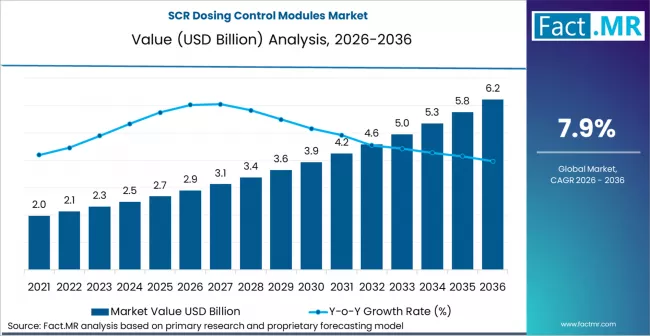
The growth is primarily driven by the increasing demand for effective emission control systems, especially in industries such as automotive and power generation. Market players must focus on adapting to changing fuel standards and evolving regulatory frameworks, as these factors directly impact product adoption.
To stay competitive, companies should build strong relationships with manufacturers that can consistently meet performance and compliance standards. Timely investments and strategic responses to regulatory shifts will be crucial in maintaining market position. Companies that delay adjustments to new emission guidelines risk falling behind in a rapidly evolving market.
SCR Dosing Control Modules Market
| Metric | Value |
|---|---|
| Estimated Value in (2026E) | USD 2.9 billion |
| Forecast Value in (2036F) | USD 6.1 billion |
| Forecast CAGR (2026 to 2036) | 7.9% |
Category
| Category | Segments |
|---|---|
| Sales Channel | First Fit (OEM); Aftermarket |
| Vehicle Type | HCV; LCV; Passenger Cars |
| System Integration | Dosing Module + ECU Integrated; Standalone Control Module |
| Emission Standard | Euro VI/BS VI; China VI; EPA 2010/Other |
| Powertrain | Diesel; Dual-fuel or Other |
| Region | North America; Europe; Asia Pacific; Latin America; Middle East & Africa |
Segmental Analysis: SCR Dosing Control Modules Market
What is the Analysis of the Leading Sales Channel Segment in the SCR Dosing Control Modules Market?
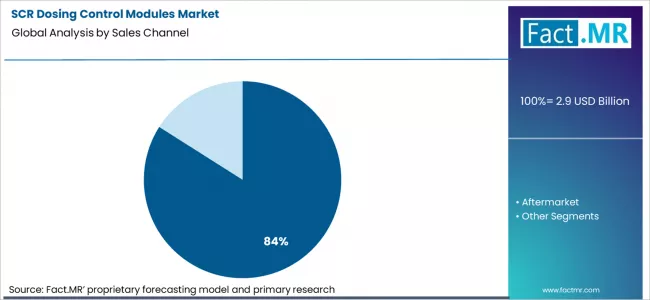
The First Fit (OEM) segment maintains a dominant position in the SCR dosing control modules market, holding 84% of the market share as of January 2026. This strong share is driven by the integration of dosing modules into the Engine Control Unit (ECU) architecture during vehicle production, a structural requirement for meeting Euro 7 and Tier 4 Final emission standards. Modern SCR dosing systems have evolved from standalone components to integrated parts of "software-defined" powertrain platforms.
These systems are essential for managing complex injection timing and ensuring compliance with stringent NOx emissions limits. Robert Bosch GmbH has demonstrated its advanced powertrain management systems, including AI-based dosing control that coordinates engine load and dosing to maintain NOx levels below 13 mg/km. The increasing adoption of SCR technology is evident, with approximately 70% of all heavy-duty vehicles globally now equipped with SCR systems to meet international emission regulations.
What is the Analysis of the Leading Powertrain Segment in the SCR Dosing Control Modules Market?
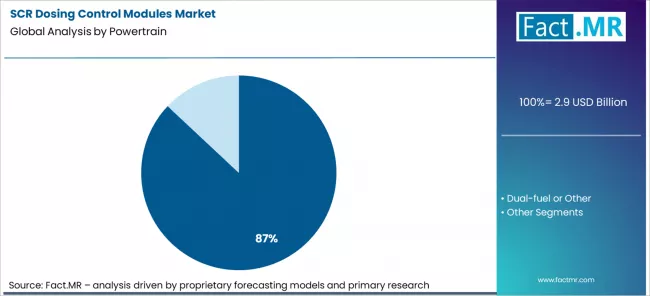
The Diesel powertrain continues to dominate the SCR dosing control modules market, capturing 87% of the market share in 2026. This dominance is largely due to the widespread use of diesel engines in heavy-duty transport, maritime, and off-road machinery sectors. Diesel SCR systems are projected to reach a market value of $16.05 billion by the end of 2026. Companies like Cummins Inc. have expanded their offerings, including the "UL2 Urea Dosing System" designed for high-horsepower diesel engines used in locomotive and power generation applications.
Product innovation continues, with Scania launching its "Twin SCR" system, which uses dual-dosing technology to optimize Diesel Exhaust Fluid (DEF) consumption and achieve fuel savings of 8% in long-haul operations. Additionally, new precision dosing pumps introduced in 2026 now feature ±2% tolerance limits, providing crucial accuracy for diesel engines operating under varying loads in sectors like mining and construction.
Country
| Country | Drivers | Restraints | Trends |
|---|---|---|---|
| USA | Strong regulatory enforcement of EPA NOx limits for heavy trucks and commercial vehicles drives adoption of advanced SCR dosing modules. | High costs of sophisticated dosing modules can constrain adoption, especially in pricesensitive heavy fleets. | Continued integration of smart dosing units with telematics for realtime emission control and diagnostics. |
| China | Rapid expansion of vehicle production and strict China 7 emission norms increase demand for SCR systems and dosing modules on diesel vehicles. | EV adoption and phased reduction of dieselengine fleets may moderate longterm growth. | Growth in commercial diesel vehicles spurs localized production of dosing control products. |
| India | Enforcement of BSVI+ emission standards on heavy commercial vehicles boosts SCR module uptake to meet NOx limits. | Limited local manufacturing for highprecision dosing electronics slows cost competitiveness. | Growing aftermarket services for SCR modules to support fleet compliance. |
| Germany | Euro VI/VId standards for commercial vehicles and industrial emissions support demand for accurate dosing control units. | Decline in internal combustion engine (ICE) vehicle production due to electrification may restrain future module growth. | Focus on highprecision, durable dosing controllers integrated with OEM vehicle systems. |
| Japan | Advanced emission standards for diesel engines across commercial and offroad vehicles reinforce SCR module demand. | Slow growth in traditional diesel segments limits volume expansion of dosing modules. | Shift toward compact, highefficiency dosing modules with enhanced durability. |
| South Korea | Strong automotive production and emission limits support SCR module demand, particularly for heavy commercial vehicles. | High competition from domestic and imported SCR technologies can pressure pricing. | Increased local R&D investments in dosing control algorithms and hardware. |
| Brazil | Implementation of stricter NOx limits on heavy vehicle emissions drives adoption of SCR dosing systems in fleets. | Economic variability and cost sensitivity in vehicle procurement can delay module upgrades. | Aftermarket SCR module adoption grows as fleets retrofit to meet regulatory norms. |
Analysis of the SCR Dosing Control Modules Market by Key Country
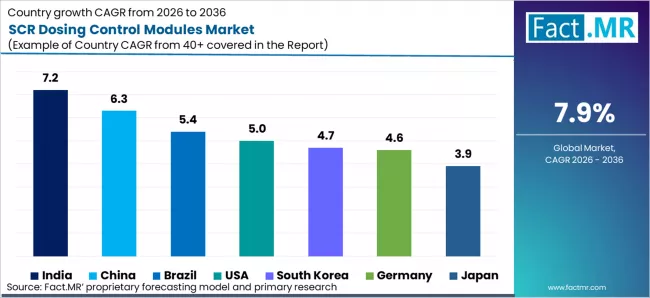
| Country | CAGR (Forecast Period) |
|---|---|
| USA | 5.0% |
| China | 6.3% |
| India | 7.2% |
| Germany | 4.6% |
| Japan | 3.9% |
| South Korea | 4.7% |
| Brazil | 5.4% |
The report covers an in-depth analysis of 40+ countries; top-performing countries are highlighted below.
What Factors Drive Growth in the USA SCR Dosing Control Modules Market?
The 5.0% growth in the USA SCR dosing control modules market is primarily driven by the Environmental Protection Agency (EPA) through its Clean Trucks Plan. The plan mandates enhanced durability and stricter testing for heavy-duty engines, requiring SCR dosing modules to meet 150,000-mile durability standards under the Tier 3 program. Additionally, the EPA's focus on greenhouse gas reduction incentivizes the use of high-efficiency dosing systems that minimize backpressure and optimize fuel economy. The retrofit market for older commercial fleets, particularly in regions like California, further supports the demand for SCR dosing modules to meet stricter CARB regulations.
What Drives Growth in the China SCR Dosing Control Modules Market?
China's 6.3% growth in the SCR dosing control modules market is driven by the nationwide enforcement of the China VI-b emission standard, which is one of the strictest globally. The Ministry of Industry and Information Technology (MIIT) has set stringent requirements for heavy-duty diesel vehicles, mandating high-precision SCR systems and diesel particulate filters (DPF). These regulations ensure compliance with real-driving emissions (RDE) testing, and manufacturers are adopting advanced dosing control modules capable of supporting enhanced anti-tampering and diagnostic accuracy. China’s role as the world’s largest heavy-duty vehicle market necessitates a massive supply of high-tech dosing modules to meet demanding logistical conditions.
How Does India Achieve Growth in the SCR Dosing Control Modules Market?
India’s SCR dosing control modules market is growing at 7.2%, driven by the mandatory adoption of Bharat Stage VI (BS VI) Phase 2 norms. The transition from BS IV to BS VI requires sophisticated SCR systems to meet real driving emissions (RDE) requirements. These systems adjust urea injection dynamically based on real-time sensor data, ensuring compliance during actual road use. The Ministry of Road Transport and Highways (MoRTH) supports retrofitting older commercial vehicles, which creates a secondary growth channel for SCR dosing control modules. Moreover, the increasing air pollution levels in metropolitan regions further drive the demand for emission-compliant vehicles.
What Influences Growth in the Germany SCR Dosing Control Modules Market?
Germany’s SCR dosing control modules market is projected to grow by 4.6%, driven by early adoption of technologies needed for the Euro 7 standard. The European Commission requires SCR dosing modules with higher processing power and onboard monitoring (OBM) capabilities. As the largest automotive producer in Europe, German OEMs are integrating SCR with Exhaust Gas Recirculation (EGR) systems to meet stricter NOx limits. Leading suppliers, such as Forvia and Eberspächer, are developing closed-loop dosing systems with multiple sensors, achieving up to 99% conversion efficiency, ensuring compliance with the EU’s goal of zero-emission mobility by 2035.
How Does Japan Achieve Growth in the SCR Dosing Control Modules Market?
Japan’s 3.9% growth rate is shaped by the Ministry of Economy, Trade and Industry (METI) and its Manufacturing Industry X vision, which promotes the integration of AI and digital transformation (DX) into automotive components. SCR dosing modules in Japan are being equipped with predictive maintenance algorithms that analyze urea consumption patterns and alert operators before system failures occur. Japan’s Real Zero steel and shipping initiatives also prioritize NOx reduction in heavy machinery, creating demand for high-durability SCR systems. Additionally, Japan’s transition to carbon-neutral fuels requires adaptable dosing systems that can function effectively under various exhaust temperatures and chemistries.
Why Does South Korea Exhibit Growth in the SCR Dosing Control Modules Market?
South Korea’s 4.7% growth is supported by a record R&D budget for 2026, with the Ministry of Science and ICT allocating funds for "Green Mobility" innovations. This funding supports the development of advanced emission control systems, reducing reliance on imported dosing modules. The Ministry of Trade, Industry and Energy (MOTIE) has implemented energy grading schemes and NOx reduction targets for commercial fleets, which are in line with the latest European standards. By 2026, the government plans to incorporate AI across the automotive ecosystem to enhance SCR system efficiency, particularly during cold starts, a challenge for traditional SCR technologies.
What Drives Growth in the Brazil SCR Dosing Control Modules Market?
Brazil’s SCR dosing control modules market is projected to grow by 5.4%, driven by the implementation of PROCONVE P-8 emission standards for heavy-duty vehicles. These standards, based on Euro VI regulations, introduced strict particle number (PN) limits and test cycles for emissions. Compliance with these standards mandates the widespread use of SCR systems on heavy-duty diesel engines, creating a significant demand for dosing control modules and urea tanks. The National Environment Council (CONAMA) enforces these standards to combat air pollution in major urban areas. The requirement for SCR technology is expected to reduce NOx emissions from Brazil’s fleet by up to 80% by 2030, ensuring sustained market growth for SCR components.
How Are Participants Competing in the SCR Dosing Control Market?
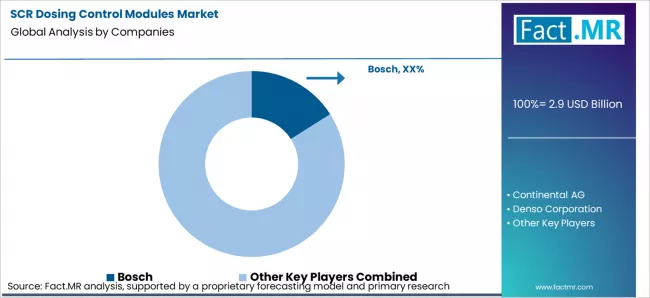
The SCR dosing control market is rapidly evolving, with companies competing through software-defined dosing and thermal management technologies. Bosch and Continental lead the shift toward modular electronic control units (ECUs), designed to meet stringent standards like Euro 7 and IMO Tier III. Their approach prioritizes flexibility and integration within broader vehicle E/E architectures. In contrast, Cummins and BorgWarner focus on single-module aftertreatment systems, reducing spatial footprints and targeting heavy-duty and off-highway applications. Regional strategies include BorgWarner’s R&D expansion in China to support hybrid platforms.
Beyond 2026, Bosch’s roadmap introduces active water-cooling and AI-driven spray pattern adaptation, positioning dosing modules as "smart nodes" within connected ecosystems. This will enable fuel-agnostic platforms, as Cummins’ HELM™ platform already integrates SCR modules across various engine types. The future of dosing control will center on connected diagnostics and predictive lifecycle services, turning dosing modules into critical components of the Emissions Cloud. CXOs focusing on data-enabled solutions will capture high-margin, recurring service revenue while others risk becoming commodity suppliers.
Key Players of the SCR Dosing Control Market
- Bosch
- Continental AG
- Denso Corporation
- Cummins Inc.
- BorgWarner Inc.
- Eberspächer Gruppe GmbH & Co. KG
- FORVIA S.A.
- Hitachi Astemo Ltd.
- Delphi Technologies
- Weichai Power Co., Ltd.
Scope of the Report
| Items | Values |
|---|---|
| Quantitative Units (2026) | USD Billion |
| Sales Channel | First Fit (OEM), Aftermarket |
| Vehicle Type | HCV, LCV, Passenger Cars |
| System Integration | Dosing Module + ECU Integrated, Standalone Control Module |
| Emission Standard | Euro VI/BS VI, China VI, EPA 2010/Other |
| Powertrain | Diesel, Dual-fuel or Other |
| Regions Covered | North America, Europe, Asia Pacific, Latin America, Middle East & Africa |
| Countries Covered | United States, Canada, Mexico, Germany, United Kingdom, France, Japan, South Korea, China, India, Brazil, and other countries |
| Key Companies Profiled | Bosch, Continental AG, Denso Corporation, Cummins Inc., BorgWarner Inc., Eberspächer Gruppe GmbH & Co. KG, FORVIA S.A., Hitachi Astemo Ltd., Delphi Technologies, Weichai Power Co., Ltd. |
| Additional Attributes | Dollar revenue by sales channel, vehicle type, system integration, emission standard, powertrain, and region; regional demand trends, competitive landscape, technological advancements in SCR dosing control modules, operational performance optimization initiatives, and product development strategies |
SCR Dosing Control Modules Market Key Segments
-
Sales Channel
- First Fit (OEM)
- Aftermarket
-
Vehicle Type
- HCV (Heavy Commercial Vehicle)
- LCV (Light Commercial Vehicle)
- Passenger Cars
-
System Integration
- Dosing Module + ECU Integrated
- Standalone Control Module
-
Emission Standard
- Euro VI/BS VI
- China VI
- EPA 2010/Other
-
Powertrain
- Diesel
- Dual-fuel or Other
-
Region
- North America
- USA
- Canada
- Mexico
- Europe
- Germany
- UK
- France
- Italy
- Spain
- Nordic Countries
- BENELUX
- Rest of Europe
- Asia Pacific
- China
- Japan
- South Korea
- India
- Australia
- Rest of Asia Pacific
- Latin America
- Brazil
- Argentina
- Rest of Latin America
- Middle East and Africa
- Kingdom of Saudi Arabia
- United Arab Emirates
- South Africa
- Rest of Middle East and Africa
- Other Regions
- Oceania
- Central Asia
- Other Markets
- North America
Bibliographies
- International Organization for Standardization. (2023). Road vehicles-Selective catalytic reduction systems: Functional requirements, control accuracy, and durability testing. ISO.
- SAE International. (2024). SCR urea dosing control, NOx feedback strategies, and closed-loop aftertreatment management in diesel engines. SAE International.
- Applied Energy. (2024). Control strategies for urea dosing optimization in SCR systems under real-world driving conditions. Applied Energy, 356, 121971.
- Energy Conversion and Management. (2023). Model-based control of diesel SCR systems for improved NOx conversion efficiency. Energy Conversion and Management, 279, 116716.
- Journal of Automobile Engineering. (2024). Integration of NOx sensors and dosing modules in closed-loop SCR aftertreatment control. Proceedings of the Institution of Mechanical Engineers, Part D, 238(5), 1341-1354.
Table of Content
- Executive Summary
- Global Market Outlook
- Demand to side Trends
- Supply to side Trends
- Technology Roadmap Analysis
- Analysis and Recommendations
- Market Overview
- Market Coverage / Taxonomy
- Market Definition / Scope / Limitations
- Research Methodology
- Chapter Orientation
- Analytical Lens and Working Hypotheses
- Market Structure, Signals, and Trend Drivers
- Benchmarking and Cross-market Comparability
- Market Sizing, Forecasting, and Opportunity Mapping
- Research Design and Evidence Framework
- Desk Research Programme (Secondary Evidence)
- Company Annual and Sustainability Reports
- Peer-reviewed Journals and Academic Literature
- Corporate Websites, Product Literature, and Technical Notes
- Earnings Decks and Investor Briefings
- Statutory Filings and Regulatory Disclosures
- Technical White Papers and Standards Notes
- Trade Journals, Industry Magazines, and Analyst Briefs
- Conference Proceedings, Webinars, and Seminar Materials
- Government Statistics Portals and Public Data Releases
- Press Releases and Reputable Media Coverage
- Specialist Newsletters and Curated Briefings
- Sector Databases and Reference Repositories
- FMR Internal Proprietary Databases and Historical Market Datasets
- Subscription Datasets and Paid Sources
- Social Channels, Communities, and Digital Listening Inputs
- Additional Desk Sources
- Expert Input and Fieldwork (Primary Evidence)
- Primary Modes
- Qualitative Interviews and Expert Elicitation
- Quantitative Surveys and Structured Data Capture
- Blended Approach
- Why Primary Evidence is Used
- Field Techniques
- Interviews
- Surveys
- Focus Groups
- Observational and In-context Research
- Social and Community Interactions
- Stakeholder Universe Engaged
- C-suite Leaders
- Board Members
- Presidents and Vice Presidents
- R&D and Innovation Heads
- Technical Specialists
- Domain Subject-matter Experts
- Scientists
- Physicians and Other Healthcare Professionals
- Governance, Ethics, and Data Stewardship
- Research Ethics
- Data Integrity and Handling
- Primary Modes
- Tooling, Models, and Reference Databases
- Desk Research Programme (Secondary Evidence)
- Data Engineering and Model Build
- Data Acquisition and Ingestion
- Cleaning, Normalisation, and Verification
- Synthesis, Triangulation, and Analysis
- Quality Assurance and Audit Trail
- Market Background
- Market Dynamics
- Drivers
- Restraints
- Opportunity
- Trends
- Scenario Forecast
- Demand in Optimistic Scenario
- Demand in Likely Scenario
- Demand in Conservative Scenario
- Opportunity Map Analysis
- Product Life Cycle Analysis
- Supply Chain Analysis
- Investment Feasibility Matrix
- Value Chain Analysis
- PESTLE and Porter’s Analysis
- Regulatory Landscape
- Regional Parent Market Outlook
- Production and Consumption Statistics
- Import and Export Statistics
- Market Dynamics
- Global Market Analysis 2021 to 2025 and Forecast, 2026 to 2036
- Historical Market Size Value (USD Million) Analysis, 2021 to 2025
- Current and Future Market Size Value (USD Million) Projections, 2026 to 2036
- Y to o to Y Growth Trend Analysis
- Absolute $ Opportunity Analysis
- Global Market Pricing Analysis 2021 to 2025 and Forecast 2026 to 2036
- Global Market Analysis 2021 to 2025 and Forecast 2026 to 2036, By Sales Channel
- Introduction / Key Findings
- Historical Market Size Value (USD Million) Analysis By Sales Channel, 2021 to 2025
- Current and Future Market Size Value (USD Million) Analysis and Forecast By Sales Channel, 2026 to 2036
- First Fit (OEM)
- Aftermarket
- First Fit (OEM)
- Y to o to Y Growth Trend Analysis By Sales Channel, 2021 to 2025
- Absolute $ Opportunity Analysis By Sales Channel, 2026 to 2036
- Global Market Analysis 2021 to 2025 and Forecast 2026 to 2036, By Vehicle Type
- Introduction / Key Findings
- Historical Market Size Value (USD Million) Analysis By Vehicle Type, 2021 to 2025
- Current and Future Market Size Value (USD Million) Analysis and Forecast By Vehicle Type, 2026 to 2036
- HCV
- LCV
- Passenger Cars
- HCV
- Y to o to Y Growth Trend Analysis By Vehicle Type, 2021 to 2025
- Absolute $ Opportunity Analysis By Vehicle Type, 2026 to 2036
- Global Market Analysis 2021 to 2025 and Forecast 2026 to 2036, By System Integration
- Introduction / Key Findings
- Historical Market Size Value (USD Million) Analysis By System Integration, 2021 to 2025
- Current and Future Market Size Value (USD Million) Analysis and Forecast By System Integration, 2026 to 2036
- Dosing Module + ECU Integrated
- Standalone Control Module
- Dosing Module + ECU Integrated
- Y to o to Y Growth Trend Analysis By System Integration, 2021 to 2025
- Absolute $ Opportunity Analysis By System Integration, 2026 to 2036
- Global Market Analysis 2021 to 2025 and Forecast 2026 to 2036, By Emission Standard
- Introduction / Key Findings
- Historical Market Size Value (USD Million) Analysis By Emission Standard, 2021 to 2025
- Current and Future Market Size Value (USD Million) Analysis and Forecast By Emission Standard, 2026 to 2036
- Euro VI/BS VI
- China VI
- EPA 2010/Other
- Euro VI/BS VI
- Y to o to Y Growth Trend Analysis By Emission Standard, 2021 to 2025
- Absolute $ Opportunity Analysis By Emission Standard, 2026 to 2036
- Global Market Analysis 2021 to 2025 and Forecast 2026 to 2036, By Powertrain
- Introduction / Key Findings
- Historical Market Size Value (USD Million) Analysis By Powertrain, 2021 to 2025
- Current and Future Market Size Value (USD Million) Analysis and Forecast By Powertrain, 2026 to 2036
- Diesel
- Dual-fuel or Other
- Diesel
- Y to o to Y Growth Trend Analysis By Powertrain, 2021 to 2025
- Absolute $ Opportunity Analysis By Powertrain, 2026 to 2036
- Global Market Analysis 2021 to 2025 and Forecast 2026 to 2036, By Region
- Introduction
- Historical Market Size Value (USD Million) Analysis By Region, 2021 to 2025
- Current Market Size Value (USD Million) Analysis and Forecast By Region, 2026 to 2036
- North America
- Latin America
- Western Europe
- Eastern Europe
- East Asia
- South Asia and Pacific
- Middle East & Africa
- Market Attractiveness Analysis By Region
- North America Market Analysis 2021 to 2025 and Forecast 2026 to 2036, By Country
- Historical Market Size Value (USD Million) Trend Analysis By Market Taxonomy, 2021 to 2025
- Market Size Value (USD Million) Forecast By Market Taxonomy, 2026 to 2036
- By Country
- USA
- Canada
- Mexico
- By Sales Channel
- By Vehicle Type
- By System Integration
- By Emission Standard
- By Powertrain
- By Country
- Market Attractiveness Analysis
- By Country
- By Sales Channel
- By Vehicle Type
- By System Integration
- By Emission Standard
- By Powertrain
- Key Takeaways
- Latin America Market Analysis 2021 to 2025 and Forecast 2026 to 2036, By Country
- Historical Market Size Value (USD Million) Trend Analysis By Market Taxonomy, 2021 to 2025
- Market Size Value (USD Million) Forecast By Market Taxonomy, 2026 to 2036
- By Country
- Brazil
- Chile
- Rest of Latin America
- By Sales Channel
- By Vehicle Type
- By System Integration
- By Emission Standard
- By Powertrain
- By Country
- Market Attractiveness Analysis
- By Country
- By Sales Channel
- By Vehicle Type
- By System Integration
- By Emission Standard
- By Powertrain
- Key Takeaways
- Western Europe Market Analysis 2021 to 2025 and Forecast 2026 to 2036, By Country
- Historical Market Size Value (USD Million) Trend Analysis By Market Taxonomy, 2021 to 2025
- Market Size Value (USD Million) Forecast By Market Taxonomy, 2026 to 2036
- By Country
- Germany
- UK
- Italy
- Spain
- France
- Nordic
- BENELUX
- Rest of Western Europe
- By Sales Channel
- By Vehicle Type
- By System Integration
- By Emission Standard
- By Powertrain
- By Country
- Market Attractiveness Analysis
- By Country
- By Sales Channel
- By Vehicle Type
- By System Integration
- By Emission Standard
- By Powertrain
- Key Takeaways
- Eastern Europe Market Analysis 2021 to 2025 and Forecast 2026 to 2036, By Country
- Historical Market Size Value (USD Million) Trend Analysis By Market Taxonomy, 2021 to 2025
- Market Size Value (USD Million) Forecast By Market Taxonomy, 2026 to 2036
- By Country
- Russia
- Poland
- Hungary
- Balkan & Baltic
- Rest of Eastern Europe
- By Sales Channel
- By Vehicle Type
- By System Integration
- By Emission Standard
- By Powertrain
- By Country
- Market Attractiveness Analysis
- By Country
- By Sales Channel
- By Vehicle Type
- By System Integration
- By Emission Standard
- By Powertrain
- Key Takeaways
- East Asia Market Analysis 2021 to 2025 and Forecast 2026 to 2036, By Country
- Historical Market Size Value (USD Million) Trend Analysis By Market Taxonomy, 2021 to 2025
- Market Size Value (USD Million) Forecast By Market Taxonomy, 2026 to 2036
- By Country
- China
- Japan
- South Korea
- By Sales Channel
- By Vehicle Type
- By System Integration
- By Emission Standard
- By Powertrain
- By Country
- Market Attractiveness Analysis
- By Country
- By Sales Channel
- By Vehicle Type
- By System Integration
- By Emission Standard
- By Powertrain
- Key Takeaways
- South Asia and Pacific Market Analysis 2021 to 2025 and Forecast 2026 to 2036, By Country
- Historical Market Size Value (USD Million) Trend Analysis By Market Taxonomy, 2021 to 2025
- Market Size Value (USD Million) Forecast By Market Taxonomy, 2026 to 2036
- By Country
- India
- ASEAN
- Australia & New Zealand
- Rest of South Asia and Pacific
- By Sales Channel
- By Vehicle Type
- By System Integration
- By Emission Standard
- By Powertrain
- By Country
- Market Attractiveness Analysis
- By Country
- By Sales Channel
- By Vehicle Type
- By System Integration
- By Emission Standard
- By Powertrain
- Key Takeaways
- Middle East & Africa Market Analysis 2021 to 2025 and Forecast 2026 to 2036, By Country
- Historical Market Size Value (USD Million) Trend Analysis By Market Taxonomy, 2021 to 2025
- Market Size Value (USD Million) Forecast By Market Taxonomy, 2026 to 2036
- By Country
- Kingdom of Saudi Arabia
- Other GCC Countries
- Turkiye
- South Africa
- Other African Union
- Rest of Middle East & Africa
- By Sales Channel
- By Vehicle Type
- By System Integration
- By Emission Standard
- By Powertrain
- By Country
- Market Attractiveness Analysis
- By Country
- By Sales Channel
- By Vehicle Type
- By System Integration
- By Emission Standard
- By Powertrain
- Key Takeaways
- Key Countries Market Analysis
- USA
- Pricing Analysis
- Market Share Analysis, 2025
- By Sales Channel
- By Vehicle Type
- By System Integration
- By Emission Standard
- By Powertrain
- Canada
- Pricing Analysis
- Market Share Analysis, 2025
- By Sales Channel
- By Vehicle Type
- By System Integration
- By Emission Standard
- By Powertrain
- Mexico
- Pricing Analysis
- Market Share Analysis, 2025
- By Sales Channel
- By Vehicle Type
- By System Integration
- By Emission Standard
- By Powertrain
- Brazil
- Pricing Analysis
- Market Share Analysis, 2025
- By Sales Channel
- By Vehicle Type
- By System Integration
- By Emission Standard
- By Powertrain
- Chile
- Pricing Analysis
- Market Share Analysis, 2025
- By Sales Channel
- By Vehicle Type
- By System Integration
- By Emission Standard
- By Powertrain
- Germany
- Pricing Analysis
- Market Share Analysis, 2025
- By Sales Channel
- By Vehicle Type
- By System Integration
- By Emission Standard
- By Powertrain
- UK
- Pricing Analysis
- Market Share Analysis, 2025
- By Sales Channel
- By Vehicle Type
- By System Integration
- By Emission Standard
- By Powertrain
- Italy
- Pricing Analysis
- Market Share Analysis, 2025
- By Sales Channel
- By Vehicle Type
- By System Integration
- By Emission Standard
- By Powertrain
- Spain
- Pricing Analysis
- Market Share Analysis, 2025
- By Sales Channel
- By Vehicle Type
- By System Integration
- By Emission Standard
- By Powertrain
- France
- Pricing Analysis
- Market Share Analysis, 2025
- By Sales Channel
- By Vehicle Type
- By System Integration
- By Emission Standard
- By Powertrain
- India
- Pricing Analysis
- Market Share Analysis, 2025
- By Sales Channel
- By Vehicle Type
- By System Integration
- By Emission Standard
- By Powertrain
- ASEAN
- Pricing Analysis
- Market Share Analysis, 2025
- By Sales Channel
- By Vehicle Type
- By System Integration
- By Emission Standard
- By Powertrain
- Australia & New Zealand
- Pricing Analysis
- Market Share Analysis, 2025
- By Sales Channel
- By Vehicle Type
- By System Integration
- By Emission Standard
- By Powertrain
- China
- Pricing Analysis
- Market Share Analysis, 2025
- By Sales Channel
- By Vehicle Type
- By System Integration
- By Emission Standard
- By Powertrain
- Japan
- Pricing Analysis
- Market Share Analysis, 2025
- By Sales Channel
- By Vehicle Type
- By System Integration
- By Emission Standard
- By Powertrain
- South Korea
- Pricing Analysis
- Market Share Analysis, 2025
- By Sales Channel
- By Vehicle Type
- By System Integration
- By Emission Standard
- By Powertrain
- Russia
- Pricing Analysis
- Market Share Analysis, 2025
- By Sales Channel
- By Vehicle Type
- By System Integration
- By Emission Standard
- By Powertrain
- Poland
- Pricing Analysis
- Market Share Analysis, 2025
- By Sales Channel
- By Vehicle Type
- By System Integration
- By Emission Standard
- By Powertrain
- Hungary
- Pricing Analysis
- Market Share Analysis, 2025
- By Sales Channel
- By Vehicle Type
- By System Integration
- By Emission Standard
- By Powertrain
- Kingdom of Saudi Arabia
- Pricing Analysis
- Market Share Analysis, 2025
- By Sales Channel
- By Vehicle Type
- By System Integration
- By Emission Standard
- By Powertrain
- Turkiye
- Pricing Analysis
- Market Share Analysis, 2025
- By Sales Channel
- By Vehicle Type
- By System Integration
- By Emission Standard
- By Powertrain
- South Africa
- Pricing Analysis
- Market Share Analysis, 2025
- By Sales Channel
- By Vehicle Type
- By System Integration
- By Emission Standard
- By Powertrain
- USA
- Market Structure Analysis
- Competition Dashboard
- Competition Benchmarking
- Market Share Analysis of Top Players
- By Regional
- By Sales Channel
- By Vehicle Type
- By System Integration
- By Emission Standard
- By Powertrain
- Competition Analysis
- Competition Deep Dive
- Bosch
- Overview
- Product Portfolio
- Profitability by Market Segments (Product/Age /Sales Channel/Region)
- Sales Footprint
- Strategy Overview
- Marketing Strategy
- Product Strategy
- Channel Strategy
- Continental AG
- Denso Corporation
- Cummins Inc.
- BorgWarner Inc.
- Eberspächer Gruppe GmbH & Co. KG
- FORVIA S.A.
- Hitachi Astemo Ltd.
- Delphi Technologies
- Weichai Power Co., Ltd.
- Bosch
- Competition Deep Dive
- Assumptions & Acronyms Used
List Of Table
- Table 1: Global Market Value (USD Million) Forecast by Region, 2021 to 2036
- Table 2: Global Market Value (USD Million) Forecast by Sales Channel, 2021 to 2036
- Table 3: Global Market Value (USD Million) Forecast by Vehicle Type, 2021 to 2036
- Table 4: Global Market Value (USD Million) Forecast by System Integration, 2021 to 2036
- Table 5: Global Market Value (USD Million) Forecast by Emission Standard, 2021 to 2036
- Table 6: Global Market Value (USD Million) Forecast by Powertrain, 2021 to 2036
- Table 7: North America Market Value (USD Million) Forecast by Country, 2021 to 2036
- Table 8: North America Market Value (USD Million) Forecast by Sales Channel, 2021 to 2036
- Table 9: North America Market Value (USD Million) Forecast by Vehicle Type, 2021 to 2036
- Table 10: North America Market Value (USD Million) Forecast by System Integration, 2021 to 2036
- Table 11: North America Market Value (USD Million) Forecast by Emission Standard, 2021 to 2036
- Table 12: North America Market Value (USD Million) Forecast by Powertrain, 2021 to 2036
- Table 13: Latin America Market Value (USD Million) Forecast by Country, 2021 to 2036
- Table 14: Latin America Market Value (USD Million) Forecast by Sales Channel, 2021 to 2036
- Table 15: Latin America Market Value (USD Million) Forecast by Vehicle Type, 2021 to 2036
- Table 16: Latin America Market Value (USD Million) Forecast by System Integration, 2021 to 2036
- Table 17: Latin America Market Value (USD Million) Forecast by Emission Standard, 2021 to 2036
- Table 18: Latin America Market Value (USD Million) Forecast by Powertrain, 2021 to 2036
- Table 19: Western Europe Market Value (USD Million) Forecast by Country, 2021 to 2036
- Table 20: Western Europe Market Value (USD Million) Forecast by Sales Channel, 2021 to 2036
- Table 21: Western Europe Market Value (USD Million) Forecast by Vehicle Type, 2021 to 2036
- Table 22: Western Europe Market Value (USD Million) Forecast by System Integration, 2021 to 2036
- Table 23: Western Europe Market Value (USD Million) Forecast by Emission Standard, 2021 to 2036
- Table 24: Western Europe Market Value (USD Million) Forecast by Powertrain, 2021 to 2036
- Table 25: Eastern Europe Market Value (USD Million) Forecast by Country, 2021 to 2036
- Table 26: Eastern Europe Market Value (USD Million) Forecast by Sales Channel, 2021 to 2036
- Table 27: Eastern Europe Market Value (USD Million) Forecast by Vehicle Type, 2021 to 2036
- Table 28: Eastern Europe Market Value (USD Million) Forecast by System Integration, 2021 to 2036
- Table 29: Eastern Europe Market Value (USD Million) Forecast by Emission Standard, 2021 to 2036
- Table 30: Eastern Europe Market Value (USD Million) Forecast by Powertrain, 2021 to 2036
- Table 31: East Asia Market Value (USD Million) Forecast by Country, 2021 to 2036
- Table 32: East Asia Market Value (USD Million) Forecast by Sales Channel, 2021 to 2036
- Table 33: East Asia Market Value (USD Million) Forecast by Vehicle Type, 2021 to 2036
- Table 34: East Asia Market Value (USD Million) Forecast by System Integration, 2021 to 2036
- Table 35: East Asia Market Value (USD Million) Forecast by Emission Standard, 2021 to 2036
- Table 36: East Asia Market Value (USD Million) Forecast by Powertrain, 2021 to 2036
- Table 37: South Asia and Pacific Market Value (USD Million) Forecast by Country, 2021 to 2036
- Table 38: South Asia and Pacific Market Value (USD Million) Forecast by Sales Channel, 2021 to 2036
- Table 39: South Asia and Pacific Market Value (USD Million) Forecast by Vehicle Type, 2021 to 2036
- Table 40: South Asia and Pacific Market Value (USD Million) Forecast by System Integration, 2021 to 2036
- Table 41: South Asia and Pacific Market Value (USD Million) Forecast by Emission Standard, 2021 to 2036
- Table 42: South Asia and Pacific Market Value (USD Million) Forecast by Powertrain, 2021 to 2036
- Table 43: Middle East & Africa Market Value (USD Million) Forecast by Country, 2021 to 2036
- Table 44: Middle East & Africa Market Value (USD Million) Forecast by Sales Channel, 2021 to 2036
- Table 45: Middle East & Africa Market Value (USD Million) Forecast by Vehicle Type, 2021 to 2036
- Table 46: Middle East & Africa Market Value (USD Million) Forecast by System Integration, 2021 to 2036
- Table 47: Middle East & Africa Market Value (USD Million) Forecast by Emission Standard, 2021 to 2036
- Table 48: Middle East & Africa Market Value (USD Million) Forecast by Powertrain, 2021 to 2036
List Of Figures
- Figure 1: Global Market Pricing Analysis
- Figure 2: Global Market Value (USD Million) Forecast 2021 to 2036
- Figure 3: Global Market Value Share and BPS Analysis by Sales Channel, 2026 and 2036
- Figure 4: Global Market Y to o to Y Growth Comparison by Sales Channel, 2026 to 2036
- Figure 5: Global Market Attractiveness Analysis by Sales Channel
- Figure 6: Global Market Value Share and BPS Analysis by Vehicle Type, 2026 and 2036
- Figure 7: Global Market Y to o to Y Growth Comparison by Vehicle Type, 2026 to 2036
- Figure 8: Global Market Attractiveness Analysis by Vehicle Type
- Figure 9: Global Market Value Share and BPS Analysis by System Integration, 2026 and 2036
- Figure 10: Global Market Y to o to Y Growth Comparison by System Integration, 2026 to 2036
- Figure 11: Global Market Attractiveness Analysis by System Integration
- Figure 12: Global Market Value Share and BPS Analysis by Emission Standard, 2026 and 2036
- Figure 13: Global Market Y to o to Y Growth Comparison by Emission Standard, 2026 to 2036
- Figure 14: Global Market Attractiveness Analysis by Emission Standard
- Figure 15: Global Market Value Share and BPS Analysis by Powertrain, 2026 and 2036
- Figure 16: Global Market Y to o to Y Growth Comparison by Powertrain, 2026 to 2036
- Figure 17: Global Market Attractiveness Analysis by Powertrain
- Figure 18: Global Market Value (USD Million) Share and BPS Analysis by Region, 2026 and 2036
- Figure 19: Global Market Y to o to Y Growth Comparison by Region, 2026 to 2036
- Figure 20: Global Market Attractiveness Analysis by Region
- Figure 21: North America Market Incremental Dollar Opportunity, 2026 to 2036
- Figure 22: Latin America Market Incremental Dollar Opportunity, 2026 to 2036
- Figure 23: Western Europe Market Incremental Dollar Opportunity, 2026 to 2036
- Figure 24: Eastern Europe Market Incremental Dollar Opportunity, 2026 to 2036
- Figure 25: East Asia Market Incremental Dollar Opportunity, 2026 to 2036
- Figure 26: South Asia and Pacific Market Incremental Dollar Opportunity, 2026 to 2036
- Figure 27: Middle East & Africa Market Incremental Dollar Opportunity, 2026 to 2036
- Figure 28: North America Market Value Share and BPS Analysis by Country, 2026 and 2036
- Figure 29: North America Market Value Share and BPS Analysis by Sales Channel, 2026 and 2036
- Figure 30: North America Market Y to o to Y Growth Comparison by Sales Channel, 2026 to 2036
- Figure 31: North America Market Attractiveness Analysis by Sales Channel
- Figure 32: North America Market Value Share and BPS Analysis by Vehicle Type, 2026 and 2036
- Figure 33: North America Market Y to o to Y Growth Comparison by Vehicle Type, 2026 to 2036
- Figure 34: North America Market Attractiveness Analysis by Vehicle Type
- Figure 35: North America Market Value Share and BPS Analysis by System Integration, 2026 and 2036
- Figure 36: North America Market Y to o to Y Growth Comparison by System Integration, 2026 to 2036
- Figure 37: North America Market Attractiveness Analysis by System Integration
- Figure 38: North America Market Value Share and BPS Analysis by Emission Standard, 2026 and 2036
- Figure 39: North America Market Y to o to Y Growth Comparison by Emission Standard, 2026 to 2036
- Figure 40: North America Market Attractiveness Analysis by Emission Standard
- Figure 41: North America Market Value Share and BPS Analysis by Powertrain, 2026 and 2036
- Figure 42: North America Market Y to o to Y Growth Comparison by Powertrain, 2026 to 2036
- Figure 43: North America Market Attractiveness Analysis by Powertrain
- Figure 44: Latin America Market Value Share and BPS Analysis by Country, 2026 and 2036
- Figure 45: Latin America Market Value Share and BPS Analysis by Sales Channel, 2026 and 2036
- Figure 46: Latin America Market Y to o to Y Growth Comparison by Sales Channel, 2026 to 2036
- Figure 47: Latin America Market Attractiveness Analysis by Sales Channel
- Figure 48: Latin America Market Value Share and BPS Analysis by Vehicle Type, 2026 and 2036
- Figure 49: Latin America Market Y to o to Y Growth Comparison by Vehicle Type, 2026 to 2036
- Figure 50: Latin America Market Attractiveness Analysis by Vehicle Type
- Figure 51: Latin America Market Value Share and BPS Analysis by System Integration, 2026 and 2036
- Figure 52: Latin America Market Y to o to Y Growth Comparison by System Integration, 2026 to 2036
- Figure 53: Latin America Market Attractiveness Analysis by System Integration
- Figure 54: Latin America Market Value Share and BPS Analysis by Emission Standard, 2026 and 2036
- Figure 55: Latin America Market Y to o to Y Growth Comparison by Emission Standard, 2026 to 2036
- Figure 56: Latin America Market Attractiveness Analysis by Emission Standard
- Figure 57: Latin America Market Value Share and BPS Analysis by Powertrain, 2026 and 2036
- Figure 58: Latin America Market Y to o to Y Growth Comparison by Powertrain, 2026 to 2036
- Figure 59: Latin America Market Attractiveness Analysis by Powertrain
- Figure 60: Western Europe Market Value Share and BPS Analysis by Country, 2026 and 2036
- Figure 61: Western Europe Market Value Share and BPS Analysis by Sales Channel, 2026 and 2036
- Figure 62: Western Europe Market Y to o to Y Growth Comparison by Sales Channel, 2026 to 2036
- Figure 63: Western Europe Market Attractiveness Analysis by Sales Channel
- Figure 64: Western Europe Market Value Share and BPS Analysis by Vehicle Type, 2026 and 2036
- Figure 65: Western Europe Market Y to o to Y Growth Comparison by Vehicle Type, 2026 to 2036
- Figure 66: Western Europe Market Attractiveness Analysis by Vehicle Type
- Figure 67: Western Europe Market Value Share and BPS Analysis by System Integration, 2026 and 2036
- Figure 68: Western Europe Market Y to o to Y Growth Comparison by System Integration, 2026 to 2036
- Figure 69: Western Europe Market Attractiveness Analysis by System Integration
- Figure 70: Western Europe Market Value Share and BPS Analysis by Emission Standard, 2026 and 2036
- Figure 71: Western Europe Market Y to o to Y Growth Comparison by Emission Standard, 2026 to 2036
- Figure 72: Western Europe Market Attractiveness Analysis by Emission Standard
- Figure 73: Western Europe Market Value Share and BPS Analysis by Powertrain, 2026 and 2036
- Figure 74: Western Europe Market Y to o to Y Growth Comparison by Powertrain, 2026 to 2036
- Figure 75: Western Europe Market Attractiveness Analysis by Powertrain
- Figure 76: Eastern Europe Market Value Share and BPS Analysis by Country, 2026 and 2036
- Figure 77: Eastern Europe Market Value Share and BPS Analysis by Sales Channel, 2026 and 2036
- Figure 78: Eastern Europe Market Y to o to Y Growth Comparison by Sales Channel, 2026 to 2036
- Figure 79: Eastern Europe Market Attractiveness Analysis by Sales Channel
- Figure 80: Eastern Europe Market Value Share and BPS Analysis by Vehicle Type, 2026 and 2036
- Figure 81: Eastern Europe Market Y to o to Y Growth Comparison by Vehicle Type, 2026 to 2036
- Figure 82: Eastern Europe Market Attractiveness Analysis by Vehicle Type
- Figure 83: Eastern Europe Market Value Share and BPS Analysis by System Integration, 2026 and 2036
- Figure 84: Eastern Europe Market Y to o to Y Growth Comparison by System Integration, 2026 to 2036
- Figure 85: Eastern Europe Market Attractiveness Analysis by System Integration
- Figure 86: Eastern Europe Market Value Share and BPS Analysis by Emission Standard, 2026 and 2036
- Figure 87: Eastern Europe Market Y to o to Y Growth Comparison by Emission Standard, 2026 to 2036
- Figure 88: Eastern Europe Market Attractiveness Analysis by Emission Standard
- Figure 89: Eastern Europe Market Value Share and BPS Analysis by Powertrain, 2026 and 2036
- Figure 90: Eastern Europe Market Y to o to Y Growth Comparison by Powertrain, 2026 to 2036
- Figure 91: Eastern Europe Market Attractiveness Analysis by Powertrain
- Figure 92: East Asia Market Value Share and BPS Analysis by Country, 2026 and 2036
- Figure 93: East Asia Market Value Share and BPS Analysis by Sales Channel, 2026 and 2036
- Figure 94: East Asia Market Y to o to Y Growth Comparison by Sales Channel, 2026 to 2036
- Figure 95: East Asia Market Attractiveness Analysis by Sales Channel
- Figure 96: East Asia Market Value Share and BPS Analysis by Vehicle Type, 2026 and 2036
- Figure 97: East Asia Market Y to o to Y Growth Comparison by Vehicle Type, 2026 to 2036
- Figure 98: East Asia Market Attractiveness Analysis by Vehicle Type
- Figure 99: East Asia Market Value Share and BPS Analysis by System Integration, 2026 and 2036
- Figure 100: East Asia Market Y to o to Y Growth Comparison by System Integration, 2026 to 2036
- Figure 101: East Asia Market Attractiveness Analysis by System Integration
- Figure 102: East Asia Market Value Share and BPS Analysis by Emission Standard, 2026 and 2036
- Figure 103: East Asia Market Y to o to Y Growth Comparison by Emission Standard, 2026 to 2036
- Figure 104: East Asia Market Attractiveness Analysis by Emission Standard
- Figure 105: East Asia Market Value Share and BPS Analysis by Powertrain, 2026 and 2036
- Figure 106: East Asia Market Y to o to Y Growth Comparison by Powertrain, 2026 to 2036
- Figure 107: East Asia Market Attractiveness Analysis by Powertrain
- Figure 108: South Asia and Pacific Market Value Share and BPS Analysis by Country, 2026 and 2036
- Figure 109: South Asia and Pacific Market Value Share and BPS Analysis by Sales Channel, 2026 and 2036
- Figure 110: South Asia and Pacific Market Y to o to Y Growth Comparison by Sales Channel, 2026 to 2036
- Figure 111: South Asia and Pacific Market Attractiveness Analysis by Sales Channel
- Figure 112: South Asia and Pacific Market Value Share and BPS Analysis by Vehicle Type, 2026 and 2036
- Figure 113: South Asia and Pacific Market Y to o to Y Growth Comparison by Vehicle Type, 2026 to 2036
- Figure 114: South Asia and Pacific Market Attractiveness Analysis by Vehicle Type
- Figure 115: South Asia and Pacific Market Value Share and BPS Analysis by System Integration, 2026 and 2036
- Figure 116: South Asia and Pacific Market Y to o to Y Growth Comparison by System Integration, 2026 to 2036
- Figure 117: South Asia and Pacific Market Attractiveness Analysis by System Integration
- Figure 118: South Asia and Pacific Market Value Share and BPS Analysis by Emission Standard, 2026 and 2036
- Figure 119: South Asia and Pacific Market Y to o to Y Growth Comparison by Emission Standard, 2026 to 2036
- Figure 120: South Asia and Pacific Market Attractiveness Analysis by Emission Standard
- Figure 121: South Asia and Pacific Market Value Share and BPS Analysis by Powertrain, 2026 and 2036
- Figure 122: South Asia and Pacific Market Y to o to Y Growth Comparison by Powertrain, 2026 to 2036
- Figure 123: South Asia and Pacific Market Attractiveness Analysis by Powertrain
- Figure 124: Middle East & Africa Market Value Share and BPS Analysis by Country, 2026 and 2036
- Figure 125: Middle East & Africa Market Value Share and BPS Analysis by Sales Channel, 2026 and 2036
- Figure 126: Middle East & Africa Market Y to o to Y Growth Comparison by Sales Channel, 2026 to 2036
- Figure 127: Middle East & Africa Market Attractiveness Analysis by Sales Channel
- Figure 128: Middle East & Africa Market Value Share and BPS Analysis by Vehicle Type, 2026 and 2036
- Figure 129: Middle East & Africa Market Y to o to Y Growth Comparison by Vehicle Type, 2026 to 2036
- Figure 130: Middle East & Africa Market Attractiveness Analysis by Vehicle Type
- Figure 131: Middle East & Africa Market Value Share and BPS Analysis by System Integration, 2026 and 2036
- Figure 132: Middle East & Africa Market Y to o to Y Growth Comparison by System Integration, 2026 to 2036
- Figure 133: Middle East & Africa Market Attractiveness Analysis by System Integration
- Figure 134: Middle East & Africa Market Value Share and BPS Analysis by Emission Standard, 2026 and 2036
- Figure 135: Middle East & Africa Market Y to o to Y Growth Comparison by Emission Standard, 2026 to 2036
- Figure 136: Middle East & Africa Market Attractiveness Analysis by Emission Standard
- Figure 137: Middle East & Africa Market Value Share and BPS Analysis by Powertrain, 2026 and 2036
- Figure 138: Middle East & Africa Market Y to o to Y Growth Comparison by Powertrain, 2026 to 2036
- Figure 139: Middle East & Africa Market Attractiveness Analysis by Powertrain
- Figure 140: Global Market - Tier Structure Analysis
- Figure 141: Global Market - Company Share Analysis
- FAQs -
How big is the scr dosing control modules market in 2026?
The global scr dosing control modules market is estimated to be valued at USD 2.9 billion in 2026.
What will be the size of scr dosing control modules market in 2036?
The market size for the scr dosing control modules market is projected to reach USD 6.2 billion by 2036.
How much will be the scr dosing control modules market growth between 2026 and 2036?
The scr dosing control modules market is expected to grow at a 7.9% CAGR between 2026 and 2036.
What are the key product types in the scr dosing control modules market?
The key product types in scr dosing control modules market are first fit (oem) and aftermarket.
Which vehicle type segment to contribute significant share in the scr dosing control modules market in 2026?
In terms of vehicle type, hcv segment to command 44.0% share in the scr dosing control modules market in 2026.