- Base Value(2025): 1.2 Bn
- Estimated Value(2026): 1.4 Bn
- Forecast Value (2036): 3.5 Bn
- CAGR (2026 - 2036): 9.7%
Skin-Barrier Repair Lipid Complexes Market Forecast 2026 to 2036
In 2025, the Skin-Barrier Repair Lipid Complexes market was valued at USD 1.2 billion. Based on Future Market Insights' analysis, demand for skin-barrier repair lipid complexes is estimated to grow to USD 1.4 billion in 2026 and USD 3.5 billion by 2036. FMI projects a CAGR of 9.7% during the forecast period.
The absolute dollar growth from 2026 to 2036 is USD 2.1 billion. This represents a strong growth trajectory, driven by increasing consumer awareness of skin health and the growing demand for products that enhance skin repair and hydration. However, the growth may be tempered by factors such as the rising cost of raw materials and stringent regulations on skincare formulations.
China leads with a CAGR of 11.2%, driven by growing consumer interest in advanced skincare and wellness products. Brazil follows closely with a 10.8% CAGR, supported by rising demand for skin repair solutions. The USA is projected to grow at 9.4%, as consumers prioritize skin health and product effectiveness. South Korea, with a 9.1% CAGR, benefits from a robust beauty industry and innovation in skincare. Germany and the United Kingdom show CAGRs of 8.7% and 8.9%, respectively, as the European market continues to mature. Japan has the slowest growth at 8.2%, influenced by a saturated market and a focus on premium, niche skincare products.
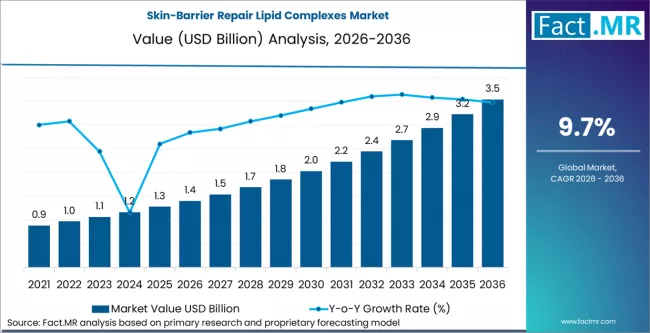
Skin Barrier Repair Lipid Complexes Market Market Value Analysis | Source: Fact.MR
Skin‑Barrier Repair Lipid Complexes Market Definition
The Skin‑Barrier Repair Lipid Complexes Market refers to the production and sale of specialized lipid blends used in skincare formulations to repair and strengthen the skin’s protective barrier. These complexes typically include ceramides, fatty acids, cholesterol, and phospholipids that mimic natural skin lipids to reduce dryness, irritation, and sensitivity. Their primary function is to restore barrier integrity and improve skin hydration. Key end users are personal care and dermatological product manufacturers serving mass, premium, and therapeutic skincare segments.
Market Inclusions
This report covers global and regional market sizes for skin‑barrier repair lipid complexes over a defined forecast period. It includes breakdowns by ingredient type (ceramides, cholesterol, fatty acids, phospholipids), application (creams, lotions, serums, ointments), and end use. Pricing trends, raw material supply, and trade flow analysis are also included to capture overall market dynamics.
Market Exclusions
The scope excludes finished consumer skincare products that contain lipid complexes, such as moisturizers or prescription skin therapies. It does not cover unrelated cosmetic actives like sunscreens, fragrances, or colorants. Niche lipid systems used solely in industrial or veterinary applications are not included, focusing strictly on human skincare barrier repair lipids.
Research Methodology
- Primary Research: Interviews were conducted with formulation scientists, dermatologists, and procurement specialists.
- Desk Research: Data was sourced from industry reports, regulatory filings, and trade associations.
- Market‑Sizing and Forecasting: A hybrid approach was applied, combining top‑down market estimates with bottom‑up shipment and sales data.
Data Validation and Update Cycle
Findings were reviewed by experts and cross‑checked with production and trade figures, with periodic updates.
Skin-Barrier Repair Lipid Complexes Market Summary
Market Definition
The Skin-Barrier Repair Lipid Complexes Market refers to specialized lipid blends used in skincare formulations designed to repair and enhance the skin’s natural protective barrier. These complexes typically include ceramides, cholesterol, phospholipids, and fatty acids, which are essential for reducing dryness, irritation, and improving skin hydration. These complexes are key ingredients in personal care products aimed at skin health, repair, and protection.
Demand Drivers
- Consumer Awareness of Skin Health: Rising concerns over environmental stressors and skin sensitivity drive the demand for products that restore and protect the skin barrier.
- Growing Preference for Eco-Friendly Products: Consumers increasingly seek sustainable and skin-compatible solutions, especially bio-identical and biomimetic lipid sources.
- Rise in Dermatological Conditions: Increased prevalence of skin conditions like eczema and dryness boosts the need for targeted lipid repair formulations.
Key Segments
- Lipids: Ceramides and analogues account for 43% of the market, critical for maintaining skin hydration and barrier function.
- Source: Bio-identical/biomimetic sources are expected to lead the market with 45% share, valued for their close match to natural skin lipids.
- Delivery System: Lamellar emulsion systems and encapsulated micro-delivery systems dominate, offering enhanced stability and controlled release.
Regional Outlook
- China: Leading with a 11.2% CAGR due to the expanding beauty and personal care industry.
- Brazil: Expected growth of 10.8%, supported by the rising demand for skin-care solutions in Latin America.
- USA: Projected to grow at 9.4%, driven by increasing consumer focus on skin health and barrier repair.
Analyst Opinion
The skin-barrier repair lipid complexes market is expected to witness strong growth through 2036, driven by innovations in ingredient formulations and a rising consumer shift towards advanced, sustainable skincare products. While challenges like raw material costs and regulatory changes may temper growth in certain regions, the overall market remains poised for significant expansion.
Strategic Takeaways
- Focus on Biomimetic Sources: As consumers seek natural, sustainable, and highly effective skincare solutions, biomimetic lipid complexes will dominate.
- Premium Products Growth: Higher demand for dermatologically advanced, high-performance products, particularly in North America and Europe.
- Regional Differences: Fast-growing markets in Asia Pacific, particularly China and South Korea, contrast with slower growth in mature markets like Japan.
Methodology
This analysis combines insights from primary research, expert interviews, and data on market trends and consumer behavior, validated through industry reports and trade data.
Segmental Analysis
Skin-Barrier Repair Lipid Complexes Market Analysis by Source
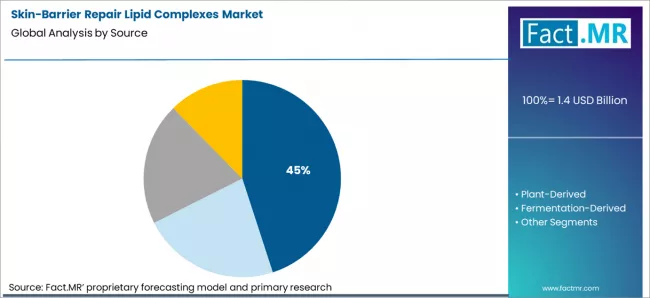
Skin Barrier Repair Lipid Complexes Market Analysis By Source | Source: Fact.MR
- Market Overview: Bio-identical/biomimetic sources are expected to hold 45% of the skin-barrier repair lipid complexes market by 2026. These lipid complexes are designed to mimic the natural lipids found in human skin, offering superior compatibility and effectiveness in repairing and maintaining the skin's protective barrier. The biomimetic approach ensures that the skin can easily absorb and integrate these complexes, enhancing the overall repair process.
- Demand Drivers:
- Enhanced Skin Compatibility: Bio-identical lipids closely resemble the skin's natural composition, which makes them highly effective in repairing the skin barrier and restoring moisture balance, leading to higher consumer trust and demand.
- Growing Demand for Efficacy in Skincare: Consumers are increasingly seeking scientifically-backed skincare solutions that provide visible and long-lasting results. Bio-identical lipid complexes, which offer more efficient repair and barrier restoration, meet these expectations.
- Sustainability and Consumer Preferences: As consumers become more conscious of the ingredients in their skincare products, biomimetic sources-being more skin-compatible and derived from safe, often sustainable sources-are gaining popularity over synthetic alternatives.
Skin-Barrier Repair Lipid Complexes Market Analysis by Lipid Type
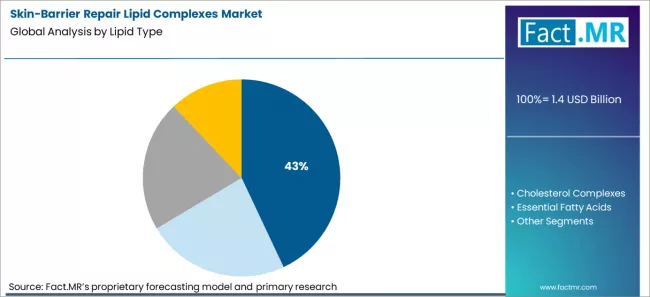
Skin Barrier Repair Lipid Complexes Market Analysis By Lipid Type | Source: Fact.MR
- Market Overview: Ceramides and analogues are expected to account for 43% of the market share by 2026. Ceramides are vital components of the skin barrier, playing a crucial role in maintaining skin hydration and protecting against external pollutants. As a result, ceramides and their analogues are widely used in products targeting skin barrier repair and overall skin health.
- Demand Drivers:
- Key Role in Skin Health: Ceramides are essential for restoring the skin's protective barrier, preventing moisture loss, and maintaining skin's integrity, making them a top choice in skin-care formulations focused on barrier repair.
- Effectiveness in Dry and Sensitive Skin: Ceramides are particularly beneficial for dry and sensitive skin types, making them a key ingredient in formulations targeted toward these consumers, who are seeking products that strengthen their skin’s defense mechanisms.
- Consumer Awareness and Education: As consumers become more informed about the importance of maintaining a healthy skin barrier, the demand for ceramides in skincare products is increasing, particularly in those designed for barrier repair and anti-aging.
Skin Barrier Repair Lipid Complexes Market Drivers, Restraints, and Opportunities
FMR analysts observe that the skin‑barrier repair lipid complexes market is a growing functional segment within skincare driven by rising consumer awareness of barrier health and sensitive‑skin care needs. Historically, basic emollients and humectants sufficed for general hydration, but increased prevalence of dermatological concerns (eczema, dryness from environmental stressors) created structural demand for targeted lipid repair formulations. The 2026 valuation reflects this shift as products incorporating ceramides, cholesterol, and fatty acid complexes become baseline expectations in barrier‑focused skincare.
While demand for generic moisturizers remains stable, advanced lipid complexes commanding higher efficacy and clinical backing are gaining share. These higher‑value ingredients carry elevated per‑unit pricing, contributing to net market value growth even where overall unit volumes expand moderately. The market exists at its current size because consumers and dermatologists increasingly view barrier repair as essential, not optional, and regulatory scrutiny on ingredient safety influences formulation choices.
- Barrier Health Trend: Consumer focus on sensitive skin and barrier repair drives demand for lipid complexes that support natural skin structure, replacing basic moisturizers in many routines.
- Regulatory & Safety Standards: Standards such as the EU Cosmetic Regulation Annex III restrictions on certain preservatives and irritants push formulators toward gentle, barrier‑friendly lipid complexes that meet compliance requirements.
- Geographic Preference Patterns: In North America and Europe, premium barrier lipid complexes with clinical positioning are growing faster, while in some Asia‑Pacific markets multifunctional, cost‑effective formulations remain strong.
Regional Analysis
The market analysis covers key global regions, including North America, Latin America, Western Europe, Eastern Europe, South Asia and Pacific, East Asia, and Middle East & Africa. It is segmented geographically, with specific market dynamics for each region. The full report provides a detailed market attractiveness analysis.
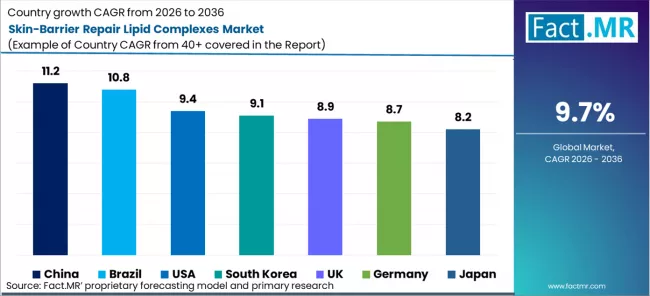
Skin Barrier Repair Lipid Complexes Market Cagr Analysis By Country | Source: Fact.MR
| Country | CAGR (%) |
|---|---|
| USA | 9.4% |
| Japan | 8.2% |
| South Korea | 9.1% |
| Germany | 8.7% |
| China | 11.2% |
| United Kingdom | 8.9% |
| Brazil | 10.8% |
Source: Fact.MR analysis. Updated Feb 18, 2026
Source: Fact MR (FMR) analysis, based on proprietary forecasting model and primary research.
North America:
North America remains a "leading market for skincare innovations," with the USA driving demand for skin-barrier repair lipid complexes due to a growing focus on dermatological health and anti-aging solutions.
- USA: Demand for skin-barrier repair lipid complexes in the U.S. is projected to rise at 9.4% CAGR through 2036. The increasing prevalence of skin conditions such as eczema, combined with rising consumer preference for dermatologically tested products, is driving the market's growth. Investments from brands like Neutrogena in advanced skincare formulations further support this growth.
Asia Pacific:
Asia Pacific continues to be a "key region for skincare product adoption," with countries like China and South Korea leading in the demand for skin-barrier repair solutions due to high consumer awareness and rapidly growing beauty markets.
- China: Demand for skin-barrier repair lipid complexes in China is projected to rise at 11.2% CAGR through 2036. The Chinese skincare market's growth and rising consumer awareness of skin health contribute significantly to the demand for advanced lipid complex formulations.
- Japan: Demand for skin-barrier repair lipid complexes in Japan is projected to rise at 8.2% CAGR through 2036. Japan's established skincare market and strong consumer demand for anti-aging and barrier-repair solutions continue to drive steady growth.
- South Korea: Demand for skin-barrier repair lipid complexes in South Korea is projected to rise at 9.1% CAGR through 2036. The Korean beauty industry’s innovation and high demand for skin-enhancing products contribute to sustained growth in the market.
Europe:
Europe's sustainability-driven consumer demand and emphasis on sensitive skin care continue to drive growth in the skin-barrier repair lipid complexes market.
- Germany: Demand for skin-barrier repair lipid complexes in Germany is projected to rise at 8.7% CAGR through 2036. Germany's focus on eco-friendly and effective skincare solutions drives the demand for lipid complexes, as consumers seek products with a focus on natural ingredients.
- United Kingdom: Demand for skin-barrier repair lipid complexes in the UK is projected to rise at 8.9% CAGR through 2036. UK consumers' interest in sensitive-skin solutions and eco-conscious skincare brands continue to expand the market.
Latin America:
In Latin America, especially Brazil, demand for skincare products is growing rapidly, supported by increasing investments from global cosmetic brands and rising consumer interest in dermatologically advanced solutions.
- Brazil: Demand for skin-barrier repair lipid complexes in Brazil is projected to rise at 10.8% CAGR through 2036. The Brazilian skincare market’s expansion and increasing demand for high-quality beauty products contribute significantly to market growth.
How Are Key Players Competing in the Skin-Barrier Repair Lipid Complexes Market?
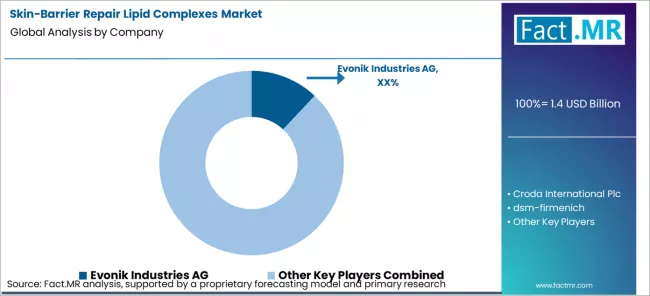
Skin Barrier Repair Lipid Complexes Market Analysis By Company | Source: Fact.MR
In the skin-barrier repair lipid complexes market, key players like Evonik Industries AG, Croda International Plc, and dsm-firmenich lead with advanced formulations that support skin hydration and restoration. BASF SE and Symrise AG focus on leveraging natural and sustainable ingredients to enhance skin protection and repair. Givaudan Active Beauty and Kao Corporation offer innovative solutions, focusing on improving skin elasticity and moisture retention. Ashland Inc. and Solvay SA are developing cutting-edge lipid technologies aimed at sensitive skin care. Clariant AG is also active in promoting skin-barrier health with their specialty active ingredients, ensuring high-quality products for the skincare market.
Recent Industry Developments
- Product launch - BYOMA Body Tri-Ceramide Complex + Barrier Lipid Complex (Announced Mar 13, 2024): BYOMA launched its Body line featuring a Tri-Ceramide Complex (ceramides, fatty acids, cholesterol) and an oil-based Barrier Lipid Complex using ceramides and skin-identical sphingolipids to support barrier repair.
- Product launch - Croda Beauty Actives DS-HydroCeramide50 / DS-HydroCeramide50S (Announced Sep 25, 2025): Croda Beauty Actives launched DS-HydroCeramide50 and 50S, water-dispersible solid-lipid particle systems designed to improve ceramide delivery and reinforce barrier function in rinse-off formulations.
- Product launch - Croda Beauty Actives DS-Ceramide Y3S (Announced Oct 30, 2025): Croda Beauty Actives debuted DS-Ceramide Y3S, a fermentation-derived skin-identical Ceramide NP positioned for climate-adaptive barrier protection and hydration support.
Key Players of the Skin‑Barrier Repair Lipid Complexes Market
- Evonik Industries AG
- Croda International Plc
- dsm-firmenich
- BASF SE
- Symrise AG
- Givaudan Active Beauty (division of Givaudan)
- Kao Corporation
- Ashland Inc.
- Solvay SA
- Clariant AG
Report Scope
| Metric | Value |
|---|---|
| Quantitative Units | USD 1.4 billion (2026) to USD 3.5 billion (2036), at a CAGR of 9.7% |
| Market Definition | The Skin-Barrier Repair Lipid Complexes Market includes lipid-based compounds used to repair and strengthen the skin's natural barrier, offering solutions for skin hydration, protection, and repair. |
| By Lipid Type | Ceramides & Analogues, Cholesterol Complexes, Essential Fatty Acids, Phospholipids / Squalane Blends |
| By Delivery System | Lamellar Emulsion Systems, Encapsulated / Micro-Delivery, Oil Blends / Concentrates, Powdered Complexes |
| By Application | Face Moisturizers, Body Care, Sensitive / Atopic Skin Care, Baby Care |
| By Source | Bio-Identical / Biomimetic, Plant-Derived, Fermentation-Derived, Synthetic |
| Regions Covered | North America, Latin America, Europe, East Asia, South Asia, Oceania, Middle East and Africa |
| Countries Covered | United States, Canada, Mexico, Brazil, Argentina, Germany, France, United Kingdom, Italy, Spain, China, India, Japan, South Korea, Indonesia, Australia, and 40+ countries |
| Key Companies Profiled | Evonik Industries AG, Croda International Plc, dsm-firmenich, BASF SE, Symrise AG, Givaudan Active Beauty (division of Givaudan), Kao Corporation, Ashland Inc., Solvay SA, Clariant AG |
| Forecast Period | 2026 to 2036 |
| Approach | Hybrid top-down and bottom-up market modeling validated through primary interviews with manufacturers and supported by trade data benchmarking and market research. |
Source: Fact.MR analysis. Updated Feb 18, 2026
Bibliographies
- Product Launch - BYOMA Body Tri-Ceramide Complex + Barrier Lipid Complex: BYOMA. (2024, March 13). BYOMA launches Body line featuring Tri-Ceramide Complex and Barrier Lipid Complex. PR Newswire. [1]
- Product Launch - Croda Beauty Actives DS-HydroCeramide50 / DS-HydroCeramide50S: Croda Beauty Actives. (2025, September 25). Croda Beauty Actives launches DS-HydroCeramide50 and 50S. Cosmetics & Toiletries. [2]
- Product Launch - Croda Beauty Actives DS-Ceramide Y3S: Croda Beauty Actives. (2025, October 30). Croda Beauty Actives debuts DS-Ceramide Y3S. Cosmetics & Toiletries. [3]
Segmentation
Skin Barrier Repair Lipid Complexes Market Key Segments
-
By Lipid Type :
- Ceramides & Analogues
- Cholesterol Complexes
- Essential Fatty Acids
- Phospholipids / Squalane Blends
-
By Delivery System :
- Lamellar Emulsion Systems
- Encapsulated / Micro-Delivery
- Oil Blends / Concentrates
- Powdered Complexes
-
By Application :
- Face Moisturizers
- Body Care
- Sensitive / Atopic Skin Care
- Baby Care
-
By Source :
- Bio-Identical / Biomimetic
- Plant-Derived
- Fermentation-Derived
- Synthetic
-
Region :
- North America
- USA
- Canada
- Mexico
- Europe
- Germany
- UK
- France
- Italy
- Spain
- Nordic Countries
- BENELUX
- Rest of Europe
- Asia Pacific
- China
- Japan
- South Korea
- India
- Australia
- Rest of Asia Pacific
- Latin America
- Brazil
- Argentina
- Rest of Latin America
- Middle East and Africa
- Kingdom of Saudi Arabia
- United Arab Emirates
- South Africa
- Rest of Middle East and Africa
- Other Regions
- Oceania
- Central Asia
- Other Markets
- North America
Frequently Asked Questions
How large is the demand for Skin-Barrier Repair Lipid Complexes in the global market in 2026?
What will be the market size of Skin-Barrier Repair Lipid Complexes in the global market by 2036?
What is the expected demand growth for Skin-Barrier Repair Lipid Complexes in the global market between 2026 and 2036?
Which source is expected to dominate the market?
Which region is expected to show the highest growth rate for Skin-Barrier Repair Lipid Complexes?
How significant is the growth outlook for Brazil in this market?
What is the growth outlook for the United States in this report?
What is the growth forecast for Japan in the Skin-Barrier Repair Lipid Complexes market?
What is the growth forecast for South Korea in this market?
Which European markets are highlighted in this analysis?
What is the leading sales channel for Skin-Barrier Repair Lipid Complexes?
Which company is identified as a leading player in the Skin-Barrier Repair Lipid Complexes market?
What are Skin-Barrier Repair Lipid Complexes used for?
What does the Skin-Barrier Repair Lipid Complexes market include in this report?
How is the market forecast developed in this report?
What is meant by the Skin-Barrier Repair Lipid Complexes market in this report?
Who worked on this report


Preview the report firsthand - request a free sample
Free SampleGet the brochure for pricing and purchase details
Download PDF