Soybean Nematode Control Insecticides Market

Soybean Nematode Control Insecticides Market Size and Share Forecast Outlook 2026 to 2036

Soybean nematode control insecticides market is projected to grow from USD 0.7 billion in 2026 to USD 1.4 billion by 2036, at a CAGR of 7.0%. Chemical Nematicides will dominate with a 46.0% market share, while organophosphates will lead the active ingredient type segment with a 24.0% share.

Soybean Nematode Control Insecticides Market Forecast and Outlook 2026 to 2036

The global market for soybean nematode control insecticides is projected to increase from USD 0.72 billion in 2026 to USD 1.42 billion by 2036, progressing at a 7.0% CAGR. This growth is anchored in the escalating economic threat posed by soil-dwelling nematodes, recognized as a primary biotic constraint to soybean yield potential worldwide. The market evolution is characterized by a critical transition away from reliance on broad-spectrum chemical fumigants towards targeted, integrated management solutions.
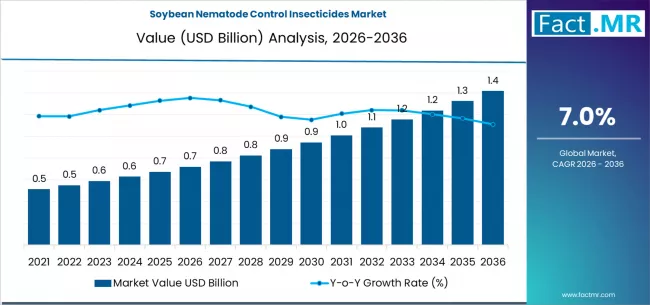
Key Takeaways from the Soybean Nematode Control Insecticides Market

  • Market Value for 2026: USD 0.72 Billion
  • Market Value for 2036: USD 1.42 Billion
  • Forecast CAGR (2026 to 2036): 7.0%
  • Leading Product Type Segment (2026): Chemical Nematicides (46%)
  • Leading Active Ingredient Segment (2026): Organophosphates (24.0%)
  • Leading Application Method Segment (2026): Seed Treatment (44.00%)
  • Key Growth Countries: India (8.60% CAGR), Brazil (7.80% CAGR), Argentina (7.10% CAGR), China (6.90% CAGR), USA (6.40% CAGR)
  • Key Players in the Market: Syngenta Group, Bayer CropScience, Corteva Agriscience, BASF SE, UPL Limited

Soybean Nematode Control Insecticides Market Market Value Analysis

This shift is driven by mounting regulatory pressures, environmental concerns, and the urgent need to preserve the long-term efficacy of existing chemistries amid rising nematode resistance and virulence. The increasing adoption of seed-applied technologies represents a fundamental change in approach, focusing on early-season protection and root system establishment.

India’s notable 8.60% CAGR highlights the market's expansion into regions where soybean acreage is growing and soil pest complexes are intensifying. Current trends center on the development of sophisticated combination products that layer chemical and biological modes of action, aiming to deliver effective, season-long nematode suppression while supporting broader soil health and sustainability objectives within the cropping system.

Metric

Metric Value
Market Value (2026) USD 0.72 Billion
Market Forecast Value (2036) USD 1.42 Billion
Forecast CAGR (2026 to 2036) 7.0%

Category

Category Segments
Product Type Chemical Nematicides, Biological Insecticides/Nematicides, Seed-Applied Insecticide Treatments, Integrated Combination Products
Active Ingredient Type Organophosphates, Carbamates, Pyrethroids (Supportive Role), Biological Actives (Microbial/Botanical)
Application Method Seed Treatment, Soil Application, In-Furrow Application, Foliar (Indirect/IPM)
Region North America, Latin America, Western Europe, Eastern Europe, East Asia, South Asia & Pacific, MEA

Segmental Analysis

By Product Type, Which Segment Continues to Serve as the Foundational Control Measure?
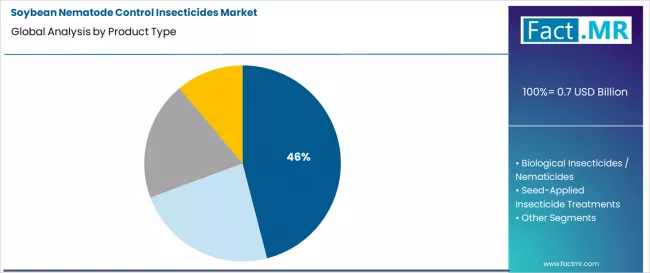
Soybean Nematode Control Insecticides Market Analysis By Product Type

Chemical nematicides maintain a leading 46% share, reflecting their continued role as the primary high-efficacy solution for moderate to severe nematode pressure. Their dominance is sustained by their reliable and predictable performance in protecting yield, particularly in high-intensity production systems where economic loss thresholds are easily reached.

Their use is increasingly governed by strict stewardship programs and integrated within sequences that include non-chemical tactics, moving from a standalone solution to the core component of a planned management strategy.

By Active Ingredient Type, Which Chemistry Balances Efficacy with a Established Use History?
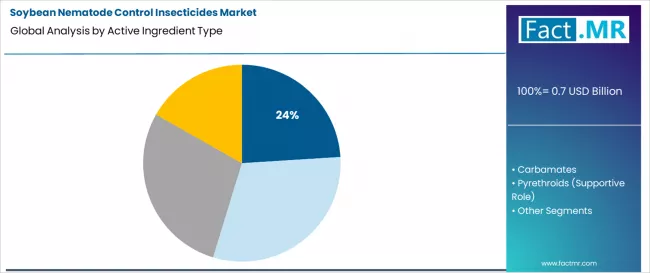
Soybean Nematode Control Insecticides Market Analysis By Active Ingredient Type

Organophosphates hold a significant 24.0% share of the active ingredient segment. Their position is based on a long history of effective nematode control, systemic activity that protects roots, and relatively lower cost compared to newer chemistries. In key markets, they remain a crucial tool, especially in seed treatment formulations.

Their market trajectory is heavily influenced by regulatory reviews and the gradual phase-out in some regions, which is simultaneously driving demand for replacement chemistries and biological alternatives.

By Application Method, Which Approach Aligns with Precision Agriculture and Early Protection?
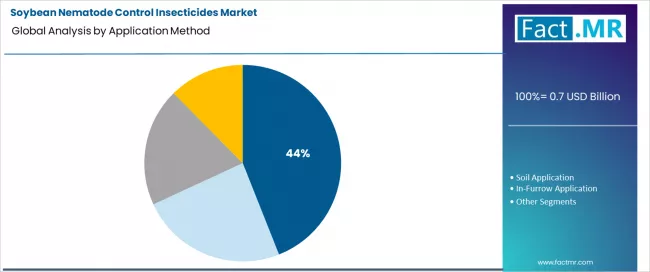
Soybean Nematode Control Insecticides Market Analysis By Application Method

Seed treatment is the dominant application method at 44.00%. This method's growth is driven by its precision, efficiency, and focus on safeguarding the critical early stages of root development when soybean plants are most vulnerable to nematode damage. It delivers targeted protection directly to the rhizosphere, reduces environmental exposure, and simplifies logistics for growers.

The convergence of advanced seed-applied nematicides with standard fungicide and insecticide treatments creates a compelling, integrated protection package that aligns with modern planting practices.

What are the Drivers, Restraints, and Key Trends of the Soybean Nematode Control Insecticides Market?

A primary market driver is the continuous expansion and intensification of soybean monoculture systems, which creates ideal conditions for nematode population buildup and increases the annual risk of significant yield loss. The silent nature of nematode damage, often going unrecognized until harvest, compels proactive management. Furthermore, the identification of new, more virulent nematode species and races expanding their geographical range creates novel control challenges that require updated chemical and biological solutions.

A significant market restraint is the high cost and extended timeline associated with discovering and registering new synthetic nematicidal modes of action, leading to a reliance on older chemical classes. This regulatory and R&D bottleneck slows innovation. Additionally, the variable performance of biological nematicides under different soil, temperature, and moisture conditions can lead to inconsistent results, eroding grower confidence and limiting widespread adoption despite their attractive sustainability profile.

Key trends include the rapid development of integrated combination products that co-package chemical and biological active ingredients in a single seed treatment or soil application. This approach aims to enhance efficacy, broaden the spectrum of control, and delay resistance.

Another trend is the utilization of advanced diagnostics and soil testing to map nematode pressure at a field-specific level, enabling variable-rate application of nematicides and moving from blanket applications to prescription-based management. There is also growing investment in novel delivery systems, such as polymer coatings or capsule technologies, that improve the longevity and targeted release of active ingredients in the root zone.

Analysis of the Soybean Nematode Control Insecticides Market by Key Countries
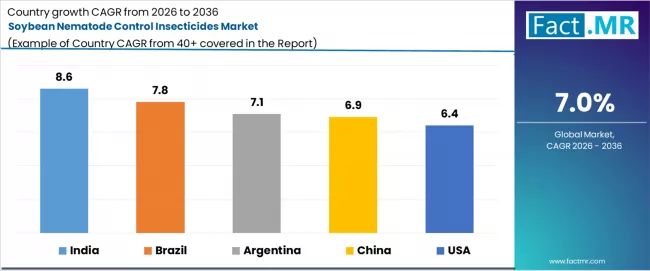
Soybean Nematode Control Insecticides Market Cagr Analysis By Country

Country CAGR (2026-2036)
India 8.60%
Brazil 7.80%
Argentina 7.10%
China 6.90%
USA 6.40%

How is India's Expanding Soybean Acreage and Emerging Pest Pressure Catalyzing Growth?

India's leading 8.60% CAGR is fueled by government-led initiatives to boost domestic oilseed production, resulting in rapidly expanding soybean cultivation often on land with undefined pest histories. This expansion, coupled with intensive cropping, is bringing previously minor nematode species to the forefront as major yield-limiting factors.

The market is in an early growth phase, characterized by rising awareness and a demand for cost-effective, easy-to-apply solutions, with a strong focus on seed treatments and soil applications suitable for smallholder farming systems.

What is the Impact of Brazil's Intensive Cropping Systems and Nematode Diversity?

Brazil's 7.80% growth occurs within a context of severe and diverse nematode pressure, including destructive species like root-knot and lesion nematodes, in its continuous cropping systems.

Brazilian farmers are highly knowledgeable and aggressive in their nematode management, driving demand for high-efficacy chemical solutions as well as innovative biologicals. The market is sophisticated, with a focus on integrated programs that may involve crop rotation with non-host cover crops, resistant varieties, and strategic nematicide use to manage populations below economic thresholds.

Why is Argentina's Export-Oriented Production a Key Driver for Proactive Management?

Argentina's 7.10% growth is linked to the paramount importance of yield stability and quality in its export-driven soybean sector. Nematode-induced stress not only reduces yield but can also compromise plant health and grain quality.

This risk-averse environment favors proactive, insurance-based applications of nematicides, particularly seed treatments, to ensure optimal stand establishment and vigor. The market prioritizes reliable, proven products that deliver consistent performance across vast cultivated areas.

How is China's Focus on Food Security and Sustainable Intensification Shaping Demand?

China's 6.90% growth is shaped by its dual goals of maximizing soybean yield per unit of land and reducing the environmental impact of agriculture. This creates a nuanced market that demands effective nematicides but shows increasing interest in biological and biorational options.

Government policies promoting green agriculture are incentivizing the development and adoption of integrated pest management strategies, where chemical nematicides are used judiciously based on monitoring and within a broader ecological framework.

What Role does the USA's Mature Market and Resistance Management Focus Play?
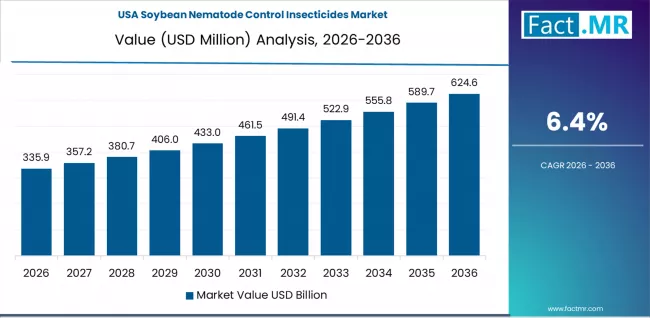
Soybean Nematode Control Insecticides Market Country Value Analysis

The USA's 6.40% growth reflects a mature market where nematode threats are well-characterized, and management is integrated into standard production practices. Growth is driven by the need to manage resistance to existing technologies and the adoption of higher-value seed treatment packages that include nematicidal components.

The market is technology-driven, with emphasis on precision soil sampling, variable-rate technology, and the use of multi-component seed treatments to manage complex early-season pest and disease complexes that include nematodes.

Competitive Landscape of the Soybean Nematode Control Insecticides Market
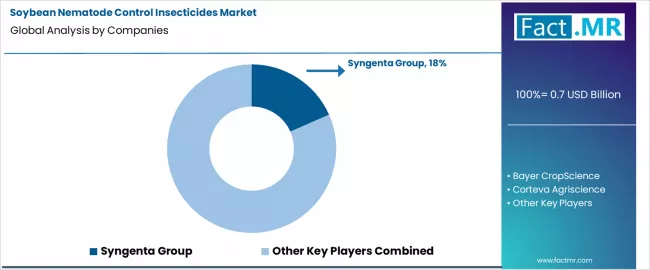
Soybean Nematode Control Insecticides Market Analysis By Company

Global agrochemical leaders that control the seed and trait markets are also present in the soybean nematode control insecticides market. This renders a need for deeply integrated crop protection strategies, dominate the competitive landscape. Competition centers on owning and promoting the most effective and convenient seed treatment platforms, as this application method becomes the primary point of sale for nematode control.

Success is determined by the strength of field data demonstrating yield protection, the ability to register new active ingredients or combinations in key soybean-producing regions, and the provision of comprehensive agronomic support that helps growers diagnose nematode issues and implement effective management programs.

Company Key Contribution & Strategic Focus
Syngenta Group A leader in seed treatment technology, promoting comprehensive offers that combine nematicides with fungicides and insecticides under its branded seed care platform.
Bayer CropScience Leverages its integrated seed and crop protection portfolio to offer tailored solutions, focusing on soil-applied and seed-treatment nematicides for integrated management.
Corteva Agriscience Emphasizes integrated solutions through its Pioneer seed brand, often combining proprietary seed treatments with agronomic advice for nematode complex management.
BASF SE Invests in both chemical and biological nematicide research, offering solutions across different application methods and promoting integrated management strategies.
UPL Limited Focuses on providing broad-portfolio, cost-effective solutions, including key off-patent chemical nematicides, to price-sensitive growth markets.

Key Players in the Soybean Nematode Control Insecticides Market

  • Syngenta Group
  • Bayer CropScience
  • Corteva Agriscience
  • BASF SE
  • UPL Limited

Scope of Report

Items Values
Quantitative Units USD Billion
Product Type Chemical Nematicides, Biological Insecticides/Nematicides, Seed-Applied Insecticide Treatments, Integrated Combination Products
Active Ingredient Type Organophosphates, Carbamates, Pyrethroids (Supportive Role), Biological Actives (Microbial/Botanical)
Application Method Seed Treatment, Soil Application, In-Furrow Application, Foliar (Indirect/IPM)
Key Countries India, Brazil, Argentina, China, USA
Key Companies Syngenta Group, Bayer CropScience, Corteva Agriscience, BASF SE, UPL Limited
Additional Analysis Soil health and microbiome impact analysis of long-term nematicide use; yield benefit and ROI models for seed treatment versus soil application; resistance monitoring and development trends for major nematode species; impact of climate variables on nematode life cycles and product efficacy; regulatory landscape analysis for nematicides in major producing countries; farmer adoption barriers and drivers for biological nematicide products.

Market by Segments

  • Product Type :

    • Chemical Nematicides
    • Biological Insecticides/Nematicides
    • Seed-Applied Insecticide Treatments
    • Integrated Combination Products
  • Active Ingredient Type :

    • Organophosphates
    • Carbamates
    • Pyrethroids (Supportive Role)
    • Biological Actives (Microbial/Botanical)
  • Application Method :

    • Seed Treatment
    • Soil Application
    • In-Furrow Application
    • Foliar (Indirect/IPM)
  • Region :

    • North America
      • USA
      • Canada
    • Latin America
      • Brazil
      • Argentina
      • Mexico
      • Rest of Latin America
    • Western Europe
      • Germany
      • France
      • UK
      • Italy
      • Spain
      • Benelux
      • Rest of Western Europe
    • Eastern Europe
      • Russia
      • Poland
      • Czech Republic
      • Rest of Eastern Europe
    • East Asia
      • China
      • Japan
      • South Korea
      • Rest of East Asia
    • South Asia & Pacific
      • India
      • ASEAN
      • Australia
      • Rest of South Asia & Pacific
    • MEA
      • GCC
      • South Africa
      • Turkiye
      • Rest of MEA

References

  • Bird, G. W., & Tylka, G. L. 2023. Understanding Soybean Cyst Nematode Management. American Phytopathological Society Press.
  • Castillo, P., & Vovlas, N. 2022. Pratylenchus and Meloidogyne Species in Soybean. Nematology Monographs.
  • Food and Agriculture Organization. 2024. Soil-Borne Pests and Integrated Management. FAO Plant Production and Protection Paper.
  • Koenning, S. R., & Wrather, J. A. 2023. Suppression of Soybean Yield Potential by Nematodes in the United States. Plant Disease Journal.
  • López-Lima, D., & Carrión, G. 2022. The Use of Biological Control for Management of Plant-Parasitic Nematodes. Microbiology Spectrum.
  • Perry, R. N., & Moens, M. 2023. Plant Nematology. CABI Publishing.
  • Tylka, G. L., & Marett, C. C. 2024. Distribution of the Soybean Cyst Nematode, Heterodera glycines, in the United States and Canada. Journal of Nematology.
  • United States Environmental Protection Agency. 2023. Pesticide Reregistration Status for Nematicides. EPA Office of Pesticide Programs.
  • Westphal, A., & Scott, J. C. 2022. Implementation of Integrated Nematode Management in Soybean. Annual Review of Phytopathology.
  • Wrather, J. A., & Koenning, S. R. 2024. Estimates of Disease Effects on Soybean Yields in the United States. Journal of Nematology.

Table of Content

  1. Executive Summary
    • Global Market Outlook
    • Demand to side Trends
    • Supply to side Trends
    • Technology Roadmap Analysis
    • Analysis and Recommendations
  2. Market Overview
    • Market Coverage / Taxonomy
    • Market Definition / Scope / Limitations
  3. Market Background
    • Market Dynamics
      • Drivers
      • Restraints
      • Opportunity
      • Trends
    • Scenario Forecast
      • Demand in Optimistic Scenario
      • Demand in Likely Scenario
      • Demand in Conservative Scenario
    • Opportunity Map Analysis
    • Product Life Cycle Analysis
    • Supply Chain Analysis
    • Investment Feasibility Matrix
    • Value Chain Analysis
    • PESTLE and Porter’s Analysis
    • Regulatory Landscape
    • Regional Parent Market Outlook
    • Production and Consumption Statistics
    • Import and Export Statistics
  4. Global Market Analysis 2021 to 2025 and Forecast, 2026 to 2036
    • Historical Market Size Value (USD Million) Analysis, 2021 to 2025
    • Current and Future Market Size Value (USD Million) Projections, 2026 to 2036
      • Y to o to Y Growth Trend Analysis
      • Absolute $ Opportunity Analysis
  5. Global Market Pricing Analysis 2021 to 2025 and Forecast 2026 to 2036
  6. Global Market Analysis 2021 to 2025 and Forecast 2026 to 2036, By Product Type
    • Introduction / Key Findings
    • Historical Market Size Value (USD Million) Analysis By Product Type, 2021 to 2025
    • Current and Future Market Size Value (USD Million) Analysis and Forecast By Product Type, 2026 to 2036
      • Chemical Nematicides
      • Biological Insecticides / Nematicides
      • Seed-Applied Insecticide Treatments
      • Integrated Combination Products
    • Y to o to Y Growth Trend Analysis By Product Type, 2021 to 2025
    • Absolute $ Opportunity Analysis By Product Type, 2026 to 2036
  7. Global Market Analysis 2021 to 2025 and Forecast 2026 to 2036, By Active Ingredient Type
    • Introduction / Key Findings
    • Historical Market Size Value (USD Million) Analysis By Active Ingredient Type, 2021 to 2025
    • Current and Future Market Size Value (USD Million) Analysis and Forecast By Active Ingredient Type, 2026 to 2036
      • Organophosphates
      • Carbamates
      • Pyrethroids (Supportive Role)
      • Biological Actives (Microbial/Botanical)
    • Y to o to Y Growth Trend Analysis By Active Ingredient Type, 2021 to 2025
    • Absolute $ Opportunity Analysis By Active Ingredient Type, 2026 to 2036
  8. Global Market Analysis 2021 to 2025 and Forecast 2026 to 2036, By Application Method
    • Introduction / Key Findings
    • Historical Market Size Value (USD Million) Analysis By Application Method, 2021 to 2025
    • Current and Future Market Size Value (USD Million) Analysis and Forecast By Application Method, 2026 to 2036
      • Seed Treatment
      • Soil Application
      • In-Furrow Application
      • Foliar (Indirect/IPM)
    • Y to o to Y Growth Trend Analysis By Application Method, 2021 to 2025
    • Absolute $ Opportunity Analysis By Application Method, 2026 to 2036
  9. Global Market Analysis 2021 to 2025 and Forecast 2026 to 2036, By Region
    • Introduction
    • Historical Market Size Value (USD Million) Analysis By Region, 2021 to 2025
    • Current Market Size Value (USD Million) Analysis and Forecast By Region, 2026 to 2036
      • North America
      • Latin America
      • Western Europe
      • Eastern Europe
      • East Asia
      • South Asia and Pacific
      • Middle East & Africa
    • Market Attractiveness Analysis By Region
  10. North America Market Analysis 2021 to 2025 and Forecast 2026 to 2036, By Country
    • Historical Market Size Value (USD Million) Trend Analysis By Market Taxonomy, 2021 to 2025
    • Market Size Value (USD Million) Forecast By Market Taxonomy, 2026 to 2036
      • By Country
        • USA
        • Canada
        • Mexico
      • By Product Type
      • By Active Ingredient Type
      • By Application Method
    • Market Attractiveness Analysis
      • By Country
      • By Product Type
      • By Active Ingredient Type
      • By Application Method
    • Key Takeaways
  11. Latin America Market Analysis 2021 to 2025 and Forecast 2026 to 2036, By Country
    • Historical Market Size Value (USD Million) Trend Analysis By Market Taxonomy, 2021 to 2025
    • Market Size Value (USD Million) Forecast By Market Taxonomy, 2026 to 2036
      • By Country
        • Brazil
        • Chile
        • Rest of Latin America
      • By Product Type
      • By Active Ingredient Type
      • By Application Method
    • Market Attractiveness Analysis
      • By Country
      • By Product Type
      • By Active Ingredient Type
      • By Application Method
    • Key Takeaways
  12. Western Europe Market Analysis 2021 to 2025 and Forecast 2026 to 2036, By Country
    • Historical Market Size Value (USD Million) Trend Analysis By Market Taxonomy, 2021 to 2025
    • Market Size Value (USD Million) Forecast By Market Taxonomy, 2026 to 2036
      • By Country
        • Germany
        • UK
        • Italy
        • Spain
        • France
        • Nordic
        • BENELUX
        • Rest of Western Europe
      • By Product Type
      • By Active Ingredient Type
      • By Application Method
    • Market Attractiveness Analysis
      • By Country
      • By Product Type
      • By Active Ingredient Type
      • By Application Method
    • Key Takeaways
  13. Eastern Europe Market Analysis 2021 to 2025 and Forecast 2026 to 2036, By Country
    • Historical Market Size Value (USD Million) Trend Analysis By Market Taxonomy, 2021 to 2025
    • Market Size Value (USD Million) Forecast By Market Taxonomy, 2026 to 2036
      • By Country
        • Russia
        • Poland
        • Hungary
        • Balkan & Baltic
        • Rest of Eastern Europe
      • By Product Type
      • By Active Ingredient Type
      • By Application Method
    • Market Attractiveness Analysis
      • By Country
      • By Product Type
      • By Active Ingredient Type
      • By Application Method
    • Key Takeaways
  14. East Asia Market Analysis 2021 to 2025 and Forecast 2026 to 2036, By Country
    • Historical Market Size Value (USD Million) Trend Analysis By Market Taxonomy, 2021 to 2025
    • Market Size Value (USD Million) Forecast By Market Taxonomy, 2026 to 2036
      • By Country
        • China
        • Japan
        • South Korea
      • By Product Type
      • By Active Ingredient Type
      • By Application Method
    • Market Attractiveness Analysis
      • By Country
      • By Product Type
      • By Active Ingredient Type
      • By Application Method
    • Key Takeaways
  15. South Asia and Pacific Market Analysis 2021 to 2025 and Forecast 2026 to 2036, By Country
    • Historical Market Size Value (USD Million) Trend Analysis By Market Taxonomy, 2021 to 2025
    • Market Size Value (USD Million) Forecast By Market Taxonomy, 2026 to 2036
      • By Country
        • India
        • ASEAN
        • Australia & New Zealand
        • Rest of South Asia and Pacific
      • By Product Type
      • By Active Ingredient Type
      • By Application Method
    • Market Attractiveness Analysis
      • By Country
      • By Product Type
      • By Active Ingredient Type
      • By Application Method
    • Key Takeaways
  16. Middle East & Africa Market Analysis 2021 to 2025 and Forecast 2026 to 2036, By Country
    • Historical Market Size Value (USD Million) Trend Analysis By Market Taxonomy, 2021 to 2025
    • Market Size Value (USD Million) Forecast By Market Taxonomy, 2026 to 2036
      • By Country
        • Kingdom of Saudi Arabia
        • Other GCC Countries
        • Turkiye
        • South Africa
        • Other African Union
        • Rest of Middle East & Africa
      • By Product Type
      • By Active Ingredient Type
      • By Application Method
    • Market Attractiveness Analysis
      • By Country
      • By Product Type
      • By Active Ingredient Type
      • By Application Method
    • Key Takeaways
  17. Key Countries Market Analysis
    • USA
      • Pricing Analysis
      • Market Share Analysis, 2025
        • By Product Type
        • By Active Ingredient Type
        • By Application Method
    • Canada
      • Pricing Analysis
      • Market Share Analysis, 2025
        • By Product Type
        • By Active Ingredient Type
        • By Application Method
    • Mexico
      • Pricing Analysis
      • Market Share Analysis, 2025
        • By Product Type
        • By Active Ingredient Type
        • By Application Method
    • Brazil
      • Pricing Analysis
      • Market Share Analysis, 2025
        • By Product Type
        • By Active Ingredient Type
        • By Application Method
    • Chile
      • Pricing Analysis
      • Market Share Analysis, 2025
        • By Product Type
        • By Active Ingredient Type
        • By Application Method
    • Germany
      • Pricing Analysis
      • Market Share Analysis, 2025
        • By Product Type
        • By Active Ingredient Type
        • By Application Method
    • UK
      • Pricing Analysis
      • Market Share Analysis, 2025
        • By Product Type
        • By Active Ingredient Type
        • By Application Method
    • Italy
      • Pricing Analysis
      • Market Share Analysis, 2025
        • By Product Type
        • By Active Ingredient Type
        • By Application Method
    • Spain
      • Pricing Analysis
      • Market Share Analysis, 2025
        • By Product Type
        • By Active Ingredient Type
        • By Application Method
    • France
      • Pricing Analysis
      • Market Share Analysis, 2025
        • By Product Type
        • By Active Ingredient Type
        • By Application Method
    • India
      • Pricing Analysis
      • Market Share Analysis, 2025
        • By Product Type
        • By Active Ingredient Type
        • By Application Method
    • ASEAN
      • Pricing Analysis
      • Market Share Analysis, 2025
        • By Product Type
        • By Active Ingredient Type
        • By Application Method
    • Australia & New Zealand
      • Pricing Analysis
      • Market Share Analysis, 2025
        • By Product Type
        • By Active Ingredient Type
        • By Application Method
    • China
      • Pricing Analysis
      • Market Share Analysis, 2025
        • By Product Type
        • By Active Ingredient Type
        • By Application Method
    • Japan
      • Pricing Analysis
      • Market Share Analysis, 2025
        • By Product Type
        • By Active Ingredient Type
        • By Application Method
    • South Korea
      • Pricing Analysis
      • Market Share Analysis, 2025
        • By Product Type
        • By Active Ingredient Type
        • By Application Method
    • Russia
      • Pricing Analysis
      • Market Share Analysis, 2025
        • By Product Type
        • By Active Ingredient Type
        • By Application Method
    • Poland
      • Pricing Analysis
      • Market Share Analysis, 2025
        • By Product Type
        • By Active Ingredient Type
        • By Application Method
    • Hungary
      • Pricing Analysis
      • Market Share Analysis, 2025
        • By Product Type
        • By Active Ingredient Type
        • By Application Method
    • Kingdom of Saudi Arabia
      • Pricing Analysis
      • Market Share Analysis, 2025
        • By Product Type
        • By Active Ingredient Type
        • By Application Method
    • Turkiye
      • Pricing Analysis
      • Market Share Analysis, 2025
        • By Product Type
        • By Active Ingredient Type
        • By Application Method
    • South Africa
      • Pricing Analysis
      • Market Share Analysis, 2025
        • By Product Type
        • By Active Ingredient Type
        • By Application Method
  18. Market Structure Analysis
    • Competition Dashboard
    • Competition Benchmarking
    • Market Share Analysis of Top Players
      • By Regional
      • By Product Type
      • By Active Ingredient Type
      • By Application Method
  19. Competition Analysis
    • Competition Deep Dive
      • Syngenta Group
        • Overview
        • Product Portfolio
        • Profitability by Market Segments (Product/Age /Sales Channel/Region)
        • Sales Footprint
        • Strategy Overview
          • Marketing Strategy
          • Product Strategy
          • Channel Strategy
      • Bayer CropScience
      • Corteva Agriscience
      • BASF SE
      • UPL Limited
      • Others
  20. Assumptions & Acronyms Used
  21. Research Methodology

List Of Table

  • Table 1: Global Market Value (USD Million) Forecast by Region, 2021 to 2036
  • Table 2: Global Market Value (USD Million) Forecast by Product Type, 2021 to 2036
  • Table 3: Global Market Value (USD Million) Forecast by Active Ingredient Type, 2021 to 2036
  • Table 4: Global Market Value (USD Million) Forecast by Application Method, 2021 to 2036
  • Table 5: North America Market Value (USD Million) Forecast by Country, 2021 to 2036
  • Table 6: North America Market Value (USD Million) Forecast by Product Type, 2021 to 2036
  • Table 7: North America Market Value (USD Million) Forecast by Active Ingredient Type, 2021 to 2036
  • Table 8: North America Market Value (USD Million) Forecast by Application Method, 2021 to 2036
  • Table 9: Latin America Market Value (USD Million) Forecast by Country, 2021 to 2036
  • Table 10: Latin America Market Value (USD Million) Forecast by Product Type, 2021 to 2036
  • Table 11: Latin America Market Value (USD Million) Forecast by Active Ingredient Type, 2021 to 2036
  • Table 12: Latin America Market Value (USD Million) Forecast by Application Method, 2021 to 2036
  • Table 13: Western Europe Market Value (USD Million) Forecast by Country, 2021 to 2036
  • Table 14: Western Europe Market Value (USD Million) Forecast by Product Type, 2021 to 2036
  • Table 15: Western Europe Market Value (USD Million) Forecast by Active Ingredient Type, 2021 to 2036
  • Table 16: Western Europe Market Value (USD Million) Forecast by Application Method, 2021 to 2036
  • Table 17: Eastern Europe Market Value (USD Million) Forecast by Country, 2021 to 2036
  • Table 18: Eastern Europe Market Value (USD Million) Forecast by Product Type, 2021 to 2036
  • Table 19: Eastern Europe Market Value (USD Million) Forecast by Active Ingredient Type, 2021 to 2036
  • Table 20: Eastern Europe Market Value (USD Million) Forecast by Application Method, 2021 to 2036
  • Table 21: East Asia Market Value (USD Million) Forecast by Country, 2021 to 2036
  • Table 22: East Asia Market Value (USD Million) Forecast by Product Type, 2021 to 2036
  • Table 23: East Asia Market Value (USD Million) Forecast by Active Ingredient Type, 2021 to 2036
  • Table 24: East Asia Market Value (USD Million) Forecast by Application Method, 2021 to 2036
  • Table 25: South Asia and Pacific Market Value (USD Million) Forecast by Country, 2021 to 2036
  • Table 26: South Asia and Pacific Market Value (USD Million) Forecast by Product Type, 2021 to 2036
  • Table 27: South Asia and Pacific Market Value (USD Million) Forecast by Active Ingredient Type, 2021 to 2036
  • Table 28: South Asia and Pacific Market Value (USD Million) Forecast by Application Method, 2021 to 2036
  • Table 29: Middle East & Africa Market Value (USD Million) Forecast by Country, 2021 to 2036
  • Table 30: Middle East & Africa Market Value (USD Million) Forecast by Product Type, 2021 to 2036
  • Table 31: Middle East & Africa Market Value (USD Million) Forecast by Active Ingredient Type, 2021 to 2036
  • Table 32: Middle East & Africa Market Value (USD Million) Forecast by Application Method, 2021 to 2036

List Of Figures

  • Figure 1: Global Market Pricing Analysis
  • Figure 2: Global Market Value (USD Million) Forecast 2021-2036
  • Figure 3: Global Market Value Share and BPS Analysis by Product Type, 2026 and 2036
  • Figure 4: Global Market Y to o to Y Growth Comparison by Product Type, 2026 to 2036
  • Figure 5: Global Market Attractiveness Analysis by Product Type
  • Figure 6: Global Market Value Share and BPS Analysis by Active Ingredient Type, 2026 and 2036
  • Figure 7: Global Market Y to o to Y Growth Comparison by Active Ingredient Type, 2026 to 2036
  • Figure 8: Global Market Attractiveness Analysis by Active Ingredient Type
  • Figure 9: Global Market Value Share and BPS Analysis by Application Method, 2026 and 2036
  • Figure 10: Global Market Y to o to Y Growth Comparison by Application Method, 2026 to 2036
  • Figure 11: Global Market Attractiveness Analysis by Application Method
  • Figure 12: Global Market Value (USD Million) Share and BPS Analysis by Region, 2026 and 2036
  • Figure 13: Global Market Y to o to Y Growth Comparison by Region, 2026 to 2036
  • Figure 14: Global Market Attractiveness Analysis by Region
  • Figure 15: North America Market Incremental Dollar Opportunity, 2026 to 2036
  • Figure 16: Latin America Market Incremental Dollar Opportunity, 2026 to 2036
  • Figure 17: Western Europe Market Incremental Dollar Opportunity, 2026 to 2036
  • Figure 18: Eastern Europe Market Incremental Dollar Opportunity, 2026 to 2036
  • Figure 19: East Asia Market Incremental Dollar Opportunity, 2026 to 2036
  • Figure 20: South Asia and Pacific Market Incremental Dollar Opportunity, 2026 to 2036
  • Figure 21: Middle East & Africa Market Incremental Dollar Opportunity, 2026 to 2036
  • Figure 22: North America Market Value Share and BPS Analysis by Country, 2026 and 2036
  • Figure 23: North America Market Value Share and BPS Analysis by Product Type, 2026 and 2036
  • Figure 24: North America Market Y to o to Y Growth Comparison by Product Type, 2026 to 2036
  • Figure 25: North America Market Attractiveness Analysis by Product Type
  • Figure 26: North America Market Value Share and BPS Analysis by Active Ingredient Type, 2026 and 2036
  • Figure 27: North America Market Y to o to Y Growth Comparison by Active Ingredient Type, 2026 to 2036
  • Figure 28: North America Market Attractiveness Analysis by Active Ingredient Type
  • Figure 29: North America Market Value Share and BPS Analysis by Application Method, 2026 and 2036
  • Figure 30: North America Market Y to o to Y Growth Comparison by Application Method, 2026 to 2036
  • Figure 31: North America Market Attractiveness Analysis by Application Method
  • Figure 32: Latin America Market Value Share and BPS Analysis by Country, 2026 and 2036
  • Figure 33: Latin America Market Value Share and BPS Analysis by Product Type, 2026 and 2036
  • Figure 34: Latin America Market Y to o to Y Growth Comparison by Product Type, 2026 to 2036
  • Figure 35: Latin America Market Attractiveness Analysis by Product Type
  • Figure 36: Latin America Market Value Share and BPS Analysis by Active Ingredient Type, 2026 and 2036
  • Figure 37: Latin America Market Y to o to Y Growth Comparison by Active Ingredient Type, 2026 to 2036
  • Figure 38: Latin America Market Attractiveness Analysis by Active Ingredient Type
  • Figure 39: Latin America Market Value Share and BPS Analysis by Application Method, 2026 and 2036
  • Figure 40: Latin America Market Y to o to Y Growth Comparison by Application Method, 2026 to 2036
  • Figure 41: Latin America Market Attractiveness Analysis by Application Method
  • Figure 42: Western Europe Market Value Share and BPS Analysis by Country, 2026 and 2036
  • Figure 43: Western Europe Market Value Share and BPS Analysis by Product Type, 2026 and 2036
  • Figure 44: Western Europe Market Y to o to Y Growth Comparison by Product Type, 2026 to 2036
  • Figure 45: Western Europe Market Attractiveness Analysis by Product Type
  • Figure 46: Western Europe Market Value Share and BPS Analysis by Active Ingredient Type, 2026 and 2036
  • Figure 47: Western Europe Market Y to o to Y Growth Comparison by Active Ingredient Type, 2026 to 2036
  • Figure 48: Western Europe Market Attractiveness Analysis by Active Ingredient Type
  • Figure 49: Western Europe Market Value Share and BPS Analysis by Application Method, 2026 and 2036
  • Figure 50: Western Europe Market Y to o to Y Growth Comparison by Application Method, 2026 to 2036
  • Figure 51: Western Europe Market Attractiveness Analysis by Application Method
  • Figure 52: Eastern Europe Market Value Share and BPS Analysis by Country, 2026 and 2036
  • Figure 53: Eastern Europe Market Value Share and BPS Analysis by Product Type, 2026 and 2036
  • Figure 54: Eastern Europe Market Y to o to Y Growth Comparison by Product Type, 2026 to 2036
  • Figure 55: Eastern Europe Market Attractiveness Analysis by Product Type
  • Figure 56: Eastern Europe Market Value Share and BPS Analysis by Active Ingredient Type, 2026 and 2036
  • Figure 57: Eastern Europe Market Y to o to Y Growth Comparison by Active Ingredient Type, 2026 to 2036
  • Figure 58: Eastern Europe Market Attractiveness Analysis by Active Ingredient Type
  • Figure 59: Eastern Europe Market Value Share and BPS Analysis by Application Method, 2026 and 2036
  • Figure 60: Eastern Europe Market Y to o to Y Growth Comparison by Application Method, 2026 to 2036
  • Figure 61: Eastern Europe Market Attractiveness Analysis by Application Method
  • Figure 62: East Asia Market Value Share and BPS Analysis by Country, 2026 and 2036
  • Figure 63: East Asia Market Value Share and BPS Analysis by Product Type, 2026 and 2036
  • Figure 64: East Asia Market Y to o to Y Growth Comparison by Product Type, 2026 to 2036
  • Figure 65: East Asia Market Attractiveness Analysis by Product Type
  • Figure 66: East Asia Market Value Share and BPS Analysis by Active Ingredient Type, 2026 and 2036
  • Figure 67: East Asia Market Y to o to Y Growth Comparison by Active Ingredient Type, 2026 to 2036
  • Figure 68: East Asia Market Attractiveness Analysis by Active Ingredient Type
  • Figure 69: East Asia Market Value Share and BPS Analysis by Application Method, 2026 and 2036
  • Figure 70: East Asia Market Y to o to Y Growth Comparison by Application Method, 2026 to 2036
  • Figure 71: East Asia Market Attractiveness Analysis by Application Method
  • Figure 72: South Asia and Pacific Market Value Share and BPS Analysis by Country, 2026 and 2036
  • Figure 73: South Asia and Pacific Market Value Share and BPS Analysis by Product Type, 2026 and 2036
  • Figure 74: South Asia and Pacific Market Y to o to Y Growth Comparison by Product Type, 2026 to 2036
  • Figure 75: South Asia and Pacific Market Attractiveness Analysis by Product Type
  • Figure 76: South Asia and Pacific Market Value Share and BPS Analysis by Active Ingredient Type, 2026 and 2036
  • Figure 77: South Asia and Pacific Market Y to o to Y Growth Comparison by Active Ingredient Type, 2026 to 2036
  • Figure 78: South Asia and Pacific Market Attractiveness Analysis by Active Ingredient Type
  • Figure 79: South Asia and Pacific Market Value Share and BPS Analysis by Application Method, 2026 and 2036
  • Figure 80: South Asia and Pacific Market Y to o to Y Growth Comparison by Application Method, 2026 to 2036
  • Figure 81: South Asia and Pacific Market Attractiveness Analysis by Application Method
  • Figure 82: Middle East & Africa Market Value Share and BPS Analysis by Country, 2026 and 2036
  • Figure 83: Middle East & Africa Market Value Share and BPS Analysis by Product Type, 2026 and 2036
  • Figure 84: Middle East & Africa Market Y to o to Y Growth Comparison by Product Type, 2026 to 2036
  • Figure 85: Middle East & Africa Market Attractiveness Analysis by Product Type
  • Figure 86: Middle East & Africa Market Value Share and BPS Analysis by Active Ingredient Type, 2026 and 2036
  • Figure 87: Middle East & Africa Market Y to o to Y Growth Comparison by Active Ingredient Type, 2026 to 2036
  • Figure 88: Middle East & Africa Market Attractiveness Analysis by Active Ingredient Type
  • Figure 89: Middle East & Africa Market Value Share and BPS Analysis by Application Method, 2026 and 2036
  • Figure 90: Middle East & Africa Market Y to o to Y Growth Comparison by Application Method, 2026 to 2036
  • Figure 91: Middle East & Africa Market Attractiveness Analysis by Application Method
  • Figure 92: Global Market - Tier Structure Analysis
  • Figure 93: Global Market - Company Share Analysis

- FAQs -

How big is the soybean nematode control insecticides market in 2026?

The global soybean nematode control insecticides market is estimated to be valued at USD 0.7 billion in 2026.

What will be the size of soybean nematode control insecticides market in 2036?

The market size for the soybean nematode control insecticides market is projected to reach USD 1.4 billion by 2036.

How much will be the soybean nematode control insecticides market growth between 2026 and 2036?

The soybean nematode control insecticides market is expected to grow at a 7.0% CAGR between 2026 and 2036.

What are the key product types in the soybean nematode control insecticides market?

The key product types in soybean nematode control insecticides market are chemical nematicides, biological insecticides / nematicides, seed-applied insecticide treatments and integrated combination products.

Which active ingredient type segment to contribute significant share in the soybean nematode control insecticides market in 2026?

In terms of active ingredient type, organophosphates segment to command 24.0% share in the soybean nematode control insecticides market in 2026.

Soybean Nematode Control Insecticides Market