Sustainable Aqueous Film-Forming Foams Market (2026 - 2036)

Sustainable Aqueous Film-Forming Foams Market is segmented by Product Type (Protein-Based Foams, Synthetic Fluorine-Free, and Others), by Application (Aviation, Petroleum Facilities, Military, and Others), by End-Use Industry (Oil & Gas, Defense, Aviation, and Others) and Region. Forecast for 2026 to 2036.

Core Findings

    Sustainable Aqueous Film-Forming Foams Market Forecast and Outlook 2026 to 2036

    In 2025, the sustainable aqueous film-forming foams market was valued at USD 166 million. Based on Fact.MR analysis, demand for sustainable AFFF products is estimated to grow to USD 185 million in 2026 and USD 520 million by 2036. Fact.MR projects a CAGR of 10.9% during the forecast period.

    The absolute dollar growth from 2026 to 2036 represents an incremental gain of USD 335 million, a transformational expansion driven not by volume growth alone but by a regulatory-mandated product replacement cycle across aviation, petroleum, and military fire protection systems worldwide. Growth is sustained by the scale of the installed base of legacy AFFF systems requiring conversion, though the pace is constrained by the high cost of system requalification, the extended testing timelines for fluorine-free alternatives under national aviation and fire safety standards, and the limited approved product lists available from defense procurement authorities in major markets.

    John Ottesen, CEO of Dafo Fomtec AB notes that" Across many sites the practical work of replacing PFAS-based foams has begun, with attention turning to whether alternatives can deliver recognised fire test performance while fitting into existing proportioning and storage arrangements."

    Growth differs sharply between tightly regulated and emerging markets. The United States leads at 18.5% CAGR, driven by military and airport conversion mandates and EPA PFAS enforcement. The United Kingdom follows at 14.2% under UK REACH timelines. Germany grows at 12.8% due to EU compliance pressure, while Australia posts 11.5% from defense-led remediation programs. Growth is regulation-driven rather than demand-led.
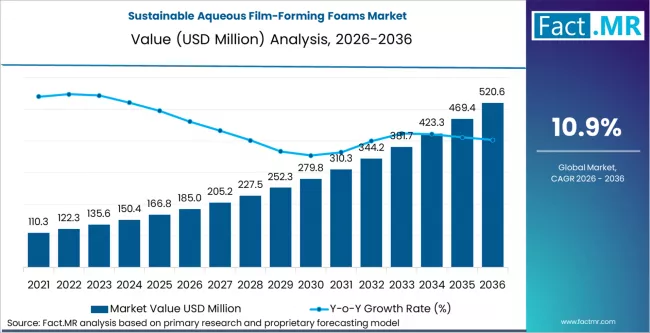
    Sustainable Aqueous Film Forming Foams Market Market Value Analysis

    Market Definition

    The sustainable aqueous film-forming foams market covers protein-based and synthetic fluorine-free foam concentrates engineered to suppress flammable liquid fires without the use of perfluoroalkyl or polyfluoroalkyl substances found in legacy AFFF products. These foam concentrates function by rapidly spreading a thin aqueous film across the surface of burning fuels, depriving fires of oxygen. Primary industrial end-uses include aircraft crash rescue operations, petroleum storage and refinery fire suppression, military base fire protection, and industrial chemical processing facilities. What is being bought and sold is a certified, performance-equivalent fire suppression concentrate that complies with evolving global PFAS restrictions.

    Market Inclusions

    The report covers global and regional market size forecasts from 2026 to 2036, segmented by product type, application, and end-use industry. It evaluates regulatory compliance timelines for foam product conversion, performance certification status under national and international fire safety standards, procurement pipeline analysis for defense and aviation sectors, and competitive positioning of leading fluorine-free foam producers.

    Market Exclusions

    The scope excludes legacy PFAS-containing AFFF concentrates not part of documented substitution programs, dry chemical and gaseous fire suppression systems, portable extinguisher foam formulations for domestic use, and downstream fire suppression infrastructure including pipework, nozzles, and fixed installation equipment. It also excludes firefighting personal protective equipment and PFAS environmental remediation services, focusing strictly on foam concentrate supply and its immediate industrial procurement chain.

    Research Methodology

    • Primary Research: Primary research involved structured interviews with fire safety procurement directors at major airports and petroleum refineries, HSE managers at defense base maintenance operations, foam concentrate formulation chemists at leading sustainable AFFF producers, and regulatory affairs specialists at national fire protection standards bodies across the United States, United Kingdom, Germany, and Australia.
    • Desk Research: Desk research synthesized data from U.S. Environmental Protection Agency PFAS regulatory dossiers, European Chemicals Agency REACH restriction proposal documentation, U.S. Department of Defense PFAS phase-out program reports, Civil Aviation Authority and Federal Aviation Administration foam certification guidelines, and annual report disclosures from Solberg, Perimeter Solutions, and Angus Fire.
    • Market-Sizing and Forecasting: Market sizing employed a hybrid top-down and bottom-up approach, combining total addressable legacy AFFF installed base volumes requiring conversion by sector and geography with average sustainable foam concentrate pricing per unit, validated against disclosed specialty fire suppression product revenues from major producers and benchmarked against government-published PFAS phase-out procurement timelines.
    • Data Validation and Update Cycle: Outputs were cross-validated against disclosed fire safety product revenues from Perimeter Solutions LP, Solberg Company corporate disclosures, and Angus Fire product certification announcements, reconciled semi-annually with government PFAS program updates and defense procurement contract awards, and updated annually with national fire safety standards revision timelines and environmental agency enforcement data.

    Summary

    Market Definition

    • The sustainable aqueous film-forming foams market encompasses protein-based and synthetic fluorine-free foam concentrates deployed in aircraft rescue, petroleum facility, military base, and industrial fire suppression systems as certified, PFAS-free replacements for legacy aqueous film-forming foam products subject to global regulatory phase-out mandates.

    Demand Drivers

    • The U.S. National Defense Authorization Act has mandated the elimination of PFAS-based firefighting foam from military installations and training activities by statute, creating a defined procurement pipeline for certified fluorine-free alternatives across hundreds of domestic and overseas U.S. military facilities.
    • The International Civil Aviation Organization's updated airport fire safety guidance and national aviation authority requirements in the United States, United Kingdom, and Australia are compelling airport operators to replace legacy AFFF stockpiles with certified fluorine-free alternatives ahead of formal ban deadlines, driving large-volume institutional procurement.
    • Petroleum refinery and storage facility operators subject to EPA PFAS enforcement and EU industrial emissions regulations are proactively converting fire suppression systems to sustainable AFFF alternatives to avoid liability under PFAS environmental cleanup cost recovery actions, driving demand from the oil and gas end-use sector.

    Key Segments Analyzed

    • By product type, protein-based foams hold the leading 45% share, reflecting their established fire suppression performance credentials, biodegradability profile, and existing certification status under key aviation and petroleum fire safety standards.
    • By application, aviation accounts for the largest 38% share, anchored by ICAO-aligned airport rescue and firefighting requirements and active airport authority procurement programs for fluorine-free foam concentrate replacement.
    • By end-use industry, oil and gas accounts for the largest 35% share, driven by refinery, offshore platform, and petrochemical facility fire protection systems that are transitioning from legacy AFFF to fluorine-free foam solutions under tightening environmental discharge regulations.
    • By geography, North America contributes the largest share of mandate-driven demand, with the United States recording the fastest country-level CAGR at 18.5%, while Europe generates structured regulatory conversion demand under the EU REACH universal PFAS restriction framework.

    Analyst Opinion at FACT.MR

    • Shambhu Nath Jha, Principal Consultant at Fact.MR, opines, 'CXOs will find this report essential for understanding how statutory PFAS foam ban timelines across the United States, United Kingdom, Germany, and Australia are creating a large, time-bounded procurement cycle for certified fluorine-free alternatives, and which product types, application segments, and institutional procurement channels offer the most durable contract revenues through the forecast period.'

    Strategic Implications / Executive Takeaways

    • Sustainable AFFF producers should prioritize achieving certification under the Federal Aviation Administration's Aircraft Rescue and Firefighting program and equivalent national aviation authority approval lists, as airport procurement decisions in all key markets are gated by formal product approval status rather than competitive pricing alone.
    • Fire suppression product distributors serving petroleum and refinery customers should build technical service capabilities around legacy AFFF system conversion, including tank cleaning, concentrate compatibility testing, and system requalification, as these services create bundled procurement relationships that reduce the risk of losing accounts to competing foam suppliers.
    • Defense sector foam suppliers should engage directly with national defense procurement agencies to establish product qualification under military fire safety standards, as U.S. DoD and equivalent UK and Australian defense authorities award multi-year institutional contracts that provide structural demand stability unavailable in commercial fire protection markets.

    Methodology

    • Market size estimates were based on legacy AFFF installed base conversion volumes by sector and geography, combined with sustainable foam concentrate pricing data, cross-checked with revenue disclosures from leading producers.
    • Segment analysis used FAA, ICAO, and EPA regulatory program documentation combined with defense procurement agency PFAS phase-out timelines and petroleum facility fire safety compliance deadlines.
    • Country forecasts were validated using national environmental agency enforcement data, defense and aviation sector procurement announcements, and chemical industry PFAS ban implementation timelines by market.

    Segmental Analysis

    Sustainable Aqueous Film-Forming Foams Market Analysis by Product Type
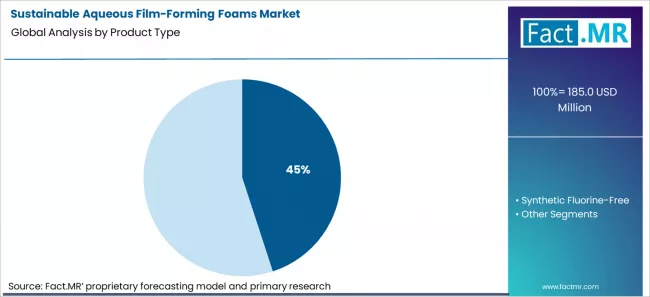
    Sustainable Aqueous Film Forming Foams Market Analysis By Product Type

    Protein-based foams are projected to hold 45% share in 2026. Their biodegradability and established performance in petroleum fire tests make them a lower-risk transition option for regulators and facility operators.

    • Perimeter Solutions Capacity Investment: The company disclosed expanded fluorine-free production capacity in 2023-24 investor updates. [5]
    • Solberg Fluorine-Free Development: Solberg’s RE-HEALING and ARCTIC+ lines have secured military and aviation approvals across major markets. [1]
    • Synthetic Fluorine-Free Growth: Synthetic foams, holding 38% share, are the fastest-growing segment due to lower manufacturing cost and suitability for large petroleum systems. [6]

    Sustainable AFFF Market Analysis by Application
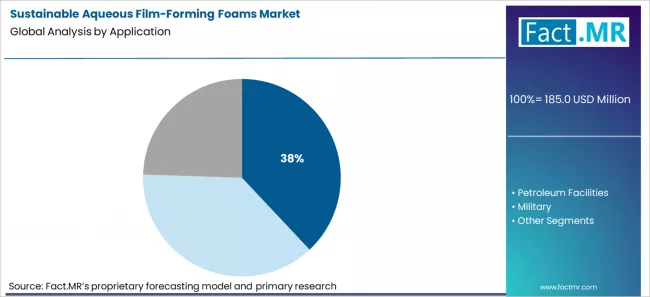
    Sustainable Aqueous Film Forming Foams Market Analysis By Application

    Aviation leads with 38% share in 2026, supported by ICAO-aligned airport firefighting mandates and structured procurement programs.

    • Angus Fire Certification: Angus Fire secured aviation certifications for its Jet-X fluorine-free foam, enabling supply into airport rescue programs. [7]
    • Petroleum Facilities Demand: Petroleum facilities represent 32% share, driven by EPA enforcement and liability-driven system conversion. [2]
    • Military Procurement Pipeline: Military applications at 22% share benefit from formal multi-year defense procurement frameworks. [4]

    Drivers, Restraints, and Opportunities

    Fact.MR analysis indicates that the sustainable aqueous film-forming foams market has grown primarily because of regulatory disruption rather than organic demand expansion. For decades, PFAS-based AFFF products dominated aviation, military, and petroleum fire suppression due to superior knockdown performance. However, mounting evidence of PFAS persistence in soil and groundwater has triggered legal liability and environmental remediation pressures, forcing a structured transition toward fluorine-free alternatives.

    The main challenge lies in balancing urgent regulatory deadlines with the lengthy certification process required for new foam formulations. Protein-based and synthetic fluorine-free foams must pass rigorous sector-specific testing before approval.

    • NDAA PFAS Foam Mandate: The U.S. National Defense Authorization Act mandates phased elimination of PFAS-containing foams from military use, creating a government-funded procurement pipeline for fluorine-free producers. [2]
    • EU REACH Universal PFAS Restriction: The proposed EU-wide PFAS restriction would require replacement of legacy foam stockpiles, triggering a large-scale conversion cycle across member states. [3]
    • Australia Defence PFAS Remediation Programme: Australia’s Defence-led remediation and state-level procurement shifts are accelerating national adoption of fluorine-free alternatives. [4]

    Regional Analysis

    The sustainable aqueous film-forming foams market is analyzed across North America, Europe, Asia Pacific, Latin America, and Middle East and Africa. Regional demand patterns reflect the maturity of PFAS regulatory enforcement, defense and aviation sector procurement conversion timelines, and the depth of national fire safety standards infrastructure requiring fluorine-free product qualification. The full report offers detailed market attractiveness analysis comparing regulatory mandate timelines, institutional procurement pipeline size, and competitive intensity by region.
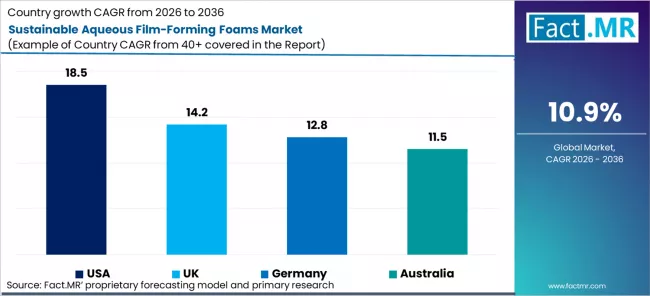
    Sustainable Aqueous Film Forming Foams Market Cagr Analysis By Country

    Country CAGR%
    United States 18.5%
    United Kingdom 14.2%
    Germany 12.8%
    Australia 11.5%

    Source: Fact.MR (FACT.MR) analysis, based on proprietary forecasting model and primary research

    North America Sustainable Aqueous Film-Forming Foams Market Analysis
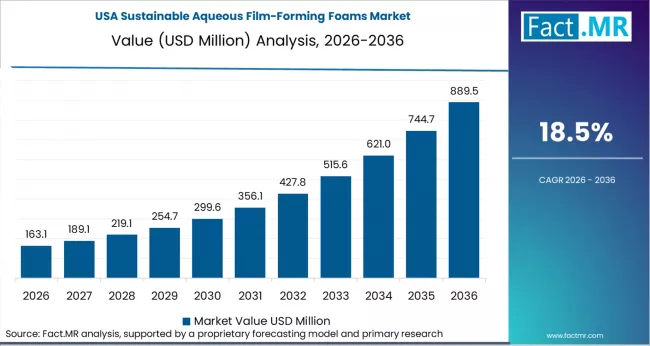
    Sustainable Aqueous Film Forming Foams Market Country Value Analysis

    North America is the global mandate epicenter for sustainable AFFF adoption, defined by statutory federal requirements that create the largest and most time-bounded product replacement pipeline in any region. The United States defense and aviation sectors alone represent the majority of near-term structured procurement demand, supported by active EPA PFAS enforcement at legacy AFFF sites.

    • United States: Demand for sustainable aqueous film-forming foams in the United States is projected to rise at 18.5% CAGR through 2036. The primary structural driver is the U.S. National Defense Authorization Act, which mandated the elimination of PFAS-containing firefighting foam from military training by January 2024 and from all military operational use on a rolling statutory timeline, generating the largest single-country procurement conversion program in the global sustainable AFFF market.

    FACT.MR's analysis of the sustainable aqueous film-forming foams market in North America includes country-level assessment covering the United States and Canada. Readers can find detailed NDAA compliance program timelines, FAA approval pipeline analysis, EPA PFAS enforcement impact assessment, and competitive positioning of leading North American sustainable foam producers.

    Europe Sustainable Aqueous Film-Forming Foams Market Analysis

    Europe is the global regulatory framework laboratory for PFAS foam restriction, with the European Chemicals Agency overseeing the most comprehensive universal PFAS restriction proposal that would impose foam conversion requirements across all EU member states simultaneously. European fire protection markets are served by a combination of global producers including Angus Fire and Solberg alongside specialist regional formulators.

    • United Kingdom: Demand for sustainable aqueous film-forming foams in the United Kingdom is projected to rise at 14.2% CAGR through 2036. The Civil Aviation Authority has updated its aerodrome fire safety guidance to align with ICAO requirements for fluorine-free foam performance testing, and UK airports operating under CAA licensing conditions are incorporating sustainable AFFF procurement into their mandatory equipment renewal cycles.
    • Germany: Demand for sustainable aqueous film-forming foams in Germany is projected to rise at 12.8% CAGR through 2036. The German Federal Environment Agency has taken an active enforcement posture on industrial PFAS use, issuing specific guidance for petroleum processing and airport facility operators requiring transition planning from PFAS-containing foam concentrates. Germany's role as the home jurisdiction for several major chemical and foam processing facilities means that EU REACH universal PFAS restriction compliance obligations fall disproportionately on domestic operators, driving early adoption of certified sustainable alternatives.

    FACT.MR's analysis of the sustainable aqueous film-forming foams market in Europe includes country-level assessment covering Germany, the United Kingdom, France, the Netherlands, and Nordic markets. Readers can find REACH restriction timeline analysis, petroleum facility compliance program data, aviation authority foam approval status by country, and competitive positioning of European sustainable AFFF producers.

    Asia Pacific Sustainable Aqueous Film-Forming Foams Market Analysis

    Asia Pacific is the emerging regulatory conversion market for sustainable AFFF, with Australia representing the most advanced mandatory phase-out program in the region and driving disproportionate near-term demand relative to its market size. Broader Asia Pacific adoption is at an earlier stage, with Japan, South Korea, and ASEAN markets beginning to align national fire safety standards with international PFAS-free requirements driven primarily by their roles as exporters to regulated markets.

    • Australia: Demand for sustainable aqueous film-forming foams in Australia is projected to rise at 11.5% CAGR through 2036. Australia's Department of Defence has committed over AUD 160 million to PFAS remediation at affected military bases and has established formal procurement requirements for fluorine-free foam concentrates at all defence fire training and operational facilities, as disclosed in Department of Defence budget documents submitted to parliament.

    FACT.MR's analysis of the sustainable aqueous film-forming foams market in Asia Pacific includes country-level assessment covering Australia, Japan, South Korea, India, and ASEAN markets. Readers can find Australian Defence PFAS program analysis, CASA aerodrome standards compliance timelines, and emerging market adoption trajectories across the region.

    Competitive Aligners for Market Players
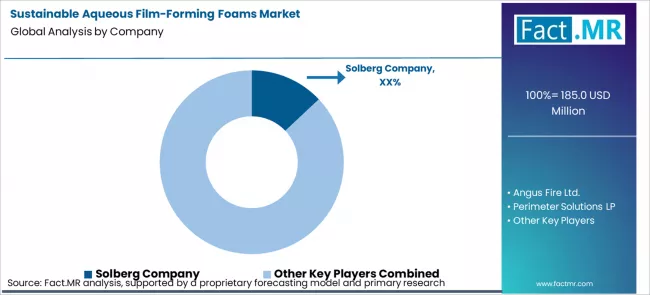
    Sustainable Aqueous Film Forming Foams Market Analysis By Company

    The global sustainable aqueous film-forming foams market is moderately concentrated at the top tier. Solberg Company, Perimeter Solutions, Angus Fire, Chemguard, and National Foam together account for maximum share of certified fluorine-free foam supply worldwide. Below this level, the market consists of regional formulators and private-label distributors serving niche or local demand.

    At the premium level, competition is driven less by price and more by certification. Defense agencies, aviation authorities, and petroleum operators require formal approval under strict fire safety standards before procurement. Without approved product listing status, suppliers cannot compete, regardless of cost.

    Early investment in certification has created clear structural advantages. Solberg holds approvals under U.S. military and European petroleum standards, allowing it to serve both defense and industrial clients. Angus Fire benefits from close alignment with UK Ministry of Defence and Civil Aviation Authority qualification processes. Perimeter Solutions leverages vertical integration in fire suppression chemicals to support large federal contracts.

    Large institutional buyers typically qualify two or three certified products per application. This ensures supply continuity and maintains pricing discipline. Technical support and system conversion expertise are now key differentiators as customer’s transition away from legacy PFAS-based foams.

    Key Players

    • Solberg Company
    • Angus Fire Ltd.
    • Perimeter Solutions LP
    • Chemguard Inc.
    • National Foam Inc.
    • Amerex Corporation

    Scope of Report

    Items Values
    Quantitative Units USD 185 million (2026) to USD 520 million (2036), at a CAGR of 10.9%
    Market Definition The sustainable aqueous film-forming foams market covers protein-based and synthetic fluorine-free foam concentrates used in firefighting and fire suppression systems as PFAS-free replacements for legacy AFFF products across aviation, petroleum, military, and industrial fire protection applications.
    By Product Type Protein-Based Foams, Synthetic Fluorine-Free, Others
    By Application Aviation, Petroleum Facilities, Military, Others
    By End-Use Industry Oil & Gas, Defense, Aviation, Others
    Regions Covered Asia Pacific, Europe, North America, Latin America, Middle East & Africa
    Countries Covered China, Japan, South Korea, Australia & New Zealand, India, ASEAN, Rest of Asia Pacific, Norway, Germany, United Kingdom, France, Spain, Netherlands, Nordics, Rest of Europe, United States, Canada, Mexico, Brazil, Chile, Ecuador, Rest of Latin America, Kingdom of Saudi Arabia, United Arab Emirates, South Africa, Turkey, Rest of Middle East & Africa
    Key Companies Profiled Solberg Company, Angus Fire Ltd., Perimeter Solutions LP, Chemguard Inc., National Foam Inc., Amerex Corporation, Dafo Fomtec AB, Kerr Fire, Dr. Sthamer Hamburg GmbH & Co. KG, BIOEX SAS
    Forecast Period 2026 to 2036
    Approach Hybrid top-down and bottom-up market modeling validated through primary interviews with fire safety procurement officers, defense and aviation maintenance managers, petroleum facility HSE directors, and foam concentrate formulators, supported by national fire safety agency standards, government regulatory dossiers, and corporate sustainability and product compliance disclosures.

    Sustainable Aqueous Film-Forming Foams Market by Segment

    • By Product Type :

      • Protein-Based Foams
      • Synthetic Fluorine-Free
      • Others
    • By Application :

      • Aviation
      • Petroleum Facilities
      • Military
      • Others
    • By End-Use Industry :

      • Oil & Gas
      • Defense
      • Aviation
      • Others
    • Region :

      • Asia Pacific
        • China
        • Japan
        • South Korea
        • Australia & New Zealand
        • India
        • ASEAN
        • Rest of Asia Pacific
      • Europe
        • Norway
        • Germany
        • United Kingdom
        • France
        • Spain
        • Netherlands
        • Nordics
        • Rest of Europe
      • North America
        • United States
        • Canada
        • Mexico
      • Latin America
        • Brazil
        • Chile
        • Ecuador
        • Rest of Latin America
      • Middle East & Africa
        • Kingdom of Saudi Arabia
        • United Arab Emirates
        • South Africa
        • Turkey
        • Rest of Middle East & Africa

    Bibliography

    • [1] Solberg Company, Fluorine-Free Foam Products Corporate Overview, January 2024.
    • [2] U.S. Environmental Protection Agency, PFAS Strategic Roadmap: EPA Commitments to Action 2021-2024, October 2021.
    • [3] European Chemicals Agency, Universal PFAS Restriction Proposal under REACH, February 2023.
    • [4] Australian Department of Defence, PFAS Management and Remediation Program, 2023 Annual Update, December 2023.
    • [5] Perimeter Solutions LP, Fiscal Year 2023 Annual Report and Investor Communications, March 2024.
    • [6] International Civil Aviation Organization, Doc 9137 Airport Services Manual Part 1: Rescue and Firefighting, Eighth Edition, 2022.
    • [7] Angus Fire Ltd., Product Qualification and Certification Announcements, October 2023.

    This Report Addresses

    • Market intelligence for strategic planning with analysis of sustainable AFFF market evolution from voluntary substitution toward statutory-mandated replacement of PFAS-containing foam concentrates across aviation, defense, oil and gas, and industrial fire suppression sectors globally.
    • Market size and forecast showing global valuation of USD 185 million in 2026 and projected USD 520 million by 2036 at a CAGR of 10.9%.
    • Growth opportunity mapping across protein-based biodegradable foam concentrates, synthetic fluorine-free foam platforms for petroleum facility fire suppression, and certified aviation rescue foam alternatives approved under FAA and ICAO-aligned standards.
    • Segment and regional forecasts covering all major countries with product type, application, and end-use industry breakdowns including aviation, defense, oil and gas, and petroleum facilities sector analysis.
    • Competition strategy assessment of leading sustainable AFFF producers including product approval certification status by market, military and aviation procurement relationship depth, production capacity investment, and PFAS ban transition service capabilities.
    • Regulatory compliance tracking of U.S. NDAA PFAS foam phase-out statutory deadlines, EU REACH universal PFAS restriction proposal adoption timelines, FAA and ICAO foam certification standard revisions, and national defense ministry PFAS remediation program milestones.
    • Technology adoption analysis covering protein hydrolysate foam formulation advances, synthetic fluorocarbon-free surfactant development, biodegradability performance testing protocols, and approved product list qualification timelines under key national fire safety standards bodies.
    • Report delivery in Excel, PowerPoint, and PDF formats with fully validated data, primary research evidence, and verified regulatory and company source documentation.

    Table of Content

    1. Executive Summary
      • Global Market Outlook
      • Demand to side Trends
      • Supply to side Trends
      • Technology Roadmap Analysis
      • Analysis and Recommendations
    2. Market Overview
      • Market Coverage / Taxonomy
      • Market Definition / Scope / Limitations
    3. Research Methodology
      • Chapter Orientation
      • Analytical Lens and Working Hypotheses
        • Market Structure, Signals, and Trend Drivers
        • Benchmarking and Cross-market Comparability
        • Market Sizing, Forecasting, and Opportunity Mapping
      • Research Design and Evidence Framework
        • Desk Research Programme (Secondary Evidence)
          • Company Annual and Sustainability Reports
          • Peer-reviewed Journals and Academic Literature
          • Corporate Websites, Product Literature, and Technical Notes
          • Earnings Decks and Investor Briefings
          • Statutory Filings and Regulatory Disclosures
          • Technical White Papers and Standards Notes
          • Trade Journals, Industry Magazines, and Analyst Briefs
          • Conference Proceedings, Webinars, and Seminar Materials
          • Government Statistics Portals and Public Data Releases
          • Press Releases and Reputable Media Coverage
          • Specialist Newsletters and Curated Briefings
          • Sector Databases and Reference Repositories
          • FMR Internal Proprietary Databases and Historical Market Datasets
          • Subscription Datasets and Paid Sources
          • Social Channels, Communities, and Digital Listening Inputs
          • Additional Desk Sources
        • Expert Input and Fieldwork (Primary Evidence)
          • Primary Modes
            • Qualitative Interviews and Expert Elicitation
            • Quantitative Surveys and Structured Data Capture
            • Blended Approach
          • Why Primary Evidence is Used
          • Field Techniques
            • Interviews
            • Surveys
            • Focus Groups
            • Observational and In-context Research
            • Social and Community Interactions
          • Stakeholder Universe Engaged
            • C-suite Leaders
            • Board Members
            • Presidents and Vice Presidents
            • R&D and Innovation Heads
            • Technical Specialists
            • Domain Subject-matter Experts
            • Scientists
            • Physicians and Other Healthcare Professionals
          • Governance, Ethics, and Data Stewardship
            • Research Ethics
            • Data Integrity and Handling
        • Tooling, Models, and Reference Databases
      • Data Engineering and Model Build
        • Data Acquisition and Ingestion
        • Cleaning, Normalisation, and Verification
        • Synthesis, Triangulation, and Analysis
      • Quality Assurance and Audit Trail
    4. Market Background
      • Market Dynamics
        • Drivers
        • Restraints
        • Opportunity
        • Trends
      • Scenario Forecast
        • Demand in Optimistic Scenario
        • Demand in Likely Scenario
        • Demand in Conservative Scenario
      • Opportunity Map Analysis
      • Product Life Cycle Analysis
      • Supply Chain Analysis
      • Investment Feasibility Matrix
      • Value Chain Analysis
      • PESTLE and Porter’s Analysis
      • Regulatory Landscape
      • Regional Parent Market Outlook
      • Production and Consumption Statistics
      • Import and Export Statistics
    5. Global Market Analysis 2021 to 2025 and Forecast, 2026 to 2036
      • Historical Market Size Value (USD Million) Analysis, 2021 to 2025
      • Current and Future Market Size Value (USD Million) Projections, 2026 to 2036
        • Y to o to Y Growth Trend Analysis
        • Absolute $ Opportunity Analysis
    6. Global Market Pricing Analysis 2021 to 2025 and Forecast 2026 to 2036
    7. Global Market Analysis 2021 to 2025 and Forecast 2026 to 2036, By Product Type
      • Introduction / Key Findings
      • Historical Market Size Value (USD Million) Analysis By Product Type , 2021 to 2025
      • Current and Future Market Size Value (USD Million) Analysis and Forecast By Product Type , 2026 to 2036
        • Protein-Based Foams
        • Synthetic Fluorine-Free
      • Y to o to Y Growth Trend Analysis By Product Type , 2021 to 2025
      • Absolute $ Opportunity Analysis By Product Type , 2026 to 2036
    8. Global Market Analysis 2021 to 2025 and Forecast 2026 to 2036, By Application
      • Introduction / Key Findings
      • Historical Market Size Value (USD Million) Analysis By Application, 2021 to 2025
      • Current and Future Market Size Value (USD Million) Analysis and Forecast By Application, 2026 to 2036
        • Aviation
        • Petroleum Facilities
        • Military
      • Y to o to Y Growth Trend Analysis By Application, 2021 to 2025
      • Absolute $ Opportunity Analysis By Application, 2026 to 2036
    9. Global Market Analysis 2021 to 2025 and Forecast 2026 to 2036, By End Use
      • Introduction / Key Findings
      • Historical Market Size Value (USD Million) Analysis By End Use, 2021 to 2025
      • Current and Future Market Size Value (USD Million) Analysis and Forecast By End Use, 2026 to 2036
        • Oil & Gas
        • Defense
        • Aviation
      • Y to o to Y Growth Trend Analysis By End Use, 2021 to 2025
      • Absolute $ Opportunity Analysis By End Use, 2026 to 2036
    10. Global Market Analysis 2021 to 2025 and Forecast 2026 to 2036, By Region
      • Introduction
      • Historical Market Size Value (USD Million) Analysis By Region, 2021 to 2025
      • Current Market Size Value (USD Million) Analysis and Forecast By Region, 2026 to 2036
        • North America
        • Latin America
        • Western Europe
        • Eastern Europe
        • East Asia
        • South Asia and Pacific
        • Middle East & Africa
      • Market Attractiveness Analysis By Region
    11. North America Market Analysis 2021 to 2025 and Forecast 2026 to 2036, By Country
      • Historical Market Size Value (USD Million) Trend Analysis By Market Taxonomy, 2021 to 2025
      • Market Size Value (USD Million) Forecast By Market Taxonomy, 2026 to 2036
        • By Country
          • USA
          • Canada
          • Mexico
        • By Product Type
        • By Application
        • By End Use
      • Market Attractiveness Analysis
        • By Country
        • By Product Type
        • By Application
        • By End Use
      • Key Takeaways
    12. Latin America Market Analysis 2021 to 2025 and Forecast 2026 to 2036, By Country
      • Historical Market Size Value (USD Million) Trend Analysis By Market Taxonomy, 2021 to 2025
      • Market Size Value (USD Million) Forecast By Market Taxonomy, 2026 to 2036
        • By Country
          • Brazil
          • Chile
          • Rest of Latin America
        • By Product Type
        • By Application
        • By End Use
      • Market Attractiveness Analysis
        • By Country
        • By Product Type
        • By Application
        • By End Use
      • Key Takeaways
    13. Western Europe Market Analysis 2021 to 2025 and Forecast 2026 to 2036, By Country
      • Historical Market Size Value (USD Million) Trend Analysis By Market Taxonomy, 2021 to 2025
      • Market Size Value (USD Million) Forecast By Market Taxonomy, 2026 to 2036
        • By Country
          • Germany
          • UK
          • Italy
          • Spain
          • France
          • Nordic
          • BENELUX
          • Rest of Western Europe
        • By Product Type
        • By Application
        • By End Use
      • Market Attractiveness Analysis
        • By Country
        • By Product Type
        • By Application
        • By End Use
      • Key Takeaways
    14. Eastern Europe Market Analysis 2021 to 2025 and Forecast 2026 to 2036, By Country
      • Historical Market Size Value (USD Million) Trend Analysis By Market Taxonomy, 2021 to 2025
      • Market Size Value (USD Million) Forecast By Market Taxonomy, 2026 to 2036
        • By Country
          • Russia
          • Poland
          • Hungary
          • Balkan & Baltic
          • Rest of Eastern Europe
        • By Product Type
        • By Application
        • By End Use
      • Market Attractiveness Analysis
        • By Country
        • By Product Type
        • By Application
        • By End Use
      • Key Takeaways
    15. East Asia Market Analysis 2021 to 2025 and Forecast 2026 to 2036, By Country
      • Historical Market Size Value (USD Million) Trend Analysis By Market Taxonomy, 2021 to 2025
      • Market Size Value (USD Million) Forecast By Market Taxonomy, 2026 to 2036
        • By Country
          • China
          • Japan
          • South Korea
        • By Product Type
        • By Application
        • By End Use
      • Market Attractiveness Analysis
        • By Country
        • By Product Type
        • By Application
        • By End Use
      • Key Takeaways
    16. South Asia and Pacific Market Analysis 2021 to 2025 and Forecast 2026 to 2036, By Country
      • Historical Market Size Value (USD Million) Trend Analysis By Market Taxonomy, 2021 to 2025
      • Market Size Value (USD Million) Forecast By Market Taxonomy, 2026 to 2036
        • By Country
          • India
          • ASEAN
          • Australia & New Zealand
          • Rest of South Asia and Pacific
        • By Product Type
        • By Application
        • By End Use
      • Market Attractiveness Analysis
        • By Country
        • By Product Type
        • By Application
        • By End Use
      • Key Takeaways
    17. Middle East & Africa Market Analysis 2021 to 2025 and Forecast 2026 to 2036, By Country
      • Historical Market Size Value (USD Million) Trend Analysis By Market Taxonomy, 2021 to 2025
      • Market Size Value (USD Million) Forecast By Market Taxonomy, 2026 to 2036
        • By Country
          • Kingdom of Saudi Arabia
          • Other GCC Countries
          • Turkiye
          • South Africa
          • Other African Union
          • Rest of Middle East & Africa
        • By Product Type
        • By Application
        • By End Use
      • Market Attractiveness Analysis
        • By Country
        • By Product Type
        • By Application
        • By End Use
      • Key Takeaways
    18. Key Countries Market Analysis
      • USA
        • Pricing Analysis
        • Market Share Analysis, 2025
          • By Product Type
          • By Application
          • By End Use
      • Canada
        • Pricing Analysis
        • Market Share Analysis, 2025
          • By Product Type
          • By Application
          • By End Use
      • Mexico
        • Pricing Analysis
        • Market Share Analysis, 2025
          • By Product Type
          • By Application
          • By End Use
      • Brazil
        • Pricing Analysis
        • Market Share Analysis, 2025
          • By Product Type
          • By Application
          • By End Use
      • Chile
        • Pricing Analysis
        • Market Share Analysis, 2025
          • By Product Type
          • By Application
          • By End Use
      • Germany
        • Pricing Analysis
        • Market Share Analysis, 2025
          • By Product Type
          • By Application
          • By End Use
      • UK
        • Pricing Analysis
        • Market Share Analysis, 2025
          • By Product Type
          • By Application
          • By End Use
      • Italy
        • Pricing Analysis
        • Market Share Analysis, 2025
          • By Product Type
          • By Application
          • By End Use
      • Spain
        • Pricing Analysis
        • Market Share Analysis, 2025
          • By Product Type
          • By Application
          • By End Use
      • France
        • Pricing Analysis
        • Market Share Analysis, 2025
          • By Product Type
          • By Application
          • By End Use
      • India
        • Pricing Analysis
        • Market Share Analysis, 2025
          • By Product Type
          • By Application
          • By End Use
      • ASEAN
        • Pricing Analysis
        • Market Share Analysis, 2025
          • By Product Type
          • By Application
          • By End Use
      • Australia & New Zealand
        • Pricing Analysis
        • Market Share Analysis, 2025
          • By Product Type
          • By Application
          • By End Use
      • China
        • Pricing Analysis
        • Market Share Analysis, 2025
          • By Product Type
          • By Application
          • By End Use
      • Japan
        • Pricing Analysis
        • Market Share Analysis, 2025
          • By Product Type
          • By Application
          • By End Use
      • South Korea
        • Pricing Analysis
        • Market Share Analysis, 2025
          • By Product Type
          • By Application
          • By End Use
      • Russia
        • Pricing Analysis
        • Market Share Analysis, 2025
          • By Product Type
          • By Application
          • By End Use
      • Poland
        • Pricing Analysis
        • Market Share Analysis, 2025
          • By Product Type
          • By Application
          • By End Use
      • Hungary
        • Pricing Analysis
        • Market Share Analysis, 2025
          • By Product Type
          • By Application
          • By End Use
      • Kingdom of Saudi Arabia
        • Pricing Analysis
        • Market Share Analysis, 2025
          • By Product Type
          • By Application
          • By End Use
      • Turkiye
        • Pricing Analysis
        • Market Share Analysis, 2025
          • By Product Type
          • By Application
          • By End Use
      • South Africa
        • Pricing Analysis
        • Market Share Analysis, 2025
          • By Product Type
          • By Application
          • By End Use
    19. Market Structure Analysis
      • Competition Dashboard
      • Competition Benchmarking
      • Market Share Analysis of Top Players
        • By Regional
        • By Product Type
        • By Application
        • By End Use
    20. Competition Analysis
      • Competition Deep Dive
        • Solberg Company
          • Overview
          • Product Portfolio
          • Profitability by Market Segments (Product/Age /Sales Channel/Region)
          • Sales Footprint
          • Strategy Overview
            • Marketing Strategy
            • Product Strategy
            • Channel Strategy
        • Angus Fire Ltd.
        • Perimeter Solutions LP
        • Chemguard Inc.
        • National Foam Inc.
        • Amerex Corporation
    21. Assumptions & Acronyms Used

    List Of Table

    • Table 1: Global Market Value (USD Million) Forecast by Region, 2021 to 2036
    • Table 2: Global Market Value (USD Million) Forecast by Product Type, 2021 to 2036
    • Table 3: Global Market Value (USD Million) Forecast by Application, 2021 to 2036
    • Table 4: Global Market Value (USD Million) Forecast by End Use, 2021 to 2036
    • Table 5: North America Market Value (USD Million) Forecast by Country, 2021 to 2036
    • Table 6: North America Market Value (USD Million) Forecast by Product Type, 2021 to 2036
    • Table 7: North America Market Value (USD Million) Forecast by Application, 2021 to 2036
    • Table 8: North America Market Value (USD Million) Forecast by End Use, 2021 to 2036
    • Table 9: Latin America Market Value (USD Million) Forecast by Country, 2021 to 2036
    • Table 10: Latin America Market Value (USD Million) Forecast by Product Type, 2021 to 2036
    • Table 11: Latin America Market Value (USD Million) Forecast by Application, 2021 to 2036
    • Table 12: Latin America Market Value (USD Million) Forecast by End Use, 2021 to 2036
    • Table 13: Western Europe Market Value (USD Million) Forecast by Country, 2021 to 2036
    • Table 14: Western Europe Market Value (USD Million) Forecast by Product Type, 2021 to 2036
    • Table 15: Western Europe Market Value (USD Million) Forecast by Application, 2021 to 2036
    • Table 16: Western Europe Market Value (USD Million) Forecast by End Use, 2021 to 2036
    • Table 17: Eastern Europe Market Value (USD Million) Forecast by Country, 2021 to 2036
    • Table 18: Eastern Europe Market Value (USD Million) Forecast by Product Type, 2021 to 2036
    • Table 19: Eastern Europe Market Value (USD Million) Forecast by Application, 2021 to 2036
    • Table 20: Eastern Europe Market Value (USD Million) Forecast by End Use, 2021 to 2036
    • Table 21: East Asia Market Value (USD Million) Forecast by Country, 2021 to 2036
    • Table 22: East Asia Market Value (USD Million) Forecast by Product Type, 2021 to 2036
    • Table 23: East Asia Market Value (USD Million) Forecast by Application, 2021 to 2036
    • Table 24: East Asia Market Value (USD Million) Forecast by End Use, 2021 to 2036
    • Table 25: South Asia and Pacific Market Value (USD Million) Forecast by Country, 2021 to 2036
    • Table 26: South Asia and Pacific Market Value (USD Million) Forecast by Product Type, 2021 to 2036
    • Table 27: South Asia and Pacific Market Value (USD Million) Forecast by Application, 2021 to 2036
    • Table 28: South Asia and Pacific Market Value (USD Million) Forecast by End Use, 2021 to 2036
    • Table 29: Middle East & Africa Market Value (USD Million) Forecast by Country, 2021 to 2036
    • Table 30: Middle East & Africa Market Value (USD Million) Forecast by Product Type, 2021 to 2036
    • Table 31: Middle East & Africa Market Value (USD Million) Forecast by Application, 2021 to 2036
    • Table 32: Middle East & Africa Market Value (USD Million) Forecast by End Use, 2021 to 2036

    List Of Figures

    • Figure 1: Global Market Pricing Analysis
    • Figure 2: Global Market Value (USD Million) Forecast 2021 to 2036
    • Figure 3: Global Market Value Share and BPS Analysis by Product Type, 2026 and 2036
    • Figure 4: Global Market Y to o to Y Growth Comparison by Product Type, 2026 to 2036
    • Figure 5: Global Market Attractiveness Analysis by Product Type
    • Figure 6: Global Market Value Share and BPS Analysis by Application, 2026 and 2036
    • Figure 7: Global Market Y to o to Y Growth Comparison by Application, 2026 to 2036
    • Figure 8: Global Market Attractiveness Analysis by Application
    • Figure 9: Global Market Value Share and BPS Analysis by End Use, 2026 and 2036
    • Figure 10: Global Market Y to o to Y Growth Comparison by End Use, 2026 to 2036
    • Figure 11: Global Market Attractiveness Analysis by End Use
    • Figure 12: Global Market Value (USD Million) Share and BPS Analysis by Region, 2026 and 2036
    • Figure 13: Global Market Y to o to Y Growth Comparison by Region, 2026 to 2036
    • Figure 14: Global Market Attractiveness Analysis by Region
    • Figure 15: North America Market Incremental Dollar Opportunity, 2026 to 2036
    • Figure 16: Latin America Market Incremental Dollar Opportunity, 2026 to 2036
    • Figure 17: Western Europe Market Incremental Dollar Opportunity, 2026 to 2036
    • Figure 18: Eastern Europe Market Incremental Dollar Opportunity, 2026 to 2036
    • Figure 19: East Asia Market Incremental Dollar Opportunity, 2026 to 2036
    • Figure 20: South Asia and Pacific Market Incremental Dollar Opportunity, 2026 to 2036
    • Figure 21: Middle East & Africa Market Incremental Dollar Opportunity, 2026 to 2036
    • Figure 22: North America Market Value Share and BPS Analysis by Country, 2026 and 2036
    • Figure 23: North America Market Value Share and BPS Analysis by Product Type, 2026 and 2036
    • Figure 24: North America Market Y to o to Y Growth Comparison by Product Type, 2026 to 2036
    • Figure 25: North America Market Attractiveness Analysis by Product Type
    • Figure 26: North America Market Value Share and BPS Analysis by Application, 2026 and 2036
    • Figure 27: North America Market Y to o to Y Growth Comparison by Application, 2026 to 2036
    • Figure 28: North America Market Attractiveness Analysis by Application
    • Figure 29: North America Market Value Share and BPS Analysis by End Use, 2026 and 2036
    • Figure 30: North America Market Y to o to Y Growth Comparison by End Use, 2026 to 2036
    • Figure 31: North America Market Attractiveness Analysis by End Use
    • Figure 32: Latin America Market Value Share and BPS Analysis by Country, 2026 and 2036
    • Figure 33: Latin America Market Value Share and BPS Analysis by Product Type, 2026 and 2036
    • Figure 34: Latin America Market Y to o to Y Growth Comparison by Product Type, 2026 to 2036
    • Figure 35: Latin America Market Attractiveness Analysis by Product Type
    • Figure 36: Latin America Market Value Share and BPS Analysis by Application, 2026 and 2036
    • Figure 37: Latin America Market Y to o to Y Growth Comparison by Application, 2026 to 2036
    • Figure 38: Latin America Market Attractiveness Analysis by Application
    • Figure 39: Latin America Market Value Share and BPS Analysis by End Use, 2026 and 2036
    • Figure 40: Latin America Market Y to o to Y Growth Comparison by End Use, 2026 to 2036
    • Figure 41: Latin America Market Attractiveness Analysis by End Use
    • Figure 42: Western Europe Market Value Share and BPS Analysis by Country, 2026 and 2036
    • Figure 43: Western Europe Market Value Share and BPS Analysis by Product Type, 2026 and 2036
    • Figure 44: Western Europe Market Y to o to Y Growth Comparison by Product Type, 2026 to 2036
    • Figure 45: Western Europe Market Attractiveness Analysis by Product Type
    • Figure 46: Western Europe Market Value Share and BPS Analysis by Application, 2026 and 2036
    • Figure 47: Western Europe Market Y to o to Y Growth Comparison by Application, 2026 to 2036
    • Figure 48: Western Europe Market Attractiveness Analysis by Application
    • Figure 49: Western Europe Market Value Share and BPS Analysis by End Use, 2026 and 2036
    • Figure 50: Western Europe Market Y to o to Y Growth Comparison by End Use, 2026 to 2036
    • Figure 51: Western Europe Market Attractiveness Analysis by End Use
    • Figure 52: Eastern Europe Market Value Share and BPS Analysis by Country, 2026 and 2036
    • Figure 53: Eastern Europe Market Value Share and BPS Analysis by Product Type, 2026 and 2036
    • Figure 54: Eastern Europe Market Y to o to Y Growth Comparison by Product Type, 2026 to 2036
    • Figure 55: Eastern Europe Market Attractiveness Analysis by Product Type
    • Figure 56: Eastern Europe Market Value Share and BPS Analysis by Application, 2026 and 2036
    • Figure 57: Eastern Europe Market Y to o to Y Growth Comparison by Application, 2026 to 2036
    • Figure 58: Eastern Europe Market Attractiveness Analysis by Application
    • Figure 59: Eastern Europe Market Value Share and BPS Analysis by End Use, 2026 and 2036
    • Figure 60: Eastern Europe Market Y to o to Y Growth Comparison by End Use, 2026 to 2036
    • Figure 61: Eastern Europe Market Attractiveness Analysis by End Use
    • Figure 62: East Asia Market Value Share and BPS Analysis by Country, 2026 and 2036
    • Figure 63: East Asia Market Value Share and BPS Analysis by Product Type, 2026 and 2036
    • Figure 64: East Asia Market Y to o to Y Growth Comparison by Product Type, 2026 to 2036
    • Figure 65: East Asia Market Attractiveness Analysis by Product Type
    • Figure 66: East Asia Market Value Share and BPS Analysis by Application, 2026 and 2036
    • Figure 67: East Asia Market Y to o to Y Growth Comparison by Application, 2026 to 2036
    • Figure 68: East Asia Market Attractiveness Analysis by Application
    • Figure 69: East Asia Market Value Share and BPS Analysis by End Use, 2026 and 2036
    • Figure 70: East Asia Market Y to o to Y Growth Comparison by End Use, 2026 to 2036
    • Figure 71: East Asia Market Attractiveness Analysis by End Use
    • Figure 72: South Asia and Pacific Market Value Share and BPS Analysis by Country, 2026 and 2036
    • Figure 73: South Asia and Pacific Market Value Share and BPS Analysis by Product Type, 2026 and 2036
    • Figure 74: South Asia and Pacific Market Y to o to Y Growth Comparison by Product Type, 2026 to 2036
    • Figure 75: South Asia and Pacific Market Attractiveness Analysis by Product Type
    • Figure 76: South Asia and Pacific Market Value Share and BPS Analysis by Application, 2026 and 2036
    • Figure 77: South Asia and Pacific Market Y to o to Y Growth Comparison by Application, 2026 to 2036
    • Figure 78: South Asia and Pacific Market Attractiveness Analysis by Application
    • Figure 79: South Asia and Pacific Market Value Share and BPS Analysis by End Use, 2026 and 2036
    • Figure 80: South Asia and Pacific Market Y to o to Y Growth Comparison by End Use, 2026 to 2036
    • Figure 81: South Asia and Pacific Market Attractiveness Analysis by End Use
    • Figure 82: Middle East & Africa Market Value Share and BPS Analysis by Country, 2026 and 2036
    • Figure 83: Middle East & Africa Market Value Share and BPS Analysis by Product Type, 2026 and 2036
    • Figure 84: Middle East & Africa Market Y to o to Y Growth Comparison by Product Type, 2026 to 2036
    • Figure 85: Middle East & Africa Market Attractiveness Analysis by Product Type
    • Figure 86: Middle East & Africa Market Value Share and BPS Analysis by Application, 2026 and 2036
    • Figure 87: Middle East & Africa Market Y to o to Y Growth Comparison by Application, 2026 to 2036
    • Figure 88: Middle East & Africa Market Attractiveness Analysis by Application
    • Figure 89: Middle East & Africa Market Value Share and BPS Analysis by End Use, 2026 and 2036
    • Figure 90: Middle East & Africa Market Y to o to Y Growth Comparison by End Use, 2026 to 2036
    • Figure 91: Middle East & Africa Market Attractiveness Analysis by End Use
    • Figure 92: Global Market - Tier Structure Analysis
    • Figure 93: Global Market - Company Share Analysis

    - FAQs -

    How large is the sustainable aqueous film-forming foams market in 2025?

    The sustainable aqueous film-forming foams market was valued at USD 166 million in 2025.

    What will the market size be in 2026?

    The market is estimated to grow to USD 185 million in 2026.

    What is the projected market size by 2036?

    The market is projected to reach USD 520 million by 2036.

    What is the expected CAGR for the forecast period 2026 to 2036?

    Fact.MR projects a CAGR of 10.9% from 2026 to 2036.

    Which Product Type segment holds the largest share?

    Protein-based foams account for 45% share in 2026, driven by their biodegradability profile and established fire suppression performance certifications under petroleum and aviation fire safety standards.

    Which Application segment dominates in 2026?

    Aviation holds 38% application share in 2026.

    Which country shows the fastest CAGR?

    The United States projects the fastest country-level CAGR at 18.5% through 2036.

    What is the absolute dollar growth from 2026 to 2036?

    The absolute dollar growth from 2026 to 2036 represents an incremental gain of USD 335 million.

    How significant is the oil and gas end-use industry?

    Oil and gas is the leading end-use industry with 35% share in 2026.

    Sustainable Aqueous Film-Forming Foams Market