- Base Value(2025): 78.5 Mn
- Estimated Value(2025): 78.5 Mn
- Forecast Value (2035): 118.4 Mn
- CAGR (2025 - 2035): 4.2%
Demand for Bergamot Oil in USA 2025 to 2035
The bergamot oil industry in USA is projected to grow from USD 78.5 million in 2025 to approximately USD 118.4 million by 2035, expanding at a compound annual growth rate (CAGR) of 4.2% between 2025 and 2035. This growth is fueled by a multifaceted consumer embrace of the oil's unique properties, spanning the wellness, fragrance, and natural product sectors.
Bergamot oil, a cold-pressed essential oil derived from the rind of the Citrus bergamia fruit, is celebrated for its complex aromatic profile, a fresh, uplifting citrus scent with floral and spicy undertones, and its diverse applications in aromatherapy, natural perfumery, flavoring, and topical skincare. Its rise mirrors a broader cultural shift towards mood-enhancing botanicals and functional, sensory-driven self-care.
Quick Stats for USA Bergamot Oil Industry
- USA Bergamot Oil Sales Value (2025): USD 78.5 million
- USA Bergamot Oil Forecast Value (2035): USD 118.4 million
- USA Bergamot Oil Forecast CAGR: 4.2%
- Leading Product Grade: Therapeutic/Aromatic Grade (72.8%)
- Leading Distribution Channel: Online Retail & DTC (51.5%)
- Key Growth Regions: West, North, Southwest, Midwest
- Regional Leadership: The West holds a leading position in value demand
- Key Players in USA Bergamot Oil Industry: doTERRA International, Young Living Essential Oils, Mountain Rose Herbs, Plant Therapy Essential Oils, NOW Foods, Aura Cacia (Frontier Co-op), Givaudan SA, Robertet SA, Citromax S.A.C.I., Symrise AG, Bontoux S.A.S., Lionel Hitchen (Essential Oils) Ltd.
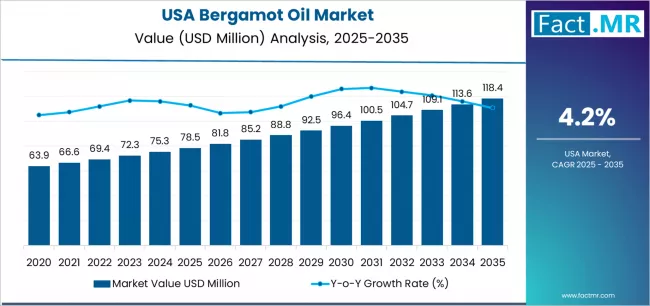
Usa Bergamot Oil Market Market Value Analysis | Source: Fact.MR
The market's expansion is being driven by its pivotal role in two major trends: the prioritization of mental and emotional well-being and the demand for clean, sophisticated scent experiences. In aromatherapy, bergamot is a cornerstone oil, revered for its purported anxiolytic and uplifting properties, making it a key ingredient in stress-relief blends, diffusers, and natural home fragrances.
The clean beauty movement has adopted bergamot oil as a natural fragrance component and a bioactive ingredient in skincare, valued for its potential antiseptic and clarifying qualities. This dual utility in both invisible (emotional) and visible (skin) wellness creates a robust and expanding demand base. The market is further sophisticated by the rise of artisanal and niche perfumery, where bergamot's complexity is prized as a top note, and by its regulated use as a flavor ingredient (FEMA GRAS 2153) in premium food and beverages.
The therapeutic/aromatic grade segment is projected to account for 72.8% of market demand by value in 2025. This dominance is directly tied to the oil's irreplaceable role in aromatherapy and natural fragrance. Its unique chemical composition, high in linalyl acetate and limonene, is associated with clinical aromatherapy applications for mood modulation and stress reduction.
This grade is the engine of the direct-to-consumer essential oil market and a critical raw material for makers of natural wellness products, from roll-ons and inhalers to candle and home spray brands. Demand is underpinned by consumer education on its specific emotional benefits, distinguishing it from generic citrus oils.
The online retail and direct-to-consumer (DTC) channel is expected to hold 51.5% of market demand in 2025. This channel's supremacy is logical given the nature of the product. Consumers seeking pure, authentic bergamot oil for therapeutic use require access to detailed information on chemotypes, extraction methods, and GC/MS test reports to verify purity and composition.
E-commerce platforms are uniquely suited to provide this transparency. Furthermore, the subscription model for essential oil users and the community-driven marketing of multi-level marketing (MLM) essential oil companies, which operate largely online, solidify this channel's lead. It is the primary discovery and purchase point for informed enthusiasts and practitioners.
From 2030 to 2035, demand is forecast to grow from USD 96.2 million to USD 118.4 million, adding USD 22.2 million. This period will be defined by several key evolutions. The integration of bergamot oil into clinical integrative health protocols for stress and anxiety management will gain traction, supported by more rigorous scientific studies.
The push for sustainability and supply chain transparency will intensify, with leading brands highlighting regenerative agricultural practices in Calabria, Italy. Technological adoption, such as smart diffusers with optimized bergamot-containing blends for specific times of day, will personalize aromatherapy. Finally, the convergence of skincare and aromacology will advance, leading to more sophisticated topical formulations featuring stabilized, skin-safe bergamot oil for its purported purifying and glow-enhancing benefits, moving beyond its role as a mere fragrance.
The USA bergamot oil industry is transitioning from a specialist ingredient to a mainstream wellness commodity. Its future growth is contingent upon the industry's ability to ensure consistent, high-quality supply from a geographically concentrated source, educate consumers on the critical differences between grades and chemotypes, and navigate regulatory expectations from the FDA (for flavoring and topical claims) and the FTC regarding marketing claims. Success will belong to brands that can authentically bridge the gap between ancient herbal tradition, modern scientific inquiry, and the contemporary consumer's desire for authentic, effective, and emotionally resonant natural products.
USA Bergamot Oil Industry Key Takeaways
| Metric | Value |
|---|---|
| USA Bergamot Oil Sales Value (2025) | USD 78.5 million |
| USA Bergamot Oil Forecast Value (2035) | USD 118.4 million |
| USA Bergamot Oil Forecast CAGR (2025-2035) | 4.2% |
Source: Fact.MR analysis. Updated Dec 4, 2025
Why is the USA Bergamot Oil Industry Growing?
The ascent of bergamot oil in the USA is a direct reflection of the profound consumer pivot towards managing holistic health, with a specific emphasis on emotional and psychological well-being. In an era characterized by widespread stress and digital fatigue, natural solutions that offer sensory respite and mood elevation are highly sought after. Bergamot oil fulfills this need not as a pharmaceutical intervention but as an accessible, ritualistic tool for self-regulation. Its growth is powered by the legitimization of aromatherapy within integrative health circles and the subsequent trickle-down of this validation into mainstream consumer awareness through wellness media, practitioner recommendations, and social proof. The oil is no longer an obscure apothecary item; it is a recognized agent for creating calming environments, enhancing focus, and promoting a sense of joy.
Beyond aromatherapy, the industry is growing due to bergamot oil's exceptional versatility and its alignment with the demand for clean, complex, and natural scent profiles. The fragrance industry's shift away from synthetic allergens and towards transparent, naturally derived ingredients has positioned bergamot as a valuable and distinctive component in fine fragrance, personal care, and home care products. Its simultaneous functionality in flavoring—imparting the characteristic note to Earl Grey tea and being used in craft sodas and gourmet foods—creates a stable, cross-category demand base. Furthermore, the investigative nature of the modern consumer plays a role. As individuals delve deeper into the specifics of essential oils, bergamot stands out for its unique chemistry and provenance, fostering a connoisseurship market that values authenticity, origin (particularly the protected designation of "Bergamotto di Reggio Calabria"), and specific extraction methods, driving premiumization within the category.
The regulatory and commercial landscape in the USA presents both structure and opportunity. For use in flavorings and fragrances, bergamot oil is well-established with clear safety guidelines (IFRA, FEMA). This provides a stable foundation for large-scale commercial use. The regulatory framework for therapeutic claims is more nuanced, falling under the purview of the FDA and FTC, which scrutinize disease claims but allow for structure/function claims when properly substantiated. This environment has spurred leading brands to invest in scientific research to better understand and communicate the oil's mechanisms of action. At the retail level, the proliferation of natural food stores, specialty wellness retailers, and curated online marketplaces has created dedicated channels that educate consumers and provide a trusted platform for high-integrity bergamot oil products, effectively bridging the gap between niche expertise and mainstream accessibility.
Segmental Analysis
The USA bergamot oil market is strategically segmented by product grade and distribution channel, a division crucial for understanding its distinct value chains and consumer engagement models. The grade segmentation reveals a fundamental bifurcation between oil used for its bioactive, aromatic properties and oil used primarily as a flavorant.
Therapeutic and aromatic grade bergamot oil is defined by its chemical profile, often marketed with details of its key constituents and its furocoumarin content, which determines its safety for topical use. This segment is driven by wellness trends, emotional benefit claims, and purity. The food grade segment is governed by different standards of purity and safety for consumption, finding its demand in the food and beverage industry, where it is a valued, albeit more commoditized, specialty ingredient.
The distribution channel segmentation highlights the two primary paths to the end user. The online and DTC channel is the domain of education, purity, and community, catering to the informed consumer who buys for specific therapeutic or crafting purposes. The brick-and-mortar channel, encompassing both mass-market and specialty retail, serves a broader audience seeking convenience, trusted brands, and finished products (like ready-made blends, candles, or skincare) that contain bergamot oil.
The dynamics, marketing strategies, and competitive sets within these channels are markedly different. An analysis of these segments provides a roadmap for how bergamot oil moves from its origins in Southern Italy to its final application in an American consumer's home, illuminating the key leverage points for market growth and brand dominance.
Why Does the Therapeutic/Aromatic Grade Segment Dominate the Market?
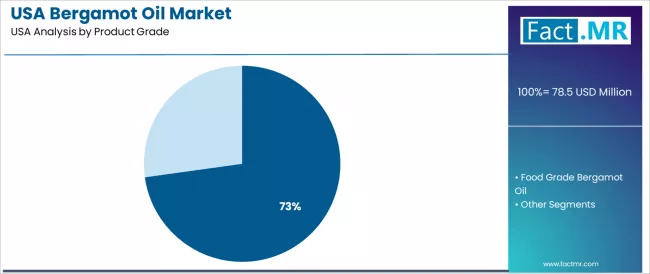
Usa Bergamot Oil Market Analysis By Product Grade | Source: Fact.MR
The therapeutic/aromatic grade segment, commanding a 72.8% share, is the core value driver and innovation center of the bergamot oil industry. Its dominance is rooted in the high margin potential and the powerful, emotionally charged benefits associated with its use. This segment caters directly to the wellness-oriented consumer who views essential oils as functional tools for health management, not merely as pleasant scents.
The marketing and education around this grade focus on its chemotype, its synergy with other oils (e.g., in blends for stress, energy, or purification), and its methods of application, diffusion, topical dilution, or inhalation. This creates a deeply engaged customer base that is willing to invest in purity and provenance, supporting a premium price architecture far exceeding that of food-grade oil.
This segment is also characterized by a high degree of innovation and product extension. Brands are not just selling bottles of pure oil; they are creating sophisticated pre-diluted roll-ons for targeted use, diffuser blends specifically formulated for sleep or focus, and incorporating bergamot into a wide range of finished wellness products like natural deodorants, cleaning sprays, and bath salts.
The growth of clinical aromatherapy in settings like hospices, counseling offices, and corporate wellness programs further legitimizes and drives demand for therapeutic-grade oil. Furthermore, the segment benefits from the influential network marketing model of companies like doTERRA and Young Living, which have built massive, education-focused distribution networks that specifically promote the therapeutic use of bergamot and other essential oils, creating a highly dedicated and repeat-purchasing consumer community.
The cultural narrative surrounding this segment is potent. Bergamot oil is consistently featured in wellness media as a natural remedy for anxiety and low mood. Its connection to the beloved Earl Grey tea also provides a familiar and comforting touchstone for new users. The push for transparency, with GC/MS reports, details on furocoumarin levels (FCF vs. regular), and sourcing stories from Calabria, adds layers of trust and value that consumers are willing to pay for. While the food grade segment provides steady, bulk demand, it is the therapeutic/aromatic grade's direct connection to personal well-being, its role in daily rituals, and its expansive product ecosystem that secures its dominant and highly profitable position in the market.
Why is the Online and DTC Channel the Primary Marketplace?
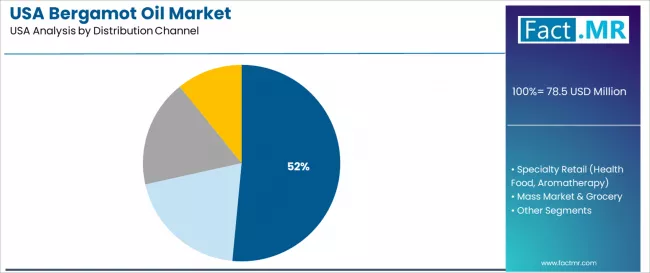
Usa Bergamot Oil Market Analysis By Distribution Channel | Source: Fact.MR
The online and direct-to-consumer channel, holding 51.5% of the market, is the essential conduit for the bergamot oil industry, particularly for the therapeutic grade. This channel's predominance is a direct function of the product's complexity and the consumer's need for detailed information prior to purchase. Choosing a bergamot oil involves understanding distinctions that are impossible to convey on a simple store shelf. Reputable online retailers provide extensive "Learn" sections, blog posts, USAge guides, and access to third-party test results that build the necessary confidence for a considered purchase of a pure, potent, and often expensive natural product.
The DTC model, especially as executed by MLM and independent artisan brands, builds a powerful commercial ecosystem around bergamot oil. It enables a direct educational relationship between the brand or its distributors and the consumer, often through webinars, social media lives, and detailed online literature.
This education drives USAge increases consumption and fosters brand loyalty. Subscription models for oil replenishment or monthly blend boxes are naturally facilitated online, creating predictable recurring revenue. For the artisanal segment, online marketplaces like Etsy or dedicated brand websites are the primary storefronts, allowing them to reach a national audience of niche buyers interested in unique, bergamot-infused creations that would never find space in physical retail.
The channel's synergy with digital content creation is a major growth accelerator. Platforms like Pinterest and Instagram showcase beautiful diffuser setups and blend recipes, while YouTube and TikTok host countless tutorials on using bergamot oil for everything from homemade cleaning products to skincare serums.
This user-generated and influencer-driven content funnels curiosity directly into online searches and purchases. While mass-market brands with bergamot-containing products (e.g., a bergamot-scented lotion from a major brand) thrive in physical stores, the heart of the pure oil market, where education, community, and authenticity are paramount, resides online. This channel's dominance is expected to persist as the primary engine for consumer education, brand building, and the sale of high-margin, pure bergamot oil products.
What are the Drivers, Restraints and Key Trends Influencing Bergamot Oil Demand in USA?
The trajectory of the USA bergamot oil market is shaped by a confluence of powerful social trends, intrinsic product limitations, and emerging technological and scientific developments. The primary drivers are deeply embedded in the contemporary pursuit of mental wellness and sensory satisfaction, pulling the market into mainstream consciousness. However, this growth is tempered by significant restraints rooted in agricultural reality, regulatory complexity, and market education challenges that can hinder widespread adoption and create quality inconsistencies. Navigating this landscape requires a clear-eyed view of both the uplifting forces and the grounding constraints.
Looking forward, the market is being redefined by a set of transformative trends that signal its maturation and future direction. These trends move beyond basic diffusion and topical use towards integration with technology, advanced scientific validation, and a heightened focus on ethical and sustainable production. The following analysis delineates the specific demand catalysts, the substantive barriers to unfettered growth, and the innovative currents that will dictate competitive advantage and shape consumer expectations in the bergamot oil sector through the next decade.
Driver: The Mainstreaming of Aromatherapy for Mental and Emotional Well-being The single most powerful driver for bergamot oil is the cultural normalization of aromatherapy as a legitimate tool for managing stress, anxiety, and mood. Once considered alternative, the use of scent to influence psychological state is now supported by a growing body of research and embraced within integrative medicine. Bergamot, with its evidence-based reputation for reducing cortisol levels and promoting feelings of joy, sits at the forefront of this movement. This driver is amplified by a societal increase in stress-related conditions and a consumer preference for proactive, non-pharmacological coping mechanisms. The oil is now commonly recommended by therapists, featured in corporate wellness programs, and integrated into daily routines by millions seeking a natural emotional lift, creating sustained, routine-driven demand.
Driver: Demand for Natural, Complex, and Clean Fragrance Profiles The clean beauty and conscious consumer movements have triggered a significant shift in fragrance preferences, away from synthetic blends and towards natural, transparently sourced aromas. Bergamot oil is a perfumer's treasure, offering a sophisticated, multi-layered citrus note that is difficult to replicate synthetically. This driver fuels its use in high-end natural perfumes, artisanal candles, luxury home care products, and personal care items where scent is a key differentiator. Consumers are actively seeking products with bergamot listed as a natural essential oil, associating it with quality, authenticity, and a more nuanced sensory experience than artificial "bergamot fragrance." This demand spans multiple consumer goods categories, significantly widening the oil's application and market reach beyond the core wellness audience.
Restraint: Geographically Constrained and Climate-Sensitive Supply Bergamot oil production is extraordinarily concentrated, with over 90% of the world's supply originating from a narrow coastal region in Calabria, Southern Italy. This creates inherent vulnerabilities. The crop is sensitive to specific climatic conditions and is vulnerable to disease, poor harvests, and the impacts of climate change, leading to supply volatility and price fluctuations. Furthermore, the labor-intensive harvesting and processing limit rapid scalability to meet surging global demand. This supply chain bottleneck creates a ceiling on market growth, incentivizes adulteration with cheaper citrus oils, and places constant upward pressure on prices for authentic oil, potentially restricting it to a premium market segment and stifling broader adoption.
Restraint: Regulatory Ambiguity and Consumer Misinformation The regulatory environment for bergamot oil, particularly regarding therapeutic claims, is complex and a source of significant restraint. The FDA and FTC strictly prohibit disease claims (e.g., "treats anxiety or depression"), forcing marketers to use carefully nuanced language about "promoting feelings of calm" or "uplifting mood." This fine line leads to consumer confusion and constrains how benefits can be communicated. Simultaneously, the market is rife with misinformation regarding USAge, safety (especially concerning phototoxicity from non-FCF oil), and purity. This "education gap" can lead to unsafe practices, disappointing user experiences, and eroded trust in the category. Brands must invest heavily in compliant education, which adds cost and complexity to market penetration.
Key Trend: The Integration of Essential Oils with Smart Technology and Personalized Wellness The frontier of the market lies in the convergence of bergamot oil with digital health and smart home technology. The trend involves smart diffusers and wearable devices that sync with apps to deliver personalized aromatherapy protocols. Imagine a system that uses biometric data (heart rate variability from a wearable) to trigger a diffuser to release a bergamot-infused blend when stress is detected, or an app that curates custom diffuser recipes based on time of day and user-reported mood. This trend moves bergamot oil from a manually administered remedy to an integrated, data-informed component of a personalized wellness ecosystem, enhancing perceived efficacy and convenience and opening new subscription-based service models.
Scientific Advancement and Standardization for Clinical Integration
The industry is moving towards greater scientific rigor to solidify bergamot oil's place in integrative health. The trend involves funding and conducting more robust clinical trials to quantify its effects on physiological markers of stress, sleep quality, and cognitive performance. Concurrently, there is a push for higher industry-wide standardization—defining specific chemotypes, ensuring consistent levels of key active constituents, and guaranteeing the absence of contaminants. This scientific validation and standardization will empower healthcare professionals to recommend specific, reliable bergamot oil products with greater confidence, bridging the gap between traditional aromatherapy and evidence-based practice, and creating a powerful new B2B channel within the healthcare sector.
Analysis of USA Bergamot Oil Industry by Key Regions
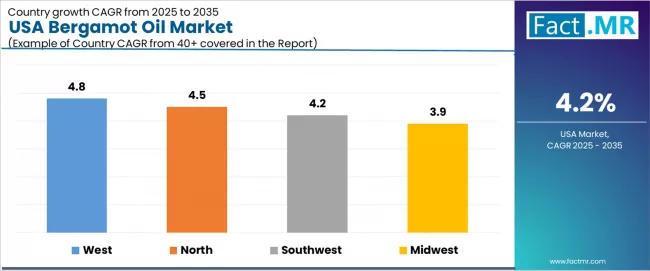
Usa Bergamot Oil Market Cagr Analysis By Country | Source: Fact.MR
| Region | CAGR (2025-2035) |
|---|---|
| West | 4.8% |
| North | 4.5% |
| Southwest | 4.2% |
| Midwest | 3.9% |
Source: Fact.MR analysis. Updated Dec 4, 2025
The demand for bergamot oil in USA manifests through distinct regional lenses, influenced by local wellness cultures, demographic profiles, climate, and retail ecosystems. A monolithic national strategy fails to account for why a consumer in Portland seeks bergamot for mood support, while a consumer in Dallas might value it in a natural cleaning product, and a consumer in New York may purchase it as part of a niche fragrance. Regional analysis is therefore a critical commercial tool, enabling precise targeting of marketing messages, product formulations, and retail partnerships. It reveals the underlying cultural currents that transform a global commodity into a locally relevant solution.
This analysis examines the four primary regions, detailing the unique demand drivers in each. The West Coast, as the cradle of the wellness movement, sets the trends and demands the highest purity for therapeutic use. The Northeast, with its fast-paced, high-stress urban centers, drives demand for clinically adjacent stress relief solutions. The Southwest, with its focus on natural living and active lifestyles, adopts bergamot for home and body care. The Midwest, pragmatic and value-driven, embraces bergamot through trusted mass-market brands and familiar applications. Understanding these regional narratives is essential for any brand aiming to build a meaningful and sustained national presence in the bergamot oil market.
What Strategic Advantages Position the West as the Leading Growth Region?
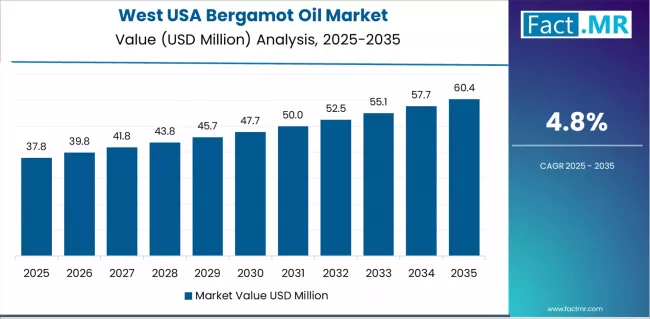
Usa Bergamot Oil Market Country Value Analysis | Source: Fact.MR
The West, with a leading CAGR of 4.8%, is the ideological and commercial epicenter of the USA bergamot oil market. This region's culture is synonymous with holistic health, alternative therapies, and environmental consciousness, creating a perfectly receptive audience. Consumers in states like California, Oregon, Colorado, and Washington are early adopters of integrative health trends and possess a high degree of essential oil literacy. They are not just buying a scent; they are investing in a bioactive tool for emotional balance. This drives demand for the highest therapeutic-grade oils, with a strong emphasis on organic certification, FCF (Furocoumarin-Free) status for topical use, and transparent sourcing directly from Calabrian cooperatives.
The retail and community landscape in the West is uniquely supportive. It hosts a dense network of upscale natural grocery chains (e.g., Whole Foods, Erewhon), specialty aromatherapy shops, wellness studios, and practitioner offices where bergamot oil is both sold and recommended. The region is also a hub for the direct sales/MLM essential oil companies, whose consultant networks are particularly active. Furthermore, the West's leadership in the clean beauty and natural fragrance movements means bergamot is a sought-after ingredient in locally made artisanal perfumes, candles, and skincare lines. Marketing that resonates here focuses on the oil's synergy with mindfulness practices, its role in sustainable self-care, and its scientific backing, all communicated through aesthetically refined, authentic branding.
How does the North's Urban Stress Culture Shape its High-Value Market?
The North, growing at a CAGR of 4.5%, represents a high-value, performance-oriented market deeply influenced by urban stress and a culture of achievement. In major metropolitan hubs like New York, Boston, and Chicago, consumers face high-pressure lifestyles and seek efficient, effective solutions for mental clarity and stress resilience. Bergamot oil is positioned here as a sophisticated, non-disruptive tool for focus and calm, used in diffusers in home offices, applied as a discreet pulse point oil during the workday, or integrated into evening wind-down routines. The demand is for efficacy and convenience, favoring pre-diluted roll-ons, high-quality diffuser blends, and products from brands with a clinical or apothecary aesthetic.
The retail environment is a mix of prestige channels and accessible wellness. High-end department stores and niche apothecaries carry luxury aromatherapy brands featuring bergamot, while natural food stores and bookstores with wellness sections cater to a broader professional demographic.
The North is also a center for functional medicine and integrative psychiatry, where bergamot oil may be suggested as part of a broader therapeutic protocol, lending immense credibility. Successful branding in the North blends the natural with the scientific: clean, minimalist packaging coupled with references to studies, neurotransmitter support (e.g., "promotes GABAergic activity"), and messaging that speaks to productivity, mental fatigue, and urban detoxification.
How do Lifestyle and Home-Focus Propel the Southwest Market?
The Southwest is forecast to grow at a CAGR of 4.2%, driven by a lifestyle that blends active outdoors living with a strong focus on home, family, and natural solutions. The warm, dry climate supports a culture of open windows and outdoor living, where fresh, uplifting scents like bergamot are highly valued for home diffusion and natural cleaning.
Consumers here are drawn to bergamot for its dual role in creating an inviting, positive home atmosphere and its use in DIY natural products, from surface cleaners and linen sprays to post-sun skin coolants. The oil's cheerful, bright aroma aligns with the region's generally sunny disposition.
Demographically, the Southwest has a significant and growing population with an interest in holistic living and a distrust of synthetic chemicals, which aligns perfectly with pure essential oil use. Retail is bifurcated between large-scale natural grocery chains that serve this community and mass-market retailers where consumers purchase bergamot-scented home care brands.
Marketing that performs well in the Southwest emphasizes practical, multi-surface use, family-safe formulations, the oil's natural antimicrobial properties for cleaning, and its ability to evoke a sense of freshness and vitality. It is less about clinical stress relief and more about enhancing daily living through natural, effective scent and function.
What Factors Underpin the Steady, Trust-Driven Market in the Midwest?
The Midwest demonstrates steady growth at a CAGR of 3.9%, representing the reliable, volume-driven core of the national market. Consumers here are pragmatic, brand-loyal, and value-conscious. Trust is paramount and is often vested in large, familiar brands found in mainstream retail channels like Target, Walmart, and major grocery store chains.
Purchases of bergamot oil are often for specific, understandable purposes: a favorite bergamot-scented candle from a trusted home brand, a stress-relief blend from a well-known essential oil company at a big-box store, or as an ingredient in a recognized natural cleaning product. The emphasis is on tangible results, fair value, and the reassurance of a known brand name.
While adoption of the most nuanced therapeutic applications may be slower, there is strong and growing appreciation for the mood-enhancing and practical benefits of essential oils. Midwestern consumers are often introduced to bergamot through these trusted mass-market products before potentially exploring purer forms.
They respond positively to clear, benefit-oriented messaging: "Uplift Your Mood," "Refresh Your Home," "Natural Clean." The channel strategy for reaching the Midwest is fundamentally different than for the West; it relies on securing prime placement in mass merchandisers, club stores (Costco, Sam's Club), and major pharmacy chains with strong private-label programs. Success here is built on consistent quality, competitive pricing, and straightforward communication that demystifies bergamot oil and integrates it into the rhythms of everyday Midwestern life.
Competitive Landscape and Recommendations for Market Players
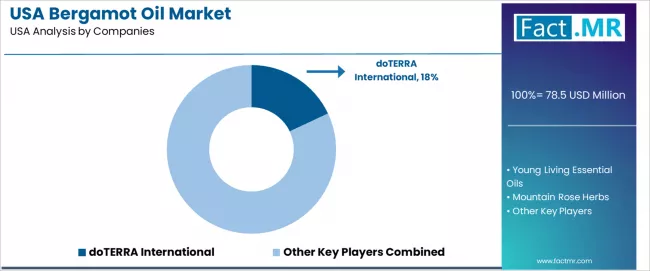
Usa Bergamot Oil Market Analysis By Company | Source: Fact.MR
The USA bergamot oil industry features a multi-tiered competitive landscape, segmented by business model, brand positioning, and end-use focus. At one end,Multi-Level Marketing (MLM) giants like doTERRA and Young Livingdominate the mindshare and market share for therapeutic-grade oils. They compete through vast, education-focused distributor networks that create deep community ties, comprehensive product ecosystems, and a powerful narrative of sourcing purity and social impact.
Their model generates immense loyalty and recurring revenue but operates within a specific, community-oriented segment of the market. Directly competing in the pure oil space arevertically integrated specialty retailers like Mountain Rose Herbs and Plant Therapy, which appeal to a more DIY, craft-oriented, and sometimes skeptical consumer. They compete on rigorous third-party testing, ethical sourcing, affordability compared to MLMs, and a commitment to education without a sales force incentive.
Thelarge-scale essential oil brokers and flavor & fragrance (F&F) houses such as Givaudan, Robertet, and Citromax operate in a different sphere, focusing on the B2B supply of food-grade and aromatic-grade bergamot oil as a raw material. They compete on scale, consistent quality, technical support for clients, and sustainable supply chain management.
Their customers are major CPG brands in food, beverage, personal care, and home fragrance. This segment is highly price- and relationship-sensitive. Finally, the market includescountless small-batch artisans and indie brandsthat use bergamot oil as a key ingredient in niche perfumes, candles, and small-batch skincare. They compete on uniqueness of formulation, brand storytelling, and superior sensory aesthetics, often selling via DTC websites and curated marketplaces.
A significant competitive dynamic is the persistent threat ofadulterationwith cheaper citrus oils (like lime or bitter orange), which commoditizes the lower end of the market and damages the category's reputation for authenticity. This creates a shared challenge for legitimate players to educate the market.
Competition is intensifying fromsynthetic aroma chemicals and nature-identical isolatesthat can approximate bergamot's scent at a fraction of the cost for large-scale fragrance applications, putting pressure on the commoditized end of the F&F segment. The future competitive arena will reward players who can demonstrably guarantee authenticity, leverage science for specific claims, and integrate seamlessly into the digital and personalized wellness ecosystem.
Recommendations for Market Players
- Champion Radical Supply Chain Transparency and Origin Protection: To combat adulteration and build undeniable trust, leaders must go beyond "100% Pure" labels. Invest in full traceability back to the individual orchard or cooperative in Calabria. Pursue and promote the PDO (Protected Designation of Origin) "Bergamotto di Reggio Calabria" certification as a gold standard. Implement batch-specific QR codes linking to digital profiles showing harvest dates, photos, and GC/MS certificates. For B2B players, this provides a critical quality guarantee to clients. For consumer brands, it transforms a bottle of oil into a story and a verifiable asset, justifying premium pricing and fostering brand loyalty in an opaque market.
- Develop and Market Standardized, Bioactive Formulations for Specific Use Cases: Move beyond selling generic bergamot oil to developing and clinically testing finished formulations for targeted outcomes. Partner with research institutions to validate the effects of a specific diffuser blend (e.g., "Study-Proven Focus Blend with Bergamot") or a topical roll-on ("Anxiety Support Roller with Bergamot FCF and L-Theanine"). Standardize the active constituent profile in these products to ensure batch-to-batch efficacy. This approach shifts competition from price-per-milliliter of oil to the value of a proven solution, opens doors for recommendations by health professionals, and creates defensible intellectual property through proprietary, validated blends.
- Forge Strategic Alliances with Digital Health and Smart Home Platforms: Proactively integrate bergamot oil into the growing personalized wellness tech landscape. Form partnerships with leading smart diffuser companies (e.g., Pura, Vitruvi) to create exclusive, optimized bergamot-containing scent cartridges or subscription profiles. Collaborate with mental wellness and sleep apps to offer branded, physical aromatherapy kits (including bergamot oil) that complement digital programs. Explore integration with wearable ecosystems that could trigger scent release based on biometrics. This positions bergamot not as a standalone product but as a key component in a modern, tech-enabled wellness routine, accessing new customer bases and recurring revenue models.
- Lead in Sustainability and Regenerative Agriculture in Calabria: Address the long-term vulnerability of the supply chain by investing in the resilience of its source. Launch or fund regenerative agricultural programs with partner farms in Calabria, focusing on soil health, water management, and biodiversity to mitigate climate risk and improve yield quality. Calculate and communicate the carbon and water footprint of your oil, with commitments to reduction. This "beyond fair trade" initiative future-proofs supply, appeals powerfully to the environmentally conscious consumer (especially in the West and North), and provides a compelling narrative of true stewardship, differentiating the brand in a crowded market focused only on the product.
- Implement Tiered Educational Content Strategy for B2B and B2C Channels: Bridge the consumer education gap with a sophisticated, channel-specific content strategy. For B2B clients (formulators, brands), provide deep technical dossiers, stability data, and innovation workshops on using bergamot oil in new product categories. For B2C end-users, create clear, accessible content that distinguishes FCF from regular oil, demonstrates safe topical dilution, and suggests simple, effective routines. Utilize a mix of long-form blogs (for SEO and detail), short-form video (for demonstrations), and interactive tools (like a blend calculator). An educated market is a growing, loyal, and less skeptical market; by becoming the authoritative educational voice, a brand can organically become the supplier of choice.
Key Players in USA Bergamot Oil Industry
- doTERRA International
- Young Living Essential Oils
- Mountain Rose Herbs
- Plant Therapy Essential Oils
- NOW Foods
- Aura Cacia (Frontier Co-op)
- Givaudan SA
- Robertet SA
- Citromax S.A.C.I.
- Symrise AG
- Bontoux S.A.S.
- Lionel Hitchen (Essential Oils) Ltd.
- Florihana Distillerie
- Edens Garden
Segmentation
Scope of the Report
| Item | Value / Coverage |
|---|---|
| Quantitative Units | Revenue in USD Million |
| Market Valuation (2025) | USD 78.5 Million |
| Market Valuation (2035) | USD 118.4 Million |
| Forecast Period | 2025 - 2035 |
| Product Grade Segmentation | Therapeutic/Aromatic Grade, Food Grade |
| Distribution Channel Segmentation | Online Retail & DTC, Specialty Retail, Mass Market & Grocery, B2B/Industrial |
| Regions Covered | West, Southwest, North, Midwest |
| Key Companies Profiled | doTERRA, Young Living, Mountain Rose Herbs, Plant Therapy, NOW Foods, Givaudan, Robertet |
| Additional Attributes | Analysis by product grade and distribution channel; regional growth dynamics; competitive landscape analysis; impact of aromatherapy and clean fragrance trends; supply chain and adulteration risk assessment. |
Source: Fact.MR analysis. Updated Dec 4, 2025
USA Bergamot Oil Industry by Segments
-
Product Grade :
- Therapeutic/Aromatic Grade Bergamot Oil
- Food Grade Bergamot Oil
-
Distribution Channel :
- Online Retail & Direct-to-Consumer
- Specialty Retail (Health Food, Aromatherapy)
- Mass Market & Grocery
- B2B/Industrial (Flavor & Fragrance)
-
Region :
- West
- Southwest
- North
- Midwest
Frequently Asked Questions
How big is the demand for bergamot oil in USA in 2025?
What will be the size of bergamot oil in USA in 2035?
How much will be the demand for bergamot oil in USA growth between 2025 and 2035?
What are the key product types in the bergamot oil in USA?
Which distribution channel segment is expected to contribute significant share in the bergamot oil in USA in 2025?
Who worked on this report


Preview the report firsthand - request a free sample
Free SampleGet the brochure for pricing and purchase details
Download PDF