- Base Value(2025): 32.5 Mn
- Estimated Value(2025): 32.5 Mn
- Forecast Value (2035): 45.8 Mn
- CAGR (2025 - 2035): 3.5%
Demand for Clover Leaf Oil in USA 2025 to 2035
Demand for clover leaf oil in the USA is projected to grow from USD 32.50 million in 2025 to approximately USD 45.80 million by 2035, recording an absolute increase of USD 13.30 million over the forecast period. This translates into a total growth of 40.92%, with demand forecast to expand at a compound annual growth rate (CAGR) of 3.50% between 2025 and 2035.
Quick Stats for USA Clover Leaf Oil Sector
- USA Clover Leaf Oil Sales Value (2025): USD 32.50 million
- USA Clover Leaf Oil Forecast Value (2035): USD 45.80 million
- USA Clover Leaf Oil Forecast CAGR: 3.50%
- Leading Source Type in USA Clover Leaf Oil Sector: Trifolium pratense (Red Clover)
- Key Growth Regions in USA Clover Leaf Oil Sector: West, Northeast, Midwest, South
- Regional Leadership: West holds the leading position in demand
- Key USA Contributors in Clover Leaf Oil Sector: Mountain Rose Herbs, Herb Pharm LLC, Gaia Herbs, Aromatics International, Plant Therapy Essential Oils
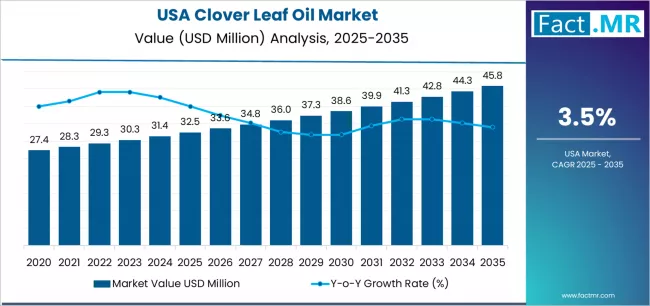
Usa Clover Leaf Oil Market Market Value Analysis | Source: Fact.MR
The overall demand size is expected to grow significantly during this period, supported by rising consumer interest in herbal wellness and phytotherapy, expanding applications in natural fragrance and flavoring, growing investment in sustainable botanical extraction, and increasing utilization in therapeutic topical formulations and artisanal products throughout the USA.
The Trifolium pratense (Red Clover) segment is projected to account for a dominant share of clover leaf oil demand in 2025. Red clover oil applications are increasingly recognized in the USA for herbal supplement formulations, skincare product development, and aromatherapeutic applications where its unique phytochemical profile, established wellness associations, and natural origin remain essential for holistic product development and consumer trust.
The herbal wellness & supplements segment is expected to represent the largest share of clover leaf oil demand in 2025. Herbal supplement applications are fundamental to the clover leaf oil sector because they provide the plant-based bioactive constituents, traditional use pedigree, and wellness alignment required for nutraceutical product development and formulation applications meeting demand for natural support solutions.
Between 2020 and 2025, clover leaf oil demand in the USA experienced notable expansion, driven by increasing consumer exploration of alternative herbal ingredients and growing recognition of botanicals for holistic health support. The sector developed as wellness brands and naturopathic formulators, especially in major consumer centers, recognized the need for reliable plant-derived actives and effective herbal solutions to achieve product differentiation while meeting growing standards for authenticity and sustainable sourcing. Nutraceutical companies and personal care manufacturers began emphasizing ingredient traceability and traditional wisdom to maintain brand integrity and consumer relevance.
Between 2025 and 2030, demand for clover leaf oil in the USA is projected to expand from USD 32.50 million to USD 38.90 million, resulting in a value increase of USD 6.40 million. This phase of growth will be shaped by accelerating development of herbal lifestyle product campaigns, rising investment in low-impact extraction technology, and growing ingredient requirements for sophisticated botanical blends across USA, particularly in areas where consumer demand for integrative health and clean labeling is accelerating clover leaf oil adoption. Increasing integration of clinically studied botanicals in supplement applications and growing adoption of synergy-focused herbal protocols continue to drive demand.
Wellness brands and product development companies are expanding their phytochemical expertise to address the growing sophistication of modern consumer health preferences and regulatory landscapes, with operations leading investments in ethical wildcrafting methods and constituent standardization systems.
From 2030 to 2035, demand is forecast to grow from USD 38.90 million to USD 45.80 million, adding another USD 6.90 million. This period is expected to be characterized by expansion of premium aromatherapeutic applications, development of enhanced delivery systems for topical use, and implementation of comprehensive regenerative agriculture programs across different consumer and therapeutic sectors. The growing adoption of advanced lipid-based extraction technologies and enhanced stability platforms, particularly in major wellness centers and manufacturing operations, will drive demand for more sophisticated and bioavailable herbal solutions.
USA Clover Leaf Oil Sector Key Takeaways
| Metric | Value |
|---|---|
| USA Clover Leaf Oil Sales Value (2025) | USD 32.50 million |
| USA Clover Leaf Oil Forecast Value (2035) | USD 45.80 million |
| USA Clover Leaf Oil Forecast CAGR (2025-2035) | 3.50% |
Source: Fact.MR analysis. Updated Dec 10, 2025
Why is the USA Clover Leaf Oil Sector Growing?
The USA clover leaf oil sector is experiencing consistent growth, primarily fueled by a powerful expansion in the broader herbalism and integrative wellness infrastructure. A significant surge in demand for both traditional herbal solutions and scientifically validated botanical extracts has created a larger base of wellness brands, clinical formulators, and sourcing specialists requiring reliable clover leaf oil ingredients. Furthermore, changing consumer health patterns mandate the use of gentle, plant-based solutions for holistic support. This wellness-driven demand establishes a consistent, evidence-informed foundation.
As new practitioners and brands enter the natural health segment and existing formulation practices deepen, the need for high-quality and authentically sourced clover leaf oil forms a stable foundation for the sector's expansion, ensuring a continuous stream of demand driven by therapeutic interest and brand authenticity.
Innovation in extraction methodology and clinical application serves as a key secondary engine for this growth. Modern clover leaf oil products are no longer just simple herbal infusions; they are advanced botanical concentrates. The rapid adoption of specialized supercritical CO2 and cold-enriched extraction technologies for preserving delicate volatile compounds has become a major quality differentiator, significantly enhancing therapeutic potential and practitioner confidence.
Beyond traditional internal use, manufacturers are integrating advanced topical delivery systems for seamless incorporation into serums, creams, and therapeutic compresses, enhancing bioavailability for various wellness protocols. These features, coupled with improvements in phytochemical standardization, batch-to-batch consistency, and contaminant testing, are compelling both supplement brands and therapeutic product formulators to upgrade from basic herb supplies, driving a cycle of product sophistication and clinical validation.
The sector is benefiting from evolving healthcare dynamics and a heightened focus on preventative and complementary approaches. An increasing emphasis on metabolic and dermatological wellness, particularly exploration of botanicals for holistic support, is pushing demand for higher quality, more comprehensively tested ingredient varieties. The segment has also expanded beyond traditional supplement channels, with growing interest from the natural skincare industry, functional beverage sector, and even animal wellness.
This diversification, combined with the rise of practitioner-direct and online educational platforms that improve ingredient literacy, ensures that suppliers can engage a more knowledgeable audience than ever before. This confluence of preventative health demand, extraction innovation, and educational accessibility creates fertile ground for continued sector expansion.
Segmental Analysis
The sector is segmented by source type, application, and region. By source type, the sector is divided into Trifolium pratense (Red Clover) and Trifolium repens (White Clover). In terms of application, the sector is segmented into herbal wellness & supplements, natural skincare & topicals, and aromatherapy & fragrances. Regionally, the sector is divided into West, Northeast, Midwest, and South.
Which Botanical Source Commands Primary Demand in the Sector?
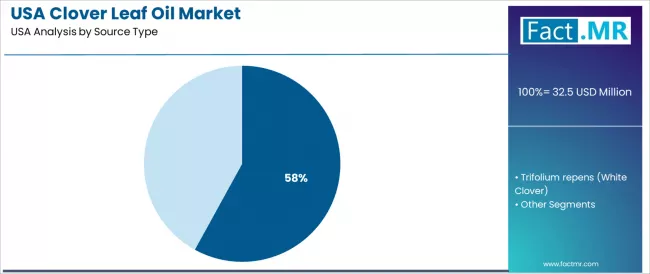
Usa Clover Leaf Oil Market Analysis By Source Type | Source: Fact.MR
The trifolium pratense segment is projected to account for 58.0% of clover leaf oil demand in 2025, establishing a clear majority. This dominance is directly linked to its deeply established history in traditional Western herbalism and a more robust body of modern phytochemical research focusing on its distinctive profile of isoflavones, coumarins, and other phenolic compounds.
Red clover is consistently associated with specific wellness applications that drive consumer and practitioner search patterns, creating a strong pull-through demand from the supplement and therapeutic product development community. Its familiar name and recognition as a supportive herb provide a significant marketing advantage over other clover varieties.
In the USA, the herbal product formulation landscape has developed specific monograph references and USAge guidelines for red clover, particularly from organizations like the American Herbal Pharmacopoeia. This creates a formalized framework for its inclusion in products, reducing regulatory ambiguity for brands.
Its cultivation for herbal use is also more established, with dedicated organic farms in the Pacific Northwest and Appalachia fostering a more reliable and traceable domestic supply chain for conscious brands. This domestic availability mitigates supply chain risk and supports marketing claims centered on local sourcing and sustainable agriculture.
Continuous research into the specific bioactive constituents of Trifolium pratense, such as biochanin A and formononetin, further entrenches its scientific relevance. This research supports the development of standardized extracts with consistent potency, which is a critical requirement for reputable supplement manufacturers.
Investment in sustainable wild harvesting and cultivation practices specifically for red clover ensures the preservation of its chemical integrity, addressing concerns about adulteration and potency variation that can plague lesser-known botanicals. This combination of traditional authority, scientific interest, and a maturing ethical supply chain solidifies its position as the sector's cornerstone ingredient.
What Application Serves as the Principal Driver of Sector Volume?
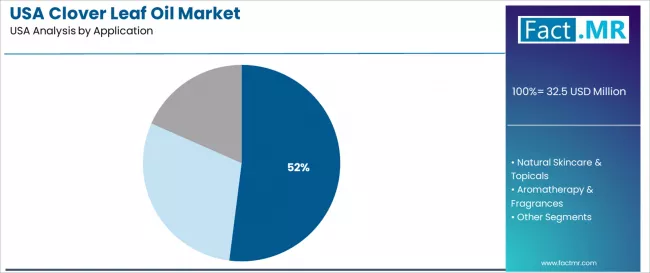
Usa Clover Leaf Oil Market Analysis By Application | Source: Fact.MR
Herbal wellness and supplement applications are expected to represent 52.0% of clover leaf oil demand in 2025, forming the dominant application segment. This central role reflects a profound consumer and practitioner shift towards gentle, plant-centric approaches for maintaining balance and supporting various bodily systems. Demand is bifurcated between mass-market herbal supplements found in mainstream retail and more specialized, high-potency liquid extracts and glycerites favored by herbalists and sold through professional channels. The oil itself is often incorporated into softgel capsules or used as a carrier for other lipophilic herbal extracts, leveraging its mild flavor and nutrient profile.
The driving force behind this segment is the convergence of traditional wisdom and contemporary wellness trends. Clover leaf oil, particularly from Red Clover, is sought for its historical use and its alignment with current interests in natural support for women's wellness, dermatological health, and seasonal respiratory comfort. Its gentle nature makes it suitable for long-term use, which aligns with preventative health models. Brands are increasingly combining clover leaf oil with other synergistic herbs like calendula or burdock root, creating complex formulas that address multifaceted wellness goals and provide a point of differentiation in a crowded marketplace.
Growth in this application is further fueled by the educational efforts of practicing herbalists, naturopaths, and wellness influencers who integrate clover into their recommendations. This professional endorsement builds credibility and drives informed consumer demand. The regulatory environment for dietary supplements under DSHEA provides a clear, if complex, pathway to market for finished products containing clover leaf oil. Furthermore, the increasing availability of third-party certified organic and ethically wildcrafted clover leaf oil allows brands to make strong marketing claims about purity and sustainability, which are critical purchase factors for the core demographic of wellness-oriented consumers.
What are the Drivers, Restraints, and Key Trends in the USA Clover Leaf Oil Sector?
The demand for clover leaf oil in the USA is advancing steadily due to increasing interest in gentle phytotherapy and growing recognition of botanicals for holistic health protocols, with the West region serving as a key driver of innovation and herbal lifestyle consciousness.
The sector faces challenges including agricultural scalability for specialized cultivation, extraction yield complexity, and ongoing concerns regarding definitive clinical substantiation for traditional claims and nuanced regulatory guidance for novel delivery formats.
Expansion in Integrative Health Protocols and Botanical Standardization Programs
The enhancement of herbal formulation standards, gaining particular significance through practitioner education and consumer awareness campaigns, is enabling clover leaf oil providers to achieve product integrity without prohibitive production costs, providing predictable demand patterns through therapeutic preferences and brand authenticity requirements.
Enhanced quality standards offering substantial opportunities for standardized clover leaf oil systems and integrated applications provide foundational dynamics while allowing providers to secure long-term contracts with reputable wellness brands and clinical partnerships.
Deployment of Advanced Phytochemical Preservation and Precision Delivery Systems
Modern clover leaf oil providers and wellness brands are establishing advanced agricultural partnerships and dedicated analytical facilities that improve ingredient integrity through rigorous constituent fingerprinting and stability testing. Integration of gentle extraction systems, precision encapsulation technology, and coordinated purity verification enables more reliable production outcomes across multiple product categories, from tinctures to topical serums.
Development of Regenerative Sourcing Models and Clinical Collaboration Initiatives
The expansion of farm-to-bottle transparency initiatives and clinical research partnerships is driving development of specialized clover leaf oil systems with enhanced terroir profiles, improved bioactive consistency, and optimized therapeutic attributes that address current limitations and expand applications into more targeted wellness niches.
These specialized systems require sophisticated agronomic capabilities and analytical expertise that exceed traditional wholesale herb requirements, creating specialized demand segments with differentiated clinical propositions. Producers are investing in cultivation science and practitioner education to serve emerging clinical applications while supporting innovation in bioavailability and synergistic formulation.
Analysis of USA Clover Leaf Oil Demand by Key Regions
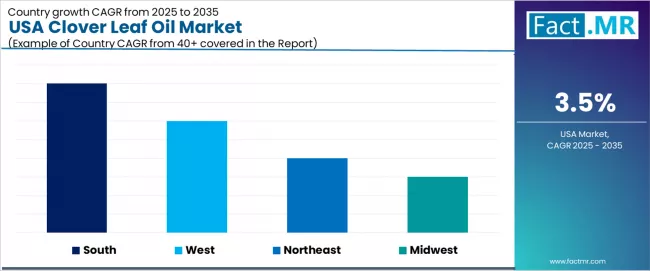
Usa Clover Leaf Oil Market Cagr Analysis By Country | Source: Fact.MR
| Region | CAGR (2025-2035) |
|---|---|
| South | 3.10% |
| West | 2.90% |
| Northeast | 2.70% |
| Midwest | 2.60% |
Source: Fact.MR analysis. Updated Dec 10, 2025
Why Does the South Region Lead in Citronella Oil Consumption?
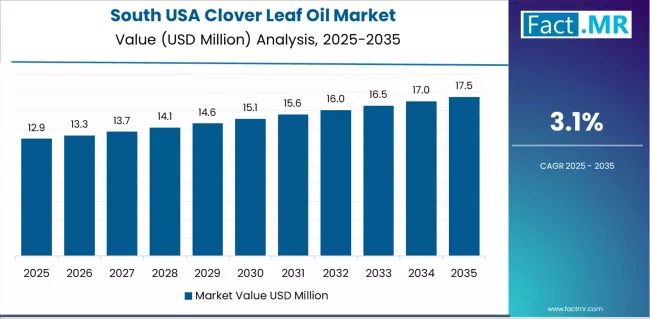
Usa Clover Leaf Oil Market Country Value Analysis | Source: Fact.MR
Demand for citronella oil in the South is projected to exhibit the nation's strongest growth with a CAGR of 3.10 percent through 2035. This leadership is fundamentally tied to climatological factors that create an extended and intense mosquito season across states like Florida, Texas, Georgia, and Louisiana. The protracted warm and humid conditions effectively create a year-round market for insect repellent solutions, establishing a consistently high baseline demand that other regions cannot match. This environmental driver is compounded by a deeply ingrained outdoor lifestyle, where activities from evening social gatherings on patios to fishing, hunting, and golfing are central to the regional culture.
The commercial infrastructure within the South is uniquely adapted to serve this demand. A high concentration of distribution centers for major retailers and specialty outdoor brands ensures product availability. Furthermore, the region hosts several key manufacturing facilities for consumer insecticide and outdoor living products, creating local demand for bulk citronella oil as a raw material. The presence of major ports, such as Houston and Miami, facilitates direct and cost-effective importation of raw citronella oil, providing a logistical advantage for processors and brands operating in the region.
Consumer awareness and proactive USAge are particularly high in the South. Public health messaging regarding mosquito-borne illnesses has made repellent use a common preventive health practice. This awareness, combined with the high nuisance factor of insects, means consumers are more knowledgeable and less price-sensitive about effective repellent options, including premium natural formulations featuring citronella oil. The region also sees significant demand from the hospitality and tourism sectors, where citronella-based solutions are used in outdoor dining areas, resorts, and parks to enhance guest comfort.
What Factors Underpin Steady Demand in the West Region?
Demand for citronella oil in the West is projected to grow with a CAGR of 2.90 percent through 2035, underpinned by a powerful consumer ethos centered on wellness, sustainability, and natural living. States like California, Oregon, and Washington are hotbeds for the organic and natural products movement, creating a receptive and educated consumer base for botanical ingredients like citronella oil. Demand here is less about combating disease-carrying mosquitoes and more about aligning with a holistic lifestyle that values non-toxic, plant-based solutions for home and personal care.
The innovation ecosystem in the West significantly influences demand patterns. Numerous pioneering brands in natural personal care, aromatherapy, and eco-friendly home products are headquartered in this region. These companies are often early adopters of sustainably sourced botanicals and drive trends in product formulation. They utilize citronella oil not only in repellents but also in aromatic blends for diffusion, natural home cleaning products, and pet care items, diversifying its application beyond the traditional scope. The focus is often on multi-functional products that offer repellency as one benefit among several, such as a hydrating body lotion with insect-repelling properties.
Despite a generally drier climate that suppresses mosquito populations in many areas, localized demand remains strong in specific microclimates like coastal zones, river valleys, and areas with significant irrigation. Furthermore, the West's vast outdoor recreation culture, encompassing camping, hiking, and beach activities in regions where insects are prevalent, sustains a robust market for portable and natural repellent solutions. The regulatory environment in California, often a bellwether for ingredient safety, also shapes demand by influencing which ingredients brands across the country choose to formulate with, indirectly bolstering the preference for recognized natural actives like citronella.
How is the Northeast's Market Character Defined?
Demand for citronella oil in the Northeast is forecast to advance with a CAGR of 2.70 percent through 2035, characterized by a concentrated urban consumer base with high disposable income and a strong inclination towards premium, branded natural products. The demand cycle in this region is highly seasonal, peaking sharply during the summer months in response to mosquito and black fly populations in recreational areas from Upstate New York to coastal New England. This seasonality requires sophisticated supply chain management from brands and retailers to capture the brief but intense sales window.
The Northeast is a major center for marketing, branding, and corporate headquarters of numerous consumer packaged goods companies. This proximity influences demand through the decisions of product developers and marketers based in cities like New York and Boston who are attuned to national trends in wellness and natural living. Demand is often driven by premium product offerings found in specialty retailers, high-end grocery stores, and boutique pharmacies. Consumers in this region demonstrate a willingness to pay a premium for products that are efficacious, well-designed, and aligned with their values regarding ingredient provenance and brand ethos.
Beyond personal use, there is significant commercial demand from the region's affluent suburban communities and exclusive vacation destinations. Professional landscaping and pest control services frequently incorporate citronella-based solutions for outdoor events and residential properties. Furthermore, the dense urban environment creates a market for citronella in formats suitable for small outdoor spaces, such as balconies and rooftops, including candles, diffusers, and patio torches. This combination of affluent, trend-conscious consumers and a strong commercial landscaping sector creates a diverse and valuable demand profile.
What Drives Consistent Utilization in the Midwest Region?
Demand for citronella oil in the Midwest is expected to expand with a CAGR of 2.60 percent through 2035, driven by pragmatic consumer needs, a strong manufacturing base, and significant agricultural and outdoor recreational activity. The demand profile here is value-oriented and practical, focusing on reliable performance for backyard use, gardening, and protection during outdoor activities like fishing, camping, and summer sports. Consumers in states like Illinois, Ohio, and Michigan prioritize products that are effective, readily available at major retail chains, and offer good value.
The Midwest's role as a central logistics and manufacturing hub for the nation plays a crucial part in the sector. Many companies that blend and package finished consumer goods, including insect repellents and household products, have facilities in this region. This creates substantial industrial demand for citronella oil as a raw material shipped in bulk for formulation and distribution across the country. The region's extensive agricultural sector also contributes to demand, with citronella oil finding niche applications in certain organic farming operations as a component of integrated pest management strategies.
Seasonal demand is pronounced, with a very active summer season. The region's numerous lakes, state parks, and campgrounds become focal points for consumption. Brand loyalty is often built through trusted mass-market brands that distribute widely through big-box retailers and pharmacies. While premium natural brands have a presence, the growth driver is often the expansion of citronella-based options within established, mainstream product lines. This region also shows steady demand for citronella in multi-purpose formats, such as combination sunscreen and repellent products, which appeal to families seeking convenience and efficiency for their outdoor needs.
Competitive Landscape of USA Citronella Oil Sector
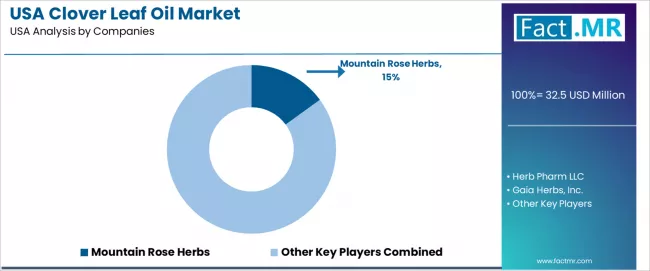
Usa Clover Leaf Oil Market Analysis By Company | Source: Fact.MR
USA clover leaf oil demand is defined by competition among established herbal product manufacturers, specialized botanical extract companies, and mission-driven wellness brands, with key operators maintaining influence through vertically integrated supply chains, rigorous quality standards, and direct consumer education.
Organizations are investing in clover leaf oil advancement, sustainable cultivation partnerships, advanced extraction methodologies, and comprehensive technical support to deliver authentic, effective, and traceable botanical solutions across the herbal wellness and natural product landscape.
Mountain Rose Herbsholds a significant and respected position, offering a comprehensive range of ethically sourced botanicals including clover leaf oil with a deep commitment to organic certification, environmental activism, and consumer education.
Based in Oregon, the company's influence extends through its extensive online platform that serves as an educational resource for both home herbalists and professional practitioners. Their focus on radical transparency, sustainable packaging, and advocacy for herbal conservation establishes a strong standard for integrity within the sector, driving demand from consumers who prioritize ecological and ethical sourcing above all else.
Herb Pharm LLCis a leader in the professional-grade liquid herbal extract market, with clover leaf oil being a component in several of its flagship formulations. The company's strength lies in its meticulous attention to extraction science, utilizing proprietary methods to produce consistent, potent, and fully-soluble extracts.
Their products are widely trusted and recommended by clinical herbalists and naturopathic doctors, creating a strong pull-through demand for the raw materials that meet their exacting specifications. Herb Pharm's commitment to sustainable sourcing and its Certified B Corporation status reinforce its alignment with the values of the core professional and informed consumer demographic.
Gaia Herbs, Inc.operates at scale with a strong emphasis on scientific validation and traceability through its Meet Your Herbs platform, which allows consumers to trace the origin and testing results of each product batch.
Their integration of clover, particularly red clover, into comprehensive formulas for holistic support drives significant volume demand. Gaia's vertically integrated farming and manufacturing capabilities in North Carolina provide control over quality from seed to softgel, appealing to consumers seeking potency guarantees and pharmaceutical-grade standards in their herbal supplements.
Frontier Co-opandStarwest Botanicals, Inc.represent major forces in bulk botanical supply and distribution. Frontier Co-op, as a member-owned cooperative, leverages its vast network to source and supply high-quality, organic clover leaf oil to a wide array of brands, manufacturers, and natural food retailers. Their strength lies in consistent supply chain logistics, rigorous quality testing, and a commitment to fair trade and sustainable practices.
Starwest Botanicals operates as a primary supplier of organic herbs and botanicals, including clover, serving both large-scale industrial clients and smaller craft producers. Their extensive inventory, competitive pricing for volume, and focus on organic certification make them a critical backend supplier for the sector, ensuring broad ingredient accessibility.
Aromatics International, Inc.andPlant Therapy Essential Oilscontribute to the sector through their specialization in aromatherapy-grade ingredients and consumer education. These companies service the segment utilizing clover leaf oil in topical and aromatic applications, leveraging rigorous GC/MS testing protocols to guarantee purity and potency. Their role is pivotal in building consumer trust through transparency and extensive educational content, thereby supporting the overall credibility and informed use of clover leaf oil within the wellness community.
USA Clover Leaf Oil Sector - Stakeholder Contribution Framework
The USA clover leaf oil sector is a vital component for national wellness and natural product development, supporting herbal supplement installations, skincare infrastructure, and therapeutic applications. With a projected demand value driven by holistic health trends, botanical ingredient adoption cycles, and sustainable agriculture advancement, the sector's resilience depends on collaborative engagement among regulatory agencies, agricultural operators, ingredient manufacturers, and brands to modernize cultivation, enhance quality, and secure ethical supply chains.
How Governments Could Accelerate Agricultural Modernization and Sector Competitiveness?
- Federal Herbal Agriculture Research Grants: Expand funding through the USDA and NIH for R&D into optimized cultivation techniques for medicinal clover varieties, phytochemical consistency, and post-harvest processing to enhance bioactive preservation and farmer economic viability.
- Tax Incentives for Regenerative Herb Farming: Offer investment tax credits for operators transitioning to certified organic, biodynamic, or regenerative agricultural practices for botanical crops, improving soil health and long-term crop sustainability.
- Domestic Botanical Supply Chain Support: Implement programs and strategic partnerships to bolster domestic cultivation and processing of high-demand medicinal herbs, ensuring a resilient supply of raw materials and mitigating import dependency.
- Standardized Identity and Purity Policies: Support the development of unified standards for clover leaf oil grades, adulteration testing, and labeling requirements for dietary supplement and cosmetic applications to ensure consumer safety and ingredient integrity.
- Permitting Process Reform for Green Extraction Facilities: Expedite reviews for environmentally sustainable distillation and extraction facilities that utilize green technologies, enhancing domestic processing capacity and value-added manufacturing.
How Industry Bodies & Associations Could Strengthen Sector Coordination and Technical Leadership?
- Unified Botanical Identity and Sustainability Standards: Develop consensus-based benchmarks for clover species identification, sustainable wildcrafting quotas, and organic certification processes to ensure ecosystem protection and ingredient authenticity.
- Herbal Agriculture Workforce Development Programs: Create certification pathways for medicinal herb farmers, post-harvest specialists, and quality control lab technicians to address the skilled labor shortage and ensure quality production.
- Collaborative Clinical Research Consortia: Establish joint initiatives linking herbal companies, academic institutions, and clinical researchers to drive evidence generation for traditional uses and innovate on delivery systems.
- Transparent Sourcing Data Repositories: Build industry-shared platforms for data on crop yields, regional phytochemical variations, and successful agroforestry models to inform better cultivation and sourcing decisions.
- Public Education on Responsible Herbalism: Promote understanding of sustainable herb use, the importance of ethical sourcing, and the role of clinical herbalism through coordinated sector outreach and practitioner education.
How Clover Leaf Oil Producers & Technology Suppliers Could Capture Value and Drive Innovation?
- Advanced Cultivation and Precision Extraction: Companies likeGaia Herbs, Inc.andHerb Pharm LLCinvest in farm-level research for potent cultivar development and proprietary extraction technologies that maximize the yield of target bioactive compounds, moving beyond commodity production to standardized, clinical-grade ingredients.
- Supply Chain Digitalization and Full Traceability: Operators such asFrontier Co-opandStarwest Botanicals, Inc.implement digital traceability from seed or wild population to finished oil batch, using technology to ensure material provenance, ethical wildcrafting verification, and quality compliance for brand partners.
- Partnership with Agricultural and Clinical Research Institutions: Collaborate with universities and research centers on agronomy studies for climate-resilient clover varieties and human clinical trials to substantiate health applications, elevating the ingredient's scientific profile.
- Educational Content and Practitioner Engagement: Leaders likeMountain Rose HerbsandAromatics International, Inc.invest deeply in consumer and practitioner education on the responsible use of clover leaf oil, building informed demand and fostering brand loyalty based on trust and expertise.
- Operational Optimization for Niche Quality: Introduce small-batch, artisan-scale processing options alongside high-volume capabilities to serve diverse market segments, from craft herbalists to large supplement brands, ensuring quality and appropriateness for each end-use.
How Wellness Brands & Product Development Companies Could Optimize Operational Efficiency and Demand Expansion?
- Digital Supply Chain Integration for Transparency: Create digital models of ingredient journeys integrated with real-time sourcing data to optimize inventory, predict agricultural shortages, and provide consumers with verifiable origin stories.
- Scale-up of High-Integrity Applications: Focus on clover leaf oil specifications for clinically positioned supplement lines, dermatologist-tested skincare products, and practitioner-formulated blends that command premium positioning.
- Collaborative and Long-Term Agricultural Partnerships: Develop multi-year contracts with clover producers and farming cooperatives to ensure consistent quality, secure forward pricing, and directly support the transition to regenerative agricultural practices.
- Pilot-to-Launch Deployment of Novel Delivery Systems: Use phased development for new clover oil formats, such as nano-emulsions for enhanced topical absorption or stable water-soluble versions for beverages, before full-scale product launch.
- Lifecycle Brand Value through Integrity: Invest in transparently sourced, thoroughly tested clover leaf oil as a foundational brand asset to reduce long-term reputational risk, enhance consumer trust, and justify premium product valuation.
How Practitioners & Educational Institutions Could Lead Cross-Sector Integration?
- Clinical Practice and Product Development Integration: Herbalists, naturopaths, and integrative health practitioners can collaborate with brands on formulating effective, evidence-informed products that reflect real-world clinical needs and usage patterns.
- Curriculum and Workforce Development: Herbal schools and university programs can incorporate modules on sustainable sourcing, ethical wildcrafting, and supply chain ethics, training the next generation of professionals to be stewards of the botanical sector.
- Community-Based Validation and Regional Sourcing Hubs: Create regional networks that connect local herbalists with regional growers to test and validate the quality and efficacy of locally grown clover, supporting a decentralized and resilient herbal economy.
- Research Initiation and Case Study Publication: Practitioner networks can initiate observational studies and publish case reports on the use of clover leaf oil in practice, contributing to the collective clinical knowledge base and informing future research directions.
How Investors and Financial Enablers Could Unlock Growth and Technology Scalability?
- Venture Capital for Ag-Tech and Extraction Startups: Support early-stage companies developing novel, low-impact extraction technologies, precision agriculture for botanicals, and digital platforms for transparent herb provenance.
- Infrastructure and Regenerative Farming Financing: Provide patient capital for medicinal herb farm establishment, processing facility upgrades to organic standards, and renewable energy integration for extraction operations.
- Public-Private Investment for Domestic Supply Chains: Create co-financed funds for projects demonstrating scalable, regenerative cultivation models for clover and other at-risk medicinal herbs within the USA.
- Strategic Consolidation Funding for Scale and Impact: Back mergers and acquisitions that consolidate fragmented family farms into sustainable cooperatives or that integrate complementary companies across the cultivation, processing, and branding spectrum to achieve scale and geographic resilience.
- Impact-Linked Financing Models: Tie loan terms or investor returns to key impact indicators like acres transitioned to regenerative practice, increases in measurable bioactive constituent levels, or volumes of ethically wildcrafted material brought to market.
Key Contributors in USA Citronella Oil Sector
- Mountain Rose Herbs
- Herb Pharm LLC
- Gaia Herbs, Inc.
- Frontier Co-op
- Starwest Botanicals, Inc.
- Aromatics International, Inc.
- Plant Therapy Essential Oils
Scope of the Analysis
| Item | Value |
|---|---|
| Quantitative Units | USD Million |
| Source Type | Trifolium pratense (Red Clover), Trifolium repens (White Clover) |
| Application | Herbal Wellness & Supplements, Natural Skincare & Topicals, Aromatherapy & Fragrances |
| Regions Covered | West, Northeast, Midwest, South |
| Key USA Contributors Profiled | Mountain Rose Herbs, Herb Pharm LLC, Gaia Herbs, Aromatics International, Plant Therapy Essential Oils |
| Additional Attributes | Sales by source type and application segment, regional demand trends, competitive landscape with established herbal corporations and botanical suppliers, formulation preferences for Red versus White Clover, integration with wellness facilities and advanced sourcing policies. |
Source: Fact.MR analysis. Updated Dec 10, 2025
Segmentation
USA Clover Leaf Oil Sector by Segments
-
Source Type :
- Trifolium pratense (Red Clover)
- Trifolium repens (White Clover)
-
Application :
- Herbal Wellness & Supplements
- Natural Skincare & Topicals
- Aromatherapy & Fragrances
-
Region :
- West
- Northeast
- Midwest
- South
Frequently Asked Questions
How big is the demand for clover leaf oil in USA in 2025?
What will be the size of clover leaf oil in USA in 2035?
How much will be the demand for clover leaf oil in USA growth between 2025 and 2035?
What are the key product types in the clover leaf oil in USA?
Which application segment is expected to contribute significant share in the clover leaf oil in USA in 2025?
Who worked on this report


Preview the report firsthand - request a free sample
Free SampleGet the brochure for pricing and purchase details
Download PDF