- Base Value(2025): 122.4 Mn
- Estimated Value(2025): 122.4 Mn
- Forecast Value (2035): 172.8 Mn
- CAGR (2025 - 2035): 3.5%
Demand for Eucalyptus Oil in USA 2025 to 2035
Demand for eucalyptus oil in the USA is projected to grow fromUSD 122.40 million in 2025to approximatelyUSD 172.80 million by 2035, recording an absolute increase of USD 50.40 million over the forecast period. This translates into a total growth of 41.18%, with demand forecast to expand at a compound annual growth rate (CAGR) of3.50%between 2025 and 2035.
The overall demand size is expected to grow significantly during this period, supported by robust consumer and industrial interest in natural decongestant and respiratory support solutions, expanding applications in topical analgesics and sports recovery, rising investment in sustainable forestry and distillation, and increasing utilization in natural cleaning and home care formulations throughout the USA.
Quick Stats for USA Eucalyptus Oil Sector
- USA Eucalyptus Oil Sales Value (2025): USD 122.40 million
- USA Eucalyptus Oil Forecast Value (2035): USD 172.80 million
- USA Eucalyptus Oil Forecast CAGR: 3.50%
- Leading Species in USA Eucalyptus Oil Sector: Eucalyptus globulus
- Key Growth Regions in USA Eucalyptus Oil Sector: South, West, Midwest, Northeast
- Regional Leadership: South holds the leading position in demand
- Key USA Contributors in Eucalyptus Oil Sector:doTERRA International, Young Living Essential Oils, NOW Foods, Plant Therapy Essential Oils, Aura Cacia (Frontier Co-op)
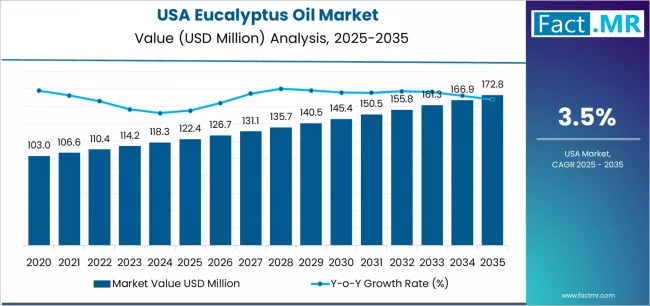
Usa Eucalyptus Oil Market Market Value Analysis | Source: Fact.MR
TheEucalyptus globulussegment is projected to account for a dominant share of eucalyptus oil demand in 2025. This oil type is widely recognized in the USA for its high cineole content, making it a staple in aromatherapeutic respiratory blends, topical muscle formulations, and industrial cleaning applications where its potent antimicrobial properties and penetrating aroma remain essential for product efficacy and consumer recognition.
Thearomatherapy & respiratory supportsegment is expected to represent the largest share of eucalyptus oil demand in 2025. These applications are fundamental to the sector because they provide the immediate sensory benefits, therapeutic action, and wellness alignment required for mass-market consumer product development and professional therapeutic use, meeting persistent demand for natural respiratory and sinus health solutions.
Between2020 and 2025, eucalyptus oil demand in the USA experienced steady expansion, driven by heightened consumer focus on respiratory wellness and growing recognition of plant-derived actives for musculoskeletal comfort. The sector developed as brands and manufacturers, especially in key consumer regions, recognized the need for reliable and potent essential oils to achieve strong product performance while meeting growing standards for purity and sustainable sourcing. Consumer health companies and household product manufacturers began emphasizing the proven efficacy and versatility of eucalyptus oil to maintain brand authority and market share.
Between2025 and 2030, demand for eucalyptus oil in the USA is projected to expand fromUSD 122.40 milliontoUSD 145.10 million, resulting in a value increase of USD 22.70 million. This phase of growth will be shaped by accelerating development of functional wellness products, rising investment in advanced steam distillation and purity verification technology, and growing ingredient requirements for therapeutic blends across USA regions. Increasing integration of eucalyptus oil into holistic seasonal wellness kits and growing adoption in natural over-the-counter topical formats continue to drive demand.
Brands and product developers are expanding their therapeutic-grade essential oil capabilities to address sophisticated consumer expectations for potency and transparency, with USA operations leading investments in species verification and supply chain integrity systems.
From2030 to 2035, demand is forecast to grow fromUSD 145.10 milliontoUSD 172.80 million, adding another USD 27.70 million. This period is expected to be characterized by expansion into advanced natural solvent applications, development of enhanced slow-release delivery systems for inhalation, and implementation of large-scale reforestation and crop rotation initiatives. The growing adoption of eucalyptus oil in green chemistry and industrial biocides, particularly within manufacturing and institutional cleaning, will drive demand for more consistent and high-volume botanical solutions.
USA Eucalyptus Oil Sector Key Takeaways
| Metric | Value |
|---|---|
| USA Eucalyptus Oil Sales Value (2025) | USD 122.40 million |
| USA Eucalyptus Oil Forecast Value (2035) | USD 172.80 million |
| USA Eucalyptus Oil Forecast CAGR (2025-2035) | 3.5% |
Source: Fact.MR analysis. Updated Dec 10, 2025
Why is the USA Eucalyptus Oil Sector Growing?
The USA eucalyptus oil sector is experiencing robust growth, primarily fueled by its entrenched position as a cornerstone ingredient in the respiratory wellness and natural home care categories. A significant surge in demand for effective plant-derived solutions for congestion, muscle discomfort, and surface cleaning has created a vast base of brands, manufacturers, and consumers requiring reliable eucalyptus oil.
The persistent consumer preference for recognizable and potent natural remedies mandates the use of high-cineole oils for definitive product performance. This efficacy-driven demand establishes a consistent, need-based foundation. As new brands enter the natural health and cleaning spaces and existing products are reformulated for greater potency, the need for authentic and pure eucalyptus oil forms a stable foundation for the sector's expansion.
Innovation in product format and delivery systems acts as a powerful secondary engine for this growth. Modern eucalyptus oil applications extend far beyond simple bottle-inhalation or chest rubs. The rapid adoption of specialized diffusion technologies, including personal inhalers, smart diffusers, and shower tablets, has revolutionized user experience, making therapeutic benefits more convenient and controlled.
Beyond traditional topical applications, manufacturers are integrating microencapsulated eucalyptus oil into textiles, air filters, and long-lasting cleaning concentrates, enhancing its functionality across diverse lifestyle and industrial requirements. These advancements, coupled with rigorous third-party purity testing and organic certification, are compelling both consumers and industrial users to transition from synthetic alternatives, driving a cycle of product premiumization and trust-based branding.
The sector is benefiting from a powerful convergence of health, wellness, and sustainability trends. An increasing emphasis on indoor air quality and non-toxic cleaning, particularly in response to environmental health concerns, is pushing demand for high-quality, antimicrobial essential oils. The segment has expanded convincingly beyond consumer channels into commercial and institutional settings, including gyms, spas, clinics, and schools, for air purification and surface sanitization.
This diversification, combined with the educational outreach of multi-level marketing companies and dedicated essential oil brands, ensures that awareness and accessibility are higher than ever. This confluence of proven efficacy, format innovation, and broadening application creates a resilient platform for continued sector expansion.
Segmental Analysis
The sector is segmented by primary species, application, and region. By species, the sector is divided into Eucalyptus globulus, Eucalyptus radiata, and other species including Eucalyptus citriodora. In terms of application, the sector is segmented into aromatherapy & respiratory support, topical analgesics & personal care, and household & industrial cleaning. Regionally, the sector is divided into South, West, Midwest, and Northeast.
Which Eucalyptus Species is the Unquestioned Leader in Demand?
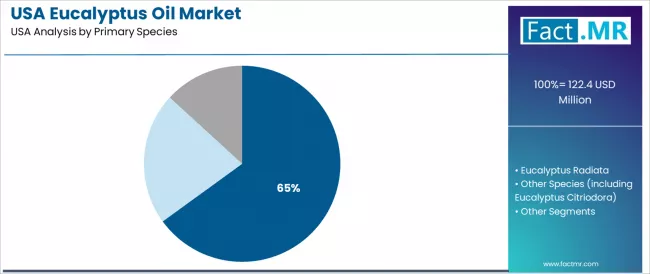
Usa Eucalyptus Oil Market Analysis By Primary Species | Source: Fact.MR
Eucalyptus globulus is projected to account for 65.0% of eucalyptus oil demand in 2025, representing a commanding majority. This dominance is inextricably linked to its characteristically high 1,8-cineole content, which is the compound most directly associated with the powerful respiratory clearing, expectorant, and antimicrobial actions that define the classic eucalyptus experience.
Consumer and professional recognition are almost exclusively tied to the sharp, penetrating aroma and intense cooling sensation of globulus, making it the default choice for mass-market products where immediate sensory impact is a key purchase driver. Its well-documented efficacy profile provides a strong, defensible foundation for product marketing claims in both therapeutic and cleaning applications.
The existing manufacturing and formulation infrastructure for decongestants, chest rubs, and cleaning products is chemically optimized for the specific profile of Eucalyptus globulus oil. Switching to a different chemotype would require significant reformulation and consumer re-education, creating a substantial inertia that favors the incumbent species.
Its cultivation is highly scalable in suitable climates, ensuring a reliable and cost-effective supply of raw material for high-volume production. This scalability is critical for meeting the demands of large consumer packaged goods companies and industrial cleaning product manufacturers who require consistent feedstock in significant quantities. Ongoing research continues to validate and explore the applications of Eucalyptus globulus, reinforcing its scientific standing. This research supports its use not only in traditional wellness areas but also in emerging fields like natural preservatives and green solvents.
Investment in sustainable forestry management for Eucalyptus globulus plantations, particularly in regions supplying the USA, addresses growing concerns about deforestation and environmental impact, allowing brands to source this dominant oil with greater confidence regarding its ecological footprint. The combination of unmatched consumer recognition, industrial scalability, and a continuously evolving evidence base solidifies its position as the sector's indispensable workhorse.
What Application Captures the Core of Consumer and Therapeutic Use?
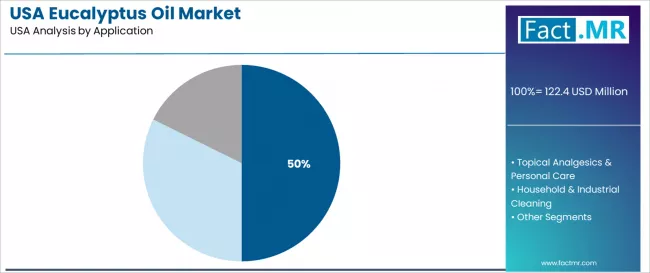
Usa Eucalyptus Oil Market Analysis By Application | Source: Fact.MR
Aromatherapy and respiratory support applications are expected to represent 50.0% of eucalyptus oil demand in 2025, constituting the foundational pillar of the sector. This central role reflects the oil's timeless status as a first-line natural remedy for sinus congestion, coughs, and seasonal respiratory discomfort.
Demand is multifaceted, encompassing direct consumer use in home diffusers and steam inhalation, as well as its incorporation into a vast array of manufactured products like chest balms, nasal inhalers, shower steamers, and ready-to-diffuse respiratory blends. The driving force is a deeply ingrained consumer behavior that seeks fast-acting, natural relief for common ailments, a need that eucalyptus oil has reliably met for generations.
The growth of this segment is powerfully linked to the professionalization and popularization of aromatherapy. Recommendations from wellness practitioners, naturopaths, and even conventional healthcare providers for supportive respiratory care have integrated eucalyptus into mainstream health conversations. Its use in yoga studios, spas, and meditation centers for clearing and energizing the atmosphere has further normalized its benefits beyond mere sickness.
The regulatory landscape, where eucalyptus oil is generally recognized as safe for its intended uses in aromatherapy and as a topical analgesic, provides a clear and stable pathway for product development, encouraging innovation within this well-defined category.
Demand is also highly seasonal and geographically influenced, with predictable spikes during cold and flu seasons and in regions with high humidity or allergen counts. This seasonality necessitates sophisticated supply chain planning but also guarantees recurring annual demand cycles.
Brand investment in educating consumers on proper and safe application methods, especially regarding use around children and pets, is crucial for maintaining trust and preventing misuse. Furthermore, the blending of eucalyptus with complementary oils like peppermint, tea tree, and lemon in specifically targeted respiratory formulas creates higher-value, proprietary products that drive margin growth within this core application segment.
What are the Drivers, Restraints, and Key Trends in the USA Eucalyptus Oil Sector?
The demand for eucalyptus oil in the USA is advancing steadily due to persistent consumer reliance on natural respiratory aids and growing industrial adoption of plant-based antimicrobials, with the South region serving as a key driver of volume demand and home care application.
The sector faces challenges including the need for sustainable forestry practices to counter ecological concerns, the necessity of clear safety labeling to prevent toxicity incidents, and ongoing competition from synthetic alternatives in cost-sensitive industrial segments.
Growth in Integrative Respiratory Health and Natural Home Hygiene Protocols
The enhancement of home wellness practices, gaining particular significance through consumer education on airborne pathogen mitigation and natural first-aid, is enabling eucalyptus oil providers to maintain relevance without prohibitive marketing costs, providing predictable demand patterns through health-conscious consumer behavior.
Enhanced home care standards offering substantial opportunities for eucalyptus oil in diffuser and cleaning systems provide foundational dynamics while allowing providers to secure long-term contracts with major retailers and direct-to-consumer subscription models.
Deployment of Advanced Diffusion and Targeted Delivery Systems
Modern eucalyptus oil providers and wellness technology companies are establishing advanced product development networks that improve user efficacy through controlled-release nebulizing diffusers, personal pocket inhalers, and temperature-sensitive topical formulations.
Integration of dose-control technology, advanced emulsification for cleaning products, and coordinated safety labeling enables more effective and safer product utilization across multiple consumer and professional environments.
Development of Verified Sustainable Sourcing and Transparency Platforms
The expansion of consumer demand for supply chain transparency is driving development of vertically integrated sourcing models with enhanced traceability profiles, improved forestry certification, and optimized distillation efficiency that address environmental criticisms and expand the ingredient's appeal to ethically conscious brands.
These specialized supply chains require sophisticated agricultural forestry management and distillation expertise that exceed commodity essential oil trading, creating value segments with differentiated sustainability propositions. Producers are investing in blockchain-based traceability and land stewardship partnerships to serve brand clients while supporting innovation in carbon-negative cultivation models.
Analysis of USA Eucalyptus Oil Demand by Key Regions
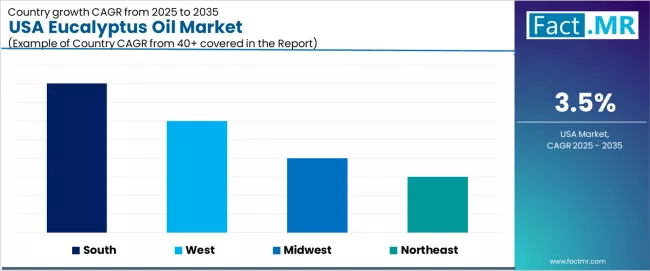
Usa Eucalyptus Oil Market Cagr Analysis By Country | Source: Fact.MR
| Region | CAGR (2025-2035) |
|---|---|
| South | 3.80% |
| West | 3.60% |
| Midwest | 3.40% |
| Northeast | 3.30% |
Source: Fact.MR analysis. Updated Dec 10, 2025
Eucalyptus oil demand in USA is witnessing steady growth, supported by high utilization in home care, strong seasonal respiratory needs, and the deployment of advanced natural product formulations across regions. South leads the nation with a 3.80% CAGR, reflecting a strong consumer base with extended seasons of high humidity and allergen counts, driving consistent demand for respiratory and cleaning applications.
Why does the South Region Exhibit the Highest Consumption Rate?
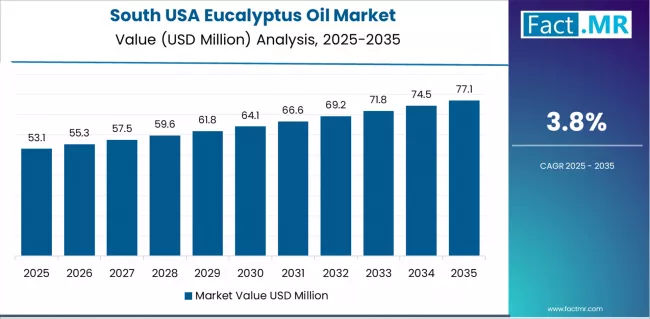
Usa Eucalyptus Oil Market Country Value Analysis | Source: Fact.MR
Demand for eucalyptus oil in South USA is projected to exhibit the nation's strongest growth with a CAGR of 3.80% through 2035. This leadership is fundamentally tied to environmental factors that create a nearly year-round environment conducive to nasal congestion, mold growth, and insect activity. The warm, humid climate across states like Florida, Texas, Georgia, and Louisiana necessitates continuous attention to indoor air quality and surface cleaning, making eucalyptus-based solutions a staple in household routines. The extended pollen seasons and high humidity drive persistent respiratory discomfort, creating a constant, need-based market for decongestant and sinus relief products where eucalyptus oil is a primary active ingredient.
The commercial and cultural environment in the South strongly supports this demand. A high concentration of manufacturing and distribution centers for major cleaning product and over-the-counter pharmaceutical companies ensures widespread product availability. The region's proactive approach to home maintenance and preparedness, often in response to hurricane seasons and high moisture, fosters a culture of using potent cleaning and purifying agents, with natural options like eucalyptus gaining significant share. Furthermore, the presence of large ports facilitates the import of raw materials, supporting local blending and manufacturing operations for both regional and national brands.
Consumer familiarity and habitual use are exceptionally high. Eucalyptus is often a go-to remedy passed through generations, valued for its immediate, powerful effect. This ingrained USAge pattern reduces marketing costs for brands and creates strong loyalty to products containing genuine eucalyptus globulus oil. The commercial sector, including hotels, gyms, and healthcare facilities in the South, also contributes significantly to demand, utilizing eucalyptus oil in bulk for HVAC infusion, floor cleaning, and creating a refreshing environment, viewing it as a cost-effective natural alternative to harsh chemical solutions.
What Dynamics Support the West's Premium and Innovation-Focused Demand?
Demand for eucalyptus oil in West USA is projected to grow with a CAGR of 3.60% through 2035, underpinned by the region's leadership in wellness innovation, environmental consciousness, and holistic lifestyle trends. States like California, Colorado, Oregon, and Washington are home to a dense network of essential oil brands, aromatherapy educators, and natural product retailers that prioritize purity, sustainability, and sophisticated application. Demand here is characterized by a preference for certified organic, sustainably wild-harvested, or specific chemotype oils like Eucalyptus radiata, which is perceived as gentler for children and sensitive individuals.
The West Coast is a hotbed for product format innovation. Companies here pioneer new delivery systems such as roll-on blends for on-the-go respiratory support, eucalyptus-infused sleep masks, and high-end cleaning concentrates. The consumer base is highly educated on different eucalyptus species and their unique properties, driving demand for more specialized and higher-margin oil varieties beyond the standard globulus. This region also leads in integrating eucalyptus oil into broader lifestyle categories, such as in natural pet care, yoga and fitness studio ambiance, and eco-friendly laundry products, expanding its application scope.
While the climate is generally drier, specific areas with seasonal rainfall or agricultural activity experience localized insect and mold issues, driving demand for natural pest deterrent and cleaning solutions. The region's stringent regulations on volatile organic compounds and chemical disclosures also shape the sector, favoring natural ingredients with clear safety profiles. The presence of a vast network of direct-to-consumer and multi-level marketing companies headquartered in the West, which heavily feature eucalyptus oil in their catalogs, creates a massive and dedicated distribution channel that fuels both volume and consumer education nationwide from this regional base.
How Do Seasonal Rhythms and Practicality Shape Midwest Demand?
Demand for eucalyptus oil in the Midwest is expected to expand with a CAGR of 3.40% through 2035, driven by pronounced seasonal weather shifts, a practical approach to family health, and a strong manufacturing base for consumer goods. The demand cycle is sharply seasonal, with intense peaks during the cold, dry winters when respiratory illnesses circulate and indoor heating degrades air quality. This seasonality requires robust supply chain agility from retailers and brands to meet concentrated demand from consumers in states like Illinois, Ohio, Michigan, and Minnesota seeking relief from colds and sinus issues.
The Midwest's cultural ethos of practicality and self-reliance shapes a demand profile focused on efficacy, value, and multi-purpose use. Consumers favor trusted mass-market brands of chest rubs, inhalants, and cleaning products available at major big-box retailers and pharmacies. There is significant demand for eucalyptus oil as a raw ingredient for DIY home solutions, such as homemade cleaning sprays, shower discs, and steam bowls, supported by a strong community of home crafters and a culture of practical preparedness. This region also hosts numerous contract manufacturers that produce private-label and national-branded products containing eucalyptus oil, creating substantial industrial demand for consistent, cost-effective bulk supply.
Beyond winter health, spring and summer bring allergies and increased cleaning activity, supporting a secondary demand cycle. The region's many lakes and recreational areas also drive seasonal demand for natural insect repellent blends, where eucalyptus citriodora oil is a valued component. The Midwest's central logistics location makes it a crucial distribution hub, ensuring that both raw materials and finished goods flow efficiently to population centers across the eastern half of the nation, reinforcing its role as a critical consumption and distribution node in the national supply chain.
What Characterizes the Northeast's Concentrated and Professional Demand?
Demand for eucalyptus oil in the Northeast is forecast to advance with a CAGR of 3.30% through 2035, characterized by high-density urban living, a concentration of healthcare and wellness professionals, and a consumer base with high disposable income. Demand is sophisticated and channel-diverse, flowing through premium natural grocery chains, boutique apothecaries, online wellness subscriptions, and professional recommendations from acupuncturists, massage therapists, and integrative doctors in cities like New York and Boston.
The Northeast's demographic profile supports a premium segment focused on brand integrity, clinical-grade quality, and elegant formulation. Consumers seek out eucalyptus oil in products that feature transparent sourcing, organic certification, and evidence-based blends. There is strong demand in the professional spa and wellness center sector, where eucalyptus oil is used in steam rooms, topical treatments, and ambient diffusion to create a specific therapeutic environment. This professional USAge drives demand for larger, cost-effective sizes of high-quality oil and influences consumer preferences through direct experience.
The region's tightly-packed urban housing and reliance on public transportation during cold and flu seasons create a heightened awareness of contagion, supporting steady demand for natural antimicrobials for home and personal use. The legacy of old building stock with potential mold issues also supports use in natural home maintenance. While the overall climate is less humid than the South, the indoor heating season creates extremely dry indoor air, prompting the use of humidifiers and diffusers with respiratory-supporting essential oils like eucalyptus. The presence of corporate headquarters for major consumer health companies also means product development and marketing decisions influencing national trends often originate in this region, shaping demand indirectly through innovation pipelines.
Competitive Landscape of USA Eucalyptus Oil Sector
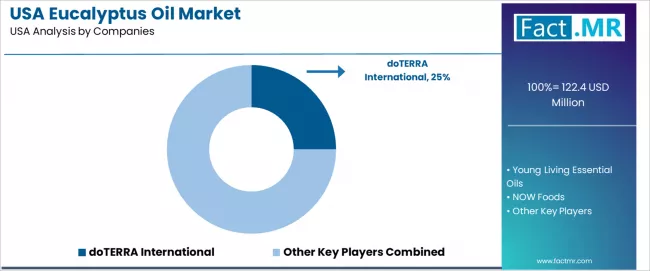
Usa Eucalyptus Oil Market Analysis By Company | Source: Fact.MR
Eucalyptus oil demand in USA is defined by competition between large-scale multi-level marketing corporations, established consumer health brands, and dedicated pure-play essential oil companies, with key operators exerting influence through vast member networks, retail dominance, and rigorous quality verification. Organizations are investing in global sourcing partnerships, vertical integration, sophisticated testing protocols, and massive consumer education platforms to deliver potent, pure, and trusted eucalyptus oil solutions.
doTERRA Internationalholds a commanding position, leveraging its global Co-Impact Sourcing initiative to secure supply of Eucalyptus globulus and radiata oils while promoting economic development in harvesting communities. The company's strength is its massive independent distributor network, which provides personalized education and direct sales, embedding eucalyptus oil into daily wellness routines. Their investment in proprietary testing through CPTG Certified Pure Therapeutic Grade standards creates a powerful quality narrative that drives consumer trust and brand loyalty, making them a primary channel for premium oil consumption.
Young Living Essential Oilscompetes directly through its vertically integrated Seed to Seal process, controlling everything from farm ownership to distillation. This allows them to make strong claims about purity and sustainability for their eucalyptus oils. Their established global farming sites and immersive member community events foster deep brand allegiance. Young Living's focus on a wide range of eucalyptus species, including less common varieties, caters to experienced users and enhances its image as an authority in the field, driving demand through specialization and community education.
NOW Foodsrepresents a dominant force in the mass retail and value-oriented segment. As a longstanding leader in natural products sold through grocery, drug, and online channels, NOW offers high-quality, affordable eucalyptus oil that serves as an entry point for millions of consumers. Their strength lies in rigorous in-house testing, consistent supply chain management, and unparalleled retail shelf presence. By providing a trusted, accessible option without a multi-level marketing structure, NOW Foods captures a vast share of the DIY user, first-time buyer, and price-sensitive professional market, ensuring broad market penetration.
Plant Therapy Essential Oilshas carved out a significant niche by offering high-quality, GC/MS-tested oils directly to consumers online at competitive prices, without a multi-level marketing model. Their success is built on transparency, outstanding customer education through blogs and aromatherapist consultations, and a strong focus on safety, especially for families and children. This positioning appeals to a growing segment of consumers who want premium quality but are wary of network marketing, allowing Plant Therapy to build a loyal, direct-buy customer base for its eucalyptus and respiratory support blends.
Aura Cacia, a brand of the member-ownedFrontier Co-op, is a powerhouse in the natural food store channel and bulk supply. Known for consistent quality, fair trade sourcing, and widespread availability in cooperatives and grocery stores nationwide, Aura Cacia serves the needs of everyday users and crafters. Frontier Co-op's scale as a cooperative allows it to source substantial volumes sustainably, supplying both its branded retail products and bulk oils to other manufacturers and brands, making it an essential backbone supplier for the entire sector.
USA Eucalyptus Oil Sector - Stakeholder Contribution Framework
The USA eucalyptus oil sector is a critical element within the national wellness, home care, and green industrial landscape, supporting respiratory health routines, natural cleaning infrastructure, and topical analgesic applications. With a projected demand value driven by persistent health-conscious consumer behavior, adoption of plant-based antimicrobials, and sustainable forestry initiatives, the sector's stability hinges on collaborative engagement among regulatory bodies, agricultural foresters, distillation operators, brands, and investors to ensure responsible sourcing, quality assurance, and innovative application development.
How Governments Could Facilitate Sustainable Sourcing and Sector Integrity?
- Federal Forestry and Import Regulation Support:Enhance USDA and Customs and Border Protection frameworks to verify sustainable forestry certifications and species authenticity for imported eucalyptus oil, preventing deforestation-linked supply and ensuring accurate botanical identification for consumer safety.
- Tax Incentives for Green Chemistry Adoption:Offer investment tax credits for industrial and cleaning product manufacturers that reformulate to incorporate plant-based solvents and antimicrobials like eucalyptus oil, reducing reliance on synthetic volatile organic compounds.
- Domestic Cultivation Research Grants:Fund research through agricultural extension services into the viability and ecological impact of cultivating key eucalyptus species within suitable US regions to explore potential for complementary domestic supply.
- Clear Safety and Labeling Guidelines:The Consumer Product Safety Commission and FDA could provide updated, clear guidelines on safe dilution rates and warning labels for undiluted eucalyptus oil products, particularly those marketed for respiratory or topical use, to prevent misuse and toxicity incidents.
- Expedited Review for Green Disinfectant Claims:Support the EPA’s Safer Choice program and expedite review pathways for natural disinfectant products based on eucalyptus oil and other botanicals, facilitating their entry into institutional and healthcare cleaning markets.
How Industry Bodies & Associations Could Strengthen Standards and Education?
- Unified Purity and Chemotype Standards:Organizations like the American Herbal Products Association (AHPA) and ASTM International could develop consensus standards for eucalyptus oil chemotypes, purity testing methodologies, and admissible label claims for aromatherapeutic and topical use.
- Sustainable Wild Harvesting and Forestry Certification Programs:Develop and promote sector-specific sustainable wild harvesting guidelines and forestry partnership certifications for key sourcing regions, addressing biodiversity and land use concerns.
- Practitioner and Consumer Safety Education Campaigns:Launch coordinated safety education initiatives targeting aromatherapists, wellness practitioners, and consumers on the proper use of eucalyptus oil, focusing on dilution, inhalation methods, and contraindications, especially for children and pets.
- Transparent Supply Chain Data Platforms:Create industry-supported platforms for sharing aggregated data on global crop yields, distillation quality metrics, and sustainable forestry progress to inform responsible sourcing decisions for all members.
- Public Advocacy for Plant-Based Solutions:Promote the role of high-quality plant-based ingredients like eucalyptus oil in supporting personal wellness, reducing indoor chemical exposure, and contributing to greener industrial applications through unified industry messaging.
How Eucalyptus Oil Producers & Distributors Could Capture Value and Drive Innovation?
- Investment in Sustainable Forestry Partnerships:Leading producers likedoTERRA InternationalandYoung Living Essential Oilscan deepen their Co-Impact Sourcing and Seed to Seal commitments by investing in reforestation projects, biodiversity research, and long-term, equitable partnerships with harvesting communities to ensure ecological and social sustainability.
- Advanced Distillation and Purity Verification Technology:Companies must invest in state-of-the-art distillation technology to maximize yield of target actives like cineole and in advanced analytical testing (GC/MS) to guarantee purity, potency, and the absence of adulterants, as demonstrated byPlant Therapy Essential OilsandNOW Foods.
- Supply Chain Digitalization for Full Traceability:Implement end-to-end digital traceability from forest plot to bottle, allowing brands and, ultimately, consumers to verify origin, harvest date, and distillation batch, thereby combating adulteration and building unparalleled trust.
- Development of Specialty Chemotypes and Blends:Expand beyond standard Eucalyptus globulus by cultivating and marketing specialty oils like Eucalyptus radiata for sensitive users or Eucalyptus citriodora for insect repellent blends, catering to niche, high-value segments.
- Bulk Supply and Channel Expertise:Distributors likeFrontier Co-op(Aura Cacia) can leverage their bulk sourcing scale and expertise to provide consistent, high-quality raw material to the extensive network of small and mid-sized brands in the natural products sector, acting as a critical supply chain backbone.
How Consumer Brands & Product Development Companies Could Optimize Formulations and Demand?
- Clinical-Grade Formulation for Mainstream Channels:Integrate eucalyptus oil into over-the-counter-style formats like chest rubs, inhalers, and muscle gels with dosing precision and safety profiles that meet mainstream consumer expectations, blending traditional efficacy with modern product science.
- Innovation in Delivery Systems:Invest in R&D for novel delivery formats such as sustained-release diffusion pods, stable micro-emulsions for hard surface cleaners, and encapsulated oils for textiles, enhancing performance and user convenience.
- Strategic, Transparent Sourcing Partnerships:Develop long-term contracts with producers who provide verifiable sustainability credentials and purity data, making this transparency a core part of the brand story and product marketing.
- Educational Content Integrated with Commerce:Follow the model of leading direct-to-consumer brands by providing extensive, reputable educational content on proper usage, benefits, and safety, thereby building an informed customer base that uses the product effectively and loyally.
- Lifecycle Brand Value through Trust:Prioritize sourcing integrity and product safety as non-negotiable brand assets. Investing in third-party certifications and clear, responsible labeling builds long-term consumer trust that protects brand equity and justifies premium positioning.
How Healthcare Practitioners & Wellness Influencers Could Guide Responsible Integration?
- Evidence-Informed Recommendation and Usage Protocols:Integrate eucalyptus oil into supportive care protocols with clear guidelines on dilution, application methods, and realistic outcome expectations, helping to professionalize its use within complementary health practices.
- Bridging Clinical Practice and Product Development:Collaborate with ethical brands on formulating products that address specific, unmet needs in supportive respiratory care, musculoskeletal comfort, or clinical environment sanitization.
- Amplifying Safety Messaging:Use professional platforms to educate the public on the critical differences between species, the importance of proper dilution for topical use, and situations where eucalyptus oil should be avoided, serving as a trusted counterbalance to misinformation.
- Pilot Studies and Case Documentation:Conduct small-scale observational studies or systematically document case histories on the supportive use of eucalyptus oil in practice, contributing to the collective evidence base and informing best practices.
How Investors and Financial Enablers Could Unlock Scalable and Sustainable Growth?
- Venture Capital for AgTech and Green Chemistry:Support startups focused on sustainable forestry management technology, precision distillation equipment, and green formulation platforms that utilize botanicals like eucalyptus oil as core ingredients
- Growth Capital for Brand and Supply Chain Scaling:Provide capital for vertically integrated brands to scale their sustainable sourcing operations, for distributors to modernize logistics, and for manufacturers to adopt greener production technologies.
- Impact Investment in Regenerative Forestry:Channel investment into forestry projects and partnerships that demonstrate regenerative, biodiversity-positive cultivation of eucalyptus and other essential oil crops, linking financial returns to environmental impact metrics.
- Financing for Consumer Education Platforms:Back ventures that build credible, science-aligned educational platforms in the wellness space, which are critical for driving informed, sustainable demand for essential oils.
- Supply Chain Resilience Financing:Support projects that diversify sourcing geographies, develop domestic processing infrastructure, or create strategic reserves for key botanical ingredients to mitigate global supply chain volatility.
Key USA Contributors in Eucalyptus Oil Sector
- doTERRA International
- Young Living Essential Oils
- NOW Foods
- Plant Therapy Essential Oils
- Aura Cacia (Frontier Co-op)
Scope of the Analysis
| Item | Value |
|---|---|
| Quantitative Units | USD Million |
| Primary Species | Eucalyptus globulus, Eucalyptus radiata, Other Species (inc. E. citriodora) |
| Application | Aromatherapy & Respiratory Support, Topical Analgesics & Personal Care, Household & Industrial Cleaning |
| Regions Covered | South, West, Midwest, Northeast |
| Key USA Contributors Profiled | doTERRA International, Young Living Essential Oils, NOW Foods, Plant Therapy Essential Oils, Aura Cacia (Frontier Co-op) |
| Additional Attributes | Sales by species and application segment, regional demand trends, competitive landscape with established essential oil corporations and consumer health brands, formulation preferences for globulus versus radiata, integration with wellness practices and advanced sourcing policies. |
Source: Fact.MR analysis. Updated Dec 10, 2025
Segmentation
USA Eucalyptus Oil Sector by Segments
-
Primary Species :
- Eucalyptus Globulus
- Eucalyptus Radiata
- Other Species (including Eucalyptus Citriodora)
-
Application :
- Aromatherapy & Respiratory Support
- Topical Analgesics & Personal Care
- Household & Industrial Cleaning
-
Region :
- South
- West
- Midwest
- Northeast
Frequently Asked Questions
How big is the demand for eucalyptus oil in USA in 2025?
What will be the size of eucalyptus oil in USA in 2035?
How much will be the demand for eucalyptus oil in USA growth between 2025 and 2035?
What are the key product types in the eucalyptus oil in USA?
Which application segment is expected to contribute significant share in the eucalyptus oil in USA in 2025?
Who worked on this report


Preview the report firsthand - request a free sample
Free SampleGet the brochure for pricing and purchase details
Download PDF