- Base Value(2025): 48.8 Mn
- Estimated Value(2025): 48.8 Mn
- Forecast Value (2035): 68.3 Mn
- CAGR (2025 - 2035): 3.4%
Demand for Grapefruit Oil in USA 2025 to 2035
Demand for grapefruit oil in the USA is projected to grow fromUSD 48.75 million in 2025to approximatelyUSD 68.25 million by 2035, recording an absolute increase of USD 19.50 million over the forecast period. This translates into a total growth of 40.00%, with demand forecast to expand at a compound annual growth rate (CAGR) of3.4%between 2025 and 2035.
Quick Stats for USA Grapefruit Oil Sector
- USA Grapefruit Oil Sales Value (2025): USD 48.75 million
- USA Grapefruit Oil Forecast Value (2035): USD 68.25 million
- USA Grapefruit Oil Forecast CAGR: 3.4%
- Leading Extraction Type in USA Grapefruit Oil Sector: Cold-Pressed
- Key Growth Regions in USA Grapefruit Oil Sector: West, South, Northeast, Midwest
- Regional Leadership: West holds the leading position in demand
- Key USA Contributors in Grapefruit Oil Sector:doTERRA International, Young Living Essential Oils, NOW Foods, Plant Therapy Essential Oils, Citrus and Allied Essences Ltd.
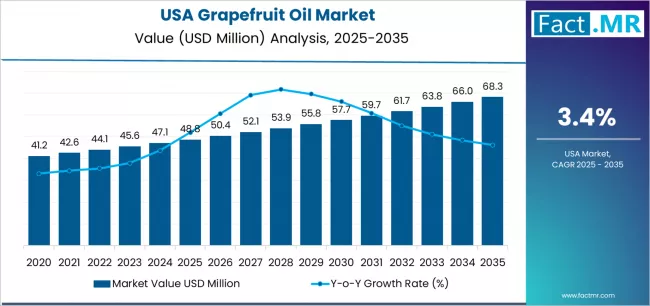
Usa Grapefruit Oil Market Market Value Analysis | Source: Fact.MR
The overall demand size is expected to grow significantly during this period, supported by rising consumer focus on natural mood elevation and energizing aromatherapy, expanding applications in cosmetic formulations for oily and congested skin, growing utilization in natural flavoring and functional beverages, and increasing adoption in household cleaning products for its fresh, uplifting scent profile throughout the USA.
TheCold-Pressedsegment is projected to account for a dominant share of grapefruit oil demand in 2025. This extraction method is highly valued in the USA for preserving the oil’s full spectrum of volatile compounds, including limonene, which is essential for delivering the characteristic bright, citrus aroma and the associated uplifting therapeutic benefits sought in high-quality aromatherapy and personal care formulations.
TheAromatherapy & Mood Enhancementsegment is expected to represent the largest share of grapefruit oil demand in 2025. These applications are fundamental to the sector because they provide the immediate sensory impact, psychological benefits, and wellness alignment required for consumer products aimed at stress reduction, energy boosting, and emotional balance, meeting a consistent demand for accessible, non-invasive mood support solutions.
Between2020 and 2025, grapefruit oil demand in the USA experienced notable expansion, driven by a growing cultural emphasis on mental wellbeing and self-care, alongside the popularization of citrus scents in home fragrancing. The sector developed as brands and formulators capitalized on the oil’s versatile and universally appealing profile, recognizing its utility in creating invigorating yet safe products for daily use. Cosmetic and fragrance companies began emphasizing the oil’s dual functionality as both a scent ingredient and a bioactive component for skincare, enhancing brand value through multifunctional claims.
Between2025 and 2030, demand for grapefruit oil in the USA is projected to expand fromUSD 48.75 milliontoUSD 57.20 million, resulting in a value increase of USD 8.45 million. This phase of growth will be shaped by accelerating development of holistic wellness product lines, rising investment in sustainable citrus processing technologies, and growing ingredient requirements for natural flavoring in the beverage sector. Increasing integration of grapefruit oil into workplace wellness products and daytime personal care regimens continues to drive demand.
Brands and product developers are expanding their citrus oil expertise to address consumer desire for products that are simultaneously efficacious and sensory pleasing, with USA operations emphasizing supply chain partnerships with certified organic and ethically managed citrus groves.
From2030 to 2035, demand is forecast to grow fromUSD 57.20 milliontoUSD 68.25 million, adding another USD 11.05 million. This period is expected to be characterized by deeper integration into functional foods and nutraceuticals, development of advanced stabilization technologies to prolong shelf-life, and greater adoption in green cleaning products as a renewable solvent and fragrance. The growing body of research supporting the olfactory and topical benefits of citrus oils will further entrench grapefruit oil as a staple ingredient in the natural product economy.
USA Grapefruit Oil Sector Key Takeaways
| Metric | Value |
|---|---|
| USA Grapefruit Oil Sales Value (2025) | USD 48.75 million |
| USA Grapefruit Oil Forecast Value (2035) | USD 68.25 million |
| USA Grapefruit Oil Forecast CAGR (2025-2035) | 3.42% |
Source: Fact.MR analysis. Updated Dec 10, 2025
Why is the USA Grapefruit Oil Sector Growing?
The USA grapefruit oil sector is experiencing robust growth, primarily fueled by its alignment with dominant trends in sensory wellness, natural skincare, and clean-label consumables. A significant surge in demand for bright, uplifting aromas that promote positivity and energy has established grapefruit oil as a key ingredient in the aromatherapy and home fragrance categories. Furthermore, the consumer shift towards transparency and natural origin mandates the use of recognizable, plant-derived ingredients like citrus oils, which are perceived as safe and wholesome. This trend-driven demand creates a consistent, desire-based foundation. As the line between personal care, wellness, and nutrition continues to blur, the multifunctional appeal of grapefruit oil—functioning as a fragrance, flavor, and active ingredient—positions it for sustained expansion across multiple product categories.
Innovation in product formulation and delivery acts as a critical catalyst for this growth. Grapefruit oil is no longer confined to simple diffusion; it is now a sophisticated component in advanced cosmetic serums, natural pre-workout blends, and mood-enhancing functional beverages. The adoption of encapsulation technology to protect its volatile compounds and control release in products has enhanced both efficacy and shelf-stability, addressing historical challenges with citrus oils. Beyond topical and aromatic use, its application is expanding into natural surface cleaning and as a flavoring agent in sugar-free, functional drinks. These innovations, combined with rigorous testing for purity and pesticide residues, are compelling brands across industries to formulate with high-quality grapefruit oil, driving a cycle of premiumization and product differentiation.
The sector is benefiting from a powerful convergence of psychological well-being and physical health trends. An increasing emphasis on managing daily stress and fatigue through non-pharmacological means is pushing demand for accessible aromatherapeutic tools, with grapefruit oil being a top choice for its energizing and uplifting properties. Concurrently, its astringent and clarifying benefits for skin and hair have secured its place in the natural beauty sector. This diversification into beauty, home care, and food/beverage, combined with the educational power of social media and direct-sale brands that highlight its uses, ensures continuous consumer discovery and engagement. This confluence of emotional, aesthetic, and practical utility creates a resilient and multifaceted demand profile for grapefruit oil.
Segmental Analysis
The sector is segmented by extraction type, application, and region. By extraction type, the sector is divided into Cold-Pressed and Steam-Distilled. In terms of application, the sector is segmented into Aromatherapy & Mood Enhancement, Cosmetic & Personal Care, and Food & Beverage Flavoring. Regionally, the sector is divided into West, South, Northeast, and Midwest.
Which Extraction Method Defines Premium Quality and Demand?

Usa Grapefruit Oil Market Analysis By Extraction Type | Source: Fact.MR
The cold-pressed segment is projected to account for 70.0% of grapefruit oil demand in 2025, representing a decisive majority. This overwhelming preference is directly tied to the superior aromatic and chemical profile retained through cold pressing, a mechanical method that preserves the oil’s complete range of monoterpenes, aldehydes, and esters.
For the critical aromatherapy and fine fragrance applications, this full-spectrum oil delivers the authentic, vibrant, and complex scent of fresh grapefruit peel, which is irreplaceable for product efficacy and consumer satisfaction. The sensory experience is directly linked to therapeutic outcomes in mood-oriented applications, making authenticity non-negotiable for leading brands.
The existing formulation protocols for premium skincare, natural perfumery, and high-end flavoring are chemically calibrated to the specific compound ratios found in cold-pressed oil. Substituting steam-distilled oil, which has a different scent profile due to the heat applied, would alter the final product's character and potentially diminish its perceived value.
The marketing narrative for natural wellness products heavily relies on concepts of purity, minimal processing, and capturing the plant’s "life force," all of which are strongly associated with the cold-pressing method. This aligns perfectly with the clean-label and holistic health ethos dominant in the sector's core consumer base.
Continuous advancements in cold-press technology are improving yield efficiency and reducing oxidation during processing, directly addressing cost and stability challenges. Investment in organic and sustainably managed citrus groves dedicated to oil production ensures a supply of high-quality raw peel material.
The growing consumer education around extraction methods, driven by transparent brands, means that informed buyers actively seek out cold-pressed oils, creating a market pull that further entrenches this method’s dominance. The combination of sensory superiority, marketing alignment, and improving production economics solidifies cold pressing as the definitive standard for quality.
What Application Serves as the Primary Engine for Sector Growth?
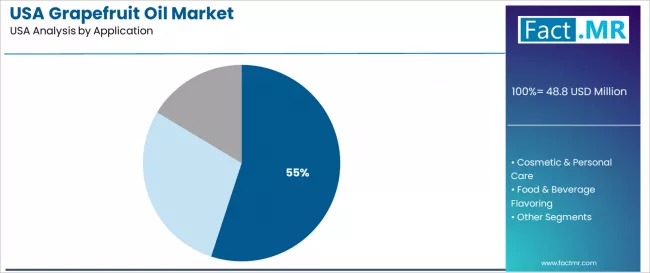
Usa Grapefruit Oil Market Analysis By Application | Source: Fact.MR
Aromatherapy and mood enhancement applications are expected to represent 55.0% of grapefruit oil demand in 2025, forming the central pillar of the sector. This dominant role reflects the oil’s profound and well-documented association with invigoration, stress relief, and the alleviation of mental fatigue.
Demand manifests in a vast array of formats, from direct inhalation via personal diffusers and inhalers to its incorporation into candle wax, room sprays, shower steamers, and massage blends. The driving force is a universal human desire for accessible tools to modulate mood and create positive environments, a need that grapefruit oil meets with its immediately uplifting and non-sedating character.
The growth of this segment is inextricably linked to the mainstream acceptance of aromatherapy as a legitimate self-care practice. Recommendations from wellness coaches, mental health advocates, and lifestyle influencers have normalized the use of scent for emotional regulation.
Grapefruit oil, with its cheerful, bright, and non-polarizing aroma, serves as an ideal entry point for newcomers to essential oils and a staple for experienced users. Its frequent pairing with other uplifting oils like bergamot, peppermot, or rosemary in proprietary blends creates high-margin, synergistic products that drive value growth within the category. The lack of stringent regulatory hurdles for products marketed for aromatic use further facilitates rapid innovation and product launches.
Demand is also fueled by its application in specific settings such as offices, gyms, and healthcare waiting areas, where creating an energizing yet calming atmosphere is desirable. The rise of remote work has also spurred home-office use. Its reputation for helping curb cravings and support metabolism, though requiring careful marketing language, adds another dimension to its wellness appeal. Brand investment in educating consumers on safe diffusion practices and the psychological principle behind aromatherapy helps build a loyal, long-term user base that integrates grapefruit oil into daily rituals, ensuring consistent, recurring demand.
What are the Drivers, Restraints, and Key Trends in the USA Grapefruit Oil Sector?
The demand for grapefruit oil in the USA is advancing steadily due to the unwavering consumer pursuit of natural mood boosters and the expanding recognition of citrus oils in cosmetic solubilizing and flavoring, with the West region leading in premium wellness adoption.
The sector faces challenges including photosensitivity concerns for topical use, supply volatility due to agricultural factors affecting citrus crops, and the need for advanced stabilization to prevent oxidative degradation of the oil.
Expansion in Holistic Emotional Wellness and Sensory Product Design
The integration of scent into daily wellness rituals, gaining traction through targeted marketing and product placement in lifestyle retail, is enabling grapefruit oil providers to secure a permanent place in consumer routines.
This creates predictable demand patterns driven by emotional need and habit formation. The development of aesthetically pleasing and convenient delivery systems, such as stylish diffusers and roll-on applicators, provides foundational growth dynamics while allowing brands to build distinctive, sensory-driven identities.
Deployment of Advanced Stabilization and Synergistic Blending Techniques
Modern producers and brands are investing in antioxidant stabilization technologies, such as the addition of tocopherols or rosemary extract, to significantly extend the shelf-life of grapefruit oil and maintain its vibrant color and scent.
Integration of grapefruit oil into synergistic cosmetic and aromatic blends that enhance its benefits or mitigate its limitations enables more effective and sophisticated product development across skincare, fragrance, and functional product categories.
Development of Food-Grade Supply Chains and Clean-Label Flavoring Solutions
The growth of the natural food and beverage industry is driving demand for certified food-grade grapefruit oil as a clean-label flavoring agent, free from synthetic additives. This requires specialized supply chains with rigorous safety and purity documentation that exceed typical aromatherapy standards.
Producers are investing in certifications and forging partnerships with beverage and food manufacturers to serve this high-value, volume-driven application, supporting innovation in natural flavor systems.
Analysis of USA Grapefruit Oil Demand by Key Regions
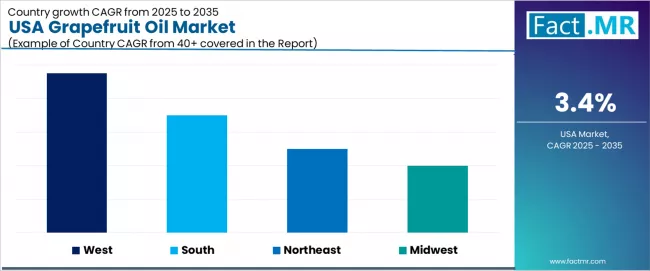
Usa Grapefruit Oil Market Cagr Analysis By Country | Source: Fact.MR
| Region | CAGR (2025-2035) |
|---|---|
| West | 3.75% |
| South | 3.50% |
| Northeast | 3.30% |
| Midwest | 3.20% |
Source: Fact.MR analysis. Updated Dec 10, 2025
The USA grapefruit oil demand is witnessing steady growth, supported by high consumer engagement with wellness trends, a strong natural beauty industry, and the presence of flavor and fragrance houses. West leads the nation with a 3.80% CAGR, reflecting a deep-rooted culture of holistic health, innovation in natural product formulation, and high disposable income directed towards lifestyle-enhancing goods.
Why does the West Region Lead in Premium and Innovative Applications?
Demand for grapefruit oil in the West is projected to exhibit the strongest growth with a CAGR of 3.80% through 2035. This leadership stems from the region's role as the nation's epicenter for wellness innovation, organic lifestyle adoption, and the clean beauty movement. States like California, Oregon, and Colorado host a dense concentration of natural product brand headquarters, aestheticians, yoga studios, and spas that prioritize ingredients offering both functional and sensory benefits. Grapefruit oil's dual role as a clarifying skincare agent and an energizing scent makes it a perfect fit for this market. The culture here values transparency and sourcing stories, driving demand for organic, cold-pressed oils with verifiable provenance.
The commercial ecosystem in the West is built to rapidly adopt and scale niche wellness trends. Influential social media creators, wellness bloggers, and boutique retailers based in this region introduce and popularize specific uses for grapefruit oil, such as in morning meditation rituals or as a natural toner. The presence of major flavor and fragrance corporations also fuels demand for high-quality, consistent oil as a raw material in premium product development. Furthermore, the climate and lifestyle promote year-round consumption of bright, citrus scents and lightweight, clarifying skincare, creating a perennial rather than seasonal demand pattern that stabilizes the supply chain.
Consumer literacy regarding ingredient specifics is high. Purchasers in the West are likely to understand the difference between cold-pressed and steam-distilled oil and seek out products that highlight this quality distinction. The regulatory environment, particularly California’s Proposition 65, incentivizes brands to conduct thorough testing for contaminants, favoring suppliers who provide extensive purity documentation. This sophisticated, quality-conscious, and trend-forward environment makes the West the primary testing ground and adoption driver for premium grapefruit oil applications, setting trends that later diffuse nationally.
What Factors Underpin Strong and Diverse Demand in the South Region?
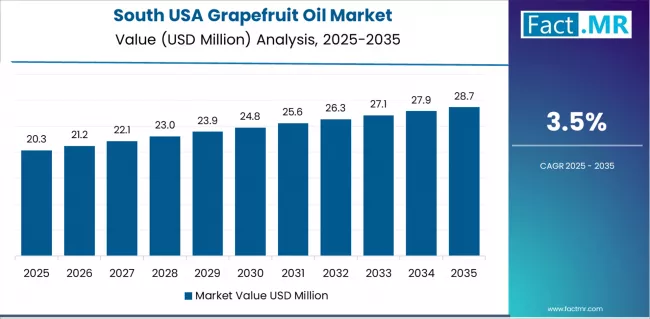
Usa Grapefruit Oil Market Country Value Analysis | Source: Fact.MR
Demand for grapefruit oil in the South is projected to grow with a CAGR of 3.50% through 2035, underpinned by the region’s robust citrus agriculture, warm climate, and growing urban centers with a focus on health and hospitality. States like Florida, Texas, and Georgia have a natural affinity for citrus products, and the local availability of raw materials supports related industries.
The warm, sunny climate aligns with the bright, uplifting character of grapefruit oil, making it a staple in home fragrancing to create fresh, clean indoor environments. Additionally, the South's massive hospitality and tourism sector utilizes citrus scents extensively in hotels, spas, and resorts, generating substantial commercial demand for consistent, cost-effective supplies.
The South’s cultural emphasis on gracious living and home care supports strong demand in the household product segment. Grapefruit oil is valued in natural cleaning solutions and air fresheners for its powerful, positive scent and perceived degreasing properties. The region's growing population and economic development are attracting new natural product retailers and wellness studios, increasing consumer access and education. The presence of major ports facilitates the import of complementary essential oils and the export of finished goods, making the South a crucial logistics hub for the sector.
While perhaps less driven by the latest boutique wellness trends than the West, demand in the South is broad-based and practical. It encompasses mass-market personal care products, widespread use in candle making and craft supplies, and applications in the food service industry for natural flavoring. This diversity creates a stable and high-volume demand profile. The region's lower cost of living also allows for competitive pricing on finished goods, making it an important manufacturing and fulfillment center for brands targeting middle America, further embedding grapefruit oil into the national supply chain.
How is the Northeast's Demand Profile Characterized by Sophistication and Concentration?
Demand for grapefruit oil in the Northeast is forecast to advance with a CAGR of 3.30% through 2035, characterized by high-density urban consumption, a concentration of corporate decision-makers in the beauty and fashion industries, and a fast-paced lifestyle that creates demand for quick, effective mood and energy modifiers. The dense urban environment of cities like New York and Boston leads to a focus on products that improve small living spaces and personal wellbeing amidst stress. Grapefruit oil, used in diffusers and personal inhalers, is a popular tool for creating an instant, positive atmosphere in apartments and workspaces.
The Northeast is a global center for marketing, advertising, and corporate headquarters of major cosmetic and consumer goods companies. This proximity influences demand through the product development choices of brands based there, who are attuned to sophisticated, metropolitan tastes.
Demand is channeled through high-end department stores, boutique apothecaries, and premium online retailers, with a strong emphasis on chic branding, clinical-sounding claims, and multifunctional products. Consumers in this region are willing to pay a premium for grapefruit oil in elegantly packaged serums that offer both aromatic and skincare benefits, or in advanced diffuser systems with smart home integration.
The region's distinct seasons also influence consumption patterns. The dark, cold winters amplify the desire for bright, energizing scents, creating a seasonal spike in demand for citrus oils. Conversely, the oil’s astringent properties are sought for summer skincare. The presence of prestigious academic and medical institutions also fosters an environment where evidence-based wellness is valued, supporting demand for brands that pair traditional aromatherapy claims with modern scientific references. This combination of urban density, corporate influence, and seasonal needs creates a concentrated, high-value demand node.
What Drives the Steady, Value-Oriented Demand in the Midwest Region?
Demand for grapefruit oil in the Midwest is expected to expand with a CAGR of 3.20% through 2035, driven by a pragmatic consumer base, strong manufacturing and distribution networks, and a growing interest in affordable wellness and natural living. The demand profile is practical and community-focused, with consumers seeking reliable, effective products from trusted mass-market brands available at major retailers in states like Illinois, Ohio, and Michigan. Grapefruit oil is commonly found in affordable diffuser blends, value-sized cleaning products, and mainstream body care lines that emphasize freshness and vitality.
The Midwest's central role in national logistics and manufacturing is pivotal. Many contract manufacturers and private-label producers for national chain stores operate facilities in this region, creating significant industrial demand for grapefruit oil as a raw material in predictable, large-volume runs. The region's strong tradition of hobbies and crafts also supports a vibrant market for raw materials, with grapefruit oil being a popular choice among home candlemakers, soap crafters, and DIY beauty enthusiasts purchasing from large online suppliers or craft stores.
Seasonal affective disorder during long, gray winters is a recognized concern in the Midwest, supporting the use of uplifting essential oils like grapefruit in home and workplace environments. This practical application for mental wellbeing drives steady demand. Furthermore, the region's cost-conscious nature means growth is often tied to the expansion of natural offerings within mainstream value brands rather than the launch of new luxury labels. This reliance on large-scale, value-driven distribution ensures grapefruit oil maintains a wide and stable base of everyday users, solidifying its position as a staple rather than a niche ingredient in the American landscape.
Competitive Landscape of USA Grapefruit Oil Sector
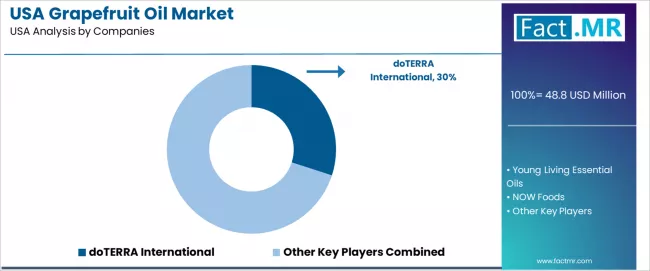
Usa Grapefruit Oil Market Analysis By Company | Source: Fact.MR
Grapefruit oil demand in USA is characterized by competition between large-scale essential oil marketers with global sourcing networks, established value brands in mass retail, and specialized direct-to-consumer companies emphasizing testing and education. Leading organizations leverage their supply chain control, quality assurance protocols, and distinct distribution models to capture specific segments of the market, from premium wellness advocates to cost-conscious DIY users.
doTERRA Internationalcommands a leadership position, estimated to hold a market share of 30.0%. Its dominance is built on the powerful combination of its global sourcing partnerships, which prioritize ethical supply chains for citrus oils, and its vast network of Wellness Advocates who provide personalized education and sales. The company’s CPTG quality standard and focus on the emotional benefits of oils like grapefruit resonate deeply with consumers seeking trustworthy, premium solutions for mood enhancement, embedding the product into daily wellness practices through community-driven support.
Young Living Essential Oilscompetes at a similar tier through its vertically integrated Seed to Seal model, which includes owned citrus farms and distilleries. This allows for strong claims regarding purity and sourcing control. Their emphasis on the variety within citrus oils, potentially offering different grapefruit cultivars or blends, caters to experienced users within their loyal member community. Young Living’s immersive events and educational resources reinforce grapefruit oil’s role in a holistic lifestyle, driving consistent demand through brand allegiance and educational depth.
NOW Foodsis the undisputed leader in the mass-market, value-oriented segment. Their strength lies in delivering consistently high-quality, affordable essential oils, including grapefruit oil, through ubiquitous retail channels like grocery stores, pharmacies, and online marketplaces. NOW’s reputation for rigorous in-house testing, straightforward branding, and accessibility makes it the default choice for first-time buyers, DIY crafters, and price-sensitive professionals. They serve as a critical channel for market expansion by lowering the entry barrier for grapefruit oil adoption.
Plant Therapy Essential Oilshas successfully carved a niche by offering GC/MS-tested, high-quality oils directly to consumers online at competitive price points, without a multi-level marketing structure. Their success is rooted in transparency, exceptional customer education through certified aromatherapists on staff, and a strong focus on safe USAge for families. This model appeals to a growing segment of consumers who desire premium quality and expert guidance but prefer a direct retail relationship, allowing Plant Therapy to build a loyal, educated customer base for its citrus oils.
Citrus and Allied Essences Ltd.operates as a critical B2B backbone supplier and flavor/fragrance specialist. While less visible to end consumers, their role is essential in supplying large volumes of consistent, food-grade and fragrance-grade citrus oils to other manufacturers in the cosmetic, flavoring, and household product industries. Their expertise in the technical aspects of citrus oil stabilization, blending, and standardization makes them an indispensable partner for brands that require specific scent profiles or functional performance in their formulations.
USA Grapefruit Oil Sector - Stakeholder Contribution Framework
The USA grapefruit oil sector is a vital component of the wellness, beauty, and flavor industries, supporting emotional wellbeing routines, natural cosmetic formulations, and clean-label food and beverage development. With a projected demand value driven by sensory health trends, clean beauty preferences, and natural flavor adoption, the sector's sustainable growth depends on coordinated action among agricultural, regulatory, manufacturing, and commercial entities to ensure supply chain resilience, product safety, and continuous innovation.
How Governments Could Support Sustainable Agriculture and Consumer Safety?
- Support for Domestic Citrus Diversification:Through USDA programs, provide grants or technical assistance to citrus growers in Florida, Texas, and California for diversifying into grapefruit varieties optimized for oil production, exploring climate-resilient rootstocks and organic cultivation methods to build a more resilient domestic supply base.
- Tax Incentives for Green Manufacturing:Offer tax credits for manufacturers in the flavor, fragrance, and cleaning product sectors that invest in energy-efficient cold-press technology or solvent-free extraction methods for citrus oils, promoting environmentally responsible production.
- Clear Labeling and Safety Guidance:The FDA and FTC could enhance collaborative guidance on clear labeling for topical citrus oils, emphasizing photosensitivity warnings and safe dilution ratios, while also monitoring structure/function claims related to mood or wellness to ensure they are not misleading.
- Research Funding for By-Product Utilization:Allocate research funds to develop value-added uses for the significant biomass waste (peel pulp, seeds) from commercial citrus juicing operations, potentially creating more efficient and sustainable integrated biorefineries that include essential oil extraction.
- Streamlined Review for Food-Grade Ingredients:Support efficient GRAS (Generally Recognized as Safe) affirmation processes or Food Contact Substance notifications for highly purified, food-grade citrus oils used in natural flavoring and functional beverages.
How Industry Bodies & Associations Could Strengthen Standards and Market Integrity?
- Development of Citrus Oil Purity and Authentication Standards:Organizations like the Essential Oil Association (EOA) and the American Herbal Products Association (AHPA) should lead in establishing and updating verified standards for grapefruit oil authenticity, including expected ranges for key markers like limonene, and methods to detect adulteration with synthetic compounds or cheaper citrus oils.
- Sustainable Sourcing and Agriculture Certification Programs:Create or promote existing sustainable agriculture certification programs (e.g., SAI Platform, Regenerative Organic Certified) tailored to citrus groves supplying the essential oil market, addressing water use, soil health, and fair labor practices.
- Comprehensive Safety and Usage Education Portals:Develop centralized, science-backed educational resources for formulators, aromatherapists, and consumers on the safe use of grapefruit oil, focusing on topical dilution guidelines, photosensitivity risks, and appropriate diffuser USAge, especially in households with pets or children.
- Transparency in Supply Chain Data:Foster industry-wide initiatives to share anonymized data on crop yields, pest pressures, and oil quality metrics from different growing regions, helping the entire supply chain anticipate and mitigate shortages or quality variations.
- Advocacy for Botanical Ingredients:Lobby for the recognition of high-quality, natural ingredients like grapefruit oil in green chemistry initiatives, clean beauty standards, and as viable alternatives to synthetic fragrances and flavors in various consumer product categories.
How Grapefruit Oil Producers & Processors Could Capture Value and Ensure Quality?
- Investment in State-of-the-Art Cold-Press Technology:Leading processors should invest in modern, inert-environment cold-press equipment that maximizes oil yield from peel while minimizing heat generation and oxidative damage, preserving the oil's vibrant aromatic and therapeutic profile that commands a premium.
- Implementation of End-to-End Traceability Systems:Utilize blockchain or other secure digital platforms to provide customers with verifiable data on oil origin—down to the grove and harvest date—alongside certificates of analysis for purity and pesticide residues, as practiced by leaders likedoTERRAandYoung Living.
- Development of Specialty and Stabilized Oil Forms:Differentiate product offerings by producing and marketing certified organic, pink grapefruit, or rare heirloom variety oils. Invest in natural antioxidant stabilization systems to extend shelf-life for customers in the cosmetic and beverage industries, where ingredient stability is paramount.
- Strategic Partnerships with Citrus Growers:Move beyond transactional relationships to form long-term partnerships or co-ops with growers, providing agronomic support for organic transition and guaranteeing purchase contracts. This ensures a consistent, high-quality raw material supply and strengthens sustainability stories.
- Diversification into B2B Flavor & Fragrance Markets:Companies likeCitrus and Allied Essences Ltd.should continue to leverage their technical expertise to supply standardized, food-grade, and fragrance-grade grapefruit oil to large manufacturers in the beverage, confectionery, and perfumery industries, a high-volume, stable demand segment.
How Brand Owners & Product Developers Could Drive Innovation and Build Trust?
- Formulation of Multifunctional, Experience-Driven Products:Integrate grapefruit oil into products where it delivers multiple benefits, such as a mattifying facial toner that also provides an aromatic energy boost, or a natural all-purpose cleaner that leaves a clinically proven uplifting scent trail.
- Transparent "Storytelling" Based on Verifiable Sourcing:Build brand equity by transparently sharing the journey of the grapefruit oil used, highlighting sustainable farming partners, ethical labor practices, and the science of cold pressing. This narrative is powerful for connecting with conscious consumers in theWestandNortheastregions.
- Investment in Clinically Supported Aromatherapy Research:Partner with academic institutions to conduct small-scale clinical studies on the psychophysiological effects of inhaling grapefruit oil (e.g., on stress markers, cognitive performance) to build a stronger evidence base for product claims and professional recommendations.
- Development of Safe, User-Friendly Delivery Systems:Innovate in packaging and delivery, such as pre-diluted roll-ons for mood support, non-aerosol micro-mist sprays for home fragrance, or stable water-soluble forms for functional beverages, making the benefits of grapefruit oil more accessible and convenient.
- Proactive Consumer Education on Safe Use:Provide clear, prominent, and detailed USAge instructions, especially for topical products, to prevent photosensitivity reactions. Educated customers have better experiences, leading to higher satisfaction, repeat purchases, and positive brand advocacy.
How Retailers & Distribution Channels Could Optimize Accessibility and Education?
- Curated Merchandising Around Wellness Occasions:Retailers, especially in natural and specialty channels, should merchandise grapefruit oil and related products in curated sections like "Morning Energy," "Focus & Productivity," or "Clean & Uplift," helping consumers discover context-specific uses.
- In-Store and Digital Education Initiatives:Partner with brands to host in-store workshops or create digital content (blogs, videos) led by certified aromatherapists or brand educators, teaching safe and effective ways to use grapefruit oil. This adds value and builds store loyalty.
- Rigorous Ingredient Standards for Private Labels:Retailers developing private-label essential oil or natural product lines must enforce stringent quality and sourcing standards for ingredients like grapefruit oil, matching the transparency of leading national brands to build consumer trust in their house labels.
- Optimized Supply Chain for Freshness:Given the oxidative sensitivity of citrus oils, distributors and retailers must implement inventory management practices that prioritize stock rotation (FIFO) and proper storage conditions (cool, dark) to ensure customers receive a fresh, potent product every time.
How Investors & Financial Institutions Could Enable Scalable and Sustainable Growth?
- Venture Capital for AgTech in Citrus Cultivation:Fund startups developing precision agriculture, water-saving irrigation, or biological pest control solutions tailored for citrus groves, improving yield and sustainability for essential oil feedstock.
- Growth Capital for Vertical Integration:Provide capital for mid-sized essential oil companies to move toward vertical integration, such as acquiring or partnering with citrus processing facilities or investing in their own certified organic groves, securing supply and increasing margins.
- Impact Investing in Circular Economy Models:Support companies and projects that demonstrate innovative, circular use of citrus waste from juicing operations to produce essential oils, biofuels, or animal feed, creating additional revenue streams and reducing environmental impact.
- Financing for Consumer Education Platforms:Invest in digital media platforms, certification programs for aromatherapists, or educational content creators who specialize in safe, evidence-informed essential oil use, recognizing that an educated market is a growing and sustainable market.
- Supply Chain Resilience Funds:Support the development of strategic inventory reserves or financing for supply chain diversification projects that mitigate the risk of crop failure in primary sourcing regions due to climate events or disease, ensuring market stability.
Key USA Contributors in Grapefruit Oil Sector
- doTERRA International
- Young Living Essential Oils
- NOW Foods
- Plant Therapy Essential Oils
- Citrus and Allied Essences Ltd.
Scope of the Analysis
| Item | Value |
|---|---|
| Quantitative Units | USD Million |
| Extraction Type | Cold-Pressed, Steam-Distilled |
| Application | Aromatherapy & Mood Enhancement, Cosmetic & Personal Care, Food & Beverage Flavoring |
| Regions Covered | West, South, Northeast, Midwest |
| Key USA Contributors Profiled | doTERRA International, Young Living Essential Oils, NOW Foods, Plant Therapy Essential Oils, Citrus and Allied Essences Ltd. |
| Additional Attributes | Sales by extraction type and application segment, regional demand trends, competitive landscape with established essential oil corporations and flavor specialists, formulation preferences for cold-pressed oil, integration with wellness and beauty routines. |
Source: Fact.MR analysis. Updated Dec 10, 2025
Segmentation
USA Grapefruit Oil Sector by Segments
-
Extraction Type :
- Cold-Pressed
- Steam-Distilled
-
Application :
- Aromatherapy & Mood Enhancement
- Cosmetic & Personal Care
- Food & Beverage Flavoring
-
Region :
- West
- South
- Northeast
- Midwest
Frequently Asked Questions
How big is the demand for grapefruit oil in USA in 2025?
What will be the size of grapefruit oil in USA in 2035?
How much will be the demand for grapefruit oil in USA growth between 2025 and 2035?
What are the key product types in the grapefruit oil in USA?
Which application segment is expected to contribute significant share in the grapefruit oil in USA in 2025?
Who worked on this report


Preview the report firsthand - request a free sample
Free SampleGet the brochure for pricing and purchase details
Download PDF