- Base Value(2025): 12.5 Bn
- Estimated Value(2025): 12.5 Bn
- Forecast Value (2035): 18.9 Bn
- CAGR (2025 - 2035): 4.2%
Demand for Powder Dietary Supplements in US 2025 to 2035
The powder dietary supplements industry in the United States is projected to grow from USD 12.5 billion in 2025 to approximately USD 18.9 billion by 2035, expanding at a compound annual growth rate (CAGR) of 4.2% between 2025 and 2035. Growth is propelled by the entrenched consumer preference for customizable nutrition, the dominant position of powder formats in sports nutrition and meal replacement, and continuous innovation in flavor systems and functional ingredient blends. The market thrives on its versatility, serving consumers seeking everything from muscle recovery and weight management to daily greens supplementation and enhanced hydration.
Despite a mature overall supplements landscape, the powder segment maintains robust growth due to its superior value per serving, long shelf life, and adaptability to individual dosage preferences. Manufacturers are investing in advanced processing technologies for better mixability and bioavailability, cleaner ingredient labels, and sustainable sourcing to meet the expectations of a discerning, health-focused consumer base. Digitally native brands and established sports nutrition giants are driving innovation, with the West and North acting as primary hubs for trend development.
Quick Stats for US Powder Dietary Supplements Industry
- US Powder Dietary Supplements Sales Value (2025): USD 12.5 billion
- US Powder Dietary Supplements Forecast Value (2035): USD 18.9 billion
- US Powder Dietary Supplements Forecast CAGR: 4.2%
- Leading Product Type: Protein Powders (48.6%)
- Leading Distribution Channel: Online Retail (49.3%)
- Key Growth Regions: West, Southwest, North, Midwest
- Regional Leadership: The West holds a leading position in value demand
- Key Players in US Powder Dietary Supplements Industry: The Bountiful Company (Nature’s Bounty, Pure Protein), Glanbia plc (Optimum Nutrition, BSN), Nestlé Health Science (Garden of Life), BellRing Brands (Premier Protein), Abbott Nutrition (Ensure, EAS), Iovate Health Sciences (MuscleTech), NOW Foods, Gainful, Inc., KOS, Sunwarrior.

Usa Powder Dietary Supplements Market Market Value Analysis | Source: Fact.MR
The protein powders segment is projected to account for 48.6% of market demand by value in 2025. This category's dominance is rooted in the unshakable foundation of the fitness and wellness culture, the expanding use of protein for satiety and healthy aging beyond just muscle building, and relentless flavor and formulation innovation from whey isolate to plant-based blends. Its versatility as a shake, baking ingredient, or oatmeal booster underpins its daily-use potential.
The online retail channel ;is expected to hold 49.3% of market demand in 2025. This channel’s supremacy is built on its ability to support the considered purchase journey with detailed comparisons, user reviews, and subscription convenience for recurring needs. It is the launchpad for direct-to-consumer brands that leverage community and content to educate consumers on complex product differentiators, from sourcing to amino acid profiles.
From 2030 to 2035, demand is forecast to grow from USD 15.4 billion to USD 18.9 billion, adding USD 3.5 billion. This period will be defined by the sophisticated personalization of powder blends via online configurators, the integration of nootropics and adaptogens into daily performance stacks, and the rise of third-party certified "clean" and regenerative sourcing claims. Sustainability will critically influence packaging, driving a shift towards compostable pouches and bulk refill systems, particularly among environmentally conscious consumers in coastal and urban markets.
The US powder dietary supplements industry is experiencing dynamic, consumer-driven evolution, fueled by the convergence of performance nutrition and holistic wellness. The market's future hinges on delivering scientifically backed efficacy, unparalleled convenience, and authentic brand narratives that resonate with consumers' goals for fitness, health, and overall well-being.
US Powder Dietary Supplements Industry Key Takeaways
| Metric | Value |
|---|---|
| US Powder Dietary Supplements Sales Value (2025) | USD 12.5 billion |
| US Powder Dietary Supplements Forecast Value (2035) | USD 18.9 billion |
| US Powder Dietary Supplements Forecast CAGR (2025-2035) | 4.2% |
Source: Fact.MR analysis. Updated Dec 4, 2025
Why is the US Powder Dietary Supplements Industry Growing?
The growth of the US powder dietary supplements industry is fundamentally linked to the consumer's desire for control, customization, and concentration in their nutritional intake. Powders offer an unparalleled ability to tailor serving size, mix with preferred liquids or foods, and consume high doses of functional ingredients in a palatable form. This format aligns perfectly with the trends of proactive health management, personalized nutrition, and the blending of supplement regimens into daily food rituals, moving beyond the capsule to a more integrated experience.
Manufacturers are competing on multiple axes: achieving superior taste and texture to drive daily adherence, substantiating performance and recovery claims with clinical research, and ensuring supply chain transparency from farm to blender. The regulatory environment, governed by the FDA's DSHEA framework, requires vigilant compliance, particularly for structure/function claims and New Dietary Ingredients. Leading brands are investing in self-regulatory excellence through rigorous third-party testing for purity and potency, and in educational content that helps consumers navigate their product portfolios effectively, building trust in a category where efficacy is paramount.
Segmental Analysis
The US powder dietary supplements market is segmented by product type, distribution channel, and primary use case to decode its complex and layered demand drivers. This segmentation reveals the strategic divergence between mass-market performance nutrition and specialized, holistic wellness solutions. The high-performance sports nutrition segment, led by protein, drives volume and innovation in flavor science, while the burgeoning greens, superfoods, and meal replacement segments cater to the broader wellness audience seeking everyday functional benefits.
The distribution channel split is critical, highlighting the online channel's role in discovery and subscription for enthusiasts, while brick-and-mortar retail (sporting goods stores, mass merchandisers) captures immediate needs and mainstream shoppers. A deep understanding of these segments allows companies to target R&D, craft resonant marketing, and optimize their supply chains for specific product and channel requirements.
Why Do Protein Powders Command the Largest Market Share?
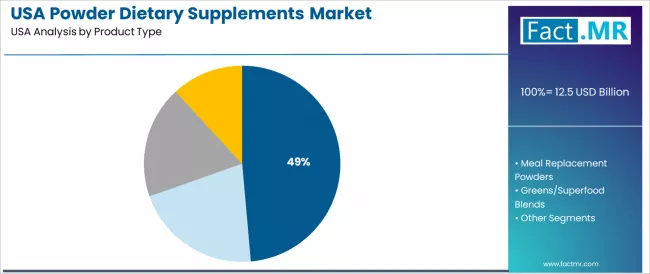
Usa Powder Dietary Supplements Market Analysis By Product Type | Source: Fact.MR
The protein powders segment, with a 48.6% share, is the undisputed engine of the category. Its dominance extends far beyond bodybuilding; it is now a mainstream tool for weight management, healthy aging, and general wellness. Continuous innovation is the lifeblood of this segment, spanning new protein sources (e.g., cricket, salmon, upcycled plant proteins), advanced processing for better digestibility and mixability, and flavor systems that rival indulgent desserts. The segment also benefits from strong scientific consensus on protein's benefits, making it a trusted and justifiable purchase for a wide demographic.
The evolution of protein powders is marked by increased specialization. Formulations are now targeted for specific times of day (e.g., slow-release casein before bed), specific fitness goals (e.g., lean mass gain vs. weight loss), and specific dietary needs (e.g., keto-friendly, low-FODMAP). This specialization creates multiple sub-segments and price points within the broader category. Furthermore, the use of protein powder as a functional food ingredient added to pancakes, coffee, and oatmeal has expanded its USAge occasions, driving consistent household penetration and repeat purchase cycles that solidify its market leadership.
Why is the Online Retail Channel the Dominant Pathway to Market?
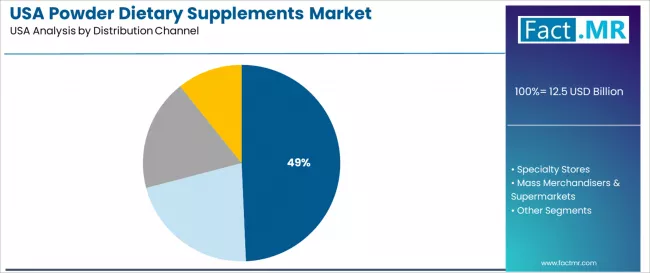
Usa Powder Dietary Supplements Market Analysis By Distribution Channel | Source: Fact.MR
The online retail channel's 49.3% share underscores its role as the central hub for research, purchase, and loyalty in the powder supplements space. The complexity of product choice comparing protein concentrations, ingredient decks, and sourcing stories requires the rich information environment that online platforms provide. This channel enables the direct-to-consumer (DTC) model that many innovative brands are built upon, allowing for personalized subscription plans, direct customer feedback loops, and high-margin sales that can be reinvested in product development.
Online dominance is further cemented by the community-driven nature of the fitness and wellness world. Social proof, in the form of detailed customer reviews, influencer endorsements, and user-generated content, is a primary purchase driver. Online stores facilitate this social validation seamlessly. The subscription model, inherently an online strength, is particularly powerful for powders as they are consumable products used regularly. This model guarantees customer retention and predictable revenue for brands, while offering convenience and often a cost savings to the consumer, creating a powerful economic lock-in that physical retail struggles to match.
What are the Drivers, Restraints, Opportunities, and Trends in the Powder Dietary Supplements Industry in US?
The growth trajectory of the US powder dietary supplements industry is shaped by a complex interplay of sustained macro-level tailwinds and significant, evolving challenges. Underlying consumer behavior shifts towards self-optimization and convenience provide a powerful, foundational demand driver.
This growth occurs within a fiercely competitive and increasingly scrutinized marketplace, where regulatory frameworks, cost pressures, and consumer skepticism create substantial headwinds. Navigating this landscape requires an acute understanding of the specific forces propelling the market forward, the barriers constraining it, and the nascent trends that will redefine competitive dynamics in the coming decade.
The following analysis distills these multifaceted influences into core drivers, restraints, and key trends. This structured examination is critical for stakeholders to identify strategic opportunities, mitigate inherent risks, and allocate resources toward innovations that align with the market's evolving future state. The balance between the entrenched demand for performance nutrition and the rising call for holistic, personalized wellness will continue to dictate where investment and innovation yield the highest returns.
The Mainstreaming of Fitness and Proactive Health Management
The cultural elevation of fitness and holistic well-being from niche hobbies to core lifestyle components is a primary driver. Powder supplements, particularly protein and performance blends, are viewed as essential tools for achieving fitness goals, supporting recovery, and maintaining metabolic health.
This driver expands the consumer base beyond athletes to include everyday active individuals, aging populations focused on sarcopenia prevention, and wellness-oriented consumers, ensuring sustained market expansion across multiple demographics.
Demand for Convenience and Nutritionally Complete Solutions
In an era of time scarcity, consumers seek efficient, nutrient-dense solutions. Meal replacement powders (MRPs) and greens powders offer a quick, controlled, and often fortified alternative to traditional meals or inadequate nutrition. This driver fuels growth in powders designed for specific occasions such as quick breakfasts, post-workout recovery, or on-the-go nourishment catering to the need for both convenience and targeted nutritional outcomes without the preparation time of whole foods.
Product Commoditization and Intense Price Competition
The powder supplement market, especially for basic proteins, faces significant commoditization pressure. The presence of numerous brands, robust private-label offerings from major retailers, and the perceived similarity of base ingredients lead to intense price competition.
This squeezes margins, making it difficult for brands to fund meaningful innovation and often forcing competition on price rather than quality or science, which can erode overall category value and consumer trust in premium offerings.
Consumer Overwhelm and Skepticism Regarding Claims
The market's saturation with products making similar claims such as "best absorption," and "clinically studied" can lead to consumer confusion and skepticism. Navigating exaggerated marketing, "greenwashing," and misleading labeling is challenging for consumers.
This skepticism creates a barrier to trial for new brands and places a premium on third-party certifications (e.g., NSF Certified for Sport, Informed-Choice) and transparent, educational marketing to build genuine trust and justify price premiums.
The Rise of Personalized Powder Subscription Services
The frontier of the market is moving towards hyper-personalization. Brands are leveraging online quizzes, health assessments, and even DNA or biomarker data to create custom-blended powder formulations for individual customers.
Subscription services then deliver these personalized stacks monthly. This trend represents the ultimate shift from one-size-fits-all to bespoke nutrition, leveraging data to enhance perceived efficacy and create extremely high customer loyalty and lifetime value by solving the individual's unique nutritional puzzle.
Analysis of US Powder Dietary Supplements Industry by Key Regions

Usa Powder Dietary Supplements Market Cagr Analysis By Country | Source: Fact.MR
| Region | CAGR (2025 to 2035) |
|---|---|
| West | 4.7% |
| North | 4.4% |
| Southwest | 4.1% |
| Midwest | 3.8% |
Source: Fact.MR analysis. Updated Dec 4, 2025
The US powder dietary supplements market exhibits distinct regional growth patterns and consumer behaviors, shaped by variations in lifestyle, fitness culture, demographic composition, and economic factors. A regional analysis is crucial for understanding that national trends manifest with different intensities and nuances across the country. The West leads as the epicenter of innovation and early adoption, driven by a pervasive wellness ethos. The North follows with a high-performance, urban-professional focus.
The Southwest shows strong growth fueled by an active lifestyle and demographic vitality, while the Midwest represents a stable, value-conscious market with deep penetration in traditional sports nutrition. Success requires manufacturers to tailor product assortments, marketing messaging, and even flavor profiles to align with these regional characteristics.
What Strategic Advantages Position the West as the Leading Growth Region?
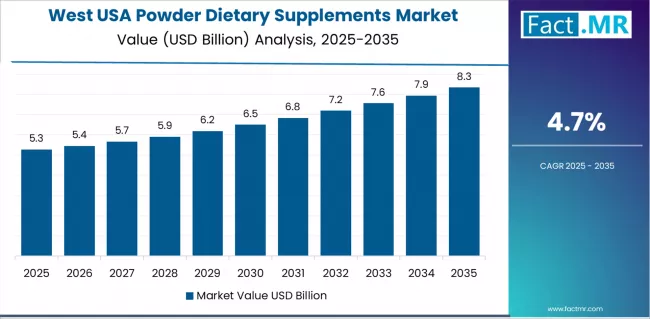
Usa Powder Dietary Supplements Market Country Value Analysis | Source: Fact.MR
The West, with a leading CAGR of 4.7%, is the nation's trend laboratory for powder supplements. A culture deeply invested in fitness, outdoor activity, holistic health, and technological innovation creates fertile ground. Consumers here are early adopters of novel plant-based proteins, adaptogen-infused performance blends, and products with stringent clean-label and sustainability credentials.
The presence of Silicon Valley also fosters tech-driven personalized nutrition startups that often use powder as their primary delivery format. Marketing in the West must emphasize ingredient provenance, ethical sourcing, and alignment with a holistic, lifestyle-oriented wellness philosophy.
How does the North's Performance-Oriented and Urban Culture Fuel its Market?
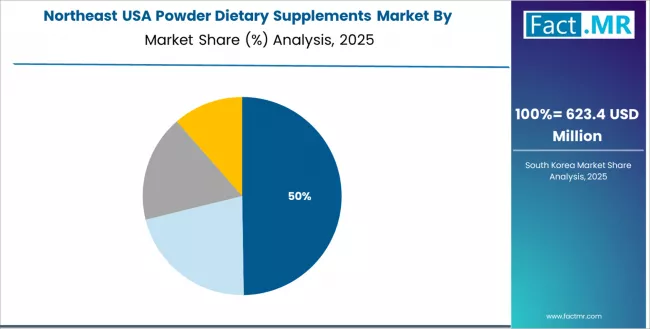
Usa Powder Dietary Supplements Market Northeast Market Share Analysis By Distribution Channel | Source: Fact.MR
The North, growing at a CAGR of 4.4%, is characterized by a high-density urban population, affluent consumers, and a strong culture of goal-oriented fitness and professional achievement. This drives demand for clinically researched, performance-specific powders: high-quality protein isolates for lean muscle, pre-workout complexes for energy, and nootropic blends for cognitive focus.
The retail landscape includes specialty gyms, high-end supplement stores, and dominant online subscription services. Consumers are highly informed, responsive to scientific marketing, and willing to pay a premium for brands that demonstrably enhance their physical and cognitive performance in competitive environments.
How do Demographic and Active Lifestyles Propel the Southwest?
The Southwest is forecast to grow at 4.1%, fueled by a young, growing population, a climate conducive to year-round outdoor activity, and a significant presence of fitness enthusiasts and athletes. Demand is robust for products supporting endurance, hydration (electrolyte powders), muscle recovery, and weight management.
The region's large Hispanic community also influences preferences, potentially driving interest in familiar flavors or ingredients. The market is served by a mix of big-box retailers, specialty nutrition stores, and a growing e-commerce presence. Successful brands in the Southwest often emphasize energy, vitality, and practical results that support an active, social lifestyle.
What Factors Underpin Steady Demand in the Midwest?
The Midwest demonstrates steady growth at a CAGR of 3.8%, anchored in a practical, brand-loyal, and value-driven consumer base. This region has a deep-rooted sports culture, supporting consistent demand for mainstream whey protein, weight gainers, and classic pre-workout powders.
Purchases are frequently made at mass merchandisers, club stores like Costco, and local vitamin shops, with a strong emphasis on value per serving and trusted brand names. While adoption of trendy superfood or greens powders is slower, it is growing steadily. Marketing that highlights reliability, straightforward benefits, and cost-effectiveness resonates strongly, making the Midwest a volume-driven bastion for established brands.
Competitive Landscape and Recommendations for Market Players
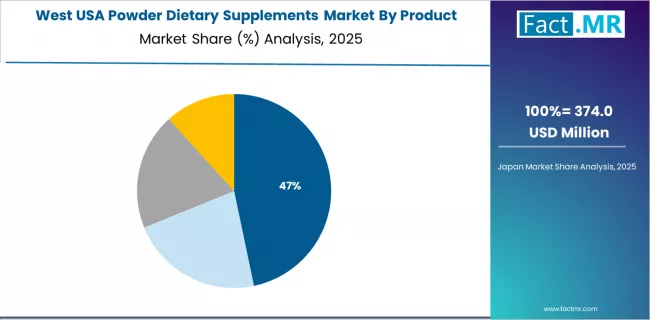
Usa Powder Dietary Supplements Market West Market Share Analysis By Product Type | Source: Fact.MR
The US powder dietary supplements industry is a battleground defined by the scale of global nutrition conglomerates, the deep brand equity of specialized sports nutrition leaders, the disruptive agility of digitally native startups, and the ever-improving quality of retailer private labels. Competition is multifaceted, revolving around scientific credibility, sensory experience (taste/texture), supply chain mastery for consistent quality, and ownership of specific consumer communities—from elite athletes to everyday wellness seekers. The market is increasingly polarized, with mass-market brands competing on price and accessibility in brick-and-mortar, while premium and DTC brands compete on personalization, ingredient purity, and brand story online.
Global players like Glanbia plc (Optimum Nutrition, BSN) and The Bountiful Company compete through vast manufacturing scale, extensive distribution networks, and portfolio strategies that span value to premium tiers. Their strength lies in brand recognition, retail relationships, and the ability to invest in large-scale marketing campaigns. In contrast, DTC innovators like Gainful and KOS compete by building direct relationships, offering customization, and leveraging social media and content marketing to create loyal, subscription-based communities. They iterate quickly based on customer feedback and often champion specific values like plant-based nutrition or ultra-clean sourcing.
A significant and growing competitive force is retailer private label, offered by Amazon (Solimo), Costco (Kirkland Signature), and Walmart (Equate, Spring Valley). These lines exert intense price pressure, rapidly emulate successful innovations, and benefit from high consumer trust in the retailer’s brand and the convenience of one-stop shopping. Their growth forces branded manufacturers to continuously demonstrate superior efficacy, flavor, or brand experience to justify price premiums. Furthermore, competition is intensifying from adjacent categories, with food and beverage companies launching protein shakes and functional powders, blurring the lines and compelling pure-play supplement brands to enhance the nutritional sophistication and functional benefits of their offerings to defend their turf.
Recommendations for Market Players
- Differentiate Through Superior Sensory Science and Flavor Innovation: In a market where basic efficacy is often assumed, the winning differentiator is frequently taste and mixability. Invest heavily in food science and flavor technology to create powders that mix seamlessly without clumping and deliver exceptional, crave-able flavors that drive daily adherence. Overcoming the "chalky" or artificial aftertaste associated with many powders represents a major opportunity to win consumer loyalty and justify premium positioning in a crowded field.
- Develop a Dual-Channel Strategy with Community at the Core: Adopt a channel-specific strategy that leverages the strengths of both DTC and brick-and-mortar. Use the DTC channel for building community, gathering first-party data, testing new products, and serving enthusiast consumers with personalized subscriptions. Simultaneously, develop tailored SKUs (size, flavor, formulation) for key retail partners, from specialty stores to mass merchants. The brand community built online should be leveraged to drive brand awareness and pull-through demand for products in physical retail locations.
- Champion Transparency with Blockchain-Enabled Traceability and Rigorous Certification: Address consumer skepticism head-on by implementing full supply chain transparency. Utilize blockchain or similar technology to allow consumers to trace ingredients from source to their container. Pursue and prominently feature relevant third-party certifications (e.g., NSF Certified for Sport for athletes, Non-GMO Project Verified, USDA Organic) to provide independent validation of purity, safety, and label claims. This tangible proof builds trust that marketing alone cannot achieve.
- Innovate in Sustainable Packaging and Zero-Waste Initiatives: Environmental impact is a critical purchase factor, especially for the core demographic. Pioneer sustainable packaging solutions such as home-compostable pouches, reusable tubs with recyclable refill packets, or packaging made from post-consumer recycled materials. Develop and promote a circular economy program for used containers. Leadership in sustainability is not just an ethical stance but a powerful competitive advantage and brand differentiator in the modern market.
- Create Ecosystem Integration with Fitness and Health Platforms: Move beyond being a product company to becoming an integrated part of the consumer's health ecosystem. Form partnerships with fitness apps (e.g., MyFitnessPal, Strava), wearable technology companies (e.g., Whoop, Fitbit), and telehealth services. Offer integrations where workout data or health goals automatically inform supplement recommendations or adjust subscription deliveries. This embeds the brand into the user's daily routine and creates a sticky, value-added service that transcends transactional product sales.
Key Players in US Powder Dietary Supplements Industry
- The Bountiful Company (Nature’s Bounty, Pure Protein)
- Glanbia plc (Optimum Nutrition, BSN, Isopure)
- Nestlé Health Science (Garden of Life)
- BellRing Brands (Premier Protein)
- Abbott Nutrition (Ensure, EAS)
- Iovate Health Sciences (MuscleTech, Six Star)
- NOW Foods
- Gainful, Inc.
- KOS
- Sunwarrior
- Orgain Inc.
- Ghost Lifestyle
- Vega (a Danone brand)
Segmentation
Scope of the Report
| Item | Value / Coverage |
|---|---|
| Quantitative Units | Revenue in USD Billion |
| Market Valuation (2025) | USD 12.5 Billion |
| Market Valuation (2035) | USD 18.9 Billion |
| Forecast Period | 2025 - 2035 |
| Product Type Segmentation | Protein Powders, Meal Replacement Powders, Greens/Superfood Blends, Specialty Performance Powders |
| Distribution Channel Segmentation | Online Retail, Specialty Stores, Mass Merchandisers & Supermarkets, Others |
| Regions Covered | West, Southwest, North, Midwest |
| Key Companies Profiled | The Bountiful Company, Glanbia, Nestlé Health Science, BellRing, Abbott, Iovate, NOW Foods, Gainful |
| Additional Attributes | Analysis by product and distribution channel; regional growth dynamics; competitive landscape; impact of personalization and sustainability trends; regulatory (DSHEA) analysis. |
Source: Fact.MR analysis. Updated Dec 4, 2025
US Powder Dietary Supplements Industry by Segments
-
Product Type :
- Protein Powders
- Meal Replacement Powders
- Greens/Superfood Blends
- Specialty Performance Powders
-
Distribution Channel :
- Online Retail
- Specialty Stores
- Mass Merchandisers & Supermarkets
- Others
-
Region :
- West
- Southwest
- North
- Midwest
Frequently Asked Questions
How big is the Demand for Powder Dietary Supplements in US in 2025?
What will be the size of powder dietary supplements in USA in 2035?
How much will be the Demand for Powder Dietary Supplements in US growth between 2025 and 2035?
What are the key product types in the powder dietary supplements in USA?
Which distribution channel segment is expected to contribute significant share in the powder dietary supplements in USA in 2025?
Who worked on this report


Preview the report firsthand - request a free sample
Free SampleGet the brochure for pricing and purchase details
Download PDF