Zero Trust Architecture Market Size, Share, Growth and Forecast (2026 - 2036)
The Zero Trust Architecture Market is Segmented by Component (Solutions and Services), Security Type (Network Security, Data Security, Endpoint Security, Cloud Security, and Application Security), Authentication Type, Enterprise Size, Rollout Model, End Use, and Region. Forecast for 2026 to 2036.
Fact.MR states that the zero trust architecture market is moving toward identity-checked access and device-verified security controls. Cloud work and remote access are raising demand across banks, healthcare providers, public agencies and manufacturers. Basic perimeter security and password-only access are losing relevance in regulated enterprises.
Zero Trust Architecture Market Forecast and Outlook by Fact.MR
- The zero trust architecture market was valued at USD 40.2 billion in 2025.
- Based on Fact.MR analysis, demand is estimated to grow to USD 46.8 billion in 2026 and USD 215.6 billion by 2036.
- Fact.MR projects a 16.5% CAGR during the forecast period.
- The market is forecast to generate an incremental revenue opportunity of USD 168.8 billion between 2026 and 2036.
- Enterprise security budgets are moving from perimeter firewalls to user and device access checks.
- Cloud work and remote access increase the need for identity-based controls.
- Older network designs and skill gaps can slow full rollout in smaller firms.
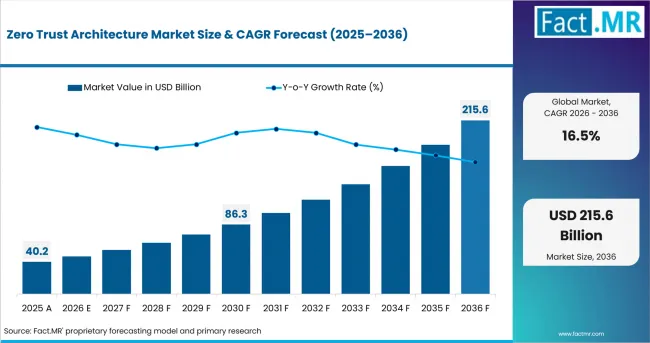
Summary of Zero Trust Architecture Market
- Demand Drivers
- Federal and enterprise security programs use zero trust to reduce credential-based access risk. NIST published SP 1800-35 in June 2025 with 24 vendors and 19 sample implementations for end-to-end zero trust designs. [1]
- Cloud and remote work shift budgets toward identity as a service and device-checked access. This favors platforms that combine user identity with session-level access rules.
- Threat exposure across banks and public agencies supports spending on endpoint security and application access control. Users need proof before reaching private applications.
- Key Segments Analyzed
- By Component: Solutions hold 66.2% share in 2026 because enterprises first invest in access control platforms and identity engines before service programs.
- By Security Type: Network security accounts for 32.7% share in 2026 since companies replace open internal access with controlled application-level paths.
- By Authentication Type: Multi factor authentication leads with 87.6% share in 2026 because password-only access no longer meets enterprise security review needs.
- By Enterprise Size: Large enterprises capture 64.8% share in 2026 as complex user groups and wider application estates require consistent access rules.
- By Rollout Model: Cloud based rollout holds 58.4% share in 2026 because subscription access platforms support remote work and faster policy updates.
- By End Use: Banking and financial services account for 28.9% share in 2026 since payment systems and account data need strict access review.
- Analyst Opinion at Fact.MR
- Shambhu Nath Jha, Principal Consultant at Fact.MR, opines, “CXOs will treat zero trust architecture as a control program, not a single tool. The next spending cycle will favor platforms that verify identity and device status. Access approval must happen through one clear operating path.”
- Strategic Implications
- Vendors should package identity checks with data center logical security controls so companies can protect cloud and private assets through one policy layer.
- Service partners should support phased migration from virtual private networks to software defined security so firms avoid disruption during policy changes.
- Suppliers should show clear integration with email encryption and access logging because regulated firms need audit records during cyber reviews.
| Metric | Value |
|---|---|
| Estimated Value in 2026 | USD 46.8 billion |
| Forecast Value in 2036 | USD 215.6 billion |
| Forecast CAGR (2026 to 2036) | 16.5% |
India leads at 19.8% CAGR through 2036 as banks and public systems add identity checks after rising cyber incidents. China follows at 19.1% CAGR from 2026 to 2036 as large internet use and data rules lift platform spending. Australia records 17.4% CAGR through 2036 due to critical infrastructure alerts and board-level cyber reporting. The United States grows at 16.9% CAGR by 2036 as federal zero trust guidance enters private sector security planning. The United Kingdom is forecast at 16.5% CAGR from 2026 to 2036 as breach reporting keeps identity control budgets steady. Germany advances at 16.1% CAGR by 2036 as industrial firms invest after cyber theft and sabotage losses. Japan expands at 15.8% through 2036 as phishing reports push enterprises toward stronger user checks.
Segmental Analysis
Zero Trust Architecture Market Analysis by Component

Solutions are likely to hold 66.2% share in 2026 as enterprises first buy access control platforms and identity engines before long service programs. This share reflects spending on software licenses and policy engines. Connectors link users to applications through controlled access paths. Services keep expanding as firms need design support and migration help. The platform-first pattern favors vendors that can sell licenses and guide phased change through partners.
- Solution Platform Preference: Enterprises prefer packaged policy engines that connect users to private applications and reduce separate tool handling.
- Service Need Expansion: Consulting and managed support rise as firms need help moving old access paths into zero trust rules.
- Channel Partner Role: System integrators gain work from identity cleanup and access mapping before platform rollout starts.
Zero Trust Architecture Market Analysis by Security Type

Network security is forecast to hold 32.7% share in 2026 because companies replace open internal network access with controlled paths to each application. The segment gains from cloud work and hybrid infrastructure that need traffic checks between users and resources. Data security and endpoint protection stay important, but network access redesign is often the first funded step. This pushes demand toward vendors that reduce lateral movement after a user session starts.
- Network Access Control: Companies use application-level paths to reduce broad network entry and limit internal attacker movement.
- Data Protection Need: Regulated firms connect access rules to file handling and data loss policies for audit comfort.
- Device Check Use: Security staff review device health before allowing session access to private tools.
Zero Trust Architecture Market Analysis by Authentication Type

Multi factor authentication is expected to hold 87.6% share in 2026 as password-only access no longer meets regulated enterprise security reviews. The subsegment gains from phishing risk and stolen credential exposure. MFA works as the first proof layer before device checks and session rules apply. Vendors with passkeys and risk-based identity tools should see deeper use in large enterprises.
- Password Risk Reduction: Enterprises use multi factor checks to limit account takeover after phishing attacks.
- Passkey Transition: Large firms test phishing-resistant sign-in tools as policy groups reduce reliance on text codes.
- Audit Trail Value: Identity logs support cyber review processes and internal access investigations.
Zero Trust Architecture Market Analysis by Enterprise Size

Large enterprises are likely to hold 64.8% share in 2026 due to complex user groups and wider application estates. These firms need consistent access rules for employees and contractors. Security staff often start with high-risk applications before expanding to finance and customer systems. Smaller firms buy simpler bundles through managed partners as internal security capacity stays limited.
- Large Account Depth: Large firms need policy rules across cloud tools and private applications with fewer exceptions.
- Midmarket Bundle Use: Smaller companies buy managed packages that combine identity checks with threat monitoring.
- Contractor Access Control: Enterprises add short-term access rules for outside workers and partner accounts.
Zero Trust Architecture Market Analysis by Rollout Model

Cloud rollout is likely to hold 58.4% share in 2026 as companies prefer subscription access platforms over heavy internal buildouts. Cloud delivery supports remote work and branch access with faster policy updates. On premise use continues in defense and public sector systems. Sensitive industrial networks keep some controls under direct ownership. Hybrid programs will continue as large companies keep some private assets under direct control.
- Cloud Service Preference: Enterprises use cloud access services to connect distributed staff to private applications with fewer network appliances.
- Hybrid Control Need: Public agencies keep some identity and access controls inside private infrastructure for sensitive data.
- Partner Managed Rollout: Managed security service providers support firms that lack internal cyber staff for policy tuning.
Zero Trust Architecture Market Analysis by End Use

Banking and financial services are forecast to hold 28.9% share in 2026 because account data and payment systems need strict access review. Financial firms buy zero trust tools to reduce fraud exposure and meet audit checks. Healthcare and government follow as patient records and public data require stronger identity proof. Retail and manufacturing add demand as cloud tools support operations and partner access.
- Banking System Protection: Financial firms control access to payment systems and customer records through identity-verified sessions.
- Healthcare Data Control: Hospitals use user checks to protect patient records and connected care systems.
- Public Sector Rollout: Agencies apply zero trust steps to reduce credential misuse and improve audit readiness.
Drivers, Restraints and Opportunities

Zero trust architecture demand rises as enterprise systems move beyond fixed office networks. Access must be checked across cloud applications and private systems. The United States Federal Bureau of Investigation received 859,532 complaints of suspected internet crime in the 2024 Internet Crime Report cycle. [2] This pushes boards to fund identity checks and session limits before attackers move through networks.
The main restraint is migration cost within older networks. Companies must clean identity records and map access rights before controls can work. Old applications may need connectors or policy exceptions. This can slow purchase timing for firms that cannot pause business systems during security redesign.
- Driver: Cloud application access creates spending for zero trust tools that connect identity checks with private application control.
- Restraint: Older identity directories raise migration cost because access rules can fail when user records are duplicated or outdated.
- Opportunity: Cyber security mesh planning creates demand for distributed controls that protect users and devices near the application layer.
Regional Analysis
The zero trust architecture market is assessed across North America, Western Europe, Eastern Europe, East Asia, South Asia and Pacific, Latin America, and the Middle East and Africa, covering 40+ countries by component, security type, authentication type, enterprise size, rollout model, and end use. The full report includes market attractiveness analysis by region and country.
.webp)
| Country | CAGR (2026 to 2036) |
|---|---|
| India | 19.8% |
| China | 19.1% |
| Australia | 17.4% |
| United States | 16.9% |
| United Kingdom | 16.5% |
| Germany | 16.1% |
| Japan | 15.8% |
Source: Fact.MR analysis, based on proprietary forecasting model and primary research.
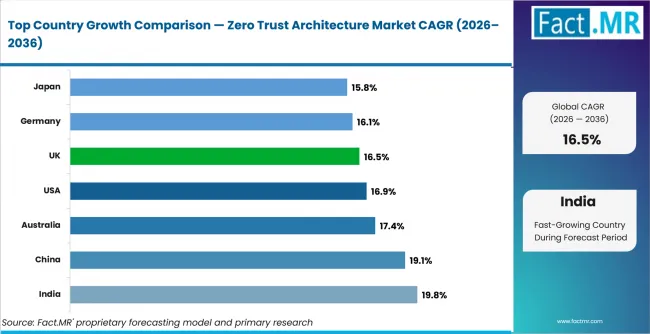
Asia Pacific Zero Trust Architecture Market Analysis
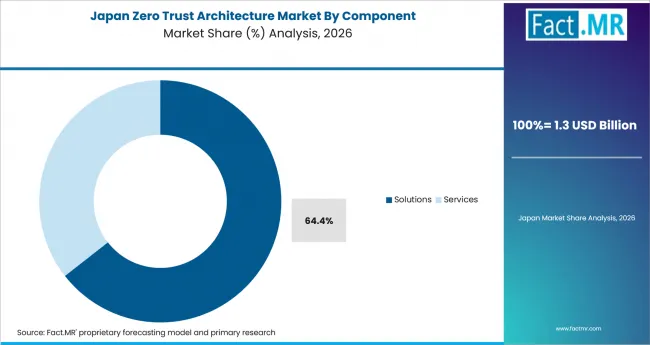
Asia Pacific shows faster growth in zero trust architecture as cloud service expansion and online public systems raise the need for identity-led access control. Cloud service expansion and online public systems are raising the need for identity-led access control. Banking and regulated cloud users are leading platform upgrades across the region.
- India: India is likely to grow at 19.8% CAGR from 2026 to 2036. Indian Computer Emergency Response Team handled over 29.44 lakh cyber incidents in 2025, which is raising security spending across banking and public service networks. Large IT service firms are expected to lead purchases through identity access upgrades. [4]
- China: China is forecast to expand at 19.1% CAGR through 2036. More than 1.12 billion internet users in June 2025 create a large access surface for security controls. Large cloud users and regulated data operators will need stronger identity proof for application access. [5]
- Japan: Japan advances at 15.8% CAGR by 2036. JPCERT Coordination Center received 10,102 incident reports in the first quarter of 2025. This supports phishing defense and identity review needs for finance and e-commerce systems. Enterprises are likely to begin with MFA and secure application access. [7]
- Australia: Australia is expected to reach 17.4% CAGR through 2036. Australian Signals Directorate responded to over 1,200 cyber security incidents in fiscal year 2024 to 2025. This supports board attention on identity and access control. Critical infrastructure operators will be early buyers as incident reporting pressure rises. [8]
North America Zero Trust Architecture Market Analysis
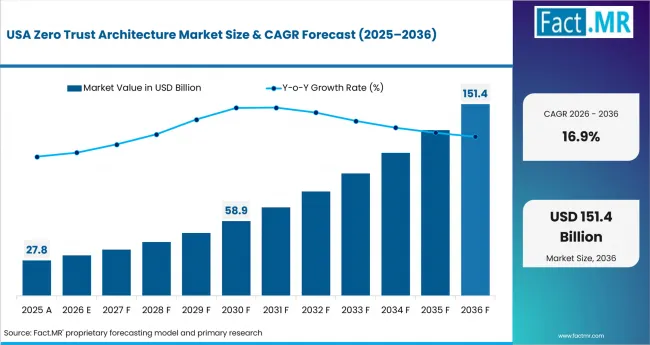
North America is the largest regional revenue center for zero trust architecture. Federal guidance and breach pressure support spending on identity-based access across public and private networks. Large banks, healthcare systems and connected operations are expected to adopt full platform stacks.
- United States: The United States is expected to expand at 16.9% CAGR through 2036. Federal guidance and breach pressure are creating spending on identity-based access. Large banks and healthcare systems are expected to buy full platform stacks. Vendors with industrial security skills can extend zero trust into connected operations.
Europe Zero Trust Architecture Market Analysis

Europe advances through privacy rules and cross-border cyber regulation. Financial services, public agencies and industrial firms are increasing access control budgets. Audit-friendly tools are gaining preference as enterprises align identity security with local data rules.
- United Kingdom: The United Kingdom is likely to reach 16.5% CAGR by 2036. In the 2025 to 2026 government survey, 43% of businesses reported a cyber-security breach or attack in the last twelve months. This exposure supports identity security budgets across financial services and public agencies. [3]
- Germany: Germany is forecast to advance at 16.1% CAGR from 2026 to 2036. Bitkom reported that 87% of companies were affected by data theft, espionage or sabotage during the past twelve months. Industrial firms are investing in access segmentation to protect production systems and research data. [6]
Competitive Aligners for Market Players
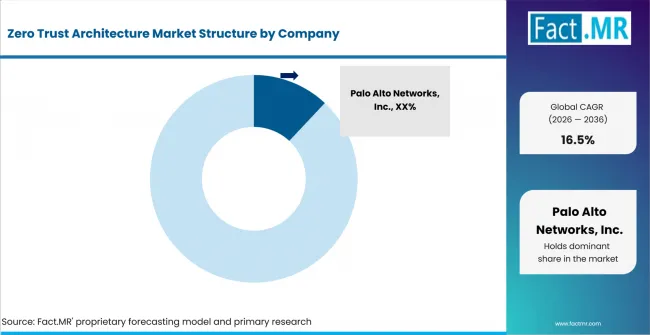
Zero trust architecture suppliers compete on identity depth and private application access. Device posture checks are another key point for enterprise clients. Palo Alto Networks, Inc. and Zscaler, Inc. hold active positions through access security platforms. Cisco Systems, Inc. and Cloudflare, Inc. compete through network control depth. Akamai Technologies, Inc. and Fortinet, Inc. support enterprise security channels. Okta, Inc. and Microsoft Corporation have strength in identity-based access. Competitive advantage comes from reducing separate tools and keeping clear audit records.
Companies prefer suppliers that connect identity services with network access and cloud controls. This favors vendors that support zero trust architecture without requiring a full network rebuild. Service partners stay important because most companies need staged migration and policy cleanup before full rollout.
Pricing pressure is strongest in basic MFA and access gateway functions. Larger vendors defend account share through bundled security platforms and ecosystem support. Specialist vendors compete through faster integration and better user experience. The market will favor providers that prove low disruption during migration and clear access logs after rollout.
Key Players
- Palo Alto Networks, Inc.
- Zscaler, Inc.
- Cisco Systems, Inc.
- Cloudflare, Inc.
- Akamai Technologies, Inc.
- Fortinet, Inc.
- Okta, Inc.
- Microsoft Corporation
Bibliography
- [1] National Institute of Standards and Technology. (2025, June 10). Implementing a zero trust architecture: NIST publishes SP 1800-35.
- [2] Federal Bureau of Investigation. (2025, April 23). FBI releases annual Internet Crime Report.
- [3] Department for Science, Innovation & Technology. (2026, April 30). Cyber security breaches survey 2025/2026. GOV.UK.
- [4] Press Information Bureau. (2026, January 23). CERT-In: India’s frontline defender against cyber threats. Government of India.
- [5] Xinhua. (2025, July 21). China has over 1.12 billion internet users, boosting prowess in culture, AI. The State Council of the People’s Republic of China.
- [6] Bitkom e. V. (2025, September 18). Economic security 2025.
- [7] JPCERT Coordination Center. (2025, April 17). JPCERT/CC incident handling report: January 1, 2025–March 31, 2025.
- [8] Australian Signals Directorate. (2025, October 14). Annual cyber threat report 2024-2025.
This Report Addresses
- Strategic demand analysis for zero trust architecture platforms across banking and financial services, healthcare, government, retail, manufacturing, and information technology and telecom globally.
- Market forecast from USD 46.8 billion in 2026 to USD 215.6 billion by 2036 at 16.5% CAGR, with segment-level analysis by component, security type, authentication type, enterprise size, rollout model, and end use.
- Opportunity mapping across India, China, Australia, the United States, the United Kingdom, Germany, and Japan based on cyber incident exposure, identity control investment, and enterprise cloud security adoption.
- Segment analysis by component, security type, authentication type, enterprise size, rollout model, and end use with regional and country-level forecasts through 2036.
- Competitive analysis of Palo Alto Networks, Inc., Zscaler, Inc., Cisco Systems, Inc., Cloudflare, Inc., Akamai Technologies, Inc., Fortinet, Inc., Okta, Inc., and Microsoft Corporation covering identity depth, private application access, device posture checks, and audit record support.
- Regulatory and cyber risk impact analysis covering NIST SP 1800-35, FBI cybercrime reporting, CERT-In incident data, United Kingdom breach survey findings, Bitkom cyber loss reporting, JPCERT incident reports, and Australian Signals Directorate cyber incident response.
- Report delivery in PDF, Excel, and presentation formats supported by vendor platform documentation, national cyber incident records, standards guidance, and enterprise security interviews.
Zero Trust Architecture Market Definition
The zero trust architecture market covers security frameworks and access control platforms that verify every user and device before system access is allowed. These solutions apply identity checks and session rules across cloud applications, private systems and hybrid enterprise networks. They help banks, healthcare providers, public agencies and manufacturers reduce password based access risk.
Zero Trust Architecture Market Inclusions
Covers global and regional market forecasts from 2026 to 2036 by component, security type, authentication type, enterprise size, rollout model and end use. Includes solutions and services across network security, data security, endpoint security, cloud security and application security. Covers multi factor authentication, single factor authentication and risk based authentication across large enterprises and small and medium enterprises. Includes cloud based, on premise and hybrid rollout models serving banking and financial services, healthcare, government, retail, manufacturing and information technology and telecom end users.
Zero Trust Architecture Market Exclusions
Excludes general perimeter firewall systems that do not include identity verified access controls. Omits standalone password management tools used without session control or device posture checks. Excludes basic antivirus software, unmanaged virtual private network tools and network monitoring systems unless they form part of a zero trust access architecture. Excludes consumer security applications and personal device security subscriptions outside enterprise access control use.
Zero Trust Architecture Market Research Methodology
- Primary Research
- Interviews with enterprise security heads at banks and healthcare providers, public sector technology officers, managed security service providers and zero trust platform vendors across the United States, Germany, India, China, Japan, Australia and the United Kingdom.
- Desk Research
- Analysis of product documentation and security platform updates from Palo Alto Networks, Inc., Zscaler, Inc., Cisco Systems, Inc., Cloudflare, Inc., Akamai Technologies, Inc., Fortinet, Inc., Okta, Inc., and Microsoft Corporation. Supplemented by NIST zero trust guidance, FBI cybercrime reporting, national cyber incident data and government breach surveys.
- Market-Sizing and Forecasting
- Hybrid model combining top-down enterprise cybersecurity spending estimates with bottom-up access control deployment projections by end use. Platform subscription pricing, service revenue and rollout model adoption are modeled independently and aggregated across all major regions.
- Data Validation and Update Cycle
- Validated through vendor product catalogs, enterprise security implementation records, managed service provider inputs and national cyber incident reporting. Updated annually with standards guidance, breach reporting trends, vendor platform changes and enterprise security budget cycles.
Scope of the Report

| Attribute | Details |
|---|---|
| Quantitative Units | USD 46.8 billion (2026) to USD 215.6 billion (2036), at a CAGR of 16.5% |
| Market Definition | Zero trust architecture solutions used to verify every user and device before system access is allowed across cloud applications, private systems, and hybrid enterprise networks. |
| Component Segmentation | Solutions, Services |
| Security Type Segmentation | Network Security, Data Security, Endpoint Security, Cloud Security, Application Security |
| Authentication Type Segmentation | Multi Factor Authentication, Single Factor Authentication, Risk Based Authentication |
| Enterprise Size Segmentation | Large Enterprises, Small and Medium Enterprises |
| Rollout Model Segmentation | Cloud Based, On Premise, Hybrid |
| End Use Coverage | Banking and Financial Services, Healthcare, Government, Retail, Manufacturing, Information Technology and Telecom |
| Regions Covered | North America, Western Europe, Eastern Europe, East Asia, South Asia and Pacific, Latin America, Middle East and Africa |
| Countries Covered | United States, United Kingdom, Germany, India, China, Japan, Australia, and 40+ country-level markets |
| Key Companies Profiled | Palo Alto Networks, Inc., Zscaler, Inc., Cisco Systems, Inc., Cloudflare, Inc., Akamai Technologies, Inc., Fortinet, Inc., Okta, Inc., and Microsoft Corporation |
| Forecast Period | 2026 to 2036 |
| Approach | Hybrid top-down and bottom-up model using enterprise cybersecurity spending estimates, access control deployment projections, vendor platform documentation, national cyber incident reporting, and primary interviews with enterprise security heads, public sector technology officers, managed security service providers, and zero trust platform vendors. |
Zero Trust Architecture Market by Segment
-
By Component
- Solutions
- Services
-
By Security Type
- Network Security
- Data Security
- Endpoint Security
- Cloud Security
- Application Security
-
By Authentication Type
- Multi Factor Authentication
- Single Factor Authentication
- Risk Based Authentication
-
By Enterprise Size
- Large Enterprises
- Small and Medium Enterprises
-
By Rollout Model
- Cloud Based
- On Premise
- Hybrid
-
By End Use
- Banking and Financial Services
- Healthcare
- Government
- Retail
- Manufacturing
- Information Technology and Telecom
-
By Region
- North America
- Western Europe
- Eastern Europe
- East Asia
- South Asia and Pacific
- Latin America
- Middle East and Africa

- Frequently Asked Questions -
How large is the global zero trust architecture market in 2025?
The global zero trust architecture market was valued at USD 40.2 billion in 2025.
What will the market size be in 2026?
Based on Fact.MR analysis, demand for zero trust architecture is estimated to grow to USD 46.8 billion in 2026.
What is the projected market size by 2036?
The market is projected to reach USD 215.6 billion by 2036, generating USD 168.8 billion in incremental revenue opportunity.
What is the expected CAGR from 2026 to 2036?
Fact.MR projects 16.5% CAGR for the global zero trust architecture market from 2026 to 2036.
Which component segment leads the zero trust architecture market?
Solutions lead with 66.2% share in 2026 because enterprises first invest in access control platforms and identity engines before service programs.
Which authentication type leads the zero trust architecture market?
Multi factor authentication leads with 87.6% share in 2026 as password-only access no longer meets regulated enterprise security review needs.
Which country shows the fastest growth in the zero trust architecture market?
India leads at 19.8% CAGR through 2036, driven by rising cyber incidents and security spending across banking and public service networks.
Table of Content
- Executive Summary
- Global Market Outlook
- Demand to side Trends
- Supply to side Trends
- Technology Roadmap Analysis
- Analysis and Recommendations
- Market Overview
- Market Coverage / Taxonomy
- Market Definition / Scope / Limitations
- Research Methodology
- Chapter Orientation
- Analytical Lens and Working Hypotheses
- Market Structure, Signals, and Trend Drivers
- Benchmarking and Cross-market Comparability
- Market Sizing, Forecasting, and Opportunity Mapping
- Research Design and Evidence Framework
- Desk Research Programme (Secondary Evidence)
- Company Annual and Sustainability Reports
- Peer-reviewed Journals and Academic Literature
- Corporate Websites, Product Literature, and Technical Notes
- Earnings Decks and Investor Briefings
- Statutory Filings and Regulatory Disclosures
- Technical White Papers and Standards Notes
- Trade Journals, Industry Magazines, and Analyst Briefs
- Conference Proceedings, Webinars, and Seminar Materials
- Government Statistics Portals and Public Data Releases
- Press Releases and Reputable Media Coverage
- Specialist Newsletters and Curated Briefings
- Sector Databases and Reference Repositories
- Fact.MR Internal Proprietary Databases and Historical Market Datasets
- Subscription Datasets and Paid Sources
- Social Channels, Communities, and Digital Listening Inputs
- Additional Desk Sources
- Expert Input and Fieldwork (Primary Evidence)
- Primary Modes
- Qualitative Interviews and Expert Elicitation
- Quantitative Surveys and Structured Data Capture
- Blended Approach
- Why Primary Evidence is Used
- Field Techniques
- Interviews
- Surveys
- Focus Groups
- Observational and In-context Research
- Social and Community Interactions
- Stakeholder Universe Engaged
- C-suite Leaders
- Board Members
- Presidents and Vice Presidents
- R&D and Innovation Heads
- Technical Specialists
- Domain Subject-matter Experts
- Scientists
- Physicians and Other Healthcare Professionals
- Governance, Ethics, and Data Stewardship
- Research Ethics
- Data Integrity and Handling
- Primary Modes
- Tooling, Models, and Reference Databases
- Desk Research Programme (Secondary Evidence)
- Data Engineering and Model Build
- Data Acquisition and Ingestion
- Cleaning, Normalisation, and Verification
- Synthesis, Triangulation, and Analysis
- Quality Assurance and Audit Trail
- Market Background
- Market Dynamics
- Drivers
- Restraints
- Opportunity
- Trends
- Scenario Forecast
- Demand in Optimistic Scenario
- Demand in Likely Scenario
- Demand in Conservative Scenario
- Opportunity Map Analysis
- Product Life Cycle Analysis
- Supply Chain Analysis
- Investment Feasibility Matrix
- Value Chain Analysis
- PESTLE and Porter’s Analysis
- Regulatory Landscape
- Regional Parent Market Outlook
- Production and Consumption Statistics
- Import and Export Statistics
- Market Dynamics
- Global Market Analysis 2021 to 2025 and Forecast, 2026 to 2036
- Historical Market Size Value (USD Million) Analysis, 2021 to 2025
- Current and Future Market Size Value (USD Million) Projections, 2026 to 2036
- Y to o to Y Growth Trend Analysis
- Absolute $ Opportunity Analysis
- Global Market Pricing Analysis 2021 to 2025 and Forecast 2026 to 2036
- Global Market Analysis 2021 to 2025 and Forecast 2026 to 2036, By Component
- Introduction / Key Findings
- Historical Market Size Value (USD Million) Analysis By Component , 2021 to 2025
- Current and Future Market Size Value (USD Million) Analysis and Forecast By Component , 2026 to 2036
- Solutions
- Services
- Solutions
- Y to o to Y Growth Trend Analysis By Component , 2021 to 2025
- Absolute $ Opportunity Analysis By Component , 2026 to 2036
- Global Market Analysis 2021 to 2025 and Forecast 2026 to 2036, By Security Type
- Introduction / Key Findings
- Historical Market Size Value (USD Million) Analysis By Security Type, 2021 to 2025
- Current and Future Market Size Value (USD Million) Analysis and Forecast By Security Type, 2026 to 2036
- Network Security
- Data Security
- Endpoint Security
- Cloud Security
- Application Security
- Network Security
- Y to o to Y Growth Trend Analysis By Security Type, 2021 to 2025
- Absolute $ Opportunity Analysis By Security Type, 2026 to 2036
- Global Market Analysis 2021 to 2025 and Forecast 2026 to 2036, By Authentication Type
- Introduction / Key Findings
- Historical Market Size Value (USD Million) Analysis By Authentication Type, 2021 to 2025
- Current and Future Market Size Value (USD Million) Analysis and Forecast By Authentication Type, 2026 to 2036
- Multi Factor Authentication
- Single Factor Authentication
- Risk Based Authentication
- Multi Factor Authentication
- Y to o to Y Growth Trend Analysis By Authentication Type, 2021 to 2025
- Absolute $ Opportunity Analysis By Authentication Type, 2026 to 2036
- Global Market Analysis 2021 to 2025 and Forecast 2026 to 2036, By Enterprise Size
- Introduction / Key Findings
- Historical Market Size Value (USD Million) Analysis By Enterprise Size, 2021 to 2025
- Current and Future Market Size Value (USD Million) Analysis and Forecast By Enterprise Size, 2026 to 2036
- Large Enterprises
- Small and Medium Enterprises
- Large Enterprises
- Y to o to Y Growth Trend Analysis By Enterprise Size, 2021 to 2025
- Absolute $ Opportunity Analysis By Enterprise Size, 2026 to 2036
- Global Market Analysis 2021 to 2025 and Forecast 2026 to 2036, By Rollout Model
- Introduction / Key Findings
- Historical Market Size Value (USD Million) Analysis By Rollout Model, 2021 to 2025
- Current and Future Market Size Value (USD Million) Analysis and Forecast By Rollout Model, 2026 to 2036
- Cloud Based
- On Premise
- Hybrid
- Cloud Based
- Y to o to Y Growth Trend Analysis By Rollout Model, 2021 to 2025
- Absolute $ Opportunity Analysis By Rollout Model, 2026 to 2036
- Global Market Analysis 2021 to 2025 and Forecast 2026 to 2036, By End Use
- Introduction / Key Findings
- Historical Market Size Value (USD Million) Analysis By End Use, 2021 to 2025
- Current and Future Market Size Value (USD Million) Analysis and Forecast By End Use, 2026 to 2036
- Banking and Financial Services
- Healthcare
- Government
- Retail
- Manufacturing
- Information Technology and Telecom
- Banking and Financial Services
- Y to o to Y Growth Trend Analysis By End Use, 2021 to 2025
- Absolute $ Opportunity Analysis By End Use, 2026 to 2036
- Global Market Analysis 2021 to 2025 and Forecast 2026 to 2036, By Region
- Introduction
- Historical Market Size Value (USD Million) Analysis By Region, 2021 to 2025
- Current Market Size Value (USD Million) Analysis and Forecast By Region, 2026 to 2036
- North America
- Latin America
- Western Europe
- Eastern Europe
- East Asia
- South Asia and Pacific
- Middle East & Africa
- Market Attractiveness Analysis By Region
- North America Market Analysis 2021 to 2025 and Forecast 2026 to 2036, By Country
- Historical Market Size Value (USD Million) Trend Analysis By Market Taxonomy, 2021 to 2025
- Market Size Value (USD Million) Forecast By Market Taxonomy, 2026 to 2036
- By Country
- USA
- Canada
- Mexico
- By Component
- By Security Type
- By Authentication Type
- By Enterprise Size
- By Rollout Model
- By End Use
- By Country
- Market Attractiveness Analysis
- By Country
- By Component
- By Security Type
- By Authentication Type
- By Enterprise Size
- By Rollout Model
- By End Use
- Key Takeaways
- Latin America Market Analysis 2021 to 2025 and Forecast 2026 to 2036, By Country
- Historical Market Size Value (USD Million) Trend Analysis By Market Taxonomy, 2021 to 2025
- Market Size Value (USD Million) Forecast By Market Taxonomy, 2026 to 2036
- By Country
- Brazil
- Chile
- Rest of Latin America
- By Component
- By Security Type
- By Authentication Type
- By Enterprise Size
- By Rollout Model
- By End Use
- By Country
- Market Attractiveness Analysis
- By Country
- By Component
- By Security Type
- By Authentication Type
- By Enterprise Size
- By Rollout Model
- By End Use
- Key Takeaways
- Western Europe Market Analysis 2021 to 2025 and Forecast 2026 to 2036, By Country
- Historical Market Size Value (USD Million) Trend Analysis By Market Taxonomy, 2021 to 2025
- Market Size Value (USD Million) Forecast By Market Taxonomy, 2026 to 2036
- By Country
- Germany
- UK
- Italy
- Spain
- France
- Nordic
- BENELUX
- Rest of Western Europe
- By Component
- By Security Type
- By Authentication Type
- By Enterprise Size
- By Rollout Model
- By End Use
- By Country
- Market Attractiveness Analysis
- By Country
- By Component
- By Security Type
- By Authentication Type
- By Enterprise Size
- By Rollout Model
- By End Use
- Key Takeaways
- Eastern Europe Market Analysis 2021 to 2025 and Forecast 2026 to 2036, By Country
- Historical Market Size Value (USD Million) Trend Analysis By Market Taxonomy, 2021 to 2025
- Market Size Value (USD Million) Forecast By Market Taxonomy, 2026 to 2036
- By Country
- Russia
- Poland
- Hungary
- Balkan & Baltic
- Rest of Eastern Europe
- By Component
- By Security Type
- By Authentication Type
- By Enterprise Size
- By Rollout Model
- By End Use
- By Country
- Market Attractiveness Analysis
- By Country
- By Component
- By Security Type
- By Authentication Type
- By Enterprise Size
- By Rollout Model
- By End Use
- Key Takeaways
- East Asia Market Analysis 2021 to 2025 and Forecast 2026 to 2036, By Country
- Historical Market Size Value (USD Million) Trend Analysis By Market Taxonomy, 2021 to 2025
- Market Size Value (USD Million) Forecast By Market Taxonomy, 2026 to 2036
- By Country
- China
- Japan
- South Korea
- By Component
- By Security Type
- By Authentication Type
- By Enterprise Size
- By Rollout Model
- By End Use
- By Country
- Market Attractiveness Analysis
- By Country
- By Component
- By Security Type
- By Authentication Type
- By Enterprise Size
- By Rollout Model
- By End Use
- Key Takeaways
- South Asia and Pacific Market Analysis 2021 to 2025 and Forecast 2026 to 2036, By Country
- Historical Market Size Value (USD Million) Trend Analysis By Market Taxonomy, 2021 to 2025
- Market Size Value (USD Million) Forecast By Market Taxonomy, 2026 to 2036
- By Country
- India
- ASEAN
- Australia & New Zealand
- Rest of South Asia and Pacific
- By Component
- By Security Type
- By Authentication Type
- By Enterprise Size
- By Rollout Model
- By End Use
- By Country
- Market Attractiveness Analysis
- By Country
- By Component
- By Security Type
- By Authentication Type
- By Enterprise Size
- By Rollout Model
- By End Use
- Key Takeaways
- Middle East & Africa Market Analysis 2021 to 2025 and Forecast 2026 to 2036, By Country
- Historical Market Size Value (USD Million) Trend Analysis By Market Taxonomy, 2021 to 2025
- Market Size Value (USD Million) Forecast By Market Taxonomy, 2026 to 2036
- By Country
- Kingdom of Saudi Arabia
- Other GCC Countries
- Turkiye
- South Africa
- Other African Union
- Rest of Middle East & Africa
- By Component
- By Security Type
- By Authentication Type
- By Enterprise Size
- By Rollout Model
- By End Use
- By Country
- Market Attractiveness Analysis
- By Country
- By Component
- By Security Type
- By Authentication Type
- By Enterprise Size
- By Rollout Model
- By End Use
- Key Takeaways
- Key Countries Market Analysis
- USA
- Pricing Analysis
- Market Share Analysis, 2025
- By Component
- By Security Type
- By Authentication Type
- By Enterprise Size
- By Rollout Model
- By End Use
- Canada
- Pricing Analysis
- Market Share Analysis, 2025
- By Component
- By Security Type
- By Authentication Type
- By Enterprise Size
- By Rollout Model
- By End Use
- Mexico
- Pricing Analysis
- Market Share Analysis, 2025
- By Component
- By Security Type
- By Authentication Type
- By Enterprise Size
- By Rollout Model
- By End Use
- Brazil
- Pricing Analysis
- Market Share Analysis, 2025
- By Component
- By Security Type
- By Authentication Type
- By Enterprise Size
- By Rollout Model
- By End Use
- Chile
- Pricing Analysis
- Market Share Analysis, 2025
- By Component
- By Security Type
- By Authentication Type
- By Enterprise Size
- By Rollout Model
- By End Use
- Germany
- Pricing Analysis
- Market Share Analysis, 2025
- By Component
- By Security Type
- By Authentication Type
- By Enterprise Size
- By Rollout Model
- By End Use
- UK
- Pricing Analysis
- Market Share Analysis, 2025
- By Component
- By Security Type
- By Authentication Type
- By Enterprise Size
- By Rollout Model
- By End Use
- Italy
- Pricing Analysis
- Market Share Analysis, 2025
- By Component
- By Security Type
- By Authentication Type
- By Enterprise Size
- By Rollout Model
- By End Use
- Spain
- Pricing Analysis
- Market Share Analysis, 2025
- By Component
- By Security Type
- By Authentication Type
- By Enterprise Size
- By Rollout Model
- By End Use
- France
- Pricing Analysis
- Market Share Analysis, 2025
- By Component
- By Security Type
- By Authentication Type
- By Enterprise Size
- By Rollout Model
- By End Use
- India
- Pricing Analysis
- Market Share Analysis, 2025
- By Component
- By Security Type
- By Authentication Type
- By Enterprise Size
- By Rollout Model
- By End Use
- ASEAN
- Pricing Analysis
- Market Share Analysis, 2025
- By Component
- By Security Type
- By Authentication Type
- By Enterprise Size
- By Rollout Model
- By End Use
- Australia & New Zealand
- Pricing Analysis
- Market Share Analysis, 2025
- By Component
- By Security Type
- By Authentication Type
- By Enterprise Size
- By Rollout Model
- By End Use
- China
- Pricing Analysis
- Market Share Analysis, 2025
- By Component
- By Security Type
- By Authentication Type
- By Enterprise Size
- By Rollout Model
- By End Use
- Japan
- Pricing Analysis
- Market Share Analysis, 2025
- By Component
- By Security Type
- By Authentication Type
- By Enterprise Size
- By Rollout Model
- By End Use
- South Korea
- Pricing Analysis
- Market Share Analysis, 2025
- By Component
- By Security Type
- By Authentication Type
- By Enterprise Size
- By Rollout Model
- By End Use
- Russia
- Pricing Analysis
- Market Share Analysis, 2025
- By Component
- By Security Type
- By Authentication Type
- By Enterprise Size
- By Rollout Model
- By End Use
- Poland
- Pricing Analysis
- Market Share Analysis, 2025
- By Component
- By Security Type
- By Authentication Type
- By Enterprise Size
- By Rollout Model
- By End Use
- Hungary
- Pricing Analysis
- Market Share Analysis, 2025
- By Component
- By Security Type
- By Authentication Type
- By Enterprise Size
- By Rollout Model
- By End Use
- Kingdom of Saudi Arabia
- Pricing Analysis
- Market Share Analysis, 2025
- By Component
- By Security Type
- By Authentication Type
- By Enterprise Size
- By Rollout Model
- By End Use
- Turkiye
- Pricing Analysis
- Market Share Analysis, 2025
- By Component
- By Security Type
- By Authentication Type
- By Enterprise Size
- By Rollout Model
- By End Use
- South Africa
- Pricing Analysis
- Market Share Analysis, 2025
- By Component
- By Security Type
- By Authentication Type
- By Enterprise Size
- By Rollout Model
- By End Use
- USA
- Market Structure Analysis
- Competition Dashboard
- Competition Benchmarking
- Market Share Analysis of Top Players
- By Regional
- By Component
- By Security Type
- By Authentication Type
- By Enterprise Size
- By Rollout Model
- By End Use
- Competition Analysis
- Competition Deep Dive
- Palo Alto Networks, Inc.
- Overview
- Product Portfolio
- Profitability by Market Segments (Product/Age /Sales Channel/Region)
- Sales Footprint
- Strategy Overview
- Marketing Strategy
- Product Strategy
- Channel Strategy
- Zscaler, Inc.
- Cisco Systems, Inc.
- Cloudflare, Inc.
- Akamai Technologies, Inc.
- Fortinet, Inc.
- Okta, Inc.
- Microsoft Corporation
- Palo Alto Networks, Inc.
- Competition Deep Dive
- Assumptions & Acronyms Used
List Of Table
- Table 1: Global Market Value (USD Million) Forecast by Region, 2021 to 2036
- Table 2: Global Market Value (USD Million) Forecast by Component , 2021 to 2036
- Table 3: Global Market Value (USD Million) Forecast by Security Type, 2021 to 2036
- Table 4: Global Market Value (USD Million) Forecast by Authentication Type, 2021 to 2036
- Table 5: Global Market Value (USD Million) Forecast by Enterprise Size, 2021 to 2036
- Table 6: Global Market Value (USD Million) Forecast by Rollout Model, 2021 to 2036
- Table 7: Global Market Value (USD Million) Forecast by End Use, 2021 to 2036
- Table 8: North America Market Value (USD Million) Forecast by Country, 2021 to 2036
- Table 9: North America Market Value (USD Million) Forecast by Component , 2021 to 2036
- Table 10: North America Market Value (USD Million) Forecast by Security Type, 2021 to 2036
- Table 11: North America Market Value (USD Million) Forecast by Authentication Type, 2021 to 2036
- Table 12: North America Market Value (USD Million) Forecast by Enterprise Size, 2021 to 2036
- Table 13: North America Market Value (USD Million) Forecast by Rollout Model, 2021 to 2036
- Table 14: North America Market Value (USD Million) Forecast by End Use, 2021 to 2036
- Table 15: Latin America Market Value (USD Million) Forecast by Country, 2021 to 2036
- Table 16: Latin America Market Value (USD Million) Forecast by Component , 2021 to 2036
- Table 17: Latin America Market Value (USD Million) Forecast by Security Type, 2021 to 2036
- Table 18: Latin America Market Value (USD Million) Forecast by Authentication Type, 2021 to 2036
- Table 19: Latin America Market Value (USD Million) Forecast by Enterprise Size, 2021 to 2036
- Table 20: Latin America Market Value (USD Million) Forecast by Rollout Model, 2021 to 2036
- Table 21: Latin America Market Value (USD Million) Forecast by End Use, 2021 to 2036
- Table 22: Western Europe Market Value (USD Million) Forecast by Country, 2021 to 2036
- Table 23: Western Europe Market Value (USD Million) Forecast by Component , 2021 to 2036
- Table 24: Western Europe Market Value (USD Million) Forecast by Security Type, 2021 to 2036
- Table 25: Western Europe Market Value (USD Million) Forecast by Authentication Type, 2021 to 2036
- Table 26: Western Europe Market Value (USD Million) Forecast by Enterprise Size, 2021 to 2036
- Table 27: Western Europe Market Value (USD Million) Forecast by Rollout Model, 2021 to 2036
- Table 28: Western Europe Market Value (USD Million) Forecast by End Use, 2021 to 2036
- Table 29: Eastern Europe Market Value (USD Million) Forecast by Country, 2021 to 2036
- Table 30: Eastern Europe Market Value (USD Million) Forecast by Component , 2021 to 2036
- Table 31: Eastern Europe Market Value (USD Million) Forecast by Security Type, 2021 to 2036
- Table 32: Eastern Europe Market Value (USD Million) Forecast by Authentication Type, 2021 to 2036
- Table 33: Eastern Europe Market Value (USD Million) Forecast by Enterprise Size, 2021 to 2036
- Table 34: Eastern Europe Market Value (USD Million) Forecast by Rollout Model, 2021 to 2036
- Table 35: Eastern Europe Market Value (USD Million) Forecast by End Use, 2021 to 2036
- Table 36: East Asia Market Value (USD Million) Forecast by Country, 2021 to 2036
- Table 37: East Asia Market Value (USD Million) Forecast by Component , 2021 to 2036
- Table 38: East Asia Market Value (USD Million) Forecast by Security Type, 2021 to 2036
- Table 39: East Asia Market Value (USD Million) Forecast by Authentication Type, 2021 to 2036
- Table 40: East Asia Market Value (USD Million) Forecast by Enterprise Size, 2021 to 2036
- Table 41: East Asia Market Value (USD Million) Forecast by Rollout Model, 2021 to 2036
- Table 42: East Asia Market Value (USD Million) Forecast by End Use, 2021 to 2036
- Table 43: South Asia and Pacific Market Value (USD Million) Forecast by Country, 2021 to 2036
- Table 44: South Asia and Pacific Market Value (USD Million) Forecast by Component , 2021 to 2036
- Table 45: South Asia and Pacific Market Value (USD Million) Forecast by Security Type, 2021 to 2036
- Table 46: South Asia and Pacific Market Value (USD Million) Forecast by Authentication Type, 2021 to 2036
- Table 47: South Asia and Pacific Market Value (USD Million) Forecast by Enterprise Size, 2021 to 2036
- Table 48: South Asia and Pacific Market Value (USD Million) Forecast by Rollout Model, 2021 to 2036
- Table 49: South Asia and Pacific Market Value (USD Million) Forecast by End Use, 2021 to 2036
- Table 50: Middle East & Africa Market Value (USD Million) Forecast by Country, 2021 to 2036
- Table 51: Middle East & Africa Market Value (USD Million) Forecast by Component , 2021 to 2036
- Table 52: Middle East & Africa Market Value (USD Million) Forecast by Security Type, 2021 to 2036
- Table 53: Middle East & Africa Market Value (USD Million) Forecast by Authentication Type, 2021 to 2036
- Table 54: Middle East & Africa Market Value (USD Million) Forecast by Enterprise Size, 2021 to 2036
- Table 55: Middle East & Africa Market Value (USD Million) Forecast by Rollout Model, 2021 to 2036
- Table 56: Middle East & Africa Market Value (USD Million) Forecast by End Use, 2021 to 2036
List Of Figures
- Figure 1: Global Market Pricing Analysis
- Figure 2: Global Market Value (USD Million) Forecast 2021 to 2036
- Figure 3: Global Market Value Share and BPS Analysis by Component , 2026 and 2036
- Figure 4: Global Market Y-o-Y Growth Comparison by Component , 2026-2036
- Figure 5: Global Market Attractiveness Analysis by Component
- Figure 6: Global Market Value Share and BPS Analysis by Security Type, 2026 and 2036
- Figure 7: Global Market Y-o-Y Growth Comparison by Security Type, 2026-2036
- Figure 8: Global Market Attractiveness Analysis by Security Type
- Figure 9: Global Market Value Share and BPS Analysis by Authentication Type, 2026 and 2036
- Figure 10: Global Market Y-o-Y Growth Comparison by Authentication Type, 2026-2036
- Figure 11: Global Market Attractiveness Analysis by Authentication Type
- Figure 12: Global Market Value Share and BPS Analysis by Enterprise Size, 2026 and 2036
- Figure 13: Global Market Y-o-Y Growth Comparison by Enterprise Size, 2026-2036
- Figure 14: Global Market Attractiveness Analysis by Enterprise Size
- Figure 15: Global Market Value Share and BPS Analysis by Rollout Model, 2026 and 2036
- Figure 16: Global Market Y-o-Y Growth Comparison by Rollout Model, 2026-2036
- Figure 17: Global Market Attractiveness Analysis by Rollout Model
- Figure 18: Global Market Value Share and BPS Analysis by End Use, 2026 and 2036
- Figure 19: Global Market Y-o-Y Growth Comparison by End Use, 2026-2036
- Figure 20: Global Market Attractiveness Analysis by End Use
- Figure 21: Global Market Value (USD Million) Share and BPS Analysis by Region, 2026 and 2036
- Figure 22: Global Market Y-o-Y Growth Comparison by Region, 2026-2036
- Figure 23: Global Market Attractiveness Analysis by Region
- Figure 24: North America Market Incremental Dollar Opportunity, 2026-2036
- Figure 25: Latin America Market Incremental Dollar Opportunity, 2026-2036
- Figure 26: Western Europe Market Incremental Dollar Opportunity, 2026-2036
- Figure 27: Eastern Europe Market Incremental Dollar Opportunity, 2026-2036
- Figure 28: East Asia Market Incremental Dollar Opportunity, 2026-2036
- Figure 29: South Asia and Pacific Market Incremental Dollar Opportunity, 2026-2036
- Figure 30: Middle East & Africa Market Incremental Dollar Opportunity, 2026-2036
- Figure 31: North America Market Value Share and BPS Analysis by Country, 2026 and 2036
- Figure 32: North America Market Value Share and BPS Analysis by Component , 2026 and 2036
- Figure 33: North America Market Y-o-Y Growth Comparison by Component , 2026-2036
- Figure 34: North America Market Attractiveness Analysis by Component
- Figure 35: North America Market Value Share and BPS Analysis by Security Type, 2026 and 2036
- Figure 36: North America Market Y-o-Y Growth Comparison by Security Type, 2026-2036
- Figure 37: North America Market Attractiveness Analysis by Security Type
- Figure 38: North America Market Value Share and BPS Analysis by Authentication Type, 2026 and 2036
- Figure 39: North America Market Y-o-Y Growth Comparison by Authentication Type, 2026-2036
- Figure 40: North America Market Attractiveness Analysis by Authentication Type
- Figure 41: North America Market Value Share and BPS Analysis by Enterprise Size, 2026 and 2036
- Figure 42: North America Market Y-o-Y Growth Comparison by Enterprise Size, 2026-2036
- Figure 43: North America Market Attractiveness Analysis by Enterprise Size
- Figure 44: North America Market Value Share and BPS Analysis by Rollout Model, 2026 and 2036
- Figure 45: North America Market Y-o-Y Growth Comparison by Rollout Model, 2026-2036
- Figure 46: North America Market Attractiveness Analysis by Rollout Model
- Figure 47: North America Market Value Share and BPS Analysis by End Use, 2026 and 2036
- Figure 48: North America Market Y-o-Y Growth Comparison by End Use, 2026-2036
- Figure 49: North America Market Attractiveness Analysis by End Use
- Figure 50: Latin America Market Value Share and BPS Analysis by Country, 2026 and 2036
- Figure 51: Latin America Market Value Share and BPS Analysis by Component , 2026 and 2036
- Figure 52: Latin America Market Y-o-Y Growth Comparison by Component , 2026-2036
- Figure 53: Latin America Market Attractiveness Analysis by Component
- Figure 54: Latin America Market Value Share and BPS Analysis by Security Type, 2026 and 2036
- Figure 55: Latin America Market Y-o-Y Growth Comparison by Security Type, 2026-2036
- Figure 56: Latin America Market Attractiveness Analysis by Security Type
- Figure 57: Latin America Market Value Share and BPS Analysis by Authentication Type, 2026 and 2036
- Figure 58: Latin America Market Y-o-Y Growth Comparison by Authentication Type, 2026-2036
- Figure 59: Latin America Market Attractiveness Analysis by Authentication Type
- Figure 60: Latin America Market Value Share and BPS Analysis by Enterprise Size, 2026 and 2036
- Figure 61: Latin America Market Y-o-Y Growth Comparison by Enterprise Size, 2026-2036
- Figure 62: Latin America Market Attractiveness Analysis by Enterprise Size
- Figure 63: Latin America Market Value Share and BPS Analysis by Rollout Model, 2026 and 2036
- Figure 64: Latin America Market Y-o-Y Growth Comparison by Rollout Model, 2026-2036
- Figure 65: Latin America Market Attractiveness Analysis by Rollout Model
- Figure 66: Latin America Market Value Share and BPS Analysis by End Use, 2026 and 2036
- Figure 67: Latin America Market Y-o-Y Growth Comparison by End Use, 2026-2036
- Figure 68: Latin America Market Attractiveness Analysis by End Use
- Figure 69: Western Europe Market Value Share and BPS Analysis by Country, 2026 and 2036
- Figure 70: Western Europe Market Value Share and BPS Analysis by Component , 2026 and 2036
- Figure 71: Western Europe Market Y-o-Y Growth Comparison by Component , 2026-2036
- Figure 72: Western Europe Market Attractiveness Analysis by Component
- Figure 73: Western Europe Market Value Share and BPS Analysis by Security Type, 2026 and 2036
- Figure 74: Western Europe Market Y-o-Y Growth Comparison by Security Type, 2026-2036
- Figure 75: Western Europe Market Attractiveness Analysis by Security Type
- Figure 76: Western Europe Market Value Share and BPS Analysis by Authentication Type, 2026 and 2036
- Figure 77: Western Europe Market Y-o-Y Growth Comparison by Authentication Type, 2026-2036
- Figure 78: Western Europe Market Attractiveness Analysis by Authentication Type
- Figure 79: Western Europe Market Value Share and BPS Analysis by Enterprise Size, 2026 and 2036
- Figure 80: Western Europe Market Y-o-Y Growth Comparison by Enterprise Size, 2026-2036
- Figure 81: Western Europe Market Attractiveness Analysis by Enterprise Size
- Figure 82: Western Europe Market Value Share and BPS Analysis by Rollout Model, 2026 and 2036
- Figure 83: Western Europe Market Y-o-Y Growth Comparison by Rollout Model, 2026-2036
- Figure 84: Western Europe Market Attractiveness Analysis by Rollout Model
- Figure 85: Western Europe Market Value Share and BPS Analysis by End Use, 2026 and 2036
- Figure 86: Western Europe Market Y-o-Y Growth Comparison by End Use, 2026-2036
- Figure 87: Western Europe Market Attractiveness Analysis by End Use
- Figure 88: Eastern Europe Market Value Share and BPS Analysis by Country, 2026 and 2036
- Figure 89: Eastern Europe Market Value Share and BPS Analysis by Component , 2026 and 2036
- Figure 90: Eastern Europe Market Y-o-Y Growth Comparison by Component , 2026-2036
- Figure 91: Eastern Europe Market Attractiveness Analysis by Component
- Figure 92: Eastern Europe Market Value Share and BPS Analysis by Security Type, 2026 and 2036
- Figure 93: Eastern Europe Market Y-o-Y Growth Comparison by Security Type, 2026-2036
- Figure 94: Eastern Europe Market Attractiveness Analysis by Security Type
- Figure 95: Eastern Europe Market Value Share and BPS Analysis by Authentication Type, 2026 and 2036
- Figure 96: Eastern Europe Market Y-o-Y Growth Comparison by Authentication Type, 2026-2036
- Figure 97: Eastern Europe Market Attractiveness Analysis by Authentication Type
- Figure 98: Eastern Europe Market Value Share and BPS Analysis by Enterprise Size, 2026 and 2036
- Figure 99: Eastern Europe Market Y-o-Y Growth Comparison by Enterprise Size, 2026-2036
- Figure 100: Eastern Europe Market Attractiveness Analysis by Enterprise Size
- Figure 101: Eastern Europe Market Value Share and BPS Analysis by Rollout Model, 2026 and 2036
- Figure 102: Eastern Europe Market Y-o-Y Growth Comparison by Rollout Model, 2026-2036
- Figure 103: Eastern Europe Market Attractiveness Analysis by Rollout Model
- Figure 104: Eastern Europe Market Value Share and BPS Analysis by End Use, 2026 and 2036
- Figure 105: Eastern Europe Market Y-o-Y Growth Comparison by End Use, 2026-2036
- Figure 106: Eastern Europe Market Attractiveness Analysis by End Use
- Figure 107: East Asia Market Value Share and BPS Analysis by Country, 2026 and 2036
- Figure 108: East Asia Market Value Share and BPS Analysis by Component , 2026 and 2036
- Figure 109: East Asia Market Y-o-Y Growth Comparison by Component , 2026-2036
- Figure 110: East Asia Market Attractiveness Analysis by Component
- Figure 111: East Asia Market Value Share and BPS Analysis by Security Type, 2026 and 2036
- Figure 112: East Asia Market Y-o-Y Growth Comparison by Security Type, 2026-2036
- Figure 113: East Asia Market Attractiveness Analysis by Security Type
- Figure 114: East Asia Market Value Share and BPS Analysis by Authentication Type, 2026 and 2036
- Figure 115: East Asia Market Y-o-Y Growth Comparison by Authentication Type, 2026-2036
- Figure 116: East Asia Market Attractiveness Analysis by Authentication Type
- Figure 117: East Asia Market Value Share and BPS Analysis by Enterprise Size, 2026 and 2036
- Figure 118: East Asia Market Y-o-Y Growth Comparison by Enterprise Size, 2026-2036
- Figure 119: East Asia Market Attractiveness Analysis by Enterprise Size
- Figure 120: East Asia Market Value Share and BPS Analysis by Rollout Model, 2026 and 2036
- Figure 121: East Asia Market Y-o-Y Growth Comparison by Rollout Model, 2026-2036
- Figure 122: East Asia Market Attractiveness Analysis by Rollout Model
- Figure 123: East Asia Market Value Share and BPS Analysis by End Use, 2026 and 2036
- Figure 124: East Asia Market Y-o-Y Growth Comparison by End Use, 2026-2036
- Figure 125: East Asia Market Attractiveness Analysis by End Use
- Figure 126: South Asia and Pacific Market Value Share and BPS Analysis by Country, 2026 and 2036
- Figure 127: South Asia and Pacific Market Value Share and BPS Analysis by Component , 2026 and 2036
- Figure 128: South Asia and Pacific Market Y-o-Y Growth Comparison by Component , 2026-2036
- Figure 129: South Asia and Pacific Market Attractiveness Analysis by Component
- Figure 130: South Asia and Pacific Market Value Share and BPS Analysis by Security Type, 2026 and 2036
- Figure 131: South Asia and Pacific Market Y-o-Y Growth Comparison by Security Type, 2026-2036
- Figure 132: South Asia and Pacific Market Attractiveness Analysis by Security Type
- Figure 133: South Asia and Pacific Market Value Share and BPS Analysis by Authentication Type, 2026 and 2036
- Figure 134: South Asia and Pacific Market Y-o-Y Growth Comparison by Authentication Type, 2026-2036
- Figure 135: South Asia and Pacific Market Attractiveness Analysis by Authentication Type
- Figure 136: South Asia and Pacific Market Value Share and BPS Analysis by Enterprise Size, 2026 and 2036
- Figure 137: South Asia and Pacific Market Y-o-Y Growth Comparison by Enterprise Size, 2026-2036
- Figure 138: South Asia and Pacific Market Attractiveness Analysis by Enterprise Size
- Figure 139: South Asia and Pacific Market Value Share and BPS Analysis by Rollout Model, 2026 and 2036
- Figure 140: South Asia and Pacific Market Y-o-Y Growth Comparison by Rollout Model, 2026-2036
- Figure 141: South Asia and Pacific Market Attractiveness Analysis by Rollout Model
- Figure 142: South Asia and Pacific Market Value Share and BPS Analysis by End Use, 2026 and 2036
- Figure 143: South Asia and Pacific Market Y-o-Y Growth Comparison by End Use, 2026-2036
- Figure 144: South Asia and Pacific Market Attractiveness Analysis by End Use
- Figure 145: Middle East & Africa Market Value Share and BPS Analysis by Country, 2026 and 2036
- Figure 146: Middle East & Africa Market Value Share and BPS Analysis by Component , 2026 and 2036
- Figure 147: Middle East & Africa Market Y-o-Y Growth Comparison by Component , 2026-2036
- Figure 148: Middle East & Africa Market Attractiveness Analysis by Component
- Figure 149: Middle East & Africa Market Value Share and BPS Analysis by Security Type, 2026 and 2036
- Figure 150: Middle East & Africa Market Y-o-Y Growth Comparison by Security Type, 2026-2036
- Figure 151: Middle East & Africa Market Attractiveness Analysis by Security Type
- Figure 152: Middle East & Africa Market Value Share and BPS Analysis by Authentication Type, 2026 and 2036
- Figure 153: Middle East & Africa Market Y-o-Y Growth Comparison by Authentication Type, 2026-2036
- Figure 154: Middle East & Africa Market Attractiveness Analysis by Authentication Type
- Figure 155: Middle East & Africa Market Value Share and BPS Analysis by Enterprise Size, 2026 and 2036
- Figure 156: Middle East & Africa Market Y-o-Y Growth Comparison by Enterprise Size, 2026-2036
- Figure 157: Middle East & Africa Market Attractiveness Analysis by Enterprise Size
- Figure 158: Middle East & Africa Market Value Share and BPS Analysis by Rollout Model, 2026 and 2036
- Figure 159: Middle East & Africa Market Y-o-Y Growth Comparison by Rollout Model, 2026-2036
- Figure 160: Middle East & Africa Market Attractiveness Analysis by Rollout Model
- Figure 161: Middle East & Africa Market Value Share and BPS Analysis by End Use, 2026 and 2036
- Figure 162: Middle East & Africa Market Y-o-Y Growth Comparison by End Use, 2026-2036
- Figure 163: Middle East & Africa Market Attractiveness Analysis by End Use
- Figure 164: Global Market - Tier Structure Analysis
- Figure 165: Global Market - Company Share Analysis