3D Gaming Console Market Size, Share, Growth and Forecast (2026 - 2036)
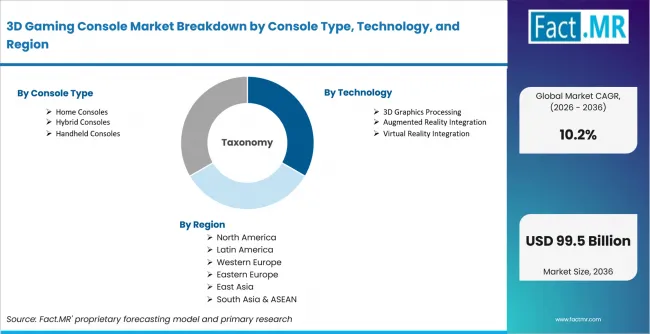
The 3D Gaming Console Market is segmented by Console Type (Home Consoles, Handheld Consoles, and Hybrid Consoles), by Technology, by Connectivity, by Distribution Channel, and by Region. Forecast for 2026 to 2036.
Fact.MR opines that the 3D gaming console market is entering an ecosystem-driven competition. Console brands are focusing on content access and subscription platforms. Cloud gaming is helping vendors reach users beyond traditional hardware. Immersive gaming is improving user engagement over a longer period.
3D Gaming Console Market Forecast and Outlook By Fact.MR
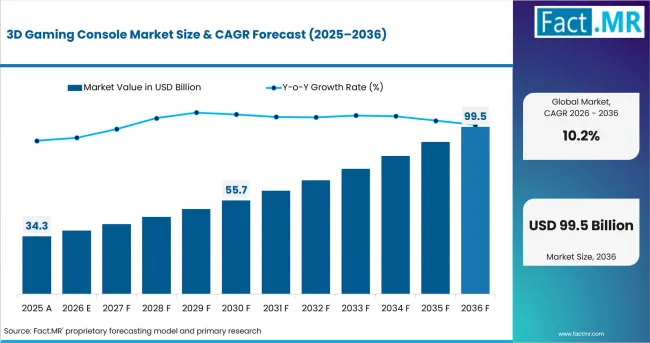
- In 2025, the 3D gaming console market was valued at USD 34.3 billion.
- Based on Fact.MR analysis, demand for 3D gaming consoles is estimated to grow to USD 37.8 billion in 2026 and USD 99.5 billion by 2036.
- Fact.MR projects a CAGR of 10.2% during the forecast period.
| Metric | Value |
|---|---|
| Estimated Value in 2026 | USD 37.8 billion |
| Forecast Value in 2036 | USD 99.5 billion |
| Forecast CAGR (2026 to 2036) | 10.2% |
Summary of 3D Gaming Console Market
- Demand Drivers
- Premium Gaming Experiences: Advanced graphics capabilities are encouraging upgrades from older console generations. Enhanced visual quality and immersive gameplay strengthen demand for premium gaming hardware.
- Esports Industry Development: Competitive gaming events are attracting larger audiences across major markets. Professional gaming requirements are increasing demand for high-performance console systems.
- Digital Ecosystem Expansion: Subscription services are increasing engagement across console platforms. Expanding digital game libraries improve customer retention and recurring platform revenue.
- Key Segments Analyzed
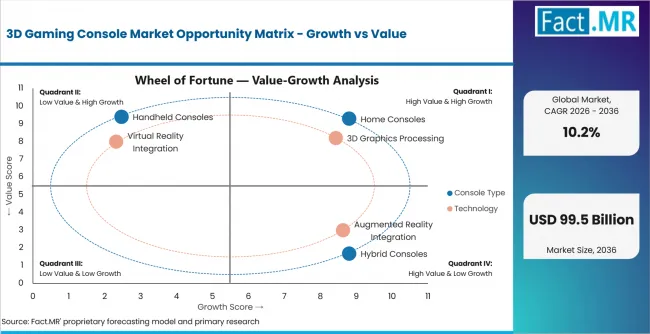
- By Console Type: Home Consoles hold 48% share in 2026 because performance capability and content availability support demand.
- By Technology: 3D Graphics Processing accounts for 39% share in 2026 reflecting consumer preference for visual performance.
- By Connectivity: Online Gaming holds 52% share in 2026 as multiplayer engagement shapes gaming activity.
- By End User: Casual Gamers register 44% share in 2026 due to their large installed user base.
- By Distribution Channel: Online Retail captures 41% share in 2026 supported by digital commerce expansion.
- By Geography: India is projected to record CAGR at 11.8% through 2036 driven by rapid gaming market development.
- Analyst Opinion at Fact.MR
- Shambhu Nath Jha, Principal Consultant at Fact.MR, opines, "Game console leadership will depend less on hardware specifications and more on ecosystem strength. Content libraries and cloud connectivity will increasingly shape long-term revenue generation."
- Strategic Implications
- Console manufacturers should strengthen subscription ecosystems around flagship hardware platforms. Recurring digital revenue improves long-term profitability.
- Gaming platform operators should increase investment in exclusive content partnerships. Content differentiation improves platform retention.
- Hardware vendors should expand distribution reach across high-growth Asian markets. Rising gaming participation creates substantial commercial opportunities.
The market is forecast to add approximately USD 61.7 billion in revenue between 2026 and 2036. Premium gaming hardware and digital gaming platforms are supporting revenue gains. Higher development costs for next-generation consoles create pricing pressure across manufacturers. Hardware upgrade cycles and exclusive content availability shape purchasing decisions across major markets.
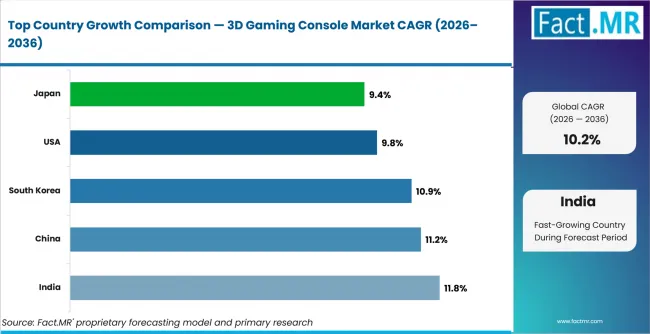
India is expected to record 11.8% CAGR from 2026 to 2036 supported by expanding gaming communities and rising disposable income. China is forecast to grow at 11.2% CAGR by 2036 driven by premium gaming hardware demand. South Korea is projected to expand at 10.9% CAGR through 2036 as esports participation increases. The United States is estimated to witness 9.8% CAGR from 2026 to 2036 due to strong console replacement demand. Japan is likely to register 9.4% CAGR by 2036 supported by established gaming culture and domestic console leadership.
Segmental Analysis
3D Gaming Console Market Analysis by Console Type

Home consoles account for 48% share in 2026. Premium gaming and exclusive content support demand in this segment. Households prefer dedicated gaming systems that deliver consistent performance and access to large digital game libraries. Sony Group Corporation announced the PlayStation 5 Pro in September 2024 with an upgraded GPU, enhanced ray tracing, and improved AI-driven image upscaling capabilities. The launch strengthens next-generation 3D gaming performance and immersive console gaming experiences. [1]
- Performance Advantage: Dedicated hardware supports advanced graphics and stable gameplay across high-demand gaming titles. Processing capability remains a major purchasing consideration.
- Content Ecosystems: Exclusive game releases strengthen platform loyalty across established gaming communities. Content access influences hardware selection.
- Long Usage Cycles: Home consoles typically remain active for several years after purchase. Strong software support extends platform value.
3D Gaming Console Market Analysis by Technology

3D graphics processing holds 39% share in 2026 because visual quality remains a major difference across gaming platforms. Hardware manufacturers invest in graphics performance to improve realism and user engagement. ASUS launched the ROG Xbox Ally and ROG Xbox Ally X handheld gaming consoles featuring AMD Ryzen Z2-series processors, Xbox-integrated software, and Windows-based gaming support. The launch expands the portable gaming console market with devices designed to deliver both console-style and PC gaming experiences in a handheld format. [2]
- Visual Enhancement: Better rendering technology improves image quality across gaming environments. Visual performance remains a major upgrade driver.
- Developer Priorities: Game studios design more content around advanced graphics capability. Hardware performance shapes development strategies.
- Competitive Gaming Impact: High-quality graphics improve gameplay responsiveness and player immersion. Performance expectations continue to rise.
3D Gaming Console Market Analysis by Connectivity

Online gaming contributes 52% share in 2026. Multiplayer gaming activity and digital content delivery have transformed console usage patterns. Connected gaming consoles generate recurring engagement through subscriptions and downloadable content. Intel launched the Intel Arc G3 and Intel Arc G3 Extreme processors, purpose-built for handheld gaming systems with XeSS 3 AI upscaling, ray tracing, and optimized power efficiency. The new chipset platform supports upcoming handheld gaming devices from Acer, MSI, and OneXPlayer, strengthening competition in the global 3D gaming console market. [4]
- Multiplayer Engagement: Social gaming experiences attract large user communities across major gaming platforms. Online interaction increases platform usage.
- Digital Distribution: Game downloads reduce dependence on physical media channels. Digital storefronts improve content accessibility.
- Subscription Revenue: Online services provide access to multiplayer features and content libraries. Recurring revenue strengthens platform economics.
3D Gaming Console Market Analysis by End User

Casual gamers represent 44% share in 2026. Entertainment-focused households account for a large part of console demand across global markets. Affordable gaming and family-oriented content support segment leadership. Nintendo officially announced the Nintendo Switch 2, featuring enhanced graphics performance, a larger display, magnetic Joy-Con 2 controllers, and backward compatibility with existing Switch games. The launch strengthened competition in the global 3D gaming console market by advancing hybrid console gaming with improved visual and processing capabilities. [3]
- Entertainment Usage: Gaming is a mainstream leisure activity across multiple age groups. Console ownership extends beyond dedicated gaming enthusiasts.
- Accessible Content: Family-friendly and casual games attract a wider audience. Broad content availability improves market reach.
- Platform Familiarity: Established gaming brands benefit from long-term recognition among casual users. Brand loyalty influences purchasing decisions.
3D Gaming Console Market Analysis by Distribution Channel

Online retail captures 41% share in 2026. E-commerce gives users wider product choice and better price comparison across major markets. Direct access to product information improves purchasing convenience.
- Digital Commerce Growth: Online purchasing activity keeps rising across consumer electronics. Gaming hardware follows similar trends.
- Product Availability: E-commerce platforms improve access to newly launched gaming systems. Inventory visibility strengthens purchasing confidence.
- Promotional Activity: Online channels frequently offer bundled packages and seasonal discounts. Pricing incentives attract gaming households.
Drivers, Restraints, and Opportunities

Game console competition now depends more on ecosystem strength than hardware specifications alone. Platform owners are investing in subscription services and exclusive content portfolios. These initiatives improve user retention and recurring revenue generation. Lenovo launched the Legion Go S, a handheld gaming console available in both Windows and SteamOS versions, featuring AMD Ryzen Z2 processors, an 8-inch 120Hz display, and portable PC gaming capabilities. The launch expanded competition in the global 3D gaming console market and marked the industry’s first officially licensed SteamOS-powered handheld device from a third-party manufacturer. [5]
Gaming habits are moving toward connected play and digital content access. Subscription-based models are changing how households purchase and access gaming content.
- Subscription Service Expansion: Digital gaming memberships provide access to extensive game libraries and online features. Recurring engagement improves platform
- Esports Industry Development: Competitive gaming activity increases demand for advanced gaming hardware and performance-oriented gaming environments. Organized tournaments strengthen platform visibility.
- Hardware Pricing Pressure: Rising component costs increase manufacturing expenses across gaming console platforms. Premium pricing may slow adoption among price-sensitive households.
Regional Analysis
The 3D gaming console market is assessed across North America, Europe, Asia Pacific, Latin America, and the Middle East & Africa. The study evaluates console demand, gaming expenditure, platform penetration, and digital ecosystem development across major gaming economies.
.webp)
| Country | CAGR (2026 to 2036) |
|---|---|
| India | 11.8% |
| China | 11.2% |
| South Korea | 10.9% |
| United States | 9.8% |
| Japan | 9.4% |
Source: Fact.MR analysis, based on proprietary forecasting model and primary research.
Asia Pacific 3D Gaming Console Market Analysis
Asia Pacific represents a significant growth opportunity for gaming hardware manufacturers. Rising gaming participation and expanding digital infrastructure are strengthening demand across regional markets. Content consumption patterns increasingly favor premium gaming experiences.
- India: India is projected to expand at 11.8% CAGR from 2026 to 2036 as a its gaming population increases spending on dedicated gaming hardware. Premium game content and esports activity are supporting console demand across major urban centers. Digital commerce platforms improve access to gaming ecosystems and subscription services.
- China: China is forecast to grow at 11.2% CAGR through 2036 supported by rising demand for premium gaming experiences and higher-value entertainment spending. Large gaming communities create favorable conditions for console platform expansion. Strong publisher ecosystems encourage hardware upgrades and digital content purchases.
- South Korea: South Korea is expected to witness 10.9% CAGR by 2036 driven by competitive gaming culture and expanding streaming audiences. Advanced network infrastructure supports immersive online gaming. Strong engagement with esports strengthens demand for high-performance gaming systems.
North America 3D Gaming Console Market Analysis
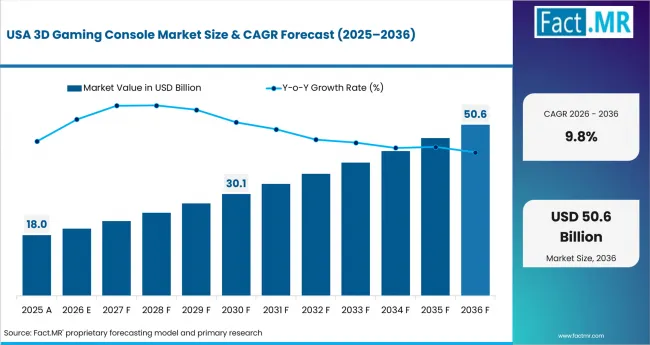
North America is one of the leading revenue regions for console manufacturers. Strong installed user bases and premium content spending support market development. Digital ecosystem monetization remains a major revenue source.
- United States: United States is projected to expand at 9.8% CAGR by 2036 as platform providers strengthen subscription offerings and content ecosystems. Digital game purchases support recurring revenue. Exclusive content remains an important competitive factor.
East Asia 3D Gaming Console Market Analysis
East Asia benefits from strong gaming traditions and leading game development ecosystems. Domestic platform brands and content publishers maintain a substantial influence on purchasing behavior across the region.
- Japan: Established gaming culture supports steady demand for console hardware and software. The country is anticipated to grow at 9.4% CAGR from 2026 to 2036 as domestic gaming franchises maintain strong consumer engagement. Brand loyalty benefits leading console manufacturers. Handheld and home gaming platforms both contribute to demand.
Competitive Aligners for Market Players

Competition is supported by ecosystem depth rather than hardware capability alone. Console manufacturers with strong content portfolios and subscription services maintain greater user retention. Digital storefront performance and exclusive game access influence purchasing decisions across major markets.
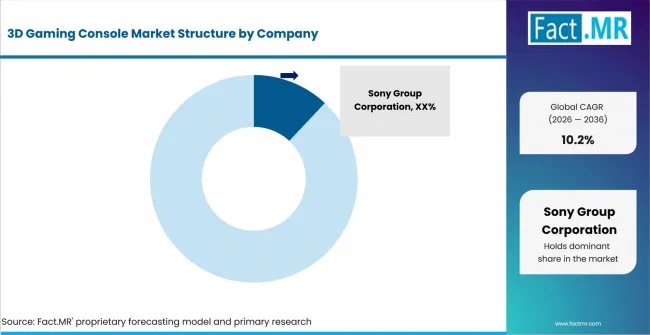
Installed user bases create a clear competitive advantage. Platform owners benefit from recurring software purchases and subscription revenue after hardware sales. Larger ecosystems improve monetization across the console lifecycle.
Content exclusivity is an important differentiator. Game publishers and platform operators work together to strengthen engagement within specific ecosystems. Strong franchise ownership improves platform appeal and long-term user retention.
Cloud functionality is becoming a competitive factor. Console vendors are adding streaming services and cross-device gaming capability to platform strategies. Cloud services improve access and extend engagement beyond traditional console use.
Distribution reach affects market penetration across developing economies. Manufacturers with strong retail partnerships and localized digital payment support improve hardware access. Regional expansion is a strategic priority across Asia Pacific markets.
Key Players
- Sony Group Corporation
- Microsoft Corporation
- Nintendo Co., Ltd.
- ASUSTeK Computer Inc. (ROG Ally)
- Lenovo Group Limited (Legion Go)
Bibliography
- [1] Sony Interactive Entertainment. (2024). Sony Interactive Entertainment launches PlayStation 5 Pro.
- [2] ASUS. (2025). ASUS Republic of Gamers Unveils the ROG Xbox Ally and ROG Xbox Ally X, Raising the Standard for Gaming Handhelds.
- [3] AR Pay. (2025). Nintendo Switch 2 market and platform overview.
- [4] Intel Corporation. (2026, May 28). Intel Arc G-Series processors set a new standard for handheld PC gaming. Intel Newsroom.
- [5] Lenovo Group Limited. (2025, January 7). Lenovo Legion unleashes next-gen gaming power at CES 2025. Lenovo StoryHub.
This Report Addresses
- Analysis of gaming console demand across hardware platforms, gaming technologies, and connectivity environments.
- Market forecast from USD 37.8 billion in 2026 to USD 99.5 billion by 2036 at 10.2% CAGR.
- Opportunity assessment across digital gaming ecosystems, esports activity, and subscription-based gaming services.
- Segment forecasts covering console type, technology, connectivity, end user, and distribution channel demand.
- Competitive assessment of gaming hardware manufacturers and platform ecosystem operators.
- Technology tracking covering graphics processing, cloud gaming capability, and immersive gaming experiences.
- Country-level analysis across India, China, South Korea, the United States, and Japan.
- Report delivery through PDF and Excel formats supported by gaming industry analysis and primary interviews.
3D Gaming Console Market Definition
The 3D gaming console market covers dedicated gaming hardware designed to deliver interactive three-dimensional gaming experiences through advanced graphics processing and immersive software environments. Products include home consoles, handheld consoles, and hybrid gaming devices used for entertainment, competitive gaming, and digital content consumption. These systems integrate hardware, software, online services, and digital marketplaces to support gaming ecosystems.
3D Gaming Console Market Inclusions
The study covers global and regional forecasts from 2026 to 2036 by console type, technology, connectivity, end user, and distribution channel. It includes hardware sales, integrated gaming platforms, digital ecosystem adoption trends, cloud gaming functionality, virtual reality integration, and consumer purchasing patterns across major gaming markets.
3D Gaming Console Market Exclusions
The study excludes gaming PCs, smartphones, mobile gaming applications, standalone graphics cards, and arcade gaming systems. It omits software-only gaming subscriptions unless directly linked to console ecosystems. Peripheral accessories such as controllers, headsets, and gaming furniture are outside the defined scope unless bundled with gaming console platforms.
3D Gaming Console Market Research Methodology
- Primary Research
- Interviews conducted with gaming hardware distributors, gaming retailers, esports operators, platform developers, and technology executives across North America, Asia Pacific, and Europe.
- Desk Research
- Analysis of company annual reports, investor presentations, gaming platform disclosures, technology announcements, and industry association publications released during 2024 and 2025.
- Market-Sizing and Forecasting
- Hybrid top-down and bottom-up model using console shipment data, installed base assessments, gaming expenditure trends, and digital ecosystem revenue analysis.
- Data Validation and Update Cycle
- Validated through company financial disclosures, channel partner feedback, shipment tracking databases, and annual gaming industry performance reviews.
Scope of Report

| Attribute | Details |
|---|---|
| Quantitative Units | USD 37.8 billion (2026) to USD 99.5 billion (2036) at a CAGR of 10.2% |
| Market Definition | Dedicated gaming hardware platforms supporting immersive three-dimensional gaming experiences |
| Console Type Segmentation | Home Consoles, Handheld Consoles, Hybrid Consoles |
| Technology Segmentation | 3D Graphics Processing, Virtual Reality Integration, Augmented Reality Integration, Motion Sensing Technology, Cloud Gaming Integration |
| Connectivity Segmentation | Offline Gaming, Online Gaming, Cloud-Based Gaming |
| End User Segmentation | Casual Gamers, Professional Gamers, Gaming Enthusiasts, Esports Players |
| Distribution Channel Segmentation | Online Retail, Specialty Stores, Electronics Retailers, Direct Sales |
| Regions Covered | North America, Europe, Asia Pacific, Latin America, Middle East & Africa |
| Countries Covered | United States, Canada, Mexico, China, Japan, South Korea, India, Germany, United Kingdom, Australia |
| Key Companies Profiled | Sony Group Corporation, Microsoft Corporation, Nintendo Co., Ltd., ASUSTeK, Computer Inc. (ROG Ally), Lenovo Group Limited (Legion Go) |
| Forecast Period | 2026 to 2036 |
| Approach | Hybrid top-down and bottom-up model using software spending, content production activity, and digital transformation analysis. |
3D Gaming Console Market by Segment
-
By Console Type
- Home Consoles
- Handheld Consoles
- Hybrid Consoles
-
By Technology
- 3D Graphics Processing
- Virtual Reality Integration
- Augmented Reality Integration
- Motion Sensing Technology
- Cloud Gaming Integration
-
By Connectivity
- Offline Gaming
- Online Gaming
- Cloud-Based Gaming
-
By End User
- Casual Gamers
- Professional Gamers
- Gaming Enthusiasts
- Esports Players
-
By Distribution Channel
- Online Retail
- Specialty Stores
- Electronics Retailers
- Direct Sales
-
By Region
- North America
- United States
- Canada
- Mexico
- Latin America
- Brazil
- Argentina
- Rest of Latin America
- Europe
- Germany
- United Kingdom
- France
- Italy
- Spain
- Rest of Europe
- Asia Pacific
- China
- Japan
- South Korea
- India
- ASEAN
- Australia and New Zealand
- Middle East & Africa
- GCC Countries
- South Africa
- UAE
- Rest of Middle East & Africa
- North America
- Frequently Asked Questions -
How large is the global 3D gaming console market in 2025?
The global 3D gaming console market was valued at USD 34.3 billion in 2025 based on Fact.MR industry analysis.
What will the 3D gaming console market size be in 2026?
Based on Fact.MR analysis, demand for 3D gaming consoles is estimated to reach USD 37.8 billion in 2026.
What is the projected 3D gaming console market size by 2036?
The 3D gaming console market is forecast to reach USD 99.5 billion by 2036 supported by ecosystem expansion and content monetization.
What is the expected CAGR for the 3D gaming console market from 2026 to 2036?
Fact.MR projects the global 3D gaming console market to expand at a CAGR of 10.2% during the forecast period.
Which console type is poised to lead 3D gaming console market demand?
Home Consoles lead with 48% share in 2026 because they provide superior performance and extensive content availability.
Which country records the leading growth in the 3D gaming console market?
India leads country-level expansion with a projected 11.8% CAGR through 2036 supported by rising gaming participation and income growth.
Table of Content
- Executive Summary
- Global Market Outlook
- Demand to side Trends
- Supply to side Trends
- Technology Roadmap Analysis
- Analysis and Recommendations
- Market Overview
- Market Coverage / Taxonomy
- Market Definition / Scope / Limitations
- Research Methodology
- Chapter Orientation
- Analytical Lens and Working Hypotheses
- Market Structure, Signals, and Trend Drivers
- Benchmarking and Cross-market Comparability
- Market Sizing, Forecasting, and Opportunity Mapping
- Research Design and Evidence Framework
- Desk Research Programme (Secondary Evidence)
- Company Annual and Sustainability Reports
- Peer-reviewed Journals and Academic Literature
- Corporate Websites, Product Literature, and Technical Notes
- Earnings Decks and Investor Briefings
- Statutory Filings and Regulatory Disclosures
- Technical White Papers and Standards Notes
- Trade Journals, Industry Magazines, and Analyst Briefs
- Conference Proceedings, Webinars, and Seminar Materials
- Government Statistics Portals and Public Data Releases
- Press Releases and Reputable Media Coverage
- Specialist Newsletters and Curated Briefings
- Sector Databases and Reference Repositories
- Fact.MR Internal Proprietary Databases and Historical Market Datasets
- Subscription Datasets and Paid Sources
- Social Channels, Communities, and Digital Listening Inputs
- Additional Desk Sources
- Expert Input and Fieldwork (Primary Evidence)
- Primary Modes
- Qualitative Interviews and Expert Elicitation
- Quantitative Surveys and Structured Data Capture
- Blended Approach
- Why Primary Evidence is Used
- Field Techniques
- Interviews
- Surveys
- Focus Groups
- Observational and In-context Research
- Social and Community Interactions
- Stakeholder Universe Engaged
- C-suite Leaders
- Board Members
- Presidents and Vice Presidents
- R&D and Innovation Heads
- Technical Specialists
- Domain Subject-matter Experts
- Scientists
- Physicians and Other Healthcare Professionals
- Governance, Ethics, and Data Stewardship
- Research Ethics
- Data Integrity and Handling
- Primary Modes
- Tooling, Models, and Reference Databases
- Desk Research Programme (Secondary Evidence)
- Data Engineering and Model Build
- Data Acquisition and Ingestion
- Cleaning, Normalisation, and Verification
- Synthesis, Triangulation, and Analysis
- Quality Assurance and Audit Trail
- Market Background
- Market Dynamics
- Drivers
- Restraints
- Opportunity
- Trends
- Scenario Forecast
- Demand in Optimistic Scenario
- Demand in Likely Scenario
- Demand in Conservative Scenario
- Opportunity Map Analysis
- Product Life Cycle Analysis
- Supply Chain Analysis
- Investment Feasibility Matrix
- Value Chain Analysis
- PESTLE and Porter’s Analysis
- Regulatory Landscape
- Regional Parent Market Outlook
- Production and Consumption Statistics
- Import and Export Statistics
- Market Dynamics
- Global Market Analysis 2021 to 2025 and Forecast, 2026 to 2036
- Historical Market Size Value (USD Million) Analysis, 2021 to 2025
- Current and Future Market Size Value (USD Million) Projections, 2026 to 2036
- Y to o to Y Growth Trend Analysis
- Absolute $ Opportunity Analysis
- Global Market Pricing Analysis 2021 to 2025 and Forecast 2026 to 2036
- Global Market Analysis 2021 to 2025 and Forecast 2026 to 2036, By Occurrence
- Introduction / Key Findings
- Historical Market Size Value (USD Million) Analysis By Occurrence , 2021 to 2025
- Current and Future Market Size Value (USD Million) Analysis and Forecast By Occurrence , 2026 to 2036
- Zircon
- Zirconia
- Zirconium Metal
- Zircon
- Y to o to Y Growth Trend Analysis By Occurrence , 2021 to 2025
- Absolute $ Opportunity Analysis By Occurrence , 2026 to 2036
- Global Market Analysis 2021 to 2025 and Forecast 2026 to 2036, By Grade
- Introduction / Key Findings
- Historical Market Size Value (USD Million) Analysis By Grade, 2021 to 2025
- Current and Future Market Size Value (USD Million) Analysis and Forecast By Grade, 2026 to 2036
- Industrial
- Nuclear
- Medical
- Industrial
- Y to o to Y Growth Trend Analysis By Grade, 2021 to 2025
- Absolute $ Opportunity Analysis By Grade, 2026 to 2036
- Global Market Analysis 2021 to 2025 and Forecast 2026 to 2036, By Product Type
- Introduction / Key Findings
- Historical Market Size Value (USD Million) Analysis By Product Type, 2021 to 2025
- Current and Future Market Size Value (USD Million) Analysis and Forecast By Product Type, 2026 to 2036
- Zirconium Dioxide
- Zirconium Silicate
- Zirconium Metal
- Zirconium Dioxide
- Y to o to Y Growth Trend Analysis By Product Type, 2021 to 2025
- Absolute $ Opportunity Analysis By Product Type, 2026 to 2036
- Global Market Analysis 2021 to 2025 and Forecast 2026 to 2036, By Application
- Introduction / Key Findings
- Historical Market Size Value (USD Million) Analysis By Application, 2021 to 2025
- Current and Future Market Size Value (USD Million) Analysis and Forecast By Application, 2026 to 2036
- Ceramics
- Nuclear Fuel Cladding
- Refractories
- Ceramics
- Y to o to Y Growth Trend Analysis By Application, 2021 to 2025
- Absolute $ Opportunity Analysis By Application, 2026 to 2036
- Global Market Analysis 2021 to 2025 and Forecast 2026 to 2036, By Form
- Introduction / Key Findings
- Historical Market Size Value (USD Million) Analysis By Form, 2021 to 2025
- Current and Future Market Size Value (USD Million) Analysis and Forecast By Form, 2026 to 2036
- Powder
- Crystals
- Sponge
- Powder
- Y to o to Y Growth Trend Analysis By Form, 2021 to 2025
- Absolute $ Opportunity Analysis By Form, 2026 to 2036
- Global Market Analysis 2021 to 2025 and Forecast 2026 to 2036, By End-use Industry
- Introduction / Key Findings
- Historical Market Size Value (USD Million) Analysis By End-use Industry, 2021 to 2025
- Current and Future Market Size Value (USD Million) Analysis and Forecast By End-use Industry, 2026 to 2036
- Nuclear Power
- Ceramics Manufacturing
- Aerospace
- Nuclear Power
- Y to o to Y Growth Trend Analysis By End-use Industry, 2021 to 2025
- Absolute $ Opportunity Analysis By End-use Industry, 2026 to 2036
- Global Market Analysis 2021 to 2025 and Forecast 2026 to 2036, By Region
- Introduction
- Historical Market Size Value (USD Million) Analysis By Region, 2021 to 2025
- Current Market Size Value (USD Million) Analysis and Forecast By Region, 2026 to 2036
- North America
- Latin America
- Western Europe
- Eastern Europe
- East Asia
- South Asia and Pacific
- Middle East & Africa
- Market Attractiveness Analysis By Region
- North America Market Analysis 2021 to 2025 and Forecast 2026 to 2036, By Country
- Historical Market Size Value (USD Million) Trend Analysis By Market Taxonomy, 2021 to 2025
- Market Size Value (USD Million) Forecast By Market Taxonomy, 2026 to 2036
- By Country
- USA
- Canada
- Mexico
- By Occurrence
- By Grade
- By Product Type
- By Application
- By Form
- By End-use Industry
- By Country
- Market Attractiveness Analysis
- By Country
- By Occurrence
- By Grade
- By Product Type
- By Application
- By Form
- By End-use Industry
- Key Takeaways
- Latin America Market Analysis 2021 to 2025 and Forecast 2026 to 2036, By Country
- Historical Market Size Value (USD Million) Trend Analysis By Market Taxonomy, 2021 to 2025
- Market Size Value (USD Million) Forecast By Market Taxonomy, 2026 to 2036
- By Country
- Brazil
- Chile
- Rest of Latin America
- By Occurrence
- By Grade
- By Product Type
- By Application
- By Form
- By End-use Industry
- By Country
- Market Attractiveness Analysis
- By Country
- By Occurrence
- By Grade
- By Product Type
- By Application
- By Form
- By End-use Industry
- Key Takeaways
- Western Europe Market Analysis 2021 to 2025 and Forecast 2026 to 2036, By Country
- Historical Market Size Value (USD Million) Trend Analysis By Market Taxonomy, 2021 to 2025
- Market Size Value (USD Million) Forecast By Market Taxonomy, 2026 to 2036
- By Country
- Germany
- UK
- Italy
- Spain
- France
- Nordic
- BENELUX
- Rest of Western Europe
- By Occurrence
- By Grade
- By Product Type
- By Application
- By Form
- By End-use Industry
- By Country
- Market Attractiveness Analysis
- By Country
- By Occurrence
- By Grade
- By Product Type
- By Application
- By Form
- By End-use Industry
- Key Takeaways
- Eastern Europe Market Analysis 2021 to 2025 and Forecast 2026 to 2036, By Country
- Historical Market Size Value (USD Million) Trend Analysis By Market Taxonomy, 2021 to 2025
- Market Size Value (USD Million) Forecast By Market Taxonomy, 2026 to 2036
- By Country
- Russia
- Poland
- Hungary
- Balkan & Baltic
- Rest of Eastern Europe
- By Occurrence
- By Grade
- By Product Type
- By Application
- By Form
- By End-use Industry
- By Country
- Market Attractiveness Analysis
- By Country
- By Occurrence
- By Grade
- By Product Type
- By Application
- By Form
- By End-use Industry
- Key Takeaways
- East Asia Market Analysis 2021 to 2025 and Forecast 2026 to 2036, By Country
- Historical Market Size Value (USD Million) Trend Analysis By Market Taxonomy, 2021 to 2025
- Market Size Value (USD Million) Forecast By Market Taxonomy, 2026 to 2036
- By Country
- China
- Japan
- South Korea
- By Occurrence
- By Grade
- By Product Type
- By Application
- By Form
- By End-use Industry
- By Country
- Market Attractiveness Analysis
- By Country
- By Occurrence
- By Grade
- By Product Type
- By Application
- By Form
- By End-use Industry
- Key Takeaways
- South Asia and Pacific Market Analysis 2021 to 2025 and Forecast 2026 to 2036, By Country
- Historical Market Size Value (USD Million) Trend Analysis By Market Taxonomy, 2021 to 2025
- Market Size Value (USD Million) Forecast By Market Taxonomy, 2026 to 2036
- By Country
- India
- ASEAN
- Australia & New Zealand
- Rest of South Asia and Pacific
- By Occurrence
- By Grade
- By Product Type
- By Application
- By Form
- By End-use Industry
- By Country
- Market Attractiveness Analysis
- By Country
- By Occurrence
- By Grade
- By Product Type
- By Application
- By Form
- By End-use Industry
- Key Takeaways
- Middle East & Africa Market Analysis 2021 to 2025 and Forecast 2026 to 2036, By Country
- Historical Market Size Value (USD Million) Trend Analysis By Market Taxonomy, 2021 to 2025
- Market Size Value (USD Million) Forecast By Market Taxonomy, 2026 to 2036
- By Country
- Kingdom of Saudi Arabia
- Other GCC Countries
- Turkiye
- South Africa
- Other African Union
- Rest of Middle East & Africa
- By Occurrence
- By Grade
- By Product Type
- By Application
- By Form
- By End-use Industry
- By Country
- Market Attractiveness Analysis
- By Country
- By Occurrence
- By Grade
- By Product Type
- By Application
- By Form
- By End-use Industry
- Key Takeaways
- Key Countries Market Analysis
- USA
- Pricing Analysis
- Market Share Analysis, 2025
- By Occurrence
- By Grade
- By Product Type
- By Application
- By Form
- By End-use Industry
- Canada
- Pricing Analysis
- Market Share Analysis, 2025
- By Occurrence
- By Grade
- By Product Type
- By Application
- By Form
- By End-use Industry
- Mexico
- Pricing Analysis
- Market Share Analysis, 2025
- By Occurrence
- By Grade
- By Product Type
- By Application
- By Form
- By End-use Industry
- Brazil
- Pricing Analysis
- Market Share Analysis, 2025
- By Occurrence
- By Grade
- By Product Type
- By Application
- By Form
- By End-use Industry
- Chile
- Pricing Analysis
- Market Share Analysis, 2025
- By Occurrence
- By Grade
- By Product Type
- By Application
- By Form
- By End-use Industry
- Germany
- Pricing Analysis
- Market Share Analysis, 2025
- By Occurrence
- By Grade
- By Product Type
- By Application
- By Form
- By End-use Industry
- UK
- Pricing Analysis
- Market Share Analysis, 2025
- By Occurrence
- By Grade
- By Product Type
- By Application
- By Form
- By End-use Industry
- Italy
- Pricing Analysis
- Market Share Analysis, 2025
- By Occurrence
- By Grade
- By Product Type
- By Application
- By Form
- By End-use Industry
- Spain
- Pricing Analysis
- Market Share Analysis, 2025
- By Occurrence
- By Grade
- By Product Type
- By Application
- By Form
- By End-use Industry
- France
- Pricing Analysis
- Market Share Analysis, 2025
- By Occurrence
- By Grade
- By Product Type
- By Application
- By Form
- By End-use Industry
- India
- Pricing Analysis
- Market Share Analysis, 2025
- By Occurrence
- By Grade
- By Product Type
- By Application
- By Form
- By End-use Industry
- ASEAN
- Pricing Analysis
- Market Share Analysis, 2025
- By Occurrence
- By Grade
- By Product Type
- By Application
- By Form
- By End-use Industry
- Australia & New Zealand
- Pricing Analysis
- Market Share Analysis, 2025
- By Occurrence
- By Grade
- By Product Type
- By Application
- By Form
- By End-use Industry
- China
- Pricing Analysis
- Market Share Analysis, 2025
- By Occurrence
- By Grade
- By Product Type
- By Application
- By Form
- By End-use Industry
- Japan
- Pricing Analysis
- Market Share Analysis, 2025
- By Occurrence
- By Grade
- By Product Type
- By Application
- By Form
- By End-use Industry
- South Korea
- Pricing Analysis
- Market Share Analysis, 2025
- By Occurrence
- By Grade
- By Product Type
- By Application
- By Form
- By End-use Industry
- Russia
- Pricing Analysis
- Market Share Analysis, 2025
- By Occurrence
- By Grade
- By Product Type
- By Application
- By Form
- By End-use Industry
- Poland
- Pricing Analysis
- Market Share Analysis, 2025
- By Occurrence
- By Grade
- By Product Type
- By Application
- By Form
- By End-use Industry
- Hungary
- Pricing Analysis
- Market Share Analysis, 2025
- By Occurrence
- By Grade
- By Product Type
- By Application
- By Form
- By End-use Industry
- Kingdom of Saudi Arabia
- Pricing Analysis
- Market Share Analysis, 2025
- By Occurrence
- By Grade
- By Product Type
- By Application
- By Form
- By End-use Industry
- Turkiye
- Pricing Analysis
- Market Share Analysis, 2025
- By Occurrence
- By Grade
- By Product Type
- By Application
- By Form
- By End-use Industry
- South Africa
- Pricing Analysis
- Market Share Analysis, 2025
- By Occurrence
- By Grade
- By Product Type
- By Application
- By Form
- By End-use Industry
- USA
- Market Structure Analysis
- Competition Dashboard
- Competition Benchmarking
- Market Share Analysis of Top Players
- By Regional
- By Occurrence
- By Grade
- By Product Type
- By Application
- By Form
- By End-use Industry
- Competition Analysis
- Competition Deep Dive
- Iluka Resources Limited
- Overview
- Product Portfolio
- Profitability by Market Segments (Product/Age /Sales Channel/Region)
- Sales Footprint
- Strategy Overview
- Marketing Strategy
- Product Strategy
- Channel Strategy
- Tronox Holdings plc
- Saint-Gobain ZirPro
- Tosoh Corporation
- Luxfer MEL Technologies
- Framatome
- ATI Inc.
- Iluka Resources Limited
- Competition Deep Dive
- Assumptions & Acronyms Used
List Of Table
- Table 1: Global Market Value (USD Million) Forecast by Region, 2021 to 2036
- Table 2: Global Market Value (USD Million) Forecast by Occurrence, 2021 to 2036
- Table 3: Global Market Value (USD Million) Forecast by Grade, 2021 to 2036
- Table 4: Global Market Value (USD Million) Forecast by Product Type, 2021 to 2036
- Table 5: Global Market Value (USD Million) Forecast by Application, 2021 to 2036
- Table 6: Global Market Value (USD Million) Forecast by Form, 2021 to 2036
- Table 7: Global Market Value (USD Million) Forecast by End-use Industry, 2021 to 2036
- Table 8: North America Market Value (USD Million) Forecast by Country, 2021 to 2036
- Table 9: North America Market Value (USD Million) Forecast by Occurrence, 2021 to 2036
- Table 10: North America Market Value (USD Million) Forecast by Grade, 2021 to 2036
- Table 11: North America Market Value (USD Million) Forecast by Product Type, 2021 to 2036
- Table 12: North America Market Value (USD Million) Forecast by Application, 2021 to 2036
- Table 13: North America Market Value (USD Million) Forecast by Form, 2021 to 2036
- Table 14: North America Market Value (USD Million) Forecast by End-use Industry, 2021 to 2036
- Table 15: Latin America Market Value (USD Million) Forecast by Country, 2021 to 2036
- Table 16: Latin America Market Value (USD Million) Forecast by Occurrence, 2021 to 2036
- Table 17: Latin America Market Value (USD Million) Forecast by Grade, 2021 to 2036
- Table 18: Latin America Market Value (USD Million) Forecast by Product Type, 2021 to 2036
- Table 19: Latin America Market Value (USD Million) Forecast by Application, 2021 to 2036
- Table 20: Latin America Market Value (USD Million) Forecast by Form, 2021 to 2036
- Table 21: Latin America Market Value (USD Million) Forecast by End-use Industry, 2021 to 2036
- Table 22: Western Europe Market Value (USD Million) Forecast by Country, 2021 to 2036
- Table 23: Western Europe Market Value (USD Million) Forecast by Occurrence, 2021 to 2036
- Table 24: Western Europe Market Value (USD Million) Forecast by Grade, 2021 to 2036
- Table 25: Western Europe Market Value (USD Million) Forecast by Product Type, 2021 to 2036
- Table 26: Western Europe Market Value (USD Million) Forecast by Application, 2021 to 2036
- Table 27: Western Europe Market Value (USD Million) Forecast by Form, 2021 to 2036
- Table 28: Western Europe Market Value (USD Million) Forecast by End-use Industry, 2021 to 2036
- Table 29: Eastern Europe Market Value (USD Million) Forecast by Country, 2021 to 2036
- Table 30: Eastern Europe Market Value (USD Million) Forecast by Occurrence, 2021 to 2036
- Table 31: Eastern Europe Market Value (USD Million) Forecast by Grade, 2021 to 2036
- Table 32: Eastern Europe Market Value (USD Million) Forecast by Product Type, 2021 to 2036
- Table 33: Eastern Europe Market Value (USD Million) Forecast by Application, 2021 to 2036
- Table 34: Eastern Europe Market Value (USD Million) Forecast by Form, 2021 to 2036
- Table 35: Eastern Europe Market Value (USD Million) Forecast by End-use Industry, 2021 to 2036
- Table 36: East Asia Market Value (USD Million) Forecast by Country, 2021 to 2036
- Table 37: East Asia Market Value (USD Million) Forecast by Occurrence, 2021 to 2036
- Table 38: East Asia Market Value (USD Million) Forecast by Grade, 2021 to 2036
- Table 39: East Asia Market Value (USD Million) Forecast by Product Type, 2021 to 2036
- Table 40: East Asia Market Value (USD Million) Forecast by Application, 2021 to 2036
- Table 41: East Asia Market Value (USD Million) Forecast by Form, 2021 to 2036
- Table 42: East Asia Market Value (USD Million) Forecast by End-use Industry, 2021 to 2036
- Table 43: South Asia and Pacific Market Value (USD Million) Forecast by Country, 2021 to 2036
- Table 44: South Asia and Pacific Market Value (USD Million) Forecast by Occurrence, 2021 to 2036
- Table 45: South Asia and Pacific Market Value (USD Million) Forecast by Grade, 2021 to 2036
- Table 46: South Asia and Pacific Market Value (USD Million) Forecast by Product Type, 2021 to 2036
- Table 47: South Asia and Pacific Market Value (USD Million) Forecast by Application, 2021 to 2036
- Table 48: South Asia and Pacific Market Value (USD Million) Forecast by Form, 2021 to 2036
- Table 49: South Asia and Pacific Market Value (USD Million) Forecast by End-use Industry, 2021 to 2036
- Table 50: Middle East & Africa Market Value (USD Million) Forecast by Country, 2021 to 2036
- Table 51: Middle East & Africa Market Value (USD Million) Forecast by Occurrence, 2021 to 2036
- Table 52: Middle East & Africa Market Value (USD Million) Forecast by Grade, 2021 to 2036
- Table 53: Middle East & Africa Market Value (USD Million) Forecast by Product Type, 2021 to 2036
- Table 54: Middle East & Africa Market Value (USD Million) Forecast by Application, 2021 to 2036
- Table 55: Middle East & Africa Market Value (USD Million) Forecast by Form, 2021 to 2036
- Table 56: Middle East & Africa Market Value (USD Million) Forecast by End-use Industry, 2021 to 2036
List Of Figures
- Figure 1: Global Market Pricing Analysis
- Figure 2: Global Market Value (USD Million) Forecast 2021-2036
- Figure 3: Global Market Value Share and BPS Analysis by Occurrence, 2026 and 2036
- Figure 4: Global Market Y-o-Y Growth Comparison by Occurrence, 2026 to 2036
- Figure 5: Global Market Attractiveness Analysis by Occurrence
- Figure 6: Global Market Value Share and BPS Analysis by Grade, 2026 and 2036
- Figure 7: Global Market Y-o-Y Growth Comparison by Grade, 2026 to 2036
- Figure 8: Global Market Attractiveness Analysis by Grade
- Figure 9: Global Market Value Share and BPS Analysis by Product Type, 2026 and 2036
- Figure 10: Global Market Y-o-Y Growth Comparison by Product Type, 2026 to 2036
- Figure 11: Global Market Attractiveness Analysis by Product Type
- Figure 12: Global Market Value Share and BPS Analysis by Application, 2026 and 2036
- Figure 13: Global Market Y-o-Y Growth Comparison by Application, 2026 to 2036
- Figure 14: Global Market Attractiveness Analysis by Application
- Figure 15: Global Market Value Share and BPS Analysis by Form, 2026 and 2036
- Figure 16: Global Market Y-o-Y Growth Comparison by Form, 2026 to 2036
- Figure 17: Global Market Attractiveness Analysis by Form
- Figure 18: Global Market Value Share and BPS Analysis by End-use Industry, 2026 and 2036
- Figure 19: Global Market Y-o-Y Growth Comparison by End-use Industry, 2026 to 2036
- Figure 20: Global Market Attractiveness Analysis by End-use Industry
- Figure 21: Global Market Value (USD Million) Share and BPS Analysis by Region, 2026 and 2036
- Figure 22: Global Market Y-o-Y Growth Comparison by Region, 2026 to 2036
- Figure 23: Global Market Attractiveness Analysis by Region
- Figure 24: North America Market Incremental Dollar Opportunity, 2026 to 2036
- Figure 25: Latin America Market Incremental Dollar Opportunity, 2026 to 2036
- Figure 26: Western Europe Market Incremental Dollar Opportunity, 2026 to 2036
- Figure 27: Eastern Europe Market Incremental Dollar Opportunity, 2026 to 2036
- Figure 28: East Asia Market Incremental Dollar Opportunity, 2026 to 2036
- Figure 29: South Asia and Pacific Market Incremental Dollar Opportunity, 2026 to 2036
- Figure 30: Middle East & Africa Market Incremental Dollar Opportunity, 2026 to 2036
- Figure 31: North America Market Value Share and BPS Analysis by Country, 2026 and 2036
- Figure 32: North America Market Value Share and BPS Analysis by Occurrence, 2026 and 2036
- Figure 33: North America Market Y-o-Y Growth Comparison by Occurrence, 2026 to 2036
- Figure 34: North America Market Attractiveness Analysis by Occurrence
- Figure 35: North America Market Value Share and BPS Analysis by Grade, 2026 and 2036
- Figure 36: North America Market Y-o-Y Growth Comparison by Grade, 2026 to 2036
- Figure 37: North America Market Attractiveness Analysis by Grade
- Figure 38: North America Market Value Share and BPS Analysis by Product Type, 2026 and 2036
- Figure 39: North America Market Y-o-Y Growth Comparison by Product Type, 2026 to 2036
- Figure 40: North America Market Attractiveness Analysis by Product Type
- Figure 41: North America Market Value Share and BPS Analysis by Application, 2026 and 2036
- Figure 42: North America Market Y-o-Y Growth Comparison by Application, 2026 to 2036
- Figure 43: North America Market Attractiveness Analysis by Application
- Figure 44: North America Market Value Share and BPS Analysis by Form, 2026 and 2036
- Figure 45: North America Market Y-o-Y Growth Comparison by Form, 2026 to 2036
- Figure 46: North America Market Attractiveness Analysis by Form
- Figure 47: North America Market Value Share and BPS Analysis by End-use Industry, 2026 and 2036
- Figure 48: North America Market Y-o-Y Growth Comparison by End-use Industry, 2026 to 2036
- Figure 49: North America Market Attractiveness Analysis by End-use Industry
- Figure 50: Latin America Market Value Share and BPS Analysis by Country, 2026 and 2036
- Figure 51: Latin America Market Value Share and BPS Analysis by Occurrence, 2026 and 2036
- Figure 52: Latin America Market Y-o-Y Growth Comparison by Occurrence, 2026 to 2036
- Figure 53: Latin America Market Attractiveness Analysis by Occurrence
- Figure 54: Latin America Market Value Share and BPS Analysis by Grade, 2026 and 2036
- Figure 55: Latin America Market Y-o-Y Growth Comparison by Grade, 2026 to 2036
- Figure 56: Latin America Market Attractiveness Analysis by Grade
- Figure 57: Latin America Market Value Share and BPS Analysis by Product Type, 2026 and 2036
- Figure 58: Latin America Market Y-o-Y Growth Comparison by Product Type, 2026 to 2036
- Figure 59: Latin America Market Attractiveness Analysis by Product Type
- Figure 60: Latin America Market Value Share and BPS Analysis by Application, 2026 and 2036
- Figure 61: Latin America Market Y-o-Y Growth Comparison by Application, 2026 to 2036
- Figure 62: Latin America Market Attractiveness Analysis by Application
- Figure 63: Latin America Market Value Share and BPS Analysis by Form, 2026 and 2036
- Figure 64: Latin America Market Y-o-Y Growth Comparison by Form, 2026 to 2036
- Figure 65: Latin America Market Attractiveness Analysis by Form
- Figure 66: Latin America Market Value Share and BPS Analysis by End-use Industry, 2026 and 2036
- Figure 67: Latin America Market Y-o-Y Growth Comparison by End-use Industry, 2026 to 2036
- Figure 68: Latin America Market Attractiveness Analysis by End-use Industry
- Figure 69: Western Europe Market Value Share and BPS Analysis by Country, 2026 and 2036
- Figure 70: Western Europe Market Value Share and BPS Analysis by Occurrence, 2026 and 2036
- Figure 71: Western Europe Market Y-o-Y Growth Comparison by Occurrence, 2026 to 2036
- Figure 72: Western Europe Market Attractiveness Analysis by Occurrence
- Figure 73: Western Europe Market Value Share and BPS Analysis by Grade, 2026 and 2036
- Figure 74: Western Europe Market Y-o-Y Growth Comparison by Grade, 2026 to 2036
- Figure 75: Western Europe Market Attractiveness Analysis by Grade
- Figure 76: Western Europe Market Value Share and BPS Analysis by Product Type, 2026 and 2036
- Figure 77: Western Europe Market Y-o-Y Growth Comparison by Product Type, 2026 to 2036
- Figure 78: Western Europe Market Attractiveness Analysis by Product Type
- Figure 79: Western Europe Market Value Share and BPS Analysis by Application, 2026 and 2036
- Figure 80: Western Europe Market Y-o-Y Growth Comparison by Application, 2026 to 2036
- Figure 81: Western Europe Market Attractiveness Analysis by Application
- Figure 82: Western Europe Market Value Share and BPS Analysis by Form, 2026 and 2036
- Figure 83: Western Europe Market Y-o-Y Growth Comparison by Form, 2026 to 2036
- Figure 84: Western Europe Market Attractiveness Analysis by Form
- Figure 85: Western Europe Market Value Share and BPS Analysis by End-use Industry, 2026 and 2036
- Figure 86: Western Europe Market Y-o-Y Growth Comparison by End-use Industry, 2026 to 2036
- Figure 87: Western Europe Market Attractiveness Analysis by End-use Industry
- Figure 88: Eastern Europe Market Value Share and BPS Analysis by Country, 2026 and 2036
- Figure 89: Eastern Europe Market Value Share and BPS Analysis by Occurrence, 2026 and 2036
- Figure 90: Eastern Europe Market Y-o-Y Growth Comparison by Occurrence, 2026 to 2036
- Figure 91: Eastern Europe Market Attractiveness Analysis by Occurrence
- Figure 92: Eastern Europe Market Value Share and BPS Analysis by Grade, 2026 and 2036
- Figure 93: Eastern Europe Market Y-o-Y Growth Comparison by Grade, 2026 to 2036
- Figure 94: Eastern Europe Market Attractiveness Analysis by Grade
- Figure 95: Eastern Europe Market Value Share and BPS Analysis by Product Type, 2026 and 2036
- Figure 96: Eastern Europe Market Y-o-Y Growth Comparison by Product Type, 2026 to 2036
- Figure 97: Eastern Europe Market Attractiveness Analysis by Product Type
- Figure 98: Eastern Europe Market Value Share and BPS Analysis by Application, 2026 and 2036
- Figure 99: Eastern Europe Market Y-o-Y Growth Comparison by Application, 2026 to 2036
- Figure 100: Eastern Europe Market Attractiveness Analysis by Application
- Figure 101: Eastern Europe Market Value Share and BPS Analysis by Form, 2026 and 2036
- Figure 102: Eastern Europe Market Y-o-Y Growth Comparison by Form, 2026 to 2036
- Figure 103: Eastern Europe Market Attractiveness Analysis by Form
- Figure 104: Eastern Europe Market Value Share and BPS Analysis by End-use Industry, 2026 and 2036
- Figure 105: Eastern Europe Market Y-o-Y Growth Comparison by End-use Industry, 2026 to 2036
- Figure 106: Eastern Europe Market Attractiveness Analysis by End-use Industry
- Figure 107: East Asia Market Value Share and BPS Analysis by Country, 2026 and 2036
- Figure 108: East Asia Market Value Share and BPS Analysis by Occurrence, 2026 and 2036
- Figure 109: East Asia Market Y-o-Y Growth Comparison by Occurrence, 2026 to 2036
- Figure 110: East Asia Market Attractiveness Analysis by Occurrence
- Figure 111: East Asia Market Value Share and BPS Analysis by Grade, 2026 and 2036
- Figure 112: East Asia Market Y-o-Y Growth Comparison by Grade, 2026 to 2036
- Figure 113: East Asia Market Attractiveness Analysis by Grade
- Figure 114: East Asia Market Value Share and BPS Analysis by Product Type, 2026 and 2036
- Figure 115: East Asia Market Y-o-Y Growth Comparison by Product Type, 2026 to 2036
- Figure 116: East Asia Market Attractiveness Analysis by Product Type
- Figure 117: East Asia Market Value Share and BPS Analysis by Application, 2026 and 2036
- Figure 118: East Asia Market Y-o-Y Growth Comparison by Application, 2026 to 2036
- Figure 119: East Asia Market Attractiveness Analysis by Application
- Figure 120: East Asia Market Value Share and BPS Analysis by Form, 2026 and 2036
- Figure 121: East Asia Market Y-o-Y Growth Comparison by Form, 2026 to 2036
- Figure 122: East Asia Market Attractiveness Analysis by Form
- Figure 123: East Asia Market Value Share and BPS Analysis by End-use Industry, 2026 and 2036
- Figure 124: East Asia Market Y-o-Y Growth Comparison by End-use Industry, 2026 to 2036
- Figure 125: East Asia Market Attractiveness Analysis by End-use Industry
- Figure 126: South Asia and Pacific Market Value Share and BPS Analysis by Country, 2026 and 2036
- Figure 127: South Asia and Pacific Market Value Share and BPS Analysis by Occurrence, 2026 and 2036
- Figure 128: South Asia and Pacific Market Y-o-Y Growth Comparison by Occurrence, 2026 to 2036
- Figure 129: South Asia and Pacific Market Attractiveness Analysis by Occurrence
- Figure 130: South Asia and Pacific Market Value Share and BPS Analysis by Grade, 2026 and 2036
- Figure 131: South Asia and Pacific Market Y-o-Y Growth Comparison by Grade, 2026 to 2036
- Figure 132: South Asia and Pacific Market Attractiveness Analysis by Grade
- Figure 133: South Asia and Pacific Market Value Share and BPS Analysis by Product Type, 2026 and 2036
- Figure 134: South Asia and Pacific Market Y-o-Y Growth Comparison by Product Type, 2026 to 2036
- Figure 135: South Asia and Pacific Market Attractiveness Analysis by Product Type
- Figure 136: South Asia and Pacific Market Value Share and BPS Analysis by Application, 2026 and 2036
- Figure 137: South Asia and Pacific Market Y-o-Y Growth Comparison by Application, 2026 to 2036
- Figure 138: South Asia and Pacific Market Attractiveness Analysis by Application
- Figure 139: South Asia and Pacific Market Value Share and BPS Analysis by Form, 2026 and 2036
- Figure 140: South Asia and Pacific Market Y-o-Y Growth Comparison by Form, 2026 to 2036
- Figure 141: South Asia and Pacific Market Attractiveness Analysis by Form
- Figure 142: South Asia and Pacific Market Value Share and BPS Analysis by End-use Industry, 2026 and 2036
- Figure 143: South Asia and Pacific Market Y-o-Y Growth Comparison by End-use Industry, 2026 to 2036
- Figure 144: South Asia and Pacific Market Attractiveness Analysis by End-use Industry
- Figure 145: Middle East & Africa Market Value Share and BPS Analysis by Country, 2026 and 2036
- Figure 146: Middle East & Africa Market Value Share and BPS Analysis by Occurrence, 2026 and 2036
- Figure 147: Middle East & Africa Market Y-o-Y Growth Comparison by Occurrence, 2026 to 2036
- Figure 148: Middle East & Africa Market Attractiveness Analysis by Occurrence
- Figure 149: Middle East & Africa Market Value Share and BPS Analysis by Grade, 2026 and 2036
- Figure 150: Middle East & Africa Market Y-o-Y Growth Comparison by Grade, 2026 to 2036
- Figure 151: Middle East & Africa Market Attractiveness Analysis by Grade
- Figure 152: Middle East & Africa Market Value Share and BPS Analysis by Product Type, 2026 and 2036
- Figure 153: Middle East & Africa Market Y-o-Y Growth Comparison by Product Type, 2026 to 2036
- Figure 154: Middle East & Africa Market Attractiveness Analysis by Product Type
- Figure 155: Middle East & Africa Market Value Share and BPS Analysis by Application, 2026 and 2036
- Figure 156: Middle East & Africa Market Y-o-Y Growth Comparison by Application, 2026 to 2036
- Figure 157: Middle East & Africa Market Attractiveness Analysis by Application
- Figure 158: Middle East & Africa Market Value Share and BPS Analysis by Form, 2026 and 2036
- Figure 159: Middle East & Africa Market Y-o-Y Growth Comparison by Form, 2026 to 2036
- Figure 160: Middle East & Africa Market Attractiveness Analysis by Form
- Figure 161: Middle East & Africa Market Value Share and BPS Analysis by End-use Industry, 2026 and 2036
- Figure 162: Middle East & Africa Market Y-o-Y Growth Comparison by End-use Industry, 2026 to 2036
- Figure 163: Middle East & Africa Market Attractiveness Analysis by End-use Industry
- Figure 164: Global Market - Tier Structure Analysis
- Figure 165: Global Market - Company Share Analysis