Automotive Pressure Sensor Market Size, Share, Growth and Forecast (2026 - 2036)
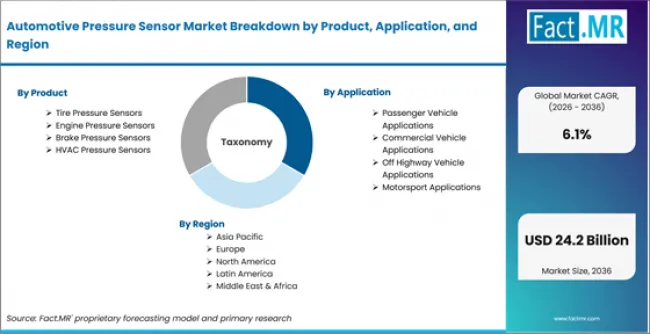
Automotive Pressure Sensor Market is segmented by Product (Tire Pressure Sensors, Engine Pressure Sensors, Brake Pressure Sensors, HVAC Pressure Sensors), Application (Passenger Vehicle Applications, Commercial Vehicle Applications, Off Highway Vehicle Applications, Motorsport Applications), End Use (Automotive OEMs, Tier 1 Automotive Suppliers, Aftermarket Service Providers, Specialty Vehicle Manufacturers), and Region, with forecasts covering the period from 2026 to 2036.
Automotive Pressure Sensor Market Analysis and Forecast by Fact.MR
- The Automotive Pressure Sensor Market is expected to grow from USD 13.4 billion in 2026 to USD 24.2 billion by 2036, at a 6.1% CAGR.
- Driven by mandatory TPMS installation regulations expanding globally, increasing sensor content per vehicle across engine management, transmission, exhaust, and cabin climate systems, and rising adoption of MEMS-based pressure sensing for ADAS and EV battery monitoring applications, with tire pressure sensors accounting for 67.9% share
- Passenger vehicle applications contributing 42.6% share as OEMs prioritize safety compliance, emission control, and real-time powertrain monitoring.
Summary of Automotive Pressure Sensor Market
- Market Snapshot
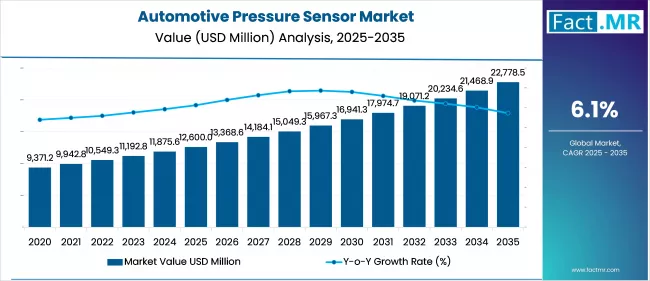
- In 2025, the global Automotive Pressure Sensor Market was valued at approximately USD 12.6 billion.
- The market is estimated to reach USD 13.4 billion in 2026 and is projected to attain USD 24.2 billion by 2036.
- The automotive pressure sensor market is likely to expand at a CAGR of 6.1% during the forecast period.
- The market is anticipated to create an absolute dollar opportunity of USD 10.8 billion between 2026 and 2036.
- Tire pressure sensors account for 67.9% of product segment share in 2026.
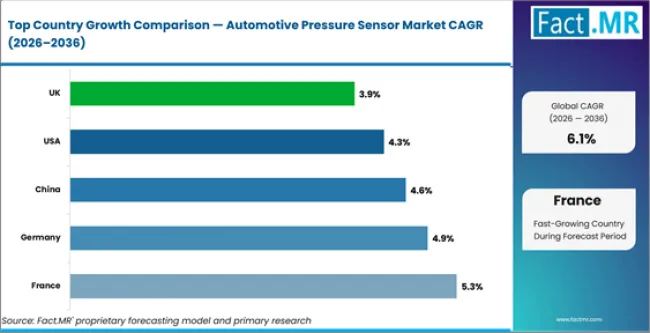
- France (5.3%) and Germany (4.9%) are the key growth markets during the forecast period.
- Demand and Growth Drivers
- Regulatory TPMS mandates now cover the EU, USA, China, South Korea, Japan, and India, with enforcement expanding to additional markets, creating non-discretionary sensor procurement for every new vehicle produced.
- MEMS pressure sensor integration is expanding beyond TPMS into engine intake, fuel rail, exhaust, transmission, brake, and HVAC systems, increasing sensor content per vehicle from 4 to 15+ units.
- EV battery management systems are bringing new pressure sensing applications for cell monitoring and thermal management circuit integrity checking.
- The demand for brake pressure sensors with faster response times and higher accuracy to support emergency braking and stability control functions is driving the integration of ADAS.
- Next-generation TPMS sensors offer over-the-air calibration capabilities to extend product design life and enable fleet management integration.
- Product and Segment View
- Universal regulations that require direct TPMS on new passenger and commercial vehicles will drive tire pressure sensors to 67.9% of the product segment in 2026.
- The passenger vehicles application segment holds a major share of 42.6% in the application segment in 2026, owing to the high production volume of sedans, SUVs, and crossovers with multi-sensor configurations.
- The automotive OEM share of end-use demand is 71.3% in 2026, reflecting the concentration of pressure sensor procurement within first-fit vehicle assembly.
- Key segmentation includes:
- Product: Tire Pressure Sensors, Engine Pressure Sensors, Brake Pressure Sensors, HVAC Pressure Sensors, Fuel System Sensors
- Application: Passenger Vehicle Applications Commercial Vehicle Applications Off-Highway Applications
- Application: Auto OEM, Aftermarket Distributors, Fleet Management Operators
- Distribution Channel: OEM Direct, Aftermarket Stores, E-commerce
- These sensors enable:
- Real time tire pressure monitoring to prevent blowouts, reduce rolling resistance and improve fuel efficiency
- Precise pressure sensing across engine, brake and transmission systems for optimal powertrain control and emission compliance
- Continuous pressure data logging for predictive maintenance and integration with wireless fleet management
- Geography and Competitive Outlook
- Demand is driven by Europe, with France at 5.3% and Germany at 4.9% supported by stringent EU TPMS and emission regulations, premium vehicle sensor content and strong automotive semiconductor manufacturing.
- China at 4.6% reflects increasing TPMS regulatory enforcement, rising EV production requiring battery monitoring sensors and domestic MEMS manufacturing development.
- The USA at 4.3% is driven by mature TPMS compliance, increasing sensor content on SUV and truck platforms, and ADAS integration driving brake sensor specification upgrades.
- Key players include Robert Bosch GmbH, Continental AG, Sensirion AG, Delphi Technologies, Denso Corporation, and Elmos Semiconductor AG.
- Analyst Opinion
- Shambhu Nath Jha, Principal Consultant at Fact.MR, says 'The automotive pressure sensor market is expanding in two dimensions: geographic mandate expansion is adding new countries to the TPMS regulatory base, while per-vehicle sensor count is rising as OEMs integrate pressure measurement into more subsystems. The shift from standalone sensors to integrated modules combining pressure, temperature, and acceleration measurement in single packages is increasing per-unit value while simplifying OEM assembly. EV battery monitoring represents the newest application category, where pressure sensors serve as cell integrity and thermal safety monitors. Manufacturers with MEMS fabrication capability and automotive-grade qualification infrastructure hold structural competitive advantages.'
Key Growth Drivers, Constraints, and Opportunities
Key Factors Driving Growth
- TPMS regulatory mandate expansion to India (2024), additional ASEAN markets, and tightening enforcement in China is creating incremental non-discretionary sensor demand across millions of new vehicles annually.
- Sensor content per vehicle is rising as OEMs integrate pressure measurement into exhaust after-treatment, transmission hydraulics, and EV battery cooling circuits alongside existing TPMS and engine applications.
- The miniaturization of MEMS technology is enabling pressure sensors to be small enough to be integrated into tire valve stems, brake calipers and engine control units without any major packaging changes.
Key Market Constraints
- Automotive OEMs are demanding lower per-unit sensor prices, which is putting price pressure and margin compression on manufacturers competing in the high-volume TPMS segment of the market.
- Aftermarket TPMS sensor replacement is challenging and requires electronic relearning procedures, limiting DIY adoption and concentrating replacement demand through professional service channels.
- The supply chain for automotive-grade MEMS wafers is concentrated, which creates a procurement risk in times of semiconductor capacity shortage.
Key Opportunity Areas
- OEMs are paying a premium for integrated multi-function sensor modules that combine pressure, temperature and acceleration in single packages, simplifying installation and reducing per-vehicle wiring complexity.
- EV battery cell pressure monitoring is emerging as a new application area where pressure sensors are used as early warning indicators of cell swelling, thermal runaway risk and coolant circuit integrity.
- TPMS data fleet telematics integration is creating value-added service revenue for sensor manufactures with cloud-connected fleet pressure monitoring platforms.
Segment-wise Analysis of the Automotive Pressure Sensor Market
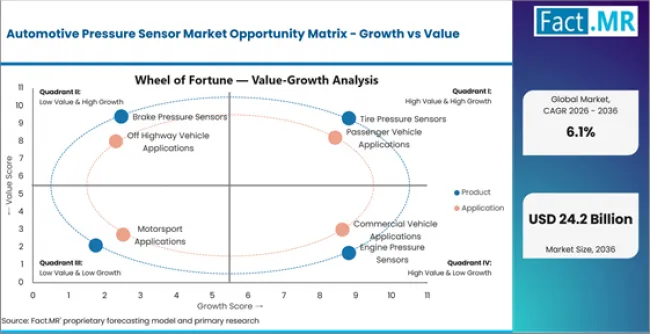
- Tire pressure sensors will account for 67.9% of the product segment in 2026, spurred by universal regulatory mandates and the four-sensor minimum per passenger vehicle.
- The application segment will account for 42.6% of passenger vehicle applications in 2026, owing to the large number of vehicles produced globally that are equipped with sensors.
- Integrated Sensor Modules are estimated to account for 58.4% of the formulation segment in 2026, due to the preference of OEMs for compact multi-function sensing architectures that integrate pressure monitoring with other sensing and communication functions within a single module.
The automotive pressure sensor market is segmented by product type, application, end use, technology, formulation, distribution channel, and region. Tire pressure sensors lead because TPMS mandates create guaranteed minimum demand of four sensors per vehicle across all regulated markets.
Which Product Segment Dominates the Automotive Pressure Sensor Market?
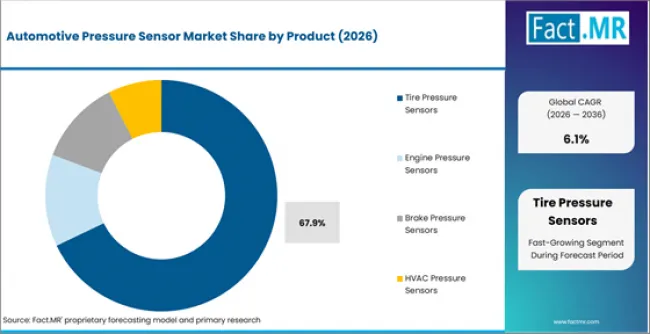
Tire pressure sensors represent 67.9% of the product segment in 2026. Their position is bolstered by mandatory TPMS regulations in most major automotive markets, requiring multiple pressure sensors on every new vehicle. The demand for tire pressure sensing solutions continues to gain further momentum with increasing vehicle production volumes and growing adoption of connected tire monitoring systems.
OEMs are increasing sensor content per vehicle to improve safety, emissions control and powertrain efficiency. Additional demand categories are engine pressure sensors, brake pressure sensors, HVAC pressure sensors and fuel system pressure sensors.
Which Application Segment Dominates the Automotive Pressure Sensor Market?
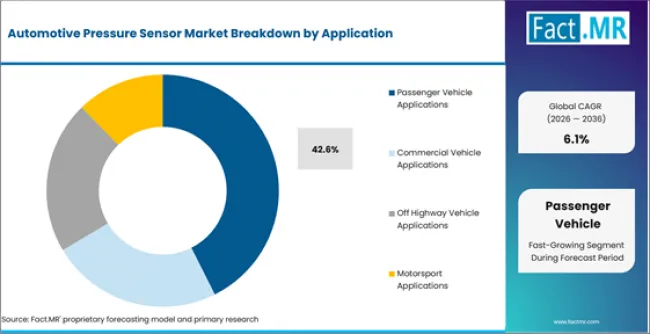
Passenger vehicle applications share is 42.6% in 2026. The segment is representative of the high production volume of sedans, SUVs, crossovers and hatchbacks, each with multiple pressure sensors across TPMS, engine, brake and climate systems. The trend towards a higher sensor content per vehicle is most pronounced in passenger cars, where ADAS features and emission compliance require additional pressure measurement points.
Commercial vehicle applications are creating additional sensor needs per vehicle with the TPMS integration for fleet management and heavy-duty engine monitoring driving the increasing demand. Off-highway applications are a smaller but very specialized segment. Production volume and per-vehicle sensor content are expected to continue to rise, keeping passenger vehicle applications in the lead.
Which Product Trend is Shaping the Next Phase of Growth in the Automotive Pressure Sensor Market?
The most significant product evolution in the automotive pressure sensor market is Bluetooth-enabled TPMS sensors with extended design life and over-the-air calibration. In June 2025, Bosch announced its SMP290 MEMS wheel sensor which has a 10-year design life and shares RF module for passive-entry networks. The method contributes to decrease the electronic complexity per vehicle by sharing the communication hardware between the TPMS and the body electronics functions.
Beyond hardware there is commercial importance. Aftermarket replacement is less frequent but value per unit is higher and initial OEM specification competitiveness is increased due to extended design life. Over-the-air calibration allows fleet operators to remotely keep up with TPMS compliance, without requiring physical service visits, opening up a digital service revenue opportunity. As automotive OEMs are consolidating electronic architectures around domain controllers, integrated TPMS communication is becoming more of a standard feature than a standalone system, favoring sensor manufacturers with software and connectivity capabilities in addition to MEMS fabrication.
Regional Outlook Across Key Markets
- France leads growth at 5.3%, supported by EU TPMS enforcement, strong domestic automotive semiconductor manufacturing by STMicroelectronics, and premium vehicle sensor content expansion.
- Germany at 4.9% reflects premium OEM sensor integration across BMW, Mercedes-Benz, and Volkswagen platforms, Bosch domestic R&D investment, and EU emission regulation compliance sensor requirements.
- China at 4.6% is driven by expanding TPMS regulatory enforcement, growing domestic MEMS manufacturing, and EV battery monitoring sensor demand from BYD, NIO, and other domestic OEMs.
- The USA at 4.3% reflects mature TPMS compliance, increasing sensor content on SUV and truck platforms, and ADAS brake sensor specification upgrades.
.webp)
| Country | CAGR (%) |
|---|---|
| France | 5.3% |
| Germany | 4.9% |
| China | 4.6% |
| USA | 4.3% |
| UK | 3.9% |
Source: Fact MR (FMR) analysis, based on proprietary forecasting model and primary research.
Automotive Pressure Sensor Demand in France
Supporting a 5.3% CAGR through 2036, STMicroelectronics’ domestic semiconductor manufacturing puts France at the center of European automotive MEMS sensor manufacturing. The EU TPMS enforcement guarantees a minimum demand of four sensors per vehicle for all new vehicles. Renault and Stellantis platform specs are enabling multi-sensor integration across engine, brake and climate systems well beyond minimum regulatory requirements.
- STMicroelectronics’ MEMS fabrication capability provides a domestic supply chain for automotive-grade pressure sensor dies for French and European OEM programs.
- More engine and exhaust pressure sensor specifications are needed, on top of the baseline TPMS requirements, for compliance with EU emission regulations.
Germany Automotive Pressure Sensor Market Analysis
Bosch is leading the German market, which is expected to grow at a CAGR of 4.9% until 2036, through domestic R&D investment and integration of premium OEM sensors. Sensor production meets the DIN automotive quality standards and IATF 16949 certification requirements. Europe's highest sensor content per vehicle is defined by BMW, Mercedes-Benz and Porsche platforms and drives the premium demand for integrated multi-function sensor modules.
- The Bosch SMP290 MEMS sensor development is a prime example of German R&D investment in next generation automotive pressure sensing with extended design life and connectivity features.
- Industrie 4.0 manufacturing integration allows for sensor calibration and testing automation at production volumes needed for high-volume OEM programs.
China Automotive Pressure Sensor Market Growth Assessment
TPMS regulatory enforcement expanding from GB/T standards and growing domestic MEMS manufacturing capacity support the China market at a 4.6% CAGR through 2036. EV battery monitoring sensor applications create a new demand category unique to China s large EV production base. Domestic sensor manufacturers are closing the technology gap with Bosch and Continental in standard TPMS applications while competing on price.
- EV production by BYD, NIO, and Xpeng is creating demand for battery cell pressure monitoring sensors not required on ICE platforms.
- Domestic MEMS fabrication investment is reducing import dependency for standard TPMS sensor dies while advanced applications still source from established European and Japanese manufacturers.
United States Automotive Pressure Sensor Market Outlook
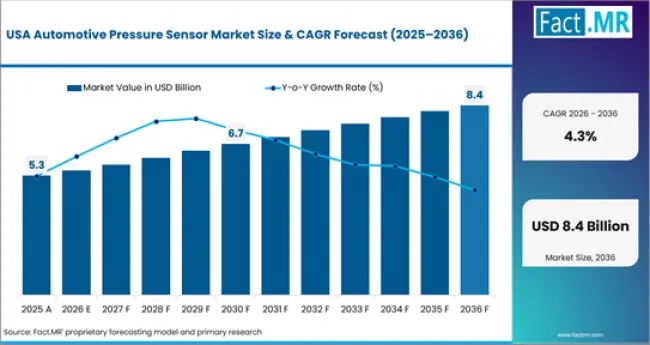
The U.S. market is anticipated to grow at a CAGR of 4.3% through 2036. TPMS compliance is mature and demand growth is driven by increasing sensor content per vehicle as SUV and truck platforms add engine, brake and ADAS pressure measurement points. CHIPS Act semiconductor investment to support expansion of domestic MEMS fabrication capacity.
- CHIPS Act investment supports expansion of domestic automotive MEMS fabrication capacity, enhancing domestic sensor supply chain resilience.
- SUV and truck platforms have higher per-vehicle sensor content than sedans and with production mix continuing to shift to larger vehicles, the average sensor value per vehicle will increase.
United Kingdom Automotive Pressure Sensor Market Demand Trends
Post Brexit, the regulatory frameworks lay out different TPMS certification requirements for the UK market at a 3.9% CAGR through 2036. Jaguar Land Rover and Mini are supporting demand for high-specification integrated sensor modules by fitting them to their premium vehicles. The aging UK vehicle parc and sensor batteries reaching end of life means the aftermarket TPMS sensor replacement offers a steady demand on the service channel.
- Following Brexit the TPMS certification routes dictate the sensor products that can be marketed in the UK from European and Asian suppliers.
- Professional service channels create recurring sensor procurement demand through aftermarket TPMS battery replacement cycles.
Competitive Benchmarking and Company Positioning
Automotive Pressure Sensor Market Analysis By Company
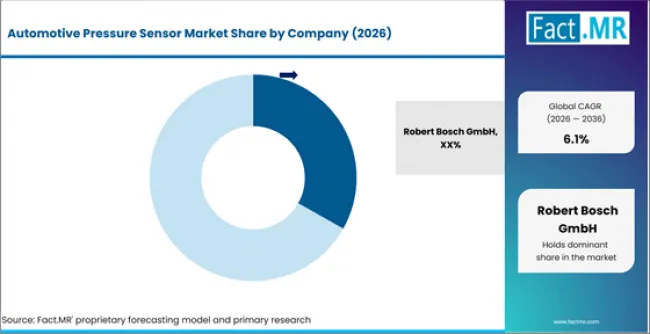
- Robert Bosch GmbH, Continental AG, and Denso Corporation hold leading positions through vertically integrated MEMS fabrication, automotive-grade sensor module manufacturing, and deep OEM supply relationships across all major vehicle platforms.
- Sensata Technologies, Infineon Technologies, and NXP Semiconductors compete through specialized TPMS and automotive semiconductor sensor portfolios, with strengths in RF communication and sensor signal processing.
- MEMS fabrication capability and automotive qualification infrastructure create structural competitive barriers, as the combination of semiconductor manufacturing expertise and automotive quality certification limits the number of suppliers capable of serving high-volume OEM programs.
The competitive landscape is moderately consolidated at the tier-1 level. Bosch, Continental, and Denso control significant OEM market share through integrated sensor module supply that combines MEMS pressure dies with signal processing ASICs and wireless communication in single packages. These companies benefit from captive MEMS fabrication and established automotive qualification that takes 2 to 4 years to achieve.
Semiconductor specialists including Infineon, NXP, and STMicroelectronics compete at the component level, supplying MEMS dies and ASICs to both tier-1 sensor module assemblers and direct OEM programs. The market is also influenced by TPMS aftermarket specialists including Huf, Schrader (Sensata), and Pacific Industrial that serve replacement sensor demand through professional automotive service channels.
Key Companies in the Automotive Pressure Sensor Market
- Robert Bosch GmbH, Continental AG, Denso Corporation, and Sensata Technologies are among the leading players, supported by MEMS fabrication capability, integrated sensor module manufacturing, and global OEM supply relationships.
- Delphi Technologies, Elmos Semiconductor AG, Infineon Technologies, NXP Semiconductors, STMicroelectronics, and Huf Hulsbeck and Furst compete across specific sensor categories, semiconductor components, and aftermarket TPMS replacement channels.
Recent Industry Developments
- Robert Bosch GmbH, Product Expansion (June 2025)
- Bosch continued expansion of its automotive MEMS sensor portfolio supporting tire pressure monitoring, braking systems, and powertrain management applications across passenger and commercial vehicles.
- Continental AG, – TPMS Technology Advancement (2025)
- Continental continued development of connected TPMS solutions integrating tire condition monitoring with vehicle diagnostics and predictive maintenance platforms for passenger and commercial vehicles.
- Denso Corporation – Sensor Manufacturing Expansion (2025)
- Denso expanded investment in semiconductor and sensor manufacturing capabilities to support increasing automotive demand for MEMS-based sensing technologies used in vehicle safety, powertrain, and electrification systems.
Leading Companies Shaping the Automotive Pressure Sensor Market
- Robert Bosch GmbH
- Continental AG
- Denso Corporation
- Sensata Technologies
- STMicroelectronics
- Infineon Technologies
- NXP Semiconductors
- TE Connectivity
- Huf Group
- Pacific Industrial Co., Ltd.
Sources and Research References
- Continental AG. (2025). Automotive sensor technologies and vehicle electronics solutions. Continental AG. https://www.continental.com
- DENSO Corporation. (2025). Automotive sensors and mobility electronics solutions. DENSO Corporation. https://www.denso.com
- Huf Group. (2025). Tire pressure monitoring systems and automotive sensor solutions. Huf Group. https://www.huf-group.com
- Infineon Technologies AG. (2025). MEMS sensors and automotive semiconductor solutions. Infineon Technologies AG. https://www.infineon.com
- NXP Semiconductors N.V. (2025). Automotive sensing and vehicle networking solutions. NXP Semiconductors. https://www.nxp.com
This bibliography is provided for reader reference and is not exhaustive. The full report contains the complete reference list and detailed citations.
Key Questions This Report Addresses
- What is the current and future size of the Automotive Pressure Sensor Market?
- How fast is the Automotive Pressure Sensor Market expected to grow between 2026 and 2036?
- Which product type is likely to lead the market by 2026?
- Which application segment is expected to account for the highest demand by 2026?
- What factors are driving demand for automotive pressure sensors globally?
- How is MEMS technology evolution shaping sensor capability and pricing?
- Why are France and Germany leading market growth?
- How is EV battery monitoring creating new pressure sensor applications?
- Which countries are projected to show the fastest growth through 2036?
- Who are the key companies active in the Automotive Pressure Sensor Market?
- How does Fact.MR estimate and validate the market forecast?
Automotive Pressure Sensor Market Definition
The automotive pressure sensor market covers MEMS-based, strain gauge, and ceramic pressure sensors designed for tire pressure monitoring, engine control, brake systems, fuel management, HVAC, and transmission applications. It spans OEM first-fit and aftermarket replacement across passenger vehicles, commercial vehicles, and off-highway equipment.
Automotive Pressure Sensor Market Inclusions
- The scope covers global and regional market size and forecasts for 2026 to 2036 across product type, application, end use, technology, formulation, distribution channel, and region.
- It includes regional demand analysis based on TPMS regulatory mandates, vehicle production volumes, sensor content per vehicle trends, and aftermarket replacement cycles.
- The report covers pricing analysis across standard TPMS, high-accuracy engine, and integrated multi-function sensor module categories.
Automotive Pressure Sensor Market Exclusions
- The scope excludes standalone automotive accelerometers, gyroscopes, and inertial measurement units not integrated with pressure sensing functionality.
- It excludes industrial process pressure transmitters and building HVAC sensors not designed for automotive vehicle installation.
- The report excludes tire inflation and deflation equipment that uses pressure sensors but is classified as shop equipment rather than vehicle components.
Automotive Pressure Sensor Market Research Methodology
- The methodology combines secondary research, primary interviews, and forecast modelling.
- It draws on 120+ secondary sources and benchmarks 50+ company product portfolios.
- Market sizing covers 30+ countries through a demand-side model, supported by top-down validation.
- Key inputs include vehicle production data, TPMS regulatory timelines, sensor content per vehicle estimates, and aftermarket replacement frequency.
- The model cross-checks demand with semiconductor shipment data, OEM procurement records, and aftermarket distribution volumes.
- Primary validation includes 25+ interviews across sensor manufacturers, OEM procurement teams, semiconductor foundries, and aftermarket distributors.
- Final estimates go through production-volume alignment, regulation-timeline validation, and sensitivity testing.
Scope of Analysis

| Parameter | Details |
|---|---|
| Quantitative Units | USD 13.4 billion to USD 24.2 billion, at a CAGR of 6.1% |
| Market Definition | The Automotive Pressure Sensor Market covers MEMS, strain gauge, and ceramic pressure sensors for TPMS, engine control, brake, fuel, HVAC, and transmission applications across OEM and aftermarket channels. |
| Regions Covered | North America, Latin America, Europe, East Asia, South Asia and Pacific, Middle East and Africa |
| Countries Covered | France, Germany, China, USA, UK, 30 plus countries |
| Key Companies | Robert Bosch GmbH, Continental AG, Sensirion AG, Delphi Technologies, Denso Corporation, Elmos Semiconductor, Infineon Technologies, NXP Semiconductors, STMicroelectronics, Sensata Technologies |
| Forecast Period | 2026 to 2036 |
| Approach | Hybrid demand-side and top-down methodology built on vehicle production data, TPMS regulatory timelines, sensor content per vehicle estimates, and primary interviews across sensor manufacturers, OEM procurement teams, and semiconductor suppliers |
Automotive Pressure Sensor Market Segmentation
-
Automotive Pressure Sensor Market Segmented by Product:
- Tire Pressure Sensors
- Direct TPMS Sensors
- Valve Stem Mounted Sensors
- Band Mounted Sensors
- Indirect TPMS Sensors
- ABS Based Monitoring Sensors
- Wheel Speed Analysis Sensors
- Direct TPMS Sensors
- Engine Pressure Sensors
- Fuel Pressure Sensors
- Low Pressure Fuel Sensors
- High Pressure Fuel Rail Sensors
- Oil Pressure Sensors
- Engine Lubrication Sensors
- Hydraulic Oil Monitoring Sensors
- Fuel Pressure Sensors
- Brake Pressure Sensors
- Hydraulic Brake Sensors
- Master Cylinder Pressure Sensors
- Brake Line Pressure Sensors
- Electronic Brake Sensors
- ABS Pressure Sensors
- ESC Pressure Monitoring Sensors
- Hydraulic Brake Sensors
- HVAC Pressure Sensors
- Refrigerant Pressure Sensors
- Low Side Pressure Sensors
- High Side Pressure Sensors
- Cabin Air Pressure Sensors
- Ventilation Control Sensors
- Climate Regulation Sensors
- Refrigerant Pressure Sensors
- Tire Pressure Sensors
-
Automotive Pressure Sensor Market Segmented by Application:
- Passenger Vehicle Applications
- Internal Combustion Vehicles
- Sedan Pressure Monitoring Systems
- SUV Pressure Monitoring Systems
- Electric Vehicles
- Battery Electric Vehicle Sensors
- Plug In Hybrid Vehicle Sensors
- Internal Combustion Vehicles
- Commercial Vehicle Applications
- Light Commercial Vehicles
- Delivery Van Sensor Systems
- Pickup Truck Sensor Systems
- Heavy Commercial Vehicles
- Heavy Duty Truck Sensors
- Bus Pressure Monitoring Systems
- Light Commercial Vehicles
- Off Highway Vehicle Applications
- Agricultural Equipment
- Tractor Pressure Sensors
- Harvester Monitoring Sensors
- Construction Equipment
- Excavator Pressure Sensors
- Loader Pressure Monitoring Sensors
- Agricultural Equipment
- Motorsport Applications
- Performance Racing Vehicles
- Formula Racing Pressure Sensors
- Touring Car Pressure Sensors
- Testing & Development Vehicles
- Prototype Vehicle Sensors
- Validation Vehicle Sensor Systems
- Performance Racing Vehicles
- Passenger Vehicle Applications
-
Automotive Pressure Sensor Market Segmented by End Use:
- Automotive OEMs
- Passenger Vehicle Manufacturers
- Mass Market Vehicle OEMs
- Premium Vehicle OEMs
- Commercial Vehicle Manufacturers
- Truck Manufacturers
- Bus Manufacturers
- Passenger Vehicle Manufacturers
- Tier 1 Automotive Suppliers
- Powertrain System Suppliers
- Engine Component Suppliers
- Fuel System Suppliers
- Brake System Suppliers
- Hydraulic Brake Suppliers
- Electronic Brake Suppliers
- Powertrain System Suppliers
- Aftermarket Service Providers
- Replacement Component Suppliers
- Independent Parts Suppliers
- Authorized Replacement Suppliers
- Vehicle Service Networks
- Dealership Service Centers
- Independent Repair Workshops
- Replacement Component Suppliers
- Specialty Vehicle Manufacturers
- Agricultural Vehicle Producers
- Tractor Manufacturers
- Harvesting Equipment Producers
- Construction Vehicle Producers
- Earthmoving Equipment Manufacturers
- Heavy Equipment Producers
- Agricultural Vehicle Producers
- Automotive OEMs
-
Automotive Pressure Sensor Market Segmented by Technology:
- MEMS Pressure Sensing Technology
- Capacitive MEMS Sensors
- Silicon Capacitive Sensors
- Ceramic Capacitive Sensors
- Piezoresistive MEMS Sensors
- Silicon Piezoresistive Sensors
- Thin Film Pressure Sensors
- Capacitive MEMS Sensors
- Strain Gauge Technology
- Metal Strain Gauge Sensors
- Foil Based Pressure Sensors
- Bonded Gauge Sensors
- Semiconductor Strain Sensors
- Integrated Semiconductor Sensors
- Micro Strain Sensing Devices
- Metal Strain Gauge Sensors
- Optical Pressure Sensing Technology
- Fiber Optic Sensors
- Distributed Fiber Sensors
- Point Fiber Sensors
- Photonic Pressure Sensors
- Laser Based Pressure Sensors
- Optoelectronic Sensing Systems
- Fiber Optic Sensors
- Wireless Sensor Technology
- RF Communication Sensors
- Short Range RF Sensors
- Long Range RF Sensors
- Bluetooth Enabled Sensors
- Connected Vehicle Sensors
- Smart Diagnostic Sensors
- RF Communication Sensors
- MEMS Pressure Sensing Technology
-
Automotive Pressure Sensor Market Segmented by Formulation:
- Integrated Sensor Modules
- Single Function Sensor Modules
- Dedicated Pressure Monitoring Modules
- Standalone Sensor Assemblies
- Multi Function Sensor Modules
- Pressure Temperature Combined Modules
- Pressure Humidity Combined Modules
- Single Function Sensor Modules
- Surface Mount Sensor Configurations
- Compact SMT Configurations
- Miniature Pressure Sensors
- Ultra Compact MEMS Sensors
- High Density SMT Configurations
- Automotive ECU Mounted Sensors
- Embedded Monitoring Sensors
- Compact SMT Configurations
- Encapsulated Sensor Configurations
- Plastic Encapsulated Sensors
- High Volume Molded Sensors
- Lightweight Sensor Packages
- Metal Encapsulated Sensors
- Harsh Environment Sensors
- High Durability Sensor Packages
- Plastic Encapsulated Sensors
- Hybrid Sensor Configurations
- Analog Hybrid Sensors
- Analog Output Pressure Sensors
- Low Noise Hybrid Sensors
- Digital Hybrid Sensors
- CAN Enabled Pressure Sensors
- LIN Enabled Pressure Sensors
- Analog Hybrid Sensors
- Integrated Sensor Modules
-
Automotive Pressure Sensor Market Segmented by Distribution Channel:
- Direct OEM Supply
- Long Term Supply Agreements
- Global OEM Contracts
- Regional OEM Contracts
- Platform Based Supply Programs
- Passenger Vehicle Programs
- Commercial Vehicle Programs
- Long Term Supply Agreements
- Tier 1 Distribution Networks
- Powertrain Component Channels
- Engine System Distribution
- Fuel System Distribution
- Chassis Component Channels
- Brake System Distribution
- Suspension System Distribution
- Powertrain Component Channels
- Aftermarket Distribution
- Authorized Aftermarket Channels
- OEM Approved Replacement Networks
- Certified Parts Distributors
- Independent Aftermarket Channels
- Automotive Parts Retailers
- Regional Distribution Warehouses
- Authorized Aftermarket Channels
- Online Automotive Platforms
- B2B Automotive Portals
- Fleet Procurement Platforms
- Industrial Supply Platforms
- Digital Aftermarket Platforms
- Online Spare Parts Platforms
- E Commerce Automotive Marketplaces
- B2B Automotive Portals
- Direct OEM Supply
-
Automotive Pressure Sensor Market by Region:
- North America
- USA
- Canada
- Mexico
- Latin America
- Brazil
- Chile
- Rest of Latin America
- Western Europe
- Germany
- UK
- Italy
- Spain
- France
- Nordic
- BENELUX
- Rest of Western Europe
- Eastern Europe
- Russia
- Poland
- Hungary
- Balkan & Baltic
- Rest of Eastern Europe
- East Asia
- China
- Japan
- South Korea
- South Asia and Pacific
- India
- ASEAN
- Australia & New Zealand
- Rest of South Asia and Pacific
- Middle East & Africa
- Kingdom of Saudi Arabia
- Other GCC Countries
- Turkiye
- South Africa
- Other African Union
- Rest of Middle East & Africa
- North America
- Frequently Asked Questions -
How big is the automotive pressure sensor market in 2026?
The global automotive pressure sensor market is estimated to be valued at USD 13.4 billion in 2026.
What will be the size of automotive pressure sensor market in 2036?
The market size for the automotive pressure sensor market is projected to reach USD 24.2 billion by 2036.
How much will be the automotive pressure sensor market growth between 2026 and 2036?
The automotive pressure sensor market is expected to grow at a 6.1% CAGR between 2026 and 2036.
What are the key product in the automotive pressure sensor market?
The key product in automotive pressure sensor market are Tire Pressure Sensors, Engine Pressure Sensors, Brake Pressure Sensors and HVAC Pressure Sensors.
Which application segment is expected to contribute significant share in the automotive pressure sensor market in 2026?
In terms of application, passenger vehicle applications segment is expected to command 42.6% share in the automotive pressure sensor market in 2026.
Table of Content
- Key Takeaways
- Market Size and CAGR
- Top Growth Driver
- Fastest Growing Segment
- Leading Region
- Key Companies
- Emerging Opportunities
- Executive Summary
- Global Market Outlook
- Demand-side Trends
- Supply-side Trends
- Technology Roadmap Analysis
- Analysis and Recommendations
- Analyst Perspective (What is happening? Why now? What should investors know?)
- Key Questions Answered
- How large is the market?
- What is the CAGR?
- What are key trends?
- Which region dominates?
- Who are the leaders?
- Market Overview
- Market Coverage / Taxonomy
- Market Definition / Scope / Limitations
- Research Methodology
- Chapter Orientation
- Analytical Lens and Working Hypotheses
- Market Structure, Signals, and Trend Drivers
- Benchmarking and Cross-market Comparability
- Market Sizing, Forecasting, and Opportunity Mapping
- Research Design and Evidence Framework
- Desk Research Programme (Secondary Evidence)
- Expert Input and Fieldwork (Primary Evidence)
- Tooling, Models, and Reference Databases
- Data Engineering and Model Build
- Quality Assurance and Audit Trail
- Market Background
- Market Dynamics (Drivers, Restraints, Opportunity, Trends)
- Scenario Forecast (Optimistic, Likely, Conservative)
- Impact Analysis
- AI Impact
- Sustainability Impact
- Regulatory Impact
- Technology Impact
- Consumer / Buyer Analysis
- Purchase Drivers
- Adoption Barriers
- Buyer Journey
- Opportunity Map Analysis
- Product Life Cycle Analysis
- Supply Chain Analysis
- Investment Feasibility Matrix
- Value Chain Analysis
- PESTLE and Porter's Analysis
- Regulatory Landscape
- Regional Parent Market Outlook
- Production and Consumption Statistics
- Import and Export Statistics
- Global Market Analysis and Forecast, 2021 to 2036
- Historical Market Size Value (USD Million) Analysis, 2021 to 2025
- Current and Future Market Size Value (USD Million) Projections, 2026 to 2036
- Y-o-Y Growth Trend Analysis
- Absolute $ Opportunity Analysis
- Global Market Pricing Analysis, 2021 to 2036
- Global Market Analysis and Forecast, By Product, 2021 to 2036
- Introduction / Key Findings
- Historical Market Size Value (USD Million) Analysis By Product, 2021 to 2025
- Current and Future Market Size Value (USD Million) Analysis and Forecast By Product, 2026 to 2036
- Tire Pressure Sensors
- Direct TPMS Sensors
- Indirect TPMS Sensors
- Engine Pressure Sensors
- Fuel Pressure Sensors
- Oil Pressure Sensors
- Brake Pressure Sensors
- Hydraulic Brake Sensors
- Electronic Brake Sensors
- HVAC Pressure Sensors
- Refrigerant Pressure Sensors
- Cabin Air Pressure Sensors
- Tire Pressure Sensors
- Y-o-Y Growth Trend Analysis By Product, 2021 to 2025
- Absolute $ Opportunity Analysis By Product, 2026 to 2036
- Global Market Analysis and Forecast, By Application, 2021 to 2036
- Introduction / Key Findings
- Historical Market Size Value (USD Million) Analysis By Application, 2021 to 2025
- Current and Future Market Size Value (USD Million) Analysis and Forecast By Application, 2026 to 2036
- Passenger Vehicle Applications
- Internal Combustion Vehicles
- Electric Vehicles
- Commercial Vehicle Applications
- Light Commercial Vehicles
- Heavy Commercial Vehicles
- Off Highway Vehicle Applications
- Agricultural Equipment
- Construction Equipment
- Motorsport Applications
- Performance Racing Vehicles
- Testing & Development Vehicles
- Passenger Vehicle Applications
- Y-o-Y Growth Trend Analysis By Application, 2021 to 2025
- Absolute $ Opportunity Analysis By Application, 2026 to 2036
- Global Market Analysis and Forecast, By End Use, 2021 to 2036
- Introduction / Key Findings
- Historical Market Size Value (USD Million) Analysis By End Use, 2021 to 2025
- Current and Future Market Size Value (USD Million) Analysis and Forecast By End Use, 2026 to 2036
- Automotive OEMs
- Passenger Vehicle Manufacturers
- Commercial Vehicle Manufacturers
- Tier 1 Automotive Suppliers
- Powertrain System Suppliers
- Brake System Suppliers
- Aftermarket Service Providers
- Replacement Component Suppliers
- Vehicle Service Networks
- Specialty Vehicle Manufacturers
- Agricultural Vehicle Producers
- Construction Vehicle Producers
- Automotive OEMs
- Y-o-Y Growth Trend Analysis By End Use, 2021 to 2025
- Absolute $ Opportunity Analysis By End Use, 2026 to 2036
- Global Market Analysis and Forecast, By Technology, 2021 to 2036
- Introduction / Key Findings
- Historical Market Size Value (USD Million) Analysis By Technology, 2021 to 2025
- Current and Future Market Size Value (USD Million) Analysis and Forecast By Technology, 2026 to 2036
- MEMS Pressure Sensing Technology
- Capacitive MEMS Sensors
- Piezoresistive MEMS Sensors
- Strain Gauge Technology
- Metal Strain Gauge Sensors
- Semiconductor Strain Sensors
- Optical Pressure Sensing Technology
- Fiber Optic Sensors
- Photonic Pressure Sensors
- Wireless Sensor Technology
- RF Communication Sensors
- Bluetooth Enabled Sensors
- MEMS Pressure Sensing Technology
- Y-o-Y Growth Trend Analysis By Technology, 2021 to 2025
- Absolute $ Opportunity Analysis By Technology, 2026 to 2036
- Global Market Analysis and Forecast, By Formulation, 2021 to 2036
- Introduction / Key Findings
- Historical Market Size Value (USD Million) Analysis By Formulation, 2021 to 2025
- Current and Future Market Size Value (USD Million) Analysis and Forecast By Formulation, 2026 to 2036
- Integrated Sensor Modules
- Single Function Sensor Modules
- Multi Function Sensor Modules
- Surface Mount Sensor Configurations
- Compact SMT Configurations
- High Density SMT Configurations
- Encapsulated Sensor Configurations
- Plastic Encapsulated Sensors
- Metal Encapsulated Sensors
- Hybrid Sensor Configurations
- Analog Hybrid Sensors
- Digital Hybrid Sensors
- Integrated Sensor Modules
- Y-o-Y Growth Trend Analysis By Formulation, 2021 to 2025
- Absolute $ Opportunity Analysis By Formulation, 2026 to 2036
- Global Market Analysis and Forecast, By Distribution Channel
- Introduction / Key Findings
- Historical Market Size Value (USD Million) Analysis By Distribution Channel, 2021 to 2025
- Current and Future Market Size Value (USD Million) Analysis and Forecast By Distribution Channel, 2026 to 2036
- Direct OEM Supply
- Long Term Supply Agreements
- Platform Based Supply Programs
- Tier 1 Distribution Networks
- Powertrain Component Channels
- Chassis Component Channels
- Aftermarket Distribution
- Authorized Aftermarket Channels
- Independent Aftermarket Channels
- Online Automotive Platforms
- B2B Automotive Portals
- Digital Aftermarket Platforms
- Direct OEM Supply
- Y-o-Y Growth Trend Analysis By Distribution Channel, 2021 to 2025
- Absolute $ Opportunity Analysis By Distribution Channel, 2026 to 2036
- Global Market Analysis and Forecast, By Region, 2021 to 2036
- Introduction
- Historical Market Size Value (USD Million) Analysis By Region, 2021 to 2025
- Current Market Size Value (USD Million) Analysis and Forecast By Region, 2026 to 2036
- North America
- Latin America
- Western Europe
- Eastern Europe
- East Asia
- South Asia and Pacific
- Middle East & Africa
- Market Attractiveness Analysis By Region
- North America Market Analysis and Forecast, By Country, 2021 to 2036
- Historical Market Size Value (USD Million) Trend Analysis By Market Taxonomy, 2021 to 2025
- Market Size Value (USD Million) Forecast By Market Taxonomy, 2026 to 2036
- By Country
- USA
- Canada
- Mexico
- By Product
- By Application
- By End Use
- By Technology
- By Formulation
- By Distribution Channel
- By Country
- Market Attractiveness Analysis
- By Country
- By Product
- By Application
- By End Use
- By Technology
- By Formulation
- By Distribution Channel
- Key Takeaways
- Latin America Market Analysis and Forecast, By Country
- Historical Market Size Value (USD Million) Trend Analysis By Market Taxonomy, 2021 to 2025
- Market Size Value (USD Million) Forecast By Market Taxonomy, 2026 to 2036
- By Country
- Brazil
- Chile
- Rest of Latin America
- By Product
- By Application
- By End Use
- By Technology
- By Formulation
- By Distribution Channel
- By Country
- Market Attractiveness Analysis
- By Country
- By Product
- By Application
- By End Use
- By Technology
- By Formulation
- By Distribution Channel
- Key Takeaways
- Western Europe Market Analysis and Forecast, By Country
- Historical Market Size Value (USD Million) Trend Analysis By Market Taxonomy, 2021 to 2025
- Market Size Value (USD Million) Forecast By Market Taxonomy, 2026 to 2036
- By Country
- Germany
- UK
- Italy
- Spain
- France
- Nordic
- BENELUX
- Rest of Western Europe
- By Product
- By Application
- By End Use
- By Technology
- By Formulation
- By Distribution Channel
- By Country
- Market Attractiveness Analysis
- By Country
- By Product
- By Application
- By End Use
- By Technology
- By Formulation
- By Distribution Channel
- Key Takeaways
- Eastern Europe Market Analysis and Forecast, By Country
- Historical Market Size Value (USD Million) Trend Analysis By Market Taxonomy, 2021 to 2025
- Market Size Value (USD Million) Forecast By Market Taxonomy, 2026 to 2036
- By Country
- Russia
- Poland
- Hungary
- Balkan & Baltic
- Rest of Eastern Europe
- By Product
- By Application
- By End Use
- By Technology
- By Formulation
- By Distribution Channel
- By Country
- Market Attractiveness Analysis
- By Country
- By Product
- By Application
- By End Use
- By Technology
- By Formulation
- By Distribution Channel
- Key Takeaways
- East Asia Market Analysis and Forecast, By Country
- Historical Market Size Value (USD Million) Trend Analysis By Market Taxonomy, 2021 to 2025
- Market Size Value (USD Million) Forecast By Market Taxonomy, 2026 to 2036
- By Country
- China
- Japan
- South Korea
- By Product
- By Application
- By End Use
- By Technology
- By Formulation
- By Distribution Channel
- By Country
- Market Attractiveness Analysis
- By Country
- By Product
- By Application
- By End Use
- By Technology
- By Formulation
- By Distribution Channel
- Key Takeaways
- South Asia and Pacific Market Analysis and Forecast, By Country
- Historical Market Size Value (USD Million) Trend Analysis By Market Taxonomy, 2021 to 2025
- Market Size Value (USD Million) Forecast By Market Taxonomy, 2026 to 2036
- By Country
- India
- ASEAN
- Australia & New Zealand
- Rest of South Asia and Pacific
- By Product
- By Application
- By End Use
- By Technology
- By Formulation
- By Distribution Channel
- By Country
- Market Attractiveness Analysis
- By Country
- By Product
- By Application
- By End Use
- By Technology
- By Formulation
- By Distribution Channel
- Key Takeaways
- Middle East & Africa Market Analysis and Forecast, By Country
- Historical Market Size Value (USD Million) Trend Analysis By Market Taxonomy, 2021 to 2025
- Market Size Value (USD Million) Forecast By Market Taxonomy, 2026 to 2036
- By Country
- Kingdom of Saudi Arabia
- Other GCC Countries
- Turkiye
- South Africa
- Other African Union
- Rest of Middle East & Africa
- By Product
- By Application
- By End Use
- By Technology
- By Formulation
- By Distribution Channel
- By Country
- Market Attractiveness Analysis
- By Country
- By Product
- By Application
- By End Use
- By Technology
- By Formulation
- By Distribution Channel
- Key Takeaways
- Key Countries Market Analysis
- USA
- Pricing Analysis
- Market Share Analysis, 2025
- By Product
- By Application
- By End Use
- By Technology
- By Formulation
- By Distribution Channel
- Canada
- Pricing Analysis
- Market Share Analysis, 2025
- By Product
- By Application
- By End Use
- By Technology
- By Formulation
- By Distribution Channel
- Mexico
- Pricing Analysis
- Market Share Analysis, 2025
- By Product
- By Application
- By End Use
- By Technology
- By Formulation
- By Distribution Channel
- Brazil
- Pricing Analysis
- Market Share Analysis, 2025
- By Product
- By Application
- By End Use
- By Technology
- By Formulation
- By Distribution Channel
- Chile
- Pricing Analysis
- Market Share Analysis, 2025
- By Product
- By Application
- By End Use
- By Technology
- By Formulation
- By Distribution Channel
- Germany
- Pricing Analysis
- Market Share Analysis, 2025
- By Product
- By Application
- By End Use
- By Technology
- By Formulation
- By Distribution Channel
- UK
- Pricing Analysis
- Market Share Analysis, 2025
- By Product
- By Application
- By End Use
- By Technology
- By Formulation
- By Distribution Channel
- Italy
- Pricing Analysis
- Market Share Analysis, 2025
- By Product
- By Application
- By End Use
- By Technology
- By Formulation
- By Distribution Channel
- Spain
- Pricing Analysis
- Market Share Analysis, 2025
- By Product
- By Application
- By End Use
- By Technology
- By Formulation
- By Distribution Channel
- France
- Pricing Analysis
- Market Share Analysis, 2025
- By Product
- By Application
- By End Use
- By Technology
- By Formulation
- By Distribution Channel
- India
- Pricing Analysis
- Market Share Analysis, 2025
- By Product
- By Application
- By End Use
- By Technology
- By Formulation
- By Distribution Channel
- ASEAN
- Pricing Analysis
- Market Share Analysis, 2025
- By Product
- By Application
- By End Use
- By Technology
- By Formulation
- By Distribution Channel
- Australia & New Zealand
- Pricing Analysis
- Market Share Analysis, 2025
- By Product
- By Application
- By End Use
- By Technology
- By Formulation
- By Distribution Channel
- China
- Pricing Analysis
- Market Share Analysis, 2025
- By Product
- By Application
- By End Use
- By Technology
- By Formulation
- By Distribution Channel
- Japan
- Pricing Analysis
- Market Share Analysis, 2025
- By Product
- By Application
- By End Use
- By Technology
- By Formulation
- By Distribution Channel
- South Korea
- Pricing Analysis
- Market Share Analysis, 2025
- By Product
- By Application
- By End Use
- By Technology
- By Formulation
- By Distribution Channel
- Russia
- Pricing Analysis
- Market Share Analysis, 2025
- By Product
- By Application
- By End Use
- By Technology
- By Formulation
- By Distribution Channel
- Poland
- Pricing Analysis
- Market Share Analysis, 2025
- By Product
- By Application
- By End Use
- By Technology
- By Formulation
- By Distribution Channel
- Hungary
- Pricing Analysis
- Market Share Analysis, 2025
- By Product
- By Application
- By End Use
- By Technology
- By Formulation
- By Distribution Channel
- Kingdom of Saudi Arabia
- Pricing Analysis
- Market Share Analysis, 2025
- By Product
- By Application
- By End Use
- By Technology
- By Formulation
- By Distribution Channel
- Turkiye
- Pricing Analysis
- Market Share Analysis, 2025
- By Product
- By Application
- By End Use
- By Technology
- By Formulation
- By Distribution Channel
- South Africa
- Pricing Analysis
- Market Share Analysis, 2025
- By Product
- By Application
- By End Use
- By Technology
- By Formulation
- By Distribution Channel
- USA
- Market Structure Analysis
- Competition Dashboard
- Competition Benchmarking
- Market Share Analysis of Top Players
- By Regional
- By Product
- By Application
- By End Use
- By Technology
- By Formulation
- By Distribution Channel
- Emerging Startups
- Innovation Benchmarking
- Competition Analysis
- Competition Deep Dive
- Robert Bosch GmbH
- Overview
- Product Portfolio
- Profitability by Market Segments (Product/Age /Sales Channel/Region)
- Sales Footprint
- Strategy Overview
- Marketing Strategy
- Product Strategy
- Channel Strategy
- Continental AG
- Sensirion AG
- Delphi Technologies
- Denso Corporation
- Elmos Semiconductor AG
- Infineon Technologies AG
- NXP Semiconductors
- Panasonic Corporation
- Renesas Electronics Corporation
- Robert Bosch GmbH
- Competition Deep Dive
- Case Studies
- Success Stories
- Recent Developments
- Assumptions & Acronyms Used
List Of Table
- Table 1: Global Market Value (USD Million) Forecast by Region, 2021 to 2036
- Table 2: Global Market Value (USD Million) Forecast by Product, 2021 to 2036
- Table 3: Global Market Value (USD Million) Forecast by Application, 2021 to 2036
- Table 4: Global Market Value (USD Million) Forecast by End Use, 2021 to 2036
- Table 5: Global Market Value (USD Million) Forecast by Technology, 2021 to 2036
- Table 6: Global Market Value (USD Million) Forecast by Formulation, 2021 to 2036
- Table 7: Global Market Value (USD Million) Forecast by Distribution Channel, 2021 to 2036
- Table 8: Global Market rma_anu Forecast by rma_anu, 2021 to 2036
- Table 9: North America Market Value (USD Million) Forecast by Country, 2021 to 2036
- Table 10: North America Market Value (USD Million) Forecast by Product, 2021 to 2036
- Table 11: North America Market Value (USD Million) Forecast by Application, 2021 to 2036
- Table 12: North America Market Value (USD Million) Forecast by End Use, 2021 to 2036
- Table 13: North America Market Value (USD Million) Forecast by Technology, 2021 to 2036
- Table 14: North America Market Value (USD Million) Forecast by Formulation, 2021 to 2036
- Table 15: North America Market Value (USD Million) Forecast by Distribution Channel, 2021 to 2036
- Table 16: Latin America Market Value (USD Million) Forecast by Country, 2021 to 2036
- Table 17: Latin America Market Value (USD Million) Forecast by Product, 2021 to 2036
- Table 18: Latin America Market Value (USD Million) Forecast by Application, 2021 to 2036
- Table 19: Latin America Market Value (USD Million) Forecast by End Use, 2021 to 2036
- Table 20: Latin America Market Value (USD Million) Forecast by Technology, 2021 to 2036
- Table 21: Latin America Market Value (USD Million) Forecast by Formulation, 2021 to 2036
- Table 22: Latin America Market Value (USD Million) Forecast by Distribution Channel, 2021 to 2036
- Table 23: Western Europe Market Value (USD Million) Forecast by Country, 2021 to 2036
- Table 24: Western Europe Market Value (USD Million) Forecast by Product, 2021 to 2036
- Table 25: Western Europe Market Value (USD Million) Forecast by Application, 2021 to 2036
- Table 26: Western Europe Market Value (USD Million) Forecast by End Use, 2021 to 2036
- Table 27: Western Europe Market Value (USD Million) Forecast by Technology, 2021 to 2036
- Table 28: Western Europe Market Value (USD Million) Forecast by Formulation, 2021 to 2036
- Table 29: Western Europe Market Value (USD Million) Forecast by Distribution Channel, 2021 to 2036
- Table 30: Eastern Europe Market Value (USD Million) Forecast by Country, 2021 to 2036
- Table 31: Eastern Europe Market Value (USD Million) Forecast by Product, 2021 to 2036
- Table 32: Eastern Europe Market Value (USD Million) Forecast by Application, 2021 to 2036
- Table 33: Eastern Europe Market Value (USD Million) Forecast by End Use, 2021 to 2036
- Table 34: Eastern Europe Market Value (USD Million) Forecast by Technology, 2021 to 2036
- Table 35: Eastern Europe Market Value (USD Million) Forecast by Formulation, 2021 to 2036
- Table 36: Eastern Europe Market Value (USD Million) Forecast by Distribution Channel, 2021 to 2036
- Table 37: East Asia Market Value (USD Million) Forecast by Country, 2021 to 2036
- Table 38: East Asia Market Value (USD Million) Forecast by Product, 2021 to 2036
- Table 39: East Asia Market Value (USD Million) Forecast by Application, 2021 to 2036
- Table 40: East Asia Market Value (USD Million) Forecast by End Use, 2021 to 2036
- Table 41: East Asia Market Value (USD Million) Forecast by Technology, 2021 to 2036
- Table 42: East Asia Market Value (USD Million) Forecast by Formulation, 2021 to 2036
- Table 43: East Asia Market Value (USD Million) Forecast by Distribution Channel, 2021 to 2036
- Table 44: South Asia and Pacific Market Value (USD Million) Forecast by Country, 2021 to 2036
- Table 45: South Asia and Pacific Market Value (USD Million) Forecast by Product, 2021 to 2036
- Table 46: South Asia and Pacific Market Value (USD Million) Forecast by Application, 2021 to 2036
- Table 47: South Asia and Pacific Market Value (USD Million) Forecast by End Use, 2021 to 2036
- Table 48: South Asia and Pacific Market Value (USD Million) Forecast by Technology, 2021 to 2036
- Table 49: South Asia and Pacific Market Value (USD Million) Forecast by Formulation, 2021 to 2036
- Table 50: South Asia and Pacific Market Value (USD Million) Forecast by Distribution Channel, 2021 to 2036
- Table 51: Middle East & Africa Market Value (USD Million) Forecast by Country, 2021 to 2036
- Table 52: Middle East & Africa Market Value (USD Million) Forecast by Product, 2021 to 2036
- Table 53: Middle East & Africa Market Value (USD Million) Forecast by Application, 2021 to 2036
- Table 54: Middle East & Africa Market Value (USD Million) Forecast by End Use, 2021 to 2036
- Table 55: Middle East & Africa Market Value (USD Million) Forecast by Technology, 2021 to 2036
- Table 56: Middle East & Africa Market Value (USD Million) Forecast by Formulation, 2021 to 2036
- Table 57: Middle East & Africa Market Value (USD Million) Forecast by Distribution Channel, 2021 to 2036
List Of Figures
- Figure 1: Global Market Pricing Analysis
- Figure 2: Global Market Value (USD Million) Forecast 2021 to 2036
- Figure 3: Global Market Value Share and BPS Analysis by Product, 2026 and 2036
- Figure 4: Global Market Y-o-Y Growth Comparison by Product, 2026 to 2036
- Figure 5: Global Market Attractiveness Analysis by Product
- Figure 6: Global Market Value Share and BPS Analysis by Application, 2026 and 2036
- Figure 7: Global Market Y-o-Y Growth Comparison by Application, 2026 to 2036
- Figure 8: Global Market Attractiveness Analysis by Application
- Figure 9: Global Market Value Share and BPS Analysis by End Use, 2026 and 2036
- Figure 10: Global Market Y-o-Y Growth Comparison by End Use, 2026 to 2036
- Figure 11: Global Market Attractiveness Analysis by End Use
- Figure 12: Global Market Value Share and BPS Analysis by Technology, 2026 and 2036
- Figure 13: Global Market Y-o-Y Growth Comparison by Technology, 2026 to 2036
- Figure 14: Global Market Attractiveness Analysis by Technology
- Figure 15: Global Market Value Share and BPS Analysis by Formulation, 2026 and 2036
- Figure 16: Global Market Y-o-Y Growth Comparison by Formulation, 2026 to 2036
- Figure 17: Global Market Attractiveness Analysis by Formulation
- Figure 18: Global Market Value Share and BPS Analysis by Distribution Channel, 2026 and 2036
- Figure 19: Global Market Y-o-Y Growth Comparison by Distribution Channel, 2026 to 2036
- Figure 20: Global Market Attractiveness Analysis by Distribution Channel
- Figure 21: Global Market Value (USD Million) Share and BPS Analysis by Region, 2026 and 2036
- Figure 22: Global Market Y-o-Y Growth Comparison by Region, 2026 to 2036
- Figure 23: Global Market Attractiveness Analysis by Region
- Figure 24: North America Market Incremental Dollar Opportunity, 2026 to 2036
- Figure 25: Latin America Market Incremental Dollar Opportunity, 2026 to 2036
- Figure 26: Western Europe Market Incremental Dollar Opportunity, 2026 to 2036
- Figure 27: Eastern Europe Market Incremental Dollar Opportunity, 2026 to 2036
- Figure 28: East Asia Market Incremental Dollar Opportunity, 2026 to 2036
- Figure 29: South Asia and Pacific Market Incremental Dollar Opportunity, 2026 to 2036
- Figure 30: Middle East & Africa Market Incremental Dollar Opportunity, 2026 to 2036
- Figure 31: North America Market Value Share and BPS Analysis by Country, 2026 and 2036
- Figure 32: North America Market Value Share and BPS Analysis by Product, 2026 and 2036
- Figure 33: North America Market Y-o-Y Growth Comparison by Product, 2026 to 2036
- Figure 34: North America Market Attractiveness Analysis by Product
- Figure 35: North America Market Value Share and BPS Analysis by Application, 2026 and 2036
- Figure 36: North America Market Y-o-Y Growth Comparison by Application, 2026 to 2036
- Figure 37: North America Market Attractiveness Analysis by Application
- Figure 38: North America Market Value Share and BPS Analysis by End Use, 2026 and 2036
- Figure 39: North America Market Y-o-Y Growth Comparison by End Use, 2026 to 2036
- Figure 40: North America Market Attractiveness Analysis by End Use
- Figure 41: North America Market Value Share and BPS Analysis by Technology, 2026 and 2036
- Figure 42: North America Market Y-o-Y Growth Comparison by Technology, 2026 to 2036
- Figure 43: North America Market Attractiveness Analysis by Technology
- Figure 44: North America Market Value Share and BPS Analysis by Formulation, 2026 and 2036
- Figure 45: North America Market Y-o-Y Growth Comparison by Formulation, 2026 to 2036
- Figure 46: North America Market Attractiveness Analysis by Formulation
- Figure 47: North America Market Value Share and BPS Analysis by Distribution Channel, 2026 and 2036
- Figure 48: North America Market Y-o-Y Growth Comparison by Distribution Channel, 2026 to 2036
- Figure 49: North America Market Attractiveness Analysis by Distribution Channel
- Figure 50: Latin America Market Value Share and BPS Analysis by Country, 2026 and 2036
- Figure 51: Latin America Market Value Share and BPS Analysis by Product, 2026 and 2036
- Figure 52: Latin America Market Y-o-Y Growth Comparison by Product, 2026 to 2036
- Figure 53: Latin America Market Attractiveness Analysis by Product
- Figure 54: Latin America Market Value Share and BPS Analysis by Application, 2026 and 2036
- Figure 55: Latin America Market Y-o-Y Growth Comparison by Application, 2026 to 2036
- Figure 56: Latin America Market Attractiveness Analysis by Application
- Figure 57: Latin America Market Value Share and BPS Analysis by End Use, 2026 and 2036
- Figure 58: Latin America Market Y-o-Y Growth Comparison by End Use, 2026 to 2036
- Figure 59: Latin America Market Attractiveness Analysis by End Use
- Figure 60: Latin America Market Value Share and BPS Analysis by Technology, 2026 and 2036
- Figure 61: Latin America Market Y-o-Y Growth Comparison by Technology, 2026 to 2036
- Figure 62: Latin America Market Attractiveness Analysis by Technology
- Figure 63: Latin America Market Value Share and BPS Analysis by Formulation, 2026 and 2036
- Figure 64: Latin America Market Y-o-Y Growth Comparison by Formulation, 2026 to 2036
- Figure 65: Latin America Market Attractiveness Analysis by Formulation
- Figure 66: Latin America Market Value Share and BPS Analysis by Distribution Channel, 2026 and 2036
- Figure 67: Latin America Market Y-o-Y Growth Comparison by Distribution Channel, 2026 to 2036
- Figure 68: Latin America Market Attractiveness Analysis by Distribution Channel
- Figure 69: Western Europe Market Value Share and BPS Analysis by Country, 2026 and 2036
- Figure 70: Western Europe Market Value Share and BPS Analysis by Product, 2026 and 2036
- Figure 71: Western Europe Market Y-o-Y Growth Comparison by Product, 2026 to 2036
- Figure 72: Western Europe Market Attractiveness Analysis by Product
- Figure 73: Western Europe Market Value Share and BPS Analysis by Application, 2026 and 2036
- Figure 74: Western Europe Market Y-o-Y Growth Comparison by Application, 2026 to 2036
- Figure 75: Western Europe Market Attractiveness Analysis by Application
- Figure 76: Western Europe Market Value Share and BPS Analysis by End Use, 2026 and 2036
- Figure 77: Western Europe Market Y-o-Y Growth Comparison by End Use, 2026 to 2036
- Figure 78: Western Europe Market Attractiveness Analysis by End Use
- Figure 79: Western Europe Market Value Share and BPS Analysis by Technology, 2026 and 2036
- Figure 80: Western Europe Market Y-o-Y Growth Comparison by Technology, 2026 to 2036
- Figure 81: Western Europe Market Attractiveness Analysis by Technology
- Figure 82: Western Europe Market Value Share and BPS Analysis by Formulation, 2026 and 2036
- Figure 83: Western Europe Market Y-o-Y Growth Comparison by Formulation, 2026 to 2036
- Figure 84: Western Europe Market Attractiveness Analysis by Formulation
- Figure 85: Western Europe Market Value Share and BPS Analysis by Distribution Channel, 2026 and 2036
- Figure 86: Western Europe Market Y-o-Y Growth Comparison by Distribution Channel, 2026 to 2036
- Figure 87: Western Europe Market Attractiveness Analysis by Distribution Channel
- Figure 88: Eastern Europe Market Value Share and BPS Analysis by Country, 2026 and 2036
- Figure 89: Eastern Europe Market Value Share and BPS Analysis by Product, 2026 and 2036
- Figure 90: Eastern Europe Market Y-o-Y Growth Comparison by Product, 2026 to 2036
- Figure 91: Eastern Europe Market Attractiveness Analysis by Product
- Figure 92: Eastern Europe Market Value Share and BPS Analysis by Application, 2026 and 2036
- Figure 93: Eastern Europe Market Y-o-Y Growth Comparison by Application, 2026 to 2036
- Figure 94: Eastern Europe Market Attractiveness Analysis by Application
- Figure 95: Eastern Europe Market Value Share and BPS Analysis by End Use, 2026 and 2036
- Figure 96: Eastern Europe Market Y-o-Y Growth Comparison by End Use, 2026 to 2036
- Figure 97: Eastern Europe Market Attractiveness Analysis by End Use
- Figure 98: Eastern Europe Market Value Share and BPS Analysis by Technology, 2026 and 2036
- Figure 99: Eastern Europe Market Y-o-Y Growth Comparison by Technology, 2026 to 2036
- Figure 100: Eastern Europe Market Attractiveness Analysis by Technology
- Figure 101: Eastern Europe Market Value Share and BPS Analysis by Formulation, 2026 and 2036
- Figure 102: Eastern Europe Market Y-o-Y Growth Comparison by Formulation, 2026 to 2036
- Figure 103: Eastern Europe Market Attractiveness Analysis by Formulation
- Figure 104: Eastern Europe Market Value Share and BPS Analysis by Distribution Channel, 2026 and 2036
- Figure 105: Eastern Europe Market Y-o-Y Growth Comparison by Distribution Channel, 2026 to 2036
- Figure 106: Eastern Europe Market Attractiveness Analysis by Distribution Channel
- Figure 107: East Asia Market Value Share and BPS Analysis by Country, 2026 and 2036
- Figure 108: East Asia Market Value Share and BPS Analysis by Product, 2026 and 2036
- Figure 109: East Asia Market Y-o-Y Growth Comparison by Product, 2026 to 2036
- Figure 110: East Asia Market Attractiveness Analysis by Product
- Figure 111: East Asia Market Value Share and BPS Analysis by Application, 2026 and 2036
- Figure 112: East Asia Market Y-o-Y Growth Comparison by Application, 2026 to 2036
- Figure 113: East Asia Market Attractiveness Analysis by Application
- Figure 114: East Asia Market Value Share and BPS Analysis by End Use, 2026 and 2036
- Figure 115: East Asia Market Y-o-Y Growth Comparison by End Use, 2026 to 2036
- Figure 116: East Asia Market Attractiveness Analysis by End Use
- Figure 117: East Asia Market Value Share and BPS Analysis by Technology, 2026 and 2036
- Figure 118: East Asia Market Y-o-Y Growth Comparison by Technology, 2026 to 2036
- Figure 119: East Asia Market Attractiveness Analysis by Technology
- Figure 120: East Asia Market Value Share and BPS Analysis by Formulation, 2026 and 2036
- Figure 121: East Asia Market Y-o-Y Growth Comparison by Formulation, 2026 to 2036
- Figure 122: East Asia Market Attractiveness Analysis by Formulation
- Figure 123: East Asia Market Value Share and BPS Analysis by Distribution Channel, 2026 and 2036
- Figure 124: East Asia Market Y-o-Y Growth Comparison by Distribution Channel, 2026 to 2036
- Figure 125: East Asia Market Attractiveness Analysis by Distribution Channel
- Figure 126: South Asia and Pacific Market Value Share and BPS Analysis by Country, 2026 and 2036
- Figure 127: South Asia and Pacific Market Value Share and BPS Analysis by Product, 2026 and 2036
- Figure 128: South Asia and Pacific Market Y-o-Y Growth Comparison by Product, 2026 to 2036
- Figure 129: South Asia and Pacific Market Attractiveness Analysis by Product
- Figure 130: South Asia and Pacific Market Value Share and BPS Analysis by Application, 2026 and 2036
- Figure 131: South Asia and Pacific Market Y-o-Y Growth Comparison by Application, 2026 to 2036
- Figure 132: South Asia and Pacific Market Attractiveness Analysis by Application
- Figure 133: South Asia and Pacific Market Value Share and BPS Analysis by End Use, 2026 and 2036
- Figure 134: South Asia and Pacific Market Y-o-Y Growth Comparison by End Use, 2026 to 2036
- Figure 135: South Asia and Pacific Market Attractiveness Analysis by End Use
- Figure 136: South Asia and Pacific Market Value Share and BPS Analysis by Technology, 2026 and 2036
- Figure 137: South Asia and Pacific Market Y-o-Y Growth Comparison by Technology, 2026 to 2036
- Figure 138: South Asia and Pacific Market Attractiveness Analysis by Technology
- Figure 139: South Asia and Pacific Market Value Share and BPS Analysis by Formulation, 2026 and 2036
- Figure 140: South Asia and Pacific Market Y-o-Y Growth Comparison by Formulation, 2026 to 2036
- Figure 141: South Asia and Pacific Market Attractiveness Analysis by Formulation
- Figure 142: South Asia and Pacific Market Value Share and BPS Analysis by Distribution Channel, 2026 and 2036
- Figure 143: South Asia and Pacific Market Y-o-Y Growth Comparison by Distribution Channel, 2026 to 2036
- Figure 144: South Asia and Pacific Market Attractiveness Analysis by Distribution Channel
- Figure 145: Middle East & Africa Market Value Share and BPS Analysis by Country, 2026 and 2036
- Figure 146: Middle East & Africa Market Value Share and BPS Analysis by Product, 2026 and 2036
- Figure 147: Middle East & Africa Market Y-o-Y Growth Comparison by Product, 2026 to 2036
- Figure 148: Middle East & Africa Market Attractiveness Analysis by Product
- Figure 149: Middle East & Africa Market Value Share and BPS Analysis by Application, 2026 and 2036
- Figure 150: Middle East & Africa Market Y-o-Y Growth Comparison by Application, 2026 to 2036
- Figure 151: Middle East & Africa Market Attractiveness Analysis by Application
- Figure 152: Middle East & Africa Market Value Share and BPS Analysis by End Use, 2026 and 2036
- Figure 153: Middle East & Africa Market Y-o-Y Growth Comparison by End Use, 2026 to 2036
- Figure 154: Middle East & Africa Market Attractiveness Analysis by End Use
- Figure 155: Middle East & Africa Market Value Share and BPS Analysis by Technology, 2026 and 2036
- Figure 156: Middle East & Africa Market Y-o-Y Growth Comparison by Technology, 2026 to 2036
- Figure 157: Middle East & Africa Market Attractiveness Analysis by Technology
- Figure 158: Middle East & Africa Market Value Share and BPS Analysis by Formulation, 2026 and 2036
- Figure 159: Middle East & Africa Market Y-o-Y Growth Comparison by Formulation, 2026 to 2036
- Figure 160: Middle East & Africa Market Attractiveness Analysis by Formulation
- Figure 161: Middle East & Africa Market Value Share and BPS Analysis by Distribution Channel, 2026 and 2036
- Figure 162: Middle East & Africa Market Y-o-Y Growth Comparison by Distribution Channel, 2026 to 2036
- Figure 163: Middle East & Africa Market Attractiveness Analysis by Distribution Channel
- Figure 164: Global Market - Tier Structure Analysis
- Figure 165: Global Market - Company Share Analysis