Aftercoolers Market Size, Share, Growth and Forecast (2026 - 2036)

The Aftercoolers Market is segmented by Type (Air-Cooled Aftercoolers, Water-Cooled Aftercoolers), by Application (Compressors, Engines, Turbines, Industrial Gas Systems), by Installation, by Material, by End Use, and Region. Forecast for 2026 to 2036.

Aftercoolers Market Size, Market Forecast and Outlook by Fact.MR

  • The aftercoolers market crossed a valuation of USD 1.7 billion in 2025. Demand is expected to increase from USD 1.9 billion in 2026 to USD 5.3 billion by 2036.
  • The market is forecast to record 10.8% CAGR during 2026 to 2036 as compressed air systems expand in manufacturing and process industries.
  • Aftercooler demand is growing because plants want cleaner compressed air. Hot compressed air can create moisture inside pipes and equipment. Aftercoolers help reduce this risk before the air reaches dryers and filters.
  • Plant teams are now reviewing cooling performance earlier so dryer selection and air treatment design work more effectively.
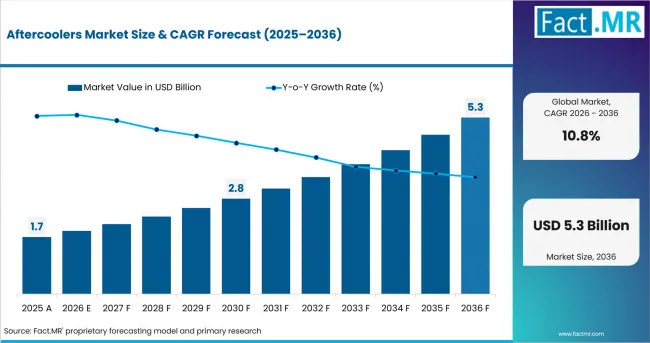
Aftercoolers Market Value Analysis

Summary of Aftercoolers Market

  • Demand Drivers in the Market
    • Compressor Protection: Maintenance heads use aftercoolers to reduce moisture load before dryers and filters.
    • Air Quality Control: ISO 8573-5:2025 supports oil vapour testing in compressed air and strengthens the quality framework.
    • Energy Review: ORNL’s 2025 compressed air training covers system assessment and supports demand for better compressor-room design [1].
  • Key Segments Analyzed
    • By Type: Air-cooled aftercoolers are expected to hold 58.0% share in 2026 because they avoid cooling-water management.
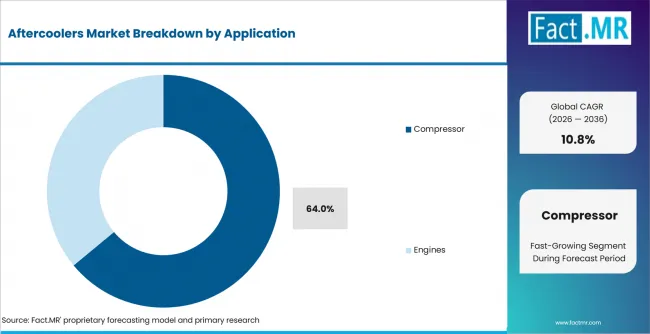
    • By Application: Compressor applications are likely to account for 64.0% share in 2026 as aftercoolers are commonly installed after air compression.
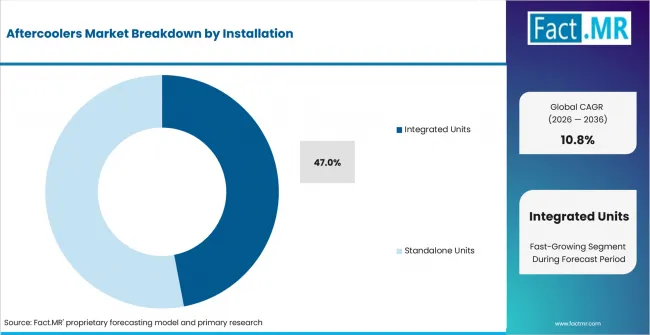
    • By Installation: Integrated units are projected to capture 47.0% share in 2026 since OEM compressor packages simplify installation.
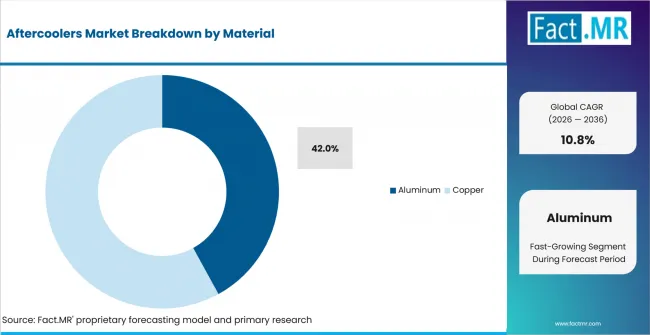
    • By Material: Aluminum is anticipated to hold 42.0% share in 2026 as lightweight heat transfer units support compact compressor systems.
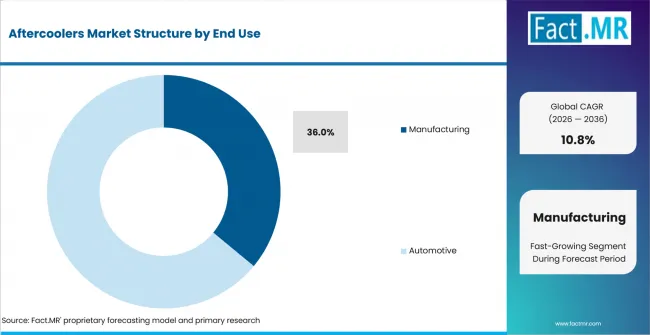
    • By End Use: Manufacturing is expected to represent 36.0% share in 2026 because production lines rely on compressed air for tools and control systems.
    • By Geography: China is projected to grow at 12.1% CAGR through 2036 as factory expansion supports compressor-room equipment demand.
  • Analyst Opinion at Fact.MR
    • Shambhu Nath Jha, Senior Analyst at Fact.MR, states, “Aftercoolers should not be viewed as basic support equipment. They act as an early reliability control point in compressed air systems. Plants that overlook discharge air temperature can face higher moisture load and reduced life of downstream equipment.”
  • Strategic Implications
    • Compressor Fit: Equipment suppliers should match aftercoolers with compressor discharge temperature and duty cycle.
    • Service Access: Distributors need stronger replacement support because fouled coolers can affect dryer performance.
    • Air Quality Proof: Plant engineers should review cooling output before approving dryers and filters.
Metric Details
Industry Size 2026 USD 1.9 billion
Industry Value 2036 USD 5.3 billion
CAGR 2026 to 2036 10.8%

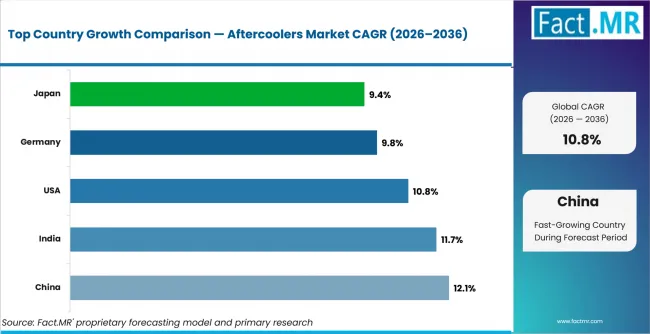
China is projected to record 12.1% CAGR through 2036 as manufacturing plants expand compressed air infrastructure. India is likely to post 11.7% CAGR as local compressor production and factory investments improve equipment access. The United States is expected to register 10.8% CAGR as industrial facilities focus on compressed air energy checks. Germany is forecast at 9.8% CAGR because precision manufacturing uses stable compressed air quality. Japan is projected to grow at 9.4% CAGR as compact compressor systems support high-specification production.

Segmental Analysis

Aftercoolers Market Analysis by Type
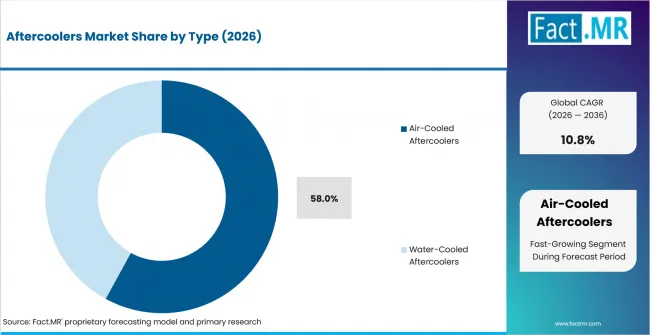
Aftercoolers Market Analysis By Type

Air-cooled aftercoolers are expected to hold 58.0% share in 2026 because they suit plants that want simpler installation and lower water handling. These systems use ambient air to remove heat from compressed air. Water-cooled units serve higher-duty sites that need tighter temperature control. Air-cooled demand is supported by lower utility complexity and easier maintenance.

  • Air-Cooled Use: Air-cooled aftercoolers fit workshops and factories that prefer simple compressor-room layouts.
  • Water-Cooled Need: Water-cooled aftercoolers support high-duty compressors that need stronger temperature control.
  • Maintenance Choice: Service teams prefer designs that allow easier coil cleaning and faster replacement.

Aftercoolers Market Analysis by Application
Aftercoolers Market Analysis By Application

Compressor applications lead because aftercoolers are installed directly after air compression. Compressor discharge air needs cooling before dryers and filters can work correctly. The application is likely to account for 64.0% share in 2026. Engine and turbine use is more specialized. Industrial gas systems need aftercoolers for temperature control before treatment stages.

  • Compressor Duty: Compressor applications lead because cooling hot discharge air protects downstream equipment.
  • Engine Support: Engine aftercoolers manage charge air temperature in industrial power systems.
  • Gas Systems: Industrial gas aftercoolers help stabilize temperature before drying and separation.

Aftercoolers Market Analysis by Installation
Aftercoolers Market Analysis By Installation

Integrated units lead because compressor packages increasingly include cooling sections as part of the system. This reduces installation effort for plant engineers. Integrated units are projected to capture 47.0% share in 2026 because OEM packages simplify layout planning. Standalone units are used in retrofit projects. Replacement units serve older compressor rooms with fouled or undersized coolers.

  • Integrated Packages: Integrated aftercoolers reduce installation work and help compressor suppliers sell complete systems.
  • Standalone Units: Standalone aftercoolers support retrofit projects in older compressor rooms.
  • Replacement Demand: Replacement units gain demand as plants restore cooling performance without changing the compressor.

Aftercoolers Market Analysis by Material
Aftercoolers Market Analysis By Material

Aluminum is anticipated to hold 42.0% share in 2026 because compact air-cooled units need lighter heat transfer components. Aluminum supports practical cost and easier handling during installation. Copper supports heat transfer in selected designs. Stainless steel is used in corrosive or hygiene-sensitive environments. Carbon steel supports heavier water-cooled shell and tube systems.

  • Aluminum Use: Aluminum supports compact air-cooled designs and helps reduce unit weight.
  • Copper Role: Copper is used in systems that need strong heat transfer performance.
  • Steel Demand: Stainless steel and carbon steel serve harsh or water-cooled industrial duties.

Aftercoolers Market Analysis by End Use
Aftercoolers Market Analysis By End Use

Manufacturing is expected to represent 36.0% share in 2026 because production lines use compressed air for tools and automation. Air quality affects valves and pneumatic controls. Food and beverage plants need clean compressed air treatment. Pharmaceutical plants need stronger moisture control before high-quality air treatment. Oil and gas sites use aftercoolers in heavy-duty compressor systems.

  • Factory Use: Manufacturing plants use aftercoolers to protect tools and pneumatic systems.
  • Food Processing: Food plants need stable compressed air treatment before contact-sensitive operations.
  • Pharma Use: Pharmaceutical manufacturers need tighter air treatment before controlled production processes.

Aftercoolers Market Drivers, Restraints, and Opportunities
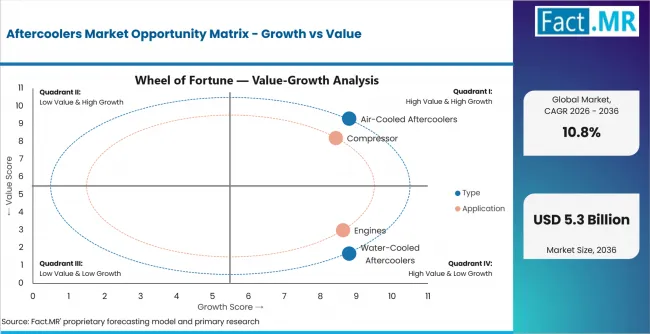
Aftercoolers Market Opportunity Matrix Growth Vs Value

Compressed air reliability is the main driver for aftercooler demand. Donaldson states that the UFK-L aftercooler provides air-cooled compressed air cooling, removes bulk moisture directly after compression and helps protect downstream equipment [2]. This supports demand for cooling equipment that protects dryers and filters.

Maintenance neglect can restrain the market. Plant teams may replace dryers before checking whether the aftercooler is undersized or fouled. Poor cleaning access can reduce thermal performance. Smaller plants may delay replacement because aftercoolers are often treated as secondary equipment. This creates service opportunities for distributors.

Opportunities in the Aftercoolers Market

  • Retrofit Replacement: Service distributors can target older compressor rooms with fouled cooling coils.
  • Integrated Packages: Compressor OEMs can sell aftercoolers as part of complete air treatment systems.
  • Food and Pharma: Process plants can adopt better aftercoolers before tighter air treatment stages.

Regional Analysis

Based on regional analysis, the aftercoolers market is segmented into North America, Western Europe, East Asia, South Asia and Pacific, and other regions.

Top Country Growth Comparison Aftercoolers Market Cagr (2026 2036)

Country CAGR 2026 to 2036
China 12.1%
India 11.7%
United States 10.8%
Germany 9.8%
Japan 9.4%

Aftercoolers Market Cagr Analysis By Country

East Asia Aftercoolers Market Analysis
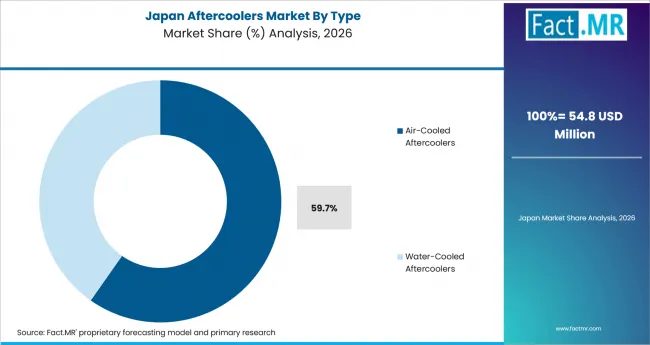
Aftercoolers Market Japan Market Share Analysis By Type

East Asia demand is linked to compressor installations in manufacturing and electronics. China leads due to high factory equipment demand. Japan supports premium compact systems for precision manufacturing.

  • China: China is projected to grow at 12.1% CAGR from 2026 to 2036 as factory expansion supports compressed air infrastructure. Production plants need aftercoolers to lower discharge air temperature before dryers and filters. Local compressor suppliers can support faster replacement and service response. Industrial parks use compressed air across assembly and processing lines. Air-cooled units will gain attention in factories that want simpler installation.
  • Japan: Precision manufacturing and compact compressor rooms support Japan aftercooler demand. The country is projected to grow at 9.4% CAGR through 2036 as electronics and pharmaceutical plants require stable compressed air quality. Plant engineers prefer equipment that reduces moisture before downstream dryers. Space limits make compact air-cooled systems attractive. Service quality is important because downtime affects production planning.

South Asia and Pacific Aftercoolers Market Analysis

South Asia and Pacific demand is led by India. Manufacturing expansion and compressor localization support aftercooler adoption. Atlas Copco stated in its February 2025 newsletter that its Pune factory will manufacture air and gas compressor systems for local and export markets [3]. This supports stronger regional supply for compressor-room equipment.

  • India: India is likely to post 11.7% CAGR by 2036 as factories invest in compressed air systems for production lines. Plant managers need aftercoolers to reduce condensate load before dryers. Food processing and automotive plants create steady demand for air treatment equipment. Cost sensitivity will favor practical air-cooled systems. Suppliers that offer service support and easy replacement units can win mid-sized factory accounts.

North America Aftercoolers Market Analysis
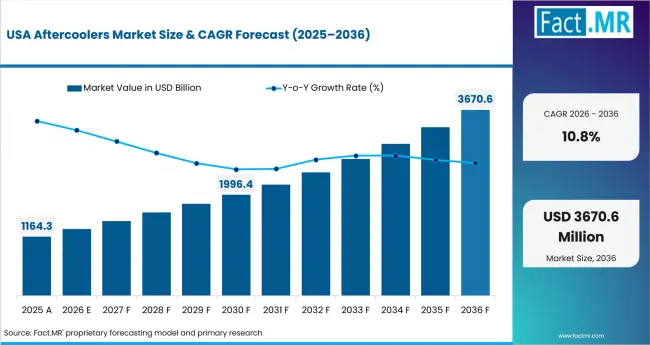
Aftercoolers Market Country Value Analysis

North America demand is led by the United States. Industrial facilities use compressed air across manufacturing and process operations.

  • United States: The United States is expected to register 10.8% CAGR over the study period as factories review compressed air reliability and energy use. Atlas Copco stated on August 5, 2024 that condensate buildup can cause equipment malfunction, downtime and operating inefficiencies, and that condensate forms in aftercoolers, moisture separators, piping, refrigerated air dryers, filters and air receivers [4]. Aftercoolers support dryer performance by reducing hot discharge air before treatment. Service contractors can target older compressor rooms that face moisture issues.

Western Europe Aftercoolers Market Analysis
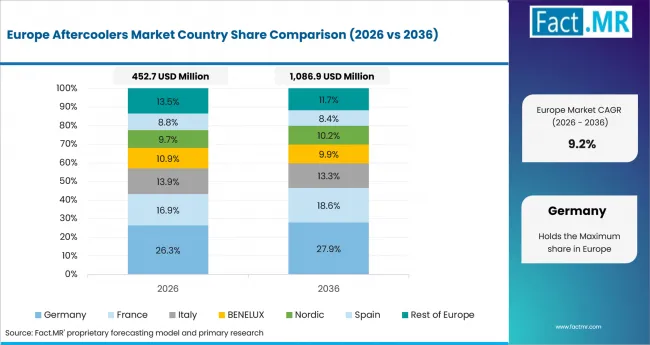
Aftercoolers Market Europe Country Market Share Analysis, 2026 & 2036

Western Europe demand is led by Germany because manufacturing plants have strict equipment reliability needs. Compressed air quality supports pneumatic tools and controlled processes. ISO 8573-5:2025 reinforces testing discipline for oil vapour in compressed air [5]. This adds support for better upstream cooling and air treatment planning.

  • Germany: Germany is forecast at 9.8% CAGR through 2036 because precision manufacturing needs stable compressed air systems. Plant engineers use aftercoolers to reduce moisture before dryers and filters. Water-cooled systems will serve heavy-duty compressor rooms. Air-cooled systems will support smaller plants that need simpler installation. Equipment specifiers will focus on thermal performance and service access. Replacement demand will be supported by older compressor rooms in metalworking and industrial processing sites.

Competitive Aligners for Suppliers
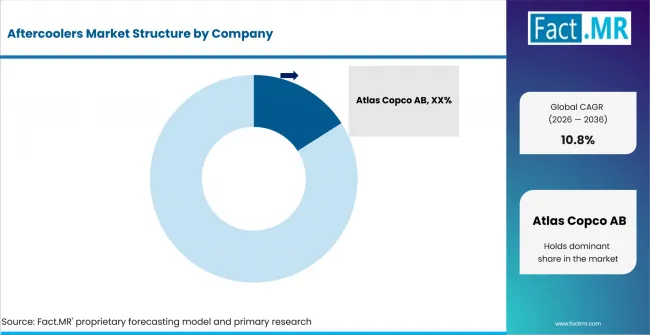
Aftercoolers Market Analysis By Company

The aftercoolers market is served by compressor OEMs and compressed air treatment suppliers. Atlas Copco AB supports demand through air-cooled and water-cooled aftercoolers for compressed air systems. Ingersoll Rand Inc. offers air-cooled and water-cooled shell and tube aftercoolers for industrial compressor use. KAESER KOMPRESSOREN SE strengthens the market through complete compressed air system capability. Donaldson Company, Inc. supports filtration and condensate management needs. Parker Hannifin Corporation adds strength through motion control and industrial air treatment solutions.

Competition is linked to compressor compatibility and service response. OEMs gain an advantage when aftercoolers are sold as part of a full compressor package. Replacement suppliers compete through part availability and easier installation support. Plant engineers review cooling performance and cleaning access before selecting an aftercooler. Equipment that is difficult to maintain can face weaker repeat demand.

By 2036, supplier strength will come from installed base support and aftermarket reach. Ingersoll Rand’s 2024 annual report shows exposure to industrial air compression and aftermarket services. This supports the commercial value of replacement parts and service-led sales.

Key Companies in Aftercoolers Market

  • Atlas Copco AB
  • Ingersoll Rand Inc.
  • KAESER KOMPRESSOREN SE
  • Donaldson Company, Inc.
  • Parker Hannifin Corporation

Bibliography

  • [1] Oak Ridge National Laboratory. (2025). 2025 compressed air systems: Better Plants virtual trainings.
  • [2] Donaldson Company, Inc. (n.d.). Cooling and condensate management.
  • [3] Atlas Copco. (2025, February 28). Compressed air newsletter February 2025.
  • [4] Atlas Copco. (2024, August 5). How to remove condensation?
  • [5] International Organization for Standardization. (2025). Compressed air: Contaminant measurement: Part 5: Oil vapour content (ISO Standard No. 8573-5:2025).

This Report Addresses

  • Strategic intelligence on aftercoolers across type, application, installation, material, and end use.
  • Forecast mapping from USD 1.9 billion in 2026 to USD 5.3 billion by 2036.
  • Segment analysis covering air-cooled aftercoolers and compressor applications.
  • Regional outlook covering China, India, the United States, Germany, and Japan.
  • Competitive analysis of Atlas Copco AB, Ingersoll Rand Inc., KAESER KOMPRESSOREN SE, Donaldson Company, Inc., Parker Hannifin Corporation.
  • Product assessment covering integrated units and replacement units.
  • Service channel assessment covering compressor distributors and plant maintenance teams.
  • Primary interviews, product checks, company reporting, and official source validation support the forecast.

Aftercoolers Market Definition

The aftercoolers market covers heat exchangers installed after compression to cool hot compressed air or gas. These systems reduce air temperature and help condense moisture before dryers and filters. The market differs from general heat exchangers because aftercoolers are tied to compressor discharge and compressed air protection.

Aftercoolers Market Inclusions

The scope includes air-cooled and water-cooled aftercoolers used in compressed air systems. It includes standalone units and replacement units. Integrated compressor aftercoolers are included if they are sold as part of compressor-room equipment. Industrial aftercoolers used with engines and turbines are included.

Aftercoolers Market Exclusions

The scope excludes automotive charge air coolers used in passenger vehicles. It excludes general HVAC cooling coils because those units do not cool compressor discharge air. Radiators and intercoolers are excluded unless they are sold for after-compression cooling in industrial air or gas systems.

Aftercoolers Market Research Methodology

  • Primary Research: Primary research includes interviews with compressor service managers and plant maintenance heads. Industrial equipment distributors and compressor room engineers were reviewed separately.
  • Desk Research: Desk research reviews compressed air product pages and air-quality standards. Company reports and training material were used to validate equipment use.
  • Market-Sizing and Forecasting: Forecasting uses compressor installation trends and replacement cycles. Cooling type and end-use demand support the 2026 to 2036 view.
  • Data Validation and Update Cycle: Forecasts are validated through distributor checks and compressor service feedback. Regional assumptions are reviewed with manufacturing activity and compressed air quality needs.

Scope of the Report

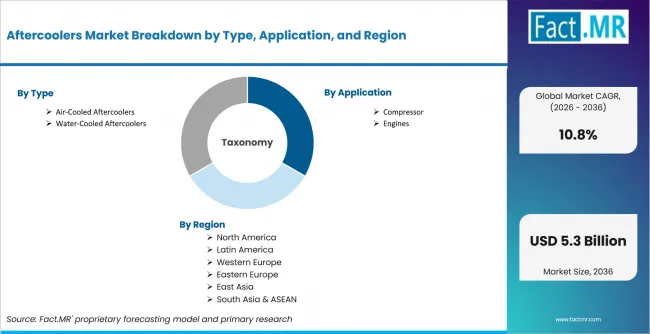
Aftercoolers Market Breakdown By Type, Application, And Region

Attribute Details
Quantitative Units USD 1.9 billion in 2026 to USD 5.3 billion by 2036 at 10.8% CAGR
Market Definition After-compression cooling equipment used to reduce compressed air or gas temperature
Type Air-Cooled Aftercoolers / Water-Cooled Aftercoolers
Application Compressors, Engines, Turbines, Industrial Gas Systems
Installation Integrated Units, Standalone Units, Replacement Units
Material Aluminum, Copper, Stainless Steel, Carbon Steel
End Use Manufacturing, Automotive, Food & Beverage, Oil & Gas, Pharmaceutical, Power Generation
Regions Covered North America, Western Europe, East Asia, South Asia and Pacific, Other Regions
Countries Covered China, India, United States, Germany, Japan
Key Companies Profiled Atlas Copco AB, Ingersoll Rand Inc., KAESER KOMPRESSOREN SE, Donaldson Company, Inc., Parker Hannifin Corporation
Forecast Period 2026 to 2036
Approach Hybrid top-down and bottom-up approach using compressor installations, replacement demand, type mix, application use, and service channel validation

Aftercoolers Market Analysis by Segments

  • By Type:

    • Air-Cooled Aftercoolers
    • Water-Cooled Aftercoolers
  • By Application:

    • Compressors
    • Engines
    • Turbines
    • Industrial Gas Systems
  • By Installation:

    • Integrated Units
    • Standalone Units
    • Replacement Units
  • By Material:

    • Aluminum
    • Copper
    • Stainless Steel
    • Carbon Steel
  • By End Use:

    • Manufacturing
    • Automotive
    • Food & Beverage
    • Oil & Gas
    • Pharmaceutical
    • Power Generation
  • By Region:

    • North America
      • United States
      • Canada
    • Western Europe
      • Germany
      • United Kingdom
      • France
      • Italy
      • Spain
    • East Asia
      • China
      • Japan
      • South Korea
    • South Asia and Pacific
      • India
      • ASEAN
      • Australia and New Zealand
    • Other Regions
      • Latin America
      • Middle East and Africa

- Frequently Asked Questions -

What is the Aftercoolers Market size in 2026?

The aftercoolers market is estimated to reach USD 1.9 billion in 2026 as compressed air systems expand.

What will the Aftercoolers Market be worth by 2036?

The aftercoolers market is projected to reach USD 5.3 billion by 2036.

What CAGR is projected for the Aftercoolers Market?

The aftercoolers market is forecast to record 10.8% CAGR during 2026 to 2036.

Which type leads the Aftercoolers Market?

Air-cooled aftercoolers lead with 58.0% share in 2026 because they reduce water handling needs.

Which country grows fastest in the Aftercoolers Market?

China grows fastest at 12.1% CAGR through 2036 as factory expansion supports compressor equipment demand.

How does India perform in the Aftercoolers Market?

India is projected to record 11.7% CAGR through 2036 as local compressor production supports equipment access.

How does the United States perform in the Aftercoolers Market?

The United States is expected to register 10.8% CAGR through 2036 as plants review compressed air reliability.

How does Germany perform in the Aftercoolers Market?

Germany is forecast at 9.8% CAGR through 2036 because precision manufacturing needs stable compressed air systems.

Why are air-cooled aftercoolers important?

Air-cooled aftercoolers are important because they provide simpler installation and reduce cooling-water handling.

Why are water-cooled aftercoolers used?

Water-cooled aftercoolers are used in high-duty compressor rooms that need stronger temperature control.

What restrains the Aftercoolers Market?

Maintenance neglect restrains the market because plants may overlook fouled aftercoolers before replacing dryers.

What is the main opportunity in the Aftercoolers Market?

The main opportunity is replacement demand from older compressor rooms with weak cooling performance.

How do aftercoolers support air dryers?

Aftercoolers reduce compressed air temperature before dryers. This lowers moisture load and improves dryer performance.

Table of Content

  1. Executive Summary
    • Global Market Outlook
    • Demand to side Trends
    • Supply to side Trends
    • Technology Roadmap Analysis
    • Analysis and Recommendations
  2. Market Overview
    • Market Coverage / Taxonomy
    • Market Definition / Scope / Limitations
  3. Research Methodology
    • Chapter Orientation
    • Analytical Lens and Working Hypotheses
      • Market Structure, Signals, and Trend Drivers
      • Benchmarking and Cross-market Comparability
      • Market Sizing, Forecasting, and Opportunity Mapping
    • Research Design and Evidence Framework
      • Desk Research Programme (Secondary Evidence)
        • Company Annual and Sustainability Reports
        • Peer-reviewed Journals and Academic Literature
        • Corporate Websites, Product Literature, and Technical Notes
        • Earnings Decks and Investor Briefings
        • Statutory Filings and Regulatory Disclosures
        • Technical White Papers and Standards Notes
        • Trade Journals, Industry Magazines, and Analyst Briefs
        • Conference Proceedings, Webinars, and Seminar Materials
        • Government Statistics Portals and Public Data Releases
        • Press Releases and Reputable Media Coverage
        • Specialist Newsletters and Curated Briefings
        • Sector Databases and Reference Repositories
        • Fact.MR Internal Proprietary Databases and Historical Market Datasets
        • Subscription Datasets and Paid Sources
        • Social Channels, Communities, and Digital Listening Inputs
        • Additional Desk Sources
      • Expert Input and Fieldwork (Primary Evidence)
        • Primary Modes
          • Qualitative Interviews and Expert Elicitation
          • Quantitative Surveys and Structured Data Capture
          • Blended Approach
        • Why Primary Evidence is Used
        • Field Techniques
          • Interviews
          • Surveys
          • Focus Groups
          • Observational and In-context Research
          • Social and Community Interactions
        • Stakeholder Universe Engaged
          • C-suite Leaders
          • Board Members
          • Presidents and Vice Presidents
          • R&D and Innovation Heads
          • Technical Specialists
          • Domain Subject-matter Experts
          • Scientists
          • Physicians and Other Healthcare Professionals
        • Governance, Ethics, and Data Stewardship
          • Research Ethics
          • Data Integrity and Handling
      • Tooling, Models, and Reference Databases
    • Data Engineering and Model Build
      • Data Acquisition and Ingestion
      • Cleaning, Normalisation, and Verification
      • Synthesis, Triangulation, and Analysis
    • Quality Assurance and Audit Trail
  4. Market Background
    • Market Dynamics
      • Drivers
      • Restraints
      • Opportunity
      • Trends
    • Scenario Forecast
      • Demand in Optimistic Scenario
      • Demand in Likely Scenario
      • Demand in Conservative Scenario
    • Opportunity Map Analysis
    • Product Life Cycle Analysis
    • Supply Chain Analysis
    • Investment Feasibility Matrix
    • Value Chain Analysis
    • PESTLE and Porter’s Analysis
    • Regulatory Landscape
    • Regional Parent Market Outlook
    • Production and Consumption Statistics
    • Import and Export Statistics
  5. Global Market Analysis 2021 to 2025 and Forecast, 2026 to 2036
    • Historical Market Size Value (USD Million) Analysis, 2021 to 2025
    • Current and Future Market Size Value (USD Million) Projections, 2026 to 2036
      • Y to o to Y Growth Trend Analysis
      • Absolute $ Opportunity Analysis
  6. Global Market Pricing Analysis 2021 to 2025 and Forecast 2026 to 2036
  7. Global Market Analysis 2021 to 2025 and Forecast 2026 to 2036, By Type
    • Introduction / Key Findings
    • Historical Market Size Value (USD Million) Analysis By Type , 2021 to 2025
    • Current and Future Market Size Value (USD Million) Analysis and Forecast By Type , 2026 to 2036
      • Air-Cooled Aftercoolers
      • Water-Cooled Aftercoolers
    • Y to o to Y Growth Trend Analysis By Type , 2021 to 2025
    • Absolute $ Opportunity Analysis By Type , 2026 to 2036
  8. Global Market Analysis 2021 to 2025 and Forecast 2026 to 2036, By Application
    • Introduction / Key Findings
    • Historical Market Size Value (USD Million) Analysis By Application, 2021 to 2025
    • Current and Future Market Size Value (USD Million) Analysis and Forecast By Application, 2026 to 2036
      • Compressor
      • Engines
      • Turbines
    • Y to o to Y Growth Trend Analysis By Application, 2021 to 2025
    • Absolute $ Opportunity Analysis By Application, 2026 to 2036
  9. Global Market Analysis 2021 to 2025 and Forecast 2026 to 2036, By Installation
    • Introduction / Key Findings
    • Historical Market Size Value (USD Million) Analysis By Installation, 2021 to 2025
    • Current and Future Market Size Value (USD Million) Analysis and Forecast By Installation, 2026 to 2036
      • Integrated Value (USD Million)s
      • Standalone Value (USD Million)s
      • Replacement Value (USD Million)s
    • Y to o to Y Growth Trend Analysis By Installation, 2021 to 2025
    • Absolute $ Opportunity Analysis By Installation, 2026 to 2036
  10. Global Market Analysis 2021 to 2025 and Forecast 2026 to 2036, By Material
    • Introduction / Key Findings
    • Historical Market Size Value (USD Million) Analysis By Material, 2021 to 2025
    • Current and Future Market Size Value (USD Million) Analysis and Forecast By Material, 2026 to 2036
      • Aluminum
      • Copper
      • Stainless Steel
    • Y to o to Y Growth Trend Analysis By Material, 2021 to 2025
    • Absolute $ Opportunity Analysis By Material, 2026 to 2036
  11. Global Market Analysis 2021 to 2025 and Forecast 2026 to 2036, By End Use
    • Introduction / Key Findings
    • Historical Market Size Value (USD Million) Analysis By End Use, 2021 to 2025
    • Current and Future Market Size Value (USD Million) Analysis and Forecast By End Use, 2026 to 2036
      • Manufacturing
      • Automotive
      • Food & Beverage
    • Y to o to Y Growth Trend Analysis By End Use, 2021 to 2025
    • Absolute $ Opportunity Analysis By End Use, 2026 to 2036
  12. Global Market Analysis 2021 to 2025 and Forecast 2026 to 2036, By Region
    • Introduction
    • Historical Market Size Value (USD Million) Analysis By Region, 2021 to 2025
    • Current Market Size Value (USD Million) Analysis and Forecast By Region, 2026 to 2036
      • North America
      • Latin America
      • Western Europe
      • Eastern Europe
      • East Asia
      • South Asia and Pacific
      • Middle East & Africa
    • Market Attractiveness Analysis By Region
  13. North America Market Analysis 2021 to 2025 and Forecast 2026 to 2036, By Country
    • Historical Market Size Value (USD Million) Trend Analysis By Market Taxonomy, 2021 to 2025
    • Market Size Value (USD Million) Forecast By Market Taxonomy, 2026 to 2036
      • By Country
        • USA
        • Canada
        • Mexico
      • By Type
      • By Application
      • By Installation
      • By Material
      • By End Use
    • Market Attractiveness Analysis
      • By Country
      • By Type
      • By Application
      • By Installation
      • By Material
      • By End Use
    • Key Takeaways
  14. Latin America Market Analysis 2021 to 2025 and Forecast 2026 to 2036, By Country
    • Historical Market Size Value (USD Million) Trend Analysis By Market Taxonomy, 2021 to 2025
    • Market Size Value (USD Million) Forecast By Market Taxonomy, 2026 to 2036
      • By Country
        • Brazil
        • Chile
        • Rest of Latin America
      • By Type
      • By Application
      • By Installation
      • By Material
      • By End Use
    • Market Attractiveness Analysis
      • By Country
      • By Type
      • By Application
      • By Installation
      • By Material
      • By End Use
    • Key Takeaways
  15. Western Europe Market Analysis 2021 to 2025 and Forecast 2026 to 2036, By Country
    • Historical Market Size Value (USD Million) Trend Analysis By Market Taxonomy, 2021 to 2025
    • Market Size Value (USD Million) Forecast By Market Taxonomy, 2026 to 2036
      • By Country
        • Germany
        • UK
        • Italy
        • Spain
        • France
        • Nordic
        • BENELUX
        • Rest of Western Europe
      • By Type
      • By Application
      • By Installation
      • By Material
      • By End Use
    • Market Attractiveness Analysis
      • By Country
      • By Type
      • By Application
      • By Installation
      • By Material
      • By End Use
    • Key Takeaways
  16. Eastern Europe Market Analysis 2021 to 2025 and Forecast 2026 to 2036, By Country
    • Historical Market Size Value (USD Million) Trend Analysis By Market Taxonomy, 2021 to 2025
    • Market Size Value (USD Million) Forecast By Market Taxonomy, 2026 to 2036
      • By Country
        • Russia
        • Poland
        • Hungary
        • Balkan & Baltic
        • Rest of Eastern Europe
      • By Type
      • By Application
      • By Installation
      • By Material
      • By End Use
    • Market Attractiveness Analysis
      • By Country
      • By Type
      • By Application
      • By Installation
      • By Material
      • By End Use
    • Key Takeaways
  17. East Asia Market Analysis 2021 to 2025 and Forecast 2026 to 2036, By Country
    • Historical Market Size Value (USD Million) Trend Analysis By Market Taxonomy, 2021 to 2025
    • Market Size Value (USD Million) Forecast By Market Taxonomy, 2026 to 2036
      • By Country
        • China
        • Japan
        • South Korea
      • By Type
      • By Application
      • By Installation
      • By Material
      • By End Use
    • Market Attractiveness Analysis
      • By Country
      • By Type
      • By Application
      • By Installation
      • By Material
      • By End Use
    • Key Takeaways
  18. South Asia and Pacific Market Analysis 2021 to 2025 and Forecast 2026 to 2036, By Country
    • Historical Market Size Value (USD Million) Trend Analysis By Market Taxonomy, 2021 to 2025
    • Market Size Value (USD Million) Forecast By Market Taxonomy, 2026 to 2036
      • By Country
        • India
        • ASEAN
        • Australia & New Zealand
        • Rest of South Asia and Pacific
      • By Type
      • By Application
      • By Installation
      • By Material
      • By End Use
    • Market Attractiveness Analysis
      • By Country
      • By Type
      • By Application
      • By Installation
      • By Material
      • By End Use
    • Key Takeaways
  19. Middle East & Africa Market Analysis 2021 to 2025 and Forecast 2026 to 2036, By Country
    • Historical Market Size Value (USD Million) Trend Analysis By Market Taxonomy, 2021 to 2025
    • Market Size Value (USD Million) Forecast By Market Taxonomy, 2026 to 2036
      • By Country
        • Kingdom of Saudi Arabia
        • Other GCC Countries
        • Turkiye
        • South Africa
        • Other African Union
        • Rest of Middle East & Africa
      • By Type
      • By Application
      • By Installation
      • By Material
      • By End Use
    • Market Attractiveness Analysis
      • By Country
      • By Type
      • By Application
      • By Installation
      • By Material
      • By End Use
    • Key Takeaways
  20. Key Countries Market Analysis
    • USA
      • Pricing Analysis
      • Market Share Analysis, 2025
        • By Type
        • By Application
        • By Installation
        • By Material
        • By End Use
    • Canada
      • Pricing Analysis
      • Market Share Analysis, 2025
        • By Type
        • By Application
        • By Installation
        • By Material
        • By End Use
    • Mexico
      • Pricing Analysis
      • Market Share Analysis, 2025
        • By Type
        • By Application
        • By Installation
        • By Material
        • By End Use
    • Brazil
      • Pricing Analysis
      • Market Share Analysis, 2025
        • By Type
        • By Application
        • By Installation
        • By Material
        • By End Use
    • Chile
      • Pricing Analysis
      • Market Share Analysis, 2025
        • By Type
        • By Application
        • By Installation
        • By Material
        • By End Use
    • Germany
      • Pricing Analysis
      • Market Share Analysis, 2025
        • By Type
        • By Application
        • By Installation
        • By Material
        • By End Use
    • UK
      • Pricing Analysis
      • Market Share Analysis, 2025
        • By Type
        • By Application
        • By Installation
        • By Material
        • By End Use
    • Italy
      • Pricing Analysis
      • Market Share Analysis, 2025
        • By Type
        • By Application
        • By Installation
        • By Material
        • By End Use
    • Spain
      • Pricing Analysis
      • Market Share Analysis, 2025
        • By Type
        • By Application
        • By Installation
        • By Material
        • By End Use
    • France
      • Pricing Analysis
      • Market Share Analysis, 2025
        • By Type
        • By Application
        • By Installation
        • By Material
        • By End Use
    • India
      • Pricing Analysis
      • Market Share Analysis, 2025
        • By Type
        • By Application
        • By Installation
        • By Material
        • By End Use
    • ASEAN
      • Pricing Analysis
      • Market Share Analysis, 2025
        • By Type
        • By Application
        • By Installation
        • By Material
        • By End Use
    • Australia & New Zealand
      • Pricing Analysis
      • Market Share Analysis, 2025
        • By Type
        • By Application
        • By Installation
        • By Material
        • By End Use
    • China
      • Pricing Analysis
      • Market Share Analysis, 2025
        • By Type
        • By Application
        • By Installation
        • By Material
        • By End Use
    • Japan
      • Pricing Analysis
      • Market Share Analysis, 2025
        • By Type
        • By Application
        • By Installation
        • By Material
        • By End Use
    • South Korea
      • Pricing Analysis
      • Market Share Analysis, 2025
        • By Type
        • By Application
        • By Installation
        • By Material
        • By End Use
    • Russia
      • Pricing Analysis
      • Market Share Analysis, 2025
        • By Type
        • By Application
        • By Installation
        • By Material
        • By End Use
    • Poland
      • Pricing Analysis
      • Market Share Analysis, 2025
        • By Type
        • By Application
        • By Installation
        • By Material
        • By End Use
    • Hungary
      • Pricing Analysis
      • Market Share Analysis, 2025
        • By Type
        • By Application
        • By Installation
        • By Material
        • By End Use
    • Kingdom of Saudi Arabia
      • Pricing Analysis
      • Market Share Analysis, 2025
        • By Type
        • By Application
        • By Installation
        • By Material
        • By End Use
    • Turkiye
      • Pricing Analysis
      • Market Share Analysis, 2025
        • By Type
        • By Application
        • By Installation
        • By Material
        • By End Use
    • South Africa
      • Pricing Analysis
      • Market Share Analysis, 2025
        • By Type
        • By Application
        • By Installation
        • By Material
        • By End Use
  21. Market Structure Analysis
    • Competition Dashboard
    • Competition Benchmarking
    • Market Share Analysis of Top Players
      • By Regional
      • By Type
      • By Application
      • By Installation
      • By Material
      • By End Use
  22. Competition Analysis
    • Competition Deep Dive
      • Atlas Copco AB
        • Overview
        • Product Portfolio
        • Profitability by Market Segments (Product/Age /Sales Channel/Region)
        • Sales Footprint
        • Strategy Overview
          • Marketing Strategy
          • Product Strategy
          • Channel Strategy
      • Ingersoll Rand Inc.
      • KAESER KOMPRESSOREN SE
      • Donaldson Company, Inc.
      • Parker Hannifin Corporation
  23. Assumptions & Acronyms Used

List Of Table

  • Table 1: Global Market Value (USD Million) Forecast by Region, 2021 to 2036
  • Table 2: Global Market Value (USD Million) Forecast by Type , 2021 to 2036
  • Table 3: Global Market Value (USD Million) Forecast by Application, 2021 to 2036
  • Table 4: Global Market Value (USD Million) Forecast by Installation, 2021 to 2036
  • Table 5: Global Market Value (USD Million) Forecast by Material, 2021 to 2036
  • Table 6: Global Market Value (USD Million) Forecast by End Use, 2021 to 2036
  • Table 7: North America Market Value (USD Million) Forecast by Country, 2021 to 2036
  • Table 8: North America Market Value (USD Million) Forecast by Type , 2021 to 2036
  • Table 9: North America Market Value (USD Million) Forecast by Application, 2021 to 2036
  • Table 10: North America Market Value (USD Million) Forecast by Installation, 2021 to 2036
  • Table 11: North America Market Value (USD Million) Forecast by Material, 2021 to 2036
  • Table 12: North America Market Value (USD Million) Forecast by End Use, 2021 to 2036
  • Table 13: Latin America Market Value (USD Million) Forecast by Country, 2021 to 2036
  • Table 14: Latin America Market Value (USD Million) Forecast by Type , 2021 to 2036
  • Table 15: Latin America Market Value (USD Million) Forecast by Application, 2021 to 2036
  • Table 16: Latin America Market Value (USD Million) Forecast by Installation, 2021 to 2036
  • Table 17: Latin America Market Value (USD Million) Forecast by Material, 2021 to 2036
  • Table 18: Latin America Market Value (USD Million) Forecast by End Use, 2021 to 2036
  • Table 19: Western Europe Market Value (USD Million) Forecast by Country, 2021 to 2036
  • Table 20: Western Europe Market Value (USD Million) Forecast by Type , 2021 to 2036
  • Table 21: Western Europe Market Value (USD Million) Forecast by Application, 2021 to 2036
  • Table 22: Western Europe Market Value (USD Million) Forecast by Installation, 2021 to 2036
  • Table 23: Western Europe Market Value (USD Million) Forecast by Material, 2021 to 2036
  • Table 24: Western Europe Market Value (USD Million) Forecast by End Use, 2021 to 2036
  • Table 25: Eastern Europe Market Value (USD Million) Forecast by Country, 2021 to 2036
  • Table 26: Eastern Europe Market Value (USD Million) Forecast by Type , 2021 to 2036
  • Table 27: Eastern Europe Market Value (USD Million) Forecast by Application, 2021 to 2036
  • Table 28: Eastern Europe Market Value (USD Million) Forecast by Installation, 2021 to 2036
  • Table 29: Eastern Europe Market Value (USD Million) Forecast by Material, 2021 to 2036
  • Table 30: Eastern Europe Market Value (USD Million) Forecast by End Use, 2021 to 2036
  • Table 31: East Asia Market Value (USD Million) Forecast by Country, 2021 to 2036
  • Table 32: East Asia Market Value (USD Million) Forecast by Type , 2021 to 2036
  • Table 33: East Asia Market Value (USD Million) Forecast by Application, 2021 to 2036
  • Table 34: East Asia Market Value (USD Million) Forecast by Installation, 2021 to 2036
  • Table 35: East Asia Market Value (USD Million) Forecast by Material, 2021 to 2036
  • Table 36: East Asia Market Value (USD Million) Forecast by End Use, 2021 to 2036
  • Table 37: South Asia and Pacific Market Value (USD Million) Forecast by Country, 2021 to 2036
  • Table 38: South Asia and Pacific Market Value (USD Million) Forecast by Type , 2021 to 2036
  • Table 39: South Asia and Pacific Market Value (USD Million) Forecast by Application, 2021 to 2036
  • Table 40: South Asia and Pacific Market Value (USD Million) Forecast by Installation, 2021 to 2036
  • Table 41: South Asia and Pacific Market Value (USD Million) Forecast by Material, 2021 to 2036
  • Table 42: South Asia and Pacific Market Value (USD Million) Forecast by End Use, 2021 to 2036
  • Table 43: Middle East & Africa Market Value (USD Million) Forecast by Country, 2021 to 2036
  • Table 44: Middle East & Africa Market Value (USD Million) Forecast by Type , 2021 to 2036
  • Table 45: Middle East & Africa Market Value (USD Million) Forecast by Application, 2021 to 2036
  • Table 46: Middle East & Africa Market Value (USD Million) Forecast by Installation, 2021 to 2036
  • Table 47: Middle East & Africa Market Value (USD Million) Forecast by Material, 2021 to 2036
  • Table 48: Middle East & Africa Market Value (USD Million) Forecast by End Use, 2021 to 2036

List Of Figures

  • Figure 1: Global Market Pricing Analysis
  • Figure 2: Global Market Value (USD Million) Forecast 2021-2036
  • Figure 3: Global Market Value Share and BPS Analysis by Type , 2026 and 2036
  • Figure 4: Global Market Y-o-Y Growth Comparison by Type , 2026-2036
  • Figure 5: Global Market Attractiveness Analysis by Type
  • Figure 6: Global Market Value Share and BPS Analysis by Application, 2026 and 2036
  • Figure 7: Global Market Y-o-Y Growth Comparison by Application, 2026-2036
  • Figure 8: Global Market Attractiveness Analysis by Application
  • Figure 9: Global Market Value Share and BPS Analysis by Installation, 2026 and 2036
  • Figure 10: Global Market Y-o-Y Growth Comparison by Installation, 2026-2036
  • Figure 11: Global Market Attractiveness Analysis by Installation
  • Figure 12: Global Market Value Share and BPS Analysis by Material, 2026 and 2036
  • Figure 13: Global Market Y-o-Y Growth Comparison by Material, 2026-2036
  • Figure 14: Global Market Attractiveness Analysis by Material
  • Figure 15: Global Market Value Share and BPS Analysis by End Use, 2026 and 2036
  • Figure 16: Global Market Y-o-Y Growth Comparison by End Use, 2026-2036
  • Figure 17: Global Market Attractiveness Analysis by End Use
  • Figure 18: Global Market Value (USD Million) Share and BPS Analysis by Region, 2026 and 2036
  • Figure 19: Global Market Y-o-Y Growth Comparison by Region, 2026-2036
  • Figure 20: Global Market Attractiveness Analysis by Region
  • Figure 21: North America Market Incremental Dollar Opportunity, 2026-2036
  • Figure 22: Latin America Market Incremental Dollar Opportunity, 2026-2036
  • Figure 23: Western Europe Market Incremental Dollar Opportunity, 2026-2036
  • Figure 24: Eastern Europe Market Incremental Dollar Opportunity, 2026-2036
  • Figure 25: East Asia Market Incremental Dollar Opportunity, 2026-2036
  • Figure 26: South Asia and Pacific Market Incremental Dollar Opportunity, 2026-2036
  • Figure 27: Middle East & Africa Market Incremental Dollar Opportunity, 2026-2036
  • Figure 28: North America Market Value Share and BPS Analysis by Country, 2026 and 2036
  • Figure 29: North America Market Value Share and BPS Analysis by Type , 2026 and 2036
  • Figure 30: North America Market Y-o-Y Growth Comparison by Type , 2026-2036
  • Figure 31: North America Market Attractiveness Analysis by Type
  • Figure 32: North America Market Value Share and BPS Analysis by Application, 2026 and 2036
  • Figure 33: North America Market Y-o-Y Growth Comparison by Application, 2026-2036
  • Figure 34: North America Market Attractiveness Analysis by Application
  • Figure 35: North America Market Value Share and BPS Analysis by Installation, 2026 and 2036
  • Figure 36: North America Market Y-o-Y Growth Comparison by Installation, 2026-2036
  • Figure 37: North America Market Attractiveness Analysis by Installation
  • Figure 38: North America Market Value Share and BPS Analysis by Material, 2026 and 2036
  • Figure 39: North America Market Y-o-Y Growth Comparison by Material, 2026-2036
  • Figure 40: North America Market Attractiveness Analysis by Material
  • Figure 41: North America Market Value Share and BPS Analysis by End Use, 2026 and 2036
  • Figure 42: North America Market Y-o-Y Growth Comparison by End Use, 2026-2036
  • Figure 43: North America Market Attractiveness Analysis by End Use
  • Figure 44: Latin America Market Value Share and BPS Analysis by Country, 2026 and 2036
  • Figure 45: Latin America Market Value Share and BPS Analysis by Type , 2026 and 2036
  • Figure 46: Latin America Market Y-o-Y Growth Comparison by Type , 2026-2036
  • Figure 47: Latin America Market Attractiveness Analysis by Type
  • Figure 48: Latin America Market Value Share and BPS Analysis by Application, 2026 and 2036
  • Figure 49: Latin America Market Y-o-Y Growth Comparison by Application, 2026-2036
  • Figure 50: Latin America Market Attractiveness Analysis by Application
  • Figure 51: Latin America Market Value Share and BPS Analysis by Installation, 2026 and 2036
  • Figure 52: Latin America Market Y-o-Y Growth Comparison by Installation, 2026-2036
  • Figure 53: Latin America Market Attractiveness Analysis by Installation
  • Figure 54: Latin America Market Value Share and BPS Analysis by Material, 2026 and 2036
  • Figure 55: Latin America Market Y-o-Y Growth Comparison by Material, 2026-2036
  • Figure 56: Latin America Market Attractiveness Analysis by Material
  • Figure 57: Latin America Market Value Share and BPS Analysis by End Use, 2026 and 2036
  • Figure 58: Latin America Market Y-o-Y Growth Comparison by End Use, 2026-2036
  • Figure 59: Latin America Market Attractiveness Analysis by End Use
  • Figure 60: Western Europe Market Value Share and BPS Analysis by Country, 2026 and 2036
  • Figure 61: Western Europe Market Value Share and BPS Analysis by Type , 2026 and 2036
  • Figure 62: Western Europe Market Y-o-Y Growth Comparison by Type , 2026-2036
  • Figure 63: Western Europe Market Attractiveness Analysis by Type
  • Figure 64: Western Europe Market Value Share and BPS Analysis by Application, 2026 and 2036
  • Figure 65: Western Europe Market Y-o-Y Growth Comparison by Application, 2026-2036
  • Figure 66: Western Europe Market Attractiveness Analysis by Application
  • Figure 67: Western Europe Market Value Share and BPS Analysis by Installation, 2026 and 2036
  • Figure 68: Western Europe Market Y-o-Y Growth Comparison by Installation, 2026-2036
  • Figure 69: Western Europe Market Attractiveness Analysis by Installation
  • Figure 70: Western Europe Market Value Share and BPS Analysis by Material, 2026 and 2036
  • Figure 71: Western Europe Market Y-o-Y Growth Comparison by Material, 2026-2036
  • Figure 72: Western Europe Market Attractiveness Analysis by Material
  • Figure 73: Western Europe Market Value Share and BPS Analysis by End Use, 2026 and 2036
  • Figure 74: Western Europe Market Y-o-Y Growth Comparison by End Use, 2026-2036
  • Figure 75: Western Europe Market Attractiveness Analysis by End Use
  • Figure 76: Eastern Europe Market Value Share and BPS Analysis by Country, 2026 and 2036
  • Figure 77: Eastern Europe Market Value Share and BPS Analysis by Type , 2026 and 2036
  • Figure 78: Eastern Europe Market Y-o-Y Growth Comparison by Type , 2026-2036
  • Figure 79: Eastern Europe Market Attractiveness Analysis by Type
  • Figure 80: Eastern Europe Market Value Share and BPS Analysis by Application, 2026 and 2036
  • Figure 81: Eastern Europe Market Y-o-Y Growth Comparison by Application, 2026-2036
  • Figure 82: Eastern Europe Market Attractiveness Analysis by Application
  • Figure 83: Eastern Europe Market Value Share and BPS Analysis by Installation, 2026 and 2036
  • Figure 84: Eastern Europe Market Y-o-Y Growth Comparison by Installation, 2026-2036
  • Figure 85: Eastern Europe Market Attractiveness Analysis by Installation
  • Figure 86: Eastern Europe Market Value Share and BPS Analysis by Material, 2026 and 2036
  • Figure 87: Eastern Europe Market Y-o-Y Growth Comparison by Material, 2026-2036
  • Figure 88: Eastern Europe Market Attractiveness Analysis by Material
  • Figure 89: Eastern Europe Market Value Share and BPS Analysis by End Use, 2026 and 2036
  • Figure 90: Eastern Europe Market Y-o-Y Growth Comparison by End Use, 2026-2036
  • Figure 91: Eastern Europe Market Attractiveness Analysis by End Use
  • Figure 92: East Asia Market Value Share and BPS Analysis by Country, 2026 and 2036
  • Figure 93: East Asia Market Value Share and BPS Analysis by Type , 2026 and 2036
  • Figure 94: East Asia Market Y-o-Y Growth Comparison by Type , 2026-2036
  • Figure 95: East Asia Market Attractiveness Analysis by Type
  • Figure 96: East Asia Market Value Share and BPS Analysis by Application, 2026 and 2036
  • Figure 97: East Asia Market Y-o-Y Growth Comparison by Application, 2026-2036
  • Figure 98: East Asia Market Attractiveness Analysis by Application
  • Figure 99: East Asia Market Value Share and BPS Analysis by Installation, 2026 and 2036
  • Figure 100: East Asia Market Y-o-Y Growth Comparison by Installation, 2026-2036
  • Figure 101: East Asia Market Attractiveness Analysis by Installation
  • Figure 102: East Asia Market Value Share and BPS Analysis by Material, 2026 and 2036
  • Figure 103: East Asia Market Y-o-Y Growth Comparison by Material, 2026-2036
  • Figure 104: East Asia Market Attractiveness Analysis by Material
  • Figure 105: East Asia Market Value Share and BPS Analysis by End Use, 2026 and 2036
  • Figure 106: East Asia Market Y-o-Y Growth Comparison by End Use, 2026-2036
  • Figure 107: East Asia Market Attractiveness Analysis by End Use
  • Figure 108: South Asia and Pacific Market Value Share and BPS Analysis by Country, 2026 and 2036
  • Figure 109: South Asia and Pacific Market Value Share and BPS Analysis by Type , 2026 and 2036
  • Figure 110: South Asia and Pacific Market Y-o-Y Growth Comparison by Type , 2026-2036
  • Figure 111: South Asia and Pacific Market Attractiveness Analysis by Type
  • Figure 112: South Asia and Pacific Market Value Share and BPS Analysis by Application, 2026 and 2036
  • Figure 113: South Asia and Pacific Market Y-o-Y Growth Comparison by Application, 2026-2036
  • Figure 114: South Asia and Pacific Market Attractiveness Analysis by Application
  • Figure 115: South Asia and Pacific Market Value Share and BPS Analysis by Installation, 2026 and 2036
  • Figure 116: South Asia and Pacific Market Y-o-Y Growth Comparison by Installation, 2026-2036
  • Figure 117: South Asia and Pacific Market Attractiveness Analysis by Installation
  • Figure 118: South Asia and Pacific Market Value Share and BPS Analysis by Material, 2026 and 2036
  • Figure 119: South Asia and Pacific Market Y-o-Y Growth Comparison by Material, 2026-2036
  • Figure 120: South Asia and Pacific Market Attractiveness Analysis by Material
  • Figure 121: South Asia and Pacific Market Value Share and BPS Analysis by End Use, 2026 and 2036
  • Figure 122: South Asia and Pacific Market Y-o-Y Growth Comparison by End Use, 2026-2036
  • Figure 123: South Asia and Pacific Market Attractiveness Analysis by End Use
  • Figure 124: Middle East & Africa Market Value Share and BPS Analysis by Country, 2026 and 2036
  • Figure 125: Middle East & Africa Market Value Share and BPS Analysis by Type , 2026 and 2036
  • Figure 126: Middle East & Africa Market Y-o-Y Growth Comparison by Type , 2026-2036
  • Figure 127: Middle East & Africa Market Attractiveness Analysis by Type
  • Figure 128: Middle East & Africa Market Value Share and BPS Analysis by Application, 2026 and 2036
  • Figure 129: Middle East & Africa Market Y-o-Y Growth Comparison by Application, 2026-2036
  • Figure 130: Middle East & Africa Market Attractiveness Analysis by Application
  • Figure 131: Middle East & Africa Market Value Share and BPS Analysis by Installation, 2026 and 2036
  • Figure 132: Middle East & Africa Market Y-o-Y Growth Comparison by Installation, 2026-2036
  • Figure 133: Middle East & Africa Market Attractiveness Analysis by Installation
  • Figure 134: Middle East & Africa Market Value Share and BPS Analysis by Material, 2026 and 2036
  • Figure 135: Middle East & Africa Market Y-o-Y Growth Comparison by Material, 2026-2036
  • Figure 136: Middle East & Africa Market Attractiveness Analysis by Material
  • Figure 137: Middle East & Africa Market Value Share and BPS Analysis by End Use, 2026 and 2036
  • Figure 138: Middle East & Africa Market Y-o-Y Growth Comparison by End Use, 2026-2036
  • Figure 139: Middle East & Africa Market Attractiveness Analysis by End Use
  • Figure 140: Global Market - Tier Structure Analysis
  • Figure 141: Global Market - Company Share Analysis

Aftercoolers Market

Buy Report Now