AI-Enabled Recycling Infrastructure Market (2026 - 2036)
AI-Enabled Recycling Infrastructure Market Size and Share Forecast Outlook 2026 to 2036
Core Findings
AI-Enabled Recycling Infrastructure Market Forecast Outlook 2026 to 2036
The AI-enabled recycling infrastructure market is projected to reach USD 4.1 billion in 2026 and grow to USD 12.9 billion by 2036, reflecting a CAGR of 12.1%.
Key Takeaways from AI-Enabled Recycling Infrastructure Market
- AI-Enabled Recycling Infrastructure Market Value (2026): USD 4.1 billion
- AI-Enabled Recycling Infrastructure Market Forecast Value (2036): USD 12.9 billion
- AI-Enabled Recycling Infrastructure Market Forecast CAGR 2026 to 2036: 12.1%
- Leading Segment in AI-Enabled Recycling Infrastructure Market: Vision AI, robotics, IoT (54%)
- Key Growth Region in AI-Enabled Recycling Infrastructure Market: Asia Pacific
- Key Players in AI-Enabled Recycling Infrastructure Market: TOMRA Systems ASA, ZenRobotics Ltd., AMP Robotics Corp., Waste Management, Inc., Everbright Environment, Bozhon Group Co., Ltd., Hitachi Zosen Corporation, JFE Engineering Corporation
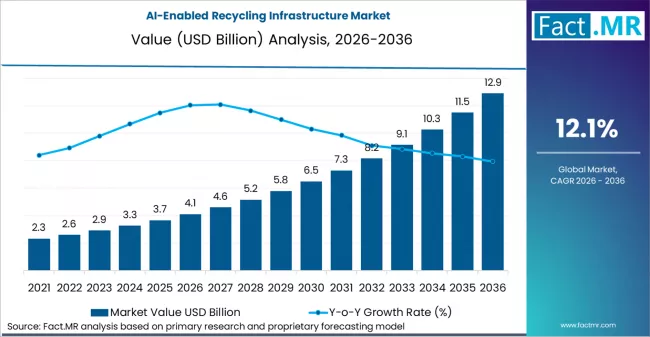
This market holds strategic importance within the broader waste management and recycling industry as it represents a critical shift toward optimizing recycling processes through automation and data-driven decision-making. Control points, such as advanced AI algorithms and machine learning technologies, will shape the efficiency and scalability of recycling operations.
Dependency factors, including access to quality data and the ability to integrate AI into existing infrastructure, will be central to success. Strategic trade-offs will emerge as companies balance the high initial investments required for AI integration with the long-term operational savings and efficiency gains. The ability to leverage AI to increase sorting accuracy and material recovery will be key to securing competitive advantage, making this market a cornerstone for the future of sustainable recycling.
AI-Enabled Recycling Infrastructure Market
| Metric | Value |
|---|---|
| Estimated Value in (2026E) | USD 4.1 billion |
| Forecast Value in (2036F) | USD 12.9 billion |
| Forecast CAGR 2026 to 2036 | 12.1% |
Category
| Category | Segments |
|---|---|
| End-use | MRFs and plastics recycling; Municipal and private MRFs; Mega recycling parks; Precision recycling; Emerging MRFs |
| Infrastructure Type | AI-optimised sorting plants; Robotics-assisted facilities; Smart recycling zones; Compact AI facilities; Others |
| Waste Stream | Mixed plastics; Plastics & packaging; Mixed MSW; Plastics; Others |
| Digital Technology | Vision AI, robotics, IoT; Cloud-connected AI; Edge-AI and automation; Robotics + analytics; Others |
| Region | North America; Europe; Asia Pacific; Latin America; Middle East & Africa |
Segmental Analysis
What Is the Impact of End-use on the AI-Enabled Recycling Infrastructure Market?
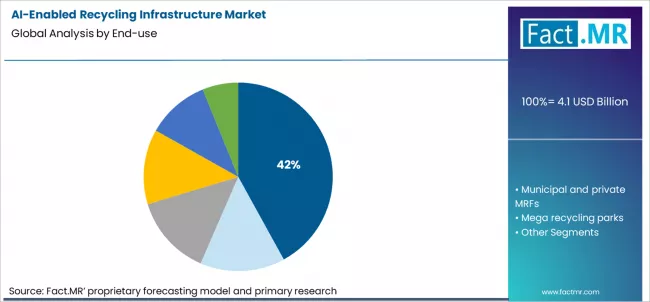
In the AI-enabled recycling infrastructure market, end-use plays a significant role in determining the scope and demand for recycling solutions. MRFs (Materials Recovery Facilities) and plastics recycling lead the market with a 42% share, as these facilities require advanced technology to effectively sort and process recyclable materials. The integration of AI into MRFs enhances sorting accuracy, efficiency, and speed, enabling the recycling of plastics and other materials in a more sustainable manner. As the need for efficient waste management and higher recycling rates continues to rise, the focus on MRFs and plastics recycling will remain central to the growth of the AI-enabled recycling infrastructure market.
How Does Infrastructure Type Influence the AI-Enabled Recycling Infrastructure Market?
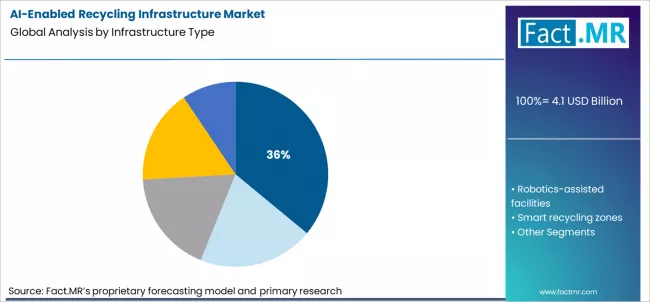
Infrastructure type plays a critical role in determining the scalability and efficiency of recycling operations, with AI-optimized sorting plants holding a 36% share. These plants use artificial intelligence to automate and optimize the sorting of recyclable materials, significantly improving operational efficiency and reducing human error. Robotics-assisted facilities and smart recycling zones further enhance the capabilities of recycling plants by incorporating advanced technologies for sorting, processing, and tracking recyclable materials. As industries increasingly prioritize sustainability and operational efficiency, the demand for AI-optimized sorting plants and other AI-driven infrastructure types will continue to expand, fostering innovation and increasing recycling rates across various sectors.
What are the Drivers, Restraints, and Key Trends in the AIEnabled Recycling Infrastructure Market?
Demand for AI enabled recycling infrastructure has been shaped by the need to improve sorting accuracy, throughput, and material recovery rates in material recovery facilities (MRFs) and recycling operations. Facility operators and investors specify machine vision, robotics, and data analytics systems that use artificial intelligence to classify polymers, detect contaminants, and optimize conveyor routing. Procurement and operations teams prioritize solutions that deliver measurable yield improvements and integrate with existing sortation lines. Regulatory targets for recycling rates and producer responsibility obligations influence adoption as companies seek systems that support compliance reporting and reduce residual waste.
Constraints include high upfront costs and technical complexity that limit deployment in smaller or underfunded recycling plants. Some operators lack the data infrastructure and skilled personnel required to implement and maintain AI platforms, which slows integration with legacy equipment. Variability in waste streams and inconsistent training data can affect model accuracy, requiring ongoing refinement and oversight. Work on improving interoperability standards, real time sensor integration, and automated feedback loops is under way. Collaboration among equipment manufacturers, software developers, and waste processors aims to expand validated use cases, reduce total cost of ownership, and accelerate broader use of AI enabled systems in recycling infrastructure.
Analysis of the AI-Enabled Recycling Infrastructure Market by Key Country
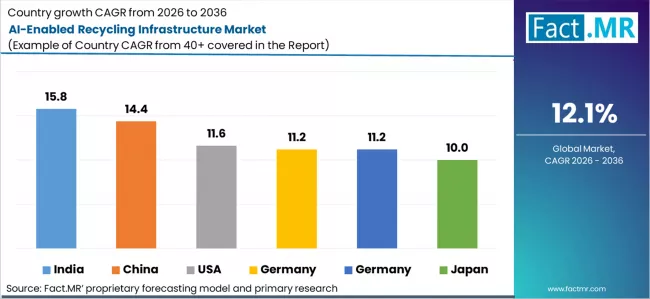
| Country | CAGR (2026-2036) |
|---|---|
| Germany | 11.2% |
| USA | 11.6% |
| China | 14.4% |
| Japan | 10% |
| India | 15.8% |
| Brazil | 11.2% |
The report covers an in-depth analysis of 40+ countries; top-performing countries are highlighted below.
What is the Outlook on the AI-Enabled Recycling Infrastructure Market in Germany?
Germany market in AI-enabled recycling infrastructure is projected to grow at a CAGR of 11.2% from 2026 to 2036. Demand for AI-enabled recycling infrastructure is increasing as Germany continues to prioritize sustainability, waste reduction, and circular economy practices. AI technologies play a crucial role in enhancing recycling efficiency, reducing contamination in recycled materials, and improving sorting processes. With Germany's strong focus on environmental responsibility and innovation in recycling, the market for AI-enabled recycling infrastructure is expected to experience steady growth, supported by government regulations and industrial adoption.
What is the Demand for AI-Enabled Recycling Infrastructure in the USA?
USA sales of AI-enabled recycling infrastructure are expected to grow at a CAGR of 11.6% from 2026 to 2036. As the USA focuses on improving waste management and recycling efficiency, the demand for AI-enabled recycling infrastructure is increasing. AI-driven technologies enable more effective sorting, processing, and waste stream management, contributing to a higher quality of recycled materials. With increasing regulatory pressure for sustainable practices and rising consumer demand for recycled products, the market for AI-enabled recycling infrastructure in the USA is set to grow steadily, supported by both technological advancements and environmental goals.
What is the Sales Outlook on AI-Enabled Recycling Infrastructure in China?
China demand for AI-enabled recycling infrastructure is projected to grow at a CAGR of 14.4% from 2026 to 2036. China’s rapid industrialization and increasing environmental concerns are driving the demand for innovative recycling solutions. AI technologies are being adopted to enhance the efficiency and effectiveness of the country’s recycling infrastructure, enabling better waste sorting and resource recovery. With China’s growing commitment to improving waste management systems and achieving sustainability goals, the market for AI-enabled recycling infrastructure is expected to experience robust growth, supported by both governmental policies and industrial investments.
What is the Demand for AI-Enabled Recycling Infrastructure in Japan?
Japan market in AI-enabled recycling infrastructure is forecast to grow at a CAGR of 10% from 2026 to 2036. Japan’s demand for AI-enabled recycling infrastructure is increasing as the country focuses on improving recycling efficiency and reducing waste. AI solutions in waste sorting and processing are essential for enhancing the quality of recycled materials and reducing contamination. With Japan’s strong regulatory framework for environmental sustainability and waste management, the market for AI-enabled recycling infrastructure is expected to grow steadily, driven by advancements in technology and increasing investments in green technologies.
What is the Sales Outlook on AI-Enabled Recycling Infrastructure in India?
India sales of AI-enabled recycling infrastructure are projected to grow at a CAGR of 15.8% from 2026 to 2036. India’s growing industrial base, coupled with the country’s need to address waste management challenges, is driving the demand for AI-enabled recycling infrastructure. AI technologies are crucial for improving the efficiency of recycling processes, particularly in urban areas where waste volumes are high. With India’s increasing focus on sustainability, resource recovery, and reducing plastic waste, the market for AI-enabled recycling infrastructure is expected to experience significant growth, supported by regulatory pressures and the country’s commitment to environmental goals.
What is the Market Expansion Outlook for AI-Enabled Recycling Infrastructure in Brazil?
Brazil demand for AI-enabled recycling infrastructure is set to grow at a CAGR of 11.2% from 2026 to 2036. Brazil’s focus on improving recycling systems and reducing waste is driving the demand for AI-driven solutions that enhance the efficiency of waste sorting and recycling processes. With the country’s commitment to sustainability and improving waste management, AI-enabled infrastructure will play a key role in optimizing recycling operations and increasing the amount of materials that are successfully recycled. The market for AI-enabled recycling infrastructure in Brazil is expected to grow steadily, supported by both local industrial developments and global sustainability trends.
How Are Key Players Competing in the AI Enabled Recycling Infrastructure Market?
Competition in the AI enabled recycling infrastructure market is shaped by automation depth, sorting accuracy, and system integration. TOMRA Systems ASA, ZenRobotics Ltd., and AMP Robotics Corp. deploy AI driven sensor and robotics platforms to improve material identification and recovery rates. Waste Management, Inc. applies AI tools within large scale facilities to enhance operational efficiency and material purity. Everbright Environment and Bozhon Group Co., Ltd. focus on integrated recycling lines tailored to regional waste streams and capacity needs. Hitachi Zosen Corporation and JFE Engineering Corporation emphasize end to end plant engineering, combining AI controls with mechanical processing. Competitive positioning is defined by throughput reliability, adaptability across waste types, and alignment with municipal and industrial recycling requirements.
Key Players of the AI-Enabled Recycling Infrastructure Market
- TOMRA Systems ASA
- ZenRobotics Ltd.
- AMP Robotics Corp.
- Waste Management, Inc.
- Everbright Environment
- Bozhon Group Co., Ltd.
- Hitachi Zosen Corporation
- JFE Engineering Corporation
Scope of the Report
| Items | Values |
|---|---|
| Quantitative Units (2026) | USD Billion |
| End-use | MRFs and plastics recycling, Municipal and private MRFs, Mega recycling parks, Precision recycling, Emerging MRFs, Regional upgrades |
| Infrastructure Type | AI-optimised sorting plants, Robotics-assisted facilities, Smart recycling zones, Compact AI facilities, Others |
| Waste Stream | Mixed plastics, Plastics & packaging, Mixed MSW, Plastics, Others |
| Digital Technology | Vision AI, robotics, IoT, Cloud-connected AI, Edge-AI and automation, Robotics + analytics, Others |
| Regions Covered | North America, Europe, Asia Pacific, Latin America, Middle East & Africa |
| Countries Covered | United States, Canada, Mexico, Brazil, Germany, United Kingdom, France, Italy, Spain, China, Japan, South Korea, India, Australia & New Zealand |
| Key Companies Profiled | TOMRA Systems ASA, ZenRobotics Ltd., AMP Robotics Corp., Waste Management, Inc., Everbright Environment, Bozhon Group Co., Ltd., Hitachi Zosen Corporation, JFE Engineering Corporation |
| Additional Attributes | Dollar revenue by end-use, infrastructure type, waste stream, and digital technology; regional demand trends, competitive landscape, technological advancements in AI-enabled recycling infrastructure, and innovations in sorting, robotics, and automation systems |
AI-Enabled Recycling Infrastructure Market Key Segments
-
End-use :
- MRFs and plastics recycling
- Municipal and private MRFs
- Mega recycling parks
- Precision recycling
- Emerging MRFs
- Regional upgrades
-
Infrastructure Type :
- AI-optimized sorting plants
- Robotics-assisted facilities
- Smart recycling zones
- Compact AI facilities
- Others
-
Waste Stream :
- Mixed plastics
- Plastics & packaging
- Mixed MSW
- Plastics
- Others
-
Digital Technology :
- Vision AI, robotics, IoT
- Cloud-connected AI
- Edge-AI and automation
- Robotics + analytics
- Others
-
Region :
- North America
- USA
- Canada
- Mexico
- Europe
- Germany
- UK
- France
- Italy
- Spain
- Nordic Countries
- BENELUX
- Rest of Europe
- Asia Pacific
- China
- Japan
- South Korea
- India
- Australia
- Rest of Asia Pacific
- Latin America
- Brazil
- Argentina
- Rest of Latin America
- Middle East and Africa
- Kingdom of Saudi Arabia
- United Arab Emirates
- South Africa
- Rest of Middle East and Africa
- Other Regions
- Oceania
- Central Asia
- North America
Bibliographies
- European Commission. (2024). Digital transformation of waste management under the circular economy action plan.
- U.S. Environmental Protection Agency. (2023). Advanced recycling technologies and digital tools in materials recovery facilities.
- Organisation for Economic Co-operation and Development. (2023). Digital technologies for the circular economy.
- United Nations Environment Programme. (2024). Digital innovation and artificial intelligence in waste management.
- International Organization for Standardization. (2023). ISO 59020: Circular economy - Measuring and assessing circularity.
Table of Content
- Executive Summary
- Global Market Outlook
- Demand to side Trends
- Supply to side Trends
- Technology Roadmap Analysis
- Analysis and Recommendations
- Market Overview
- Market Coverage / Taxonomy
- Market Definition / Scope / Limitations
- Market Background
- Market Dynamics
- Drivers
- Restraints
- Opportunity
- Trends
- Scenario Forecast
- Demand in Optimistic Scenario
- Demand in Likely Scenario
- Demand in Conservative Scenario
- Opportunity Map Analysis
- Product Life Cycle Analysis
- Supply Chain Analysis
- Investment Feasibility Matrix
- Value Chain Analysis
- PESTLE and Porter’s Analysis
- Regulatory Landscape
- Regional Parent Market Outlook
- Production and Consumption Statistics
- Import and Export Statistics
- Market Dynamics
- Global Market Analysis 2021 to 2025 and Forecast, 2026 to 2036
- Historical Market Size Value (USD Million) Analysis, 2021 to 2025
- Current and Future Market Size Value (USD Million) Projections, 2026 to 2036
- Y to o to Y Growth Trend Analysis
- Absolute $ Opportunity Analysis
- Global Market Pricing Analysis 2021 to 2025 and Forecast 2026 to 2036
- Global Market Analysis 2021 to 2025 and Forecast 2026 to 2036, By End-use
- Introduction / Key Findings
- Historical Market Size Value (USD Million) Analysis By End-use, 2021 to 2025
- Current and Future Market Size Value (USD Million) Analysis and Forecast By End-use, 2026 to 2036
- MRFs and plastics recycling
- Municipal and private MRFs
- Mega recycling parks
- Precision recycling
- Emerging MRFs
- Regional upgrades
- MRFs and plastics recycling
- Y to o to Y Growth Trend Analysis By End-use, 2021 to 2025
- Absolute $ Opportunity Analysis By End-use, 2026 to 2036
- Global Market Analysis 2021 to 2025 and Forecast 2026 to 2036, By Infrastructure Type
- Introduction / Key Findings
- Historical Market Size Value (USD Million) Analysis By Infrastructure Type, 2021 to 2025
- Current and Future Market Size Value (USD Million) Analysis and Forecast By Infrastructure Type, 2026 to 2036
- AI-optimised sorting plants
- Robotics-assisted facilities
- Smart recycling zones
- Compact AI facilities
- Others
- AI-optimised sorting plants
- Y to o to Y Growth Trend Analysis By Infrastructure Type, 2021 to 2025
- Absolute $ Opportunity Analysis By Infrastructure Type, 2026 to 2036
- Global Market Analysis 2021 to 2025 and Forecast 2026 to 2036, By Waste Stream
- Introduction / Key Findings
- Historical Market Size Value (USD Million) Analysis By Waste Stream, 2021 to 2025
- Current and Future Market Size Value (USD Million) Analysis and Forecast By Waste Stream, 2026 to 2036
- Mixed plastics
- Plastics and packaging
- Mixed MSW
- Plastics
- Others
- Mixed plastics
- Y to o to Y Growth Trend Analysis By Waste Stream, 2021 to 2025
- Absolute $ Opportunity Analysis By Waste Stream, 2026 to 2036
- Global Market Analysis 2021 to 2025 and Forecast 2026 to 2036, By Digital Technology
- Introduction / Key Findings
- Historical Market Size Value (USD Million) Analysis By Digital Technology, 2021 to 2025
- Current and Future Market Size Value (USD Million) Analysis and Forecast By Digital Technology, 2026 to 2036
- Vision AI, robotics, IoT
- Cloud-connected AI
- Edge-AI and automation
- Robotics + analytics
- Others
- Vision AI, robotics, IoT
- Y to o to Y Growth Trend Analysis By Digital Technology, 2021 to 2025
- Absolute $ Opportunity Analysis By Digital Technology, 2026 to 2036
- Global Market Analysis 2021 to 2025 and Forecast 2026 to 2036, By Region
- Introduction
- Historical Market Size Value (USD Million) Analysis By Region, 2021 to 2025
- Current Market Size Value (USD Million) Analysis and Forecast By Region, 2026 to 2036
- North America
- Latin America
- Western Europe
- Eastern Europe
- East Asia
- South Asia and Pacific
- Middle East & Africa
- Market Attractiveness Analysis By Region
- North America Market Analysis 2021 to 2025 and Forecast 2026 to 2036, By Country
- Historical Market Size Value (USD Million) Trend Analysis By Market Taxonomy, 2021 to 2025
- Market Size Value (USD Million) Forecast By Market Taxonomy, 2026 to 2036
- By Country
- USA
- Canada
- Mexico
- By End-use
- By Infrastructure Type
- By Waste Stream
- By Digital Technology
- By Country
- Market Attractiveness Analysis
- By Country
- By End-use
- By Infrastructure Type
- By Waste Stream
- By Digital Technology
- Key Takeaways
- Latin America Market Analysis 2021 to 2025 and Forecast 2026 to 2036, By Country
- Historical Market Size Value (USD Million) Trend Analysis By Market Taxonomy, 2021 to 2025
- Market Size Value (USD Million) Forecast By Market Taxonomy, 2026 to 2036
- By Country
- Brazil
- Chile
- Rest of Latin America
- By End-use
- By Infrastructure Type
- By Waste Stream
- By Digital Technology
- By Country
- Market Attractiveness Analysis
- By Country
- By End-use
- By Infrastructure Type
- By Waste Stream
- By Digital Technology
- Key Takeaways
- Western Europe Market Analysis 2021 to 2025 and Forecast 2026 to 2036, By Country
- Historical Market Size Value (USD Million) Trend Analysis By Market Taxonomy, 2021 to 2025
- Market Size Value (USD Million) Forecast By Market Taxonomy, 2026 to 2036
- By Country
- Germany
- UK
- Italy
- Spain
- France
- Nordic
- BENELUX
- Rest of Western Europe
- By End-use
- By Infrastructure Type
- By Waste Stream
- By Digital Technology
- By Country
- Market Attractiveness Analysis
- By Country
- By End-use
- By Infrastructure Type
- By Waste Stream
- By Digital Technology
- Key Takeaways
- Eastern Europe Market Analysis 2021 to 2025 and Forecast 2026 to 2036, By Country
- Historical Market Size Value (USD Million) Trend Analysis By Market Taxonomy, 2021 to 2025
- Market Size Value (USD Million) Forecast By Market Taxonomy, 2026 to 2036
- By Country
- Russia
- Poland
- Hungary
- Balkan & Baltic
- Rest of Eastern Europe
- By End-use
- By Infrastructure Type
- By Waste Stream
- By Digital Technology
- By Country
- Market Attractiveness Analysis
- By Country
- By End-use
- By Infrastructure Type
- By Waste Stream
- By Digital Technology
- Key Takeaways
- East Asia Market Analysis 2021 to 2025 and Forecast 2026 to 2036, By Country
- Historical Market Size Value (USD Million) Trend Analysis By Market Taxonomy, 2021 to 2025
- Market Size Value (USD Million) Forecast By Market Taxonomy, 2026 to 2036
- By Country
- China
- Japan
- South Korea
- By End-use
- By Infrastructure Type
- By Waste Stream
- By Digital Technology
- By Country
- Market Attractiveness Analysis
- By Country
- By End-use
- By Infrastructure Type
- By Waste Stream
- By Digital Technology
- Key Takeaways
- South Asia and Pacific Market Analysis 2021 to 2025 and Forecast 2026 to 2036, By Country
- Historical Market Size Value (USD Million) Trend Analysis By Market Taxonomy, 2021 to 2025
- Market Size Value (USD Million) Forecast By Market Taxonomy, 2026 to 2036
- By Country
- India
- ASEAN
- Australia & New Zealand
- Rest of South Asia and Pacific
- By End-use
- By Infrastructure Type
- By Waste Stream
- By Digital Technology
- By Country
- Market Attractiveness Analysis
- By Country
- By End-use
- By Infrastructure Type
- By Waste Stream
- By Digital Technology
- Key Takeaways
- Middle East & Africa Market Analysis 2021 to 2025 and Forecast 2026 to 2036, By Country
- Historical Market Size Value (USD Million) Trend Analysis By Market Taxonomy, 2021 to 2025
- Market Size Value (USD Million) Forecast By Market Taxonomy, 2026 to 2036
- By Country
- Kingdom of Saudi Arabia
- Other GCC Countries
- Turkiye
- South Africa
- Other African Union
- Rest of Middle East & Africa
- By End-use
- By Infrastructure Type
- By Waste Stream
- By Digital Technology
- By Country
- Market Attractiveness Analysis
- By Country
- By End-use
- By Infrastructure Type
- By Waste Stream
- By Digital Technology
- Key Takeaways
- Key Countries Market Analysis
- USA
- Pricing Analysis
- Market Share Analysis, 2025
- By End-use
- By Infrastructure Type
- By Waste Stream
- By Digital Technology
- Canada
- Pricing Analysis
- Market Share Analysis, 2025
- By End-use
- By Infrastructure Type
- By Waste Stream
- By Digital Technology
- Mexico
- Pricing Analysis
- Market Share Analysis, 2025
- By End-use
- By Infrastructure Type
- By Waste Stream
- By Digital Technology
- Brazil
- Pricing Analysis
- Market Share Analysis, 2025
- By End-use
- By Infrastructure Type
- By Waste Stream
- By Digital Technology
- Chile
- Pricing Analysis
- Market Share Analysis, 2025
- By End-use
- By Infrastructure Type
- By Waste Stream
- By Digital Technology
- Germany
- Pricing Analysis
- Market Share Analysis, 2025
- By End-use
- By Infrastructure Type
- By Waste Stream
- By Digital Technology
- UK
- Pricing Analysis
- Market Share Analysis, 2025
- By End-use
- By Infrastructure Type
- By Waste Stream
- By Digital Technology
- Italy
- Pricing Analysis
- Market Share Analysis, 2025
- By End-use
- By Infrastructure Type
- By Waste Stream
- By Digital Technology
- Spain
- Pricing Analysis
- Market Share Analysis, 2025
- By End-use
- By Infrastructure Type
- By Waste Stream
- By Digital Technology
- France
- Pricing Analysis
- Market Share Analysis, 2025
- By End-use
- By Infrastructure Type
- By Waste Stream
- By Digital Technology
- India
- Pricing Analysis
- Market Share Analysis, 2025
- By End-use
- By Infrastructure Type
- By Waste Stream
- By Digital Technology
- ASEAN
- Pricing Analysis
- Market Share Analysis, 2025
- By End-use
- By Infrastructure Type
- By Waste Stream
- By Digital Technology
- Australia & New Zealand
- Pricing Analysis
- Market Share Analysis, 2025
- By End-use
- By Infrastructure Type
- By Waste Stream
- By Digital Technology
- China
- Pricing Analysis
- Market Share Analysis, 2025
- By End-use
- By Infrastructure Type
- By Waste Stream
- By Digital Technology
- Japan
- Pricing Analysis
- Market Share Analysis, 2025
- By End-use
- By Infrastructure Type
- By Waste Stream
- By Digital Technology
- South Korea
- Pricing Analysis
- Market Share Analysis, 2025
- By End-use
- By Infrastructure Type
- By Waste Stream
- By Digital Technology
- Russia
- Pricing Analysis
- Market Share Analysis, 2025
- By End-use
- By Infrastructure Type
- By Waste Stream
- By Digital Technology
- Poland
- Pricing Analysis
- Market Share Analysis, 2025
- By End-use
- By Infrastructure Type
- By Waste Stream
- By Digital Technology
- Hungary
- Pricing Analysis
- Market Share Analysis, 2025
- By End-use
- By Infrastructure Type
- By Waste Stream
- By Digital Technology
- Kingdom of Saudi Arabia
- Pricing Analysis
- Market Share Analysis, 2025
- By End-use
- By Infrastructure Type
- By Waste Stream
- By Digital Technology
- Turkiye
- Pricing Analysis
- Market Share Analysis, 2025
- By End-use
- By Infrastructure Type
- By Waste Stream
- By Digital Technology
- South Africa
- Pricing Analysis
- Market Share Analysis, 2025
- By End-use
- By Infrastructure Type
- By Waste Stream
- By Digital Technology
- USA
- Market Structure Analysis
- Competition Dashboard
- Competition Benchmarking
- Market Share Analysis of Top Players
- By Regional
- By End-use
- By Infrastructure Type
- By Waste Stream
- By Digital Technology
- Competition Analysis
- Competition Deep Dive
- TOMRA Systems ASA
- Overview
- Product Portfolio
- Profitability by Market Segments (Product/Age /Sales Channel/Region)
- Sales Footprint
- Strategy Overview
- Marketing Strategy
- Product Strategy
- Channel Strategy
- ZenRobotics Ltd.
- AMP Robotics Corp.
- Waste Management, Inc.
- Everbright Environment
- Bozhon Group Co., Ltd.
- Hitachi Zosen Corporation
- JFE Engineering Corporation
- TOMRA Systems ASA
- Competition Deep Dive
- Assumptions & Acronyms Used
- Research Methodology
List Of Table
- Table 1: Global Market Value (USD Million) Forecast by Region, 2021 to 2036
- Table 2: Global Market Value (USD Million) Forecast by End-use, 2021 to 2036
- Table 3: Global Market Value (USD Million) Forecast by Infrastructure Type, 2021 to 2036
- Table 4: Global Market Value (USD Million) Forecast by Waste Stream, 2021 to 2036
- Table 5: Global Market Value (USD Million) Forecast by Digital Technology, 2021 to 2036
- Table 6: North America Market Value (USD Million) Forecast by Country, 2021 to 2036
- Table 7: North America Market Value (USD Million) Forecast by End-use, 2021 to 2036
- Table 8: North America Market Value (USD Million) Forecast by Infrastructure Type, 2021 to 2036
- Table 9: North America Market Value (USD Million) Forecast by Waste Stream, 2021 to 2036
- Table 10: North America Market Value (USD Million) Forecast by Digital Technology, 2021 to 2036
- Table 11: Latin America Market Value (USD Million) Forecast by Country, 2021 to 2036
- Table 12: Latin America Market Value (USD Million) Forecast by End-use, 2021 to 2036
- Table 13: Latin America Market Value (USD Million) Forecast by Infrastructure Type, 2021 to 2036
- Table 14: Latin America Market Value (USD Million) Forecast by Waste Stream, 2021 to 2036
- Table 15: Latin America Market Value (USD Million) Forecast by Digital Technology, 2021 to 2036
- Table 16: Western Europe Market Value (USD Million) Forecast by Country, 2021 to 2036
- Table 17: Western Europe Market Value (USD Million) Forecast by End-use, 2021 to 2036
- Table 18: Western Europe Market Value (USD Million) Forecast by Infrastructure Type, 2021 to 2036
- Table 19: Western Europe Market Value (USD Million) Forecast by Waste Stream, 2021 to 2036
- Table 20: Western Europe Market Value (USD Million) Forecast by Digital Technology, 2021 to 2036
- Table 21: Eastern Europe Market Value (USD Million) Forecast by Country, 2021 to 2036
- Table 22: Eastern Europe Market Value (USD Million) Forecast by End-use, 2021 to 2036
- Table 23: Eastern Europe Market Value (USD Million) Forecast by Infrastructure Type, 2021 to 2036
- Table 24: Eastern Europe Market Value (USD Million) Forecast by Waste Stream, 2021 to 2036
- Table 25: Eastern Europe Market Value (USD Million) Forecast by Digital Technology, 2021 to 2036
- Table 26: East Asia Market Value (USD Million) Forecast by Country, 2021 to 2036
- Table 27: East Asia Market Value (USD Million) Forecast by End-use, 2021 to 2036
- Table 28: East Asia Market Value (USD Million) Forecast by Infrastructure Type, 2021 to 2036
- Table 29: East Asia Market Value (USD Million) Forecast by Waste Stream, 2021 to 2036
- Table 30: East Asia Market Value (USD Million) Forecast by Digital Technology, 2021 to 2036
- Table 31: South Asia and Pacific Market Value (USD Million) Forecast by Country, 2021 to 2036
- Table 32: South Asia and Pacific Market Value (USD Million) Forecast by End-use, 2021 to 2036
- Table 33: South Asia and Pacific Market Value (USD Million) Forecast by Infrastructure Type, 2021 to 2036
- Table 34: South Asia and Pacific Market Value (USD Million) Forecast by Waste Stream, 2021 to 2036
- Table 35: South Asia and Pacific Market Value (USD Million) Forecast by Digital Technology, 2021 to 2036
- Table 36: Middle East & Africa Market Value (USD Million) Forecast by Country, 2021 to 2036
- Table 37: Middle East & Africa Market Value (USD Million) Forecast by End-use, 2021 to 2036
- Table 38: Middle East & Africa Market Value (USD Million) Forecast by Infrastructure Type, 2021 to 2036
- Table 39: Middle East & Africa Market Value (USD Million) Forecast by Waste Stream, 2021 to 2036
- Table 40: Middle East & Africa Market Value (USD Million) Forecast by Digital Technology, 2021 to 2036
List Of Figures
- Figure 1: Global Market Pricing Analysis
- Figure 2: Global Market Value (USD Million) Forecast 2021 to 2036
- Figure 3: Global Market Value Share and BPS Analysis by End-use, 2026 and 2036
- Figure 4: Global Market Y to o to Y Growth Comparison by End-use, 2026 to 2036
- Figure 5: Global Market Attractiveness Analysis by End-use
- Figure 6: Global Market Value Share and BPS Analysis by Infrastructure Type, 2026 and 2036
- Figure 7: Global Market Y to o to Y Growth Comparison by Infrastructure Type, 2026 to 2036
- Figure 8: Global Market Attractiveness Analysis by Infrastructure Type
- Figure 9: Global Market Value Share and BPS Analysis by Waste Stream, 2026 and 2036
- Figure 10: Global Market Y to o to Y Growth Comparison by Waste Stream, 2026 to 2036
- Figure 11: Global Market Attractiveness Analysis by Waste Stream
- Figure 12: Global Market Value Share and BPS Analysis by Digital Technology, 2026 and 2036
- Figure 13: Global Market Y to o to Y Growth Comparison by Digital Technology, 2026 to 2036
- Figure 14: Global Market Attractiveness Analysis by Digital Technology
- Figure 15: Global Market Value (USD Million) Share and BPS Analysis by Region, 2026 and 2036
- Figure 16: Global Market Y to o to Y Growth Comparison by Region, 2026 to 2036
- Figure 17: Global Market Attractiveness Analysis by Region
- Figure 18: North America Market Incremental Dollar Opportunity, 2026 to 2036
- Figure 19: Latin America Market Incremental Dollar Opportunity, 2026 to 2036
- Figure 20: Western Europe Market Incremental Dollar Opportunity, 2026 to 2036
- Figure 21: Eastern Europe Market Incremental Dollar Opportunity, 2026 to 2036
- Figure 22: East Asia Market Incremental Dollar Opportunity, 2026 to 2036
- Figure 23: South Asia and Pacific Market Incremental Dollar Opportunity, 2026 to 2036
- Figure 24: Middle East & Africa Market Incremental Dollar Opportunity, 2026 to 2036
- Figure 25: North America Market Value Share and BPS Analysis by Country, 2026 and 2036
- Figure 26: North America Market Value Share and BPS Analysis by End-use, 2026 and 2036
- Figure 27: North America Market Y to o to Y Growth Comparison by End-use, 2026 to 2036
- Figure 28: North America Market Attractiveness Analysis by End-use
- Figure 29: North America Market Value Share and BPS Analysis by Infrastructure Type, 2026 and 2036
- Figure 30: North America Market Y to o to Y Growth Comparison by Infrastructure Type, 2026 to 2036
- Figure 31: North America Market Attractiveness Analysis by Infrastructure Type
- Figure 32: North America Market Value Share and BPS Analysis by Waste Stream, 2026 and 2036
- Figure 33: North America Market Y to o to Y Growth Comparison by Waste Stream, 2026 to 2036
- Figure 34: North America Market Attractiveness Analysis by Waste Stream
- Figure 35: North America Market Value Share and BPS Analysis by Digital Technology, 2026 and 2036
- Figure 36: North America Market Y to o to Y Growth Comparison by Digital Technology, 2026 to 2036
- Figure 37: North America Market Attractiveness Analysis by Digital Technology
- Figure 38: Latin America Market Value Share and BPS Analysis by Country, 2026 and 2036
- Figure 39: Latin America Market Value Share and BPS Analysis by End-use, 2026 and 2036
- Figure 40: Latin America Market Y to o to Y Growth Comparison by End-use, 2026 to 2036
- Figure 41: Latin America Market Attractiveness Analysis by End-use
- Figure 42: Latin America Market Value Share and BPS Analysis by Infrastructure Type, 2026 and 2036
- Figure 43: Latin America Market Y to o to Y Growth Comparison by Infrastructure Type, 2026 to 2036
- Figure 44: Latin America Market Attractiveness Analysis by Infrastructure Type
- Figure 45: Latin America Market Value Share and BPS Analysis by Waste Stream, 2026 and 2036
- Figure 46: Latin America Market Y to o to Y Growth Comparison by Waste Stream, 2026 to 2036
- Figure 47: Latin America Market Attractiveness Analysis by Waste Stream
- Figure 48: Latin America Market Value Share and BPS Analysis by Digital Technology, 2026 and 2036
- Figure 49: Latin America Market Y to o to Y Growth Comparison by Digital Technology, 2026 to 2036
- Figure 50: Latin America Market Attractiveness Analysis by Digital Technology
- Figure 51: Western Europe Market Value Share and BPS Analysis by Country, 2026 and 2036
- Figure 52: Western Europe Market Value Share and BPS Analysis by End-use, 2026 and 2036
- Figure 53: Western Europe Market Y to o to Y Growth Comparison by End-use, 2026 to 2036
- Figure 54: Western Europe Market Attractiveness Analysis by End-use
- Figure 55: Western Europe Market Value Share and BPS Analysis by Infrastructure Type, 2026 and 2036
- Figure 56: Western Europe Market Y to o to Y Growth Comparison by Infrastructure Type, 2026 to 2036
- Figure 57: Western Europe Market Attractiveness Analysis by Infrastructure Type
- Figure 58: Western Europe Market Value Share and BPS Analysis by Waste Stream, 2026 and 2036
- Figure 59: Western Europe Market Y to o to Y Growth Comparison by Waste Stream, 2026 to 2036
- Figure 60: Western Europe Market Attractiveness Analysis by Waste Stream
- Figure 61: Western Europe Market Value Share and BPS Analysis by Digital Technology, 2026 and 2036
- Figure 62: Western Europe Market Y to o to Y Growth Comparison by Digital Technology, 2026 to 2036
- Figure 63: Western Europe Market Attractiveness Analysis by Digital Technology
- Figure 64: Eastern Europe Market Value Share and BPS Analysis by Country, 2026 and 2036
- Figure 65: Eastern Europe Market Value Share and BPS Analysis by End-use, 2026 and 2036
- Figure 66: Eastern Europe Market Y to o to Y Growth Comparison by End-use, 2026 to 2036
- Figure 67: Eastern Europe Market Attractiveness Analysis by End-use
- Figure 68: Eastern Europe Market Value Share and BPS Analysis by Infrastructure Type, 2026 and 2036
- Figure 69: Eastern Europe Market Y to o to Y Growth Comparison by Infrastructure Type, 2026 to 2036
- Figure 70: Eastern Europe Market Attractiveness Analysis by Infrastructure Type
- Figure 71: Eastern Europe Market Value Share and BPS Analysis by Waste Stream, 2026 and 2036
- Figure 72: Eastern Europe Market Y to o to Y Growth Comparison by Waste Stream, 2026 to 2036
- Figure 73: Eastern Europe Market Attractiveness Analysis by Waste Stream
- Figure 74: Eastern Europe Market Value Share and BPS Analysis by Digital Technology, 2026 and 2036
- Figure 75: Eastern Europe Market Y to o to Y Growth Comparison by Digital Technology, 2026 to 2036
- Figure 76: Eastern Europe Market Attractiveness Analysis by Digital Technology
- Figure 77: East Asia Market Value Share and BPS Analysis by Country, 2026 and 2036
- Figure 78: East Asia Market Value Share and BPS Analysis by End-use, 2026 and 2036
- Figure 79: East Asia Market Y to o to Y Growth Comparison by End-use, 2026 to 2036
- Figure 80: East Asia Market Attractiveness Analysis by End-use
- Figure 81: East Asia Market Value Share and BPS Analysis by Infrastructure Type, 2026 and 2036
- Figure 82: East Asia Market Y to o to Y Growth Comparison by Infrastructure Type, 2026 to 2036
- Figure 83: East Asia Market Attractiveness Analysis by Infrastructure Type
- Figure 84: East Asia Market Value Share and BPS Analysis by Waste Stream, 2026 and 2036
- Figure 85: East Asia Market Y to o to Y Growth Comparison by Waste Stream, 2026 to 2036
- Figure 86: East Asia Market Attractiveness Analysis by Waste Stream
- Figure 87: East Asia Market Value Share and BPS Analysis by Digital Technology, 2026 and 2036
- Figure 88: East Asia Market Y to o to Y Growth Comparison by Digital Technology, 2026 to 2036
- Figure 89: East Asia Market Attractiveness Analysis by Digital Technology
- Figure 90: South Asia and Pacific Market Value Share and BPS Analysis by Country, 2026 and 2036
- Figure 91: South Asia and Pacific Market Value Share and BPS Analysis by End-use, 2026 and 2036
- Figure 92: South Asia and Pacific Market Y to o to Y Growth Comparison by End-use, 2026 to 2036
- Figure 93: South Asia and Pacific Market Attractiveness Analysis by End-use
- Figure 94: South Asia and Pacific Market Value Share and BPS Analysis by Infrastructure Type, 2026 and 2036
- Figure 95: South Asia and Pacific Market Y to o to Y Growth Comparison by Infrastructure Type, 2026 to 2036
- Figure 96: South Asia and Pacific Market Attractiveness Analysis by Infrastructure Type
- Figure 97: South Asia and Pacific Market Value Share and BPS Analysis by Waste Stream, 2026 and 2036
- Figure 98: South Asia and Pacific Market Y to o to Y Growth Comparison by Waste Stream, 2026 to 2036
- Figure 99: South Asia and Pacific Market Attractiveness Analysis by Waste Stream
- Figure 100: South Asia and Pacific Market Value Share and BPS Analysis by Digital Technology, 2026 and 2036
- Figure 101: South Asia and Pacific Market Y to o to Y Growth Comparison by Digital Technology, 2026 to 2036
- Figure 102: South Asia and Pacific Market Attractiveness Analysis by Digital Technology
- Figure 103: Middle East & Africa Market Value Share and BPS Analysis by Country, 2026 and 2036
- Figure 104: Middle East & Africa Market Value Share and BPS Analysis by End-use, 2026 and 2036
- Figure 105: Middle East & Africa Market Y to o to Y Growth Comparison by End-use, 2026 to 2036
- Figure 106: Middle East & Africa Market Attractiveness Analysis by End-use
- Figure 107: Middle East & Africa Market Value Share and BPS Analysis by Infrastructure Type, 2026 and 2036
- Figure 108: Middle East & Africa Market Y to o to Y Growth Comparison by Infrastructure Type, 2026 to 2036
- Figure 109: Middle East & Africa Market Attractiveness Analysis by Infrastructure Type
- Figure 110: Middle East & Africa Market Value Share and BPS Analysis by Waste Stream, 2026 and 2036
- Figure 111: Middle East & Africa Market Y to o to Y Growth Comparison by Waste Stream, 2026 to 2036
- Figure 112: Middle East & Africa Market Attractiveness Analysis by Waste Stream
- Figure 113: Middle East & Africa Market Value Share and BPS Analysis by Digital Technology, 2026 and 2036
- Figure 114: Middle East & Africa Market Y to o to Y Growth Comparison by Digital Technology, 2026 to 2036
- Figure 115: Middle East & Africa Market Attractiveness Analysis by Digital Technology
- Figure 116: Global Market - Tier Structure Analysis
- Figure 117: Global Market - Company Share Analysis
- FAQs -
How big is the ai-enabled recycling infrastructure market in 2026?
The global ai-enabled recycling infrastructure market is estimated to be valued at USD 4.1 billion in 2026.
What will be the size of ai-enabled recycling infrastructure market in 2036?
The market size for the ai-enabled recycling infrastructure market is projected to reach USD 12.9 billion by 2036.
How much will be the ai-enabled recycling infrastructure market growth between 2026 and 2036?
The ai-enabled recycling infrastructure market is expected to grow at a 12.1% CAGR between 2026 and 2036.
What are the key product types in the ai-enabled recycling infrastructure market?
The key product types in ai-enabled recycling infrastructure market are mrfs and plastics recycling, municipal and private mrfs, mega recycling parks, precision recycling, emerging mrfs and regional upgrades.
Which infrastructure type segment to contribute significant share in the ai-enabled recycling infrastructure market in 2026?
In terms of infrastructure type, ai-optimised sorting plants segment to command 36.0% share in the ai-enabled recycling infrastructure market in 2026.