Athlete Brand Management Market Size, Share, Growth and Forecast (2026 - 2036)
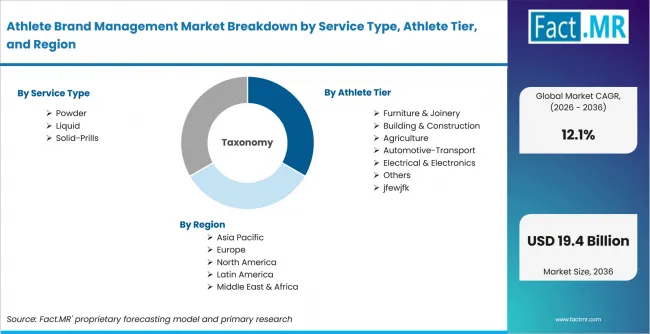
The Athlete Brand Management Market is segmented by Service Type, by Athlete Tier, by Commercial Channel, by Buyer Type, by Revenue Model, and Region. Forecast for 2026 to 2036.
What is the athlete brand management market forecast to be worth by 2036?
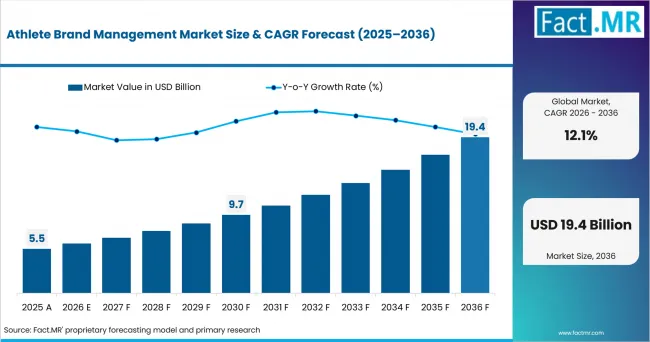
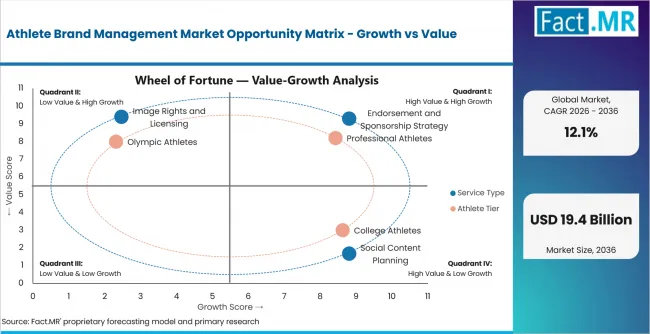
USD 6.2 billion in 2026 to USD 19.4 billion by 2036, at 12.1% CAGR.
- The athlete brand management market crossed a valuation of USD 5.5 billion in 2025. Demand is expected to increase from USD 6.2 billion in 2026 to USD 19.4 billion by 2036.
- The market is forecast to record 12.1% CAGR from 2026 to 2036 as athletes use representation teams to manage endorsements and public reputation.
- Athlete brand management covers commercial strategy and representation services that help athletes monetize identity beyond competition. The category connects with influencer marketing because athletes are now evaluated through audience trust and platform reach.
- The strongest adoption case comes from athletes whose income depends on sponsor fit and consistent public visibility.
What are the defining numbers behind athlete brand management market growth?
USD 13.2 billion absolute opportunity by 2036, led by the United States and India.
- Demand Drivers in the Market
- Athlete agents need stronger tools to match sponsor offers with career positioning.
- NIL advisors need structured workflows for disclosure and deal review.
- Sponsor marketing teams need athletes with clear audience identity.
- PR teams need faster response planning when reputation risk affects endorsements.
- Key Segments Analyzed
- By Service Type: Endorsement and Sponsorship Strategy is expected to hold 36.0% share in 2026 because sponsor income is the main service trigger.
- By Athlete Tier: Professional Athletes lead because they hold stronger media value and sponsor leverage. The share is projected at 48.0% in 2026.
- By Commercial Channel: Social Media and Content Monetization are likely to account for 41.0% share in 2026 because athletes sell direct audience access.
- By Buyer Type: Brands and Sponsors lead with 44.0% share in 2026 because campaign owners pay for measurable athlete reach.
- By Revenue Model: Retainer-Plus-Commission is expected to hold 39.0% share in 2026 because agencies need steady service income and deal upside.
- By Geography: The United States is projected to record 14.5% CAGR through 2036 as NIL and agency representation expand.
- Analyst Opinion at Fact.MR
- Shambhu Nath Jha, Senior Analyst at Fact.MR, states, “Athlete brand management is becoming career infrastructure. We see athletes asking for sponsor strategy before the deal is signed. Agencies that can protect image rights and guide content value will gain stronger access to premium athlete portfolios.”
- Strategic Implications
- Agencies should build NIL and endorsement teams around athlete career stage.
- Athletes should treat sponsor selection as a long-term brand decision.
- Sponsor teams can use audience data before committing endorsement budgets.
- NIL platforms should simplify disclosures and service-provider discovery.
The NCAA launched NIL Assist in 2024 to connect student-athletes with potential service providers and NIL resources. [2] This supports demand for structured brand management because athletes need clearer support before entering sponsorship agreements. Opendorse stated in 2025 that its NIL at Four report reviewed more than 1,000 athletes whose earnings cleared USD 100K. [3] This shows that athlete brand work is moving from celebrity endorsements toward managed income systems.
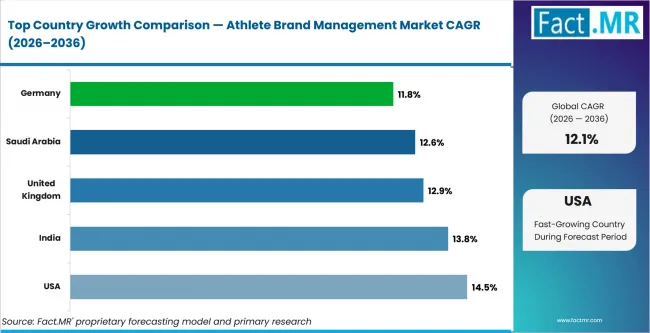
The United States is projected to record 14.5% CAGR through 2036 as NIL platforms and agency representation expand. India is expected to post 13.8% CAGR through 2036 as cricket athletes build direct brand income. The United Kingdom is likely to record 12.9% CAGR as football and women’s sport endorsements increase. Saudi Arabia is forecast to advance at 12.6% CAGR as sports investment brings more global athlete campaigns. Germany is set to record 11.8% CAGR as football and motorsport talent need stronger sponsor management.
How does the athlete brand management market break down by segment?
Endorsement and Sponsorship Strategy leads at 36.0%; Professional Athletes lead at 48.0%.
Which service type dominates?
Endorsement and Sponsorship Strategy holds 36.0% share in 2026.
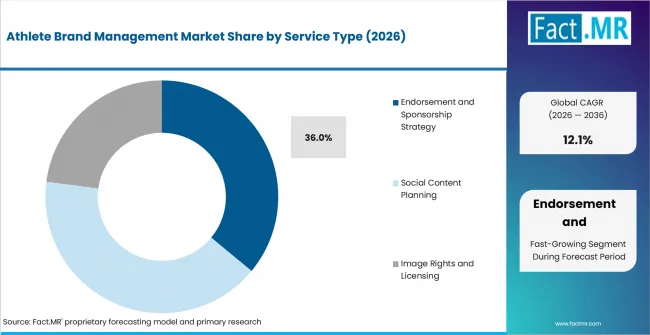
Endorsement and Sponsorship Strategy is expected to hold 36.0% share in 2026 because sponsor income is the clearest commercial trigger for athlete brand work. Agencies help athletes assess brand fit and campaign obligations. This service also protects athletes from short-term deals that weaken long-term positioning. The segment connects with contextual marketing because sponsor value improves when athlete identity matches the campaign setting.
Which athlete tier dominates?
Professional Athletes hold 48.0% share in 2026.
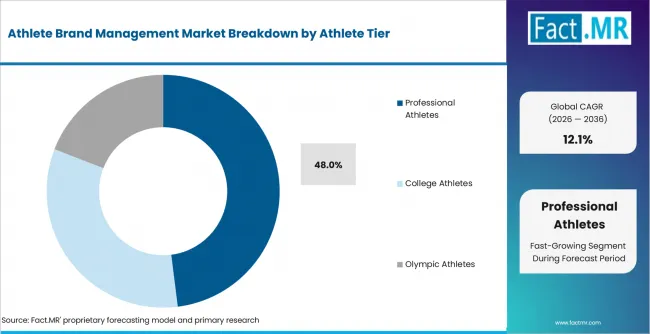
Professional Athletes lead because they have stronger media exposure and higher sponsor leverage. The tier is projected to capture 48.0% share in 2026. Agencies can sell professional athletes across endorsements, appearances and licensing. College athletes are growing quickly through NIL. Professional athletes still lead because long-term contracts and international visibility support larger brand portfolios.
Which commercial channel dominates?
Social Media and Content Monetization hold 41.0% share in 2026.
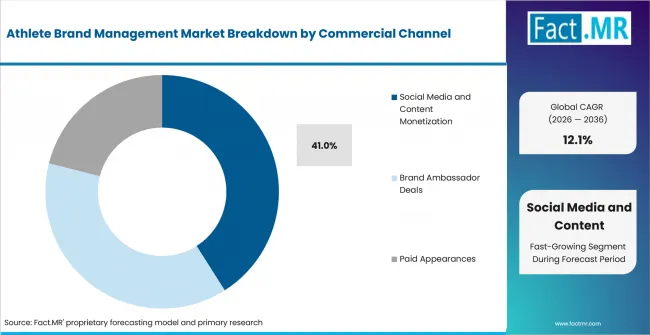
Social Media and Content Monetization lead because athletes can reach fans without waiting for broadcast exposure. The channel is likely to account for 41.0% share in 2026. Brand managers help athletes plan posts and paid partnerships. The channel also supports creator-style income through short video and live content. It connects with marketing operations because campaign scheduling and approval workflows affect sponsor delivery.
Which buyer type dominates?
Brands and Sponsors hold 44.0% share in 2026.
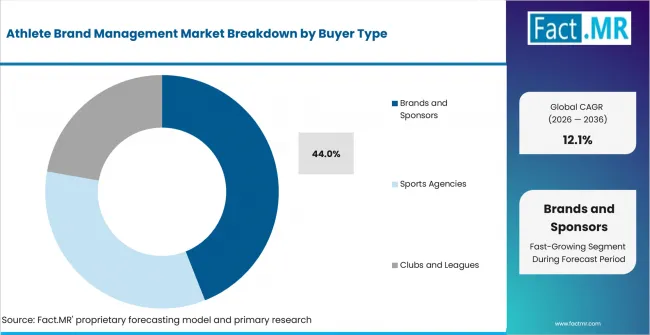
Brands and Sponsors lead because they fund most athlete endorsement activity. The buyer type is expected to hold 44.0% share in 2026. Sponsor teams need athletes who can carry trust and audience identity. Agencies help translate athlete value into campaign terms. Rights holders and collectives participate, but brand budgets still set most pricing signals.
Which revenue model dominates?
Retainer-Plus-Commission holds 39.0% share in 2026.
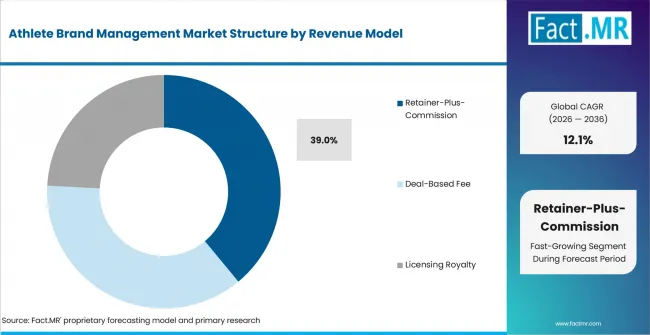
Retainer-Plus-Commission leads because brand management requires ongoing service and deal execution. The model is expected to hold 39.0% share in 2026. Athletes need regular content support and sponsor communication. Agencies need commission upside when they secure major endorsement deals. This structure works better than pure transaction fees where athlete reputation needs continuous attention.
What is accelerating athlete brand management demand, and what is holding it back?
NIL expansion drives demand; reputation risk restrains deal selection.
NIL expansion is the main driver. NCAA rules now allow schools to provide more NIL support while athletes retain control over their agreements. [1] This creates stronger demand for advisors who can review sponsor terms and protect athlete positioning.
Women’s sport is adding another demand layer. Reuters reported in 2024 that global advertisers were using more female athletes in Olympic campaigns. [4] This supports brand management because more athletes need structured commercial support.
Sponsorship intelligence is improving deal selection. Sponsor United stated in 2026 that women’s sports sponsorship grew 17.5% year over year in 2025 excluding NIL. [5] This shows why agencies are building stronger female athlete brand practices.
Digital identity protection is gaining importance. Voice and likeness rights matter more as athletes face new risks from AI-generated ads and unauthorized image use.
The main restraint is reputation risk. Sponsors may pause deals when athlete behavior creates brand safety concerns. This makes internet reputation support more important for premium athletes.
Where do the biggest athlete brand management opportunities sit?
NIL advisory, women’s sport endorsements and likeness protection.
- NIL Advisory: Agencies can help college athletes review deals and manage sponsor fit.
- Women’s Sport Endorsements: Brand teams can build athlete campaigns around fast-growing fan communities.
- Likeness Protection: Advisors can help athletes control image use across digital channels.
Which countries are scaling athlete brand management fastest?
United States 14.5%, India 13.8%, United Kingdom 12.9%, Saudi Arabia 12.6%, Germany 11.8%.
Based on regional analysis, the athlete brand management market is segmented into North America, Western Europe, Asia Pacific, Latin America, and Middle East and Africa.
.webp)
| Country | CAGR |
|---|---|
| United States | 14.5% |
| India | 13.8% |
| United Kingdom | 12.9% |
| Saudi Arabia | 12.6% |
| Germany | 11.8% |

What is powering the United States lead?
14.5% CAGR, driven by CAA Sports and NIL service expansion.
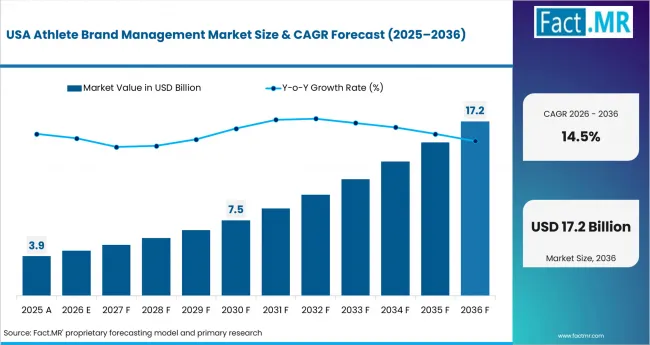
The United States is projected to record 14.5% CAGR through 2036 as NIL activity and professional endorsements expand. College athletes need support for disclosure and sponsor fit. Professional athletes need stronger content planning. Growth will favor agencies that combine representation with brand strategy.
How is India scaling athlete brand management demand?
13.8% CAGR, supported by cricket endorsements and mobile-first fan reach.
India is expected to post 13.8% CAGR through 2036 as cricket athletes build direct sponsor value. Mobile platforms help athletes speak to fans outside match windows. Brands use athletes to reach regional audiences. Growth will favor managers who understand language and audience differences.
What supports the United Kingdom outlook?
12.9% CAGR, driven by football agencies and women’s sport sponsorship.
The United Kingdom is likely to record 12.9% CAGR through 2036 as football and women’s sport endorsements increase. Athlete agencies are building stronger off-field commercial practices. Sponsors want athletes who connect with culture and community. Growth will favor brand teams with football and lifestyle experience.
How is Saudi Arabia scaling athlete brand management adoption?
12.6% CAGR, led by sports investment and global athlete campaigns.
Saudi Arabia is forecast to advance at 12.6% CAGR through 2036 as sports investment brings more international athletes into local campaigns. Events and league investments create endorsement opportunities. Athlete managers can support brand alignment for visiting stars. Growth will favor agencies with cross-border deal experience.
What underpins Germany’s growth?
11.8% CAGR, driven by football representation and motorsport sponsor work.
Germany is set to record 11.8% CAGR through 2036 as football and motorsport athletes need stronger sponsor management. Clubs and brands use athletes for community-linked campaigns. Motorsport gives athletes global visibility. Growth will favor agencies that can manage athlete image across domestic and international sponsors.
Who leads the athlete brand management market?
CAA Sports and THE·TEAM lead through athlete representation and brand strategy.
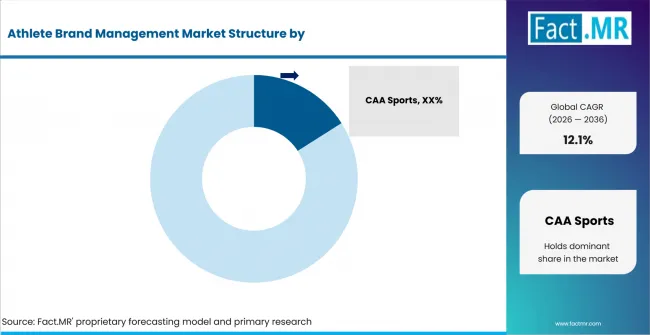
Athlete brand management is supplied by sports agencies, talent firms and endorsement platforms. CAA Sports has strong athlete representation and brand consulting reach. THE·TEAM, formerly Wasserman, supports talent and brand work across sport and entertainment.
WME Sports competes through athlete representation and media-led brand opportunities. Octagon supports athlete marketing and endorsement strategy across multiple sports. Roc Nation Sports connects athlete representation with culture-led brand development. Excel Sports Management is active in athlete marketing and premium sports partnerships.
Competition through 2036 will depend on sponsor access and reputation support. Agencies need athlete trust and strong deal screening. Firms that combine performance apparel partnerships with content planning can improve sponsor value. The sports apparel channel will remain important because footwear and clothing sponsors still shape athlete visibility.
Which companies are the key providers?
CAA Sports and THE·TEAM are key providers. WME Sports and Octagon are also profiled. Roc Nation Sports and Excel Sports Management complete the company set.
- CAA Sports
- THE·TEAM
- WME Sports
- Octagon
- Roc Nation Sports
- Excel Sports Management
Bibliography
- [1] NCAA. (2024, April 17). DI Council approves NIL reforms, permits school assistance with NIL activity. NCAA.
- [2] NCAA. (2024, August 1). New NIL, health and academic benefits take effect for NCAA student-athletes Aug. 1. NCAA.
- [3] Opendorse. (2025, June 30). NIL at 4: The annual Opendorse report. Opendorse.
- [4] Reuters. (2024, July 17). Paris Olympics marketing blitz powered by female athletes. Reuters.
- [5] SponsorUnited. (2026, March 19). Women’s sports sponsorship report 2025. SponsorUnited.
- [6] THE·TEAM. (2026). Sports, music and entertainment. THE·TEAM.
This Report Addresses
- Strategic intelligence on athlete brand management across service type and commercial channel.
- Segment analysis covering Endorsement and Sponsorship Strategy and Social Media and Content Monetization.
- Regional outlook covering the United States, India, the United Kingdom, Saudi Arabia and Germany.
- Competitive analysis of CAA Sports, THE·TEAM, WME Sports, Octagon, Roc Nation Sports and Excel Sports Management.
- Service assessment covering NIL advisory, image rights, social content planning and reputation support.
- Use case assessment covering endorsement deals, licensing, paid appearances and athlete-led content.
- Primary interviews, provider checks and official source review support the forecast.
What does the athlete brand management market cover?
Commercial representation services that manage athlete identity and sponsor value.
The athlete brand management market covers services that build and protect an athlete’s commercial identity. It includes endorsement strategy and reputation response. The scope connects with PR management because athlete income can be affected by public perception and sponsor confidence.
The market differs from sports agency contract negotiation because the focus is personal brand income. Athlete brand managers work with sponsors and content teams. They also help athletes choose deals that support long-term positioning rather than one-time income.
What is included in the scope?
Endorsement strategy, NIL advisory and athlete content planning.
The scope includes sponsorship outreach, brand-fit analysis, NIL campaign support, image-rights coordination and social media planning. It includes digital marketing when agencies manage athlete campaigns across social platforms and brand content channels. It covers athlete licensing and paid appearance strategy.
The scope includes professional athletes and college athletes. It covers agency-led services and platform-enabled NIL support. It also includes crisis communication when reputation risk affects sponsor value.
What is excluded from the scope?
Player contract negotiation without brand management service.
The scope excludes salary negotiation unless it is linked to endorsement or image-rights strategy. It excludes general sports sponsorships that use teams without individual athlete activation. It excludes influencer management for non-athletes. It also excludes legal services unless they are part of NIL or image-rights deal support.
How was the analysis built?
100+ sources, 40+ company portfolios, 25+ countries, 20+ interviews.
- Primary Research:
- Primary research includes interviews with athlete agents and brand partnership directors. It includes input from NIL platform managers and sponsor marketing leads.
- Desk Research:
- Desk research reviews NIL rule updates and official agency service references. It covers endorsement programs and media buying activity tied to athlete campaigns.
- Market-Sizing and Forecasting:
- Forecasting uses athlete representation activity and sponsorship deal flow. NIL platform expansion and women’s sport brand investment support the market assessment.
- Data Validation and Update Cycle:
- Forecasts are validated through agency checks and sponsorship intelligence. Athlete campaign announcements and NIL policy updates help confirm market direction.
What is the report’s scope and coverage?
| Attribute | Details |
|---|---|
| Quantitative Units | USD Billion in 2026 to USD Billion by 2036 at CAGR |
| Market Definition | Commercial services that manage athlete identity, endorsements, NIL income and public reputation |
| Service Type | Endorsement and Sponsorship Strategy; NIL Advisory; Social Content Planning; Image Rights and Licensing; Reputation Management |
| Athlete Tier | Professional Athletes; College Athletes; Olympic Athletes; Retired Athletes; Youth and Academy Athletes |
| Commercial Channel | Social Media and Content Monetization; Apparel and Footwear Endorsements; Brand Ambassador Deals; Licensing and Merchandise; Paid Appearances |
| Buyer Type | Brands and Sponsors; Athletes and Families; Sports Agencies; Collectives and Schools; Clubs and Leagues |
| Revenue Model | Retainer-Plus-Commission; Commission-Only; Platform Subscription; Deal-Based Fee; Licensing Royalty |
| Regions Covered | North America; Western Europe; Asia Pacific; Latin America; Middle East and Africa |
| Countries Covered | United States; India; United Kingdom; Saudi Arabia; Germany |
| Key Companies Profiled | CAA Sports; THE·TEAM; WME Sports; Octagon; Roc Nation Sports; Excel Sports Management |
| Forecast Period | 2026 to 2036 |
| Approach | Hybrid top-down and bottom-up approach using endorsement activity, NIL service adoption, agency portfolios and provider validation |
How is the market segmented?
-
By Service Type:
- Endorsement and Sponsorship Strategy
- NIL Advisory
- Social Content Planning
- Image Rights and Licensing
- Reputation Management
-
By Athlete Tier:
- Professional Athletes
- College Athletes
- Olympic Athletes
- Retired Athletes
- Youth and Academy Athletes
-
By Commercial Channel:
- Social Media and Content Monetization
- Apparel and Footwear Endorsements
- Brand Ambassador Deals
- Licensing and Merchandise
- Paid Appearances
-
By Buyer Type:
- Brands and Sponsors
- Athletes and Families
- Sports Agencies
- Collectives and Schools
- Clubs and Leagues
-
By Revenue Model:
- Retainer-Plus-Commission
- Commission-Only
- Platform Subscription
- Deal-Based Fee
- Licensing Royalty
-
Region:
- North America
- United States
- Canada
- Europe
- United Kingdom
- Germany
- France
- Spain
- Italy
- Asia Pacific
- India
- Japan
- Australia
- China
- South Korea
- Latin America
- Brazil
- Mexico
- Argentina
- Middle East & Africa
- Saudi Arabia
- UAE
- South Africa
- Qatar
- North America
- Frequently Asked Questions -
Which service type leads the Athlete Brand Management Market?
Endorsement and Sponsorship Strategy leads with 36.0% share in 2026 because sponsor income is the main service trigger.
Which athlete tier leads the Athlete Brand Management Market?
Professional Athletes hold 48.0% share in 2026 because they have stronger media exposure and sponsor leverage.
Which commercial channel leads the Athlete Brand Management Market?
Social Media and Content Monetization hold 41.0% share in 2026 because athletes sell direct audience access.
Which buyer type leads the Athlete Brand Management Market?
Brands and Sponsors hold 44.0% share in 2026 because campaign owners pay for measurable athlete reach.
Which revenue model leads the Athlete Brand Management Market?
Retainer-Plus-Commission holds 39.0% share in 2026 because agencies need steady service income and deal upside.
Which country expands fastest in the Athlete Brand Management Market?
The United States is projected to record 14.5% CAGR through 2036 as NIL and agency representation expand.
How does India perform in the Athlete Brand Management Market?
India is expected to post 13.8% CAGR through 2036 as cricket athletes build direct sponsor value.
How does the United Kingdom perform in the Athlete Brand Management Market?
The United Kingdom is likely to record 12.9% CAGR through 2036 as football and women’s sport endorsements increase.
How does Saudi Arabia perform in the Athlete Brand Management Market?
Saudi Arabia is forecast to advance at 12.6% CAGR through 2036 as sports investment creates athlete campaign demand.
How does Germany perform in the Athlete Brand Management Market?
Germany is set to record 11.8% CAGR through 2036 as football and motorsport athletes need stronger sponsor management.
What is the primary driver in the Athlete Brand Management Market?
The primary driver is NIL expansion because athletes need support for deal review and sponsor fit.
What is the main restraint in the Athlete Brand Management Market?
The main restraint is reputation risk because sponsor confidence can change quickly after public controversy.
Why is NIL advisory important in this market?
NIL advisory is important because college athletes need help with disclosure, deal terms and brand-fit decisions.
Why is social media monetization important for athletes?
Social media monetization is important because athletes can reach fans without relying only on broadcast exposure.
Table of Content
- Key Takeaways
- Market Size and CAGR
- Top Growth Driver
- Fastest Growing Segment
- Leading Region
- Key Companies
- Emerging Opportunities
- Executive Summary
- Global Market Outlook
- Demand-side Trends
- Supply-side Trends
- Technology Roadmap Analysis
- Analysis and Recommendations
- Analyst Perspective (What is happening? Why now? What should investors know?)
- Key Questions Answered
- How large is the market?
- What is the CAGR?
- What are key trends?
- Which region dominates?
- Who are the leaders?
- Market Overview
- Market Coverage / Taxonomy
- Market Definition / Scope / Limitations
- Research Methodology
- Chapter Orientation
- Analytical Lens and Working Hypotheses
- Market Structure, Signals, and Trend Drivers
- Benchmarking and Cross-market Comparability
- Market Sizing, Forecasting, and Opportunity Mapping
- Research Design and Evidence Framework
- Desk Research Programme (Secondary Evidence)
- Expert Input and Fieldwork (Primary Evidence)
- Tooling, Models, and Reference Databases
- Data Engineering and Model Build
- Quality Assurance and Audit Trail
- Market Background
- Market Dynamics (Drivers, Restraints, Opportunity, Trends)
- Scenario Forecast (Optimistic, Likely, Conservative)
- Impact Analysis
- AI Impact
- Sustainability Impact
- Regulatory Impact
- Technology Impact
- Consumer / Buyer Analysis
- Purchase Drivers
- Adoption Barriers
- Buyer Journey
- Opportunity Map Analysis
- Product Life Cycle Analysis
- Supply Chain Analysis
- Investment Feasibility Matrix
- Value Chain Analysis
- PESTLE and Porter's Analysis
- Regulatory Landscape
- Regional Parent Market Outlook
- Production and Consumption Statistics
- Import and Export Statistics
- Global Market Analysis and Forecast, 2021 to 2036
- Historical Market Size Value (USD Billion) Analysis, 2021 to 2025
- Current and Future Market Size Value (USD Billion) Projections, 2026 to 2036
- Y-o-Y Growth Trend Analysis
- Absolute $ Opportunity Analysis
- Global Market Pricing Analysis, 2021 to 2036
- Global Market Analysis and Forecast, By Service Type, 2021 to 2036
- Introduction / Key Findings
- Historical Market Size Value (USD Billion) Analysis By Service Type, 2021 to 2025
- Current and Future Market Size Value (USD Billion) Analysis and Forecast By Service Type, 2026 to 2036
- Endorsement and Sponsorship Strategy
- Social Content Planning
- Image Rights and Licensing
- Y-o-Y Growth Trend Analysis By Service Type, 2021 to 2025
- Absolute $ Opportunity Analysis By Service Type, 2026 to 2036
- Global Market Analysis and Forecast, By Athlete Tier, 2021 to 2036
- Introduction / Key Findings
- Historical Market Size Value (USD Billion) Analysis By Athlete Tier, 2021 to 2025
- Current and Future Market Size Value (USD Billion) Analysis and Forecast By Athlete Tier, 2026 to 2036
- Professional Athletes
- College Athletes
- Olympic Athletes
- Y-o-Y Growth Trend Analysis By Athlete Tier, 2021 to 2025
- Absolute $ Opportunity Analysis By Athlete Tier, 2026 to 2036
- Global Market Analysis and Forecast, By Commercial Channel, 2021 to 2036
- Introduction / Key Findings
- Historical Market Size Value (USD Billion) Analysis By Commercial Channel, 2021 to 2025
- Current and Future Market Size Value (USD Billion) Analysis and Forecast By Commercial Channel, 2026 to 2036
- Social Media and Content Monetization
- Brand Ambassador Deals
- Paid Appearances
- Y-o-Y Growth Trend Analysis By Commercial Channel, 2021 to 2025
- Absolute $ Opportunity Analysis By Commercial Channel, 2026 to 2036
- Global Market Analysis and Forecast, By Buyer Type, 2021 to 2036
- Introduction / Key Findings
- Historical Market Size Value (USD Billion) Analysis By Buyer Type, 2021 to 2025
- Current and Future Market Size Value (USD Billion) Analysis and Forecast By Buyer Type, 2026 to 2036
- Brands and Sponsors
- Sports Agencies
- Clubs and Leagues
- Y-o-Y Growth Trend Analysis By Buyer Type, 2021 to 2025
- Absolute $ Opportunity Analysis By Buyer Type, 2026 to 2036
- Global Market Analysis and Forecast, By Revenue Model, 2021 to 2036
- Introduction / Key Findings
- Historical Market Size Value (USD Billion) Analysis By Revenue Model, 2021 to 2025
- Current and Future Market Size Value (USD Billion) Analysis and Forecast By Revenue Model, 2026 to 2036
- Retainer-Plus-Commission
- Deal-Based Fee
- Licensing Royalty
- Y-o-Y Growth Trend Analysis By Revenue Model, 2021 to 2025
- Absolute $ Opportunity Analysis By Revenue Model, 2026 to 2036
- Global Market Analysis and Forecast, By Region, 2021 to 2036
- Introduction
- Historical Market Size Value (USD Billion) Analysis By Region, 2021 to 2025
- Current Market Size Value (USD Billion) Analysis and Forecast By Region, 2026 to 2036
- North America
- Latin America
- Western Europe
- Eastern Europe
- East Asia
- South Asia and Pacific
- Middle East & Africa
- Market Attractiveness Analysis By Region
- North America Market Analysis and Forecast, By Country, 2021 to 2036
- Historical Market Size Value (USD Billion) Trend Analysis By Market Taxonomy, 2021 to 2025
- Market Size Value (USD Billion) Forecast By Market Taxonomy, 2026 to 2036
- By Country
- USA
- Canada
- Mexico
- By Service Type
- By Athlete Tier
- By Commercial Channel
- By Buyer Type
- By Revenue Model
- By Country
- Market Attractiveness Analysis
- By Country
- By Service Type
- By Athlete Tier
- By Commercial Channel
- By Buyer Type
- By Revenue Model
- Key Takeaways
- Latin America Market Analysis and Forecast, By Country
- Historical Market Size Value (USD Billion) Trend Analysis By Market Taxonomy, 2021 to 2025
- Market Size Value (USD Billion) Forecast By Market Taxonomy, 2026 to 2036
- By Country
- Brazil
- Chile
- Rest of Latin America
- By Service Type
- By Athlete Tier
- By Commercial Channel
- By Buyer Type
- By Revenue Model
- By Country
- Market Attractiveness Analysis
- By Country
- By Service Type
- By Athlete Tier
- By Commercial Channel
- By Buyer Type
- By Revenue Model
- Key Takeaways
- Western Europe Market Analysis and Forecast, By Country
- Historical Market Size Value (USD Billion) Trend Analysis By Market Taxonomy, 2021 to 2025
- Market Size Value (USD Billion) Forecast By Market Taxonomy, 2026 to 2036
- By Country
- Germany
- UK
- Italy
- Spain
- France
- Nordic
- BENELUX
- Rest of Western Europe
- By Service Type
- By Athlete Tier
- By Commercial Channel
- By Buyer Type
- By Revenue Model
- By Country
- Market Attractiveness Analysis
- By Country
- By Service Type
- By Athlete Tier
- By Commercial Channel
- By Buyer Type
- By Revenue Model
- Key Takeaways
- Eastern Europe Market Analysis and Forecast, By Country
- Historical Market Size Value (USD Billion) Trend Analysis By Market Taxonomy, 2021 to 2025
- Market Size Value (USD Billion) Forecast By Market Taxonomy, 2026 to 2036
- By Country
- Russia
- Poland
- Hungary
- Balkan & Baltic
- Rest of Eastern Europe
- By Service Type
- By Athlete Tier
- By Commercial Channel
- By Buyer Type
- By Revenue Model
- By Country
- Market Attractiveness Analysis
- By Country
- By Service Type
- By Athlete Tier
- By Commercial Channel
- By Buyer Type
- By Revenue Model
- Key Takeaways
- East Asia Market Analysis and Forecast, By Country
- Historical Market Size Value (USD Billion) Trend Analysis By Market Taxonomy, 2021 to 2025
- Market Size Value (USD Billion) Forecast By Market Taxonomy, 2026 to 2036
- By Country
- China
- Japan
- South Korea
- By Service Type
- By Athlete Tier
- By Commercial Channel
- By Buyer Type
- By Revenue Model
- By Country
- Market Attractiveness Analysis
- By Country
- By Service Type
- By Athlete Tier
- By Commercial Channel
- By Buyer Type
- By Revenue Model
- Key Takeaways
- South Asia and Pacific Market Analysis and Forecast, By Country
- Historical Market Size Value (USD Billion) Trend Analysis By Market Taxonomy, 2021 to 2025
- Market Size Value (USD Billion) Forecast By Market Taxonomy, 2026 to 2036
- By Country
- India
- ASEAN
- Australia & New Zealand
- Rest of South Asia and Pacific
- By Service Type
- By Athlete Tier
- By Commercial Channel
- By Buyer Type
- By Revenue Model
- By Country
- Market Attractiveness Analysis
- By Country
- By Service Type
- By Athlete Tier
- By Commercial Channel
- By Buyer Type
- By Revenue Model
- Key Takeaways
- Middle East & Africa Market Analysis and Forecast, By Country
- Historical Market Size Value (USD Billion) Trend Analysis By Market Taxonomy, 2021 to 2025
- Market Size Value (USD Billion) Forecast By Market Taxonomy, 2026 to 2036
- By Country
- Kingdom of Saudi Arabia
- Other GCC Countries
- Turkiye
- South Africa
- Other African Union
- Rest of Middle East & Africa
- By Service Type
- By Athlete Tier
- By Commercial Channel
- By Buyer Type
- By Revenue Model
- By Country
- Market Attractiveness Analysis
- By Country
- By Service Type
- By Athlete Tier
- By Commercial Channel
- By Buyer Type
- By Revenue Model
- Key Takeaways
- Key Countries Market Analysis
- USA
- Pricing Analysis
- Market Share Analysis, 2025
- By Service Type
- By Athlete Tier
- By Commercial Channel
- By Buyer Type
- By Revenue Model
- Canada
- Pricing Analysis
- Market Share Analysis, 2025
- By Service Type
- By Athlete Tier
- By Commercial Channel
- By Buyer Type
- By Revenue Model
- Mexico
- Pricing Analysis
- Market Share Analysis, 2025
- By Service Type
- By Athlete Tier
- By Commercial Channel
- By Buyer Type
- By Revenue Model
- Brazil
- Pricing Analysis
- Market Share Analysis, 2025
- By Service Type
- By Athlete Tier
- By Commercial Channel
- By Buyer Type
- By Revenue Model
- Chile
- Pricing Analysis
- Market Share Analysis, 2025
- By Service Type
- By Athlete Tier
- By Commercial Channel
- By Buyer Type
- By Revenue Model
- Germany
- Pricing Analysis
- Market Share Analysis, 2025
- By Service Type
- By Athlete Tier
- By Commercial Channel
- By Buyer Type
- By Revenue Model
- UK
- Pricing Analysis
- Market Share Analysis, 2025
- By Service Type
- By Athlete Tier
- By Commercial Channel
- By Buyer Type
- By Revenue Model
- Italy
- Pricing Analysis
- Market Share Analysis, 2025
- By Service Type
- By Athlete Tier
- By Commercial Channel
- By Buyer Type
- By Revenue Model
- Spain
- Pricing Analysis
- Market Share Analysis, 2025
- By Service Type
- By Athlete Tier
- By Commercial Channel
- By Buyer Type
- By Revenue Model
- France
- Pricing Analysis
- Market Share Analysis, 2025
- By Service Type
- By Athlete Tier
- By Commercial Channel
- By Buyer Type
- By Revenue Model
- India
- Pricing Analysis
- Market Share Analysis, 2025
- By Service Type
- By Athlete Tier
- By Commercial Channel
- By Buyer Type
- By Revenue Model
- ASEAN
- Pricing Analysis
- Market Share Analysis, 2025
- By Service Type
- By Athlete Tier
- By Commercial Channel
- By Buyer Type
- By Revenue Model
- Australia & New Zealand
- Pricing Analysis
- Market Share Analysis, 2025
- By Service Type
- By Athlete Tier
- By Commercial Channel
- By Buyer Type
- By Revenue Model
- China
- Pricing Analysis
- Market Share Analysis, 2025
- By Service Type
- By Athlete Tier
- By Commercial Channel
- By Buyer Type
- By Revenue Model
- Japan
- Pricing Analysis
- Market Share Analysis, 2025
- By Service Type
- By Athlete Tier
- By Commercial Channel
- By Buyer Type
- By Revenue Model
- South Korea
- Pricing Analysis
- Market Share Analysis, 2025
- By Service Type
- By Athlete Tier
- By Commercial Channel
- By Buyer Type
- By Revenue Model
- Russia
- Pricing Analysis
- Market Share Analysis, 2025
- By Service Type
- By Athlete Tier
- By Commercial Channel
- By Buyer Type
- By Revenue Model
- Poland
- Pricing Analysis
- Market Share Analysis, 2025
- By Service Type
- By Athlete Tier
- By Commercial Channel
- By Buyer Type
- By Revenue Model
- Hungary
- Pricing Analysis
- Market Share Analysis, 2025
- By Service Type
- By Athlete Tier
- By Commercial Channel
- By Buyer Type
- By Revenue Model
- Kingdom of Saudi Arabia
- Pricing Analysis
- Market Share Analysis, 2025
- By Service Type
- By Athlete Tier
- By Commercial Channel
- By Buyer Type
- By Revenue Model
- Turkiye
- Pricing Analysis
- Market Share Analysis, 2025
- By Service Type
- By Athlete Tier
- By Commercial Channel
- By Buyer Type
- By Revenue Model
- South Africa
- Pricing Analysis
- Market Share Analysis, 2025
- By Service Type
- By Athlete Tier
- By Commercial Channel
- By Buyer Type
- By Revenue Model
- USA
- Market Structure Analysis
- Competition Dashboard
- Competition Benchmarking
- Market Share Analysis of Top Players
- By Regional
- By Service Type
- By Athlete Tier
- By Commercial Channel
- By Buyer Type
- By Revenue Model
- Emerging Startups
- Innovation Benchmarking
- Competition Analysis
- Competition Deep Dive
- CAA Sports
- Overview
- Product Portfolio
- Profitability by Market Segments (Product/Age /Sales Channel/Region)
- Sales Footprint
- Strategy Overview
- Marketing Strategy
- Product Strategy
- Channel Strategy
- THE·TEAM
- WME Sports
- Octagon
- Roc Nation Sports
- Excel Sports Management
- CAA Sports
- Competition Deep Dive
- Case Studies
- Success Stories
- Recent Developments
- Assumptions & Acronyms Used
List Of Table
- Table 1: Global Market Value (USD Billion) Forecast by Region, 2026-2036
- Table 2: Global Market Value (USD Billion) Forecast by Service Type, 2026-2036
- Table 3: Global Market Value (USD Billion) Forecast by Athlete Tier, 2026-2036
- Table 4: Global Market Value (USD Billion) Forecast by Commercial Channel, 2026-2036
- Table 5: Global Market Value (USD Billion) Forecast by Buyer Type, 2026-2036
- Table 6: Global Market Value (USD Billion) Forecast by Revenue Model, 2026-2036
- Table 7: North America Market Value (USD Billion) Forecast by Country, 2026-2036
- Table 8: North America Market Value (USD Billion) Forecast by Service Type, 2026-2036
- Table 9: North America Market Value (USD Billion) Forecast by Athlete Tier, 2026-2036
- Table 10: North America Market Value (USD Billion) Forecast by Commercial Channel, 2026-2036
- Table 11: North America Market Value (USD Billion) Forecast by Buyer Type, 2026-2036
- Table 12: North America Market Value (USD Billion) Forecast by Revenue Model, 2026-2036
- Table 13: Latin America Market Value (USD Billion) Forecast by Country, 2026-2036
- Table 14: Latin America Market Value (USD Billion) Forecast by Service Type, 2026-2036
- Table 15: Latin America Market Value (USD Billion) Forecast by Athlete Tier, 2026-2036
- Table 16: Latin America Market Value (USD Billion) Forecast by Commercial Channel, 2026-2036
- Table 17: Latin America Market Value (USD Billion) Forecast by Buyer Type, 2026-2036
- Table 18: Latin America Market Value (USD Billion) Forecast by Revenue Model, 2026-2036
- Table 19: Western Europe Market Value (USD Billion) Forecast by Country, 2026-2036
- Table 20: Western Europe Market Value (USD Billion) Forecast by Service Type, 2026-2036
- Table 21: Western Europe Market Value (USD Billion) Forecast by Athlete Tier, 2026-2036
- Table 22: Western Europe Market Value (USD Billion) Forecast by Commercial Channel, 2026-2036
- Table 23: Western Europe Market Value (USD Billion) Forecast by Buyer Type, 2026-2036
- Table 24: Western Europe Market Value (USD Billion) Forecast by Revenue Model, 2026-2036
- Table 25: Eastern Europe Market Value (USD Billion) Forecast by Country, 2026-2036
- Table 26: Eastern Europe Market Value (USD Billion) Forecast by Service Type, 2026-2036
- Table 27: Eastern Europe Market Value (USD Billion) Forecast by Athlete Tier, 2026-2036
- Table 28: Eastern Europe Market Value (USD Billion) Forecast by Commercial Channel, 2026-2036
- Table 29: Eastern Europe Market Value (USD Billion) Forecast by Buyer Type, 2026-2036
- Table 30: Eastern Europe Market Value (USD Billion) Forecast by Revenue Model, 2026-2036
- Table 31: East Asia Market Value (USD Billion) Forecast by Country, 2026-2036
- Table 32: East Asia Market Value (USD Billion) Forecast by Service Type, 2026-2036
- Table 33: East Asia Market Value (USD Billion) Forecast by Athlete Tier, 2026-2036
- Table 34: East Asia Market Value (USD Billion) Forecast by Commercial Channel, 2026-2036
- Table 35: East Asia Market Value (USD Billion) Forecast by Buyer Type, 2026-2036
- Table 36: East Asia Market Value (USD Billion) Forecast by Revenue Model, 2026-2036
- Table 37: South Asia and Pacific Market Value (USD Billion) Forecast by Country, 2026-2036
- Table 38: South Asia and Pacific Market Value (USD Billion) Forecast by Service Type, 2026-2036
- Table 39: South Asia and Pacific Market Value (USD Billion) Forecast by Athlete Tier, 2026-2036
- Table 40: South Asia and Pacific Market Value (USD Billion) Forecast by Commercial Channel, 2026-2036
- Table 41: South Asia and Pacific Market Value (USD Billion) Forecast by Buyer Type, 2026-2036
- Table 42: South Asia and Pacific Market Value (USD Billion) Forecast by Revenue Model, 2026-2036
- Table 43: Middle East & Africa Market Value (USD Billion) Forecast by Country, 2026-2036
- Table 44: Middle East & Africa Market Value (USD Billion) Forecast by Service Type, 2026-2036
- Table 45: Middle East & Africa Market Value (USD Billion) Forecast by Athlete Tier, 2026-2036
- Table 46: Middle East & Africa Market Value (USD Billion) Forecast by Commercial Channel, 2026-2036
- Table 47: Middle East & Africa Market Value (USD Billion) Forecast by Buyer Type, 2026-2036
- Table 48: Middle East & Africa Market Value (USD Billion) Forecast by Revenue Model, 2026-2036
List Of Figures
- Figure 1: Global Market Pricing Analysis
- Figure 2: Global Market Value (USD Billion) Forecast 2021-2036
- Figure 3: Global Market Value Share and BPS Analysis by Service Type, 2026 and 2036
- Figure 4: Global Market Y-o-Y Growth Comparison by Service Type, 2026-2036
- Figure 5: Global Market Attractiveness Analysis by Service Type
- Figure 6: Global Market Value Share and BPS Analysis by Athlete Tier, 2026 and 2036
- Figure 7: Global Market Y-o-Y Growth Comparison by Athlete Tier, 2026-2036
- Figure 8: Global Market Attractiveness Analysis by Athlete Tier
- Figure 9: Global Market Value Share and BPS Analysis by Commercial Channel, 2026 and 2036
- Figure 10: Global Market Y-o-Y Growth Comparison by Commercial Channel, 2026-2036
- Figure 11: Global Market Attractiveness Analysis by Commercial Channel
- Figure 12: Global Market Value Share and BPS Analysis by Buyer Type, 2026 and 2036
- Figure 13: Global Market Y-o-Y Growth Comparison by Buyer Type, 2026-2036
- Figure 14: Global Market Attractiveness Analysis by Buyer Type
- Figure 15: Global Market Value Share and BPS Analysis by Revenue Model, 2026 and 2036
- Figure 16: Global Market Y-o-Y Growth Comparison by Revenue Model, 2026-2036
- Figure 17: Global Market Attractiveness Analysis by Revenue Model
- Figure 18: Global Market Value (USD Billion) Share and BPS Analysis by Region, 2026 and 2036
- Figure 19: Global Market Y-o-Y Growth Comparison by Region, 2026-2036
- Figure 20: Global Market Attractiveness Analysis by Region
- Figure 21: North America Market Incremental Dollar Opportunity, 2026-2036
- Figure 22: Latin America Market Incremental Dollar Opportunity, 2026-2036
- Figure 23: Western Europe Market Incremental Dollar Opportunity, 2026-2036
- Figure 24: Eastern Europe Market Incremental Dollar Opportunity, 2026-2036
- Figure 25: East Asia Market Incremental Dollar Opportunity, 2026-2036
- Figure 26: South Asia and Pacific Market Incremental Dollar Opportunity, 2026-2036
- Figure 27: Middle East & Africa Market Incremental Dollar Opportunity, 2026-2036
- Figure 28: North America Market Value Share and BPS Analysis by Country, 2026 and 2036
- Figure 29: North America Market Value Share and BPS Analysis by Service Type, 2026 and 2036
- Figure 30: North America Market Y-o-Y Growth Comparison by Service Type, 2026-2036
- Figure 31: North America Market Attractiveness Analysis by Service Type
- Figure 32: North America Market Value Share and BPS Analysis by Athlete Tier, 2026 and 2036
- Figure 33: North America Market Y-o-Y Growth Comparison by Athlete Tier, 2026-2036
- Figure 34: North America Market Attractiveness Analysis by Athlete Tier
- Figure 35: North America Market Value Share and BPS Analysis by Commercial Channel, 2026 and 2036
- Figure 36: North America Market Y-o-Y Growth Comparison by Commercial Channel, 2026-2036
- Figure 37: North America Market Attractiveness Analysis by Commercial Channel
- Figure 38: North America Market Value Share and BPS Analysis by Buyer Type, 2026 and 2036
- Figure 39: North America Market Y-o-Y Growth Comparison by Buyer Type, 2026-2036
- Figure 40: North America Market Attractiveness Analysis by Buyer Type
- Figure 41: North America Market Value Share and BPS Analysis by Revenue Model, 2026 and 2036
- Figure 42: North America Market Y-o-Y Growth Comparison by Revenue Model, 2026-2036
- Figure 43: North America Market Attractiveness Analysis by Revenue Model
- Figure 44: Latin America Market Value Share and BPS Analysis by Country, 2026 and 2036
- Figure 45: Latin America Market Value Share and BPS Analysis by Service Type, 2026 and 2036
- Figure 46: Latin America Market Y-o-Y Growth Comparison by Service Type, 2026-2036
- Figure 47: Latin America Market Attractiveness Analysis by Service Type
- Figure 48: Latin America Market Value Share and BPS Analysis by Athlete Tier, 2026 and 2036
- Figure 49: Latin America Market Y-o-Y Growth Comparison by Athlete Tier, 2026-2036
- Figure 50: Latin America Market Attractiveness Analysis by Athlete Tier
- Figure 51: Latin America Market Value Share and BPS Analysis by Commercial Channel, 2026 and 2036
- Figure 52: Latin America Market Y-o-Y Growth Comparison by Commercial Channel, 2026-2036
- Figure 53: Latin America Market Attractiveness Analysis by Commercial Channel
- Figure 54: Latin America Market Value Share and BPS Analysis by Buyer Type, 2026 and 2036
- Figure 55: Latin America Market Y-o-Y Growth Comparison by Buyer Type, 2026-2036
- Figure 56: Latin America Market Attractiveness Analysis by Buyer Type
- Figure 57: Latin America Market Value Share and BPS Analysis by Revenue Model, 2026 and 2036
- Figure 58: Latin America Market Y-o-Y Growth Comparison by Revenue Model, 2026-2036
- Figure 59: Latin America Market Attractiveness Analysis by Revenue Model
- Figure 60: Western Europe Market Value Share and BPS Analysis by Country, 2026 and 2036
- Figure 61: Western Europe Market Value Share and BPS Analysis by Service Type, 2026 and 2036
- Figure 62: Western Europe Market Y-o-Y Growth Comparison by Service Type, 2026-2036
- Figure 63: Western Europe Market Attractiveness Analysis by Service Type
- Figure 64: Western Europe Market Value Share and BPS Analysis by Athlete Tier, 2026 and 2036
- Figure 65: Western Europe Market Y-o-Y Growth Comparison by Athlete Tier, 2026-2036
- Figure 66: Western Europe Market Attractiveness Analysis by Athlete Tier
- Figure 67: Western Europe Market Value Share and BPS Analysis by Commercial Channel, 2026 and 2036
- Figure 68: Western Europe Market Y-o-Y Growth Comparison by Commercial Channel, 2026-2036
- Figure 69: Western Europe Market Attractiveness Analysis by Commercial Channel
- Figure 70: Western Europe Market Value Share and BPS Analysis by Buyer Type, 2026 and 2036
- Figure 71: Western Europe Market Y-o-Y Growth Comparison by Buyer Type, 2026-2036
- Figure 72: Western Europe Market Attractiveness Analysis by Buyer Type
- Figure 73: Western Europe Market Value Share and BPS Analysis by Revenue Model, 2026 and 2036
- Figure 74: Western Europe Market Y-o-Y Growth Comparison by Revenue Model, 2026-2036
- Figure 75: Western Europe Market Attractiveness Analysis by Revenue Model
- Figure 76: Eastern Europe Market Value Share and BPS Analysis by Country, 2026 and 2036
- Figure 77: Eastern Europe Market Value Share and BPS Analysis by Service Type, 2026 and 2036
- Figure 78: Eastern Europe Market Y-o-Y Growth Comparison by Service Type, 2026-2036
- Figure 79: Eastern Europe Market Attractiveness Analysis by Service Type
- Figure 80: Eastern Europe Market Value Share and BPS Analysis by Athlete Tier, 2026 and 2036
- Figure 81: Eastern Europe Market Y-o-Y Growth Comparison by Athlete Tier, 2026-2036
- Figure 82: Eastern Europe Market Attractiveness Analysis by Athlete Tier
- Figure 83: Eastern Europe Market Value Share and BPS Analysis by Commercial Channel, 2026 and 2036
- Figure 84: Eastern Europe Market Y-o-Y Growth Comparison by Commercial Channel, 2026-2036
- Figure 85: Eastern Europe Market Attractiveness Analysis by Commercial Channel
- Figure 86: Eastern Europe Market Value Share and BPS Analysis by Buyer Type, 2026 and 2036
- Figure 87: Eastern Europe Market Y-o-Y Growth Comparison by Buyer Type, 2026-2036
- Figure 88: Eastern Europe Market Attractiveness Analysis by Buyer Type
- Figure 89: Eastern Europe Market Value Share and BPS Analysis by Revenue Model, 2026 and 2036
- Figure 90: Eastern Europe Market Y-o-Y Growth Comparison by Revenue Model, 2026-2036
- Figure 91: Eastern Europe Market Attractiveness Analysis by Revenue Model
- Figure 92: East Asia Market Value Share and BPS Analysis by Country, 2026 and 2036
- Figure 93: East Asia Market Value Share and BPS Analysis by Service Type, 2026 and 2036
- Figure 94: East Asia Market Y-o-Y Growth Comparison by Service Type, 2026-2036
- Figure 95: East Asia Market Attractiveness Analysis by Service Type
- Figure 96: East Asia Market Value Share and BPS Analysis by Athlete Tier, 2026 and 2036
- Figure 97: East Asia Market Y-o-Y Growth Comparison by Athlete Tier, 2026-2036
- Figure 98: East Asia Market Attractiveness Analysis by Athlete Tier
- Figure 99: East Asia Market Value Share and BPS Analysis by Commercial Channel, 2026 and 2036
- Figure 100: East Asia Market Y-o-Y Growth Comparison by Commercial Channel, 2026-2036
- Figure 101: East Asia Market Attractiveness Analysis by Commercial Channel
- Figure 102: East Asia Market Value Share and BPS Analysis by Buyer Type, 2026 and 2036
- Figure 103: East Asia Market Y-o-Y Growth Comparison by Buyer Type, 2026-2036
- Figure 104: East Asia Market Attractiveness Analysis by Buyer Type
- Figure 105: East Asia Market Value Share and BPS Analysis by Revenue Model, 2026 and 2036
- Figure 106: East Asia Market Y-o-Y Growth Comparison by Revenue Model, 2026-2036
- Figure 107: East Asia Market Attractiveness Analysis by Revenue Model
- Figure 108: South Asia and Pacific Market Value Share and BPS Analysis by Country, 2026 and 2036
- Figure 109: South Asia and Pacific Market Value Share and BPS Analysis by Service Type, 2026 and 2036
- Figure 110: South Asia and Pacific Market Y-o-Y Growth Comparison by Service Type, 2026-2036
- Figure 111: South Asia and Pacific Market Attractiveness Analysis by Service Type
- Figure 112: South Asia and Pacific Market Value Share and BPS Analysis by Athlete Tier, 2026 and 2036
- Figure 113: South Asia and Pacific Market Y-o-Y Growth Comparison by Athlete Tier, 2026-2036
- Figure 114: South Asia and Pacific Market Attractiveness Analysis by Athlete Tier
- Figure 115: South Asia and Pacific Market Value Share and BPS Analysis by Commercial Channel, 2026 and 2036
- Figure 116: South Asia and Pacific Market Y-o-Y Growth Comparison by Commercial Channel, 2026-2036
- Figure 117: South Asia and Pacific Market Attractiveness Analysis by Commercial Channel
- Figure 118: South Asia and Pacific Market Value Share and BPS Analysis by Buyer Type, 2026 and 2036
- Figure 119: South Asia and Pacific Market Y-o-Y Growth Comparison by Buyer Type, 2026-2036
- Figure 120: South Asia and Pacific Market Attractiveness Analysis by Buyer Type
- Figure 121: South Asia and Pacific Market Value Share and BPS Analysis by Revenue Model, 2026 and 2036
- Figure 122: South Asia and Pacific Market Y-o-Y Growth Comparison by Revenue Model, 2026-2036
- Figure 123: South Asia and Pacific Market Attractiveness Analysis by Revenue Model
- Figure 124: Middle East & Africa Market Value Share and BPS Analysis by Country, 2026 and 2036
- Figure 125: Middle East & Africa Market Value Share and BPS Analysis by Service Type, 2026 and 2036
- Figure 126: Middle East & Africa Market Y-o-Y Growth Comparison by Service Type, 2026-2036
- Figure 127: Middle East & Africa Market Attractiveness Analysis by Service Type
- Figure 128: Middle East & Africa Market Value Share and BPS Analysis by Athlete Tier, 2026 and 2036
- Figure 129: Middle East & Africa Market Y-o-Y Growth Comparison by Athlete Tier, 2026-2036
- Figure 130: Middle East & Africa Market Attractiveness Analysis by Athlete Tier
- Figure 131: Middle East & Africa Market Value Share and BPS Analysis by Commercial Channel, 2026 and 2036
- Figure 132: Middle East & Africa Market Y-o-Y Growth Comparison by Commercial Channel, 2026-2036
- Figure 133: Middle East & Africa Market Attractiveness Analysis by Commercial Channel
- Figure 134: Middle East & Africa Market Value Share and BPS Analysis by Buyer Type, 2026 and 2036
- Figure 135: Middle East & Africa Market Y-o-Y Growth Comparison by Buyer Type, 2026-2036
- Figure 136: Middle East & Africa Market Attractiveness Analysis by Buyer Type
- Figure 137: Middle East & Africa Market Value Share and BPS Analysis by Revenue Model, 2026 and 2036
- Figure 138: Middle East & Africa Market Y-o-Y Growth Comparison by Revenue Model, 2026-2036
- Figure 139: Middle East & Africa Market Attractiveness Analysis by Revenue Model
- Figure 140: Global Market - Tier Structure Analysis
- Figure 141: Global Market - Company Share Analysis